© Shutterstock
 Votre guide Ryo
Visiting Hamburg without a Car in 2026: the Complete Guide to Transport and Must-See Attractions
Visiting Hamburg without a car is probably the best decision you can make to explore Germany's great northern port city. The country's largest port and Europe's third-largest after Rotterdam and Antwerp, Hamburg is remarkably easy to navigate without a set of car keys: an S-Bahn and U-Bahn network serving virtually every neighbourhood, HVV ferries that work as a harbour cruise for the price of a bus ticket, and walking distances that rarely exceed twenty minutes between two districts. To connect the must-see sights without second-guessing your route, the Ryo audio-guided tour of Hamburg traces a clear path from the Speicherstadt to the banks of the Elbe.
In this guide, you will find full details of HVV tickets, from single-journey options to the €63 Deutschlandticket, the underground walk through the Alter Elbtunnel beneath the Elbe without a single engine in earshot, a tour of the UNESCO-listed Speicherstadt canals, changes to the Elbphilharmonie Plaza admission policy, and the best neighbourhoods to stay in to keep yourself within five minutes of a station — everything you need to plan an entire trip without ever hunting for a parking space.
Why Visit Hamburg without a Car
Hamburg remains surprisingly unknown among French travellers, overshadowed by Berlin or Munich, even though it has more bridges than Venice and Amsterdam combined. It is also a world city: the "Gateway to the World", as Hamburgers call it, built its fortune on the maritime trade of the Hanseatic League, and that vocation is still visible in every neighbourhood, from the brick warehouses of the Speicherstadt to the converted docks of HafenCity.
Getting around without a car is no hardship here — it is actually a genuine advantage. Five reasons are enough to be convinced:
- the historic centre, the quays and the Alster lakes sit within a compact, largely pedestrian area;
- a single network, the HVV, brings together the metro, suburban trains, buses and boats;
- scheduled ferries offer the best view of the port at no extra cost;
- parking in the centre is scarce and expensive, often more than €3 per hour;
- several key sights, from the Alter Elbtunnel to the Jungfernstieg promenade, are only accessible on foot or by bike.
How to Get to Hamburg without a Car
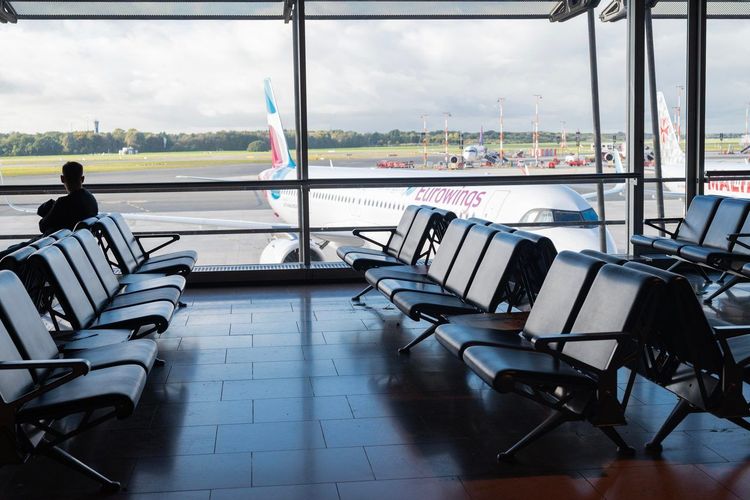
Whether you arrive by air, rail or road, Hamburg has organised its gateways around its public transport network rather than its ring road. This is especially true from the airport, which is connected to the centre in under half an hour.
By Plane and Airport Transfer
Hamburg Airport is located around 9 km north of the city centre, making it one of the international airports closest to its city centre in Germany. Direct flights connect it to Paris, Lyon, Nice and Geneva.
The S-Bahn line S1 connects the terminal directly to the central station in around 25 minutes, with a departure every 10 minutes during the day. Tickets can be purchased at the HVV machines in the underground station or directly via the HVV app — no need to book a taxi or a private shuttle, except for very late-night flights.
By Train
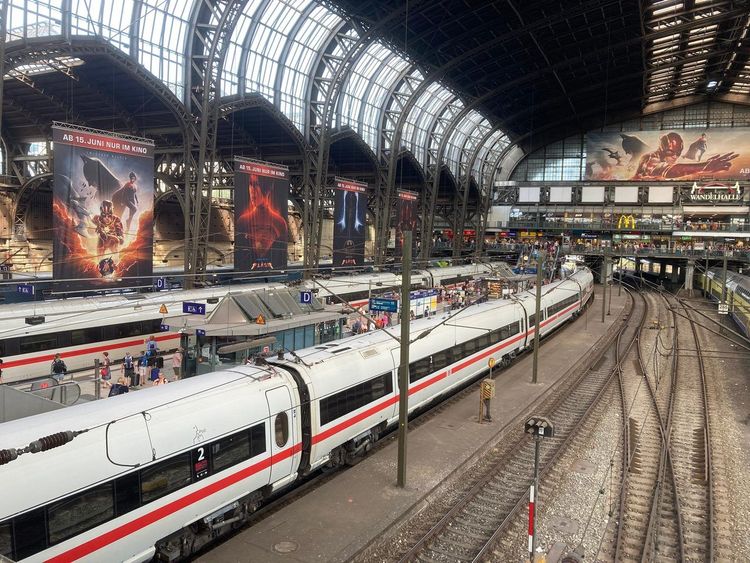
Travelling to Hamburg by train is the most consistent choice for a car-free trip, as it drops you right in the heart of the urban network. Hamburg Central Station (Hamburg Hauptbahnhof) (Hachmannplatz 16, 20099 Hamburg, rated 3.7/5 on Google with 9,335 reviews) welcomes ICE services from Berlin (around 1h45), Cologne, Frankfurt and Copenhagen, as well as connections from Paris via Cologne, for a total journey of around 8 hours.
You step off the train directly onto the S-Bahn and U-Bahn platforms: the connection is made without leaving the station, making it the ideal arrival point to reach a hotel without dragging your luggage far. Also consider Altona station and Dammtor station, served by some long-distance trains and closer to certain neighbourhoods.
By Long-Distance Bus
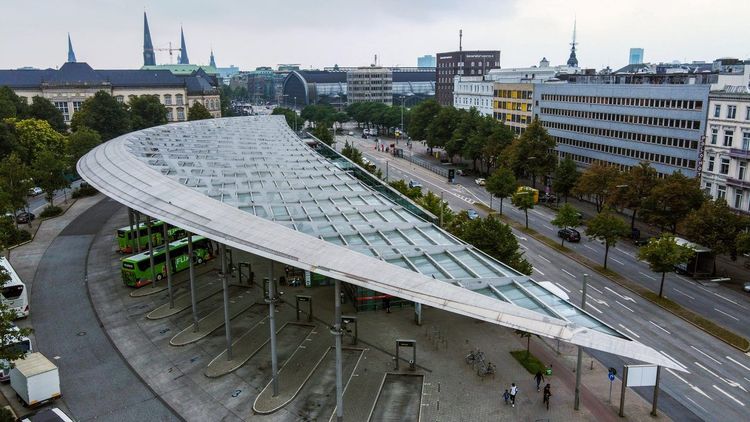
Long-distance bus companies also serve Hamburg from many European cities, arriving at the central bus station, the ZOB, just a short walk from the railway station.
This is the most budget-friendly option, slightly longer in journey time, but it drops you a few minutes on foot from the first S-Bahn and U-Bahn lines. From France, expect an overnight journey from Paris.
Getting around Hamburg: Public Transport
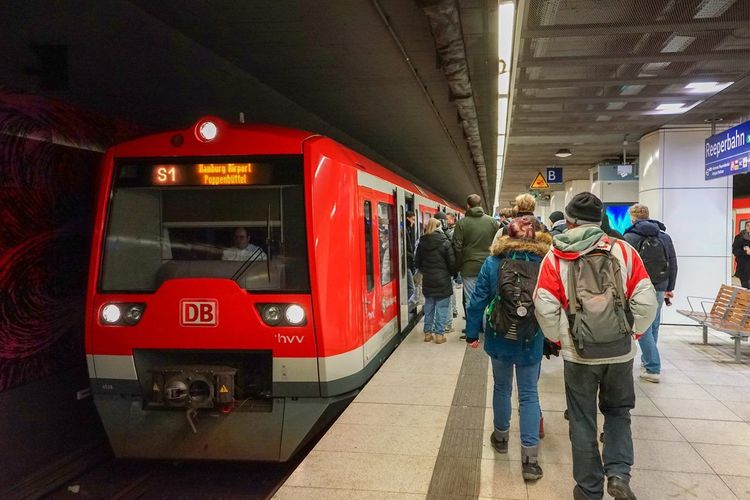
The HVV network (Hamburger Verkehrsverbund) is the backbone of any car-free stay in Hamburg. It combines S-Bahn, U-Bahn, buses and ferries under a single ticketing system, which makes travelling between neighbourhoods considerably straightforward.
The S-Bahn and U-Bahn
The S-Bahn covers the major regional routes and key axes (airport, central station, Altona), while the U-Bahn serves the central neighbourhoods more finely with its four lines. The two networks intersect at several key stations, notably Hauptbahnhof and Jungfernstieg, allowing you to reach almost every point of interest with one or two changes.
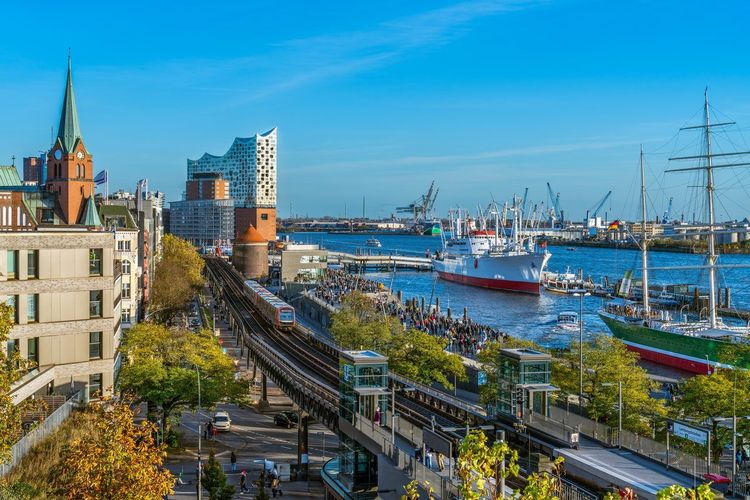
If you had to remember just one line, it would be the U3: between Rathaus and Landungsbrücken, it runs on an elevated viaduct above the port, with a sweeping view of the cranes and quays, then serves Sankt Pauli and Feldstraße. A mini panoramic tour for the price of a single ticket.
On weekdays, trains run roughly from 4:30 am to 12:30 am, with frequencies of 5 to 10 minutes during the day. To find your way around, download the HVV app before you arrive: it calculates the fastest route, shows you the platform and sells the corresponding ticket, at a slightly lower price than the machines.
Buses and Night Lines
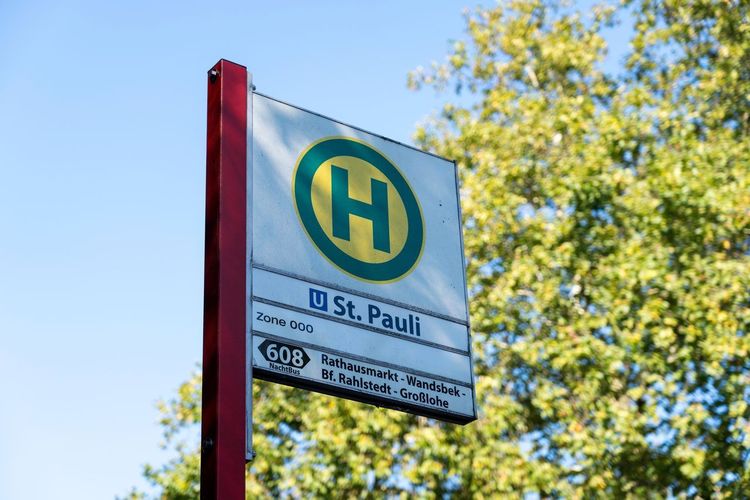
The bus network complements the metro's coverage in neighbourhoods that are less well served, such as certain streets in Eimsbüttel or Ottensen. Good news for night owls: on Friday-to-Saturday and Saturday-to-Sunday nights, the U-Bahn and S-Bahn run all night long. From Sunday to Thursday, night buses numbered in the 600 series depart from the Rathausmarkt every 30 to 60 minutes — a useful detail if you plan to enjoy Sankt Pauli mid-week.
Ferries on the Elbe
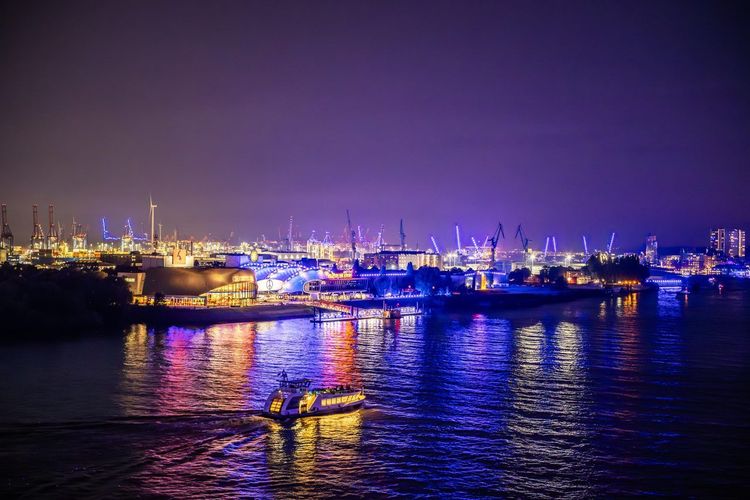
Less well known to visitors, the HVV ferries that cross the port are nonetheless a full part of the network, at the same fare as a bus ticket. Line 62 runs along the quays to Övelgönne and Finkenwerder; line 72 connects the Landungsbrücken to the Elbphilharmonie — a view of cranes and shipyards that is easily worth a paid excursion. The Ryo audio-guided tour of Hamburg actually makes use of these sequences between quays and stations, so you move from one stop to the next without checking a connection on a map.
Which Transport Ticket to Buy in Hamburg
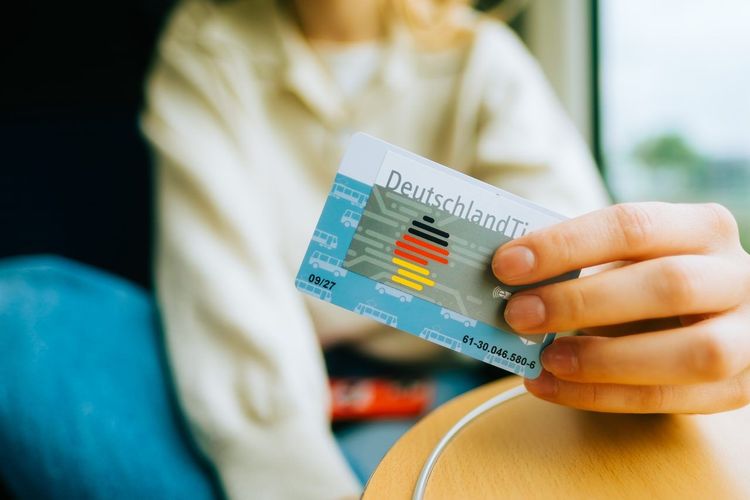
The price of an HVV ticket depends on the zone you travel through and the duration of validity. For a short stay focused on the centre (the Hamburg AB zone covers most tourist sights and the airport), three options come up most often. All tickets can be purchased at station machines, through the HVV app (around 7% cheaper) or from the driver on buses — though some lines no longer accept cash.
Single Ticket
The Einzelkarte is suitable for a one-off journey, such as a single trip between the airport and the centre. It is valid for one journey in one direction, connections included, which means you can change lines without paying again. For a short trip of just a few stops, an even cheaper Kurzstrecke fare is available.
Day Ticket (Tageskarte)
As soon as you plan more than two or three journeys in a day, the Ganztageskarte becomes worthwhile: €8.20 in 2026 for the Hamburg AB zone. It gives unlimited access to the HVV network (S-Bahn, U-Bahn, buses, ferries) until 6 am the following morning, and allows up to three children aged 6 to 14 to travel along. A cheaper version, valid from 9 am on weekdays, suits those who do not need an early start.
The Deutschlandticket at €63
For a stay of several days, or if you are planning an excursion to Lübeck or Lüneburg, the Deutschlandticket, which rose from €58 to €63 per month on 1 January 2026, is worth considering: valid on all regional and local transport in Germany (excluding ICE and IC services), it covers the entire HVV network with no zone restrictions. Bear in mind it is a monthly subscription that must be cancelled before the end of the month to avoid automatic renewal.
| Ticket | Indicative price (2026) | Validity | Best for | |---|---|---|---| | Einzelkarte (single) | around €4 in zone AB | 1 journey, connections included | A one-off trip | | Ganztageskarte (day) | €8.20 in zone AB | Until 6 am the next day | A full day of sightseeing | | Deutschlandticket | €63 / month | Calendar month, entire regional network | A stay of 4 days or more |
On Foot, by Bike or by Taxi: Complementary Alternatives
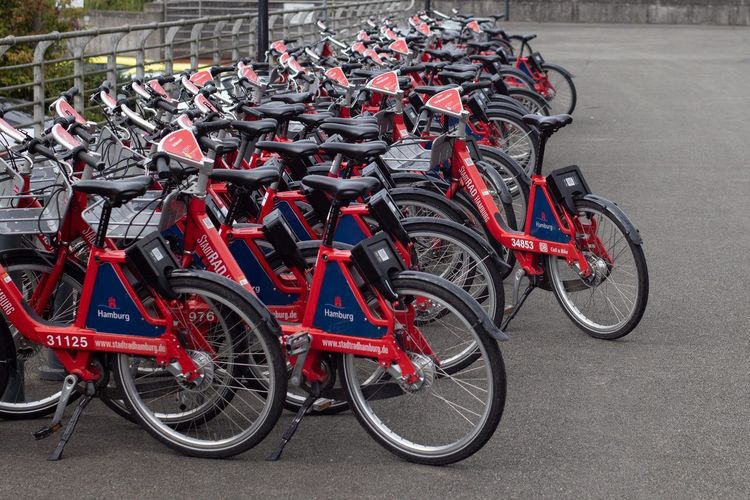
Hamburg's centre lends itself very well to walking: between the Altstadt, the Speicherstadt and the Landungsbrücken, you will rarely need more than 25 minutes on foot. For slightly longer distances, such as reaching the Außenalster from the centre, a bike is an excellent option. The StadtRAD bike-share scheme offers more than 4,000 bikes across over 350 stations, unlockable via an app: the first thirty minutes of each trip are free for registered users, with an annual subscription of €8.90. By stringing short trips together and docking the bike at a station, you can cross the city for next to nothing.
Cycle paths run alongside much of the quays and the banks of the Alster, often separated from traffic on the main roads, making it a relaxed option even for occasional cyclists. Finally, a taxi remains a useful backup for heavy luggage, but it quickly loses its appeal given the density of the HVV network: on most intra-city journeys, the S-Bahn or U-Bahn is just as fast, for a fraction of the cost.
Speicherstadt and HafenCity on Foot
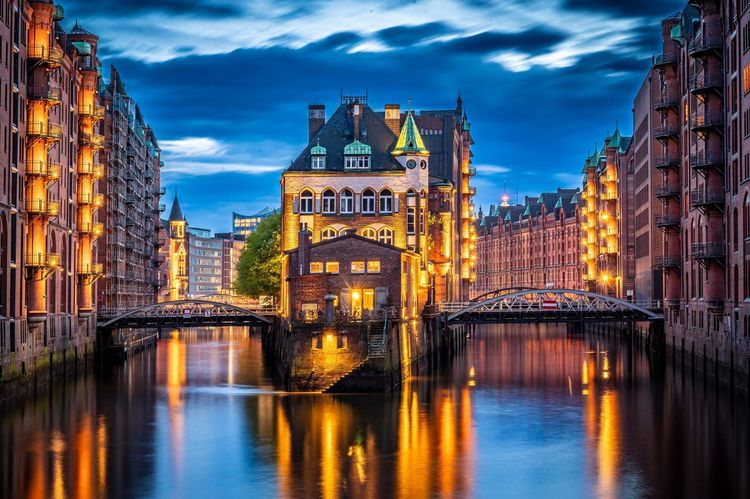
These two neighbouring districts concentrate much of Hamburg's port identity, and they reveal themselves best on foot.
Speicherstadt, the UNESCO-Listed Warehouse District
The Speicherstadt is the largest brick warehouse complex in the world, built from 1883 on thousands of oak piles driven into the mud of the Elbe. It has been inscribed on the UNESCO World Heritage List since 2015, together with the neighbouring Kontorhaus district, which includes the famous ship's-prow-shaped Chilehaus.
Stroll along the canals to the Wasserschloss, a small neo-Gothic building perched at the intersection of two canals and one of the most photographed corners of the city. At nightfall, the illuminated façades make the walk even more spectacular. Nearby, the Internationales Maritimes Museum, housed in the Kaispeicher B — the oldest surviving warehouse in the district — traces around three thousand years of maritime history across ten floors.
HafenCity and the Elbphilharmonie
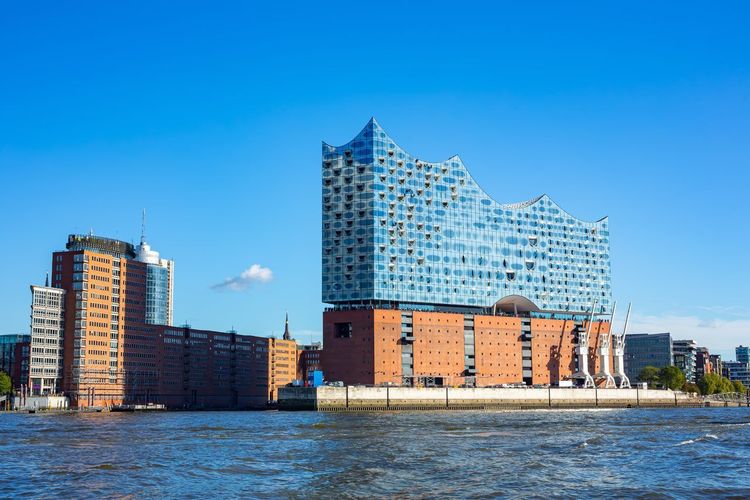
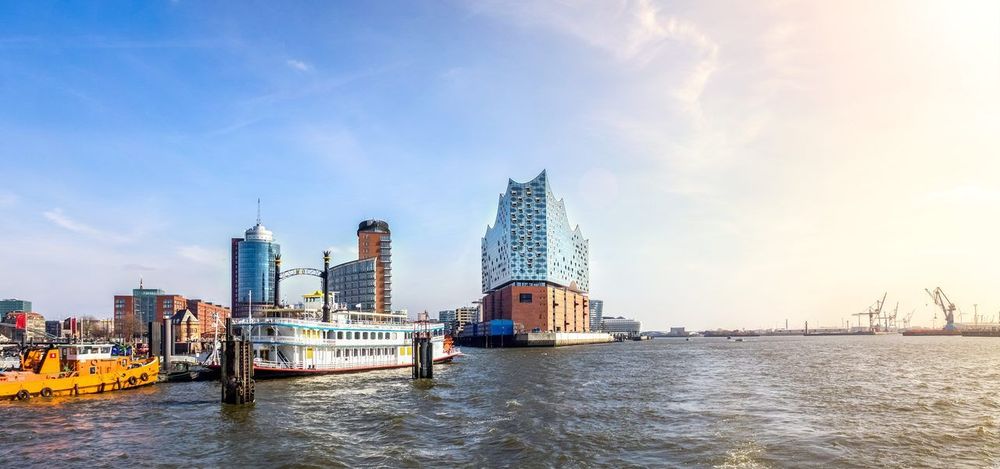
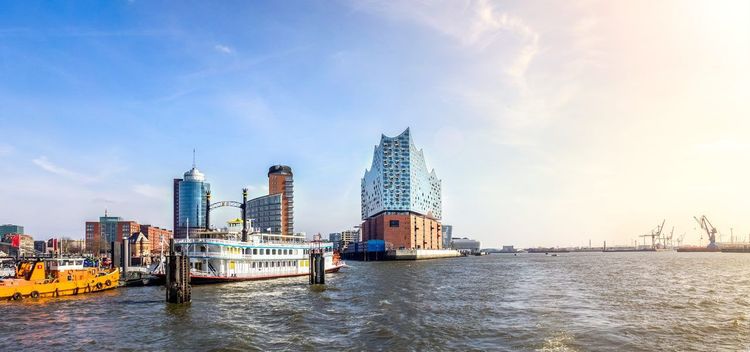
Continuing towards the Elbe, the Speicherstadt gives way to HafenCity, one of the largest urban regeneration projects in Europe: former docks transformed into offices, housing and public spaces, with the Elbphilharmonie (Platz der Deutschen Einheit 1, 20457 Hamburg, rated 4.6/5 on Google with 96,844 reviews) as its centrepiece — a glass concert hall built on top of the former Kaispeicher A warehouse, which once stored cocoa, tea and tobacco.
The panoramic Plaza, 37 metres above ground, wraps all the way around the building. One important change if you are visiting this autumn: from 5 October 2026, admission becomes chargeable (€5, reduced rate €3), whereas it was previously free on the spot. Book your time slot online on busy days. This is precisely the neighbourhood covered by the Ryo audio-guided sub-route "the Gateway to the World": 24 audio stops over 8 km and around 3 hours 10 minutes of walking, with the story of the Speicherstadt's pile construction and the eventful history of the Elbphilharmonie building project.
The Altstadt and the Old Elbe Tunnel
Hamburg's historic centre can be discovered entirely on foot, between civic landmarks and a feat of engineering that is unique of its kind.
The Altstadt and the Rathaus
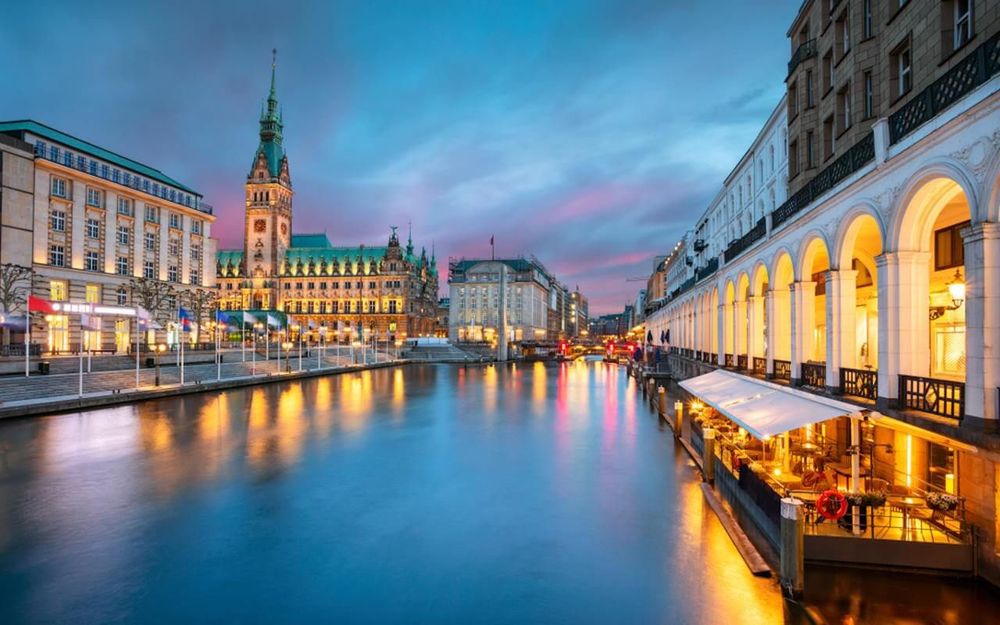
The Altstadt concentrates the city's institutional heart around the Rathaus, the city hall completed in 1897 in the Neo-Renaissance style. It has 647 rooms, and a persistent legend — disproved by the actual figures — claims it has more rooms than Buckingham Palace. Guided tours of its state apartments are held several times a day when the Senate is not in session.
Nearby, the Alsterarkaden line a canal flanked by shopping arcades, one of the most pleasant spots in the centre for a coffee break. A little further to the north-east, the Hamburger Kunsthalle, the city's fine arts museum, brings together seven centuries of European painting — from medieval altarpieces to Caspar David Friedrich and contemporary art — in a complex of buildings right next to the central station.
The Old Elbe Tunnel (Alter Elbtunnel)
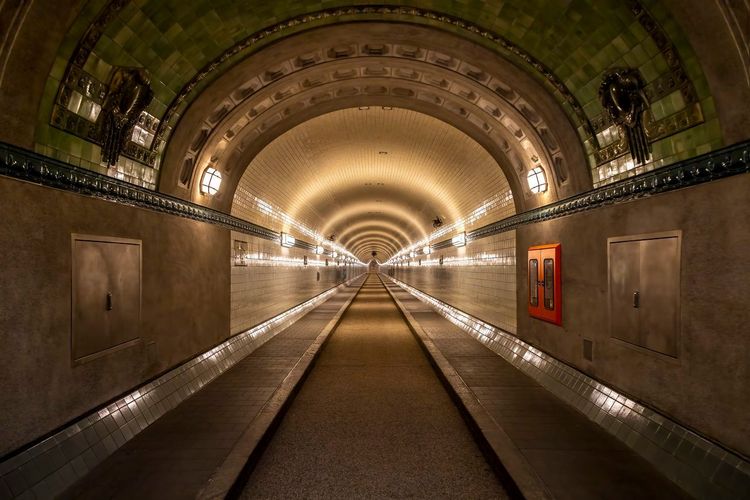
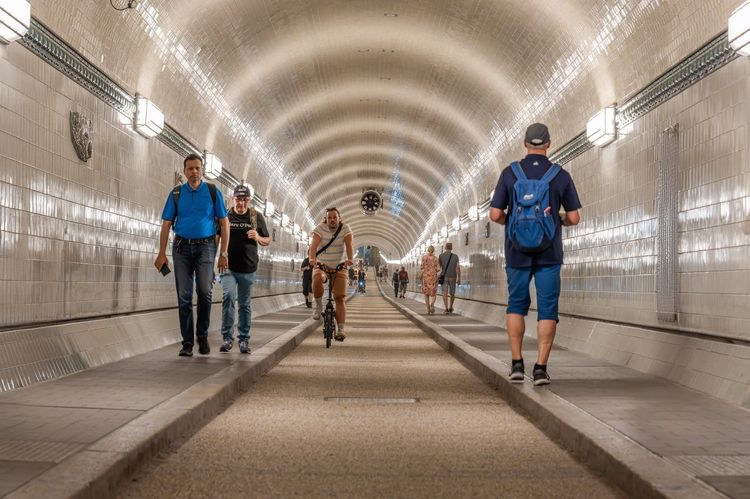
Opened in 1911, the Alter Elbtunnel (Bei den St. Pauli-Landungsbrücken 1, 20359 Hamburg, rated 4.7/5 on Google with 39,821 reviews) allowed dock workers to walk to the shipyards on the opposite bank without waiting for a ferry. Historic lifts carry pedestrians and cyclists 24 metres below ground, into two tiled tubes that cross the river over 426 metres.
The crossing is free for pedestrians and takes around ten minutes to walk in each direction. Once on the other side, at Steinwerder, the view back towards the Landungsbrücken and the city skyline is worth the detour on its own. The tunnel has been under renovation for several years, so only one tube may be open at a time — this does not prevent you from making the crossing.
Hamburg Harbour and the Banks of the Elbe
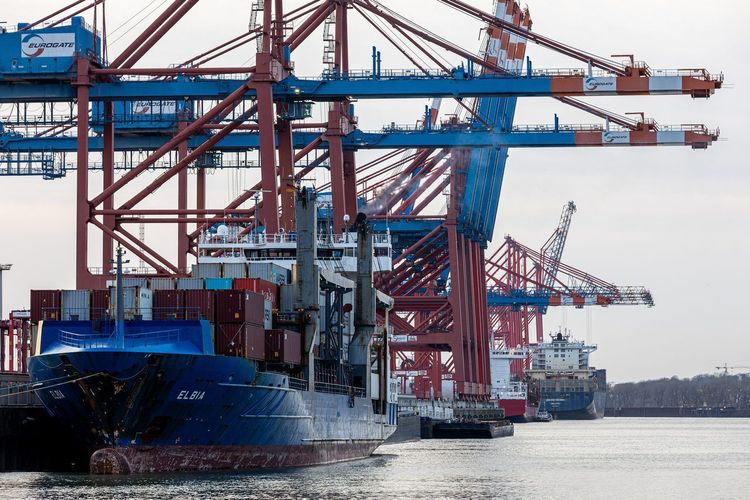
Hamburg harbour remains one of the most active in Europe, and one of the rare large port areas on the continent that you can walk or ferry along without ever encountering a car park.
The Landungsbrücken and the Harbour View
The Landungsbrücken (St. Pauli-Landungsbrücken, 20359 Hamburg, rated 4.7/5 on Google with 31,227 reviews), a long promenade on floating pontoons stretching nearly 700 metres, serve both as a river terminal and as a balcony overlooking the maritime traffic. The U-Bahn and S-Bahn station of the same name opens directly onto them.
Moored right alongside, the floating museum Rickmer Rickmers, a three-masted ship built in 1896, can be visited deck by deck and gives a vivid sense of the living conditions of sailors of that era. It is also along these quays that the Ryo audio-guided tour of Hamburg passes, telling the story of Germany's largest port as you walk, without ever needing to find a parking space.
A Walk or a Cruise on the Elbe
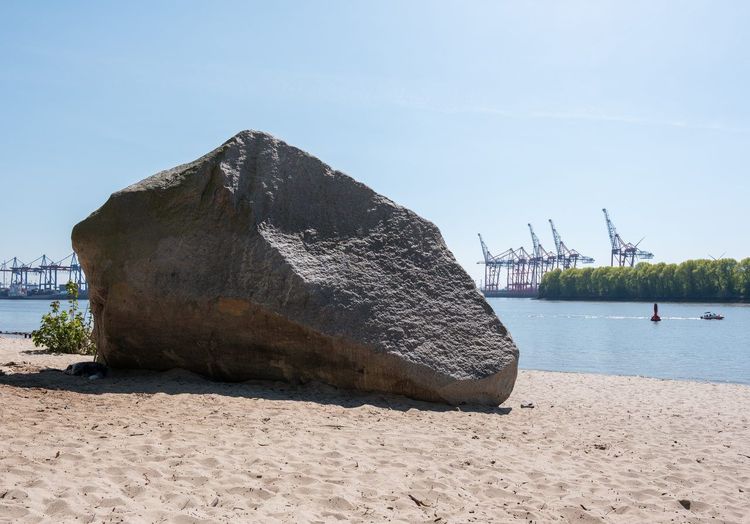
To get a broader sense of the harbour's scale, board one of the tourist boats departing from the Landungsbrücken (expect €20 to €30 for one hour), or more simply the HVV line 62 ferry, included in your ticket and just as impressive. It goes all the way to Övelgönne, a former pilots' and captains' village that has become a sought-after residential neighbourhood, where the sandy Elbstrand beach lets you watch container ships go by with your feet in the sand.
Tip: head to the upper deck on the way there, stay at the back on the way back, and avoid late-afternoon slots in summer, when the ferries fill up with locals returning from the beach.
The Alster Lakes on Foot or by Bike
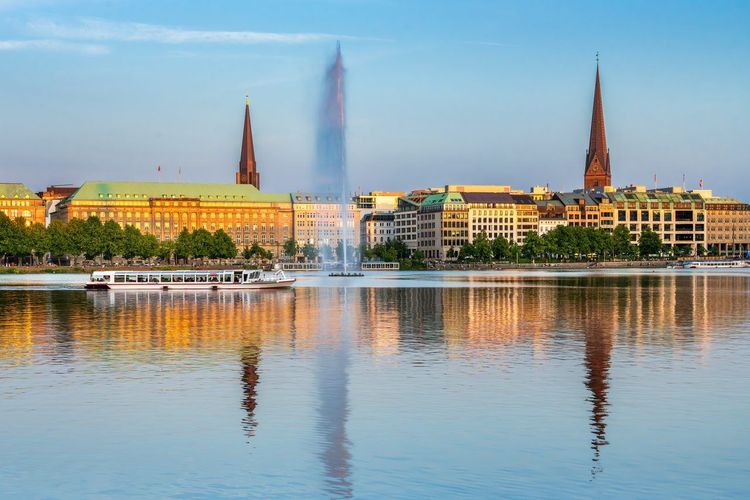
Ten minutes on foot from the centre, the Alster Lakes offer a complete contrast to the bustle of the port: calm water, sailing boats and joggers rather than cranes.
The Binnenalster, at the Heart of the City
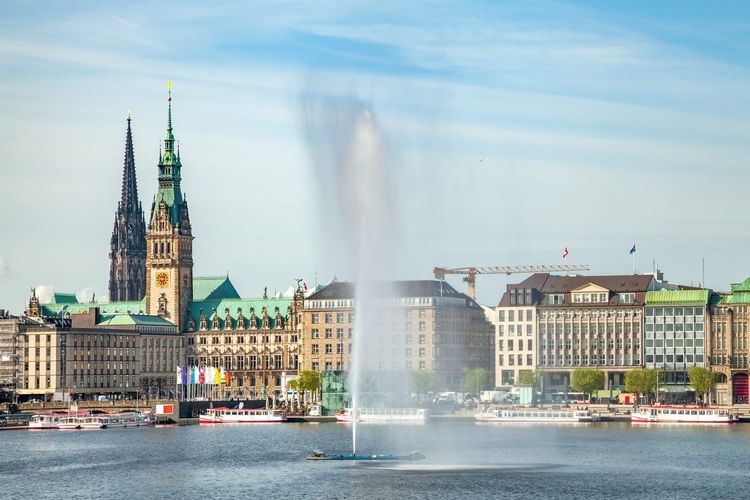
The Binnenalster (Jungfernstieg, 20354 Hamburg), the smaller of the two lakes, is lined with department stores and luxury hotels in the city centre. At its centre rises the Alsterfontäne, a fountain that shoots water up to 60 metres high during the warmer months.
The Jungfernstieg promenade running along its southern bank has been largely closed to private cars, with a landing stage for Alster boats that travel up into the canals of Winterhude.
The Außenalster and Its Banks
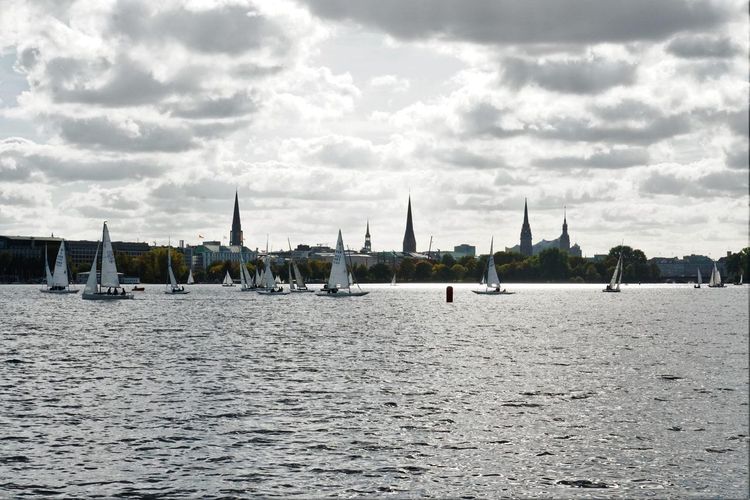
Considerably larger, the Außenalster (Schöne Aussicht, 20148 Hamburg) lends itself better to a long walk or a bike ride: the full circuit is around 7.5 km, just under two hours on foot and half an hour at a relaxed cycling pace.
The banks alternate between shaded parks, rowing clubs and pavement cafés. You can also rent a canoe or a pedalo for an hour, or head to Winterhude, a pleasant residential neighbourhood for a break away from the tourist crowds.
Miniatur Wunderland and Planten un Blomen
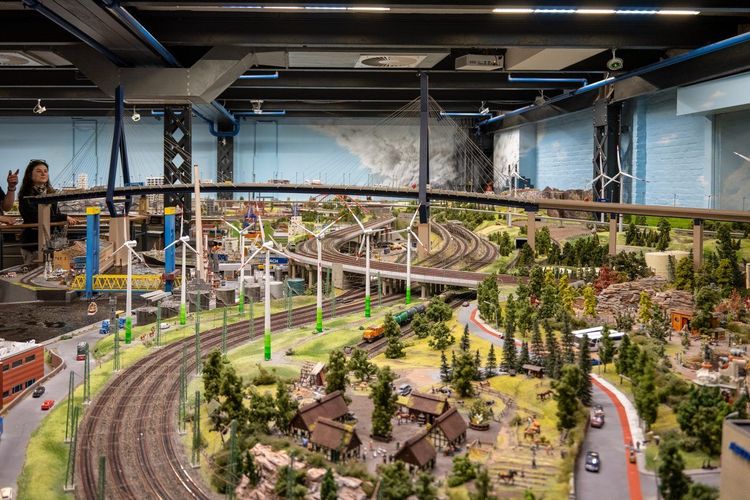
Two very different experiences, both accessible within a few minutes by U-Bahn from the centre.
Miniatur Wunderland, the World's Largest Miniature Railway
Housed in a former Speicherstadt warehouse, Miniatur Wunderland recreates entire landscapes at 1:87 scale, from the Swiss Alps to Las Vegas, with more than 15 kilometres of miniature track and a day-night cycle that repeats roughly every fifteen minutes.
Book your time slot online before you visit: the attraction often sells out at weekends, even out of season, while weekday evenings are noticeably quieter. It is one of the richest stops on the Ryo audio-guided tour of Hamburg, which tells the story of the Braun twins' venture, launched in 2000 and still expanding.
Planten un Blomen, the City's Green Lung
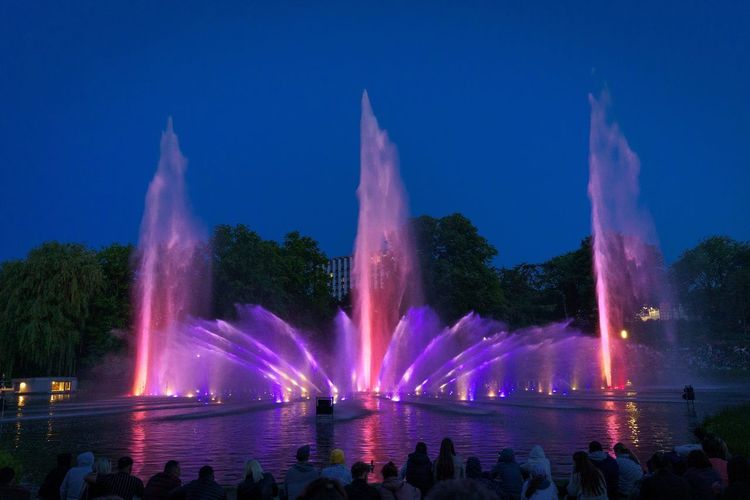
At the opposite end of the spectrum from the bustle of the warehouses, Planten un Blomen (Marseiller Straße 7, 20355 Hamburg, rated 4.8/5 on Google with 26,940 reviews) — "plants and flowers" in Low German — is a 47-hectare park between the Altstadt and Sankt Pauli, with a Japanese garden and free water-and-light concerts on summer evenings.
The park is easy to reach on foot from Dammtor station or by U-Bahn to Stephansplatz. If you are travelling with children, the paddling pools make it an ideal stop between two museums.
Neighbourhoods to Explore without a Car: Sankt Pauli, Karolinenviertel and Sankt Georg
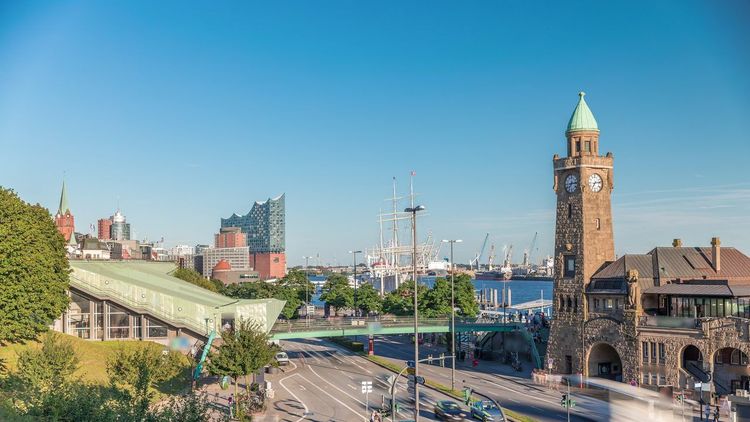
Three neighbourhoods with radically different atmospheres, connected to one another by the U-Bahn or a good walk.
Sankt Pauli and the Nightlife
Sankt Pauli owes its edgy reputation to the Reeperbahn, the city's most lively thoroughfare, lined with bars, clubs and theatres. This is where the Beatles honed their craft in the early 1960s, a memory commemorated by the Beatles-Platz. The neighbourhood is not all about nightlife: the Sunday Fischmarkt, running since 1703, rewards an early rise (it closes around 9:30 am) with its unique atmosphere blending a historic hall and an open-air market.
From the Landungsbrücken, the Reeperbahn is only ten minutes on foot: extend your quayside walk to discover the often-overlooked history of this neighbourhood that has become one of the most visited in the city.
Karolinenviertel, the Alternative Quarter
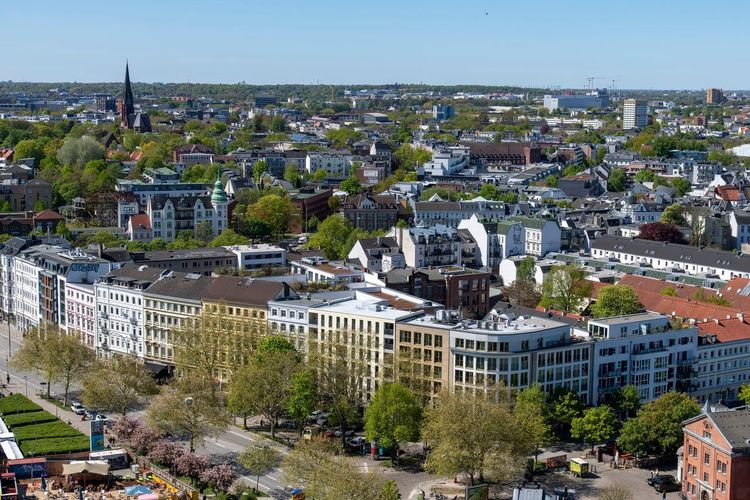
Just to the north, the Karolinenviertel (Marktstraße, 20357 Hamburg) packs independent shops, vintage stores and speciality coffee shops into a maze of narrow streets around the Marktstraße. It is the place to hunt for a rare vinyl or discover a local designer, a few minutes on foot from Feldstraße station (U3), and a good reference point for shopping away from the big chains. The neighbouring Sternschanze district extends the atmosphere with its lively terraces in the evenings.
Sankt Georg, between Canals and Cafés
East of the central station, Sankt Georg has established itself as Hamburg's most cosmopolitan neighbourhood, driven by the Lange Reihe (20099 Hamburg) shopping street, its LGBT-friendly cafés and its small restaurants from around the world.
It is also one of the best-connected popular neighbourhoods in the city, less than five minutes on foot from the central station — a real asset when staying without a car.
Where to Eat in Hamburg without a Car
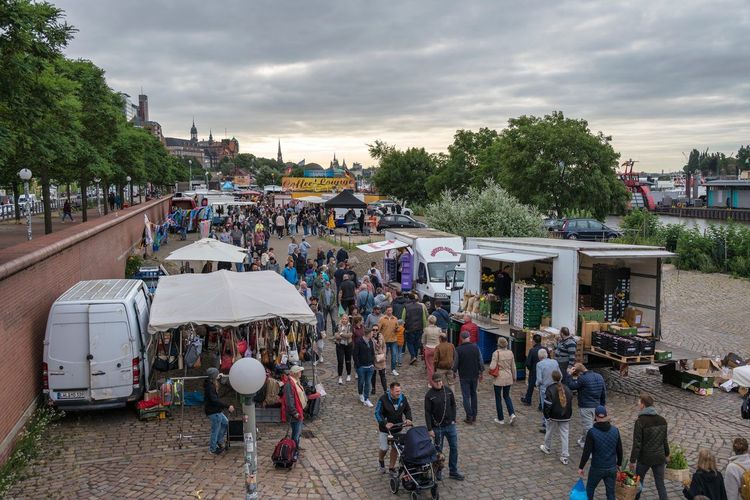
A visit to Hamburg would be incomplete without sampling the fresh seafood: the port city is full of gourmet addresses where fish and shellfish arrive straight from the quays. The absolute classic is the Fischbrötchen, a small roll filled with pickled herring, smoked mackerel or North Sea shrimps, sold for €4 to €8 on the Landungsbrücken pontoons or at the Fischmarkt.
For a proper meal, two local dishes are worth trying: Labskaus, a hash of corned beef, beetroot and potato topped with a fried egg and a rollmops — a legacy of sailors' cuisine — and Franzbrötchen, a cinnamon pastry you will find in every bakery at breakfast time. Fish restaurants line the stretch between the Landungsbrücken and Övelgönne, while the Sternschanze and Ottensen concentrate the younger, more affordable options.
Another local pleasure: an outdoor barbecue on the banks of the Elbstrand on summer evenings — the Övelgönne beach becomes an informal gathering spot where locals and visitors share grilled food and beers while watching container ships go by. For more specific recommendations, our article on Hamburg's culinary specialities details the dishes you should not miss.
Where to Stay in Hamburg when Visiting without a Car
Choosing your neighbourhood based on proximity to an S-Bahn or U-Bahn station rather than a car park genuinely changes the experience. Bonus: you save the €25 to €40 per night that most city-centre hotels charge for their garage.
Altstadt and Neustadt, Right in the Middle of Everything
Staying in the Altstadt or the Neustadt puts the main sights — Rathaus, Speicherstadt, Binnenalster — within fifteen minutes on foot. It is the most practical choice for a short stay, even if you pay a little more per night: these are also the neighbourhoods where Hamburg's most-booked hotels are concentrated, particularly around the Jungfernstieg.
Sankt Georg, a Stone's Throw from the Central Station
For better value for money, Sankt Georg is a reliable choice: five minutes on foot from the central station and therefore from all S-Bahn and U-Bahn lines, with a more varied hotel offer than the historic centre. Just make sure your address is on the Lange Reihe side or the Alster side, which are quieter than the immediate surroundings of the station.
HafenCity and Altona, Waterside Alternatives
If you like the idea of waking up overlooking the docks, HafenCity offers modern hotels within walking distance of the Speicherstadt, served by the U4. Further west, Altona and Ottensen offer a lively neighbourhood atmosphere, a mainline station and quick access to the Elbstrand.
When to Go and How Many Days to Plan
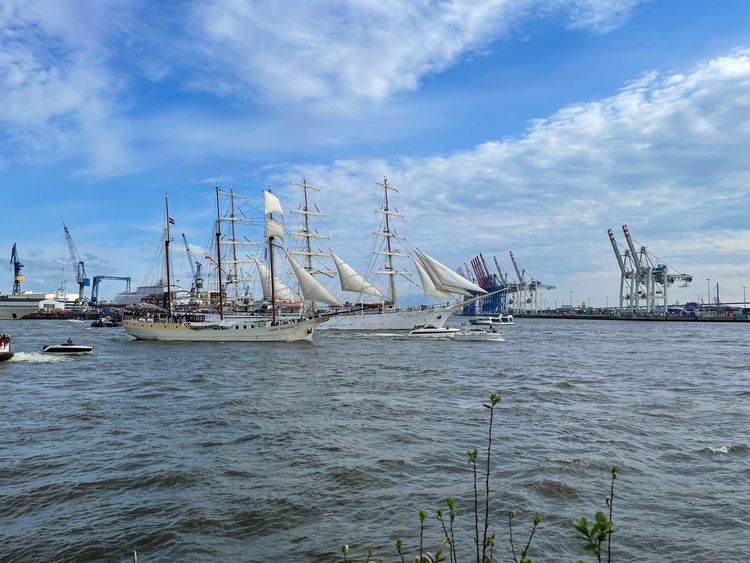
The best period to visit Hamburg without a car runs from May to September, when the terraces of the Landungsbrücken and the banks of the Alster come alive and the ferries feel like a real outing rather than just transport. It is also the season of major annual events: the Hafengeburtstag, the port's birthday celebration in early May, brings hundreds of boats together and turns the Landungsbrücken into a giant popular festival, entirely accessible on foot or by ferry. In summer, the Cyclassics attract thousands of cyclists along a route that crosses the city centre, and the Hamburger Dom, a large funfair held three times a year on the Heiligengeistfeld, can be reached by U3 to Feldstraße.
Winter is not to be overlooked either: the Christmas markets set up around the Rathaus and the Jungfernstieg from late November create a particularly warm atmosphere, despite short days and sometimes reduced ferry timetables. Just pack a good waterproof: rain is frequent throughout the year.
Allow three to four full days to cover the Altstadt, the Speicherstadt, HafenCity, the port and at least one of the large parks at a comfortable pace. A long weekend of two days remains feasible if you focus on the historic centre and the quays, saving the Alster lakes or Planten un Blomen for a future visit.
Budget and Cost of Living in Hamburg
Hamburg's cost of living is comparable to that of other major German cities — slightly lower than Munich but above Berlin. A simple meal in a neighbourhood restaurant runs around €12 to €18, while a more elaborate menu near the Landungsbrücken or HafenCity easily climbs above €25. For accommodation, expect €90 to €150 per night for a mid-range city-centre hotel, more during the Hafengeburtstag.
For everyday shopping, supermarkets such as Rewe, Edeka or the discounters Aldi and Lidl are present in every residential neighbourhood, often just a few metres from a station. Ideal for a picnic by the Alster: the supermarkets in major stations are also open on Sundays, unlike most regular shops. The shopping districts of the centre, around the Mönckebergstraße, the Jungfernstieg and the Alsterarkaden, are more focused on international chains and department stores.
On the transport front, the savings compared to a car-based trip are clear: a Ganztageskarte at €8.20 covers an entire day of sightseeing, while a single half-day of parking in the centre often costs more.

FAQ
How do you get around Hamburg?
The HVV network combines S-Bahn, U-Bahn, buses and ferries under a single ticket. For most journeys in the centre, the S-Bahn or U-Bahn is the fastest option; lines 62 and 72 ferries also offer a harbour view included in the price of the ticket.
How many days do you need to visit Hamburg without a car?
Three to four days are enough to cover the Altstadt, the Speicherstadt, HafenCity, the port and one of the large parks at a comfortable pace. Two days suffice for a focused overview of the historic centre and the quays.
What is the best transport ticket in Hamburg?
For a single journey, the Einzelkarte is sufficient. As soon as you plan several trips in one day, the Ganztageskarte (€8.20 in zone AB) becomes better value. For stays of more than four days, the Deutschlandticket at €63 per month covers the entire regional network with no zone restrictions.
Can you visit the centre of Hamburg entirely on foot?
Largely, yes. The Altstadt, the Speicherstadt, HafenCity and the Landungsbrücken all sit within a walkable area of less than thirty minutes. For a circuit of the Außenalster or more outlying neighbourhoods like Ottensen, a bike or a short S-Bahn connection remains useful.
How do you get from Hamburg Airport to the city centre without a car?
The S-Bahn line S1 connects the airport directly to the central station in around 25 minutes, with a departure every 10 minutes during the day. Tickets can be purchased at the machines in the airport station or through the HVV app.
What budget should you plan for a few days in Hamburg?
Allow €12 to €18 for a simple meal, €90 to €150 per night for a mid-range hotel, and €8.20 per day for transport. Add the entry fee for a few paid attractions such as the Miniatur Wunderland or, from October 2026, the Elbphilharmonie Plaza (€5).
Where should you stay in Hamburg without a car to remain close to transport links?
The Altstadt and the Neustadt put the main sights within fifteen minutes on foot. Sankt Georg, five minutes from the central station, offers a good balance between price and direct access to all S-Bahn and U-Bahn lines.
Conclusion
Visiting Hamburg without a car turns out to be no hardship at all — in fact, it is the most natural way to discover a city designed around its canals, its port and its lakes far more than around its roads. Between the HVV network, a few kilometres on foot and a return ferry trip, most of the must-see sights can be ticked off without ever searching for a parking space.
To make sure you miss nothing on the ground, the complete Ryo audio-guided tour of Hamburg remains the simplest way to connect these places, with the stories that give full meaning to the brick façades of the Speicherstadt and the cranes of the port.