© Shutterstock
 Votre guide Ryo
What to Do in Lecce in 2026: 20 Experiences in the Baroque Capital of Puglia
In Lecce, the local stone is worked almost like wood: pietra leccese carvers still sculpt cherubs and gargoyles on the facades of the historic centre today, exactly as they did in the seventeenth century. What is there to do in Lecce when the entire city resembles a baroque theatrical set carved from a golden limestone that hardens on contact with air before solidifying over time? The question arises the moment you leave the train station, so striking is the contrast with other Italian cities, between facades that appear almost white under the midday sun and gilded reliefs glowing at dusk. At Ryo, we often consider Lecce one of the most underrated cities in Puglia, overshadowed by the fame of Rome or Florence, yet packing more sculptural detail per square metre than many cities twice as heavily visited.
In the pages that follow, head to an enclosed square where the cathedral only reveals itself at the last turn, a Roman amphitheatre that lay buried under several metres of earth for centuries, and a column erected as a votive offering after a plague epidemic. Along the way you will find a private house where a simple floor tile uncovered twelve centuries of underground history, workshops where papier-mâché statues are still shaped by hand, and a sea cave less than an hour's drive away ranked among the most beautiful natural pools in Italy. From the lanes of Lecce's historic centre to a puccia tasting and excursions to Otranto or the thermal baths of Santa Cesarea, this guide covers the city on foot, by tourist train and in its immediate surroundings, with enough detail at each stop to plan a day trip or a multi-day stay with ease.
1. Stroll Through Piazza del Duomo, the Most Theatrical Enclosed Square in Puglia
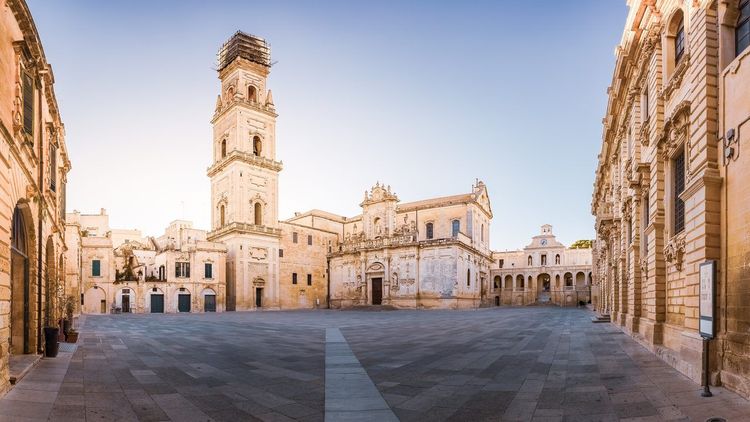
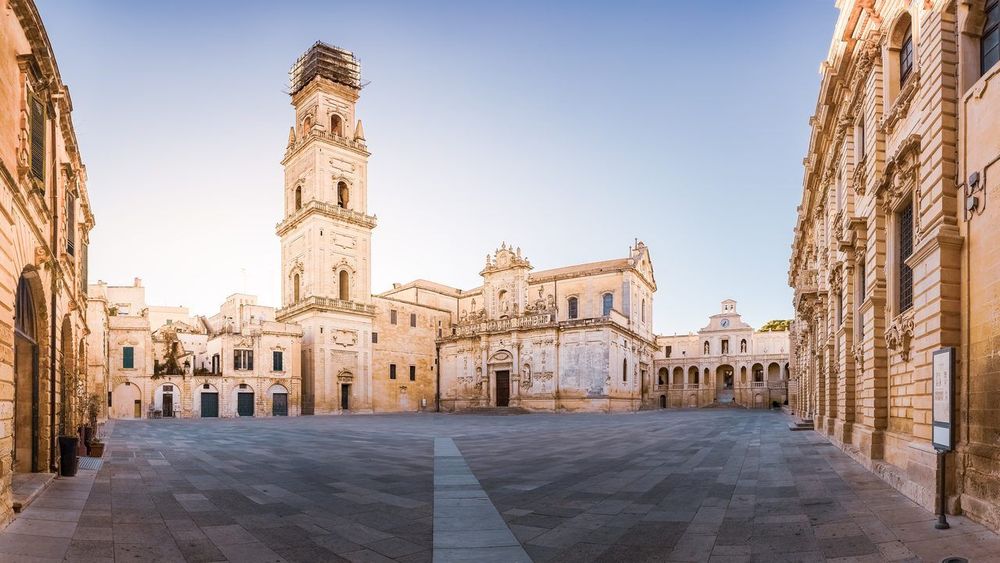
The Piazza del Duomo does not reveal itself from the front. You reach it through a single narrow passageway, the Vico dei Sotterranei, which turns every arrival into a small piece of theatre: the buildings part abruptly to reveal an enclosed square, paved in pale stone and flanked on three sides by baroque facades. This dead-end layout is no architectural accident. In the seventeenth century, local urban planners sought to create a protected space, almost an open-air salon, where religious authorities could organise processions and ceremonies away from outside eyes.
The cathedral of Lecce, dedicated to Sant'Oronzo and the Virgin of the Assumption, dominates the ensemble with its main facade turned not towards the square but to the side, a stylistic choice attributed to architect Giuseppe Zimbalo. Its 68-metre bell tower, visible from several kilometres around, once served as a landmark for sailors approaching the Salentine coast. Inside, the twelve lateral altars and the polychrome marble high altar are worth a pause, especially in late morning when light filters through the high stained-glass windows.
On either side of the cathedral stand the Palazzo Vescovile (the bishop's palace), rebuilt in the eighteenth century with its arcaded loggia, and the Seminario, whose sculpted stone well, adorned with garlands and coats of arms, remains one of the most photographed motifs in the city. You can approach the well free of charge: it stands in the seminary's inner courtyard, generally accessible during cathedral opening hours.
For centuries this square was also the stage for a deliberate urban game: the single narrow entrance allowed the square to be completely sealed off in times of unrest or epidemic, a system of defence that was as much sanitary as symbolic. It is said that successive bishops had the loggia of the episcopal palace altered multiple times, each wanting to leave a visible mark of their tenure, which explains the mixture of styles still visible today from one floor to the next.
It is best to visit before 9:30 in the morning or after 6 in the evening. For the rest of the day the square fills with organised tour groups, and the raking light of early morning or late afternoon brings out the baroque reliefs far better than the flat midday sun. In the evening, warm artificial lighting highlights the stonework and transforms the square into one of the most romantic spots in Lecce's historic centre to end an evening on a terrace, a moment that many visitors spontaneously cite as the most memorable of their stay.
2. Admire the Sculpted Facade of the Basilica di Santa Croce
If a single image were to sum up the baroque leccese style, it would be this one: the facade of the Basilica di Santa Croce (Via Umberto I, 73100 Lecce, rated 4.7/5 on Google based on 9,763 reviews), an entire wall of stone smothered in carvings, twisted columns, chubby cherubs and fantastical creatures. Construction stretched over nearly 150 years, from 1548 to 1695, and involved several generations of architects, including Gabriele Riccardi for the more restrained lower section and Giuseppe Zimbalo for the central rose window and the upper storey, which is considerably more elaborate.
The rose window at the centre of the facade, a circle of openwork stone surrounded by allegorical figures, is the detail most visitors miss when they hurry past. Take time instead to step back onto the pavement opposite, or sit for a few minutes on the steps facing it: it is from this distance that the decorative ensemble makes full sense, with its three tiers of meaning running from the most earthly (animals, vegetation) to the most celestial (angels, saints).
Some local guides like to explain that the strange animals carved at the base of the facade, half-lion, half-fantastical creature, symbolised in their day the pagan forces that religion had come to tame, a moralising message aimed at a largely illiterate population. Whether or not you subscribe to this symbolic reading, the sheer accumulation of detail is itself enough to justify several passes in front of the facade at different times of day.
The interior, a single nave flanked by side chapels, contrasts by its relative sobriety with the exuberance of the facade. The gilded coffered ceiling and the richly decorated high altar still merit a full visit, generally free or very cheap depending on opening hours. Adjoining the basilica, the Palazzo dei Celestini, a former convent now housing the prefecture, presents a later and more measured facade, almost neoclassical in places, which often serves as a visual counterpoint for amateur photographers in Lecce.
Morning light, between 8 and 10 o'clock, strikes the facade at an angle and picks out each relief with a particularly pronounced play of shadows. In the middle of the day, the overhead sun flattens the volumes and the sculpture loses much of its depth in photographs. A simple ten-minute detour in late afternoon, on the way between the train station and the historic centre, is enough to tick off this stop without disrupting a busy programme.
3. Discover the Roman Amphitheatre in Piazza Sant'Oronzo
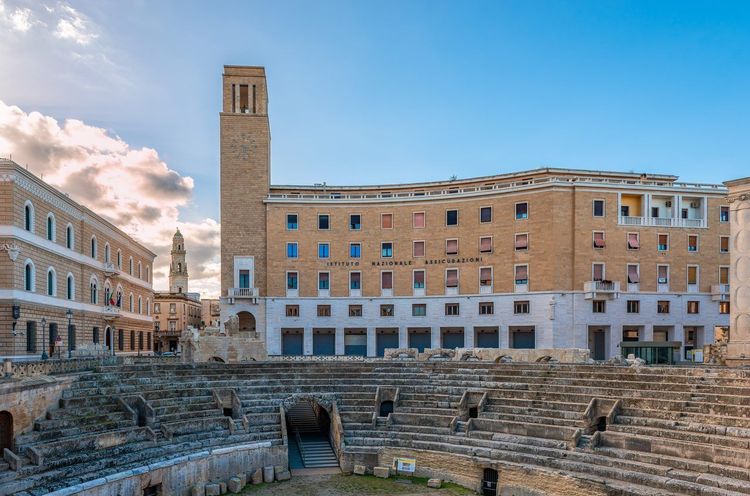
Right in the city centre, a few metres from café terraces, a hollow in the ground reveals the tiered seating of a Roman amphitheatre from the second century AD, which lay buried under several metres of earth until its accidental discovery in 1901 during bank construction works. Only part of the original ellipse, which archaeologists estimate could hold up to 25,000 spectators, is visible today: the rest still extends beneath the surrounding buildings of Piazza Sant'Oronzo.
Access from street level is free, via a walkway that overlooks the remains from several vantage points. The limestone tiered seating, the gladiators' circulation corridors and part of the outer enclosure wall are all clearly visible. Digital reconstructions installed nearby help visitors imagine the original scale of the structure, far larger than what the visible pit suggests today.
In Roman times the amphitheatre hosted gladiatorial combat and staged hunts, a use confirmed by several inscriptions found during excavations and now preserved in the provincial museum. The orientation of the arena, designed to limit direct exposure to the prevailing wind from the Adriatic, reflects an engineering expertise also found in several other amphitheatres in Puglia, notably in Brindisi.
In summer the amphitheatre sometimes serves as a backdrop for evening performances or open-air screenings organised by the city council, a rare opportunity to see the ancient tiers lit up artificially. The contrast between the busy terraces of the modern square and this ancient monument sunken below street level neatly captures Lecce's identity as a city that layers its eras without ever setting them against each other. Allow around twenty minutes to walk the full perimeter and read the information panels, available in Italian and English.
4. Track Down the Roman Theatre Hidden Behind the Facades
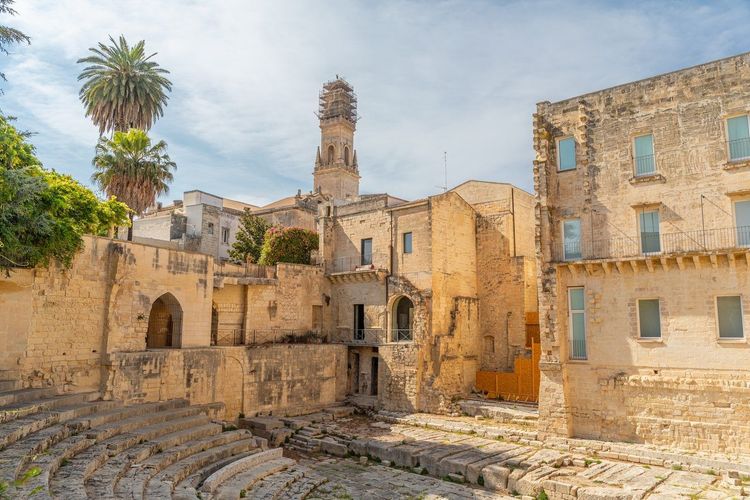
Less well known than the amphitheatre, the teatro romano of Lecce is quite literally hidden behind a curtain of buildings, reached through a discreet passage not far from the Chiesa di Sant'Irene (Piazza Sant'Oronzo, 73100 Lecce, rated 4.4/5 on Google based on 46 reviews). Discovered in the 1930s, the theatre could seat between 5,000 and 6,000 spectators and was probably used for more intimate performances than those staged in the neighbouring amphitheatre, which was reserved for games and combat.
The semicircular layout remains remarkably legible despite the passing centuries, with its concentric tiers cut directly into the rock and its circular orchestra at the front. A small adjoining museum, often less crowded than nearby sites, displays fragments of statues and mosaics found during excavations, along with explanations of theatrical life in Roman Lecce, known in antiquity as Lupiae.
This site is particularly well suited to a late-morning visit, when light falls directly into the pit and illuminates the tiers without excessive shadow. As it remains well outside the classic tourist circuit, you will rarely encounter more than a handful of visitors at a time, a luxury that is increasingly rare in Lecce's historic centre during the peak summer season.
5. Look Up at the Colonna di Sant'Oronzo and Its Plague History
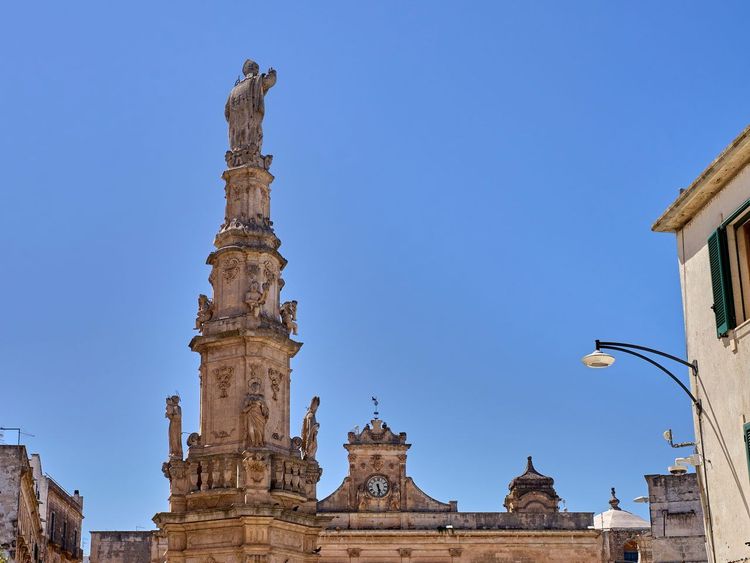
At one end of Piazza Sant'Oronzo stands a tall Roman column topped by a bronze statue of the city's patron saint. Its story deserves to be told before you even look up at its height: the column originally came from Brindisi, where it marked the terminus of the Via Appia, the great Roman road linking Rome to the Adriatic port.
In 1666, following a plague epidemic that local tradition holds was averted through the intercession of Sant'Oronzo, the municipal authorities decided to have the column transported and erected as a votive offering of gratitude. The statue of the saint, arms open in a gesture of protection, still rises over the square to a total height of more than 29 metres.
Around the base, a series of sculpted reliefs depicts religious and allegorical scenes, now eroded by centuries of exposure to the salt wind blowing in from the Adriatic. The column makes an excellent landmark for planning a walk through Lecce's historic centre: all the baroque lanes in the area radiate from this central square, making it a natural starting or finishing point for most pedestrian itineraries.
6. Visit Castello Carlo V and Its Temporary Exhibitions
Built in the sixteenth century on the orders of Emperor Charles V to strengthen coastal defences against Ottoman incursions, Castello Carlo V has a trapezoidal plan ringed by moats, now dry and laid out as gardens. Its massive silhouette, in raw limestone rather than sculpted facade, deliberately contrasts with the baroque exuberance of the rest of the city, a reminder of its strictly military origins.
The interior now houses a versatile cultural space hosting temporary exhibitions, educational workshops and, intermittently, a permanent collection devoted to the art of Leccese papier-mâché, with life-size religious statues made using techniques passed down since the eighteenth century. The inner courtyard, often used for evening events during the summer, provides an unexpected setting for concerts or screenings.
The castle was enlarged through successive occupations, first Spanish then Austrian, with each garrison adding its own defensive features. The foundations rest in part on a tenth-century Basilian monastery, remnants of which can still be seen in the lower levels during guided tours occasionally organised by site staff.
Allow roughly an hour for a complete visit, a little longer if a temporary exhibition holds your attention. The entrance fee remains modest compared to the major religious monuments in the centre, making it an accessible stop even on a tight sightseeing budget. The vaulted ground-floor rooms, cool even in high summer, also offer a welcome break during the hottest hours of the day.
7. Pass Through Porta Napoli, the Arch Built for Charles V
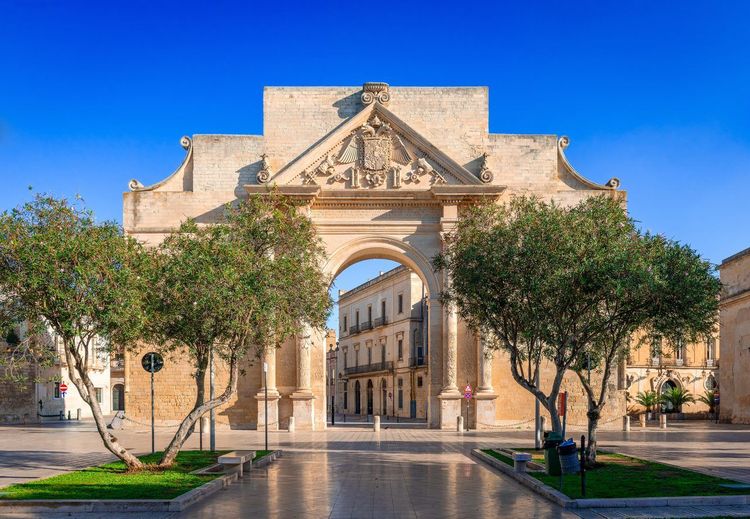
At the northern edge of the historic centre stands Porta Napoli (Via Adua, 73100 Lecce, rated 4.6/5 on Google based on 12,156 reviews), a triumphal arch built in 1548 to honour Charles V's visit to the city. Its restrained, almost austere silhouette compared to the neighbouring baroque facades reflects a Renaissance style that predates the decorative explosion of the following century.
Sculpted coats of arms and a Latin inscription at the top of the arch commemorate the event. The gate historically marked the start of the road to Naples, hence its name, and served as the obligatory point of passage for merchants and travellers arriving from northern Puglia. A quick five-minute detour is enough to take it in, ideally at the end of a walk through the northern quarter before heading to the adjacent public gardens.
8. Linger in Front of the Chiesa di Sant'Irene
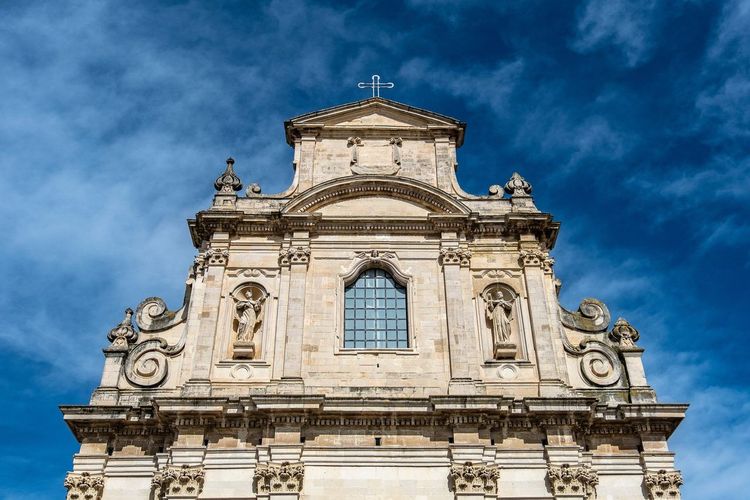
Less photographed than the neighbouring basilica, the Chiesa di Sant'Irene (Via Vittorio Emanuele II, 73100 Lecce, rated 4.6/5 on Google based on 262 reviews) nonetheless deserves a stop for its two-tiered baroque facade and Corinthian columns. The interior, more stripped back than other churches in the centre, preserves several seventeenth-century altarpieces in a remarkable state of conservation.
The church sits on the main axis linking Piazza Sant'Oronzo to Piazza del Duomo, making it a natural stop rather than a standalone destination. Its free entry and relative calm, even in high season, make it a restful pause between two busier sites on the route. Look up at the altar too: the saint was Lecce's first patron before Sant'Oronzo usurped the role in the seventeenth century, a shift in devotion that these quiet walls convey better than many a commemorative plaque.
9. Spot the Palazzo dei Celestini, the Discreet Seat of Provincial Power
Adjoining the Basilica di Santa Croce, the Palazzo dei Celestini (Via Umberto I, 73100 Lecce, rated 4.5/5 on Google based on 196 reviews) has housed the offices of the prefecture of the province of Lecce since the nineteenth century. Its facade, completed later than that of the neighbouring basilica, adopts more sober and regular lines, almost neoclassical in places.
The inner courtyard is generally accessible during administrative office hours, allowing a closer look at the arcades and the central well. This palazzo rounds off a visit to Santa Croce nicely, offering an instructive architectural counterpoint on how local aesthetic taste evolved between the seventeenth and nineteenth centuries.
10. Explore Museo Faggiano, a House That Concealed Twelve Centuries of History
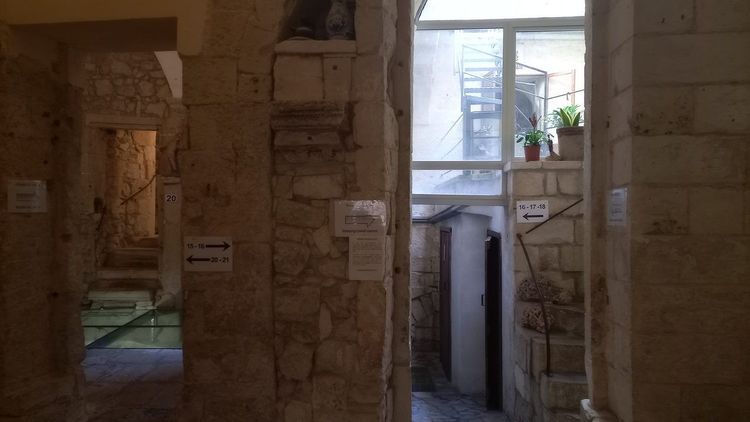
The story of this museum deserves to be told before the visit even begins. In 2001, Luciano Faggiano started plumbing works at his property in order to open a restaurant. While digging up the floor he stumbled upon a Messapian tomb, then a medieval well, frescoes, tunnels and Franciscan remains spanning nearly twelve centuries layered on top of one another. The restaurant never materialised: the house became the Museo Faggiano (Via Ascanio Grandi, 73100 Lecce, rated 4.8/5 on Google based on 1,520 reviews), one of the most unusual private museums in southern Italy.
The visit unfolds across several levels, from the basement where a Roman cistern is clearly visible to the upper floors displaying objects found during successive excavations. A narrow staircase even leads to a trapdoor opening onto the roof, with an unexpected view over the surrounding bell towers. This vertical dimension, rare in such a compact museum, makes for a far more immersive experience than a straightforward collection of objects behind glass.
Local legend also holds that the house served as a refuge for Templar knights fleeing in the fourteenth century, a hypothesis historians treat with caution but which still enlivens the guided tours given by the Faggiano family themselves. This blend of serious archaeology and popular storytelling gives the place a particular flavour, quite different from the institutional museography of the major sites nearby.
Allow at least thirty minutes, more if you enjoy detailed explanations, which are often given directly by a member of the Faggiano family. The admission fee is modest given the archaeological interest of the site, and the visit suits both history enthusiasts and travellers simply looking for an unusual anecdote to bring home.
11. Browse the Collections at MUST, the City History Museum
Housed in a restored Franciscan convent, the MUST (Museo Storico della Città di Lecce) traces the urban development of Lecce from the Messapian era to the present day. The decidedly contemporary scenography contrasts with the original religious building, creating an interesting dialogue between historic architecture and modern museography.
Highlights include ancient ceramics, municipal archive documents and scale models tracing the evolution of the urban fabric around Piazza del Duomo over the centuries. Some rooms also retain original architectural features from the convent, including a partially preserved cloister now used as a temporary exhibition space.
This museum is particularly well suited to visitors who want to understand the historical context before exploring Lecce's historic centre on foot, as it sheds light on many details encountered in the streets that might otherwise be puzzling. An hour is generally enough to see the permanent galleries in full, and a combined ticket with other municipal sites can sometimes reduce the overall cost of the visit slightly.
12. Watch Artisans Shape Leccese Papier-Mâché
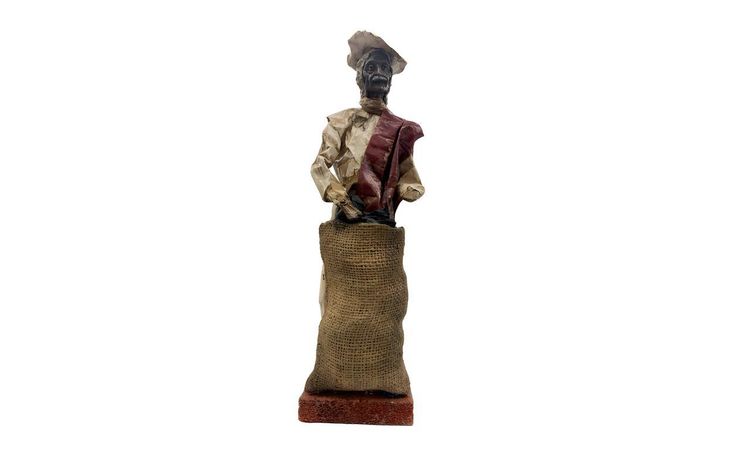
Since the eighteenth century, Lecce has maintained a distinctive craft tradition: cartapesta, or papier-mâché, used to make life-size religious statues with a precision that rivals carved wood or stone. Several workshops, concentrated mainly around Via Vittorio Emanuele and Via Rubichi, remain open to the public and welcome visitors to watch work in progress.
The technique combines newspaper, flour paste and wire on a wooden armature, followed by several layers of paint and gilding applied by hand. Some workshops offer short demonstrations or hour-long introductory sessions, a hands-on way to understand why this craft earned the city recognition on Italy's intangible cultural heritage list.
The pieces displayed in the shop windows, from miniature nativity scenes to life-size figures of saints, sometimes sell for high prices depending on the fineness of the work, but browsing is free in most shops. A papier-mâché souvenir, however modest, remains one of the most authentic purchases you can bring back from the city.
13. Try a Puccia and the Best of the Local Street Food

Among Lecce's culinary specialities, the puccia holds a special place: this small round pocket bread, made from soft flour and sometimes incorporating black olives into the dough, is traditionally filled with sun-dried tomatoes, olives, local cheese and sometimes tuna or cured meat. Sold in bakeries and street stalls at very reasonable prices, it makes a quick and filling lunch between two visits.
Other specialities are worth seeking out, notably the rustico leccese, a savoury puff pastry filled with béchamel, mozzarella and tomato sauce, as well as pasticciotti, small pastry cases filled with custard cream, traditionally served at breakfast. You will find them in most café-bakeries around Piazza Sant'Oronzo, often for less than three euros.
These snacks are particularly well suited to a quick bite between monuments, without needing to sit down in a restaurant. The question of where to eat in Lecce actually finds its best answer in these small neighbourhood stalls rather than in the most visible restaurants on the main square, where prices rise sharply in high season without quality always keeping pace.
14. Treat Yourself to a Caffè Leccese on a Terrace
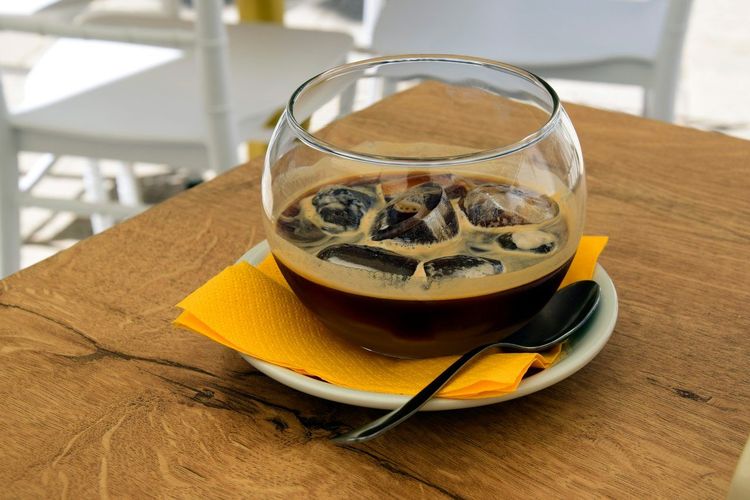
Order a caffè leccese and the server will bring you a sweetened iced coffee served with almond milk instead of regular milk, a variation born in the Salentine countryside where almonds historically replaced less readily available dairy products. The texture, creamier than a standard iced coffee, is a pleasant surprise from the very first sip.
The terraces around Piazza Sant'Oronzo, especially in late afternoon when the heat eases, offer the ideal setting for this break, with a direct view of the Roman amphitheatre and the column of Sant'Oronzo. A caffè leccese generally costs between two and three euros, a price that stays stable even in the most central and touristy establishments. For the record, many locals order it separated, coffee on one side and almond milk on the other, so they can adjust the blend themselves according to how hot the day is: a ritual you will see repeated from terrace to terrace from the first warm hours of summer.
15. Wander Through the Lanes of Lecce's Monumental Cemetery
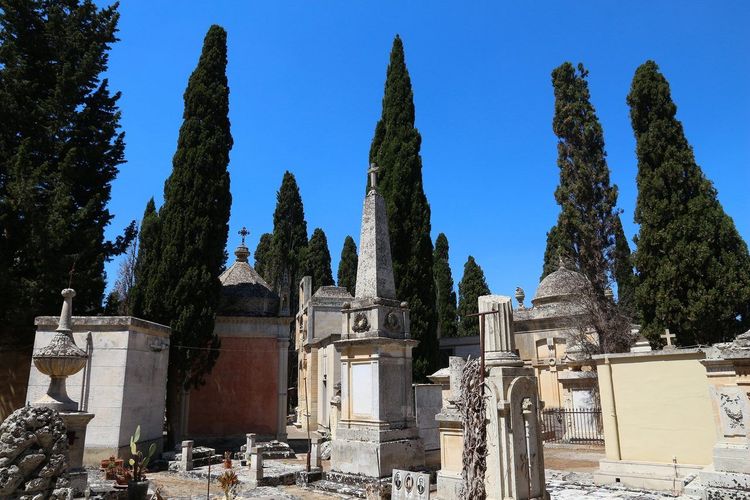
Less common on a sightseeing itinerary, the cimitero monumentale di Lecce (Viale Lo Re, 73100 Lecce, rated 4.1/5 on Google based on 70 reviews) is nonetheless worth the detour for its tombs carved in the same baroque style as the religious monuments in the centre. The bourgeois families of the nineteenth and early twentieth centuries had mausoleums erected here, adorned with allegorical statues, weeping angels and floral motifs carved directly into the local limestone.
Entry is free and the site, generally quiet even in the height of tourist season, offers a different perspective on the city's social history. The alleys shaded by century-old cypress trees make for a peaceful stroll, away from the bustle of the historic centre, and are particularly welcome during the hottest hours of the afternoon.
16. Discover the Historic Centre by Tourist Train
For visitors short on time or simply wanting an initial overview, the tourist train offers a roughly 40-to-50-minute tour through the main streets of Lecce's historic centre, with audio commentary available in several languages depending on the operator. The route generally passes Piazza del Duomo, the Roman amphitheatre and the Basilica di Santa Croce without requiring a long walk.
This option is particularly well suited to families with young children, visitors with reduced mobility, or anyone visiting Lecce in a single day who wants to make the most of their time before exploring on foot the neighbourhoods that interest them most. The fare is modest, generally around eight to ten euros per adult, with regular departures from Piazza Sant'Oronzo throughout the day in high season.
If you are weighing this option against simply walking freely, note that many visitors combine the two: a first circuit by tourist train to get their bearings, followed by a return on foot to the sites that caught their eye most. This approach works particularly well for anyone visiting Lecce in a single day with limited time.
Those who prefer to explore on foot and at their own pace can also opt for a Ryo audio-guided tour: the app unfolds Lecce's historic centre neighbourhood by neighbourhood, with commentary triggered as you walk through the streets. You remain free to linger in front of a sculpted facade or turn off down a side lane without ever losing the thread of the story, something a tourist train, necessarily linear, cannot offer.
17. Swim in the Grotta della Poesia, a Natural Pool Near Roca Vecchia
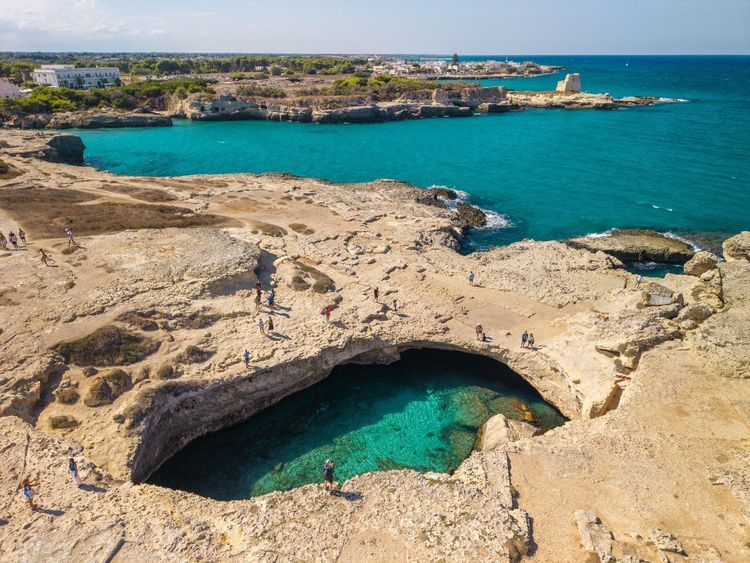
About 30 kilometres north-east of Lecce, the Grotta della Poesia (Roca Vecchia, 73028 Melendugno, rated 4.4/5 on Google based on 17,933 reviews) forms a circular natural pool carved into the limestone by marine erosion, connected to the Adriatic Sea through an underground passage. The site, regularly cited among the most beautiful natural pools in Europe, attracts both swimmers and those who enjoy jumping from the surrounding rocks, at heights ranging from two to seven metres depending on the spot.
The name, which literally means cave of poetry, is said to come from a local legend in which a princess bathed there in secret, inspiring passing poets by her beauty alone. A second cave, smaller and accessible only by scuba diving or free-diving, hides just beside it and draws underwater photography enthusiasts thanks to prehistoric rock engravings visible on its walls.
The neighbouring archaeological site of Roca Vecchia, excavated since the 1980s, has also revealed the remains of a fortified Messapian settlement occupied since the Bronze Age, placing the cave in a far broader historical context than that of a simple natural curiosity. Diving enthusiasts in particular regard it as one of the most rewarding spots to explore in all of southern Italy.
Access to the site is free, but a paid car park is available nearby in high season, when crowds can build up significantly in the middle of the day. It is best to arrive before 10 in the morning or after 5 in the afternoon to enjoy the site without the organised groups coming on excursion from the nearby seaside resorts. Allow roughly 40 minutes by car from the centre of Lecce.
18. Spend a Day in Otranto, Between Cathedral and Aragonese Castle
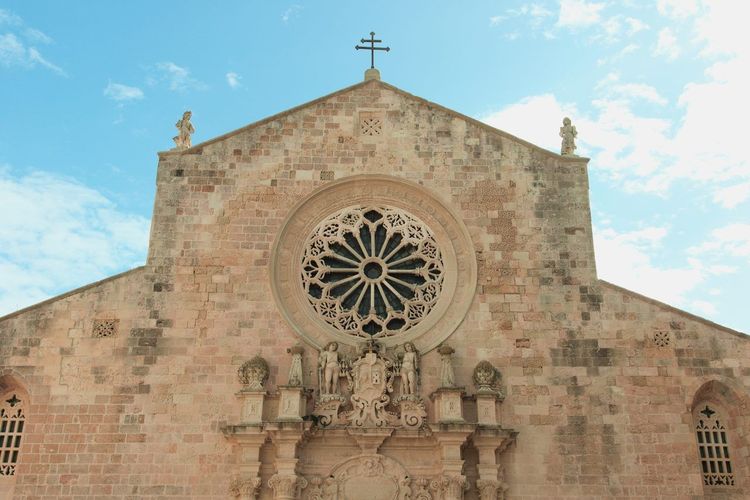
About 40 kilometres south-east of Lecce, the small port town of Otranto deserves a full day's excursion. Its cathedral, founded in the eleventh century, houses an exceptional mosaic floor depicting the Tree of Life, created in the twelfth century by the monk Pantaleone with scenes drawn from biblical, mythological and zodiacal sources covering the entire nave floor.
The crypt, supported by 42 columns each with a different capital, also preserves the relics of the eight hundred martyrs of Otranto, beheaded in 1480 during the Ottoman invasion for refusing to renounce their faith, an episode that still resonates deeply in local collective memory. The Castello Aragonese, built shortly after that event to reinforce the coastal defences, dominates the harbour and offers from its ramparts an unobstructed view of the Adriatic Sea and the Albanian coast on clear days.
Between these two major monuments, the harbour itself is worth a leisurely stroll: the colourful fishing boats, the seafood terraces and the waterfront lined with medieval ramparts give Otranto a distinctly more maritime feel than Lecce, which looks more inward towards its architectural heritage. Many travellers also take advantage of the excursion to reach the nearby sea caves by boat, accessible from the small harbour in high season.
The historic centre, more compact than Lecce's, can be covered entirely on foot in half a day, through whitewashed lanes and small squares opening onto the sea. A drive from Lecce takes around 40 minutes, or a little longer by public transport; many travellers combine this excursion with a stop at the Grotta della Poesia, which lies roughly halfway along the coastal road.
19. Relax at the Thermal Caves of Santa Cesarea Terme
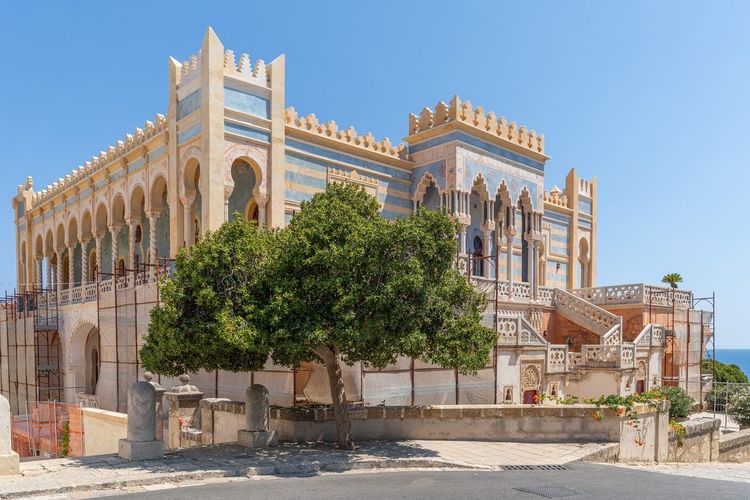
About 60 kilometres south of Lecce, the seaside resort of Santa Cesarea Terme has been exploiting since the nineteenth century the sulphurous waters that rise from four natural cliff-edge caves, renowned for their therapeutic properties for respiratory and skin conditions. The thermal facility, built directly into the rock, offers baths, inhalations and thermal mud treatments in a spectacular setting overlooking the sea.
Beyond the thermal treatments, the small town is notable for its Liberty-style villas built at the turn of the twentieth century for an aristocratic clientele who came to take the waters, several of which still line the main seafront. A late-afternoon walk along the clifftop promenade, with views of the limestone cliffs dropping straight into turquoise water, rounds off nicely a visit more focused on relaxation than heritage.
Local legend attributes the origin of these sulphurous waters to a wounded dragon that came to shelter there after a battle, a story guides enjoy recounting to visitors even before mentioning the actual chemical composition of the springs, which are rich in sulphur, bromine and iodine. Nineteenth-century scientists had given each of the four caves a name reflecting its supposed properties, names still used today by the thermal establishment.
Thermal treatments generally require a booking, especially in high season, while simply visiting the caves and the promenade is free of charge. Many travellers pair this stop with a swim in the sea, as the rocky coves nearby rank among the clearest along the Salentine coastline.
20. Shop and Go Out in the Evening Around Via Palmieri
During the day, Via Palmieri (73100 Lecce) and the Corso Vittorio Emanuele are home to independent boutiques, ceramic workshops and craft stalls, a mix that contrasts with the international chains more visible in the standard shopping streets of other Italian cities. You will find miniature pietra leccese works, hand-painted ceramics and local leather goods.
After dark, the atmosphere shifts dramatically around Piazzetta Falconieri and Via Paladini, where bars and enotecas set out their terrace tables well into the evening, especially from Thursday to Saturday in summer. The mood is relaxed and student-oriented, fuelled by the proximity of the University of Lecce, without ever reaching the nocturnal intensity of larger cities such as Naples or Bari.
This understated but genuine nightlife rounds off a full day of cultural sightseeing nicely. Many travellers end their evening with a final pass in front of the illuminated Basilica di Santa Croce, a moment often cited as one of the most memorable of a stay in Lecce's historic centre, before heading back to sleep to the sound of conversations still drifting across the animated squares.
FAQ
How much time should you plan to visit Lecce?
A full day is enough to cover the essentials of Lecce's historic centre: Piazza del Duomo, Basilica di Santa Croce, the Roman amphitheatre and the column of Sant'Oronzo. To include museums, craft workshops and a leisurely break, plan for two full days, or three if you add an excursion to Otranto or the Grotta della Poesia.
Can you visit Lecce on foot?
Yes, very easily. The historic centre is compact and partly pedestrianised, with most major monuments clustered within a 15-to-20-minute walk of each other. That said, wear suitable shoes: the limestone cobblestones, smooth in places, can be slippery after rain.
Where can you park in Lecce?
The historic centre is largely closed to private vehicles (limited traffic zone). Several paid car parks are available on the immediate outskirts, particularly near the train station and the city walls, with generally reasonable daily rates. It is best to avoid trying to park in the narrow lanes of the centre, which are often off-limits to unauthorised vehicles except for local residents.
What can you do in Lecce when it rains?
Indoor museums come into their own: Museo Faggiano, MUST, the interior of the cathedral and the Basilica di Santa Croce, as well as sheltered cartapesta workshops, all allow you to keep exploring out of the rain. The historic cafés around Piazza Sant'Oronzo also offer a comfortable refuge for watching the rain fall on the baroque cobblestones.
Where should you eat in Lecce?
The small food stalls around Piazza Sant'Oronzo and Via Palmieri offer puccia, rustico and pasticciotti at affordable prices. For a more substantial sit-down meal, the lanes around the Basilica di Santa Croce are home to several trattorias serving traditional Salentine cuisine, often featuring local produce and seafood.
Can you visit Lecce in one day?
It is possible if you focus on the must-sees in the centre: Piazza del Duomo, Basilica di Santa Croce, the Roman amphitheatre, the column of Sant'Oronzo and a lunch break with a puccia. The tourist train helps make the most of this kind of packed itinerary by offering a quick initial overview before you explore your favourite neighbourhoods on foot in more depth.
Lecce is neither just a list of monuments nor a simple stopover on the Puglia trail. The city rewards most those who take the time to look up at the sculpted cornices, to sit on a bench facing the Basilica di Santa Croce, or to follow a lane with no fixed destination between two bursts of sunshine. With its baroque heritage, Roman remains and coastal excursions to Otranto or Santa Cesarea Terme, the capital of Salento easily fills two to three days without ever repeating the same atmosphere, as long as you leave a little room for improvisation between planned stops.
If you are putting together your itinerary, note that the Ryo audio guide is designed precisely for this kind of walk: audio-guided tours unfold the historic centre at your own pace, with contextualised commentary triggered directly from your phone as you move through the streets. A way to turn a simple list of monuments into a genuine thread running through the city, neighbourhood by neighbourhood, while keeping your hands free to look up at the sculpted cornices rather than down at a map. Whether you have a single day or three days punctuated by excursions to Otranto and the coast, the main thing is to let yourself be carried along by the very particular rhythm of the capital of Salento, this baroque city that Ryo considers one of the most captivating in southern Italy.