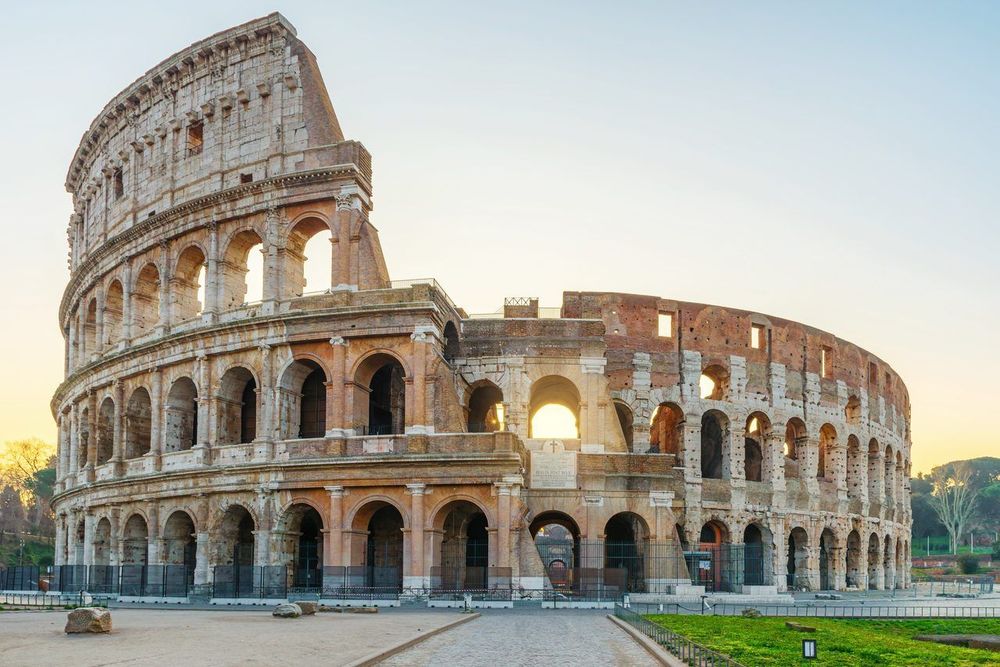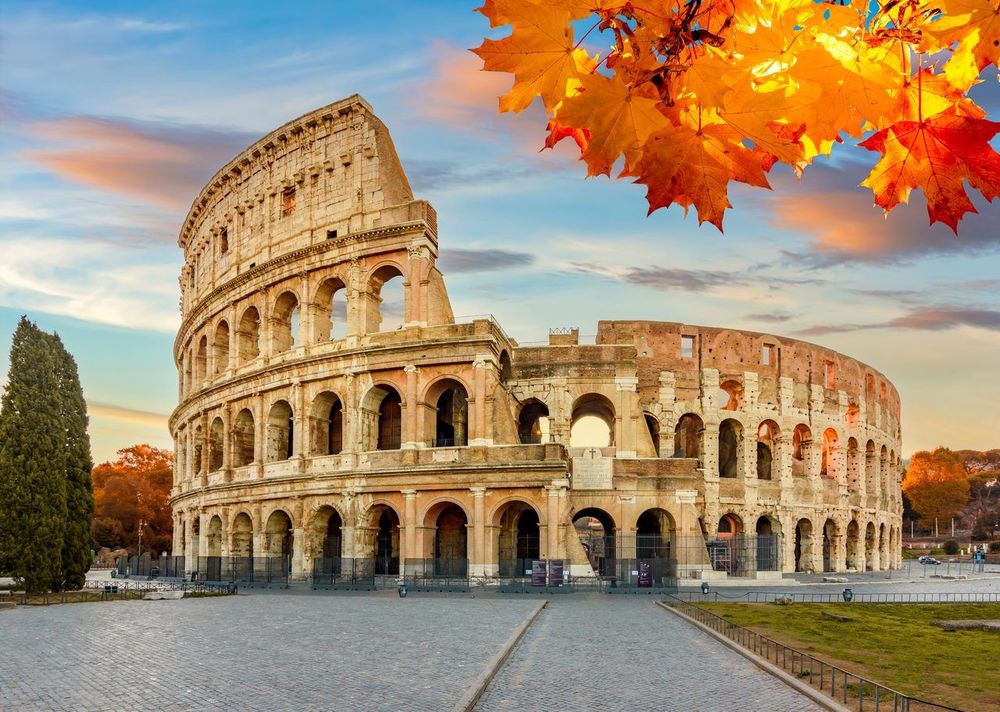
© Shutterstock
 Votre guide Ryo
Visiting Rome with Family: The Complete Guide for Young and Old in 2026
In front of the Colisée, an eight-year-old almost always asks the same thing: did the lions really exist? In Rome, this question comes up on every street corner, and that is precisely what makes visiting Rome with family so different from a classic city trip between adults. Within a few square kilometers, the city packs an amphitheater where you can still imagine the fights, a school that teaches gladiator moves, a zoo nestled in an 80-hectare park, and a fountain where tossing a coin is said to promise your return. Between ancient ruins that can be explored like a life-size playground and museums designed for toddlers, this guide details the must-sees from the Colisée to the Vatican, more offbeat activities such as a street treasure hunt or a boat trip on the Tiber, and the essential practical info: where to stay, how many days to plan, what budget and which season to choose. To link it all together on foot without a map in hand, the Ryo audio-guided tour of Rome tells the story of the city step by step.
Colisée, Roman Forum and Palatine: Ancient Rome That Makes Kids Dream
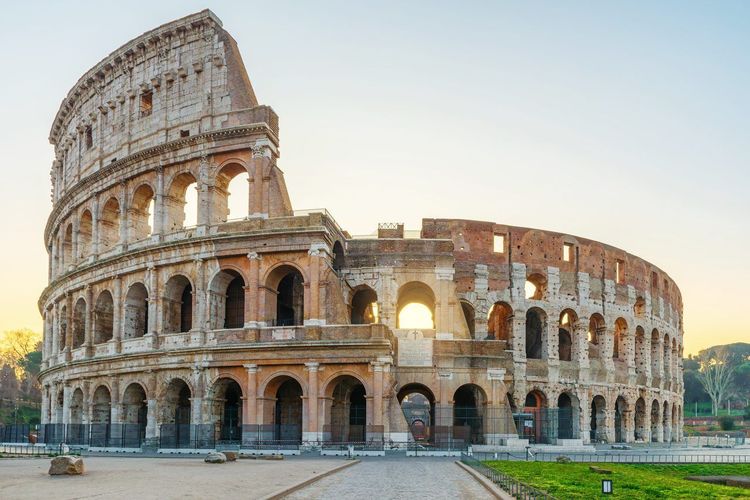
The Colisée remains the site that triggers the most "wow" among the youngest, and not just because of its size. Inaugurated in 80 AD, the amphitheater could hold 50,000 to 60,000 spectators who came to watch gladiator fights and wild animal hunts. The trick is to book a combined ticket that includes the arena, the Roman Forum and the Palatine (Via di San Gregorio 30, 00186 Rome, rated 4.7/5 on Google from 14,734 reviews): you avoid a second queue and spread the visit over half a day without rushing anyone.
Inside, look together for the hypogeum, the network of underground corridors where animals and sets were hoisted up by a system of pulleys. Standard audioguides rarely mention this technical detail, yet it fascinates 7-12 year olds, who love understanding "how it worked." Tell them too that a velarium, an immense canvas stretched by sailors, shielded the crowd from the sun: one anecdote is often enough to win back the attention of a young visitor who starts to tire after twenty minutes.
On your way out via the Arch of Constantine, the Roman Forum opens up directly on the right. It was the political and commercial heart of ancient Rome for nearly a thousand years: temples, law basilicas, a market, everything crossed paths here. Let's be honest, isolated columns and open-air foundations speak less to a nine-year-old than a real standing building. Focus on a few concrete landmarks: the Sacred Way running through the site, the Temple of Vesta where a fire burned that was never allowed to go out, the Curia where the Senate sat.
The site then climbs toward Palatine Hill, where according to legend Romulus founded Rome. It is the shadiest and calmest of the three, with terraced gardens (the Orti Farnesiani) that offer a real break for tired legs. From up there, the view plunges onto the Forum and the Circus Maximus: the perfect moment to take out the snack and let the little troop run around a bit before heading back down.
Plan 3 to 4 hours for the whole thing, plenty of water (little shade on the Forum in summer) and closed shoes: the ground is uneven, paved with basalt in places. In summer, avoid the 11am-3pm window.
No need to book a guide to bring these three sites to life: the Ryo audio-guided tour crosses the Colisée, the Forum and the Palatine, and everyone listens to the gladiator anecdote or the founding of Rome at the pace of their own curiosity, without waiting for the rest of the group.
Via Appia Antica: In the Footsteps of Gladiators, Catacombs and the Baths of Caracalla
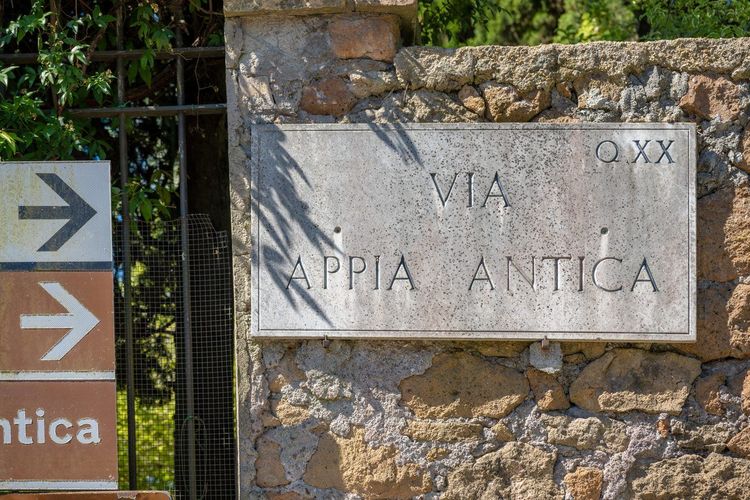
The Via Appia Antica is arguably the most popular half-day among 6-14 year olds, because it turns history into physical activity. This paved road, built starting in 312 BC to link Rome to southern Italy, now crosses a surprisingly green landscape, lined with umbrella pines and ancient tombs, far from the crowds of the center.
A possible first stop: the gladiator school, where associations such as the Gruppo Storico Romano let young recruits (and parents who dare) try the basic moves of ancient combat with wooden replica weapons. Helmet, shield, guard position: the session generally lasts 45 minutes to 1 hour and ends with a little gladiator diploma, a souvenir that kids like better than a magnet.
A little further on are the Catacombs of San Callisto (Via Appia Antica 110/126, 00179 Rome), a network of Christian funerary galleries dug on several levels underground. The visit is guided only, in small groups, and lasts about 30 to 40 minutes. The cool, silent atmosphere generally impresses teens more than toddlers: from age 7-8, the experience is manageable.
If San Callisto is fully booked, which happens in high season, the Catacombs of Domitilla offer a comparable experience with fewer crowds, and the particularity of preserving an underground 4th-century basilica. Both sites forbid photos and bulky bags, and strollers stay at the entrance: the terrain is sometimes slippery.
To wrap up the half-day, head to the Baths of Caracalla (Viale delle Terme di Caracalla 52, 00153 Rome, rated 4.6/5 on Google from 26,321 reviews), a public bath complex inaugurated in the early 3rd century, able to hold around 1,600 bathers at once. The walls still rising over several floors give a better idea of Roman volumes than many more famous ruins: you understand at a glance that bathing in Roman times was closer to a trip to the water park than a simple wash.
Allow a full half-day for the three stops, starting early. Bikes (classic or electric) can be rented at the entrance of the Appia Antica park and let you link the points of interest without exhausting the youngest.
The Vatican: St. Peter's Basilica, Sistine Chapel and Museums

The Vatican deserves a full day of its own, not a morning rushed between two other visits. St. Peter's Basilica impresses first by its size: tens of thousands of worshippers can stand inside, and the dome designed by Michelangelo rises to 136 meters. Entry to the basilica is free, but plan proper attire (shoulders and knees covered) for everyone, or risk being refused at the checkpoint.
Do your teens have energy to spare? Climbing to the top of the dome remains the most memorable experience: 551 steps in total, about 230 of which can be skipped by elevator, which still leaves 320 to climb. At the top, a 360° view over Rome, and the strange sensation of following the curve of the dome from the inside before emerging into the open air. Access is paid separately, apart from the museum ticket, and sandals are best avoided.
The Vatican Museums require more patience: the collection is immense, from the ancient Laocoön to the Raphael Rooms. With young visitors, choose a targeted route rather than trying to see everything: the Gallery of Maps, whose golden ceiling impresses without any effort of concentration, then straight to the Sistine Chapel. Michelangelo's ceiling, painted between 1508 and 1512, is meant to be viewed with your head tilted back: challenge them to spot the Creation of Adam, the most reproduced scene in the world.
One piece of advice comes up from almost every parent who has tried it: book online with a fixed time slot. Without a reservation, the queue can exceed two hours in high season, an unbearable wait for kids under 10. Good to know: museum entry is free for children under 6 and discounted up to age 18.
Just steps away, Castel Sant'Angelo (Lungotevere Castello 50, Rome, rated 4.7/5 on Google from 111,633 reviews), the mausoleum of Emperor Hadrian turned into a fortress, offers a shorter visit (1h-1h30) and is far less crowded. Its terraces give an open view over the Tiber and the dome of St. Peter's: a good plan B if the museum queue discourages everyone.
This area between the Trevi Fountain and the Vatican corresponds precisely to one of the sub-routes of our Ryo audio-guided tour: the audio narration details the history of St. Peter's Basilica during the walk, a useful way to fill the minutes spent waiting at security checks.
Pantheon, Piazza Venezia and the Capitoline: The Historic Center on Foot
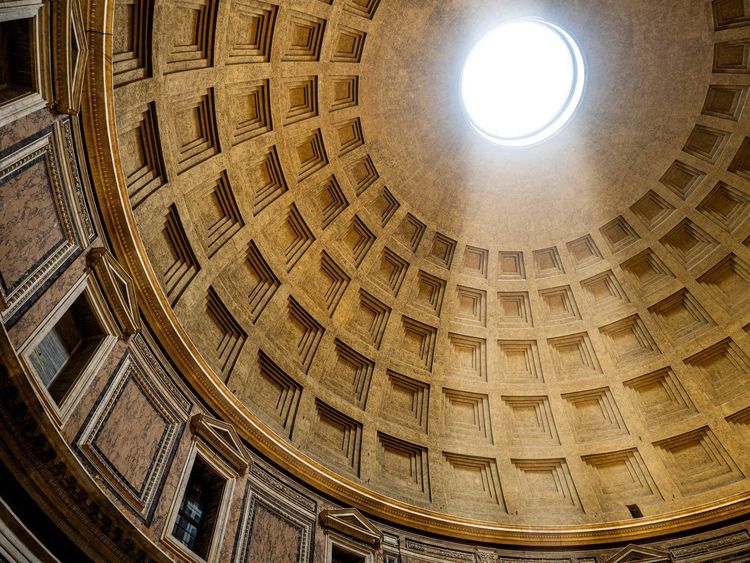
The Pantheon takes 20-30 minutes to visit but leaves a strong impression, thanks to the oculus, the 9-meter circular opening at the top of the dome that lets rain into the building. Rebuilt under Hadrian around 118-125 AD, it remains the largest unreinforced concrete dome ever built. Since 2023, entry costs 5 euros for adults and remains free for under-18s. Ask your explorers: where does the water falling through that hole go? The answer, tiny drainage holes in the floor, always amuses.
Ten minutes on foot away, Piazza Venezia opens onto one of the most photographed monuments in Rome: the Vittoriano (Piazza Venezia, Rome, rated 4.8/5 on Google from 77,879 reviews), an immense white structure dedicated to Victor Emmanuel II, the first king of unified Italy. The monumental staircases climb to a terrace, and a paid elevator goes even higher, from where the view takes in the Forum, the Colisée and the ochre rooftops of the historic center. One of the finest panoramas of the trip.
Going around the building on the right, a more discreet staircase leads to Piazza del Campidoglio (Piazza del Campidoglio 1, Rome), designed by Michelangelo in the 16th century. Its star-shaped paving is perfectly legible from the Vittoriano terrace, and the square is framed by the Capitoline Museums. In the center, the equestrian statue of Marcus Aurelius is a copy: the original is kept safe inside the museum.
This triangle can be covered entirely on foot in half a day, a restful stage after a morning at the Colisée. Slip in ice cream breaks: the best gelaterie in the area hide in the alleys around the Pantheon.
Trevi Fountain, Bocca della Verità and Trastevere: Legends to Tell Children
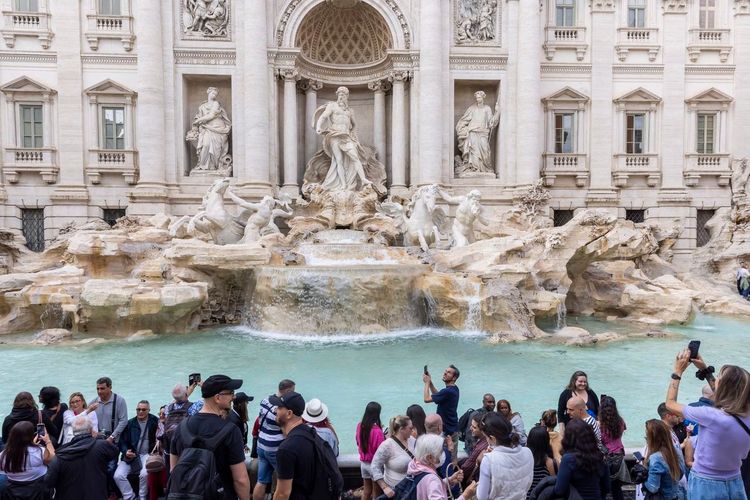
Rome is full of legends that the youngest love to retell back home, and three of them are within 20 minutes' walk of each other. The first plays out at the Trevi Fountain, the largest Baroque fountain in the city (about 26 meters high and nearly 50 wide), completed in 1762. Tradition says you toss a coin with your right hand over your left shoulder to be sure of returning: more than a million euros are fished out every year and given to Caritas. A new development to plan for: since February 2026, access to the edge of the basin costs 2 euros (from 9am to 10pm), free for children under 5.
Next, head to the Bocca della Verità (Piazza Bocca della Verità 18, Rome), an ancient marble mask set under the porch of the church of Santa Maria in Cosmedin. Legend has it that the mouth closes on the hand of anyone who slips their fingers in while lying. Ask everyone to tell a little lie before placing their hand inside: the suspense works at every age, and the photo often becomes the favorite souvenir of the trip.
Crossing the Tiber toward Trastevere, watch for another tradition: every day at exactly noon, a cannon shot rings out from the Gianicolo (Passeggiata del Gianicolo, Rome, rated 4.7/5 on Google from 26,082 reviews), the hill overlooking the neighborhood. Introduced in the 19th century to synchronize all of Rome's bells to the same time, the custom makes anyone who isn't expecting it jump.
Cobbled alleys, ochre facades, laundry hanging from windows: Trastevere is the dream spot for a lunch break.
Villa Borghese: Park, Zoo and Museums for Little Ones
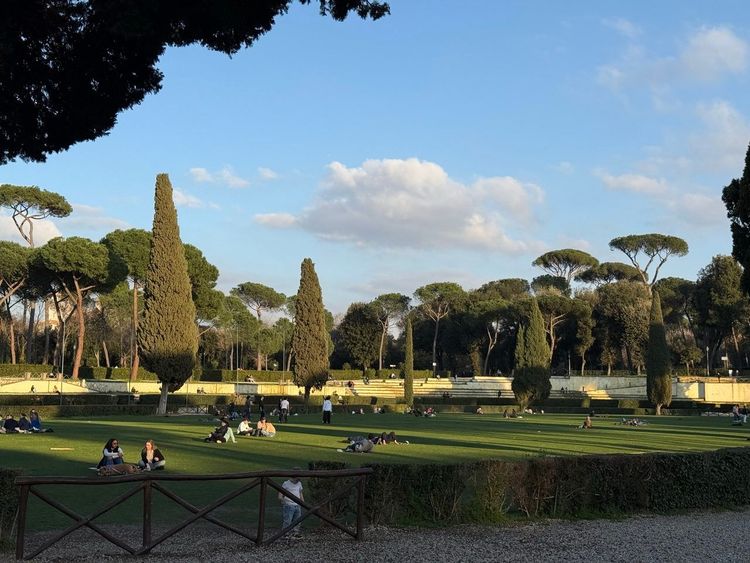
The Villa Borghese, one of the largest parks in Rome at around 80 hectares, offers a welcome breather after several days of cobblestones and museums. Shady, hilly and crossed by wide paths, it is the place where you can finally let the kids run without watching for traffic.
The Park and Its Family Activities (Bikes, Rowboats, Shaded Walks)
Near the main entrances, rentals of bikes and pedal quadricycles (risciò) let you cover the park without wearing out little legs. The lake at the Giardino del Lago, with its rowboats for hire, remains a simple and always effective way to fill an afternoon. The lawns around Piazza di Siena, an open-air equestrian arena, are ideal for an impromptu picnic.
Several stands also rent scooters and roller skates by the hour, a simple option to end the day without negotiating the return to the hotel. On weekends, the lake draws crowds: come early in the morning to enjoy the calm.
Art lovers can try the Galleria Borghese, which houses masterpieces by Bernini and Caravaggio. Reservations are mandatory and the visit mainly suits kids already used to museums, from age 8-9.
Bioparco and Bambini Explora: Zoo and Museum for Toddlers
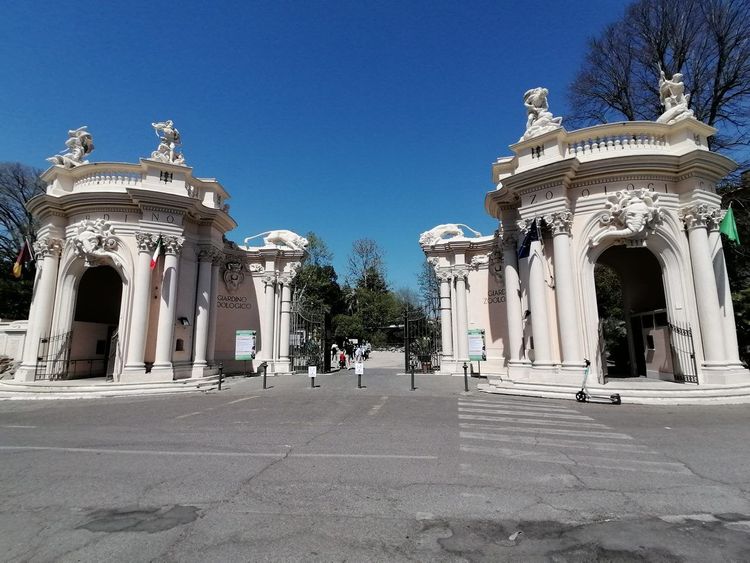
In the heart of the park, the Bioparco di Roma (Viale del Giardino Zoologico 20, Rome, rated 4.4/5 on Google from 25,862 reviews) is a safe bet with toddlers: giraffes, tigers, zebras and some 200 species spread over 17 hectares. The visit takes a relaxed 2-3 hours, with playgrounds and food stops along the way.
A fifteen-minute walk away, near Piazza del Popolo, Explora, the children's museum of Rome, often called Bambini Explora, targets 0-12 year olds with interactive workshops: a mini supermarket, a TV studio, sensory trails for the youngest. Entry is by reserved time slots, which avoids the crush and makes it an excellent fallback in case of rain.
Allow a full day to combine park, zoo and museum, or half a day if you focus on two of the three.
Museums and Offbeat Experiences: Roman Civilization, Leonardo da Vinci and Underground Sites
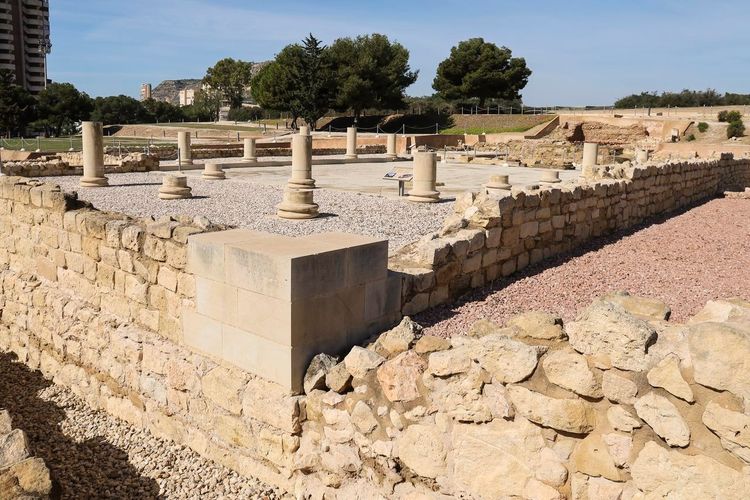
Rome also has a handful of indoor experiences that most guides barely mention, yet ideal for rainy days or afternoons too hot for walking.
Museum of Roman Civilization and the Leonardo da Vinci Experience
Beware of a piece of information that is still widespread: the Museum of Roman Civilization, in the EUR district, famous for its giant model of ancient Rome, has been closed to the public since 2014 and has announced no reopening date. No point crossing the city for it. For the same "Rome reconstructed" idea, aim instead for the Trajan's Markets, which house the Museum of the Imperial Forums: you wander through an ancient multi-level shopping center with direct views over the forums.
A few streets from the Vatican, the Leonardo da Vinci exhibition offers a different approach: about fifty machines rebuilt from the inventor's notebooks, several of which can be handled (cranks, gears, mechanisms). Touching 500-year-old inventions is a change from the usual rhythm of Roman museums, where you look with your hands behind your back.
Underground Rome and the Cat Sanctuary at Largo Argentina
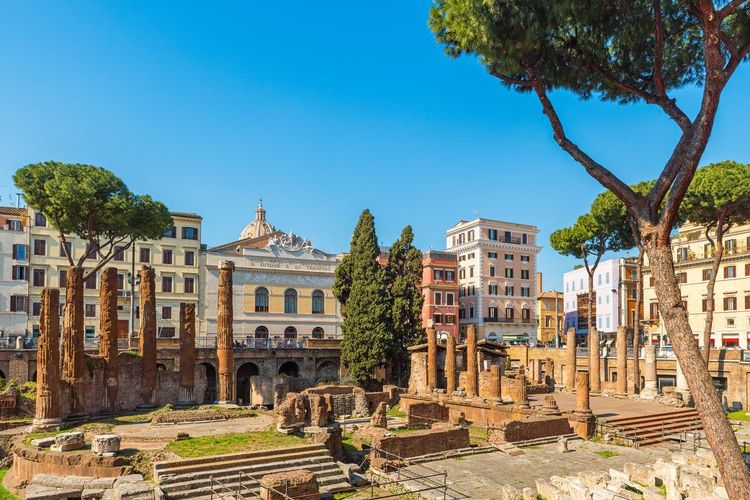
Beneath the streets of the historic center, several sites let you descend literally beneath the city. The Domus Romane at Palazzo Valentini combine remains of patrician houses with digital projections that reconstruct the original rooms, a format that keeps even those bored by archaeology on the edge of their seats. The visit is by reservation, in small groups.
At street level, the Largo di Torre Argentina (Largo di Torre Argentina, Rome, rated 4.5/5 on Google from 38,670 reviews) holds Republican temples from the 4th and 3rd centuries BC, which have become a refuge for stray cats run by volunteers. Watching about twenty felines snooze between columns more than 2,000 years old is a little suspended moment that appeals to all ages.
Fun and Offbeat Activities to Spice Up the Trip
Beyond the monuments, Rome lends itself to several formats that turn the visit into a game rather than a checklist.
Treasure Hunt and E-Bike Rides Through the Streets of Rome
Several local organizations offer treasure hunts in the alleys of the historic center, with riddles to solve to unlock the next stage. The format, usually on a smartphone, lasts 1h30 to 2h and often covers the Pantheon-Trevi-Navona triangle, but experienced at a completely different pace.
Prefer to cover more ground? The electric bike lets you reach distant areas such as the Via Appia without exhausting 8-12 year olds. Several rental shops in the center offer child seats or bikes suited from age 10.
Boat on the Tiber, Cinecittà and Roma World
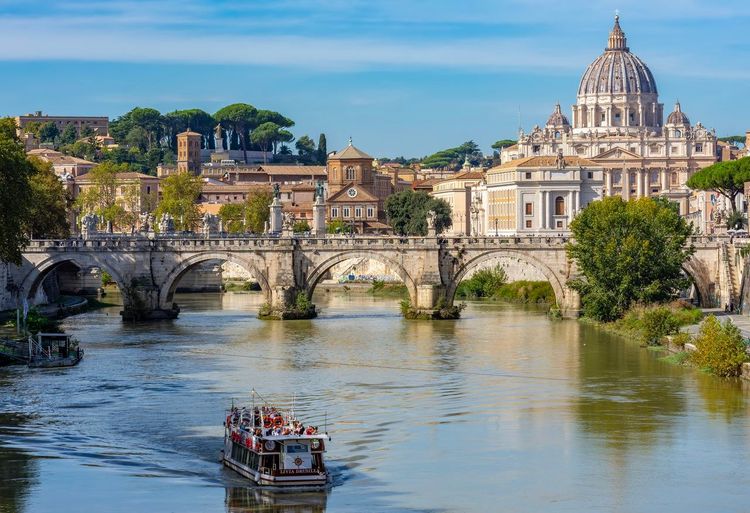
The boat trip on the Tiber offers an unusual perspective: from the water you pass Castel Sant'Angelo, Tiber Island and several ancient bridges, in about an hour, a restful format after a morning of intensive walking.
For film buffs, the Cinecittà studios, where Ben-Hur was shot, open their sets and an exhibition on the behind-the-scenes of Italian cinema to the public.
South of the city, in Castel Romano, Roma World (Via Irina Alberti, Castel Romano, Rome, rated 3.9/5 on Google from 513 reviews) offers an open-air reconstruction of ancient Rome: a Roman camp, gladiator shows, falconry demonstrations, and even nights in a tent for the more adventurous. Here, you're in a theme park, not a heritage site.
This taste for play is found in the Ryo audio-guided tour of Rome in its full version: anecdotes unlock step by step as you walk, a bit like a treasure hunt, with no time slot to book.
Panoramas and Walks on the Hills of Rome
Rome can also be discovered from above, and two hills are well suited to a break between dense visits. The Gianicolo, already mentioned for the noon cannon shot, offers a panoramic terrace reachable on foot or by bus from Trastevere, with an open view over the city's domes, St. Peter's foremost. On Sundays, a small puppet theater still performs there for the bambini.
The Pincio (Viale della Trinità dei Monti, Rome, rated 4.7/5 on Google from 13 reviews), above Piazza del Popolo, changes the mood: English-style gardens, shaded paths and a sweeping view over the square and its twin churches. It can be reached on foot from the Villa Borghese, which lets you combine the two without transport.
These short walks (30 to 45 minutes each) work well at the end of the day, when everyone needs to walk without a specific goal. The Ryo audio-guided tour links several of these viewpoints on foot, handy for alternating walking, stories and photo breaks.
Around Rome: Ostia Antica and Beaches
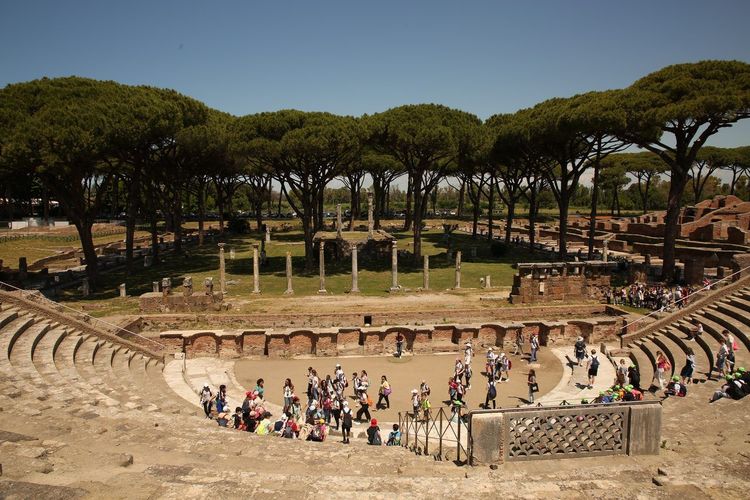
For a stay of 4 days or more, an excursion outside the center is worth the detour, starting with Ostia Antica (Viale dei Romagnoli 717, Ostia Antica), the former port of ancient Rome. Less crowded than Pompeii but very extensive, the site preserves paved streets, a theater still used for summer shows, and thermopolia, the snack bars of the era, which speak immediately to the youngest: the Romans were already buying food on the street.
The Roma-Lido train leaves from Porta San Paolo (Piramide metro) and reaches the site in about 30 minutes, with a standard urban transport ticket. A few stops further, the Lido di Ostia (Lungomare Duilio, Ostia) lines up developed beaches with umbrellas and sun loungers: perfect for combining ruins in the morning and swimming in the afternoon.
Another idea for a day in the countryside: the Castelli Romani, hills southeast of Rome, offer a complete change of scenery with perched villages such as Castel Gandolfo (Castel Gandolfo, Rome), the historic summer residence of the popes, on the shore of a volcanic lake where you can swim.
In all cases, reserve the whole day and visit Ostia Antica before the heat: the site offers little shade.
Where to Stay in Rome with Family
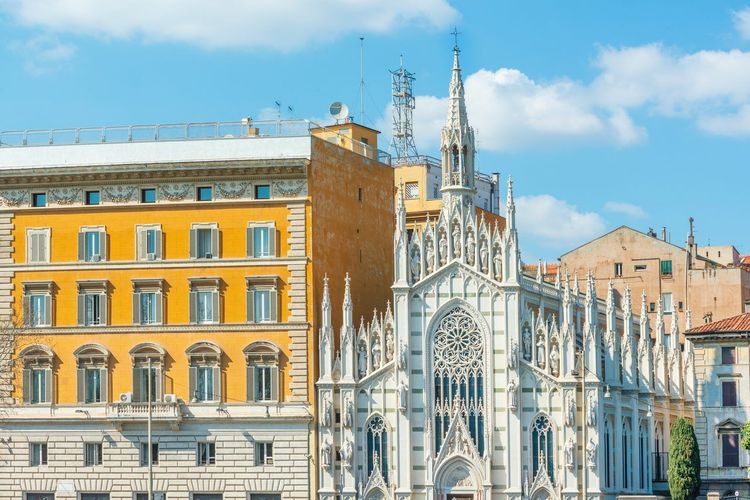
The choice of neighborhood often matters more than the choice of hotel. Prati, just northeast of the Vatican, appeals with its wide streets, stroller-friendly sidewalks and proximity to the papal museums, while staying well connected to the center via metro line A.
The historic center, around the Pantheon or Campo de' Fiori, puts all the main sights within walking distance, a real asset when little legs tire at the end of the day. In exchange, prices climb and the cobblestones batter strollers with thin wheels.
Monti, between the Colisée and Termini station, offers a good compromise: village atmosphere, plenty of apartments with fully equipped kitchens (precious on the evening when no one wants another restaurant) and direct access to the Colisée and the Forum.
On a tight budget? The area around Termini has a wide selection of hotels with quadruple or connecting rooms, at the crossing of lines A and B and a short walk from the airport train. The neighborhood is less charming in the evening, so choose the via Nazionale side.
In all cases, favor two rooms or an apartment over an extra bed: after a day of walking, space and quiet matter as much as the address.
Where to Eat in Rome with Children
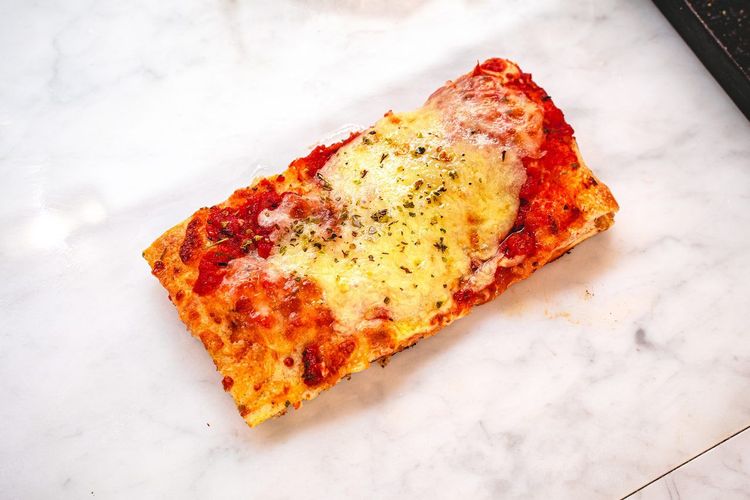
Good news: Roman cuisine, simple and served quickly, naturally suits the youngest. Pizza al taglio, sold by the slice and by weight, remains the most practical solution between two visits, with no reservation or endless service.
For a proper sit-down meal, trattorias almost all offer simple pastas (cacio e pepe, al pomodoro) that please even picky palates, often in half portions on request. High chairs and strollers are generally welcome, but call ahead for popular evening spots. Also keep in mind that Romans dine late: before 7:30pm, many kitchens are still closed.
Artisanal gelaterie can be recognized by their pale-colored tubs, a sign of natural ingredients, and by pistachio that leans brown rather than neon green. One ice cream per half-day is often the argument that keeps everyone going until the next monument.
Avoid restaurants planted in front of the major sights (Colisée, Trevi, Pantheon): prices climb there for quality that is generally lower than at places two streets further.
Getting Around Rome: Transport, Roma Pass and Omnia Card
On foot, the center is easy to cover, with most major sights less than 2 km from one another. Narrow sidewalks and uneven cobblestones argue, however, for a lightweight stroller or baby carrier rather than a bulky all-terrain model.
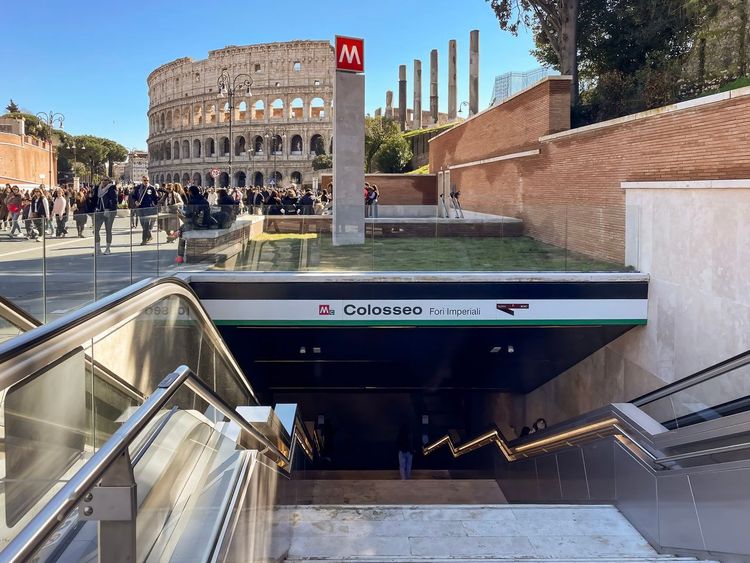
The metro has three lines, two of which are truly useful to visitors (A and B), with stations sometimes far from the monuments. Buses and trams fill the gaps in the network, but punctuality remains unpredictable: allow a 10-15 minute margin. Tickets can now be paid directly by contactless bank card at the metro gates.
Official taxis (white, with a meter) and apps such as FreeNow or Uber help out in the evening, when everyone is tired. Few vehicles, however, are equipped with a child seat: with a baby, bring a compact seat or favor public transport at off-peak hours.
Two passes dominate the debate. The Roma Pass includes public transport, entry to 1 museum (48h option) or 2 museums (72h option) and discounts on other sites, but does not cover the Vatican. The Omnia Card, which costs more, adds skip-the-line access to St. Peter's Basilica and the Vatican Museums.
If your stay revolves around the Colisée, the Forum and the Capitoline Museums, the Roma Pass is enough and remains the most economical, especially since under-18s enter state-run sites for free and therefore don't need a pass. If the Vatican is at the heart of your program, the Omnia Card pays for itself quickly in high season. Do the math before buying: for parents who visit few museums, individual tickets often cost less.
How Many Days to Plan for Visiting Rome with Family (2, 3, 4 or 5 Days)
The question comes up with every trip preparation: how many days should you plan without exhausting the troop or missing the essentials?
With 2 days, focus on the Colisée-Forum-Palatine trio on the first day, then the Vatican and the Pantheon on the second. An intense format, mostly suited to teens used to walking.
3 days allow you to add a lighter day: Villa Borghese and its zoo in the morning, then Trevi, Bocca della Verità and Trastevere in the late afternoon.
4 days remains the length most recommended by parents who have already made the trip: it leaves room for the Via Appia Antica (gladiator school and catacombs) or an offbeat activity such as a treasure hunt, without ever rushing between two sites.
5 days opens the door to a full excursion to Ostia Antica and the beach, or to a half-day of museums for rainy days (Leonardo da Vinci, Domus Romane, Explora).
For a simple weekend, accept making choices: 3 to 4 sites maximum per day, with at least one long break (park, ice cream, nap) in the middle of the day.
On these short stays, the short version of the Ryo audio-guided tour, called The Immortal City, condenses the major highlights into a single walking loop: a way to avoid spending your evenings planning the next day's itinerary.
Budget, Best Season and What to Pack (Baby, Teen) for Visiting Rome with Family
The budget varies enormously depending on the season and the level of comfort sought, but a few items are fixed: allow about 18 to 25 euros per adult for the major sites (Colisée, Vatican Museums). Good news, under-18s enter Italian state-run sites and museums for free, regardless of nationality, upon presentation of an ID. To lighten the bill, rely on combined tickets (Colisée, Forum and Palatine on one ticket), state museums that are free on the first Sunday of the month and quick meals on the go.
The best season remains spring (April-June) or autumn (September-October): pleasant temperatures for walking all day, with slightly lighter crowds than in midsummer. July and August bring heat that is hard to manage with toddlers (35 °C is nothing unusual), while winter, calmer and cheaper, calls for extra layers in the evening.
In the suitcase, slip in shoes that are already broken in (Roman cobblestones quickly wear out new soles), one water bottle per person (the nasoni, small drinking fountains, are everywhere in the city), a cap in summer and a first-aid kit for blisters. Also bring everyone's ID cards or passports: it is this document, not a photo on a phone, that grants free entry at the checkpoint.
With a baby, Rome remains manageable provided you accept a slower pace: baby carrier rather than stroller in the cobbled center, and diaper changes to plan for in the big museums (Vatican, Capitoline), better equipped than open-air ancient sites like the Forum.
For teens, Rome also has plenty to offer beyond the classic program. Attending a match at the Stadio Olimpico (Viale dei Gladiatori, Rome, rated 4.5/5 on Google from 36,746 reviews), home of AS Roma and Lazio, immerses you in a very much alive local tradition, an atmosphere no ancient monument can match at 15. Add an e-bike ride on the Via Appia, an escape game session in the center or an evening of vintage shopping around Monti, and even the most jaded eventually put down their phone.

FAQ
How many days do you need to visit Rome with family?
Allow at least 3 days to see the essentials without rushing, and ideally 4 to 5 days if you want to add the Via Appia Antica, a day trip to Ostia Antica or an offbeat activity such as a treasure hunt. A 2-day weekend is possible but forces you to choose between the Vatican and the Colisée-Forum-Palatine trio.
What is the best age to bring children to Rome?
From age 6-7, kids really enjoy the gladiator anecdotes and local legends, and the walking goes more smoothly. Before that age, Rome is still accessible but requires adjusting the pace: Bambini Explora, frequent breaks in the park and shorter visits to the ancient sites.
Is Rome suitable for babies and young children?
Yes, as long as you favor a baby carrier over a stroller in the cobbled historic center, and plan for diaper changes in the big museums (Vatican, Capitoline Museums). The city is compact, which limits long journeys.
How can you visit Rome with family on a small budget?
Count on free entry to state-run sites for under-18s, combined tickets (Colisée-Forum-Palatine), free museums on the first Sunday of the month, quick meals (pizza al taglio, gelaterie) and free activities such as St. Peter's Square, the Bocca della Verità or the Gianicolo viewpoint.
Should you get the Roma Pass or the Omnia Card with children?
The Roma Pass works well if you focus on the Colisée, the Forum and the Capitoline Museums, with transport included. The Omnia Card, which costs more, is mainly worth it if the Vatican is central to your trip, thanks to its skip-the-line access. Since minors enter state-run sites for free, the pass often only matters for the adults.
What is the best time of year to visit Rome with family?
Spring (April-June) and early autumn (September-October) offer the best compromise: comfortable temperatures and lighter crowds than in midsummer. July-August bring punishing heat for the youngest, while winter remains manageable with warm layers in the evening.
Visiting Rome with your tribe means accepting that you won't see everything and leaving room for the unexpected: a cat sleeping between two ancient columns, a cannon shot that startles you at noon, an ice cream that makes you forget twenty extra minutes of walking. Between ancient sites that unfold like gladiator stories and parks where you can finally run, the city easily has enough to fill 3 to 5 days without ever repeating itself.
To keep your bearings from one neighborhood to the next without pulling out a map at every crossing, the Ryo audio-guided tour of Rome accompanies your walk, with the best anecdotes slipped into your ears at just the right moment.
À lire également