© Shutterstock
 Votre guide Ryo
Things to Do in Amman in 2026: 20 Experiences to Live in the Jordanian Capital
Amman is unlike any other Middle Eastern capital. Built on seven hills like Rome, it layers eras without ranking them: a 6,000-seat Roman theater just steps from a bustling souk, a millennial citadel overlooking sand-colored buildings constructed within a single generation. Wondering what to do in Amman first means accepting its rhythm — that of a city best discovered on foot, neighborhood by neighborhood, rather than by ticking off a fixed list. If you enjoy that kind of exploration with headphones on, know that Ryo, whose audio-guided tours already cover several hundred cities worldwide, is keeping a close eye on the growing tourism scene of the Jordanian capital.
Between the 6,000 tiered seats of the Roman theater, carved into the hillside around 1,900 years ago, and the shisha bars that keep Rainbow Street alive until midnight, the city shifts registers without transition. You taste mansaf served in a communal dish, bargain for spices in the downtown souk, and climb to the Citadel for a sunset over the rooftop terraces. Amman also serves as a logistical base for day trips to Petra, Jerash, or the Dead Sea, all within less than two hours by road.
1. The Roman Theater of Amman
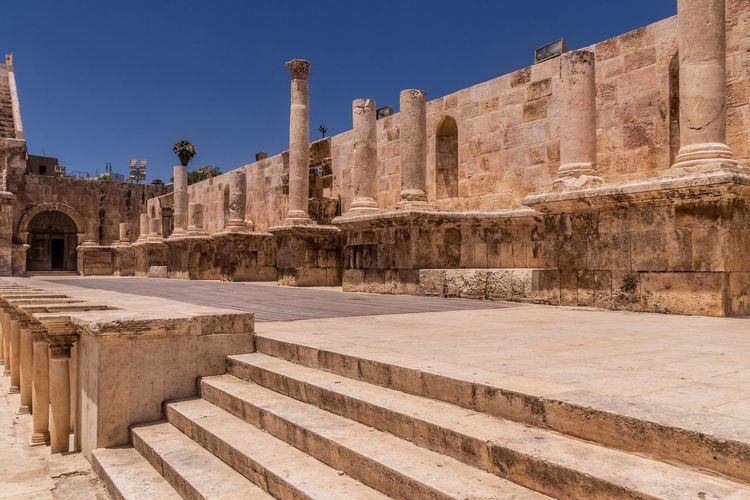
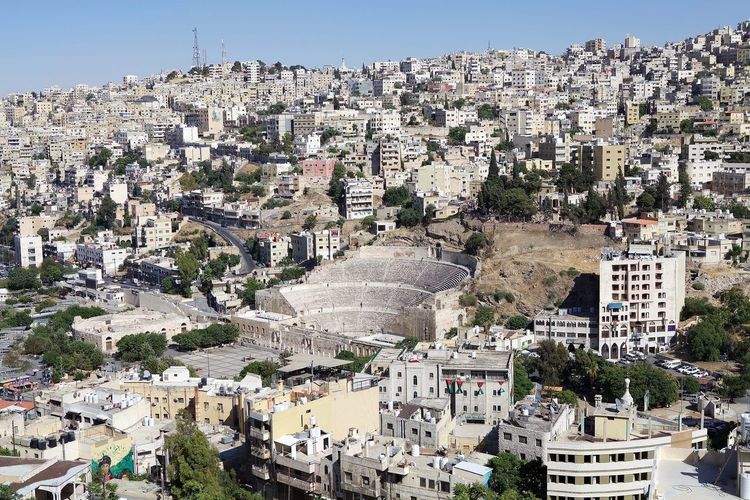
The Roman Theater of Amman (Hashemi Street, Amman, rated 4.5/5 on Google from 22,519 reviews) is set into the flank of Jabal al-Jofeh like a natural amphitheater. Built during the reign of Antoninus Pius, between 138 and 161 AD, it could accommodate around 6,000 spectators across 33 rows of limestone seats. The fan-shaped layout produces remarkable acoustics: from the stage, a normal speaking voice carries to the uppermost rows without a microphone — a test most visitors try by climbing all the way to the top.
Two small museums are housed in the wings of the theater. The Museum of Popular Traditions displays Bedouin costumes and silver jewelry, while the Jordan Folklore Museum reconstructs a traditional wedding scene. The whole complex can be visited in an hour, with the ticket included in the Jordan Pass, making it often the first stop of a day in Amman.
Climb to the top of the seating before noon: the stone heats up quickly under the afternoon sun and shade disappears entirely after 11 a.m. From the upper rows, the view sweeps across the minarets and dense traffic of Hashemite Square below — a sharp contrast between antiquity and contemporary bustle that explains why this theater so often serves as the recommended starting point for understanding the city.
2. The Citadel and Jabal al-Qal'a
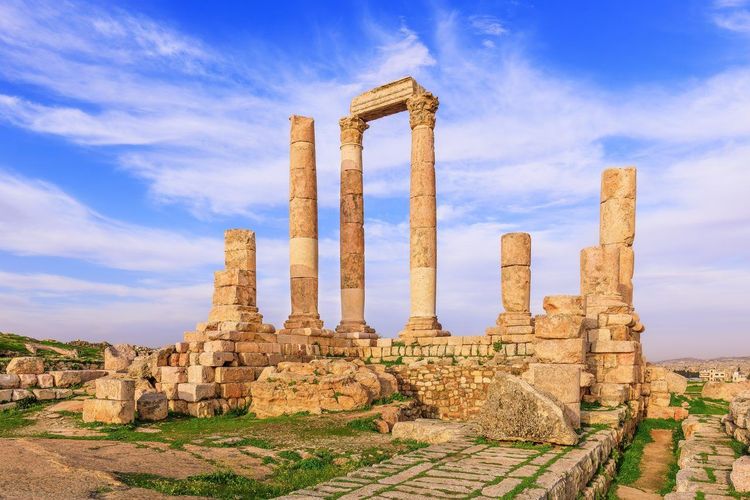
The Citadel of Amman (Al Qal'a Street, Amman, rated 4.5/5 on Google from 22,835 reviews) sits at the summit of one of the city's seven founding hills, at around 850 meters above sea level. The site has been continuously inhabited since the Bronze Age, making it one of the oldest occupied locations in the Middle East. Three monuments dominate the esplanade: the six Corinthian columns of the Temple of Hercules, standing 10 meters tall and believed by archaeologists to have never been completed, the 8th-century Umayyad Palace with its domed audience hall, and a circular Byzantine cistern carved into the rock.
The small archaeological museum on site preserves several statues from Ain Ghazal — plaster human figures 9,500 years old, considered among the oldest known sculptures in the world. Visiting the museum adds twenty minutes to the tour but saves a separate trip later in the stay.
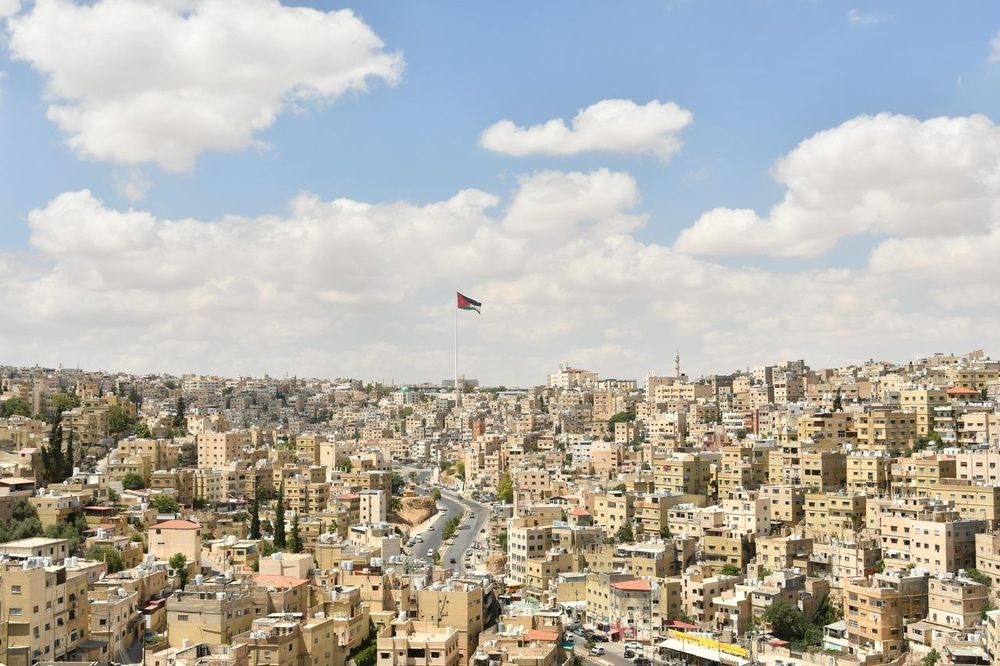
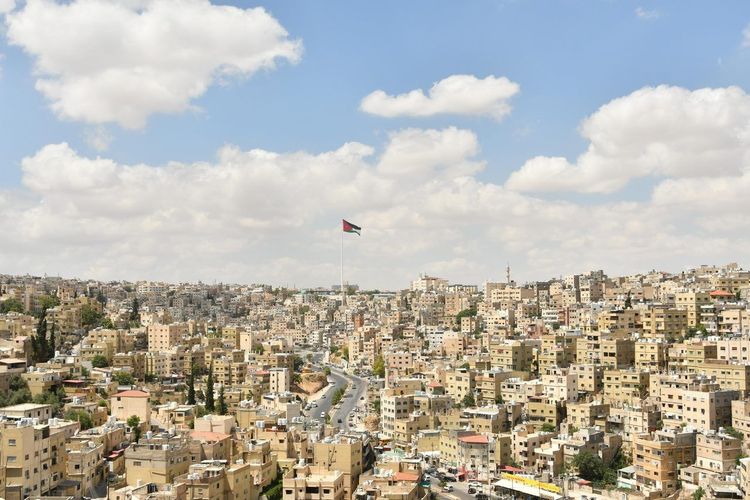
The real reason to climb up here is the view. From the western edge of the esplanade, the city unfolds as a natural amphitheater across its hills, rooftop terraces and minarets merging toward the horizon. An hour before sunset, the raking light sculpts the limestone facades into a golden hue that earned Amman the nickname of the White City. Allow 1.5 hours on site if you come for sunset, or 45 minutes for a quick midday visit.
The entry ticket to the Citadel is separate from the Roman Theater, unless you opt for the Jordan Pass, which covers both sites as well as Petra and Jerash. A site of such historical density lends itself particularly well to an audio-guided-tour-style exploration — the format Ryo deploys in dozens of cities to turn a simple visit into a continuous narrative, one archaeological layer at a time.
3. The King Abdullah Mosque
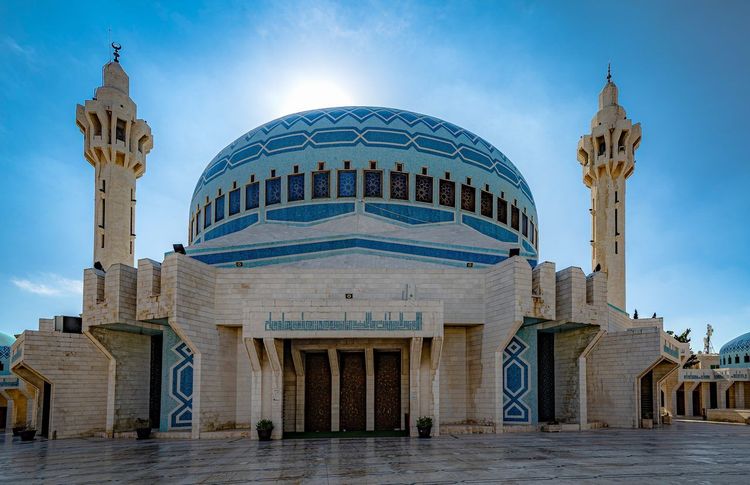
With its mosaic blue dome, the King Abdullah I Mosque (King Hussein Street, Amman, rated 4.6/5 on Google from 7,481 reviews) remains the most recognizable visual landmark in the city center. Built between 1982 and 1989 on the orders of King Hussein in memory of his grandfather, it can accommodate around 3,000 worshippers inside beneath a 35-meter-diameter dome decorated with Quranic verses, and an equal number outside on the esplanade during major prayers.
Non-Muslim visitors are welcome outside of prayer times, generally from 8 a.m. to 11 a.m. and from 2 p.m. to 4 p.m. depending on the season. Women are provided with an abaya and headscarf at the entrance if their clothing does not sufficiently cover arms and legs; men in shorts may sometimes be refused entry. The admission fee is around 2 Jordanian dinars, and shoes must be removed before stepping onto the carpets.
The interior, free of human figures in accordance with Islamic tradition, plays on geometry and Quranic calligraphy painted in blue and gold beneath the dome. A small Islamic museum next door displays manuscripts and ancient coins — a brief visit that complements the mosque well without adding too much to the morning.
4. Rainbow Street and the Jabal Amman Neighborhood
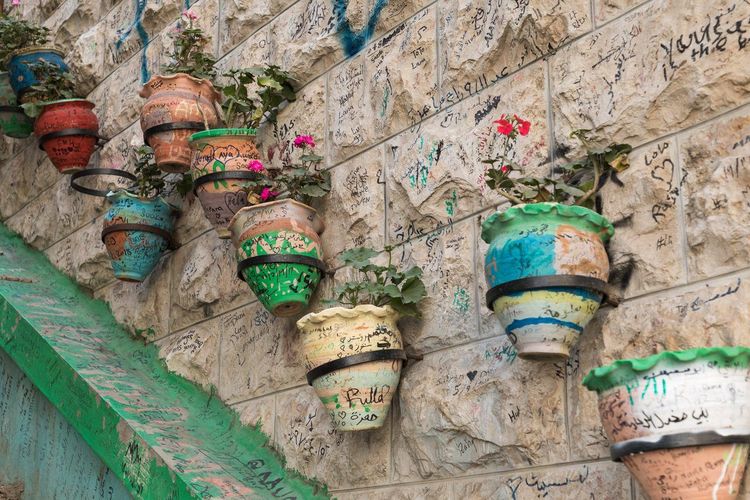
Rainbow Street (Jabal Amman, Amman, rated 4.3/5 on Google from 1,946 reviews) takes its name from the old Rainbow Cinema that defined it in the 1970s, before becoming the most walked street by visitors after dark. The road climbs gently from the First Circle to the Second Circle, lined with Levantine-style houses from the 1920s converted into cafés, designer boutiques, and galleries.
On Fridays, Souk Jara sets up its seasonal stalls (generally June to September) on a perpendicular street: local crafts, Bedouin jewelry, homemade jams, and impromptu live music on the steps. The rest of the week, the street comes alive mainly in the evenings, when terraces fill up and fresh-pressed pomegranate juice vendors set up their portable stands at the crossroads.
You could spend an entire evening without ever entering the same place twice: traditional shisha bars, third-wave coffee cafés, Levantine fusion restaurants. Amman residents meet here after work, making it a great spot to observe local social life rather than the more formatted experience of purely tourist zones.
A practical tip: the sidewalks on Rainbow Street are narrow and traffic is heavy late in the day. Aim for the quieter mid-afternoon hours if you want to photograph the facades without crowds, then come back after sunset for the atmosphere.
5. The Downtown Souk
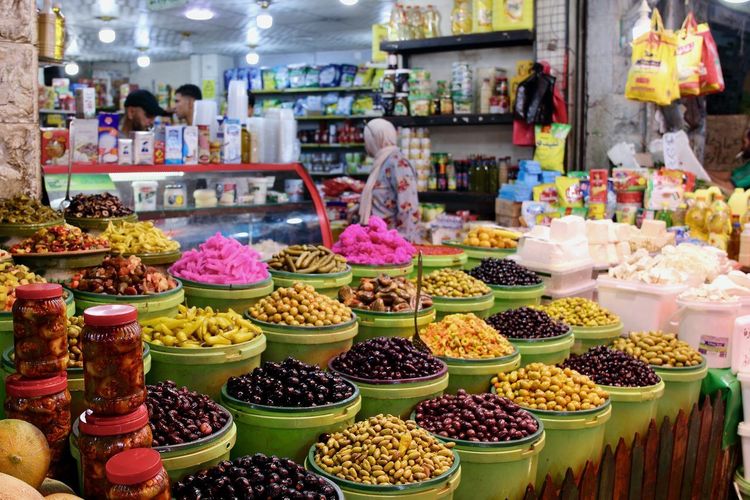
In the historic city center (King Faisal Street, Amman, rated 3.9/5 on Google from 10 reviews), the souk spreads across several parallel streets between the King Abdullah Mosque and Hashemite Square. Spice stalls overflow with sumac, za'atar, and saffron sold by weight, while the gold souk concentrates goldsmiths crafting 21-carat pieces to order.
Bargaining is expected and part of the social fabric, without any particular aggression. A quoted price is generally negotiable by 10 to 20%, rarely more, and dried fruit or Turkish delight vendors will gladly offer a sample before any purchase. The alleyways around Al-Malek Al-Hussein Street also hide traditional weaving workshops — less visible but accessible on request.
Come in the morning, before the heat and pedestrian density make navigating the narrow lanes more difficult. It is also when merchants are most available to explain the origins of their products — a detail entirely lost in the late afternoon when foot traffic picks up.
6. The Jordan Museum
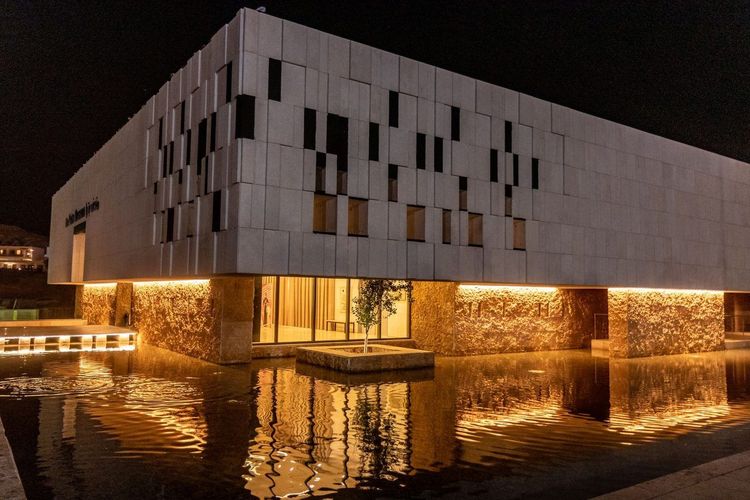
Located in Ras Al-Ain in a modern building inaugurated in 2014, the Jordan Museum (Ras Al-Ain, Amman, rated 4.4/5 on Google from 4,683 reviews) houses the country's most comprehensive archaeological collection across five thematic floors.
The Ain Ghazal statues stand alongside fragments of the Dead Sea Scrolls and a copy of the Mesha Stele, a Moabite inscription from the 9th century BCE. The museography, in both English and Arabic, is more didactic than that of open-air archaeological sites, making it an excellent introduction before visiting the Citadel or Jerash. Allow 1.5 hours for a full visit, somewhat less if you focus only on the prehistoric and Nabataean galleries.
7. Duke's Diwan, a Memory of Ottoman Architecture
The Duke's Diwan house (Al-Malek Al-Hussein Street, Amman, rated 4.3/5 on Google from 540 reviews), one of the oldest buildings in the city center, was constructed in 1924 to house Amman's very first post office, before serving in turn as a Ministry of Finance and then a hotel until the late 1990s. Saved from demolition in 2001 by a heritage enthusiast, it became a diwan — a traditional reception space still open to visitors.
Entry is free, and you are often welcomed by a volunteer who recounts the history of the building, its stone arcades, and its external staircase typical of early 20th-century Damascene architecture. The visit takes around fifteen minutes and pairs well with the neighboring souk.
8. Jabal al-Weibdeh and Its Art Galleries
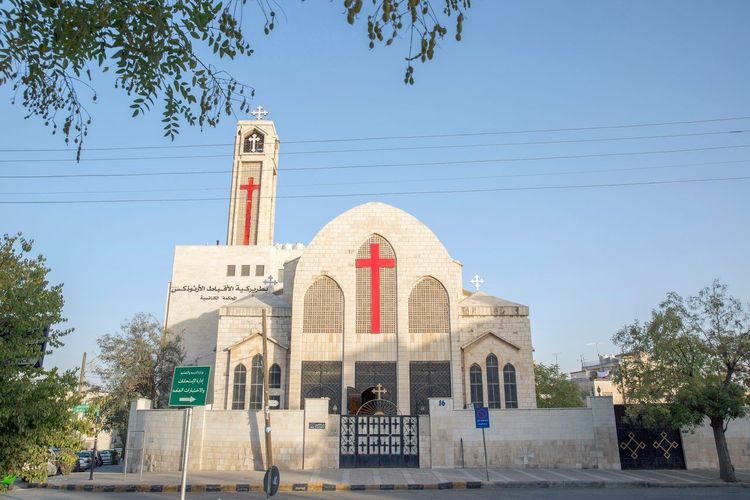
Less frequented than Rainbow Street, the Jabal al-Weibdeh neighborhood (Ras El Ain Street, Amman) has been home since the 2000s to much of Jordan's contemporary art scene. Its quiet lanes, lined with 1930s stone houses, shelter around a dozen independent galleries.
Darat al Funun, a non-profit foundation set across several historic buildings connected by terraced gardens, exhibits Arab world artists in a free and beautifully curated setting. You can spend an hour wandering between the exhibition rooms and the hanging garden, with a view of the Roman Theater below.
The neighborhood also has several independent cafés frequented by students and local creatives — a quieter atmosphere than the more tourist-oriented Rainbow Street nearby.
9. Abdali Mall and the New Face of Al-Abdali
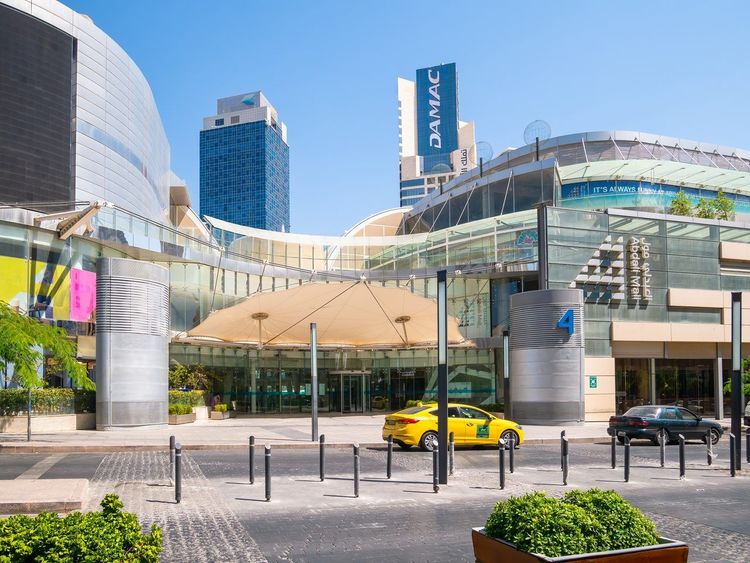
The Al-Abdali district illustrates Amman's other side: that of a capital which has invested heavily in a modern business district since the mid-2010s, complete with office towers and a pedestrian boulevard.
Abdali Mall (Al-Abdali, Amman, rated 4.4/5 on Google from 38,453 reviews) brings together international boutiques, movie theaters, and air-conditioned restaurants — a practical option during summer heat waves or for a break between heritage visits. The tree-lined pedestrian boulevard outside deliberately contrasts with the dense urban fabric of the historic center a few kilometers below.
While the neighborhood is less compelling for its authenticity than for its comfort, it offers a useful glimpse into Amman's economic trajectory — a city that has doubled its population in thirty years under the successive waves of regional refugees.
10. The Rainbow Theatre, an Iconic Cinema on Rainbow Street
Just steps from the First Circle, the Rainbow Theatre (Rainbow Street, Amman, rated 4.3/5 on Google from 744 reviews) gave its name to the entire street in the 1970s, before closing and reopening as a small cultural complex and independent cinema.
Its Art Deco facade remains a much-photographed landmark, and its programming — mixing Arab and international films in their original language — draws a more local than tourist crowd. Ten minutes is enough for the photo; a full evening if a screening tempts you.
11. Local Cuisine: Mansaf and Street Food
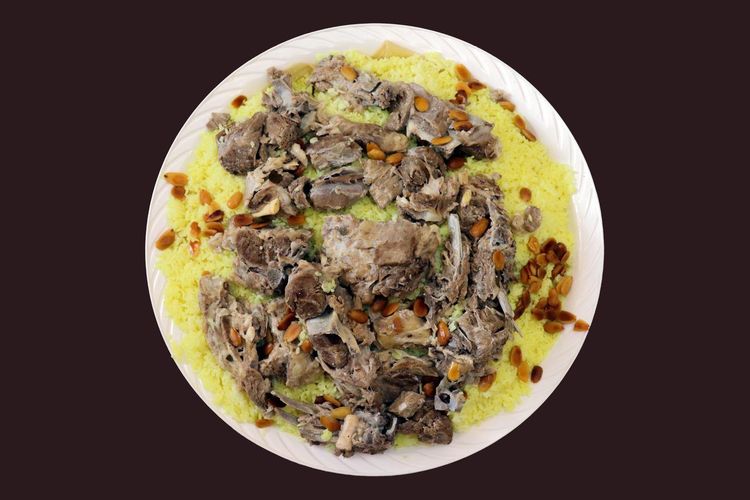
Mansaf, Jordan's national dish, consists of lamb slow-cooked in a fermented yogurt called jameed, served on a bed of rice and flatbread, traditionally shared from a communal dish eaten with the right hand. Originally a celebratory meal, it is now served daily in family restaurants throughout the city center, often for the equivalent of 8 to 12 euros.
At the opposite end of the spectrum, Hashem Restaurant (Al Amir Mohammed Street, Amman, rated 4.1/5 on Google from 24,622 reviews), open 24 hours a day since the 1950s, serves some of the country's most celebrated falafel, accompanied by hummus, ful, and fresh bread — all for under 3 Jordanian dinars per person.
In between, Amman's street food scene abounds with knafeh (cheese pastry in orange blossom syrup), shawarma sliced to order from vertical spits along Rainbow Street, and freshly pressed sugarcane juice on downtown street corners. No reservation or lengthy search required: the density of affordable good spots in the city center far exceeds that of tourist-oriented fine dining restaurants.
A tip for group meals: always order more mezze than the table seems to need. Portions of hummus, moutabal, and fattoush are designed to be shared, and a successful Jordanian meal is judged as much by the variety of small dishes as by the quality of the main course.
12. Having Tea or Coffee in Traditional Houses
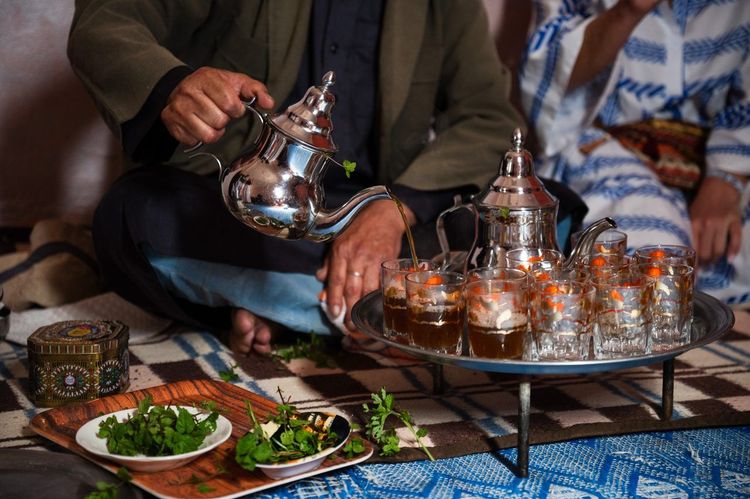
Sage or mint tea, served piping hot in small glasses, punctuates the day in Amman far more than coffee, which is reserved for more formal occasions or the newer specialty cafés.
At Books@cafe (Omar Bin Al-Khattab Street, Amman, rated 4.3/5 on Google from 3,036 reviews), one of the country's first bookshop-cafés, the terrace overlooking the downtown rooftops has drawn since the 2000s a clientele mixing expatriates and travelers in search of wifi and an open view.
In the historic center, more modest teahouses with no particular signage cater mainly to a male clientele gathered over card games or hookahs — a social scene worth watching from the outside even without taking part.
13. What to Do in Amman at Night: Bars and Nightlife
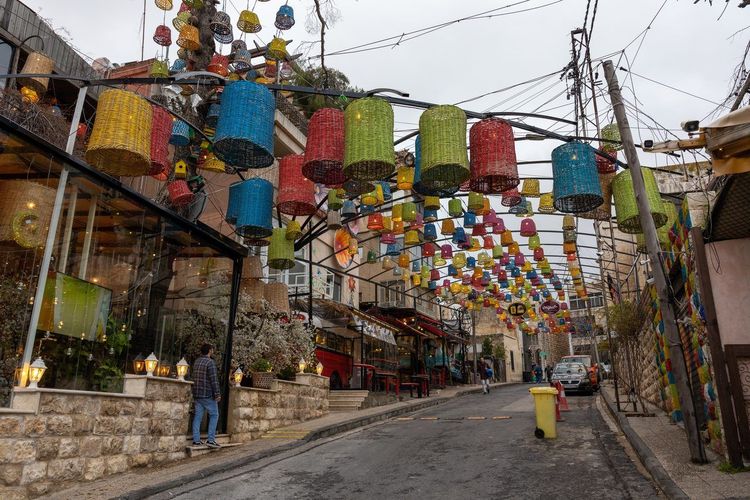
Amman's nightlife is concentrated almost entirely around Rainbow Street and its adjacent lanes, where shisha bars, rooftops, and discreet clubs coexist without overly visible signage — Jordan regulates alcohol advertising strictly.
The rooftops of Jabal Amman offer unobstructed views over the illuminated hills, with an atmosphere that is more intimate than festive on weeknights, building in intensity on Thursday and Friday evenings, the weekly days off. Several venues offer live programming — jazz or electronic Arabic music depending on the night.
If you are looking for a quieter evening, the Wild Jordan Center occasionally hosts cultural events at the end of the day — an alternative to the livelier atmosphere at the lower end of Rainbow Street. In any case, plan your ride home in advance: taxis become scarce after 1 a.m. in some residential neighborhoods.
14. Outdoor Activities Around Amman
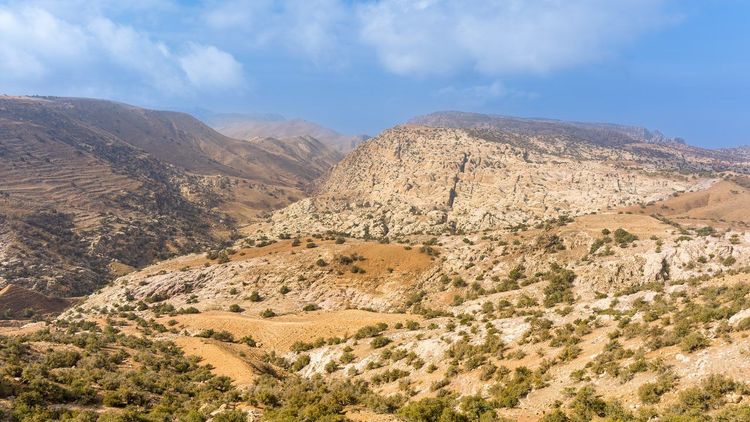
At the Wild Jordan Center (Othman Bin Affan Street, Amman, rated 4.4/5 on Google from 3,404 reviews), the Royal Society for the Conservation of Nature organizes half-day outings to nearby nature reserves, including Dana and lesser-known wadis within an hour's drive.
The hills surrounding Amman also lend themselves to impromptu urban hikes: climbing from one jabal to the next via public staircases — sometimes several hundred steps in a row — remains one of the best ways to grasp the city's distinctive topography. Wear good shoes and carry water, as the heat can rise quickly even in the late morning.
15. Joining a Walking Tour
Several local associations, including Duke's Diwan mentioned above, organize free or pay-what-you-wish guided walks through the historic center, generally on Friday or Saturday mornings. At Ryo, we believe the best way to understand a city lies in walking accompanied by an audio narrative — that is the very principle of the Ryo audio guide, deployed in many capitals around the world.
If you prefer a more flexible format than a fixed-time guided tour, a detailed map and a few historical reference points are generally enough to explore the Citadel, Roman Theater, and souk triangle on your own, without any serious risk of getting lost in a city built like an amphitheater.
16. Day Trip to Petra from Amman
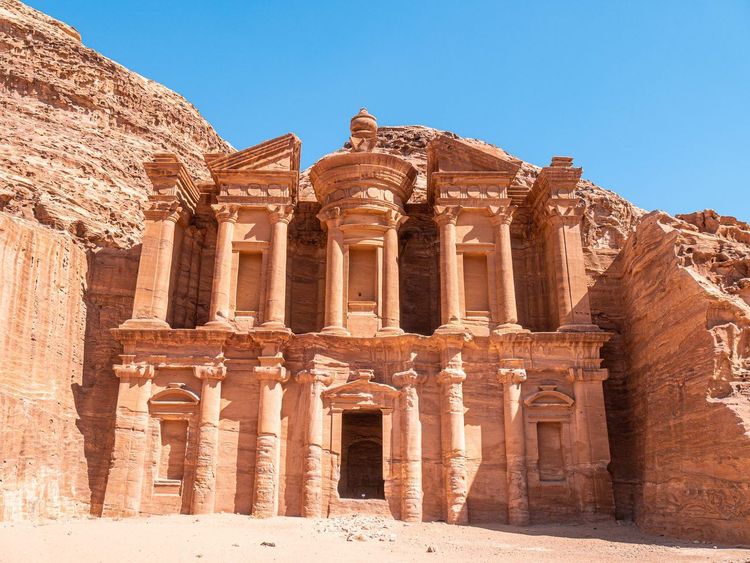
Petra (The Treasury, Petra, rated 4.8/5 on Google from 12,681 reviews), around 3 hours south of Amman by road, can be visited on a day trip but ideally warrants an overnight stay to enjoy the site early in the morning before the tour groups arrive.
Departing as early as possible from Amman, generally between 6 and 7 a.m., allows you to reach the Treasury (Al-Khazneh) carved into the rose-red rock by around 9:30 a.m., before the midday heat and crowds. Agencies in the capital offer air-conditioned bus or private car transfers, the latter being noticeably more comfortable for a long day of walking on site.
If your schedule allows, spending one night in Wadi Musa, the gateway town to Petra, completely transforms the experience compared to a compressed round trip from Amman in a single day.
17. Floating in the Dead Sea
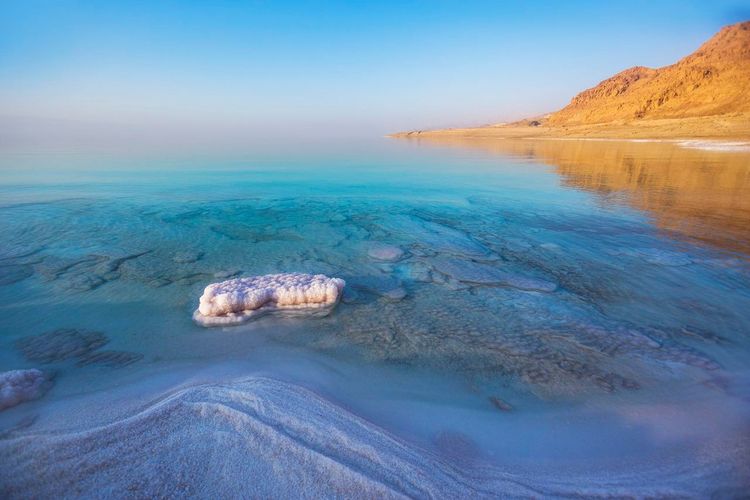
Less than an hour from Amman, the Dead Sea (Dead Sea Road, Jordan) plunges to 430 meters below sea level, the lowest point on the Earth's surface. Its salinity — nearly ten times that of the oceans — makes floating effortless, a moment that produces some of the most shared photos from any trip to Jordan.
Several public beaches and hotels offer day access with showers and mineral mud available on site, the latter celebrated for its soothing properties on the skin. Avoid shaving the day before: salt on irritated skin stings sharply — a detail few guides mention before departure.
18. Jerash, the Pompeii of the Middle East
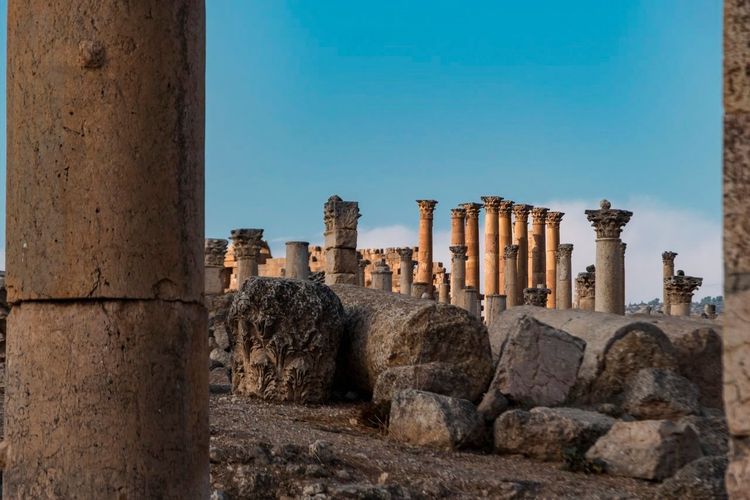
Jerash (Hadrian's Arch, Jerash, rated 4.7/5 on Google from 1,587 reviews), just under an hour north of Amman, is home to one of the best-preserved Greco-Roman cities in the world, nicknamed the Pompeii of the Middle East for the remarkable state of its colonnaded streets.
Hadrian's Arch, the oval plaza lined with 56 Ionic columns, and the cardo maximus paved with slabs still bearing the grooves of ancient chariot wheels can all be explored in half a day. Local bagpipe players — a legacy of the British military presence in the early 20th century — sometimes perform at the Roman hippodrome during reenactments organized for groups.
A combined excursion to Jerash in the morning followed by a return to Amman in the afternoon is the most common itinerary, and leaves enough energy to explore Rainbow Street that same evening.
19. Planning a Day in Amman
If you only have one day to visit Amman, focus on the historic triangle: the Roman Theater in the morning, a climb to the Citadel late morning for the view, then the souk and the King Abdullah Mosque in early afternoon. Save the end of the day for Rainbow Street and a dinner of mansaf or mezze.
This pace requires a lot of walking between hilly neighborhoods — a taxi or an app like Careem helps avoid the steepest climbs between downtown and Jabal Amman. Allow at least an hour for lunch; the midday heat makes outdoor sightseeing uncomfortable between noon and 3 p.m. in summer.
20. Amman in 3 Days: A Complete Itinerary
Over three days, dedicate one day to the historic center and Rainbow Street, one day to a morning excursion to Jerash followed by the Dead Sea in the afternoon, and a final day for Petra as a day trip — or better yet, with an overnight stay if your schedule allows. This structure minimizes repeated journeys and leaves real room to wander without watching the clock.
FAQ
How many days do you need to visit Amman?
One full day is enough for the historic center, the Citadel, and Rainbow Street. Allow three days if you want to add excursions to Jerash, the Dead Sea, or Petra without leaving exhausted.
Is Amman a safe city for tourists?
Yes, Amman ranks among the safest capitals in the region for visitors. Usual precautions are sufficient: staying alert on late-night transport and respecting dress codes in religious sites.
What is the best time to visit Amman?
Spring (March to May) and autumn (September to November) offer moderate temperatures, ideal for walking between the hills. Summer can exceed 35°C during the day, while winter remains cool and sometimes rainy.
Do you need a visa to visit Jordan?
Most European nationalities obtain a visa on arrival or through the Jordan Pass, which often includes visa fees when purchased before departure for a stay of at least three nights.
How do you get around Amman?
Ride-hailing apps like Careem remain the simplest and most affordable way to travel between the hilly neighborhoods. Yellow taxis run on a meter, which should always be checked before setting off.
What is there to do in Amman at night?
Rainbow Street is the heart of the nightlife scene: shisha bars, rooftops, and small clubs. The atmosphere peaks on Thursday and Friday evenings, the weekly days off in Jordan.
Can you visit Petra in one day from Amman?
Yes, a day trip is possible with an early morning departure, but one night in Wadi Musa lets you enjoy the site before the crowds and without the fatigue of a compressed journey.
Amman does not lend itself well to timed visits. It is a city that reveals itself more in the walk between two hills, in an impromptu conversation with a souk merchant, or in the relative quiet of a Jabal al-Weibdeh rooftop at the end of the day, rather than in the strict ticking off of a list of monuments.
While waiting for Amman to one day join the map of Ryo audio-guided tours, keep the reflex for your next travel destinations: the app already covers many cities where every neighborhood tells its story in your ear, from the first step in the street to the last viewpoint.