© Shutterstock
 Votre guide Ryo
Things to Do in Muscat: 20 Must-Have Experiences in 2026
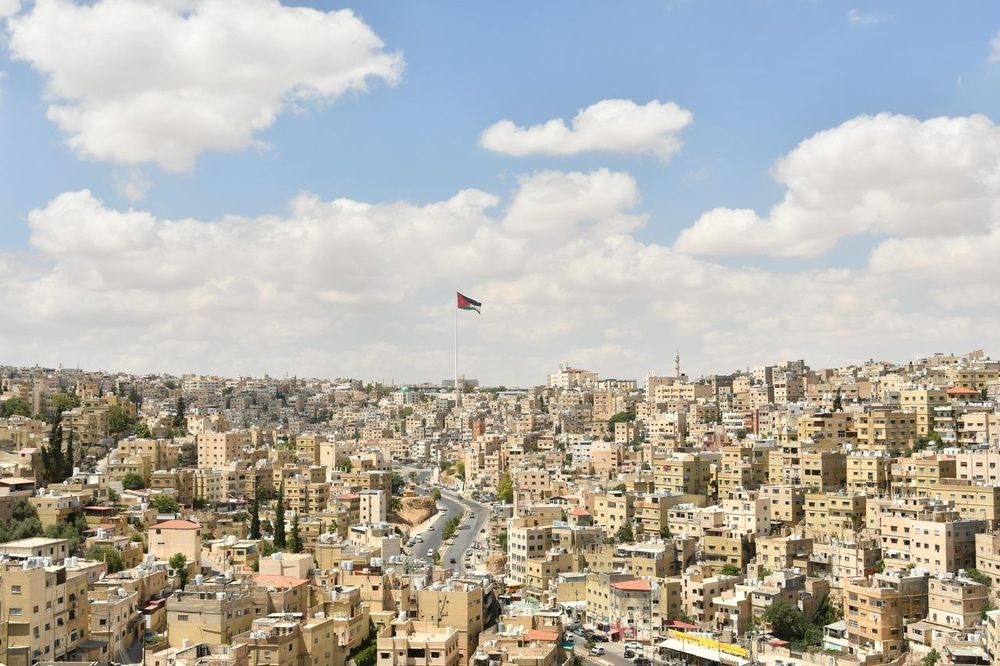
In Muscat, skyscrapers don't exist: a city law has required since the 1970s limiting building heights and painting facades in white or sand tones, so that Oman's capital looks more like a fortified desert city than a Gulf metropolis. Wondering what to do in Muscat means accepting a different pace: here, you discover a mosque capable of welcoming 20,000 worshippers, an opera house built on the orders of a music-loving sultan, deserted beaches fifteen minutes from the city center, and mountains rising above 2,000 meters just two hours away by road. The Ryo audio guide tour of Muscat follows this logic by connecting the main waterfront sites to the more discreet neighborhoods of the old town.
In the pages that follow, head toward the Persian carpet woven in one piece for the Sultan Qaboos Grand Mosque, the Muttrah fish market where the catch still arrives at dawn on wooden boats, and the turquoise canyon of Wadi Shab accessible only by swimming. Along the way, discover the country's most expensive fragrance, made in an air-conditioned workshop on the outskirts of the city, and 16th-century Portuguese forts that still guard the entrance to the port. Twenty experiences make up this selection, from the free stroll along the corniche to the 4x4 excursion into the Akhdar mountains.
1. The Sultan Qaboos Grand Mosque
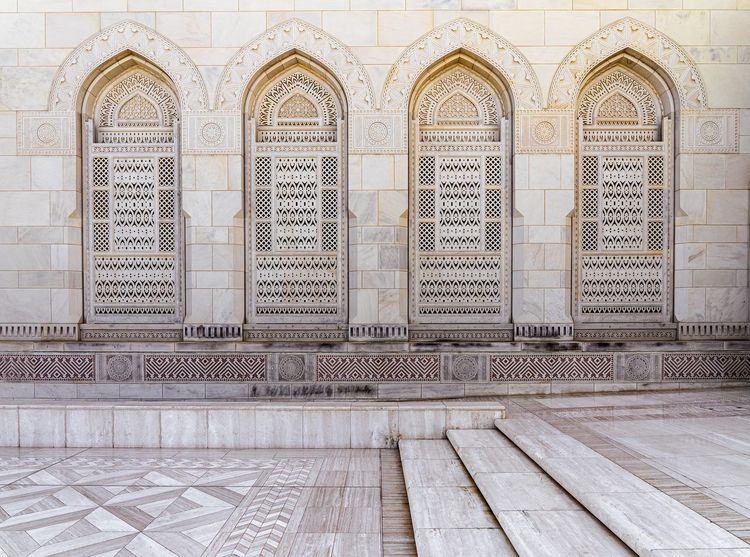
The Sultan Qaboos Grand Mosque (Sultan Qaboos Grand Mosque, Al Ghubra, Muscat, rated 4.8/5 on Google based on 16,248 reviews) required six years of construction and approximately 300,000 tonnes of Indian sandstone before its inauguration in 2001. Two decades later, it remains the largest mosque in the country and one of the few Omani places of worship open to non-Muslim visitors.
The main prayer hall can accommodate up to 20,000 worshippers. The floor is covered by a Persian carpet woven in a single piece over approximately 4,200 m², a world record at the time of its installation that mobilized several hundred Iranian weavers over four years. On the ceiling, a 14-meter-high, 8-tonne Swarovski chandelier casts a golden light over the white marble columns. The five minarets framing the building recall the five pillars of Islam, a detail many visitors miss while focusing on the central dome.
Sultan Qaboos personally chose the location, on an open plot in Al Ghubra about fifteen minutes from the historic center, so that the mosque would become a unifying project as much as a place of worship. An adjacent Islamic information center, open on weekdays, offers explanations in several languages on the practices and history of Ibadi Islam, the majority faith in Oman but a minority within the broader Muslim world. The annex library, less visited, preserves religious manuscripts accessible upon simple request at reception.
You can only visit the mosque in the morning, Saturday through Thursday, generally between 8 am and 11 am: opening times shift slightly depending on the season and prayer schedule, so it's best to check the day before. Friday is reserved for communal prayer and tourist access is closed. Entry remains free, which often surprises visitors given the scale of the site.
The dress code is strict and applied without exception: shoulders and knees covered for everyone, hair-covering scarves for women. Abayas are loaned free of charge at the entrance for unprepared female visitors, but the queue grows long in high season. Many visitors describe the same surprise when pushing open the doors of the main prayer hall: the silence, despite the dozens of other tourists present, contrasts sharply with the bustle of the souk visited an hour earlier.
The outer gardens, with their shaded colonnades and reflecting pools, are worth an extra fifteen minutes after visiting the main hall. They also offer one of the few open views of the Hajar mountains that frame Muscat to the north, a reminder that Oman's capital remains squeezed between sea and mountain desert on a strip of land sometimes only a few kilometers wide.
2. Al Alam Palace, the Sultan's Official Residence
The Al Alam Palace (Al Alam Palace, Old Muscat, rated 4.6/5 on Google based on 6,694 reviews) has served as the ceremonial residence of the Sultan of Oman since 1972, the year it was rebuilt to the plans of an older palace. Its facade of blue and gold columns, unique in an Omani architectural landscape that is usually more understated, makes it one of the most photographed buildings in the country.
The interior remains closed to the public, even when the sultan is not in residence: only the outer courtyard can be visited, free of charge and without reservation. You can approach to a metal gate about 80 meters from the main entrance, close enough to make out the details of the columns and the Omani flag flying at the top.
The guards posted in front of the gate wear the traditional Omani uniform — an immaculate white dishdasha and a khanjar dagger at the belt — a blend of ceremony and security that often surprises visitors accustomed to the more martial guards of European palaces. No tourist bustle here: unlike other royal residences open to mass tourism, the site remains above all an active seat of power, which explains the absence of a souvenir shop or organized guided tour.
The palace occupies a strategic position between the Al Jalali and Al Mirani forts, which historically protected the entrance to the bay against attacks from the sea. The administrative buildings surrounding it share the same white-and-blue palette, an architectural choice made by Sultan Qaboos to unify old Muscat. The square in front of the palace remains calm even at midday, contrasting with the bustle of the souk fifteen minutes away on foot.
The best time to photograph the facade is in the late afternoon, when the low-angled sunlight accentuates the blue and gold of the columns without creating backlighting. Allow 20 to 30 minutes on site, enough time to walk around the square and continue on foot to the two neighboring forts.
3. The Al Jalali and Al Mirani Forts
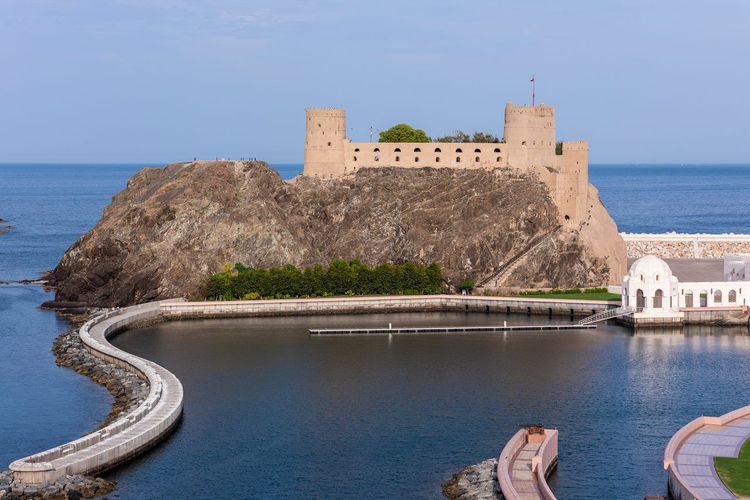
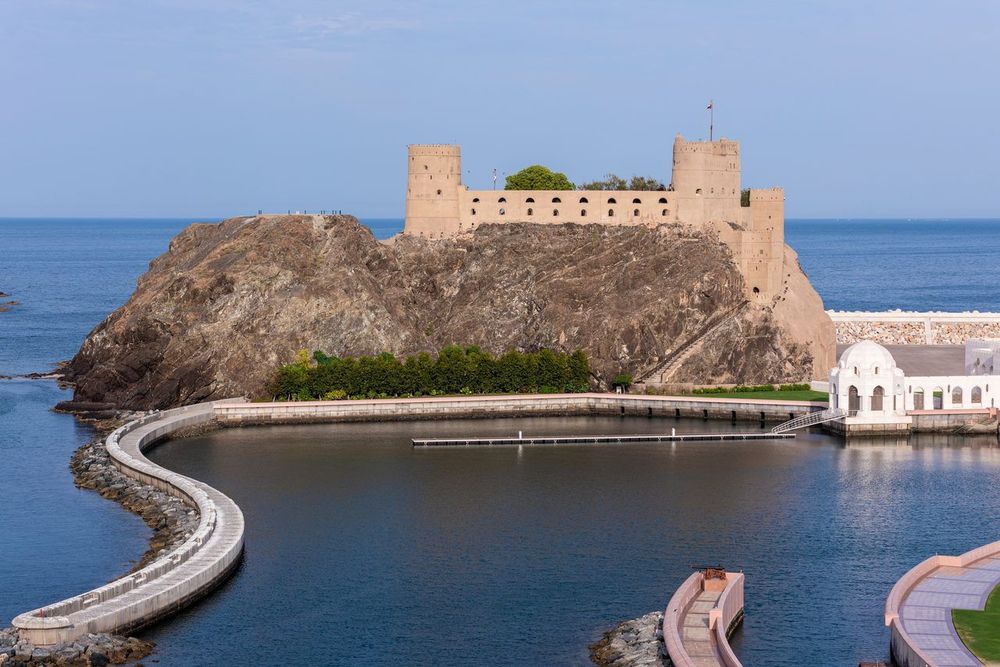
Built by the Portuguese between 1587 and 1588 to defend the entrance to the port against rival fleets, the Al Jalali and Al Mirani forts still flank Muscat Bay from their rocky promontories. Their silhouette appears on several Omani banknotes and coins, proof of their status as a national symbol.
Neither fort can be visited: Al Jalali occasionally serves as a state residence for official guests of the sultanate, while Al Mirani remains under military control. The best way to observe them is a boat excursion in the bay or a simple walk along the nearby corniche, from which their ochre walls and round turrets are clearly visible.
Photographers especially seek out the sunrise, when the light strikes the ramparts of Al Jalali from the east and brings out the contrast with the turquoise water of the bay. An accessible viewpoint without an excursion can be found near the old British Embassy, a few minutes' walk from Al Alam Palace. Don't expect a visit in the traditional sense: this is a photo stop, not a museum, but it perfectly completes the historic picture of the waterfront.
4. The Muttrah Souk
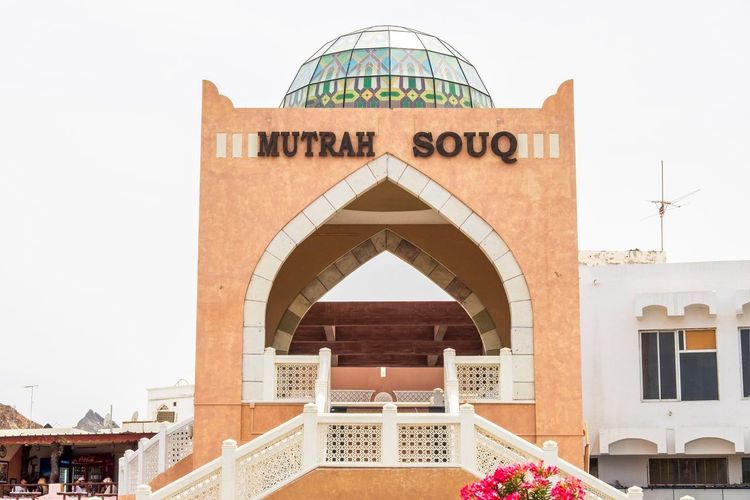
The Muttrah Souk claims more than two centuries of uninterrupted commercial activity, making it one of the oldest covered markets in the Arab world. Beneath its carved wooden roof, a maze of narrow alleyways concentrates incense, silver khanjar daggers, cashmere, spices, and gold jewelry in a space that seems to have escaped all logic of modern urban planning.
An entire wing of the souk, generally the one closest to the port, is dedicated almost exclusively to gold: rings, necklaces, and bracelets are sold by the day's weight, displayed prominently in each shop to ensure price transparency for foreign buyers. This trading tradition dates back to when Muscat served as a mandatory stopover on the incense route between Dhofar — the production region — and the markets of Persia, India, and East Africa, a trade that shaped the port's cosmopolitan identity long before the arrival of oil.
Incense remains the local specialty not to be missed: shops sell the raw resin in small bags, accompanied by the traditional clay incense burner. Expect to pay between 2 and 5 Omani rials for a decent-quality bag, more for superior grades from Dhofar. Bargaining is part of the game, without aggression: a reduction of 20 to 30% on the asking price is reasonable, but negotiating too hard is considered discourteous by older traders.
The souk generally closes between 1 pm and 4 pm for the lunch break, before reopening until 9 or 10 pm depending on the shop. It is in the late afternoon, as the heat subsides and the alleyways fill up again, that the atmosphere becomes most authentic: traders calling out in Arabic and English, wafts of incense mingling with cardamom coffee, the comings and goings of residents shopping rather than sightseeing. To deepen your stay, our Ryo article Top 6 Activities to Do in Muscat details other stops to combine with the souk.
Deliberately get lost in the secondary alleyways, away from the main thoroughfare lined with tourist shops: that's where you'll find the best prices on pashminas and fabrics. Bear in mind that most shops only accept cash in rials, even though currency exchange is easy at the souk entrance.
5. The Muttrah Corniche
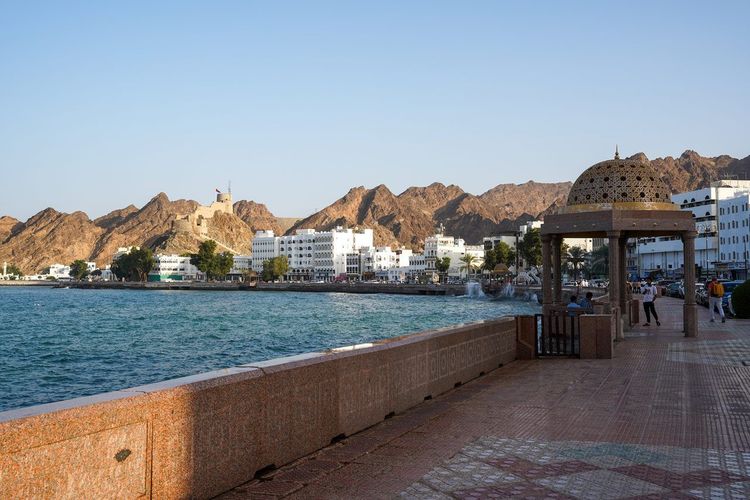
The Muttrah Corniche (Mutrah Corniche, Muscat, rated 4.6/5 on Google based on 5,525 reviews) stretches about three kilometers along the bay, between the historic forts and the fish market. The facades restored in the traditional Omani style — mashrabiya windows and sculpted cornices — replaced a more industrial waterfront in the 1990s.
At the end of the day, the promenade attracts Omani families and tourists alike: traditional dhows moored in the harbor sway gently as the sun sets behind the rocky hills. The incense monument, a sculpture in the shape of a giant incense burner, marks approximately the midpoint of the walk and serves as an easy landmark.
Walking the entire corniche takes about 45 minutes without stopping, but allow closer to two hours if you include a stop at the souk and the nearby fish market. No entry fee, no reservation required: it is one of the few entirely free activities in the city, accessible at any hour of the day or night, even if nighttime lighting remains modest outside the main stretches.
6. The Muttrah Fish Market
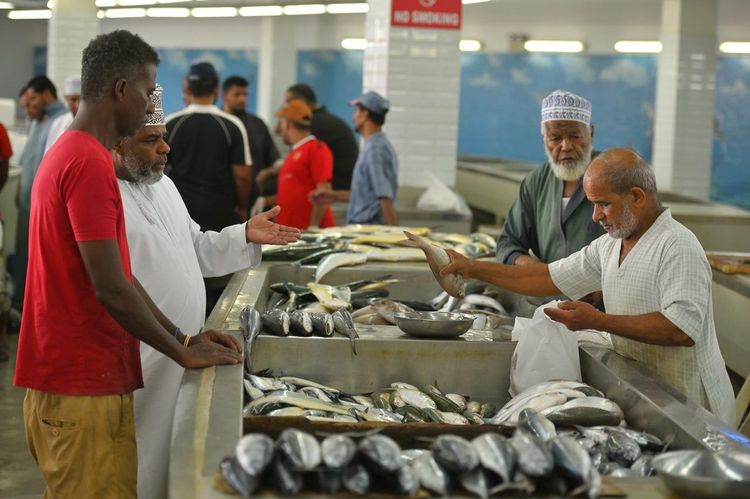
The Muttrah Fish Market (Muttrah Fish Market, Muscat, rated 4.3/5 on Google based on 807 reviews) relocated in 2017 to a modern building, constructed to replace the old open-air market deemed too cramped. Fishermen unload their catch directly from boats moored a few meters away, between 5 and 7 am for the most abundant arrivals.
Tuna, grouper, small sharks, and giant squid are laid out on marble counters and sold by weight through an informal auction system where prices are negotiated aloud. The smell, intense, is not for everyone, but the experience remains one of the most authentic in the city for observing the local economy without a tourist filter.
Several restaurants on the upper floor or in the immediate surroundings offer to grill the fish you buy downstairs on the spot, for a few rials in preparation fees. Our Ryo article on Muscat's culinary specialties lists the dishes to try first, from grilled tuna to Omani halwa. Plan a morning visit, before 9 am: after that hour, the best pieces have already been snapped up.
7. The Royal Opera House Muscat
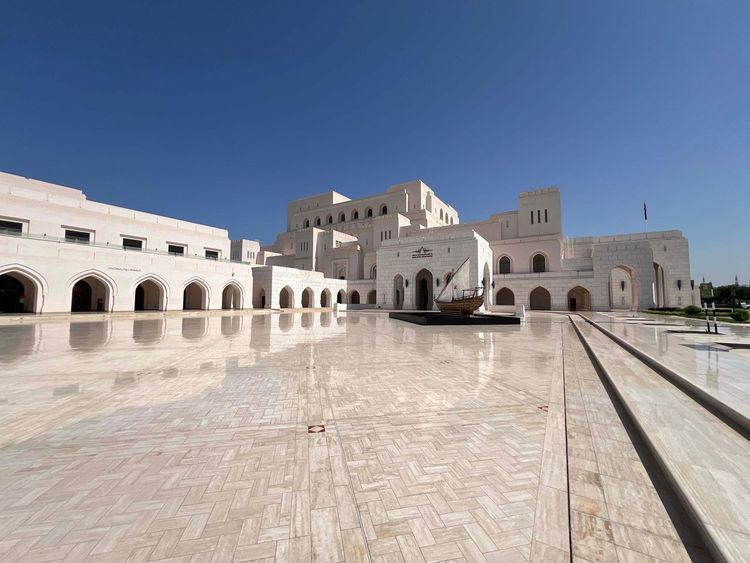
Inaugurated in 2011 on the orders of Sultan Qaboos himself — an avid classical music lover — the Royal Opera House Muscat (Royal Opera House Muscat, Muscat, rated 4.7/5 on Google based on 10,379 reviews) remains the first and only opera house on the Arabian Peninsula. Its facade in Omani limestone, carved with Islamic geometric motifs, conceals a 1,100-seat hall lined with marble and fine wood.
The construction brought in craftsmen from Italy for the marquetry and marble, alongside Omani artisans for the mashrabiyas and hand-painted ceilings — a deliberate blend of imported expertise and local decorative tradition. Sultan Qaboos, who had studied classical music in England during his youth, is said to have personally overseen certain acoustic choices for the hall, now regarded as one of the best in the Middle East from a sound perspective.
The programming surprises with its eclecticism: Italian operas, Russian ballets, and European philharmonic orchestras alternate with traditional Omani music concerts and oud recitals. You can attend a performance without prior knowledge of local culture, as English surtitles are systematically included for international works. Seats start at around 10 Omani rials in the economy category, an accessible price point that contrasts with the typically elitist reputation of Western opera houses.
Outside of performance evenings, 45-minute guided tours allow visitors to explore backstage, the main hall, and the surrounding gardens, provided no rehearsal is underway. The district around the opera house, called Opera Galleria, brings together shops and restaurants in an architecture that extends the style of the main building. The Ryo audio-guided tour of Muscat connects the opera house to the neighboring districts without requiring a car.
Book your tickets online at least a week in advance for international shows, which often sell out as soon as they are announced to the expatriate community. Dress appropriately: while strict evening wear is not required, the opera does not allow shorts or flip-flops in the auditorium.
8. The Bait Al Zubair Museum
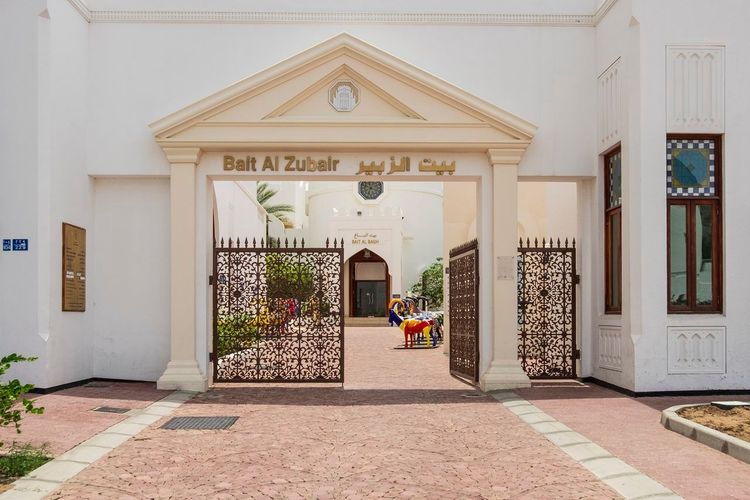
Housed in a restored family home, the Bait Al Zubair Museum (Muscat, rated 4.4/5 on Google based on 2,358 reviews) traces Omani history through a private collection assembled since 1998 by the Zubair family: silver-inlaid khanjars, traditional jewelry, regional costumes, and photographs of a pre-oil Muscat.
More intimate than the neighboring National Museum, this museum can be visited in just 45 minutes, but its garden with an adjacent café invites you to linger. The explanatory panels, in English and Arabic, detail the context of each piece without academic jargon, making it an accessible introduction before tackling larger collections.
9. The National Museum of Oman
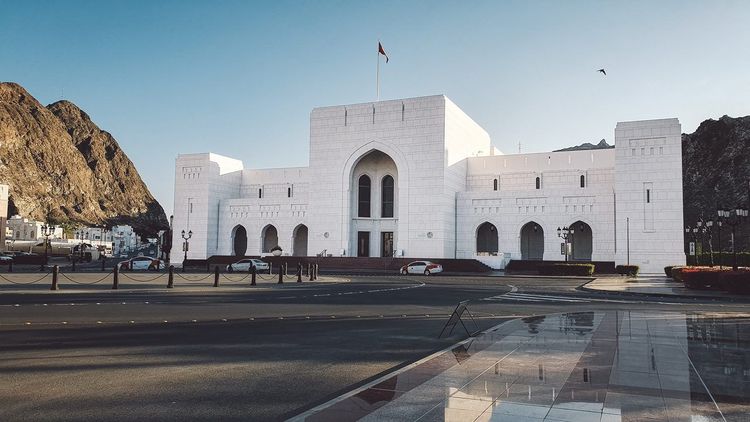
Opened in 2016 a short distance from Al Alam Palace, the National Museum of Oman (Muscat, rated 4.6/5 on Google based on 4,430 reviews) has become the largest museum in the country, with 14 permanent galleries covering Omani history from prehistory through to the reign of Sultan Qaboos.
The maritime gallery is particularly noteworthy, featuring a full-size model of a traditional dhow and explanations of Oman's central role in Indian Ocean trade for centuries, from Zanzibar to India. The rooms devoted to traditional crafts and weapons feature touchscreens and sound reconstructions that bring the visit to life, even for visitors unfamiliar with regional history.
The entrance fee, around 5 rials for adults, includes a multilingual audio guide available in French — a rarity worth noting for French-speaking visitors who sometimes struggle to find this service elsewhere in Oman. The museum closes on Mondays, unlike most other sites in the capital which tend to close on Friday mornings instead, a detail worth checking before planning your weekly itinerary.
Allow a good two hours for a complete visit, more if you linger over the section on national renewal since 1970. The air-conditioned, modern building also offers a welcome break from the midday heat, particularly between June and September when outdoor temperatures regularly exceed 40°C.
10. The Omani Heritage Gallery
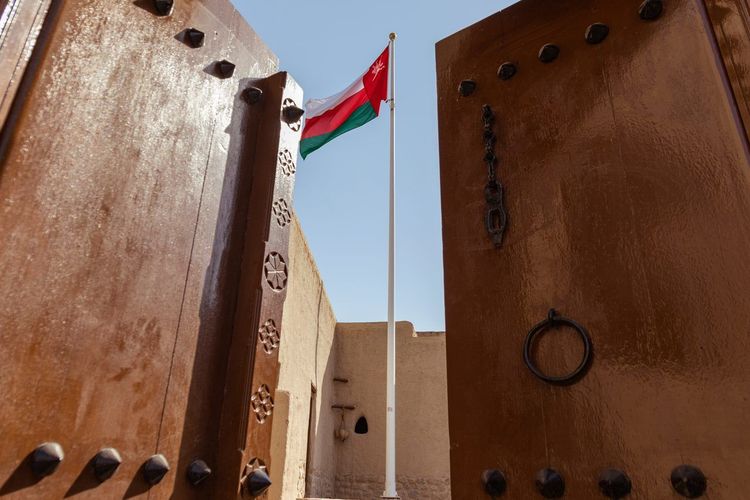
Less well known than the major museums, the Omani Heritage Gallery (Muscat, rated 4.5/5 on Google based on 35 reviews) functions as both a gallery and a fair-trade shop, showcasing traditional Omani craftsmanship: Dhofar pottery, Bedouin weaving, silverware, and woven baskets.
The pieces on display come directly from rural artisan cooperatives, with explanations of the techniques and regions of origin. This is the place to choose when looking to bring back an authentic souvenir rather than an imported item sold at the souk: prices are fixed, with no bargaining, but guarantee verified provenance.
11. Riyam Park and the Incense Monument
Perched on a hill overlooking Muttrah Bay, Riyam Park owes its fame to a giant incense-burner-shaped monument, visible from almost the entire waterfront and now one of the city's visual symbols.
The park itself is modest, with a few playgrounds and benches, and serves primarily as a viewpoint: from the base of the monument, the entire bay unfolds — forts included — in a framing that quickly becomes the most shared photo among Muscat visitors. Access is free and open late into the evening, a good complement to the corniche walk below — and to Muscat's own Ryo audio-guided tour, which threads through much of that same waterfront on foot.
12. The Historic Gates Bab Al Kabir and Bab Al Saghir
Two restored gates, Bab Al Kabir (the large gate) and Bab Al Saghir (the small gate), are reminders that a wall once separated Muttrah from the fortified old town of Muscat. They stand a few hundred meters apart, near the souk and the coastal road.
Few visitors stop here intentionally, which makes it a quick and peaceful stop between two busier sites. Allow ten minutes, enough time for a photo and a glance at the explanatory plaques tracing the city's defensive history before the administrative unification of the two districts in the 20th century.
13. Qurum Beach and Shatti Al Qurum
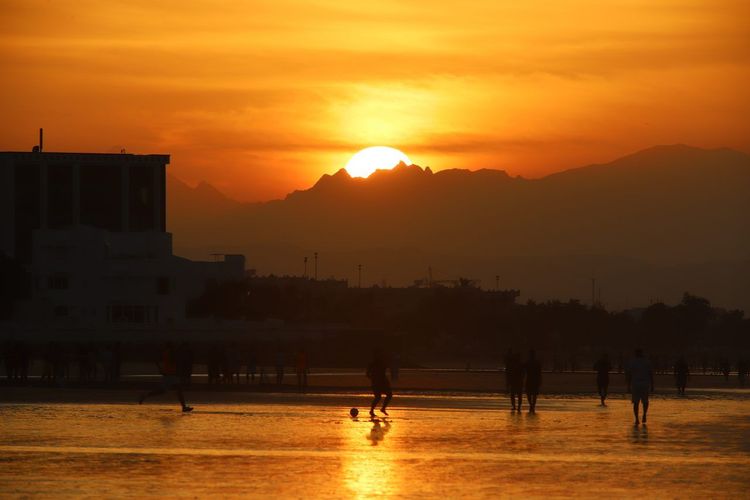
More urban than wild, Qurum Beach (Qurum Beach, Muscat, rated 4.4/5 on Google based on 1,850 reviews) remains the easiest place to combine relaxation with city life: pale sand, palm trees planted along the promenade, and the Shatti Al Qurum district just behind, lined with cafés open late into the evening.
Omani families gather here in the late afternoon, once the heat has subsided, for impromptu picnics on the sand or the adjacent lawns. Swimming is possible almost year-round, with a clear preference for the period from October to April when both air and water temperatures become more pleasant. Between July and September, jellyfish occasionally appear near the shore: check with locals before swimming.
No permanent lifeguard station monitors the beach outside hotel zones, which may surprise visitors expecting the standards of a tourist capital. Less experienced swimmers should exercise caution, especially in a northeast wind that creates a slight current. The immediate proximity of the Royal Opera House and the Shatti Al Qurum district makes it easy to combine a daytime swim with an evening cultural outing — a pairing that many time-pressed visitors appreciate for making the most of a short stay. For a sunset without the crowds, head to the western end of the beach, less busy than the central stretch in front of the large hotels.
14. Boat Excursion: Dolphins and Dhow Cruise
The waters off Muscat are home to one of the highest concentrations of dolphins in the Gulf, which has made boat excursions one of the must-do activities in Oman's capital. Departures generally take place from the Bandar Al Rowdha marina (Muscat, rated 4.5/5 on Google based on 1,000 reviews), early in the morning between 7 and 9 am, when long-beaked dolphin pods are most active near the surface.
A standard outing lasts between two and three hours, aboard fast motorboats or slower but more comfortable traditional dhows better suited to wildlife watching. Local operators report a success rate of around 80%, with pods that can number several dozen individuals sometimes surfing directly in the boat's wake. Some extended excursions, particularly between November and February, also offer the chance to spot whale sharks passing offshore along the Omani coast.
At the end of the day, a more contemplative alternative exists: the sunset cruise aboard a traditional dhow, gliding along the Muttrah corniche and past the historic forts in golden light. These outings focus more on atmosphere, sometimes with a tea and dates service on board. Expect to pay between 15 and 35 Omani rials depending on the package chosen, with hotel transfers sometimes included.
Bring sunscreen, a cap, and lightweight long-sleeved clothing: the glare off the water intensifies sunburn even on overcast days. Book the day before rather than on the day itself during the tourist high season from November to March, when morning slots fill up quickly with operators along the corniche and the marinas.
15. Diving and Snorkeling at Bandar Khayran
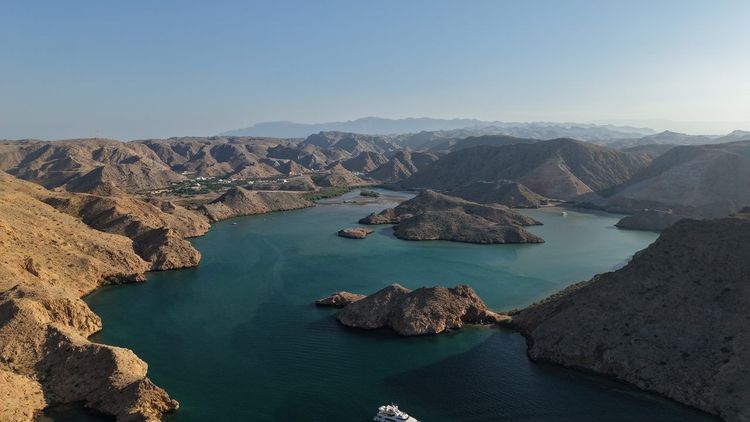
About a twenty-minute boat ride from the city center, the Bandar Khayran marine reserve (Muscat, rated 4.6/5 on Google based on 556 reviews) features sheltered coves and shallow coral reefs, with a green turtle population visible almost year-round. No road leads there: only sea access allows you to reach this mini-fjord nestled between arid cliffs.
Snorkeling alone is more than sufficient to spot clownfish, parrotfish, and occasionally rays, with visibility often exceeding 10 meters between October and April. Certified divers generally prefer to push further toward the Daymaniyat Islands, a protected archipelago closed each year from May to October for sea turtle breeding, but renowned for its drop-offs and far greater density of marine life.
Combined snorkeling and picnic excursions to an isolated beach at Bandar Khayran rank among the most popular outings for families, as the swell there remains moderate unlike the open sea. Allow half a day, with snorkeling equipment generally provided by the operator, for around thirty rials per person.
16. Excursion to Wadi Shab
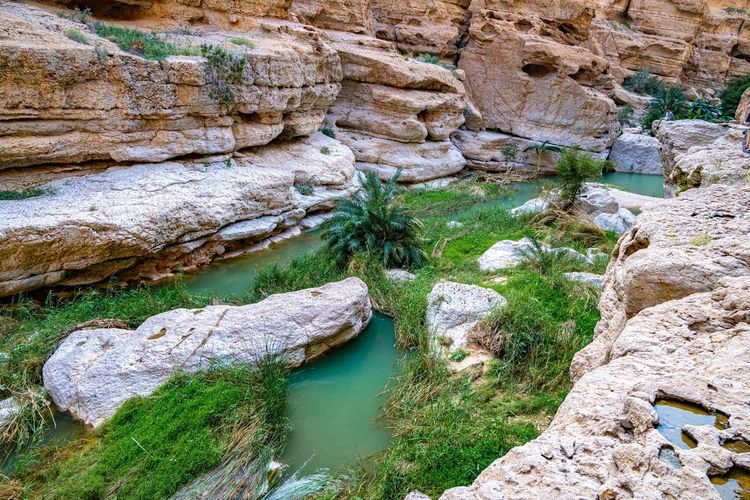
About one hour and forty-five minutes south of Muscat, near the village of Tiwi, Wadi Shab (Tiwi, rated 4.6/5 on Google based on 5,975 reviews) has established itself as the most sought-after nature excursion from the capital, to the point of featuring on virtually every organized day-trip circuit.
Access begins with a short rowing-boat crossing, a few rials per person, to reach the canyon entrance from the car park. This is followed by a 45-minute to one-hour walk along a rocky trail that follows turquoise pools set between steep limestone walls, shaded in places by palm trees and wild oleanders. The trail is not always clearly marked and involves some balancing on slippery rocks, which deters visitors wearing flip-flops or thin sandals.
The reward must be earned at the very end: a natural pool leads to a cave accessible only by swimming, through a narrow passage where you sometimes have to edge along with your head just above the water against the rock. Inside, a waterfall drops into an enclosed basin lit by a skylight — one of the most photographed moments in Oman, despite the ban on bringing an unprotected phone to this last section. Pack a waterproof case or forgo the photo for that final stretch.
Set off early, ideally before 9 am, to avoid the heat of the round trip and the tour operator groups that arrive in numbers after 10:30 am. Wear water shoes rather than flip-flops, and a modest swimsuit out of respect for the local context. Bring enough water: no vendors exist once you enter the canyon. Swimming is prohibited or strongly discouraged after heavy rainfall, due to the risk of flash floods characteristic of Omani wadis.
On the road between Muscat and Wadi Shab, many day-trippers also stop at the Bimmah Sinkhole, a limestone sinkhole filled with turquoise water a few minutes off the main road — a quick swimming stop that rounds off the day nicely without requiring a significant detour. Many visitors choose to rent a car rather than book a group excursion, as the road from Muscat is generally straightforward and well signposted to the car park. A 4x4 is not needed for this leg, unlike more remote wadis such as Wadi Bani Khalid further south, often compared to Wadi Shab for its pools but accessible by regular car right up to the water's edge.
The water flow varies noticeably by season: more abundant after the winter rains of January and February, lower but still sufficient for swimming in midsummer, when the coolness of the wadi water contrasts with the crushing heat outside the canyon, often above 40°C between June and August. Being able to swim is essential for the final section to the cave: no life jackets are provided on site, and the depth exceeds two meters in places.
Allow a full half-day from Muscat including the drive, or a full day if you combine the visit with a stop at Tiwi beach or the neighboring Wadi Tiwi, less crowded but equally spectacular with its terraced hilltop villages.
17. Hiking in the Wadis and on Jebel Akhdar
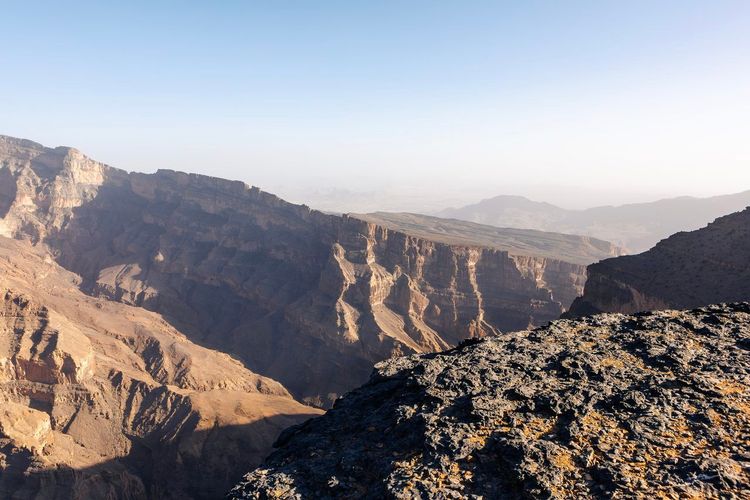
About two hours' drive from Muscat, Jebel Akhdar (Al Dakhiliyah, rated 4.5/5 on Google based on 1,303 reviews) rises above 2,000 meters in altitude and offers a noticeably cooler climate than the capital, particularly welcome between May and September when Muscat regularly exceeds 40°C.
Access requires a 4x4 vehicle, checked at a security post at the bottom of the mountain road: standard cars are turned away, as the gradient and tight bends justify the restriction. Once at altitude, terraced villages such as Al Ayn and Ash Shirayjah have cultivated roses, pomegranates, apricots, and walnuts for centuries on plots clinging to the mountainside, irrigated by a traditional canal system known as falaj.
The rose harvest, between late February and early April depending on the year, transforms the villages into artisan rosewater distillation workshops — a tradition visitors can observe directly with the producing families. Outside this period, several marked hiking trails cross the abandoned terraces and neighboring canyons, offering vertiginous views from natural balconies such as Diana's Point, nicknamed after a visit by Princess Diana in the 1980s.
Several hotels and small family restaurants on the plateau offer a simple lunch of rice, lamb, and local vegetables, often accompanied by a locally made rose tea. Eating at altitude, with views over the deep gorges that cut through the plateau, adds a dimension to the excursion that the viewpoint alone cannot convey.
Allow a full day for the round trip from Muscat including two to three hours on site, more if you plan a long hike or an overnight stay in one of the mountain hotels. Temperatures drop sharply after sunset, even in summer: bring a warm layer, a detail many visitors departing from the heat of Muscat tend to forget.
18. Amouage, the Royal Perfumery
Founded in 1983 at the initiative of Sultan Qaboos's family, the Amouage house (Muscat, rated 4.6/5 on Google based on 639 reviews) produces some of the most expensive fragrances in the world, with certain compositions exceeding several hundred euros for a 100 ml bottle.
The manufacturing facility, located in the Ghala industrial area, offers guided tours of the distillation workshop where Omani incense, Taif rose, oud, and musk are worked using partly artisanal methods. Visitors discover the complete process, from raw material through to bottling, before an olfactory discovery session in the adjoining boutique.
Book your time slot online before visiting: tours are free but limited in the number of participants, and they fill up several days in advance during the tourist high season. Allow one hour on site, boutique included, to leave with a clearer idea of what distinguishes Omani perfumery from the more widely known Western houses.
19. The Old Town and the Ruwi District
Less touristy than Muttrah, the Ruwi district concentrates the commercial life of Muscat and a significant community originally from the Indian subcontinent, present in Oman for generations. The colorful storefronts, curry restaurants, and small gold jewelry shops give the district an atmosphere sometimes nicknamed "Little India," very different from the rest of the capital.
This is where residents do their everyday shopping rather than tourists, making it an interesting counterpoint after the more structured visit to the historic old town around Al Alam Palace. The fabric shops and small restaurants with no English signage often offer more affordable food than the addresses catering to waterfront visitors.
Getting to Ruwi from Muttrah or Qurum is easy by shared taxi, an informal but economical mode of transport widely used by local residents and rarely taken by hurried tourists who prefer the standard taxi or rental car. A fare rarely costs more than one rial per person, compared to several rials by standard taxi for the same journey.
An hour or two wandering through Ruwi's streets, in late morning when commercial activity is in full swing, usefully rounds out a stay centered on the historic sites of Muttrah and Old Muscat. The architectural contrast — functional buildings rather than restored facades — is a reminder that Muscat is above all a lived-in city, not just a backdrop for visitors.
20. Day Trip to Nizwa
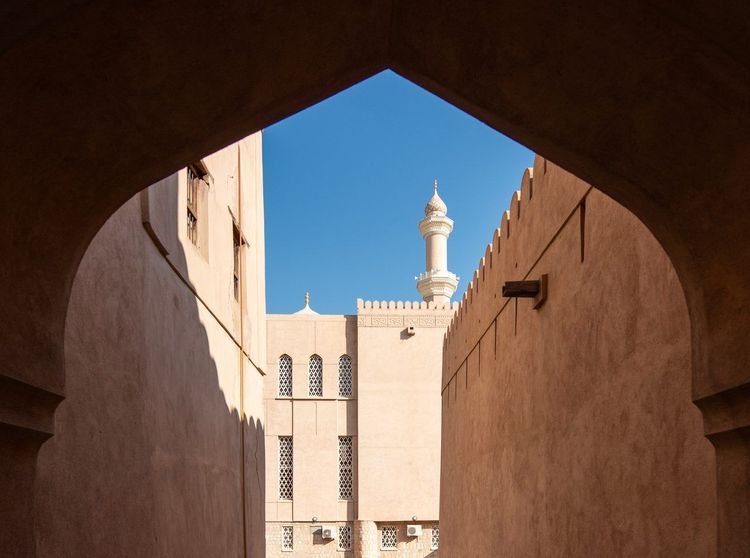
About one and a half hours' drive from Muscat, Nizwa was Oman's capital until the 17th century and today remains one of the most complete day trips from the coast.
The fort, built in the 17th century around an imposing cylindrical tower, was among the most sophisticated defenses on the Arabian Peninsula of its time, with boiling oil traps and deliberately labyrinthine corridors to slow down any attacker. The view from the top takes in the entire surrounding palm grove and the western Hajar mountains in the background.
The neighboring souk, particularly lively on Friday mornings during the livestock market where goats and cattle change hands to the rhythm of auctioneers calling out in Arabic, completes the fort visit. The more permanent stalls offer local pottery, dates from the region — among the best in the country — and ornate silver khanjar daggers. Don't leave without trying the Omani halwa, a dense confectionery prepared in large copper cauldrons in front of customers in several shops in the souk — a hospitality tradition that pleasantly surprises passing visitors.
A full day is enough to combine Nizwa with a stop in the palm grove or in the neighboring village of Bahla, known for its potters and its UNESCO-listed fortress. Leave early from Muscat, before 7:30 am, to take advantage of the Friday livestock market before it closes late in the morning and to avoid the heat of the mid-afternoon return journey.
FAQ
Is Muscat a dangerous city?
No, Muscat ranks among the safest capitals in the Middle East, with a very low crime rate even at night. The usual precautions still apply — valuables and isolated neighborhoods after midnight — but the discreet police presence and the general law-abiding nature of the population make it a reassuring destination for solo travelers, including women.
How many days do you need to visit Muscat?
Three full days are enough to cover the essentials: mosque, souk, corniche, opera, and museums, with an extra day for an excursion to Wadi Shab or Nizwa. Travelers in more of a hurry can manage with two days by focusing on the Muttrah waterfront and the mosque, at the cost of skipping out-of-town excursions.
What can you do in Muscat in one day?
Focus on the Sultan Qaboos Grand Mosque in the morning, followed by the Muttrah souk and corniche in the afternoon, before a sunset from Riyam Park or a dhow cruise. This sequence covers the must-sees without requiring a car rental or long transfers.
What can you do in Muscat in the evening?
The Muttrah souk stays open until 9 or 10 pm and gains in atmosphere after sunset. The Shatti Al Qurum district, with its beachside restaurants and cafés, and evenings at the Royal Opera House when the program allows, round out a nightlife offering richer than Oman's calm reputation might suggest.
Where is the old town of Muscat?
The historic old town, Old Muscat, is located around Al Alam Palace and the Al Jalali and Al Mirani forts, to the east of Muttrah Bay. It is distinct from the more commercial Muttrah district, located a few kilometers further west along the corniche, where the souk and fish market are found.
What is the best time to visit Muscat?
Between November and March, daytime temperatures range between 25 and 30°C, an ideal climate for walking around the city and chaining excursions to Wadi Shab or Jebel Akhdar. Summer, from June to September, frequently exceeds 40°C and limits outdoor activities to the early morning or late afternoon hours.
Do you need a visa to visit Muscat?
The majority of nationalities, including French, Belgian, and Swiss citizens, must obtain an Omani e-visa before departure, generally valid for a 30-day tourist stay. The application is made online, with issuance within a few business days, and must be presented in digital or printed format upon arrival.
Muscat does not seek to impress through the size of its skyscrapers or the intensity of its nightlife: its strength lies in the contrast between a resolutely modern Gulf capital — opera, museums, marina — and traditions preserved with a rigor rare in the region, from the white-and-blue architectural code to the dress rules of the Grand Mosque. The twenty experiences detailed here, from the centuries-old Muttrah souk to the turquoise pools of Wadi Shab, make up an itinerary that can unfold over two express days or extend over a full week incorporating excursions to Nizwa and Jebel Akhdar.
To organize your route without multiplying searches, the audio-guided tour of Muscat connects the main waterfront sites on foot, from the Muttrah corniche to the surroundings of Al Alam Palace, with the anecdotes and practical landmarks mentioned throughout this article. Keep in mind the specific Friday timetables — the religious day of rest that closes some sites in the morning — and always pack a covering outfit in your luggage, useful at both the mosque and the Nizwa market. Whether you stay two days on a cruise stopover or a full week to explore the mountainous hinterland, Muscat offers enough contrasts to surprise even the most seasoned Middle East travelers.