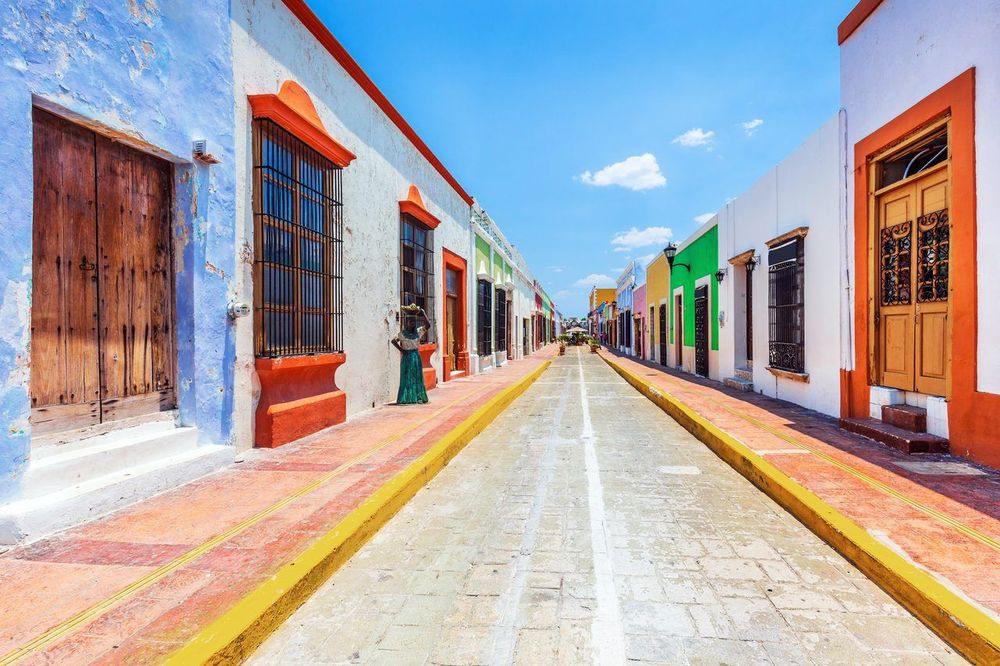
© Shutterstock
 Votre guide Ryo
Free Things to Do in Campeche, Mexico: A Budget Traveler's Guide (2026)
Looking for free things to do in Campeche? You are in luck: this walled port does not act like a city that survived a century of pirate raids. Its historic center glows candy-pink, canary-yellow and turquoise under the Gulf sun, and on most afternoons the loudest sound on the plaza is a marimba busker rather than a vendor chasing tourists. That calm is exactly why so much of the city costs nothing: walking the UNESCO-listed streets, climbing onto stone bastions built to repel Caribbean raiders, and watching a light-and-water show rise out of the seafront at dusk. If you want the backstory while you walk, Ryo's audio-guided tour of Campeche narrates the same streets and walls stop by stop.
Beyond the obvious cathedral photo, this guide digs into the details that make Campeche worth a slow few days rather than a rushed afternoon: which bastions you can climb without paying, which Maya history museum waives its fee on Sundays, when the seafront fountains actually switch on, what a day at Playa Bonita really costs, and where to snack on marquesitas for less than the price of a bottle of water. You will also find an honest look at what is never free, from the Puerta de Tierra light show to the Maya ruin day trips to Edzná, Calakmul and Uxmal, and how to decide whether the splurge is worth it.
1. Wander the Free Streets of Campeche's Historic Center
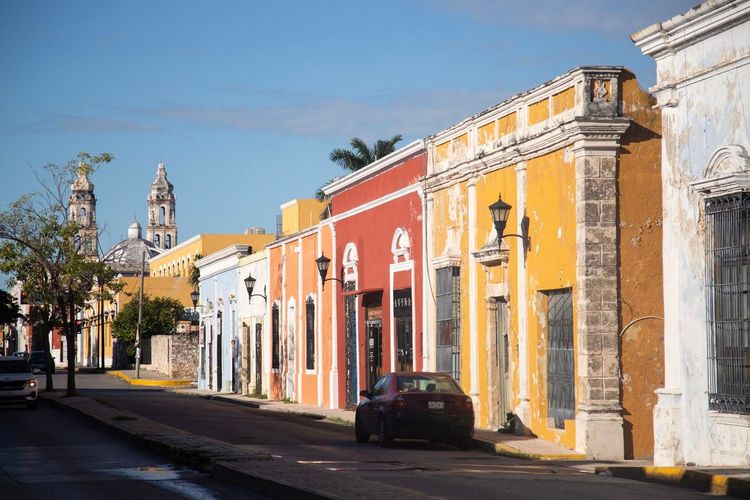
The Cathedral and Independence Plaza
Most visits start at the Campeche Cathedral (Calle 55 s/n, Centro, 24000 Campeche, rated 4.7/5 on Google (1 393 avis)), formally Nuestra Señora de la Purísima Concepción. The first parish church went up soon after the city's founding in 1540; the larger building you see today was begun in the 17th century, stalled for lack of money, and was finally dedicated in 1705 thanks to a private donation. Its two slender bell towers were finished in different periods, which is why they do not quite match. Stepping inside costs nothing, and the stone facade is worth ten slow minutes, tracing the worn carvings near the main door.
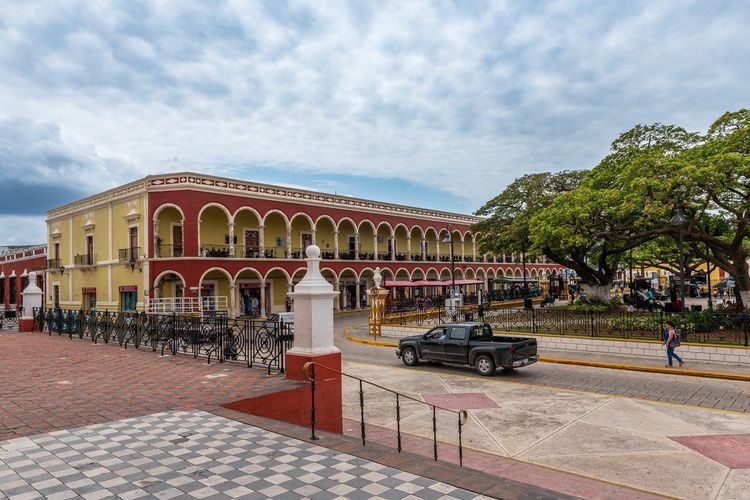
The cathedral fronts Independence Plaza (Plaza Principal), a shaded square ringed by arcaded buildings and wrought-iron benches that locals actually use. Early evening is when it fills up: kids on bikes, couples on the benches, an ice cream cart or two working the corner nearest the cathedral steps. If you only have twenty minutes in Campeche, spend them here rather than in a museum line. Ryo's Campeche audio tour starts right on this square, then threads through the colonial streets behind it, so you hear three centuries of history as you walk instead of standing still in front of a plaque.
Colorful Colonial Streets to Wander
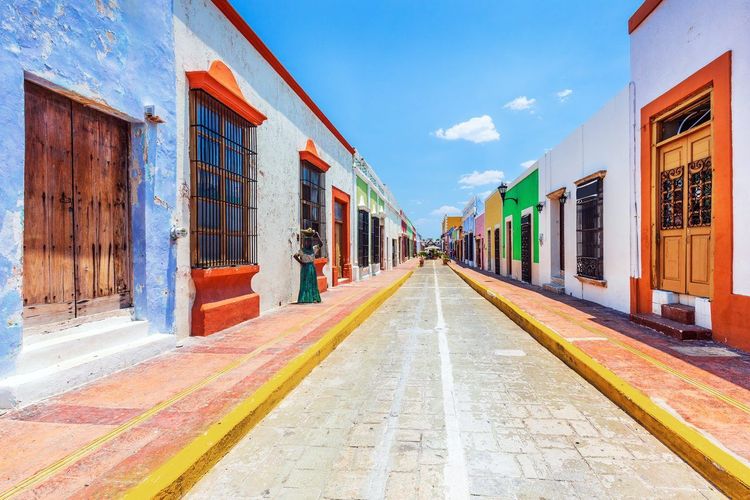
Behind the cathedral, the real draw is the grid of streets themselves. The Historic Fortified Town of Campeche earned UNESCO World Heritage status in 1999, largely because its 17th and 18th-century townhouses and street plan survive almost intact. Calle 59 and Calle 57 are the most photogenic stretches: low houses in mango-yellow, coral and sea-green with deep-set colonial doors and iron window grilles that cast long shadows by late afternoon.
Mornings before 10am are the easiest time to walk it, before the heat sets in and before tour groups arrive. By mid-afternoon the streets nearest the plaza get busier but rarely feel crowded the way Mérida or Oaxaca can. Duck one block off the main drag and the color scheme continues with almost nobody around, past hardware stores and family-run comedores that have nothing to do with tourism. Bring water: shade is scarce once you leave the arcades.
2. Climb Campeche's Free City Walls and Bastions
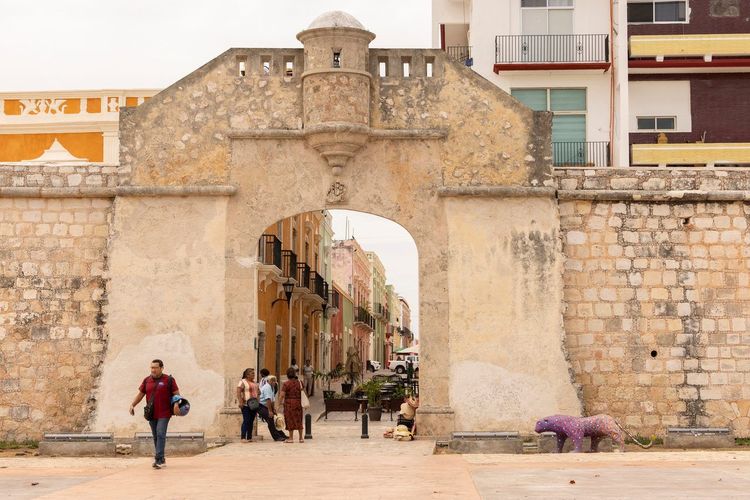
Baluarte de San Carlos and the Surviving Walls
Campeche's city walls were the Spanish answer to decades of attacks, the worst being the 1663 sack by English buccaneers and the 1685 raid led by Lorencillo. Work began in 1686 and was completed in 1704: an irregular hexagon of stone roughly 2.5 km around, with eight bastions (baluartes) at its corners. Large stretches of wall were torn down in the late 19th and early 20th centuries to let the city breathe toward the sea, yet all eight bastions still stand today, one of them (Santiago) rebuilt in the 20th century. Several double as small museums, and the ramparts between them are yours to walk.
Baluarte de San Carlos) (Calle 8, Centro, 24000 Campeche), facing the old seafront, is the easiest starting point. Its rooftop gives a low but genuine view over the rooftops and out toward the Gulf, and the climb up the stone ramp takes barely five minutes. Look for the old cannons lined up on the parapet and the cramped cell known as el pulguero, the flea pit, where prisoners were once held.
Puerta de Tierra and Its Evening Show
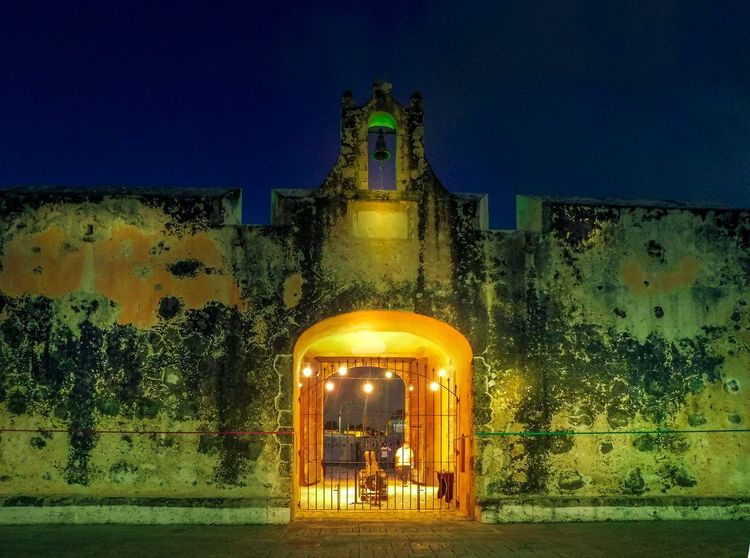
At the opposite end of the surviving wall stands the Puerta de Tierra (Calle 59, Centro, 24000 Campeche, rated 4.6/5 on Google (3 866 avis)), the best-preserved of the city's original gates and the spot where the land route into the walled city passed under armed guard. By day, you can walk through the gate for free and admire the thick masonry up close; a stretch of rampart connects it to the Baluarte de San Juan next door.
The evening sound-and-light show, called El Lugar del Sol, is the one fortification experience that is not free. It usually runs Thursday to Sunday around 7:30 or 8pm, lasts about 50 minutes including a walk along the walls, and costs around 60 pesos, so still cheaper than most cocktails on the plaza. Times shift with the season, so ask at the tourist information kiosk on Independence Plaza the same day. The Ryo audio guide to Campeche's fortifications pauses at each gate and bastion too, explaining how thick stone walls finally kept pirates out of the city for good.
3. Explore the San Francisco Neighborhood
The San Francisco Church and Plaza
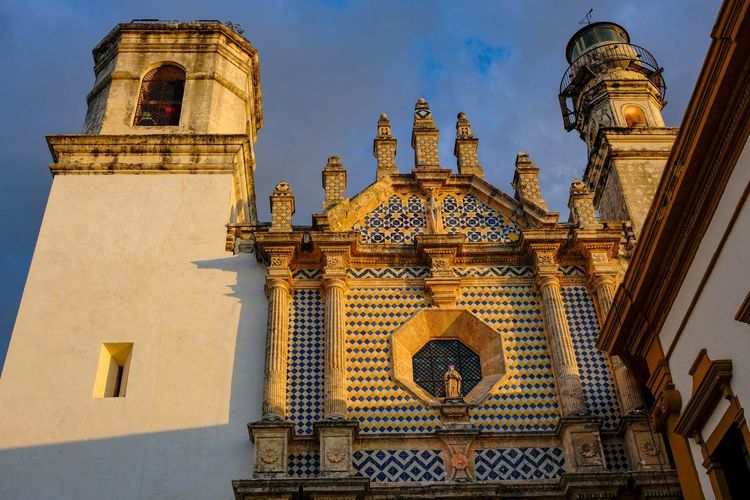
A walk north of the walled center, past where the old fortifications used to run, brings you to Barrio de San Francisco, one of the oldest districts in the city. The Templo de San Francisco (Calle 10, Barrio San Francisco, 24000 Campeche, rated 4.7/5 on Google (1 393 avis)) marks the spot where, according to local tradition, the first Catholic mass on the Mexican mainland was celebrated in 1517, more than twenty years before Campeche was formally founded. The current church dates mostly from later centuries, and its plain facade is easy to miss if you are not looking for it.
Entry is free, and the small shaded plaza in front makes a good rest stop that most itineraries skip entirely.
Local Life Away From the Tourist Core
San Francisco is where Campeche stops performing for visitors. Fishmongers set up folding tables in the morning, taquerías run out of front rooms, and the pace slows to how the whole city felt before the historic center was restored for tourism. There is no single sight to check off, which is the point: it rewards an unhurried thirty-minute walk more than a checklist.
You will likely have entire blocks to yourself, apart from neighbors sitting on their doorsteps. The seafront promenade runs close by, so you can loop back toward the center along the water.
If you come in the morning, follow the smell of fresh bread to one of the neighborhood panaderías, where a bag of pan dulce costs a few pesos, and eat it on the church steps. Sunday mornings are the liveliest: mass lets out, families linger on the plaza, and street vendors sell tamales and atole from buckets. It is the kind of ordinary scene you will not find on any ticketed tour, and it costs you nothing but the walk.
4. Catch the Free Fountain and Light Show
The Fuentes Marinas Poesía del Mar (Av. Ruiz Cortines, Malecón, 24000 Campeche), facing Moch Couoh park, is Campeche's most-photographed free attraction: a choreographed water, light and music show set right on the seafront. Jets sync to the soundtrack across eleven different fountain scenes while colored lights shift underneath.
The schedule is simpler than most blogs suggest. On Monday and Wednesday to Friday there is one 30-minute show at 8pm; on Saturday and Sunday a second one follows at 9pm. There is no fence and no ticket booth: families spread out along the low walls of the Malecón, and kids end up half-soaked by the spray within minutes, which nobody seems to mind.
Pair it with a cheap dinner nearby and you have a full evening's entertainment for the price of a few tacos. If you want to add the Puerta de Tierra show on the same night, pick a Thursday or Friday and go to the fountains first.
Arrive fifteen minutes early to claim a spot on the sea wall facing the jets; the view is best from straight in front, where the music is also loudest. On busy weekend nights, the second show at 9pm draws smaller crowds than the first, which makes it the better choice if you are traveling with small children or want photos without a wall of phones in front of you.
5. Stroll and Watch the Sunset at the Malecón
The Boardwalk Walk
Campeche's Malecón runs for several kilometers along the Gulf coast, a wide paved promenade built on land reclaimed from the sea in the 20th century, which is why the bastions that once stood on the waterline now sit a few blocks inland. Joggers, cyclists and families use it from early morning, and there are enough benches, shaded sections and small parks that a slow one-hour walk rarely feels repetitive.
The stretch nearest the historic center, around the fountains, is the easiest to reach on foot. Unlike the narrow streets inside the walls, there is almost always a sea breeze cutting the heat here.
Best Sunset Viewpoints
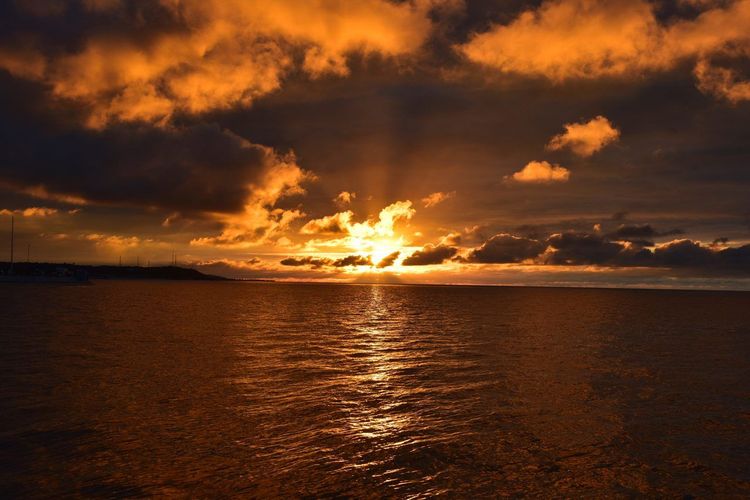
The Malecón faces west over open water, so nothing blocks the horizon. Arrive twenty to thirty minutes before sunset: the light over the Gulf changes fast, and the best colors often last only five or ten minutes once the sun touches the water. The quieter stretches further from the center, toward the fishing boats, give you more room on the sea wall.
If you plan a walking day, finish it here. The Ryo audio walk through Campeche wraps up close to the old seafront, which leaves you a short stroll from the Malecón for sunset rather than stuck in a museum across town. Bring a light layer; the breeze picks up once the sun goes down.
6. Visit Campeche's Free and Low-Cost Museums
Museo de la Ciudad (City Museum)
The Museo de la Ciudad) occupies the Baluarte de San Carlos and covers Campeche's history from its colonial founding through the pirate era, with period weapons, ship models and the old prison cell. It takes 20 to 30 minutes at an easy pace, and the entrance fee is a token amount, making it one of the cheapest indoor stops in town.
Museo Arqueológico and Maya Architecture Displays
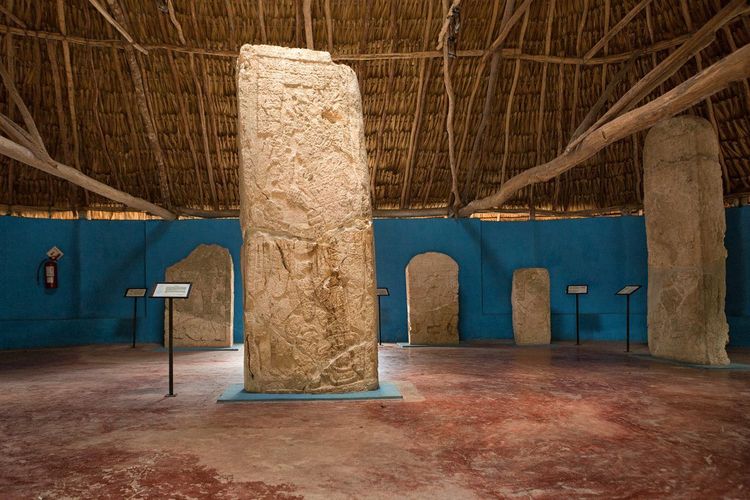
For Maya history, start at the Museo de Arquitectura Maya inside the Baluarte de la Soledad, near the main plaza. It displays original stelae and carved stones from Edzná, Calakmul and other sites in the state. Admission is around 75 pesos, but Mexican citizens and residents get in free on Sundays, as do children under 13, so time your visit accordingly if that applies to you.
The bigger collection sits in the Museo Arqueológico de Campeche inside the Fuerte de San Miguel (Av. Escénica s/n, Col. Buenavista, 24000 Campeche, rated 4.7/5 on Google (5 448 avis)), a hilltop fort a short taxi ride south of downtown. Its star pieces are the jade funerary masks recovered from Calakmul's royal tombs. The ticket is modest by international standards, and the view over the Gulf from the moat and ramparts is a reward in itself. Hearing the city's story first on the Ryo audio tour makes those rooms far easier to read once you stand in front of the display cases.
7. Spend a Cheap Beach Day at Playa Bonita
Playa Bonita (Carretera Escénica Campeche-Lerma, 24086 Campeche, rated 4.2/5 on Google (5 440 avis)) is the closest organized beach to downtown, about 13 km south, just past the fishing village of Lerma. It is not a postcard Caribbean beach: the sand is darker and the water calm but not turquoise, typical of the Gulf coast rather than the Riviera Maya. What it offers is palapa shade, showers and a relaxed local crowd.
Strictly speaking, it is not free: the managed beach charges an entrance fee, around 100 pesos for foreign visitors and less for Mexicans, plus parking if you drive. Buses marked Lerma leave from near the market for a few pesos; a taxi costs more but is still cheap. Weekends bring local families with coolers, and the comedores nearby sell ceviche and cold drinks well below tourist-center prices. Go on a weekday morning if you want the palapas to yourself.
So, does Campeche have beaches? Yes, but modest ones. If you just want a swim for zero pesos, the rocky coves along the road to Lerma are where locals dip in on hot afternoons; for anything more dramatic, you would need to head toward the Caribbean coast.
8. Browse the Local Markets
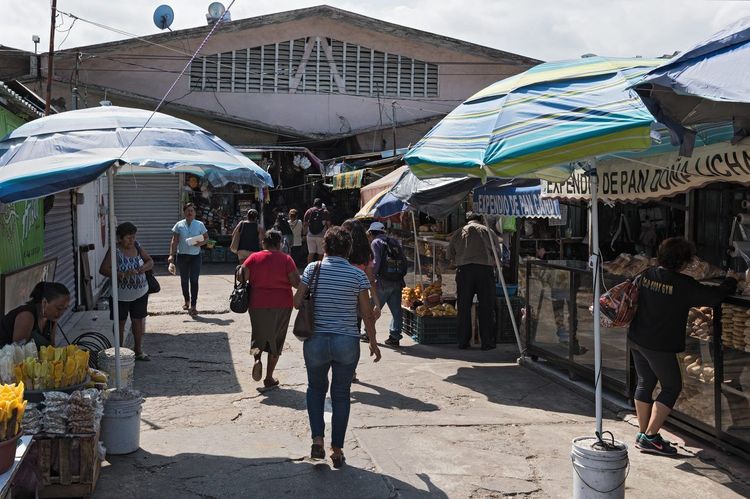
Campeche's Mercado Municipal Pedro Sainz de Baranda (Calle 8, Centro, 24000 Campeche, rated 4.2/5 on Google (532 avis)), just outside the walls, is where residents actually shop. Stalls sell produce, fish hauled in that morning and spices in loose bags, and a row of cheap comedores serves lunch specials at a fraction of what a restaurant near the plaza charges. Walking through costs nothing, and you will learn more about how the city eats in half an hour than in any restaurant.
For souvenirs, the artisan stalls near the Baluarte de San Pedro lean toward hammocks, jipi straw hats (the Panama-style hats are genuinely woven in the region, notably in Bécal) and embroidered textiles. Prices soften if you negotiate politely. Neither market charges for browsing, and both fold easily into the same walk as the bastions.
Go hungry. Between the market and the street stalls around it, you can eat well for less than the cost of one sit-down meal in the historic center.
9. Eat and People-Watch Along Calle 59
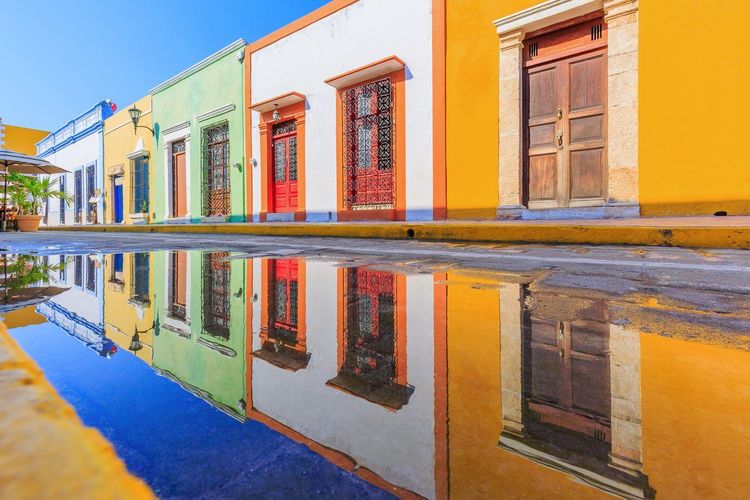
By early evening, the pedestrian stretch of Calle 59 becomes Campeche's default place to window-shop and snack rather than sit down. Vendors sell marquesitas, a crisp rolled crepe filled with grated Edam cheese and a sweet topping (Nutella and cajeta are local favorites), pressed fresh for a few pesos each. It is not a meal so much as a reason to keep walking.
Look out as well for a cup of hot chocolate, often spiced and sometimes with a hint of chile, and for fresh churros from a street cart. None of this requires sitting down or spending more than the cost of a coffee back home.
For something more substantial, look one or two streets off the tourist stretch, where fondas serve Campeche's coastal, Maya-influenced cooking: pan de cazón (layered tortillas with shredded dogfish and tomato sauce), shrimp cocktails and fried fish at a fraction of what plaza-facing terraces charge. Eating on Calle 59 costs as little or as much as you want; walking it after dark, snacking as you go, is entertainment in itself.
10. Visit the Botanical Garden of Xmuch'haltún
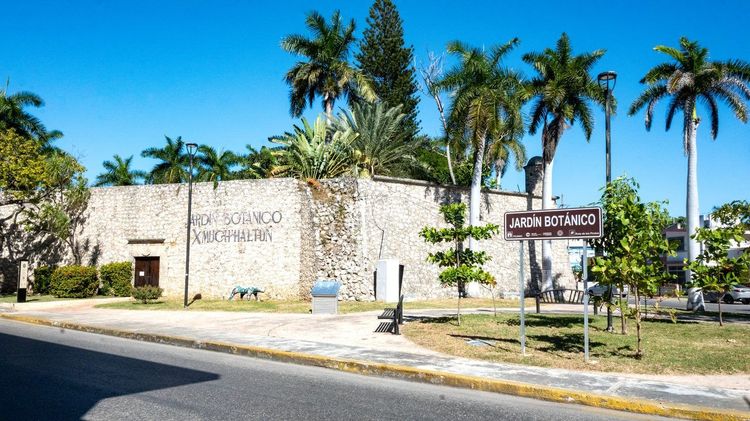
The Jardín Botánico Xmuch'haltún (Calle 8, Baluarte de Santiago, 24000 Campeche, rated 4.3/5 on Google (372 avis)) is one of the more surprising stops in the city: a compact garden planted inside the walls of a rebuilt bastion. Around 250 labeled species grow here, from native trees to medicinal plants, many of them used by the Maya long before the Spanish arrived.
It is not free, but close: entry is around 15 pesos. Allow 20 to 30 minutes, which makes it an easy add-on to your bastion walk. Once inside, climb the bastion's ramp for a look along the old wall line, then read the plant labels on your way down: you will spot chaya, the leafy Maya staple still cooked in local kitchens, and trees used for dyes and building timber during the colonial trade that made Campeche rich. It usually opens mornings and early evenings, closing for the hottest hours, so check the door before you plan around it.
11. Enjoy Free Live Music and Evenings on the Main Square
On weekend evenings, Independence Plaza regularly hosts free live music, from a municipal band playing danzón and trova standards to local groups on the bandstand facing the cathedral. No ticket, no cover charge, just folding chairs that fill fast and plenty of standing room for latecomers.
Be clear about what is and is not free. Listening from the square costs nothing. Sitting at Casa Vieja del Río (Calle 10 No. 319, Centro, 24000 Campeche, rated 3.9/5 on Google (256 avis)), the balcony bar overlooking the same square, for a margarita while the music plays below does not, and prices reflect the view. The same goes for the trolley-style tour buses that loop the walled center after dark: fun if you want to cover the old city in under an hour without walking, but a paid option.
If budget is your priority, grab a bench in the plaza instead of the balcony, and you get most of the same evening for nothing.
12. Time Your Visit for Día de Muertos or Local Festivals
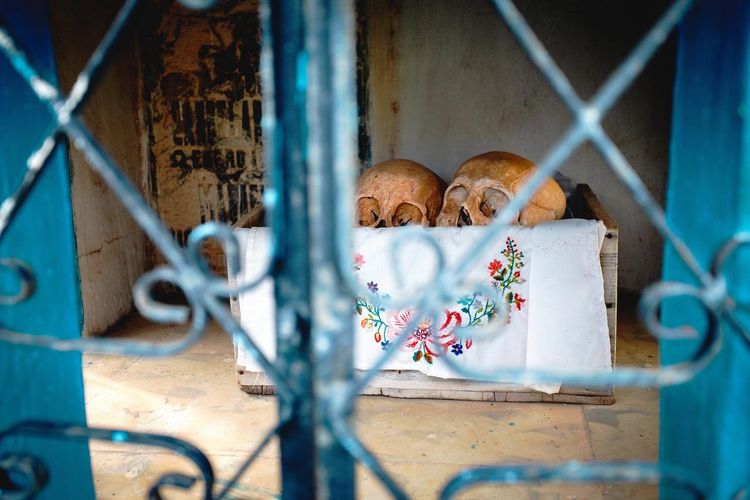
If your dates are flexible, Día de Muertos (October 31 to November 2), known here by its Maya name Hanal Pixán, transforms the city for free. Families build altars in doorways and on the plaza, cemeteries fill with candlelit visits, and kitchens turn out pibipollo, a large corn tamale baked underground, sold on street corners for a few pesos.
Campeche also celebrates its founding anniversary around October 4 with free concerts, and Carnival here is one of the oldest in Mexico, with parades along the Malecón. Ask at the tourist kiosk on Independence Plaza, or check the state tourism office's calendar, to see what falls during your stay.
A practical tip: during these festivals, rooms in the historic center fill up weeks ahead and bus tickets from Mérida sell out on the busiest days. Book early, and plan to spend your evenings on the plaza and along Calle 59, where most of the free concerts, parades and altar displays concentrate. You will see more by wandering slowly than by trying to chase every event on the program.
13. Worthwhile Day Trips Beyond Campeche (Not Free, But Close)
Edzná and Calakmul Maya Ruins
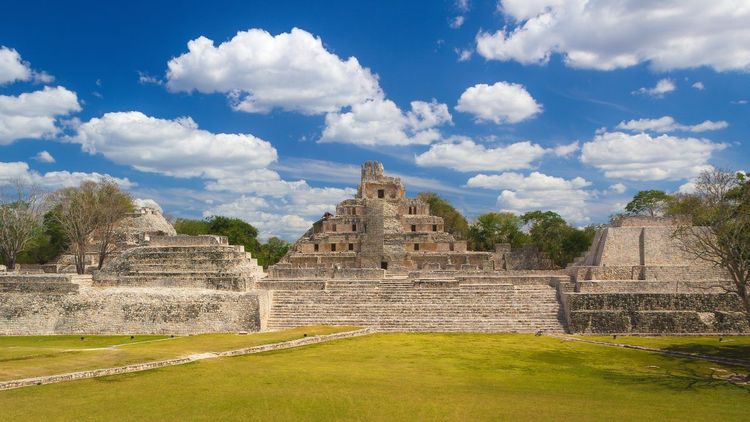
Most of this list of free things to do in Campeche has been free or nearly so. The ruins are the exception. Edzná, about 55 km southeast of the city, is the closer and easier option, reachable by rental car, colectivo or tour in about an hour. Its five-story Edificio de los Cinco Pisos rivals anything at more famous sites, often with barely another visitor in sight, and the entrance fee is a standard, modest archaeological-site price.
Calakmul is the bigger commitment: deep in the jungle near the Guatemala border, roughly four to five hours' drive each way, inside a biosphere reserve where spider monkeys and toucans turn up along the access road. It ranks among the largest Maya cities ever built, with a main pyramid far taller than Chichén Itzá's, and it is a UNESCO site for both its ruins and its forest. Separate fees apply for the reserve and the ruins. Treat it as an overnight trip, ideally based in Xpujil, rather than a rushed day.
Uxmal, the Ruta Puuc and the Petenes Biosphere
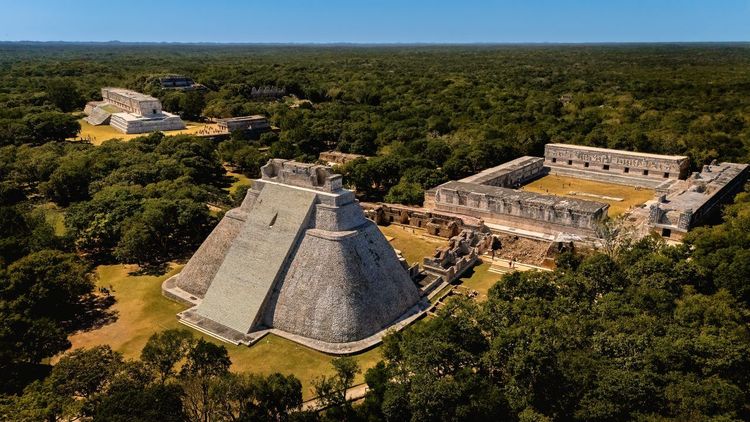
Uxmal sits closer to Mérida, but it is manageable from Campeche, around two and a half hours by car via the Ruta Puuc, a chain of smaller Maya sites along the same road. The rounded Pyramid of the Magician is one of the most photographed structures in the Yucatán; climbing the main pyramids is no longer allowed, but the ornate Nunnery Quadrangle and the Governor's Palace make up for it. Entrance is paid, and a rental car saves most of a day compared with public transport.
Closer and lower-effort, the Los Petenes Biosphere Reserve runs along the coast north of the city, a mangrove and wetland system known for its birdlife and the petenes, tree islands fed by freshwater springs. It is a paid boat excursion, booked with local operators in the fishing villages along the reserve, but it costs less than the ruin trips and takes half a day.
Weigh these against your budget rather than doing all of them. Many travelers spend one day on foot in the historic center and a second on a single paid excursion, treating the city as the free half of the trip and the ruins as the deliberate splurge.
14. How to Get to and Around Campeche
Arriving by Bus, Plane or Colectivo
The ADO bus is the easiest way in for most travelers, with frequent first-class service from Mérida (about 2.5 to 3 hours), overnight coaches from Mexico City, and links to Palenque and the rest of the Yucatán Peninsula. The terminal sits a short taxi ride from the historic center. Tickets can be booked online or at the counter, ideally a day ahead around Día de Muertos or Semana Santa.
Campeche International Airport (CPE) has a limited schedule of domestic flights, mostly via Mexico City. It is convenient if your time is tight but rarely cheaper than the bus. From smaller towns in the state, such as Hecelchakán on the road from Mérida, colectivos (shared vans that leave once full) cost a fraction of the bus fare and often drop passengers near the market.
Getting Around Downtown on Foot
The walled center is compact, roughly 1 km across at its widest, and most sights in this guide sit within a 15 to 20 minute walk of one another. Streets run one-way on a numbered grid (even numbers parallel to the sea, odd numbers perpendicular), so getting lost rarely costs more than a few minutes.
For anything outside the walls, like Playa Bonita, Fuerte de San Miguel or the bus terminal, cheap taxis and city buses do the job. On the hottest afternoons, a short cab ride beats a stubborn 40-minute walk in direct sun.
15. Where to Stay in Campeche
Budget travelers gravitate toward hostels inside the historic center, where a dorm bed costs far less than a hotel room. R&R Hostel (Calle 57, Centro, 24000 Campeche, rated 4.3/5 on Google (78 avis)) is a small, well-reviewed option with only around ten beds, a patio strung with hammocks, a shared kitchen and breakfast included. It also runs its own free walking tours, which fits the spirit of this list. Book ahead given its size.
For a little more comfort, family-run guesthouses in restored colonial townhouses often cost less than branded hotels while keeping you inside the walls. Staying near the bus terminal or out along the Malecón can save a bit more, but adds a taxi to almost everything on this list.
If walkability matters, book inside the historic center: so much of what makes Campeche worth visiting is free simply because you can reach it on foot.
FAQ
Is Campeche worth visiting?
Yes, especially if you want colonial Mexico without the crowds of Mérida or the Riviera Maya. Its UNESCO-listed center, eight surviving bastions and free fountain show give you a few full days of sightseeing at a fraction of the cost of better-known destinations, and it makes a quiet base for Maya ruin day trips.
How many days do you need in Campeche?
Two full days cover the historic center, walls and museums comfortably; three let you add Playa Bonita, the markets and a slower pace. Add a day for Edzná, and two more for Calakmul given the driving distance.
Does Campeche have beaches?
Yes, though not the turquoise Caribbean kind. Playa Bonita, about 13 km south of downtown past Lerma, is the closest organized beach, with calm Gulf water, palapas and showers for a small entrance fee. For postcard beaches, you would need to travel east toward the Riviera Maya.
What is the best time to visit Campeche?
November to April brings the driest weather and lower humidity, the most comfortable stretch for walking. Late October adds Día de Muertos if your dates allow. May is the hottest month, and summer brings afternoon rain and, later in the season, the risk of tropical storms.
How do you get to Campeche, and is the historic center walkable?
Most travelers arrive by ADO bus from Mérida or Mexico City, with a small domestic airport as a faster, pricier alternative. The walled center is about 1 km across, so nearly every free attraction here sits within a 15 to 20 minute walk of the plaza.
Where should you stay in Campeche on a budget?
Hostels and family-run guesthouses inside the historic center, like R&R Hostel, offer the best value: cheap beds within walking distance of the cathedral, the bastions and the Malecón. Staying near the bus terminal saves a little more but adds transport costs to almost everything.
Final Thoughts on Free Things to Do in Campeche
Campeche rewards patience more than a packed itinerary. Its best moments, the cathedral bells at dusk, the fountains dancing on the Malecón, a view from a 300-year-old bastion, cost nothing at all, while the paid extras, a museum ticket here, a day at Edzná there, stay affordable compared with most of coastal Mexico. Spend your money on the ruins and your time on the walled city, and the balance works in your favor.
If you want the full backstory without carrying a guidebook or booking a human guide, the Ryo audio-guided walking tour of Campeche covers the cathedral, the bastions and the colonial streets at whatever pace suits you.