
Créé par Romane, le 17 nov. 2026
Votre guide Ryo
Campeche, Mexico
A backdrop to Adventure and Legends
Parcours audioguidé pour visiter Campeche en 1 jour
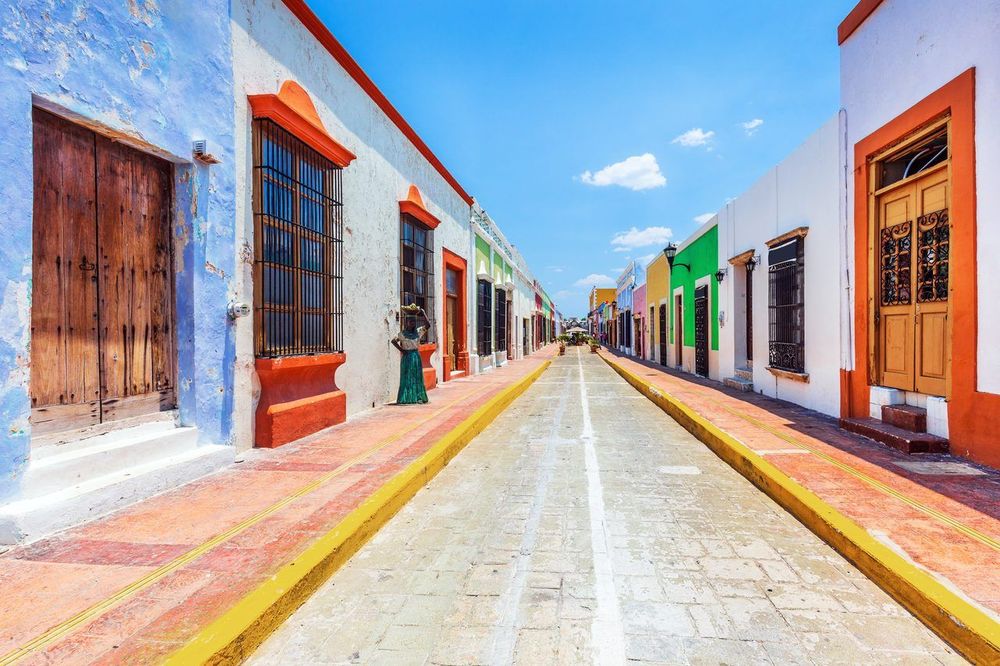
This tour of Campeche takes you to the heart of a port city where colonial history and pirate legends meet at every corner, between pastel facades, imposing ramparts, and the peaceful shores of the Gulf of Mexico. Throughout the walk, discover a historic center with perfectly aligned streets, preserved bastions, and Baroque architecture that tell the unique story of this fortified city. A colorful and immersive way to explore Campeche and let yourself be carried away by its gentle pace of life.
Quand partir à Campeche ?
Jan.
23°
4
Feb.
24°
3
March
26°
2
April
28°
2
May
30°
5
June
29°
12
July
28°
13
Aug.
28°
14
Sept.
28°
15
Oct.
26°
10
Nov.
24°
6
Dec.
23°
4
The climate in Campeche is tropical, with warm temperatures throughout the year. The heat is often combined with high humidity, and daytime temperatures regularly exceed 30 degrees Celsius, especially between spring and summer. The rainy season usually runs from June to October, with showers that can sometimes be intense but are often brief. The most pleasant time to visit the city is generally between November and April, when the air is a bit drier and the temperatures slightly milder. Even during these months, it is usually best to plan visits in the morning or later in the afternoon, when the heat is more comfortable.
Départ conseillé
No need to worry about where to begin! Our tours are designed as a loop, so you can jump in wherever you are. The navigation system and audioguide will automatically adjust to your location. However, if you happen to be nearby, we do have a preferred starting point: on Plaza de la Independecia, in front of the cathedral.
Parking à proximité
Free parking along the Malecón: Avenida Adolfo Ruiz Cortinez
Parking in Campeche is generally quite easy, especially around the historic center. One of the best options is to leave your car near the Malecón, the large waterfront promenade along the sea, where parking is usually easy to find and the fortified city can be reached in just a few minutes on foot. It is also possible to park around the old city walls along the Circuito Baluartes, particularly near Puerta de Mar or Puerta de Tierra, both of which provide convenient access points into the historic center. A few paid parking lots can also be found close to Plaza de la Independencia and the surrounding main streets. In any case, since the historic center is relatively compact and partly pedestrianized, it is often more pleasant to park outside the walls and continue exploring on foot.
Découvrez 22 lieux d'intérêt pour visiter Campeche





What to see in Campeche on your 2h tour?
This 4.3 km loop takes about 2 hours and links 20 sights across Campeche. From the cathedral and Plaza de la Independencia it reaches Plaza de la República, then follows the Malecón past statues and the Ángel Maya, before crossing the bastions and the San Román district. It passes through Puerta de Tierra and climbs Calle 59 to the yellow church and Mansión Carvajal. With the app in your ears, every square and bastion tells its own story, at your pace.
Information checked in November 2026 and subject to change.
1 - Cathedral of Nuestra Señora de la Purísima Concepción
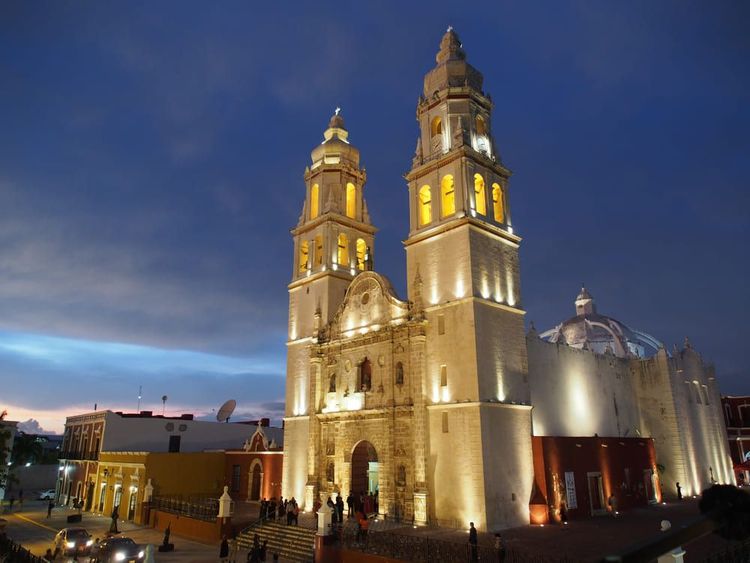
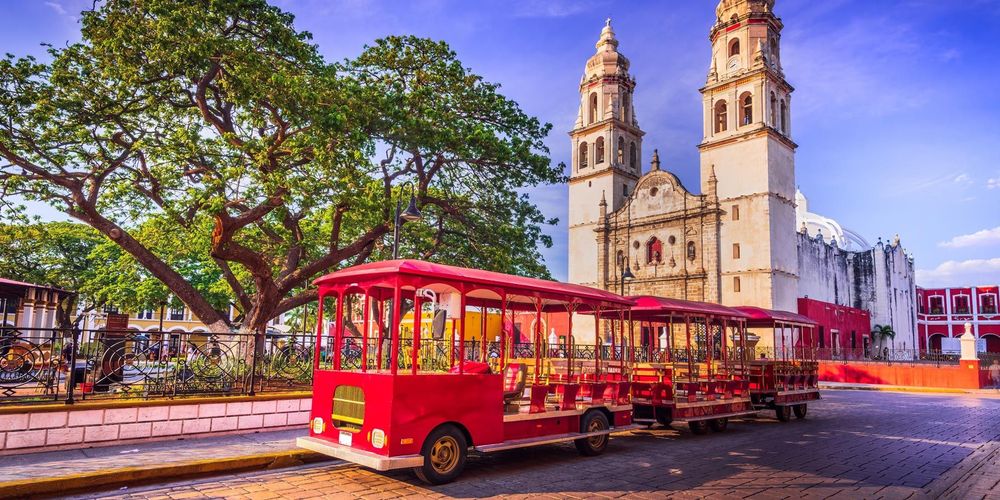
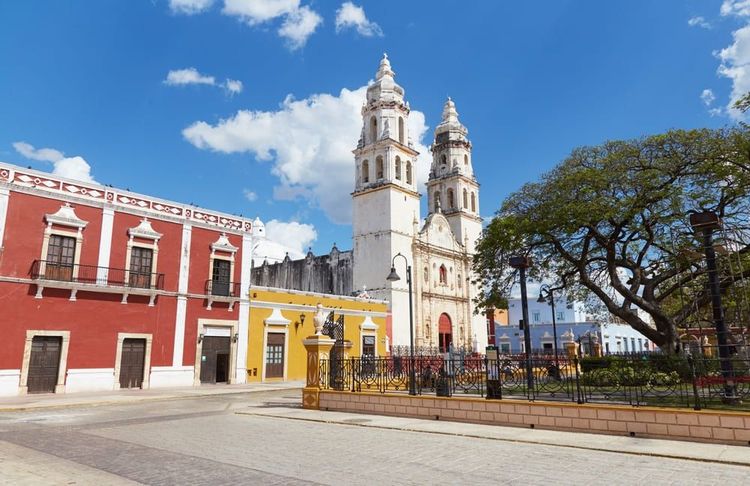
Facing Plaza de la Independencia, Campeche's cathedral grew from a modest chapel raised in 1540 on the orders of conquistador Montejo; the present building, finished in the early 18th century, became a cathedral in 1895. Its plain, pale-stone facade was deliberately understated, meant to avoid catching the eye of gulf pirates. Inside, a neoclassical nave leads to a gilded main altar with a silver tabernacle. Step inside this still-active sanctuary for a moment of quiet.
Free entry
2 - Plaza de la Independencia
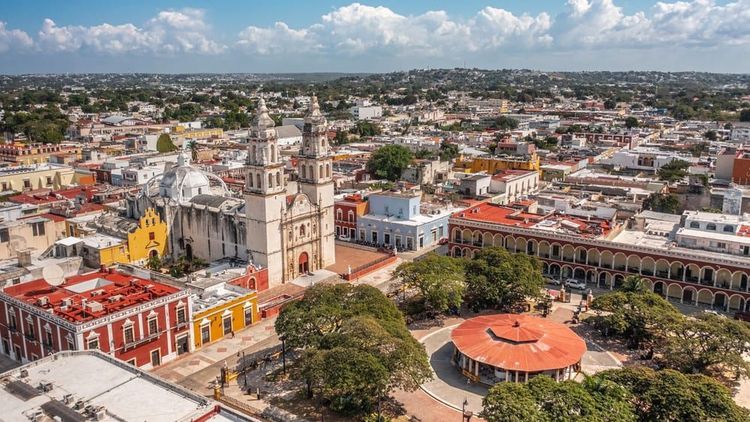
Right ahead lies the square that has set Campeche's pace for nearly five centuries. Founded in 1540 as Plaza de Armas, it already gathered the church, civic power and the city's leading families. Repeatedly attacked by pirates in the 17th and 18th centuries, it stayed the stage for every public ceremony. After Mexico's 1821 independence it took its current name. Its colonial layout survives almost untouched around the central bandstand, now surrounded by musicians and craft stalls.
Free entry
3 - Casa No. 6
Standing on one of the city's earliest plots, this house became a coveted address for wealthy families thanks to its location. Over time it served as a shop, a cantina and then offices, before a restoration made it, by the year 2000, into a cultural venue. A plain facade conceals a Moorish arch that leads to one of Campeche's most photogenic courtyards, ringed by columns and stained glass. A blue-painted room and a vintage stove bring to life daily routines in a colonial townhouse.
Paid entry (about 20 MXN)
4 - El Palacio
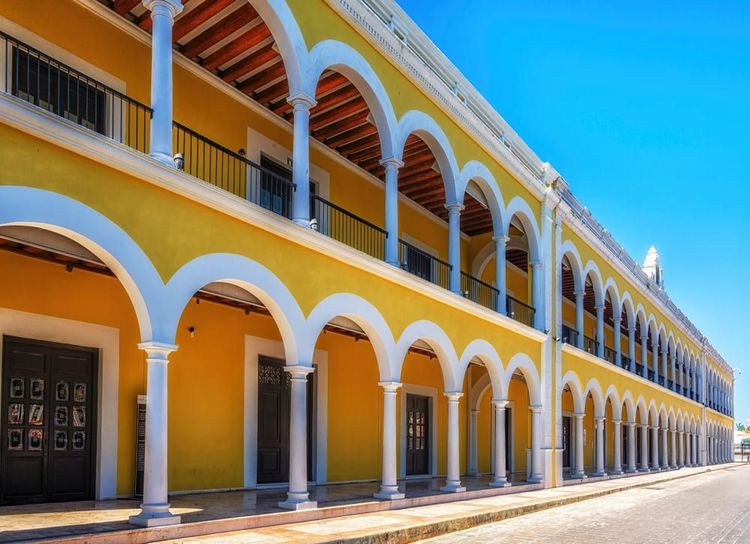
This large yellow building on the square actually houses two museums. The first traces Campeche's port history between the 16th and 19th centuries: fortifications against pirates, navigation, and above all the trade in campeche wood, whose sap once dyed most of Europe's black textiles. The second, opened in 2024, is a contemporary art space showcasing creators from the Yucatán peninsula. From maritime history to present-day creation, two ways to travel through time under one roof.
Free entry
5 - Museum of Maya Architecture
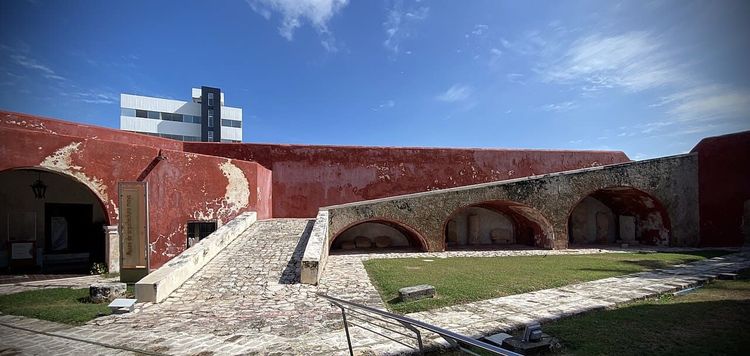
This bastion once guarded the approach to the port and the sea-facing gate. Built as part of the ramparts raised in response to the devastating 1663 raid by a fourteen-ship English fleet, it ranked among the city's most strategic strongholds. It now houses a museum devoted to carvings and architectural pieces brought from several Maya sites across the state. A ramp climbs to the old walkway, where soldiers once scanned the horizon for danger.
Paid entry (about 145 MXN)
6 - Plaza de la República
Unlike the colonial square already crossed, this vast esplanade was born in the 1960s from a modernisation drive called Campeche Nuevo. Its architect drew on the grand urban projects of the era, echoing Brasília. It faces the state government palace, whose balcony sees the governor cry out for independence every 15 September before a huge crowd. Concerts, festivals and traditional celebrations regularly gather the population here, just steps from the Gulf of Mexico.
Free entry
7 - Monument to Pedro Sáinz de Baranda y Borreiro
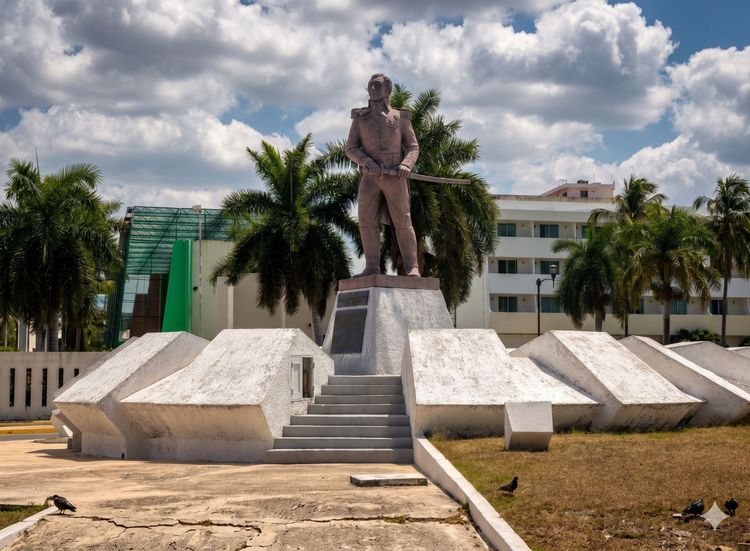
This bronze statue honours a son of Campeche who became a national hero. Born in 1787, he trained in Spain and joined its royal navy while still very young, barely out of his teens when he faced the British fleet off Cape Trafalgar, getting wounded and then promoted. Having joined the Mexican cause, he led the 1825 siege of a fort near Veracruz, ending Spain's armed presence in the country. A founding figure of the nation's navy, he is shown here gazing out to sea.
Free entry
8 - El Ángel Maya
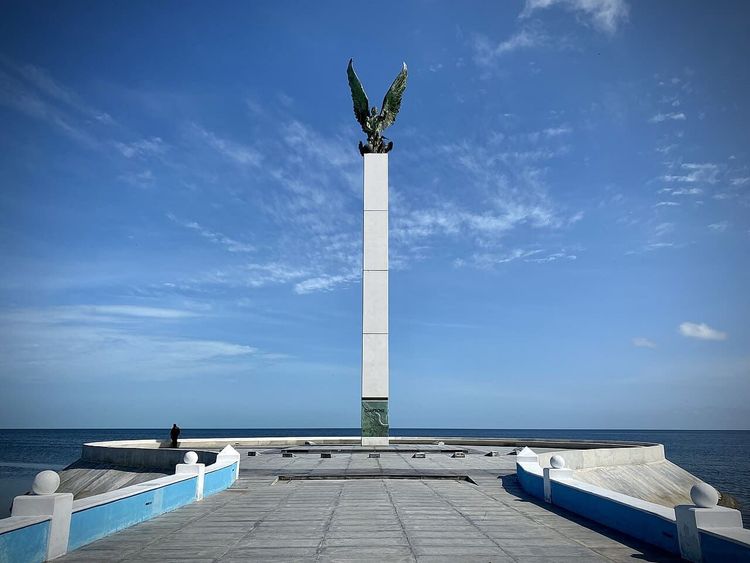
It is hard to miss this tall winged figure rising above the seafront. The work of sculptor Jorge Marín, it was unveiled in 2019 to mark 500 years since the meeting of the Mesoamerican and European worlds. The Maya man embodies his civilisation's legacy, the wings its spiritual reach, and the child he carries the mixed-race roots of modern Mexico. Perched some twenty metres up, it has become an unmissable landmark of the promenade, especially at sunset over the gulf.
Free entry
9 - Parque de las Puertas
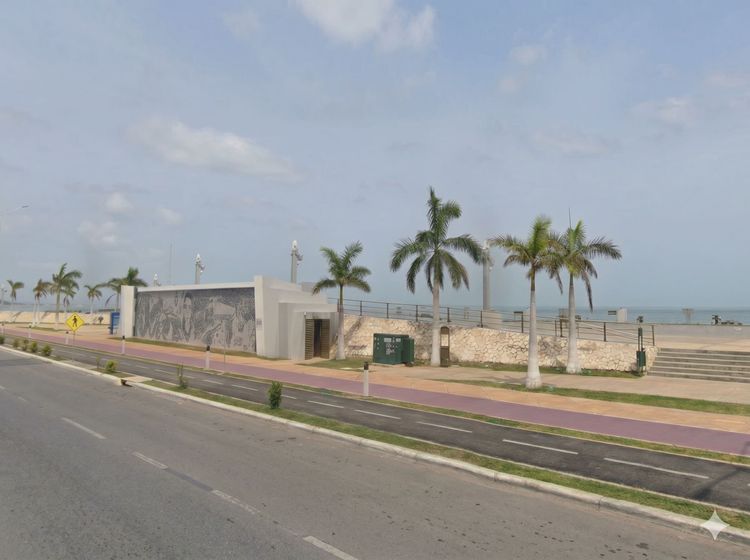
This garden laid out facing the gulf is part of the large leisure complex that revived this stretch of the seafront. Its name pays tribute to the four old gates of the walled city, of which only two still stand today. Six fountains power a nightly show blending water, light and music, which has become one of locals' favourite ways to spend an evening stroll by the water.
Free entry
10 - Baluarte de San Carlos
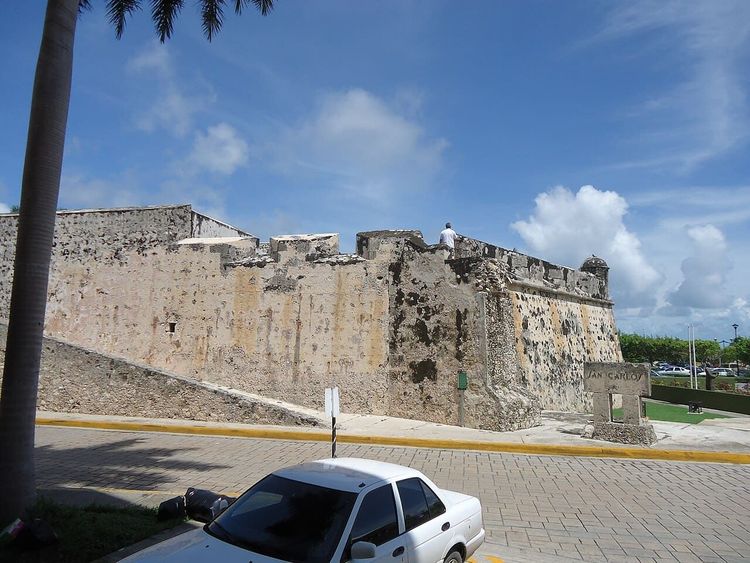
The first bastion built in the city's defensive system, it is dedicated to a Spanish king and stands out for its pentagonal plan, its walls thick enough to stop a cannonball, and a side ramp unique among the city's eight strongholds. Since 1989 it has housed the municipal museum, whose rooms keep the city charter granted in 1777 along with colonial-era pieces. Its basement, nicknamed 'El Pulguero', once served as a jail; local legends speak of tunnels linking the bastions.
Free entry
11 - Ex Templo de San José
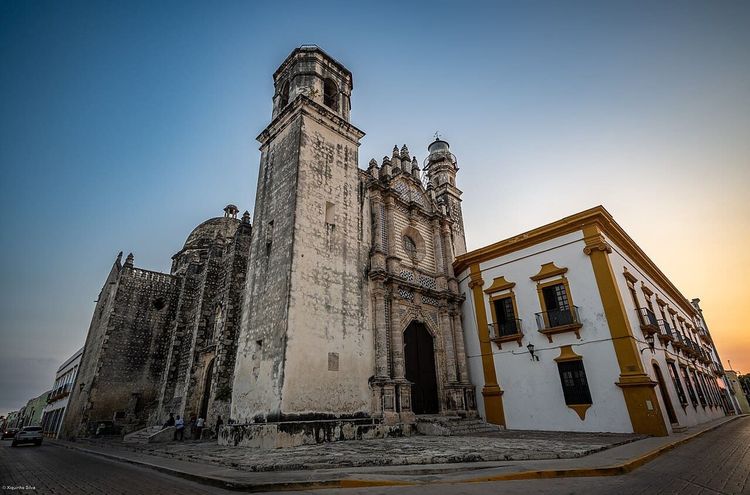
Opened in 1716 by Jesuits who came to replace a humble chapel dedicated to the patron of shipwrights, this building blends baroque and neoclassical style beneath a facade covered in blue-and-white Talavera ceramics, a craft born in the 16th century and recognised by UNESCO. One of its two towers has held a working maritime lighthouse since 1865, a rarity for a Mexican colonial temple. Deconsecrated since 1914, it now hosts temporary exhibitions, best visited with quiet respect.
Free entry
12 - Plaza Héctor Pérez Martinez
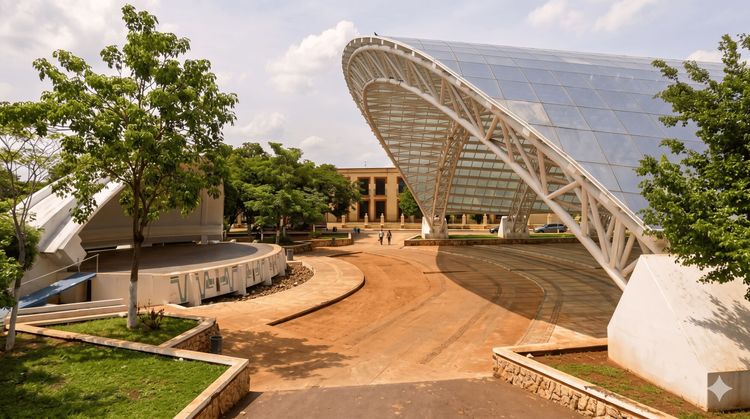
Locals call this open-air amphitheatre the Concha Acústica, after its curved, shell-shaped stage, put up in the early 1960s in the San Román district, just outside the old walls. Its curve naturally projects voice and music without amplification. The square honours a major local figure, by turns writer, historian and head of the state government before joining the national cabinet. Concerts and festivals still gather the city here, especially each December.
Free entry
13 - Monumento a la Madre
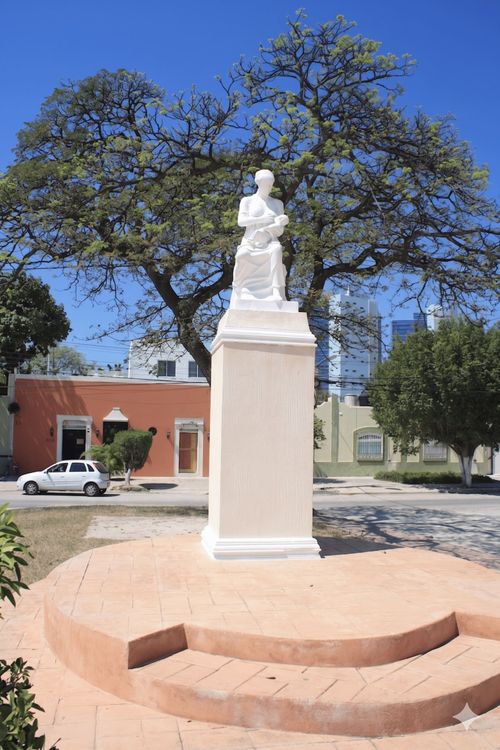
Two sculptors from Mérida delivered this work in the 1930s: a mother breastfeeding her child, a figure of tenderness and protection. Locals enjoy one detail: one of her hands has six fingers, an oddity legend blames on the artist himself, born to a mother with extra fingers, who chose this way to honour her. Set along an avenue dedicated to local figures, the monument becomes the city's gathering point every year on Mother's Day.
Free entry
14 - Baluarte de Santa Rosa
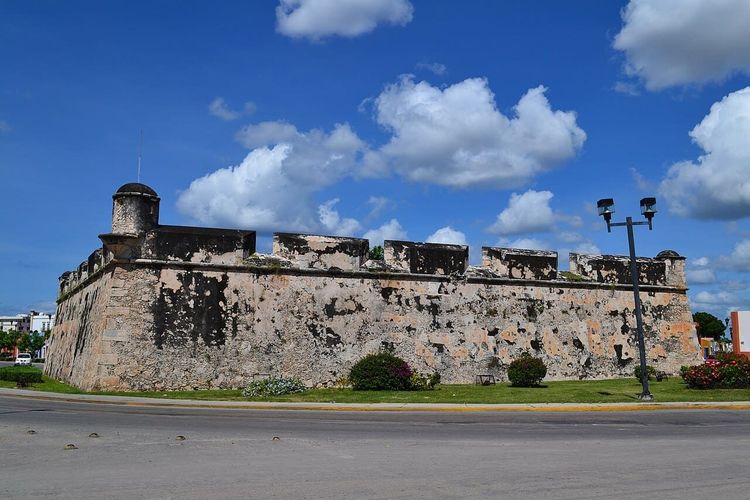
Dedicated to a saint venerated for her protection against pirates, this pentagonal bastion was raised from stone and sahcab, a mortar typical of the region. A courtyard cistern once supplied the garrison with water, while lookout posts watched the surroundings, and a battery of iron cannons once stood ready to defend the city. The old military stronghold is now an art gallery showcasing work by Campeche's own artists, far from cannon fire but still at the heart of city life.
Free entry · Best in the morning
15 - Campeche’s Gastronomy

A blend of Maya, Spanish and Creole flavours, Campeche's cuisine reveals itself on the way to Puerta de Tierra. Pan de cazón, layers of small shark between tortillas and spiced tomato sauce, is its signature dish, alongside fish grilled with achiote marinade or pork slow-cooked in banana leaves. Seafood lovers will enjoy a fish and shellfish soup, before finishing with sweet fried pastries or candied papaya, washed down with a rice-based or fermented corn drink.
16 - Puerta de Tierra
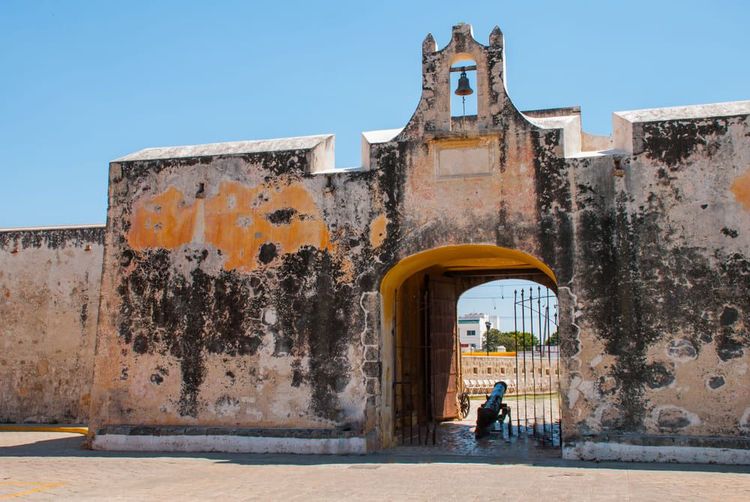
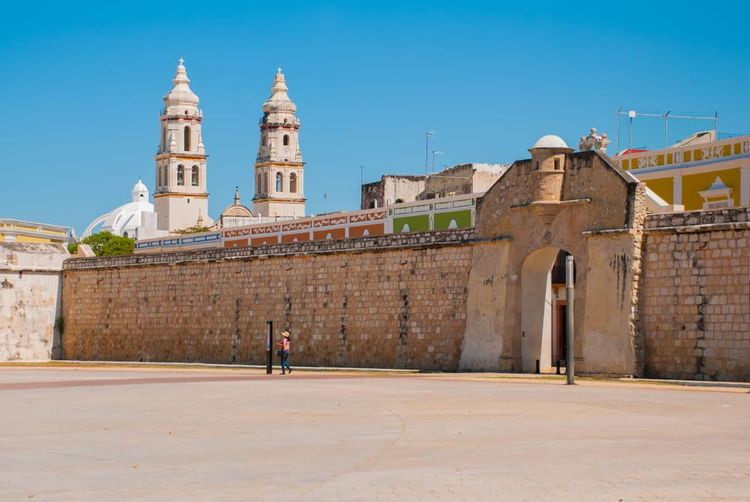
The only land gate, alongside its sea-facing twin, still standing from the UNESCO-listed city walls, this 1732 structure linked two bastions and opened the city toward the interior. Its moat, battlements and heavy wooden door speak to architecture built for defence. Every weekend, a sound-and-light show revives the old battles against pirates under a sky set ablaze by the setting sun, while display cases tell Campeche's military history.
Paid entry
17 - Calle 59
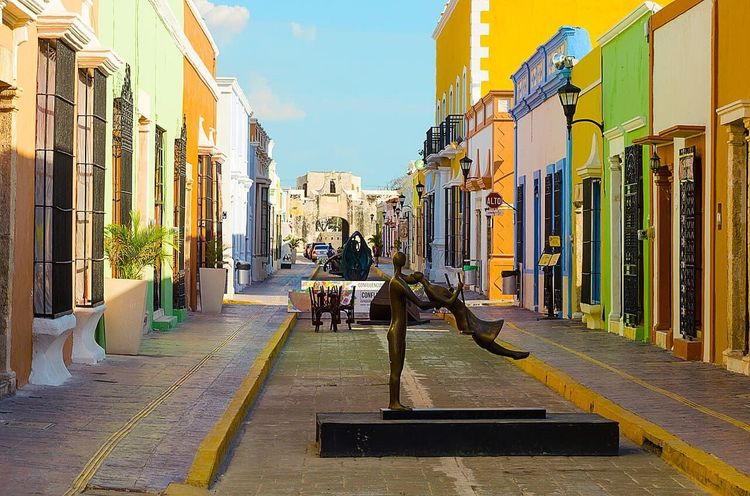
A major artery of the walled city, this street runs east to west between the two historic gates and already existed, under another name, shortly after Campeche's founding in 1540. Before the walls went up, chronicles tell of pirates sometimes slipping through here to raid houses. Its pastel facades with wooden doors and wrought-iron balconies, many built in the 18th and 19th centuries, now house restaurants, galleries and cafés that come alive with music and terraces every evening.
Free entry
18 - Iglesia del Dulce Nombre de Jesús
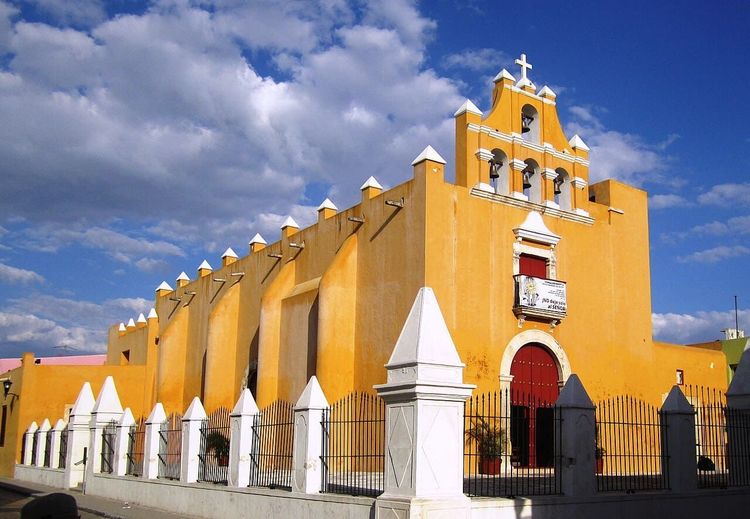
Fondly nicknamed 'the yellow church' for its bright facade, it was born in the 16th century as a simple open chapel, a spiritual refuge for people excluded from the main parish: indigenous residents, enslaved people and mixed-race families. Becoming a full church in the early 17th century, it was partly burned in 1685 by the dreaded pirate Lorencillo, then restored. Its massive buttresses, which also served as shelter during attacks, and its vivid colour make it one of Campeche's most photographed buildings.
Free entry
19 - City Theater
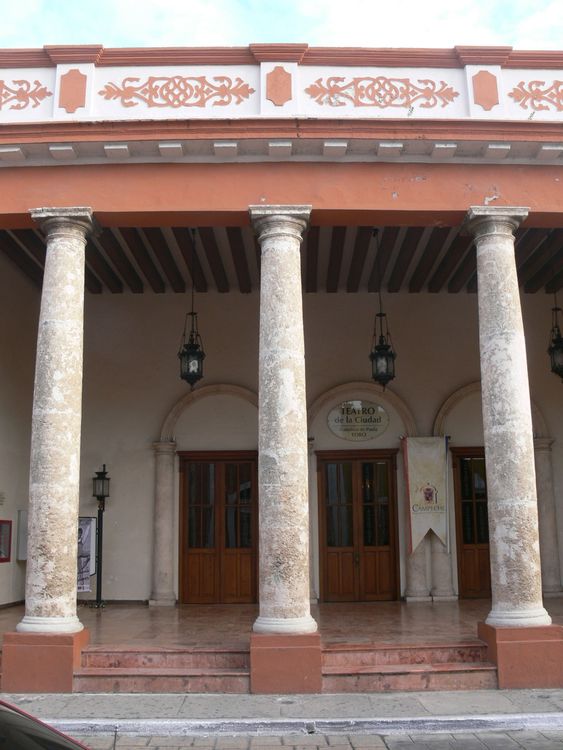
A 19th-century neoclassical gem, this building ranks among the country's very first venues devoted to opera, and owes its existence to a general determined to give his city a stage worthy of the great capitals. The chosen architect, imprisoned in Campeche for murky reasons, bargained his freedom for the building's plans, signed from his cell. An epidemic, then a clash with the Church, further delayed the works, before a triumphant opening hailed as one of the country's finest halls.
20 - Mansión Carvajal
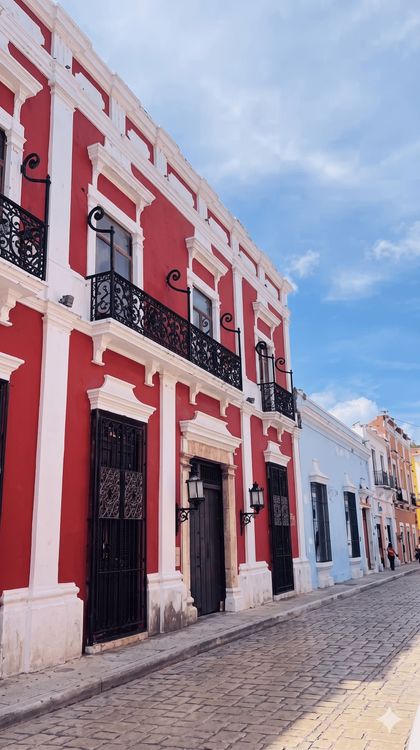
Built in the early 18th century and enlarged the following century, this house was once home to one of the Yucatán's most influential families, whose patriarch governed the region and owned one of its wealthiest estates. Its style blends neoclassical, Moorish and colonial influences, with lobed arches and wrought-iron balconies. Inside, a Carrara marble staircase rises between white columns in an atmosphere worthy of a palace, now shared between government offices and curious visitors.
Which neighbourhoods does the tour cross?
In one loop, the route links the main stages of Campeche's walled town, from the colonial square to the seafront.
It starts at the cathedral, on Plaza de la Independencia, the colonial heart of the city, runs along the square past Casa No. 6, El Palacio and the Museum of Maya Architecture, then reaches Plaza de la República, facing the Gulf of Mexico (stops 1 to 6).
It then joins the Malecón, the seafront promenade, between the monument to Pedro Sáinz de Baranda, El Ángel Maya and the Parque de las Puertas, heads back to the walls past the Baluarte de San Carlos and the former church of San José, then leaves the walled town for the Barrio de San Román and its Concha Acústica, before the Baluarte de Santa Rosa (stops 7 to 14).
After a commentary on local food (stop 15) and the Puerta de Tierra (stop 16), it climbs Calle 59 to the yellow Iglesia del Dulce Nombre de Jesús, the City Theatre and the Mansión Carvajal, not far from the starting point (stops 17 to 20).
How much does it cost to visit Campeche?
Of the 20 stops on the route, 14 can be visited without a ticket, including the San Carlos and Santa Rosa bastions with their museums, the City Museum and the Campeche art gallery. Three entries are paid:
- Casa No. 6, 20 Mexican pesos;
- the Museum of Maya Architecture, at the Baluarte de Nuestra Señora de la Soledad, 145 Mexican pesos;
- the visit of the Puerta de Tierra, price not published.
As for the other stops, one is a commentary on local food, and access to the City Theatre and to the Mansión Carvajal, which houses offices, depends on current conditions.
Information checked in November 2026 and subject to change.
Where to stop for a bite along the tour?
Between the Baluarte de Santa Rosa and the Puerta de Tierra, the commentary at stop 15 dwells on Campeche's cooking, to be tasted in the restaurants and cenadurías of the historic centre and the seafront.
This blend of Maya, Spanish and Creole flavours comes together in pan de cazón, a layered bake of tortillas, shredded small shark and spicy tomato sauce, or in pescado a la tikin xic, marinated in achiote and cooked over a wood fire. Cochinita pibil, pork slow-cooked in banana leaves, and sopa de mariscos round out the picture.
To finish, candied papaya, dulce de papaya, goes well with horchata de arroz or chéchén, a fermented corn drink. And for a snack, marquesitas cost less than a bottle of water.
What should you know before visiting Campeche?
Several stops on the route open on very different days, worth checking before setting out.
The Baluarte de Santa Rosa and its art gallery only open on Saturdays, Sundays and public holidays, in the morning, whereas the City Museum in the Baluarte de San Carlos only opens on weekdays, Monday to Friday. Casa No. 6 also opens Monday to Friday, and El Palacio Tuesday to Sunday.
The cathedral and the Iglesia del Dulce Nombre de Jesús remain active places of worship: entry should respect services, with appropriately modest dress. In this tropical climate, walk in the morning or late afternoon, even between November and April, the most pleasant time of year.
What to see around Campeche?
Campeche is also a gateway to the Maya sites of the Yucatán peninsula.
Day trips to the ruins of Edzná, Calakmul and Uxmal are never free: our guide to free things to do in Campeche covers them, along with the Puerta de Tierra evening show, among what still costs money.
Le plein d'inspirations
Explorez le monde en totale liberté, à pied au cœur des villes ou au fil des routes. Nos guides audios transforment chaque destination en une découverte culturelle immersive et unique.
FAQ for visiting Campeche
When is the best time to visit Campeche?
The ideal time to visit Campeche runs from November to April, when the tropical climate becomes milder. During these months, the air is drier and the temperatures slightly gentler, even though they generally stay above 25 degrees. You will thus avoid the rainy season, which runs from June to October and is characterised by intense but short downpours. To make the most of your exploration, favour visits early in the morning or in the late afternoon when the heat is more bearable. Humidity remains present all year round, so remember to hydrate regularly and to wear light, comfortable clothing.
How many days do you need to visit Campeche?
Two to three days is generally enough to discover the essentials of Campeche. A full day lets you explore the historic centre with its ramparts, bastions and colourful façades. If you have more time, devote a second day to the archaeological sites in the surrounding area and a third to enjoying the seafront and the local atmosphere. This length of time leaves you room to appreciate the peaceful pace of the city, to wander through its cobbled streets and to soak up its unique atmosphere. Travellers in a hurry can see the main points of interest in one busy day, but you risk missing the authentic charm of this fortified city.
How do you get to Campeche from the other cities of the Yucatán?
Campeche is well connected to the main cities of the Yucatán Peninsula. From Mérida, count on about two hours by road or bus, with frequent departures throughout the day. From Cancún or Playa del Carmen, the journey generally takes between five and six hours on a direct bus. The ADO bus companies offer comfortable, air-conditioned services. If you prefer flexibility, renting a car remains an excellent option for exploring the region at your own pace. Campeche airport also handles domestic flights from Mexico City. Colectivos are an economical alternative for short trips from neighbouring towns.
Which archaeological sites should you see around Campeche?
The surroundings of Campeche are full of fascinating Maya sites. Edzná, the most accessible and impressive, lies less than an hour's drive away with its imposing five-level pyramid. Calakmul, though more remote in the jungle, offers an unforgettable experience with its monumental pyramids and exceptional biodiversity. Closer by, Xcalumkín and Tohcok are worth the detour for their well-preserved carvings. The Puuc route leads you to lesser-known but equally captivating sites such as Chunhuhub or Hochob. Allow a full day for each major site, setting off early to avoid the heat and the crowds. Don't forget water, sun protection and comfortable shoes for these explorations.
Where to stay in Campeche: in the historic centre or near the sea?
The choice depends on your travel priorities. The historic centre offers the advantage of being close to the main attractions, restaurants and nightlife. You can easily explore on foot the colourful lanes, the ramparts and the museums. Accommodation here is varied, from boutique hotels in former colonial residences to budget hostels. The seafront, quieter, suits travellers seeking relaxation with a view of the Gulf of Mexico. The hotels there are often more modern with pools and direct beach access. The distance between the two areas remains reasonable, allowing you to enjoy both atmospheres. For a complete immersion, the historic centre generally remains the preferred choice.
How do you visit the Edzná site from Campeche?
Edzná lies about an hour's drive to the south-east of Campeche. Several options are available to you for this excursion. Organised tours generally leave in the morning and include transport and a guide, a practical solution if you prefer not to drive. By public transport, combis leave regularly from the main market, but check the return times so you don't get stuck. Renting a car offers more flexibility to explore at your own pace and combine with other sites. Allow at least three hours on site to fully appreciate this remarkable Maya site. Set off early in the morning to enjoy the cool air and the beautiful light on the structures.
Is Campeche a safe city for tourists?
Campeche enjoys a reputation as a calm and safe city, particularly in the historic centre where there is a regular police presence. The locals are generally welcoming and used to visitors. As everywhere, stay alert with your personal belongings in tourist spots and avoid displaying valuables. In the evening, the streets of the centre remain lively and well lit, but favour taxis for night-time trips to the outlying neighbourhoods. Pickpockets remain rare, but keep an eye on your things in crowded markets. The city does not experience the major security problems of other Mexican tourist destinations, allowing for a serene and relaxed exploration.
Which typical dishes should you try in Campeche?
Campeche gastronomy blends Maya flavours and maritime influences. Don't miss the pan de cazón, an emblematic dish made of tortillas, black beans and shredded shark in tomato sauce. The camarones al coco, coconut shrimp, perfectly reflect the local coastal cuisine. The cochito, pork marinated in a citrus and achiote sauce then slow-cooked, literally melts in your mouth. The pámpanos en escabeche offer a local version of marinated fish. For dessert, try the marquesitas, crispy crêpes filled with Dutch cheese and jam. The markets and traditional fondas serve these specialities at gentle prices, while the restaurants of the historic centre offer more elaborate versions in a colonial setting.
What is there to see in Campeche's walled historic centre?
San Francisco de Campeche is one of the few walled cities in the Americas, once protected from pirate raids by ramparts of which several bastions and two monumental gates survive, the Puerta de Tierra and the Puerta del Mar. You can walk along part of the walls, visit the baluartes now turned into small museums or a botanical garden, then come back down towards the Plaza de la Independencia and its cathedral.
The colonial grid behind them lines up façades painted yellow, ochre, blue and green, at their most photogenic along calle 59, which is reserved for pedestrians. Step inside Casa Seis to see a period middle-class interior, and look up at the Mansión Carvajal. The Ryo audio guide offers a dedicated Campeche route linking these bastions and colourful streets.
What can you do in Campeche in the evening?
The end of the day belongs to the Malecón, the long promenade running along the gulf: locals come here to walk, run or simply sit facing the sunset, and the light becomes spectacular once the heat drops. Heading back towards the walls, calle 59 lights up and its terraces fill, while the Plaza de la Independencia comes alive with musicians, ice-cream sellers and families.
The city also stages a sound and light show on the fortifications, several evenings a week depending on the season, telling the story of the buccaneer era: ask where you are staying, as the schedule varies. Finish with a drink on a shaded square or a plate of seafood in the market district, which stays lively well after dark.
What can you do for free in Campeche on a tight budget?
The cathedral, dedicated in 1705, and Independence Plaza cost nothing to visit, nor do the colourful streets of the fortified centre, a UNESCO site since 1999: walk them before 10 am, ahead of the heat. The city walls, completed in 1704, still have all eight bastions; Baluarte de San Carlos takes five minutes to climb. You can walk through the Puerta de Tierra for free by day, and only its evening show is paid (around 60 pesos). Finally, head to the San Francisco district, where tradition places the first mass on the Mexican mainland in 1517.
Discover every tip in our budget guide to free things to do in Campeche.
Vos commentaires, idées et suggestions
Aucun avis pour le moment