© Shutterstock
 Votre guide Ryo
Valladolid in 3 Days: The Complete Yucatán Itinerary for 2026
Three days sounds tight for a town most travelers treat as a one-night stopover between Cancún and Chichén Itzá, but Valladolid in 3 days is exactly enough time to see why so many visitors end up staying longer than planned. A self-guided audio walk through Valladolid's historic center covers the same cobbled blocks you'll explore on day one, filling in the stories behind the pastel facades at your own pace. Over your three days in Valladolid you'll swim in a cenote hidden a few blocks from the main square, stand at the foot of a pyramid that casts a serpent-shaped shadow at each equinox, and climb another that's still open to visitors, plus visit a family-run bee park where stingless Melipona bees are kept the traditional Maya way. There's also a cheese-stuffed dessert sold from carts after dark, a flamingo estuary two hours north, and a pink lake that photographs like it's been filtered. This guide breaks Valladolid in 3 days into a realistic itinerary, adds the 2026 entrance fees, covers what to eat and where to sleep, and flags the trade-offs between budget colectivos and private tours for the Chichén Itzá and Ek Balam side trips.
Valladolid in 3 Days: Quick-Glance Itinerary

Three days gives you enough room to see Valladolid itself, Chichén Itzá and Ek Balam without feeling rushed between ruins, and it's the itinerary this guide is built around. Here's the shape of it before the details below:
- Day 1: Casa de los Venados, the main square, Calzada de los Frailes, Cenote Zací, the Xkopek bee park, and the evening light show at the San Bernardino convent.
- Day 2: Full-day trip to Chichén Itzá and the Temple of Kukulcán, then one or two cenotes on the drive back (Suytun, Oxman or Samula).
- Day 3: Morning at Ek Balam and Cenote X'Canche, with an afternoon choice between Las Coloradas' pink lakes or the flamingos at Río Lagartos.
Two days works if you skip one ruin site entirely, but you'll be choosing between Chichén Itzá and Ek Balam rather than seeing both. Four or five days lets you add a day trip to Mérida or slow down the cenote-hopping, but for most travelers passing through the Yucatán, three days hits the point where you've seen the headline sights without burning your whole trip on one town.
The order above matters more than it looks: Chichén Itzá gets crowded and hot fast, so going early on day two beats any other slot, and Ek Balam's smaller crowds make it forgiving if your day three starts a little late. Buy your Chichén Itzá ticket at the official gate rather than through a third-party reseller near the parking lot: the markup on those isn't worth the convenience. If you only have two days in Valladolid, keep day one and pick whichever ruin site suits you, then come back to this plan next time.
Day 1: Downtown Valladolid, Casa de los Venados and Cenote Zací
Start where the town starts: the main square, officially Parque Francisco Cantón Rosado), is the reference point for every direction in Valladolid and the easiest place to get your bearings before the day heats up.
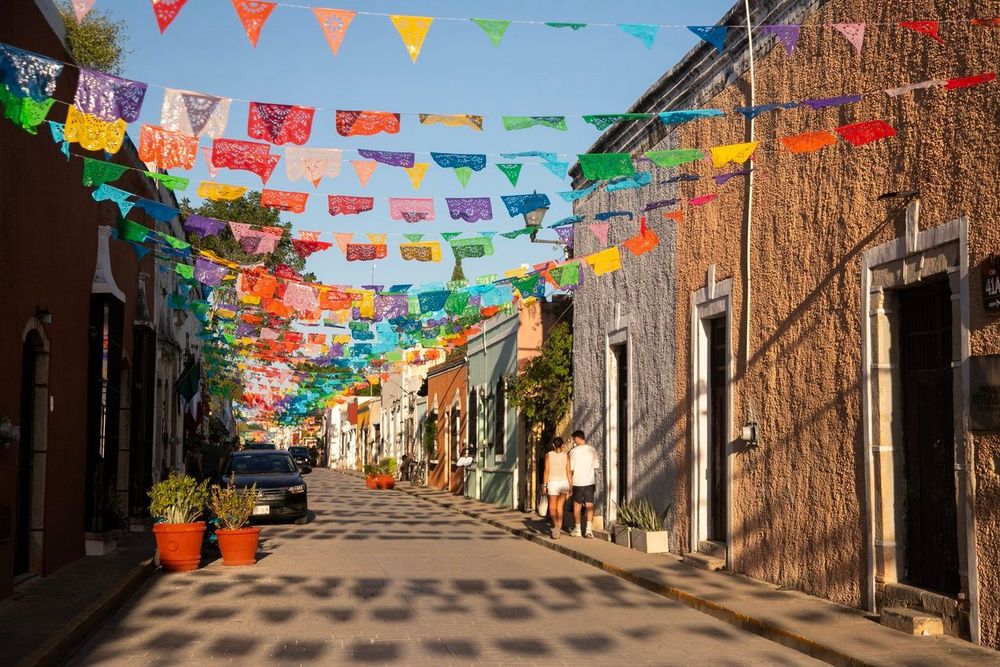
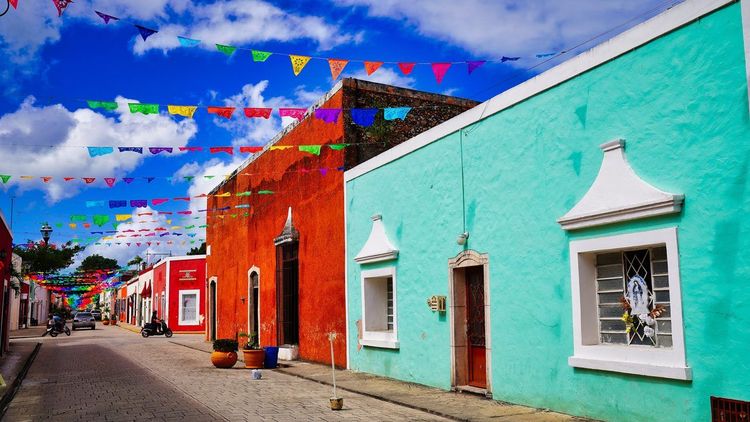
Grab a coffee at one of the park-side cafés and watch the town wake up. The cathedral anchors one side of the square, and the streets fanning out from it are lined with the pastel colonial buildings Valladolid is known for, pink and mustard-yellow facades that make even a short walk feel photogenic.
A five-minute walk away sits Casa de los Venados), a private colonial house converted into one of the largest collections of Mexican folk art in private hands, with more than 3,000 pieces spread across rooms you wouldn't guess existed from the street. Free guided tours run most mornings (the owners ask for a donation instead of a fixed fee), and the collection alone justifies the stop even if folk art isn't usually your thing.
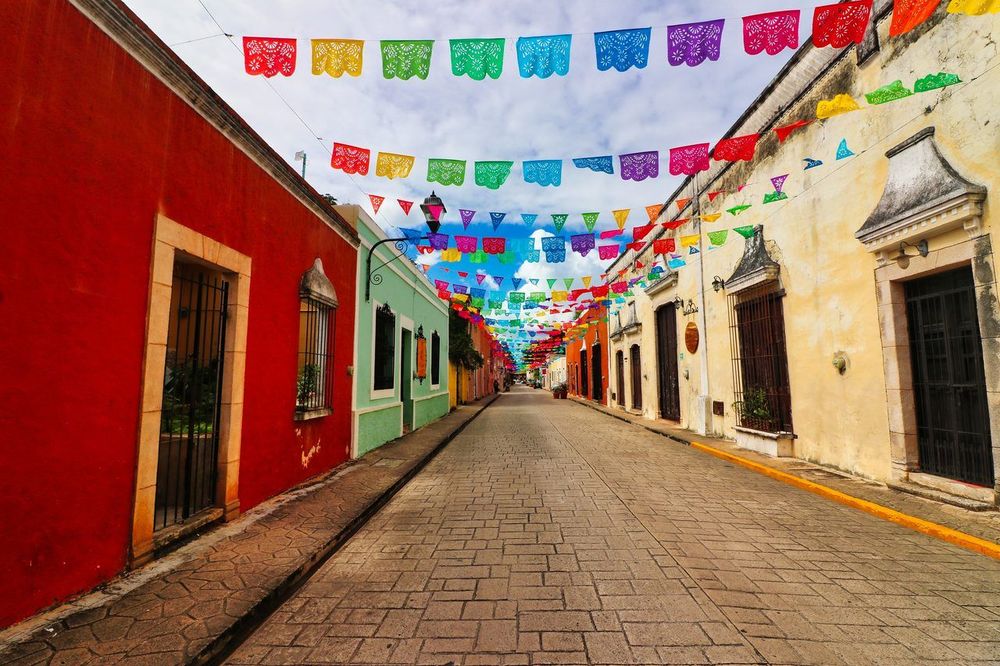
From there, wander the blocks toward Calzada de los Frailes, the cobbled street connecting downtown to the Convento de San Bernardino de Siena. It's the most-photographed stretch of town for a reason: low colonial houses painted in saturated colors, bicycles leaned against doorways, and almost no traffic.
This is also where the Ryo app earns its keep. Its audio walk threads through these same downtown stops (the main square, Casa de los Venados, the market streets nearby), so you can linger wherever something catches your eye instead of watching the clock behind a guided group. With the Ryo's valladolid audio guide on your phone, the historic center unfolds at whatever pace you set.
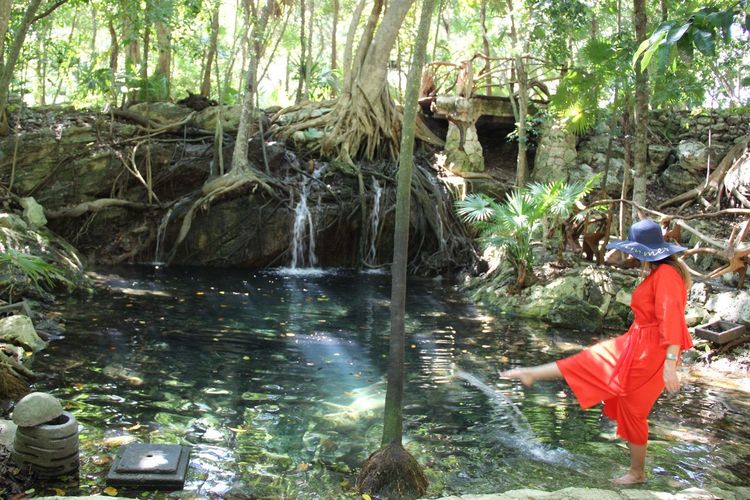
By early afternoon, head to Cenote Zací), a swimming cenote inside the town itself, a short taxi or tuk-tuk ride from downtown. Unlike the cave cenotes you'll see on day two, Zací is partly open to the sky, with tree roots dropping fifteen meters down to turquoise water and small fish that will absolutely nibble your toes if you stand still too long. It's less dramatic than Ik Kil or Suytun, but it's also far less crowded, and swimming here costs a fraction of the entrance fees you'll pay at the big-name cenotes tomorrow.
Back in the center, swing about ten blocks south of the square to Xkopek Parque Apícola (Calle 57 x 38, 97780 Valladolid, Yuc., Mexico, rated 4.7/5 on Google (1 104 avis)), a family-run bee park on the edge of town that protects native Melipona bees (stingless, so don't worry). The tour lasts around an hour and a half: you walk down into a dry cenote to see wild hives, watch keepers open a traditional log hive, and finish with a honey tasting. It's a quiet, hands-on stop that very few day-trippers from Cancún ever hear about.
Save your appetite for the evening. Street stalls around the square start selling marquesitas as the sun drops, a crepe-thin wafer rolled around shredded cheese and your choice of sweet filling, cajeta and Nutella are the local favorites, then grilled on a flat iron until it crackles. It sounds like an odd combination of savory and sweet until you've had one.
Finish the day with the Valladolid Light Show, officially « Noches de la Heroica Valladolid », a free video mapping projected onto the facade of the Convento de San Bernardino de Siena at the end of Calzada de los Frailes. It runs Wednesday to Sunday, at 9pm in Spanish and 9:20pm in English, and lasts about 22 minutes, telling the town's history from Maya Zací to the 1910 uprising. Arrive half an hour early to grab a spot on the lawn, and you'll have a good bookend to a day spent mostly on your feet.
Day 2: Chichén Itzá, the Temple of Kukulcán and Nearby Cenotes
Dedicate this whole day to Chichén Itzá). It's 45 minutes from Valladolid, one of the most visited archaeological sites in Mexico, and genuinely worth the early alarm.
How to get to Chichén Itzá on a budget: colectivos (shared vans) leave from Calle 39 near the market starting around 7am and cost roughly 50-60 pesos each way, dropping you a short walk from the entrance. Local buses run the same route for a similar price but less frequently. Either way, aim to arrive at opening time, 8am (the site closes at 5pm, last entry around 4pm), because by 10am the site fills with tour groups bussed in from Cancún and Playa del Carmen, and by noon the heat on the unshaded limestone plaza gets genuinely tough.
How to get to Chichén Itzá with more comfort: a private taxi from Valladolid runs about 500-700 pesos one way (negotiate before you get in), or you can book a guided tour that bundles transport, a licensed guide and sometimes a cenote stop afterward. The comfort option costs more but removes the scheduling guesswork, useful if you're short on time or traveling with people who don't want to navigate colectivo routes.
Entry costs about 697 pesos for foreign adults in 2026, now paid at a single window instead of the old two-ticket system, and parking adds roughly 120 pesos if you drive. Bring pesos in cash or a card, but not dollars.
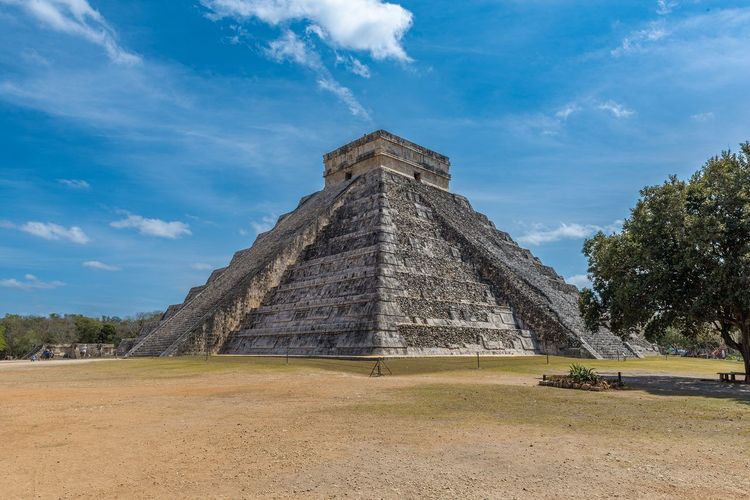
Once inside, the Temple of Kukulcán (also called El Castillo) is the pyramid everyone's seen in photos, 24 meters of stepped limestone that the Maya built as a precise calendar: 365 steps total across its four staircases, one for each day of the year. You can no longer climb it, roping it off protects the structure, but walking its base and understanding the astronomical engineering behind it (the famous equinox shadow effect is the headline trick, but the whole building is a calendar) takes a good hour on its own.
Beyond the pyramid, give yourself time for the Great Ball Court, the largest in the Maya world, and the Temple of the Warriors with its rows of carved columns. A guide helps here if you've booked one; if not, a short read-up beforehand goes a long way since on-site signage is minimal.
Plan to be back in your car or colectivo by early afternoon, because the second half of the day belongs to water. Three cenotes sit on or near the road back to Valladolid, and you'll want one, maybe two, not all three in a single afternoon.
Cenote Suytun) is the one you've seen on Instagram: a small circular opening in the cave roof drops a single shaft of light onto a stone platform in the middle of the water, best between 11am and 1pm when the light lines up. It gets busy for exactly that reason, so budget extra patience for the photo spot even if you skip the photo yourself.
Hacienda Oxman) takes a different approach: its cenote sits inside the grounds of a restored hacienda, with a restaurant and bar built right at the water's edge and rope swings for anyone who wants to jump rather than climb down a ladder. It's the most social of the three, good for a late lunch with your feet still wet.
Cenote Samula (Dzitnup, 97780 Valladolid, Yuc., Mexico, rated 4.5/5 on Google (316 avis)), paired with its twin Xkeken just across the road, is fully enclosed in a cave, with tree roots dangling from a small hole in the ceiling all the way down to the water twenty meters below. It's the most atmospheric of the three if underground, shadowy swimming spots appeal to you more than open-sky light shafts.
On a day this packed, the town walk can wait: you won't be strolling downtown with headphones on while racing cenote closing times. Keep the Ryo audio guide for a quiet morning or a slow evening instead; it'll still be there once Chichén Itzá stops eating your schedule.
Day 3: Ek Balam Ruins and the Road to Las Coloradas or Río Lagartos
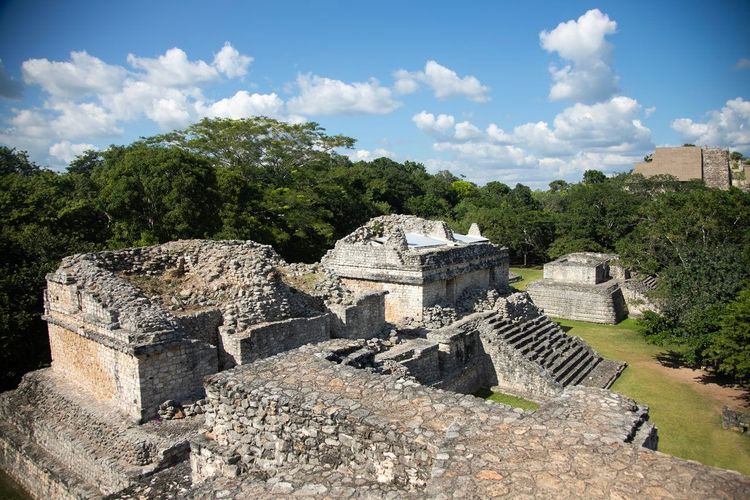
Ek Balam) gets a fraction of Chichén Itzá's visitors despite being just 30 minutes from Valladolid, which alone makes it worth the morning. Entry runs around 700 pesos for foreign visitors in 2026, and the site opens at 8am. Its standout feature is the Acrópolis, a pyramid of roughly 30 meters you can still climb in 2026 (one of the last in the region, though INAH rules can change, so check on arrival), crowned by a stucco frieze of carved figures and jaguar mouths that's survived in startling detail for over a thousand years.
Right behind the ruins, Cenote X'Canche) gives you a cool-down that doubles as an activity: ziplines and rope swings sit alongside the swimming area, and because it's attached to the archaeological site rather than being a standalone attraction, it rarely gets the crowds that hit Suytun or Ik Kil.
That's the whole morning covered in one cluster: ruins first while it's cool, then the cenote, all within a few kilometers of each other. Rent bikes at the X'Canche entrance if you'd rather not walk the 1.5 km track between the two.
The afternoon is where day three branches. Both options sit roughly two hours north of Valladolid, past Ek Balam, so pick one rather than attempting both in a single day.
How to get to Río Lagartos on a budget): colectivos run from Valladolid's bus terminal toward Tizimín, where you transfer to a second colectivo for Río Lagartos, a journey of roughly two and a half hours each way once you count the connection. It's slow but costs a fraction of a private driver.
How to get to Río Lagartos with more comfort: book a flamingo tour directly, most operators will arrange pickup from your Valladolid hotel and bundle the boat trip through the mangroves with the transport, cutting the travel time closer to two hours and removing the bus-terminal logistics entirely.
Río Lagartos itself is a fishing village built around a lagoon that hosts one of the largest wild flamingo colonies in Mexico, thousands of birds at peak season (roughly April through July), and the two-to-three-hour boat tours through the mangrove channels also stop at a clay bath and pass crocodiles, herons and pelicans along the way.
Las Coloradas (Las Coloradas, 97720 Yucatán, Mexico, rated 4.5/5 on Google (5.3K reviews)), a little further along the coast, trades flamingos for color: the salt evaporation ponds here turn a shocking bubblegum pink from a specific algae and brine shrimp combination, strongest on sunny, hot days. Access to the pink lakes themselves is restricted to protect the active salt works, so most visitors view and photograph them from the designated roadside points rather than walking right up to the water.
Either direction puts you back in Valladolid by early evening, tired in the good way. If there's a downtown stop you rushed through on day one, this evening is the window to circle back: the audio stops on Valladolid's main square and convent fill in whatever the first day's pace left out.
Beyond 3 Days: Where to Go After Valladolid
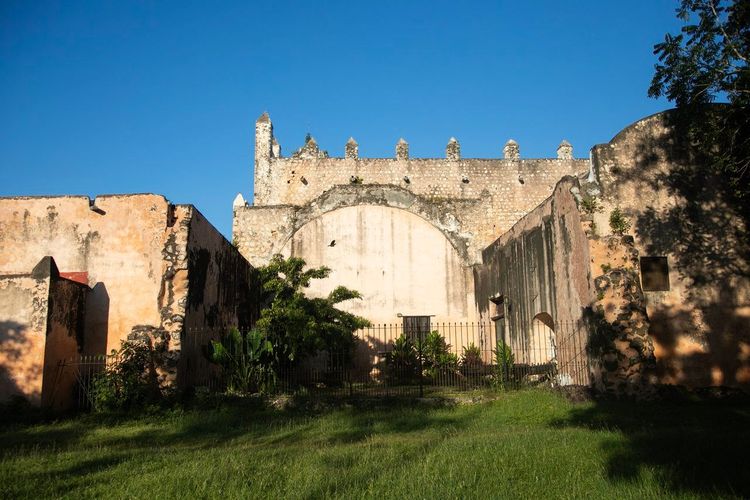
Three days in Valladolid covers the town properly, but it's rarely the end of a Yucatán trip, and where you go next depends on how much time and patience for buses you've got left.
Mérida, about two hours west by bus, is the obvious next stop for travelers who want more colonial city and less ruin-hopping. It's bigger and livelier than Valladolid, with a stronger food scene, weekly street closures for live music on Paseo de Montejo, and its own set of nearby cenotes if you haven't had enough swimming yet.
Tulum and the Riviera Maya beach towns go the opposite direction, about 1.5-2 hours east, if what you want after three days of ruins and cenotes is simply the Caribbean. Tulum itself has gotten expensive and crowded, so budget travelers often prefer quieter stops further south like Mahahual or Bacalar, the latter known for its seven-shades-of-blue lagoon rather than the ocean.
If you're building a longer trip rather than picking one direction, two route shapes come up constantly among backpackers working the region.
A backpacking Mexico 3-week itinerary typically chains Valladolid with Mérida, Campeche and a Chiapas loop (San Cristóbal de las Casas, Palenque) before looping back toward Cancún or flying out of Villahermosa, giving you colonial cities, jungle ruins and a mountain town in a single circuit.
A tighter 10-day Yucatán backpacking route usually sticks closer to home: Cancún or Mérida as the entry point, Valladolid for the ruins cluster covered in this guide, then a few days split between Tulum and one of the cheap Mexican beach towns that don't make the usual highlight reels, Holbox for car-free island time, Isla Mujeres for an easy day trip, or Celestún for a second flamingo colony if Río Lagartos didn't scratch that itch.
Whichever direction you pick, it's worth circling back to Valladolid's downtown with a little breathing room before you leave the region. Travelers who spend day one on the cenotes and ruins often shortchange the historic center itself, and the full Ryo audio guide to Valladolid is a good way to close that gap on a last quiet morning, covering the stops this itinerary's packed schedule might have rushed.
What to Eat in Valladolid
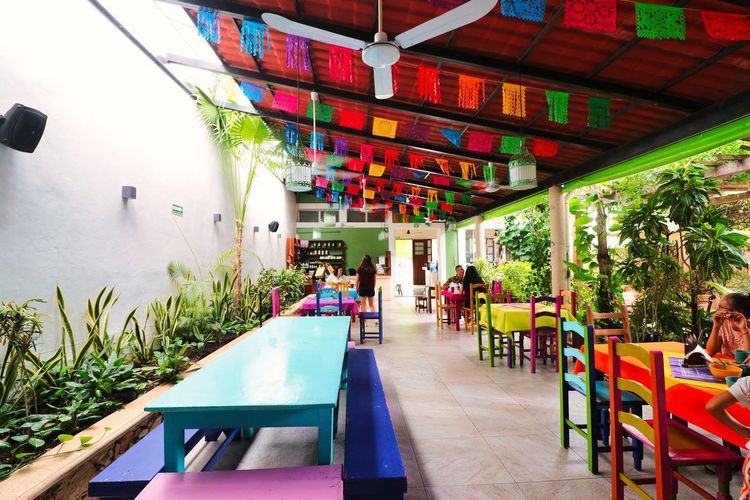
Valladolid's food scene splits fairly cleanly between quick street snacks and proper sit-down Yucatecan meals, and a handful of restaurants keep showing up in nearly every traveler's notes.
For something fast and cheap, start with longaniza de Valladolid, a smoky, slightly spiced pork sausage that's one of the few dishes genuinely named after the town rather than the wider Yucatán region. You'll find it grilled at market stalls, usually served with tortillas, pickled onion and a side of habanero salsa that's hotter than it looks. It's a different animal from the standard Mexican chorizo, drier and less greasy, and worth seeking out specifically rather than assuming any sausage on a menu is the local version.
Dessert leans heavily on marquesitas, already mentioned for day one but worth repeating here because you'll want more than one over three days: a thin, crispy rolled wafer filled with shredded Edam cheese and a sweet topping of your choice. Cajeta (goat's milk caramel) and Nutella are the standard local pairings, and street vendors around the main square sell them well into the evening for 30-50 pesos each.
For sit-down meals, two restaurants come up repeatedly in recommendations from both locals and the search results travelers rely on for trip planning. Taberna de los Frailes), set in a converted colonial building on Calzada de los Frailes, serves upscale Yucatecan dishes, cochinita pibil, panuchos, lime soup, in a courtyard setting that's become one of the more romantic dinner spots in town. Expect to pay noticeably more than street food, but the setting and plating justify it for at least one dinner.
Paladar de Cura (Calle 35, Centro, 97780 Valladolid, Yuc., Mexico, rated 4.6/5 on Google (1 178 avis)), closer to downtown, takes a more casual approach with a shorter menu of well-executed Yucatecan plates and lower prices than Taberna de los Frailes, making it a solid pick for lunch between sightseeing stops rather than a planned dinner event.
Beyond those two named spots, the market on Calle 32 is worth a wander for breakfast, fresh fruit, tamales and coffee for a fraction of restaurant prices, and most of the cenotes plus Hacienda Oxman specifically have their own on-site restaurants if you'd rather not plan a separate lunch stop on day two.
Where to Stay in Valladolid
Almost everything worth seeing in Valladolid sits within walking distance of the main square, so the real decision isn't which neighborhood so much as how close to the center, and how much quiet, you're willing to trade off.
The historic center, within three or four blocks of the square, puts you in walking distance of Casa de los Venados, the market and most restaurants, and lets you duck back to your room between a morning of sightseeing and an evening at the light show. This is where most boutique colonial hotels cluster, restored townhouses with high ceilings and leafy interior courtyards, generally running mid-range by Yucatán standards but still far cheaper than equivalent properties in Tulum or Playa del Carmen.
Budget travelers have solid options here too. Several hostels sit just off the main square, some with their own small pools, a genuine perk in the Yucatán heat, and dorm beds typically run a fraction of even a basic private room.
Calzada de los Frailes and the streets around it, a ten-minute walk from the square, trade a little convenience for a quieter, more residential feel. This stretch has its own concentration of small guesthouses and design-forward boutique stays, popular with travelers who want the photogenic colonial street as their own backdrop rather than just a daytime walking route.
If you're arriving late or leaving early for one of the day trips, a few hotels near the bus terminal and highway entrance cater specifically to that logistics-first traveler, trading atmosphere for a shorter transfer time on travel days.
Whichever area you choose, book Casa de los Venados' donation-based tour and your cenote entries separately rather than assuming your hotel bundles them; most don't, and the few packages that do tend to mark up the cenote portion noticeably.
How to Get to Valladolid and Get Around
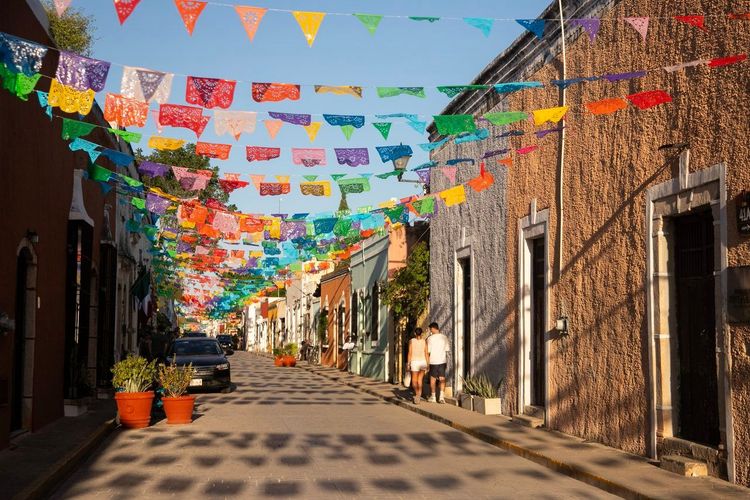
Valladolid sits almost exactly between Cancún and Mérida, which makes it a natural stopover rather than a flight destination in its own right, there's no airport in town.
From Cancún (about 2.5-3 hours), the most reliable option is the ADO bus network, with several direct departures a day from Cancún's bus terminal or airport straight to Valladolid. Colectivos cover the same route for less money but involve a transfer in most cases; shuttle services aimed at tourists run door-to-door but cost noticeably more than the bus.
From Mérida (about 2 hours), ADO buses again run frequently and directly, making a day trip technically possible even though it's a tight one. Colectivos from Mérida's second-class terminal are cheaper and nearly as fast once you account for city traffic on both ends.
From Tulum (about 2 hours), buses run less frequently than the Cancún or Mérida routes, so it's worth checking the ADO schedule in advance rather than assuming you can just show up. Private shuttles and shared vans fill the gap for travelers whose timing doesn't line up with the bus schedule.
Once you're actually in Valladolid, getting around could hardly be simpler. The historic center is genuinely walkable: flat streets, short blocks. Almost everything downtown-related in this itinerary sits within a 15-minute walk of the main square.
For anything further, tuk-tuks (locally called mototaxis) wait around the square and charge a flat 20-30 pesos for most in-town trips, no meter, just agree on the price before you get in.
Renting a bike is a popular middle option, cheap and genuinely pleasant on Valladolid's quiet side streets, though the midday heat makes an early-morning or late-afternoon ride far more comfortable than a noon pedal across town.
For the day trips to Chichén Itzá, Ek Balam and the Río Lagartos area, you've got the same budget-versus-comfort split covered in days two and three: colectivos and buses for anyone prioritizing cost, taxis and organized tours for anyone prioritizing time. Renting a car for just those two days is also worth considering if you're comfortable driving in Mexico, since it lets you set your own pace at each stop without negotiating fares.
Best Time to Visit Valladolid
Valladolid runs hot nearly year-round, so best time here is mostly a question of how much heat and rain you can tolerate rather than finding a cool season that doesn't really exist.
The dry season, roughly November through April, is the most popular window and for good reason: lower humidity and minimal rain, with daytime temperatures that, while still warm, skip the drenching heat of summer. December through February is the most comfortable stretch and also the busiest, so book cenote-adjacent hotels and any guided tours a few weeks ahead if you're traveling over the holidays.
March and April push temperatures noticeably higher, sometimes into the high 30s Celsius, which makes an early start on Chichén Itzá day (as recommended above) less of a suggestion and more of a requirement.
The rainy season, roughly May through October, brings afternoon downpours that are usually short and predictable rather than ruining a whole day, mornings tend to stay clear. Hurricane season technically overlaps with this window (peaking August through October), worth a quick check of the forecast if you're traveling then, but direct hits on Valladolid specifically are rare since it sits inland from the coast.
If the light show and marquesita stalls on day one matter to you, plan for a Wednesday-to-Sunday evening after dark regardless of season; that part of the itinerary doesn't shift with the calendar. The same goes for Cenote Suytun's famous light shaft on day two: it's strongest around midday year-round, so the timing advice there holds whatever month you visit.
Practical Tips for Exploring Valladolid
Safety in Valladolid is generally good by Mexican urban standards, it's a small town built around tourism, and the historic center in particular feels relaxed even walking around after dark near the main square and Calzada de los Frailes. Normal city awareness still applies: stick to lit streets at night, keep valuables out of sight, and use a tuk-tuk rather than walking if you're heading somewhere unfamiliar after dark. Solo travelers, women included, generally report feeling comfortable here, though if you want the deeper safety and logistics breakdown, Ryo's solo travel guide to Valladolid covers it in more detail than fits here.
Cash and budgeting: Valladolid runs more on cash than card, especially at markets, cenotes and smaller restaurants. ATMs cluster around the main square, but it's worth withdrawing enough for a day or two rather than relying on finding one near a cenote entrance. Cenote entry fees (typically 60-150 pesos each) and colectivo fares add up fast if you're hitting two or three cenotes a day, so budget for that separately from your restaurant spending.
Basic Spanish goes a long way outside the main tourist strip. « ¿Cuánto cuesta? » (how much does it cost) and « ¿A qué hora cierra? » (what time does it close) cover most practical interactions with colectivo drivers and cenote staff, most of whom speak limited English outside the restaurants aimed squarely at tourists.
A few smaller things worth knowing: bring sunscreen and bug spray, cenotes typically ban the regular kind to protect the water, so look for a biodegradable version before you travel rather than scrambling to find one locally. Pack a dry bag or waterproof pouch for your phone if you're doing more than one cenote in a day. And bring small bills, change for a 500-peso note is a genuine problem at some smaller stalls and colectivo stops.


FAQ
How many days do I need in Valladolid?
Three days is enough to cover the town itself plus day trips to both Chichén Itzá and Ek Balam without feeling rushed, which is the itinerary this guide is built around. Two days works if you're willing to choose between the two ruin sites rather than seeing both, while four or five days gives you room to add Mérida or slow down the cenote-hopping on days two and three.
Is it worth visiting Valladolid, Mexico?
Yes, and increasingly travelers are choosing to base here specifically because it sits closer to Chichén Itzá and Ek Balam than Cancún or Playa del Carmen while being calmer and more walkable than either. The colonial center and in-town cenote alone give you plenty to do before factoring in the day trips, and prices for food and hotels run noticeably lower than the coastal resort towns.
Is it safe to walk around Valladolid, Mexico?
Generally yes. Valladolid is a small, tourism-oriented town with a relaxed historic center, and the main safety advice is the same common sense that applies anywhere: stay aware at night, stick to lit streets, and use a tuk-tuk for anything past easy walking distance after dark. Solo travelers commonly report feeling comfortable here, and a dedicated solo travel guide covers the fuller breakdown if you want more depth.
Is Valladolid in Spain worth visiting?
If your search brought you here by accident, Valladolid in Spain is a different city entirely, a Castilian university town known for its cathedral, Plaza Mayor and Royal Palace rather than cenotes and Maya ruins. It's a worthwhile stop on a Spain itinerary, but it has no geographic connection to the Yucatán town this guide covers, and the two are easy to confuse only by name.
When is the best time to visit Valladolid?
The dry season, roughly November through April, offers the most comfortable combination of lower humidity and minimal rain, with December through February the single most pleasant (and busiest) stretch. The rainy season from May through October brings short afternoon downpours rather than all-day rain, so it's a viable budget-friendly alternative if you don't mind planning around brief showers.
How do you get from Valladolid to Chichén Itzá?
Chichén Itzá sits about 45 minutes from Valladolid. Budget travelers take a colectivo (shared van) from near the market for roughly 50-60 pesos each way, while anyone prioritizing comfort books a private taxi (500-700 pesos one way) or a guided tour that bundles transport with a licensed guide. Aim to leave by 7am to arrive at opening time and beat both the crowds and the midday heat.
Can you visit Chichén Itzá and Ek Balam on the same trip?
Yes, but not comfortably on the same day, both deserve a half-day minimum and sit in slightly different directions from Valladolid. This itinerary splits them across day two (Chichén Itzá, paired with cenotes on the drive back) and day three (Ek Balam, paired with Cenote X'Canche and an afternoon on the coast), which is the arrangement most travelers settle on after trying to rush both into one day.
Valladolid in 3 days turns out to be exactly the right amount of time to see why Valladolid has quietly become the Yucatán base of choice for travelers who want Chichén Itzá and Ek Balam without committing to Cancún's resort strip. You'll come away having swum in three distinct styles of cenote, climbed one accessible pyramid and admired another you can't, and eaten enough marquesitas to understand the appeal of cheese and Nutella in the same bite.
If any of the downtown stops from day one got rushed between cenote trips, that's the gap worth closing before you move on. Before you board the bus, the Ryo audio walk of Valladolid takes you through the historic center with no tour group schedule to keep up with, just the main square, Casa de los Venados and the streets between them whenever you've got a free hour left.