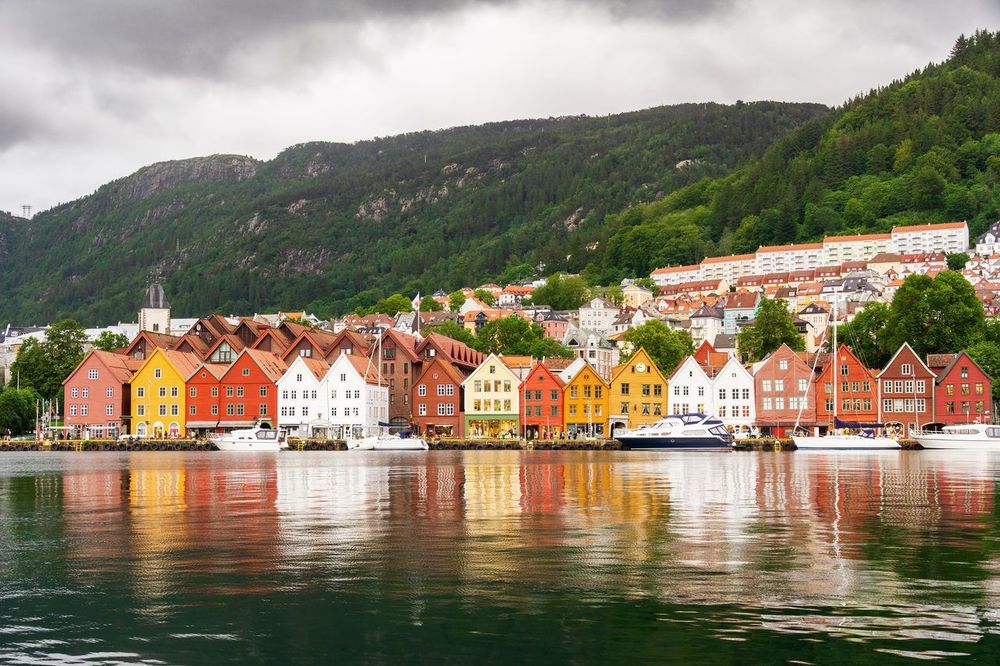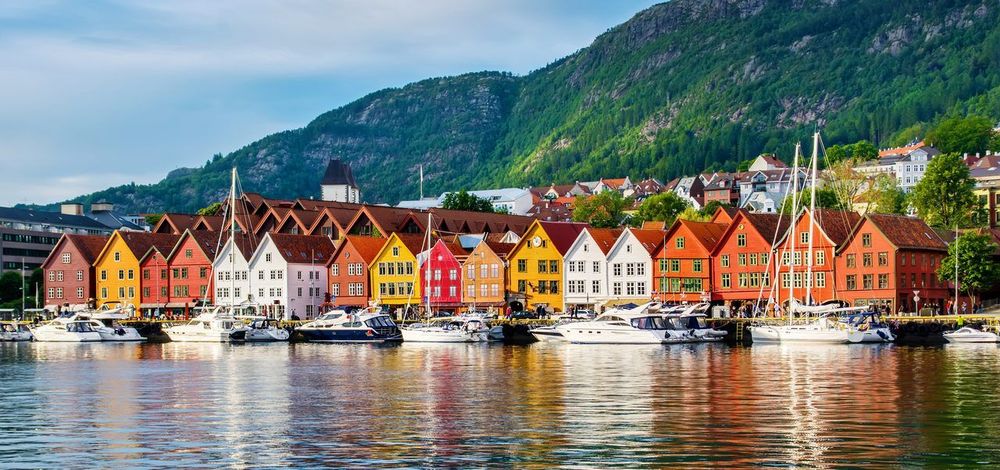
© Shutterstock
 Votre guide Ryo
Bergen for the First Time: The Complete Guide to Seeing Everything in 2026
It rains in Bergen every other day, yet the city almost proudly wears its nickname as the rain capital of Norway. That may be the first thing to understand before visiting Bergen for the first time: here, bad weather never ruins a visit, it simply makes it different. The colourful wooden houses of Bryggen take on a different texture in the drizzle, and the funicular climbing Mount Fløyen keeps running in all weather. For a first overview, the Ryo audio-guided tour of Bergen links Festplassen square, the Nøstet district, the Hanseatic trading posts and the fish market in 25 audio clips and about 3 hours of walking (7.5 km).
In two or three days, you can combine in a single trip a 13th-century fortress, a century-old funicular climbing to 320 metres above sea level, a stave church whose original dates back to the 12th century, and a cruise on a fjord carved by glaciers. This guide covers the Bryggen district and the historic centre, the two mountains framing the city (Fløyen and Ulriken), excursions to the Osterfjord and Flåm, as well as the budget, the weather and the best times to plan your stay.
Bryggen, the Historic Heart of Bergen
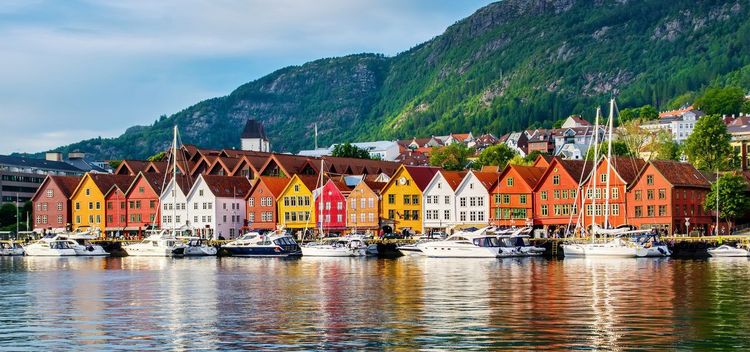
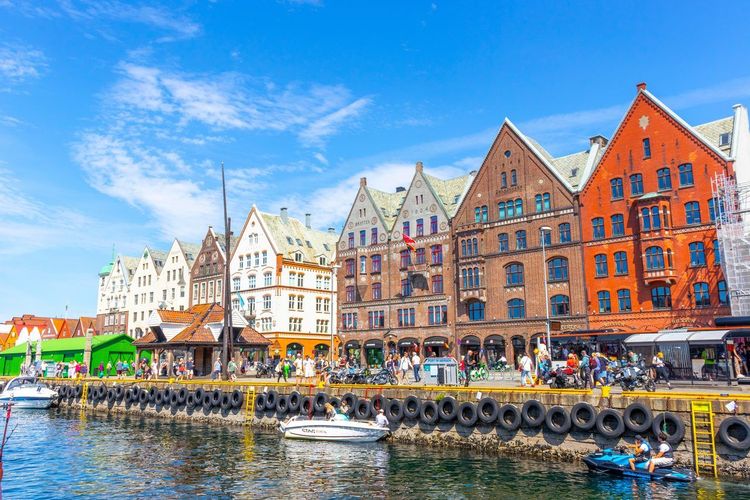
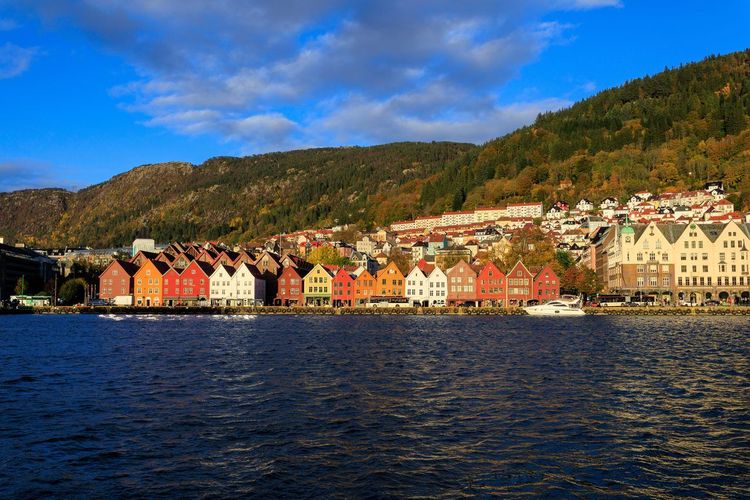
The Bryggen wharf stretches barely a few hundred metres, yet it holds the image most visitors keep of Bergen: a tight row of wooden façades painted in ochre, red and off-white, leaning against one another like a set of dominoes that refuses to fall. A UNESCO World Heritage Site since 1979, this waterfront was rebuilt after several fires, the last one in 1955, but the layout of the alleys and the commercial function of the place have barely changed since the 14th century.
You are standing on the former trading post of the Hanseatic League, a network of German merchants that dominated the dried fish trade in the North Sea for nearly 400 years. It is impossible to understand why Bergen still bears the nickname Princess of the Fjords without visiting this district first.
The Colourful Hanseatic Wooden Houses
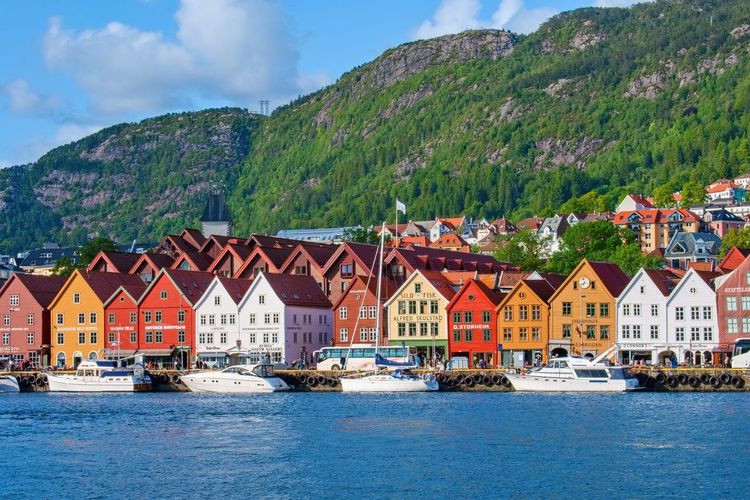
Each house in Bryggen has a name and a specific function inherited from the Hanseatic era: a shop on the ground floor facing the quay, offices and clerks' lodgings upstairs, and warehouses at the back where cod from the Lofoten Islands was dried. The narrow transverse alleys, paved with wooden planks, were used to carry goods without going through the main façade, an urban planning detail that still explains the slightly labyrinthine layout of the district today.
Take the time to step into one of the inner courtyards, often open to the public during the day: the suspended wooden galleries and outdoor staircases tell of an almost intact organisation of work. Some of these workshops now house craftspeople's studios, glassblowers or ceramists, who have replaced the herring counters without altering the buildings. Towards the end of the day, you will also come across locals crossing Bryggen as a simple shortcut between two neighbourhoods, far from the frozen image of an open-air museum.
The Hanseatic Museum and the Alleys of Bryggen
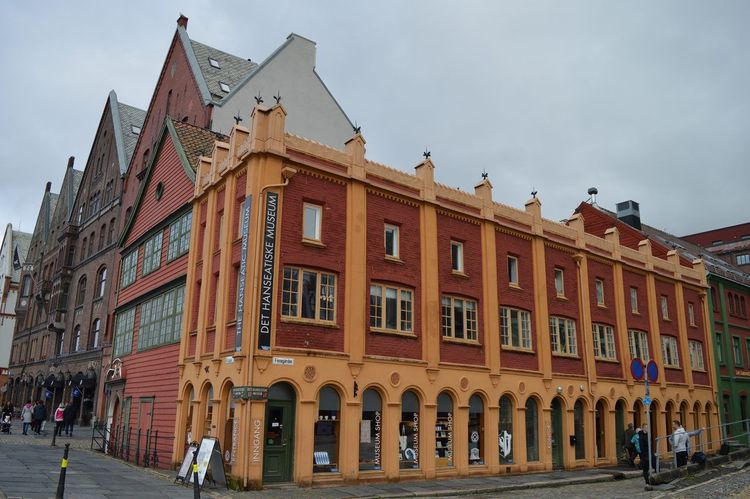
The Hanseatic Museum (Finnegården 1A, 5003 Bergen, rated 4.3/5 on Google from 18 reviews) occupies one of the best-preserved former merchant buildings on the quay, with its period furniture, cold rooms and pulley system for hoisting barrels. The visit lasts about 45 minutes and gives a concrete idea of the daily life of the German clerks, who were not allowed to marry Norwegian women before the end of their contract.
When you come out, wander the alleys perpendicular to the quay rather than staying on the façade photographed by everyone: this is where Bryggen reveals its character as a village within the city, with its covered passages and the lingering smell of wood treated with pine tar. Allow one to two hours for the whole district if you enter the museum, a little less if you prefer simply to walk and observe the façades.
Want to put stories behind these façades? Bryggen is one of the highlights of the Ryo audio-guided loop The Princess of the Fjords: you hear the story of the Hanseatic merchants and of port life in the Middle Ages, before heading to the Rosenkrantz Tower and Håkonshallen, both on the same route.
The Bergenhus Fortress and the City Centre Districts
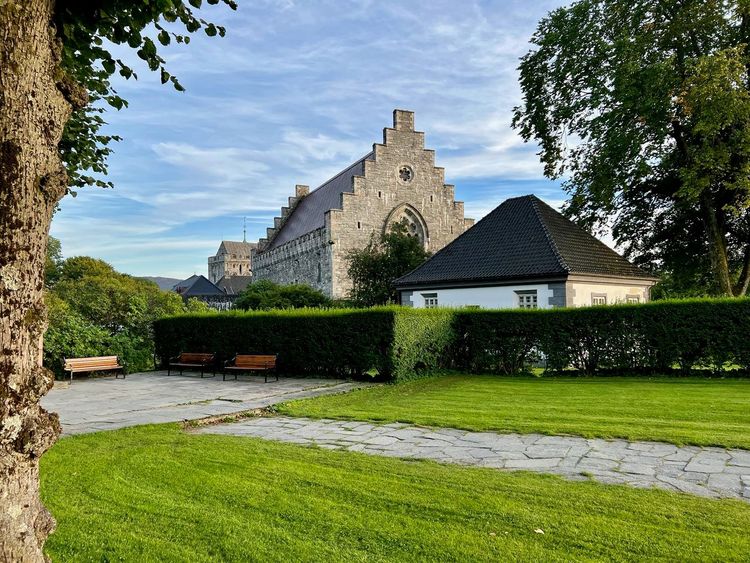
Five minutes on foot from Bryggen, the Bergenhus fortress has guarded the entrance to the harbour since the 13th century. It is one of the oldest fortifications still standing in Norway, and it long served as a royal residence before becoming a military base, a use it partly retains today.
Bergenhus: The Rosenkrantz Tower and King Haakon's Hall
The Rosenkrantz Tower combines a medieval keep with a Renaissance residence: it was enlarged in the 16th century by the governor Erik Rosenkrantz, who added defensive floors and ceremonial rooms on top. You climb a narrow spiral staircase to a terrace overlooking the harbour entrance, useful for spotting where enemy ships once arrived from.
Right next door, King Haakon's Hall (Håkonshallen (Bergenhus, 5003 Bergen, rated 4.3/5 on Google from 737 reviews)) is the largest medieval hall in Norway still in use, built around 1261 for the wedding of Prince Magnus. The wooden ceilings and the impressive dimensions of the hall give an idea of Bergen's power at the time when it rivalled Oslo as capital of the kingdom. It still hosts concerts and official ceremonies today, which sometimes closes access to the public without notice.
Vågsbunnen, Nedre Fjellsmauet and the Wooden Houses of Nøstet
On leaving the fortress, the Vågsbunnen district deserves to be explored by getting lost without a set route. Its cobbled streets and small irregular squares have kept a pedestrian scale that the rest of the city centre lost with the 20th-century reconstruction.
A little further on, the Nedre Fjellsmauet alley climbs in steps between two rows of pastel wooden houses, a shortcut popular with locals for reaching the Sandviken district without taking the main road. You can continue with the wooden houses of the Nøstet district, west of the harbour, where the white façades and tiny gardens evoke a fishing village that was simply absorbed by the city without losing its identity.
Allow an hour and a half to explore all of these districts without rushing, including a coffee break at one of Vågsbunnen's small cafés. It is also one of the few places in the centre where you will meet more locals than visitors, even in the height of summer.
The Fish Market and the Vågen Harbour
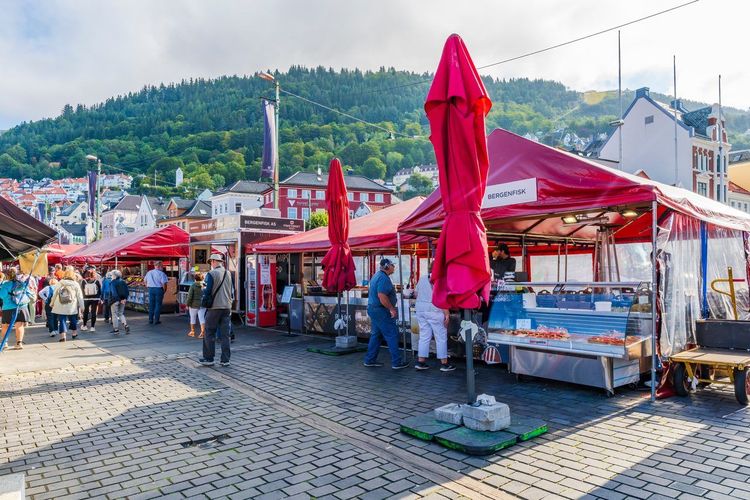
The fish market (Fisketorget (Strandkaien 3, 5013 Bergen, rated 4.2/5 on Google from 9K reviews)) has served as a marketplace at the head of the harbour since the Middle Ages (the first mentions date back to the 13th century), even though the current glass halls date from 2012. You will find stalls of smoked salmon, shrimp peeled on the spot and more unusual specialities such as whale meat or marinated herring, to be eaten standing up, facing the water.
Tourist prices are real here, especially in high season: expect a portion of fresh shrimp to cost noticeably more than in a local supermarket. It nonetheless remains the simplest place to taste fish on the very day it was caught without booking a table.
The Vågen harbour, which extends just behind the market, concentrates most of Bergen's maritime activity: ferries to the islands, excursion boats for the fjords and, on some days, tall ships passing through. Sit on one of the benches on the quay in the late afternoon: it is often the best time to watch the comings and goings without the midday crowds.
Gaining Height: Mount Fløyen
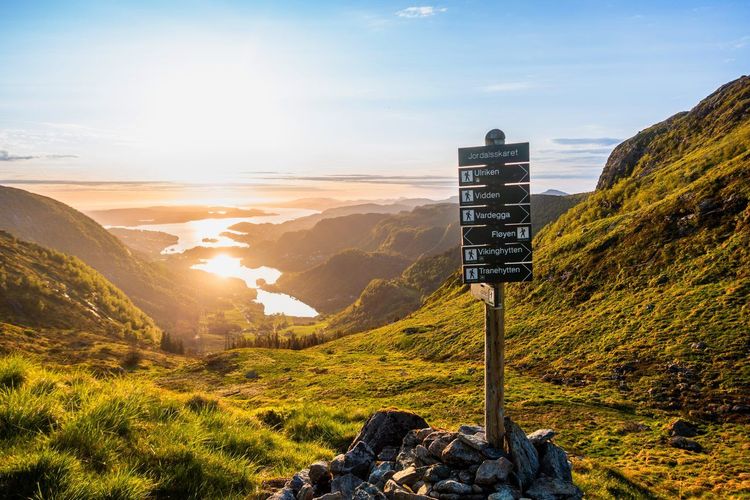
Seven mountains surround Bergen, and Mount Fløyen is the most accessible of the seven from the city centre. At 320 metres above sea level, the panorama takes in the harbour, Bryggen and the archipelago stretching towards the North Sea, a striking contrast with the narrowness of the alleys visited a few hours earlier.
The Fløibanen Funicular and the View over the Seven Mountains
The Fløibanen funicular (Vetrlidsallmenningen 23, 5014 Bergen, rated 4.7/5 on Google from 5,686 reviews) links the city centre station to the summit in barely six minutes, a journey in itself rather than a simple means of transport: the track climbs through a residential neighbourhood before plunging into the forest. Departures are frequent, every 10 to 15 minutes depending on the season, but queues can exceed 45 minutes in midsummer, especially at the end of the day when the low light attracts photographers.
If you prefer to avoid the wait, the walk up from the centre takes about an hour on a well-marked path, a serious option for regular walkers who also want to earn the view a little. Once at the top, the panorama over the seven mountains (Fløyfjellet, Ulriken, Lyderhorn, Løvstakken, Sandviksfjellet, Damsgårdsfjellet and Rundemanen) alone justifies the detour, by day or in the evening when the harbour lights come on one by one.
Hikes, Goats and a Playground at the Summit
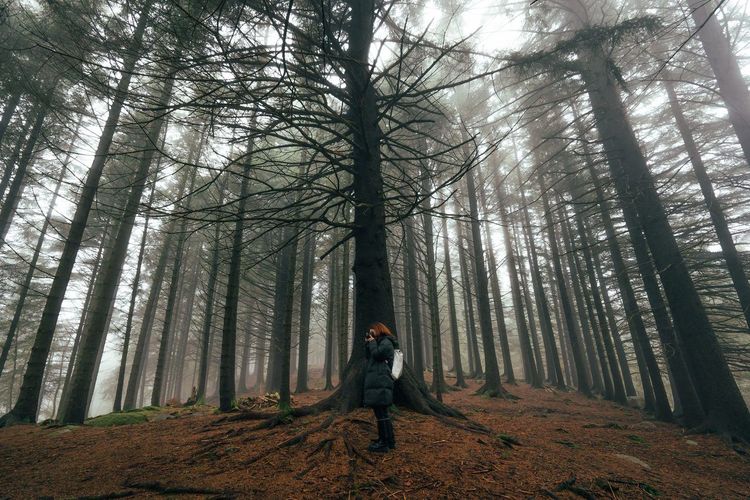
The summit of Fløyen is more than a viewpoint: several marked trails leave the plateau towards Lake Skomakerdiket, where you can rent a canoe in summer for a calmer break than the main viewing platform. The shortest hikes take about twenty minutes round trip, while the longer ones lead to the summit of Ulriken via the Vidden trail, about 13 km of plateau and four to six hours of walking, a local classic in fine weather.
Children particularly enjoy the playground next to the summit restaurant, as well as the small herd of goats grazing freely on the mountainside, a remnant of the livestock farming that occupied these slopes before the tourists arrived. Fløyen is also one of the stops on the Ryo audio guide: if you are short on time, the short version of the Ryo audio-guided tour of Bergen condenses the must-sees of the centre to leave you some margin before heading up to the viewpoint.
Mount Ulriken and Its Panoramic Cable Car
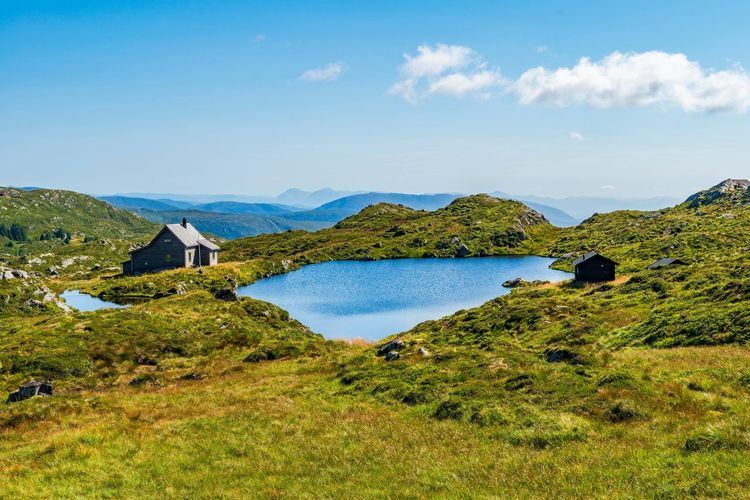
Higher than Fløyen, Mount Ulriken peaks at 643 metres and offers a wider panorama, free of the city below. It is also the mountain chosen by Bergen's paragliders on days with favourable wind, a rather spectacular scene to watch from the summit as well as from the city.
The Ulriksbanen Cable Car and the 360° Panorama
The Ulriksbanen cable car (Ulriksbanen 1, 5009 Bergen, rated 4.7/5 on Google from 4,363 reviews) climbs in seven minutes from a station reached by shuttle from the city centre, a paid ride but faster than the one up Fløyen. Once at the top, the 360-degree panorama surpasses that of the neighbouring summit in clear weather: you can make out the fjords stretching inland on one side, and the open ocean on the other.
Several hiking trails start from the summit, including the famous Vidden trail linking Ulriken to Fløyen in four to six hours of walking across the moorland (about 13 km), an option for visitors who want to leave the marked paths without any special technical equipment. A restaurant and a terrace also let you simply enjoy the fresh air without walking any further.
A local legend says that trolls still live in the rocky crevices of Ulriken, which greatly amuses children during the climb. If you have to choose between the two mountains for lack of time, remember that Fløyen is quicker to visit and better suited to the end of the day, while Ulriken requires a slightly more organised outing but rewards you with a less crowded panorama.
The Nordnes Peninsula and Its Sea Bath
West of Bryggen, the Nordnes peninsula juts into the fjord through a tangle of small residential streets, far quieter than the historic centre. It is one of Bergen residents' favourite neighbourhoods for an evening stroll, away from groups of visitors.
At the tip of the peninsula, the Nordnes Sjøbad has kept the tradition of sea bathing alive since 1910: a 25-metre pool filled with seawater heated to around 30 °C, a swimming area directly in the harbour for the bravest, and saunas. You can swim there even in winter, making it an ideal break after a day of walking between Bryggen and Fløyen.
About fifteen minutes on foot from there, in the Møhlenpris district, the VilVite science centre (Thormøhlens gate 51, 5006 Bergen, rated 4.6/5 on Google from 1,871 reviews) offers interactive experiences designed for children and curious adults alike, around energy, the human body, weather and the sea. It is a good fallback on rainy days, which are frequent in Bergen, to continue your visit without giving up going out.
Back on the peninsula, Nordnes Park offers a few benches in the shade of the trees and an open view of the maritime traffic entering and leaving the harbour, a moment of calm before plunging back into the bustle of the centre.
Cruises and Fjord Excursions around Bergen
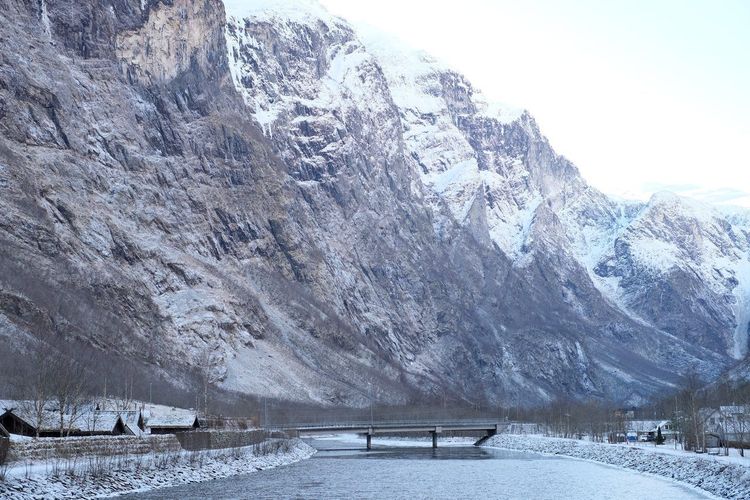
Bergen owes a good part of its reputation to its position as a gateway to the fjords of western Norway, and two excursions consistently appear in travel notebooks: the Osterfjord cruise and the train-and-boat combination to the Nærøyfjord. Neither can be done at the last minute without a reservation in high season.
The Osterfjord Cruise to Mostraumen
The cruise to the Osterfjord and Mostraumen leaves directly from Bergen harbour and lasts between three and four hours round trip. The boat follows steep, forest-covered walls, passes through a narrow channel where the current tightens at Mostraumen, and sails past waterfalls tumbling straight into the fjord.
It is the shorter of the two excursions, ideal if you only have half a day or if you are travelling with young children not used to long crossings. The commentary on board, generally in English and Norwegian, traces the history of the isolated farms that still survive on some shores of the fjord, accessible only by boat even today.
The Flåm Railway and the Nærøyfjord
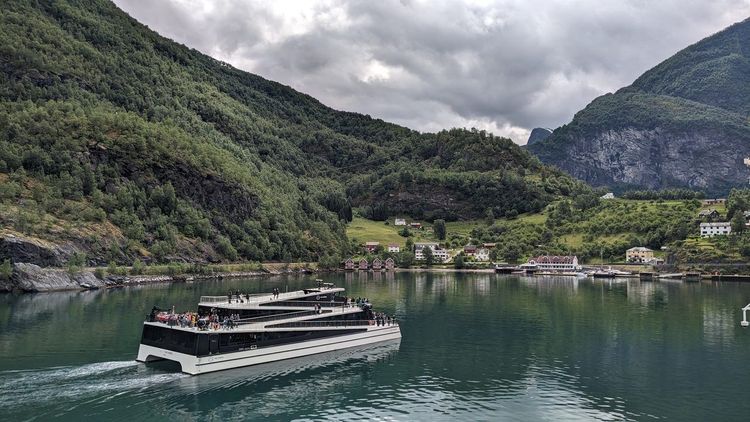
The second itinerary combines the famous Flåm Railway (Flåm, 5743 Flåm, rated 4.5/5 on Google from 5K reviews), which descends 900 metres in 20 kilometres between Myrdal and Flåm, with a cruise on the Nærøyfjord, a UNESCO World Heritage Site for its spectacular narrowness, only 250 metres wide at its tightest between two rock walls.
Allow a full day from Bergen, with a regular train journey to Myrdal, a change onto the scenic Flåm line, then the boat on the fjord to Gudvangen or a direct return to Flåm depending on the option chosen. It is probably the most spectacular excursion accessible in a single day from any Norwegian city, and the reason many travellers extend their stay in Bergen by an extra day.
Extending to the Sognefjord or Beyond
If your stay exceeds two or three days, the Sognefjord, the longest fjord in Norway at 205 kilometres, offers more ambitious combinations: a night in Flåm or Aurland, a visit to the village of Balestrand, or a full loop via the Vikafjellet mountain pass.
These extensions require at least one extra night outside Bergen, but they avoid the crush of day excursions that pack several hundred visitors onto the same boats in midsummer. Book these excursions at least a week in advance in July and August: slots are fully booked by morning during high season, especially for the Flåm Railway and Nærøyfjord boat combination.
To go further than a day excursion, the Ryo audio-guided road trip through the Norwegian fjords (99 audio clips spread over a 5 to 15-day itinerary) tells the story of landscapes and villages step by step, from Bergen to the shores of the Sognefjord.
Fantoft, Troldhaugen and the Statsraad Lehmkuhl
About twenty minutes from the city centre, three sites reveal a side of Bergen that most hurried visitors never see: Christianised Viking spirituality, the life of Norway's most famous composer and the city's maritime memory.
The Fantoft Stave Church
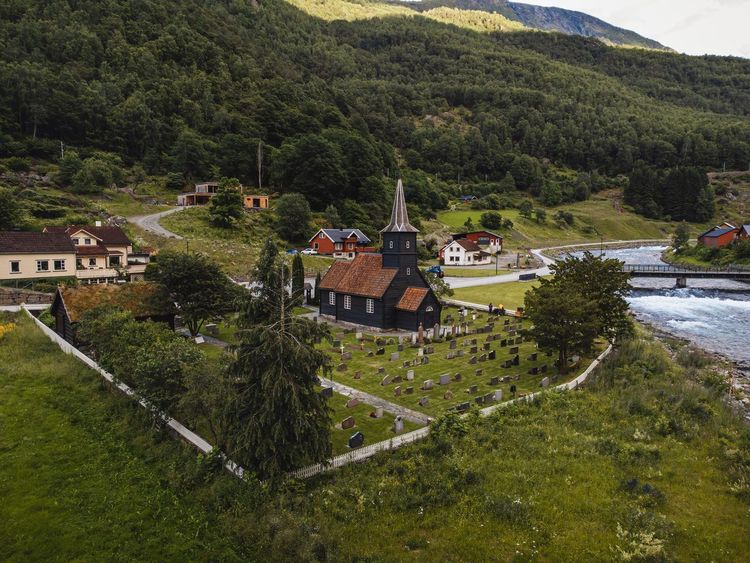
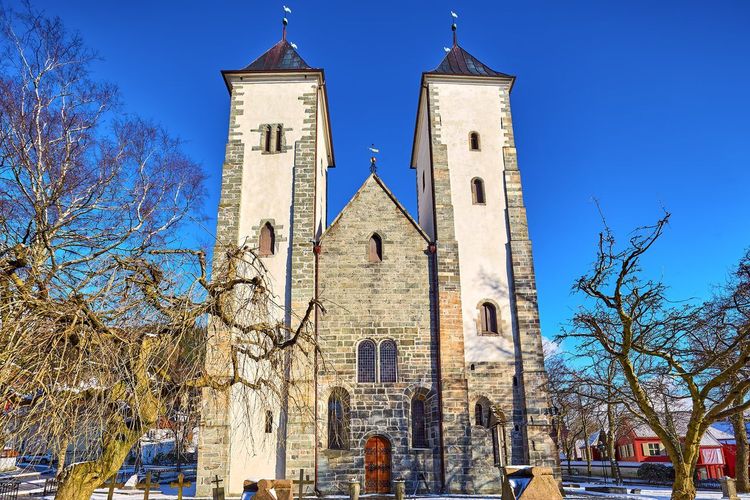
The Fantoft stave church) was built around 1150 in Fortun, on the edge of the Sognefjord, then dismantled and reassembled in Bergen in 1883. The current building is a faithful reconstruction after an arson attack in 1992. Its dark wooden structure, superimposed pagoda-like roofs and carved dragons on the gables make it resemble an Asian temple more than a classic Scandinavian church, a misunderstanding shared by many first-time visitors.
It is only accessible in summer, from May to September, and is mainly visited from the outside: the cramped, dark interior can be seen on occasional visits rather than with free access. The small cemetery surrounding it, ringed by spruce trees, adds to the slightly timeless atmosphere of the place.
Troldhaugen, the Home of the Composer Edvard Grieg
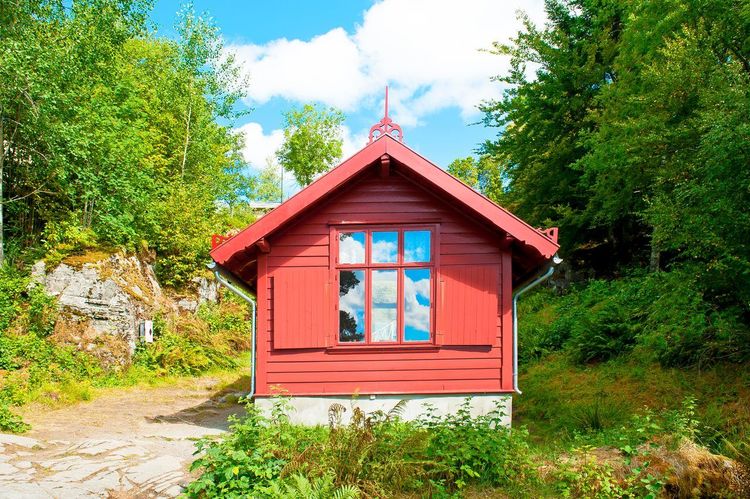
Troldhaugen was the summer residence of the composer Edvard Grieg from 1885 until his death in 1907. The villa, furnished in period style, overlooks Lake Nordåsvannet, and a small isolated hut by the water served as a composition studio, far from the courtesy visits Grieg received at the villa.
The adjoining concert hall hosts piano recitals in season, often at lunchtime, a rather rare way to hear Grieg's music played in the very setting that inspired it. The tombs of Grieg and his wife Nina, carved directly into the cliff facing the lake, end the visit on a more intimate note than most composer museums.
The Statsraad Lehmkuhl, the Harbour's Historic Sailing Ship
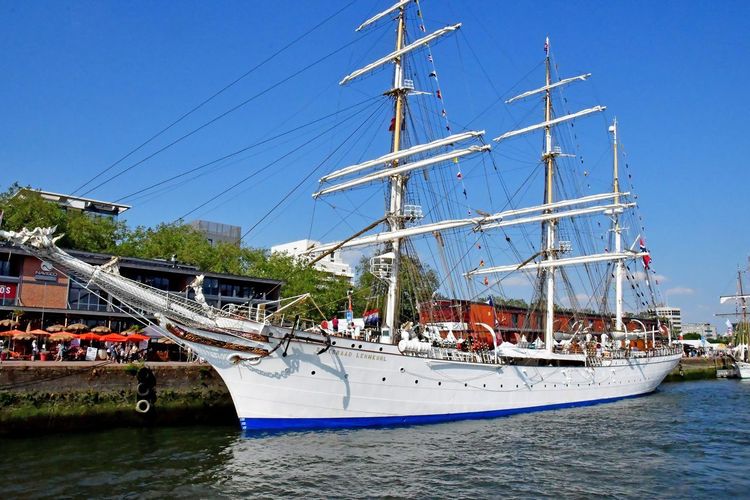
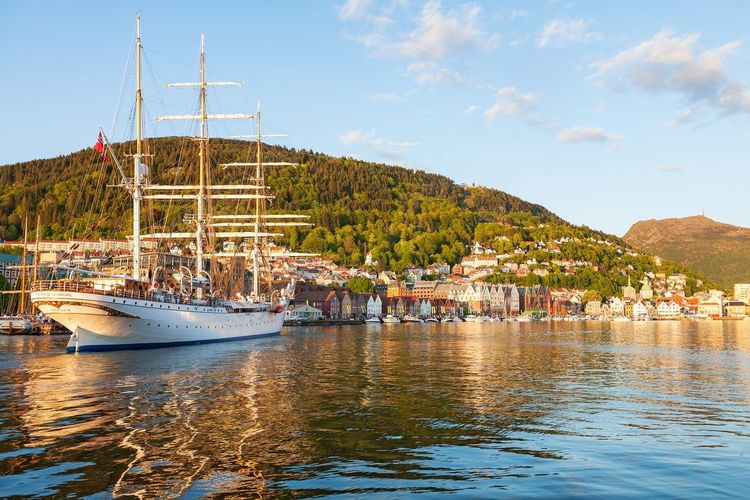
Moored in the harbour when not at sea, the Statsraad Lehmkuhl (Bradbenken, 5003 Bergen, rated 4.8/5 on Google from 5 reviews) is a three-masted barque built in 1914, still used to train young sailors and for long-distance voyages. Its dark hull and 48-metre main mast make it one of the most beautiful sailing ships still in service in Northern Europe.
When it is at the quay, you can generally admire it freely from the harbour; on some weekends, onboard visits are organised, to be checked with the tourist office before going. It is a quick detour but one that complements a morning already devoted to the Vågen harbour and the fish market.
Dining in Bergen: Culinary Specialities and Good Addresses
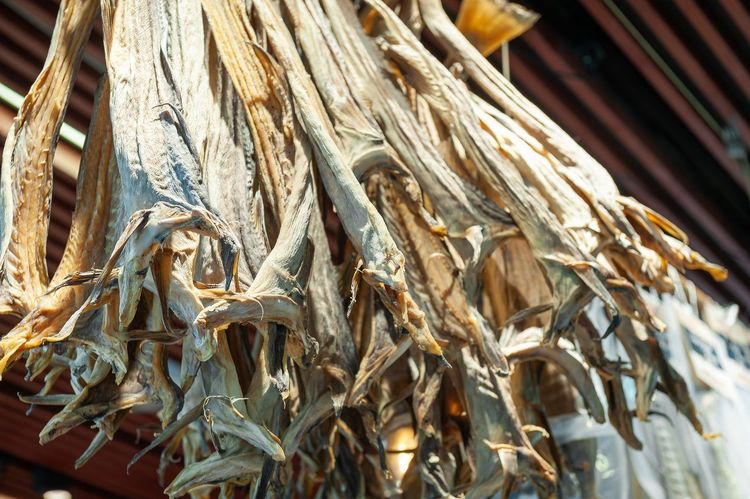
Bergen's cuisine revolves around fish and seafood, which makes sense for a city built on the dried cod trade. Harbour restaurants generally serve modernised versions of traditional dishes rather than the rustic cooking of the past.
The typical Norwegian breakfast remains simple: wholemeal bread, brunost cheese (brown and caramelised), cold cuts and eggs, often served as a buffet in hotels. For a more local lunch, look for a fish soup (fiskesuppe), creamy and generously garnished, served with bread in most cafés in the centre.
Seafood remains the safe bet in Bergen: Nordic shrimp peeled by hand, king crab in season, or marinated herring in many preparations, from the sweet-and-salty Danish style to the more acidic. The fish market remains an option, but the restaurants set up in the former Hanseatic houses of Bryggen often offer a more comfortable setting for a sit-down meal in the evening.
For a more ambitious dinner, several of Bergen's restaurants focus on contemporary Nordic cuisine, with local produce (game, wild berries, fjord fish) prepared with Scandinavian techniques lighter than the French tradition. Expect a much higher budget than in France for a restaurant meal, as Norway remains one of the most expensive countries in Europe for dining out. Many visitors compensate by picnicking at least every other lunchtime with products bought in supermarkets, which are far cheaper than the cafés in the centre.
Bergen with Family: Activities for Young and Old
Bergen lends itself well to a family trip, provided you accept slowing the pace and alternating active outings with calmer breaks. The compactness of the city centre means you can walk between the main sites without complicated transport, a real comfort with young children.
The Fløibanen funicular almost always delights children, as much for the ride as for the playground and the goats at the summit. The fish market also works as a fun activity: spotting live crabs in the tanks or tasting fish and chips remains accessible even to the youngest who are reluctant about unfamiliar dishes.
For rainy days, which are frequent in Bergen, VilVite offers several hours of interactive experiences suited to different ages, from the flight simulator for older children to simple hands-on activities for toddlers. The Nordnes Sjøbad suits families well in summer, with its heated seawater pool and the lawn of the neighbouring park for picnics.
Avoid scheduling a full-day fjord excursion with very young children: the shorter cruise to the Osterfjord and Mostraumen, three to four hours, is more reasonable than a combined Flåm Railway and Nærøyfjord boat trip, which easily exceeds eight hours of cumulative travel. Always pack an extra layer in the bag, even in summer: the wind coming down from the mountains quickly changes how the temperature feels, especially at altitude on Fløyen or Ulriken.
A Bit of History: How Bergen Became the Princess of the Fjords
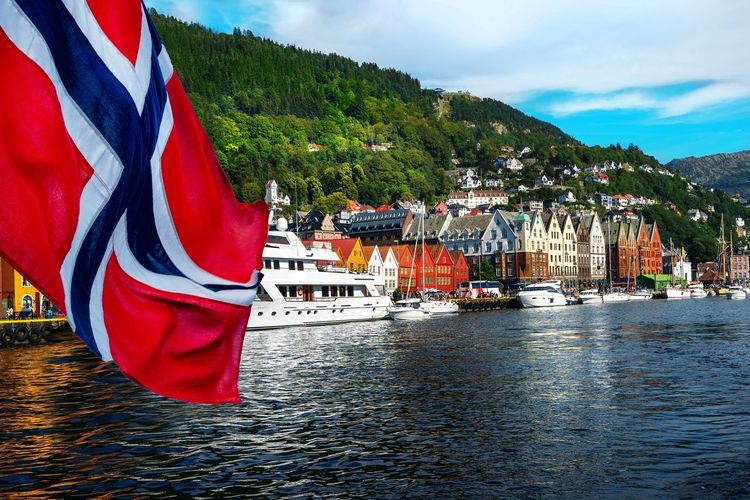
Founded around 1070 by King Olav Kyrre, Bergen was for several centuries the largest city in Norway and its de facto capital, before Oslo took on that administrative role. Its sheltered port position made it a natural crossing point between the interior of the country and the trade routes of the North Sea.
The arrival of the Hanseatic League merchants in the 14th century transformed Bergen into an international trading post: for nearly 400 years, these German merchants controlled the trade in dried cod from northern Norway, building along the way the wooden warehouses of Bryggen that survive today.
The city has lived through several major fires, the last one in 1955 affecting part of Bryggen, as well as the German occupation during the Second World War, marked by the explosion of the ship Voorbode at the quay on 20 April 1944, which killed around 160 people and devastated the districts around the harbour.
The nickname Princess of the Fjords comes both from its privileged position as a gateway to the fjords of the west, the Sognefjord and Hardangerfjord foremost, and from its particular terrain, encircled by seven mountains that shelter it from the winds while concentrating rainfall, hence its reputation as one of the rainiest cities in Europe.
Our Itinerary Ideas for Visiting Bergen in 1 or 2 Days
Between two mountains, a listed historic district and several fjord excursions, Bergen can easily fill three full days. If your stay is shorter, here are two ways to prioritise without sacrificing anything essential.
1-Day Itinerary: The Essentials of the Historic Centre
Start early in the morning at Bryggen, before the cruise groups arrive, then continue with the Hanseatic Museum and the Bergenhus fortress, five minutes away on foot. At midday, head to the fish market for a quick lunch, before taking the Fløibanen funicular in the early afternoon, when queues are generally shorter than at the end of the morning.
Come back down at the end of the day and finish with a stroll through the Vågsbunnen or Nordnes districts depending on the time you have left, with a seafood dinner to conclude. This day covers the great classics without a race against the clock, provided you don't linger more than an hour at each site.
2-Day Itinerary: Bergen and a Fjord Excursion
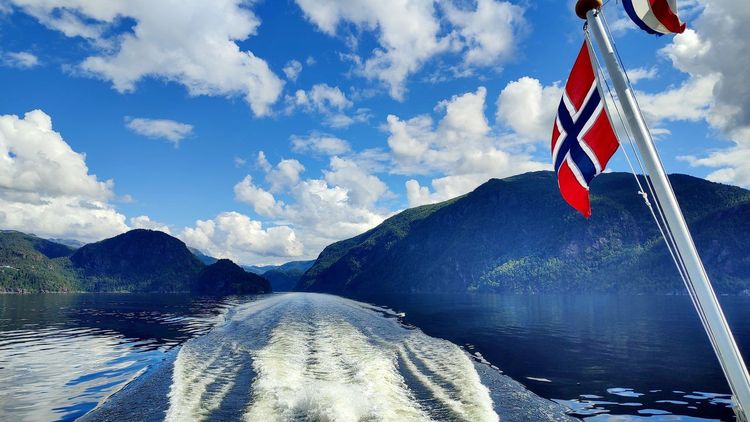
With an additional day, devote the first day to the programme above while lightening it slightly, for example by moving Nordnes or Vågsbunnen to the next morning. Reserve the second day entirely for a fjord excursion: the cruise to the Osterfjord and Mostraumen if you prefer half a day, or the Flåm Railway and Nærøyfjord combination if you have a full day and are willing to get up early.
If the fjord excursion is done in half a day, use the remaining afternoon for Mount Ulriken or for the slightly off-centre sites of Fantoft and Troldhaugen, which are hard to combine with a long excursion on the same day. Good to know: the full loop of the Ryo audio guide links Bryggen, Bergenhus, the fish market and Fløyen in the same order as the one-day itinerary, saving you from plotting the route between each site yourself.
Practical Information for Planning Your Trip to Bergen
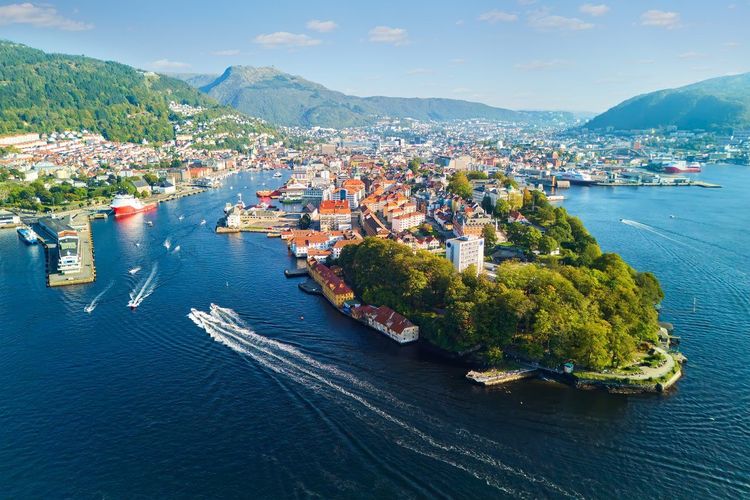
Before booking tickets and accommodation, here are the logistical questions that come up most often when preparing a first stay in Bergen.
How to Get to Bergen (Plane, Train from Oslo)
The Bergen-Flesland airport receives direct flights from several major European cities, including Paris in high season, with a flight time of about two hours fifteen from France. In low season, a stopover in Oslo or Copenhagen is often still necessary.
From Oslo, the Bergensbanen train links the two cities in about six hours forty, on one of the most spectacular railway lines in Europe: it crosses the Hardangervidda plateau at more than 1,200 metres above sea level, a snowy tundra landscape for much of the year. Book this journey several weeks in advance in summer, as the best window seats go quickly.
Getting to the City Centre from the Airport
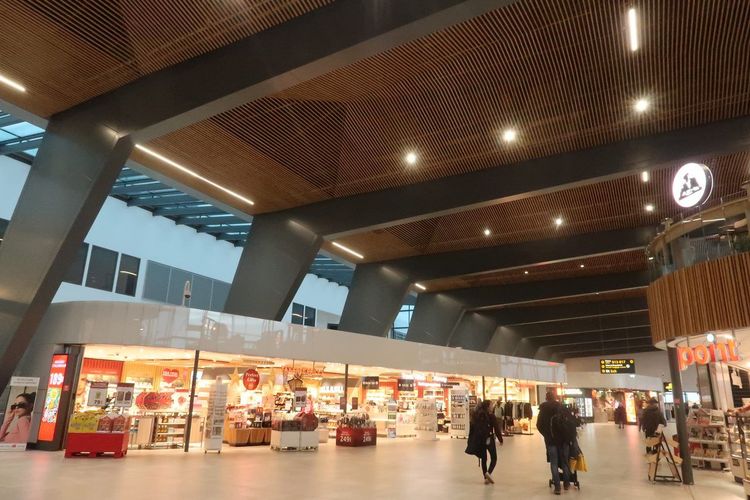
From Flesland, the Flybussen express bus reaches the city centre in 30 to 40 minutes depending on traffic, with departures every 10 to 15 minutes. A taxi costs noticeably more but remains relevant for groups or with bulky luggage. Since 2017, the Bybanen light rail has also linked the airport to the centre in about 45 minutes, a cheaper option but slower than the bus.
Budget, Bergen Card and Guided Tours in French
Like the rest of Norway, one of the most expensive countries in Europe, Bergen weighs on the budget: a simple restaurant meal, a drink or a hotel night easily costs double its French equivalent. The Bergen Card can limit the damage: it includes buses and the Bybanen light rail, free or reduced entry to most museums, and the Fløibanen funicular free from October to April (half price from May to September). Expect 400 Norwegian kroner for the 24-hour version and 500 for 48 hours in 2026, an amount quickly recouped if you combine transport, the funicular and two museums.
For French-speaking visitors, several local agencies offer guided tours in French of the historic centre, generally by prior reservation through the tourist office or online. They complement a first approach with an independent audio guide such as Ryo's, providing direct exchange with a local guide on specific questions.
As for currency, Norway uses the Norwegian krone (NOK) and bank cards are accepted almost everywhere, even for very small purchases: just make sure you have a card with no foreign transaction fees to avoid exchange commissions that add up quickly over a stay of several days.
Weather, Best Time to Visit and Northern Lights
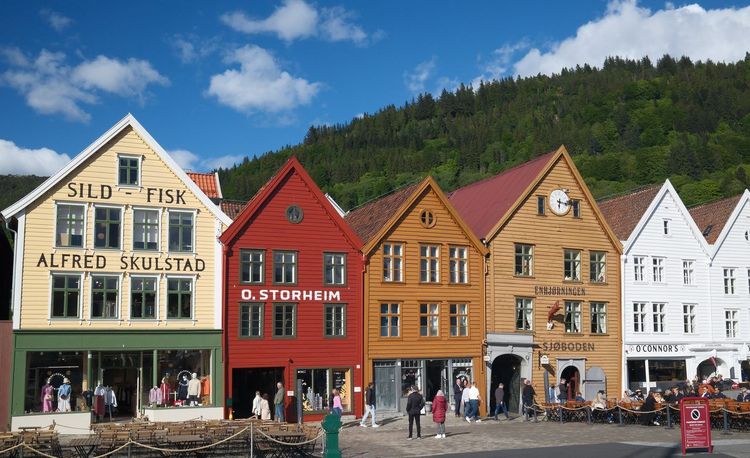
The weather in Bergen amply justifies its reputation: the city records about 240 days of precipitation a year, with frequent showers even in summer. Always pack a waterproof jacket, whatever the season, rather than a simple umbrella that the wind will quickly turn inside out.
The best time to visit Bergen remains May to September, with milder temperatures (12 to 20°C) and very long days in June-July thanks to the latitude. Winter, harsher and darker, offers in return a real chance of seeing the northern lights, especially from the hills around the city on clear nights between October and March, far from the light pollution of the centre.
Where to Stay in Bergen
The city centre, around Bryggen and Torgallmenningen square, remains the most practical choice for a first stay: everything is within walking distance, from the fish market to the foot of the Fløibanen funicular. Prices there are accordingly higher than on the outskirts.
The Nordnes district offers a more residential alternative, ten minutes on foot from the centre, with addresses that are often quieter in the evening. For a tighter budget, accommodation around the railway station is well served by buses and the light rail, while costing noticeably less than the historic heart.
Whichever neighbourhood you choose, book early in summer: Bergen remains an essential stop on cruises and organised tours of Scandinavia, which tightens availability from spring for the months of July and August.


FAQ
How many days do you need to visit Bergen for the first time?
Two full days let you cover Bryggen, one mountain (Fløyen or Ulriken) and a fjord excursion without rushing. With three days, you can add Fantoft, Troldhaugen and a longer excursion to the Nærøyfjord.
Is Bergen an expensive city?
Yes, like the rest of Norway, Bergen is expensive compared to France for dining and accommodation. The Bergen Card and meals bought at the market rather than in restaurants help keep the budget down, as does choosing accommodation slightly outside the historic centre.
What is the best time to visit Bergen?
May to September offers the mildest conditions, with long days in June and July. Autumn and winter remain appealing for those who prefer the northern lights to mild weather, provided you accept more unsettled conditions.
Can you see the northern lights in Bergen?
Yes, but less easily than in the north of the country: the best chances are between October and March, on clear, moonless nights, from the heights around the city rather than the lit-up centre.
Do you need to book the Fløibanen funicular in advance?
It is not mandatory, but booking a ticket online helps you avoid part of the wait in high season, when the queue on site can exceed 45 minutes at the end of the day, especially at sunset.
Is Bergen suitable for a family visit?
Yes: the compact city centre, the funicular, the goats at the top of Fløyen and the VilVite museum make it a fairly easy destination with children, provided you pack rain clothes and don't overload your days.
How do you get to the city centre from Bergen airport?
The Flybussen bus connects Flesland airport to the centre in 30 to 40 minutes, or allow around 45 minutes on the Bybanen light rail, which has run since 2017. A taxi is the fastest option but the most expensive of the three.
Ready for Your First Stay in Bergen?
Between the Hanseatic alleys of Bryggen, the two mountains framing the city and the excursions to the fjords, Bergen suits a 24-hour stopover just as well as a stay of several days, without ever running out of things to do. The rain, in the end, is merely a logistical detail to be solved with a good jacket rather than a reason to postpone the trip.
To explore the historic centre at your own pace, without depending on a fixed guided-tour slot, our Ryo audio-guided tour of Bergen accompanies you from Festplassen to Bryggen and then up to the heights of Fløyen, with 25 audio clips to trigger whenever you like. And if the fjord bug bites, the Ryo audio-guided road trip Norway of the Fjords takes over beyond the city.