© Shutterstock
 Votre guide Ryo
What to Do in Lagos in 2026: 15 Experiences Between Cliffs, Beaches, and the Old Town
From the terrace of Forte da Ponta da Bandeira, the evening light turns Lagos Bay into a gradient of ochre and turquoise, and it quickly becomes clear why this town in western Algarve draws such crowds every summer. On the regional map, Lagos occupies a pivotal position between Portimão and Cape St. Vincent, which explains why so many excursions to the caves and beaches of western Algarve begin here. Wondering what to do in Lagos is almost a matter of choosing an order rather than a list: the fortified old town, the cliffs of Ponta da Piedade, and the beaches below can fill an entire day or a full week, depending on the pace you set. Bring the Ryo app if you enjoy walking while listening to the historical background of a neighbourhood: several lanes in the centre lend themselves particularly well to it, without ever requiring you to look away from the conversation with your travel companions.
In the pages that follow, fifteen experiences structure the visit: a 17th-century fort that once locked the harbour entrance, a museum dedicated to the history of Europe's first slave market, a beach accessible via more than 200 wooden steps, and a sea cave open to the sky that can only be reached by boat or kayak. Add to that a covered market where fishermen drop off their morning catch at dawn, a pedestrian street that comes alive each evening until the early hours, and a few tips for organising an excursion to the famous Benagil cave without losing half a day to transport.
1. Strolling Through the Fortified Old Town
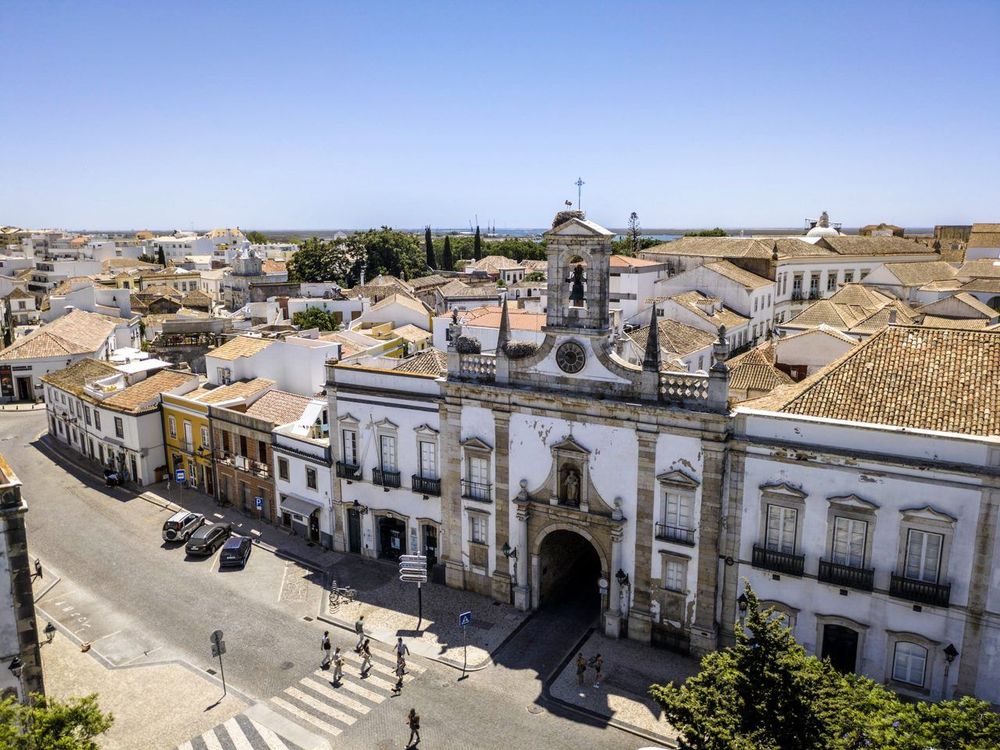
The old town of Lagos fits almost entirely within a one-kilometre-long rectangle, enclosed by ramparts raised from the 14th century onwards and reinforced under several Portuguese kings through to the 17th century. You enter through one of the old gateways, and the layout inherited from Moorish occupation and the Pombaline reconstruction following the 1755 earthquake makes the stroll naturally easy to improvise. The streets, paved with calçada portuguesa — that mosaic of small black and white cobblestones — wind between whitewashed facades and 18th-century azulejos.
The heart of this walk is Praça Gil Eanes (Praça Gil Eanes, 8600 Lagos, rated 4.5/5 on Google with 3.2K reviews), the central square named after the navigator born in Lagos, the first European to round the dreaded Cape Bojador in 1434, an achievement that opened the way for Portuguese exploration along the African coast. The square is dominated by a modern statue of King Dom Sebastião, the work of sculptor João Cutileiro unveiled in 1973: a white, angular, deliberately enigmatic silhouette that long divided locals before becoming an undisputed meeting point.
Around the square, the commercial lanes are packed with craft shops, pottery workshops, and café terraces. The audio format of Ryo suits this kind of neighbourhood well: you walk, you listen to the historical background of a doorway or a fountain, and you keep your eyes on the city rather than on a screen. Allow an hour and a half for a first leisurely loop, a little more if you stop to photograph facades or sample a pastry along the way.
Not far from the square, the Castelo dos Governadores recalls a less glorious episode in local history: it was from this former fortified palace that the young King Dom Sebastião is said to have departed in 1578 for his disastrous campaign in Morocco, from which he never returned. Only a facade and a few remains integrated into more recent buildings survive today, but the commemorative plaque is enough to add depth to the walk.
Rua Cândido dos Reis, running parallel to the waterfront, concentrates fashion boutiques, artisan jewellers, and several contemporary art galleries housed in former merchants' homes. It is also one of the liveliest streets in the evening, when the terraces gradually fill as the heat dies down. The terraces on Praça Luís de Camões, just steps from the main square, serve typical Algarve dishes — seafood cataplana or grilled sardines — in a setting that remains resolutely local despite the summer crowds.
A section of the ramparts on the marina side can be walked along a raised chemin de ronde that offers an open view over the moored boats and the Ribeira de Bensafrim estuary. Access is free with no set opening hours, making it an easy stop to fit between more formal visits. The historic town gates, including the Porta de São Gonçalo on the eastern side, still mark the boundary between the fortified centre and the newer neighbourhoods built during the tourism boom of the 1980s: stepping from one side to the other in a few strides is enough to appreciate how much Lagos has grown beyond its medieval core without ever entirely losing it. Visitors staying outside the centre generally find it simpler to park in one of the paid car parks on the immediate outskirts of the ramparts rather than searching for a space in the internal lanes, which are often too narrow for traffic and partly reserved for residents.
2. Taking in the Cliffs of Ponta da Piedade
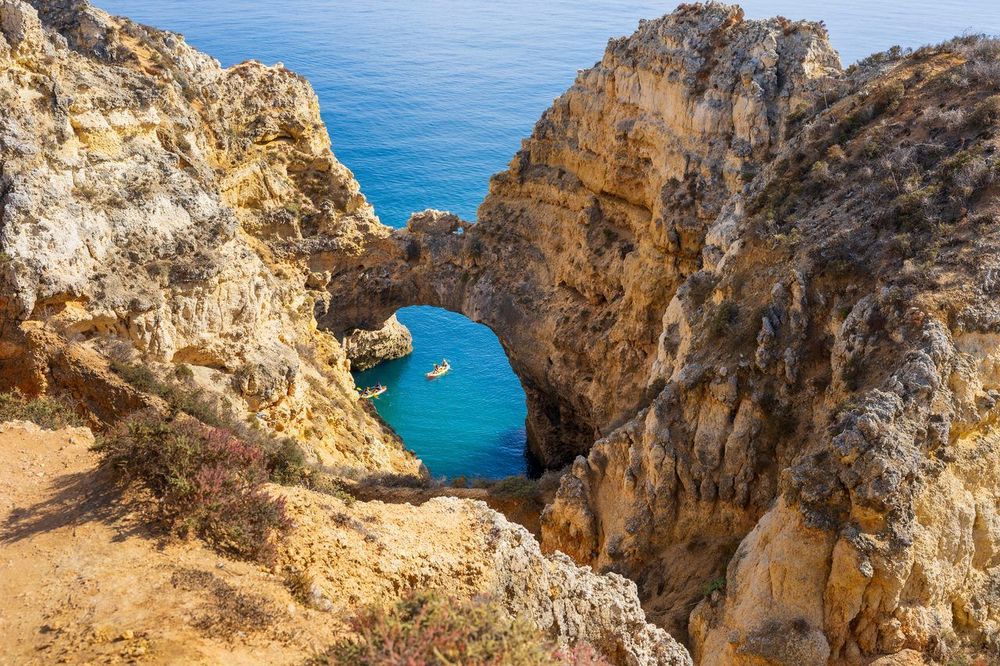
Ponta da Piedade (Estrada da Ponta da Piedade, 8600 Lagos, rated 4.8/5 on Google with 27,366 reviews) is the stretch of Algarve coastline that most visitors find when they type Lagos into an image search engine. This rocky headland, about two kilometres south of the town centre, lines up golden limestone cliffs sculpted by erosion into arches, needles, and caves that plunge directly into a sea of almost unreal emerald green depending on the light of day.
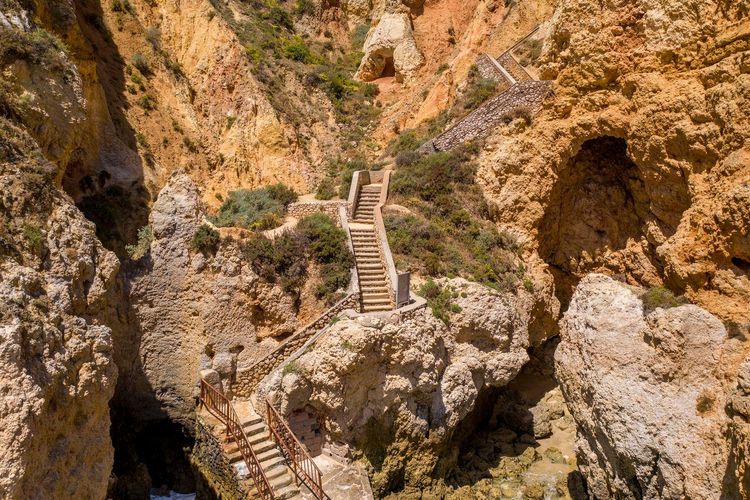
A staircase of around 200 steps descends from the summit car park to a small natural jetty framed by two rocky walls, where several small boats wait to take visitors on an excursion to the caves. The Ponta da Piedade lighthouse, built in 1913, marks the tip of the headland and remains a visual landmark from almost every angle along the path.
The site can be explored from several complementary angles. From the viewing platforms laid out along the cliff edge, you look down over natural arches and coves inaccessible on foot. From the water, however, the perspective changes entirely: kayaks and small boats slip under the arches and inside caves where light filtered through the rocky ceiling tints the water electric blue. Three main platforms punctuate the clifftop path, each offering a different framing of the arches and coves below. The southernmost one, near the lighthouse, typically catches the best light at the end of the day, when the sun drops almost horizontally across the sea.
Drones are theoretically subject to authorisation in several protected coastal areas of the Algarve: it is worth checking the current regulations before flying yours, as fines can be steep for a simple undeclared flight. Some visitors choose to extend their visit with a swim directly from the flat rocks at the entrance to the site, a less well-known access point than the organised beaches but just as spectacular once you are in the water. The seabed remains rocky and sometimes deep from the first few metres, which requires a reasonable level of swimming ability.
Sunrise and sunset rank among the most sought-after moments. At dawn, the raking light accentuates the relief of the cliffs and crowds are sparse, with most visitors arriving after 9 a.m. At dusk, the golden rock takes on pink and then violet hues, a spectacle well-known enough that several professional photographers have used it as their cover image for Portugal. The formations that make up Ponta da Piedade took shape over several million years, with alternating layers of harder and softer limestone explaining the arches and overhangs that sometimes seem to defy probability. Some arches have in fact collapsed over the course of winter storms, a reminder that this landscape continues to evolve rather than remaining as static as the postcards suggest.
The site is accessible year-round, but conditions change dramatically from one season to the next. In winter, Atlantic swells can prevent any boat trips for several days at a time, while the cliff itself, swept by wind, loses some of its charm under a grey sky. Summer, by contrast, concentrates the bulk of visitor numbers, with a peak between 11 a.m. and 4 p.m. that is best avoided if you are looking for calm and photogenic light. Wear closed-toe shoes for the path, as the limestone can be slippery in places, especially after recent rain. The summit car park fills quickly in high season (June to September): arriving before 10 a.m. or after 5 p.m. remains the best guarantee of finding a space without circling for twenty minutes in the sun.
3. Visiting Forte da Ponta da Bandeira
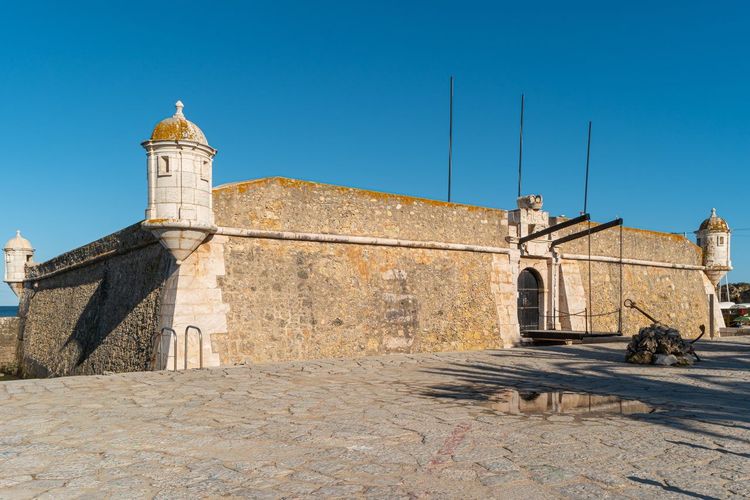
Forte da Ponta da Bandeira (Rua General Alberto Silveira, 8600 Lagos, rated 4.1/5 on Google with 390 reviews) has guarded the harbour entrance since the late 17th century, built under the reign of Pedro II to protect the town from Barbary raids that regularly targeted the Algarve coast. It is reached via a small wooden drawbridge, still functional, that spans now-dry moats. Inside, a chapel dedicated to Santa Bárbara, patron saint of artillerymen, preserves a set of blue and white 18th-century azulejos.
The vaulted rooms today host temporary exhibitions, often devoted to contemporary painting or documentary photography related to the region's maritime history. The visit takes 20 to 30 minutes, making it an easy stop to combine with a walk along the waterfront or a pause before boarding a boat to the Ponta da Piedade caves, whose departure point is just a few hundred metres away. Entry is paid but modest, and the top of the ramparts offers an unobstructed view over the marina and the mouth of the river. The fort also served as a prison and ammunition depot at various points in its history before being restored in the 1960s to its 17th-century appearance. The loopholes still visible along the ramparts recall its original defensive function, while the cobbled inner courtyard occasionally hosts small open-air concerts on summer evenings.
4. Heading Down to Praia Dona Ana
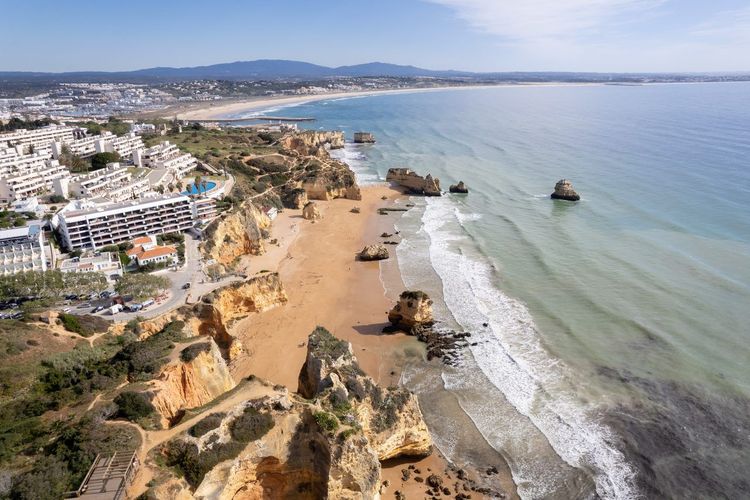
Repeatedly ranked among Europe's most beautiful beaches by specialist publications, Praia Dona Ana (Praia Dona Ana, 8600 Lagos, rated 4.6/5 on Google with 10,302 reviews) owes its reputation to its ochre cliffs sculpted into needles and sandy coves separated by rocky outcrops. Access is via a steep staircase from the summit car park — around 200 steps depending on the section taken — which discourages some hurried visitors and keeps the beach relatively manageable even at the height of the season.
The fine sand and cliff-sheltered waters make it a popular family swimming spot, without the sometimes stronger currents of Meia Praia. A snack bar perched above the beach serves grilled fish and cold drinks, with a terrace looking out over the entire bay. The submerged rocks at the northern end of the beach are well suited to snorkelling in calm conditions, with small shoals of fish visible around the rocky formations.
The most widely shared photographs of Praia Dona Ana on social media are generally taken from the elevated path running along the clifftop before the descent to the sand. From there, the full succession of coves and rock needles unfolds in a single view — a vantage point many visitors miss by focusing solely on the descent. Sun loungers and parasols are also available for hire directly on the beach if you have not brought your own equipment. Arrive before 10 a.m. in July and August: after that, towels cover every available patch of sand and the upper car park is full.
5. Exploring the Caves by Boat or Kayak
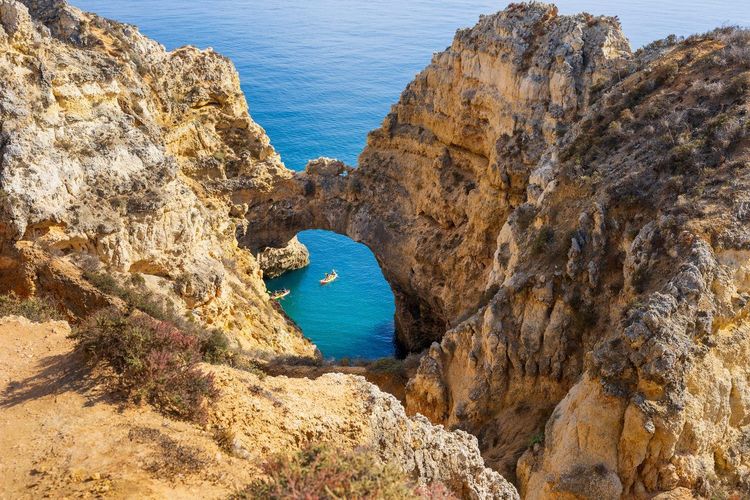
The most direct way to understand why Ponta da Piedade is so captivating is to go down by boat, at water level, beneath the arches themselves. Several operators offer departures from Marina de Lagos (Marina de Lagos, 8600 Lagos, rated 4.5/5 on Google with 3,841 reviews) or directly from the jetty at the foot of the cliff, with slots every 30 to 45 minutes in high season.
The most common tours last between 45 minutes and one hour and generally cost between €20 and €25 per adult, boarding included. The boat winds between the formations, stops at the most spectacular caves — Gruta dos Amores and Gruta do Camilo are among the most frequently mentioned — and allows a few minutes for photographs before moving on to the next cove. The skippers, often Lagos natives from several generations back, provide commentary in English and Portuguese, sometimes with a few words of French depending on the company.
For a slower, quieter experience, hiring a kayak or paddleboard allows you to linger inside the caves longer, swim in secluded coves, and set your own pace. Expect around €25 to €30 for a two-to-three-hour hire, safety equipment included. The most established companies — some of which have been operating for several decades — stand out with covered boats suited to families with young children, while newer operators favour faster semi-rigid inflatables for a more thrill-seeking crowd. Checking recent reviews before booking remains worthwhile, as the quality of commentary and punctuality vary considerably between operators despite very similar pricing.
Some companies combine this outing with dolphin watching offshore, on two-to-three-hour trips that venture further from the coast. Groups of common dolphins and bottlenose dolphins regularly frequent the waters off the Algarve, with no guaranteed sightings but a generally high success rate in the warm season. Others offer combined cave and sunset tours, particularly in demand in July and August despite a price that is often a few euros higher.
On days of strong wind, some companies cancel the most exposed trips for safety reasons, particularly those that venture beyond the headland towards the deepest caves. A refund or rescheduling is generally offered at no charge. The Ponta da Piedade jetty itself is more picturesque than the marina one, nestled between the cliffs, but reaching it on foot from the town centre takes about twenty minutes longer. Many visitors opt for a smart combination: walk down to Ponta da Piedade for the hike and the view, board there for the sea trip, then return by taxi or tuk-tuk rather than climbing back up in the midday heat. Booking the day before is recommended in July and August, as morning slots go first. If you are travelling with the Ryo app, listen to the site's historical summary before boarding: it means you can enjoy the boat trip without needing to consult a paper guide between photos.
6. Visiting the Municipal Market
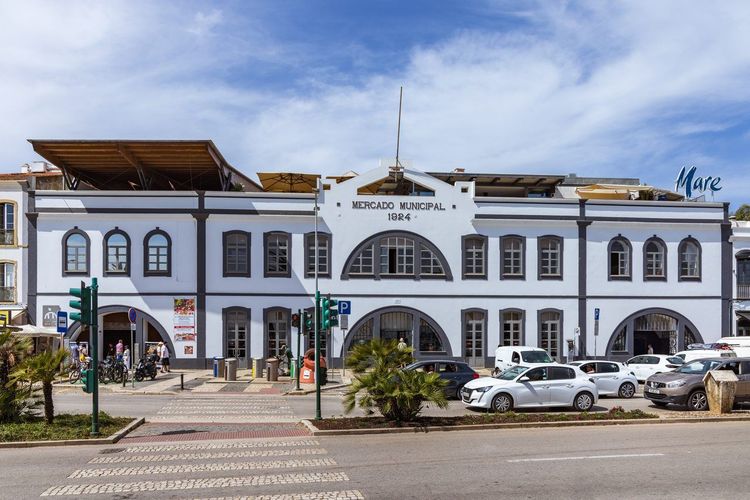
Mercado Municipal de Lagos (Av. dos Descobrimentos, 8600 Lagos, rated 4.3/5 on Google with 5,537 reviews), on the avenue running alongside the marina, opens its doors Monday to Saturday at the crack of dawn. Fishermen drop off their morning catch here — mainly sardines, mackerel, and octopus — while neighbouring stalls offer seasonal fruit and vegetables and local goat's cheese.
The atmosphere remains resolutely local despite growing tourist footfall: negotiations in Portuguese, stacked crates, and a prevailing smell of the sea. A few stalls also sell processed goods — dried figs, orange blossom honey, or artisan medronho liqueur — that slip easily into a suitcase as an edible souvenir. An hour here is enough to take in the essentials, ideally in the very early morning before the heat sets in and the best produce disappears. The market stays open year-round, with a noticeably smaller selection in the depths of winter compared to the summer harvest season.
7. Visiting the Museu do Mercado de Escravos
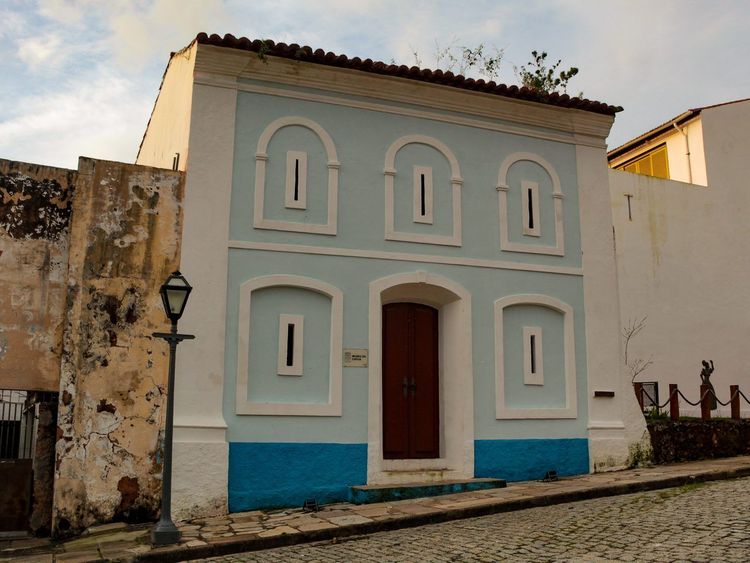
Beneath the arcades of Praça Infante Dom Henrique, a small building houses the Museu do Mercado de Escravos (Praça Infante Dom Henrique, 8600 Lagos, rated 3.5/5 on Google with 886 reviews), located on the site of Europe's first slave market, established in 1444 under the authority of Prince Henry the Navigator. The museum, opened in 2016, unflinchingly documents Portugal's role in the early transatlantic slave trade, from this very square where women, men, and children captured along the West African coast were auctioned off.
The exhibition, spread across two small rooms, combines explanatory panels, period objects, and contemporary testimonies from descendants of this history. The route is short — around thirty minutes on average — but the weight of the subject justifies not treating it lightly. Several visitors leave with a noticeably different perspective on the rest of the old town, whose 15th-century prosperity was partly built on this trade. Visitors with only a few minutes to spare will still find the essentials summarised on a large exterior panel, visible even without buying a ticket.
In recent years, the municipality has added an outdoor memorial on the square — a contemporary work paying tribute to the victims of the slave trade that complements the museum's narrative without duplicating it. Some local guides offer a combined commentary tour taking in this site alongside the collections of the municipal museum covering the 15th and 16th centuries. The museum is part of a broader movement of historical acknowledgement carried forward by several Portuguese port cities in recent years, Lagos being one of the first to open a museum space dedicated specifically to this chapter of its past. Local teachers regularly bring school groups here, a choice that illustrates the place the city wishes to give this memory in the education of future generations. The visit pairs naturally with the Igreja Santo António, a few dozen metres away, or with a pause on the square itself, shaded by orange trees.
8. Discovering Igreja Santo António and the Municipal Museum
Igreja de Santo António (Rua General Alberto Silveira, 8600 Lagos, rated 4.4/5 on Google with 1,193 reviews), adjoining the municipal museum, conceals behind a modest facade one of the densest Baroque interiors in the Algarve: talha dourada (gilded carved woodwork) covering the walls and ceiling, 18th-century azulejos, and a trompe-l'œil painted decoration that visually extends the nave.
Museu Municipal Dr. José Formosinho, located right next door, brings together an eclectic collection: Roman mosaics uncovered during local excavations, ancient coins, and a curiosity that invariably surprises visitors — a mummified cat discovered during archaeological digs in the region. The entry ticket covers both the church and the museum, for a complete visit of around 45 minutes. The on-site guides are happy to explain the origin of certain pieces found during excavations carried out in the 1970s beneath what is now the town centre, a reminder that Lagos still holds, beneath its paved streets, archaeological layers far older than its Baroque facade suggests.
9. Spending the Day at Meia Praia
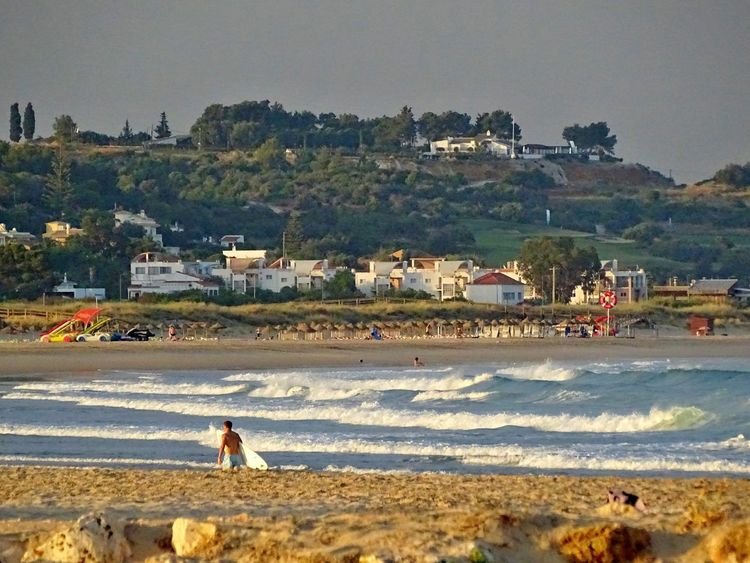
To the east of the marina, Meia Praia (Meia Praia, 8600 Lagos, rated 4.6/5 on Google with 2,377 reviews) stretches more than four kilometres of fine sand, in complete contrast to the rocky, compartmentalised profile of Ponta da Piedade. This unbroken expanse, bordered by low dunes, attracts a different crowd: families settled in for the day, water sports enthusiasts, and early-morning joggers who take advantage of the space to run without crossing anyone.
The thermal wind that typically picks up in the early afternoon makes it a recognised spot for kitesurfing and windsurfing, with several permanent schools offering introductory lessons and equipment hire. Rates start at around €60 to €70 for a guided ninety-minute introduction session, equipment included. Casual swimmers will prefer the early morning hours, when the sea remains calmer and the wind has yet to wake up.
Car access is via several free car parks spread along the coastal avenue, noticeably less crowded than those at Ponta da Piedade or Praia Dona Ana, as the beach is wide enough to absorb summer numbers without feeling overcrowded. A few beach restaurants — those quintessentially Portuguese beach bars — line the start of the beach on the marina side, with terraces almost in the sand, while the more distant sections remain wild and virtually deserted even in August. Families settling in for the day typically use the beach concessions that hire out sun loungers and parasols, an option that saves carrying your own equipment from the town centre. Several improvised beach volleyball courts also dot the beach near the bars, busy mainly in the late afternoon when the heat subsides. Lagos railway station, the terminus of the Algarve line, is just a few minutes' walk from the start of Meia Praia, making it the easiest beach to reach without a car from the town centre or from neighbouring towns such as Portimão.
10. Heading Down to Praia do Camilo
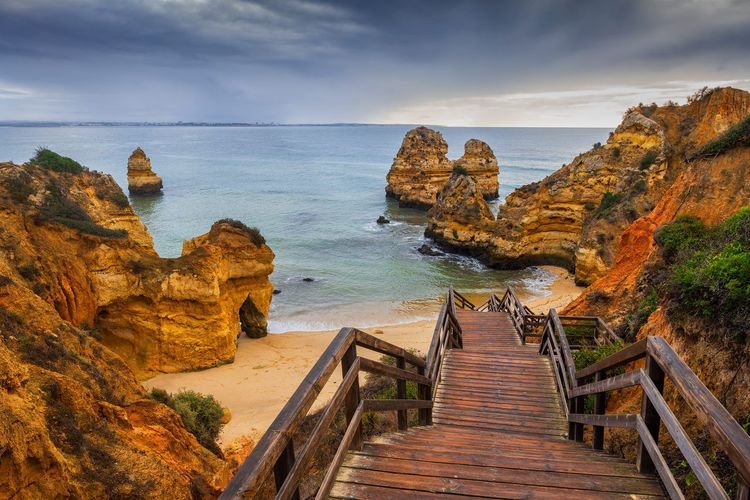
Halfway between Ponta da Piedade and the town centre, Praia do Camilo (Praia do Camilo, 8600 Lagos, rated 4.6/5 on Google with 10,827 reviews) has to be earned: more than 200 wooden steps built into the cliff face lead down to a tiny cove, enclosed by ochre walls that plunge directly into crystal-clear water.
A wooden footbridge connects the main beach to a neighbouring rocky islet, where you can climb for an overview of the cove and, on a clear day, a glimpse of Ponta da Piedade in the distance. The space is limited, which naturally restricts the number of visitors who can settle in comfortably: arriving early remains the only real strategy in high season. The late-afternoon light, when the sun begins to dip behind the western cliffs, turns the cove into a particularly photogenic play of reflections — provided you accept sharing that moment with a few dozen other visitors who have come for the same reason. More confident swimmers sometimes venture beyond the central rocky islet to explore small caves accessible by swimming, invisible from the sand.
11. Stopping by the Centro Ciência Viva
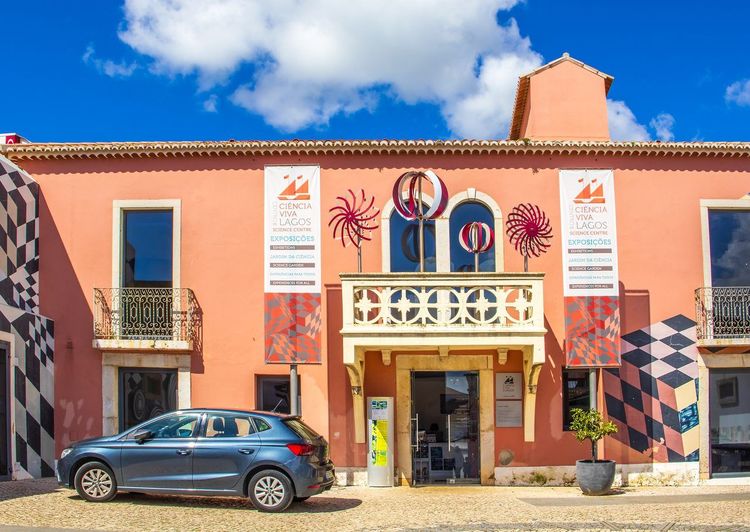
Housed in a former power station converted on the riverbank, Centro Ciência Viva de Lagos (Rua Silva Lopes, 8600 Lagos, rated 4.6/5 on Google with 691 reviews) offers an interactive approach to science aimed primarily at families with children. The permanent exhibitions cover energy, climate, and the Algarve's marine ecosystems, with numerous hands-on activities designed for visitors between the ages of 6 and 14.
One room is dedicated to astronomy, with a small planetarium and, on certain evenings programmed in advance, telescope observation sessions from the building's rooftop terrace. The venue also provides a welcome alternative on days of strong wind or rain — rare but possible in the Algarve between November and March — when the beaches lose some of their appeal. The building itself is worth visiting beyond its content: the former power station, with its tall industrial skylights preserved during the renovation, stands in sharp contrast to the traditional architecture of the rest of the old town. An outdoor garden along the riverbank completes the visit, with a few panels devoted to the local estuary wildlife — grey herons and small wading birds observable depending on the season.
A full visit generally takes 1.5 to 2 hours, with a modest entry fee by European standards for this type of facility. Panels are bilingual in Portuguese and English, with some occasional French translations on temporary exhibitions.
12. Going Out on Rua 25 de Abril
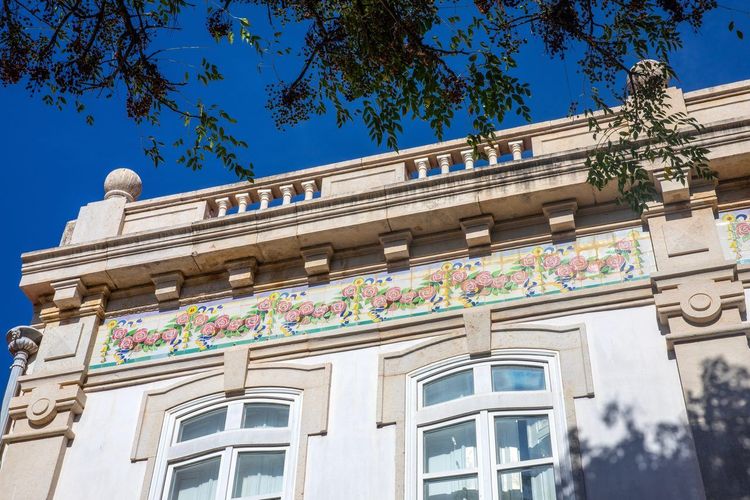
Once the sun sets, the centre of gravity of Lagos shifts to Rua 25 de Abril (Rua 25 de Abril, 8600 Lagos, rated 4.2/5 on Google with 1.2K reviews) and the surrounding lanes, where cocktail bars, traditional tascas, and Irish or British-themed pubs follow one another over a few hundred metres. The atmosphere, decidedly international, owes much to Lagos's popularity with travellers since the 1990s, a reputation that endures despite the gradual upmarket shift in the tourism offer.
In low season, the mood is relaxed: a few lively terraces, a mostly local clientele, and prices that drop noticeably compared to July and August. In high season, however, the street transforms into an unbroken succession of bars offering happy hours, karaoke, and live music, with a crowd that spills well onto the pedestrianised roadway from 10 p.m. onwards. Drink prices follow a fairly predictable logic: cheaper away from the waterfront, they rise sharply as soon as a terrace offers a sea view or sits on the main thoroughfare itself. Comparing two or three venues before settling in is a worthwhile reflex, as the gap can reach several euros for an equivalent beer depending on the address chosen.
The street takes its name from the Carnation Revolution of 25 April 1974, which ended nearly fifty years of dictatorship in Portugal — a historical nod that most evening visitors entirely overlook, more focused on choosing the next bar than on the symbolism of the name beneath their feet. Those looking for a quieter atmosphere will find it around the marina, where several wine bars and gastronomic restaurant terraces offer a more subdued setting, with views over moored boats rather than the crowd. A terrace dinner followed by a night stroll along the illuminated ramparts remains a popular alternative for travellers who prefer to avoid the density of Rua 25 de Abril without giving up an evening outdoors.
For groups seeking a more organised experience, several local pub crawls gather dozens of participants each evening around a fixed route between four or five partner venues, with welcome drinks included in the price. Groups of more than six sometimes benefit from a preferential rate on these packages, an option worth negotiating directly on the spot rather than online. It is also a simple way to meet other travellers passing through, the Lagos clientele changing almost entirely from week to week in full season. If you prefer a quieter version of the evening, the Ryo app lets you listen to a summary of the city's maritime history while walking along the waterfront before joining the terraces — a way of keeping one foot in the local heritage even with a drink in hand.
13. Organising a Day Trip to Benagil Cave
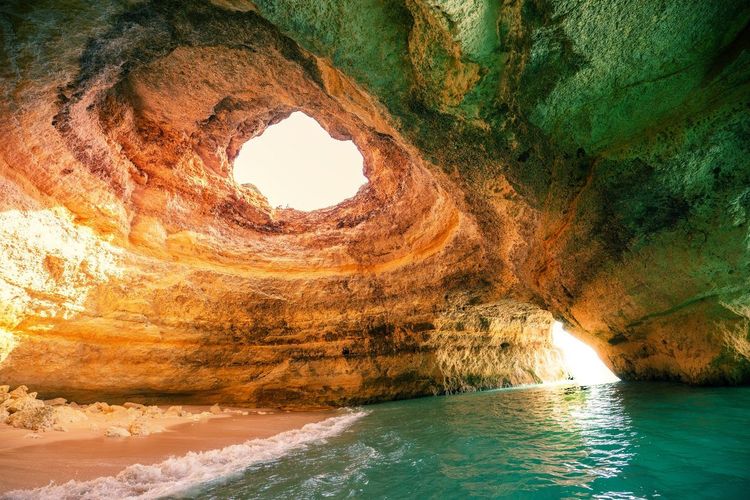
Often presented as one of the most shared images of Portugal, Algar de Benagil (Praia de Benagil, 8400 Lagoa, rated 4.7/5 on Google with 22,916 reviews) lies about 30 kilometres east of Lagos, near Lagoa and Carvoeiro. This sea cave, pierced by a circular opening at the top that lets light fall directly onto a sandy beach inside, can only be visited from the sea: no land access exists, the municipality having closed attempted cliff descents after several accidents.
From Lagos, several options allow you to reach the site without renting a car. Boat excursions departing from the marina generally last between 2.5 and 4.5 hours depending on whether they include other stops (Praia da Marinha, secondary caves along the Carvoeiro coast), with prices ranging from €35 to €60 per adult. Other operators offer a combined minibus plus kayak or paddleboard package, driving directly to Benagil before paddling to the cave. Some operators now offer an alternative using electric-assisted paddleboards, which reduces the physical effort while retaining the advantages of a classic kayak: freedom of movement and a quiet approach to the cave. The price is higher, generally around €70 to €90 for a half-day, but the experience gains in flexibility.
The best window for a visit remains early morning, between the opening of tours around 8 and 9:30 a.m.: the light passes through the ceiling opening at a more favourable angle, and the beach inside the cave is not yet invaded by the ten or so kayaks and boats that crowd in at midday in high season. Many visitors underestimate the numbers: in August, it is not unusual to have to wait your turn to set foot on the interior sand, as local authorities now limit the number of craft permitted simultaneously inside the cave for safety and conservation reasons.
Beyond Benagil itself, the coastline between Carvoeiro and Lagoa concentrates a remarkable density of similar formations — Praia da Marinha, regularly cited among Europe's most beautiful beaches, and several secondary caves that are less frequented and at which some boats stop as a complement. Dedicating a full day rather than just half a day to this stretch of coast allows you to come away with a more complete picture of what the Algarve can offer beyond the most familiar postcards. Travel insurance companies, incidentally, often recommend checking your coverage before this type of nautical activity, as open-sea outings are not always included in the basic policies taken out for a standard holiday.
Booking at least two to three days in advance is recommended in high season, as morning slots generally go first. Also bear in mind that swell can cancel or postpone certain trips, as the cave remains exposed to the open sea: a spare day in your itinerary avoids unpleasant surprises if you are set on seeing Benagil during your stay in Lagos. Those who prefer to drive themselves will find Benagil a tiny village, saturated with vehicles from 9 a.m. in summer: official parking spaces can be counted on one hand, and a paid shuttle system from park-and-ride car parks has been put in place in some summers to relieve congestion in the village. Combining the visit with a boat departure directly from Lagos remains, in most cases, simpler than managing parking on site.
14. Tasting the Wines of the Algarve
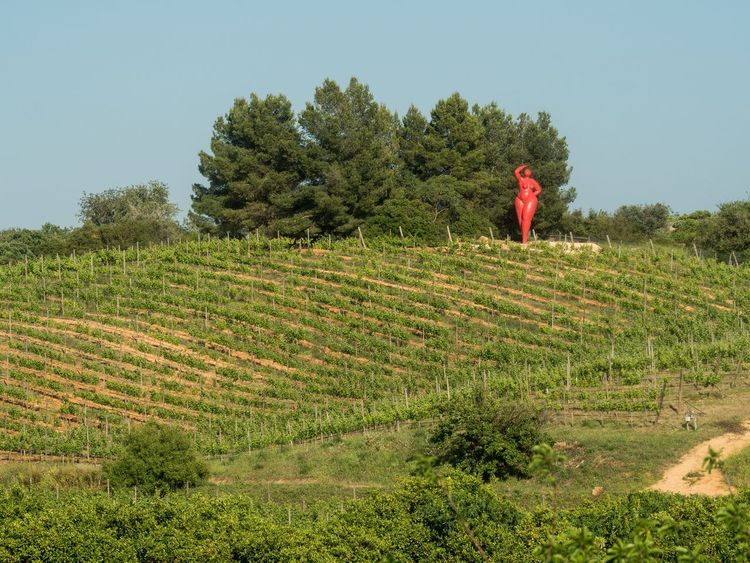
Less celebrated than its beaches, the Algarve's wine production has enjoyed a marked revival of interest over the past fifteen years, driven by a handful of estates that focus on local grape varieties such as Negra Mole and Arinto, alongside international varieties adapted to the Mediterranean climate. About thirty minutes' drive from Lagos, Quinta dos Vales (Sítio dos Vales, 8400 Estombar, rated 4.5/5 on Google with 390 reviews), near Estombar, combines a vineyard, wine tasting, and a surprising park of contemporary sculptures scattered between the vine rows.
Guided tours, generally offered in English and Portuguese, include a presentation of the winemaking process and a tasting of four to six wines — whites, reds, and sometimes a local moscatel. Expect €20 to €35 depending on the package chosen, with booking recommended the day before in high season. Other more discreet estates, such as Morgado do Quintão near Lagoa or Barranco Longo near Algoz, focus on more niche production, often sold only on-site or in a handful of local restaurants. Visiting them generally requires calling ahead, as the tourist facilities are less structured than at more well-known estates, but the gain in authenticity from meeting the winemaker in person makes it worthwhile.
For travellers without a vehicle, several organised excursions from Lagos combine a morning of wine tasting with a visit to a local market or a nearby village, offering a way to discover the agricultural hinterland of the Algarve, which is very different from the tourist coastline. Autumn, from late August to October depending on the vintage, coincides with the harvest season, with some estates opening their doors to observe — or even take part in — the first stages of the grape picking.
15. Walking Along the Coast to Porto de Mós
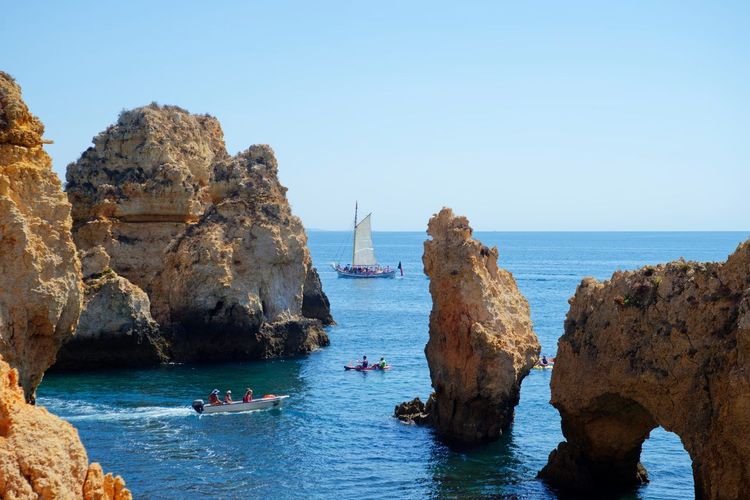
A coastal path links Ponta da Piedade to Porto de Mós beach further south, running along the clifftop for around three kilometres each way. The route, largely fitted with wooden boardwalks at the most exposed sections, alternates between sheer drops overlooking otherwise inaccessible coves and more inland passages through low vegetation of stone pines and salt-tolerant plants.
Allow roughly one hour each way, a little more if you make multiple photo stops, making it an activity that pairs easily with a visit to Ponta da Piedade at the start and a swim at Porto de Mós on arrival. This last beach, wider and less photogenic than Dona Ana or Camilo, offers in return direct car access and a noticeably quieter setting.
Opt for early morning or late afternoon to avoid the worst of the heat, as the path offers little shade for most of the route. Bring water: there are no resupply points between the two ends, apart from a few seasonal kiosks near the Ponta da Piedade car park. The path passes through privately owned land that tolerates walkers at certain points, a common arrangement along this stretch of coast but one that means staying on the marked trails, particularly near a few isolated houses close to Porto de Mós. Cyclists sometimes use a more inland variant of the route, less dramatic but manageable on a mountain bike, while the coastal path itself remains reserved for hikers due to its uneven terrain and several narrow cliff-edge passages.


FAQ
How much time should you plan for a visit to Lagos?
Two to three days are enough to cover the old town, Ponta da Piedade, the main beaches, and a boat excursion at a relaxed pace. A single day is possible if you focus on the historic centre and a quick trip to the caves, but you'll miss the more distant beaches like Meia Praia or the excursion to Benagil, which alone requires half a day.
What is there to do in Lagos when it rains?
The Museu do Mercado de Escravos, the municipal museum, and the Centro Ciência Viva offer solid indoor alternatives. Rain remains rare and usually brief in the Algarve, especially between April and October, which generally leaves a window to resume outdoor sightseeing in the afternoon.
Where can you park near the old town of Lagos?
Several paid car parks surround the historic centre, particularly near the marina and along Avenida dos Descobrimentos. In high season, arriving before 9:30 a.m. significantly improves your chances of finding a nearby spot, with free parking on the outskirts of the centre remaining an option for longer stays.
What is the best time of year to visit Lagos?
May, June, and September offer a good balance between favourable weather and more manageable crowds compared to July and August, when prices and visitor numbers peak. Winter remains mild compared to the rest of Europe, with pleasant days for walking even if swimming becomes less appealing.
How do you get to Ponta da Piedade without a car?
The site can be reached on foot from the town centre in 25 to 30 minutes, or in a few minutes by taxi or local tuk-tuk. Boats to the caves depart from both Ponta da Piedade itself and from Lagos marina, with the latter option being more convenient for those staying in the town centre.
Is Lagos suitable for a family trip with children?
Meia Praia, with its wide expanse of sand and relatively calm morning waters, is well suited to families, as is the Centro Ciência Viva for a morning of interactive activities. Staircase beaches like Dona Ana or Camilo, however, require extra care with young children due to the steps and rocks.
Should you book boat excursions in advance?
In high season, booking the day before for the Ponta da Piedade caves and two to three days ahead for Benagil is advisable, as morning slots go first. Outside peak season, booking on the day is usually sufficient, since supply far exceeds demand between November and March.
In Conclusion
Writing a list of things to do in Lagos always comes back to a question of balance between cliffs and urban heritage, between beaches reachable in a few minutes and excursions that demand a full day. The fortified old town and Ponta da Piedade account for most of the city's reputation, but it is often the less spotlighted details — a museum that does not look away from the history of the slave trade, a covered market where fishermen still haggle at first light, a beach hidden behind 200 wooden steps — that give a stay here its true colour.
Whether you are planning a one-day stopover or a full week in the Algarve, keep a flexible slot to adapt to the weather and the crowds: the best moments at Ponta da Piedade or Praia Dona Ana happen early in the morning, far from the organised groups. If you are travelling with the Ryo app, keep the audio guide handy for the old town: it is often in these lanes, more than on the beaches, that historical context changes the way you look at a simple doorway or a crumbling facade.