© Shutterstock
 Votre guide Ryo
Visiting Antequera as a Couple in 2026: Legend, Panoramas and UNESCO Heritage for a Getaway for Two
In Antequera, love has its own mountain. Visiting Antequera as a couple starts with looking up at the silhouette of a sleeping face, carved by erosion into the limestone, and hearing the story locals have told for centuries: that of two young people whom religion should have separated forever. Behind the legend lies a town of 41,000 inhabitants with a surprising number of listed monuments. The Ryo audio-guided tour of Antequera lets you connect these places at your own pace, headphones on, without depending on a guided tour schedule.
This guide covers the legend of the Peña de los Enamorados, a UNESCO-listed karst nature park where the rock takes on improbable shapes, dolmens about 5,700 years old, predating the great pyramids of Egypt by a millennium, a Renaissance collegiate church perched above the rooftops, and even a hot air balloon flight at sunrise. You will also find an itinerary for a day or a weekend, ideas for sleeping in a former convent and the specialties to taste together.
What strikes you on arrival is the contrast between the agricultural plain, covered with olive trees, and the limestone ridges that rise abruptly around the town. An almost theatrical setting, which gives full meaning to the story you are about to discover.
Antequera, an Exceptional Heritage in the Heart of Andalusia
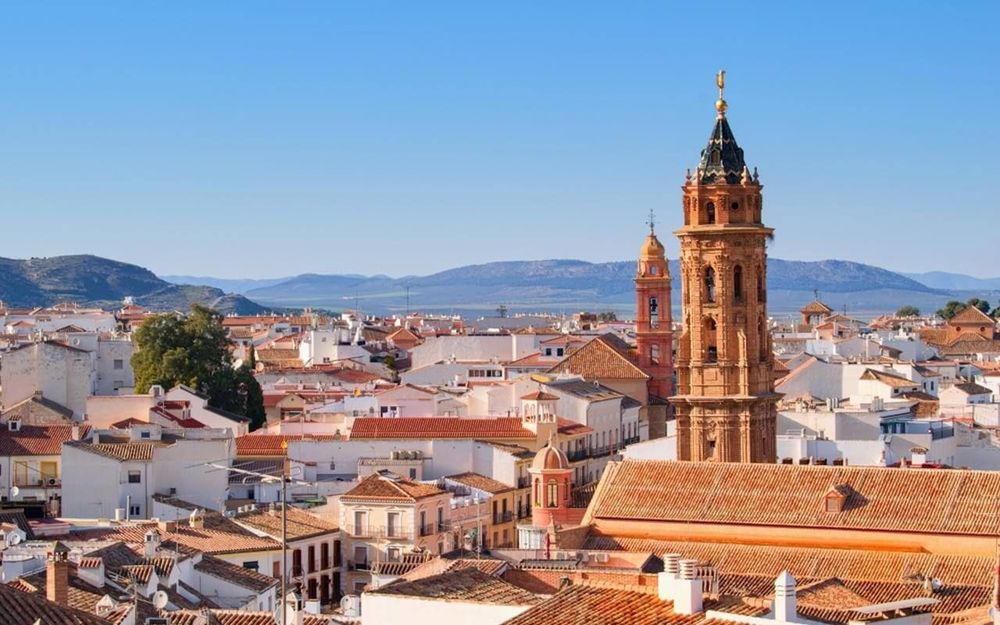
Set at the crossroads of the routes linking Malaga, Seville, Granada and Cordoba, Antequera has always been a must-pass point. The Romans founded Antikaria here, a stop on the road linking the coast to the interior. The Moors built a fortress at the top of the hill, and Prince Ferdinand took it from the Nasrid kingdom of Granada in 1410, well before the fall of Granada itself. This crossroads position explains the density of its heritage, rarely matched in Andalusia for a town of this size.
Is it worth visiting Antequera? The question comes up among travelers hesitating between the coast and the interior. Yes, especially if you are looking for somewhere less crowded than Seville or Granada. The town combines a legend known throughout the region, a nature park sculpted by erosion and a unique megalithic complex, without the queues of the most publicized sites.
The most recognizable symbol remains the Peña de los Enamorados, this rock with a human profile visible from almost the entire town. But Antequera is also an old town with steep lanes, a Moorish fortress still standing and Baroque façades following one another over a few hundred meters.
It is sometimes nicknamed the "heart of Andalusia", a phrase that reflects a geographical reality: the town lies almost equidistant from the major regional capitals. It therefore works as well as a central stop on a road trip as a destination in its own right for a weekend.
The Legend of the Peña de los Enamorados, the Lovers' Rock
An Impossible Love Story Between a Christian and a Muslim Woman
The story goes back to the time when the border between Christian Castile and the Nasrid kingdom of Granada ran right through Antequera. It tells of a young Christian, captured and then enslaved, who fell under the spell of the Moorish governor's daughter. Their relationship, forbidden by the laws of the time, drove them to flee together into the mountains to escape the fury of both families.
Pursued by the governor's men, the fugitives ended up cornered at the top of the rock overlooking the plain. Rather than be separated, they chose to leap into the void hand in hand. Several variants circulate, some mentioning a royal pardon that arrived too late, others reversing the roles (a Christian woman and a Muslim man), but all converge on the same tragic ending.
Passed down from generation to generation, the story ended up naming the rock itself. It also explains why the town set up a small fountain in tribute to the legend, where many visitors stop for a photo.
This kind of tale, mixing thwarted passion and final sacrifice, appears in several legends born during the Reconquista, when the shifting border between the Christian and Muslim worlds fed the imagination on both sides. Antequera is one of the few towns where the legend has literally taken shape in the landscape, to the point of renaming an entire mountain.
The Face Carved in Rock, Symbol of Antequera
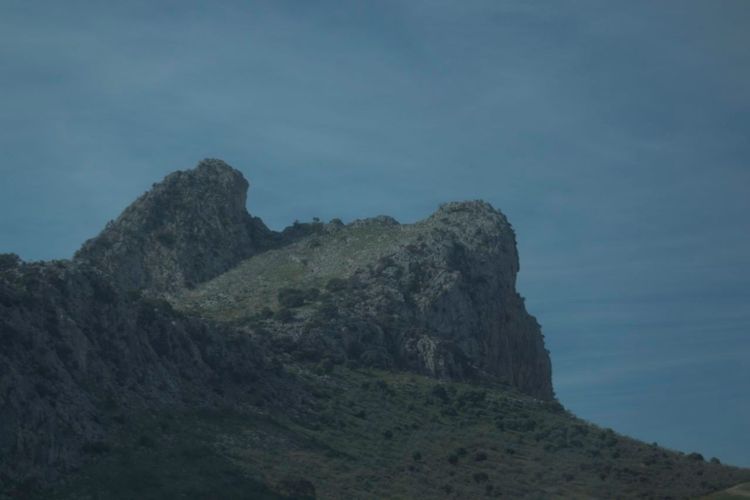
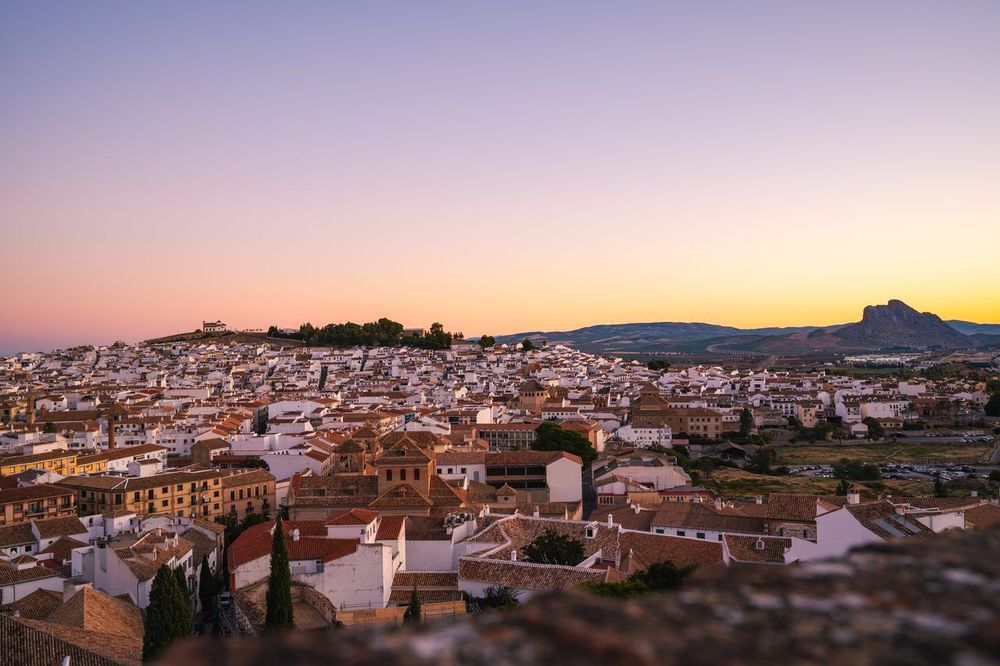
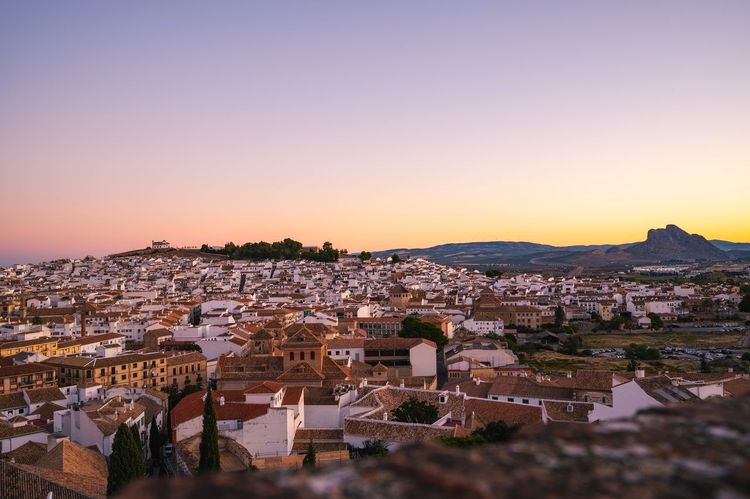
Beyond the story, the Peña de los Enamorados owes its fame to its shape. Seen from the road crossing the valley, the mountain traces an elongated profile turned toward the sky: a forehead, a nose, a chin shaped by limestone erosion. Many see the face of a reclining Native American, hence its other local nickname, "la cara del indio".
The rock peaks at around 880 meters and rises steeply above the plain, which heightens the surprise when you first spot it from the highway. Its color changes with the hour: golden at sunrise, gray under an overcast sky, almost pinkish at sunset in summer.
Since 2016, the Peña has been part of the UNESCO World Heritage "Antequera Dolmens Site", alongside El Torcal and the three megalithic tombs. This listing recognizes a rare fact: Neolithic builders oriented a monument toward a mountain, making this landform a sacred landmark millennia before it was given a legend.
Where to Admire the Rock and Enjoy the Viewpoint
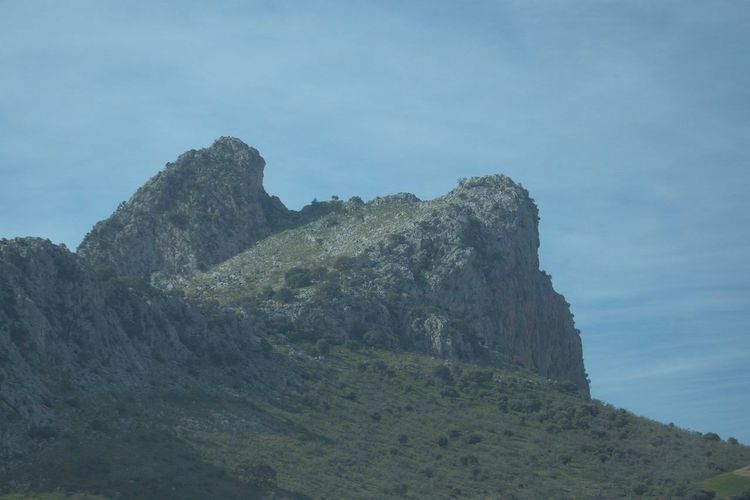
Where is the Peña de los Enamorados? The rock stands about ten minutes by car east of the center, along the Archidona road. It is visible from several points in the town, but to enjoy it fully, it is better to get closer.
The Mirador de las Almenillas (Camino de las Almenillas, 29200 Antequera, rated 4.7/5 on Google from 136 reviews) offers one of the clearest angles on the whole silhouette and on the surrounding plain. Go up in the late afternoon, when the low light accentuates the contours of the profile. You can park nearby, with no long walk to get there.
It is an ideal stop for a picnic or a few minutes of quiet contemplation, far from the bustle of the center. From the town itself, the forecourt of the Real Colegiata and the Alcazaba tower also offer a view of the profile, to combine with your visit of the monuments. To hear the legend told on the spot, the Ryo audio sub-tour Where Andalusia Begins lines up 17 stops over 4.7 km (1h50 of walking) and ends right in front of the fountain dedicated to the story of the two fugitives.
El Torcal and the Antequera Dolmens, a UNESCO-Listed Natural and Prehistoric Heritage
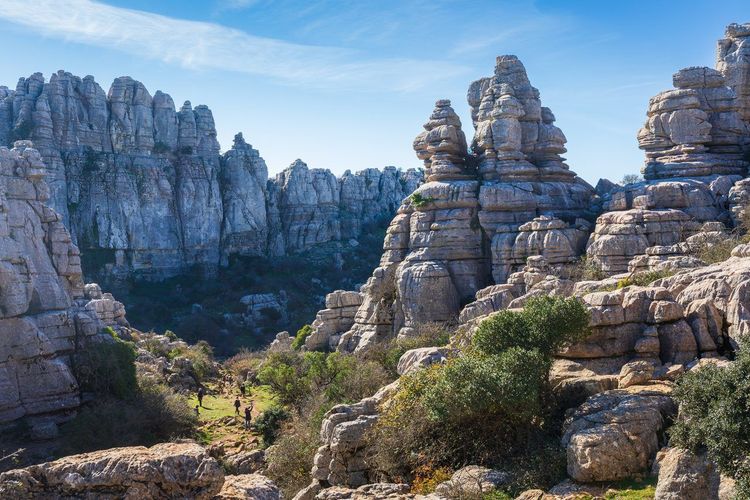
El Torcal, a Karst Labyrinth to Explore Together
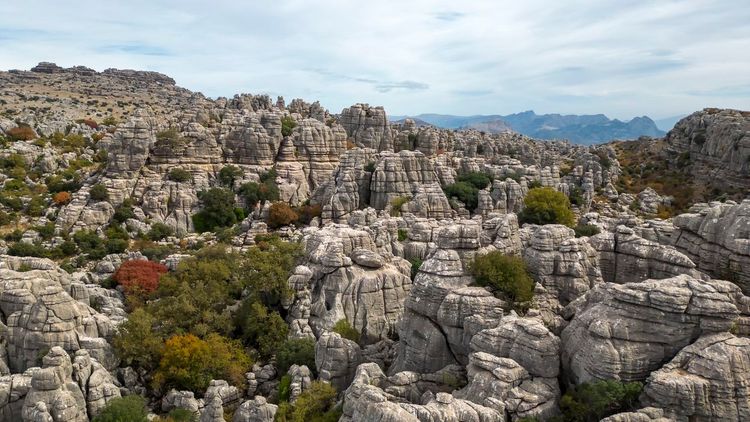
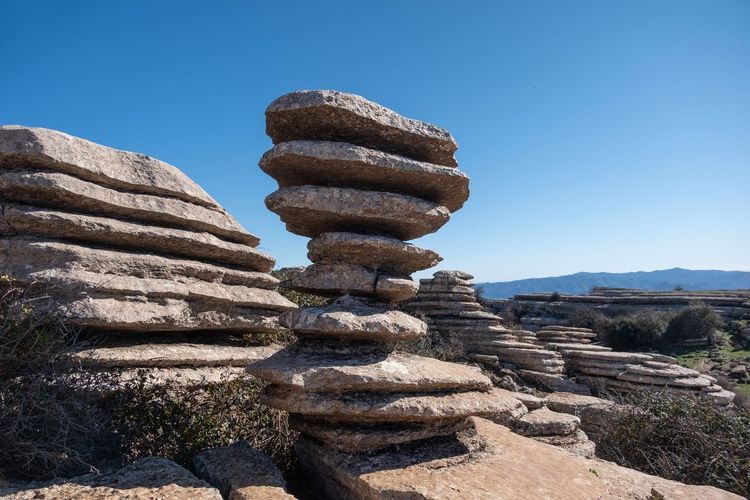
About twenty minutes by road from the center, the El Torcal de Antequera nature park forms one of the most spectacular karst landscapes in Europe. Erosion has sculpted the limestone into stacks of discs, columns and abstract shapes, so much so that the best-known rocks have been given nicknames: the Tornillo (the screw), the Sombrero, the Esfinge.
Three marked trails start from the visitor center. The green one, the shortest (1.5 km, under an hour), is enough to feel the strangeness of the place. The yellow one (3 km) goes deep into the Torcal Alto through narrow passages and panoramic viewpoints. The orange one (3.5 km) links the two car parks. Bring good shoes: the uneven limestone ground slips easily after rain.
The visitor center offers an exhibition on the site's geological formation and its wildlife: Iberian ibex, which you will almost certainly spot among the rocks, griffon vultures, golden eagles and Bonelli's eagles. Access to the park is free. In high season, car access to the top may be regulated, with a shuttle from the bottom: check conditions before leaving.
Come early in the morning or late in the day. The low light better reveals the landforms, and the Andalusian heat makes a midday walk painful in summer. The mineral silence of the site makes it one of the few places in the region where you hear the wind more than voices.
The Antequera Dolmens, an Archaeological Site Unique in the World
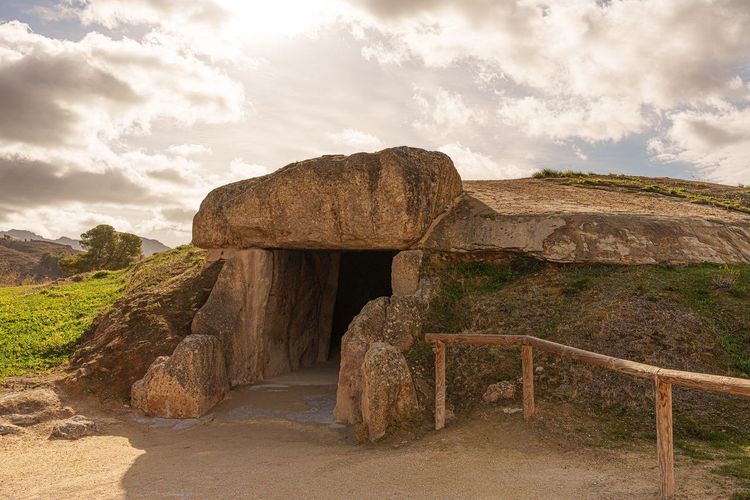
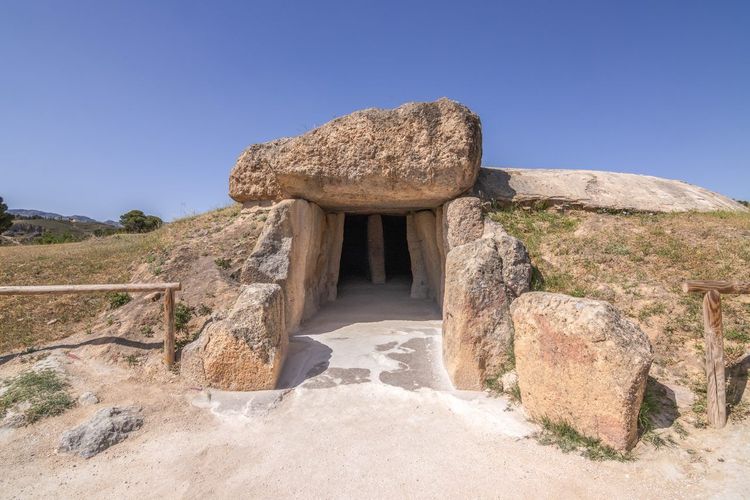
Back down on the plain, head to the Sitio de los Dolmenes de Antequera, which brings together three megalithic burial sites: the Menga dolmen (Carretera de Málaga, s/n, 29200 Antequera, rated 4.5/5 on Google from 3,760 reviews), the Viera dolmen and the El Romeral tholos. Built around 3700 BC with slabs weighing several dozen tons (the heaviest reportedly exceeds 150 tons), Menga is among the largest dolmens in Europe.
Entry is free for European Union citizens. Menga and Viera share the same enclosure, while El Romeral is about two kilometers away: allow an hour and a half for the whole. Viera, smaller, impresses with its long corridor oriented toward the sunrise at the equinoxes. El Romeral has a different architecture, a circular chamber with a false dome, a sign of later construction.
Menga's orientation is anything but trivial. Unlike nearly all European dolmens, which face the rising sun, its axis points toward the Peña de los Enamorados, and more precisely toward a shelter decorated with cave paintings, as archaeoastronomer Michael Hoskin showed. An interpretation center completes the visit with construction techniques and objects found during excavations carried out since the 19th century.
This joint listing makes Antequera one of the few places in the world where prehistoric and natural heritage echo each other in such a small area. The Ryo audio-guided tour also devotes a stop to the dolmens, with commentary on their origin and UNESCO listing, to be heard facing the stone blocks.
The Must-See Monuments of the Historic Center
The Real Colegiata de Santa María la Mayor and the Alcazaba, Witnesses to Andalusian Grandeur
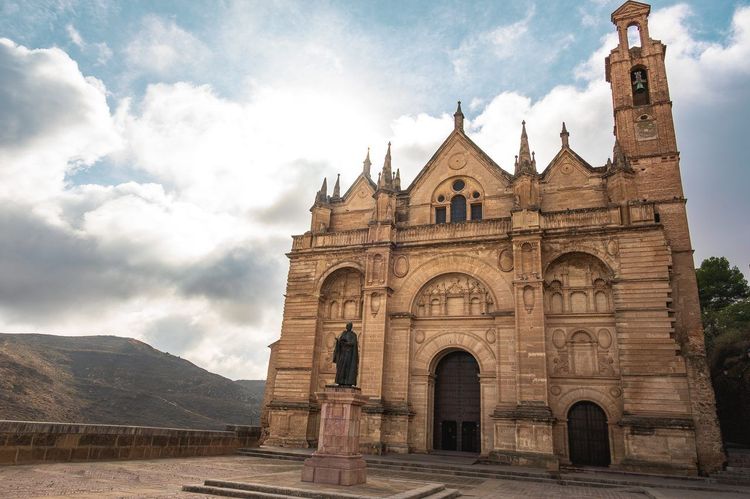
Heading up toward the center, you cannot miss the Real Colegiata de Santa María la Mayor, perched on one of the highest points of the town. Built between 1514 and 1550, it was one of the first Renaissance churches in Andalusia. Its triumphal-arch façade contrasts with the more austere architecture of the neighborhood, and its forecourt, the Plaza de los Escribanos, offers a first panorama over the rooftops and the countryside. Deconsecrated, it now hosts exhibitions and concerts beneath its three naves with columns.
Just above stands the Alcazaba of Antequera, a 14th-century Nasrid fortress built on Roman foundations. You reach it through the Arco de los Gigantes, a monumental arch erected in 1585, or through the Puerta de Estepa, a former fortified gate in the ramparts. Climb up to the Torre del Homenaje: the panorama takes in the town, the Peña in the distance and the first foothills of El Torcal in a single glance.
It is the kind of stop where you linger longer than planned, simply because the view invites you to slow down. A combined ticket, sold at the entrance for a few euros, gives access to the Alcazaba and the collegiate church. Allow a good hour for both. The 17 audio stops of the sub-tour pass through this duo before heading back down into the lanes, so you can follow the thread of history without opening a map.
The Palacio de Nájera and the Churches of the Center
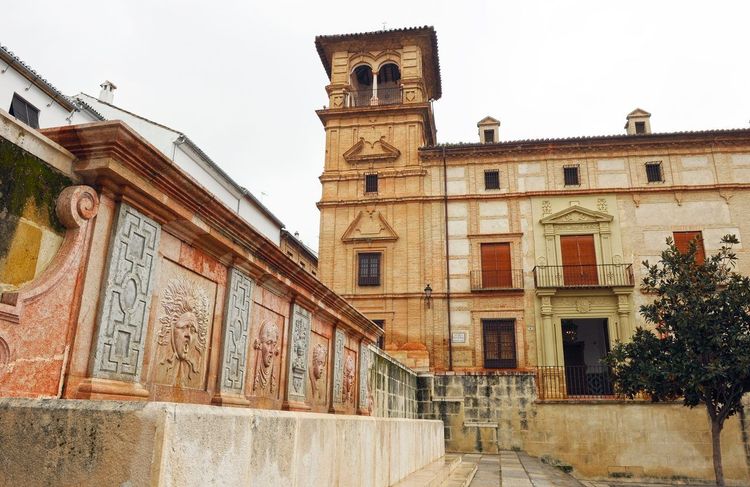
Nearby, the Palacio de Nájera, an 18th-century Baroque palace with a recognizable belvedere tower, houses the Museo de la Ciudad de Antequera. Its centerpiece is the Ephebe of Antequera, a 1st-century Roman bronze statue considered one of the finest found in Spain. Ceramics, religious silverwork and paintings then trace the town's different eras.
The center has some thirty churches and convents, a rare concentration. The Iglesia Parroquia San Sebastián is recognizable by its tall Baroque brick tower, topped with a winged weathervane that locals call "el Angelote". The Convento de Belén, run by Poor Clare nuns, is best known for the sweets they sell through the turntable hatch. The Iglesia del Carmen hides behind a sober façade an immense Baroque altarpiece carved by Antonio Primo, left in the natural color of the wood. Finally, the Iglesia Nuestra Señora de los Remedios (Calle Calzada, 29200 Antequera, rated 4.6/5 on Google from 208 reviews) shelters the town's patron, whose procession remains one of the highlights of the local calendar.
No need to try to get into everything in one afternoon. Choose two or three depending on opening hours, often limited outside services, and let the lanes do the rest: the charm of Antequera lies as much in the half-open patios and flowered balconies as in the monuments themselves.
Unforgettable Moments for Two in Antequera

A Hot Air Balloon Flight at Sunrise
Among the most requested experiences in the region, the hot air balloon flight holds a special place. At daybreak, operators based in the countryside offer flights over the valley, the Peña and the foothills of El Torcal, before the heat stirs up the wind and forces pilots to land.
Allow about an hour of flight, often followed by a glass of cava on landing, following a tradition inherited from the first balloonists. It is the only viewpoint that takes in the whole listed territory at once, from the Menga dolmen to the rock. Meeting time is before dawn, to inflate the balloon in the calm early-morning air.
Book several days in advance: flights depend on the weather and are sometimes canceled at the last minute. So do not schedule it on your last day, to keep a fallback date.
A Foodie Stroll Around Antequera's Goat Cheese
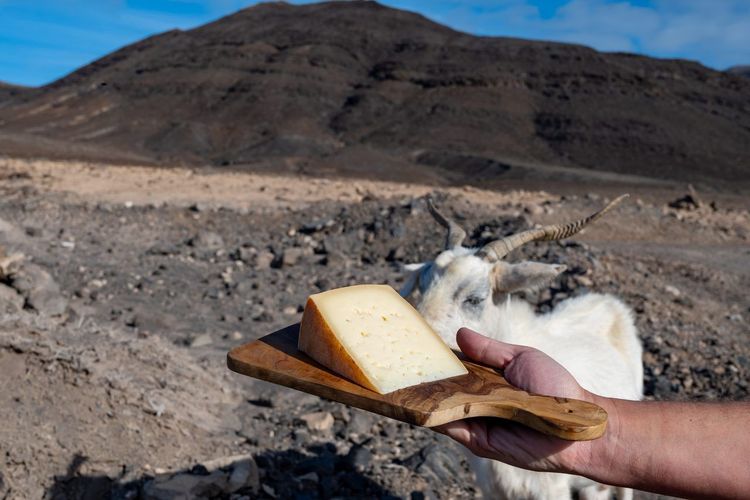
Less spectacular but just as memorable, tasting the local goat cheese deserves a detour. Several creameries in the comarca have won awards in international competitions, thanks to malagueña goats raised outdoors on the dry pastures around the town.
Some open their doors for a visit followed by a tasting, to slot in between two monuments. You will taste several agings, from fresh and creamy to drier and more robust, often with a drizzle of honey or olive oil from the region.
Between two addresses, the Ryo audio guide punctuates the way with local anecdotes to listen to while walking, a good excuse to extend your stroll. For more ideas, the top experiences to enjoy in Antequera lists activities to add to your stay.
Where to Stay in Antequera: Charming Places
Sleeping in a Former Monastery or a Charming House
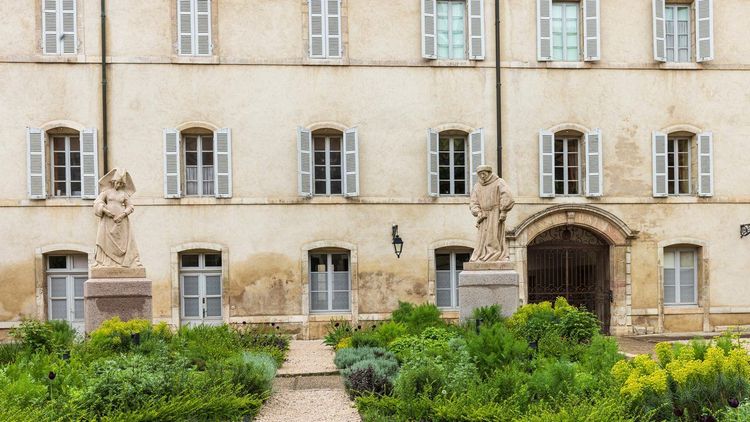
Antequera has several former religious buildings converted into accommodation. Sleeping between the thick walls of a convent, with its silent cloister and vaulted rooms, is radically different from a standard hotel. Some establishments have kept the original chapel, turned into a lounge or breakfast room, a detail that always surprises on arrival.
These addresses, located in the heart of the historic center, let you walk to the Colegiata, the Alcazaba or the shopping streets. The rooms, few in number, go quickly: book several weeks ahead for Holy Week or the Real Feria de Agosto.
Town Center Options for a Practical Stay
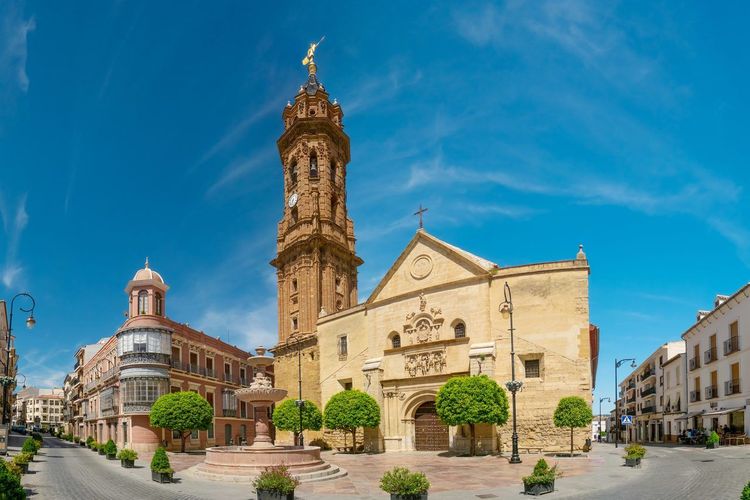
For a simpler stay, the center offers mid-sized hotels and guesthouses set in Andalusian houses, inner patio included. They suit you well if you want to do everything on foot: the historic center can be crossed in about twenty minutes.
Rates remain more affordable than in Malaga or Seville for comparable comfort, an argument that weighs on a multi-night stay. From most of these addresses, you can start the Antequera audio guide first thing in the morning, with its starting point a few hundred meters away, and go through the visit without taking the car again.
Treating Yourselves in Antequera: Food to Share

Eating in Antequera means rediscovering an inland cuisine, more rustic than that of the coast. The porra antequerana, a cold tomato and bread soup much thicker than gazpacho, is served topped with serrano ham and crumbled hard-boiled egg. You will find it on almost every menu in the center.
At breakfast, the mollete antequerano, a soft bread roll protected by a geographical indication, is spread with grated tomato and olive oil. In winter, slow-cooked dishes and game dominate the menus, starting with partridge from the surrounding countryside. Tapas bars cluster around the Plaza San Sebastián and the Plaza del Coso Viejo: ordering a few small plates to share remains the best way to taste everything in one evening.
For dessert, do not miss the bienmesabe, an almond, angel hair and cinnamon cake inherited from convent recipes. The Poor Clares of the Convento de Belén still sell it through the turntable hatch, without direct contact, a custom that survives in several Andalusian convents. To go with it all, ask for a wine from the DO Sierras de Málaga, still little known outside the province.
Festivals and Traditions to Experience as a Couple in Antequera
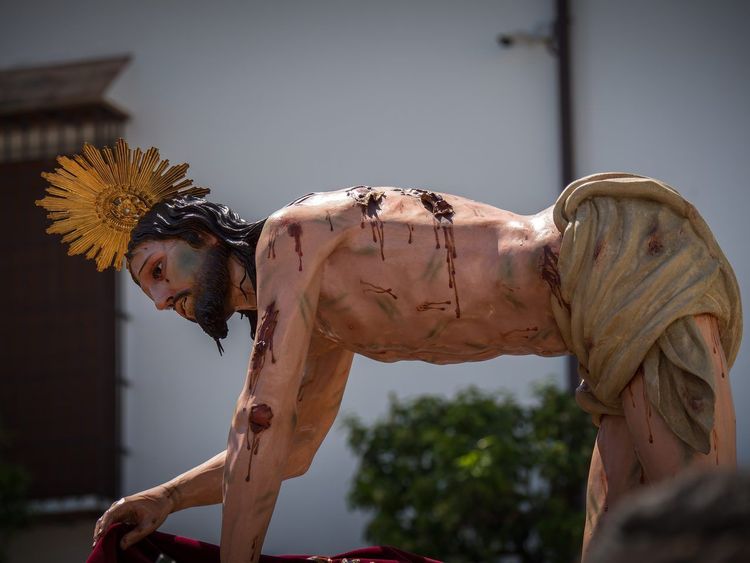
Antequera paces its calendar around a few major festivals, which are worth planning a stay around rather than stumbling into by chance. Holy Week, between March and April depending on the year, turns the center into a theater of processions, incense and drums. A powerful experience even without religious affinity. Brotherhoods parade with thrones carried by hand, some centuries old.
The Real Feria de Agosto, in the second half of August, tips into pure celebration: rides, concerts, casetas and nights that stretch until morning. The Feria de Primavera, more local, offers a more intimate atmosphere in spring if you prefer to avoid the summer crowds.
Outside these big events, summer also brings its open-air evenings: concerts in patios, cinema under the stars and terraces that come alive late, when the temperature finally drops. In December, the nativity scenes set up in churches and convents give another reason to push open the doors of the center's buildings, often closed the rest of the year.
Check the dates before booking: they let you arrive at the right time, or avoid them if you are looking for calm, as accommodation fills up fast and prices climb.
Visiting Antequera in One Day or a Weekend: An Itinerary for Two
Only have one day? Start early at El Torcal, before the heat, with the green or yellow trail. Head back down to the Menga and Viera dolmens in late morning, then have a porra for lunch in the center. In the afternoon, go up to the Alcazaba and the Colegiata, stroll toward San Sebastián and the Palacio de Nájera, and finish at the Mirador de las Almenillas to watch the sun sink over the Peña.
Over a weekend, spread out the program. On the first day, devote yourselves to the historic center on foot, from the museum to the churches, with a tapas evening around the Coso Viejo. On the second, book the balloon at dawn if the weather allows, follow with El Torcal and then the three dolmens, El Romeral included, and keep the end of the afternoon for a cheese tasting or a last drink facing the rock.
Keep some flexibility in this program: church and museum hours vary by season, and many monuments close on Mondays or early in the afternoon. Stop by the tourist office as soon as you arrive to adjust the order of visits, and always plan a break in the shade between 2 pm and 5 pm in summer, when the town itself slows down.
A third day lets you add an excursion: the Caminito del Rey and its suspended walkways are less than an hour's drive away, to be booked well in advance.
How to Get to Antequera and Practical Tips

From Malaga or Seville: Routes and Duration
How do you get to Antequera? From Malaga, allow about 45 minutes by road on the A-45 motorway. By train, the AVE connects Malaga to Antequera-Santa Ana station in under half an hour, but this station is 17 km from the center: plan on a taxi or bus to finish the trip. Malaga airport is about three quarters of an hour away by car.
From Seville, the drive takes about 1h45, and the train a little over an hour. Granada is about an hour away by car. In any case, the car remains the most flexible solution for combining Antequera, El Torcal and the Peña in the same day, as these two sites are not served by public transport.
On site, several car parks surround the historic center, a few minutes' walk from the monuments. Avoid venturing by car into the narrow, steep lanes of the old town.
When to Go and Useful Information
Spring (March to June) and autumn (September to November) remain the best periods for walking in El Torcal. In July-August, the thermometer regularly exceeds 35 degrees in this Andalusian interior deprived of sea breeze. Winter, cooler and sometimes rainy, suits the monuments, but check the weather before going up to El Torcal, often wrapped in mist.
The Antequera tourist office, Plaza de San Sebastián, provides free maps and up-to-date hours, useful off-season when opening times vary. The staff also advise on service times that determine access to certain churches. To extend the trip, the Ryo audio road-trip tour through Andalusia connects several towns in the region without losing the thread from one stop to the next.



FAQ
What is the legend of the Peña de los Enamorados in Antequera?
It tells the story of a young Christian man and the daughter of the town's Moorish governor, who fell in love at a time when their union was impossible. Pursued, they are said to have leapt together from the top of the rock rather than be separated, giving its name to the mountain that overlooks the plain.
How much time should you plan to visit Antequera as a couple?
One day lets you see the historic center, the dolmens and the Peña from a viewpoint. To add El Torcal and some leisurely food-focused wandering without rushing, allow two full days, or even three with a hot air balloon flight or an excursion to the Caminito del Rey.
Is Antequera worth the detour from Malaga or Seville?
Yes. The town is 45 minutes from Malaga and about an hour from Granada, 1h45 from Seville, which makes it an easy excursion from the Costa del Sol or a natural stop on an Andalusian road trip.
Where to stay in Antequera for a romantic trip?
Former convents converted into charming hotels in the historic center offer the most unusual setting. Guesthouses with patios and small hotels in the center are a simpler alternative, a few minutes' walk from the monuments and tapas bars.
What is the best time to visit Antequera?
Spring and autumn offer the most pleasant temperatures for walking in El Torcal. Summer quickly becomes overwhelming, while Holy Week and the Real Feria de Agosto bring a festive atmosphere but also bigger crowds and higher prices.
How to get to Antequera without a car?
The AVE high-speed train connects Malaga to Antequera-Santa Ana station in under half an hour, and Seville in just over an hour, but the station is 17 km from the center. Buses also connect Malaga to the town's bus station. However, El Torcal and the Peña remain hard to reach without a vehicle or taxi.
In Conclusion: Preparing Your Getaway to Antequera
Antequera packs into a small area enough to fill a stay without ever tiring: a legend that has endured for centuries, a listed nature park, dolmens older than the pyramids and a historic center where every lane reveals a remarkable façade. Whether you come for a day from Malaga or for a full weekend, the Ryo audio-guided tour of Antequera connects all these sites without wasting time looking for your way.
All that remains is to choose the season, book a room in the center and let the town do the rest, from the legend's fountain to the top of the Alcazaba.