© Shutterstock
 Votre guide Ryo
Activities in Barcelona and Surroundings: The Complete 2026 Guide
Choosing activities in Barcelona and its surroundings is no simple task: the city has always divided travelers. Some discover it as a seaside destination, others as Gaudí's open-air museum, and others still as the Mediterranean capital of nightlife. The truth goes beyond any of these labels: this city of 1.6 million inhabitants packs, within just a few square kilometers, an extraordinary concentration of architectural masterpieces, medieval neighborhoods layered over two millennia, urban beaches accessible by metro, and a gastronomic scene that goes far beyond sangría and patatas bravas. To dive deep into the city from day one, the Ryo audio-guided tour of Barcelona offers 26 stops over 6.4 km, with 2h30 of commentary along the streets.
This guide covers activities in Barcelona and its surroundings for 2026: from the Sagrada Família to the beaches of the Barceloneta, from the medieval labyrinth of the Barri Gòtic to the undulating façades of the Passeig de Gràcia. You will find here the landmarks with concrete tips for avoiding queues, the markets worth the detour, the less crowded but fascinating museums, and the excursions in Catalonia that transform an urban stay into a journey of regional discovery: Montserrat 50 minutes away by train, Sitges 40 minutes away, the Roman ruins of Tarragone an hour away. Activities in the region are numerous enough to fill ten days without ever repeating yourself. The challenge is not finding things to do, but choosing.
The Sagrada Família, a Cathedral Beyond Time
The Sagrada Família (C/ de Mallorca, 401, 08013 Barcelona, rated 4.8/5 on Google from 326,443 reviews) is one of the rare monuments in the world where you pay an entrance fee to visit a construction site still in progress. Begun in 1882 and entrusted to Antoni Gaudí from 1883, the basilica has been under construction for nearly a century and a half. The architect devoted the last 43 years of his life to it and died in 1926, struck by a tram, without seeing his work completed. The consecration took place in 2010, under Benedict XVI, when the monument had not even reached half its planned final height. The official completion date is 2026, exactly one hundred years after Gaudí's death.
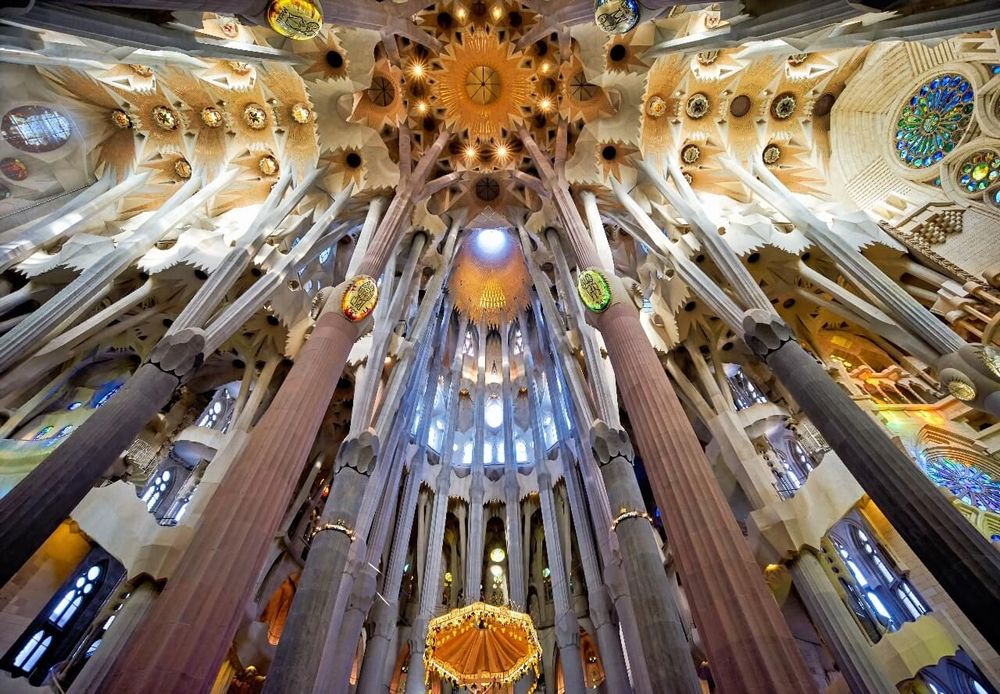
What strikes you first is the contradiction between the exterior and the interior. Seen from the street, the monument is dense, organic, almost overwhelming: towers shaped like rockets, façades saturated with sculptures, pinnacles covered in colorful mosaics. The moment you step through the door, the light changes everything. The interior resembles a petrified forest: branching columns that open like trees toward a skylight filtered with warm and cool colors depending on the orientation of the windows. In the morning, golden light enters through the Nativity façade, to the east. In the late afternoon, the Passion façade is illuminated with red and orange light.
Gaudí conceived the Sagrada Família as a catechism in stone. Each façade tells a moment in the life of Christ: the Nativity to the east (the oldest façade, partially completed during Gaudí's lifetime), the Passion to the west (designed after his death by Josep Maria Subirachs, in a deliberately minimalist style), and the Glory to the south, still under construction. The interior features 18 towers in total, including the central tower of Jesus Christ: its exterior works were completed in 2026 and, at 172.5 meters, it has made the Sagrada Família the tallest church in the world, surpassing Ulm Cathedral. The interior fittings, however, will continue until 2027–2028. Gaudí insisted that the basilica should never exceed the Collserola hill visible on the horizon: for him, no human creation should surpass nature.
On the practical side, tickets cost between 26 and 40 euros depending on the options chosen (tower access included or not). Online booking on the basilica's official website is mandatory during high season, ideally several weeks in advance. Weekday slots at 9am or 6pm are the least crowded. Allow at least 1h30 for a full visit, 2h30 if you climb the Nativity façade towers, from which the view over the Eixample neighborhood and its grid of buildings is breathtaking. The Plaça de Gaudí, directly opposite the basilica, offers the best angle to photograph the towers in their entirety, with a reflecting pool that mirrors them on calm days.
A rarely mentioned detail: the crypt of the Sagrada Família, accessible from the main entrance, houses Gaudí's tomb. The site can be visited freely as part of the entrance ticket. The architect has been buried there since 1926, in the chapel he himself had begun to fit out. It is a particularly contemplative spot, often less crowded than the rest of the basilica. Our Gaudí audio walking tour opens right here, at the Passion façade, before heading down towards the Eixample.
Through Gaudí's Eyes: Parc Güell
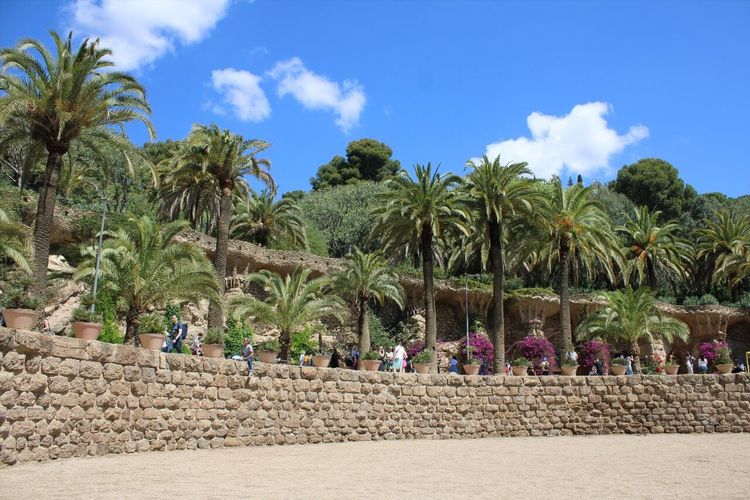
The Parc Güell (Carrer d'Olot, s/n, 08024 Barcelona, rated 4.4/5 on Google from 236,540 reviews) was born from a failed utopia. In 1900, Count Eusebi Güell, Gaudí's patron, commissioned the construction of an aristocratic garden city on the Carmel hill, north of Barcelona. The project called for 60 individual houses surrounded by gardens and landscaped public paths. Only two houses were ever sold, one of which was inhabited by Gaudí himself from 1906 to 1925. In 1926, the city bought the estate and turned it into a public park. What was meant to be a housing estate became one of the most visited sites in Spain.
The monumental zone of Parc Güell, listed as a Unesco World Heritage Site since 1984, is subject to a visitor quota. Admission is paid (10 euros) and must be booked for a specific time slot. The main terrace, the most photographed, offers a panorama over Barcelona and the sea, with in the foreground the famous polychrome mosaic bench that winds for 110 meters in the shape of a serpent. This decorative technique, which Gaudí called trencadís, consists of assembling shards of colored ceramic in a seemingly random but rigorously calculated arrangement. The dominant blue and green tones were chosen to evoke the sky and the sea visible from the terrace.
The lower part of the park is freely accessible: the gardens, the winding paths built on viaducts made from the hill's own stones, the arches leaning like palm trees that support the pathways without ever appearing straight. If you have time, climb up to the cross that crowns the top of the park. The view from up there reveals the geography of Barcelona in its entirety: the sea to the south, the Serra de Collserola to the north, the Eixample spread out like a perfect grid between the two.
Take metro line 3 (Lesseps or Vallcarca station) and walk up via the Baixada de la Glòria, which gives access to the park's secondary entrance. Avoid summer middays and August weekends: footfall triples compared to a Tuesday morning in October. For architecture enthusiasts, the Ryo audio-guided tour Through Gaudí's Eyes connects the architect's main works across the city over 10.5 km, with 22 commented stops and 4h15 of discovery. It is one of the most coherent ways to understand the evolution of his style, from the neo-Gothic of his early years to the organic forms of his final works.
Casa Batlló and La Pedrera: Gaudí Comes Down to the Passeig de Gràcia
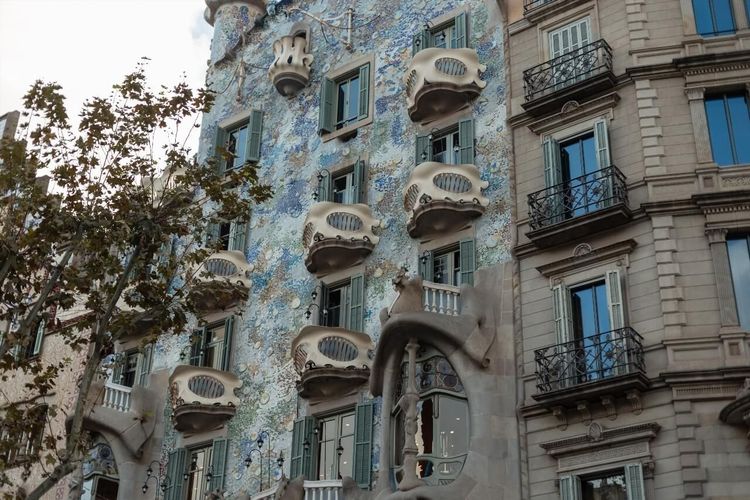
While Parc Güell and the Sagrada Família are Gaudí's major large-scale works, the Passeig de Gràcia concentrates his two most accomplished residential buildings: Casa Batlló (Passeig de Gràcia, 43, 08007 Barcelona, rated 4.7/5 on Google from 210,162 reviews) and Casa Milà, known as La Pedrera. These two buildings are barely 300 meters apart on the same Haussmann-style boulevard, making it the most architecturally dense sequence in Barcelona.
The Casa Batlló (1904–1906) is the most spectacular. Gaudí entirely remodeled an existing building for a textile industrialist, Josep Batlló. The façade is covered in mosaics evoking the reflections of the sea: blue and green ceramic scales whose hue shifts with the angle of the light. The rooftop shaped like a dragon's scaly back, in a deep red, contrasts with the blue façade. Admission costs between 35 and 45 euros depending on the option chosen, but includes access to the dragon terrace and the noble floor, whose swirling plaster ceilings evoke frozen waves.
La Pedrera (1906–1912), built six years later, is more restrained in color but more revolutionary in structure. Gaudí completely abandons load-bearing walls: the undulating limestone façade (hence its popular nickname, "the stone quarry") is simply a shell hung from an interior structure of columns. The rooftop terrace is the highlight of the visit: sixteen chimneys shaped like helmeted warriors encircle a space whose twisting forms seem to defy all ordinary geometry. At sunset, this rooftop takes on an almost lunar dimension. Between June and September, Pedrera de Nit offers concerts on this terrace at weekends.
A practical tip: if you combine both visits, plan a full half-day on the Passeig de Gràcia. Between Casa Batlló at number 43, La Pedrera at number 92, and Casa Lleó Morera at number 35 (modernist façade, free to admire from the street), this boulevard concentrates more Art Nouveau architecture per linear meter than any other thoroughfare in the world. Our audio-guided tour Through Gaudí's Eyes follows the same stretch, from Casa Batlló up the avenue.
The Barri Gòtic, Two Millennia Beneath the Cobblestones
The Barri Gòtic (Plaça de Sant Jaume, 08002 Barcelona, rated 4.6/5 on Google from 533 reviews) is Barcelona's most deceptive neighborhood. Its name suggests a medieval homogeneity that history contradicts: authentic Gothic buildings stand alongside early 20th-century reconstructions and Roman remains buried several meters below street level. The city of Barcelona was founded as a Roman colony under the name Barcino around 15 BCE. The remains of the Roman temple dedicated to Augustus, with its four Corinthian columns still standing 9 meters tall inside a medieval building, are the most striking testament to this.
The Barcelona Cathedral, formally named Catedral de la Santa Creu i Santa Eulàlia, occupies the geographic center of the neighborhood. Its neo-Gothic façade dates from the 19th century, but the interior houses a 14th-century crypt and a 15th-century cloister where thirteen white geese live, in reference to Saint Eulalia, martyred at the age of thirteen according to tradition. Entrance is free outside tourist visiting hours (between 12:30pm and 5:30pm, admission costs 9 euros).
The Plaça Reial, a short walk from the Ramblas, is one of the liveliest squares in the neighborhood. The lampposts at its center were designed by the young Gaudí in 1878, one of his first public commissions, recognizable by their winged helmets symbolizing Mercury. Around the square, arcades shelter bars and restaurants frequented by locals in the evenings. On Sunday mornings, a stamp and coin market sets up from 9am.
Venturing into the maze of alleyways around the Carrer del Bisbe and the Plaça de Sant Felip Neri, you discover a quiet Barcelona, far from the tourist flow of the Ramblas. The Plaça de Sant Felip Neri, with its Baroque church and uneven cobblestones, still bears the marks of Francoist shells from the Civil War: the impact craters in the façade walls have never been filled in. For those who wish to explore this heritage further, see the Ryo article on the historic buildings of Barcelona's Gothic Quarter, which details the lesser-known buildings in the area.
The neighborhood is also known for its craft shops, art galleries, and small cafés tucked away in inner courtyards. Get deliberately lost: the Barri Gòtic reveals itself best to those with no fixed destination, who are willing to turn down the same alley twice before finding their way.
La Rambla and the Boqueria Market
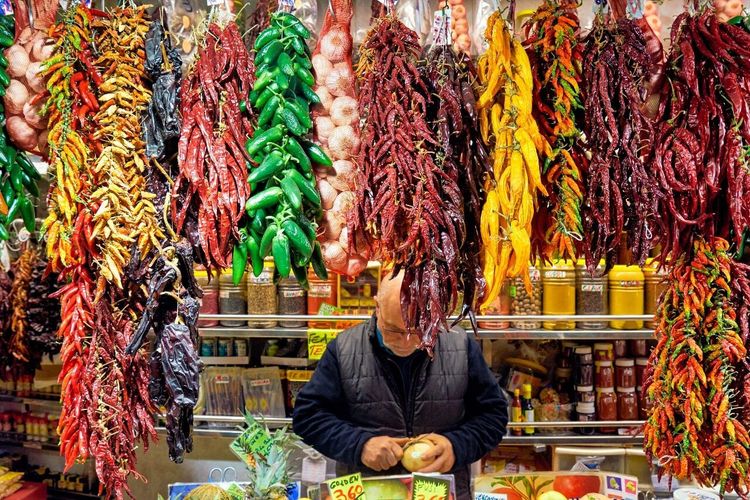
The Ramblas are simultaneously Barcelona's most famous thoroughfare and one of its most disappointing if you expect to find the "real Barcelona" there. This 1.2-kilometer boulevard descending from Plaça de Catalunya to the port is permanently overrun by street vendors, overpriced terraces, and pickpockets. Yet it would be a shame to avoid it entirely.
The flower kiosks that punctuate the boulevard (a vestige of the old tradition of selling cut flowers), the Gran Teatre del Liceu rebuilt after the 1994 fire, and the Palau de la Virreina with its often free contemporary art exhibitions are worth a quick visit. Joan Miró's work embedded in the ground (a colored mosaic medallion halfway along the Ramblas) goes unnoticed by most passersby.
The Mercat de la Boqueria (La Rambla, 91, 08001 Barcelona, rated 4.5/5 on Google from 212,763 reviews), officially named Mercat de Sant Josep de la Boqueria, spreads over more than 2,500 square meters at the midpoint of the Ramblas. The brightly colored hall and stalls of sliced exotic fruits attract hundreds of thousands of photos every year. Tourists now make up the vast majority of visitors, and some traders have adapted their offer accordingly: prices are often twice as high as in neighborhood markets.
By arriving at opening time around 8am on a weekday, you will rediscover the market's original spirit: fishermen dropping off their crates of seafood, market gardeners arranging their stalls of seasonal vegetables, tapas bars at the back preparing their first pintxos. Bar Pinotxo, run for decades by the Bayen family, is one of the city's most reputed counters for a quick breakfast or lunch: squid in its ink, white beans with olive oil, grilled cigalas depending on the day's catch. It is also the quietest hour to walk down La Rambla to the Boqueria with our audio guide in your ears.
El Born: Barcelona's Creative Hub
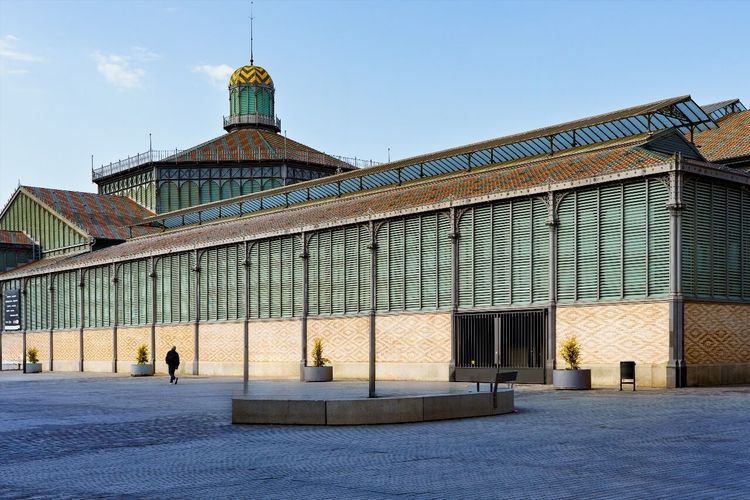
The El Born neighborhood is what the Marais is to Paris, or what Shoreditch is to London: a former working-class and artisan district that has evolved into a creative hub without entirely losing its authenticity. The streets around the Carrer del Comerç and the Passatge del Bisbe are lined with local designer boutiques, independent art galleries, jewelry workshops, and specialist bookshops. At night, natural wine bars and cocktail bars attract a local thirty-something crowd that coexists with passing tourists.
At the heart of the neighborhood, the Palau de la Música Catalana is one of the rare concert halls to have been granted Unesco World Heritage status. Designed by architect Lluís Domènech i Montaner between 1905 and 1908, the building is a condensed expression of Catalan Art Nouveau: the concert hall's stained-glass windows allow natural light to pour in through a skylight of 2,000 pieces of colored glass, a unique technical feat for the time. Concerts take place there almost every evening, from classical to flamenco and jazz. Tickets start at 20–25 euros.
The church of Santa Maria del Mar, built between 1329 and 1383 without the support of the nobility, is often described as Barcelona's finest Gothic church for the purity of its proportions. It was erected by the bastaixos, the port dockers who carried the cut stones from the Montjuïc quarries to the building site. Its central nave, tall and luminous, contrasts with the decorative exuberance of the Gothic cathedral: here, beauty lies in sobriety. Carrer de Montcada, just behind, is one of the best-preserved medieval streets in the city, lined with 14th- and 15th-century Gothic palaces.
Montjuïc, the Hill That Overlooks Everything
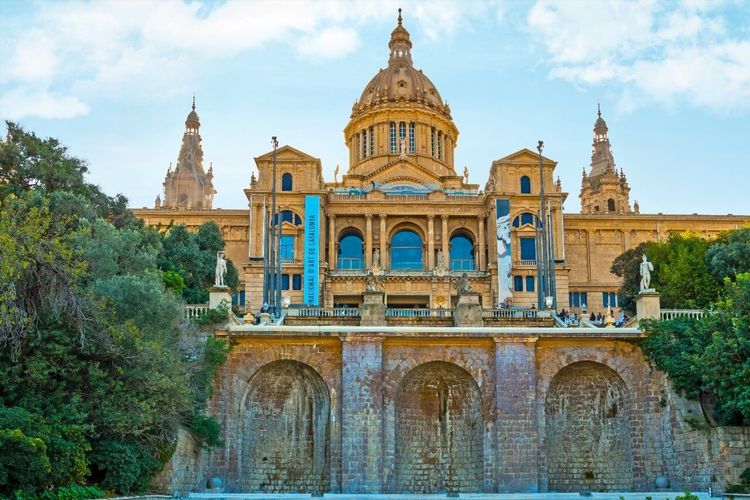
The hill of Montjuïc rises 184 meters above sea level, on the port side. It concentrates on its own several major museums, the 1992 Olympic facilities, a castle, botanical gardens, and one of the best panoramas over the city. It can be reached from Plaça de Espanya by cable car, from the port via the Barcelona aerial tramway, or on foot from the Poble Sec neighborhood via staircases that cross the Laribal gardens.
The Museu Nacional d'Art de Catalunya (MNAC), housed in the national palace built for the 1929 Universal Exhibition, holds the world's most important collection of Romanesque art. Mural frescoes removed from Pyrenean churches between the late 19th and early 20th centuries — to protect them from moisture and vandalism — line the exhibition rooms. The colors have retained a surprising intensity after eight centuries. The collection also includes Gothic works, Renaissance paintings, and a room dedicated to Catalan modernism.
The Fondació Joan Miró, built by architect Josep Lluís Sert in 1975, is one of the most naturally lit museums in the city. Miró himself insisted that natural light enter the exhibition rooms. More than 14,000 works are held in the collection, of which around 250 are on permanent display. The sculptures on the outdoor terrace are freely accessible from the gardens and offer an unusual combination of primary forms and sweeping views over the city.
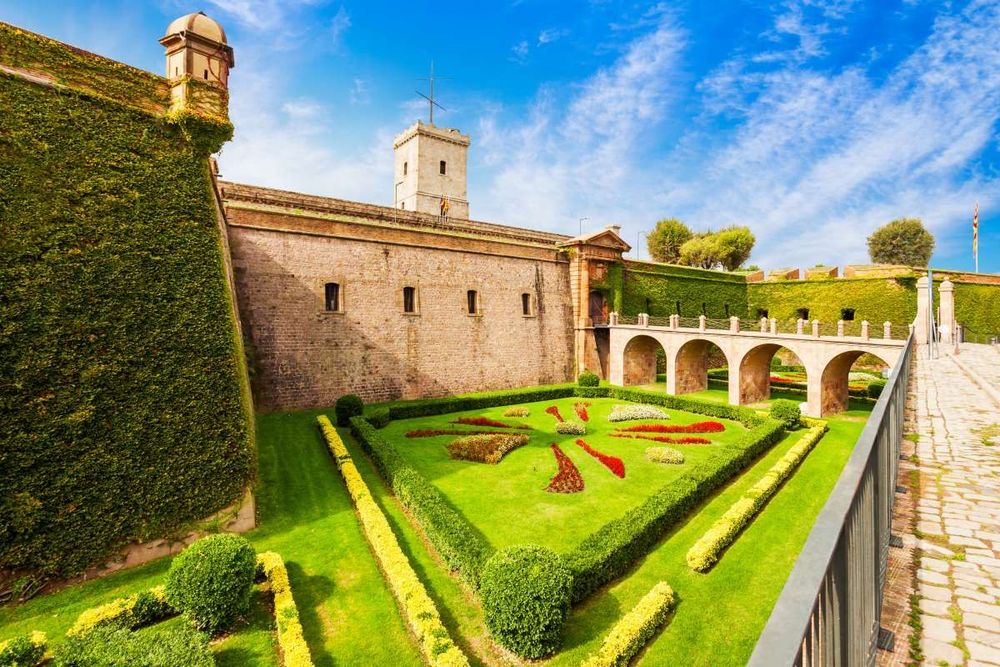
The Montjuïc Castle, a 17th-century military fortress turned political prison under Franco, is now open to the public. The restored moats and ramparts offer 360-degree views over the sea, the port, and the city. Entrance is free on Sundays after 3pm. The Magic Fountain of Montjuïc, at the foot of the hill, hosts sound and light shows on Thursday, Friday, and Saturday evenings between June and September. For everything the hill has to offer, the Ryo article on visiting Montjuïc Park (Avinguda de l'Estadi, 60, 08038 Barcelona, rated 4.6/5 on Google from 354 reviews) details the routes and up-to-date opening hours.
Barceloneta and the Seafront
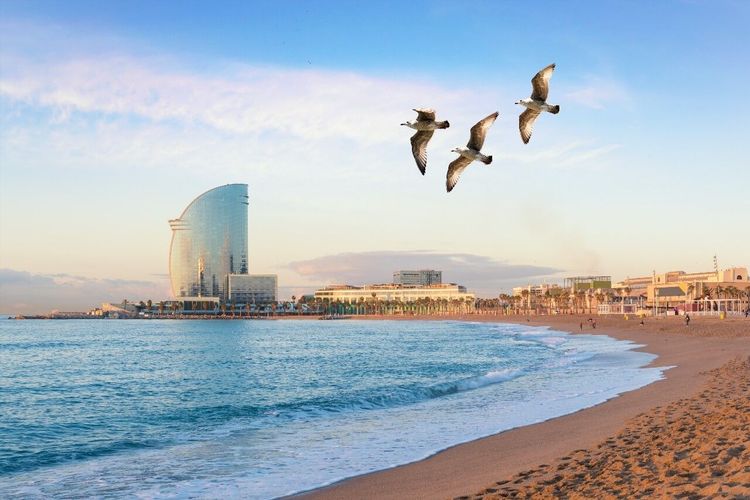
The Barceloneta (Passeig Marítim de la Barceloneta, 08003 Barcelona, rated 4.4/5 on Google from 15,719 reviews) is Barcelona's historic fishing neighborhood, built in the 18th century on a narrow strip of sand between the port and the sea. Its orthogonal grid plan is the work of engineer Juan Martín Cermeño, who designed it in 1753 to rehouse the Raval residents displaced during the construction of the Citadel. Today, the narrow alleyways of the Barceloneta still shelter a few fishing families, but mostly beach bars, seafood restaurants, and rental apartments.
The Barceloneta beach stretches about 1.1 kilometers of fine sand. It is the most accessible by public transport (Barceloneta metro, line 4), the best known, and therefore the most crowded in summer. For more space, head toward the Mar Bella or Nova Icaria beaches, accessible on foot or by bike along the Passeig Marítim, the seafront promenade that runs along the waterfront for several kilometers.
The Olympic Port, built for the 1992 Games, is a 20-minute walk to the northeast. The two iconic towers, the Torre Mapfre and the Torre de les Arts, mark the port entrance from the sea. Frank Gehry's golden bronze fish, a monumental sculpture installed in 1992, is an unmissable landmark between the two towers. The marina is home to several seafood restaurants, generally cheaper than those of the Barceloneta directly on the beach.
Camp Nou, Temple of World Football
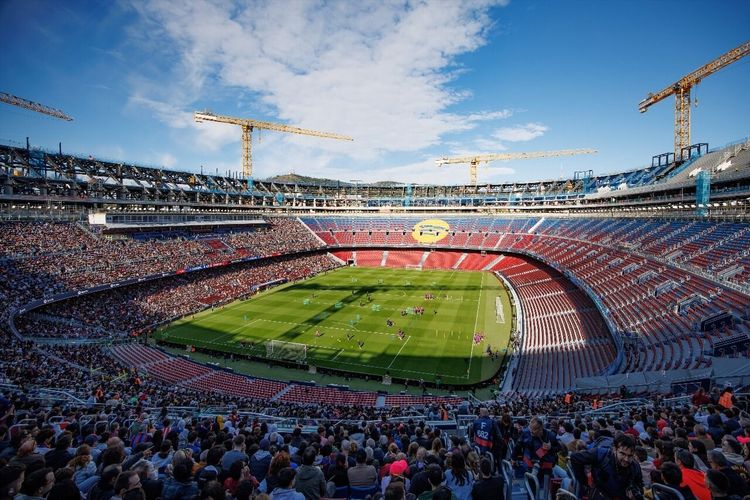
The Camp Nou is Europe's largest stadium, with a historic capacity of 99,354 seats. Since 2023 it has been undergoing a major renovation project, the Espai Barça project, which is set to bring its capacity to 105,000 seats. The stadium has been reopening in phases since late 2025, with a still-reduced capacity in 2026, and full delivery is now expected in 2027. FC Barcelona inaugurated this stadium in 1957, replacing the Les Corts stadium, which had become too small. Home matches in La Liga or the Champions League generate an atmosphere that is hard to describe: tens of thousands of people singing the Barça Catalan anthem in unison is a moment that transcends sport itself.
The FC Barcelona museum, the Barça Immersive Tour (formerly the Museu del Barça), is one of the most visited museums in Spain. Trophies, historic jerseys, locker room reconstructions, and augmented-reality documentaries tell the story of a club founded in 1899 by Swiss and British expatriates. Tickets also grant access to the pitch and the stands, subject to the progress of ongoing construction works. Allow 30 to 35 euros for the museum alone, 40 to 50 euros with the stadium tour.
If you are in Barcelona for a home match, prioritize buying official tickets on the club's website. Resellers around the stadium regularly offer counterfeit or heavily overpriced tickets.
The Essential Museums of Barcelona
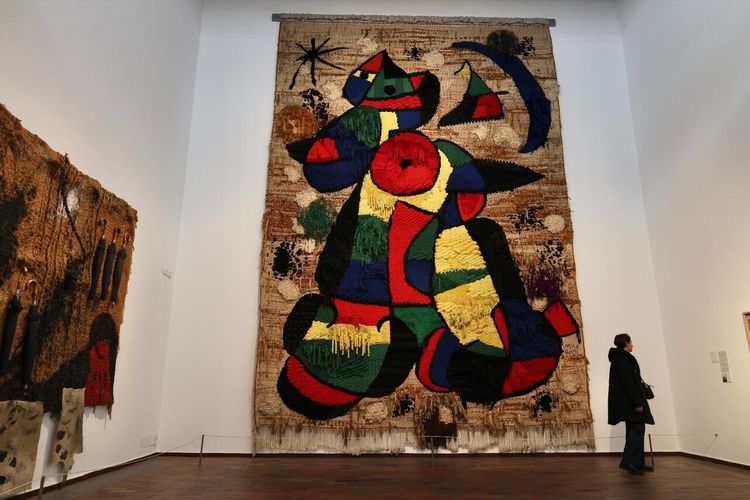
Barcelona has more than fifty museums. Here are the three that deserve half a day each, in addition to the MNAC already mentioned in the Montjuïc section.
The Museu Picasso (Carrer de Montcada, 15-23, 08003 Barcelona, rated 4.4/5 on Google from 39,359 reviews) occupies five medieval palaces on the Carrer de Montcada, in El Born. The collection includes more than 4,000 works, whose main interest lies in Picasso's early output: he lived in Barcelona from the age of 13 to 23, and this Catalan period profoundly shaped his style. The series of 58 paintings inspired by Velázquez's Las Meninas is the collection's centerpiece. Tickets cost 14 euros. On the first Sunday of the month, entry is free, with queues visible from 9am.
The CosmoCaixa (science museum) is one of the most spectacular science museums in Spain. Its centerpiece is a fragment of Amazon rainforest recreated under real conditions in a 1,000-square-meter glazed building: temperature, humidity, and tropical fauna included. Caimans and anacondas cohabit with exuberant vegetation. Admission costs 6 euros for adults, with a 50% reduction for city residents.
The Museu d'Història de Barcelona (MUHBA) provides access to Roman archaeological excavations beneath the Plaça del Rei, in the Barri Gòtic. You can see the streets, garum workshops (fermented fish sauce), and cisterns of a Roman city of 10,000 inhabitants, accessible beneath the present-day medieval Barcelona. A fascinating shortcut to the city's origins, at an admission price of 7 euros.
Gastronomy and Markets: The Flavors of Catalonia
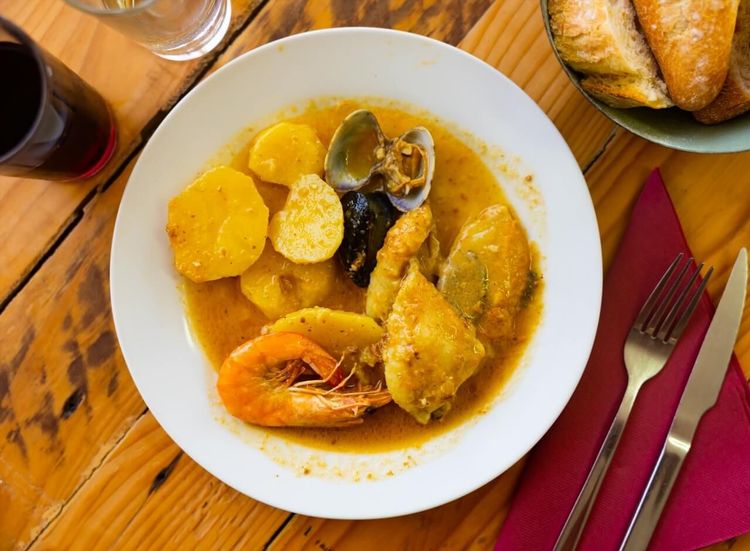
Catalan cuisine is not Spanish cuisine. It has its own codes: pa amb tomàquet (bread rubbed with tomato and olive oil), cargols (snails cooked over embers), fideuà (similar to paella but made with vermicelli instead of rice), calçots (grilled spring onions with romesco sauce, available from October to March), and wines from the Penedès or Priorat. For a comprehensive overview of these specialties, the Ryo article on the culinary flavors of Barcelona lists the iconic dishes and the addresses where to find them.
For culinary shopping off the tourist trail, three markets are worth the detour. The Mercat de Sant Antoni (Carrer del Comte d'Urgell, 1, 08011 Barcelona, rated 4.4/5 on Google from 38,458 reviews), recently renovated after seven years of works, has once again become the quintessential neighborhood market for the residents of the Eixample Esquerra. Fruit, vegetables, fish, and meat at reasonable prices, with a Sunday morning dedicated to second-hand booksellers and flea market stalls.
The Mercat de l'Abaceria in Gràcia and the Mercat de Sarrià in the neighborhood of the same name are two local markets catering primarily to a neighborhood clientele. Outside the markets, colmados (Catalan delicatessens) offer preserves, charcuterie, and artisan cheeses unavailable in supermarkets.
Day Trips from Barcelona: Exploring the Surroundings
Catalonia is one of Spain's richest regions in terms of geographic and heritage diversity. From Barcelona, public transport or a rental car opens up remarkable possibilities within a two-hour radius.
Montserrat is the most emblematic destination outside Barcelona, 50 minutes by FGC from Plaça Espanya station, followed by the rack railway. The massif with its needle-shaped eroded rocks, whose Sant Jeroni summit reaches 1,236 meters, is home to the Benedictine monastery of Santa Maria de Montserrat, founded in the 11th century. The Moreneta (the Black Virgin), a 12th-century Romanesque statue kept in the basilica, is a pilgrimage site for millions of Catalans. Beyond the monastery, hiking trails cross the massif toward isolated hermitages and vertiginous viewpoints. Take the funicular from the monastery up to the Sant Joan hermitage: on a clear day, the view over the Catalan plain reveals the Pyrenees to the north and the sea to the south.
Sitges is 40 minutes by Rodalies R2 from Passeig de Gràcia. The chicest seaside resort in Barcelona's surroundings unfolds its white old town on a headland facing the sea. The modernist houses lining the central streets were built by the americanos, those Catalans who made their fortunes in Cuba and Mexico in the 19th century and returned home with wealth to invest. Its 17 beaches stretch over 4 kilometers, with water generally cleaner than that of Barcelona's beaches. In February, the Sitges Carnival is one of the most festive and colorful in Spain.
Gérone (Plaça de la Independència, 17001 Gérone, rated 4.6/5 on Google from 8K reviews) is 1 hour away by AVE high-speed train or by coach. This medieval city has a remarkable Gothic cathedral, a fully walkable fortification wall, and a medieval Jewish quarter (El Call) among the best-preserved on the Iberian Peninsula. Gérone's old town served as a filming location for several seasons of Game of Thrones. Food enthusiasts will note that the city is home to Celler de Can Roca, regularly named among the world's best restaurants.
Tarragone is 1h15 by train or 1 hour by car. The former Roman capital of Tarraco, listed as a Unesco World Heritage Site, retains a 2nd-century amphitheater by the sea, still visible with its tiered seating. The Roman Circus, partially preserved beneath the streets of the city center, could hold up to 30,000 spectators for chariot races. The Archaeological Promenade runs along the Roman ramparts that still encircle part of the upper city.
Wine lovers will appreciate the Penedès, 45 minutes by car or 1 hour by train toward Sant Sadurní d'Anoia, Spain's main cava-producing region. Estates such as Codorníu or Freixenet offer cellar tours with tastings. For full-bodied red wines grown on black slate terraces, the Priorat (2 hours by car) produces some of Spain's most powerful and award-winning wines.
Where to Stay in Barcelona
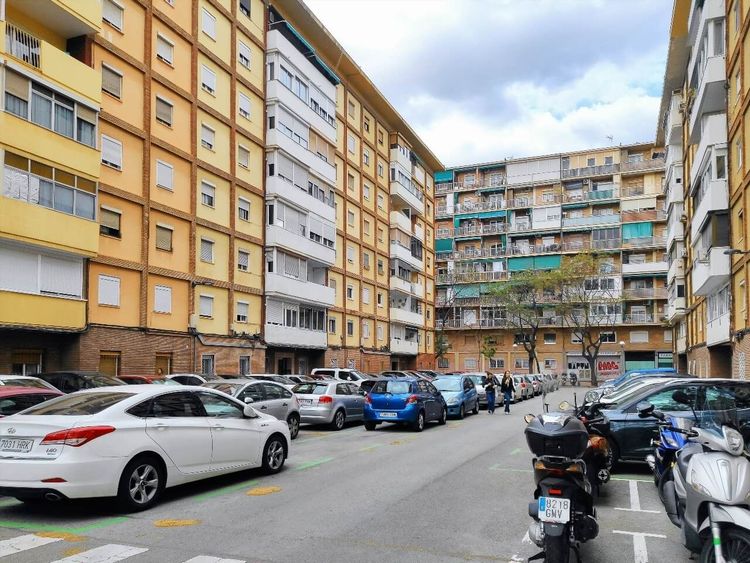
Barcelona is divided into very distinct neighborhoods, and the choice of accommodation depends as much on your budget as on your itinerary.
The Barri Gòtic and El Born put you within walking distance of all the medieval monuments and the main attractions in the center. Accommodation options are plentiful, from youth hostels to design boutique hotels, but nighttime noise can be an issue on the busiest streets. The Eixample (the bourgeois 19th-century grid) is the most spacious neighborhood, with many apartments, mid-range hotels, and easy metro access to the whole city. Gràcia, the bohemian neighborhood north of the Eixample, is more residential and quieter, popular with travelers seeking a local atmosphere.
For the beach, the Barceloneta is the most direct option, but prices there have risen sharply in recent years. The neighborhoods of Poble Sec (at the foot of Montjuïc) and Sant Antoni offer a good balance between peace and quiet, transport links, and an authentic neighborhood feel. Average prices in a 3-star hotel range from 100 to 180 euros per night in high season (June–September), with spikes above 250 euros during major events such as the Mobile World Congress in February or Primavera Sound in June.
Practical Tips for Your Stay in Barcelona
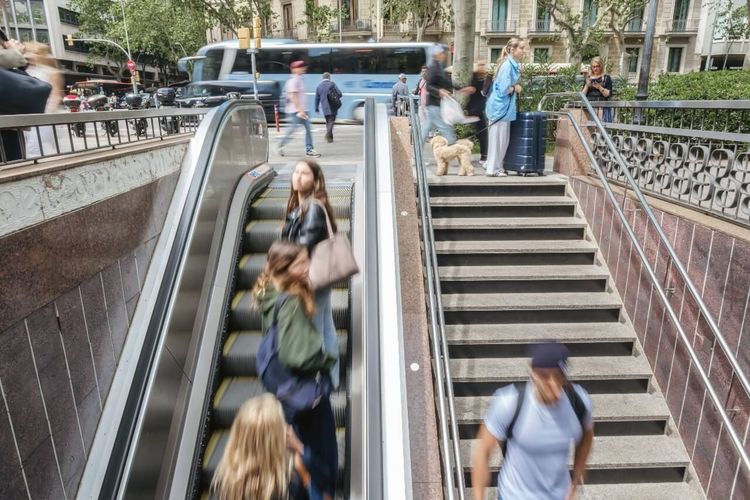
Transport: the TMB metro network covers most of the city across 8 lines. The T-Casual (formerly T-10), a book of 10 trips for around 13 euros (zone 1, 2026 fare), is valid on the metro, TMB buses, trams, and the Montjuïc funicular. The T-Día (unlimited day pass at 11.20 euros) is worth it if you plan more than 4 journeys in a day. El Prat airport is connected to the city center by metro line L9 Sud (32–35 minutes, 5.15 euros) or by the Aerobus (35 minutes, 6.75 euros).
Safety: Barcelona ranks among European capitals with the highest rates of pickpocketing. Areas to watch out for are the Ramblas, the Barri Gòtic in the evening, the Barceloneta at weekends, and the metro during rush hour. Carry valuables in a crossbody bag worn in front of you. Never leave your phone or wallet on a café terrace table unattended.
Spanish mealtimes: restaurants open for lunch between 1:30pm and 3:30pm, and for dinner between 9pm and 11pm. Arriving at a Barcelona restaurant at 7pm for dinner will often mean you are the only customer. Shops and museums generally close between 1:30pm and 4:30pm Monday to Thursday, but remain open all day Saturday.
Tourist pass: the Barcelona Card (from 50 euros for 3 days) includes unlimited transport and discounts at more than 100 museums and attractions. Check each attraction individually before buying: if your itinerary focuses on two or three museums, individual tickets can sometimes work out cheaper.
Language: Catalan is the official language of Barcelona (alongside Spanish). Signage, menus, and everyday exchanges are often in Catalan. A few appreciated words: gràcies (thank you), bon dia (good morning), per favor (please). Spanish is understood everywhere, and French is spoken in many tourist hotels and restaurants.
Best time to visit: spring (April–May) and autumn (September–October) offer the best combination of pleasant temperatures (20–25°C) and moderate crowds. Summer is the peak tourist season, with queues and regular urban heat waves. Barcelona's winter is mild (10–15°C), with little rainfall, ideal for museums and walks.
FAQ
How much time do you need to visit Barcelona?
Three days are enough to cover the main landmarks (Sagrada Família, Parc Güell, Barri Gòtic, Montjuïc) without rushing. Five days give you time to explore less touristy neighborhoods like El Born and Gràcia, take a day trip to Montserrat or Sitges, and dedicate half a day to museums. A week lets you combine everything at a leisurely pace, including Gérone or Tarragone. Barcelona always rewards longer stays: the city reveals itself gradually, between grand monuments and quiet alleyways.
Is visiting the Sagrada Família paid?
Yes. The basic entrance costs 26 euros for an adult and includes access to the nave, the crypt, and the integrated museum. Access to the Nativity façade towers costs 36 euros, access to the Passion façade towers 38 euros. The ticket combining full access and towers costs 40 euros. Online booking on the basilica's official website is mandatory, especially from March to October. There is no free entry to the Sagrada Família.
How do you get around Barcelona?
The TMB metro is the fastest and most affordable option. Buses fill in coverage in neighborhoods not served by the metro. For walking, the city is very manageable on foot between the Barri Gòtic, El Born, the Barceloneta, and the Passeig de Gràcia: allow 20 minutes on foot between the Barri Gòtic and Gaudí's houses on the Passeig de Gràcia. Bicing self-service bikes are reserved for Barcelona residents; tourists can use independent rental services by the day.
What day trips can you take from Barcelona?
Montserrat (mountain massif and monastery) is the most popular, reachable in 1h30 round trip from Plaça d'Espanya. Sitges (beaches and modernist old town) is ideal in summer, 40 minutes away on the Rodalies R2. Gérone (medieval and gastronomic) suits cultural travelers, 1 hour away by high-speed train. Tarragone (Roman ruins listed by Unesco) is perfect for history enthusiasts, 1h15 by train. Choose one destination per day to avoid overloading your schedule.
Is Barcelona safe for tourists?
Barcelona is a generally safe city, but it ranks among European capitals with the highest rates of pickpocketing. Areas to watch out for include the Ramblas, the metro during rush hour, beaches in summer, and restaurant terraces. Simple precautions are enough: wallet in your front pocket, phone in a zipped bag, and vigilance in crowded areas. Physical assaults against tourists remain exceptional.
Is it better to book attractions in advance?
Yes, for the Sagrada Família, Parc Güell (monumental zone), and Casa Batlló, online booking is essential from March to October and strongly recommended the rest of the year. For museums such as the Museu Picasso or the MNAC, online booking helps avoid queues but is not always mandatory. For fine-dining restaurants (Celler de Can Roca in Gérone, for example), tables are booked several months in advance.
Barcelona is not simply visited — it accumulates: the light filtering through the Sagrada Família's skylight at ten in the morning, the view of the sea from the ramparts of Montjuïc castle, the smell of charcoal at the Bar Pinotxo counter, the background hum of a Barceloneta terrace at sunset. Activities in Barcelona and its surroundings are too numerous to exhaust in a single stay, which is why so many travelers keep coming back.
To explore the city at your own pace, between iconic landmarks and lesser-known alleyways, the Ryo audio guide to Barcelona offers 27 commented stops over 6.4 km — a way to immerse yourself in the depth of the city without having to plan everything in advance. Enjoy your discovery.
À lire également