© Shutterstock
 Votre guide Ryo
Costa Brava Calanques: the Most Beautiful Coves to Discover in 2026
Between Portbou and Blanes, the Costa Brava calanques hide along nearly 200 kilometers of rocky coastline, where the road stops dead and only a coastal path, or a small boat, allows you to reach the water. It is here, in the gaps between the pine trees and the pink granite, that the most beautiful Catalan coves are found: inlets of a few dozen meters of sand or pebbles, invisible from the road and often deserted after 6 p.m. This Catalan coastline inspired Dalí at Portlligat and continues to draw divers to a marine reserve where grouper and barracuda swim just a few strokes from the shore.
Twelve stops structure this guide, from Cap de Creus to Tossa de Mar and Lloret: a cove accessible only after a 45-minute walk, another where car access remains free all year round, a reserve classified since 1990 where snorkeling requires no tank. At Ryo, we have been mapping this kind of Mediterranean escape for several years, and the Costa Brava is one of the coastlines that has surprised us most with the density of its preserved coves.
1. Cap de Creus: Cala Culip and Cala Jugadora, the Volcanic Coves of the Natural Park
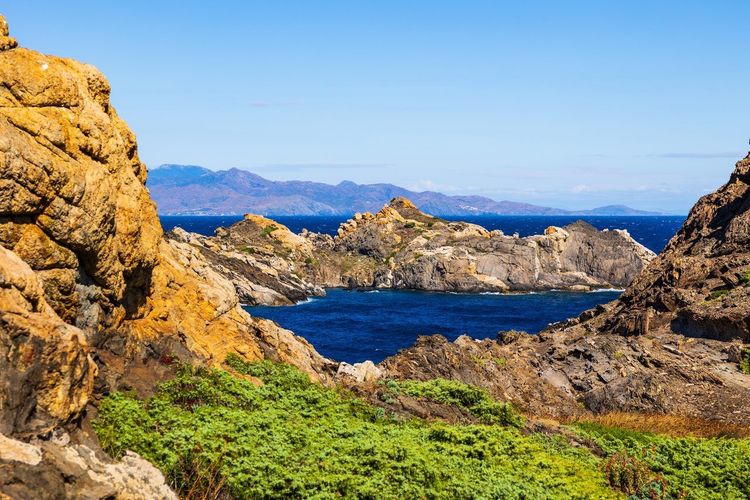
Cap de Creus is the first protected area in Catalonia to combine land and marine status, declared a natural park in 1998 over nearly 14,000 hectares. The landscape is unlike any other on the Costa Brava: schist rocks twisted by erosion, sculpted into waves of grey and pink stone that plunge directly into turquoise water. Cala Culip is nestled about 45 minutes' walk from the Cadaqués car park, along a stony path that hugs the cliff without ever straying far from it.
The place owes part of its fame to Dalí, who frequented the now-vanished Lipsi bar that once stood on this very cove in the 1970s. Today, only the rock remains, along with a handful of kayakers who have come from Port de la Selva. A little further north, Cala Jugadora (Cap de Creus, 17488 Cadaqués, rated 4.5/5 on Google based on 50 reviews) offers an almost identical playground but more enclosed, with two natural basins that the tide fills and empties alternately throughout the day.
Bring closed-toe shoes: the volcanic ground easily slices through sandals, and there is no natural shade before midday. If the walk does not appeal to you, several companies offer a boat excursion from Cadaqués that runs along both coves without docking — a practical option on a day when the tramontane, the strong wind that blows across this exposed headland, is gusting. Visitors who set out early in the morning have a good chance of enjoying the place to themselves, which is no longer really the case after 11 a.m. in high summer.
2. Portlligat, the Cove Where Dalí Lived
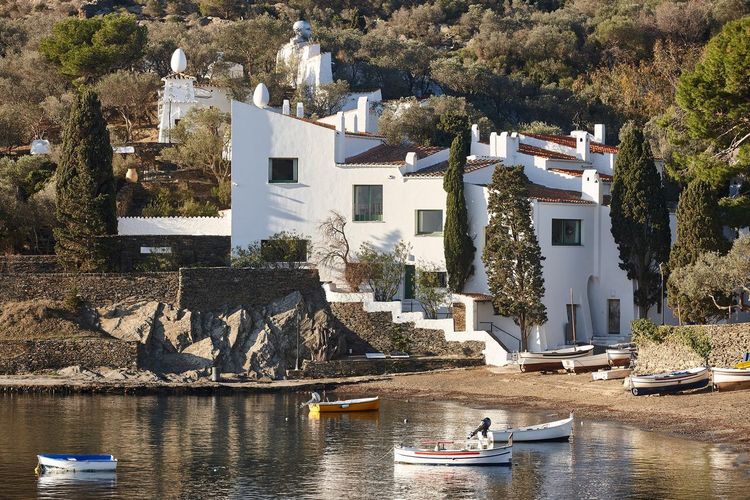
Just 1.5 kilometers from Cadaqués, the bay of Portlligat (17488 Cadaqués, rated 4.5/5 on Google based on 3.2K reviews) closes around a small pebble cove where Salvador Dalí lived for nearly fifty years in a labyrinthine house made from old fishermen's huts. The water is almost always calm here, sheltered by the horseshoe shape of the bay, making it one of the few coves in the region suitable for swimming with young children.
The house-museum can be visited by reservation, but the cove itself remains freely accessible all year round. If you enjoy walking to the sound of an audio guide, bear in mind that Ryo is developing exactly this kind of itinerary for villages along the Mediterranean coast, with local anecdotes woven throughout the walk rather than a simple paper map.
3. Cala Montgó, the Family Bay of L'Escala
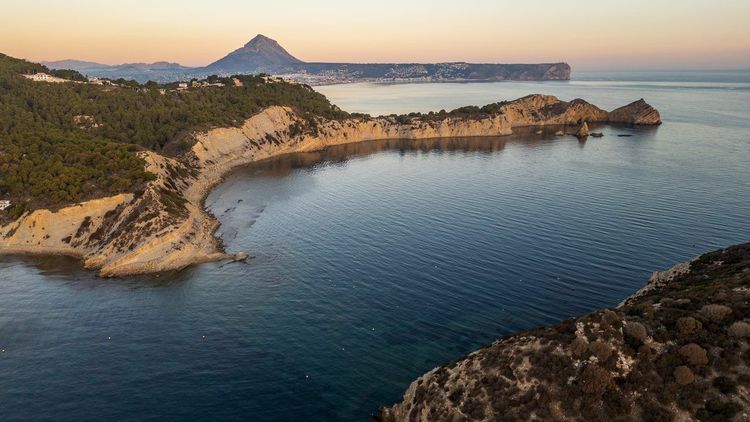
Cala Montgó (17130 L'Escala, rated 4.6/5 on Google based on 774 reviews) stands in contrast to the previous coves by its size: a wide, open and shallow fine-sand bay, 3 kilometers from the center of L'Escala. It is the easiest cove to reach as a family, with direct parking, showers and several restaurants right on the sand.
The seabed slopes gently for about thirty meters before reaching a depth of 2 meters, making it a popular spot for beginner paddleboarding. In high season, arriving before 9:30 a.m. is the only way to avoid queuing for the car park.
4. Aiguablava and Fornells, the Postcards of Begur
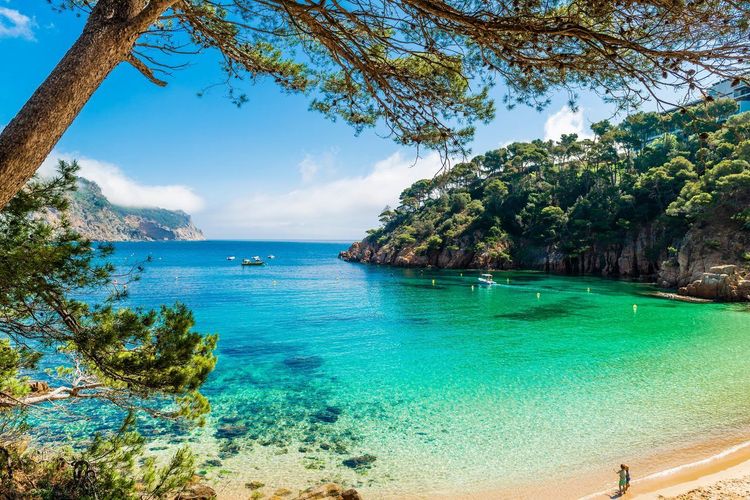
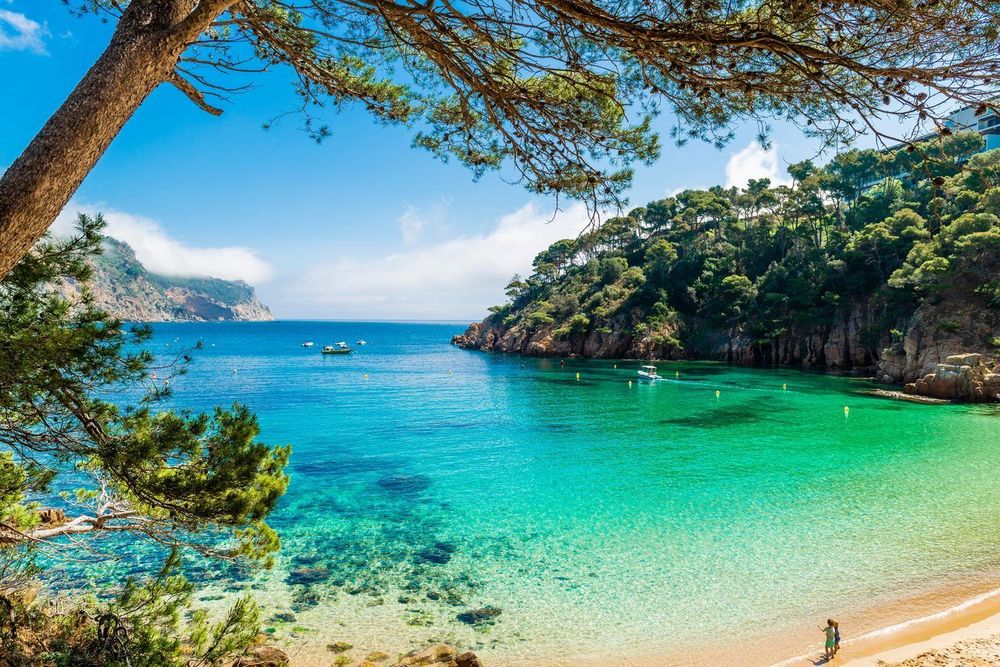
If a single image were to sum up the most beautiful coves in the region, it would probably be that of Aiguablava: a deep blue expanse of water framed by a pine forest that sweeps down to the sand, with the Parador d'Aiguablava perched on the neighbouring cliff. The Catalan name literally means "blue water", and the colour comes from a light rocky seabed that reflects light differently from classic sandy beaches.
A few minutes' walk away, Platja de Fornells (17255 Begur, rated 4.5/5 on Google based on 180 reviews) occupies a more intimate cove, tucked between two rocky headlands and lined with old villas. Both coves share the same paid parking area in summer, which pushes most visitors to choose one over the other depending on the time they arrive.
The coastal path (camí de ronda) connects the two coves in about fifteen minutes of shaded walking, a pleasant alternative to the road when the car park is full. Budget slightly more for dining here: Begur's reputation attracts visitors accustomed to the high prices found along the coast, though the quality of the food does not always follow the same upward curve.
5. Sa Tuna and Aiguafreda, the Quiet Charm of Begur
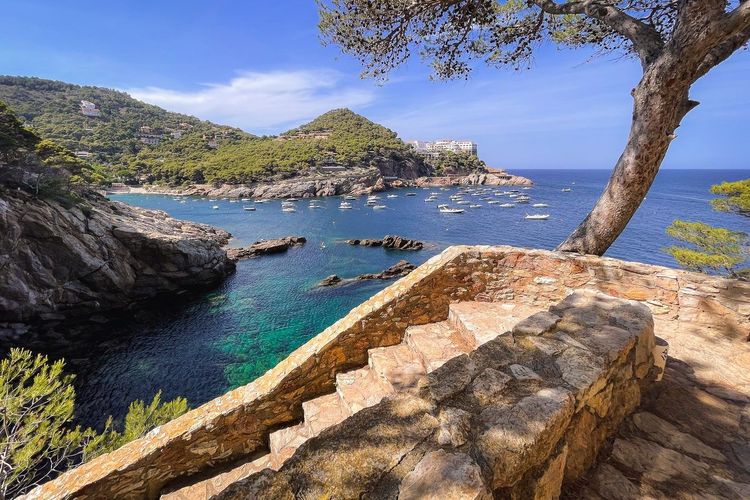
Less photographed than Aiguablava, Sa Tuna and Aiguafreda (17255 Begur, rated 4.5/5 on Google based on 900 reviews) retain a fishing village character that the municipality of Begur has broadly preserved. Sa Tuna lines up a handful of colourful boats pulled up on the sand in front of a row of low houses, while Aiguafreda, a kilometer further on, opens onto a wider cove flanked by former shipyards converted into restaurants.
The walk between the two along the coastal path takes about 25 minutes and crosses a Mediterranean scrubland fragrant with wild rosemary. Parking is limited to a few dozen spaces at Sa Tuna: after 10 a.m. in July and August, it is better to park in Begur and walk down.
6. Illes Medes and Cala Pedrosa, the Marine Reserve of L'Estartit
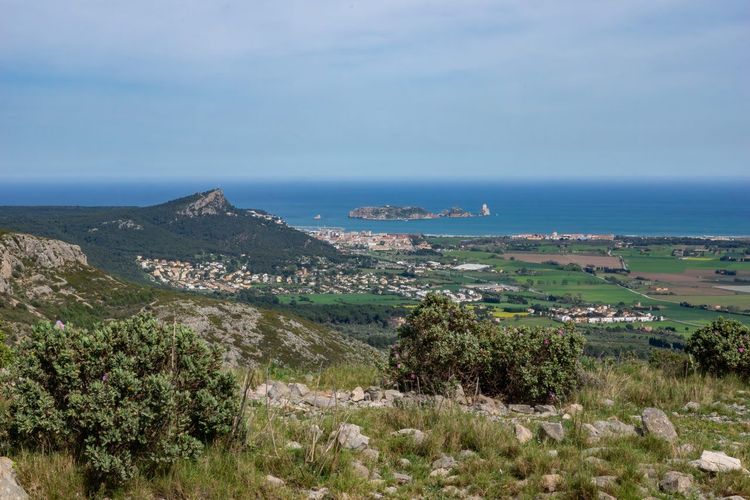
Off the coast of L'Estartit, the Illes Medes form an archipelago of seven islets classified as a marine nature reserve since 1990, one of the most biodiverse protected zones in the western Mediterranean with more than 1,300 recorded species. Diving here is regulated: a daily limit on the number of divers, rotating sites and anchoring prohibited outside designated buoys.
On the coastline directly opposite, Cala Pedrosa offers a free glimpse of this marine richness just a few meters from the shore, through simple snorkeling, with no reservation or diving equipment required. Visibility here often exceeds 15 meters in calm conditions — a rare figure along this coastline.
7. Cala Giverola, the Semi-Private Cove of Tossa de Mar
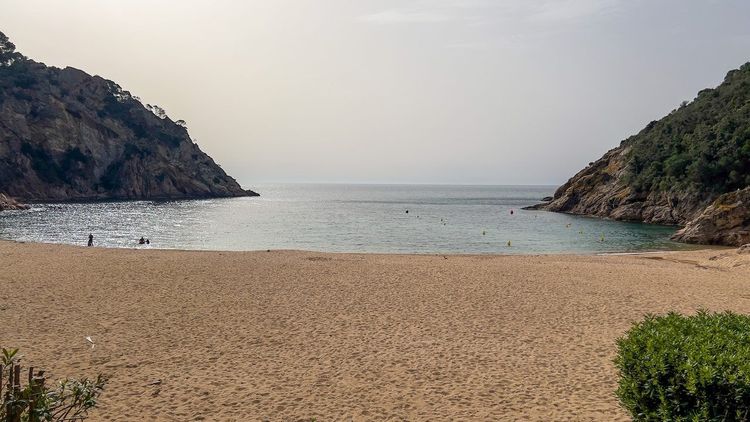
Cala Giverola (17320 Tossa de Mar, rated 4.4/5 on Google based on 2,465 reviews) largely belongs to a hotel complex, but public access remains guaranteed by Spanish coastal law, which prohibits the total privatization of a beach. The cove, tucked between two wooded cliffs, maintains surprisingly clear water for a site as busy as this one in season.
A staircase carved into the rock leads directly from the car park down to the cove — a rare access comfort compared to the wilder coves of Cap de Creus. Families with pushchairs will appreciate this detail, even if the sandy area is modest outside the low season.
8. Cala Pola, Between Pine Trees and Turquoise Waters
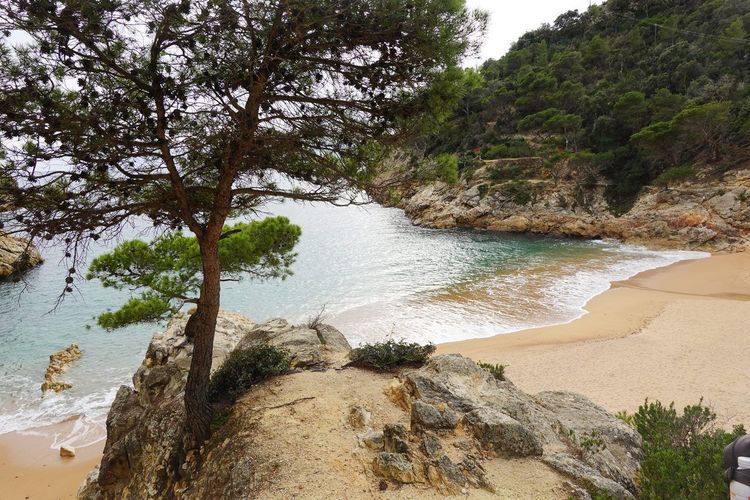
Halfway between Tossa de Mar and Lloret, Cala Pola (17320 Tossa de Mar, rated 4.5/5 on Google based on 1,238 reviews) occupies a narrow notch surrounded by umbrella pines, with an 87-step staircase that puts off a portion of passing visitors. Those who persevere find translucent water and a pebble bed that stays clear even in bright sunshine, a fitting reward if you're stretching a Barcelona trip beyond Ryo's audio-guided tour of the city itself.
Parking is on the roadside on a small area limited to about thirty vehicles, which makes the cove quieter than its neighbours from mid-September onwards.
9. Cala Llevadó, the Largest Cove near Tossa
Cala Llevadó (17320 Tossa de Mar, rated 4.3/5 on Google based on 935 reviews) stands out for its length — nearly 200 meters of sand and fine pebbles, compared to 40 to 60 meters for most of the previous coves. A campsite of the same name occupies part of the elevated ground above, which explains the heavier footfall in July and August.
Car access is direct, with free parking outside the season — a clear advantage over coves that can only be reached on foot.
10. Cala d'en Carlos, the Hidden Gem of Lloret de Mar
Away from the tourist bustle of Lloret de Mar, Cala d'en Carlos (17310 Lloret de Mar, rated 3.7/5 on Google based on 27 reviews) remains a little-visited pebble cove, wedged between two private properties and accessible via a narrow path from the corniche road. Its dead-end configuration naturally limits the number of visitors.
The complete absence of services — no shower, no refreshment stand — makes it the closest thing to a secret beach within a 10-kilometer radius of Lloret. Bring water and a parasol: nothing is available on site.
11. Getting Between the Coves: Boat, Car or Coastal Path
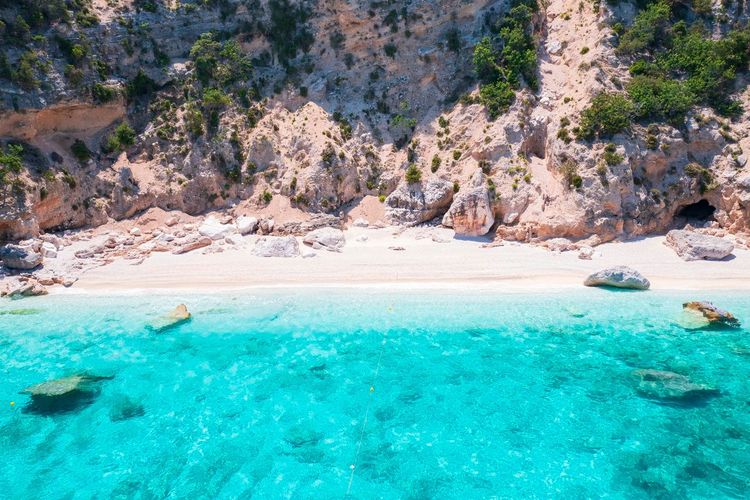
The question comes up in almost every search related to the map of coastal coves: how do you visit several coves in a row without spending your day stuck in traffic on the N-II? Three options coexist, each with its own constraints.
The car remains the most flexible option for covering long distances — between Cadaqués and Tossa de Mar, for example — but the car parks at the most popular coves, Aiguablava chief among them, fill up by 10 a.m. in July and August. Always have a backup plan within a 15-minute walk.
The boat, departing from Roses, L'Estartit or Cadaqués, allows you to take in 4 to 6 coves in half a day without worrying about parking — a particularly well-suited solution at Cap de Creus, where several coves are otherwise only accessible on foot. Expect to pay between 20 and 35 euros per adult for a 3-hour guided excursion.
The Catalan coastal path, the camí de ronda, runs along a good portion of the coastline and connects many coves on foot, especially throughout the Begur to L'Estartit stretch. It is the cheapest option and often the most memorable, provided you are willing to walk 1 to 3 hours depending on the section chosen, and to set off with enough water — shade being scarce on the rocky sections exposed to the south.
For visitors who have come without a vehicle, Moventis Sarfa intercity buses serve the main coastal towns, but rarely the coves themselves: a walk of between 15 and 45 minutes is then needed depending on the case — a detail that many travelers discover too late.
12. Map, Weather and Budget: Planning Your Cove Tour
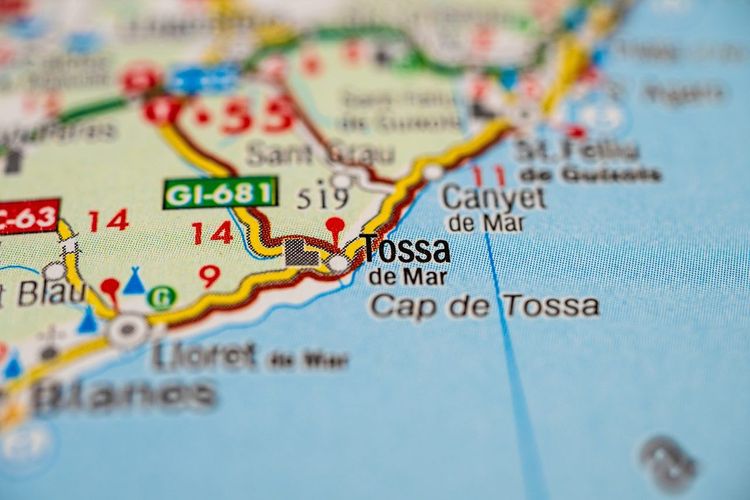
A rough mental map of the coves is rarely enough: the coastline is carved up into peninsulas and headlands that considerably extend road distances compared to the straight-line distance. Allow 1 hour 15 minutes of driving between Cadaqués and Tossa de Mar, even though the two towns are only separated by about sixty kilometers of coastline.
The best period for swimming runs from June to mid-September, with water temperatures rarely exceeding 20°C before mid-June even during spells of intense heat. May and the first half of June remain the ideal compromise for those seeking near-deserted coves, with water that is still cool but already generous sunshine.
On the budget side, most coves are free to access. Only high-season parking — between 4 and 8 euros per day depending on the municipality — and boat excursions represent a real expense. Also bring plenty of sunscreen: natural shade is scarce at most of these rocky coves, which face directly south.

FAQ
Which is the most beautiful calanque on the Costa Brava?
The answer depends on what you are looking for. Aiguablava, near Begur, remains the most photographed cove for its water color and pine forest setting. For authenticity, Sa Tuna and Cala Culip, at Cap de Creus, offer a wilder and less crowded experience.
How do you get to the coves of the Costa Brava without a car?
Moventis Sarfa buses serve Cadaqués, Begur, L'Estartit and Tossa de Mar from Girona and Barcelona. From these towns, a walk of 15 to 45 minutes is often still needed to reach the cove itself, except for Cala Montgó and Cala Llevadó, which are directly accessible by car or on foot from the center.
Are there secret beaches on the Costa Brava?
Yes, several coves remain deliberately little-signposted, such as Cala d'en Carlos near Lloret de Mar or Cala Jugadora at Cap de Creus. None have any services on site, which largely explains their relative tranquility even at the height of the season.
What is the best time to visit the coves of the Costa Brava?
June and the first half of September offer the best balance between water temperature and moderate crowds. July and August remain the hottest months but also the busiest, with car parks full from morning at the most well-known coves.
Are the Costa Brava calanques accessible for families?
Some of them, yes. Cala Montgó, Cala Giverola and Portlligat have easy access and shallow water suitable for young children. Others, such as Cala Culip or Cala Pola with its 87-step staircase, require a more demanding walk or descent.
Are there comparable calanques in France?
The Marseille coastline offers a fairly close equivalent in terms of limestone cliffs plunging into the water. Our Ryo article on the most beautiful calanques of Marseille and Cassis details a comparable itinerary on the other side of the Gulf of Lion, to extend the exploration on the way back from Spain.
In Summary
The Costa Brava packs, within fewer than 200 kilometers, a variety of coves rarely matched anywhere else around the Mediterranean: volcanic at Cap de Creus, family-friendly at L'Escala, pine-fringed at Begur, protected at L'Estartit. No map can truly replace the experience of descending a smugglers' path to discover turquoise water with no one around, nor that of comparing, cove after cove, the shades of blue that have made this Catalan coastline famous.
Ryo continues to expand its mapping of Mediterranean coastlines, and if the Spanish coves have given you a taste for calanques, head to Provence: the Ryo audio guide for Marseille and the neighbouring calanques of Cassis offers a natural extension to this travel notebook between Spain and France.
À lire également