© Shutterstock
 Votre guide Ryo
Barcelona Itinerary: 3 Days of Walking Tours to See It All (2026)
A well-planned Barcelona itinerary is built on foot: no other major Mediterranean city is as perfectly suited for walking. The neighborhoods flow seamlessly into one another: the medieval labyrinth of the Barri Gòtic opens onto the Ramblas, the Ramblas lead to Barceloneta in fifteen minutes, and the grid-like Eixample unfolds into Gaudí's astonishing façades as if the city suddenly shifted registers. A Barcelona itinerary that respects this geographic logic cuts travel time in half and doubles discovery time. This guide organizes three days of walks around the neighborhoods, with a condensed version for those who only have a single day. As a complement, the Ryo Barcelona audio guide offers 26 commentaries over 6.4 km in 2h30 so you don't miss a thing about the history and architecture you walk through.
Barcelona in 1 Day: The Condensed Itinerary for the Essentials
One day isn't enough to see everything, but it's more than enough to understand why Barcelona appears on every list of Europe's must-visit destinations. The secret: stay on foot, don't spread yourself too thin, and choose geographic coherence over thematic exploration.
Start early in the Barri Gòtic, exploring the Barcelona Cathedral and the Roman alleyways before the tour groups arrive. Head up toward the Ramblas, make a quick stop at the Mercat de la Boqueria, then continue to Barceloneta for lunch by the sea. The afternoon is reserved for Gaudí: the Sagrada Família first (book your tickets online well in advance), then Casa Batlló or Casa Milà depending on the time you have left. In the evening, head to El Born for dinner with the locals.
This itinerary covers around 10 km on foot and makes for a full day. If you have two days, dedicate the second entirely to Gaudí and Montjuïc, at a much more relaxed pace. Our Through Gaudí's Eyes audio tour maps onto that second day almost exactly.
Day 1 Morning: The Barri Gòtic and the Barcelona Cathedral
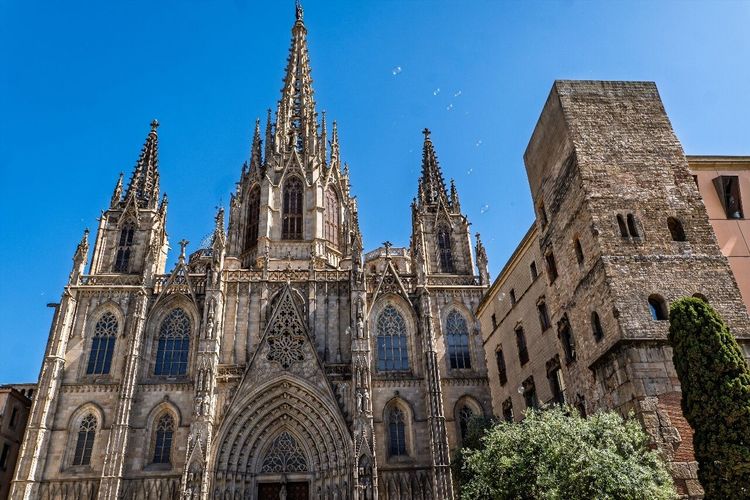
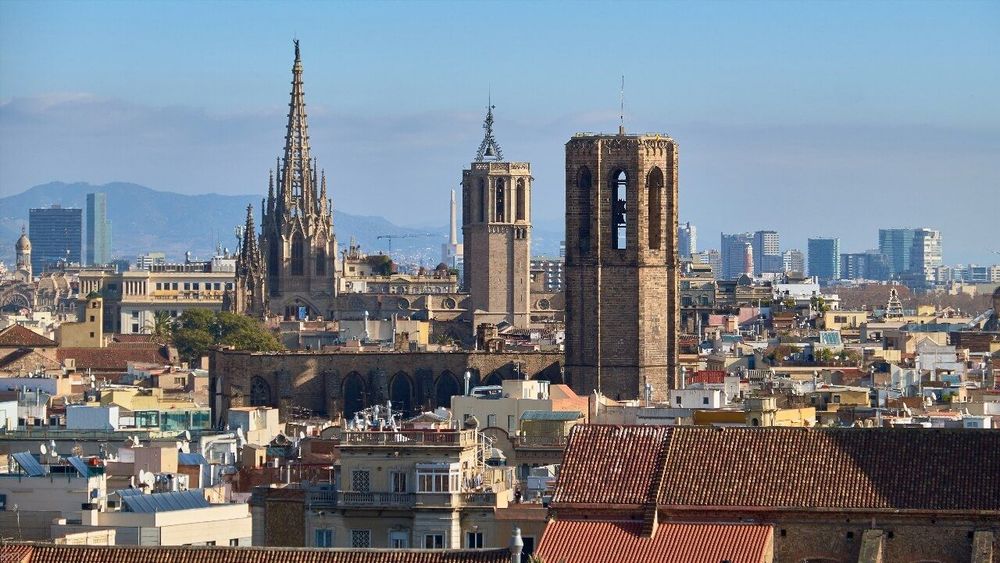
The Barri Gòtic is the oldest part of Barcelona, and it's the natural starting point for any serious itinerary. The Romans founded the city of Barcino here in the 1st century BC; entire sections of the Roman walls are still visible, notably on Carrer de la Tapineria and in the basement of the City History Museum.
The Barcelona Cathedral dominates the neighborhood with its neo-Gothic spires. The tourist visit is now paid (around €9 to €19 depending on the package, including rooftop access); free entry is reserved for worship hours, when visitors come to pray rather than sightsee. The interior houses 28 lateral chapels and the tomb of Saint Eulalia, co-patron of the city. The Gothic courtyard with its white geese, a tradition dating back to the 15th century, is worth a stop.
From the cathedral, take Carrer del Bisbe, which runs alongside the neo-medieval Gothic bridge connecting the Palace of the Generalitat to the Archdeacon's Palace, one of the most photographed spots in the neighborhood. Continue to the Plaça Reial, an arcaded square built in the 19th century that comes alive in the evening but is pleasant in the morning for a coffee. Its lampposts were designed by the young Gaudí in 1879, one of his very first public commissions.
The alleyways around Plaça de Sant Jaume hide a striking Roman relic: the Temple of Augustus, whose four 9-meter Corinthian columns stand in the inner courtyard of a medieval building. Entry is free and the place is surprisingly uncrowded given its historical significance. Allow 2 to 3 hours to properly explore the Barri Gòtic, more if you visit the Barcelona City History Museum (MUHBA, around €7).
Day 1 Afternoon: Las Ramblas, the Boqueria, and Barceloneta
Las Ramblas is Barcelona's most famous boulevard, and probably its most poorly used by tourists who walk it end to end without stopping. This 1.2 km boulevard slopes gently down from Plaça de Catalunya to the port. The interesting parts lie in the perpendicular side streets: the Barri Gòtic on one side, El Raval on the other.
The Mercat de la Boqueria (Mercat de Sant Josep) opens onto the Ramblas at number 91. It's one of the most photographed covered markets in Europe, and also one of the most touristy. The stalls at the back, away from the main entrance, offer fresh produce at reasonable prices and are frequented by neighborhood residents. For a quick lunch, look for the tapas counters inside.
From the Boqueria, allow 15 minutes on foot walking down the Ramblas to the port, then along Passeig Marítim to reach Barceloneta. This former fishing neighborhood turned beach district was built in the 18th century on the site of an old military bastion. Barceloneta beach stretches roughly 1.1 km: it's the most accessible urban beach from the city center.
For lunch, the restaurants on Carrer de la Maquinista offer menús del día for €10–13 (starter, main, dessert, and drink). In the late afternoon, Parc de la Ciutadella (Passeig de Picasso, 21, 08003 Barcelona, rated 4.6/5 on Google with 77,571 reviews) is worth a detour: a grand cascade, a lake with rowing boats for hire, and century-old palm trees. This is where the young Gaudí, then an architecture student, reportedly collaborated on the design of the monumental cascade. Our audio walking tour of Barcelona threads the same stretch, from La Boqueria down towards the waterfront.
Day 2 Morning: The Sagrada Família and Gaudí's Houses in Eixample
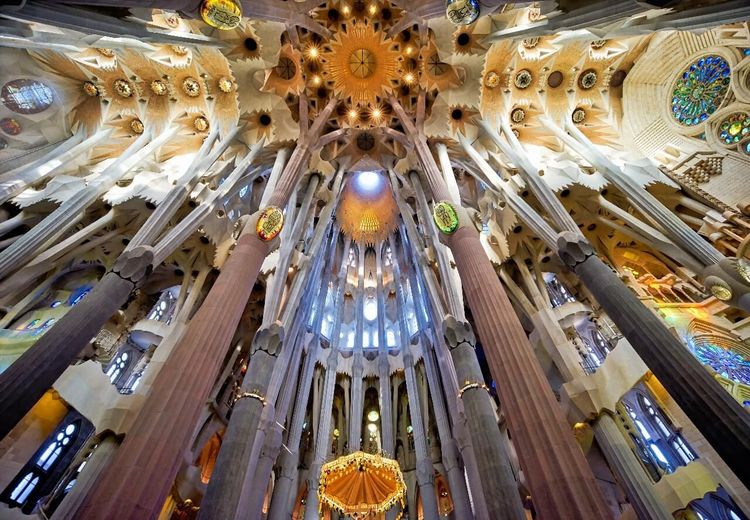
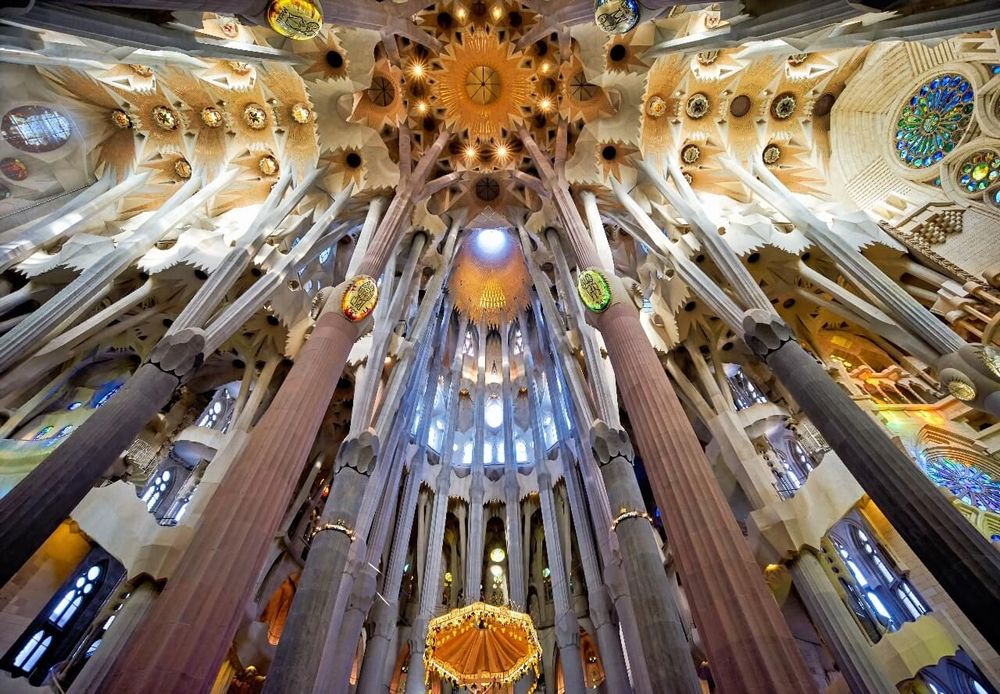
The Sagrada Família is not just a church: it's a construction project begun in 1882 that has never stopped and is now approaching completion. Antoni Gaudí took over the project in 1883 and devoted the last 40 years of his life to it. The building combines three façades with distinct symbolism (the Nativity, the Passion, the Glory), towers that will reach 172 meters for the central spire of Jesus Christ, and a forest-like interior where columns branch outward to support parabolic vaults.
Booking in advance is essential: tickets sell out weeks or even months ahead during high season. The basic ticket is around €26 on the official website (third-party resellers often charge around €34); access to one of the towers adds around ten euros and offers a bird's-eye view over Eixample's grid. The ideal visit is early in the morning, when light streams through the colored stained-glass windows on the east façade.
A 15-minute walk to the southwest, Casa Batlló (Passeig de Gràcia, 43, 08007 Barcelona, rated 4.7/5 on Google with 210,271 reviews) is the house that Gaudí entirely remodeled between 1904 and 1906 for textile manufacturer Josep Batlló. The façade evokes a slain dragon: blue and green ceramic tiles, bone-like columns on the ground floor, mask-shaped balconies on the upper floors. Entry starts at around €30 (Blue ticket) and goes up depending on the package and demand, but Passeig de Gràcia 43 photographs beautifully from the sidewalk.
Some 400 meters north along the same Passeig de Gràcia, Casa Milà (known as 'La Pedrera') was built between 1906 and 1912. It is Gaudí's last residential building and perhaps his most radical: no right angles, an undulating limestone façade, and twisted warrior-shaped chimneys on the roof. The rooftop is a UNESCO World Heritage Site and offers one of Barcelona's most extraordinary panoramas. Tickets are around €28; the summer evening time slots allow you to admire the city from the terraces until sunset.
To explore this Gaudí triangle with detailed explanations of each site, the Through the Eyes of Gaudí audio-guided tour of Barcelona covers 10.5 km in 6 hours with 23 audio commentaries.
Day 2 Afternoon: Park Güell and the Gràcia Neighborhood
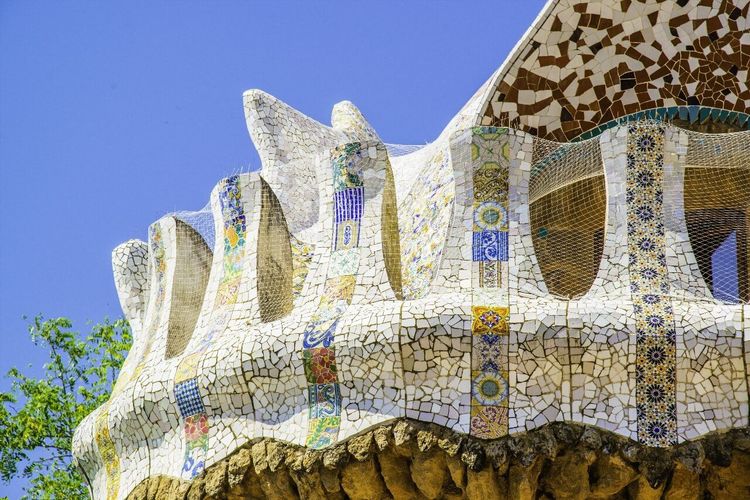
Park Güell (Carrer d'Olot, 7, 08024 Barcelona, rated 4.4/5 on Google with 236,596 reviews) sits atop the Carmel hills, about 20 minutes by metro or taxi from Casa Milà. Gaudí designed the park between 1900 and 1914 for Count Eusebi Güell, who wanted to create a residential garden city on the English model. The commercial project failed — only two houses were built — but the park is today one of the most visited sites in Spain.
The Monumental Zone (dragon terrace, Doric colonnade, grand esplanade with the broken-ceramic bench) is ticketed and subject to time slots: around €18 per person (prices have risen significantly in recent years). The gardens outside this zone remain free to enter. To avoid the crowds, the 6 pm slot is often the least busy on weekdays.
After visiting the park, walk down toward the Gràcia neighborhood (15 to 20 minutes downhill). It's one of Barcelona's most authentic neighborhoods, with lively squares like Plaça del Sol and independent cafés. Gràcia was an autonomous municipality before being absorbed by Barcelona in 1897, and that independent spirit is still felt in the atmosphere. It's also one of the best places to have dinner: restaurants serve Catalan cuisine with no concessions to mass tourism.
Day 3 Morning: Montjuïc, the Castle, and Views over the City
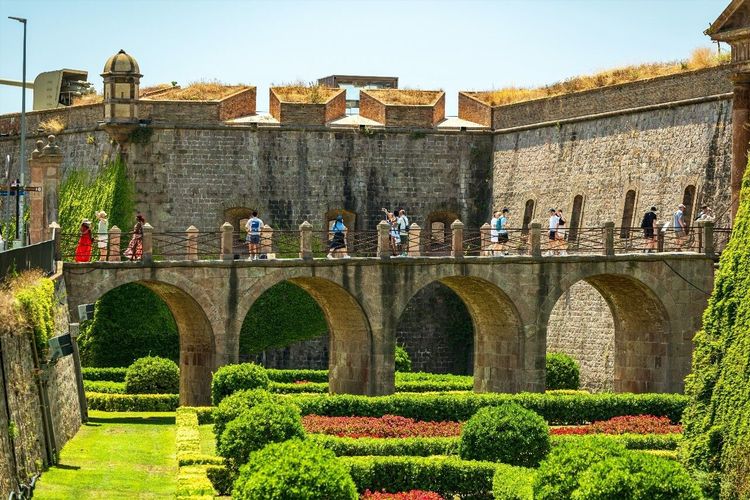
Montjuïc is the hill to the southwest of Barcelona, overlooking the port from an altitude of 173 meters. You can reach it by cable car from Barceloneta (Telefèric del Port, around €12.50 one way and €20 return), by funicular from Paral·lel metro station, or on foot for the most adventurous. The view from the Miramar gardens over the port and the Mediterranean horizon is worth the trip in itself.
The Montjuïc Castle dates from the 17th century. It served as a political prison for many decades: Catalan president Lluís Companys was executed here in 1940 following the Republican defeat. The interior museum documents this history in detail (entry €5, free on the first Sunday of the month and on Sunday afternoons for under-16s). The ramparts offer a 360° view over the city, the sea, and the surrounding hills.
On the way down, the Jardins de Laribal and the Jardins Joan Brossa offer terraced gardens with fountains and Mediterranean plants, ideal for a shaded break. Our Ryo guide to visiting Montjuïc details the main attractions on the site and up-to-date opening hours for 2026.
Day 3 Afternoon: El Born, Santa Maria del Mar, and the Palau de la Música
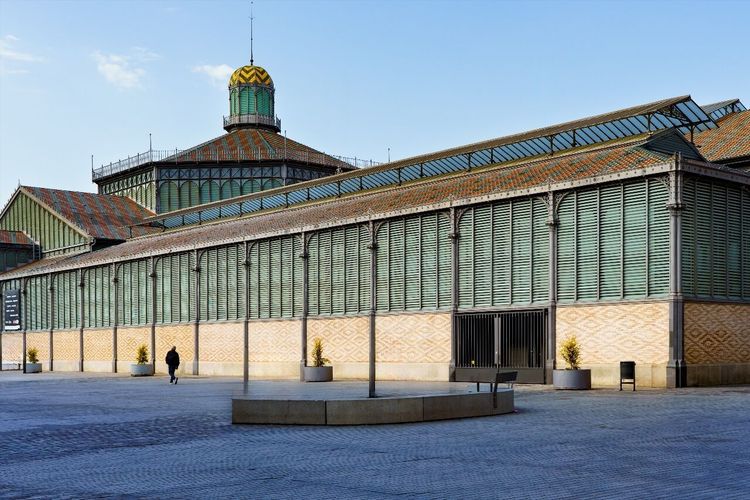
El Born is arguably Barcelona's most appealing neighborhood for an afternoon stroll. Located between Barceloneta and the Barri Gòtic, it blends designer boutiques and natural wine bars within an area of exceptional architectural heritage.
Santa Maria del Mar is a Gothic cathedral built between 1329 and 1384 — a record construction time for the era — by the merchants and craftsmen of the neighborhood who literally lent a hand. It is often cited as the purest example of Catalan Gothic: a sober interior, slender columns, and an almost total absence of Baroque ornamentation. The afternoon light effect is particularly striking when the sun shines through the lateral rose windows.
A 10-minute walk north, the Palau de la Música Catalana (Carrer del Palau de la Música, 4-6, 08003 Barcelona, rated 4.7/5 on Google with 54,632 reviews) is the work of Lluís Domènech i Montaner, Gaudí's great rival in the Catalan Modernisme movement. Built between 1905 and 1908, it has been a UNESCO World Heritage Site since 1997. The red-brick and multicolored ceramic exterior sets the tone; the interior, with its central skylight and polychrome sculptures, is one of the most extraordinary concert halls in the world. Guided tours are offered outside of concerts (around €20).
End the day at the Arc de Triomf, built in 1888 for the Barcelona Universal Exposition. It marks the entrance to Passeig de Lluís Companys, a wide palm-lined promenade that leads directly to Parc de la Ciutadella: an elegant geographic loop to close three days of discovery.
Getting Around Barcelona: Transport and Logistics
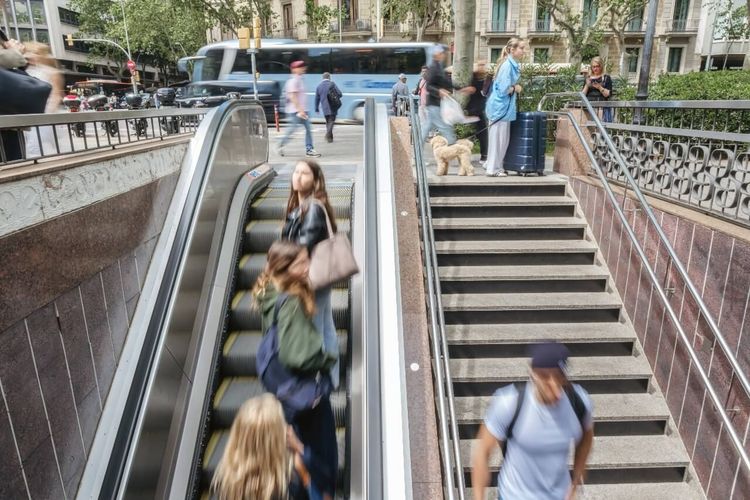
Barcelona is remarkably well designed for walking. The Barri Gòtic, Barceloneta, El Born, and Las Ramblas form a compact area that can be crossed in 20 to 25 minutes on foot. Eixample and the Gaudí houses are a 30-minute walk or 10-minute metro ride from the historic center.
The T-Casual is the most practical travel pass: €13 for 10 journeys valid on the metro, bus, funicular, and tram (it does not, however, cover the metro link to the airport). Metro lines 3 and 5 serve most tourist sites. For Montjuïc, the funicular departs from Paral·lel station (L2 and L3). For Park Güell, line 3 (Lesseps or Vallcarca stations) is the most convenient, with a 10 to 15-minute uphill walk from the station.
For the airport, the Aerobus connects El Prat airport to Plaça de Catalunya in 35 minutes (around €7.50 one way). The Rodalies train line R2 Nord is a less frequent but cheaper alternative (€4.60).
Where to Eat in Barcelona by Neighborhood
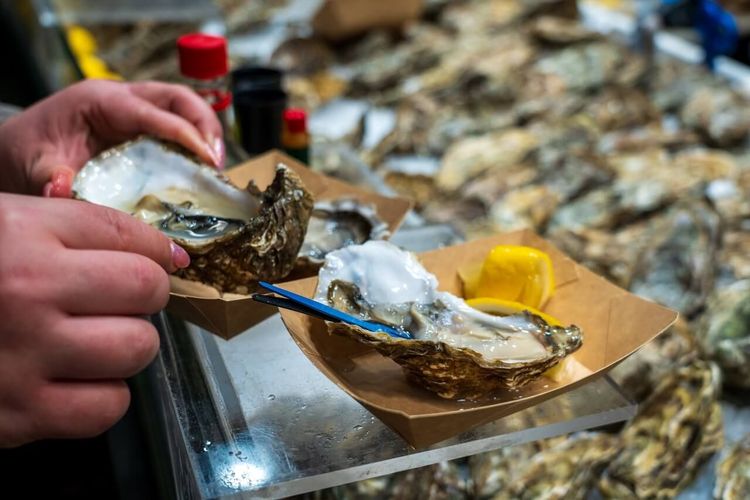
Barcelona's gastronomy deserves an article of its own: find all the details in our Ryo guide to Barcelona's culinary specialties. For a quick neighborhood-by-neighborhood overview:
Barri Gòtic and El Born: midday menús del día (€10–15) are everywhere, with varying quality. Look for restaurants set in interior courtyards or vaulted cellars. In the evening, the streets around Carrer del Parlament (El Raval) and Mercat de Santa Caterina (El Born) offer good value for money.
Barceloneta: fish and seafood, of course. Avoid the establishments on the beachfront with their tourist prices. Head one street back toward Carrer de la Barceloneta to find more authentic options.
Gràcia: the best neighborhood for dinner on the second evening. Plaça del Sol has around ten terraces open until 11 pm, and the restaurants around Mercat de l'Abaceria serve modern Catalan cuisine at affordable prices.
Classic tapas to know: pan con tomate (pa amb tomàquet), patatas bravas, croquetes de bacallà, and pimientos de padrón.
Budget and Tips for Your Stay
A 3-day stay in Barcelona can be planned around a few key budget items:
Main entry fees: Sagrada Família (€26 to €34), Casa Batlló (from €30), Casa Milà (€28), Park Güell Monumental Zone (€18), Montjuïc Castle (€5), Palau de la Música (€20). If you want to see everything, budget €130 to €160 for entry fees alone.
The Barcelona Card (available in 2, 3, 4, and 5-day versions, from €45) includes unlimited transport and museum discounts, but does not cover the Sagrada Família or the Gaudí houses. Check the math against your itinerary before buying.
Accommodation: El Born and the Barri Gòtic are the best-located neighborhoods for a walking trip. Eixample (around Passeig de Gràcia) is quieter, with quick metro access to the Gaudí sites. Avoid accommodations too close to the Ramblas if you're sensitive to nighttime noise. Staying near Passeig de Gràcia also puts you right on the route of Ryo's Through Gaudí's Eyes audio tour, which passes Casa Batlló and Casa Milà over its 10.5km loop.
Tipping: not mandatory in Spain, but 5–10% at restaurants is appreciated for good service. At a bar, rounding up to the nearest euro is sufficient.
FAQ
How many days do you need to visit Barcelona?
Three days are enough to cover the must-sees without rushing: Barri Gòtic, Barceloneta, Sagrada Família, Park Güell, Montjuïc, and El Born. With two days, you'll need to make choices. If you only have one day, focus on the Barri Gòtic, Ramblas, and Barceloneta in the morning, and the Sagrada Família in the afternoon.
Can you visit Barcelona entirely on foot?
Most central sites are walkable, yes. The Barri Gòtic, Las Ramblas, Barceloneta, El Born, and Eixample form a very walkable area. Park Güell and Montjuïc require public transport or good physical fitness: the elevation changes are significant.
Do you absolutely need to book the Sagrada Família in advance?
Yes, without exception. The Sagrada Família is one of the most visited monuments in Europe, and tickets are often sold out weeks in advance during high season (April to October). Buy your tickets on the official website as soon as you know your dates.
What is the best neighborhood to stay in Barcelona?
El Born and the Barri Gòtic are ideal for walking trips: everything is accessible within a few minutes. Eixample is quieter, with quick metro access to the Gaudí sites. Avoid accommodations too close to the Ramblas if nighttime noise bothers you.
Is Barcelona safe for tourists?
Barcelona is generally a safe city, but pickpocketing is common in heavily touristed areas, particularly on Las Ramblas, in the metro, and at Barceloneta. Use a cross-body bag and keep your phone in an inside pocket.
Barcelona rewards those who take the time to explore neighborhood by neighborhood, without trying to tick everything off in one day. This 3-day Barcelona itinerary alternates architectural discoveries with stops at markets and tapas bars: it's that Mediterranean pace that makes the city so addictive. To explore with an audio guide explaining what you see, the Ryo audio-guided tour of Barcelona accompanies you along the 6.4 km main route with 27 audio commentaries. Enjoy your walk.
À lire également