© Shutterstock
 Votre guide Ryo
Visit Bilbao Without a Car in 2026: the Complete Guide on Foot and by Public Transport
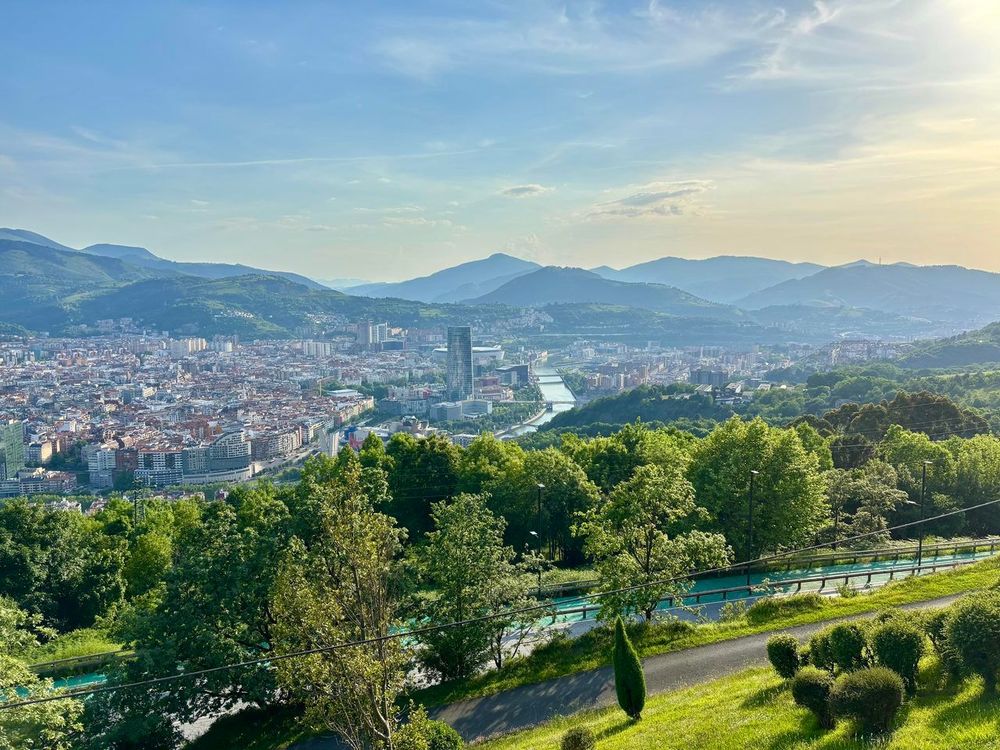
Visiting Bilbao without a car is no hardship: in Bilbao, the question is almost never where to park but why you would ever need a car. The city fits snugly between its green hills and the Nervión, and its residents have built one of the densest public transport networks in Spain for an agglomeration of this size: a metro designed by Norman Foster, a tram that runs along the river, a century-old funicular, and a single card that unlocks it all for a few euros. It is undoubtedly the most natural way to approach a city that has learned to reinvent itself without ever abandoning its rugged geography.
In the pages that follow, you will find how to reach the centre from France without going through the car-rental process, how the Barik card works combining metro, tram, and bus for around one euro per journey, where the Ribera covered market hides — long billed as the largest in Europe — and why the Biscay Bridge deserves a crossing by gondola suspended above the estuary. Everything you need to plan a complete stay, from the medieval Casco Viejo to the titanium lines of the Guggenheim, without ever looking for a parking spot. The Ryo audio guide tour of Bilbao covers the essentials of this walking itinerary, for those who prefer to be guided rather than navigate between maps and bus timetables.
How to Get to Bilbao Without a Car
No high-speed train connects France directly to Bilbao: that is the first assumption to correct before planning your journey. Three options actually cover most needs, and none of them require touching a steering wheel.
From France: Train, Coach, and Carpooling
The train remains the most comfortable option but requires connections: there is no direct service from Paris or Bordeaux, so you need to travel down to Hendaye, reach San Sebastián on the Euskotren 'Topo', and then take the Euskotren Donostia-Bilbao line, slow but very scenic. Allow a full day of travel from Paris, with fares that rise quickly if you book late.
The coach is often the most economical choice for budget travellers. FlixBus and Alsa serve Bilbao several times a day from Bordeaux, Toulouse, or Paris, with direct services or a single connection in San Sebastián. A one-way ticket from Bordeaux regularly drops below 25 euros if you book three weeks in advance.
Carpooling complements these two options well, particularly for journeys from south-west France: BlaBlaCar offers frequent rides from Bayonne, Toulouse, or Bordeaux, with a travel time often shorter than the bus since there are no intermediate stops. Train for comfort, coach for price, carpooling for speed: it's up to you to decide what matters most.
To compare without juggling multiple tabs, the Omio platform aggregates trains, buses, and sometimes carpooling on a single results screen, filterable by price or duration. It is the fastest tool for spotting the cheapest combination on any given day, especially in high season when coach prices fluctuate sharply from one week to the next.
From Bilbao Airport: the A3247 Bus and Alternatives
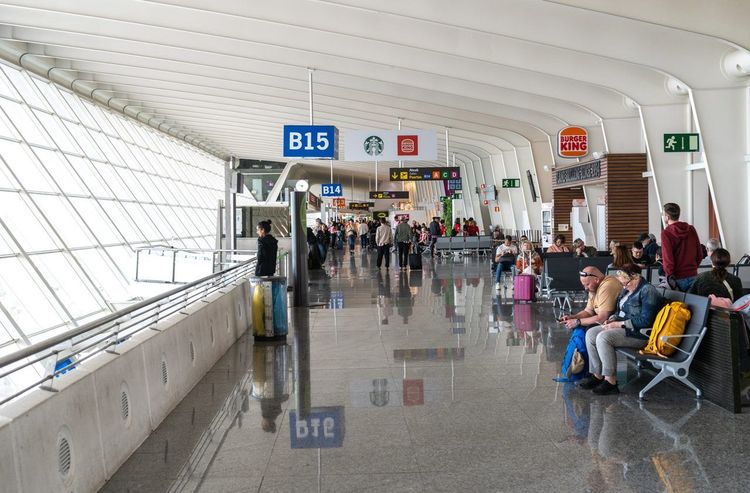
If you arrive by plane, head straight to the Bizkaibus stop as you exit the terminal: line A3247 connects Loiu airport to the city centre in around twenty to thirty minutes, for approximately 3 euros. Buses depart every 15 to 30 minutes depending on the time of day, from early morning until late at night, serving Plaza Moyúa before their terminus at the Termibus coach station in San Mamés.
A taxi is always an option, of course — allow around 25 to 30 euros for the fare — but it loses all appeal on a route this well served. If you plan to travel frequently, get your Barik card on day one: it works immediately across the entire urban network, with no additional steps required.
One practical tip that often makes a difference to the final bill: book your outbound journey ideally a month in advance, especially for coaches in July and August, when the cheapest fares sell out within days. Connections between Hendaye and Bilbao can sometimes suffer delays: leave yourself a comfortable buffer if you are transferring to another form of transport on arrival.
Once your bags are down, the rest is simpler than it looks: the Ryo audio guide tour of Bilbao can be followed entirely on foot from the historic centre, without booking a car or additional taxis for the rest of your stay.
Getting Around Bilbao: the Barik Card and Public Transport
Bilbao has built its reputation as a car-free city on a tiny object: a rechargeable plastic card that unlocks the entire urban network. Understanding how it works in ten minutes saves hours of hesitation in front of ticket machines throughout your stay.
The Barik Card: Metro, Euskotren Tram, and Bilbobus
The Barik card costs 3 euros to purchase, available at metro stations, kiosks, or selected tobacconists, and is topped up at automatic machines. It gives access to the metro, the Euskotren tram, the Bilbobus network, Bizkaibus buses, and the Artxanda funicular, with a per-journey fare significantly lower than a single ticket: expect around one euro per journey in zone 1, sometimes less with current discounts, compared to a noticeably higher price for a paper ticket.
The Bilbao metro, designed by British architect Norman Foster, connects the city centre to the beaches of Getxo in around twenty minutes and to Plentzia in about three quarters of an hour, with very frequent trains during the day. It is the fastest way to reach the coast without taking the road, and its glass shell-shaped entrances, nicknamed 'fosteritos', have become part of the cityscape.
The Euskotren tram runs along the Nervión on a shorter but particularly photogenic route: it serves the Guggenheim, the Ribera, Abando station, and Atxuri in about ten stops, at a gentle pace, making it almost an impromptu guided tour for anyone who takes the time to look out the window.
The Bilbobus fills in where the metro and tram do not go: the elevated neighbourhoods, poorly served by rail, remain accessible via this dense urban bus network that climbs effortlessly the slopes that discourage walkers. It is often the option overlooked by visitors in a hurry, yet it avoids many a breathless uphill struggle.
The Artxanda Funicular and Bike-Sharing: Gentle Alternatives
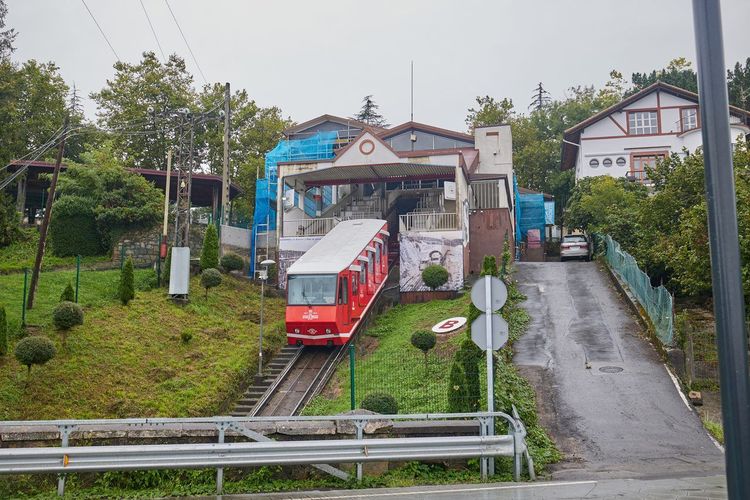
The Artxanda funicular also accepts the Barik card, for a journey of just a few minutes that remains one of the most spectacular in the city. Three minutes of ascent are enough to completely change your perspective on Bilbao.
Bike-sharing, through the Bilbao Bizi network, usefully complements the offer for flat rides along the river, though it is less relevant on the hills surrounding the historic centre. Short-term subscriptions can be purchased online or via the app.
On the timetable front, the network is generally generous: the metro runs from 6am to 11pm on weekdays, with extended service on Friday evenings and through the night on Saturdays — very handy if your evening spills into the Pozas neighbourhood. On weekend nights, a few Gautxori night lines take over from the daytime buses.
For families or groups, the anonymous Barik card is not personalised: you can use it for several people travelling together, validating one journey per passenger. This is a notable difference from some French networks where each traveller must hold their own card. Just keep an eye on the remaining balance, which can be checked at machines and on the operators' apps.
On the payment side, top-up machines accept contactless bank cards at most metro stations, which means no scrambling for change during rush hour. On days when you prefer to slow down and do everything on foot rather than hopping between buses, the Ryo audio guide remains a complementary option to keep track of the history of whichever neighbourhood you are walking through.
Walking in Bilbao: the Simplest Way to Explore the City
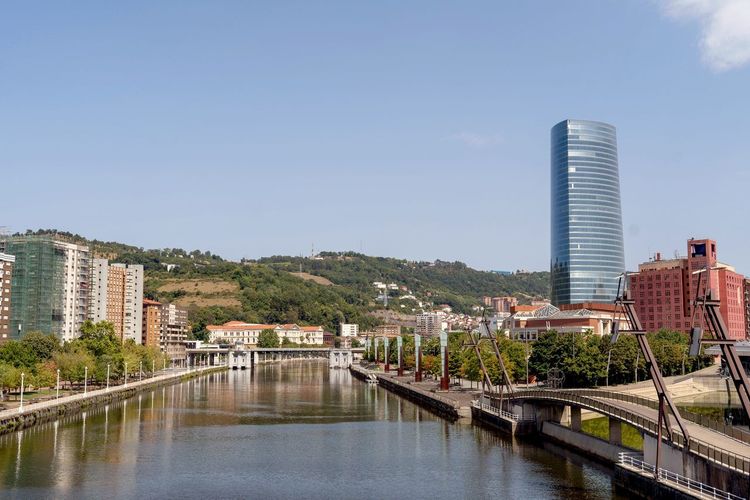
Bilbao is, in practice, within a fairly short walking radius. From Casco Viejo to the Guggenheim, allow 20 to 25 minutes of a leisurely stroll along the river, with no significant elevation change since the historic centre and the contemporary neighbourhood sit at the same level, along the Nervión.
This is perhaps the best news for anyone visiting Bilbao without a car: the topography of the centre does not punish walkers. The hills do exist — Artxanda and Begoña chief among them — but they concern occasional excursions, not the everyday route between two visits.
Do wear comfortable shoes if you plan to combine Casco Viejo, the Ribera market, the Guggenheim, and the banks of the Nervión in a single day: the cumulative distance easily exceeds 8 kilometres, even at a leisurely pace. The Ryo audio guide tour of Bilbao is designed precisely with this logic in mind — a walking sequence, without a car or intermediate transport, following the pedestrian streets of the historic centre all the way to the regenerated waterfront.
Good to know: the pavements in the centre remain wide and well maintained, including around the market where crowds build quickly on Saturday mornings. The occasional uneven cobblestones are found in the medieval Casco Viejo, where the charm of the lanes more than compensates for the sporadic discomfort.
Casco Viejo and the Ribera Market
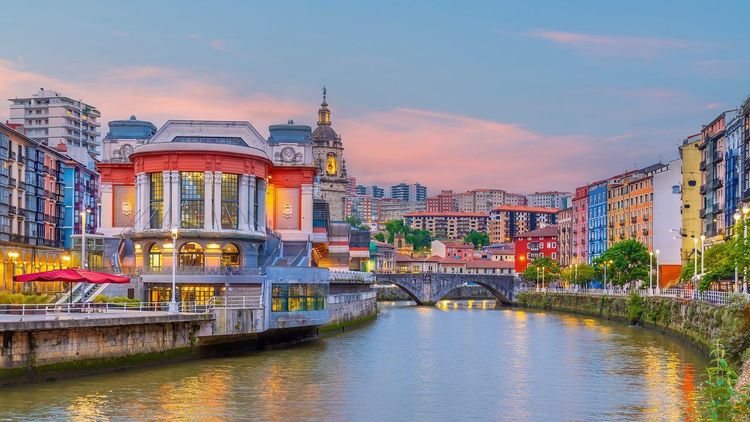
It is impossible to visit Bilbao without a car without devoting a good half-day to the city's historic heart. Casco Viejo (Siete Calles, 48005 Bilbao) concentrates by itself much of what makes Bilbao so appealing: narrow lanes, old facades, and pintxos bars squeezed side by side.
The Seven Streets and Santiago Cathedral
The neighbourhood takes its nickname from the Siete Calles, the seven streets that formed the medieval core before the city spread along the river. Calle Somera, Barrenkale, Tendería: each retains the trace of its history in its name, even if the shops have largely changed in character since.
At the centre of this web of streets stands Santiago Cathedral (Plaza de Santiago 1, 48005 Bilbao, rated 4.3/5 on Google with 9,560 reviews), a Gothic church whose 15th-century cloister is one of the few surviving vestiges predating Bilbao's industrial rise. Admission is paid but modest — well below the price of a Guggenheim ticket — and is worth the visit if you are interested in the coastal Camino de Santiago pilgrims who stopped here.
The weekend completely transforms the atmosphere of the neighbourhood: terraces overflow, the Sunday morning market sets up on Plaza Nueva, and it becomes almost impossible to cross certain streets without weaving through the crowds. If you prefer the quieter version of Casco Viejo, visit on a weekday before 11am, when shopkeepers are barely opening their shutters and the low-angled light on the facades is worth the trip in itself.
The Ribera Market, One of the Largest Covered Markets in Europe
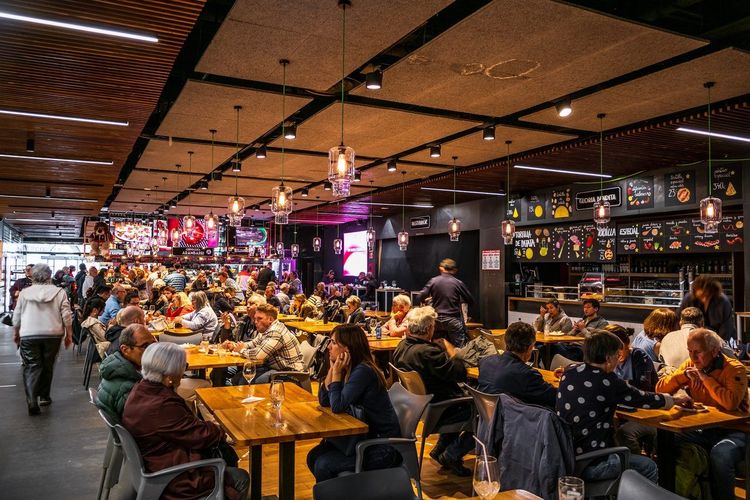
On the edge of Casco Viejo, along the bank of the Nervión, the Ribera market announces itself with its 1929 Art Deco facade. Long recognised as the largest covered market in Europe, it was fully renovated in 2010 and now brings together some sixty stalls spanning fishmongers, butchers, and greengrocers, plus a gastronomic space of pintxos bars on the ground floor.
The fish stalls are particularly worth a detour early in the morning, when hake and Cantabrian anchovies are laid out on the ice. Around midday, the mood shifts to a quick lunch: the bars in the gastronomic space serve pintxos prepared in front of you, an option that is often faster and cheaper than a sit-down restaurant in the neighbouring Casco Viejo.
The traditional stalls are open Monday to Saturday, mainly in the morning, while the gastronomic area stays active later in the day. One tip that saves a lot of disappointment: the best stalls often close as soon as their daily stock runs out, sometimes before noon on Saturdays. It is better not to leave your visit until late morning if there is a particular product you have in mind.
From Casco Viejo metro station, allow barely 5 minutes on foot to reach the market's main entrance. The Euskotren tram also serves the Ribera stop, a stone's throw from the facade — a handy option if you are coming directly from the Guggenheim neighbourhood.
It is in these lanes that the 'The Basque Icon of Renewal' loop of the Ryo audio guide tour in Bilbao begins: 21 audio tracks and around 3 hours of walking to cover 7.3 kilometres through to the contemporary waterfront. One of the first audio stories recounts the history of the market facade and how the neighbourhood faced the floods of the Nervión, including the devastating one in 1983.
Local festivals sometimes reshape the neighbourhood entirely: Aste Nagusia, the Semana Grande in August, turns Casco Viejo into an open-air stage, with free concerts and food stalls running late into the night. If you are visiting at that time, simply allow a little extra time to move from one point to another.
The Guggenheim and Contemporary Bilbao
A quarter of an hour's walk from the Ribera market, the face of Bilbao changes radically in time. The neighbourhood around the Guggenheim concentrates the essence of what has been called, since the 1990s, the Bilbao Effect — the urban transformation that turned a declining industrial city into an international cultural destination.
The Guggenheim Museum and Azkuna Zentroa
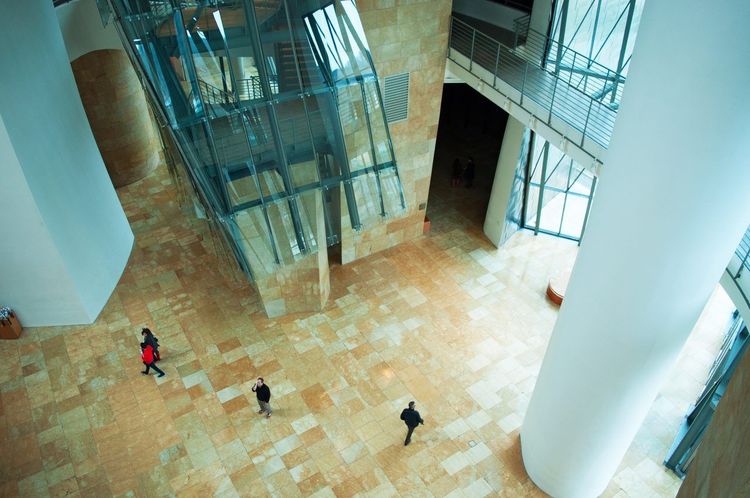
The Guggenheim Bilbao museum, inaugurated in 1997, remains the building that changed the city's trajectory: its roughly 33,000 titanium panels designed by Frank Gehry attract more than a million visitors a year, on a site that was previously nothing but an old port wasteland.
The interior is at least as worthy of a visit as the exterior: Richard Serra's monumental sculptures, 'The Matter of Time', offer a perspective impossible to grasp from a simple photograph taken on the waterfront. Allow about two and a half hours for a full visit, and save a moment for 'Maman', Louise Bourgeois's giant spider on the riverside, or for 'Puppy', Jeff Koons's flower-covered dog guarding the entrance.
A quarter of an hour's walk away, towards the Indautxu neighbourhood, Azkuna Zentroa (Plaza Arriquibar 4, 48010 Bilbao, rated 4.5/5 on Google with 19,440 reviews) offers another facet of urban renewal. This early 20th-century wine warehouse, the Alhóndiga, was reimagined by Philippe Starck as a hybrid cultural centre: a cinema, a rooftop pool with a glass floor, a media library, and exhibition spaces share an atrium supported by 43 entirely different columns.
Entry to the building is free for general wandering; only certain spaces such as the pool or temporary exhibitions require a ticket. It is often the most underrated stop in contemporary Bilbao, overshadowed by the fame of the Guggenheim.
The Regenerated Banks of the Nervión and the Fine Arts Museum
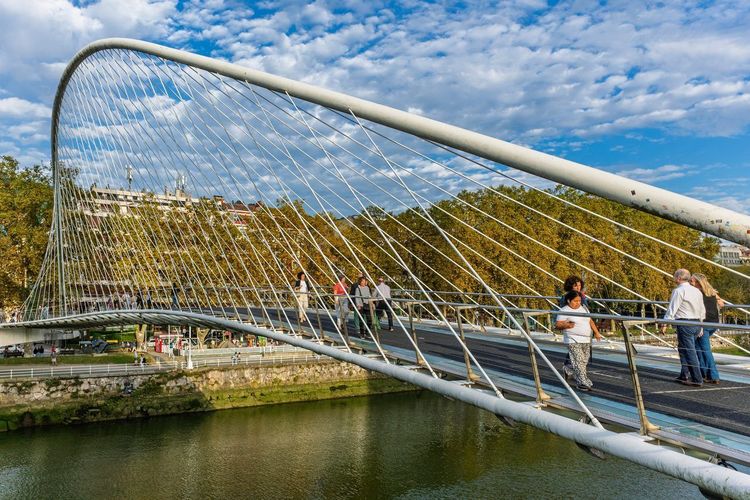
Between the Guggenheim and the centre, the regenerated banks of the Nervión tell thirty years of urban transformation on their own. Where port cranes and industrial railway lines once ran, a continuous riverside promenade now stretches, punctuated by footbridges including the famous Zubizuri bridge designed by Santiago Calatrava.
Walking these banks at sunset remains one of the most photographed moments of any stay in Bilbao, when the low light makes the titanium of the Guggenheim shimmer alongside the river.
A few minutes' walk from the museum, the Bilbao Fine Arts Museum rounds out the visit if you want to step outside contemporary art. Its collection spans several centuries of Spanish and European painting, from El Greco and Zurbarán to Gauguin, in a setting far less crowded than its titanium neighbour. As the museum has undergone significant extension works in recent years, check which spaces are open before heading over.
On the timetable side, the Guggenheim opens Tuesday to Sunday from 10am to 7pm, with closing extended to 8pm during Holy Week and summer, plus a few exceptional Monday openings. The adult ticket costs 18 euros, audioguide included, with half price for students under 26 and those over 65, and free entry for under-18s. Booking online is strongly recommended in spring and summer.
For those who prefer panoramic views to interior visits, the outdoor esplanade of the museum is freely accessible at any hour, including in the evening when the play of light on the titanium offers a different spectacle from the daytime.
The Ryo audio thread accompanies you all the way to this bank of the Nervión: the final stop of the loop faces the Guggenheim and revisits the industrial reconversion of the neighbourhood, between vanished cranes and gleaming titanium. Allow a full half-day to combine the Guggenheim, Azkuna Zentroa, and the Fine Arts Museum at a relaxed pace — more if you add a lunch break on the waterfront.
The Biscay Bridge and the Heights of Artxanda
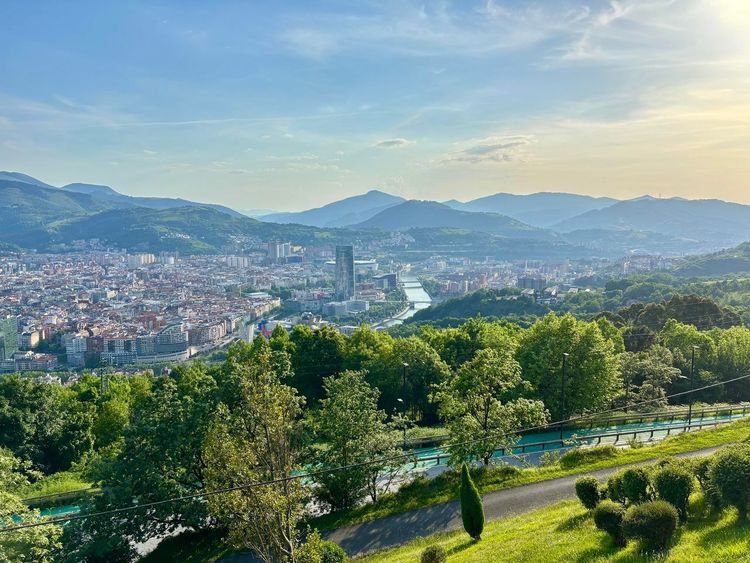
Two short excursions usefully complement a stay in Bilbao without a car, each reachable in under 30 minutes from the centre by the public transport already mentioned above.
The Biscay Bridge (Puente Colgante), a UNESCO-Listed Gem
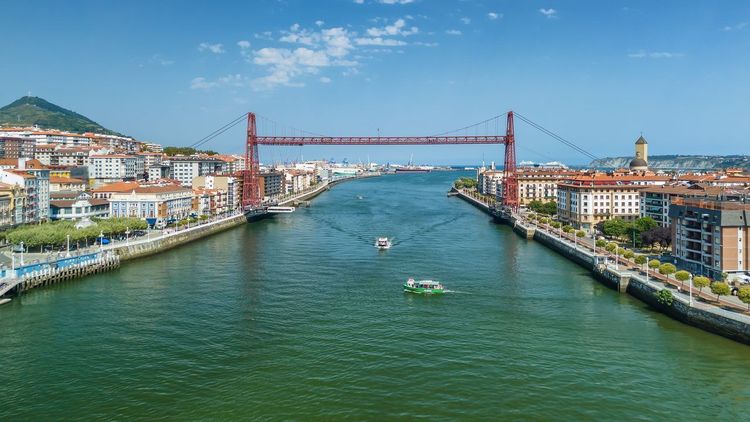
The Biscay Bridge, also known as the Puente Colgante or transporter bridge, has linked Portugalete to Getxo across the estuary since 1893. Listed as a UNESCO World Heritage Site since 2006, it is the world's oldest transporter bridge still in operation, with a suspended gondola that crosses the roughly 160 metres of the ría in under two minutes.
The gondola crossing costs just a few tens of cents for pedestrians — a negligible sum for such a rare monument. If you have no fear of heights, you can also climb to the top walkway, some fifty metres above the water, for a separate ticket: the view over the estuary and the hills of Getxo from that height is one of the least known panoramas among visitors in a hurry.
From the centre of Bilbao, metro line 1 drops you at Areeta station on the Getxo side, a few minutes' walk from the bridge, and line 2 takes you to Portugalete on the other bank. No complicated connections, no car needed: it is one of the simplest excursions in the entire network.
Monte Artxanda and Its Panoramic View
On the opposite side, on the heights overlooking the city centre to the north, Monte Artxanda offers the most complete panorama over the agglomeration. The funicular that has climbed there since 1915 remains the fastest way to reach it, with a journey of barely three minutes for an elevation gain that would deter most walkers.
At the top, a landscaped park with play areas and grill restaurants enjoys an unobstructed view over the Guggenheim, the banks of the Nervión, and the hills encircling the city. It is a particularly popular spot with Bilbao families on Sunday afternoons, and the contrast with the bustle of Casco Viejo far below often surprises passing visitors.
Neither the Biscay Bridge nor Monte Artxanda feature on the main audio guide tour route, which is designed to focus on the historic and contemporary heart of the city. Both excursions nevertheless combine very well with a free morning or afternoon, provided you check the funicular's timetable outside the summer season.
Only have a half-day? The Biscay Bridge takes a good hour round trip including the metro ride, while Monte Artxanda can be wrapped up in 45 minutes on the dot thanks to the funicular, which accepts the same Barik card as the rest of the network. Fitting both into the same afternoon is possible, but leaves little margin for lingering.
The Basilica of Begoña and Other Historic Treasures
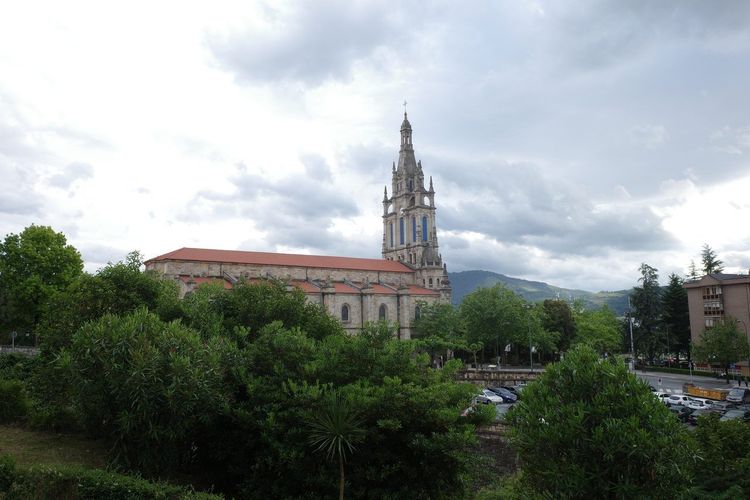
Perched on a hill overlooking Casco Viejo, the Basilica of Begoña has watched over Bilbao since the 16th century. It houses the statue of the Virgin of Begoña, patron of Biscay, celebrated each 11 October by much of the city.
Two ways to climb there from Casco Viejo: the Mallona steps, more than 300 of them starting from Plaza Unamuno — demanding but quick — or the public elevator on Calle Esperanza, which spares the effort in a matter of seconds. Most visitors opt unhesitatingly for the second option.
If your stay extends beyond the classic two or three days, several other addresses deserve a place in the itinerary without ever requiring a car. The Deusto neighbourhood, on the other side of the river, blends a historic university campus with banks of the Nervión that are quieter than those in the centre. The main building of the University of Deusto, inaugurated in 1886, often surprises those who venture there without particular expectations.
Doña Casilda Park, a short walk from the Fine Arts Museum, also offers a welcome green pause between two visits. Bilbainos nickname it 'the duck park' because of its pond populated with ducks and swans: a simple place that makes for an agreeable change of pace after a morning of museums.
What to Eat in Bilbao: Pintxos and Local Specialities

Eating in Bilbao requires neither a reservation nor a car to reach an out-of-the-way restaurant: the bulk of the gastronomic scene is concentrated in Casco Viejo and around Plaza Nueva, within walking distance of most central accommodation.
The pintxo remains the quintessential local institution — a small garnished slice of bread nibbled standing at the bar, a glass of txakoli in hand. In most bars, you help yourself at the counter or order directly from the server, then settle up by declaring what you have had: a trust-based system that always catches first-timers slightly off guard.
Among the specialities not to miss, the gilda holds a special place: this skewer of olive, anchovy, and guindilla pepper is said to have been invented in San Sebastián before conquering the entire Basque Country, Bilbao included. Bacalao al pil pil, salt cod slow-cooked in an emulsion of olive oil and garlic, features on the menu of most traditional bars in Casco Viejo, as do txipirones en su tinta, small squid cooked in their own ink.
For a quick and inexpensive lunch, the gastronomic area of the Ribera market is a reliable choice: several counters serve made-to-order pintxos, often cheaper than in the tourist bars on the nearby Plaza Nueva. Expect between 2 and 4 euros per piece depending on the topping, and around 15 to 20 euros for a full meal with drinks if you work your way through several bars.
Txakoli, a lightly sparkling white wine produced on the hills of Biscay, traditionally accompanies fish pintxos. It is served poured from a height, a gesture intended to aerate the wine and one that is also part of the spectacle for anyone discovering the tradition for the first time.
Several bars in Casco Viejo, such as those lined up along Calle Santa María, refresh their pintxos counter throughout the day: arriving at the start of service guarantees a wider choice and fresher preparations — a detail many visitors overlook. Slotting a round of pintxos between two stops on the Ryo audio guide tour remains one of the most natural ways to pace your day, without ever booking a table in advance.
Car-Free Day Trips from Bilbao
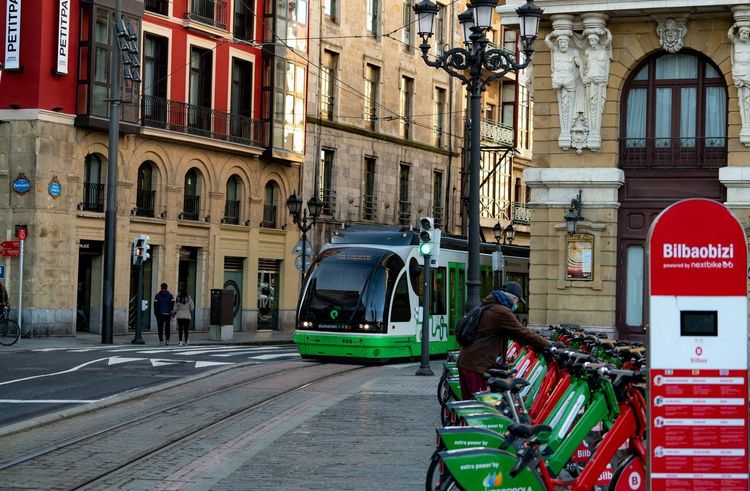
Many guides recommend excursions in the region without ever specifying which ones are genuinely accessible without a rental car. Here are the destinations reachable by Euskotren or regular bus, without ever depending on a private vehicle.
Gernika, Mundaka, and the Urdaibai Reserve by Euskotren
Gernika (Foru Plaza 1, 48300 Gernika-Lumo), made tragically famous by the 1937 bombing immortalised in Picasso's painting, is reached in just under an hour on the Euskotren Bermeo line, departing from central stations such as Zazpikaleak at the foot of Casco Viejo. The Peace Museum recounts the history of the bombing and the city's reconstruction — a dense visit that takes around two hours.
Gernika is already at the heart of the Urdaibai biosphere reserve, whose estuary ranks among the richest wetlands in northern Spain for observing migratory birds. Mundaka, a little further along the same Euskotren line, attracts surfers from around the world for its left-hand wave, one of the longest in Europe, while remaining a peaceful fishing village outside days of heavy swell.
Lekeitio, reachable by Bizkaibus from Gernika or directly from Bilbao, rounds out the loop nicely with its colourful harbour, its beach, and the island of San Nicolás that you can reach on foot at low tide. Allow a full day to link these stops without rushing.
Vitoria-Gasteiz and San Juan de Gaztelugatxe by Train or Bus
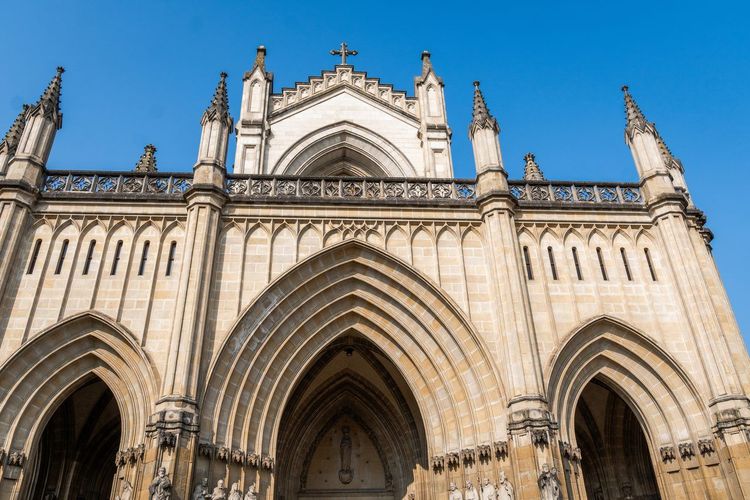
Vitoria-Gasteiz, seat of the Basque Government, is reached in about an hour from the Termibus coach station by direct bus, with very frequent departures; the train exists but proves significantly slower. Its almond-shaped old town, its green belts, and its Santa María Cathedral, famous for its 'open for restoration' visits, make it a complete urban day trip, less crowded than Bilbao or San Sebastián.
San Juan de Gaztelugatxe (Gaztelugatxe, 48111 Bermeo, rated 4.8/5 on Google with 22K reviews), the islet connected to the coast by a stone bridge and made famous by the Game of Thrones series, requires a little more planning: a Bizkaibus serves Bakio or Bermeo from Bilbao, then you walk down to the hermitage along a descending path, with a free time-slot reservation required in high season to limit the crowd on the final 241-step staircase.
Zumaia, reachable by Euskotren in just under an hour and a half on the Bilbao–San Sebastián line, reveals the flysch — spectacular rock strata sculpted by erosion over kilometres of coastline, best observed at low tide from Itzurun beach. Laguardia, in the Rioja Alavesa, demands a little more patience: you need to go via Vitoria-Gasteiz and then take an infrequent regional bus, but the village rewards the journey with its cellars dug beneath the houses and its medieval ramparts.
For a single free day, Gernika and Mundaka make the easiest outing to chain together without schedule stress. For a full weekend, Vitoria-Gasteiz is worth an overnight stay rather than a day trip, to take in its gastronomic scene, often rated on a par with those of Bilbao or San Sebastián. To dig deeper into the subject, our Ryo article on hiking in the Basque Country details complementary itineraries.
Practical Information for Visiting Bilbao Without a Car
A few concrete reference points to settle the duration, the season, and the budget of your stay before booking anything.
How Long to Allow, Weather, and Crowds
Two full days are enough to cover the essentials: Casco Viejo, the Ribera market, the Guggenheim, and the banks of the Nervión. Three to four days allow you to add one or two excursions in the surrounding area without rushing — the most comfortable formula if you are coming from far away.
On the weather front, Bilbao has an oceanic climate that is markedly wetter than the rest of Spain: rain is possible throughout the year, with a peak in autumn and winter. Spring, from April to June, and early autumn in September offer the best compromise between pleasant temperatures and moderate crowds. July and August remain manageable but noticeably busier, particularly during Semana Grande, which starts on the Saturday following 15 August.
Tourist crowds are generally gentler than in Barcelona or San Sebastián, except at the Guggenheim on Saturdays and the Ribera market at weekends. Visiting on a weekday, early in the morning, remains the most effective reflex for avoiding tour groups.
Tourist Office, Average Budget, and Money-Saving Tips
Bilbao Turismo has two main visitor centres: one on Plaza Circular, near Abando station, and the other a short walk from the Guggenheim on Alameda Mazarredo. Both hand out a free city map and information on transport, useful for planning excursions to the surrounding area.
On the budget side, allow an average of 60 to 90 euros per person per day for a comfortable stay without excess: mid-range accommodation, a pintxos lunch, one paid museum, and public transport. More budget-conscious travellers can come in below 45 euros a day by opting for Casco Viejo hostels and markets rather than restaurants.
The unnecessary expenses to avoid come down to three things: the taxi from the airport to the centre, far more expensive than the A3247 bus for a minimal time saving; museum tickets bought on the door rather than online, which means joining a queue; and renting a car for a city where it is practically useless, unless you plan to explore the Basque countryside extensively beyond the train and bus connections.
For visitors with reduced mobility, the Bilbao metro is among the most accessible networks in Spain, with lifts at its stations. The Artxanda funicular and the Biscay Bridge also have adapted facilities, unlike some of the cobbled lanes in Casco Viejo, which are more challenging in a wheelchair.
On the connectivity side, a standard European plan is sufficient: EU roaming lets you check bus timetables and museum availability without extra charges.
Before you go, glance at the festival calendar: 15 August and Semana Grande close part of the Casco Viejo's shops while multiplying free open-air events. Checking in advance avoids unpleasant surprises and sometimes reveals last-minute good discoveries.
A Brief History: From Industrial City to the Bilbao of Renewal
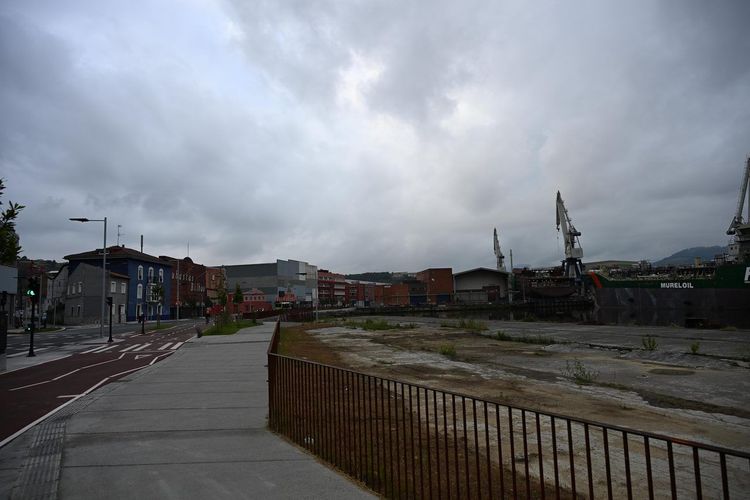
Founded in 1300 by a charter from Diego López de Haro, Lord of Biscay, Bilbao long lived off its port and its iron ore, exported since the Middle Ages and then intensively exploited during the industrial revolution of the 19th century. The blast furnaces that lined the Nervión made the city's fortune before becoming its burden from the 1970s onwards.
The steel and shipbuilding crisis hit Bilbao full force in the following decades, leaving entire stretches of wasteland along the river and mass unemployment. The devastating floods of 1983 were the final push that convinced the city authorities to rethink everything, from the drainage network to the very image of the city.
From the 1990s onwards, what urban planners now call the Bilbao Effect took shape: the regeneration of the waterfront, the inauguration of Norman Foster's metro in 1995, and then the opening of the Guggenheim in 1997 as the visible symbol of this transformation. In under twenty years, a city associated with industrial decline became an international reference for urban renewal.
Visiting Bilbao today is therefore as much a walk through a centuries-old city as it is a journey through a textbook case of urban resilience, visible on every street corner between ancient stone and contemporary titanium.
FAQ
How do you get around Bilbao?
The Barik card is the simplest solution: rechargeable and valid on the metro, the Euskotren tram, Bilbobus and Bizkaibus buses, and the Artxanda funicular, it brings each journey down to around one euro. For short distances between Casco Viejo and the Guggenheim, walking is just as fast as taking public transport.
How long does it take to visit Bilbao without a car?
Two full days cover the essentials of the historic and contemporary centre. Allow three to four days if you want to add a day trip to Gernika, Vitoria-Gasteiz, or the Biscay Bridge without rushing.
Is Bilbao an easy city to explore on foot?
Yes, the historic centre and the Guggenheim neighbourhood are at the same level, along the Nervión, with no significant elevation change between the two. Only excursions to Artxanda or Begoña involve a real climb, largely offset by the funicular or the public elevator.
How much does the Barik card cost and where can you buy it?
The card costs 3 euros to purchase, available at metro stations, selected kiosks, and tobacconists in the city centre. It can then be topped up directly at automatic machines, including by bank card.
How do you get to Bilbao without a car from France?
Three options cover most needs: the train to Hendaye and then Euskotren connections via San Sebastián, FlixBus or Alsa coaches from Bordeaux, Toulouse, or Paris, and BlaBlaCar carpooling, which is particularly convenient from south-west France. The Omio platform lets you compare all three at a glance.
Do you need to book for the Artxanda funicular or the Biscay Bridge?
No reservation is needed for the Artxanda funicular, which runs at regular intervals. Crossing the Biscay Bridge by gondola also requires no booking; only the climb to the top walkway requires a separate ticket, available on site or online.
Visiting Bilbao without a car is therefore no constraint to work around: it is the most authentic way to understand a city that built its renaissance on walking, the metro, and the tram rather than the car. From the Ribera market to the titanium of the Guggenheim, and through the gondola of the Biscay Bridge, every stop is reachable without ever hunting for a parking space.
To follow this thread at your own pace, the Ryo audio guide for Bilbao accompanies you step by step from Casco Viejo to the contemporary waterfront, with the stories that bring the facades you pass to life. All that's left is to load up the Barik card and let the city carry you.