© Shutterstock
 Votre guide Ryo
Visiting Malaga in 3 Days: Complete Itinerary 2026
In Malaga, winters are spent on sunny terraces. Visiting Malaga in 3 days means enjoying a city that still averages 17°C in January while the rest of Spain shivers, which explains why so many travellers choose it for a long weekend. To make the most of the city without rushing around, the Ryo audio-guided tour of Malaga maps out a clear route through the historic centre, perfect for organising your first day's visits.
Over three days, you move from a Moorish fortress perched above a Roman theatre to a museum housing more than 200 works by the painter born in the city, then on to a walkway suspended a hundred metres above a river, and finally to an urban beach just fifteen minutes on foot from the cathedral. From the lanes of the historic centre to the viewpoints of the Gibralfaro castle and day trips to Ronda or Gibraltar, this guide lays out a day-by-day itinerary with all the practical details: transport, budget, accommodation, and the best spots so you don't miss anything essential.
How Many Days Do You Need to Visit Malaga?
Three days is the ideal length for visiting Malaga at a leisurely pace: one day for the historic centre, one for the heights and the seafront, and a final day for a day trip or a lazy beach afternoon. Many cruise passengers learn this the hard way — a half-day stopover barely gets you past the postcard views.
Located in Andalusia on the Costa del Sol, Malaga has nearly 2,800 years of history. Founded by the Phoenicians around 770 BC under the name Malaka, it later became a Roman city, then spent nearly eight centuries under Muslim rule until the Christian Reconquest of 1487 by the Catholic Monarchs. Long regarded as a mere gateway to the beach resorts, the city has undergone a remarkable cultural renaissance over the past twenty years, driven by its museums — including the one dedicated to its most famous native, Pablo Picasso, born here in 1881.
Malaga's layout greatly simplifies trip planning: the historic centre, clustered east of the Guadalmedina river, contains most of the major sights within a radius of less than two kilometres. Exploring Malaga on foot is the default approach, and you'll only need a car for day trips into the hinterland.
Day 1: Alcazaba, Roman Theatre, and the Historic Heart of Malaga
The first day focuses on the historic centre, where most of the monuments are just a few minutes' walk from each other. Wear comfortable soles: the polished marble cobblestones of the old town get slippery quickly.
Morning: the Alcazaba and the Roman Theatre
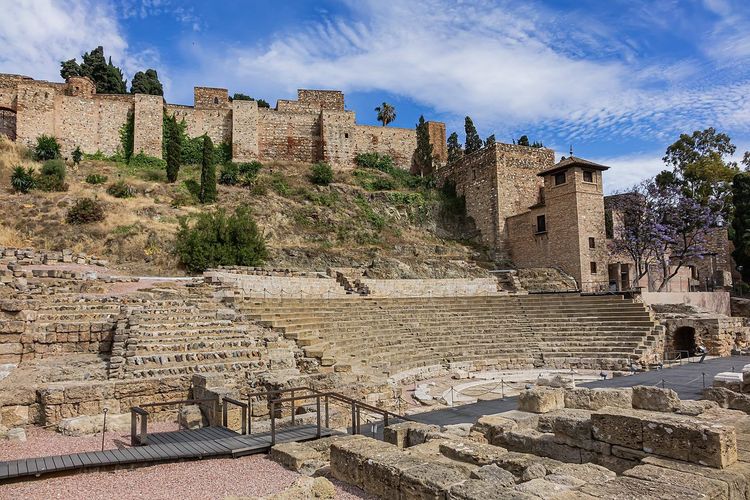
The Alcazaba (Calle Alcazabilla 2, 29012 Málaga, rated 4.6/5 on Google from 41,462 reviews) dominates the city centre from a hill planted with jasmine and bougainvillea. This 11th-century palatial fortress, built under the Hammudid dynasty and later remodelled by the Nasrids, is arranged as a succession of courtyards, pools, and fortified gateways that make the climb almost as rewarding as the summit. Admission costs around €3.50, a combined ticket with the Gibralfaro castle is available for a few euros more, and entry is free on Sundays from 2 pm. If stairs put you off, a lift at the rear of the town hall allows you to reach the upper section directly.
At the foot of the fortress lies the Roman theatre, accidentally unearthed in 1951 during construction work on what was to become the House of Culture. Dating from the Augustan era in the 1st century BC, it was long used as a quarry: the Arabs reused its columns and capitals in the walls of the Alcazaba, something you can easily spot by looking up at the entrance arches. Admission is free, and a small glass-fronted interpretation centre explains its history.
Ideally, arrive at opening time, around 9 am: the stone heats up fast by late morning, and organised groups crowd the viewpoints from 11 am onwards.
Afternoon: Cathedral, Atarazanas Market, and the Old Town Lanes
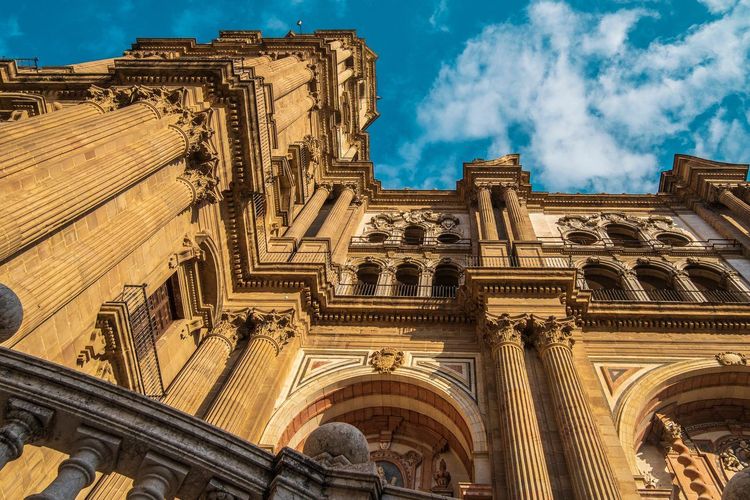
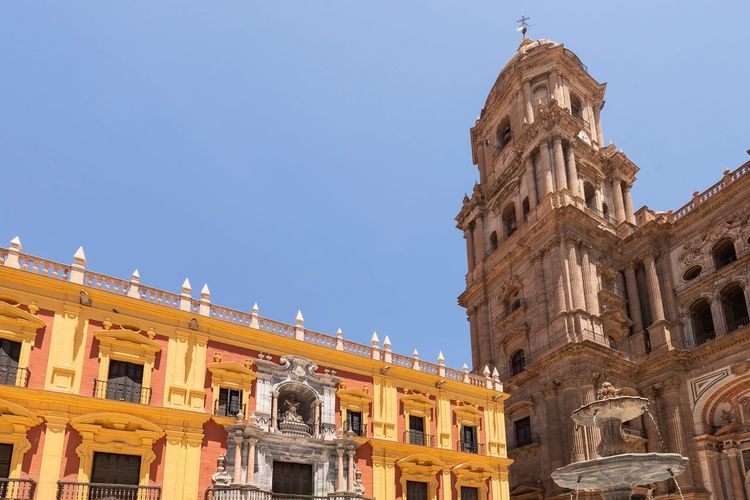
Nicknamed "La Manquita" (the one-armed lady) because its south tower was never completed, Malaga Cathedral rises on the site of the former great mosque. Local tradition holds that the money earmarked for the second tower was donated to support American independence — a more romantic than documented version. Its nave, begun in the 16th century in Renaissance style, houses remarkable carved choir stalls, and a rooftop tour allows you to walk across the vaults with views over the harbour.
Ten minutes' walk away, the Atarazanas Market is well worth a lunch stop. Its late-19th-century iron structure preserves a Nasrid gateway from the former maritime arsenal, and its vast stained-glass window tells the story of the city. With its fish stalls and tapas counters where you eat standing, elbow to elbow with regulars, it is one of the liveliest covered markets in Andalusia. Order some boquerones fritos (fried anchovies) and a glass of Malaga sweet wine — you won't regret it.
Heading back towards the centre, Calle Larios, a marble-paved pedestrian street, leads to Plaza de la Constitución, the hub of pavement cafés. In December, its light arches make up one of the most photographed Christmas illuminations in Spain. You can then wander without a fixed route through the adjacent lanes, where pastel-coloured façades and hidden wine bars reward those who stray from the main thoroughfares. The venerable Antigua Casa de Guardia, founded in 1840, still serves its Malaga wines from the barrel, with the tab chalked up on the counter.
Late Afternoon: the Picasso Museum of Malaga
Housed in the Renaissance Buenavista Palace, the Picasso Museum of Malaga opened in 2003 thanks to works donated and loaned by the artist's family, covering every period of his career. A full-price ticket costs €13, and entry is free on Sundays during the last two opening hours — a slot that draws a crowd, so arrive a little early to avoid the queue. In the basement, Phoenician remains uncovered during construction work can be visited with the same ticket.
Ten minutes' walk away, on the Plaza de la Merced, Picasso's birthplace, where he was born in 1881, can be visited in half an hour and makes a useful complement to the museum. On a bench in the square, a bronze statue of the painter waits for selfies.
If you'd rather hear this story in your ear than read it on information boards, the Ryo audio guide of Malaga's historic centre connects the Alcazaba, the Roman theatre, and the old town lanes in about 2 hours 15 minutes spread across 24 audio tracks and 5.3 km, with anecdotes delivered as you walk rather than delivered in a block in front of each monument.
Day 2: Gibralfaro Castle, the Harbour, and the Soho District
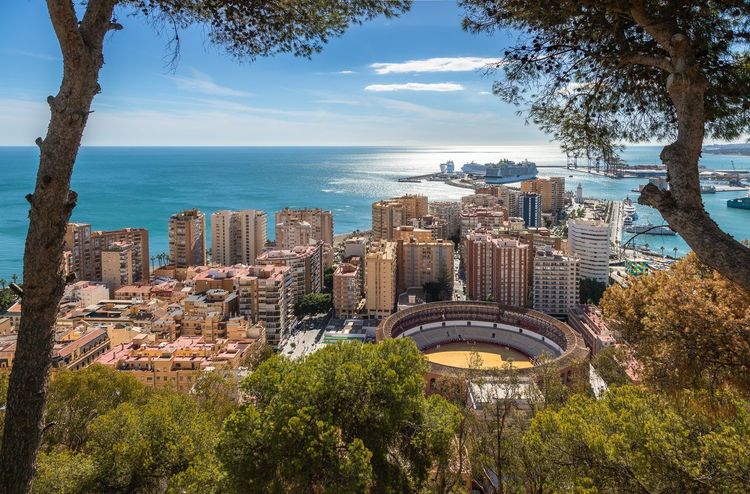
The second day gains altitude before descending towards the seafront, along an almost straight axis from the historic centre.
Morning: Gibralfaro Castle and Viewpoints over the Bay
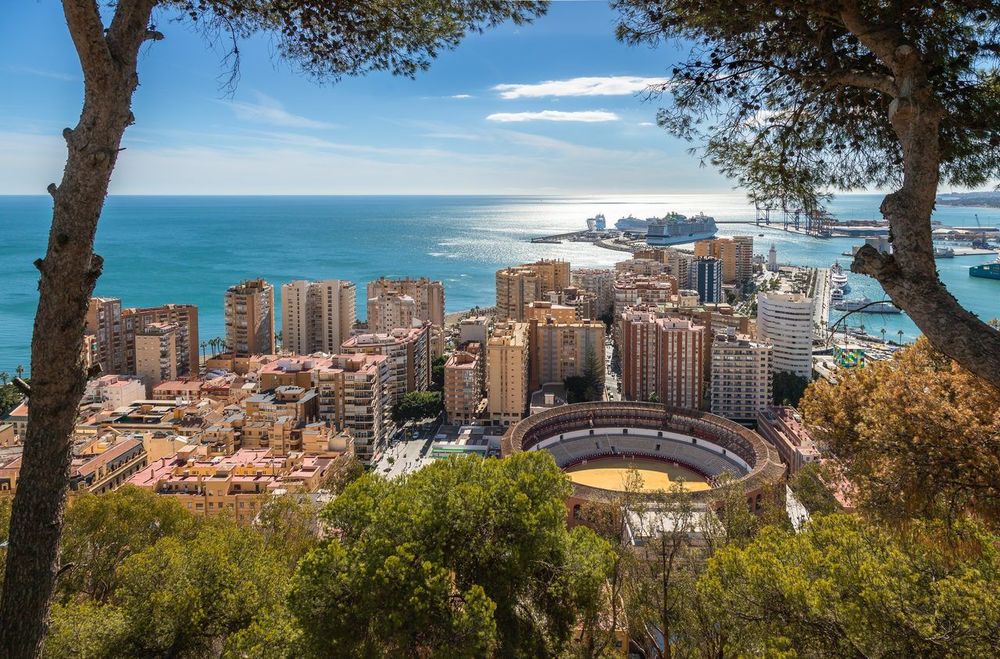
Connected to the Alcazaba by a double wall known as the Coracha, Gibralfaro Castle has occupied the hilltop since the 14th century, when the Nasrid sultan Yusuf I had it enlarged. In 1487, its garrison held out for several months under siege by the Catholic Monarchs before surrendering. The ramparts offer the broadest view over the city, the harbour, and the Malagueta bullring below. Allow 20 to 30 minutes on foot from the centre, or take bus no. 35 if the heat puts you off walking.
Leave early: the ascent faces due south and becomes gruelling after 11 am in summer. Bring water, as the only refreshment point at the top is the small castle café. Just before the entrance, the Gibralfaro viewpoint offers the most iconic free framing of the bullring and the harbour.
Afternoon: Malaga Harbour, Muelle Uno, and Street Art in Soho
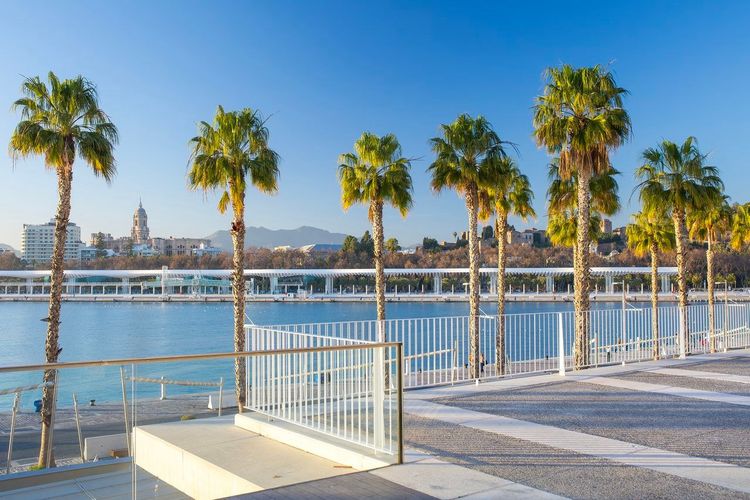
At the foot of the castle, Malaga harbour was transformed in 2011 into a pedestrian promenade called Muelle Uno, known to English-speaking guides as Pier One. Palm trees, boutiques, restaurants, and views of cruise ships create a setting very different from the historic centre. At the end of the jetty, the La Farola lighthouse — one of the few lighthouses in Spain with a feminine name — marks the entrance to the Malagueta.
Just behind it, the Soho district has been covered in monumental murals since the MAUS festival launched in 2013. Walking through this neighbourhood feels like following an open-air museum, giant portrait after giant portrait, on façades that seemed destined for demolition barely fifteen years ago. Look up on Calle Tomás Heredia and around the contemporary art centre (CAC Málaga), where admission is free: that is where the most spectacular works are concentrated.
Relaxation: Hammam Al Andalus and Sunset at the Mirador de la Coracha
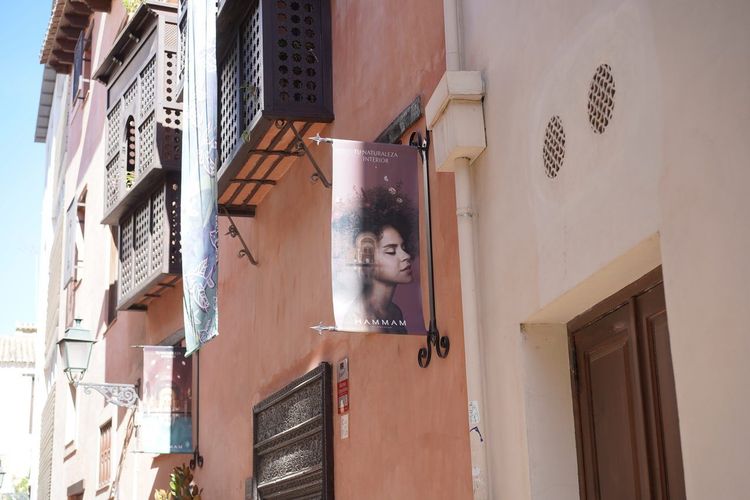
To unwind after a day on your feet, Hammam Al Andalus, near the Plaza de los Mártires, offers Arab baths inspired by the historic Andalusian hammams, with alternating hot and cold pools. Book at least a few hours in advance — more so on weekends.
If you prefer the open air, the Mirador de la Coracha (Camino de la Coracha, 29016 Málaga, rated 4.9/5 on Google from 481 reviews), perched on the rampart path between the Alcazaba and the castle, offers a sunset far less crowded than the one from the top of Gibralfaro.
The Ryo audio-guided tour of Malaga is designed to accompany this very descent from Gibralfaro Castle down to the harbour and Soho, with anecdotes about the street art told as you walk rather than summarised on a panel.
Day 3: Caminito del Rey, Nature, and Malaga's Beaches
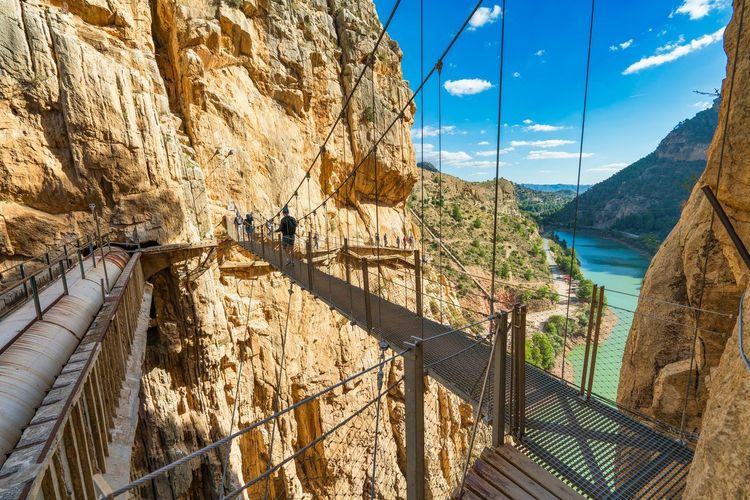
The third day plays out at two speeds: a thrilling excursion an hour's drive away, or a more relaxed day between parks and beach without a car. Choose according to how much energy you have left.
Excursion Option: the Caminito del Rey
Built between 1901 and 1905 to allow workers at the hydroelectric power station to move above the Chorro gorges, then named after King Alfonso XIII's visit in 1921, el Caminito del Rey (Ctra. MA-8201, 29550 Ardales, Málaga, rated 4.7/5 on Google from 40,087 reviews) was closed in 2001 following several fatal accidents. Reopened in 2015 with entirely new walkways, it now follows the rock face a hundred metres above the Guadalhorce river along a route of approximately 7.7 km, including nearly 3 km of suspended walkways.
The site is approximately 58 km from Malaga. A standard ticket costs €10 (€18 for a guided visit); access is forbidden to children under 8 and daily time slots are limited — book online several weeks ahead in spring and autumn. Without a car, a regional train serves El Chorro station at the trail's exit, then a paid shuttle (€2.50) runs back to the northern entrance. Allow almost a full day including travel, with a helmet provided on site.
Relaxation Option: Malaga Park and the Concepción Botanical Garden
For a quieter day in the city, Malaga Park, a long promenade lined with palm trees and ficus trees inaugurated in 1897 along the seafront, discreetly links the historic centre to the harbour. Its shaded avenues make a pleasant shortcut between the cathedral and the Malagueta.
About fifteen minutes by taxi or bus from the centre, the Concepción Botanical Garden unfolds its tropical avenues and waterfall across an estate created in the mid-19th century by Amalia Heredia and Jorge Loring — a welcome pocket of coolness in the summer heat. Allow a good two hours, and aim for late afternoon in summer.
Beaches: La Malagueta and the Seafront
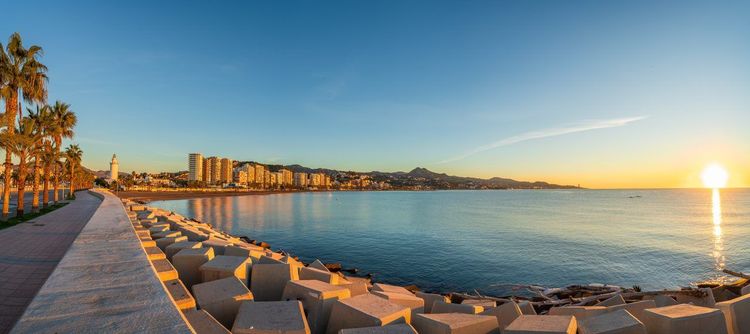
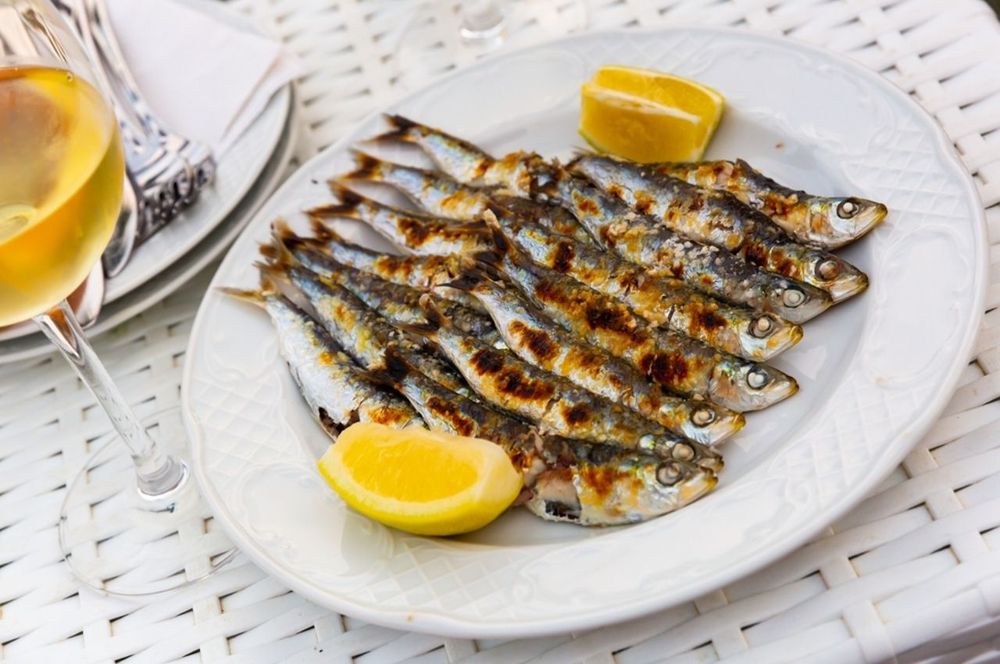
Fifteen minutes' walk from the cathedral, La Malagueta beach is the most convenient spot to end the day without any transport: slightly grey sand but immediate access, and chiringuitos where you can order espetos with your feet almost in the water. If you want more peace and quiet, continue east along the paseo marítimo to the beaches of La Caleta and Pedregalejo, a former fishing neighbourhood where seafood restaurants line the waterfront.
If the Caminito doesn't appeal, the Ryo audio guide of Malaga lends itself well to a more relaxed half-day: its city-centre and seafront stages are car-free and lead naturally to the beach.
Malaga's Other Museums: Pompidou, Carmen Thyssen, and the Automobile Museum
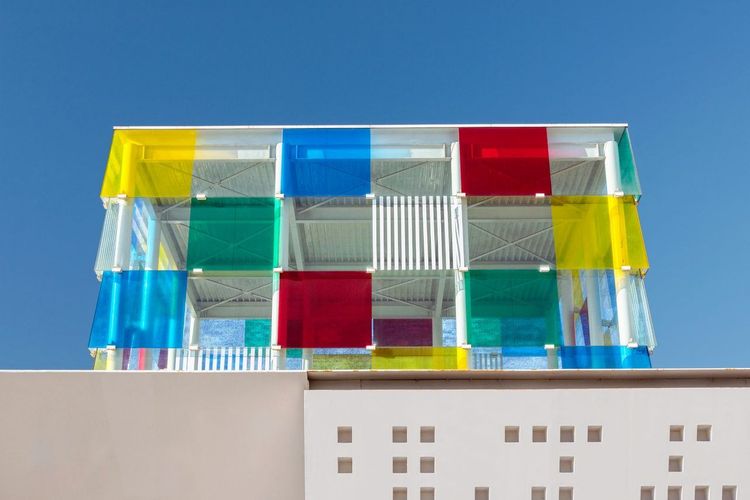
Beyond Picasso, Malaga has seen a wave of museum openings over the past fifteen or so years, to the point where the city now claims more than thirty museums. If you enjoy art, keep a rainy morning or a late afternoon free for two of them.
Centre Pompidou Malaga and the Carmen Thyssen Museum
Opened in 2015, the Centre Pompidou Malaga occupies "El Cubo", a coloured glass cube designed by Daniel Buren and set on the harbour. It is the first outpost of the Paris centre established outside France, with a regularly updated collection of modern and contemporary art.
In the 16th-century Villalón Palace, the Carmen Thyssen Museum has since 2011 brought together a collection of 19th-century Spanish and Andalusian painting assembled by Baroness Carmen Cervera, with an entire room devoted to scenes of Andalusian costumbrismo.
Automobile and Fashion Museum, and the Museum of Malaga
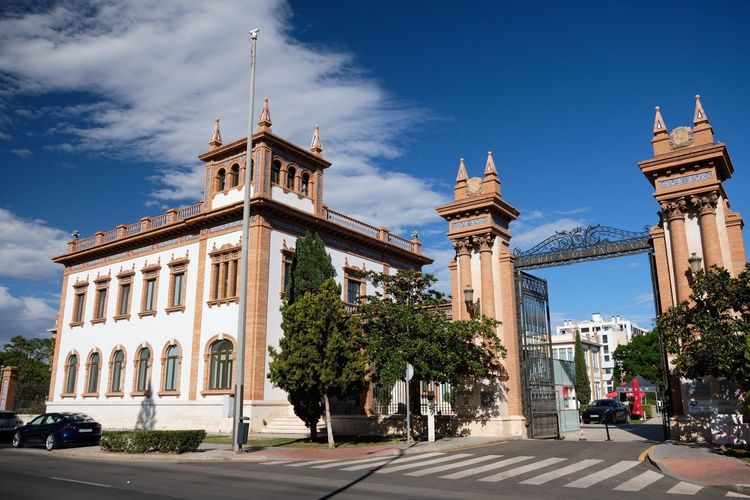
Housed in the former tobacco factory (la Tabacalera), the Automobile and Fashion Museum pairs around a hundred vintage cars with haute couture pieces — an unexpected combination that works surprisingly well.
The Museum of Malaga, housed since 2016 in the Customs Palace at the foot of the Alcazaba, brings together the city's fine arts and archaeology collections under one roof. It is the largest museum in Andalusia and remains free for European Union citizens on presentation of an identity document.
To visit the museums for free, keep track of the dedicated slots: the Picasso Museum opens its doors without charge on Sundays during the last two hours, the Alcazaba and Gibralfaro on Sunday afternoons, and several museums are free on International Museum Day (18 May). Check conditions on their websites before you turn up.
Day Trips from Malaga: Ronda, Setenil de las Bodegas, and Gibraltar
For travellers extending beyond three days or renting a car for a day, the Andalusian hinterland is well worth the detour.
Ronda and Setenil de las Bodegas
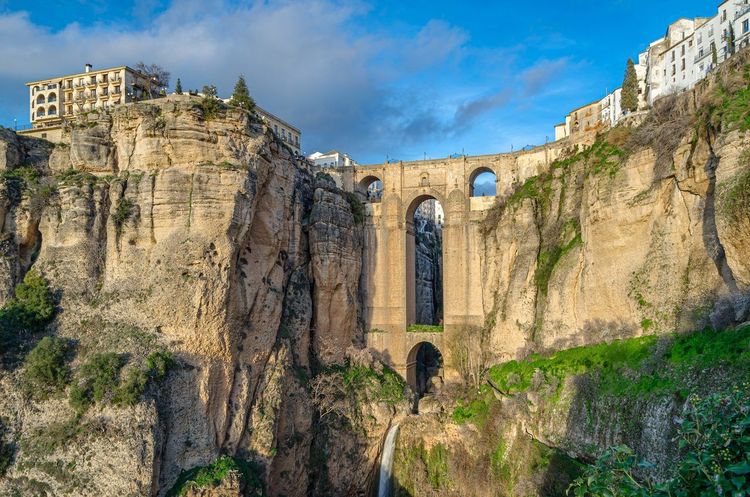
About a hundred kilometres to the north-west, Ronda straddles a vertiginous gorge called the Tajo, spanned by the Puente Nuevo completed in 1793. Its late-18th-century bullring is among the oldest in Spain and houses a small bullfighting museum.
About twenty kilometres away, Setenil de las Bodegas (29457 Setenil de las Bodegas, Cádiz, rated 4.7/5 on Google from 9K reviews) has built part of its houses directly under rocky overhangs, with some entire streets lying in the permanent shadow of the rock face.
Allow a full day for both sites. A direct bus connects Malaga to Ronda in about 1 hour 45 minutes, while the train often requires a connection; a rental car or an organised excursion makes combining the two with a stop in Setenil considerably easier.
Gibraltar, Nerja, and the Colomares Castle
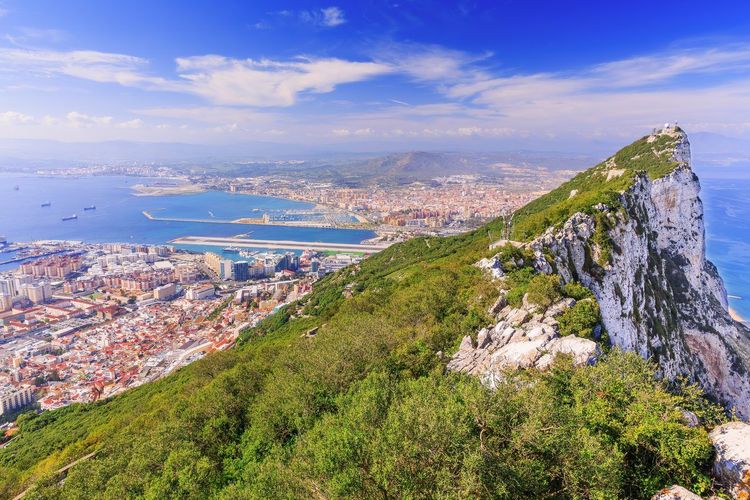
About 1 hour 45 minutes' drive to the south-west, Gibraltar, a British Overseas Territory, is distinguished by its steep limestone rock and its Barbary macaques — the only wild monkeys in Europe. Bring your passport or national identity card: the border remains an active checkpoint, and car queues can be long, so it is better to cross on foot from La Línea.
To the east, 50 minutes by road, Nerja and its Balcony of Europe overlook the Mediterranean, a stone's throw from caves filled with giant stalactites. The nearby white village of Frigiliana easily completes the half-day.
Even closer, in Benalmádena, the Colomares Castle is an unusual monument erected between 1987 and 1994 by physician Esteban Martín, entirely dedicated to Christopher Columbus and blending neo-Mudéjar and Romanesque styles in a single structure.
To combine Ronda and the hilltop villages with commentary at every stop, the Ryo audio-guided tour dedicated to Andalusia picks up where the city-centre tour leaves off — practical if you extend your stay by car.
Malaga with Kids: Activities and Tips for Families
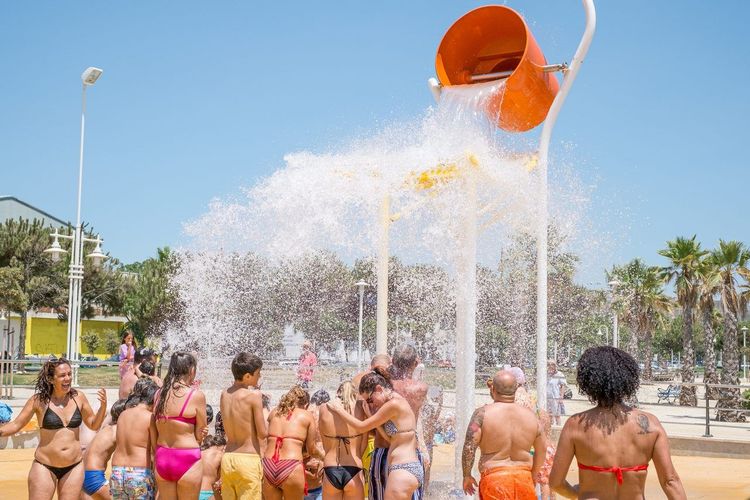
Malaga is well suited to a family stay, as long as you adjust the daily rhythm and save the hottest hours for a siesta or a trip to the beach.
Children generally enjoy the fortress aspect of the Alcazaba, which is more fun to explore than to read about on a notice board, as well as the harbour promenade with its ice cream stalls and boats. The Caminito del Rey is only accessible from age 8, and the walk is long — reserve it for children used to hiking who are not prone to vertigo.
What to do in Malaga when it rains? Head to the museums: the Centre Pompidou runs workshops for younger visitors on some weekends, the Automobile Museum often captivates children more than adults, and the interactive music museum (MIMMA), where you can touch the instruments, is a good backup plan.
On the practical side, a pushchair navigates the harbour promenade and La Malagueta without difficulty, but becomes trickier on the uneven cobblestones of the historic centre. A baby carrier will make life easier at the Alcazaba and Gibralfaro.
Adapting the Itinerary: Visiting Malaga in 1, 2, 4, or 5 Days
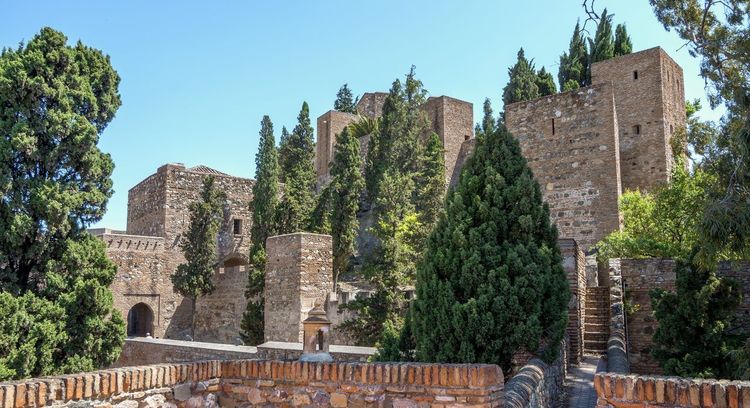
Visiting Malaga in 1 day is possible by focusing on the Alcazaba, the cathedral, and the Picasso Museum, with the compact centre making everything walkable. The pace is tight but achievable, especially during a cruise stopover: the terminal is about twenty minutes' walk from the centre.
For visiting Malaga in 2 days, the logical approach is to combine the historic centre and Gibralfaro without any day trips; our dedicated article covers visiting Malaga in 2 days hour by hour if you're short of time for a third day.
For visiting Malaga in 4 days or 5 days, add Ronda and then Gibraltar or Nerja as separate days rather than combining them in one excursion. And what to do in Malaga for a week? Slot in a trip to Granada and the Alhambra (1.5 hours by bus), leave more room for the beach, and the stay becomes far less of a race against the clock.
Malaga at Night: Flamenco, Tapas, and Andalusian Atmosphere
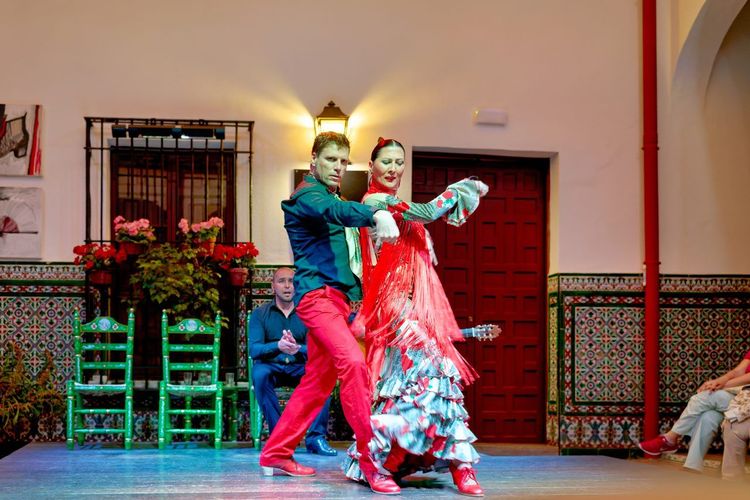
After dark, Soho and the area around the Plaza de la Merced concentrate most of the nightlife, between tapas bars and terraces that fill up after 9 pm — the local dinner hour. In summer, hotel rooftops in the centre offer illuminated views over the cathedral and the Alcazaba.
Attending a flamenco show remains the most sought-after cultural night-time experience. Choose a tablao known for its authenticity rather than a show calibrated for tour groups, and book ahead: the best venues sell out on weekends. Expect to pay generally between €20 and €40 depending on the package, with or without a drink.
A good formula is to dine late near the centre, then head to a show around 10:30 pm. If you're there in August, the Feria de Malaga turns the entire city into an open-air celebration for a week.
Where to Stay in Malaga: Neighbourhoods and Best Hotels
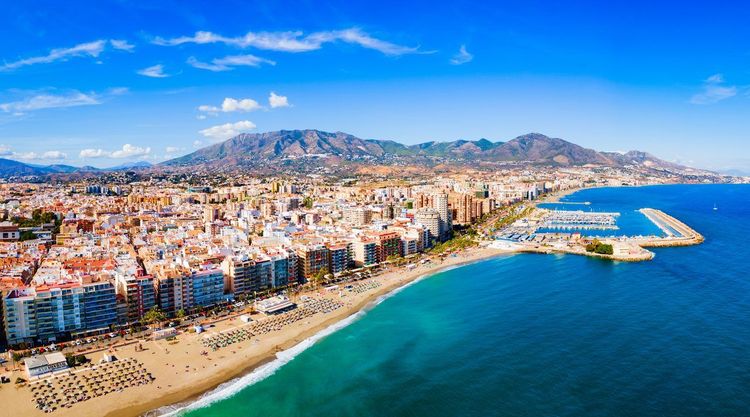
The historic centre concentrates most of the boutique accommodation, within walking distance of all the first-day sights. It is the most practical choice, at the cost of a little more night-time noise and higher rates in high season.
The Soho district often offers better value for money, with design hostels and small independent hotels, ten minutes' walk from the harbour and close to the María Zambrano station for those arriving by train.
La Malagueta suits families or beach-focused stays better: a quiet residential neighbourhood, direct seafront access, slightly further from the historic monuments. Pedregalejo, further east, will appeal to those who want to live at the pace of a former fishing village.
Whichever area you choose, book early in spring, summer, and during Holy Week, whose processions draw enormous crowds: the best addresses in the historic centre sometimes fill up months in advance.
Where to Eat in Malaga: Specialities and Best Spots
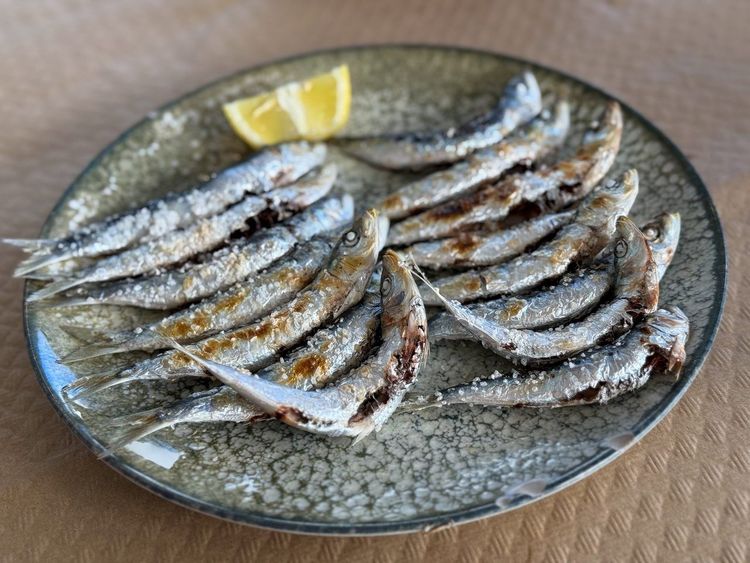
The culinary speciality not to miss in Malaga is espetos de sardinas: sardines skewered and grilled over embers, traditionally served directly on the sand at beach chiringuitos. Pescaíto frito, an assortment of small fried fish, and porra antequerana, a thick olive oil-enriched gazpacho, complete the local repertoire, not forgetting ajoblanco, a cold almond and garlic soup.
For a sweet break, Casa Mira (Calle Larios 5, 29005 Málaga, rated 4.5/5 on Google from 7,521 reviews) has been selling ice creams and turróns since the late 19th century on Calle Larios — an institution that few visitors walk past once they've heard about it.
Our favourite spots are often far from the overly visible terraces of Plaza de la Constitución: the Atarazanas Market counters and the small bodegas of the Lagunillas neighbourhood generally offer a more honest price-to-quality ratio. At the coffee counter, order the local way: a "nube" for an almost all-milk coffee, a "solo" for an espresso. To dig deeper, our top 10 culinary specialities of Malaga details the dishes to know before you go.
Getting to and around Malaga: Plane, Train, Bus, and Local Transport

Getting to Malaga by Plane, Train, or Bus
Malaga-Costa del Sol Airport (AGP) is one of the busiest in Spain, with direct connections from most major French, Belgian, and Swiss cities. To reach Malaga by train, the AVE high-speed service connects Madrid in approximately 2.5 to 3 hours, departing from the María Zambrano station.
Getting to Malaga by bus remains the most economical option from other Andalusian cities: the ALSA network serves Seville, Granada, and Córdoba several times a day, often at a lower cost than the train.
Getting around the City: Airport to Centre, Public Transport, and Car
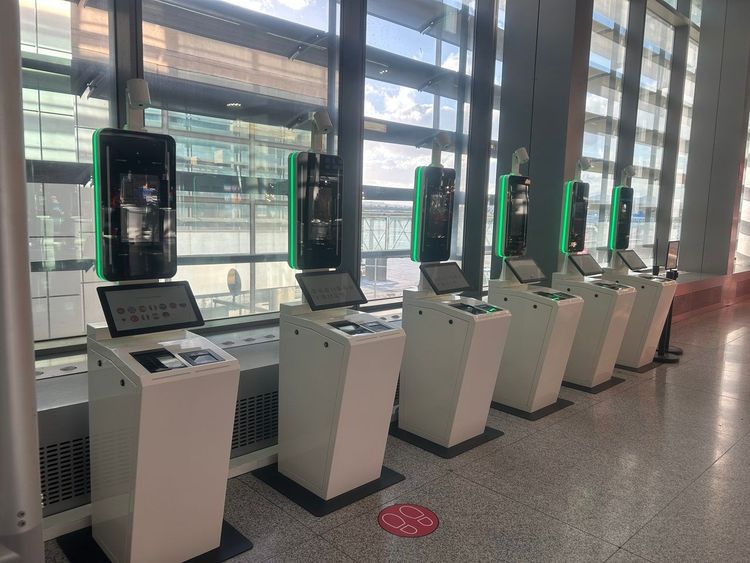
How do you get from the airport to the centre of Malaga? The C1 suburban train connects the airport to the Centro-Alameda station in about twelve minutes for a few euros. The express bus A and a taxi (around 20 minutes) are valid alternatives depending on your arrival time.
Is it easy to get around Malaga by public transport? Yes for reaching outlying neighbourhoods, but the historic centre is explored almost exclusively on foot, with EMT buses mainly useful for reaching Gibralfaro or the Concepción without walking in full sun.
Do you need to rent a car in Malaga? Not for the city itself, where parking is expensive and scarce, but yes if you plan to visit Ronda, Setenil, or Gibraltar — unless you prefer an organised excursion.
When to Go and What Budget to Plan for 3 Days in Malaga
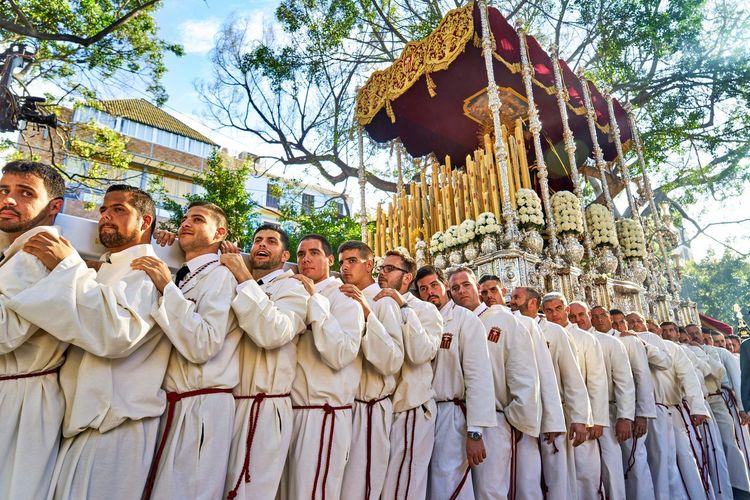
When should you visit Malaga? Spring (March to May) and autumn (September–October) offer the best compromise, with mild temperatures and more manageable crowds than in high summer. Winter remains surprisingly mild, ideal for exploring the city on foot without battling the heat, while July and August combine heavy crowds with sometimes oppressive temperatures.
Is Malaga an expensive city? Less so than Madrid or Barcelona for accommodation and everyday dining, but prices rise noticeably in summer and during Holy Week. To give you a rough idea, monument admission stays modest throughout the trip: around €3.50 for the Alcazaba, €13 for the Picasso Museum, €10 for the Caminito del Rey. A tapa typically costs €3 to €5 in neighbourhood bars. The item that most affects your budget is accommodation, especially in the historic centre during high season.
Malaga or Seville: Which One to Choose for Your Stay
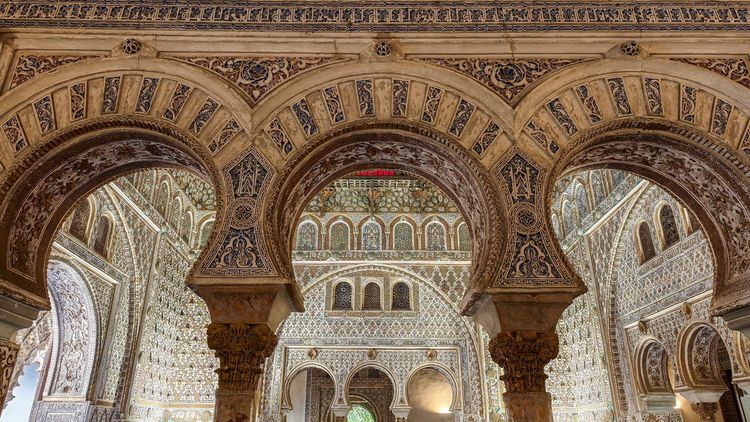
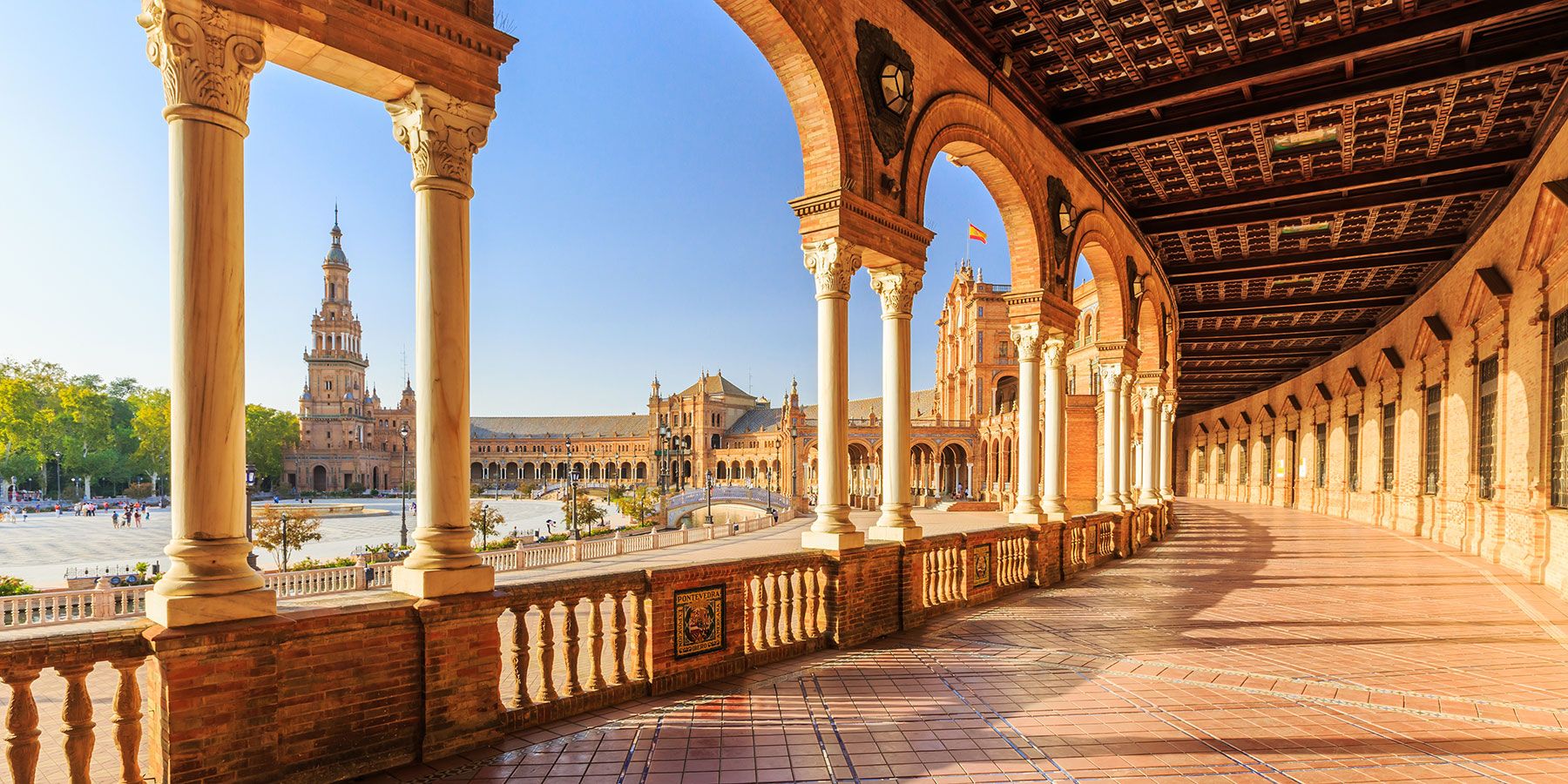
Seville wins on pure monumental grounds: the Alcázar and its cathedral — the largest Gothic cathedral in the world — alone justify a stay more focused on heritage, albeit with a summer heat that is often more stifling than by the sea.
Malaga is more convincing for the balance between city and sea: a beach walkable from the historic centre, better direct flight connections, and an ideal base for exploring the Costa del Sol. If you're undecided, nothing stops you combining both: the train links the two cities in about two hours.
Visiting Malaga with a Disability: Accessibility and Practical Tips
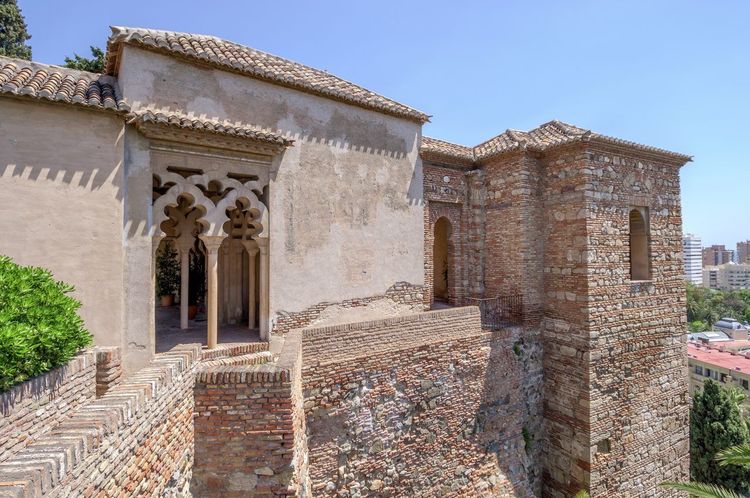
The historic centre, cobbled and at times steep, remains the most challenging area for visitors with reduced mobility, despite the lift that allows access to the upper part of the Alcazaba without using the original ramps. The harbour promenade and La Malagueta beach, on the other hand, are entirely flat and equipped with adapted access, including boardwalks leading to the sand.
The main museums (Picasso, Pompidou, Carmen Thyssen, Museum of Malaga) all have ramps and lifts. Contact the tourist office before your visit to find out which bus lines are equipped and what adapted taxi services are available in the city.
FAQ
How many days do you need to visit Malaga?
Three days are enough to cover the historic centre, the main museums, and a half-day at the beach or on a day trip. Add one more day for Ronda or the Caminito del Rey if you want a relaxed pace.
What is the best time to visit Malaga?
Spring and autumn offer pleasant temperatures without the heat or crowds of July and August. Winter remains mild, making it possible to explore the city on foot all year round.
Is Malaga an expensive city to visit?
Cheaper than Madrid or Barcelona for accommodation and dining, Malaga becomes pricier during the summer high season and Holy Week. Entrance fees to monuments remain affordable.
How do you get around Malaga without a car?
The historic centre is entirely walkable. EMT buses and the suburban train connect the airport and outer neighbourhoods; a car is only useful for day trips to Ronda or Setenil.
Do you need to book the Caminito del Rey in advance?
Yes, tickets must be booked online several weeks ahead during high season, as daily time slots are limited. Access is forbidden to children under 8.
What is the culinary speciality of Malaga?
Espetos de sardinas — sardines skewered and grilled over a wood fire, often served directly on the beach — best capture the essence of the local cuisine.
Are Malaga's museums free on certain days?
Yes: the Picasso Museum is free on Sundays during the last two opening hours, the Alcazaba on Sunday afternoons, and the Museum of Malaga is free for European Union citizens.
Conclusion: Final Tips for 3 Days in Malaga
Three days turn out to be just right in Malaga to move from a Moorish fortress to a Picasso museum, then from a walkway suspended above a river to a beach right in the city centre. It is this variety packed into such a small area that sets the city apart from the rest of the Costa del Sol. Book the Caminito and the Picasso Museum in advance, save the hottest hours for the beach or the museums, and you'll make the most of every day without rushing.
To follow this thread in audio form rather than in a notebook, the Ryo audio-guided tour of Malaga accompanies you across 5.3 km through the historic centre, with the story behind each monument from the Roman theatre to the foot of Gibralfaro.