© Shutterstock
 Votre guide Ryo
Visiting Zurich in 3 Days in 2026: Complete Itinerary, Addresses and Tips
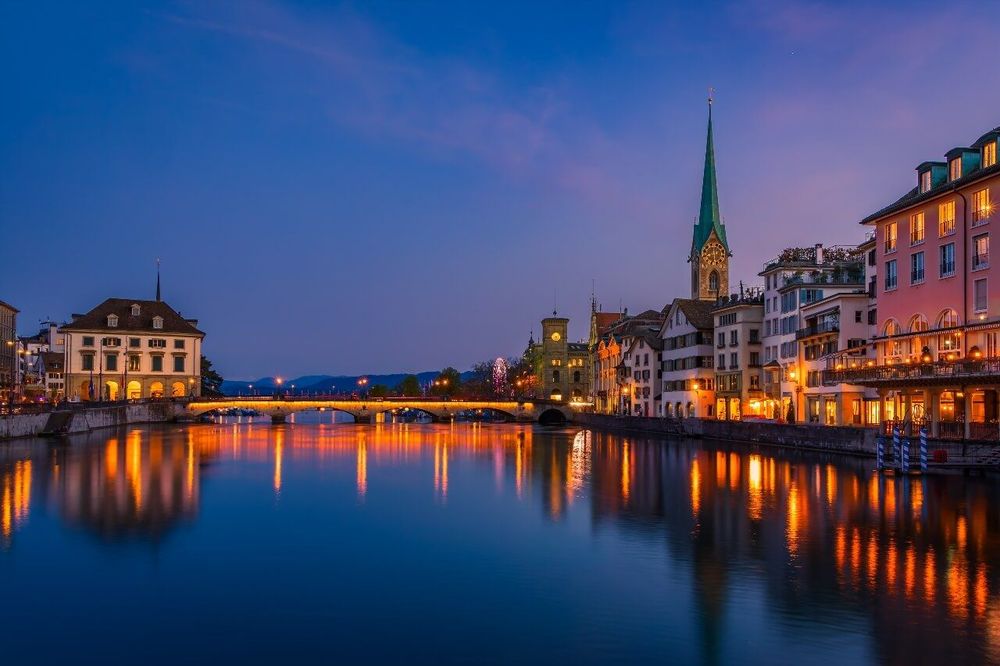
Zurich has a reputation as a city of hurried bankers and high prices, and yet a single morning on the cobblestones of the old town is enough to understand that this image tells only half the story. Between the twin towers of the Grossmünster, the lanes climbing toward the Lindenhof and the quays where people swim during their lunch break, Zurich reveals itself at a much slower pace than its financial image suggests. To visit Zurich in 3 days without missing anything essential, start by checking out the Ryo audio-guided tour of Zurich, which guides you step by step through the lanes of the historic center.
In three days, you will have time to climb the Uetliberg for a panorama stretching all the way to the Alps, to cross the lake by boat to Rapperswil after a gourmet stop at Lindt, and to spot the little stick figures secretly drawn by an artist long prosecuted for vandalism. You will also learn why the city has more than a thousand freely accessible drinking fountains, where to try Zurich specialties without breaking the bank, and how former railway arches became one of the city's most popular covered markets. This guide details a day-by-day itinerary, the best places to eat and sleep, the possible excursions around Lake Zurich and a few plan Bs for rainy days.
If you are still unsure about the ideal length of stay, know that three days is the format most often recommended by regulars: enough to leave the center without rushing, not enough to see everything, which leaves a good excuse to come back.
Day 1: Old Town, Lindenhof and the Two Great Churches
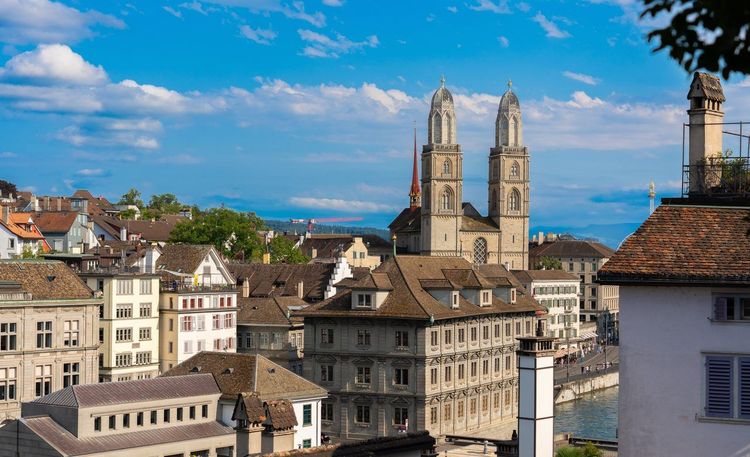
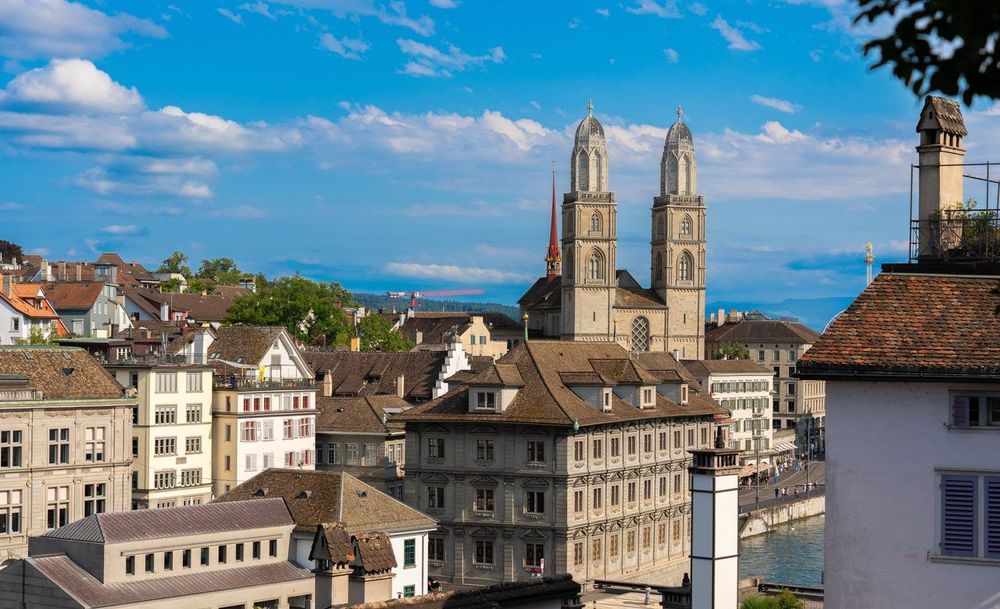
The first day is designed as a tight loop in the heart of the Altstadt, the old town stretching on both sides of the Limmat. Allow a full day to link together the cobbled lanes, two emblematic churches and a gourmet break on the chicest shopping street. To find more ideas depending on the day's weather, our article on what to do in Zurich is a useful complement to this itinerary.
The Ryo audio-guided tour takes you step by step through the Lindenhof, the Grossmünster and the Fraumünster, with a sound anecdote for each façade: a good way to connect the points without keeping your nose glued to a paper map.
The Lindenhof and the Lanes of the Altstadt
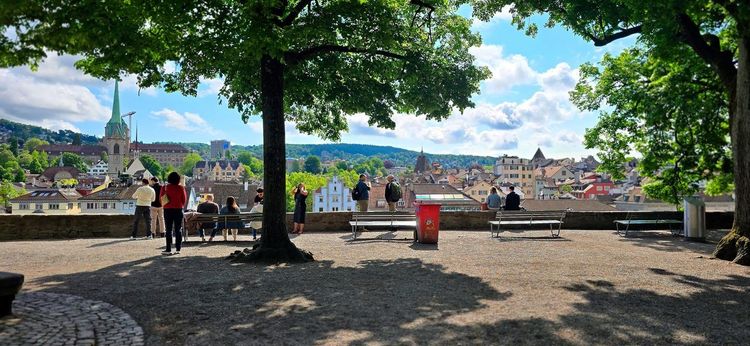
Start by climbing up to the Lindenhof, a terrace planted with linden trees that occupies the site of a former Roman fort and then a Carolingian palace. Almost no stone remains visible, but the view over the tiled roofs and the Limmat is enough to explain why generations of Zurichers play giant chess here in the late afternoon.
The square has remained a free public space, with no shop or café to monetize it, which is quite rare in a city where every square meter is expensive. The benches are often occupied from 5 p.m. by regulars who simply come to watch the sun go down over the rooftops. From the Bahnhofstrasse, allow five minutes of climbing along the sloping lanes of the Pfalzgasse.
On the way down, cross the Limmat to reach the Niederdorf, the densest district of the Altstadt, with its medieval façades converted into bars and small shops. You will pass a good share of the city's public fountains here: Zurich has more than 1,200, supplied with drinking water, and local custom is to fill your bottle without hesitation. At night, the Niederdorf changes its face: souvenir windows give way to wine bars and small concert stages, frequented more by students than by passing visitors.
North of the district, at Central square, the little Polybahn, a red funicular in service since 1889, lifts passengers in two minutes to the Polyterrasse of the Swiss Federal Institute of Technology, one of the finest free balconies over the old town.
Then walk along the Limmatquai, the cobbled promenade running along the river that offers the best view of the two towers of the Grossmünster reflected in the water in the early morning. On the quay, the Rathaus, the baroque town hall built over the river, is the historic seat of the cantonal parliament, an institutional building literally set on the water.
Grossmünster and Fraumünster, the Two Religious Jewels
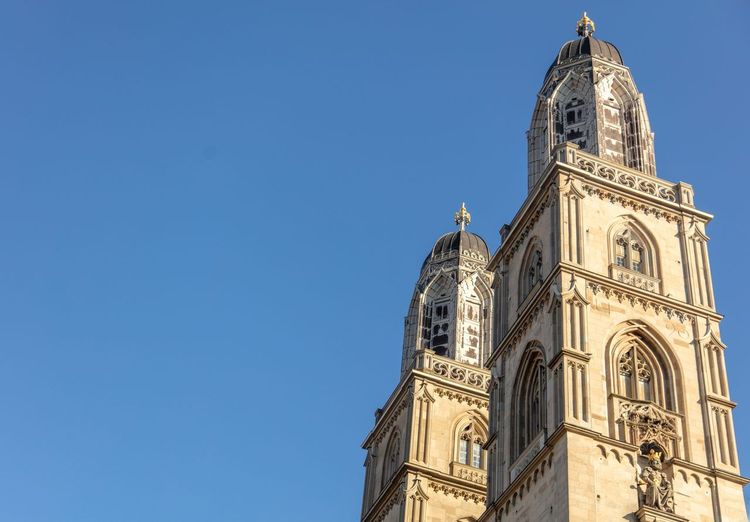
The Grossmünster dominates the east bank with its twin towers, crowned with their current domes in the 18th century after a fire, but founded, according to legend, by Charlemagne himself. The crypt houses a statue of the emperor, and the view from the tower, reached by a narrow staircase of nearly 190 steps, is worth the effort for anyone without a fear of heights.
It was also from the pulpit of this church that Huldrych Zwingli launched the Protestant Reformation in German-speaking Switzerland starting in 1519, an episode that durably shaped the architectural austerity of the city center. You will notice it when you step inside: the walls are almost entirely bare, a deliberate choice that contrasted at the time with the splendor of the Catholic churches of neighboring cantons.
On the other bank, the Fraumünster is visited above all for its five stained-glass windows signed by Marc Chagall in 1970, whose colors change with the time of day. Many visitors rush past without stopping: take the time instead to sit for about ten minutes, as the light passes differently through the blue and the red depending on whether the sun is high or already low. The building long belonged to an abbey of noblewomen founded in the 9th century, whose abbess held great authority over the city for centuries.
Just steps away, St. Peter's Church displays the largest church clock face in Europe, with a diameter of about 8.7 meters, a detail few guides mention even though it can be seen from almost the entire city center.
Bahnhofstrasse, Sprüngli and a Gourmet Break
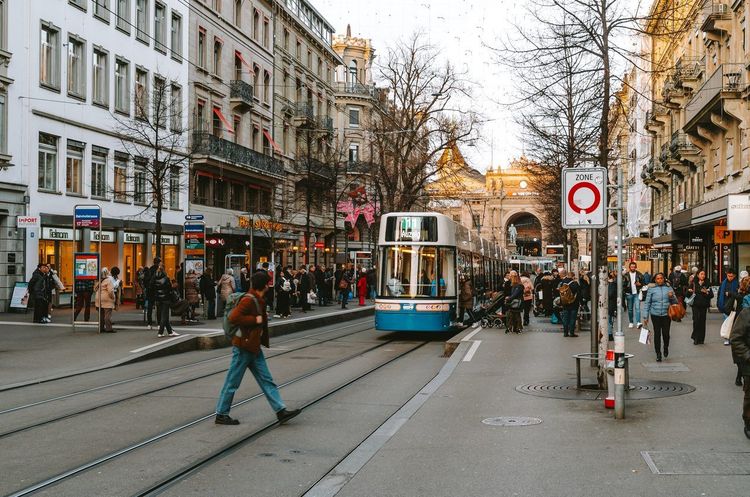
End the day on the Bahnhofstrasse, laid out in the 19th century on the site of a former fortification moat and today one of the most expensive shopping streets in the world. Local legend has it that the vaults of some private banks extend beneath the sidewalk, but it is obviously impossible to verify.
Midway along, the Paradeplatz (Paradeplatz, 8001 Zürich) has served for over a century as a tram junction and a visual symbol of the Swiss financial center, framed by the historic headquarters of two of the country's major banks. It is a good landmark to get your bearings, even if the place has nothing exceptional to see apart from the ballet of trams crossing every minute.
Stop at the Confiserie Sprüngli (Bahnhofstrasse 21, 8001 Zürich, rated 4.4/5 on Google from 4,952 reviews), a family institution founded in the 19th century and famous for its Luxemburgerli, tiny macarons to be enjoyed within days of purchase to get the best of their freshness. If you prefer a sit-down dinner, the Kronenhalle has cultivated for a century a collection of original paintings signed Picasso, Miró or Chagall hanging between the tables, and the Café Bar Odeon, frequented by Lenin and James Joyce in the early 20th century, remains a must in the evening for a last drink.
Day 2: Museums and Contemporary Art in Zurich
The second day completely changes pace: it is all about museums, designed for very different audiences. Plan to arrive early at the first one, as queues grow quickly in late morning once groups arrive, especially on weekends.
Kunsthaus Zürich and the Swiss National Museum
The Kunsthaus Zürich became the largest art museum in Switzerland with the opening in 2021 of an extension designed by David Chipperfield, on the other side of the Heimplatz. It holds one of the richest collections of modern art in the country, Monet, Munch, Giacometti, but also the much-debated Bührle collection, part of which has a provenance linked to World War II looting, a subject the museum now documents openly in its displays.
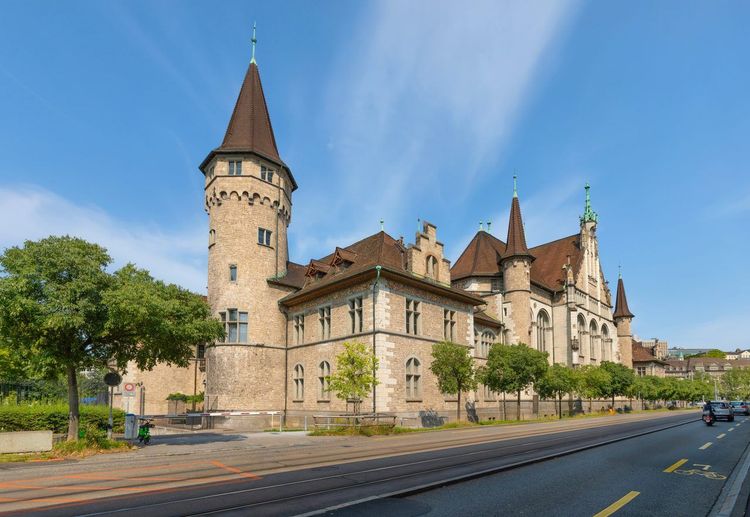
On the other side of the Limmat, the Swiss National Museum, housed in a historicist building that looks like a castle with its turrets and battlements, traces the country's history from prehistory to the modern Confederation. It is the place to understand, in an hour or two, why Switzerland built its identity around neutrality and federalism. The building itself, set right behind the central station, often surprises visitors who expected more discreet architecture.
If you plan to visit several museums in a row, consider the Zürich Card rather than individual tickets: it gives free or discounted admission to many institutions and saves you from queuing at multiple ticket desks. The same Ryo audio tour devotes several stops to the historic center, with a geolocated commentary that tells, along the way, the story of the stick figures you will come across a little further on.
Rietberg Museum and Art Galleries
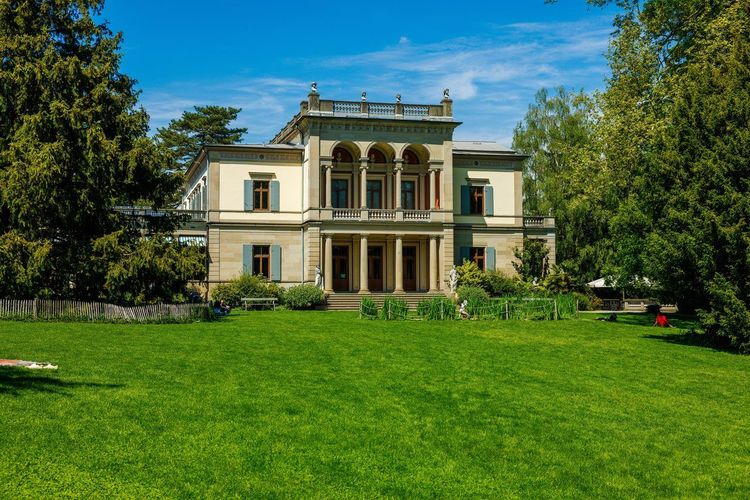
Less known to visitors in a hurry, the Rietberg Museum is nonetheless worth the trip to the Enge district. Housed in the Villa Wesendonck, a 19th-century mansion extended by a glass entrance pavilion, it holds one of the finest collections of non-European art on the continent: African masks, Himalayan Buddhas, Japanese prints, with more than 20,000 objects preserved.
The surrounding park, planted with century-old trees, is ideal for a picnic break between two rooms, and remains one of the rare places where children can run around without being told to lower their voices. If the weather allows, continue on to the contemporary art galleries of Zürich West, notably around the Löwenbräu-Areal: the Zurich scene is more low-key there than Basel's, but often more affordable for those looking for a first artwork.
Helmhaus and Harald Naegeli's Street Art
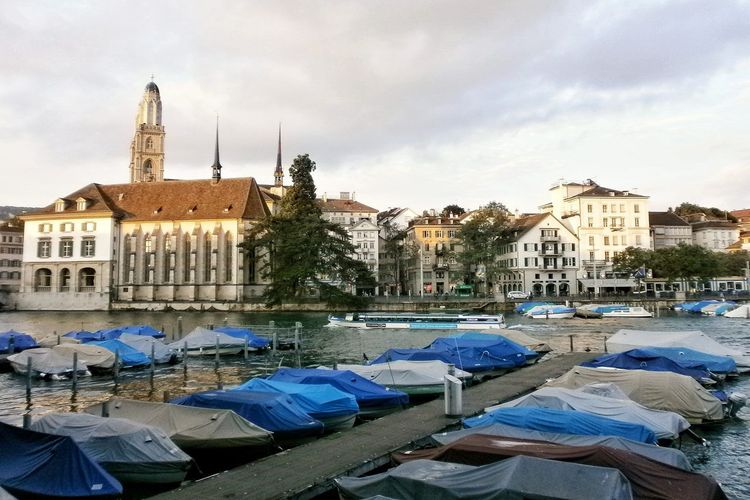
Head back toward the Limmatquai for the Helmhaus (Limmatquai 31, 8001 Zürich, rated 4.5/5 on Google from 343 reviews), a free municipal space dedicated to Swiss contemporary art, housed in a late 18th-century building whose arcaded hall once hosted a market. Exhibitions change several times a year and make a lighter complement after the density of the Kunsthaus.
On the way, keep your eyes open: you may spot one of the spindly figures spray-painted by Harald Naegeli, nicknamed the Sprayer of Zurich. In the late 1970s, he covered the city's walls with hundreds of figures, before being convicted in 1981 and serving his sentence in 1984. Decades later, the same city that had prosecuted him ended up awarding him its art prize, and some of his original drawings are now protected as heritage in their own right, a reversal of image rare enough to be worth highlighting.
Day 3: Uetliberg, Lake Zurich and Excursion to Rapperswil
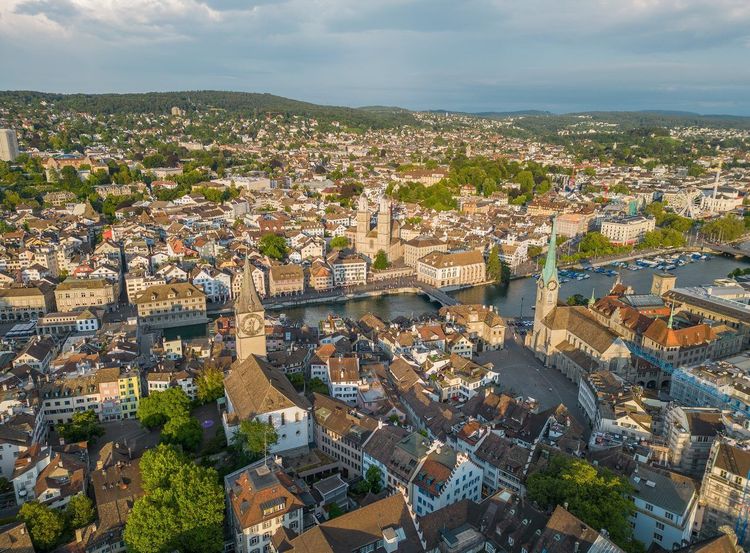
The third day finally leaves the city center to gain altitude, then take to the water. Plan a full day, which naturally divides into three parts: the mountain, the lakeside, and a crossing to the other end of the lake.
Uetliberg and the Le Corbusier Pavilion
The Uetliberg (Uetliberg, 8143 Stallikon), nicknamed the Zurichers' mountain, peaks at around 870 meters and can be reached in about twenty minutes by train from the central station, with no transfer. From the summit, topped with an observation tower, a marked trail, the Planetenweg, heads toward Felsenegg, reproducing to scale the distances between the planets of the solar system, enough to keep children busy during a walk of about two hours.
Once at the top, the Ryo audio guide triggers via geolocation to comment on the panorama over the Alps and the lake, without you having to search for the right track on your phone. On a clear day, you can make out the Säntis in the east, a reward that justifies the early wake-up call on its own if you are aiming for sunrise. At the end of the trail, the little Felsenegg cable car goes down to Adliswil, handy for those who prefer to cut the walk short.
Back at the lakeside, make a detour to the Le Corbusier Pavilion, the last work designed by the architect, completed in 1967, two years after his death. Its steel structure, colorful enameled panels and large parasol roof, independent of the living volume, contrast sharply with the rest of Zurich's more restrained architecture.
Lakeside Stroll, Swimming and Botanical Garden
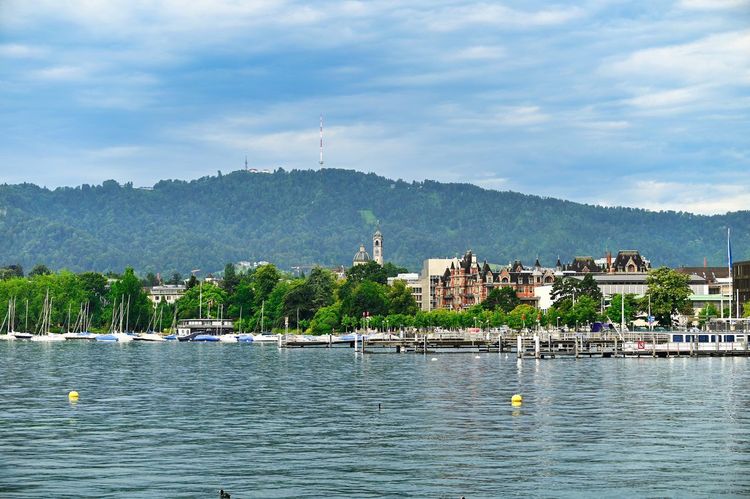
The shore of Lake Zurich lends itself to a long stroll, especially if the sky is clear over the chain of the Alps in the background. On the right bank, the Utoquai and Zürichhorn promenade strings together lawns, sculptures and piers all the way to the Le Corbusier Pavilion.
Zurichers swim here from the first fine days, in public wooden baths built on stilts such as the Seebad Enge, on the left bank, which turns into a bar and sauna in winter. Closer to the center, the Frauenbad on Stadthausquai remains reserved for women during the day, a tradition dating back to the 19th century.
On the river rather than lake side, the Flussbad Oberer Letten, set up on the Limmat, attracts a crowd of swimmers each summer who drift along with the current, a rather astonishing scene in the heart of a financial capital. Not far from the lake, the Zurich Botanical Garden, attached to the university, cultivates several thousand plant species under its tropical domes and in its open-air beds. Admission is free, a detail many visitors overlook as they walk past the gates.
Cruise and Lindt Chocolate Factory Toward Rapperswil
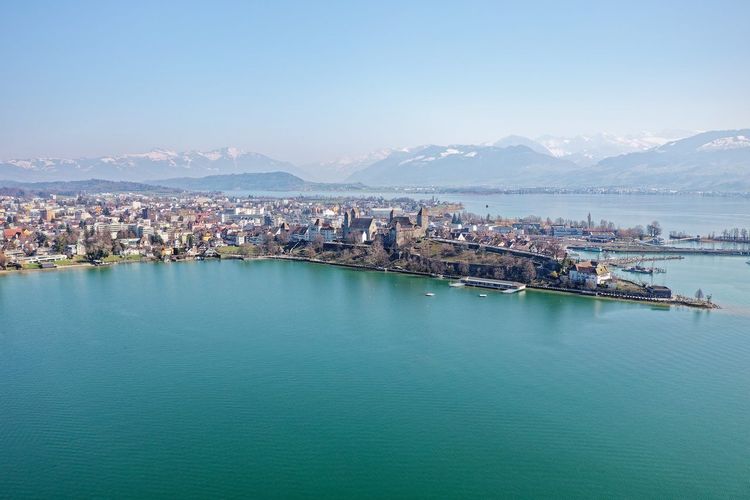
Board in early afternoon from the Bürkliplatz for a cruise to Rapperswil, nicknamed the city of roses for the thousands of rosebushes that bloom in its public gardens each summer. The crossing takes about two hours, but the view of the shores alternating between opulent villas and reed beds more than justifies the slow pace. The lake navigation company still runs two century-old steamboats in summer, worth choosing if you have a say in the schedule. Once there, the long wooden footbridge linking Rapperswil to Hurden, above the water, makes for a lovely end-of-day walk.
On the way or on the return, stop at the Lindt Home of Chocolate (Schokoladenplatz 1, 8802 Kilchberg, rated 4.6/5 on Google from 26,617 reviews), in Kilchberg, home to the world's tallest chocolate fountain, nine meters high. The museum visit ends with a generous tasting, and the adjoining shop is one of the brand's largest, enough to leave with your pockets full.
Before taking the boat again, keep in mind that the Ryo audio-guided tour remains available offline: back in town in the evening, you will be able to listen again to the historic center stops you may have missed on the first day.
Zürich West and Offbeat Creative Neighborhoods
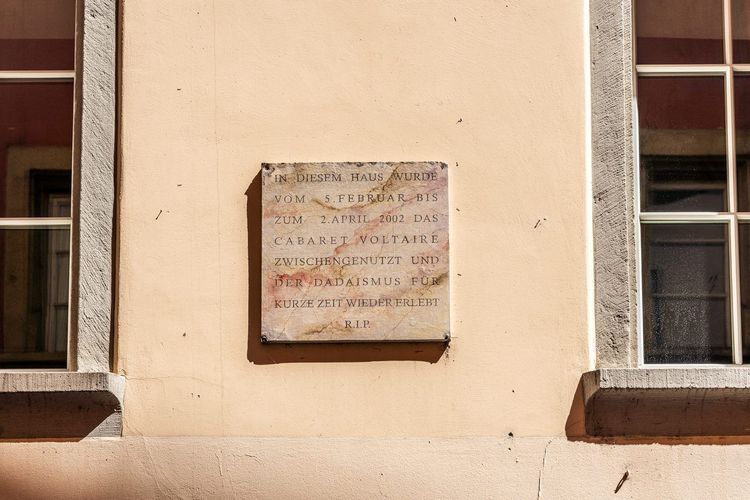
Few guides devote an entire section to this neighborhood, yet this is where Zurich has reinvented itself since the 2000s: former railway tracks and industrial halls transformed into living spaces, the opposite of the hushed image of the historic center.
Frau Gerolds Garten and the Industrial Renewal
The Frau Gerolds Garten occupies a former vacant lot at the foot of the railway tracks, converted into an urban garden where vegetables and flowers grow between shipping containers recycled into bars and small restaurants. The deliberately makeshift atmosphere contrasts with the apparent rigor of the rest of the city.
Nearby, the arches of the railway viaduct Im Viadukt, converted in 2010, house a covered market and artisan shops, a conversion often cited as an example by other European cities. The market hall brings together a dozen stalls, from cheesemongers to coffee roasters, and attracts as many locals doing their shopping as curious passersby. Just above rises the Prime Tower, 126 meters high and long the tallest tower in Switzerland, built on the site of the former Maag gear factory, a fairly clear symbol of the district's shift from industrial past to service economy.
If you want to dig into the city's history before venturing here, the Ryo audio-guided tour of Zurich lays down useful landmarks: you will read this neighborhood much better knowing where the city started from.
Cabaret Voltaire, Birthplace of the Dada Movement
Head back toward the Altstadt for the Cabaret Voltaire (Spiegelgasse 1, 8001 Zürich, rated 4.4/5 on Google from 836 reviews), a small venue where the Dada movement was born in 1916, driven by refugee artists fleeing the First World War. Now transformed into a cultural venue combining a bar and temporary exhibitions, it remains a curiosity discreet enough to escape the crowds, despite its founding role in 20th-century art history.
Where to Eat in Zurich: Gourmet Addresses and Rooftops with a View
Beyond the addresses already encountered along the way during the first two days, here are a few additional tables to vary the pleasures, from the most popular specialty to a dinner up high.
Zurich Specialties and Iconic Restaurants
As for sausages, the grilled Kalbsbratwurst is enjoyed standing at the counter of the Sternen Grill, near the Bellevue, an institution open late where students and executives in suits rub shoulders. The curious will also look for the Wiedikerli, a sausage associated with the Wiedikon district, at neighborhood butchers. For a more classic meal, rösti and sliced veal Zurich-style, the famous Zürcher Geschnetzeltes, remain the pillars of any traditional menu, with its cream and mushroom sauce.
For vegetarians, the Hiltl (Sihlstrasse 28, 8001 Zürich, rated 4.6/5 on Google from 10,248 reviews), founded in 1898, claims the title of the world's oldest vegetarian restaurant still in operation, an argument that always surprises visitors convinced that Switzerland swears only by meat and melted cheese. Its buffet, charged by the weight of the plate, lets you taste a wide range of dishes with no commitment. For a full overview, our article on the top 10 culinary specialties of Zurich details the dishes to look for first.
On weekends, brunch holds a special place in local habits: many cafés offer a hearty late-morning set menu, including eggs, cold cuts and braided bread, to be booked the day before if possible.
Dinner on the Rooftops: The Best Rooftops
The Hiltl Dachterrasse, perched on a rooftop of the Bahnhofstrasse, serves vegetarian cuisine lighter than at the main restaurant, particularly pleasant during the hot hours of summer. Another elevated address, the George Bar & Grill offers an open view over the city's rooftops and a menu focused on grilled dishes and cocktails, to be booked for sunset.
Finally, the surroundings of the Opera House, on the lakeshore, concentrate several terraces popular on summer evenings, particularly lively on performance nights when the audience spills onto the quays. Book a table before 7 p.m. on opening nights, otherwise you will have to settle for a standing drink facing the water.
Where to Stay in Zurich: Neighborhoods and Good Addresses
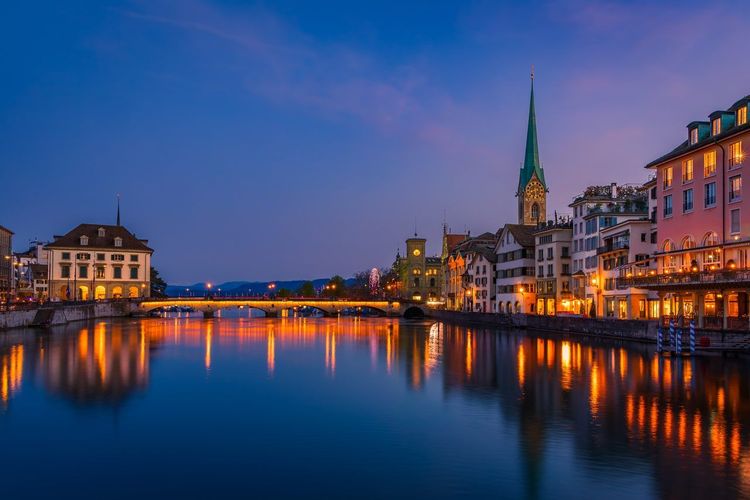
Staying in the Altstadt puts everything within walking distance, but prices climb quickly, especially on the right bank near the Niederdorf where weekend nights soar. The more residential Enge district, and Seefeld, on the lake side, offer a quiet compromise for a budget that is often more reasonable, at the cost of ten to fifteen minutes by tram to reach the center.
In Zürich West, design hotels set in former industrial buildings generally offer better value for money, while remaining a few tram stops from the historic heart. For tighter budgets, the Langstrasse district, not far from the station, mixes a multicultural population, nightlife bars and affordable hostels, far from the polished image usually attributed to the city.
Our favorite hotels remain those that offer direct tram access and breakfast included, two details that quickly weigh on a three-day stay. Also check the tourist tax, often added separately on the final bill, and ask whether the establishment provides a free transport pass during your stay, a common practice in Switzerland.
Getting Around Zurich and the Zürich Card
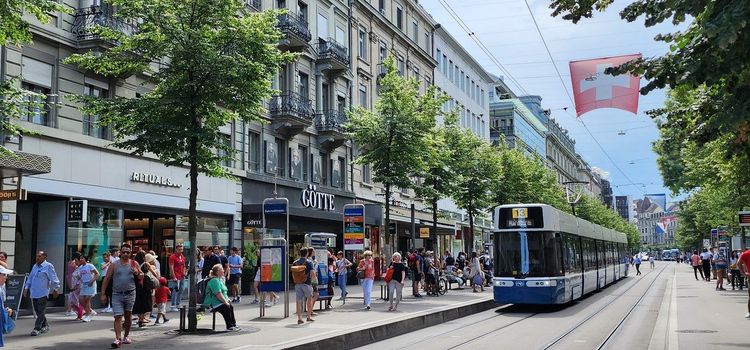
Zurich can be explored almost entirely on foot in the center, but the ZVV network, which covers trams, buses, regional trains and boats, takes over when it comes to reaching the Uetliberg or Zürich West. Tickets can be bought at machines or via the SBB app, and checks are frequent: validate your ticket before boarding, as the fine far exceeds the price of a ticket.
To get to Zurich, the airport is connected to the central station, the Hauptbahnhof, by direct trains of about ten minutes, one of the fastest airport-to-city-center journeys in Europe. From France, the TGV Lyria links Paris to Zurich in just over four hours, an alternative to flying that is increasingly chosen on this route.
The Zürich Card, sold in 24- or 72-hour versions, covers public transport in the urban zone, including the trip to the airport, as well as short lake cruises, and gives free or discounted admission to many museums. For a three-day stay with several daily trips, it generally pays for itself fairly quickly. Conversely, if you stay focused on the old town on foot, without the Uetliberg or Rapperswil, it becomes less essential.
How Long to Plan for Visiting Zurich
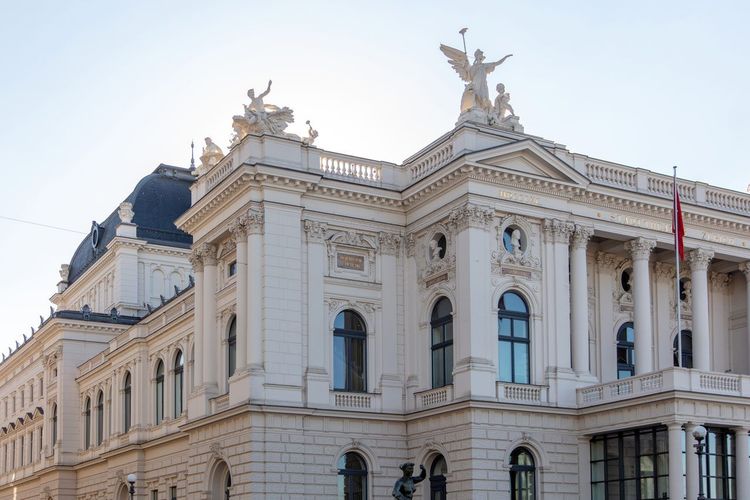
The ideal length depends mainly on how much you want to venture beyond the city limits, and on the pace you wish to set for yourself.
A Weekend or 3 Days in Zurich
Two days are enough to cover the old town, a museum and a lakeside walk, without any distant excursion. Three days, the format recommended in this guide, allow you to add the Uetliberg, Rapperswil and an off-center neighborhood like Zürich West, at a pace that still leaves room for improvisation and a nap on a terrace if the heat makes itself felt.
4 Days and More: Expanding to the Region
From four days, it becomes worthwhile to add a full excursion outside the city, Lucerne or the Rhine Falls for example, without sacrificing a stop in the original program. Beyond five days, the villages around Lake Zurich and the first Alpine foothills start to deserve a detour, for those who prefer to deliberately slow down the pace of the stay.
Day Trips from Zurich
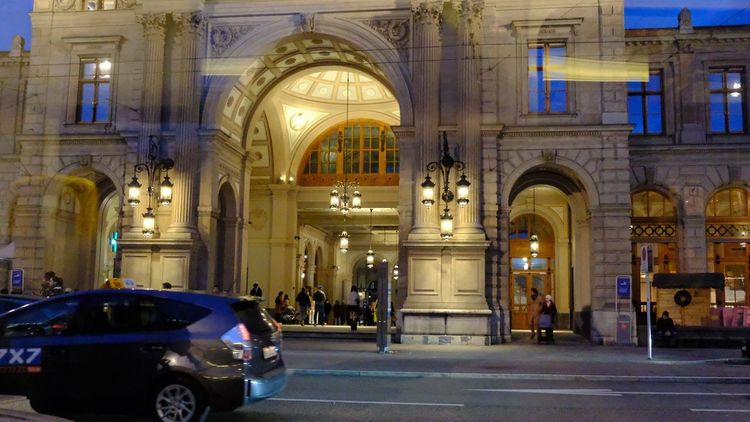
The city lends itself remarkably well to day trips, thanks to a Swiss rail network that serves almost everything in under an hour and a half, with a punctuality that makes renting a car largely unnecessary. Our selection of the best activities to do in Zurich details other options if these two are not enough to fill your stay.
Lucerne and Lake Lucerne
Less than an hour by train, Lucerne is worth the trip for its Chapel Bridge, a covered wooden footbridge from the 14th century spanning the Reuss and still one of the most photographed monuments in Switzerland despite the fire that destroyed much of it in 1993. A little further on, the Lion Monument of Lucerne, carved right into the rock in memory of the Swiss Guards who fell in Paris in 1792, conveys an emotion that Mark Twain already described as the saddest piece of rock in the world.
Allow a full day to also enjoy the cruises on Lake Lucerne, which wind between peaks still snow-covered early in the season, and an ascent of Pilatus or Rigi, the two mountains framing the lake.
The Rhine Falls and Hiking in the Wild
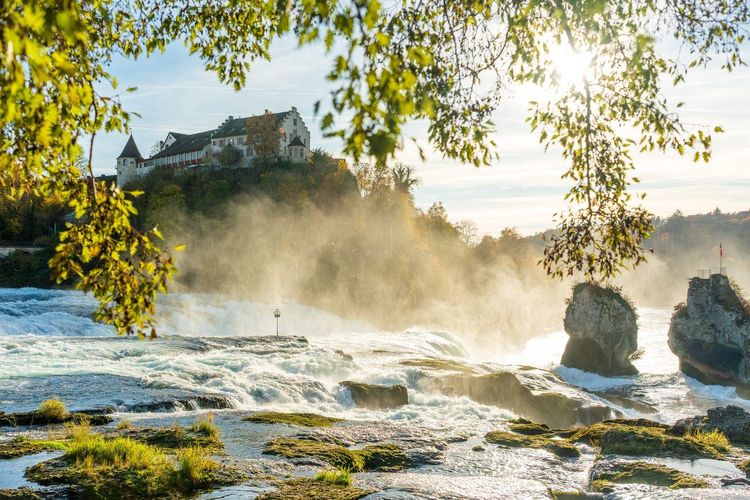
Less than an hour to the north, the Rhine Falls (Schlössli Wörth, 8212 Neuhausen am Rheinfall, rated 4.2/5 on Google from 1,050 reviews), near Schaffhausen, form the most powerful waterfall in Europe by flow, with a central rock reachable by small boat from which you feel the spray rising to your face. Observation platforms set up on each bank let you get as close as possible to the water, and the early morning hours offer the most photogenic light, before the tourist buses arrive.
For walking enthusiasts, going on a hike from Zurich is just as easy: the ridge between the Uetliberg and Felsenegg can be walked in two to three hours, without insurmountable elevation gain, with continuous views over the lake and, in clear weather, over the Alpine chain to the south. The most curious will continue to Stein am Rhein, a small medieval town with painted façades about an hour away by train, easily combined with the Rhine Falls.
Bonus Activities: Cycling, Zoo, Swimming and Rainy Days
A few complementary ideas, to pick from depending on the weather or the energy you have left after three days of walking.
Going for a bike ride in Zurich is easy: the city rents bikes and e-bikes via self-service at many stations in the center, and the paths run largely along both banks of the lake, a flat route that suits families and speedy cyclists alike.
Visiting the Zurich Zoo remains a safe bet with children: open since 1929 on the heights of the Zürichberg, it houses several hundred species and the Masoala Hall, one of the largest tropical greenhouses in Europe, which recreates a Madagascan rainforest.
For a wilder approach, the Wildnispark Zürich, between the Sihlwald forest and the Langenberg wildlife park, presents bears, lynx and other European wildlife in vast wooded enclosures, far from the bustle of the center. Admission is free, making it an ideal family outing.
On rainy days, head to the Thermalbad & Spa Zürich (Brandschenkestrasse 150, 8002 Zürich, rated 4.1/5 on Google from 4,639 reviews), housed in the former vaulted cellars of the Hürlimann brewery, with a rooftop pool whose view over the city more than makes up for the gray sky. Book preferably in the evening, on a weekday, to avoid the weekend crowds.
What to do in Zurich when it rains is therefore not really a problem: between museums, spa and the covered passages of the old town, which you can explore with the Ryo audio guide in your ears, the city has enough to fill an entire day without taking out the umbrella.



FAQ
How long does it take to visit Zurich?
Three days comfortably cover the old town, a museum and an excursion to the lakeside or to Rapperswil. Two days are enough for the essentials of the center, while four days or more allow you to add a regional excursion such as Lucerne or the Rhine Falls without giving up the original program.
Why visit Zurich?
Beyond its financial reputation, Zurich combines a dense historic center, a lake and a mountain accessible right in the city, and an art scene ranging from major classic museums to the converted industrial wastelands of Zürich West. Few European cities let you go from a museum to a swim in twenty minutes by tram, and it is precisely this contrast that surprises first-time visitors the most.
Is it worth buying the Zurich Card?
For a three-day stay with several public transport trips and at least two museum visits, the card is generally worth it. For a stay focused only on the old town on foot, it is less essential and a simple day ticket is enough.
Is Zurich an expensive city?
Yes, it is one of the most expensive cities in Europe for accommodation and sit-down dining. There are still plenty of ways to keep the bill down: covered markets, university canteens open to the public, public fountains for free water, and picnics by the lake rather than a terrace charging top prices.
Where can I try Zurich specialties?
Sternen Grill for grilled sausage, Kronenhalle or Hiltl for a sit-down meal, and any neighborhood bakery for a Zopf, the traditional braided Sunday-morning brioche.
What can I do in Zurich when it rains?
The Day 2 museums, Kunsthaus, Swiss National Museum, Rietberg Museum, the Thermalbad & Spa Zürich, or simply the Ryo audio-guided tour followed under the covered passages of the old town.
What can I see and do outdoors in Zurich?
The summit of the Uetliberg, the lakeside promenade, the botanical garden, the hike to Felsenegg and the cruise to Rapperswil cover most outdoor activities, not to mention the public baths that open as soon as the fine days of May arrive.
After three days at this pace, it is hard to leave Zurich with the fixed image you had before arriving. The city is more of a big village set between lake and mountain than the austere financial capital suggested by its reputation, and its converted neighborhoods like Zürich West prove that it knows how to reinvent itself without losing its apparent calm. To miss none of these details once you are there, keep the Ryo audio-guided tour of Zurich at hand: it accompanies your discovery of the center neighborhood by neighborhood, with a sound anecdote at every stop.