© Shutterstock
 Votre guide Ryo
Things to Do in Chiang Mai in 2026: 27 Must-Have Experiences
At dawn, the monks of Wat Phra Singh still cross the old city barefoot to receive alms, while scooters are already honking on Ratchaphakhinai Road. This coexistence between Buddhist ritual and bustling urban life captures rather well what there is to do in Chiang Mai: the northern Thai capital cultivates its own rhythm, far from Bangkok's frenetic pace, without giving up a dense urban scene of markets, cafés and cooking schools. Ryo does not yet offer a dedicated audio-guided tour for this three-hundred-year-old city, but our app already accompanies travelers across dozens of destinations worldwide with audio-guided tours, and the Lanna city looks like a natural candidate for that format, given how well it lends itself to exploring on foot.
The 27 experiences gathered here cover both the fortified old city and the misty peaks surrounding it. You will encounter a chedi half-collapsed by a 16th-century earthquake, a limestone waterfall you can climb barefoot without ever slipping, a sanctuary that banned elephant rides back in the 1990s, and a fully white contemporary temple located three hours away by road. Between night markets, treks with Karen communities and an ascent of the kingdom's highest summit, the region offers more than enough to fill four days, or even two weeks for the most curious travelers.
1. Wat Phra Singh
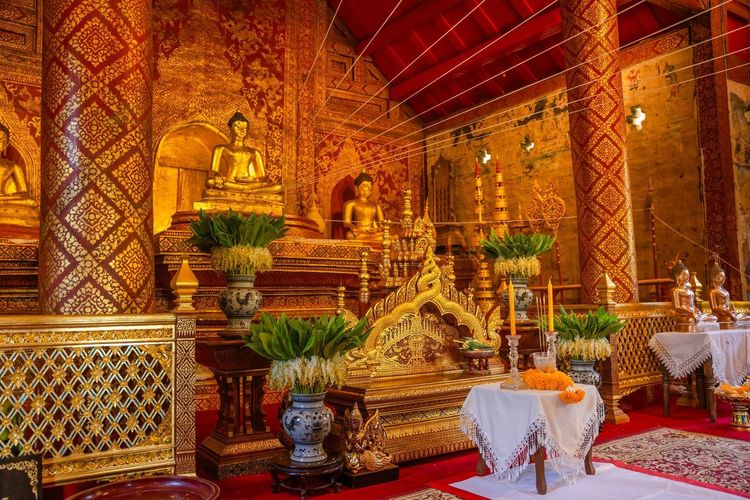
Within the old city walls, Wat Phra Singh (Singharat Rd, Phra Sing, Mueang Chiang Mai District, Chiang Mai 50200, rated 4.7/5 on Google from 17,484 reviews) holds a special place among the roughly 300 temples Chiang Mai is home to. Founded in 1345 by King Phayu to enshrine his father's ashes, the complex has been enriched over the centuries with a carved teak viharn, the Lai Kham, considered one of the finest surviving examples of Lanna architecture.
Inside rests the Phra Singh Buddha, a venerated statue whose origins remain disputed between Sri Lanka, Laos and Thailand. That does not prevent locals from regarding it as one of the three most sacred images in the country. Every year during the April Songkran, the statue is carried through the streets to be sprinkled with sacred water by thousands of devotees — a procession you can follow from Ratchaphakhinai Road without a reservation.
The rest of the complex is also worth exploring: a 14th-century golden chedi, a raised library protected from flooding and monks who are happy to chat with visitors as part of the Monk Chat programme, held on Tuesday and Thursday afternoons. Arrive before 9am to avoid the organised groups that flood the main courtyard by late morning, and come dressed with shoulders and knees covered — this is checked at the entrance to the main viharn.
2. Wat Chedi Luang
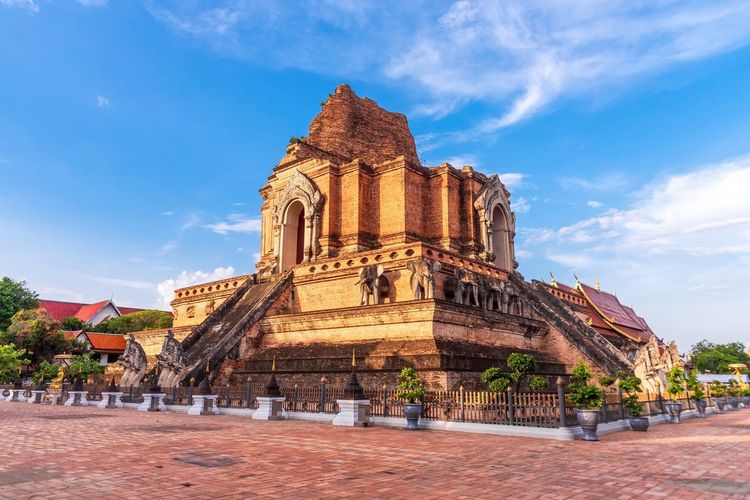
A ten-minute walk away, Wat Chedi Luang (103 Prapokklao Rd, Phra Sing, Mueang Chiang Mai District, Chiang Mai 50200, rated 4.7/5 on Google from 18,601 reviews) tells another story — one of broken grandeur. Built from 1391 under the reign of King Saen Muang Ma, the main chedi once rose to over 80 metres and housed the Emerald Buddha, today kept in Bangkok. An earthquake in 1545 brought down nearly 30 metres of its upper section, leaving the truncated silhouette visitors see today.
At the base of the chedi stands the Sao Inthakhin, the city's founding pillar, sheltered by two centuries-old trees and regarded as the spiritual anchor of the city. Locals come to leave floral offerings here in the morning — a quiet ritual that visitors can observe from a respectful distance without intervening. The site also hosts, on certain evenings, a sound and light show that highlights the weathered brick of the monument.
As at Wat Phra Singh, a conversation programme with monks is offered in the late afternoon. It is often the most authentic opportunity to ask questions about Thai Buddhism without going through a professional guide.
3. Wat Chiang Man
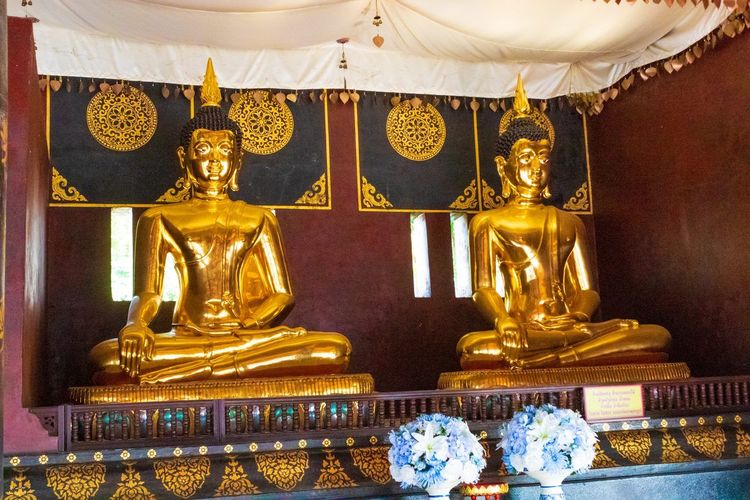
The oldest temple in the city lies tucked away in a quieter corner of the old town. Founded in 1297 by King Mengrai, founder of the Lanna Kingdom, Wat Chiang Man (Ratchaphakhinai Rd, Si Phum, Mueang Chiang Mai District, Chiang Mai 50200, rated 4.6/5 on Google from 6,099 reviews) is said to have served as the ruler's temporary residence while his new capital was under construction.
Two ancient Buddhas are kept here behind reinforced glass: a small crystal statue reputed to have survived several centuries of regional conflict, and a marble Buddha likely dating from the 13th century. The main chedi, supported by a row of sculpted elephants at its base, remains one of the most photogenic on the temple circuit. The site draws far fewer crowds than its neighbours, making it a pleasant stop in the middle of the day.
4. Wat Suan Dok
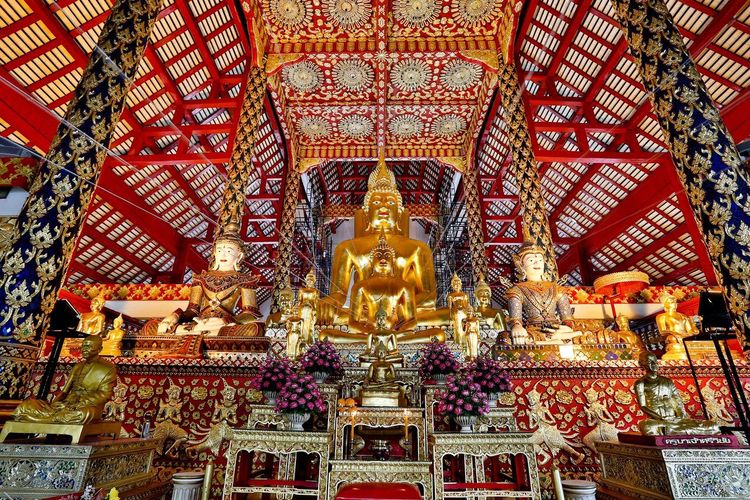
To the west of the old city, near the university campus, Wat Suan Dok (139 Suthep Rd, Su Thep, Mueang Chiang Mai District, Chiang Mai 50200, rated 4.6/5 on Google from 4,617 reviews) lines up a series of immaculate white chedis said to contain relics of the Lanna royal family. The large central golden chedi is believed to date from the 14th century and to have been erected to house a fragment of bone attributed to the Buddha.
The temple is particularly sought after at sunset, when the golden light reflects off the white stupas and frames the silhouette of Doi Suthep in the background. As in the other major temples in the city, a Monk Chat programme allows visitors to converse in English with young student monks, who are often just as eager to practise the language as they are to share their personal journey.
5. The Old City and Its Moats
Historic Chiang Mai unfolds within an almost perfect square measuring 1.5 kilometres on each side, encircled by moats and remnants of ramparts built from 1296 onwards. The five original gates, including Tha Pae on the eastern side, still punctuate this perimeter and serve as landmarks for getting around without a map.
Walking or cycling along the moats remains one of the best ways to understand the city's geography before venturing further afield. Along the way you will pass some thirty temples, lanes lined with wooden guesthouses and street stalls open from dawn. Bicycles can be rented easily by the hour or day near each gate, and the full loop around the perimeter takes just under two hours at a leisurely pace. A stroll of this kind — no fixed itinerary but rich in historical landmarks — is very similar to what a Ryo audio-guided tour already offers in other history-laden capitals.
6. Tha Pae Gate in the Evening
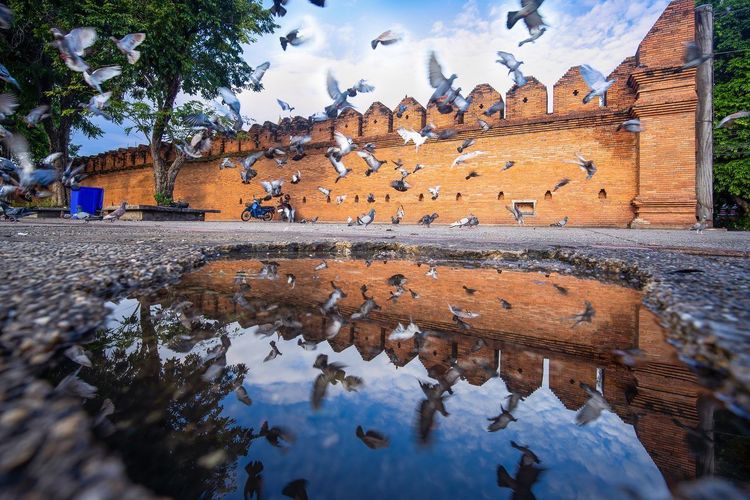
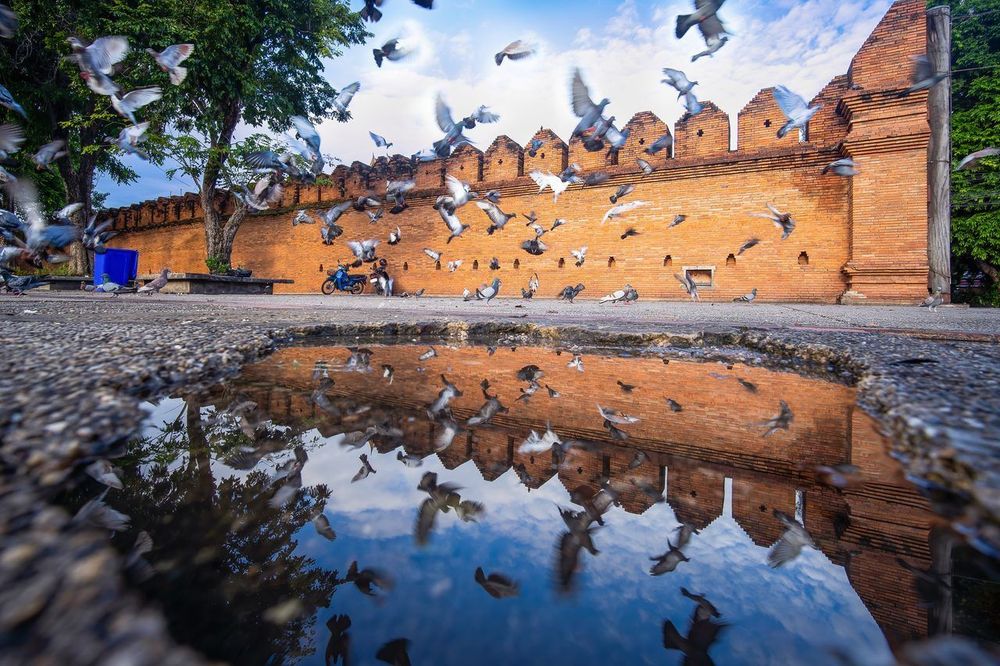
The Tha Pae gate, rebuilt in brick after the partial demolition of the ramparts in the 20th century, draws the bulk of the old city's nightlife. Jugglers, guitar players and vendors selling seeds to feed the pigeons set up here as soon as dusk falls.
This is also where the crowd converges during the April Songkran, when the square transforms into a giant water fight for three days. For the rest of the year, a pass through Tha Pae at the end of the day remains a good starting point before heading to the nearby night markets.
7. Sunday Market: Sunday Walking Street
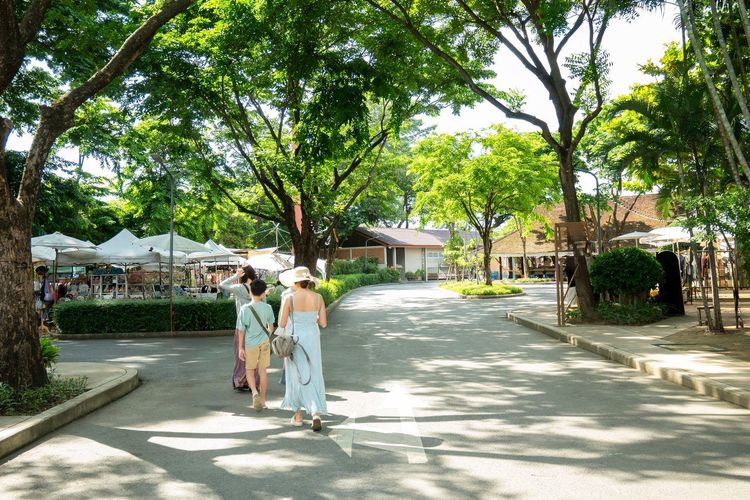
Every Sunday from 4pm, the municipality closes traffic along nearly 1.5 kilometres of Ratchadamnoen Road, between Tha Pae Gate and Wat Phra Singh. The Sunday market, or Sunday Walking Street (Ratchadamnoen Rd, Si Phum, Mueang Chiang Mai District, Chiang Mai 50200, rated 4.6/5 on Google from 233 reviews), then fills with hundreds of stalls selling handicrafts, paintings, silver jewellery and northern Thai specialities not found elsewhere in the city.
The courtyards of temples along the route host traditional performance stages and food stalls, making this often the best place to try khao soi or northern sausages without breaking the bank. The crowd thickens quickly after 7pm, especially near Tha Pae Gate.
To avoid the crush, you can start your visit from the Wat Phra Singh end and work your way back towards Tha Pae against the main flow of foot traffic. Allow a good hour and a half to cover the whole stretch without rushing — more if you stop at every food stall. Payments are made almost exclusively in cash, and the ATMs along the route often have long queues in the evening, so it is better to withdraw money earlier in the day.
The market is accessible to families and solo travelers alike, and security is considered good despite the crowds, with tourist police patrolling regularly along the route.
8. Saturday Market: Wua Lai
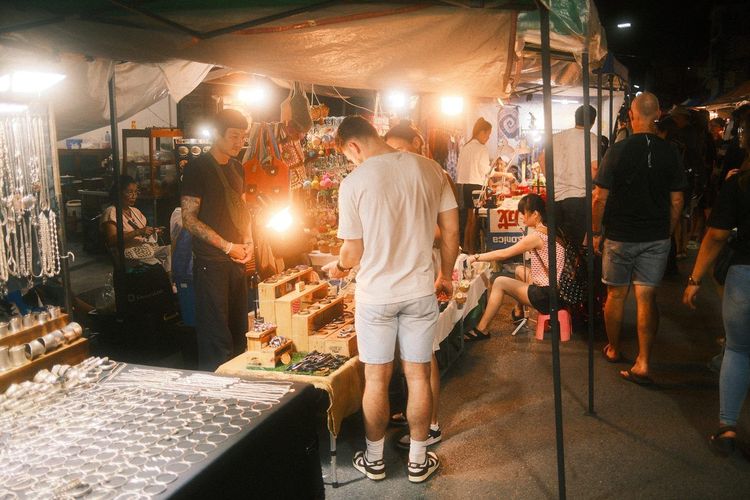
Less well known than its Sunday counterpart, the Wua Lai Saturday market sets up in the historic silversmiths' quarter, south of the old city. The street takes its name from the silver craftsmanship practised there for generations, and shops selling jewellery, engraved cups and betel boxes remain the area's speciality.
Tourist numbers are noticeably lower here than on Ratchadamnoen Road, making it easier to negotiate and take time to chat with artisans. Wat Sri Suphan, a temple made entirely of solid silver on this same street, opens its doors in the evening and is well worth a visit in its own right — provided you respect the ban on women entering the interior, which is reserved for men according to local tradition.
If you have to choose between the two markets for lack of time, the Saturday one suits those looking for a more local, less crowded atmosphere, while the Sunday one remains richer in variety and entertainment.
9. Warorot Market
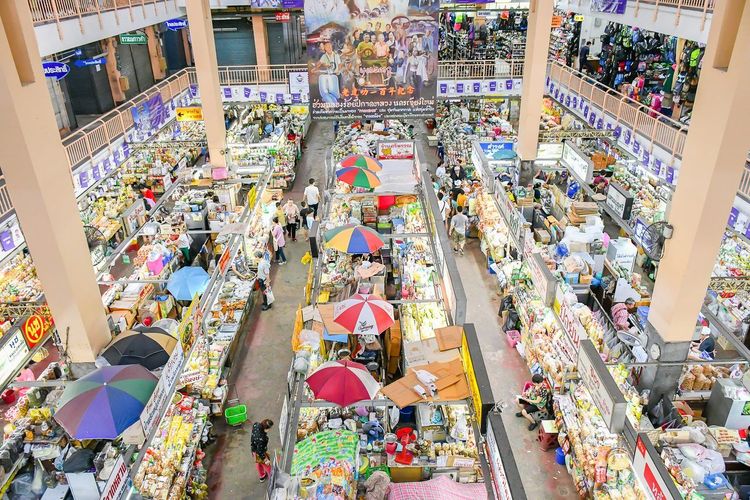
Warorot Market (Wichayanon Rd, Chang Moi, Mueang Chiang Mai District, Chiang Mai 50300, rated 4.4/5 on Google from 6,926 reviews), known to locals as Kad Luang, remains the oldest and largest covered market in the city. Unlike the night markets aimed at visitors, this one operates primarily for residents: fruits, spices, northern textiles, kitchen utensils and snacks are spread across three floors.
The ground floor concentrates fresh produce and takeaway food stalls, while the upper level brings together fabric and traditional clothing vendors at prices significantly lower than in the old city. A morning visit between 8am and 10am lets you see the market in full swing before the midday heat. The bicycle couriers still delivering goods to traders between the aisles give a good sense of the city's commercial pace before tourism took off.
10. Night Bazaar
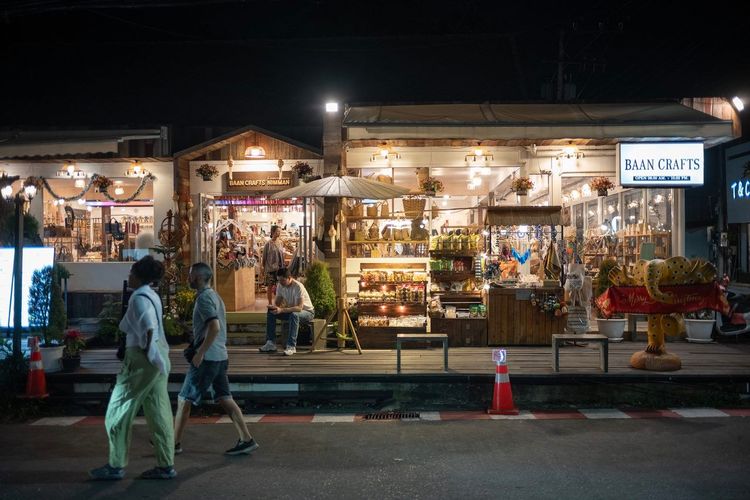
The Night Bazaar has stretched along Chang Klan Road since the 1980s and remains the go-to spot for evening tourist shopping: clothing, souvenirs, fake handicrafts and genuine street food line up over several hundred metres. The atmosphere is more commercial than at the weekly markets, but the location — close to the river and many hotels — makes it a convenient option after a long day of sightseeing.
Stalls come to life from 6pm and most close around midnight. Two annexes are often a better bet than the main street: the Kalare Night Bazaar and the Anusarn Market, both with dining areas where you can order grilled food, seafood and fresh-pressed juices at prices far more reasonable than in nearby restaurants. Bargaining is the norm for souvenirs, with a typical margin of 30 to 40 percent off the first price quoted — as long as you stay friendly: raising your voice shuts down negotiations more reliably than it drives prices down.
11. Thai Cooking Class

Chiang Mai has established itself over the past twenty years as one of the best cities in Asia to learn Thai cooking. The most common format begins with a visit to a local market to choose ingredients, before heading to an outdoor kitchen, sometimes set up on an organic farm on the outskirts of the city.
In half a day you typically prepare five to six dishes: pad thai, green curry, tom yum, larb and a sticky rice and mango dessert depending on the season. The schools provide a recipe booklet at the end of the class, allowing you to recreate the dishes once you are home. Prices range from 800 to 1,500 baht depending on the duration and whether transport from your hotel is included.
Much like a Ryo audio-guided tour that walks you through a visit step by step, these classes follow a pedagogical progression designed for complete beginners, with no prior cooking skills required. Book at least two days in advance during the high season from November to February, when spots fill up fast. Some schools also offer single-day formats entirely dedicated to one dish, such as khao soi, for travelers who are short on time but still want to leave with a genuine skill.
12. Traditional Thai Massage
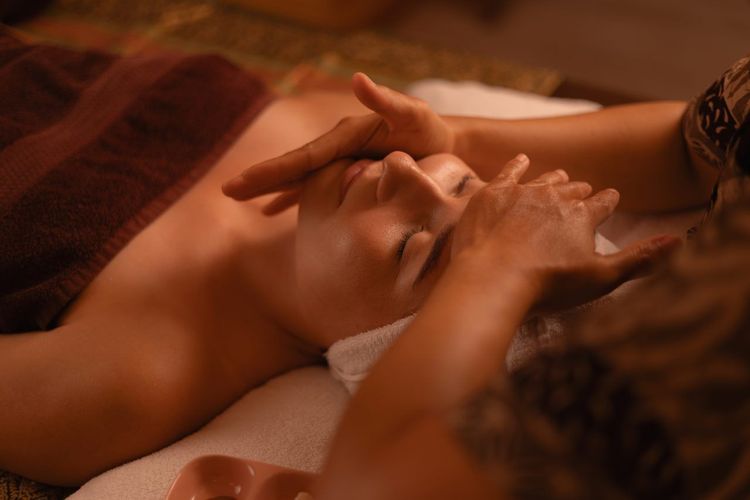
Learning the basics of Thai massage is also among the city's must-do experiences, particularly at the Old Medicine Hospital (78/1 Wat Ket, Mueang Chiang Mai District, Chiang Mai 50000, rated 4.8/5 on Google from 184 reviews), a school founded in 1972 and recognised as one of the national references for traditional massage training. Two- to five-day courses are open to foreigners with no prior experience.
For a simple relaxation session, massage parlours are plentiful throughout the old city, with rates starting at around 200 to 300 baht per hour. Some establishments employ former inmates of the city's women's prison as part of a rehabilitation programme — an option worth choosing if you are looking for an address that is both affordable and socially committed.
13. Muay Thai Fight
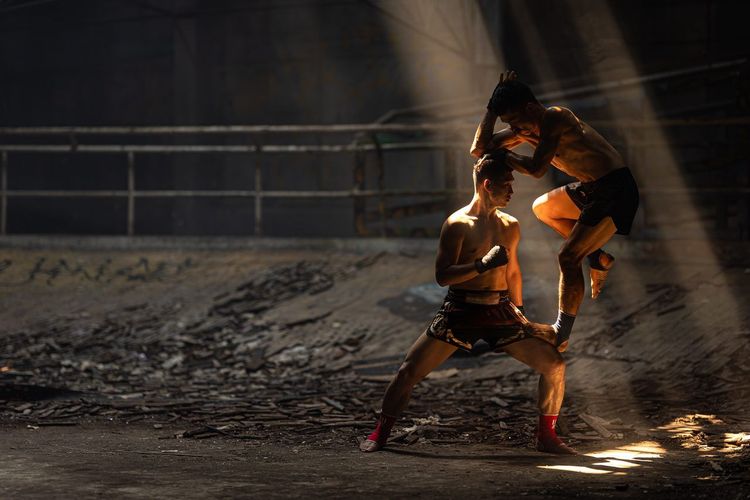
Attending a Muay Thai evening remains one of the most intense experiences the city has to offer. Several stadiums, including the Thapae Boxing Stadium (5 Loi Kroh Rd, Chang Khlan, Mueang Chiang Mai District, Chiang Mai 50100, rated 3.8/5 on Google from 418 reviews), host bouts several evenings a week, mixing seasoned Thai boxers with foreign fighters still learning the ropes.
The atmosphere — fuelled by traditional music played live during rounds and informal wagers in the stands — contrasts sharply with the calm image of the temples visited during the day. Some gyms around the city, such as those clustered around Chang Phueak, also open their training sessions to visitors for a one- or two-hour introduction, a good alternative if you would rather participate than watch.
14. Ethical Elephant Sanctuary
Among the most sought-after activities in the region is a visit to an elephant sanctuary — provided you choose the right establishment. Elephant Nature Park (209/2 Sridonchai Rd, Chiang Mai 50100, rated 4.5/5 on Google from 607 reviews), founded by Sangduen Lek Chailert in the late 1990s, was one of the first northern refuges to completely ban elephant rides in favour of a model based on observation, river bathing and supervised feeding.
A typical day involves preparing fruit for the elephants' meals, a guided walk through their forested enclosure and a group bath in the nearby river, under the constant supervision of mahouts trained in animal welfare. The park also takes in rescued dogs and cats, as well as buffaloes, following a multi-species sanctuary philosophy rather than a simple attraction model.
Demand is very high, so book at least two to three weeks in advance for peak-season dates, especially for full-day packages that include return transport from the city centre. Also be aware that several competing establishments have adopted the language of ethical sanctuary without actually applying its practices: always verify the absence of hooks, chains and riding programmes before booking.
The effort is worth it: spending a morning alongside elephants roaming freely, without harnesses or training commands, remains a rare experience, even compared to the largest wildlife parks in Southeast Asia.
15. Wat Phra That Doi Suthep
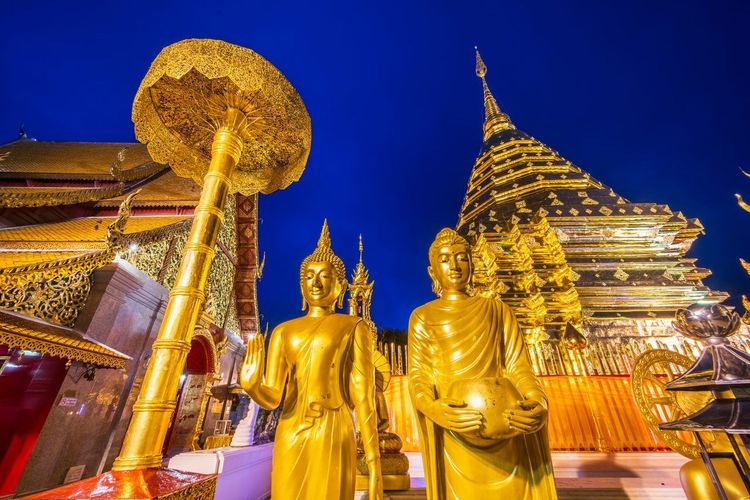
Visible from almost every elevated point in the city, Wat Phra That Doi Suthep (Su Thep, Mueang Chiang Mai District, Chiang Mai 50200, rated 4.7/5 on Google from 11,922 reviews) crowns a mountain at roughly 1,000 metres altitude, about thirty minutes from the city centre. Legend has it that a white elephant, tasked with carrying a sacred relic, chose the temple's location in 1383 by collapsing from exhaustion on that very spot.
To reach the main sanctuary, you must climb a staircase of 306 steps flanked by two undulating nagas, a protective symbol drawn from Hindu-Buddhist iconography. A funicular exists for visitors with reduced mobility or little inclination for the climb, at a modest extra cost. Once at the top, the central golden chedi draws offerings from pilgrims who have come from across the north, and the surrounding terrace offers a clear view over the entire plain below on a bright day.
Riding up on a rented scooter remains the most flexible option, provided you are comfortable with the hairpin bends of the paved road. Aim for an early departure before 8am to enjoy the relative coolness of the altitude and avoid the tour buses that saturate the car park by midday.
16. Doi Inthanon National Park
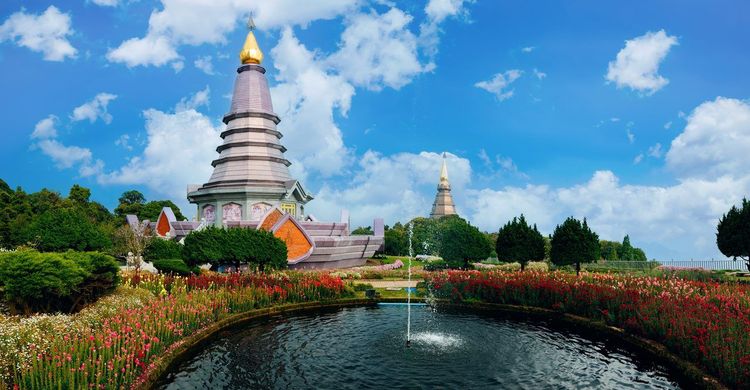
About an hour and a half's drive southwest of the city, Doi Inthanon National Park protects Thailand's highest point, at 2,565 metres altitude. The summit itself, often lost in cloud, matters less than the sites spread along the road leading up to it.
The twin pagodas dedicated to King Bhumibol and Queen Sirikit, completed in 1987 and 1992 respectively to mark their sixtieth birthdays, overlook hanging gardens that are particularly in bloom between December and February. Lower down, the Wachirathan and Mae Klang falls flow year-round, with viewpoints accessible without effort from the car park. The elevated Ang Ka boardwalk — a wooden walkway threading through a cloud forest — lets you observe near-alpine vegetation just a few hours from the tropical heat of the valley.
Bring a windbreaker even in the hot season: temperatures at the summit regularly drop below 10°C in the cool season, and morning frosts have been recorded in January — a phenomenon remarkably rare at these latitudes.
17. Bua Thong Waterfalls
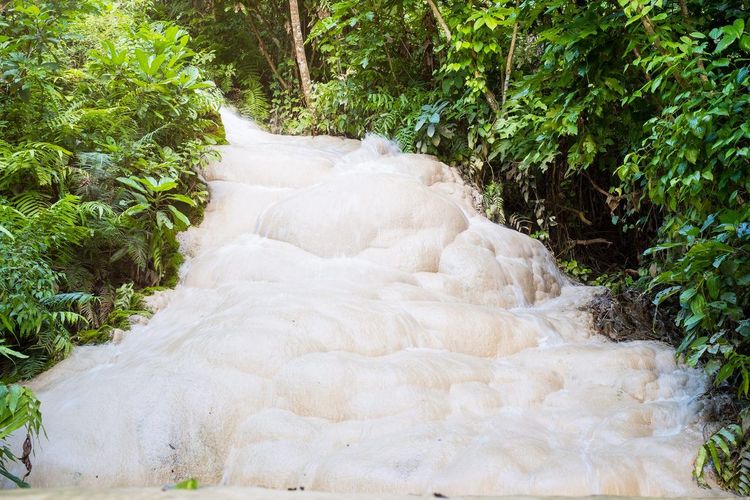
The Bua Thong Waterfalls, nicknamed the sticky waterfalls, owe their peculiarity to limestone deposits that make the rock grippy underfoot even on the steepest slopes. As a result, it is possible to climb up along the various tiers of the waterfall without slipping — a fairly unique experience in Southeast Asia.
Located within Si Lanna National Park, a little over an hour's drive away, entry is free and ropes are installed at the steepest sections to reassure visitors. Still, bring water shoes or go barefoot as the rangers on site recommend — wet surfaces remain slippery outside the treated limestone zones.
18. Mae Kampong Valley and Tea Plantations
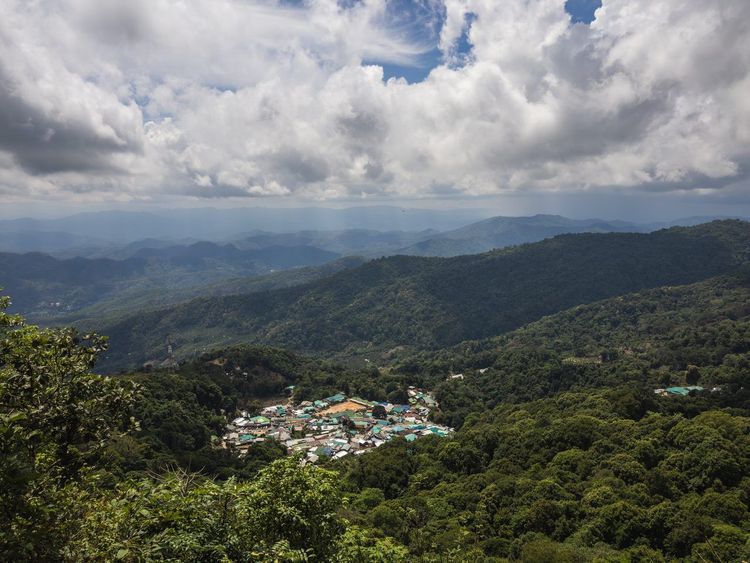
The Mae Kampong valley, perched at around 1,300 metres altitude just over an hour's drive away, has lived for generations on the cultivation of miang tea, a fermented variety traditionally chewed rather than brewed. The village, built on stilts along a mountain stream, now offers homestay accommodation with local families.
A multi-tiered waterfall flows directly behind the houses, reachable in a few minutes' walk from the village square. Cafés perched on the hillsides above offer views over the tea-planted slopes, and several families offer tastings of locally grown oolong tea. The cool altitude air, noticeable from sunset onwards, provides a welcome contrast to the heat of the valley below.
19. Trekking with Hill Tribes
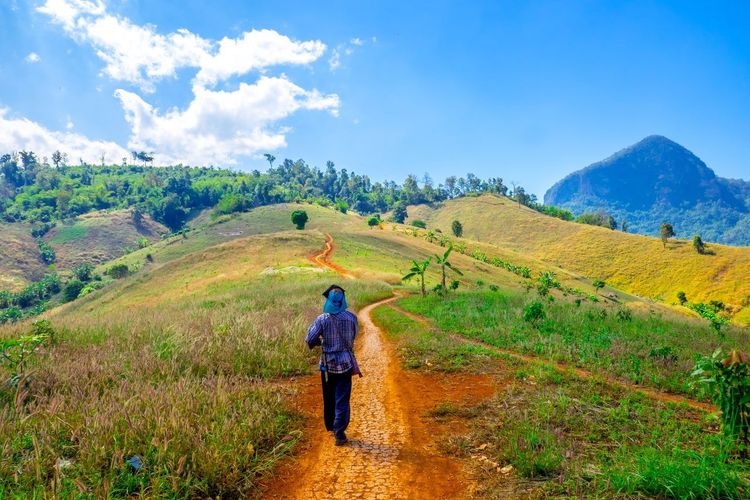
The hills surrounding Chiang Mai are home to several ethnic communities — notably Karen, Hmong and Lisu — who have settled in the region following successive migrations from Burma and southern China. One- to three-day treks allow you to reach some of these villages on foot, sleeping with local families or in rudimentary forest camps.
Some historically marketed circuits to so-called 'long-neck' Karen villages have been criticised for resembling a human zoo rather than a genuine cultural exchange: look into operators that return a fair share of revenue to the communities visited, rather than those who stop only for a photo opportunity. The most highly recommended treks combine forest walking, terraced rice field crossings and shared meals prepared by host families, far from the well-worn paths of the big tour buses.
Budget between 1,500 and 3,000 baht per day depending on the duration and level of comfort, with transport, guide and meals included. The dry season from November to February remains the most comfortable for walking several hours without being slowed down by muddy trails.
20. Day Trip to Chiang Rai and the White Temple
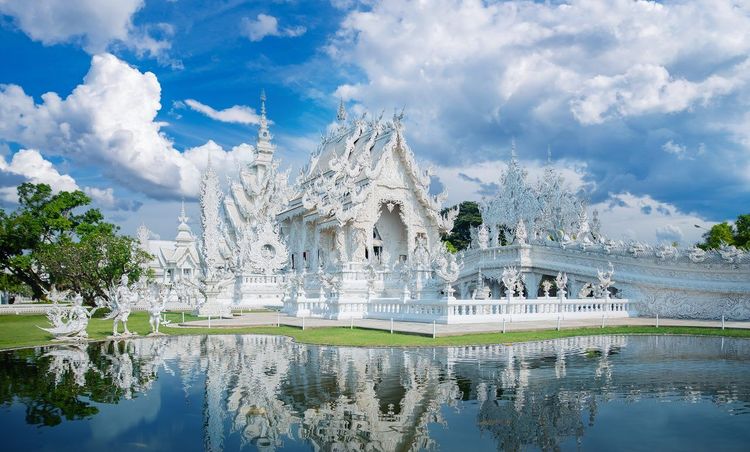
About three hours' drive to the north, Chiang Rai is well worth a full day trip or, better still, an overnight stay to enjoy the city's slower pace. The province's most photographed site remains Wat Rong Khun (553 Moo 6, Pa O Don Chai, Mueang Chiang Rai District, Chiang Rai 57000, rated 4.6/5 on Google from 25,019 reviews), known as the White Temple — a contemporary work conceived by artist Chalermchai Kositpipat from 1997 onwards and still being expanded.
Entirely covered in white plaster inlaid with mirrors, the temple symbolises the purity of the Buddha, while a bridge crossing a pool filled with outstretched hands evokes the earthly temptations to be overcome before reaching enlightenment. A few kilometres away, Wat Rong Suea Ten — the Blue Temple — and Baan Dam, the Black House conceived by another northern artist, Thawan Duchanee, round out the visit for those with a full day to spare.
If you are also wondering what to do in Chiang Rai to complement your trip, public buses connect the two cities in just under three hours, with frequent departures from the Arcade terminal. Organised excursions by private van remain more comfortable for visiting all three temples in a single day without depending on bus schedules.
21. Yi Peng Lantern Festival
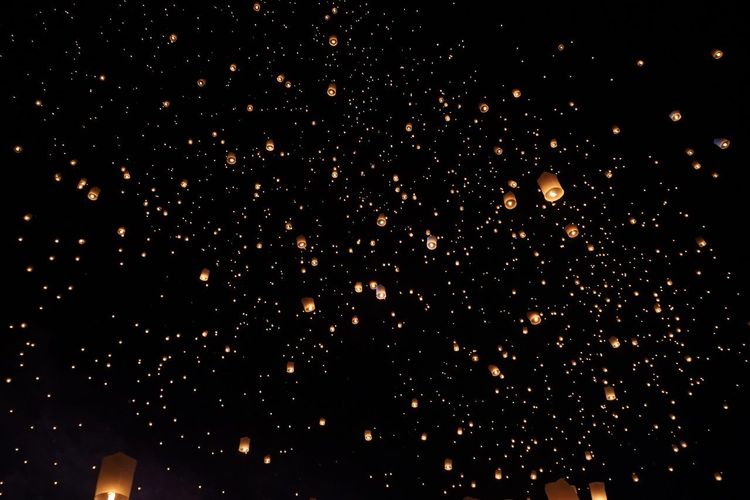
Every year, usually in November, the Yi Peng festival coincides with Loy Krathong to transform the northern Thai sky into a carpet of floating lanterns. The khom loi — rice paper lanterns heated by a small flame — rise by the thousands above the old city and along the banks of the Ping River.
Organised releases, including the one at Mae Jo University, require tickets booked several months in advance, as demand far exceeds capacity. Outside these ticketed events, spontaneous releases take place throughout the streets and on bridges, freely accessible to anyone strolling by at the right moment. Accommodation prices rise sharply during this week — sometimes doubling — which pushes most travelers to book their lodging several months ahead.
One practical point many discover too late: khom loi releases are strictly regulated around the airport, located just a few kilometres from the historic centre, and the authorities set precise time slots each year to limit risks to air traffic. Dozens of flights are nonetheless cancelled or delayed during these two evenings — a detail to factor in if you plan to leave immediately after the festival.
22. Bamboo Raft River Descent
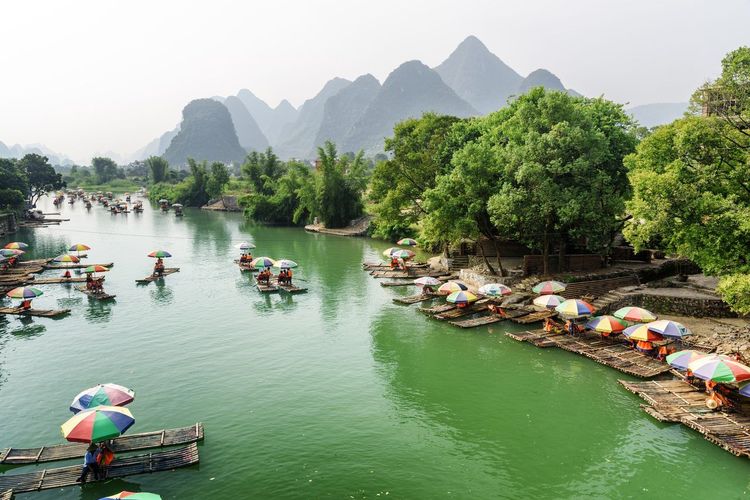
Less dramatic than white-water rafting, a bamboo raft descent on the Mae Wang River offers a gentle float downstream, guided by a local who poles the raft along. The route passes through dense jungle where bamboo and banana trees sometimes dip their branches directly into the current.
This activity combines easily with a morning trek or a visit to rice paddies, as most operators offer packages grouping several activities into a single day departing from the city centre. Children from around six or seven years old can generally take part without difficulty, as the current remains gentle for most of the route.
Allow about an hour for the descent, and store your phone and camera in a waterproof pouch: the rafts regularly take on a few centimetres of water when passing over small drops. The flow picks up at the end of the rainy season between September and November, when the ride gains extra interest without ever becoming demanding.
23. Art in Paradise

For a lighter interlude, especially on a rainy day, the Art in Paradise museum lines up more than 130 trompe-l'œil murals spread across three floors, all designed to be photographed interactively. Elephants that appear to be charging, waterfalls that give the illusion of cascading onto the visitor, master paintings reimagined in 3D: the concept, imported from South Korea, is particularly popular with families with children.
The visit takes about an hour and pairs well with a morning of shopping at the nearby Night Bazaar. Come with a charged phone and someone to take your picture: painted markers on the floor indicate the exact angle from which each illusion works, and the effect falls flat as soon as you step a few paces off it. Shoes are left at the entrance to some rooms — a Thai custom that also applies to private museums.
24. Nimman District and Trendy Cafés
Once simply a residential extension of the university campus, the Nimmanhaemin district — often shortened to Nimman — has transformed over the past decade into the city's creative hub. Specialty cafés, independent art galleries and murals line the numbered side streets running from one to seventeen.
The neighbourhood attracts a population of digital nomads and students, which explains the density of co-working spaces and cocktail bars open late into the night. In the late afternoon, several rooftops offer unobstructed views of the surrounding hills — a quieter alternative to the night markets of the historic centre for rounding off the evening.
25. Getting Around Chiang Mai: Songthaew, Scooter and Bicycle
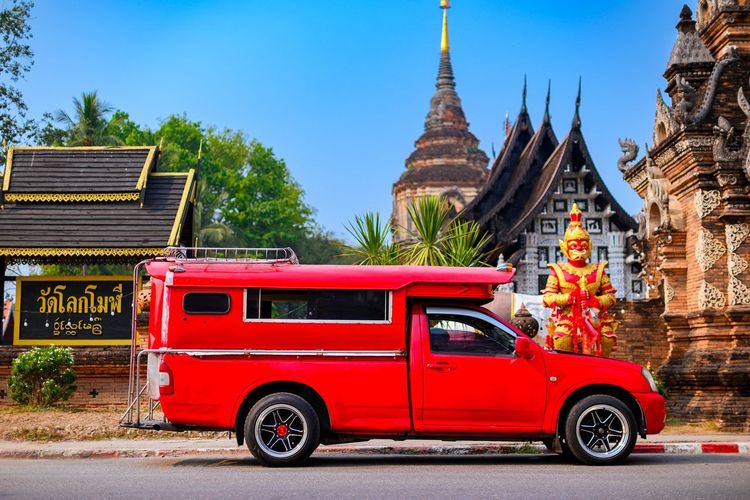
Unlike Bangkok, the city has no metro or BTS. The most iconic form of transport is the red songthaew — a covered pickup truck converted into a shared taxi that circulates without a fixed route throughout the city. Simply flag one down, tell the driver your destination and negotiate the fare before getting in, usually between 30 and 50 baht per person for a journey within the centre.
For greater independence, scooter rental remains the option preferred by most travelers, with rates starting at around 150 to 250 baht per day depending on the season and condition of the vehicle. Always check what insurance is included and photograph the bike before leaving — unscrupulous rental shops sometimes charge for pre-existing damage upon return. An international driving licence is officially required by local police, who carry out regular roadside checks near the old city.
Ride-hailing apps like Grab work well in the city and allow you to avoid all negotiation, often at prices lower than songthaews for longer journeys. Cycling, finally, is perfectly suited to exploring the flat, compact old city and its moats, with numerous rental shops near each historic gate. Tuk-tuks, rarer than in Bangkok, remain a one-off option for short night journeys — negotiate the price before getting in, as there are no meters. For excursions beyond the city limits, it is better to book a private driver for the day rather than venturing alone on mountain roads that are often winding and poorly lit at night.
26. Wat Umong, the Forest Tunnel Temple
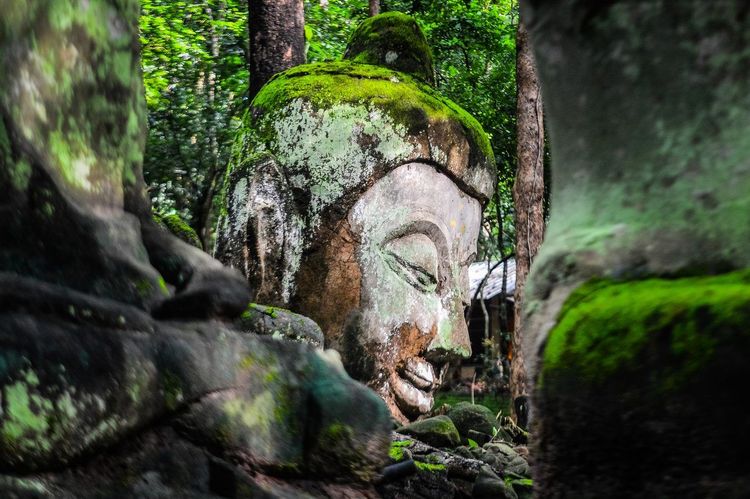
To the west of the city, towards Suthep, Wat Umong (Wat Umong Soi 8, Suthep, Mueang Chiang Mai District, Chiang Mai 50200, rated 4.6/5 on Google from 11,463 reviews) stands out for a network of brick tunnels built in the 14th century to allow a reclusive monk to meditate away from the distractions of the royal court. The galleries, now lit and open to the public, lead to a moss-covered chedi surrounded by dense forest.
The temple grounds also feature a small lake where giant carp crowd near the banks, as well as a collection of calligraphed boards carrying Buddhist teachings translated into English, hung from trees along the paths. The atmosphere, far quieter than in the temples of the historic centre, draws meditators and visitors alike who are looking for calm after the density of the old city.
A vegetarian cafeteria run by volunteers serves simple dishes on a pay-what-you-wish basis in late morning — a common practice in Thai temples that invites a donation rather than a fixed price. Allow about twenty minutes by scooter from Tha Pae Gate, and dress modestly despite the site's relaxed atmosphere; colourful tunics sold at the car park entrance work perfectly if you have forgotten.
27. Walk and Dinner Along the Ping River
To the east of the old city, the Mae Ping River reveals a completely different face of the city — more residential and less touristy. The old iron bridge, the Chiang Mai Iron Bridge (Charoen Prathet Rd, Chang Khlan, Mueang Chiang Mai District, Chiang Mai 50100, rated 4.5/5 on Google from 1,244 reviews), built in the first half of the 20th century and rebuilt after damage from the Second World War, transforms in the evening into a lit promenade popular with local joggers and couples.
The riverbanks are lined with terrace restaurants, ranging from simple grilled skewer stalls to more refined addresses serving a revisited northern cuisine — khao soi or sai oua, the region's signature spiced sausage. Some establishments organise dinner cruises on small motorboats, travelling upriver for about an hour at sunset.
This area is considerably less frequented by visitors than the old city or Nimman, making it a good option for a more relaxed dinner at the end of a trip. This kind of free riverside stroll, without a set itinerary, is precisely the type of experience a Ryo audio-guided tour aims to capture in the cities where the app is already available. Book a riverside table before 6:30pm during the high season — the best spots fill up quickly once the heat begins to ease.
FAQ
Is Chiang Mai a dangerous city?
No, the city ranks among the safest in Southeast Asia for travelers, including solo visitors. Standard precautions are enough: watch your belongings in busy markets, beware of scams involving poorly insured scooter rentals, and ride carefully — two-wheel accidents remain the main real risk on the ground, far more so than crime.
Chiang Mai in 2 Days: What Itinerary?
Focus on the old city: Wat Phra Singh, Wat Chedi Luang and Wat Chiang Man on the first day, rounded off with a night market in the evening. Reserve the second day for an excursion to Wat Phra That Doi Suthep in the morning, then a cooking class or Thai massage at the end of the day to close the trip gently.
What Program to Plan for 4 Days?
Add to the two-day itinerary a full day devoted to an ethical elephant sanctuary or a mountain trek, then an excursion to the Bua Thong waterfalls or the Mae Kampong valley to get out of the city and breathe fresher air, away from the central traffic.
Just One Day on-Site — Is It Possible?
Yes, provided you prioritize heavily: the three main temples of the old city can be visited in a morning, and a market or a short excursion to Doi Suthep can fill the afternoon. This format remains frustrating, however, for those who want to discover the surrounding region and its mountains.
What to Do in the Evening in Chiang Mai?
The Sunday and Saturday night markets remain the safe bets, complemented by a Muay Thai evening or a terrace dinner in the Nimman district or along the Ping River. During the Yi Peng period in November, the lantern releases naturally extend evenings outdoors.
Is It Worth Going All the Way to Chiang Rai?
A day or overnight trip to Chiang Rai is justified to see the White Temple, the Blue Temple and Thawan Duchanee's Black House — three sites with no direct equivalent in the northern capital. Public buses and private vans connect the two cities in under three hours.
What Is the Best Time to Visit Chiang Mai?
The cool season, from November to February, offers pleasant temperatures and coincides with the Yi Peng festival in November. The hot season in April, marked by Songkran, remains festive but very wet, while the rainy season from June to October greens the landscapes while reducing tourist numbers.
Chiang Mai: Between Temples and Mountains
Between the temples of the old city, the weekly markets and the surrounding peaks, the northern capital offers a rare density of experiences for a city of its size. Most visitors leave having barely scratched the surface of the province, so extensive are the trekking, waterfall and mountain village options beyond the urban perimeter. Between two temple visits, an evening market and a high-altitude excursion are already enough to fill a stay far richer than standardised itineraries might suggest.
If you are planning other stops in Asia or elsewhere in the world, keep an eye on Ryo's upcoming audio-guided tours: the app continues to add new cities to its catalogue, and the step-by-step discovery format it offers elsewhere is a perfect match for the spirit of free-roaming exploration that a city like this demands.
À lire également