© Shutterstock
 Votre guide Ryo
Istanbul in 2 Days: The Complete Itinerary to See It All in 2026
Istanbul is the only major city in the world straddling two continents, and this geographic quirk changes everything when time is short. Visiting Istanbul in 2 days means choosing sides, more or less: the European side concentrates most of the Ottoman and Byzantine heritage, while the Asian side is discovered more slowly, over the course of a market visit or a ferry ride. With a tight itinerary over two full days, you can see a 17th-century mosque before breakfast, haggle over spices at noon and watch the sun set over the Bosphorus from a boat, all while keeping time for a stop in Kadıköy. This guide details a day-by-day route through Sultanahmet, the Grand Bazaar, Balat and Galata, with addresses and real travel times between each neighborhood. To follow this same route without taking your eyes off a map, the Ryo audio-guided tour of Istanbul tells the story of each monument right on the spot, in the order you come across them.
Istanbul in 2 Days: A Destination Up to the Challenge
The city has changed its name twice without ever really changing its face. Founded as Byzantium by Greek colonists in the 7th century BCE, it became the capital of the Eastern Roman Empire in 330 under the name of Constantinople, before falling in 1453 to the Ottoman troops of Mehmed II. The name Istanbul gradually took hold, then became official in 1930. This double Byzantine and Ottoman layering explains why a 17th-century mosque can stand a few meters from a 6th-century basilica: both empires built on the same hills, sometimes literally on top of one another.
Two days are enough to tick off the densest monuments of Sultanahmet and cross to the other shore at least once, which already gives a complete picture of the city. How many days to visit Istanbul in total depends mostly on your appetite for excursions: the Princes' Islands, a deeper exploration of the Asian side or a trip to Bursa require a third day, or more (these options are detailed in the last section). With 2 days, you stay focused on the historic center and the Bosphorus, without needless scattering.
Istanbul is organized around two shores separated by the Bosphorus Strait, and the European side is itself split by the Golden Horn. Ferries, bridges and tunnels (the Marmaray rail tunnel and the Eurasia road tunnel) connect everything. On the European side, the old, dense and touristy Sultanahmet faces the more contemporary Beyoğlu and Galata. For a short stay, it is best to sleep on the European side and reserve the Asian side for a targeted half-day.
Good to know to visit Istanbul without unpleasant surprises: mosques temporarily close to visitors during prayers, with Friday noon being the busiest slot of the week. Two other days matter in your planning: Topkapi Palace is closed on Tuesdays, the Grand Bazaar on Sundays. Building your itinerary around these three constraints makes organizing the two days much simpler.
Day 1: Sultanahmet, the Basilica Cistern and the Grand Bazaar
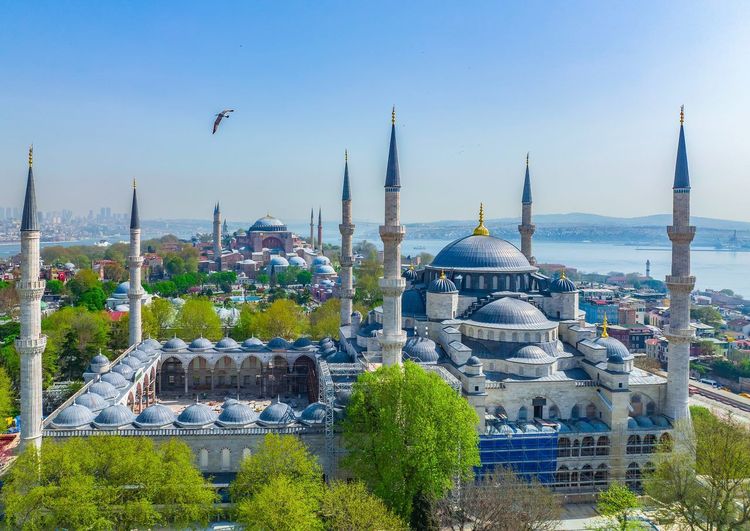
The first day is spent almost entirely on foot within a one-kilometer radius, that of the historic Sultanahmet peninsula. Starting early changes the whole experience: at 8 a.m., the Blue Mosque has only a few dozen visitors, compared with several hundred by 10 a.m. This day corresponds to the heart of the Ryo audio-guided tour, which links Sultanahmet, the Basilica Cistern and the Grand Bazaar in the same order and tells, in front of each monument, how Byzantium became Constantinople and then Istanbul: enough to keep your phone in your pocket between stops.
The Blue Mosque and Hagia Sophia, the Jewels of Sultanahmet
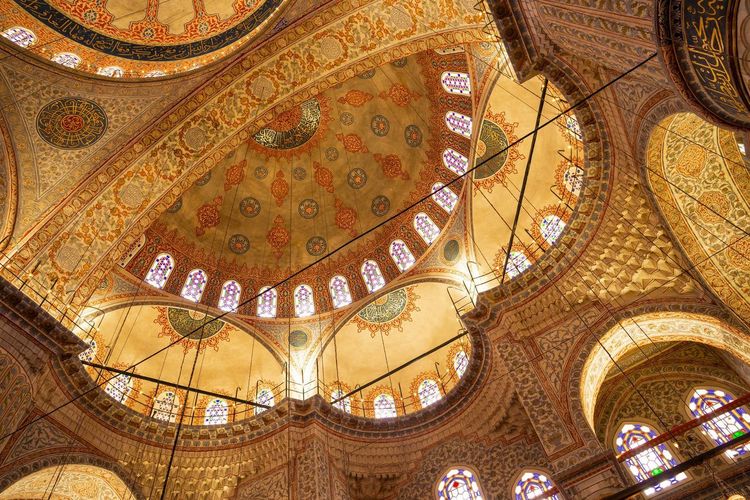
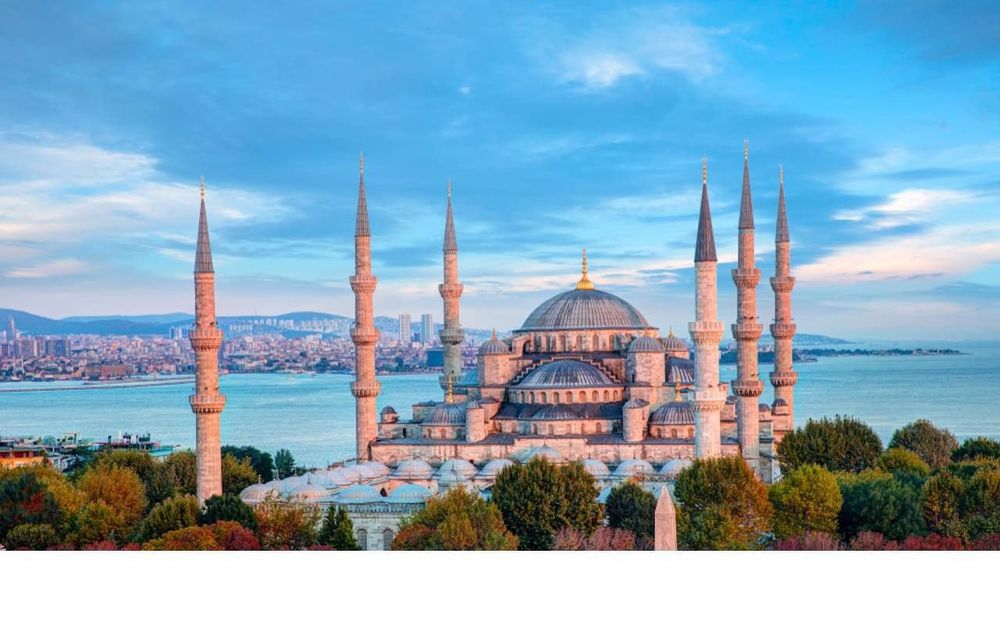
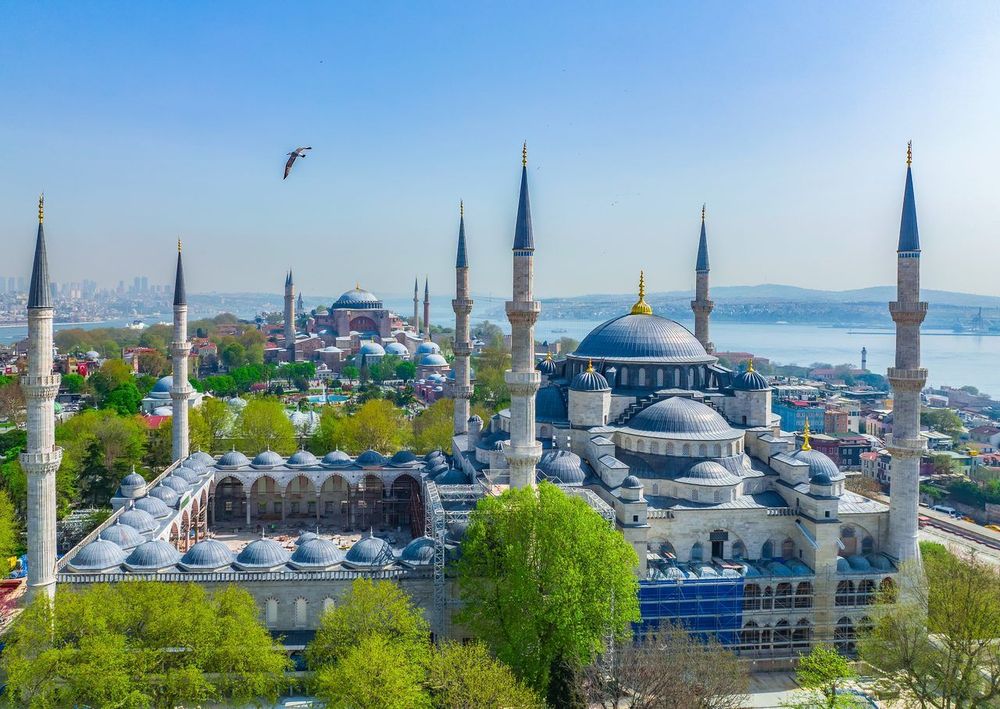
The Blue Mosque owes its name to the more than 20,000 Iznik ceramic tiles covering its interior. Built between 1609 and 1616 on the orders of Sultan Ahmed I, it remains an active place of worship: tourist visits are suspended during the five daily prayers, so allow a margin of 20 to 30 minutes depending on the time. Entry is free; women are asked to wear a headscarf, and everyone should wear clothing covering shoulders and knees. Shawls are lent at the entrance if you are not equipped.
Right opposite, separated only by a garden, Hagia Sophia (Ayasofya) sums up the city's two layers on its own: a Byzantine basilica completed in 537, it became a mosque in 1453, a museum in 1935, then a mosque again in 2020. Beneath its 55-meter-high dome, Christian mosaics stand alongside immense calligraphic medallions from the 19th century, a face-to-face unique in the world. Beware, as the information still circulates on many blogs: entry is no longer free for foreign visitors. Since January 2024, a ticket of about 25 euros gives access to the upper gallery, the ground floor being reserved for worshippers. Allow 45 minutes to 1 hour for the visit, and a queue that often exceeds 30 minutes in high season.
Before moving on, a breakfast with a view of these two monuments is worth the detour: several terraces in Sultanahmet look straight onto the minarets. The bill climbs a little, but the setting justifies the price gap compared with a neighborhood pastry shop. Another detail that changes everything: if you can choose, aim for a weekday rather than a weekend, as crowds are noticeably lighter at these first two stops.
The Basilica Cistern and Topkapi Palace
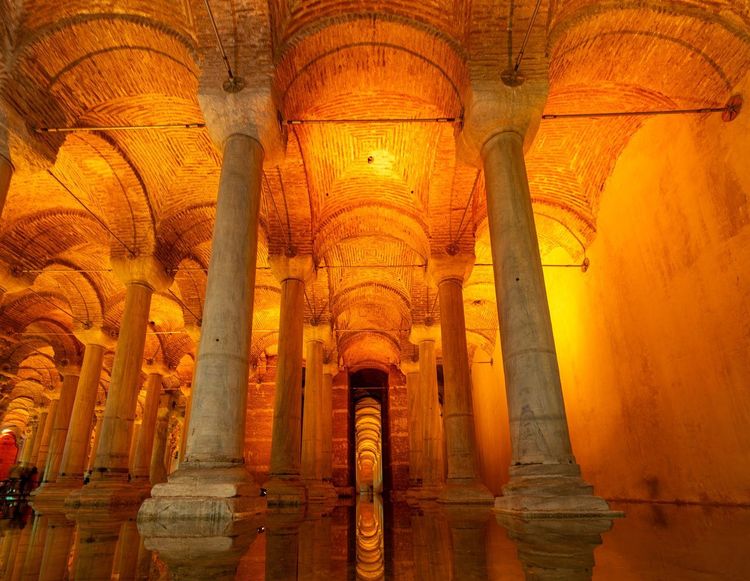
Two minutes away on foot, the Basilica Cistern (Yerebatan Sarnıcı) surprises with its silence and coolness after the heat of the street. This 6th-century underground water reservoir, supported by 336 columns largely salvaged from older buildings, has served as a backdrop for several films (including a James Bond) before its renovation was completed in 2022. Two carved Medusa heads, one placed upside down and the other sideways at the base of two columns, remain the detail everyone looks for first. The ticket, which is paid, is best booked online to avoid the queue.
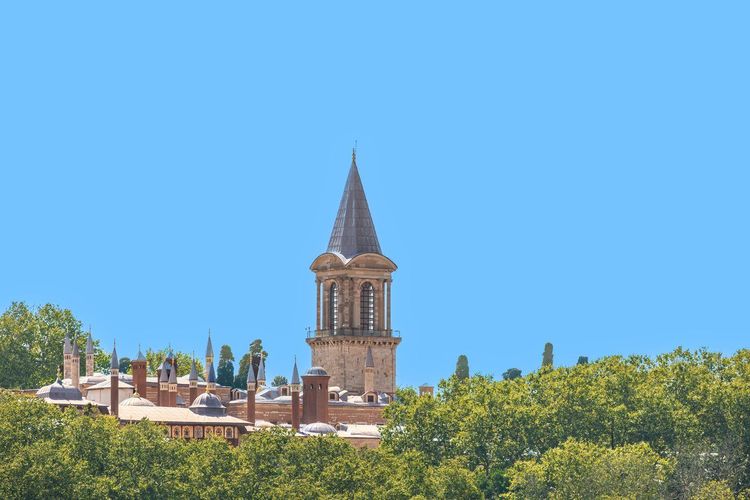
Topkapi Palace then deserves a good two hours, more if you visit the Harem (included or not depending on the ticket type). Residence of the Ottoman sultans for nearly four centuries, it houses in particular the Imperial Treasury and religious relics in the Pavilion of the Holy Mantle. The first courtyard, freely accessible, already gives an idea of the palace's scale if time is truly short. Enter before 11 a.m.: it is the busiest stop in the area around midday, and the bag security check can lengthen the wait. Reminder: weekly closure on Tuesdays.
The Grand Bazaar and the Süleymaniye Mosque
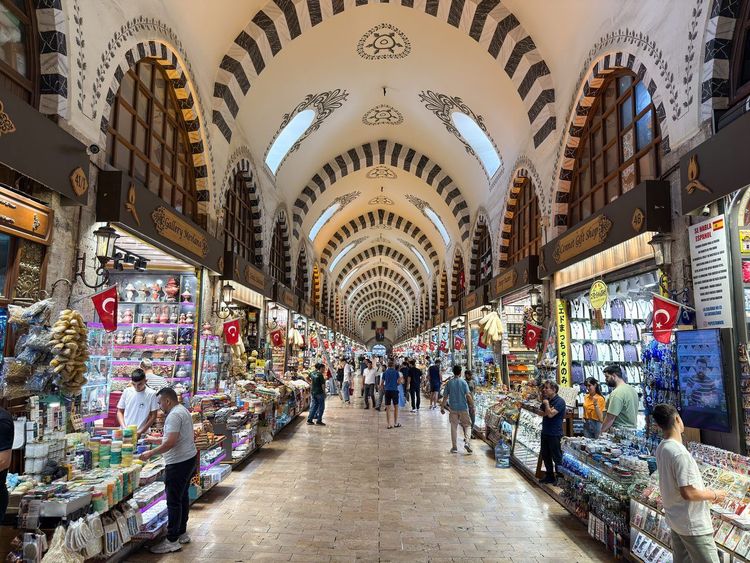
A change of atmosphere at the Grand Bazaar (Kapalıçarşı): about 4,000 shops spread over some sixty covered streets, a market founded in the 15th century and expanded through fires and reconstructions. People come as much for the architecture, with its painted vaulted ceilings, as to haggle over a carpet or a colored glass lantern. Bargaining is part of the game: a first announced price is often negotiated down by 30 to 50%, without it being seen as impolite. It is even frequently the seller who restarts the discussion if you pretend to leave.
Climbing the hill from the bazaar, the Süleymaniye Mosque offers a restful contrast: fewer people, more space, and a terrace overlooking the Golden Horn and the Galata district opposite. Built by the architect Mimar Sinan for Suleiman the Magnificent between 1550 and 1557, it is considered by many to be the pinnacle of classical Ottoman architecture. The garden surrounding it, where the sultan's mausoleum also stands, remains surprisingly calm for a place ten minutes from the busiest bazaar in the city.
Eminönü and the Spice Bazaars
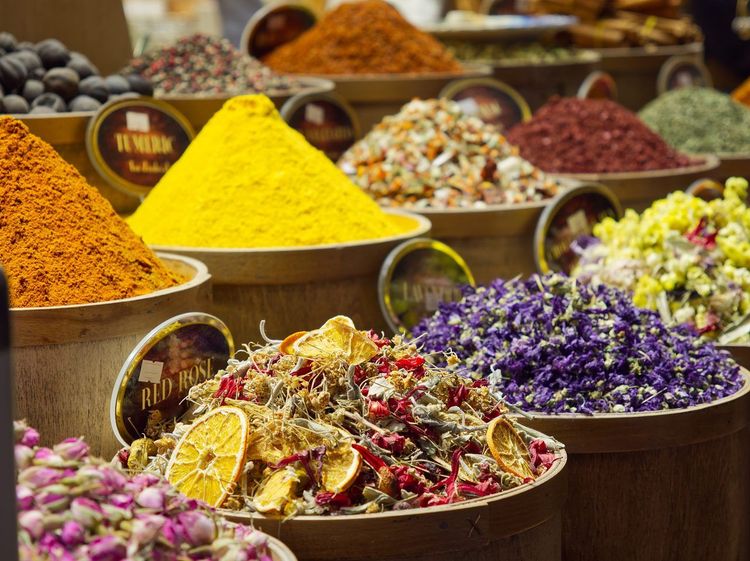
The descent to Eminönü closes the loop of the first day, on the lively quays where ferries leave for Asia and the Bosphorus. The spice market (Rüstem Paşa, 34116 Fatih/İstanbul, rated 4.5/5 on Google from 192,776 reviews) (Mısır Çarşısı), smaller than the Grand Bazaar but just as rich in colors and smells, lines up stalls of saffron, Turkish delight and apple tea. Built in the 17th century at the same time as the neighboring New Mosque, it owes its name "Egyptian Bazaar" to the taxes levied on goods coming from Egypt, which financed its upkeep.
It is also where you board for the Bosphorus mini-cruise detailed below. Keep a late afternoon for this last stop: the market is quickly visited, but the alleys around it, full of sellers of nuts, cheeses and loose teas, deserve a wander before heading back to rest your legs.
A Break on the Water: The Bosphorus Mini-Cruise
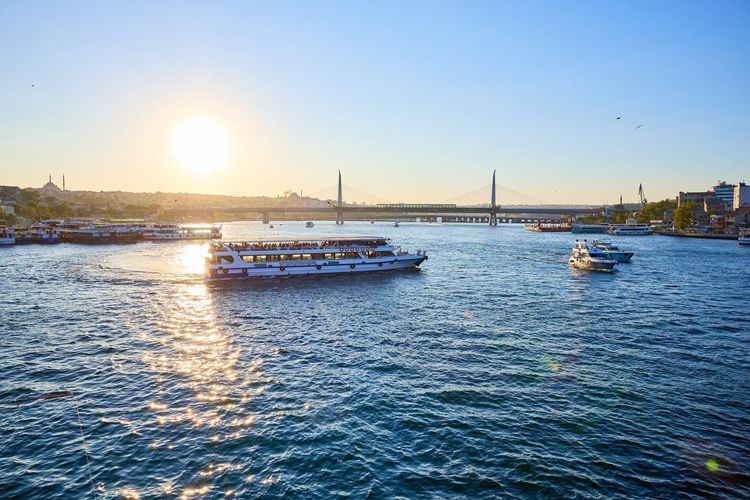
Between the end of the first day and the start of the second, or in the evening if the schedule allows, a mini-cruise on the Bosphorus stands out as the most relaxing break of the stay. Boats generally leave from the quays of Eminönü or Kabataş, for a 1.5 to 2-hour trip that runs along both shores, the Ottoman fortresses built to control the strait and the yalı, those 19th-century wooden villas built at the water's edge for the nobility of the time.
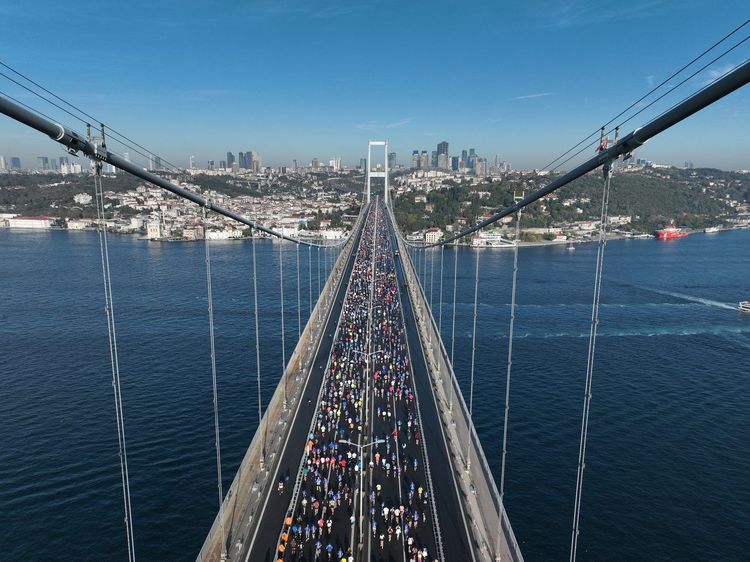
Seen from the water, the city reveals itself differently: the minarets of Sultanahmet suddenly line up on the same horizon, and the suspension bridge linking Europe to Asia becomes a taut line above the strait. Leaving late in the day gives you a sunset over Istanbul from the boat's deck, a moment that many visitors rank above the monuments themselves in their memories.
Several companies offer this trip, from large tourist boats to small private boats for about ten passengers. The smallest boats cost more but sometimes stop for a photo, which scheduled ferries never do. A little-known budget option: the public Şehir Hatları ferry, which also runs a tourist loop on the Bosphorus for a fraction of the price. Some longer tours go as far as crossing the Sea of Marmara to the islands, but for a 2-day program, the short option is more than enough. Expect between 10 and 25 euros depending on the company and the comfort of the boat.
Just before boarding, keep an eye on the quays: the Ryo audio-guided tour points out the best viewpoints over the strait at this spot, a simple way to know which side to position yourself on once on deck.
Day 2: Balat, Galata and the Asian Side
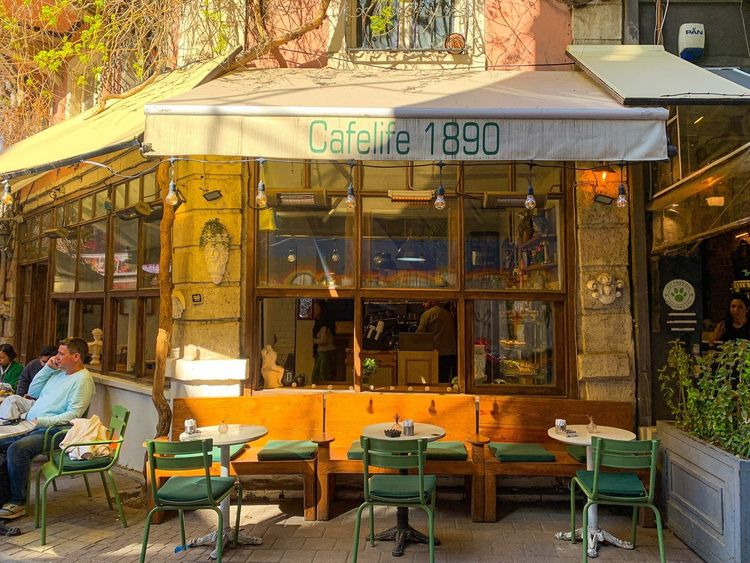
The second day changes the scenery completely: head to Balat (Balat, 34087 Fatih/İstanbul) and Galata, more contemporary and less saturated with tour groups, before crossing to the Asian side late in the day. You will walk more, but over more varied terrain.
The Colorful Alleys of Balat and Fener
Balat and its neighbor Fener form Istanbul's former Jewish and Greek quarter, recognizable by its wooden and stone houses painted in bright colors (pink, blue, mustard yellow), restored over the past fifteen years after decades of near abandonment. Fener still houses the seat of the Ecumenical Patriarchate of Constantinople, and the red silhouette of the Greek high school dominates the hill. You walk here without a set route, camera in hand, sometimes pushing open the door of a café set up in a former workshop.
Allow 1.5 to 2 hours to stroll without rushing, ideally first thing in the morning: the low light on the colorful facades makes photos nicer than at midday, and the sloping alleys, deserted at that hour, are better suited to a walk.
Galata: Bridge, Tower and Independence Avenue
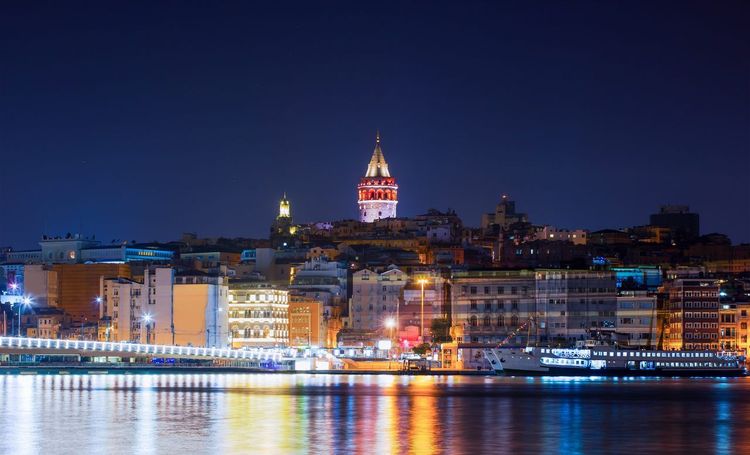
Heading back down to the Golden Horn and crossing it, the Galata district marks a clear shift: antique dealers and workshops have gradually given way to art galleries and specialty cafés, without the 19th-century architecture really changing. Long a Genoese colony and then a European trading post, the district retains a crossroads identity that no other part of the city carries as clearly.
The Galata Bridge can be crossed on foot in about ten minutes, under the gaze of dozens of fishermen casting their lines at all hours. On the other side, the Galata Tower, built by the Genoese in 1348 and about 63 meters high, offers from its balcony one of the finest 360-degree panoramas over the city, with both shores and the Bosphorus united in the same frame. Book your ticket online: morning slots fill up quickly in high season.
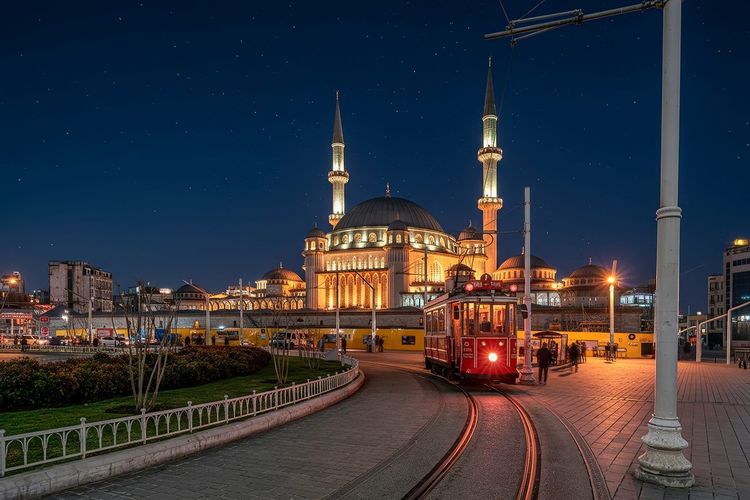
Walking up from the tower, Independence Avenue (İstiklal Caddesi) unrolls 1.4 kilometers of shops, covered passages and neoclassical facades, traversed by an old red tram that still runs through the pedestrians. It is the busiest avenue in the city, with crowds counted in the millions of passersby on weekends. The passages leading off it, such as the Cité de France or the Flower Passage (Çiçek Pasajı), are almost as worthwhile as the avenue itself.
Karaköy and a Turkish Hammam Break
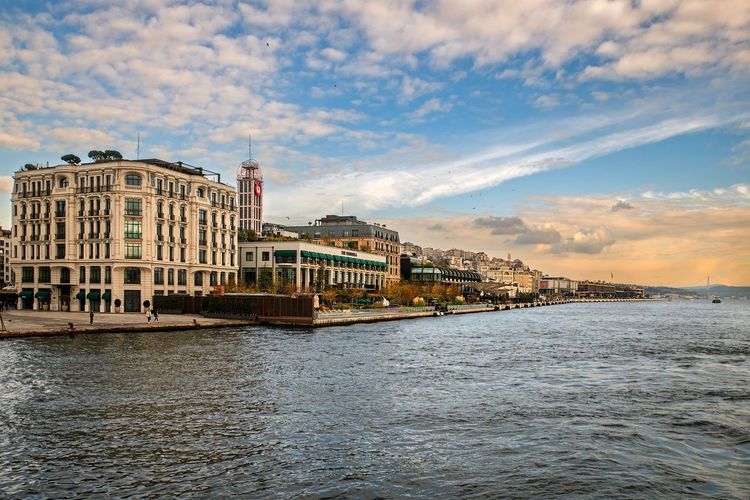
Karaköy, at the foot of the tower, concentrates the city's most bohemian scene: former warehouses turned into concept stores, independent roasters and galleries open to the street. The district has shifted in about ten years from a somewhat run-down industrial port to one of the most photographed areas of Istanbul, without losing its ironworking workshops established for generations.
It is also the ideal place to treat yourself to a real Turkish hammam in the mid-afternoon, when crowds die down. The Kılıç Ali Paşa Hamamı, built by Mimar Sinan in the late 16th century and carefully restored, offers packages of 1 to 1.5 hours with scrub and foam massage. Plan a substantial budget, often over 80 euros for the complete traditional package; less prestigious neighborhood hammams remain accessible for two to three times less. Book the day before, especially on weekends.
Ferry Crossing to the Asian Side
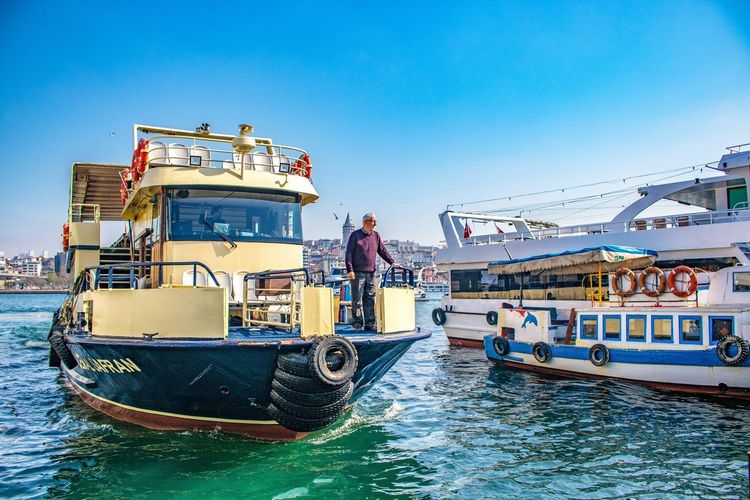
To end the stay without taking your eyes off Europe, a ferry from Karaköy or Eminönü drops you in about 20 minutes at Kadıköy (Kadıköy, 34710 İstanbul), on the Asian side. The change of atmosphere is immediate: a lively market, pedestrian streets lined with bars, far fewer visitors than across the water. Taking a few steps on the Asian side, even for an hour or two, is enough to understand why so many Istanbulites prefer to live here, for the calm as much as for the prices.
The Kadıköy market, less well known than the Grand Bazaar, This shift between two continents is told by the Ryo audio-guided tour with commented stops at the Galata bridge and tower: you understand, even before boarding, how a maritime border long served as an imperial border.
Where to Eat and What Culinary Experiences to Enjoy in Istanbul
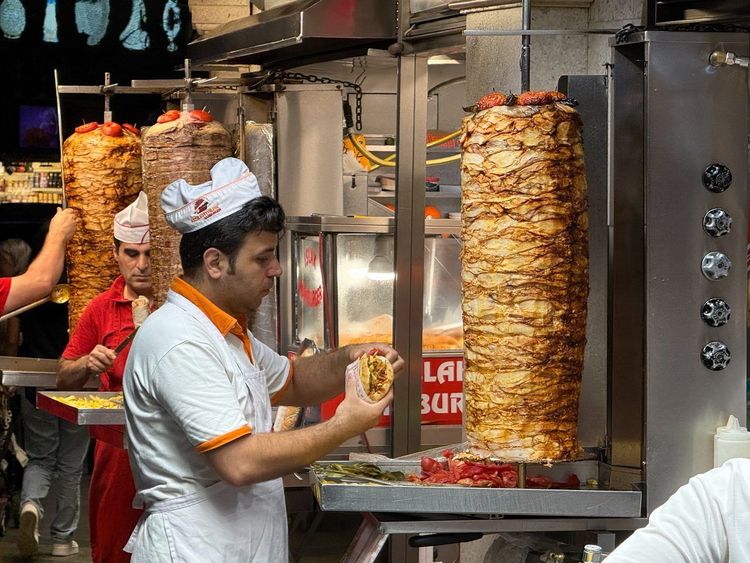
Istanbul is as good to eat as it is to visit, and this is precisely the point on which most guides remain vague. Here are some pointers that fit seamlessly into the 2-day itinerary.
Restaurants and Terraces with a View of the City
For the first day's lunch, several terraces around Sultanahmet look straight onto Hagia Sophia or the Blue Mosque, with a bill that climbs accordingly but remains reasonable compared with Paris or London. Expect 15 to 25 euros for a dish with a view, versus 6 to 10 euros in a neighborhood lokanta, those canteens where you pick your simmered dish directly from the trays on the counter.
On the evening of the second day, dining in Galata changes register: more creative cuisine, Turkish wines (Cappadocia has produced them since Antiquity), a more international atmosphere. Several meyhane around the tower serve a round of meze followed by grilled fish, a formula that almost always works, even without a reservation on weekdays. And if you pass through Eminönü, the balık ekmek (grilled fish sandwich) sold at the foot of the Galata Bridge remains a classic for a few euros.
Pastries, Turkish Sweets and Food Markets
Where to eat good cakes in Istanbul is a serious question: pistachio baklava, künefe (a hot pastry with stretchy cheese topped with syrup) and kadayıf are best enjoyed in a specialized pastry shop rather than at a restaurant. Karaköy and Beyoğlu concentrate several well-known addresses, some in business for over a century.
In the street, the sellers of pressed juices, with pomegranates and oranges stacked in pyramids on their carts, are as much a part of the landscape as the minarets. Tasting this fresh juice at a street corner, nibbling on a simit (sesame bread ring) while walking or sharing a tea in a small tulip-shaped glass are among the simplest local experiences to enjoy, with no reservation or particular expense. For more ideas, our selection of the top 7 activities to do in Istanbul completes this program.
For a more complete selection, the Ryo guide to Istanbul's culinary specialties details ten dishes and sweets not to miss, from the full Turkish breakfast to the evening dessert.
Where to Stay in Istanbul for a Short Trip
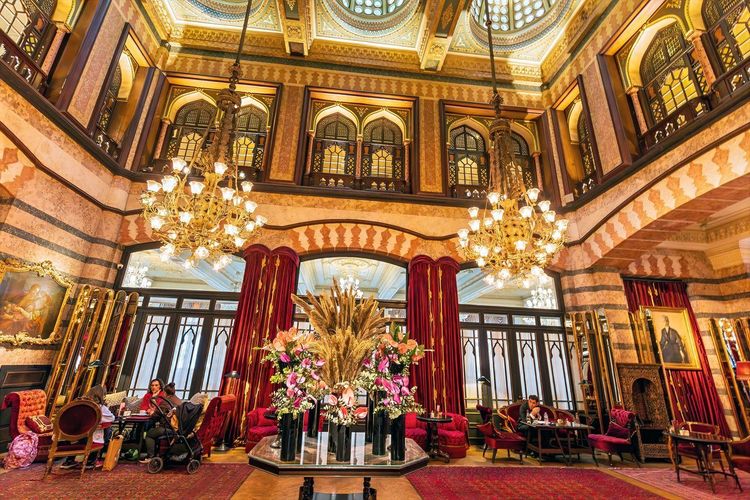
The choice of neighborhood directly affects the pace of the 2 days, much more than on a long stay where travel times matter less.
Sultanahmet, to Be at the Foot of the Day 1 Monuments
Sleeping in Sultanahmet puts you less than 10 minutes on foot from the Blue Mosque or Hagia Sophia, a real advantage for beating the groups. The hotel offering is dense, from boutique hotels set in restored Ottoman houses (from 70-80 euros per night) to simpler addresses around Sirkeci station (30-40 euros). The downside: fewer restaurants open after 10 p.m. than on the Galata side, and a call to prayer that resonates at dawn from several mosques at once.
Galata and Karaköy, to Also Enjoy Day 2
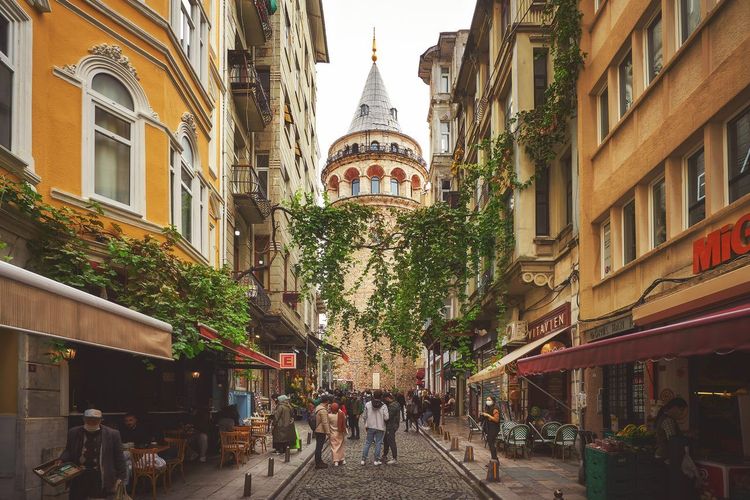
Conversely, dropping your bags in Galata or Karaköy slightly lengthens the morning trips to Sultanahmet (20 to 25 minutes by tram or on foot via the bridge), but brings you closer to bars, restaurants and galleries that close late. It is also the most practical option for the second day, since the Galata Tower, Karaköy and İstiklal Avenue are then a few minutes' walk away.
For just 2 days, the most efficient compromise remains to choose Galata if you favor evenings, and Sultanahmet if you aim for early-morning visits and immediate proximity to the monuments.
How to Get to Istanbul and Get Around Between the Two Days
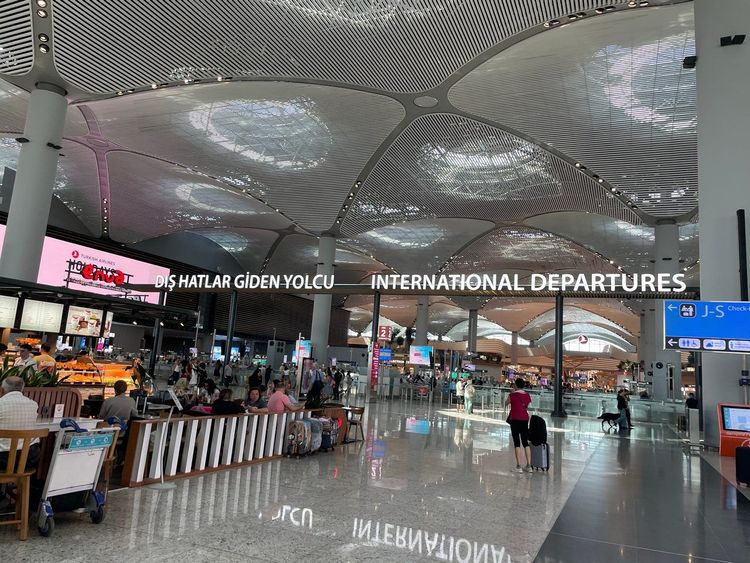
Istanbul is served by two airports: Istanbul Airport (IST), in the northwest, the Turkish Airlines hub, and Sabiha Gökçen airport (SAW), on the Asian side, mostly used by low-cost carriers. From IST, a Havaist bus or the M11 metro (with a connection) reach the center in 45 minutes to 1 hour 15 depending on traffic, for a few euros; from Sabiha Gökçen, expect more like 1 to 1.5 hours, the airport being more remote. A taxi from IST costs about 30 to 45 euros to Sultanahmet, more at peak hours.
To get around between the two days, the İstanbulkart remains the simplest solution: a single rechargeable card, topped up at station machines, for the T1 tram (which links Sultanahmet to Karaköy), the metro, buses, the funicular and ferries. Each trip costs less than one euro, far less than a taxi ride, and the fare drops on close connections. Ferries are taken without a reservation: they leave every 15 to 20 minutes during the day on the main lines.
Parking in Istanbul is, in reality, pointless for a stay like this: the streets of the historic center are narrow, parking is expensive and scarce, and no place on the program requires a car. Book a transfer only for the airport and do everything else on foot or by public transport, the simplest way not to miss anything along the way.
Istanbul Tourist Pass and Estimated Budget for the 2 Days
Should You Get the Istanbul Tourist Pass?
The Istanbul Tourist Pass bundles entry or a guided visit to a selection of sites (Topkapi Palace, Basilica Cistern, Galata Tower, Bosphorus cruise depending on the package) for a single fee, whose price increases with the chosen duration (from 2 to 7 days). It becomes worthwhile if you plan to visit at least 4 to 5 paid sites over the 2 days, with welcome skip-the-line access in high season as a bonus.
For the itinerary described above, where only the Blue Mosque is free, the calculation is worth doing: Hagia Sophia, Topkapi Palace, the Basilica Cistern and the Galata Tower all charge admission. Add up the price of individual tickets before buying: below 4 sites, the pass often costs more than separate entries, especially since the hammam generally isn't included.
Estimated Budget for the 2 Days
Excluding flights and hotel, an estimated budget for the 2 days runs around 120 to 180 euros per person: transport (10-15 euros), paid entries (70-110 euros if you do Hagia Sophia, Topkapi, the Cistern and the Galata Tower, as foreigner rates have risen sharply since 2024), meals (30-45 euros mixing street food and one or two meals with a view) and the mini-cruise (10-25 euros). The hammam remains optional, and it is the most variable item.
Accommodation covers the widest range, from 25 euros a night in a hostel to over 150 euros in a boutique hotel with a Bosphorus view. Plan a margin: prices in Turkish lira change quickly with inflation, and many museums now display their rates directly in euros.
Which Season to Choose and What Precautions to Take
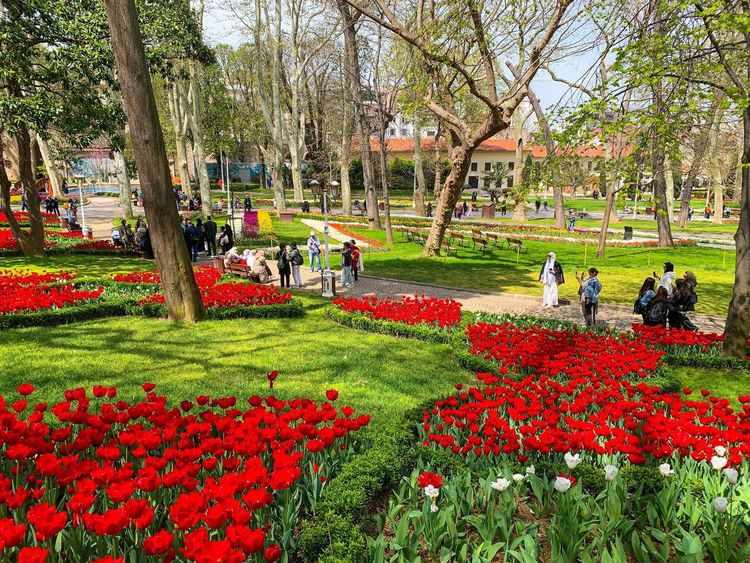
What is the best time to visit Istanbul? It all depends on your tolerance for heat and crowds. Spring (April-May, tulip season in the parks) and early autumn (September-October) remain the most comfortable, with 18 to 24°C and still reasonable crowds. Summer regularly exceeds 30°C, which weighs on a walking-heavy program; winter, cooler and rainier, offers in exchange much cheaper hotels and almost nonexistent queues.
A point often forgotten: during Ramadan, the hours of some shops and restaurants change, with activity picking up mostly after the breaking of the fast in the evening. This does not hinder visiting the monuments, but can be surprising for lunch in residential neighborhoods.
As for formalities, French, Belgian, Swiss and Canadian citizens do not need a visa for a tourist stay of less than 90 days in Turkey (Canadians have been exempt since late 2023); a valid passport is enough. Travel insurance for this stay in Istanbul remains recommended, particularly for medical expenses: care is not automatically covered for foreign visitors, and private clinics quickly charge high fees in an emergency.
What If You Have More or Less Time in Istanbul?
Two days cover the essentials, but the question often comes back once the trip is booked.
Just One Day in Istanbul: The Condensed Version
If you only have a single day in Istanbul, the trade-off gets tight: focus on the Blue Mosque, Hagia Sophia, the Basilica Cistern and the Grand Bazaar, giving up Topkapi Palace (the longest to visit) and the Asian side. At the end of the day, you will have just enough time left for a short Bosphorus cruise before sunset.
3 Days or More: The Princes' Islands and Places to Add
Visiting Istanbul in 3 days or more frees up time for an excursion to the Princes' Islands, a car-free archipelago located 40 minutes to 1.5 hours away by ferry depending on the island and the boat. On Büyükada (Büyükada, 34970 Adalar/İstanbul, rated 4.6/5 on Google from 10K reviews), the largest, you get around by bike, on foot or by electric shuttle among wooden villas and coves, the horse-drawn carriages having been banned in 2020. It is the extension most often recommended by locals themselves, an optional day 3 that radically changes pace.
Beyond that, visiting Istanbul for 5 or 7 days lets you add a getaway to Ephesus (flying to Izmir, as the road trip is too long for a round trip), detailed in our guide to visiting Ephesus, or simply explore Kadıköy and Üsküdar on the Asian side in greater depth. For 10 or 15 days, Cappadocia and the Aegean coast become realistic options, and turn the stay into a true tour of the country.
Whatever duration you choose, the complete Ryo audio-guided tour of Istanbul lets you revisit the neighborhoods you've already crossed with a level of detail that 2 days don't always leave time to absorb.



FAQ
How many days do you need to visit Istanbul?
Two days are enough to cover Sultanahmet, the Grand Bazaar and a mini-cruise on the Bosphorus, which already makes for a good introduction to the city. Three days add the Asian side in depth or the Princes' Islands, while a week or more opens the door to farther-flung excursions such as Cappadocia.
Is it possible to visit Istanbul in just 1 day?
Yes, provided you tighten the schedule around the four densest sites in Sultanahmet: the Blue Mosque, Hagia Sophia, the Basilica Cistern and the Grand Bazaar. Topkapi Palace and the Asian side then take a back seat.
What budget should you plan for 2 days in Istanbul?
Excluding flights and accommodation, expect between 120 and 180 euros per person for transport, entrance fees to the major monuments, meals and the mini-cruise. Accommodation remains the most variable item, from 25 to over 150 euros per night depending on the neighborhood and comfort level.
Do you need a visa to visit Istanbul?
Not for French, Belgian, Swiss and Canadian citizens, for stays of up to 90 days: a valid passport is enough. Still, check the entry requirements before departure, as they may change.
What is the best time of year to visit Istanbul?
Spring and early autumn offer the best compromise between pleasant weather and moderate crowds. Summer, often above 30°C, makes walking more tiring, while winter lets you take advantage of much lower accommodation rates.
Is Hagia Sophia free?
Not anymore for foreign tourists: since January 2024, the visit via the upper gallery costs about 25 euros. Access remains free for worshippers who come to pray.
Should you get the Istanbul Tourist Pass for 2 days?
The pass becomes worthwhile once you visit 4 or 5 paid sites over the 2 days, notably Topkapi Palace and the Basilica Cistern. Below that, adding up individual tickets is often cheaper.
How do you get around between Istanbul's neighborhoods in 2 days?
A rechargeable İstanbulkart covers the tram, metro, buses and ferries for less than one euro per trip. It is more than enough to connect Sultanahmet, Galata and the Asian side without a car.
Our Advice for Making the Most of Your 2 Days in Istanbul
Two days in Istanbul force you to choose, but the program offered here, Sultanahmet and its Byzantine and Ottoman density on the first day, Balat and Galata on the second, with a Bosphorus cruise in between, covers the essentials of what makes the city's reputation. Start early, keep the closing days in mind and book the most popular sites online: these three reflexes save the most time.
Nothing stops you from coming back for an entire week once the city has been tamed. And to keep an audio record of this first visit, download the Ryo audio guide to Istanbul: it remains accessible offline in the app, handy for listening again to the story of a monument long after leaving the Bosphorus.