© Shutterstock
 Votre guide Ryo
The 13 Most Beautiful Beaches in Dubai in 2026
Dubai's most beautiful beaches are unlike any other seaside destination: here, fine white sand borders a skyline of glass towers, the Burj Al Arab rises in silhouette from the waves, and the waters of the Persian Gulf stay at pool-like temperatures between October and May. If you are planning a trip to the Emirates, the Ryo Dubai audio guide will help you structure your visit between the beach and the city, because Dubai deserves both. The coastline stretches over more than 70 kilometers from the family beaches of Al Mamzar in the north to the near-deserted waters of Jebel Ali in the south, with a variety of atmospheres in between that rivals the Mediterranean.
What many travelers don't know: several of Dubai's public beaches are completely free, well-equipped, and meticulously maintained. Others are taken over by upscale beach clubs where entry can exceed 200 AED per person, but grant access to infinity pools, DJ sets, and views of the Burj Al Arab. In between lies Black Palace Beach, a wild stretch of sand absent from any tourist brochure, where you'll find yourself alone with the sunset and the silhouette of the famous white sail on the horizon. Here are the 13 beaches to discover in order to experience the full diversity of Dubai's coastline.
1. JBR Beach
JBR Beach (The Walk, Jumeirah Beach Residence, Dubai, rated 4.6/5 on Google across 355 reviews) is without doubt Dubai's most lively and complete beach. It stretches for 1.7 kilometers of white sand along The Walk promenade, steps away from the residential towers of Jumeirah Beach Residence and the malls of Dubai Marina. If you could only visit one beach in Dubai, this would probably be it — not for its tranquility, but for everything it offers in a single place.
Entry is completely free, which is no small thing for a beach of this quality. The sand is maintained daily, showers and changing rooms are available on site, and sun loungers can be rented by the hour. In terms of activities, JBR Beach offers surf lessons, paddleboarding, jet-ski experiences, and parasailing, all without leaving the beach.
What truly sets JBR apart from Dubai's other beaches is the atmosphere. The Walk promenade running alongside the beach is lined with dozens of restaurants open late into the night: shawarma, sushi, Neapolitan pizza, shisha cafés, boutiques. On weekends (Friday and Saturday in Dubai), the beach fills with expat families, groups of young people, and tourists from around the world, creating an energy that feels more like Barcelona than anything you'd expect from the Persian Gulf. On weekdays, the crowds are far more manageable.
To get there by public transport, the simplest option is to take the red metro line to the DAMAC Properties station (formerly Jumeirah Lakes Towers), then the tram to the Jumeirah Beach Residence 1 or 2 stop. Allow around 20 minutes from Downtown Dubai for a fare under 6 AED.
Worth noting: some sections of JBR Beach adjoin private beach clubs such as Cove Beach or Zero Gravity, which charge for entry but are entirely optional. The public beach remains freely accessible along its full length, with the exception of areas clearly fenced off by private establishments. If you plan to spend the day here, arrive before 10am on weekends to find a spot without difficulty.
2. Kite Beach
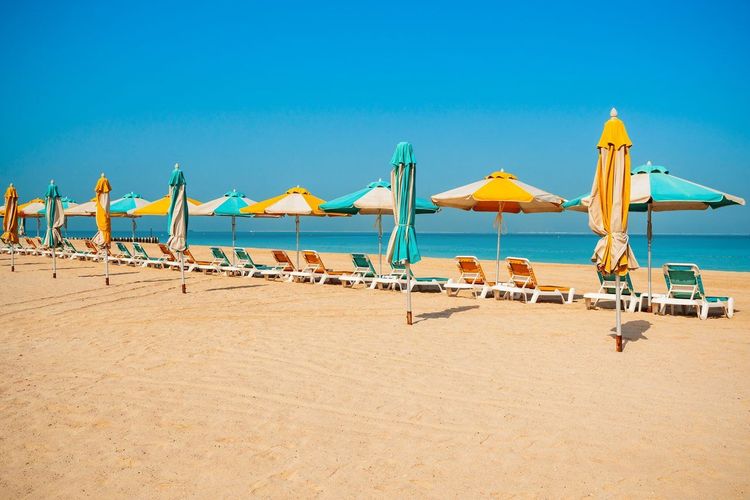
It's hard to miss the dozens of kites dancing permanently in the sky above Kite Beach (Umm Suqeim, Dubai, rated 4.6/5 on Google across 22,498 reviews): the beach takes its name from the kitesurfers who have made it their home since the early 2000s. Stretching for 1.4 kilometers, it runs between the Jumeirah and Umm Suqeim neighborhoods, with an unobstructed view of the Burj Al Arab visible just a few hundred meters to the south.
It is a free public beach and one of the best-equipped in Dubai. It features a seaside fitness track, beach volleyball courts, a skate zone, beach tennis courts, and a row of food trucks serving burgers, açai bowls, and fresh juices. On weekends, the atmosphere is sporty and relaxed, with plenty of joggers, cyclists, and families picnicking under the palm trees.
For kitesurfers, the northwestern section of the beach is reserved, with a marked landing zone. Kitesurfing schools offer lessons on site. The optimal season for this sport runs from November to March, when the northeasterly Shamal winds blow steadily at 15–25 knots. Outside this period, winds are less consistent and sessions less predictable.
The water at Kite Beach is shallow for about thirty meters from the shore, making it ideal for families with young children. Lifeguard supervision is provided most of the time, with hours that vary by season. One of the beach's best spots is Salt, a food truck that has become a local institution for its wagyu burgers: the queue often exceeds 30 minutes on weekends, so plan to arrive early or come on a weekday.
3. Al Mamzar Beach
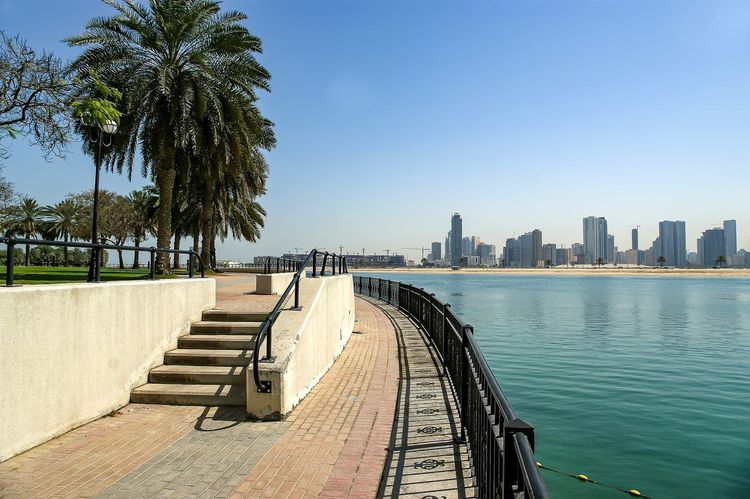
Overlooked by mainstream travel guides, Al Mamzar Beach (Al Mamzar, Dubai, rated 4.5/5 on Google across 34,666 reviews) is one of Dubai's best beaches for families with young children. It forms part of Al Mamzar Park, a green space of 106 hectares located in northern Dubai, on the border of the emirate of Sharjah. The park contains five distinct beaches with particularly calm and shallow waters, ideal for young swimmers.
Entry is paid (5 AED per person, around €1.30), which naturally regulates crowds and keeps the grounds in remarkable condition. Allow an additional 30 AED if you enter by car to park inside the park. The car parks are spacious, barbecues are permitted in designated areas, and the beach is surrounded by shaded lawns perfect for picnics. The entire park is carefully maintained, peaceful on weekdays, and on clear days the view stretches all the way to the Sharjah coastline. A practical tip: avoid Thursday evenings and Fridays, which correspond to the local weekend, when families from across Dubai gather here in large numbers.
4. Palm Jumeirah Beach
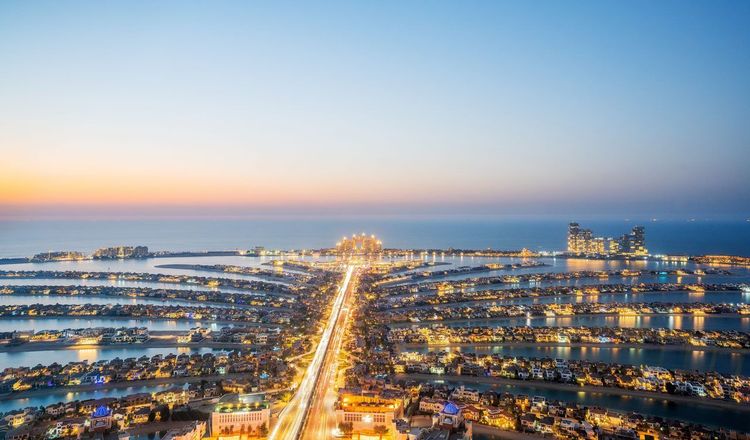
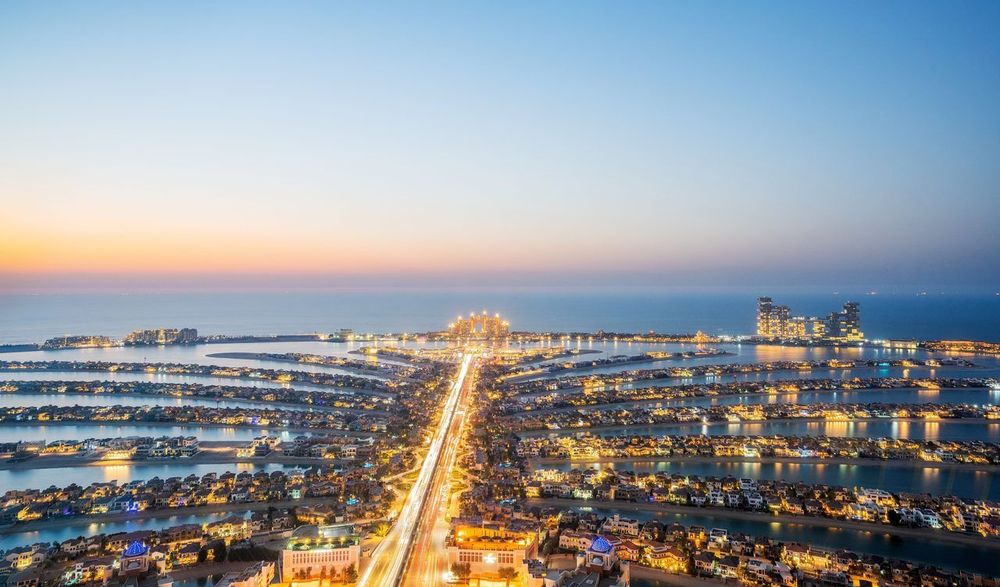
Palm Jumeirah Beach is the beach that sums up Dubai better than any other: artificial in its geography, sublime in its scale, surreal in its setting. The palm-shaped island was designed by Nakheel Properties in the early 2000s to double Dubai's coastline. Mission accomplished, with more than 78 kilometers of coastline reclaimed from the sea.
The publicly accessible beach on the Palm is concentrated mainly along the outer crescent of the island. Nakheel Beach, on the marina side, offers a remarkable view of the Dubai Marina skyline and its towering high-rises. But it is from the "spine", the central trunk of the Palm, that the panorama is most spectacular, with Dubai Marina on one side and the island's giant hotels on the other.
Atlantis The Palm occupies the northern tip of the crescent and has its own private beaches, accessible via the Aquaventure water park (around 350 AED). For those not staying at Atlantis, several beach clubs on the island offer day passes: DRIFT Beach and Five Palm Beach Club are the most in demand. Expect to pay between 200 and 400 AED depending on the day and inclusions, with a portion often redeemable against food and drinks.
One notable difference from the Jumeirah beaches: the waters on the outer side of the Palm tend to be slightly cooler and choppier, as they are more exposed to the Gulf. On easterly winds, seaweed can accumulate on certain sections throughout the day. On the marina side, however, the water is calmer and stays warm even in December.
To visit the Palm without a car, the Palm Monorail connects the Ibn Battuta station (red metro line) to Atlantis in about fifteen minutes, with intermediate stops. A bus shuttle also serves certain parts of the island from the Dubai Internet City terminus.
The Palm's geography deserves at least half a day. Before or after the beach, the Ryo audio-guided tour City of Excess traces the history of the emirate's major architectural projects from the 1970s to current construction sites — an illuminating perspective on what made the Palm possible.
5. J1 Beach (La Mer)
Renamed J1 Beach after a complete renovation, this beach in the Jumeirah 1 neighborhood is one of Dubai's most appealing for a young, urban crowd. The space was designed as an integrated lifestyle district where the beach adjoins colorful lanes lined with designer boutiques, street art galleries, and trendy restaurants.
Access to the beach itself is entirely free, which contrasts with the premium positioning of the surrounding district. The sand is white and regularly maintained, the water is clear, and the beach has a well-equipped shower and changing room system. The swimming section is supervised, and an anti-jellyfish net protects part of the area.
What makes J1 Beach distinctive is its end-of-day atmosphere. The restaurants in the "La Mer" area often stay open until 2am, some with terraces offering a direct sea view. During the day, the beach draws mainly expats and Jumeirah residents, far from the bustle of JBR. In summer, evening events are held on the beach: concerts, designer markets, and open-air film screenings.
Allow about twenty minutes from Downtown Dubai by car, or 35 minutes by bus (line 8 from Union Square). Paid parking is available on site (5 AED/hour).
6. Sunset Beach
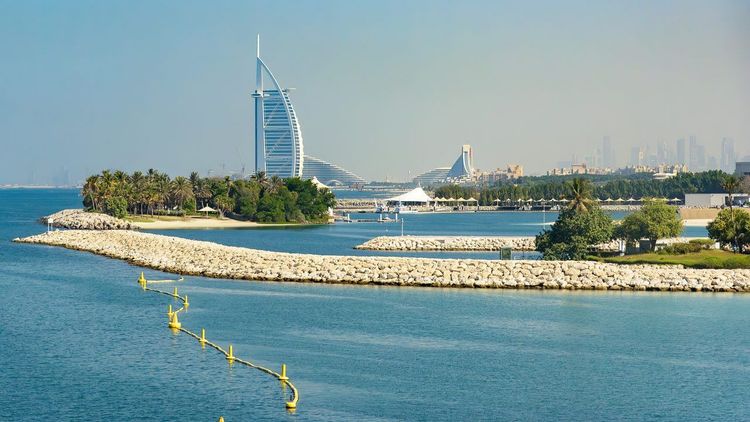
Sunset Beach (Umm Suqeim 3, Dubai, rated 4.4/5 on Google across 3,273 reviews), also known as Umm Suqeim Beach, takes its name from the spectacle it offers every evening: directly opposite, less than a kilometer away, stands the tall white silhouette of the Burj Al Arab. For a photograph of the iconic palace from water level, this is the most accessible and most dramatic vantage point along the entire Dubai coastline.
It is a free public beach, roughly one kilometer long. It is less well-equipped than JBR or Kite Beach: no modern changing rooms, few food trucks in the immediate vicinity. But the crowds are manageable and the atmosphere noticeably calmer. The sunsets here are genuinely exceptional, especially between November and February when the dry air gives the low-angled light an almost photographic quality. Arrive 30 minutes before sunset to find a spot on the rocks or the sand. On weekdays, the beach is often nearly deserted at that hour.
7. Black Palace Beach
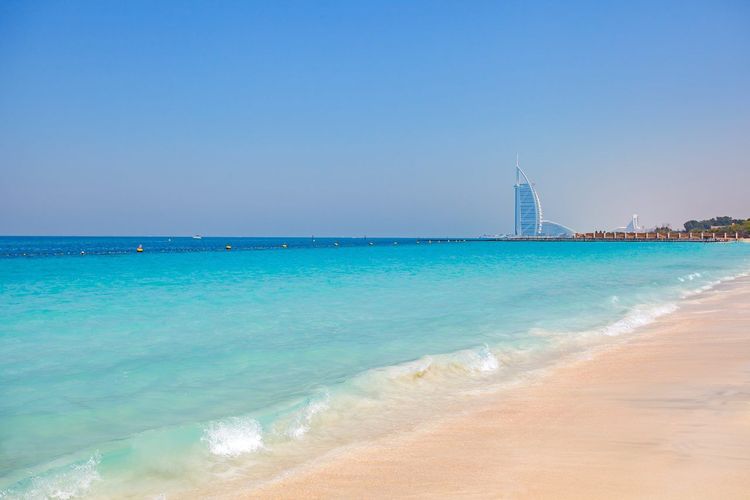
Black Palace Beach (Al Sufouh, Dubai, rated 4.3/5 on Google across 331 reviews), officially named Al Sufouh Beach, is one of Dubai's best-kept secrets. This long stretch of wild sand is virtually unknown to tourists, yet it offers something unique in the city: a simultaneous view of the Burj Al Arab and Palm Jumeirah from the same beach, with no crowds and no vendors.
Access is via a discreet path in the Al Sufouh neighborhood, about a ten-minute walk from the Burj Al Arab hotel. The entrance is neither signposted nor official, but the beach remains legally accessible with no facilities. Best avoided in summer for obvious reasons of thermal comfort, it is ideal on winter mornings: the sand is still cool, the light magnificent, and the chances of running into anyone are close to zero. For photography enthusiasts, this is without doubt the finest angle on the Dubai coastline.
8. Jumeirah Open Beach
Jumeirah Open Beach (Jumeirah 1, Dubai, rated 4.6/5 on Google across 6,865 reviews) is one of the few beaches in Dubai to have preserved a genuinely local atmosphere. Few tourists come here: it is mainly the neighborhood's population, expats, and long-term Jumeirah residents who frequent it. The result is a relaxed, multicultural atmosphere, free from the commercial pressure of the major beaches.
The beach stretches for several hundred meters with shallow, calm water ideal for swimming. Bathing cabins, showers, and public toilets are available on site. The sand is less pristine than at JBR, but swimming conditions are often better: fewer people means fewer jet-skis and watercraft in the immediate vicinity of swimmers.
The surroundings are also worth exploring. The Jumeirah 1 neighborhood is home to some of Dubai's best breakfast cafés, with Australian and Lebanese spots open from 7am. If you want to understand Dubai before the glass towers arrived, this seaside residential neighborhood is the place to stroll after a swim.
To plan a full day from this beach, our Ryo selection of things to do in Dubai suggests complementary experiences in the neighboring districts, from the souks of Al Fahidi to the panoramic terraces of Downtown. Our City of Excess audio-guided tour, ten stops over 2.2 kilometers, gives them a thread to follow.
9. Nessnass Beach
Nessnass Beach (Jumeirah 3, Dubai, rated 4.8/5 on Google across 215 reviews) is a small public beach located in the residential neighborhood of Jumeirah 3, between Kite Beach to the north and Sunset Beach to the south. More low-key than its neighbors, it is generally frequented by local residents and attracts virtually no tourists.
Entry is free, the sand is clean, and the water is shallow for about ten meters from the shore. No sun lounger rentals, no jet-skis: just the sea, the sand, and the view to the horizon. It is the ideal spot if you want to swim without commercialization or crowds, provided you have a car to get there, as public transport does not serve this area directly. Local residents tend to visit in the late afternoon, when the heat begins to ease.
10. Jebel Ali Beach
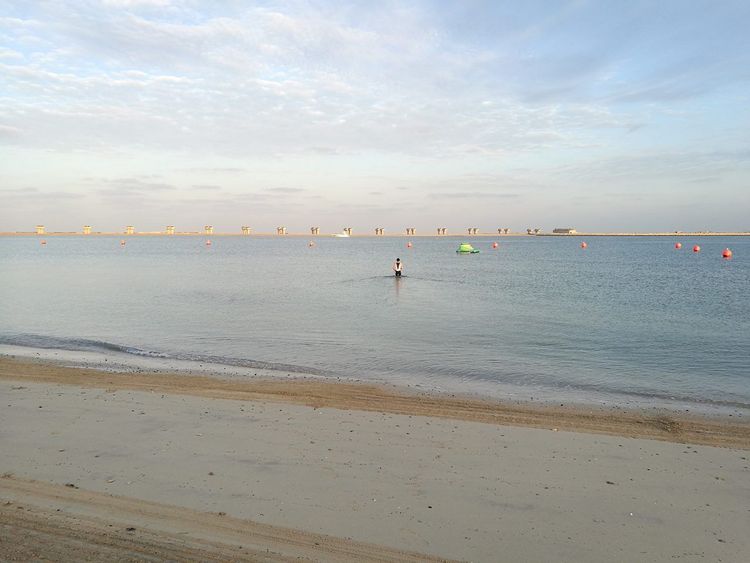
Jebel Ali Beach (Jebel Ali, Dubai, rated 4.2/5 on Google across 3,074 reviews) is Dubai's southernmost beach, about 40 kilometers from the city center. It is a near-wild beach, long and lightly visited, flanked by resort hotels with sections accessible outside privatized perimeters. The water here is particularly calm and shallow, as the gently sloping underwater relief breaks the Gulf's currents.
If you are staying at one of the Jebel Ali resorts (Marriott, Waldorf Astoria), the beach is included in your stay. For travelers without accommodation on site, access is via the day passes offered by these hotels. The distance from Downtown makes it more of a beach resort destination than an urban beach day trip, but for those seeking complete tranquility away from the urban bustle, it is the best choice on Dubai's southern coast.
11. Marina Beach
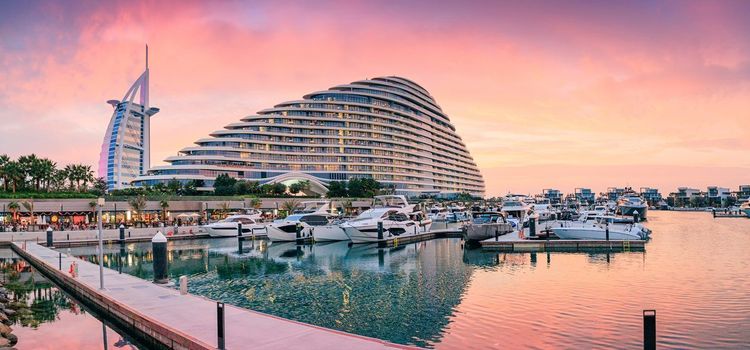
Marina Beach (Dubai Marina, Dubai, rated 4.6/5 on Google across 5,876 reviews) sits within the urban fabric of Dubai Marina, a neighborhood built around an artificial canal 3 kilometers long, lined with residential towers sometimes reaching 80 stories. The beach is narrow compared to JBR, but benefits from a spectacular architectural setting that sets it apart from every other beach in the city.
Entry is free for the public section, even though several private beach clubs occupy portions of the shoreline. The water is clear with sandy shallows, and the presence of boats and yachts in the neighboring marina creates a distinctive atmosphere. It is an ideal beach for photographers: in the evening, the reflections of the illuminated towers on the water make for striking images.
The Dubai Marina neighborhood is also one of the liveliest in the city after 6pm, with canal-side promenades and Gulf cruises. The red metro line serves the neighborhood directly in 25 minutes from Downtown, making it one of the easiest beaches to reach without a car.
12. Nikki Beach Dubai
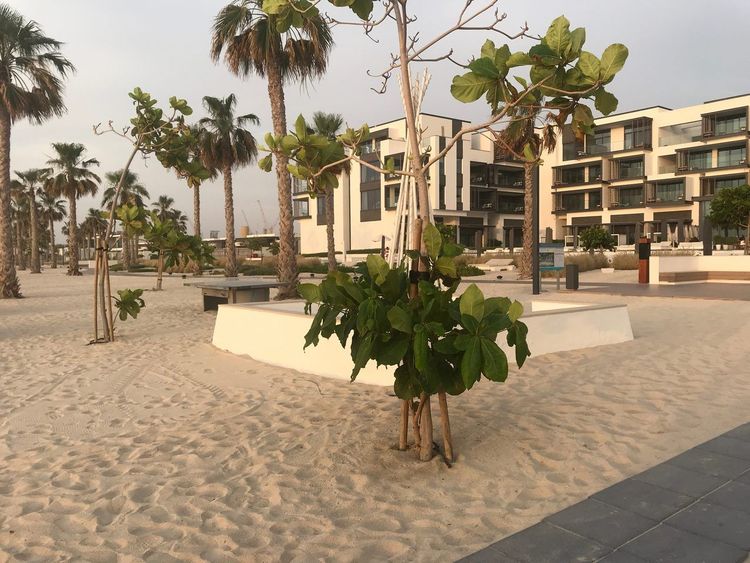
Nikki Beach Dubai (Pearl Jumeirah, Dubai, rated 4.4/5 on Google across 2,059 reviews) belongs to the premium beach club category: entry is paid, music plays from midday, cocktails are expensive, and that is precisely why its clientele loves it. Set on Pearl Jumeirah island, the American franchise from Miami delivers one of its best incarnations here in Dubai.
A day pass costs between 200 and 350 AED depending on the day and season, with a portion redeemable against on-site food and drinks. On weekends, Nikki Beach hosts brunch-concerts animated by DJs, a fixture in the social calendar of Dubai's expat community. The beach itself is well maintained, the sand white, the loungers comfortable, and the service attentive.
Beyond the entertainment, the setting is genuinely beautiful. The view from the beach takes in the open sea to the west and the Dubai Marina skyline to the north simultaneously. The water is clear and shallow enough to swim in comfortably. On weekdays and outside of events, the atmosphere is noticeably quieter, almost intimate.
For those who want the beach club experience without the premium price tag, Cove Beach at JBR or The Beach at JBR offer more accessible alternatives with a similar vibe. These beach clubs represent a social culture of their own in Dubai, unlike anything found in other Gulf cities.
13. Bluewaters Beach
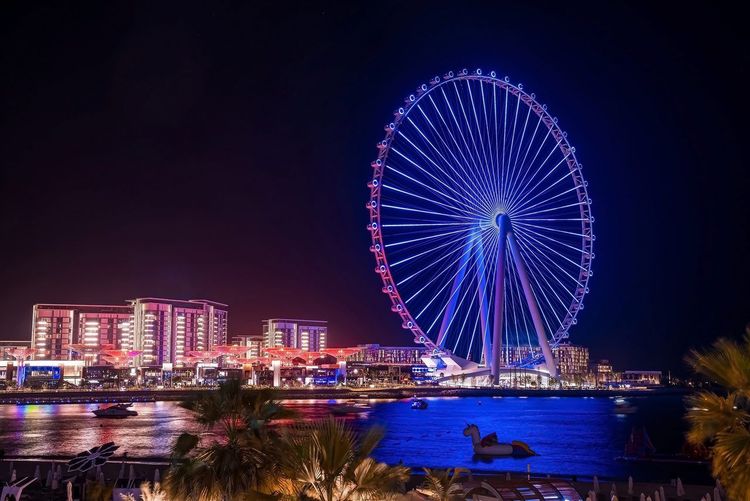
Bluewaters Beach (Bluewaters Island, Dubai, rated 4.7/5 on Google across 9,401 reviews), on the artificial Bluewaters Island at the entrance to Dubai Marina, is one of the city's newest beaches. The island was developed around Ain Dubai, the observation wheel that peaks at 250 meters in height. The beach offers a unique view of this giant structure reflected in the water at the end of the day.
Entry is free, the sand is clean, and the water is calm. A few restaurants and cafés are set up on the island, and the promenade running along the beach invites a leisurely stroll all the way to the foot of the observation wheel. A pedestrian bridge connects Bluewaters Island to the JBR neighborhood in under 10 minutes on foot, making it easy to combine both beaches in a single day. A late-afternoon trip to Bluewaters from JBR Beach pairs perfectly with watching the sunset over the sea.



FAQ
When can you swim at Dubai's beaches?
The ideal swimming season runs from October to May. In winter (December–February), water temperatures range between 22 and 26°C and the air is pleasant (25–30°C). From June to September, air temperatures exceed 40°C and the water rises to 35°C, making swimming less refreshing and long sessions in direct sunlight hard to bear. The beaches remain open year-round, but the majority of travelers choose the cooler season.
Are Dubai's beaches free?
The majority of Dubai's public beaches are entirely free: JBR Beach, Kite Beach, Sunset Beach, Jumeirah Open Beach, Nessnass Beach, Black Palace Beach, and Bluewaters Beach all have no entry fee. Al Mamzar Beach Park charges 5 AED per person (around €1.30) as it is part of a managed park. Private beach clubs such as Nikki Beach offer day passes ranging from 150 to 350 AED, often partly redeemable against food and drinks.
What is the best beach in Dubai for families?
Al Mamzar Beach is the most family-friendly option for young children: calm, shallow waters across several distinct beach areas, green spaces for picnicking, permitted barbecues, and moderate crowds. Kite Beach suits active families well with its sports activities and food trucks. JBR Beach is more versatile: family-friendly during the day thanks to its lifeguards and full amenities, it stays lively in the evening for teenagers who enjoy water sports.
Is there a dress code on Dubai's beaches?
On public beaches, standard swimwear is permitted in swimming areas. Away from the beach and on adjacent promenades, it is recommended to cover shoulders and knees out of respect for local culture. Very demonstrative behavior in public should be avoided. At private beach clubs, the dress code is generally similar to that of southern Europe.
How do you get to JBR Beach from Downtown Dubai?
Take the red metro line toward Jebel Ali to the DAMAC Properties station (formerly Jumeirah Lakes Towers), then transfer to the tram to the Jumeirah Beach Residence 1 or 2 stop. The full journey takes around 20–25 minutes and costs less than 6 AED. By taxi, allow 15 to 20 minutes and approximately 25–35 AED depending on traffic.
Can you go snorkeling in Dubai?
Open-water snorkeling is not the main activity on Dubai's beaches: the water is often murky at the surface due to suspended sediment. For quality snorkeling in the Emirates, excursions to Fujairah (on the Indian Ocean coast, about 1.5 hours away by road) offer far better visibility. In Dubai itself, several maritime operators run boat trips to organized snorkeling zones in open water, departing from the JBR and Dubai Marina marinas.
Dubai packs an impressive diversity of beaches along some 70 kilometers of coastline, surprising even travelers well-acquainted with major beach destinations. From the immaculate white sand of JBR to the wild waters of Black Palace Beach, and from the festive atmosphere of Nikki Beach to the family tranquility of Al Mamzar, every type of traveler can find their perfect spot. And contrary to what the city's luxury image might suggest, Dubai's most beautiful beaches are among the most accessible: most are free and well served by public transport.
To extend your exploration beyond the sand, the Ryo Dubai audio guide takes you through the emirate's historic neighborhoods and most ambitious architectural projects, from the lanes of Al Fahidi to the latest towers of Downtown. The beach is great, but Dubai has many more surprises in store.