

Créé par Romane, le 17 nov. 2026
Votre guide Ryo
Dubai, United Arab Emirates
The Old Town
Parcours audioguidé pour visiter Dubai en 1 jour
This visit invites you to an immersion in the beating heart of the city, where history is recounted to the rhythm of traditional boats on the creek. Let yourself be carried by the bustle of the narrow alleys, once cooled by wind towers, and by the vibrant atmosphere of stalls laden with spices and treasures. Between the reflections on the water and the radiance of the ancestral markets, this district reveals a timeless soul, far removed from the futuristic silhouette of the metropolis.
Quand partir à Dubai ?
Jan.
24°
3
Feb.
25°
3
March
28°
2
April
33°
1
May
38°
0
June
40°
0
July
41°
0
Aug.
41°
0
Sept.
39°
0
Oct.
35°
0
Nov.
31°
1
Dec.
26°
2
Dubai enjoys warm weather all year round—except during the summer! June to September are the hottest months, with average temperatures of 35°C and regular peaks over 40°C, sometimes reaching 50°C. So only visit during this period if you’re okay with extreme heat, and don’t forget your hat, sunglasses, and sunscreen! The coolest temperatures occur in January, with an average of 20°C—still very pleasant, especially if you're looking to escape the winter elsewhere. The best months to visit are March, April, and November, when the weather is warm enough to enjoy the sea but not too hot to explore the city. Even in winter, put some sunscreen on—UV levels stay high all year-round in Dubai.
Départ conseillé
No need to worry about where to begin! Our tours are designed as a loop, so you can jump in wherever you are. The navigation system and audio-guide will automatically adjust to your location. However, if you happen to be nearby, we do have a preferred starting point: Abra station of Deira Old Souk
Parking à proximité
Parking Deira : 22nd Rd, Al Sabkha
Parking in Deira can be tricky. It’s usually easier to park elsewhere in the city and take the metro into the old town. If needed, you can opt for paid underground parking, but keep in mind that rates can get quite high.
À savoir
There’s so much to see in Dubai! If you plan to do a lot of activities during your stay, consider purchasing one of the City Passes, which offer access to multiple attractions at discounted rates. You can buy them online before your trip.
The tour includes a stop at the Gold Souk. Entrance is free, but this market is subject to opening hours—don’t forget to check opening hours before visiting!
Visitors are asked to follow the same customs as locals during Ramadan, whether they are Muslim or not. That means no eating, drinking (not even water), smoking, or listening to music in public during the day. Some shops, restaurants, and attractions may be closed during that time too. However, many restaurants—especially in hotels—set up designated areas or partitions for non-Muslim guests who wish to eat or drink. Shoulders and legs must be covered out of respect. After sunset, the atmosphere suddenly changes as people gather to eat, drink, and enjoy shisha in a lively, festive setting that contrasts with the calm and quiet of the daytime. It’s a unique experience—but know that not all activities may be available, so check the Ramadan dates before planning your trip.
Découvrez 16 lieux d'intérêt pour visiter Dubai





What to see in Dubai on your 1h30 tour?
This 3.7 km loop, about 1 hour 30 minutes long, links 14 stops in the historic Deira district. It opens with an abra crossing of the creek, passes the Naif souk, its mosque and old police post, before reaching the gold market. It continues to the emirate's first school, a pearl merchant's house, then the Deira souk and the spice souk. With the Ryo app in your ears, every stop tells the story of a fishing village turned world city.
Information checked in October 2026 and subject to change.
1 - Abras in Dubai
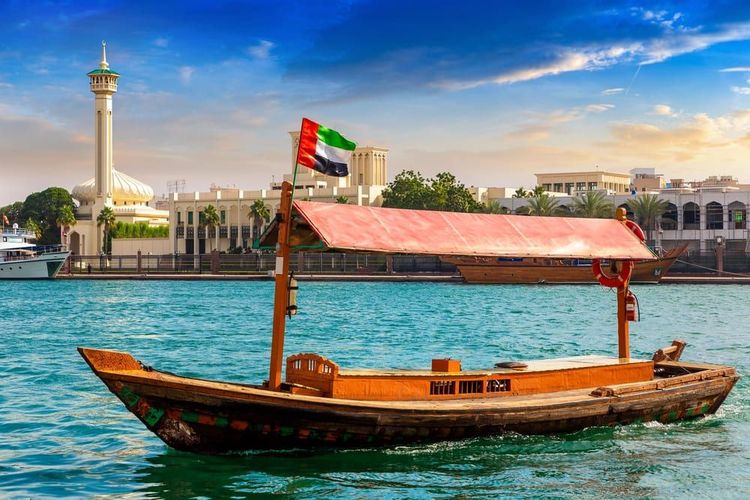
Crossing the creek by abra is the most charming way to reach Deira: these small wooden boats run two set routes linking the old districts of Deira and Bur Dubai, and some even offer an hour-long ride along the banks. The boats echo a time when the city lived on fishing, camel herding and pearl trading, before being fitted with motors for passengers. Millions of residents and visitors still climb aboard each year, whether commuting to work or simply enjoying the view.
Paid entry
2 - Dubai Creek
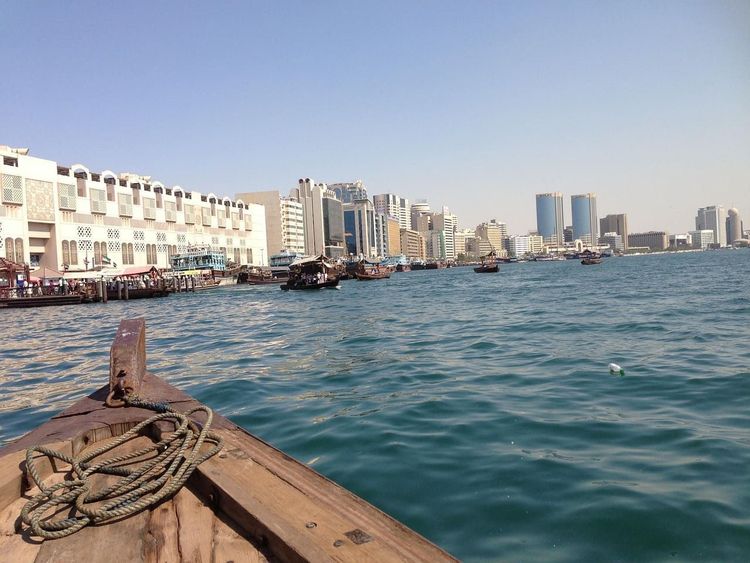
Khor Dubai, meaning the river of Dubai, is the name of this inlet stretching toward the desert that fuelled the city's growth: its harbour, among the busiest in the region from the early 20th century, opened trade routes to India and Africa. It now splits the city's two oldest neighbourhoods, Deira and Bur Dubai, and its former docks have turned into a departure point for traditional boat rides past the surrounding landmarks.
Free entry
3 - Dubai’s religion
Dubai, the largest city in the Emirates, welcomes expats from across the globe, especially from India and Pakistan, who now make up most of its residents. Islam clearly dominates local religious life, split between a Sunni majority, a Shia minority and a small Druze community, while the rest follow Christianity, Buddhism or Hinduism. Ramadan, one of the pillars of that faith, shapes a whole month: fasting from sunrise to sunset, restrained behaviour, a shared evening meal at iftar, and finally the Eid celebration marking its close.
4 - Naif Souk
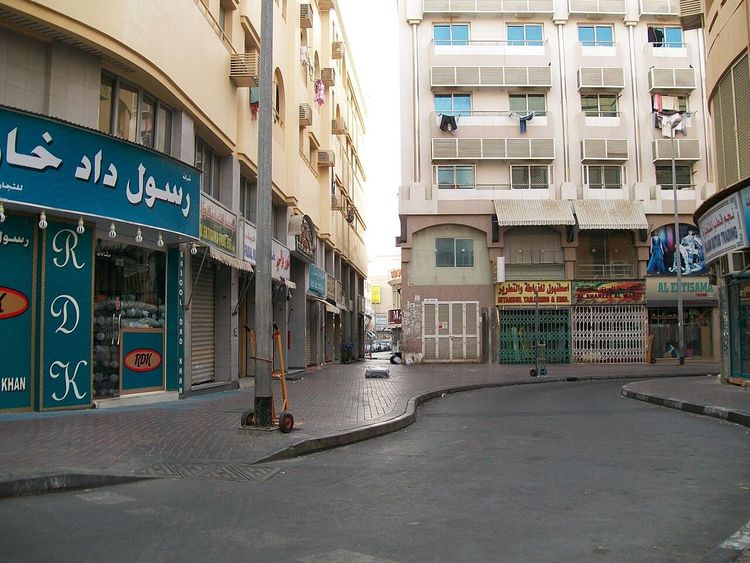
Deira, together with Bur Dubai across the water, holds the densest cluster of souks in the city. Naif's version is a particular draw for bargain hunters: clothing, perfumes, electronics, household goods, and above all a wide range of abayas, the full-body robes worn by Muslim women across the region and in some Western countries too. Compulsory in several Gulf states, this garment now comes in every colour and pattern, having turned into a genuine fashion item.
Free entry
5 - Al Zarooni Mosque
You can't walk through Dubai without passing a mosque: they punctuate the skyline, a result of Islam, the dominant faith of the Emirates. Each one is recognisable by its silhouette, a main hall flanked by a minaret and topped with domes, split into separate areas for men and women. The inside, kept for worshippers, stays closed to the one standing before you, yet its gleaming white facade and twin prayer-call towers are worth a glance. On Fridays, the holy day, many shops shut for the main prayer.
Free to see from outside
6 - Naif Museum
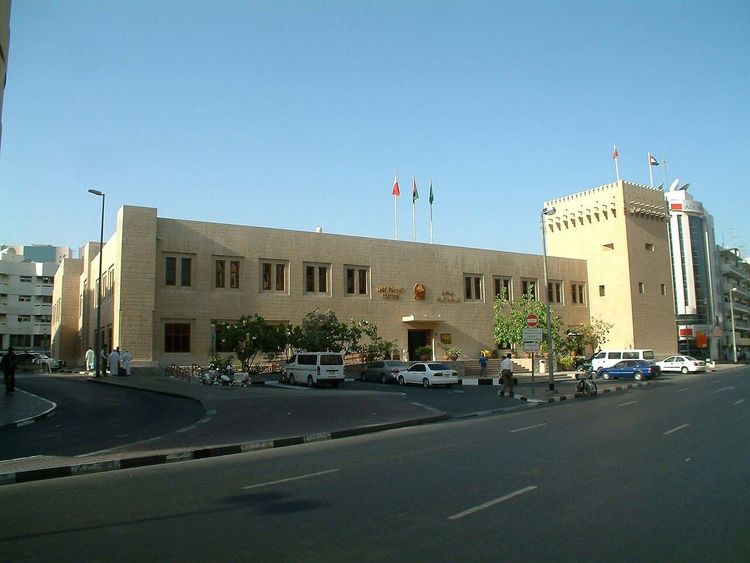
Built of clay back in 1939, this building once housed the district's very first police post, and so the earliest headquarters of the emirate's force. Now turned into a museum, it traces the history of that force, its uniforms, weaponry and the workings of local justice, through exhibitions and life-size figures. Keeping the original setting intact gives the visit a rare dose of authenticity in this part of town.
7 - Naif Street
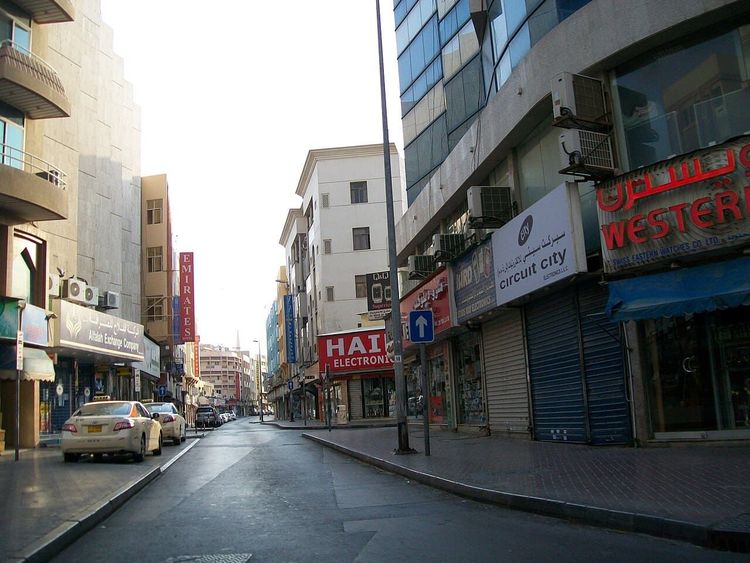
Here is one of Deira's major shopping arteries, also among its longest. It stretches from the heart of the district all the way to the creek's waterfront, lined the entire way with countless small shops, just steps from the souk that shares its name. Heading down toward the water, the busy commercial mood gives way to the quays where the abras tie up.
Free entry
8 - Deira district
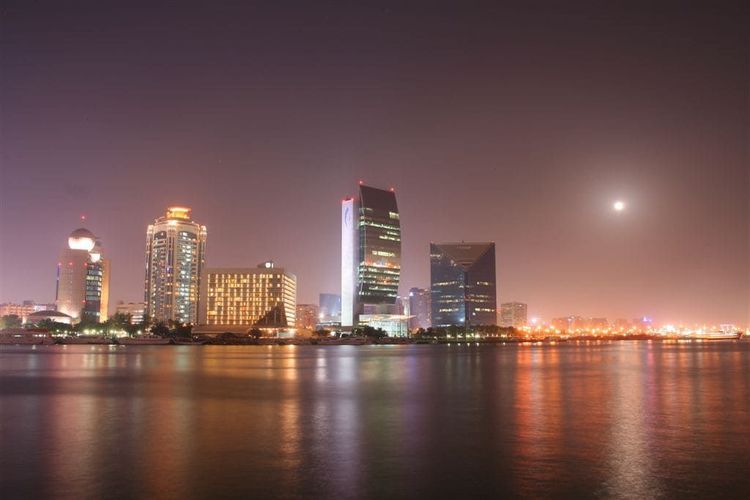
Set apart from the towers that make up the rest of the city, Deira forms, with Bur Dubai across the water, the historic core of Dubai. It was once the true heart of the city, when merchants sailed off to fetch goods from neighbouring lands. Urban expansion has since shrunk it to a modest slice of the territory, yet the district keeps a genuine buzz, between traditional eateries and flavours from elsewhere. Its trade, overshadowed by newer business hubs, still draws those keen to step back in time.
Free entry
9 - Deira Gold Souk
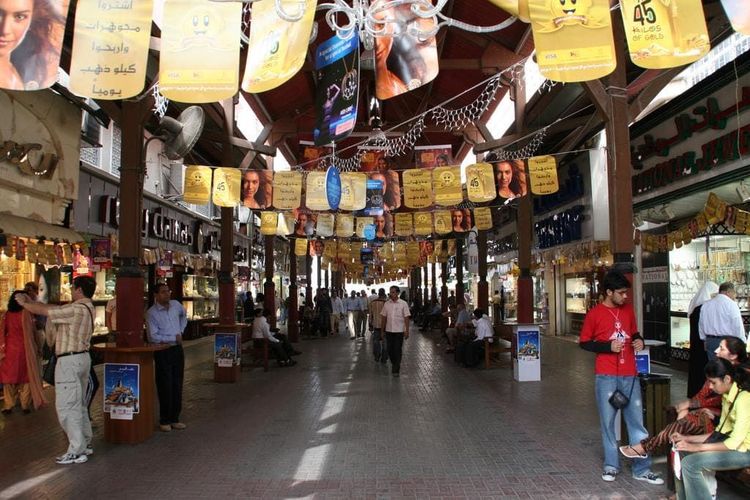
Here the aisles of one of the world's largest precious-metal markets gleam, where several hundred shops display gold, silver and gemstones at some of the lowest prices anywhere. Giving gold for a birth or a wedding remains a deeply rooted custom, the metal being seen as a symbol of lasting luxury that fits right in with the city's extravagance. Earrings, bracelets, rings or watches: every piece passes an official check before going on display, a guarantee of quality that can even surpass an ordinary jeweller's.
Free entry
10 - Emirati cuisine
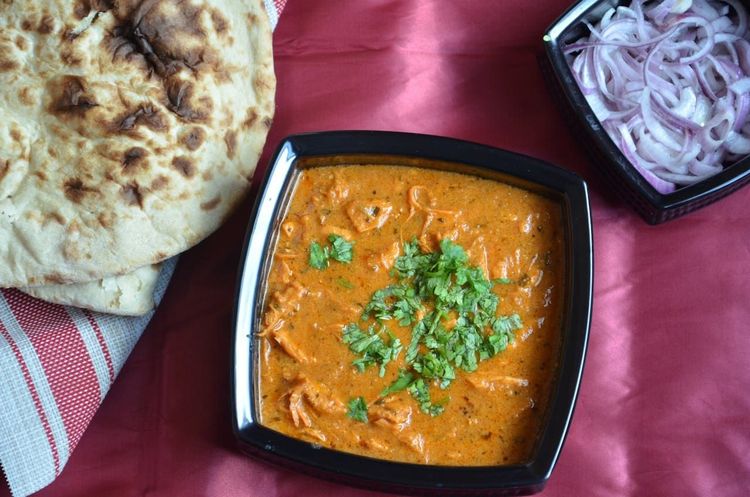
Long before the towers rose, the people of this fishing village lived mostly on dates, camel's milk and fish. A massive wave of expats later enriched local tables, bringing in new spices that reshaped eating habits. Today's favourite dish, machbous, pairs lamb or chicken with rice and spices, while madrooba puts dried fish under melted butter in the spotlight. Plates here can also feature camel meat, alongside Lebanese, Indian or Pakistani cooking, passed down from the earliest communities who settled in the area.
11 - Al Ahmadiya School
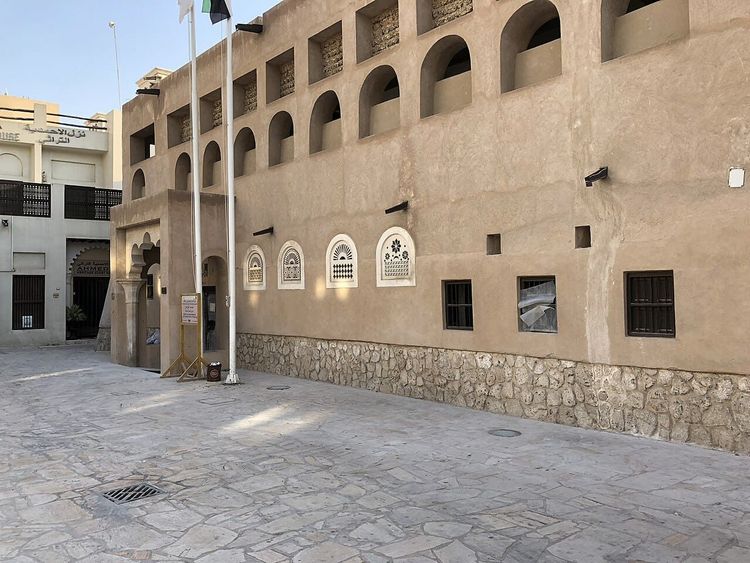
Raised in 1912, long before towers shaped the skyline, this school was the very first in the emirate. Its classrooms and the courtyard where pupils once played can still be explored today. In 1956 the institution shook up tradition by adding subjects like English, sociology and sciences, drawing scholars from across the region. Closed in 1958, it was later restored into a museum, where a library and old school items still remain.
12 - Heritage House
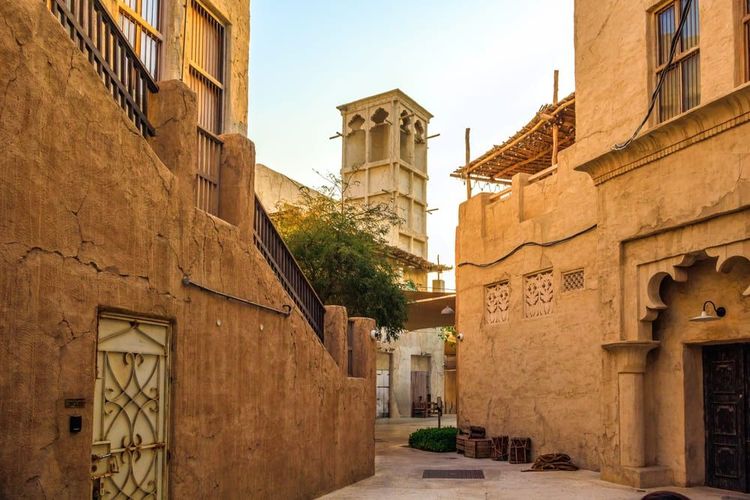
Raised in 1890, this house once belonged to the region's most renowned pearl trader, back when that trade kept the city running. Its rooms, furnished with staged scenes, reveal the daily routine of well-off families more than a century ago. Expanded and altered over time by successive owners, it was bought back by the municipality in the 1990s to become a place of memory, keeping a trace of an era when the city had none of its current splendour.
13 - Deira Souk
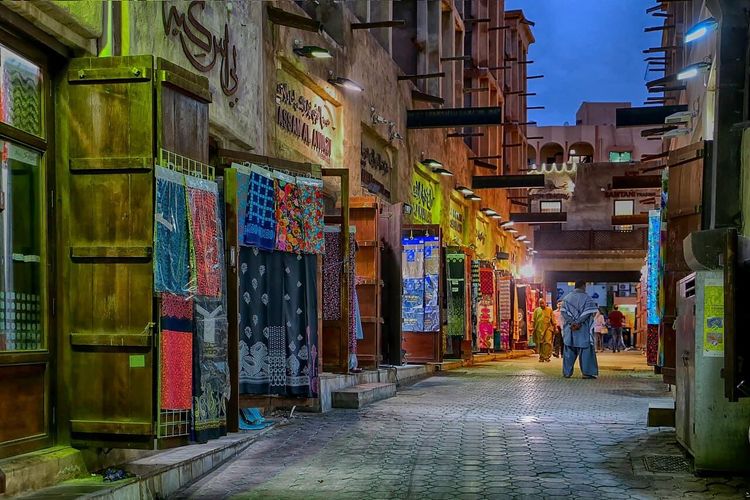
Haggling here isn't the exception, it's expected. This market of countless stalls sells pretty much everything, at prices that reward the sharpest negotiators. More a gathering place than a mere marketplace, it has long drawn in local residents who came as much to chat as to shop, a social role that still lingers behind today's colourful stands.
Free entry
14 - Spice Souk
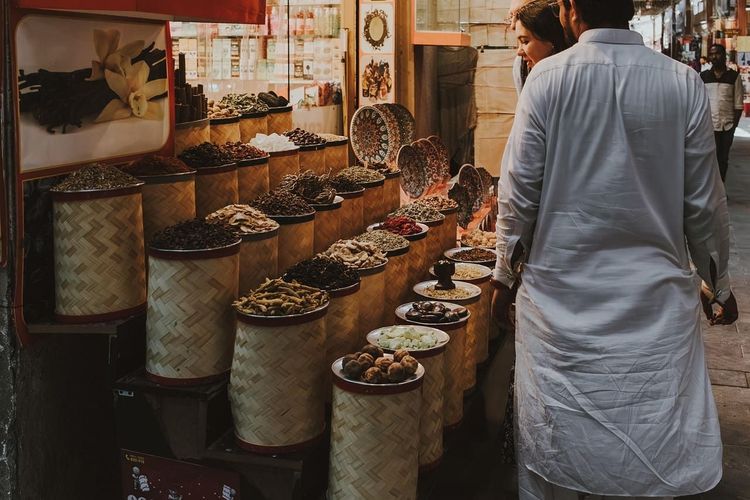
The final stop on the route wakes up the nose as much as the eyes: herbs and powders from across the Middle East mix into a rainbow of colour, from pepper to cinnamon and chilli. Kitchenware with oriental patterns and small souvenirs round out the stalls, and the traders are happy to chat about where each spice comes from and how to use it, for anyone willing to ask.
Free entry
What to do in Dubai in 2 or 3 days?
One day is enough to explore old Deira on this route: 3.7 km and 14 stops in about an hour and a half, from the abra crossing on the creek to the gold and spice souks. With 2 or 3 days in town, Dubai is also worth exploring beyond this historic district, between beaches and symbols of the modern city.
The next day, head for the sea: Dubai's coastline runs for more than 70 km, from family-friendly beaches in the north to wilder stretches in the south, some free and well-kept, others run by clubs with infinity pools overlooking the Burj Al Arab. To pick yours, our guide to the most beautiful beaches in Dubai lists 13 worth a visit.
Day three can open with a desert excursion among red dunes, mixing a 4x4 dune ride with a quieter moment at sunset, for 4 or 7 hours depending on the package. Next comes the Burj Khalifa, the world's tallest tower at 828 metres, about 2.5 times the height of the Eiffel Tower. For four more highlights, see our top 5 activities to do in Dubai.
Which neighbourhoods does the tour cross?
In a single loop, the route layers several faces of old Deira: the crossing by water, the time of trade and prayer, then traces of a more private past.
It all begins with the abra crossing over the creek, then the quay that runs along Dubai Creek (stops 1 and 2). The route then enters the religious and trading quarter around Naif Souk, between its mosque and its museum devoted to the police (stops 3 to 6).
Naif Street, one of Deira's busiest shopping streets, leads back to the gold market, the best known in the city (stops 7 to 9).
The loop closes with local flavours, the district's two historic houses, then the Deira and spice souks, before returning to the starting point (stops 10 to 14).
How much does it cost to visit Dubai?
Of the route's 14 stops, seven can be visited freely, without a ticket, from souks to historic houses. The Al Zarooni Mosque can only be seen from the outside, while the abra crossing that opens the loop requires a ticket, modest but compulsory.
Information checked in October 2026 and subject to change.
Where to stop for a bite along the tour?
The route crosses several flavours of Deira, between open-air spices and local food to go.
At the Spice Souk, stalls mix pepper, cinnamon and chilli from across the Middle East, alongside kitchen tools in oriental patterns.
Machbous, mutton or chicken served with rice and spiced with cumin or paprika, remains the area's most-cited dish; madrooba, dried fish simply coated in melted butter, is the other classic. Lebanese, Indian and Pakistani cuisines are also well represented, brought in by earlier waves of immigration.
What should you know before visiting Dubai?
The Gold Souk, one of the route's stops, is free to enter but keeps its own opening hours: better to check them before passing by, or the gates may be shut.
Most mosques, including the one on the route, stay closed to non-Muslims; only the outside can be visited. On Friday, the holy day, many shops close for part of the day for the main prayer.
During Ramadan, visitors, Muslim or not, are asked not to drink, eat, smoke or play music in public during the day; shoulders and legs should stay covered. The city comes alive mostly after sunset during this period.
The French foreign ministry recommends heightened vigilance in the region. Another rule worth knowing behind the wheel: zero tolerance for alcohol, with fines starting at 2,000 dirhams and up to three months in prison.
Le plein d'inspirations
Explorez le monde en totale liberté, à pied au cœur des villes ou au fil des routes. Nos guides audios transforment chaque destination en une découverte culturelle immersive et unique.










FAQ for visiting Dubai
When is the best time to visit Dubai?
The ideal time to visit Dubai runs from November to April, with a preference for March, April and November, which offer perfect temperatures of around 25-30°C. Summer, from June to September, is absolutely to be avoided, with temperatures that regularly exceed 40°C and can reach 50°C. Even in January, the coolest month, you'll enjoy a pleasant average of 20°C. Don't forget your sunscreen whatever the season, as the UV index stays high all year round. Spring and autumn really are the prime times to explore the city comfortably while enjoying the sea.
How many days do you need to visit Dubai?
For a first visit to Dubai, allow at least three to four full days. This time will let you explore the historic districts such as old Dubai with its traditional souks, discover the dizzying modernity of Downtown and the Marina, and enjoy the beaches. With five to seven days, you can deepen your visit by adding a desert excursion, exploring the various neighbourhoods further and taking the time to wander the air-conditioned shopping malls. If you only have a long weekend, focus on the essentials by alternating cultural visits in the morning and relaxation in the afternoon when the heat becomes more intense.
What are the absolute must-see sights in Dubai?
Dubai offers a fascinating contrast between tradition and modernity. Start by exploring the historic district with its spice and gold souks, cross the Creek on a traditional abra and admire the old wind towers. The Burj Khalifa and its spectacular views are of course a must, as is discovering Downtown and its dancing fountains. Don't miss the Marina with its skyscrapers and lively promenade, nor the Jumeirah beaches. The Ryo audioguide accompanies you on this discovery with narrated routes that reveal the secrets of each district. A desert excursion perfectly rounds off this journey between two worlds.
How do you get around in Dubai?
Dubai has an excellent modern, air-conditioned public transport network. The fully automatic metro serves the main tourist attractions and runs very regularly. Buses efficiently complete the network, while taxis remain affordable and everywhere. For an authentic experience, take the abras, traditional boats that cross the Creek for just a few dirhams. Renting a car can be handy but isn't essential for a tourist stay. Ride-hailing apps work perfectly and offer a comfortable alternative to taxis. Always plan your trips for the cooler hours and favour air-conditioned journeys during the summer.
What budget should you plan for a trip to Dubai?
Dubai can adapt to different budgets, but overall remains an expensive destination. Accommodation is generally the biggest expense, with prices that vary greatly depending on the season and the chosen district. Dining offers a wide range of options, from very affordable small Indian restaurants to luxurious gourmet tables. Public transport stays economical, while the main tourist attractions can quickly push up the bill. Plan a comfortable daily budget to make the most of your stay, bearing in mind that prices rise significantly during high season and major events. The shopping malls regularly offer attractive deals.
What can you do for free in Dubai?
Contrary to popular belief, Dubai offers several captivating free activities. Wander through the historic souks of Deira and Bur Dubai to soak up the traditional atmosphere without spending a dirham. Public beaches such as Jumeirah Beach and Kite Beach let you enjoy the sun and sea for free. Watch the Dubai Fountain show, a free aquatic spectacle every half hour in the evening. The Ryo audioguide accompanies you in discovering the historic districts with enriching walking routes. The air-conditioned shopping malls also offer a free escape from the heat while you admire their spectacular architecture. On Fridays, some mosques offer free guided tours to discover the local culture.
Do you need a visa to visit Dubai?
Entry requirements for Dubai vary depending on your nationality. Many countries, including France and several European nations, benefit from a visa exemption for short tourist stays, generally up to 90 days. Your passport must be valid for at least six months after the expected date of arrival. On arrival, you'll automatically receive a free entry stamp. For other nationalities, a visa may be required before departure or obtained on arrival depending on bilateral agreements. Always check the current conditions with the consular authorities before your trip, as the rules can change. Keep your entry stamp carefully, as it will be checked on departure.
How should you dress in Dubai?
Dubai is relatively tolerant when it comes to clothing, but a few common-sense rules apply. In tourist spots, hotels and private beaches, you can dress as you would in any Western seaside destination. However, cover your shoulders and knees in shopping malls, traditional districts and public places out of respect for the local culture. Swimwear remains strictly reserved for beaches and pools. Opt for light, breathable clothing in cotton or linen, in light colours to better cope with the heat. Don't forget a hat, sunglasses and sun protection, essential all year round. A light shawl or scarf can be useful for women in certain contexts.
What is there to discover in old Dubai?
Far from the glass towers, the historic quarter lines the creek around which the city grew. Al Fahidi, also known as Bastakiya, is a grid of coral and plaster houses topped with wind towers, the ancestors of air conditioning, with narrow lanes, art galleries, cafés and a centre devoted to understanding Emirati culture.
Opposite, on the Deira side, the gold and spice souks unroll their shop windows and their sacks of saffron, cinnamon and frankincense. You cross by abra, the wooden boats that shuttle between the two banks for a few coins, and the restored Al Seef waterfront pleasantly extends the walk. The Ryo audio guide offers a dedicated Dubai route that follows this older thread.
What can you do in Dubai with children?
The city is unusually well equipped for families, with an offering designed around the heat. The large shopping centres house a giant aquarium, an ice rink, a museum of illusions and even an indoor ski slope, which is enough to fill the most stifling hours of the day undercover.
Outdoors, water parks, public gardens and landscaped beaches take over at the end of the day, once the temperature becomes bearable again. A trip into the dunes in a four-wheel drive, with a stop for sunset, is usually a hit with older children. Remember sun cream, hats and above all water: dehydration comes quickly, even during the milder months.
When and where can you watch the Dubai World Cup, the world's richest horse race?
The Dubai World Cup is held every year in late March at Meydan Racecourse, about 15 minutes by car from Downtown Dubai. Founded in 1996 by Sheikh Mohammed bin Rashid Al Maktoum, it offers 30.5 million dollars in total prize money, including 12 million for the main race.
Race day features nine contests, among them the Dubai Turf, the Dubai Sheema Classic and the Dubai Golden Shaheen sprint. It crowns the Dubai Racing Carnival, a series of 17 meetings from November to March. Meydan holds more than 60,000 spectators, with tickets for every budget, from general admission to VIP areas.
Discover its history, its champions and practical tips in our guide to the Dubai World Cup.
Which beaches should you pick in Dubai, between free public beaches and beach clubs?
Dubai's coastline stretches for more than 70 kilometres, from Al Mamzar in the north to Jebel Ali in the south, with pleasantly warm water from October to May. Free JBR Beach runs for 1.7 kilometres along The Walk promenade and offers surfing, paddleboarding and jet-skiing. Kite Beach, also free, has food trucks, beach volleyball and views of the Burj Al Arab, with kitesurfing from November to March.
Families will love the calm waters of Al Mamzar (5 AED entry), while beach clubs can charge more than 200 AED per person.
Compare all 13 spots in our guide to the most beautiful beaches in Dubai.
Which thrilling and unusual activities should you try during a stay in Dubai?
A desert trip across the red dunes is a must: in 4 or 7 hours you combine dune bashing, sandboarding and a camel ride, followed by Arabic tea and dates. At the 828-metre Burj Khalifa, the lift whisks you up to the 124th floor, or the 125th for a 360-degree view; go at sunrise to avoid the crowds.
Round things off with a jet-ski ride past the Burj Al Arab, the Museum of the Future, opened in 2022, and the Miracle Garden with its nearly 150 million flowers.
Get the details of each experience in our top 5 activities to do in Dubai.
How do you plan 48 hours in Dubai to see the essentials without rushing or wilting in the heat?
Find the hour-by-hour plan in our 2-day Dubai itinerary.
Vos commentaires, idées et suggestions
Aucun avis pour le moment