© Shutterstock
 Votre guide Ryo
Dubai in 2 Days: The Hour-by-Hour 2026 Itinerary That Actually Works
Forty-eight hours sounds thin for a city that built the world's tallest building, dredged two archipelagos into the sea, and still keeps a nineteenth-century wind-tower quarter standing a few hundred metres from an 828-metre tower. Yet Dubai in 2 days is exactly how most first-time visitors experience it, squeezed between a long layover and a flight home, and the trick is less about cramming more in than about sequencing what you see so the heat, the traffic and the opening hours all work in your favour. Ryo's audio-guided tour of Dubai threads together the Burj Khalifa district stop by stop, which is as good a backbone as any for a tight two-day plan.
Over the next two days you will stand on the 124th floor before the midday haze sets in, ride a wooden abra across Dubai Creek for less than a dollar, and watch a fountain show choreographed to music from street level for free. There is a mall aquarium holding roughly 33,000 marine animals, a Friday brunch culture that out-feasts anything else in the Gulf, and a doughnut-shaped museum that looks like nothing else on the Sheikh Zayed Road skyline. Swap the air conditioning for a Bedouin tent and a sky full of stars in the Dubai desert, and you have a weekend that covers both the skyline and the souk. Here is the order to do it in.
Day 1 Morning: Burj Khalifa, Dubai Mall and a Nature Detour
Burj Khalifa: tickets, observation decks and the best time to go up
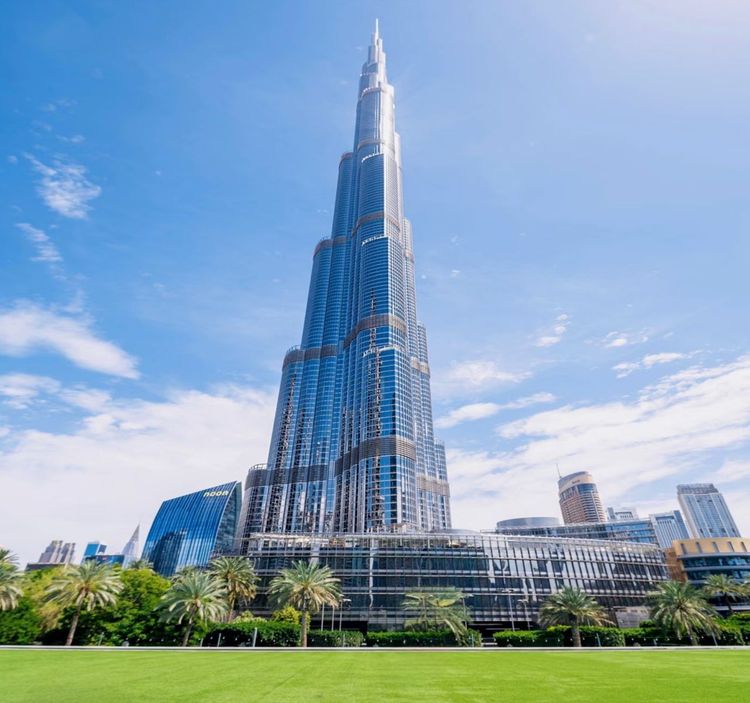
Arrive at opening time if you can manage it. The « At the Top » decks of the Burj Khalifa) open at 10am from Sunday to Thursday and from 8am on Fridays and Saturdays, and the first hour after opening is the one stretch of the day when the queue at the base rarely wraps around the fountain plaza. Non-prime morning slots cost around AED 173 (roughly 47 US dollars), against about AED 250 during the 4pm-to-7pm sunset window, so an early start saves you money as well as time. Book the « At the Top » ticket for levels 124 and 125 online at least a week ahead if you are visiting between November and March, when the building is busiest; same-day tickets for the lower decks are usually available, but sunrise and sunset slots sell out first.
The view from 452 metres up stretches toward the Arabian Gulf and, on a clear winter morning, to the first ridges of the Hajar Mountains. In summer the heat haze tends to flatten the horizon by 10am, which is one more reason to go early. If your budget stretches further, the level 148 « SKY » ticket (from around AED 343, open from noon) adds a lounge with refreshments and a noticeably shorter wait than the standard deck below it, which makes it the better pick if you would rather come back later in the day.
One practical note worth remembering: the elevator ride itself takes less than a minute, but security and ticket scanning at the mall-level entrance can add twenty to thirty minutes on a Friday or Saturday. Build that buffer into your morning, because the next stop is only a five-minute walk away but runs on its own queue logic entirely.
Dubai Mall, the Aquarium and Souk Al Bahar
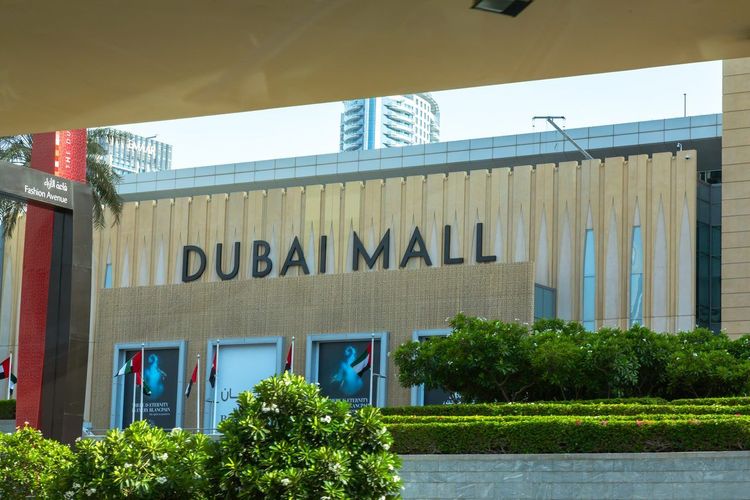
Walk down through the Burj Khalifa podium and you land directly inside The Dubai Mall (Burj Khalifa Lake, Downtown Dubai, rated 4.8/5 on Google (138 912 avis)), the connecting point for most of what you will do this morning. It is less a shopping centre than a small city: over 1,200 stores, an Olympic-sized ice rink, and a central atrium built around the Dubai Aquarium & Underwater Zoo), whose main tank holds roughly 33,000 animals behind one of the largest viewing panels in the world.
You do not need a ticket to see the tank from the mall concourse. Paying for entry only gets you into the underwater tunnel and the rooftop zoo above it. If you have kids with you, the extra twenty-five minutes is worth it; if not, a few minutes at the free viewing window and a coffee at one of the atrium cafes covers the highlight without eating into your schedule.
Exit through the mall's waterfront side and you reach Souk Al Bahar), a mock-Arabian souk of sandstone arches and wooden balconies that happens to have the best unobstructed view of the fountain lake for lunch. Reserve a table facing the water if you plan to eat here around midday, because by early afternoon every terrace restaurant fills up with people waiting out the heat rather than the show.
Optional Add-On: Ras Al Khor Wildlife Sanctuary and The Green Planet
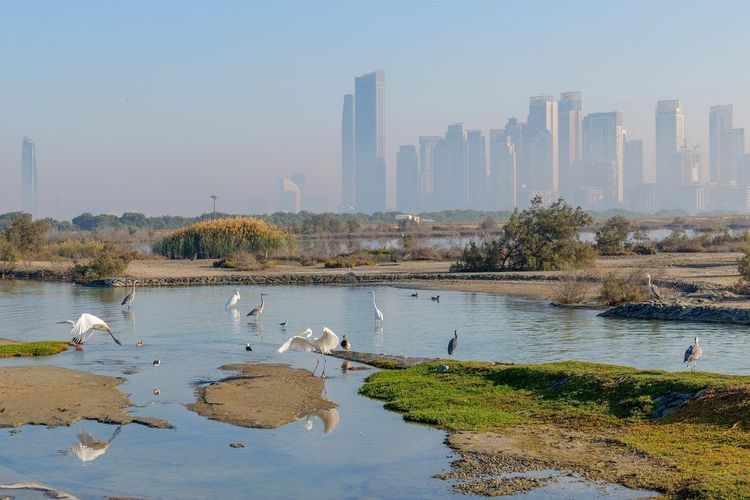
One caveat before you plan a dawn detour: the Ras Al Khor Wildlife Sanctuary), a short taxi ride east of Downtown and known for its wintering flocks of greater flamingos, is temporarily closed for an AED 650 million redevelopment, with the first phase due for completion at the end of 2026. Check its status before you go; once it reopens with expanded mangroves and new lagoons, it will be one of the most unexpected half-hours you can spend within sight of the skyline.
Closer to the mall, The Green Planet (City Walk, Al Mina Rd, Dubai, rated 4.4/5 on Google (12 471 avis)) at City Walk packs a six-storey indoor rainforest, home to a resident two-toed sloth, into about forty-five minutes. It is not essential to a tight two-day plan, but it slots in cleanly if you are an early riser or want a change of pace from glass and marble before the afternoon heat sets in.
Burj Khalifa to Dubai Mall is one stretch where having something in your ear helps more than a paper map. Ryo's audio guide to Dubai's skyline district links the two stop by stop, with one audio timed to tell you exactly when to be back at the tower's base to catch the fountain show later this afternoon.
Day 1 Afternoon: Dubai Marina, JBR and La Mer
Dubai Marina Walk and the JBR Boardwalk
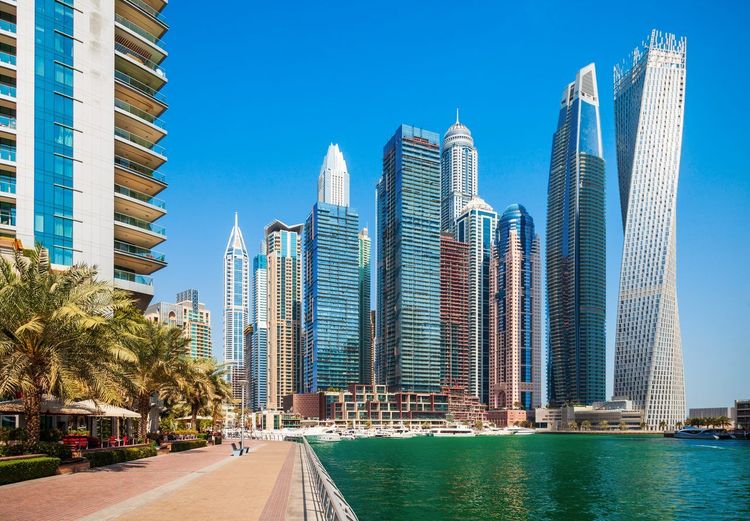
After the density of Downtown, the afternoon shifts gear entirely. Take the metro or a twenty-minute taxi to Dubai Marina Walk), a seven-kilometre promenade looping around a man-made canal lined with over 200 towers, several of which held « world's tallest residential building » records at one point or another. The light here is softer by mid-afternoon, and the pace along the water drops noticeably compared with the mall you just left.
You do not need to walk the full loop. Pick up the path near Marina Mall and follow it south for about twenty-five minutes until it blends into The Walk at JBR, a wider beachfront boulevard with cafes on one side and open sand on the other. This stretch is where locals actually spend a Friday afternoon, not only tourists, which tends to make it feel less staged than the towers above it. Street performers and pop-up stalls shift by season, so what you find changes week to week.
La Mer and Kite Beach: Swim, Paddle and Skyline Views
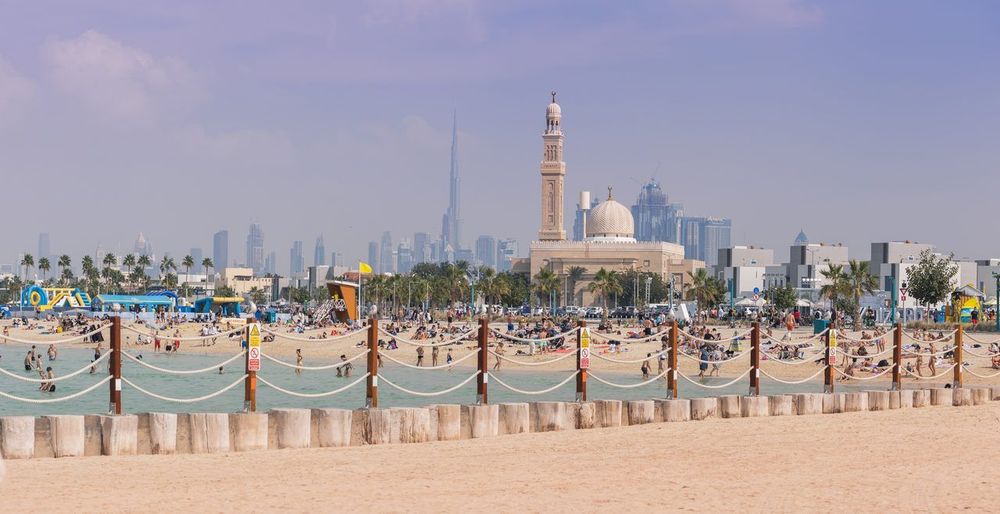
A short taxi ride north brings you to La Mer), a newer beachfront district built around pastel-coloured low-rise blocks, a water park, and a stretch of sand that stays noticeably calmer than JBR on weekday afternoons.
From La Mer, Kite Beach (Jumeirah 3, Dubai, rated 4.8/5 on Google (2 232 avis)) is close enough to walk if the heat allows, or a five-minute taxi otherwise. This is Dubai's best spot for kitesurfing lessons, stand-up paddleboard rentals, and a clean view back toward the Burj Al Arab's sail-shaped silhouette. Food trucks line the boardwalk from late afternoon onward, which makes it an easy place to cool off before the evening's fountain show.
The same stop-by-stop format that covered the Burj Khalifa district this morning keeps running through the Marina: a short loop version tells the backstory behind a handful of the towers you pass, which turns a flat waterfront stroll into something closer to a guided walk without needing to book an actual guide. If a beach afternoon sounds more appealing than another souk, Ryo's guide to Dubai's best beaches breaks down which stretch of sand suits which kind of traveller, useful if you decide to trade an hour here for more time in the water.
Day 1 Evening: Dubai Fountain, Sunset Views and Dinner
The Dubai Fountain Show and the Best Viewpoints
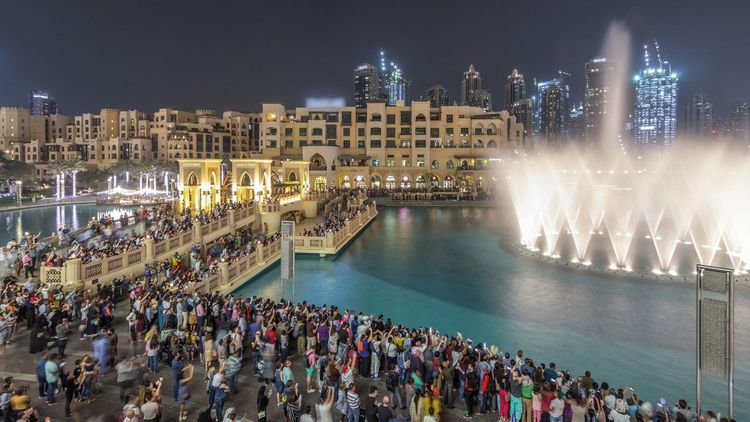
Head back toward Downtown by late afternoon. The Dubai Fountain starts its evening shows at 6pm and repeats roughly every half hour until 11pm, each performance lasting around five minutes and synced to music that ranges from classical Arabic to modern pop depending on the night.
The free viewing points along the lake's promenade get crowded fast after sunset, so arrive fifteen minutes before a show if you want a spot at the railing rather than three rows back. Souk Al Bahar's upper terraces, where you may have had lunch this morning, double as a quieter paid alternative with table service and a clear sightline over the water.
The View at 42 and Rooftop Dinners
For a different angle on the skyline, The View at 42 (Sheikh Zayed Rd, Downtown Dubai, rated 4.6/5 on Google (5 918 avis)) is the 42nd-floor terrace of the Shangri-La Hotel on Sheikh Zayed Road, looking straight down the city's main artery toward Downtown and the Burj Khalifa. Hotel guests can step out onto it from the pool level; everyone else has to book the hotel's private terrace dining, a candlelit set menu priced for a proposal or a milestone rather than a casual night out.
If rooftop dining fits your evening budget, this stretch of Sheikh Zayed Road has one of the highest concentrations of sky-bars in the city, most requiring smart-casual dress and a minimum spend after 8pm. Book ahead for weekends; walk-ins are realistic on weeknights.
Dubai Brunch: Where to Book a Friday or Saturday Spread
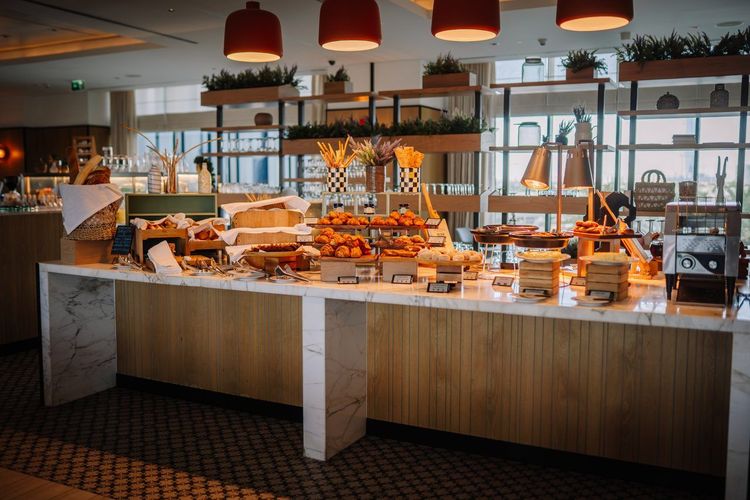
If your two days happen to fall on a Friday or Saturday, the Dubai brunch is worth rearranging your evening for. These multi-hour spreads, usually running from early afternoon into the evening, combine unlimited food stations with live music and, at many venues, flowing drinks for a fixed price. Hotel brunches in Downtown and on the Marina tend to book out a week in advance for peak slots, so reserve as soon as your dates are fixed rather than leaving it to the day before.
Outside brunch hours, casual dinner options cluster around Souk Al Bahar and the Marina promenade, ranging from shawarma counters to multi-course Emirati tasting menus, which makes it easy to match dinner to however much energy the day has left you. If you want somewhere locals actually queue for, take a short taxi to Satwa and Ravi Restaurant, a no-frills Pakistani canteen open since 1978 where a plate of mutton curry and fresh naan still costs less than a coffee in the mall.
Day 2 Morning: Al Fahidi, Dubai Creek and the Gold Souk
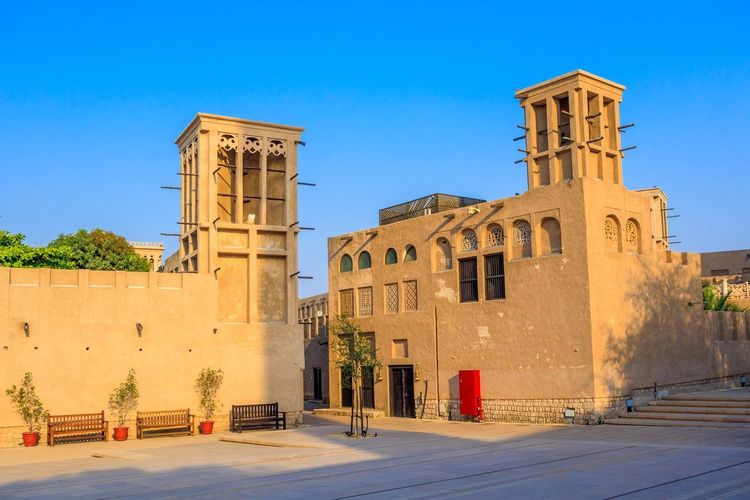
Al Fahidi Historic Neighbourhood and Its Wind-Tower Lanes
Start day two on the opposite end of the city's story. The Al Fahidi Historic Neighbourhood), Dubai's oldest surviving district, is a maze of narrow sandy lanes between restored coral-stone houses topped with wind towers, a pre-air-conditioning cooling system that funnelled breeze down into the rooms below.
Give yourself at least an hour here. Several of the houses now hold small galleries and the Coffee Museum, and the lanes themselves are shaded enough that this is one of the few outdoor stretches of the itinerary that stays comfortable past 10am even in summer. Come early if you want the alleys closer to empty; by mid-morning tour groups start filtering through from the cruise terminals.
Abra Ride Across Dubai Creek to Deira
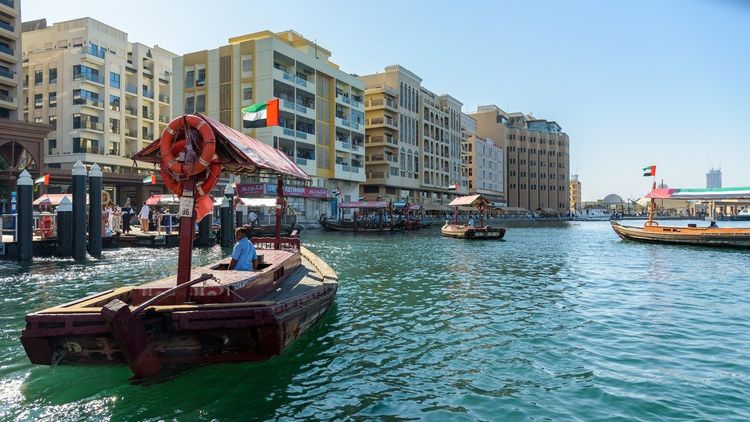
From Al Fahidi, walk five minutes to the water and cross Dubai Creek the way locals have for generations: a wooden abra, the small motorised ferry that costs roughly one dirham and takes about five minutes to cross. There is no fixed schedule; boats leave once they have a handful of passengers aboard.
The ride itself is short, but it is one of the few moments in this itinerary where you are moving at the pace the city moved at before any of the towers existed. Hold onto something; the boats rock more than they look like they should.
Deira Gold Souk and Spice Souk
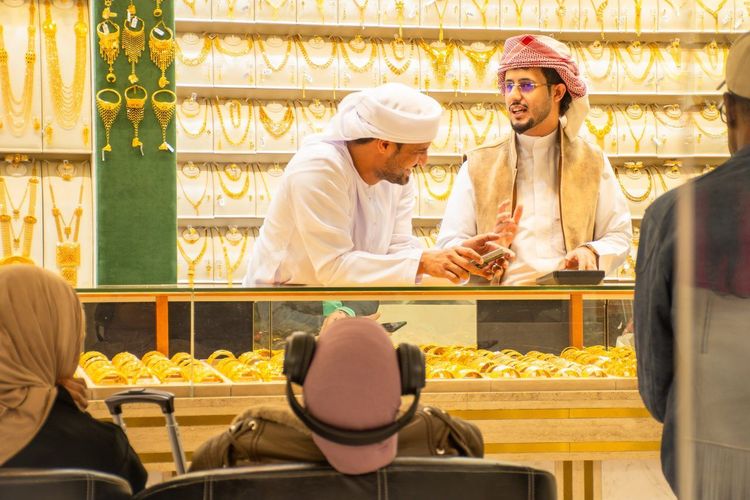
On the far bank, the lanes open into Deira and the Gold Souk), a covered market of several hundred jewellery shops where gold is sold by weight plus a negotiable making charge rather than a fixed retail markup. Bargaining is expected and generally good-natured.
A few minutes' walk away, the Spice Souk (Al Ras, Deira, Dubai, rated 4.3/5 on Google (6 646 avis)) trades saffron, dried limes and frankincense out of sacks stacked along narrow covered alleys, and the smell alone is worth the detour even if you buy nothing. Vendors will usually let you smell before you buy, which is the easiest way to tell a fresh batch from a stale one.
This whole stretch, from the wind-tower lanes to the creek crossing to the souk stalls, is exactly the kind of walk that benefits from context you cannot get from a signpost. The old-town leg of Ryo's audio-guided tour threads Al Fahidi's lanes to the creek-side crossing, with the trading history behind each souk stall told stop by stop as you walk rather than read off a plaque.
Day 2 Midday: Jumeirah Mosque, Grand Mosque and Etihad Museum
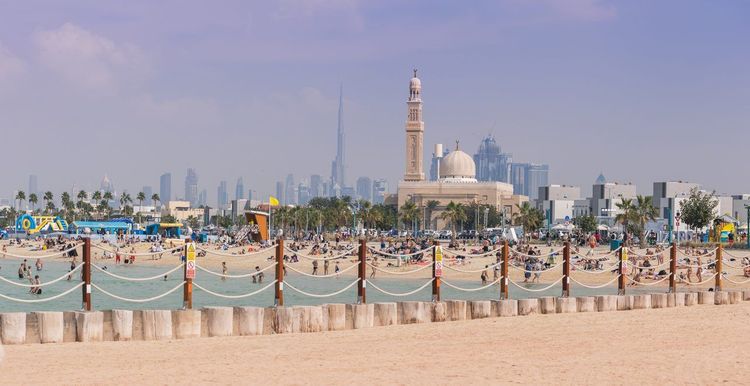
Jumeirah Mosque and Grand Bur Dubai Mosque
Back on the Bur Dubai bank, the Grand Bur Dubai Mosque) stands beside the textile souk, its slender minaret the tallest in the city. Access to the prayer hall for non-Muslims is inconsistent, so treat it as an exterior stop: walk around the sand-coloured walls and domes, take your photos from the courtyard edge, then move on.
Jumeirah Mosque), a short taxi ride toward the coast, is the one to plan around: the Sheikh Mohammed Centre for Cultural Understanding runs guided « Open Doors, Open Minds » tours there every day except Friday, followed by a question session where you can ask anything about Emirati faith and customs. Dress modestly for both: long sleeves and trousers for men, a headscarf provided on request for women, and shoes off before entering the prayer hall.
Etihad Museum and Lunch at Al Khayma Heritage Restaurant
A few minutes from Jumeirah Mosque, the Etihad Museum) covers the 1971 union of the seven emirates through original documents, photographs and a striking building shaped to echo a rolled parchment. Plan for forty-five minutes to an hour if you want to read through the exhibits properly rather than skim them.
For lunch, loop back toward Al Fahidi for Al Khayma Heritage Restaurant (Al Fahidi, Dubai, rated 4.9/5 on Google (18 607 avis)), which serves Emirati dishes such as machboos and luqaimat in a restored courtyard house rather than a generic Gulf-cuisine menu. It is one of the few spots on this itinerary where the food itself, not just the view, is the reason to go.
Day 2 Afternoon: Museum of the Future and Dubai Frame
Museum of the Future: Tickets and What's Inside
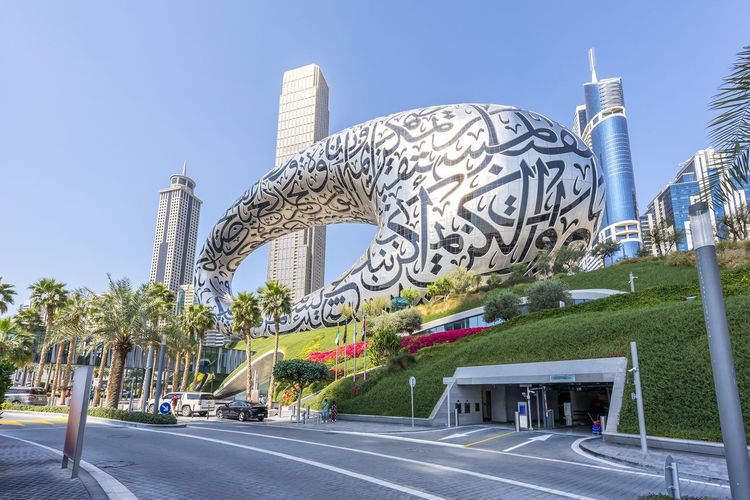
Back toward Downtown, the Museum of the Future) is the torus-shaped, calligraphy-covered building that has become almost as photographed as the Burj Khalifa itself. Inside, the exhibits lean experiential over academic: a simulated space station, an immersive rainforest floor, and a children's area built around climate and biodiversity themes.
Tickets are sold by timed slot, cost around AED 149 (about 40 US dollars) for adults, and sell out days in advance during peak season, so book online rather than hoping to walk up. Plan for roughly ninety minutes inside; the building is more striking from the outside, but the top-floor views over Downtown make the visit worthwhile regardless.
Dubai Frame and Zabeel Park Skyline Views
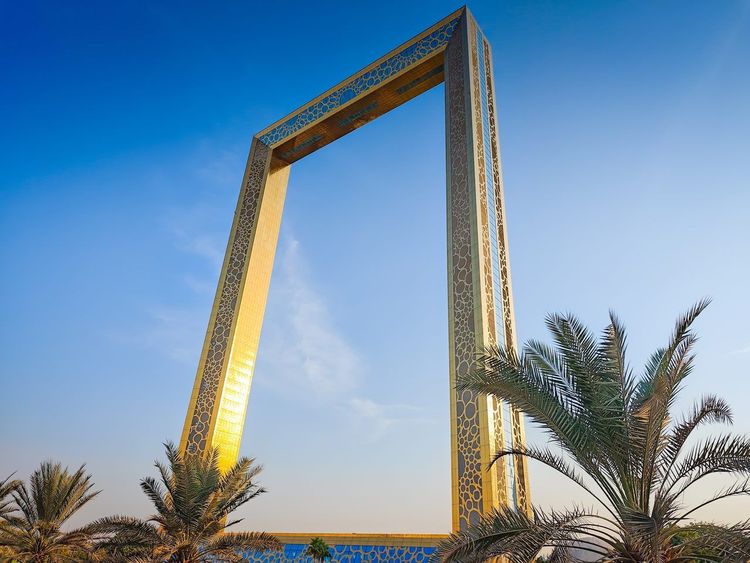
A twenty-minute taxi ride away, the Dubai Frame (Zabeel Park, Dubai, rated 4.6/5 on Google (73 979 avis)) is a 150-metre gilded rectangle in Zabeel Park that frames old Dubai on one side and the new skyline on the other from its glass-floored sky deck. It is a smaller, quicker visit than the Museum of the Future, closer to forty-five minutes door to door, and the cheapest skyline view on this itinerary. Inside, a short gallery on pre-oil Dubai leads to the lift; at the top, the glass floor panels in the middle of the bridge are where most people hesitate, so take your time there rather than rushing to the far window. A late-afternoon slot lets you watch the towers switch from daylight to illuminated, which works neatly before the safari pickup if you move the desert to this evening.
The contrast between these two stops is the point: one building imagines where Dubai is headed, the other lets you literally see where it came from and where it is now, side by side through a single frame.
Day 2 Evening: Desert Safari Under the Stars
Dune Bashing and Camel Rides Before Sunset
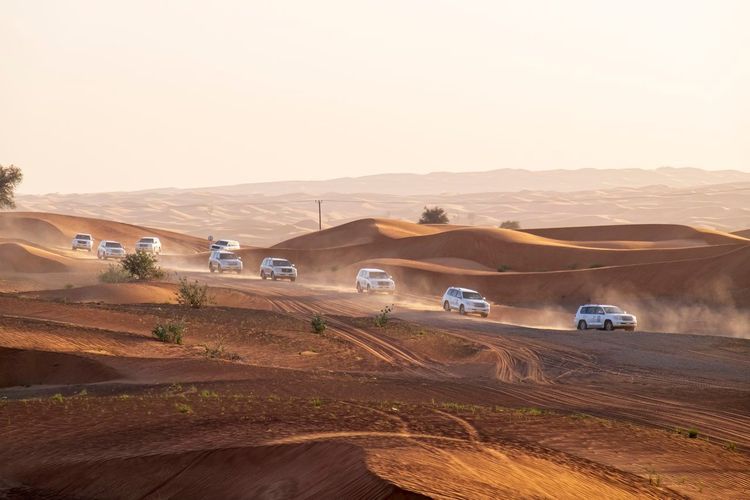
Most operators collect guests from their hotel around 3:30 to 4pm for the roughly ninety-minute drive out to the dunes beyond the city. The late afternoon departure is deliberate: dune bashing, the 4x4 ride up and down steep sand slopes, works best once the sand has cooled slightly but before the light fades for photos.
Camel rides and a short stop for sunset photos usually follow the driving portion, timed so the sun drops behind the dunes just as the convoy reaches the overnight camp. Motion sickness is common during the bashing; sit toward the front of the vehicle if you are prone to it, and skip a heavy lunch beforehand.
Bedouin-Camp Dinner, Shisha and Entertainment
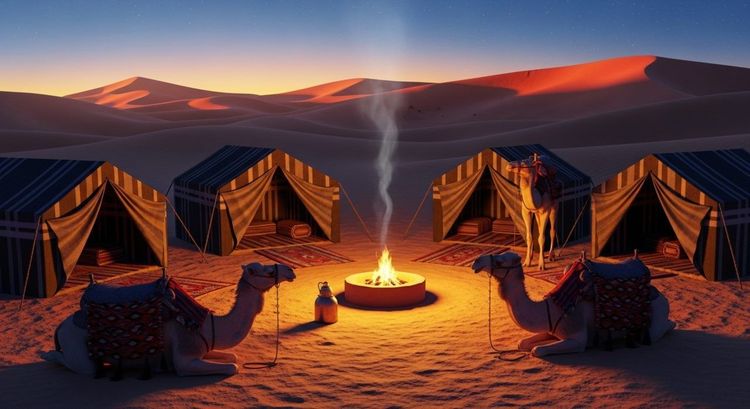
At the camp, dinner is typically a buffet of grilled meats, Emirati rice dishes and mezze served on low tables under open-sided tents, with entertainment running through the evening: a tanoura spinning dance, sometimes a falconry display, and shisha available at most camps for an extra charge.
Worth flagging clearly: this evening sits entirely outside the city-centre loop you have been following for the last day and a half. Whatever audio tour or app you have been using around the Burj Khalifa district and the old town will not have signal or stops out here, so book the safari as a standalone add-on rather than expecting it to connect to anything else on your phone. Bring a light jacket regardless of how hot the day was; desert temperatures drop fast after sunset.
Got a Third Day? Palm Jumeirah, Miracle Garden and Global Village
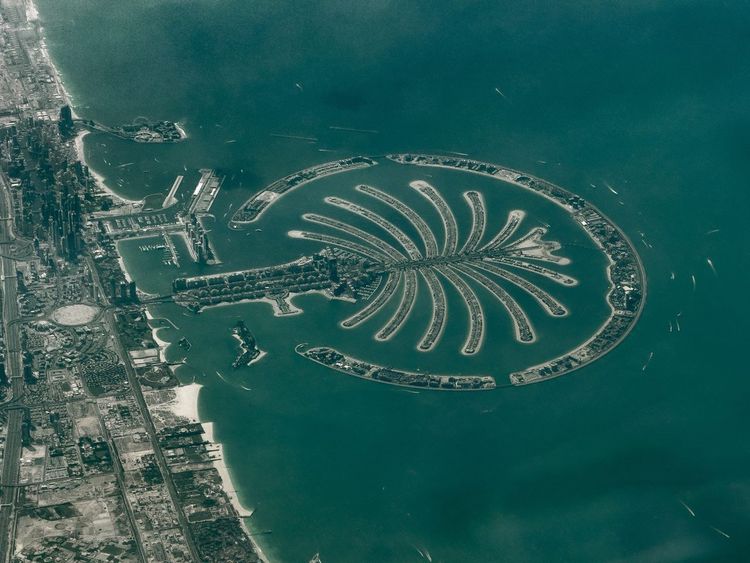
Palm Jumeirah and the Marina Skyline from the Water
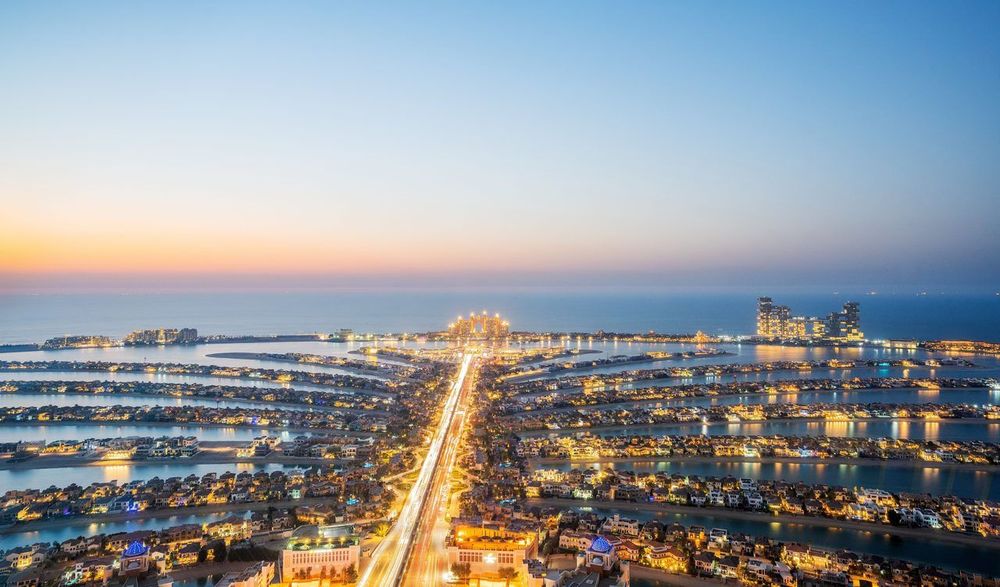
If you can stretch the trip to three days, start here. Palm Jumeirah), the palm-shaped artificial island visible from space, is best seen from the monorail that runs its spine, or from a beach club along Palm West Beach where you can look back at the Marina skyline across open water rather than from inside it.
Dubai Miracle Garden, Global Village and Aya Universe
Inland, Dubai Miracle Garden) rearranges over 150 million flowers into themed displays each season, including a life-size Emirates Airbus A380 covered in more than 500,000 flowers, certified as the world's largest floral installation and one of the most photographed single structures in the city outside Downtown. Like most outdoor attractions here, it opens from autumn to late spring and closes through the summer heat.
Global Village), whose 31st season runs from 14 October 2026 to May 2027, packs 29 pavilions representing more than 90 cultures, regular fireworks and drone shows, and enough food stalls to make dinner its own event. Arrive after sunset, when the pavilions light up and the crowd becomes part of the show. If you would rather spend a quiet, air-conditioned hour indoors, Aya Universe at Wafi City strings twelve immersive digital-art zones across 40,000 square feet and stays open year-round, which makes it a reliable plan B for a summer visit.
Alserkal Avenue and Ski Dubai for a Change of Pace
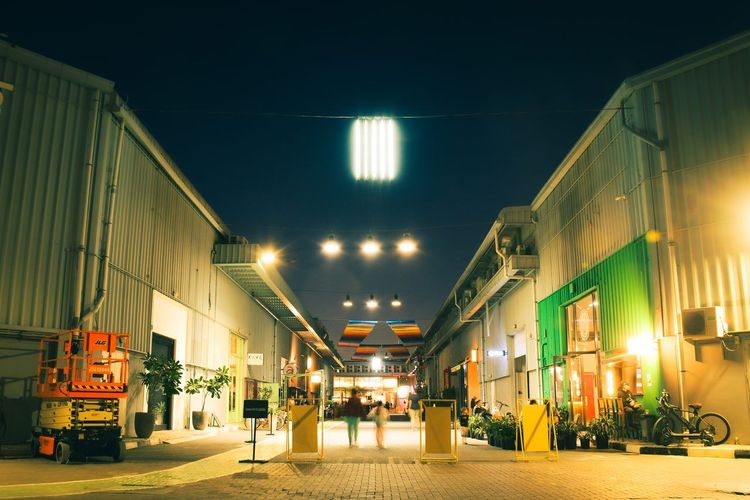
Alserkal Avenue), a cluster of converted warehouses in Al Quoz, runs rotating contemporary art exhibitions and is one of the only parts of the city that feels more like Berlin or Brooklyn than the Gulf. A couple of hours here, including a coffee at one of the independent cafes tucked between galleries, makes a useful counterweight to a trip otherwise built around malls and monuments.
For something more physical, Ski Dubai (Mall of the Emirates, Al Barsha, Dubai, rated 4.5/5 on Google (43 027 avis)) at the Mall of the Emirates keeps an indoor slope at sub-zero temperatures year-round, with ski and snowboard rentals plus a snow park for anyone who would rather build a snowman than ride a chairlift. It is an easy half-day add-on if the heat outside has worn you down.
The same audio-guided format that carried you through the Burj Khalifa district on day one extends out toward Palm Jumeirah for travellers with the extra day: the island leg of Ryo's audio-guided tour covers the man-made island's construction history as you cross the monorail or walk the beach promenade. If you are mapping out a third day in more depth, Ryo's roundup of the top activities to do in Dubai is a useful cross-check against this list.
Getting Around Dubai and Where to Stay for a Short Trip
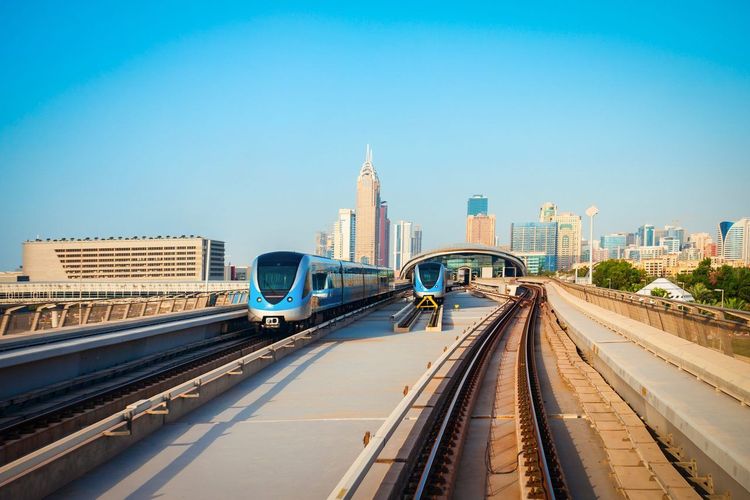
Metro, Taxis and Ride-Hailing Apps Between Stops
Dubai's metro covers Downtown, the Marina and much of the coast along two lines, and a Nol card bought at any station works across the metro, buses, the tram and the water bus. Each train has a Gold Class carriage and a section reserved for women and children at the front; standing there with the wrong ticket can earn you a fine, so check the floor markings before you board. For anything not on a metro line, taxis are metered, widely available, and generally the fastest way between stops that are more than a twenty-minute walk apart. Ride-hailing apps work the same way they do elsewhere, with fares that spike during the evening rush between 5 and 7pm.
For a two-day trip packed with stops across Downtown, the old town and the coast, budget for a mix: metro for the longer Downtown-to-Marina hops, taxis for everything in the old town where metro coverage thins out, and your own feet for the walkable clusters like Al Fahidi or Souk Al Bahar.
Where to Stay: Downtown, Marina or Deira
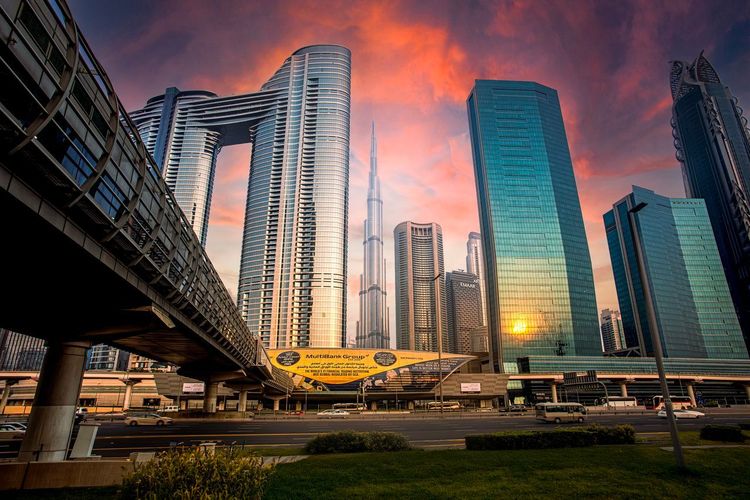
Downtown Dubai, near the Burj Khalifa and the mall, cuts your transit time roughly in half for day one and puts you within walking distance of the fountain show each evening. It is also the most expensive base, and rooms with a tower view book out weeks ahead during the cooler months.
Dubai Marina trades a longer commute into Downtown for cheaper rates and direct access to the beach, which suits a two-day plan if you weight day one more heavily toward the coast. Deira, near the creek and the souks, is the most budget-friendly of the three and puts you steps from day two's itinerary, though evenings here are quieter and further from the skyline views.
How Much Does a 2-Day Dubai Trip Cost? Budget and Tour Packages
A 2-day Dubai tour package booked through a local operator, covering the main sights, a desert safari and transfers, typically runs from around 150 to 400 US dollars per person depending on hotel pickup zones and whether meals are included, with the desert safari alone usually priced separately at 40 to 90 dollars. Budget travellers doing it independently can expect to spend less on activities but more time coordinating metro routes and ticket bookings themselves.
Rough daily costs per person, mid-range: about 47 to 68 dollars for Burj Khalifa entry depending on the time slot (closer to 95 to 110 for the 148th floor), roughly 40 dollars for the Museum of the Future, 20 to 30 dollars for the Dubai Frame, the Etihad Museum and a mosque tour combined, 60 to 100 dollars for a desert safari with dinner, and 30 to 60 dollars a day on food depending on how many sit-down meals you add. Accommodation varies widely by neighbourhood and season, but a clean three-star Downtown or Marina hotel room for two nights generally starts around 150 to 250 dollars total outside peak winter months. None of this accounts for flights, which fluctuate independently of anything on this list.



FAQ
Is 2 days enough to see Dubai?
Two days is enough to cover the city's headline sights, the Burj Khalifa, Dubai Mall, the old town and a desert safari, but not enough to add Abu Dhabi, every theme park or a full beach day without cutting something else. Treat this itinerary as the realistic core and extend to three days if Palm Jumeirah or the garden attractions matter to you.
What is the best 2-day itinerary for Dubai?
The itinerary above splits modern Dubai, the Burj Khalifa, the mall and the coast, into day one, and historic Dubai, Al Fahidi, the creek, the souks and the mosques, into day two, with the desert safari capping the second evening. This grouping keeps transit time down because each day stays within one geographic cluster rather than zig-zagging across the city.
How much does a 2-day Dubai tour package cost?
Most packaged 2-day itineraries covering transfers, main sights and a desert safari run between 150 and 400 US dollars per person, with the desert safari often sold as an add-on at 40 to 90 dollars rather than bundled into the base price. Prices rise during the cooler November-to-March peak season.
What should I not miss in Dubai in 2 days?
If you cut anything from this list, keep the Burj Khalifa at opening time, the Dubai Fountain show at night, the Al Fahidi lanes with the creek crossing, and the desert safari. These four cover the skyline, the water, the old city and the desert, which together give the clearest sense of what makes Dubai distinct from any other Gulf city.
Should I book the desert safari on day 1 or day 2?
Day 2 in the evening works better logistically, since it caps the old-town day without requiring an early start the next morning, and most operators offer late-afternoon pickup regardless of which day you choose. Booking it on day 1 instead can work if you would rather save the lighter midday mosque and museum stops for a day when you are recovering from a late night in the desert.
When is the best time of year to spend 2 days in Dubai?
November to March is the comfortable window, with daytime temperatures in the mid-twenties Celsius that let you walk the Marina and the souks at midday. From June to September the thermometer regularly passes 40°C, so a summer weekend means shifting outdoor stops to early morning and evening and leaning on malls, museums and Ski Dubai in between. Also check the Ramadan dates (roughly February to early March in 2027): sights stay open, but daytime eating in public is discouraged and opening hours shorten, which changes how your two days in Dubai flow.
Can you see Dubai in 2 days without renting a car?
Yes. The metro, taxis and ride-hailing apps cover every stop in this itinerary, and driving yourself adds the complication of parking at the mall and Downtown during peak hours. A rental car only becomes useful if you are adding a day trip beyond the city, such as to Hatta or Abu Dhabi.
Conclusion
Two days will never feel like enough in a city built on the idea that there is always something bigger just past the horizon, but the order matters more than the pace. Keep the skyline and the mall to the morning hours, let the old town carry the second day's quieter energy, and save the desert for last so the trip ends somewhere far from glass and air conditioning. If you want the Downtown stretch to feel less like a checklist and more like a walk someone local is narrating beside you, Ryo's full audio-guided tour of Dubai is built for exactly that pace, stop by stop, with nothing to book and nowhere you need to rush to catch up.