© Shutterstock
 Votre guide Ryo
New York and Its Surroundings: the Complete Guide to Activities in 2026
Activities in New York and its surroundings are so numerous that no first visit can cover them all. New York bewilders those who arrive with a list that is too short. The city spreads its 8.3 million inhabitants across five boroughs, each functioning like a metropolis in its own right, and as soon as you step beyond the city limits, the American Northeast opens up additional possibilities: white-sand beaches two hours away by car, historic cities reachable by train, and waterfalls among the most spectacular on the continent. To explore NYC with an audio guide that brings places to life, the Ryo audio-guided tour of New York covers the city's must-sees at your own pace.
This guide brings together the best activities in New York and its surroundings: the landmarks that genuinely justify the wait, the neighborhoods to wander without a fixed plan, the museums not to miss, and five day-trip or weekend excursions from Manhattan. A few figures to set expectations: more than 1,000 kilometers of streets in Manhattan alone, more than 120 museums in the city, and six states reachable by train from Penn Station.
The Statue of Liberty, Times Square, and the Empire State Building: the Unavoidable Icons
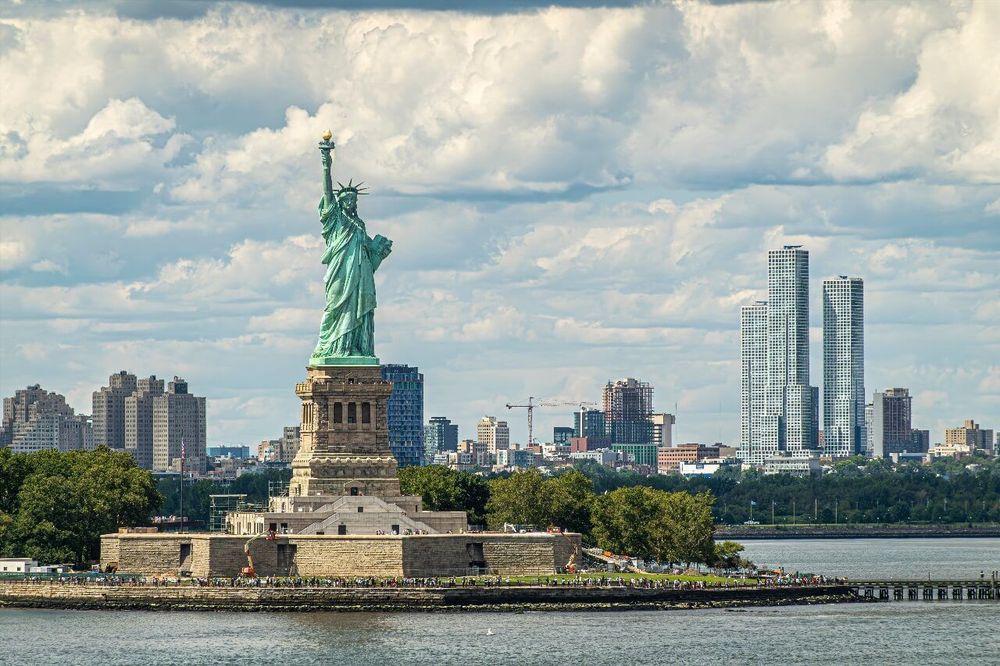
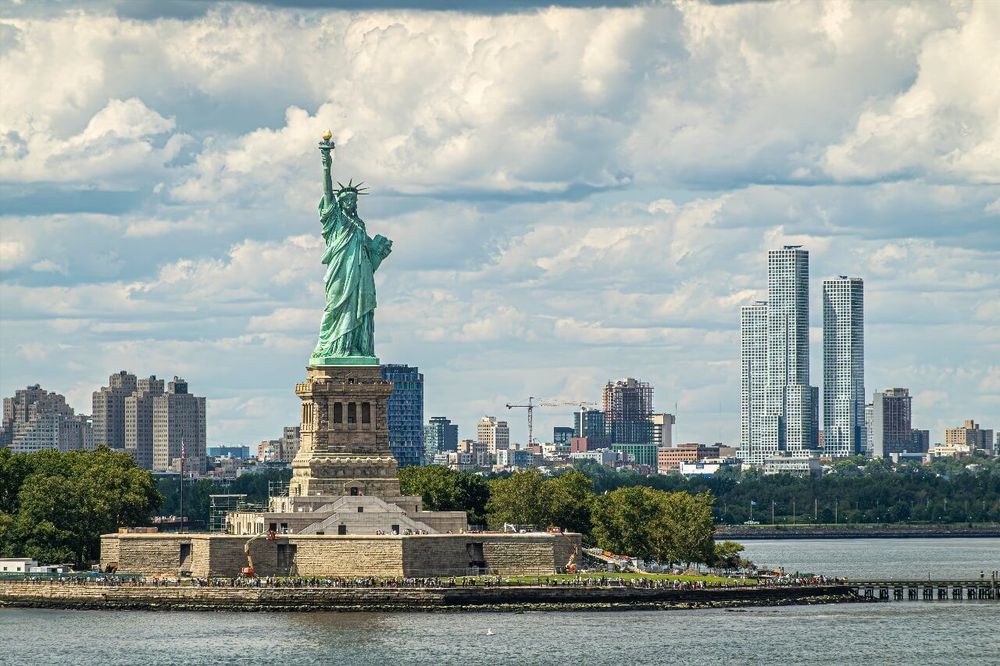
No traveler escapes these three, and that is a good thing, because their reputation is grounded in something real. The Statue of Liberty is visited from Liberty Island, accessible by ferry from Battery Park (Manhattan) or Liberty State Park (New Jersey). Book your ticket several days in advance if you wish to access the crown: the 354 steps lead to a 360-degree view over New York Harbor. Without the climb, the pedestal terrace already offers a striking vantage point. The ferry itself is worth the trip: the crossing of the bay reveals the skyline from an angle that few visitors anticipate.
Times Square is not what you imagine from the movies. By day, it is a noisy commercial crossroads where glowing advertising billboards compete for your attention. By night, it is something else entirely: the saturation of light creates a surreal, almost hallucinatory atmosphere that photographs cannot faithfully capture. Avoid the area between 11am and 4pm on Saturdays — the density makes it difficult to walk properly. If you want to see Broadway shows, the TKTS booth at Times Square offers last-minute tickets at reduced prices (up to 50% off).
The Empire State Building remains the best address for panoramic views over Manhattan. Its 86th-floor observatory, at 320 meters high, offers an unobstructed view of all five boroughs. The standard ticket costs around $44; the 102nd-floor observatory (fully glass-enclosed) costs twice as much. Practical tip: book online and choose the sunset time slot. Watching Manhattan transition from golden to fully lit from up there is an experience that is hard to match. Without a reservation, the queue regularly exceeds two hours in peak season.
To round out your day in this area, don't miss the High Line, a linear park spanning 2.3 kilometers built on a former elevated railway in the Chelsea neighborhood. Free and open every day, it offers original views of the Hudson River and Manhattan's streets from above, with gardens and temporary art installations that change each season. Both the High Line and the Chelsea neighborhood are stops on our audio walking tour through the heart of Manhattan.
Wall Street and Lower Manhattan: Finance, History, and Memory
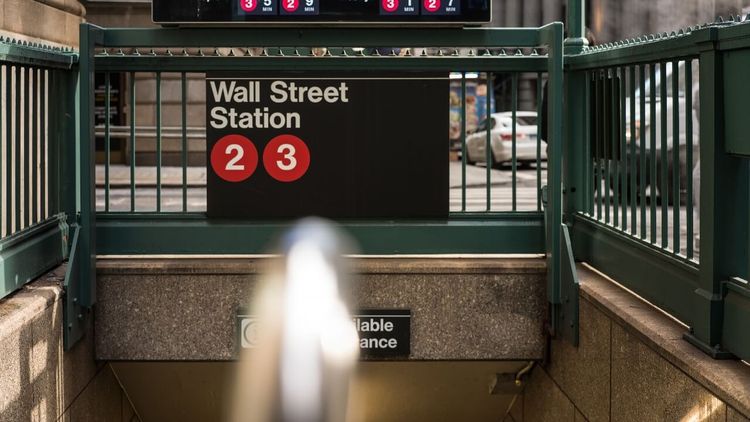
Lower Manhattan packs the economic and political history of the United States into just a few blocks. Wall Street is a narrow street that impresses less by its size than by its symbolic density. The New York Stock Exchange, founded in 1792, still operates behind its neoclassical columns and giant American flag. The building is not open to visitors, but the street itself is worth lingering on. Across from it, the Federal Hall National Memorial stands on the very site where George Washington was inaugurated in 1789 — free admission and often deserted, which is something of an anomaly in this neighborhood.
The Charging Bull by Arturo Di Modica has become the area's unmissable photo attraction since its guerrilla installation in 1989. Its depiction of financial market optimism draws lines of tourists at all hours. The first two hours of the morning remain the quietest for a crowd-free photo.
The 9/11 Memorial & Museum occupies the exact footprint of the Twin Towers. The two black reflecting pools engraved with the names of the victims create a striking place of remembrance in the heart of Manhattan. The underground museum (paid entry, around $30) documents the events of September 11 with a density of archives and testimonies that few museum institutions can match. Book in advance, especially for spring and summer weekends.
To explore these sites with in-depth explanations of the neighborhood's financial and architectural history, the Ryo audio guide to the towers of Wall Street details each iconic building with anecdotes that information panels typically omit. Finish at the One World Observatory (285 Fulton St, New York, NY 10007, rated 4.7/5 on Google with 40K reviews) (102nd floor of One World Trade Center) for a vertiginous view from the highest point in the Western Hemisphere.
Central Park and the Upper West Side: Breathing the City in a Different Way
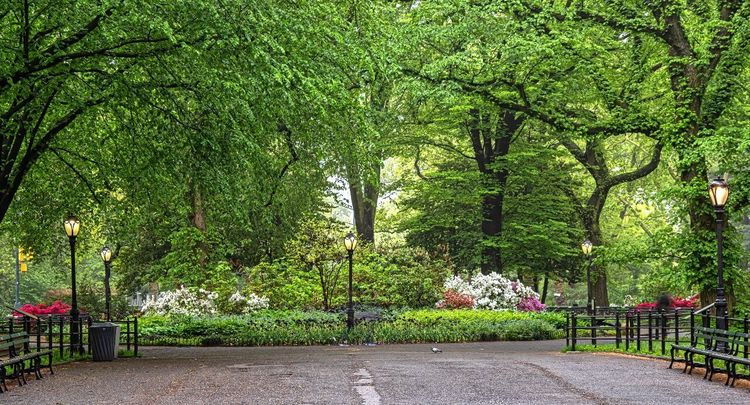
Central Park is not an ornament of the city — it is a vital organ. Its 341 hectares at the heart of Manhattan welcome 42 million visitors every year, the vast majority of them New Yorkers who use it as an extension of their living room. The park was designed by Frederick Law Olmsted and Calvert Vaux between 1858 and 1876 on formerly marshy land: every lake, hill, and pathway was built from scratch.
Must-sees within the park: Bethesda Fountain (the symbolic heart of the park, by the lakeside), Belvedere Castle (panoramic view over the Great Lawn), Strawberry Fields (John Lennon memorial, near West 72nd Street), and the Jacqueline Kennedy Onassis Reservoir for runners. In winter, Wollman Rink opens for ice skating, with the Midtown skyline as a backdrop. For an audio tour of Central Park that tells the story of its places and the figures who spent time there, find the Ryo Walk in Central Park tour.
Exiting via West 72nd Street, the Upper West Side unfolds with residential architecture typical of 19th-century New York: brownstone townhouses and apartment buildings with liveried doormen. The Dakota Building, where John Lennon was assassinated in 1980, remains a quiet but constant pilgrimage site. The neighborhood has two major museums: the American Museum of Natural History (Central Park West & 79th St, New York, NY 10024, rated 4.6/5 on Google with 25,159 reviews) (recommended entry: $28) with its dinosaur halls and planetarium, and the New-York Historical Society for the history of the city. Just across the street, Strawberry Fields and Bethesda Fountain are among the stops on our audio-guided stroll through Central Park.
Brooklyn: the Bridge, DUMBO, and Williamsburg
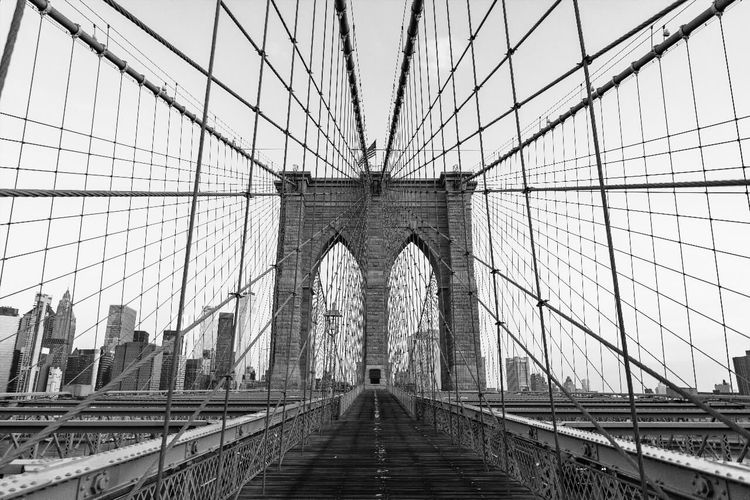
Crossing the East River on foot over the Brooklyn Bridge is one of the most iconic activities in New York. The pedestrian and cycling walkway (above the vehicle lane) offers a head-on view of the Manhattan skyline and the Statue of Liberty in the distance. The crossing takes about 30 minutes one way. Start on the Manhattan side (entrance near City Hall) to arrive in DUMBO, or go the other way depending on your day's itinerary.
DUMBO (Down Under the Manhattan Bridge Overpass) is New York's photo neighborhood. The corner of Washington Street and Water Street offers the perfect framing: the Manhattan Bridge in perspective, with the Brooklyn Bridge visible in the background. Art galleries and designer boutiques have gradually replaced the former industrial waterfront warehouses. Brooklyn Bridge Park, developed between 2010 and 2020 across 34 hectares along the East River, offers sports courts, picnic areas, and a direct view of Manhattan.
A 20-minute walk north (or a few subway stops), Williamsburg (Bedford Avenue, Brooklyn, NY 11211, rated 4.4/5 on Google with 3K reviews) has transformed over the past decade: once an industrial, then a bohemian neighborhood, it now concentrates an exceptional density of independent cafés, restaurants, bars, and vintage shops. On weekends, the Smorgasburg Food Market (May through October, on the East River) brings together around a hundred street food vendors in a permanent festival atmosphere. To better understand the history of the bridge's construction and its impact on Brooklyn's urbanization, the Ryo article on the Brooklyn Bridge details the construction figures and behind-the-scenes anecdotes.
Manhattan's Museums: MoMA, the Met, and the Guggenheim
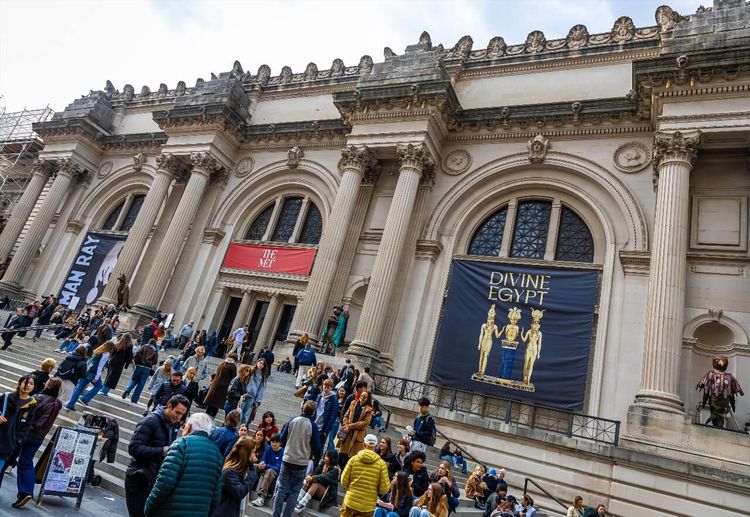
New York is home to more than 120 museums, a concentration unmatched in the United States. Three stand out as essential stops for a first visit.
The Metropolitan Museum of Art (the "Met") is one of the largest museums in the world, with 2 million works across 17,000 m². Admission (suggested: $30 for visitors from outside New York State) grants access to permanent collections spanning 5,000 years of art: Egyptian antiquities, medieval armor, French Impressionists, and art from Africa and Oceania. Plan at least three hours to see only a fraction of the collections.
The MoMA (Museum of Modern Art) houses one of the most important collections of modern and contemporary art in the world: Picasso, Warhol, Monet, Dalí, Duchamp. Admission costs $30. On Friday evenings (5:30pm to 8:30pm), free access is now reserved for New York State residents as part of "UNIQLO Friday Nights": visiting tourists pay full price, but the museum stays open late — a good time slot to avoid the afternoon crowds. The MoMA design store on the ground floor is worth a visit in its own right for items unavailable anywhere else.
The Guggenheim Museum (1071 5th Ave, New York, NY 10128, rated 4.3/5 on Google with 26,483 reviews) is worth visiting as much for its spiral architecture (Frank Lloyd Wright, 1959) as for its modern art collections. The building itself is the most photographed work in the neighborhood, and the helical ramp that connects the galleries offers a unique spatial experience.
The Hamptons: the Beach Getaway 2 Hours from New York
The Hamptons refer to a series of coastal villages on the eastern tip of Long Island, approximately 160 kilometers east of Manhattan. This corner of the world has been synonymous with the American summer since the 1950s: grand white-wood properties, immaculate sandy beaches, farmers' markets, and contemporary art galleries. But the Hamptons are not exclusively reserved for Park Avenue residents.
The journey from Penn Station on the Long Island Rail Road (LIRR) takes 2h15 to Southampton; count on $15 to $25 one way depending on the time. By car, allow 2h30 to 3h outside of rush hours — absolutely avoid Friday evenings: the I-495 becomes a parking lot from 3pm onward. Southampton is the first major town you reach: its colonial architecture, historic village, and accessible beaches make it the most well-rounded stop for a first visit to the area. East Hampton is more residential, with the famous Georgica Beach and its villas hidden behind 4-meter hedges.
Montauk, at the eastern tip of Long Island, offers a different register: wilder, more surf-oriented, with the Montauk Point Lighthouse (2000 Montauk Highway, Montauk, NY 11954, rated 4.8/5 on Google with 310 reviews) (built in 1796, the oldest in New York State) and Atlantic-facing beaches that draw surfers from the northeastern United States from May to November. Sport fishing is practiced with passion here: striped bass, bluefin tuna, and halibut are among the common catches.
Outside of the summer season (July–August), the Hamptons return to a local and authentic atmosphere, and accommodation prices drop by 40 to 60%. The North Fork vineyards, 45 minutes from Southampton, make for an interesting stop on the way back to New York.
Philadelphia from New York: 1h10 by Train
Philadelphia is the most accessible destination from New York: Amtrak trains connect Penn Station to Philadelphia 30th Street Station in 1h10 to 1h30 for approximately $15 to $40 depending on the schedule. The city has the largest historic district in the United States, concentrated in just a few blocks along the Delaware River.
Independence Hall is the place where the Declaration of Independence (1776) and the Constitution (1787) were signed. The visit is free but requires an entry ticket — online booking is recommended in summer. Just steps away, the Liberty Bell (permanently cracked in 1846 but an indestructible national symbol) can be visited for free in its glass pavilion, with explanatory panels on its history: cast in London in 1752, it cracked upon arrival and was recast on-site in Philadelphia by craftsmen Pass and Stow in 1753.
The Philadelphia Museum of Art (2600 Benjamin Franklin Pkwy, Philadelphia, PA 19130, rated 4.8/5 on Google with 23,253 reviews) is as well known for its steps (Rocky Balboa's training run) as for its collections: four millennia of art across three floors, with a view over Downtown Philadelphia from the forecourt. For a full day, add the Eastern State Penitentiary (a former 19th-century model prison converted into a museum) and the Fishtown neighborhood for dinner: its culinary energy and independent bars rival Williamsburg in Brooklyn.
Niagara Falls from New York
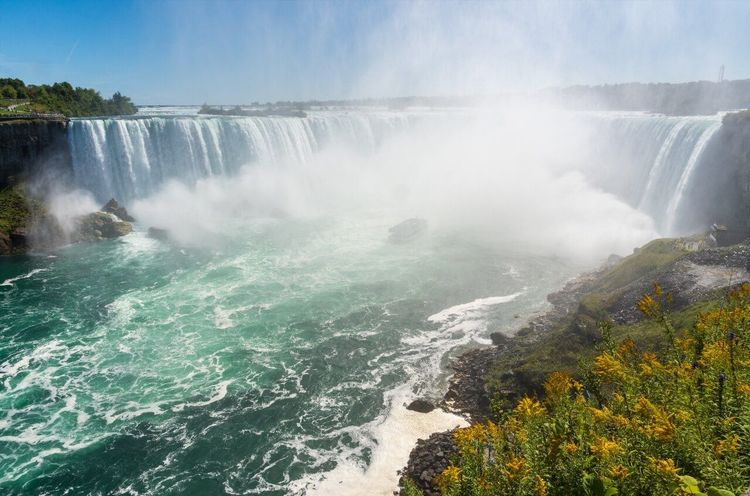
Niagara Falls is 6h30 by car from Manhattan or 8 to 9 hours by bus (several companies depart from the Port Authority Bus Terminal). The distance makes it an excursion best reserved for a stay of at least one week in New York, or combined with an overnight stop. By plane from LaGuardia or JFK to Buffalo Niagara International Airport, count 1 hour of flight plus 30 minutes by road to the falls.
The falls can be visited from both sides: the American side (New York State) and the Canadian side. The Canadian side offers by far the best views directly facing the Horseshoe Falls, the largest of the three falls at 57 meters high and approximately 670 meters wide along their crest line. Don't forget your passport if you plan to cross the border.
The Maid of the Mist, a boat that ventures to the base of the falls in the permanent mist, has been operating since 1846 and remains the most intense experience of the visit. The provided ponchos don't always suffice: be prepared to get wet. On the American shore, the Cave of the Winds allows visitors to walk along wooden walkways just a few meters from the Bridal Veil Falls — a loud and wet experience that children generally love.
Boston from New York: the American Cradle
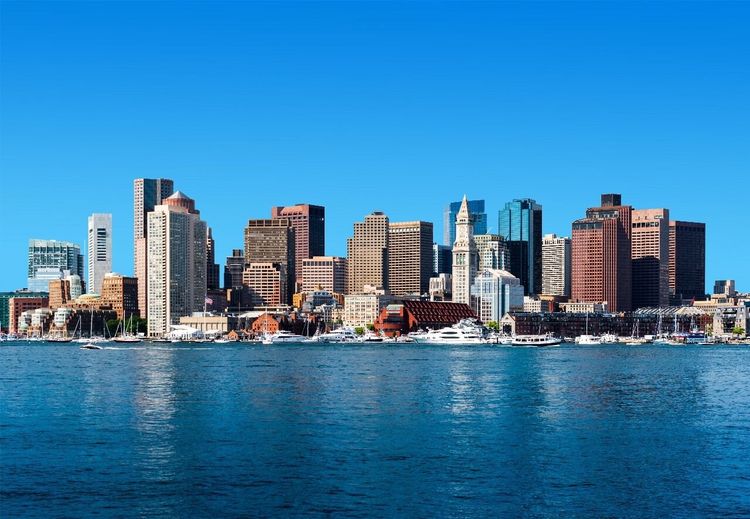
Boston is approximately 346 kilometers (215 miles) from Manhattan — 3h45 by car outside of rush hours, or 3h30 to 4h30 by Amtrak train. The FlixBus or Greyhound bus is cheaper ($20–40) but takes 4h30. Boston visits very well in a long day or ideally over a weekend.
The Freedom Trail is a 4-kilometer walking route marked by a red line on the ground, linking 16 historic sites in the city center: Boston Common (the oldest public park in America, founded in 1634), the golden-domed State House, Old North Church (from which Paul Revere sent his signal in 1775 to warn militiamen of the British approach), the African American soldiers memorial, and the USS Constitution. The self-guided tour takes between 2 and 4 hours depending on stops.
The Beacon Hill neighborhood (Boston, MA 02108, rated 4.7/5 on Google with 8K reviews) with its cobblestone streets and 19th-century red-brick houses is one of the best-preserved urban environments on the American East Coast. The Harvard Campus in Cambridge and the neighboring MIT are worth a detour if you have time. For food, Quincy Market and the North End neighborhood (Boston's Little Italy, with Italian restaurants open since the 1920s) are the best culinary spots in the center.
Where to Eat in New York: Around the World in a Few Blocks
New York's food scene mirrors its population: radically diverse. Every borough has its specialties and its go-to addresses, and ranking them would be a futile exercise.
In Manhattan, delis (grocery-restaurants) serve the famous smoked turkey or pastrami sandwiches that have fed generations of New Yorkers. Katz's Delicatessen (205 E Houston St, New York, NY 10002, rated 4.5/5 on Google with 53,654 reviews) (Lower East Side), open since 1888, has been serving its pastrami according to a recipe virtually unchanged for more than 135 years. New York-style pizza — large, thin, foldable, sold by the slice — is eaten standing up, at a neighborhood pizzeria rather than a tourist restaurant. The price? Two to three dollars a slice at the good neighborhood spots.
In Brooklyn, Smorgasburg (May through October, on the East River in Williamsburg on Saturdays) is the largest open-air food market in America, with around a hundred street food vendors from around the world. In the East Village, the concentration of Japanese restaurants (ramen, sushi, izakaya) rivals that of Tokyo neighborhoods. For the city's culinary essentials — bagels, cheesecake, street hot dogs — the Ryo guide to New York culinary specialties maps out the best addresses by neighborhood and type of cuisine.
Getting Around New York and to the Surrounding Areas
The New York subway (MTA Subway) runs 24/7, with more than 470 stations across the five boroughs. A single ride costs $2.90 with the OMNY card (contactless payment); beyond $34 in spending over any rolling seven-day period, additional trips become free. The 7-day unlimited card ($34) is worthwhile from 12 trips onward. The MTA app or Google Maps is sufficient for navigating the network, which covers virtually all of Manhattan and the majority of Brooklyn, Queens, and the Bronx.
For excursions from New York, here are the options by destination:
- Long Island (Hamptons): LIRR from Penn Station or Atlantic Terminal, 2h15 journey, $15 to $25 one way
- Philadelphia: Amtrak from Penn Station, 1h10 to 1h30, $15 to $40 (book in advance for the lowest fares)
- Boston: Amtrak from Penn Station, 3h30 to 4h30, $49 to $180 depending on class
- Niagara Falls: car recommended (6h30) or bus from Port Authority Bus Terminal (8 to 9 hours)
- Airports: JFK (AirTrain + E or J line, $7.50), LaGuardia (M60 bus from Manhattan), Newark (NJ Transit from Penn Station, $15)
As for accommodation, Midtown (around Times Square) is the most convenient for transportation but also the most expensive. The Lower East Side, Brooklyn (Park Slope, Williamsburg, DUMBO), and Long Island City (Queens, 15 minutes from Midtown by subway) offer better value for money for tighter budgets.
FAQ
How much time do you need to visit New York?
One week is the minimum to get an honest feel for the city and plan a few excursions. Four days allow you to cover Manhattan: northern Manhattan with Central Park and the museums on the first day, Midtown and Times Square on the second, Lower Manhattan and Brooklyn on the third, and an excursion or shopping on the fourth. With 10 to 14 days, you can explore Brooklyn and Queens in depth and plan two or three trips to the areas surrounding New York.
What is the best time to visit New York?
September and October offer the best conditions: pleasant temperatures (59–72°F), smaller crowds than in summer, and the autumn light that makes Manhattan particularly photogenic. June and July are very busy and hot (sometimes 95°F with humidity). January and February are the coldest months (23°F on average) but also the cheapest, with hotels and flights up to 40% less expensive than in peak season. Spring (March–May) is a good compromise: Central Park in bloom, mild temperatures, and still-reasonable prices before the summer rush.
What are the best day trips from New York?
Philadelphia is the easiest trip: 1h10 by train, a full day on site for Independence Hall, the Museum of Art, and the historic district, back the same evening without stress. The Hamptons work very well for a beach day in summer (LIRR train from Penn Station). Boston is doable in a very long day but is better visited over a weekend. Niagara Falls, 6h30 by car, requires a minimum of two days to make the journey worthwhile.
Can you visit New York with the Ryo app?
Yes, our Ryo app offers audio-guided tours in several areas of New York. The New York audio walking tour includes a route through the Wall Street neighborhood with its historic and financial towers, and a guided walk through Central Park with commentary on the history of the park and the figures who lived there. These audio guides are self-paced, with no group and no fixed schedule. They are accessible directly from the app.
Is New York a safe destination for tourists?
New York is today one of the safest major American cities. The tourist neighborhoods of Manhattan (Midtown, Upper West Side, Greenwich Village, Lower Manhattan) and those of Brooklyn (Heights, DUMBO, Williamsburg) have a level of safety comparable to European city centers. The usual precautions apply: watch out for pickpockets on crowded transit and in heavily visited areas like Times Square. Avoid conspicuously checking your phone in deserted places at night.
Conclusion
New York is not a destination you can consume in a single visit. The city reveals itself in successive layers — Manhattan first, then Brooklyn, then the surrounding areas — and each return uncovers a neighborhood, a season, or an angle that the previous visit had left in the shadows. Activities in New York and its surroundings cover a spectrum impossible to exhaust: from the beaches of the Hamptons to Niagara Falls, from the halls of the Metropolitan Museum to the markets of Williamsburg, from the colonial history of Philadelphia to the cobblestone streets of Boston.
To start with the essentials and not miss the places that truly make New York what it is, explore our New York audio-guided tour: a self-paced route that covers the city's must-sees with the depth of a local guide.
À lire également