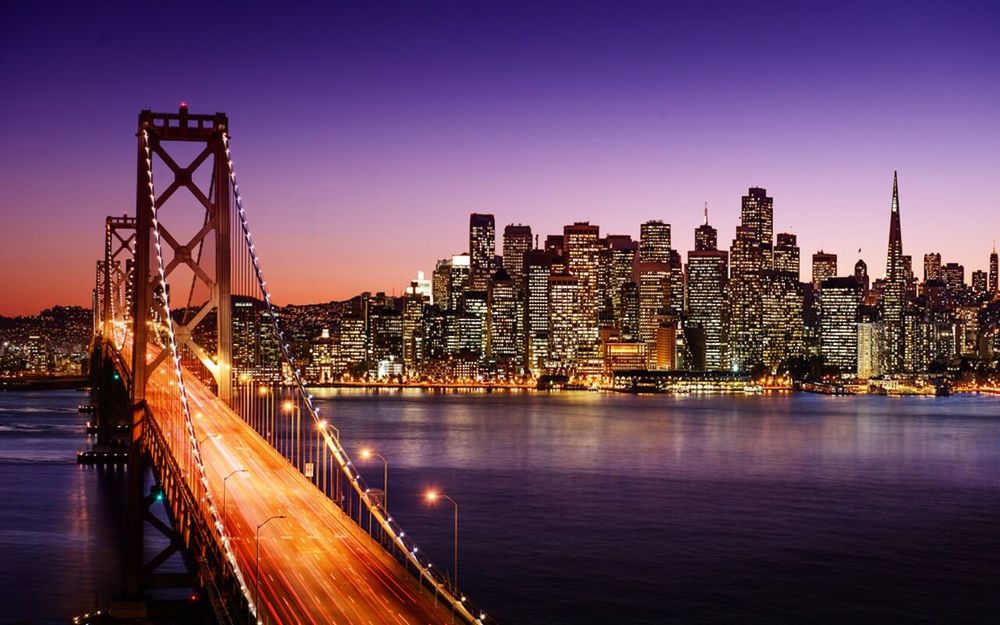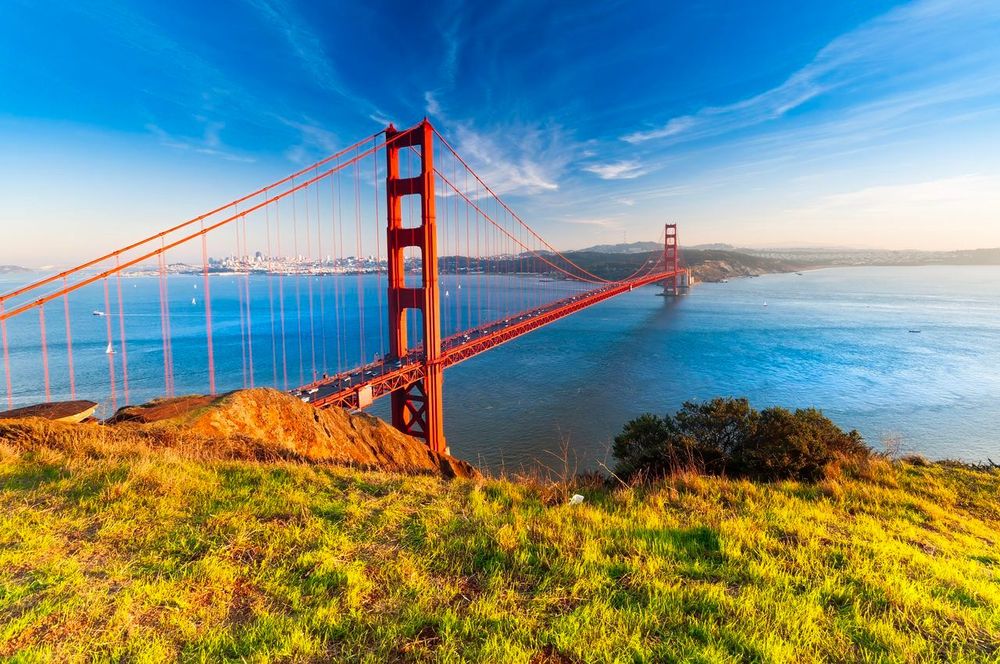
© Shutterstock
 Votre guide Ryo
Things to Do in San Francisco in 2026: the Complete Guide to Must-See Attractions
Wondering what to do in San Francisco and where to start? The city sprawls across forty hills and lives beneath a fog with its own name, Karl the Fog, capable of swallowing the top of the Golden Gate Bridge in the middle of July while it's 82°F just half an hour away in the inland valleys. That unpredictable weather alone explains why so many visitors leave with a mistaken impression of the city: San Francisco is not just an orange bridge and an old prison — it reveals itself hill by hill, neighborhood by neighborhood. For a first introduction, the Ryo audio-guided tour of San Francisco connects on foot, across 23 audio stops, Telegraph Hill, the piers of Fisherman's Wharf and Russian Hill.
Throughout this guide, sixteen experiences structure the visit: a suspension bridge that held the world record for the longest main span for 27 years, a prison island whose most famous escape has never been solved since 1962, a hairpin street that fits eight turns into a single city block, and driverless taxis already roaming the streets. From historic neighborhoods and museums to bay excursions and practical tips on where to stay and how to get around, you will find everything you need to plan a two- to six-day trip.
1. The Golden Gate Bridge, the City's Ultimate Icon
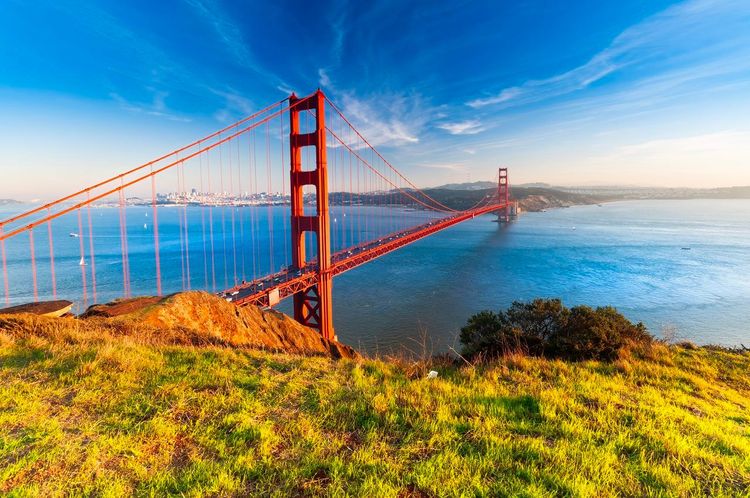
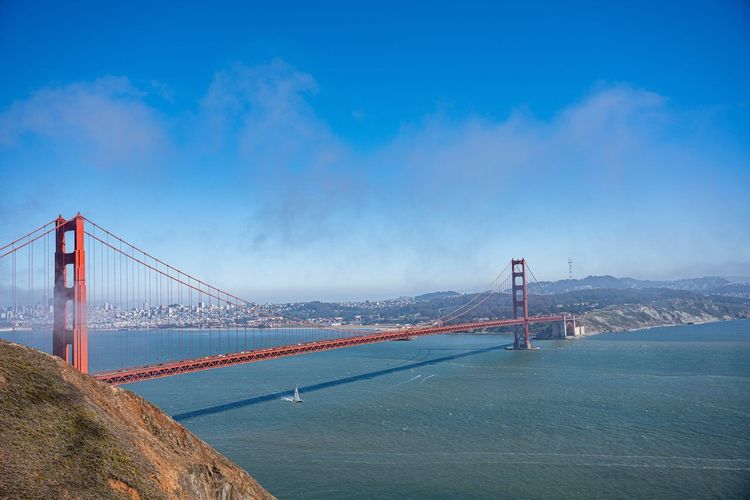
Inaugurated in 1937, the Golden Gate Bridge (Golden Gate Bridge, San Francisco, CA 94129, rated 4.8/5 on Google based on 85,412 reviews) connects San Francisco to Marin County across the Golden Gate Strait, which lends the bridge its name. Its main span measures 1,280 meters, a world record held until 1964, and its two towers rise 227 meters above the water. Its color, "international orange," was no accident: architect Irving Morrow chose it because it remains visible in the fog and harmonizes with the surrounding hills. A permanent crew of painters and ironworkers maintains the structure, touching up areas corroded by salt air.
Two viewpoints stand out above all others. Battery Spencer, on the Marin side, offers the most photographed overhead view of the bay, especially when the towers emerge from a blanket of fog. Crissy Field, a former military airstrip converted into a waterfront park, lets you walk or cycle along flat ground all the way to the foot of the bridge, passing Fort Point, a 19th-century brick fortress tucked beneath the south arch.
The walk across, free of charge, takes about 45 minutes one way over the 2.7-kilometer span. The pedestrian walkway is open during daylight hours only, and the wind blows strongly year-round — a windbreaker is not a luxury. Drivers pay a toll of around ten dollars, southbound only, exclusively via electronic transponder or license plate billing (there are no toll booths).
On the city side, the Ryo audio-guided tour "The City by the Bay" (23 audio stops, 3h15, 8 km loop) follows the waterfront to Aquatic Park, facing the bridge, with an audio track that reveals the secrets of its construction. You will understand why so many engineers considered the project impossible in a strait swept by powerful currents.
2. Visiting Alcatraz Prison
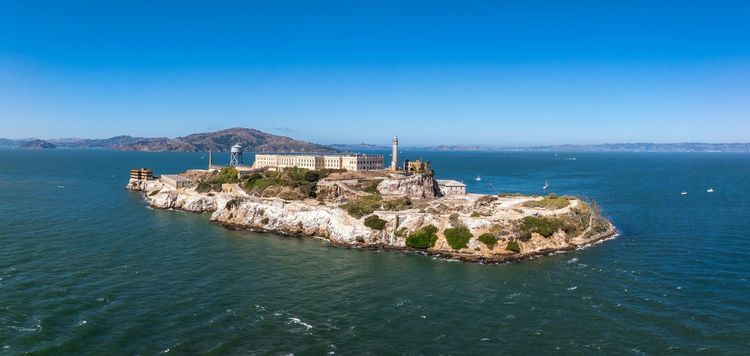
Just off Fisherman's Wharf, little more than 2 kilometers from shore yet separated from the mainland by icy, powerful currents, Alcatraz Island housed a federal maximum-security penitentiary from 1934 to 1963. Al Capone served part of his sentence there, as did Robert Stroud, the killer nicknamed "the Birdman of Alcatraz" (though he actually raised his birds at his previous prison in Leavenworth). In June 1962, Frank Morris and brothers John and Clarence Anglin escaped by leaving papier-mâché heads in their beds, then set out to sea on a makeshift raft of raincoats. They were never found: the FBI closed its investigation in 1979, but the US Marshals Service keeps the case open.
Access to the island is exclusively through Alcatraz City Cruises ferries, the National Park Service concessionaire, departing from Pier 33. Expect to pay around fifty dollars for a daytime adult ticket, with night tours priced slightly higher. In peak season, time slots are often fully booked weeks in advance: reserve as soon as your dates are confirmed, and beware of unofficial resellers who mark up prices.
Plan two to three hours on the island. The cell block audio guide, included in the ticket and narrated by former guards and inmates, lasts about 45 minutes. You can then explore freely between the recreation yard, the restored gardens, and the lighthouse — heir to the very first lighthouse on the American West Coast, lit here in 1854. No food service is available on the island beyond a few snacks at the gift shop: bring a water bottle and a jacket, as the wind is always cooler there than on the mainland.
3. Riding a Cable Car, the Iconic Experience
Put into service in 1873 at the initiative of Andrew Hallidie, a steel cable manufacturer reportedly shocked by a horse-drawn carriage accident on a steep hill, the cable car of San Francisco is the last hand-operated cable tramway network still in service anywhere in the world, and a rolling National Historic Landmark. Three lines operate today: the Powell-Hyde, which descends to Aquatic Park and Ghirardelli Square; the Powell-Mason, which reaches Fisherman's Wharf along a more easterly route; and the California Street line, which climbs Nob Hill from the Financial District.
A single ticket costs $9, with no return fare available. If you plan to ride more than once, the Muni Visitor Passport ($15 for one day, $35 for three days) pays for itself after the second ride and also covers buses and streetcars. The line at the Powell Street terminus near Union Square regularly exceeds 45 minutes in summer.
The locals' trick: try the California Street line, which is far less crowded, or board at an intermediate stop along the route when a car still has room on the running boards. Early in the morning or after 8 p.m., wait times at the terminals drop significantly.
Beyond the transportation itself, the experience is what makes it worth it: the hum of the cable running beneath the street, the gripman working the grip and brakes with pure arm strength, the vertiginous climbs up Nob Hill. To understand the mechanics, the Cable Car Museum — free of charge — housed in the Mason Street powerhouse, displays the massive pulleys that drive the entire network.
4. Lombard Street and the Heights of Russian Hill
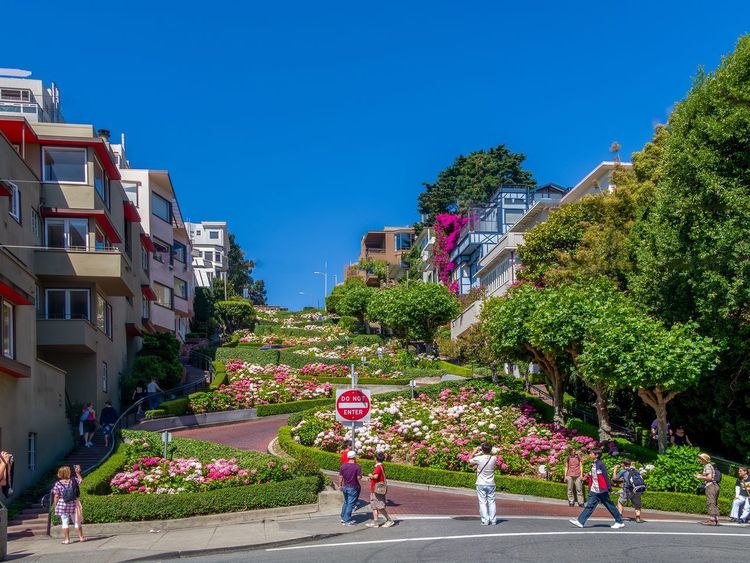
Nicknamed "the most crooked street in the world," Lombard Street (Lombard St, San Francisco, CA 94109, rated 4.6/5 on Google based on 3,615 reviews) winds through eight hairpin turns on a single city block, between Hyde Street and Leavenworth Street. It was redesigned in 1922 to soften a natural 27% grade considered too steep for the cars of the era. Traffic is limited to 5 mph, in the downhill direction only.
The best time to photograph it is early in the morning, before the tour buses arrive, when the hydrangea beds lining the curves are still in soft shade. The most successful framing is from the bottom on Leavenworth, or from the top with your back to Hyde Street and Coit Tower in the background. The stairs running alongside the street let you walk down without waiting in line.
The street sits in the heart of Russian Hill, a residential neighborhood said to owe its name to Russian sailors' graves discovered at the summit in the 19th century. Slip into Macondray Lane, a cobbled, leafy alley said to have inspired Armistead Maupin's "Tales of the City" novel series. A few streets away, Nob Hill preserves the grand hotels built for the railroad barons, such as the Fairmont and the Mark Hopkins, as well as Grace Cathedral, a neo-Gothic landmark famous for its gilded doors inspired by Florence's Baptistery and its inlaid floor labyrinth.
5. Must-See Neighborhoods to Explore on Foot
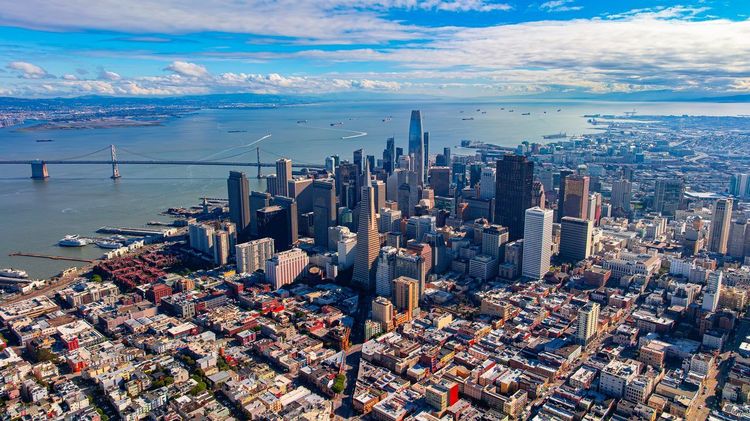
San Francisco reads like a mosaic of neighborhoods, each with its own identity, often separated by just a single hill. Here is how to group them into four coherent zones so you miss nothing without constantly backtracking.
Downtown, Chinatown, and Civic Center
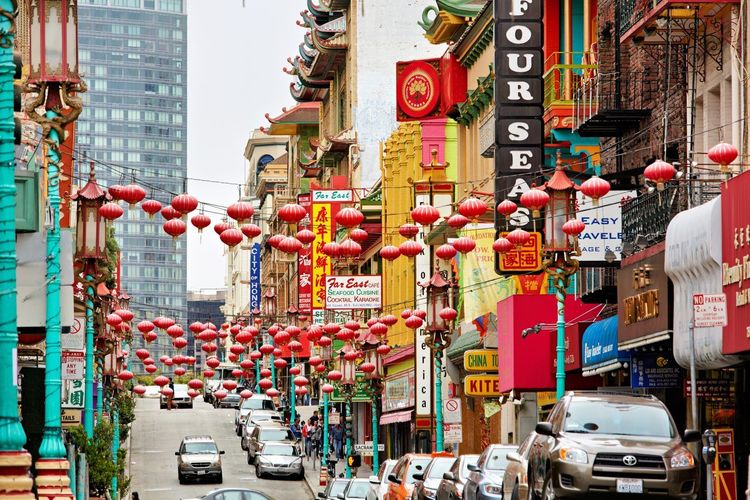
The Financial District, the city's economic heart, is home to San Francisco's tallest skyscrapers, led by the Salesforce Tower at 326 meters, and the iconic Transamerica Pyramid, completed in 1972. Nearby, Union Square lines up department stores and theaters around its commemorative column. Steps away, San Francisco's Chinatown, established around 1848, claims the title of the oldest Chinese neighborhood in North America. You enter through the Dragon's Gate on Grant Avenue, before wandering into the more authentic side streets of Stockton Street and Ross Alley, where the Golden Gate Fortune Cookie Factory still folds its cookies by hand.
A little further to the southwest, Civic Center clusters City Hall with its gilded dome — taller than the one on the Capitol in Washington — the opera house, and a well-regarded farmers' market held on Wednesdays and Sundays on United Nations Plaza. The neighboring Tenderloin district remains heavily affected by poverty: stick to the main streets after dark.
To explore this area with commentary in your ears, follow the audio tour that leads from the skyscrapers of the Financial District to the alleyways of Chinatown: 25 audio stops, 2h20, and 5.7 km, from Union Square to City Lights bookstore, including the contested history of the fortune cookie, which San Francisco and Los Angeles both claim to have invented.
Fisherman's Wharf, Russian Hill, and Telegraph Hill
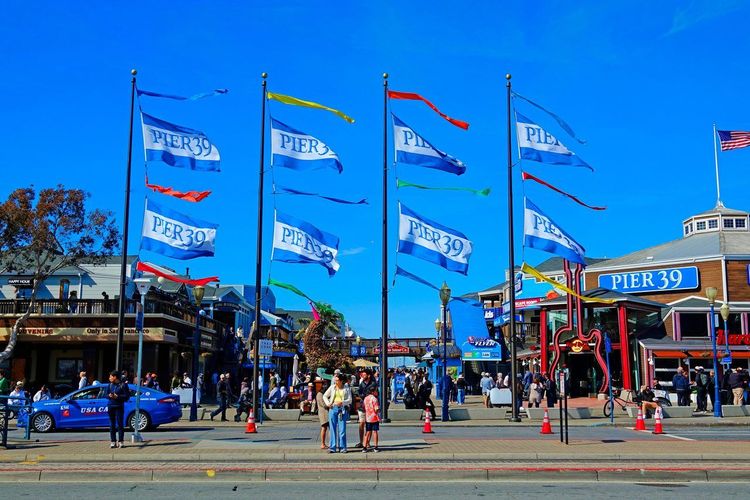
The city's most touristy area, Fisherman's Wharf still draws a little income from crab fishing, but mostly from visitors. Beyond the souvenir shops, two spots are worth seeking out: the Musée Mécanique, a free collection of arcade games and century-old coin-operated automata, and Hyde Street Pier, where historic sailing vessels and ferries are moored. At Pier 39 (Beach St & The Embarcadero, San Francisco, CA 94133, rated 4.6/5 on Google based on 138,554 reviews), hundreds of sea lions colonized the floating docks after the 1989 earthquake and return every year, making it one of the city's most photographed free attractions.
Heading west, Russian Hill (already mentioned in connection with Lombard Street) extends the neighborhood into quiet residential streets, while to the southeast rises Telegraph Hill, once equipped with a semaphore that signaled the arrival of ships into the bay. Between the two, North Beach — the city's "Little Italy" — has been serving espressos around Washington Square for generations.
Mission District, Castro, and Haight-Ashbury
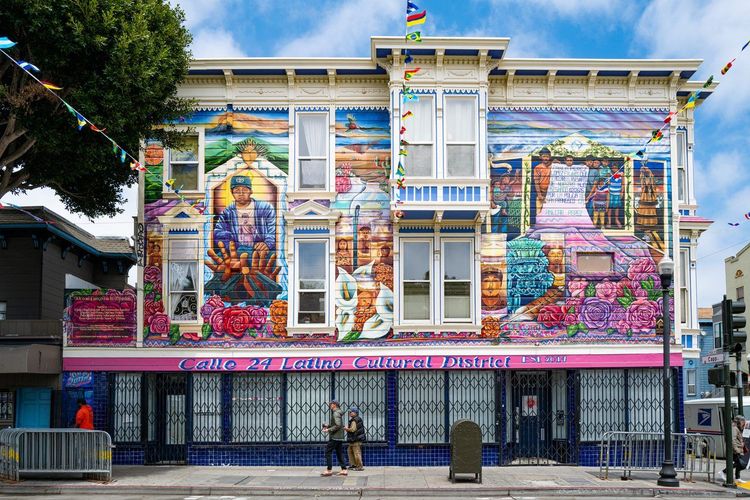
The Mission District is probably the city's most vibrant neighborhood: giant murals in Balmy Alley and Clarion Alley, Mission Dolores — whose chapel, completed in 1791, is the oldest intact building in San Francisco — and a vibrant food scene built around the Mission-style burrito, born in the neighborhood's taquerias. Dolores Park, just above, offers a sloping lawn with views of the skyline, packed whenever the sun breaks through.
Just to the west lies the Castro, the historic LGBTQ+ neighborhood since the 1970s, where Harvey Milk ran his camera shop before becoming one of the first openly gay elected officials in the country. Look for the ever-present rainbow flags and the illuminated marquee of the Castro Theatre, a movie palace dating from 1922.
Further north, Haight-Ashbury, the epicenter of the Summer of Love in 1967, retains its countercultural spirit despite gentrification: vintage shops, independent record stores like Amoeba Music, and the house at 710 Ashbury Street where the Grateful Dead once lived. You can easily chain these three neighborhoods into a single day's walk, allowing 20 to 30 minutes on foot between each.
Pacific Heights, Presidio, and Western Addition
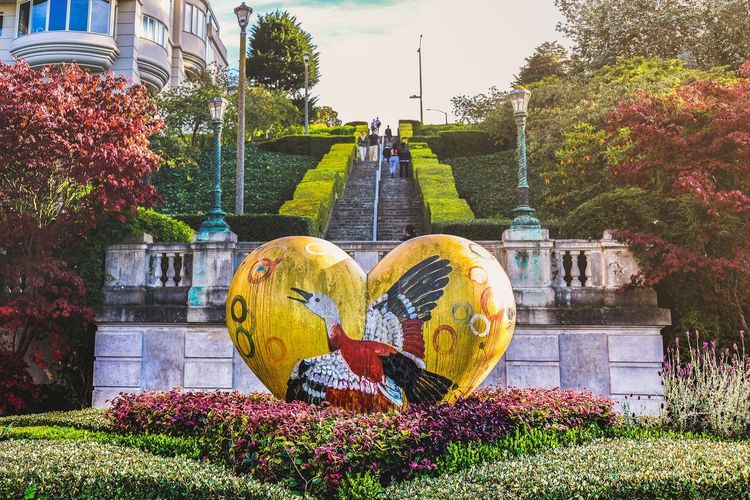
Pacific Heights lines its grand Victorian homes and upscale mansions along streets offering sweeping bay views. The Lyon Street Steps, a stairway flanked by manicured hedges, connect the neighborhood to the Presidio with a striking perspective on the Palace of Fine Arts. Fillmore Street below is dotted with boutiques and cafés.
Just to the northwest, the Presidio, a former military base incorporated into the Golden Gate National Recreation Area in 1994, blends eucalyptus forests, coastal cliffs, a museum dedicated to Walt Disney, and beaches like Baker Beach. Between Pacific Heights and Golden Gate Park, the Western Addition and its Fillmore sub-district were nicknamed the "Harlem of the West" in the 1940s and 1950s, when its jazz clubs hosted the greatest musicians of the era.
6. The Painted Ladies and Alamo Square
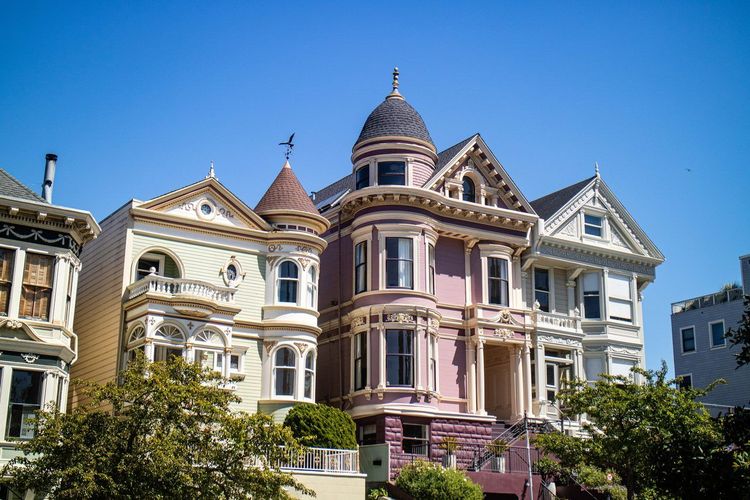
A row of Victorian houses lined up on Steiner Street, built between 1892 and 1896, forms the Painted Ladies (710–720 Steiner St, San Francisco, CA 94117, rated 4.4/5 on Google based on 28,295 reviews), which became world-famous through the opening credits of the TV series Full House, which premiered in 1987. They line Alamo Square, a sloping park where a single photo can frame the pastel facades, the downtown skyscrapers, and sometimes the fog rolling in the distance.
The houses face the park, and therefore face west: the light hits them directly in late afternoon, making that the most sought-after window for photography. In the morning, they are backlit. Settle on the lawn at the top of the park for a picnic, just as local residents do on weekends.
The square also serves as the starting point for the Ryo audio-guided tour dedicated to the Summer of Love, which tells the story of these facades before heading toward the colorful houses of Page Street and the Château Tivoli.
7. A Walk Through Golden Gate Park
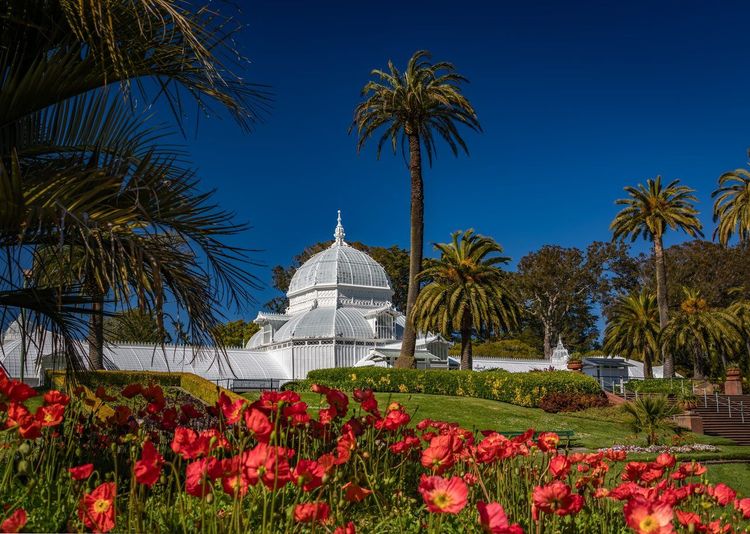
At 411 hectares, Golden Gate Park surpasses Central Park in New York (341 hectares) and stretches nearly 5 kilometers from Stanyan Street all the way to the Pacific Ocean. Developed from 1870 onward on former sand dunes deemed unbuildable, it now houses museums, lakes, meadows, and sports facilities.
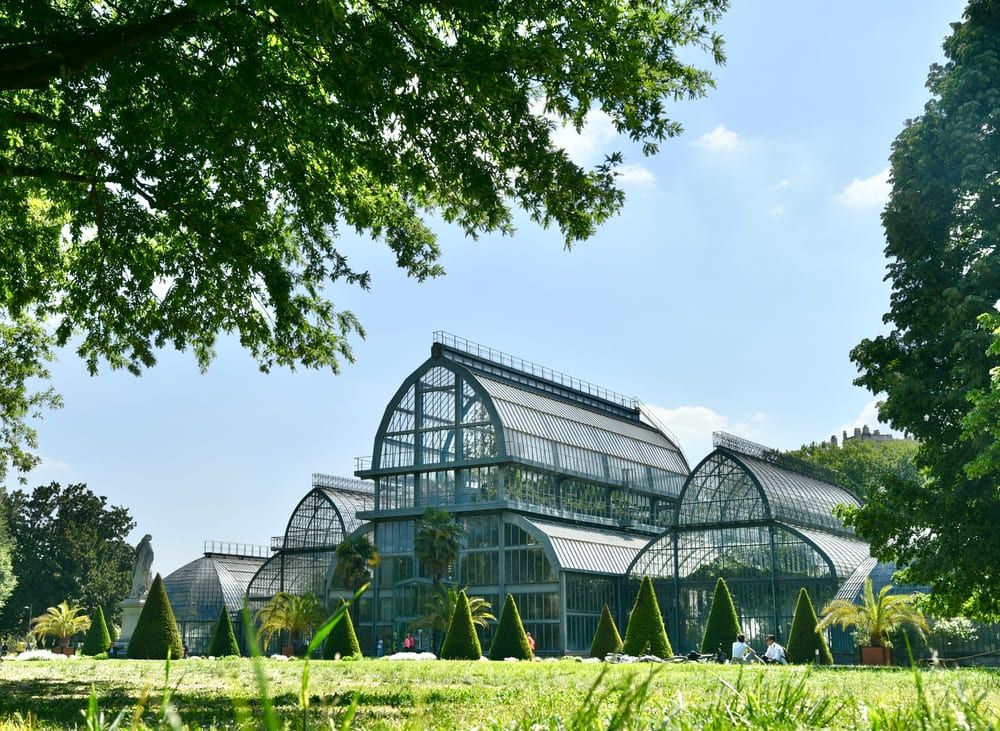
Its Japanese Tea Garden, the oldest public Japanese garden in the United States, was created for the 1894 California Midwinter International Exposition. You can stroll among pagodas, an arched bridge, koi ponds, and cherry trees in bloom in spring, for a modest entry fee. Nearby, the Conservatory of Flowers, opened in 1879, is the oldest public wood-and-glass greenhouse in North America.
Much of the park is free to enjoy: the shores of Stow Lake (rowboat rental is paid), the Dutch windmill and the tulips of Queen Wilhelmina Garden, the wooded trails, and the pedestrianized JFK Promenade, closed to cars. The botanical garden is free for residents but charges visitors. On Sundays, skaters and cyclists take over the paths.
Want to connect the park to the hippie neighborhood while listening to the history of the area? The The Summer of Love audio tour (21 audio stops, 3h, 7.4 km) passes by the park entrance, the Panhandle, and Jimi Hendrix's former home.
8. Sunset from Twin Peaks
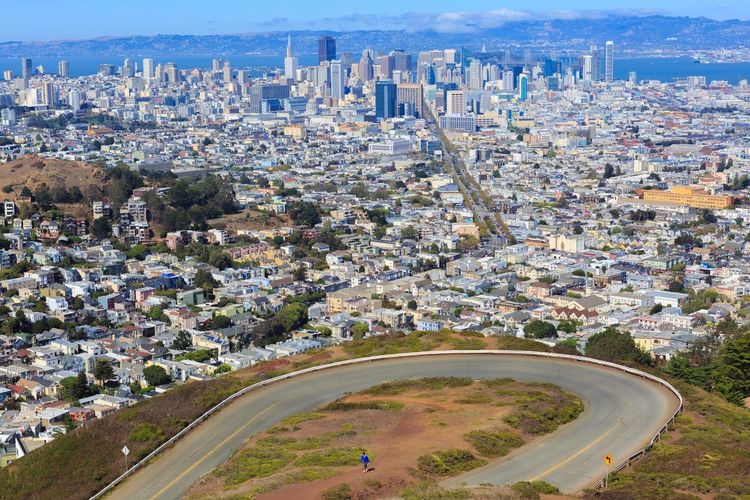
At 282 meters above sea level, Twin Peaks (501 Twin Peaks Blvd, San Francisco, CA 94114, rated 4.7/5 on Google based on 13,846 reviews) offer the most complete panoramic view of San Francisco, from the bay to the Pacific Ocean along Market Street, which runs in a straight line toward the Ferry Building. The easiest way to get there is by car or rideshare. By public transit, the 37 Corbett bus drops you nearby, followed by a fairly steep 15-minute uphill walk.
Definitely bring a jacket, even in the height of summer: the wind blows constantly and temperatures are noticeably lower than in the city. On foggy evenings, the view disappears entirely; on clear evenings, you'll watch the city lights come on neighborhood by neighborhood. Check the weather and webcams before heading up, and keep your belongings out of sight in the car — the parking area is known for break-ins.
If the summit is socked in by fog, fall back on Bernal Heights Park or Corona Heights, two lower hills that are often clear and far less crowded.
9. Must-See Museums
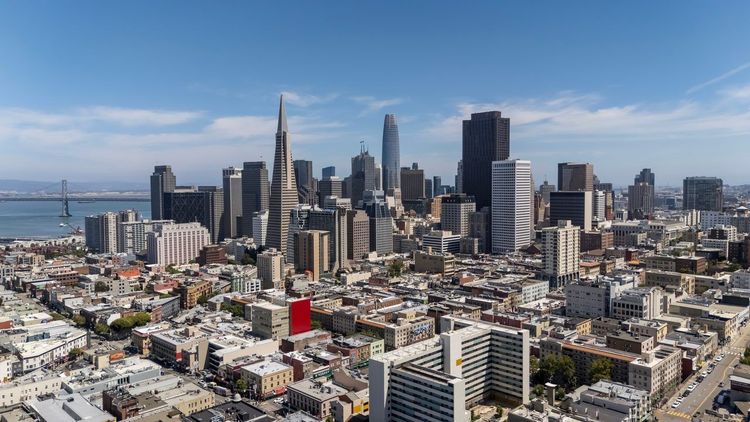
San Francisco makes up for its lack of very ancient monuments with a rich museum scene spread across downtown, the waterfront, and Golden Gate Park.
Art and Visual Culture: SFMOMA and the De Young Museum
The SFMOMA (San Francisco Museum of Modern Art) reopened in 2016 after a Snøhetta-designed expansion that brought its galleries to nearly 16,000 square meters, making it one of the largest modern and contemporary art museums in the United States. Its collection spans Matisse, Rothko, Warhol, and an outstanding trove of 20th-century American photography. The living plant wall on the third-floor terrace alone is worth the climb.
In Golden Gate Park, the De Young Museum, dedicated to American, African, Oceanic, and textile arts, is recognizable by its perforated copper facade, designed to green over time through exposure to sea air. Its observation tower, free even without a museum ticket, offers one of the city's most underrated views over the park and the ocean. The same ticket often grants same-day admission to the Legion of Honor, its sister museum perched above Lands End.
Science, Discovery, and Curiosities: the Exploratorium and the California Academy of Sciences
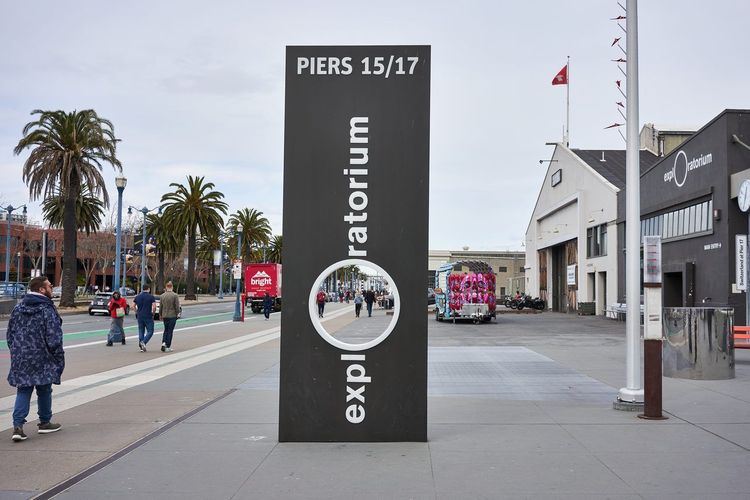
Founded in 1969 by physicist Frank Oppenheimer, the Exploratorium (Pier 15, San Francisco, CA 94111, rated 4.7/5 on Google based on 8,727 reviews), relocated to Pier 15 in 2013, features more than 600 interactive installations designed for hands-on engagement with science rather than passive reading. Its Tactile Dome — a room in complete darkness navigated entirely by touch — must be reserved in advance. The adults-only Thursday evening events, with a bar and special programming, transform the atmosphere entirely.
Across from the De Young, the California Academy of Sciences brings together under a living roof planted with native species an aquarium, a planetarium, a natural history museum, and a four-story reconstructed rainforest. Budget tip: book online to secure a timed entry, and visit on a weekday in the late afternoon, once the school groups have left.
10. Two Local and Offbeat Experiences to Try
Beyond the classic must-sees, two distinctly local experiences deserve a spot in your itinerary — ones often absent from older guidebooks.
The first: riding a Waymo autonomous taxi with no one behind the wheel. Open to all San Francisco riders since 2024, the service is booked through the Waymo app and covers a large part of the city. Pricing is comparable to a standard rideshare, sometimes slightly higher, and the experience — silent and mildly disorienting at the first turn — appeals to curious visitors and busy locals alike. Try it on a short route, such as between Mission and Castro, before using it for a longer trip.
The second: catching a San Francisco Giants baseball game at Oracle Park (24 Willie Mays Plaza, San Francisco, CA 94107, rated 4.7/5 on Google based on 32,738 reviews), right on the bay, with a hot dog in one hand and a local craft beer in the other. The stadium, opened in 2000 with around 41,000 seats, has a rare distinction: home runs hit to the right field can splash directly into McCovey Cove, where kayakers wait to retrieve the balls during games. The regular season runs from April through late September, and upper-deck seats remain affordable on weekdays.
In the off-season, a guided stadium tour lets you walk on the field and enter the locker rooms.
11. Other Must-See Attractions
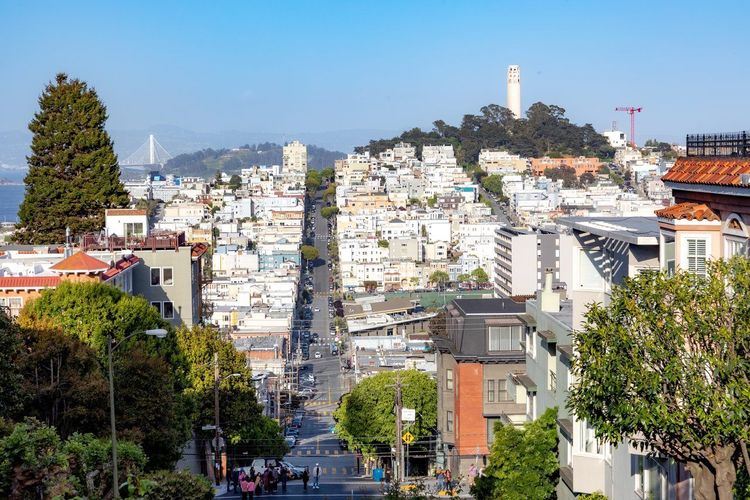
Views and Heritage: Coit Tower, Telegraph Hill, and the Palace of Fine Arts
At the top of Telegraph Hill, Coit Tower, completed in 1933 thanks to a bequest from patron Lillie Hitchcock Coit, rises 64 meters. Its lobby is lined with murals painted in 1934 as part of the Public Works of Art Project, the first federal program to support artists. A paid elevator leads to the 360° observation deck overlooking the bay. On the way back down via the Filbert Steps — a wooden staircase bordered by gardens — listen for the piercing calls of the red-crowned parrots, a wild colony made famous by the 2003 documentary "The Wild Parrots of Telegraph Hill."
On site, the audio track dedicated to the Filbert Steps in the Ryo audio-guided tour of San Francisco tells the story of these wild parrots, right after the stop at Coit Tower and before the view from Telegraph Hill.
At the other end of the northern part of the city, the Palace of Fine Arts, built for the 1915 Panama-Pacific International Exposition, features a neoclassical rotunda and colonnades reflected in a lagoon where swans and ducks glide. The sole surviving structure from the exposition, it was fully rebuilt in durable materials in the 1960s. The setting is especially photogenic in the late afternoon light.
Nature and the Waterfront: Golden Gate National Recreation Area, Ocean Beach, and a Bay Cruise
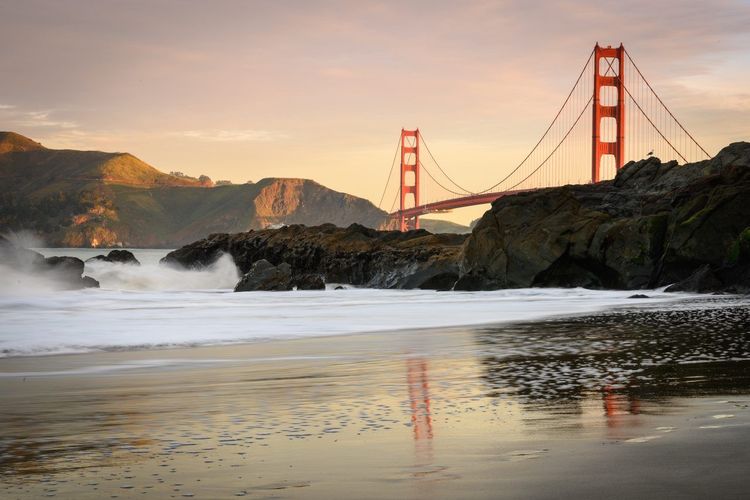
The Golden Gate National Recreation Area, one of the largest urban national parks in the world, encompasses several iconic sites: Baker Beach with its direct view of the bridge, the Lands End coastal trail running along the cliffs to the ruins of the Sutro Baths — enormous late 19th-century public swimming pools. Further south, Ocean Beach (Great Hwy, San Francisco, CA 94122, rated 4.7/5 on Google based on 2,186 reviews), stretching about 5 kilometers, is better suited to a sunset walk than a swim: the water is cold and the currents are dangerous, even for experienced swimmers.
To see the city from the water, a San Francisco Bay cruise of about one hour, departing from Fisherman's Wharf, passes under the Golden Gate Bridge and circles Alcatraz without docking — a practical alternative if you haven't been able to get a ticket to the island. For a tighter budget, the regular ferry to Sausalito offers much of the same scenery.
12. Day Trips and Excursions Around San Francisco
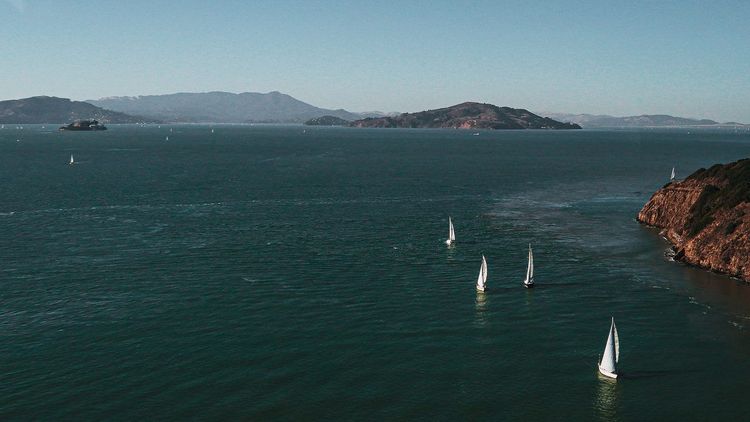
For stays of more than three or four days, the Bay Area offers plenty of easy escapes — by ferry for the closest, by car for the rest. Two directions naturally frame these day trips.
Heading North: Sausalito, Muir Woods, and Point Reyes
About thirty minutes by ferry from the Ferry Building or Fisherman's Wharf, Sausalito unfolds its colorful houseboats and art galleries along a sheltered bay, offering a striking contrast to the bustle of downtown. Many visitors cycle there via the Golden Gate Bridge and return by ferry.
About forty minutes by car, Muir Woods National Monument protects one of the last stands of coastal redwoods within immediate reach of a major city, with trees rising more than 75 meters and several centuries old. Parking or shuttle reservations are mandatory and often required several days in advance during peak season.
Pushing further to about 1.5 hours by car, Point Reyes National Seashore features dramatic cliffs, a lighthouse reached by a long flight of stairs, and an elephant seal colony viewable from an overlook, particularly active between December and March during pupping season.
Heading South: Silicon Valley, Monterey/Carmel-by-the-Sea, and Big Basin Redwoods
About an hour's drive south, Silicon Valley draws tech enthusiasts: the Apple Visitor Center in Cupertino, Google's campus in Mountain View, and the Computer History Museum, which traces the history of computing from the earliest calculating machines.
Continuing on to Monterey and Carmel-by-the-Sea, about two hours by car, the Monterey Bay Aquarium (886 Cannery Row, Monterey, CA 93940, rated 4.6/5 on Google based on 46,885 reviews), renowned for its giant kelp forest, comes before the scenic 17-Mile Drive and the white-sand beach at Carmel.
Finally, Big Basin Redwoods State Park, California's oldest state park (founded in 1902), preserves giant redwoods that survived the 2020 wildfire, with trails gradually reopening. If you have one to three weeks, the Ryo audio-guided tour The Great American West includes San Francisco as part of a 143-stop road trip across the West.
13. Where to Eat and Drink in San Francisco
San Francisco's food scene reflects its history of immigration — Chinese, Italian, Mexican — alongside a California cuisine rooted in local produce.
At Fisherman's Wharf, clam chowder served in a sourdough bread bowl remains a must, especially at Boudin, a bakery founded in 1849 during the Gold Rush. Lunch in Chinatown offers a chance to sample dim sum at one of the family-run spots on Stockton Street, often cheaper than the tourist restaurants on Grant Avenue. In the Mission District, the Mission-style burrito — generously stuffed and wrapped in foil — is best enjoyed at one of the neighborhood's historic taquerias.
The Ferry Building, the Embarcadero's former ferry terminal, brings together under one roof cheese vendors, oyster bars, on-site-roasted coffee, and artisan bakers. On Saturday mornings, its farmers' market is one of the most celebrated in the country. North Beach, meanwhile, keeps its Italian traditions alive with focaccia and the cafés that once gathered the poets of the Beat Generation.
For a hearty brunch, the Mission and Hayes Valley pack the most popular spots, often with 30 to 45 minutes of wait on weekends without a reservation. On the cocktail front, the Bay Area is the birthplace of Trader Vic's, opened in Oakland in 1934 and claiming to have invented the Mai Tai: a dark, bamboo-decked tiki bar makes a fitting end to an evening. Budget accordingly for meals: a simple lunch runs $20 to $25, and a dinner with drinks frequently exceeds $50 per person, plus an 18–20% tip.
14. Where to Stay in San Francisco
San Francisco ranks among the most expensive American cities for accommodation, with downtown hotel nights frequently exceeding $250 to $300, and rates that can double during major tech conventions.
Three neighborhoods concentrate most of the tourist accommodation. Union Square, in the heart of downtown, puts everything within walking distance — cable cars, shopping, and theaters — at the cost of a more urban atmosphere and a few streets to avoid at night on the Tenderloin side. Fisherman's Wharf suits families and short stays focused on the main attractions, though the neighborhood empties after 9 p.m. The Marina District, more residential and quieter, appeals to travelers who prefer returning to a lively neighborhood in the evenings, even if it means taking a bus or rideshare to reach the center.
If you are renting a car, check the hotel's parking cost before booking — it typically adds $50 to $70 per night. To keep costs down, the hostels at Fort Mason, overlooking the bay, and in the city center offer dorms and a few private rooms.
Camping is an option outside the city: several campgrounds in the Marin Headlands or on the slopes of Mount Tamalpais allow you to sleep for a few dozen dollars, provided you have a vehicle and book well in advance. Book your accommodation several months ahead if your trip coincides with a major industry conference.
15. Getting Around and Getting to San Francisco
Between the airport, the hills, and the challenging parking situation, planning your transportation deserves careful thought before you leave home.
From the Airport and Flights to San Francisco
San Francisco International Airport (SFO) receives direct flights from Paris, with a flight time of approximately 11 hours outbound. Oakland Airport (OAK), on the other side of the bay, sometimes offers lower fares on domestic routes, at the cost of an additional BART ride into central San Francisco. Remember to fill out your ESTA application online before departure.
To get downtown from SFO, the BART (Bay Area Rapid Transit) train remains the most economical and reliable option: about 30 minutes to the Market Street stations for around ten dollars, avoiding the uncertainty of traffic. Taxis and rideshares typically cost $40 to $60 depending on traffic, for a trip of 20 to 45 minutes.
Public Transit, Cable Cars, and Car Rentals
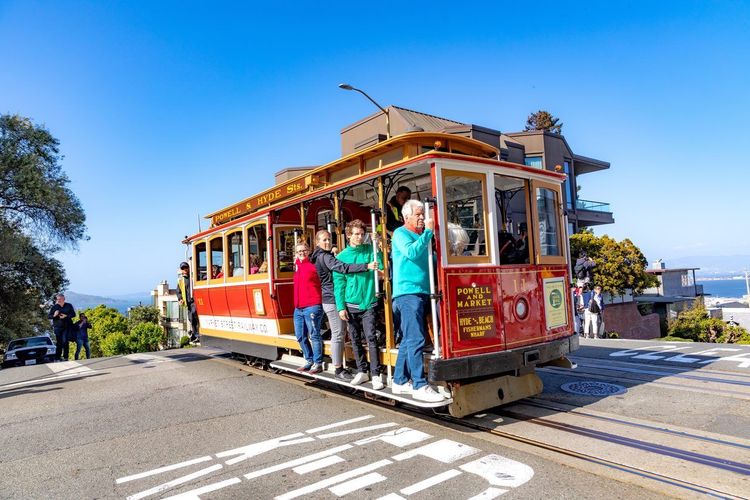
The Muni network (buses, light rail, historic streetcars, and cable cars) covers most of the city. A single fare costs under $3 and is valid for 120 minutes; the Visitor Passport provides unlimited access including cable cars. Pay directly with a contactless bank card, the MuniMobile app, or a Clipper card. The F line, served by historic streetcars from around the world, runs along the Embarcadero all the way to Fisherman's Wharf.
Walking remains the most enjoyable way to get around the center, despite terrain that demands good footwear, particularly on Russian Hill or Telegraph Hill. Bike-share and e-scooters are great for cruising the flat waterfront.
Do you need a rental car to visit San Francisco? Not for the city itself: traffic is stressful, with one-way streets and steep hills, and parking ranks among the most expensive in the country, with garages often charging $30 to $50 per day. On the street, always curb your wheels on a slope or risk a fine, and never leave anything visible in the car — break-ins are common. A rental car, however, becomes very useful as soon as your plans include Muir Woods, Point Reyes, or Monterey. Your regular driver's license is sufficient to drive in California as a tourist, though international rental companies often recommend an International Driving Permit.
16. When to Go, How Many Days, and What Budget to Plan
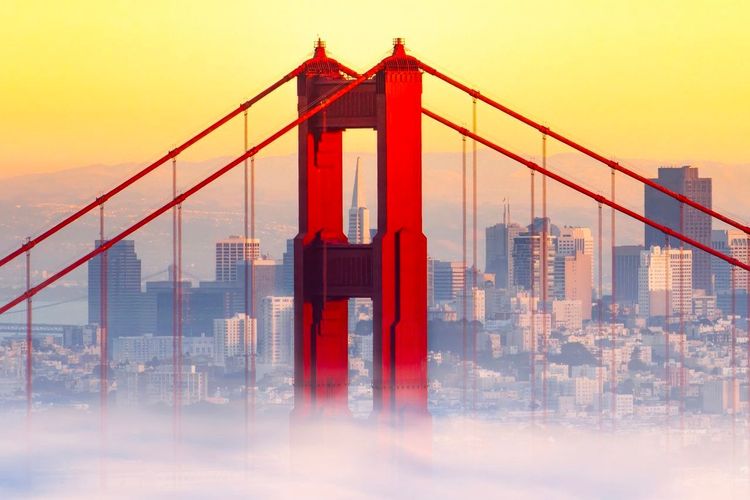
Contrary to popular belief, summer is not the warmest season in San Francisco: Karl the Fog regularly blankets the city from June through August, and highs often hover around 64–68°F, with considerably cooler mornings. September and October generally offer the most stable and warmest weather of the year, with clearer skies. Spring, from April to May, is a solid alternative, and winter — mild but rainier — brings hotel prices down.
Allowing three to four days lets you cover the downtown must-sees, Alcatraz, and two or three neighborhoods in depth without rushing. Add one to two days if you plan excursions to Sausalito, Muir Woods, or Silicon Valley.
On the budget side, San Francisco remains one of the most expensive cities in the United States: expect a minimum of $150 to $200 per person per day excluding accommodation, factoring in meals, transportation, and one or two paid attractions. Keep in mind that displayed prices do not include taxes. A multi-activity pass such as CityPASS or Go City San Francisco bundles a bay cruise and several museums or attractions into a single package, worthwhile from three or four paid entries onward. Check the exact list of included sites carefully: Alcatraz, in particular, must be booked separately.
FAQ
How Many Days Do You Need to Visit San Francisco?
Three to four days are enough to cover the downtown must-sees and Alcatraz. Add one to two days to include a day trip to Sausalito, Muir Woods, or Silicon Valley without feeling rushed.
What Public Transportation Is Available in San Francisco?
The Muni network includes buses, light rail, historic streetcars, and cable cars, supplemented by the BART train to reach the airport and neighboring cities around the bay. The day Visitor Passport pays for itself after just two cable car rides.
Do You Need a Car to Visit San Francisco?
No, not for visiting the city center, where traffic and parking are a hassle. A car becomes useful for day trips outside the city, toward Muir Woods, Point Reyes, or Monterey.
How Do You Park in San Francisco?
Street parking is scarce and governed by strict time-based rules, and you must curb your wheels on hills or risk a fine. Downtown parking garages generally charge $30 to $50 per day.
Where Should You Stay in San Francisco?
Union Square puts everything within walking distance for a short stay. Fisherman's Wharf suits families, while the Marina District offers a more residential and quieter evening atmosphere.
How Do You Get from San Francisco Airport to Downtown?
The BART train connects SFO Airport to downtown in about 30 minutes for around ten dollars. Taxis and rideshares cost between $40 and $60 depending on traffic.
What Is the Best Time to Visit San Francisco?
September and October offer the most stable and warmest weather. Summer, often seen as the best season, is actually cool and foggy in San Francisco.
In Summary
San Francisco rewards those who explore it on foot, hill by hill, far more than it rewards those who simply tick boxes on a list. From the Golden Gate Bridge and the alleyways of Chinatown to the pastel facades of Alamo Square and the redwoods of Muir Woods, each neighborhood tells a facet of a city that has always embraced its own singularity — from the Gold Rush and the Summer of Love to today's driverless taxis.
If you only have a few hours for a first day, the short version of the Ryo audio-guided tour The City by the Bay (14 audio stops, 1h50, 4.7 km) connects the Embarcadero, Pier 39, Fisherman's Wharf, the view of the Golden Gate Bridge, and Lombard Street — at your own pace, with no group schedule to follow.