Créé par Emilie, le 17 nov. 2026
Votre guide Ryo
San Francisco, United States
The city by the bay
Parcours audioguidé pour visiter San Francisco en 1 jour
Imagine a city shaped by its steep rises, where every sloping street opens onto a fresh view of the vast blue bay. This walk takes you through the dramatic contours of San Francisco, where historic charm meets bold modern spirit. From the bohemian atmosphere of Washington Square to the heights of Telegraph Hill and Russian Hill, let yourself be carried along on an adventure that seems to brush the clouds while opening out toward the horizon.
Quand partir à San Francisco ?
Jan.
10°
8
Feb.
11°
8
March
12°
7
April
13°
4
May
15°
2
June
16°
1
July
17°
0
Aug.
17°
0
Sept.
18°
1
Oct.
16°
2
Nov.
13°
4
Dec.
10°
8
Don’t be fooled by California’s sunny reputation! San Francisco has its own microclimate, characterized by fog and cool air from the hills. The best time to visit San Francisco is from April to October. However, be aware that fog is particularly heavy in July and August. The warmest temperatures range between 23°C (73°F) in June and 25°C (77°F) in September. Winters remain relatively mild, with average temperatures around 15°C (59°F).
Départ conseillé
No need to worry about where to begin! Our tours are designed as a loop, so you can jump in wherever you are. The navigation system and audioguide will automatically adjust to your location. However, if you happen to be nearby, we do have a preferred starting point : PIER 39
Parking à proximité
Impark, 1950 Kearny St
If you have rented a car to explore the American West and are ending your trip in San Francisco, it is recommended to return the car on your first day in the city. Unlike Los Angeles, San Francisco is best explored on foot or by public transportation.
If you do have a vehicle, the ideal option is to find a hotel with parking. Otherwise, you can park on the street, but be sure to carefully read the signs and pay attention to street markings, as regulations vary by location.
Important: Always turn your wheels towards the curb when parking on a slope, or you may receive a fine.
À savoir
To see San Francisco’s must-see attractions, you should plan for at least three full days. Ideally, you should book four nights in the city.
Découvrez 23 lieux d'intérêt pour visiter San Francisco







What to see in San Francisco on your 3h15 tour?
This 8 km loop takes about 3 hours 15 minutes and links 22 stops. From Washington Square, in the heart of North Beach, it climbs Telegraph Hill and Coit Tower, follows the Embarcadero to Pier 39 and Fisherman's Wharf, then crosses the Golden Gate Bridge before passing through Ghirardelli Square and climbing the fashionable slopes of Russian Hill, among Lombard Street and its secret lanes. With the Ryo app in your ears, every hill, every facade and every bay view tells its story, at your own pace.
Information checked in October 2026 and subject to change.
1 - Washington Square
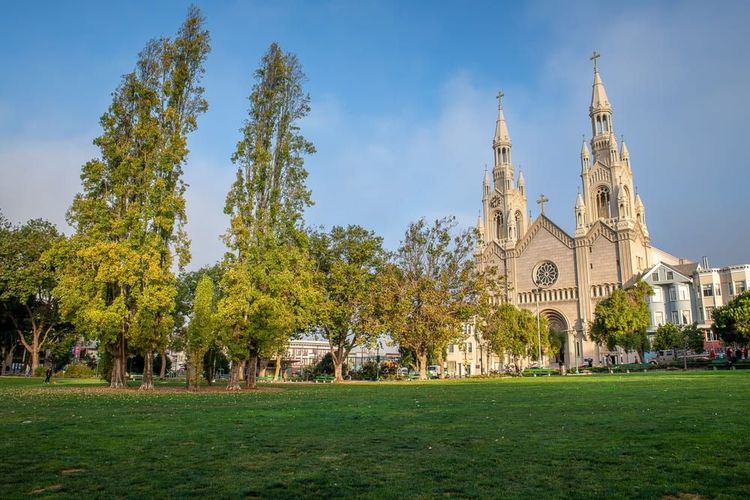
North Beach's Italian soul radiates from this leafy square. Long before becoming one of the city's first public parks in 1847, the land belonged to a Mexican farmer, Juana Briones, now honoured with a plaque near Filbert and Stockton. At its centre, a statue of Benjamin Franklin hides a time capsule sealed in 1879, opened a century later before an amazed crowd, then resealed for the year 2079. Cafés and Italian trattorias line the square today.
Free entry
2 - Saints Peter and Paul Church
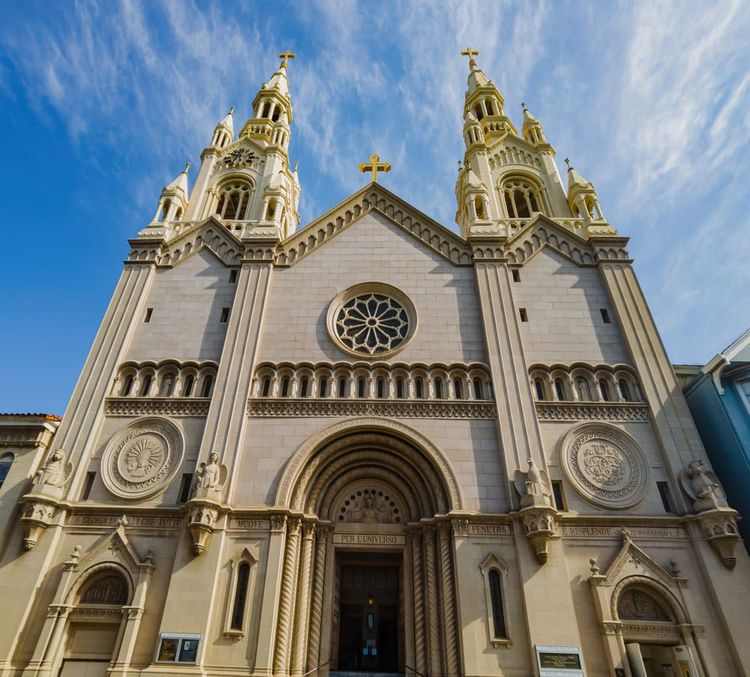
The two white spires crowning the square belong to this church, nicknamed the Italian cathedral of the West. Its first building, raised in 1884, was levelled by the catastrophic 1906 earthquake; the current one dates from 1924. Two years later, anti-Catholic anarchists targeted it with five bomb attempts, stopped in 1927 by police action. Long the spiritual home of the Italian community, it now also holds services in Cantonese, mirroring the district's changing population.
Free entry
3 - Coit Tower
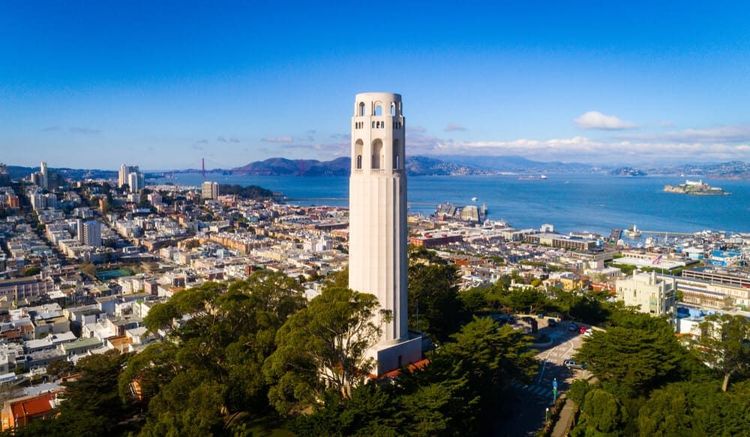
This 64-metre tower, raised in 1933, honours the city's firefighters at the request of Lillie Hitchcock Coit, an eccentric figure who became their mascot as a teenager. Despite the legend, its cylindrical shape was never meant to resemble a fire hose. Inside, twenty-six artists covered the walls with murals inspired by the Great Depression, echoing the style of Mexican muralist Diego Rivera. Hitchcock's film Vertigo later made it famous, by sheer coincidence of names.
Paid entry
4 - View from Telegraph Hill
From the top of this hill, San Francisco's first semaphore once signalled ships entering the bay, later replaced by an electric telegraph. News of California's admission to the Union, carried by the ship Oregon, reached the city on this very spot. A statue of Christopher Columbus stood watch until 2020, removed amid the nationwide debate over controversial monuments. Even without climbing Coit Tower, the view from this spot is already breathtaking.
Free entry · Best late in the day
5 - Filbert Steps and wild parrots
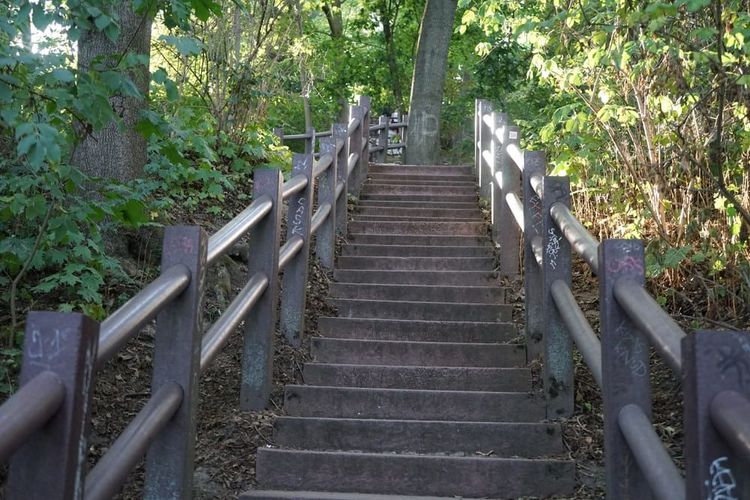
This stairway links the Embarcadero to Coit Tower through three sections lined with Art Deco cottages and lush gardens. On the right, Napier Lane, one of the city's most photogenic alleys, keeps its early-century charm. Going down, listen for the calls of red-masked parakeets, likely former pets released decades ago from South America, now thriving among the greenery. Feeding them is discouraged, as it can make them aggressive.
Free entry
6 - Alcatraz
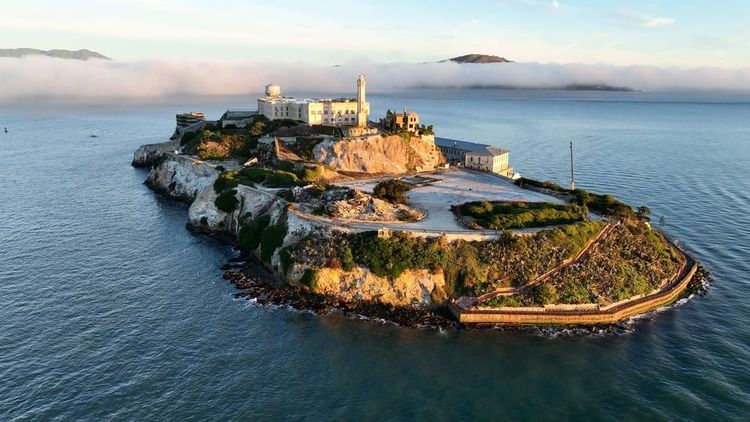
Boats bound for this prison island, nicknamed The Rock, leave from Pier 33 nearby. Reputed inescapable despite waters less shark-infested than legend claims, it nonetheless saw two inmates, the Anglin brothers, break out through a tunnel and a makeshift raft. Al Capone served part of his tax-fraud sentence here before the penitentiary closed in 1963. Occupied by Native American activists in the late 1960s, it reopened as a museum in 1973 and became a cultural icon.
Paid entry (about $48)
7 - Embarcadero
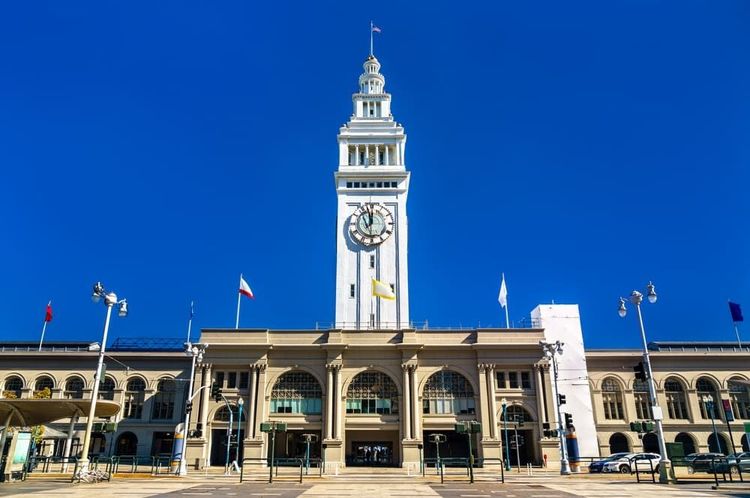
This broad seafront avenue links the Ferry Building to Fisherman's Wharf along a lively stretch of bars and restaurants. Its name, simply meaning wharf in Spanish, recalls the working piers that once lined this part of the bay, now reborn as a popular promenade. Joggers and visitors share the waterfront views at every hour, among the many attractions dotted along the way.
Free entry
8 - Pier 39
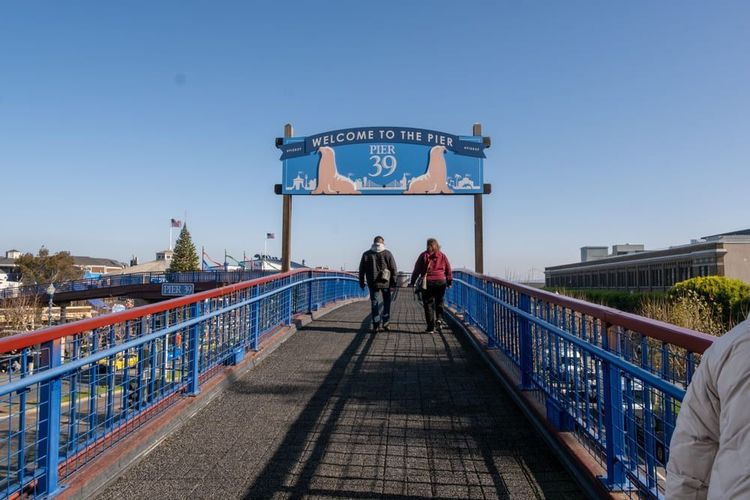
Marked by bright signs and a crab statue greeting visitors with open claws, this is the city's busiest pier. Souvenir shops, rides, restaurants and an aquarium crowd together in a cheerfully unapologetic American atmosphere. Small signposts even point out the best photo spots over the bay and Alcatraz. Of course, most visitors are really here for its most famous residents, settled a little further along the docks.
Free entry
9 - San Francisco Bay
This estuary blends Pacific salt water with fresh water flowing down from the Sacramento and San Joaquin rivers, both born in the Sierra Nevada. The mix supports a rich marine life, home to leopard sharks, basking sharks and occasional great whites. Shallow by nature, the bay also shields nearby neighbourhoods from the San Andreas Fault by softening the ocean's shocks. Beautiful, rich and useful, it rewards the care locals give it.
Free entry · Best late in the day
10 - The Sea Lions of San Francisco
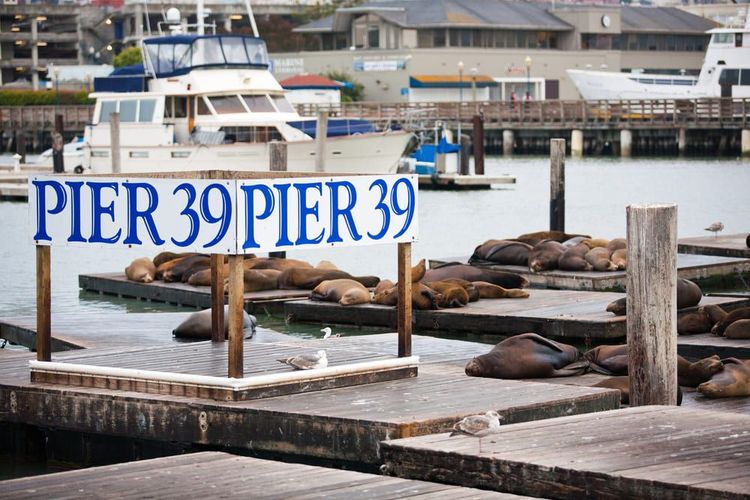
Nicknamed the Sea-Lebrities, these California sea lions are not seals: they can actually walk rather than crawl, and males dwarf females in size. They settled on the docks in 1990, right after the previous year's earthquake, starting with barely a dozen animals before growing past 300, then peaking at a record 1,701 in November 2019. Playful and noisy, they can still bite if provoked, so admire them from a respectful distance.
Free entry
11 - Madame Tussauds San Francisco
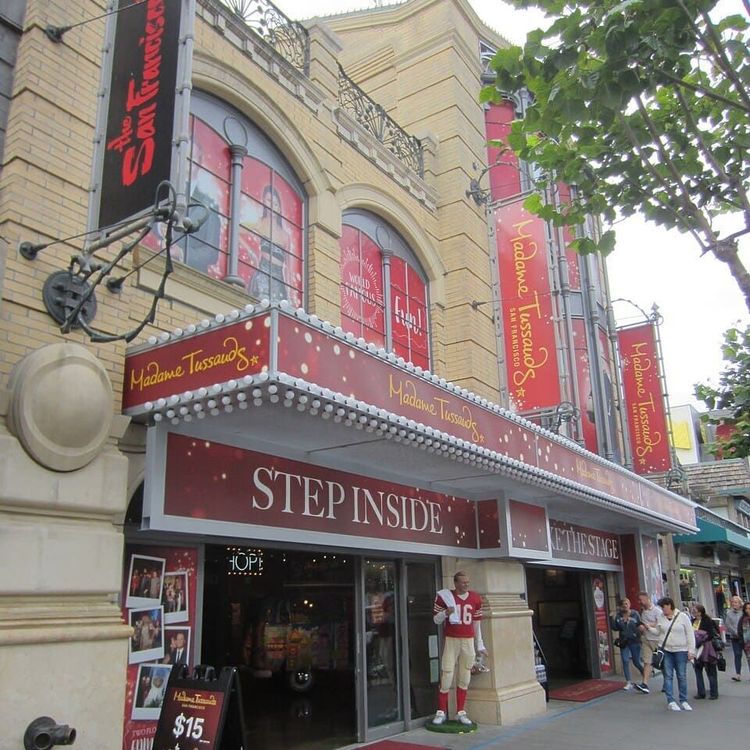
This branch of the famous wax museum, founded in London in 1835 by French sculptor Marie Tussaud, displays leading figures from film and history. Tussaud learned her craft from a sculptor-turned-mentor, before making death masks of French Revolution victims, work that reportedly spared her own neck from the guillotine. From London parlours to touring exhibitions, the collection eventually reached Fisherman's Wharf, where visitors of all ages now pose beside the stars.
Paid entry
12 - Fisherman's Wharf
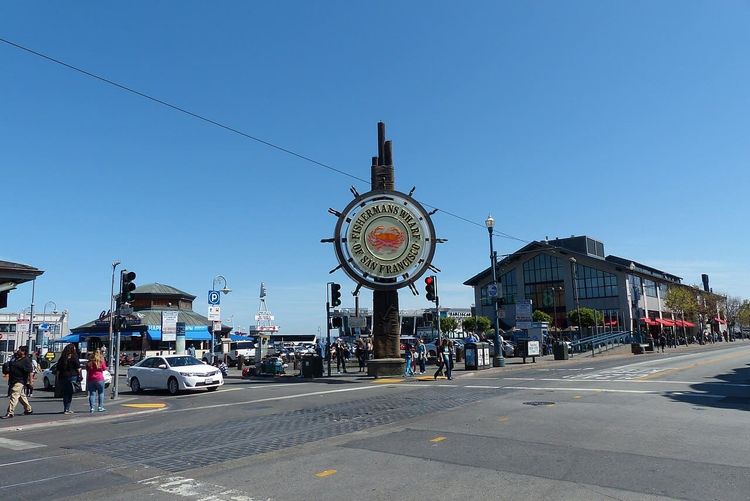
The city's oldest harbour takes its name from the Italian fishermen who settled here in the 1850s, during the gold rush years. At Pier 47, nicknamed fish alley, early risers can still watch the day's catch being unloaded. But the real draw is the food: steamed crab or a bowl of clam chowder served in a hollowed sourdough loaf, a recipe once meant to warm sailors through harsh Pacific Northwest winters.
Free entry
13 - Del Monte square
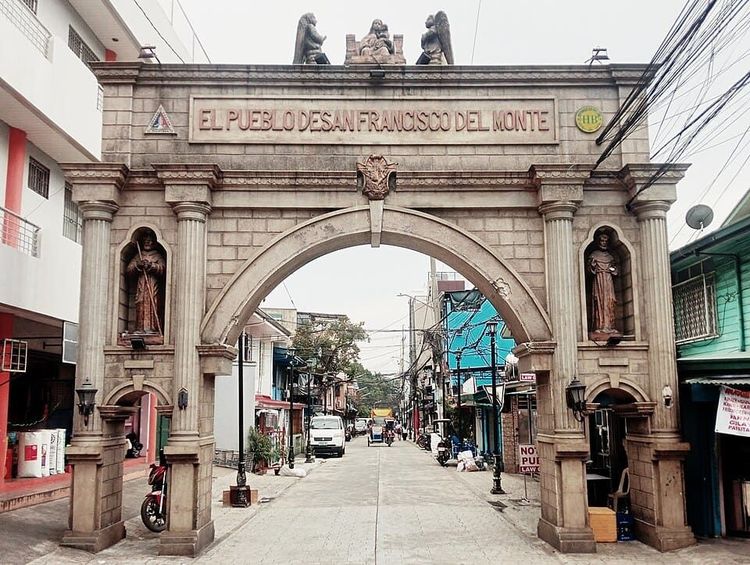
This red-brick complex once housed a fruit cannery opened in 1907 under the Del Monte brand, hence its nickname, Cannery Mall. Carefully converted, it now hosts farmers' markets and open-air concerts in a relaxed setting far removed from its industrial past. The preserved architecture still recalls an era when the entire waterfront ran to the rhythm of factories and docks.
Free entry
14 - Aquatic Park and Maritime Museum
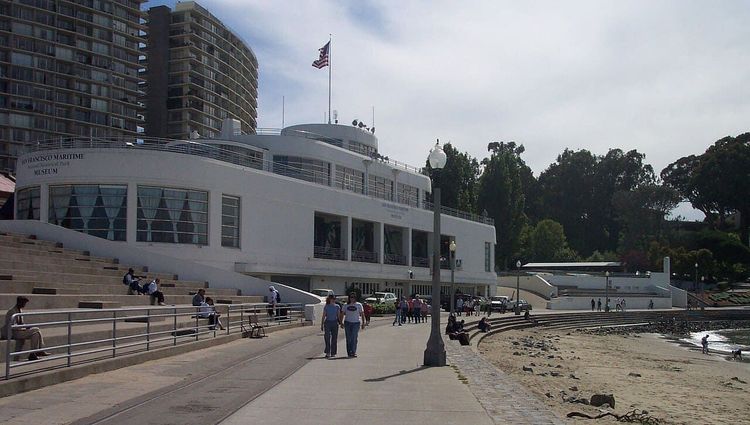
Facing its small sheltered beach, this park belongs to the San Francisco Maritime National Historical Park. The striking Streamline Moderne building, shaped like an ocean liner, once housed public bathhouses before becoming a maritime museum, while the Hyde Street Pier lines up a historic fleet of schooners, sailboats, a tugboat and a steam ferry, all built around 1900. Maritime enthusiasts can board several of them.
Free entry
15 - City’s skyline
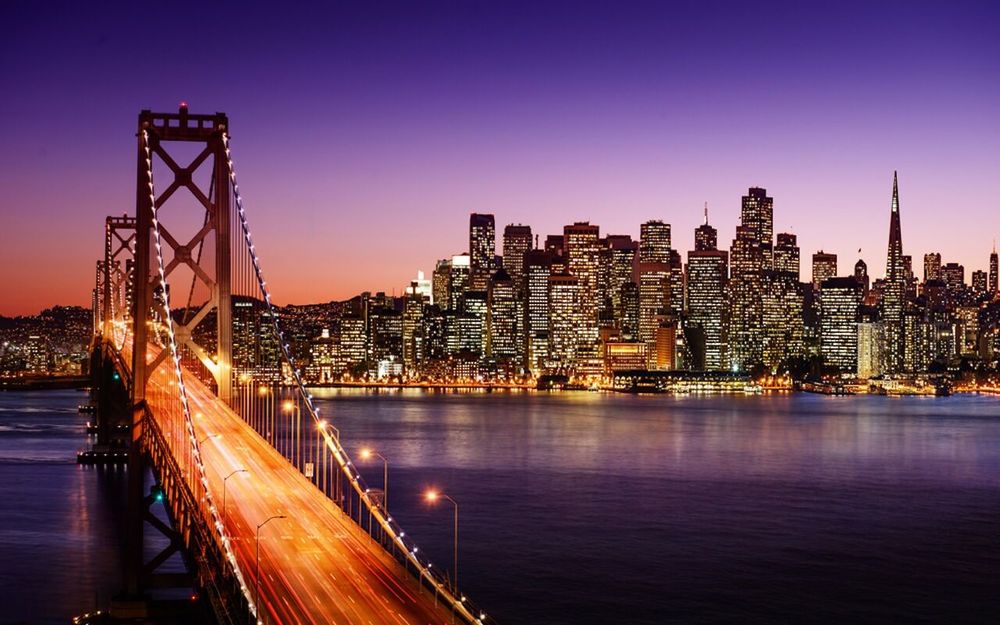
From these curved piers, the eye sweeps across San Francisco's whole silhouette: Coit Tower on the left atop Telegraph Hill, the Financial District towers at the centre, including the Transamerica Pyramid and Salesforce Tower, then the closer buildings of Russian Hill on the right. Alcatraz looks strangely close behind you, despite its legendary isolation. On a clear day, this is one of the most complete views along the whole walk.
Free entry · Best late in the day
16 - Golden Gate Bridge
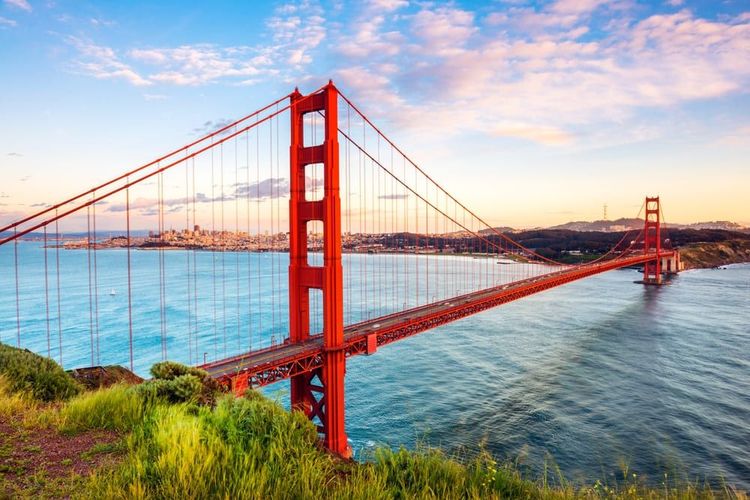
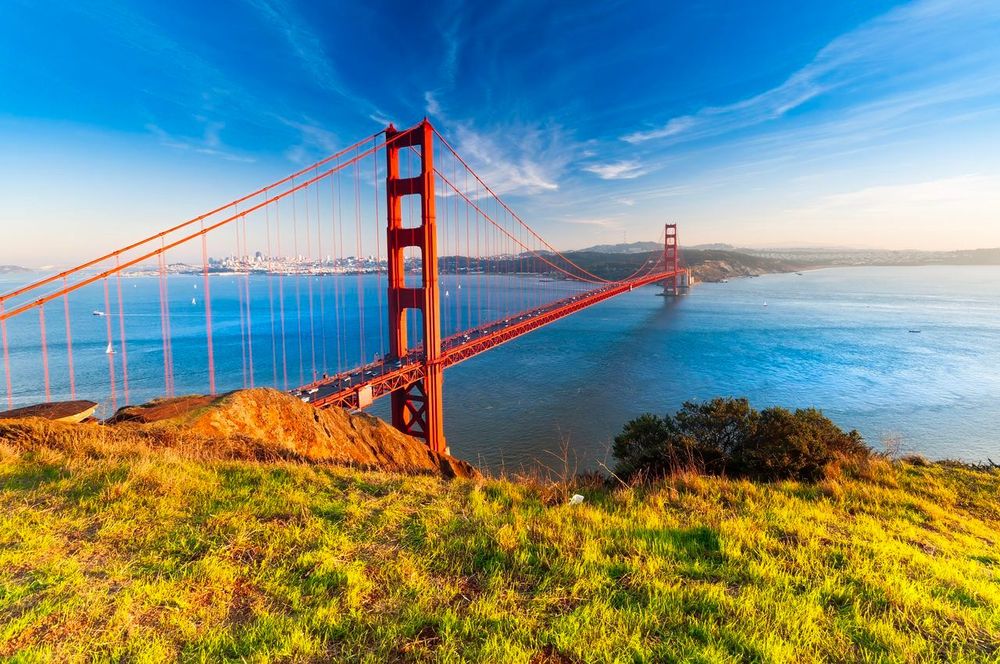
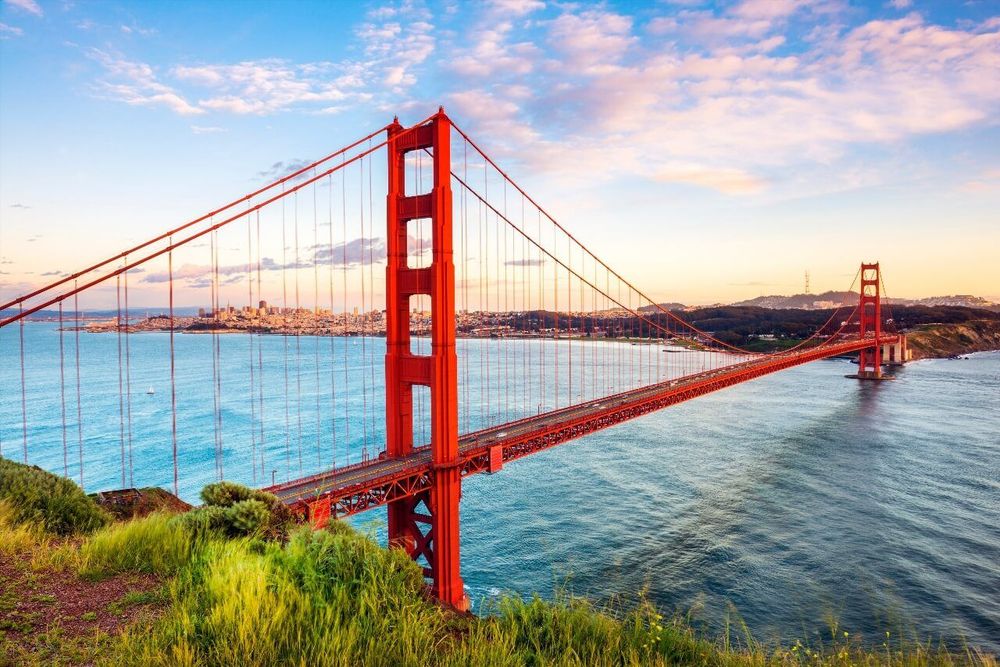
Despite its name, this suspension bridge, opened in 1937, is not golden: its International Orange colour, chosen for visibility in fog, came from a rust-proof primer applied during construction. Stretching 1,230 metres, it took four years to build under engineer Josef Strauss, with only eleven deaths recorded, a remarkably safe record for its era. Sadly linked to suicides, it nonetheless remains the absolute symbol of the city and of California as a whole.
Free entry
17 - Ghirardelli Square
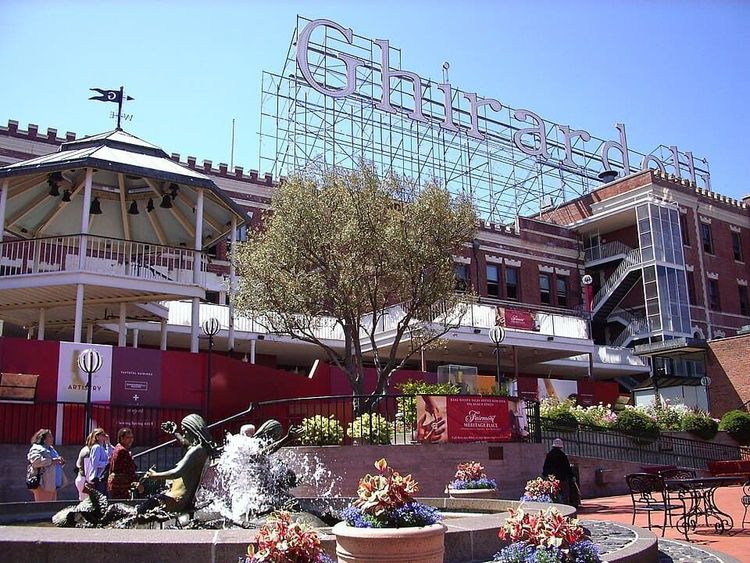
This former brick factory long produced the chocolate of an Italian confectioner who arrived in California during the gold rush before settling for good in San Francisco in 1852. Finding no fortune in the mines, he turned his energy to cocoa instead, with real success: the brand, bought by Lindt in 1998, remains the oldest chocolate maker in the state. Shops and ice cream parlours now fill the site, perfect for a well-earned treat after the hills.
Free entry · Best in the evening
18 - Lombard Street
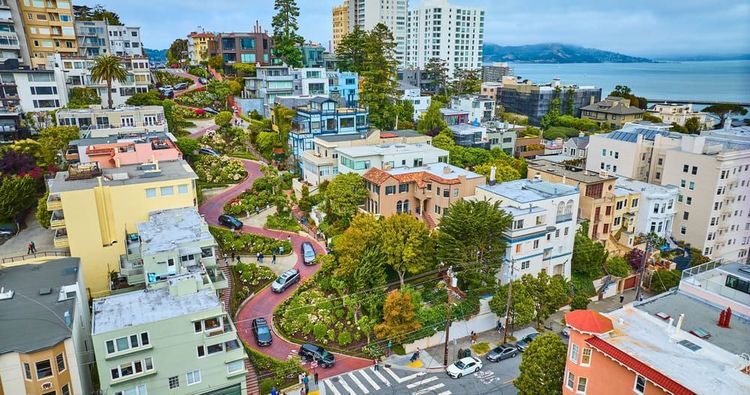
This street owes its eight tight curves to Carl Henry, owner of the block, who in 1922 had the slope eased for vehicles once pulled by horses, which could not manage the original grade. The incline, reduced from 23 to 16 percent, remains striking, as do the flowerbeds lining each hairpin turn. Neither the steepest nor the longest street in the world, despite the claim, its zigzag block has still become one of the city's most reproduced images.
Free entry
19 - Russian Hill
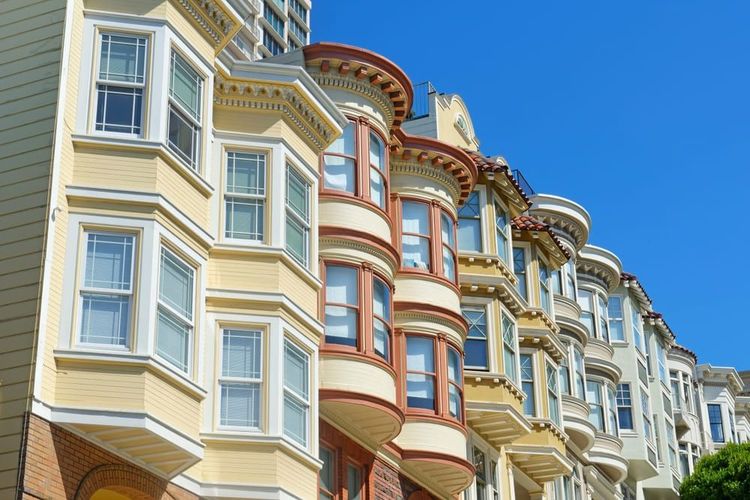
This fashionable district owes its name to a cemetery discovered during the gold rush, attributed to Russian sailors and fur traders based at Fort Ross, some 80 kilometres north. That outpost once marked the southern edge of Russian America, squeezed between Spanish California and English interests further up the coast. A treaty signed in 1824 eased these tensions, before Russia finally sold Alaska to the United States in 1867.
Free entry
20 - Bellaire tower
Nicknamed the Jewel for its dazzling whiteness, this twenty-storey Art Deco tower was built in 1930 by architect Hermann Carl Baumann, a leading figure of the city's early-century architecture. Standing at a Russian Hill corner, it frames a classic view down the four streets branching from it; the one heading toward Leavenworth lines up a clear shot straight at Alcatraz Island.
Free to see from outside
21 - Macondray Lane
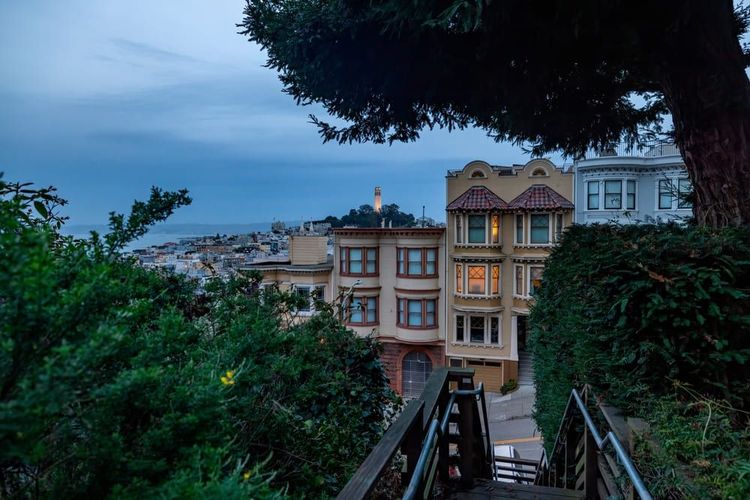
This paved, flower-lined lane, slightly steep, offers an unexpected rural pause in the middle of the city. Local legend credits it as the model for the fictional Barbary Lane, setting of Armistead Maupin's San Francisco novels, adapted on screen in the 1990s and again in 2019. Right nearby also lies the best spot to photograph, with cars framed perfectly upright, the houses that appear to lean dangerously on the slope next door.
Free entry
22 - San Francisco panoramic view
This terraced garden, laid out on the slopes of Russian Hill, honours Ina Donna Coolbrith: a poet and novelist by vocation, she became the very first person to hold the state's honorary literary title, while earning her living as a librarian. From its flowered steps, the view opens onto downtown's towers, the bay bridge, and Coit Tower far off on Telegraph Hill. Away from the tourist bustle, this quiet corner closes the loop on a serene note.
Free entry
What to do in San Francisco in 2 or 3 days?
One day is enough to cover the essentials of the loop: 8 km and 22 stops in about 3 hours 15 minutes, from Washington Square to the slopes of Russian Hill. With an extra day on hand, the city lends itself to a slower pace, away from the strict line of the route.
The next day, head to Golden Gate Park: this vast green lung of the city invites a bike ride, a jog or simply a family picnic, and turns especially pleasant late in the day, as the light fades over the lawns. Our article on the best activities to do in San Francisco details other ideas for filling these extra days.
Which neighbourhoods does the tour cross?
The loop crosses three very different faces of San Francisco, from the city's Italian quarter to the upscale heights of Russian Hill, by way of the whole waterfront.
It starts at Washington Square, at the heart of North Beach, the Italian quarter overlooked by the twin spires of Saints Peter and Paul Church, before climbing the slopes of Telegraph Hill up to Coit Tower and its panorama (stops 1 to 5).
The route then meets the shoreline: it skirts Alcatraz from the Embarcadero, crosses the bustle of Pier 39 and its sea lions, then the docks of Fisherman's Wharf, down to the water's edge at the historic aquatic park (stops 6 to 14).
The last stretch offers the view of the Golden Gate Bridge and passes Ghirardelli Square before climbing Russian Hill, the perched residential neighborhood between the curves of Lombard Street and the secret passage of Macondray Lane (stops 15 to 22).
What to see in San Francisco in 2 hours?
If time is short, stay within North Beach and Telegraph Hill: stops 1 to 5 sit within a few hundred meters of each other and link up on foot in under two hours.
Start at Washington Square, the square of the Italian quarter, then step inside Saints Peter and Paul Church, whose twin white spires overlook it. Climb next to Coit Tower for its murals, then enjoy the view from Telegraph Hill over the bay and Alcatraz, before heading back down through Filbert Steps, its flowered stairway, listening for the wild parrots.
How much does it cost to visit San Francisco?
Out of the 22 stops on the route, 18 are free to visit, and one is only seen from the street, Bellaire Tower, a residential building admired from the sidewalk. The three remaining stops require a ticket:
- Coit Tower, for the climb to the top and its 360-degree panorama, the ground floor and its murals remaining free;
- Alcatraz, where the boat crossing and entry together cost $48;
- the Madame Tussauds wax museum, also a paid entry.
For a wider visit, the San Francisco CityPASS costs $90 for 9 consecutive days and gives access to 4 attractions of your choice out of 8, including the Exploratorium, the Aquarium of the Bay, or a cruise under the Golden Gate Bridge.
Information checked in October 2026 and subject to change.
Where to stop for a bite along the tour?
The route passes two well-known food landmarks of San Francisco, between the old fishing port and the former chocolate factory on the edge of Russian Hill.
At Fisherman's Wharf (stop 12), try the freshly cooked crab or the clam chowder, that chowder served hollowed out inside a loaf of sourdough bread, a legacy of the Italian fishermen who settled on the docks in the 1850s.
A little further on, at Ghirardelli Square (stop 17), the lit-up sign of the Italian chocolate maker who settled in the city in 1852 points to a legendary dessert: the Hot Fudge Sundae, vanilla ice cream topped with caramel and hot chocolate, whipped cream and sea salt included.
For a fuller tour of local flavors, from the sushirrito to the ramen burger, our top 10 culinary specialties in San Francisco rounds up the classics not to miss.
What to do in San Francisco with children?
The waterfront stretch, between Pier 39 and Fisherman's Wharf, brings together the stops that children enjoy most.
At Pier 39 (stop 8), the mood is festive and family-friendly, between shops, a carousel and street performers; right next to it (stop 10), watch the colony of sea lions barking on the floating docks, an endearing sight for the youngest visitors.
The walk continues at stop 11, where the Madame Tussauds wax museum is a favorite with families: you can pose next to film and music stars cast in wax.
If you stay longer, Golden Gate Park also makes a great family outing, with cycling, picnics and outdoor tennis, as detailed in our article on the best activities to do in San Francisco.
What should you know before visiting San Francisco?
Part of the route is currently disrupted by renovation work, and San Francisco calls for a few simple precautions.
The Hyde Street Pier dock, which normally houses the park's historic ships, is closed for renovation at stop 14: the fleet has been moved to the Mare Island shipyard. It is worth checking whether it has reopened before stopping there, and moving on if the dock is still closed.
In the city, parked vehicles should be left visibly empty, including the trunk: break-ins through smashed windows are common, according to French travel advisories. The edges of the Tenderloin and Civic Center are also best avoided with children, as drug use is visible on the street there.
Lastly, crossing the Golden Gate Bridge on foot or by bike costs nothing, at stop 16, but only the east sidewalk, on the city side, is open to pedestrians, from 5 am to 6:30 pm in winter and until 9 pm in summer; cyclists, for their part, can cross at any hour.
What's on in San Francisco right now?
As the year draws to a close, San Francisco lines up its seasonal events, from Chinatown to the lit-up piers of the waterfront.
- the Great Dickens Christmas Fair, from November 21 to December 20, sets up a Victorian Christmas fair inspired by Dickens's work, open on weekends at the Cow Palace;
- from November 23 to January 10, Pier 39 dresses up with holiday decorations, including an 18-meter tree set up on the entrance plaza;
- on December 3, the lighting of the Pier 39 tree comes with a concert by the Death & Taxes Swing Band;
- from December 13 to 22, Union Square hosts the Winter Walk, a skating rink and a pop-up Christmas market;
- from December 14 to 22, the Hanukkah menorah lighting ceremony is held every evening on Union Square.
Information checked in October 2026 and subject to change.
Le plein d'inspirations
Explorez le monde en totale liberté, à pied au cœur des villes ou au fil des routes. Nos guides audios transforment chaque destination en une découverte culturelle immersive et unique.










FAQ for visiting San Francisco
When is the best time to visit San Francisco?
The best time to discover San Francisco runs from April to October, but beware of the clichés about sunny California! The city has a unique microclimate with its famous morning fog. June and September are ideal, with pleasant temperatures around 23-25°C. July and August can come as a surprise, with a persistent fog that wraps around the city. Winter stays mild at about 15°C, but always pack layers. The famous local saying goes that the coldest summer you can ever spend is a summer in San Francisco! Whatever the season, bring a windbreaker to make the most of the panoramas from the hills.
How many days do you need to visit San Francisco?
For a first discovery of San Francisco, ideally plan for between three and five days. This will give you time to explore the emblematic neighbourhoods, climb the famous hills and soak up the city's unique atmosphere. In three days, you can see the must-sees such as the Golden Gate, Alcatraz and the historic districts. With five days, you'll have the leisure to wander more, explore less touristy areas and perhaps even take a day trip in the region. San Francisco is a city best savoured on foot, where every street corner reveals a new perspective. Take the time to appreciate the changes in elevation that give it all its charm and offer spectacular views over the bay.
How do you get around San Francisco?
San Francisco offers many ways to get around, each with its own particular charm. The famous cable cars are an experience not to be missed, even if they are often packed. The Muni network includes buses, streetcars and a metro that efficiently serve the whole city. For longer trips, BART connects San Francisco to the wider region. Walking remains the best way to discover the city's soul, despite the sometimes steep slopes. Bike-sharing schemes are handy for the flat areas. Taxis and ride-hailing services are everywhere. Avoid the car downtown: parking is scarce and expensive. A multi-day transit pass can be economical if you plan to move around a lot.
What are the must-sees in San Francisco?
San Francisco is full of legendary sites that capture the essence of this unique city. The Golden Gate Bridge remains the absolute icon, to be admired from several vantage points. Alcatraz fascinates with its prison history against a spectacular bay backdrop. The neighbourhoods of Telegraph Hill and Russian Hill offer breathtaking panoramas after a memorable climb. Fisherman's Wharf and its sea lions draw the crowds, while Chinatown plunges you into an exotic atmosphere. The colourful Victorian houses of Alamo Square embody the local architectural charm. For an in-depth discovery of these wonders, the Ryo audioguide offers narrated tours that reveal the secrets and anecdotes of each place, enriching your walk with captivating stories while guiding you at your own pace.
Do you need to book your visits in advance in San Francisco?
Booking in advance is strongly recommended for certain flagship attractions in San Francisco. Alcatraz generally needs to be reserved several weeks ahead, especially in high season, as places are limited. Bay cruises and some popular museums can also sell out quickly. For the cable cars, be prepared to queue, particularly at the tourist terminals. Renowned restaurants often require a reservation. On the other hand, many attractions remain accessible without booking, notably walks through the neighbourhoods, the parks and the viewpoints. Planning a few must-sees in advance guarantees you won't miss your priorities, while leaving room for spontaneity for the rest of your stay.
What budget should you plan for a trip to San Francisco?
San Francisco is among the most expensive cities in the United States, so it's important to plan your budget carefully. Accommodation is generally the biggest expense, with rates that vary greatly depending on the neighbourhood and the season. Meals can quickly add up, but you'll find options for every budget, from food trucks to fine-dining restaurants. Public transport remains affordable with daily passes. Some attractions such as the museums and Alcatraz have substantial admission fees. Fortunately, many activities remain free: admiring the Golden Gate, strolling through the neighbourhoods, enjoying the parks and the beaches. Allow a margin for the unexpected and shopping temptations. A moderate to comfortable daily budget lets you make the most of your trip without going without.
Which neighbourhoods should you stay in in San Francisco?
The choice of neighbourhood greatly influences your experience in San Francisco. Union Square, central and well connected, is perfectly suited to a first stay with its many hotels and shops. Fisherman's Wharf attracts families but can feel too touristy. For a more authentic atmosphere, consider North Beach with its Italian charm or the Mission District, vibrant and multicultural. Pacific Heights and the Marina offer elegance and tranquillity with lovely views. SoMa appeals to fans of art and nightlife. Avoid the Tenderloin at night, even though the neighbourhood is improving. Each area has its own personality: choose according to your priorities among centrality, local atmosphere, budget and access to the sites that interest you. Public transport makes it easy to venture out from most neighbourhoods.
Is San Francisco a safe city for tourists?
San Francisco remains, overall, a safe destination for tourists who use common sense. As in any large city, certain precautions are in order. The tourist neighbourhoods are generally well policed during the day. Stay alert with your personal belongings, particularly on public transport and in crowded areas. Some districts such as the Tenderloin or parts of SoMa can be less welcoming, especially at night. Don't leave anything visible in cars, as break-in thefts are unfortunately common. Favour travelling in groups after nightfall. San Franciscans are generally welcoming and helpful. In case of trouble, the emergency services are efficient. With a cautious but not paranoid attitude, you'll enjoy your stay with peace of mind.
Where can you admire the Golden Gate Bridge, and can you walk across it?
The bridge can be crossed on foot or by bike along a dedicated walkway, bearing in mind that a cold wind blows almost constantly and that the crossing takes a good while each way. On the city side, Crissy Field and Fort Point give the closest view, while Baker Beach shows it at an angle, with the ocean behind and the cliffs framing the scene.
From the heights of the northern shore you get the classic postcard image, with the towers sometimes emerging from the fog. The Ryo audio guide offers a dedicated San Francisco route that passes along the approaches to the bridge and tells the story of its construction, before heading back down towards the waterfront and its piers.
What food should you try in San Francisco?
The city has made sourdough bread a speciality: the local version, tangy and firmly crusted, is often eaten as a bowl filled with clam chowder along the waterfront. In the colder months, Dungeness crab caught in the bay appears on menus, simply cooked and served with butter, and the stalls of Fisherman's Wharf make it their showpiece.
The other face of local cooking comes from the communities that shaped the city: dim sum and noodles in Chinatown, generous burritos in the Mission, Californian cuisine built on seasonal produce and a coffee scene taken very seriously. The Ferry Building and its farmers' market give a good overview of the whole thing in a single stop.
Which experiences should you have in San Francisco, from Alcatraz to cable cars and Fisherman's Wharf?
A federal penitentiary from 1934 to 1963, Alcatraz can only be reached by Alcatraz City Cruises ferry from Pier 33: book several weeks ahead in summer. The cable car, running since 1873, has three lines, including the Powell-Hyde, which passes close to Lombard Street and its eight hairpin bends; a ride costs 9 dollars.
Walk across the Golden Gate Bridge for free, with a windproof layer. Get to Fisherman's Wharf before 9am to see the docks while they are quiet, then enjoy Golden Gate Park or the hands-on science of the Exploratorium, on the Embarcadero.
Build your stay with our selection of the best activities in San Francisco, our 25 unmissable things to do in San Francisco and our complete guide to what to do in San Francisco.
Which original specialities, from the sushirrito to cioppino, should you taste in San Francisco?
A cosmopolitan city, San Francisco gave rise to the sushirrito, a cross between sushi and a burrito, and reinvents the burger with the ramen burger, whose noodles replace the bun. Also try the creamy clam and potato soup served in a bread bowl, and cioppino, a stew of mussels, squid and crab in tomato broth.
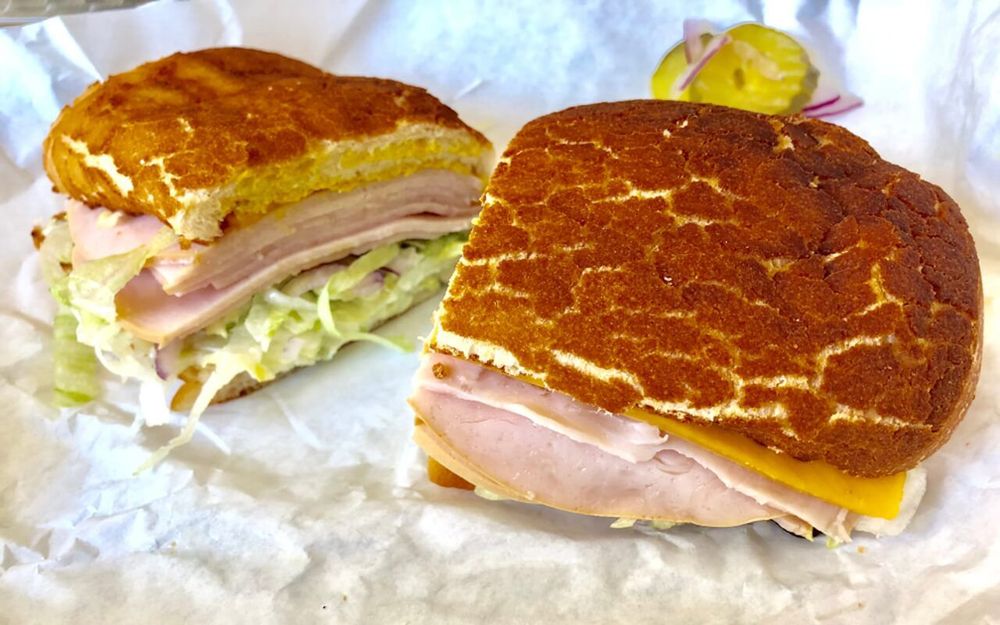
For a quick bite, there are In-N-Out burgers, carne asada fries and the Dutch crunch sandwich with its crackly crust. Local avocados and artichokes fill the salads, and a chocolate fudge cake rounds off the meal.
See the full ranking in our top 10 food specialities of San Francisco.
Vos commentaires, idées et suggestions
Aucun avis pour le moment