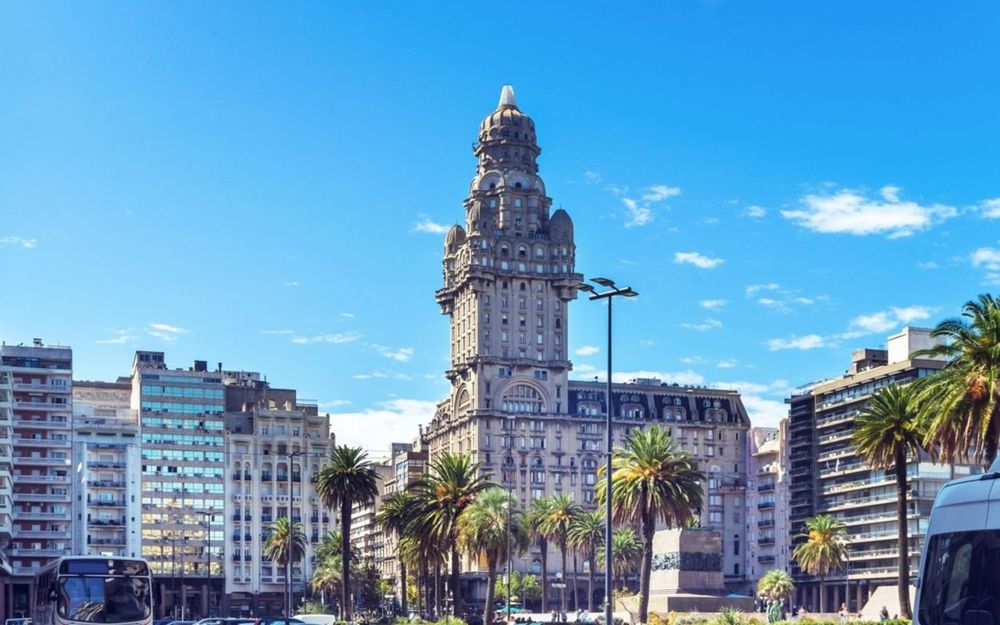
© Shutterstock
 Votre guide Ryo
Montevideo Without a Car: The Complete Guide to Getting There and Getting Around in 2026
Ask a car rental desk at Carrasco Airport how many tourists actually need what they are renting, and most agree: fewer every year. Montevideo without a car is not really a compromise here, it is closer to the local default. Residents ride the STM bus network to work, walk long stretches of the Rambla for exercise, and cross to Buenos Aires by ferry the way commuters elsewhere take a train. Ryo's audio-guided walking tour of Montevideo covers a meaningful slice of the historic downtown on foot alone, which says something about how much of this city rewards two legs over four wheels.
Over the next few thousand words, this guide gets specific rather than reassuring. A one-way direct ferry from Buenos Aires can start around $70 if booked weeks ahead, but climbs past $150 on peak weekend departures. The Rambla stretches roughly 22 kilometers along the water, longer than most cities' entire riverfront combined, and a single unhurried morning covers a satisfying chunk of it. The STM card that unlocks nearly every public bus in the capital costs a small one-off fee, and a single ride with it comes to roughly a dollar. Uber runs reliably within Montevideo, less so in Punta del Este, and not at all in most smaller towns, a distinction that catches out travelers assuming it covers the whole country. And reaching Cabo Polonio, unlike almost everywhere else covered here, genuinely does require abandoning car-free logic for the last few sandy kilometers.
Is Montevideo a Walkable City? The Car-Free Verdict at a Glance
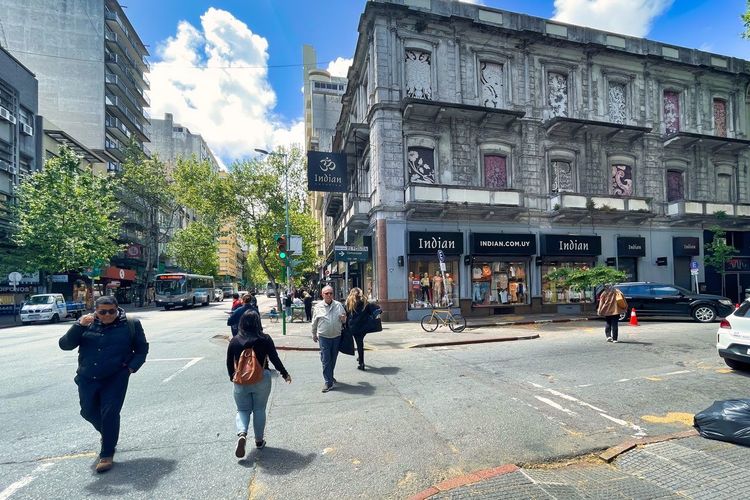
Is Montevideo a walkable city? Short answer: yes, more than most capital cities its size in South America. The car-free verdict, stated plainly, looks like this. Getting into the country works fine without a car, whether by ferry or by plane. Getting around the capital works fine without a car, between buses, walking, and a useful waterfront bike lane. And reaching the beach towns closest to Montevideo, Punta del Este and Piriápolis, works fine without a car too. Where the picture gets harder is the far interior and a short list of stubborn holdouts, Cabo Polonio chief among them.
Montevideo itself works on foot and by bus because it was built at a human scale before it was built for heavy traffic. The old core, Ciudad Vieja, sits at one end of a long coastline; newer neighborhoods like Pocitos and Punta Carretas sit a short bus ride or a long, pleasant walk down the Rambla. Locals commute by bus here as a first choice, not a budget fallback, and that habit shapes everything from how often buses run to how clearly stops are marked. Ryo's audio-guided tour of Montevideo makes the same case in miniature: it strings Ciudad Vieja together stop by stop, entirely on foot, which is about as convincing an argument for going car-free as a single afternoon can make.
Flying Into Montevideo: Carrasco Airport Without a Rental Car
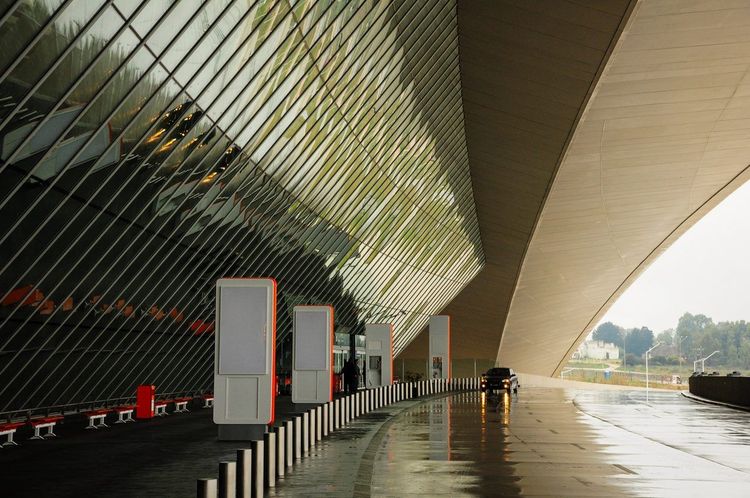
Carrasco International Airport (Camino Carrasco s/n, 14000 Ciudad de la Costa, rated 4.6/5 on Google (10 536 avis)) sits about 20 kilometers east of downtown Montevideo, close enough that the question is never whether you can get into the city without a car, only which of three reasonable options suits your budget and patience.
The cheapest option is the airport bus, run by COT and Copsa, regular public lines that connect the terminal to Tres Cruces and several downtown stops. Tickets cost a few dollars, buses run roughly every 30 to 60 minutes through the day, and the ride itself takes 45 to 60 minutes depending on traffic and how many stops it makes along the coast. It is not glamorous, but it is exactly the bus a Montevideo commuter would take, and the terminal is small enough that finding the stop rarely takes more than a couple of minutes of asking around.
For a faster, more predictable ride, the official airport taxi stand just outside arrivals runs on fixed or metered fares, generally landing somewhere between $45 and $60 to downtown hotels, with a trip time closer to 25 to 35 minutes. These taxis are regulated and reliable, which matters more than the price difference for travelers arriving late at night or juggling luggage.
Rideshare apps, Uber above all, are also allowed to pick up at Carrasco, usually from a designated zone a short walk from arrivals rather than curbside. Fares tend to fall between the bus and the official taxi, often $20 to $35 depending on demand, and the app gives you a driver name and plate before you even leave the terminal. If your flight lands late and you would rather not stand at a bus stop working out fares in an unfamiliar currency, this is the option worth having installed before you land.
Is Montevideo's airport far from the city center? Not really. Twenty kilometers and a short taxi ride put you downtown before most connecting flights would even finish boarding, and none of the three options above require signing a rental agreement.
Crossing the Río de la Plata: Ferries From Buenos Aires (Buquebus vs Colonia Express)
Two companies run the ferry route across the Río de la Plata, and the choice between them is really a choice between speed and price.
Buquebus runs the direct high-speed service from Buenos Aires straight to Montevideo, a crossing of roughly 2 hours and 15 minutes to 2 hours 45 minutes depending on the vessel and conditions on the river. It is the fastest way across by a wide margin, and for travelers short on time or arriving with connecting flights to catch, that speed alone often justifies the higher fare. Direct one-way tickets commonly run from around $70 when booked weeks in advance to well past $150 for last-minute weekend departures, so the booking window matters more than almost any other single decision in this guide.
Colonia Express takes a different route entirely: a shorter ferry hop of about an hour and a quarter from Buenos Aires to Colonia del Sacramento, followed by a bus onward to Montevideo that takes roughly two and a half hours. The combined journey is longer overall, typically four to five hours door to door once you account for the connection, but the ferry-only leg is noticeably cheaper, and the stopover doubles as an easy way to see Colonia's old town without adding a separate trip later. Buquebus also sells this same ferry-plus-bus combination as a budget alternative to its direct service, so the comparison really is Buquebus versus Colonia Express rather than direct versus indirect.
A few practical notes make either crossing smoother. Both Argentine and Uruguayan immigration are processed at the ferry terminal before boarding, so budget an extra 45 minutes to an hour beyond the posted departure for check-in and passport control, especially in high season. Luggage allowances are generous but not unlimited, roughly one large bag and one carry-on per fare class, with extra bags charged per piece. Fares also come in tiers, economy seating versus reclining premium cabins with wider seats and a quieter cabin, a difference that matters more on the direct 2.5-hour Buquebus run than on the shorter Colonia Express hop.
Booking ahead pays off on both routes. Weekday sailings and off-peak months (April through June, August through October) run noticeably cheaper than weekend departures in January or during Argentine and Uruguayan school holidays. If your dates are flexible, checking fares across a two or three day window before committing can save considerably more than the price difference between operators.
The Overland Route via Colonia del Sacramento
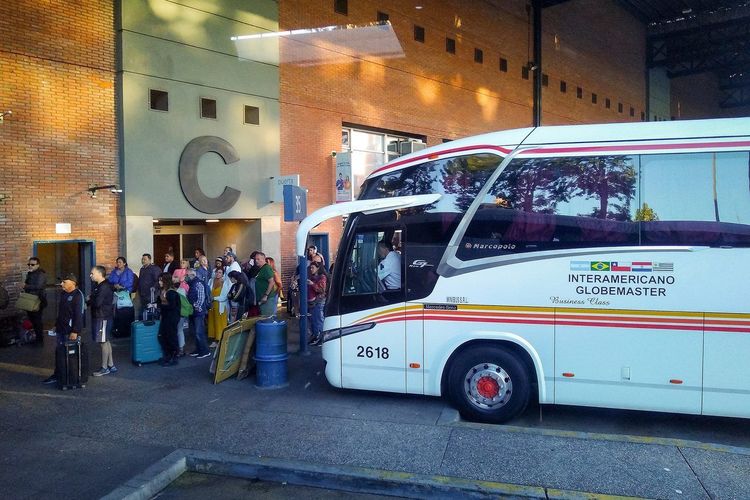
If you crossed via the ferry-plus-bus combination described above, or you are coming from elsewhere in Uruguay, the bus from Colonia del Sacramento to Montevideo is a straightforward, frequent service run mainly by COT and Turil, with departures roughly every half hour to hour through the day. The journey covers about 180 kilometers in two and a half hours along a well-maintained highway, and one-way fares typically run $12 to $18. Buses arrive directly into Tres Cruces terminal, covered in more detail below, which puts you within walking distance or a short bus ride of most downtown hotels.
Colonia itself deserves more than a transit-stop mention. The historic quarter, a UNESCO World Heritage Site since 1995, is built almost entirely for feet: uneven cobblestone streets, a lighthouse you climb rather than drive to, and a waterfront promenade that makes a rental car actively inconvenient rather than merely unnecessary. Parking near the old town is limited and awkward by design, and most visitors who do arrive with a car end up leaving it at the hotel anyway once they realize the entire historic center covers a walkable few blocks.
If your itinerary allows it, spending even a half day in Colonia before continuing to Montevideo by bus turns a transit connection into a genuine stop, and it is one of the easiest additions in this whole guide precisely because it needs no logistics beyond catching the next bus onward.
Tres Cruces Terminal: Montevideo's Hub for Buses to Everywhere Else
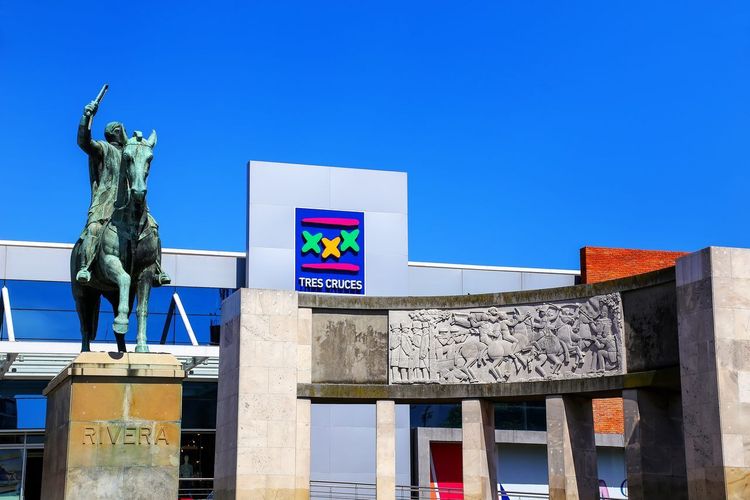
Tres Cruces is Montevideo's central bus terminal and, for a car-free trip through Uruguay, close to the single most useful building in the country. Nearly every long-distance bus you will take in this guide, arriving from Colonia, heading to Punta del Este, continuing to Piriápolis, connecting toward the Brazilian border, passes through this one terminal.
The terminal itself is modern and easy to navigate, with a shopping mall attached, a food court, luggage storage lockers, and clearly signed ticket counters for each bus company rather than one central desk. Buying tickets a day or two ahead is worth doing for popular coastal routes in January and February, though midweek departures rarely sell out.
Getting from Tres Cruces to downtown or Ciudad Vieja takes about 15 to 20 minutes by city bus or a similarly quick, inexpensive taxi ride. For travelers building an itinerary around the day trips covered later in this guide, Tres Cruces is worth thinking of less as an arrival point and more as a hub you will return to repeatedly, since Punta del Este, Piriápolis, and Colonia all depart from the same handful of platforms.
Getting Around Montevideo: The STM Bus System (Cards, Routes, Fares)

Montevideo's public bus network, run under the STM (Sistema de Transporte Metropolitano) umbrella, is dense enough to make owning a car genuinely pointless for most residents, and it is the backbone of any car-free stay in the city.
The first practical step is getting an STM card, a rechargeable smart card sold at kiosks, some pharmacies, and service points around the city, including inside Tres Cruces terminal. The card itself costs a small deposit, a small one-off fee, and you load it with credit in whatever increments you like at the same kiosks and payment networks. Fares are flat per ride rather than by zone, and a single ride with the card comes to around 50 Uruguayan pesos, roughly a dollar and change, cheaper than than paying cash on board, where drivers often cannot make change for large bills anyway.
A few corridors matter more than the rest for visitors. Avenida 18 de Julio is the closest thing Montevideo has to a central spine, running from Ciudad Vieja through the commercial heart of downtown, and dozens of routes touch it at some point. Coastal routes running along or near the Rambla connect Ciudad Vieja to Pocitos, Punta Carretas, and onward toward Carrasco and the airport, useful both for sightseeing and for reaching accommodation in the beachier eastern neighborhoods. Bulevar Artigas, home to Tres Cruces, is the other reference point worth knowing, since so many routes either start, end, or cross there.
Timetables can feel loose by Northern European standards. Buses run frequently on main corridors, every 5 to 15 minutes at peak times, but less predictably on secondary routes, so building in a little slack is worth it rather than timing a day around a specific departure. An app, either the official STM tracker or Moovit, which many locals actually prefer, shows real-time bus positions and estimated arrivals, and downloading it before you land removes most of the guesswork.
One rule worth knowing: the standard one-hour ticket paid with the STM card lets you transfer to another bus within that hour without paying twice, and a pricier two-hour ticket stretches the window further. It is easiest to ask the driver or check the app when you are unsure which option you tapped. Buses run from early morning until around midnight on most lines, with a reduced overnight network on the busiest corridors, so very late arrivals or departures are the one scenario where a taxi or rideshare genuinely beats waiting for a bus.
None of this requires fluent Spanish. Route numbers and destination boards on the front of each bus are the main things to match against your app, and drivers are used to tourists double-checking before boarding.
Walking Montevideo: The Rambla and the Historic Center
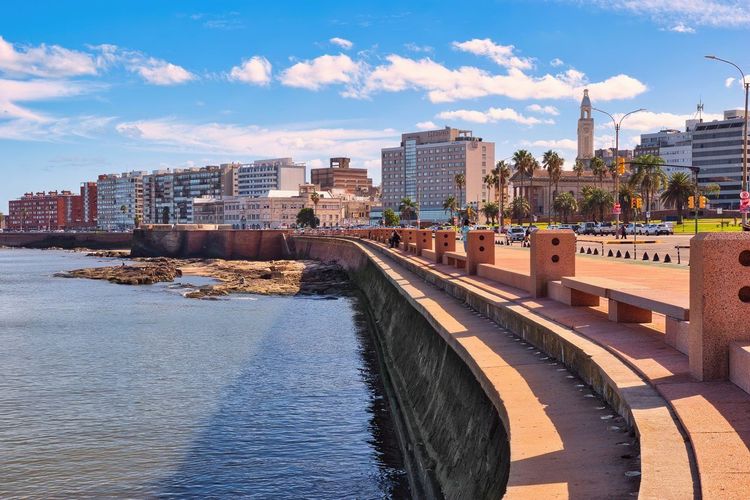
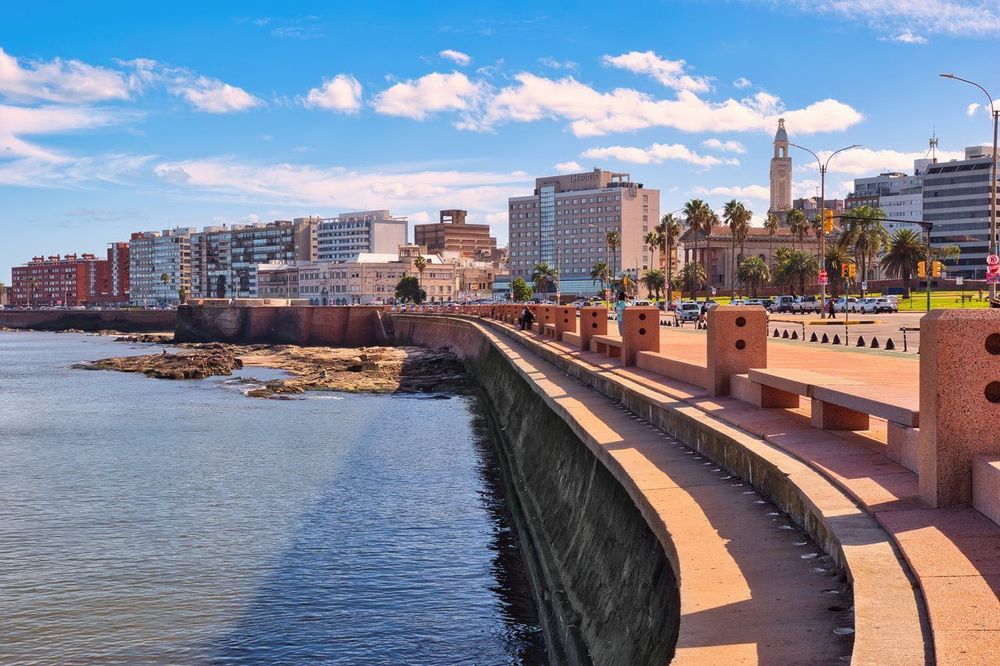
The Rambla is Montevideo's single best argument for leaving the car behind. It runs an almost unbroken 22 kilometers along the Río de la Plata, from the port in Ciudad Vieja out past Pocitos and Punta Carretas toward Carrasco, and locals use it the way other cities use a park: for running, cycling, drinking mate on a bench, or simply walking somewhere instead of driving there.
You do not need to walk all 22 kilometers to get the point. The most rewarding stretch for a first visit runs from Ciudad Vieja, Montevideo's colonial-era old town of narrow streets and low balconied buildings, past Mercado del Puerto (Piedras 237, 11000 Montevideo, rated 4.4/5 on Google (22 814 avis)), a 19th-century market hall that turns into an open-air grill house by lunchtime, and onward along the water into Pocitos, a beach-facing residential neighborhood with its own stretch of sand inside the city limits.
Distances are entirely walkable but add up: Ciudad Vieja to Pocitos along the Rambla covers roughly 7 to 8 kilometers, closer to a half-day outing than an afternoon stroll if you stop often, which you should. Shorter chunks work just as well. Plaza Independencia to the port covers the historic core in under two kilometers, flat and shaded enough for even a hot afternoon.
This is exactly the terrain Ryo's audio-guided tour of Montevideo was built for: a stop-by-stop narrated walk through the old town and along the waterfront that tells you what you are looking at as you reach it, instead of leaving you to guess or dig through a guidebook mid-walk. Load it on your phone before you leave the hotel, and you can explore Montevideo without a car and without a paper map, pausing at any stop for as long as you like.
Cycling Around the City

Cycling in Montevideo works best as a Rambla activity rather than an everywhere-in-the-city one. A dedicated bike lane runs alongside much of the coastal promenade, separated from car traffic and popular enough on weekend mornings that you will share it with plenty of locals rather than feel like the only cyclist in town.
Away from the waterfront, bike infrastructure gets patchier, with painted lanes on some downtown avenues but plenty of streets where cyclists share space with buses and taxis. That is fine for confident riders covering short, direct routes, less so for anyone uneasy mixing with city traffic.
Rental options cluster in Pocitos and Ciudad Vieja, with shops renting by the hour or the day and a handful offering multi-day rates aimed squarely at travelers rather than commuters. Do not count on a public bike-share network: a private rental, or a bike lent by your hotel, is the dependable choice for a planned ride. Either way, a bike turns the Rambla's 22 kilometers from a half-day walk into an easy couple of hours, which is worth considering if Punta Carretas or Carrasco are on your list and a full day on foot is not.
Taxis and Ride-Hailing: Uber, inDriver, and Local Cabs
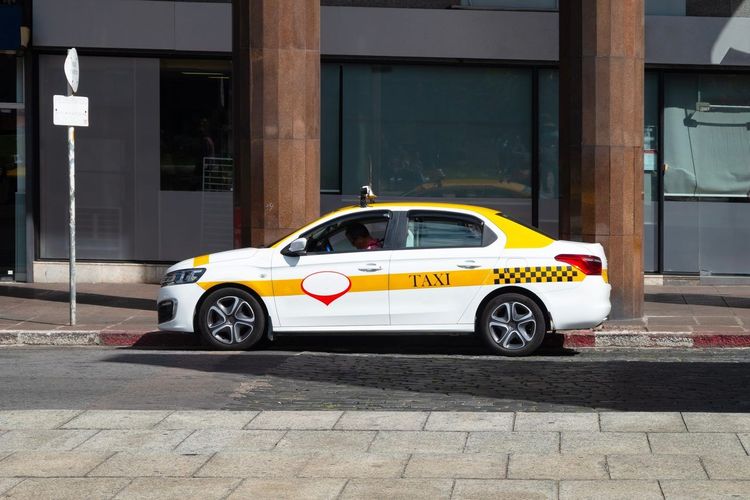
Montevideo has two parallel systems for door-to-door rides, and knowing which one covers where you are headed saves real frustration.
Metered taxis are plentiful, easy to hail on the street or find at taxi stands (paradas) throughout downtown and the eastern neighborhoods, and run on a transparent meter that starts at a base fare and climbs by distance and time. A typical ride from the city center to Pocitos costs roughly $8 to $12, a little more at night when a higher tariff applies, and drivers are generally used to short conversations in basic Spanish or gesture-based destination pointing if your Spanish is limited.
Uber operates in Montevideo and has done so for several years, after an initial period of friction with the local taxi industry that has since settled into coexistence. Fares tend to run comparably to, sometimes slightly below, metered taxis, and the obvious advantage is not needing cash or a shared language to set a destination. Here is the detail that catches travelers out: Uber's coverage in Uruguay is concentrated in Montevideo. It also works in Punta del Este, with fewer drivers and longer waits outside summer, but you should not rely on it in Colonia or the smaller coastal towns covered later in this guide, so treat it as a capital-city tool rather than a countrywide one.
inDriver, a negotiable-fare ride app popular across Latin America, also has a presence in Montevideo and offers a real alternative when Uber demand, and pricing, spikes during peak hours or bad weather. The negotiation element takes some getting used to for travelers unfamiliar with the app, but it can undercut both taxis and Uber on longer within-city rides.
For safety, sticking to official taxi stands, verified in-app driver details, and avoiding unmarked informal cars offered outside bus and ferry terminals covers most of the practical risk. Montevideo is not a city where ride safety is a constant worry, but the same common sense that applies in any capital, checking plates against the app, sharing your trip status with someone, sitting in the back seat, applies here too.
Day Trip to Colonia del Sacramento Without a Car
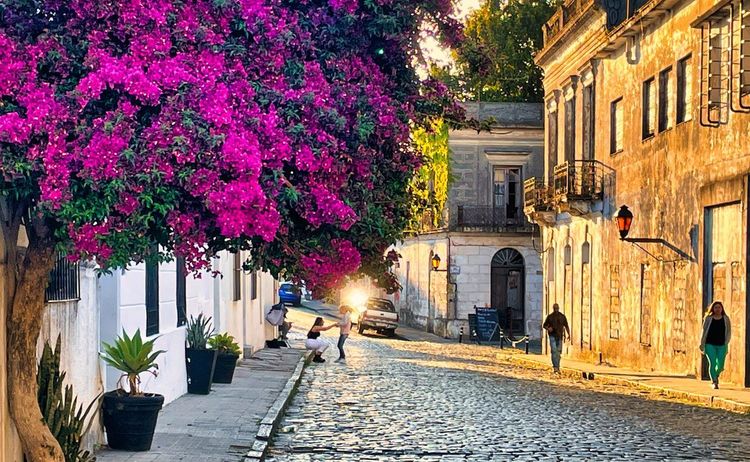
A day trip to Colonia del Sacramento is one of the easiest add-ons in this entire guide, precisely because neither the getting-there nor the being-there requires a car. From Montevideo, the earliest COT or Turil bus typically departs Tres Cruces before 7am and covers the roughly two and a half hour journey in time for a full day exploring before catching a late afternoon or early evening bus back.
Once there, Colonia's historic quarter needs nothing but your feet. Cobblestone streets radiate out from the lighthouse, the ruins of the San Francisco convent beside it, and the old Portón de Campo city gate, the whole core covers only a handful of walkable blocks, and the town's charm is specifically the kind that a car would only get in the way of: narrow lanes, low colonial buildings, and a waterfront promenade built for slow walking rather than parking.
Budget roughly six to seven hours on the ground to see the historic quarter properly without rushing, climb the lighthouse for the view over the river toward Buenos Aires, and still have time for a long lunch. Tickets for both the outbound and return bus are worth booking a day ahead in high season, since the earliest and latest departures sell out first among travelers doing exactly this same day trip.
If you are stretching this into a longer weekend that pairs Colonia with more time in the capital itself, Ryo's article on Montevideo's top five activities is a useful way to fill the rest of the itinerary once you are back from Colonia.
Punta del Este and the Coast by Bus
Punta del Este (20100 Maldonado, rated 4.5/5 on Google (6,300 reviews)), Uruguay's best-known beach resort, sits about 130 kilometers east of Montevideo, and the bus connection is frequent enough that renting a car for this leg specifically would be solving a problem that does not exist. COT and other operators run coaches from Tres Cruces roughly every 30 to 60 minutes during the summer season (December through March), thinning out to a still-workable hourly-or-so schedule the rest of the year. The journey takes about two to two and a half hours, and one-way fares typically land in the $12 to $16 range.
Punta del Este's own bus terminal drops you close to the peninsula that gives the town its postcard skyline, and the compact downtown core, restaurants, the harbor, the famous sculpture on the beach, is genuinely walkable. Getting to the resort's spread-out beach neighborhoods, La Barra and Manantiales among them, is where car-free logic needs a little help: local buses connect these areas to central Punta del Este, though less frequently than Montevideo's own network, and taxis fill the gap reasonably affordably for the 10 to 20 minute hops between beaches.
Worth flagging plainly: Uber does run in Punta del Este, but with far fewer drivers than in the capital, especially out of season. Keep local taxis and the town's own bus routes as your backup, and you will not find yourself stranded.
For a single beach day, an early bus out and a late one back covers it comfortably. For anything longer, the coast between Montevideo and Punta del Este offers enough worthwhile stops, Piriápolis chief among them, that breaking the trip into more than one town is often the better use of a few extra days.
Piriápolis: The Quiet Car-Free Beach Town

If Punta del Este is Uruguay's glamorous coastal headline, Piriápolis (20200 Maldonado, rated 4.4/5 on Google (2,800 reviews)) is the quieter, cheaper paragraph most visitors skip, and that is precisely its appeal for car-free travelers. Roughly 100 kilometers from Montevideo, it is reached by the same COT coach network, with a journey of around an hour and a half and fares generally a notch below the Punta del Este run.
The town itself is small enough that the entire seafront, the pier, the beach promenade, and the surrounding hills climbable on marked paths, sits within easy walking distance of the bus terminal. Unlike Punta del Este's more spread-out beach neighborhoods, Piriápolis does not ask you to go looking for a taxi to reach the good parts.
That compactness makes it the quiet champion of this whole guide's car-free logic: no rideshare gap to work around, no distant beach requiring a local bus transfer, just a short walk in almost any direction from where the coach drops you off. For travelers weighing Punta del Este's nightlife against a calmer few days by the water, Piriápolis is worth serious consideration for exactly that reason, even if it rarely makes the same shortlist.
Where Car-Free Travel Gets Hard: Cabo Polonio, José Ignacio, and Wine Country
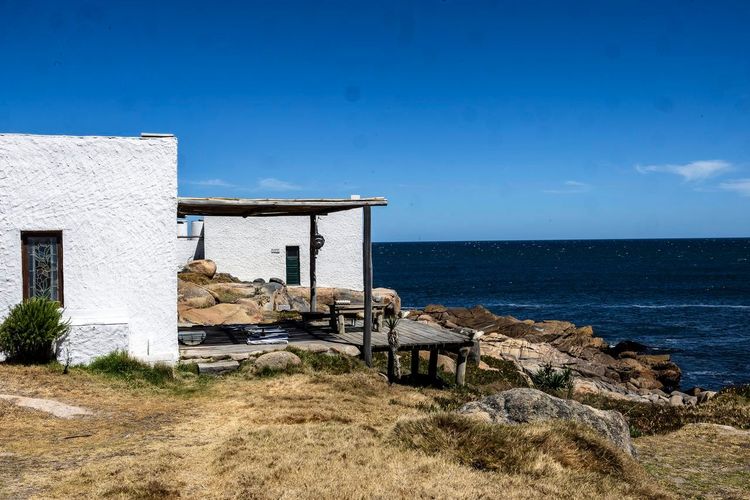
Any useful guide to car-free travel needs a section admitting where the logic breaks down, and in Uruguay, three destinations account for most of it.
Cabo Polonio) is the clearest case. This remote dune-backed village inside a national park has no paved road access, by design: the last several kilometers from the highway turn-off run over open sand, and the only ways in are a specialized 4x4 truck service that departs from a fixed point on Route 10, a long hike across the dunes, or a private vehicle equipped for sand driving. Regular buses reach the turn-off from Montevideo easily enough, roughly four hours away, but the final stretch simply is not part of the STM or COT network, so budget for the truck transfer as a separate, unavoidable cost.
José Ignacio), the understated, expensive beach town favored by a certain kind of low-key celebrity, is awkward in a different way. Regular bus service exists but runs less frequently than the routes to Punta del Este or Piriápolis, and once you arrive, the town's appeal, its scattered beach houses and quiet unmarked lanes, is spread out enough that walking everywhere stops being realistic. Most visitors either drive, arrange a private transfer, or treat it as a taxi-dependent day trip from Punta del Este rather than a car-free base in its own right.
Wine country around Carmelo (70200 Colonia, rated 4.3/5 on Google (1,200 reviews)), and the broader interior more generally, is the third honest gap. The vineyards and estancias that make this region worthwhile are deliberately spread across farmland, not clustered around a town center the way a beach resort is, and public transport simply was not built to hop between them. Should you rent a car for Uruguay's wine country? For most itineraries, yes, or at minimum book an organized tour that includes transport, since the alternative is a single bus into Carmelo town with no practical way to reach the wineries themselves.
The through-line across all three: Uruguay's car-free network is built around towns, coastlines, and the corridors connecting them, not around the empty middle of the country or its most deliberately remote corners. Knowing that in advance saves an afternoon of frustration trying to force a bus schedule to do something it was never designed for.
Costs: Car-Free Travel vs Renting a Car
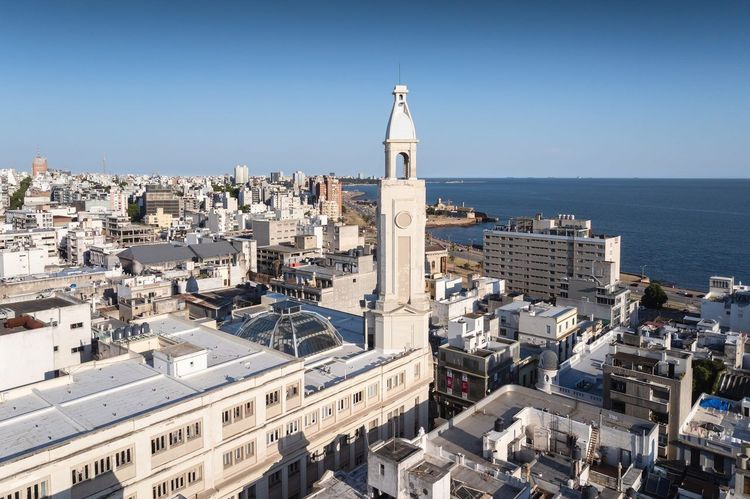
Money is often the real question behind whether this is doable, so here is a side-by-side rough budget.
A typical car-free day in Montevideo itself runs light: STM bus fares come to roughly a dollar each with the card, so even four rides across a busy sightseeing day rarely exceed $5, and transfers within the hour cost nothing extra. Add a sit-down lunch and a coffee or two, and a comfortable daily transport-plus-food budget lands somewhere around $25 to $40 per person, before accommodation.
Renting a car changes that math in both directions. Daily rental rates for a small economy car in Uruguay typically start around $30 to $50 depending on season and company, before adding mandatory insurance, which can add another $10 to $20 per day. Fuel is not cheap in Uruguay by regional standards, and parking in Ciudad Vieja or central Montevideo often means a paid garage rather than free street parking, another $8 to $15 per day. Toll roads on the routes toward Punta del Este and the coast add a smaller but real recurring cost. Add it up, and a rental car for a week of city-plus-coast travel commonly runs $400 to $700 once insurance, fuel, tolls, and parking are all counted, before the rental itself has covered a single day trip you could not also do by bus.
Where the calculation flips is groups and destinations. Three or four people splitting a rental car for a week in wine country or a trip that includes Cabo Polonio's sand-truck transfer can come out ahead of separate bus tickets, private transfers, and truck fares for each person. Solo travelers and couples sticking mainly to Montevideo, Colonia, Punta del Este, and Piriápolis will almost always spend less going car-free, sometimes dramatically so.
The honest summary: car-free travel wins clearly for solo and couple itineraries focused on the coast and the capital, the math gets closer for groups heading into the interior, and it tips toward renting once Cabo Polonio, José Ignacio, or wine country enter the plan, as covered above.
Realistic Car-Free Itineraries: Weekend, One Week, Two Weeks
Putting the pieces above into an actual itinerary makes the car-free case more concrete than any individual section can.
The long weekend: Montevideo and Colonia. Friday, arrive at Carrasco, take the COT bus or a taxi downtown, and spend the afternoon walking Ciudad Vieja and a stretch of the Rambla. Saturday, take the early bus to Colonia del Sacramento, spend the day in the historic quarter, and either stay overnight there or catch a late bus back to Montevideo. Sunday, cover whatever downtown ground you missed, Mercado del Puerto for a long lunch, Pocitos for a beach walk, before an evening flight out or a ferry back to Buenos Aires. This is the tightest itinerary in this guide and needs nothing beyond buses, the ferry, and your own feet.
One week: the easy coast. Extend the weekend above with three or four additional days working east along the coast. Add a night or two in Piriápolis, reached by the same COT coaches out of Tres Cruces, for its quieter, walkable seafront, then continue to Punta del Este for a couple of days split between the peninsula's walkable core and a beach day in La Barra reached by local bus or a short taxi. Return to Montevideo by the same coach network for a final night before departure. Every leg of this week runs on scheduled buses and ferries, with no vehicle of your own required at any point.
Two weeks: pushing into Rocha. With a full two weeks, the itinerary above extends further east into Rocha department, where the coastline gets progressively quieter and the towns smaller. Regular buses reach as far as the edge of Cabo Polonio's national park easily enough, at which point the honest limits covered earlier apply: budget for the sand-truck transfer as a separate leg rather than expecting it to fold neatly into a bus pass. The deep Rocha coast, small fishing towns and near-empty beaches well past the main resort strip, rewards slower travel and less rigid planning more than any other stretch in this guide, and it is feasible car-free provided you accept looser schedules and fewer daily departures than the Montevideo-Punta del Este corridor offers.
A rough shape for the two weeks: four or five days in and around Montevideo, including the Colonia day trip, three or four days working through Piriápolis and Punta del Este, three or four days pushing into Rocha as far as your patience for infrequent buses allows, and a buffer day or two built in specifically for the truck transfer to Cabo Polonio if that stop makes the final cut. None of these fourteen days strictly require a rental car, though the wine-country and José Ignacio detours discussed earlier remain the two places where that statement gets shakiest.
Practical Tips for Getting Around Without Driving
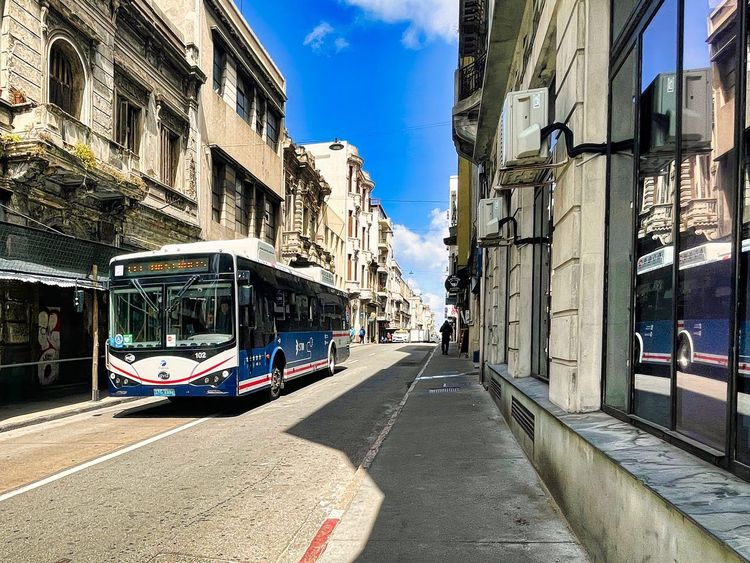
A short list of practical habits makes car-free travel in Uruguay noticeably smoother.
Get your STM card on day one, ideally at the airport or Tres Cruces before you need it in a hurry, and load more credit than you think you will use; running out mid-journey with no Spanish and no coins is a minor but avoidable headache. Download an offline map before you leave wifi, since data coverage thins out noticeably once you are past the coastal resort towns and into rural stretches.
Book ferries and long-distance coach tickets a few days ahead in January and February, Uruguay and Argentina's peak summer holiday months, when the Buenos Aires ferry and the Punta del Este coaches both sell out on the most convenient departure times first. Outside that window, walking up and buying same-day tickets works fine for almost every route in this guide.
Is it safe to travel Uruguay by bus? Yes, comfortably so. Long-distance coaches are modern, reasonably punctual, and used daily by locals rather than treated as a budget-tourist fallback, which tends to correlate with better maintained, safer services generally. The same common-sense habits that apply to any bus travel, keeping valuables in sight, not accepting help with luggage from strangers at terminals, apply here without Uruguay presenting any particular red flags beyond that baseline.
Finally, keep a little cash on hand even in a country that leans increasingly cashless. Small-town bus terminals, the sand-truck operator into Cabo Polonio, and some rural taxi drivers still prefer or require it, and an ATM is not always the next block over once you are past Montevideo, Punta del Este, and Colonia.
Car-Free Montevideo by Traveler Type
Different travelers hit different friction points, so here is the quick version by trip type.
Solo travelers have the easiest time of anyone in this guide. Buses, the Rambla, and Ciudad Vieja all suit a single person's pace and budget better than a rental car ever would, and Montevideo's compact, walkable center means solo evenings out rarely require more than a short taxi. If you are traveling alone, the Ryo audio guide to Montevideo fits this pattern well, letting you follow a narrated route through Ciudad Vieja at your own pace, pausing for coffee or a photo without coordinating with anyone else. Families get the same benefit: the audio stops can be paused anywhere when small legs need a rest.
Couples get almost the same ease, with the coast added in comfortably: Piriápolis and Punta del Este both work well as a long weekend extension without ever touching a rental agreement.
Families with kids face the real friction point around luggage and patience rather than routes themselves; buses and ferries handle strollers and car seats less gracefully than a private vehicle, so budgeting slightly more transfer time and considering a taxi over a bus for the airport-to-hotel leg specifically is worth the modest extra cost.
Retirees and travelers preferring a slower pace tend to do best sticking closer to the Montevideo-Colonia-Piriápolis triangle, where frequent buses and shorter journey times keep any single day's travel manageable, while saving the longer Rocha pushes or Cabo Polonio's truck transfer for travelers with more flexibility to absorb an unpredictable schedule.
Groups of three or four are the one category where the cost math from earlier genuinely shifts toward renting, particularly for interior detours like wine country, though everything covered in the coastal and capital sections above still works comfortably car-free for a group that size.
When It Actually Makes Sense to Rent a Car
None of the above amounts to a blanket argument against ever renting a car in Uruguay. It amounts to a narrower, more useful claim: rent one for the specific legs where car-free travel breaks down, not for the trip as a whole.
Wine country around Carmelo is the clearest case, along with the broader interior estancias mentioned earlier, since public transport was never built to connect scattered rural properties. José Ignacio's spread-out layout is a second reasonable case, especially for travelers basing themselves there for several days rather than passing through. A self-drive itinerary hitting Uruguay's classic highlights, coast, countryside, and a handful of small towns, in a single loop is a legitimate way to travel, provided the goal is covering distance and flexibility over the specific, deep experience of any one place.
What rarely makes sense is renting for Montevideo itself. The capital is exactly where a car adds friction rather than removes it: parking in Ciudad Vieja, traffic on 18 de Julio at peak hours, and a bus and walking network that already does the job better. Before picking up keys for the interior, spend a day or two on the Ryo audio-guided tour of the capital: it covers the one part of this trip where a car does not help at all, and saves the rental for the stretches where it actually earns its cost.



FAQ
Is Montevideo a walkable city?
Yes. The historic Ciudad Vieja and the neighborhoods strung along the Rambla, including Pocitos and Punta Carretas, are all genuinely walkable, and the Rambla itself offers 22 kilometers of flat, mostly shaded waterfront path connecting them. Longer hops between neighborhoods are easily covered by the STM bus network when walking the whole distance is not appealing.
Do they have Uber in Montevideo?
Yes, Uber operates reliably within Montevideo and has done so for several years. Outside the capital it is patchier: available in Punta del Este with fewer drivers, and not a dependable option in Colonia or Uruguay's smaller coastal towns, where local taxis and buses remain the more consistent choice.
Is it safe to get around Montevideo and Uruguay by bus?
Yes. City buses and long-distance coaches alike are used daily by locals, run on modern, reasonably maintained fleets, and do not carry any particular safety reputation beyond the ordinary common-sense precautions that apply to public transport in any capital city.
How do I get from Montevideo to the beaches without driving?
Regular COT coaches connect Tres Cruces terminal to Punta del Este in about two to two and a half hours and to Piriápolis in around an hour and a half, with departures every 30 to 60 minutes during the December to March summer season and a still-workable, less frequent schedule the rest of the year.
Should I rent a car for a day trip to Uruguay's wine country?
For most travelers, yes, or book an organized tour that includes transport between vineyards. Carmelo's wineries and estancias are spread across farmland with no meaningful bus connections between individual properties, making the interior one of the few genuine exceptions to this guide's car-free approach.
How much does getting around Montevideo without a car cost per day?
Budget roughly $25 to $40 per person per day covering STM bus fares, food, and the occasional taxi. Seeing Montevideo without a car this way stays comfortably below the $50 to $90-plus a rental car typically costs once insurance, fuel, tolls, and parking are factored in for the same period.
Is Carrasco Airport far from downtown Montevideo?
Not particularly. Carrasco sits about 20 kilometers from the city center, roughly a 25 to 35 minute ride by taxi or rideshare, or 45 to 60 minutes on the inexpensive COT or Copsa airport bus that runs directly to Tres Cruces and downtown stops.
Getting Around Without a Car: The Bottom Line
Montevideo, in the end, is one of the easier capitals in South America to see entirely without a rental car, and the coast just beyond it holds up surprisingly well too. Buses connect the capital to Colonia, Piriápolis, and Punta del Este on frequent, affordable schedules, the Rambla and Ciudad Vieja reward walking better than driving ever could, and even the interior's honest limits, Cabo Polonio's sand-truck transfer chief among them, are more a matter of accepting a different kind of transport than of needing your own car after all.
If you are looking for a low-effort way to start exploring Montevideo without a car, Ryo's self-guided walk through Montevideo narrates Ciudad Vieja and the waterfront stop by stop, letting you cover the most walkable part of this guide on your own schedule before deciding how much further down the coast, car-free, you want to go.