
Créé par Emilie, le 17 nov. 2026
Votre guide Ryo
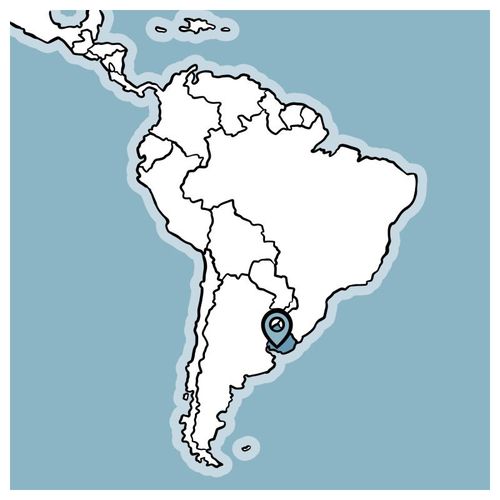
Montevideo, Uruguay
The Sixth Mountain From East to West
Parcours audioguidé pour visiter Montevideo en 1 jour
The capital of Uruguay, Montevideo embraces a relaxed and authentic atmosphere, far from the pace of its larger neighboring metropolises. With its beaches, historic districts, and local culture, the city reflects a simple and warm way of life and welcomes you with open arms.
Quand partir à Montevideo ?
Jan.
27°
7
Feb.
27°
7
March
25°
8
April
21°
9
May
17°
10
June
14°
10
July
13°
10
Aug.
14°
10
Sept.
16°
9
Oct.
19°
9
Nov.
22°
8
Dec.
25°
7
Uruguay has a temperate climate, with hot summers and cold, humid winters. Keep in mind that seasons are reversed compared to the Northern Hemisphere. If you visit in August expecting summer, you’ll be in for an unpleasant surprise. Winter in Uruguay—roughly June to September—is really best avoided. It’s chilly, often rainy, and not ideal for a seaside destination. Summer, on the other hand, is lovely. We recommend visiting Uruguay between December and March. January is peak holiday season for locals, so the capital feels empty while the beaches are packed. February, which is Carnival month, is especially worth considering for a visit to Montevideo—cultural life bursts into full swing.
Départ conseillé
No need to worry about where to begin! Our tours are designed as a loop, so you can jump in wherever you are. The navigation system and audio-guide will automatically adjust to your location. However, if you happen to be nearby, we do have a preferred starting point: : Plaza Independenzia
Parking à proximité
Cathedral Covered Parking, Rincón 517
Parking in Montevideo is generally not a problem. You’ll find paid, supervised parking lots throughout the city. Don’t be surprised if some of them look more like vacant lots than the underground garages you might be used to—they’re perfectly normal here. There’s usually one or more attendants on site, and they’ll often keep your keys so they can move your car if needed.
Another thing to know: if you park in the street, you’ll likely notice people wearing municipal vests who will “help” you park by giving you hand signals as you back in. It might feel a bit strange at first, but there’s no avoiding it—they’ll stay until you’re fully parked. These are the cuidacoches—literally “car keepers.” When you return to your car, it’s customary to give them a small tip. It’s not mandatory, but it’s definitely expected and highly recommended.
À savoir
Uruguay uses the Uruguayan peso, or UYU. The currency is stable and closely linked to the US dollar. In fact, you can even withdraw US dollars from most ATMs, which can be handy if you’re planning to cross over to Argentina.
Découvrez 20 lieux d'intérêt pour visiter Montevideo




What to see in Montevideo on your 3h tour?
This 7.4 km loop takes about three hours and links 18 sights. From Plaza Independencia, it crosses the Ciudad Vieja past the Solís Theatre, the colonial squares and the port market, then follows the Rambla and the Río de la Plata through stories of tango and carnival, before climbing Avenida 18 de Julio up to the Palacio Salvo. With the Ryo app in your ears, every square tells the eventful story of the Uruguayan capital.
Information checked in October 2026 and subject to change.
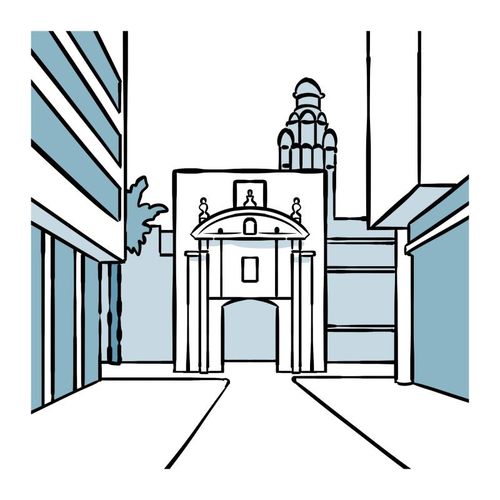
1 - Plaza Independencia
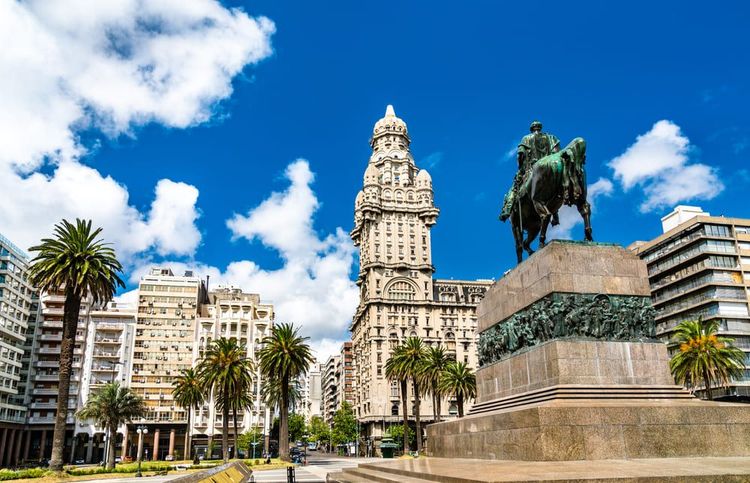
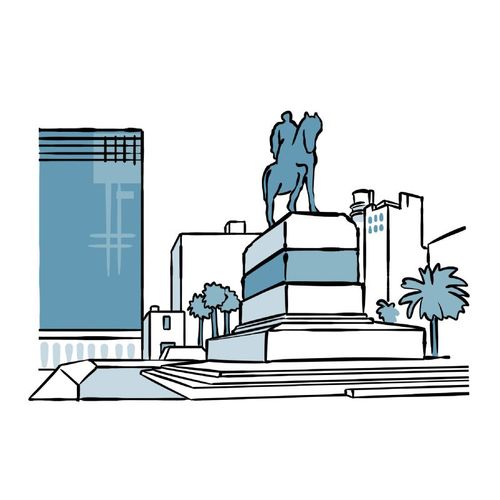
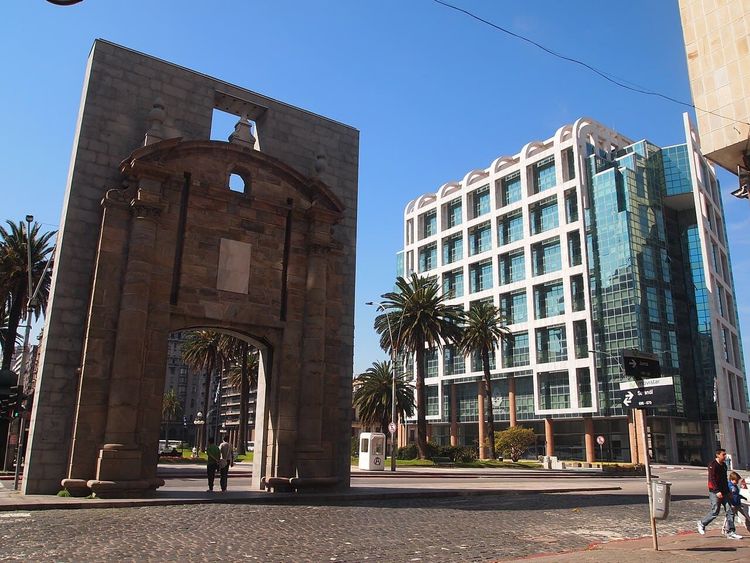
You step into the old town through this iconic square, where the old gate of the Spanish citadel still stands, a reminder of the fortress walls that once enclosed Montevideo. Those walls came down in 1877, once the growing city had outgrown its stone girdle. The gate you see today isn't original: rebuilt on the same spot decades later, it remains the most visible trace of the capital's colonial past.
Free entry
2 - Solis Theatre
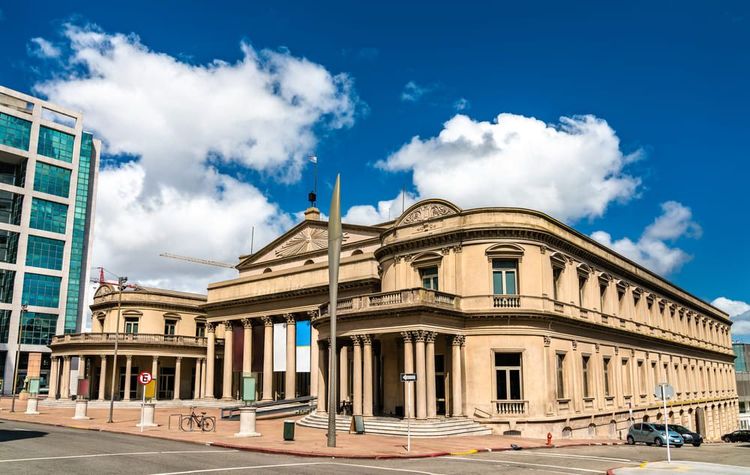
Opened in 1856, barely 17 years after Uruguay's independence, this theatre claims the title of oldest in South America. Before it opened, several patriotic names were floated; in the end, it was named after the Portuguese navigator who first reached the Río de la Plata. Far more than a stage for performances, the building was meant to embody a social project, championed by a rising class eager to shape the young republic's public life.
Free to see from outside
3 - Plaza de la Constitución
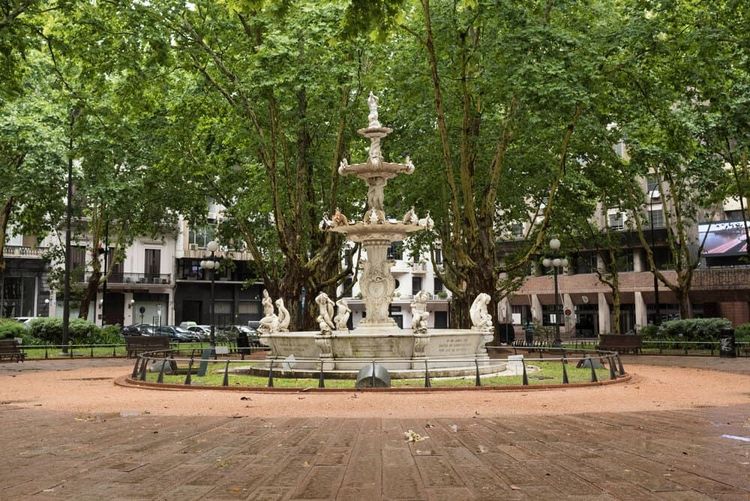
The oldest square in Montevideo, it once served as the main square of the Spanish fortified settlement, at a time when it had no fixed boundaries at all: its outline gradually took shape around the cathedral and the old cabildo, seat of the colonial administration. The building on the corner behind you is that very cabildo, while a striking building on your left now houses a private club founded by the city's elite.
Free entry
4 - Plaza Zabala
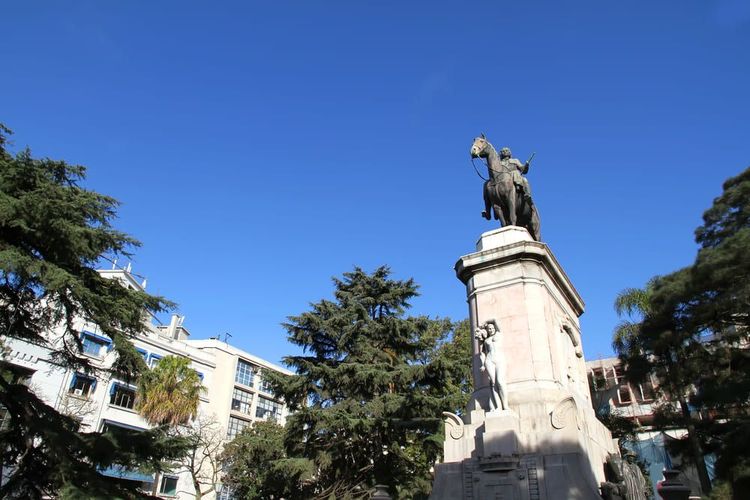
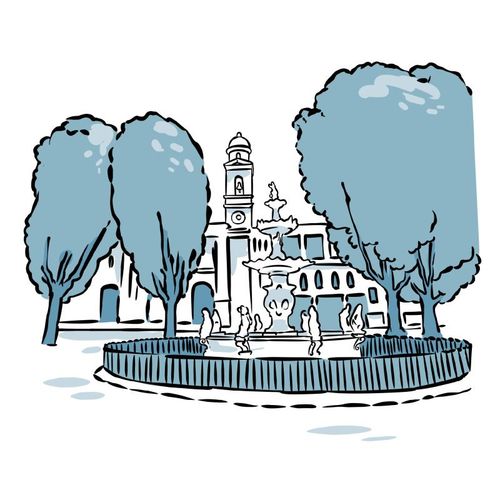
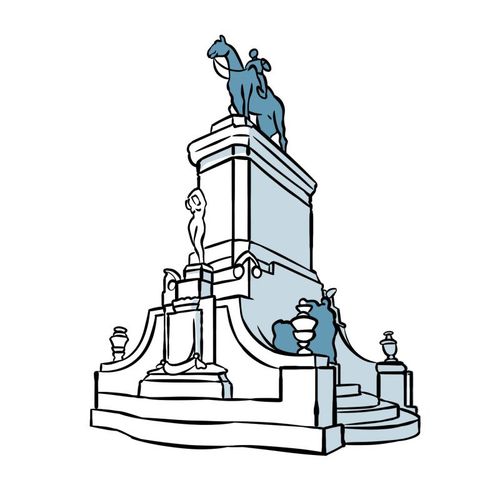
This square may date only from 1890, but the idea goes back to 1878, under the dictatorship of Colonel Lorenzo Latorre, who had the old Spanish fort on this site torn down. The space then sat empty for over a decade before receiving the equestrian statue of the city's founder, Bruno de Zabala, who gave it its name. French landscape architect Eduardo André laid out gardens inspired by Paris, enclosed by a wrought-iron fence unlike any other in Montevideo.
Free entry
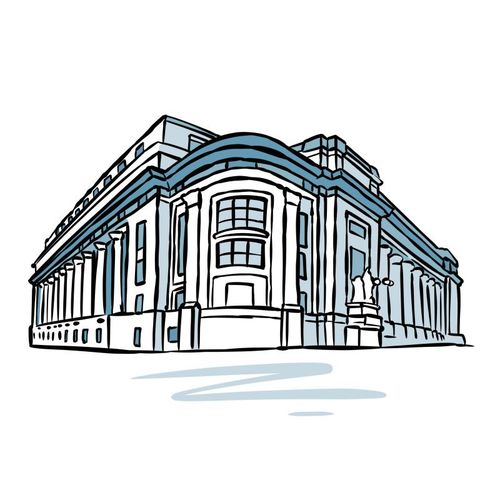
5 - Banco de la República
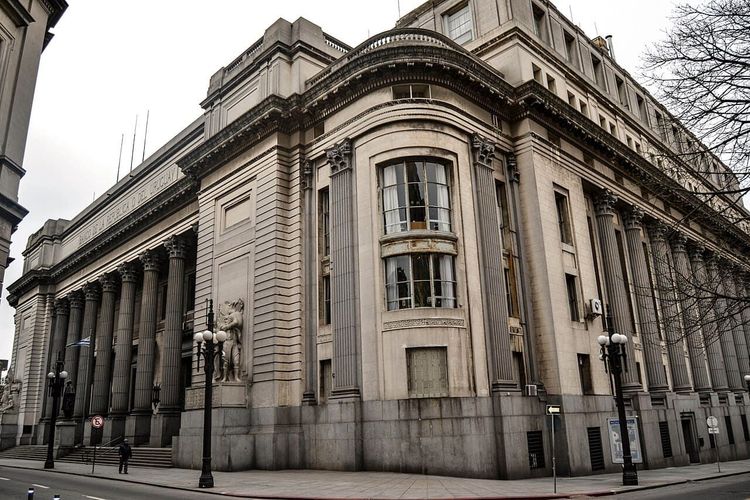
Among the austere façades lining Zabala Street, this one stands out: it's the headquarters of the country's main state bank, founded in 1896 in the wake of the financial crisis that had hit Argentina a few years earlier. First housed in an existing building, the institution quickly outgrew its space and, at the turn of the century, needed a structure large enough to fill an entire city block.
Free to see from outside
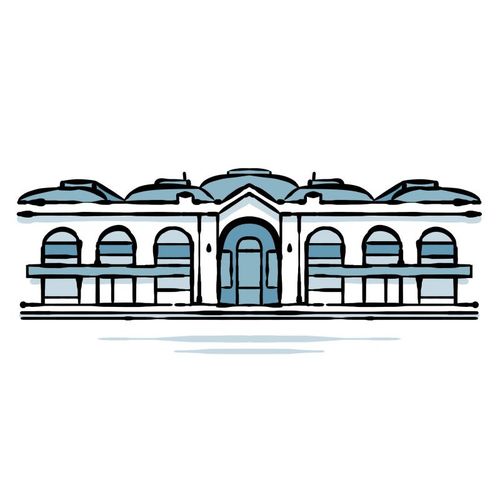
6 - Mercado del puerto
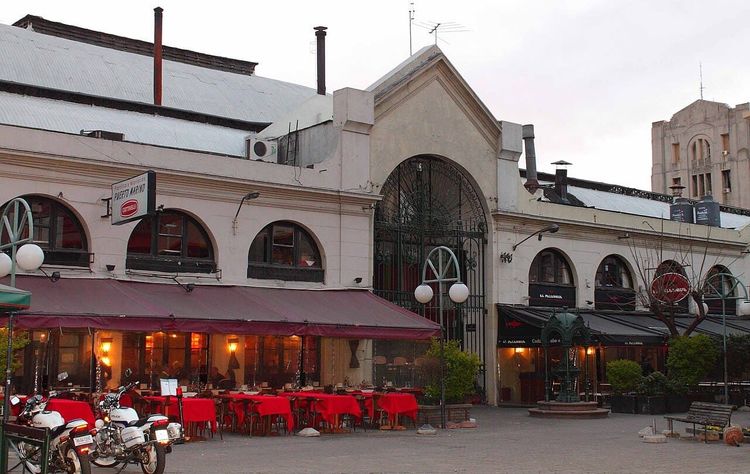
Despite its name, this market has never sold fish: it's the temple of parrilla, Uruguay's style of barbecue, where locals and visitors alike feast on grilled meat and offal. The country counts roughly four cows for every person, all raised on natural pasture, which explains the reputation of its beef. Vegetarians will have to make do with a grilled provolone cheese instead.
Free entry · Best around midday
7 - Sarandí pedestrian street
This pedestrian street, the busiest in the historic centre, links the port to Plaza Independencia; walked the other way, it leads out along a jetty where a few fishermen still enjoy the view over the water. Laid out in 1726 by Pedro Millán, modelled on 18th-century French shopping streets, it was only pedestrianised in 1992, as part of a broader scheme to revive the neighbourhood.
Free entry
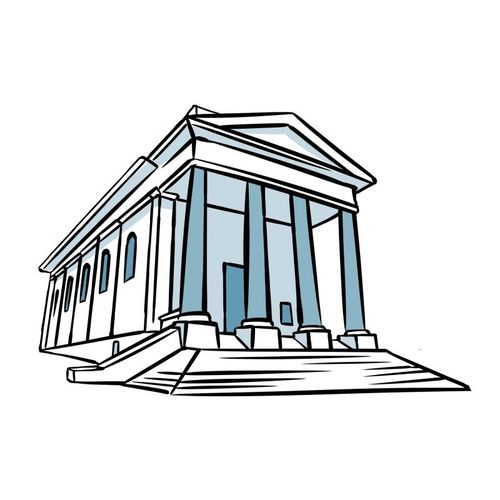
8 - Anglican Church (Templo Inglés)
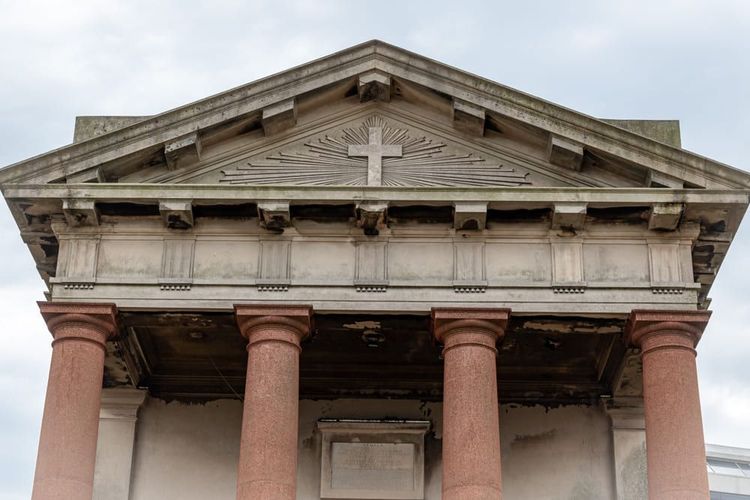
This Anglican church looks a little out of place in such a Hispanic setting: it was built in 1840, right in the middle of the so-called Great War, a decade-long conflict pitting two Argentine factions against two Uruguayan ones, reinforced by Italian, French, English and Spanish volunteers. The fighting was so tangled that the eventual peace crowned no real winner, leaving the country exhausted but marked by a genuine mix of religious influences.
9 - The Rambla
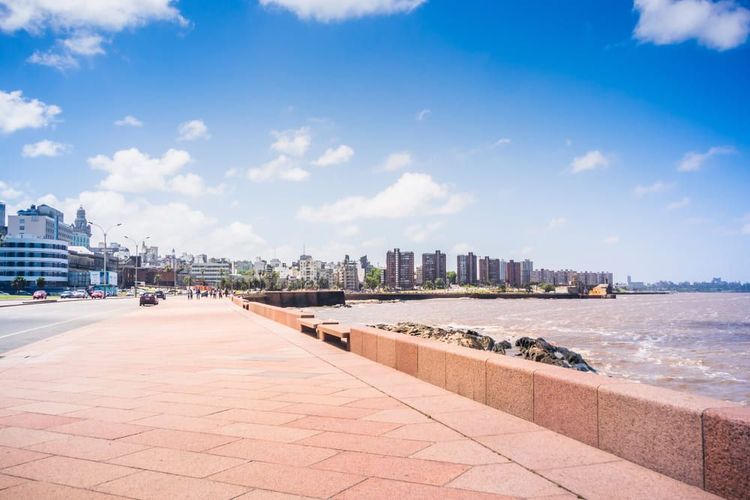
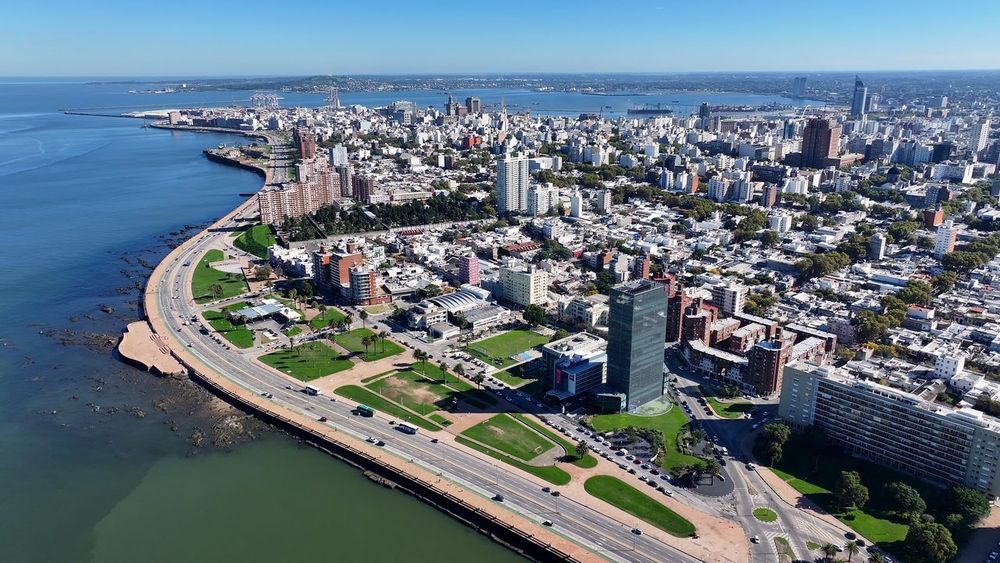
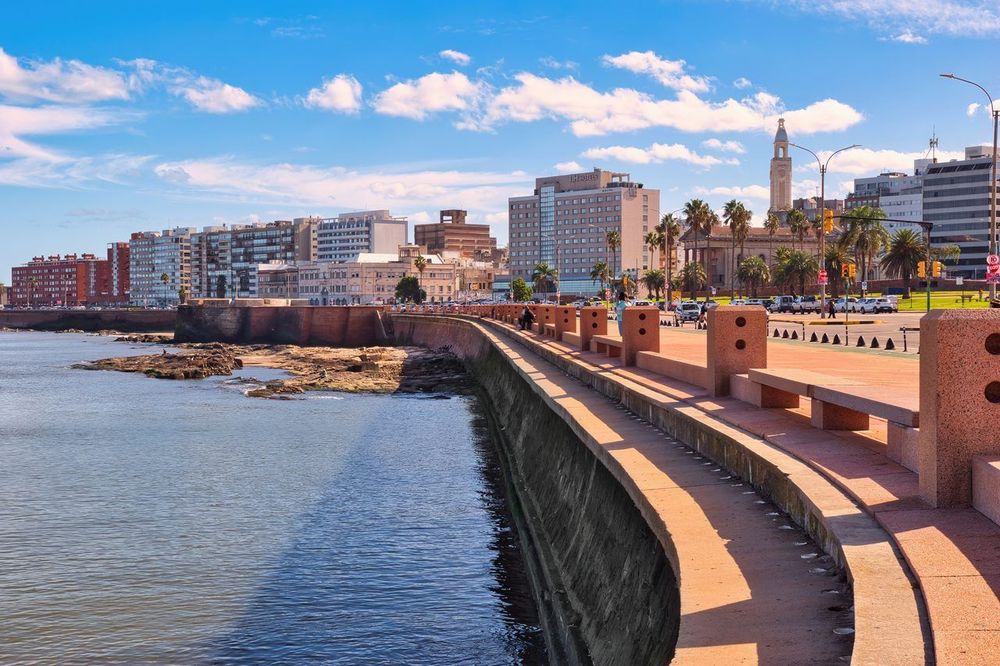
Stretching 24 kilometres along the bay, this seafront promenade is the longest in the world and the true beating heart of the city: athletes, fishermen, couples and groups of friends cross paths here from sunrise to sunset, mate in hand. So central to the country's identity that it's been granted historic monument status, with a bid filed for international recognition.
Free entry · Best late in the day
10 - Río de la Plata
River, estuary or gulf: geographers still disagree on what exactly this shared mouth of the Uruguay and Paraná rivers really is, stretching 250 kilometres long and roughly a hundred wide off Montevideo. Its name, the River of Silver, has nothing to do with the colour of its water; it comes from the precious metal mined at Potosí, in Bolivia, which once travelled these waters on its way to Europe. Further east, the current gradually turns an oceanic blue.
Free entry
11 - The Story of Tango
The streets you're crossing now are named after Carlos Gardel and then La Cumparsita, two essentials of tango: he is the genre's most famous voice, recognised by UNESCO, while that tune is the most covered tango in the world. Uruguay and Argentina, long neighbouring provinces of the Río de la Plata, share the same accent, the same passion for football and the same love for a music born of their common history.
12 - Carnival in Uruguay
This residential street, so quiet the rest of the year, turns into the stage for las llamadas during Carnival, a rhythmic call built on candombe, an Afro-Uruguayan percussion tradition born in the time of slavery. Under the dictatorship, that drumbeat became a symbol of resistance against a regime that didn't hesitate to tear down the working-class neighbourhoods where it was played, yet never managed to silence it.
13 - The Cannabis Museum
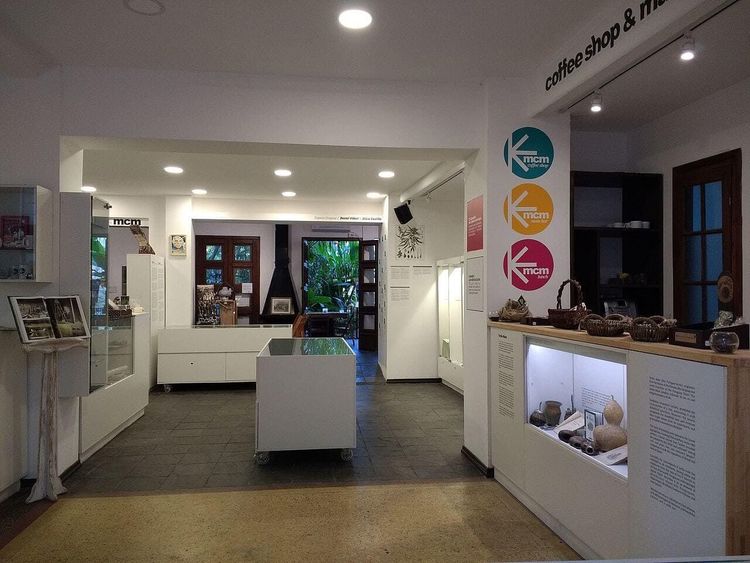
A small detail that says a lot about this country's originality: in 2013, Uruguay became the first nation on earth to fully legalise the production, distribution and recreational use of cannabis, rather than simply tolerating it as elsewhere. Residents have three ways to obtain it: limited home growing, joining a specialised club, or buying it at a pharmacy.
14 - Montevideo from Above
The city hall rises in front of you, hiding a little-known asset: its roof, on the 22nd floor, holds a free rooftop lookout offering a 360-degree view of the whole capital, almost 80 metres up. A good way to gain some perspective on the walk so far, and to spot, in the distance, the places still ahead.
Free entry
15 - A Seat with Carlos Gardel
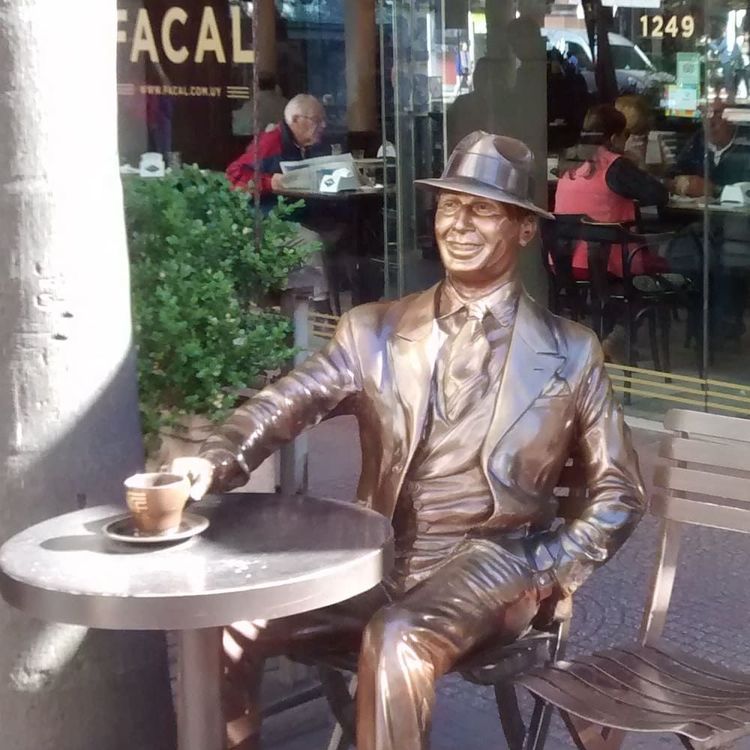
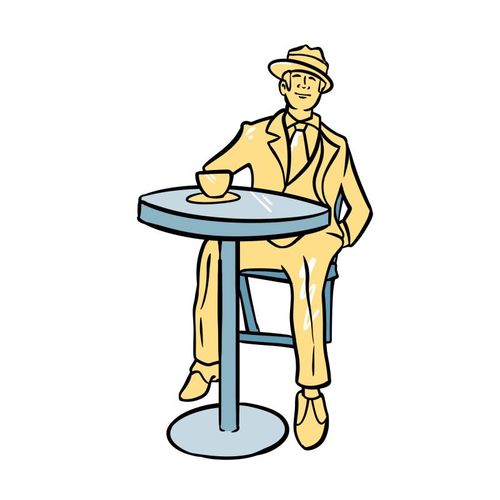
The padlock-covered fountain, brought over from Mexico by a nearby café, promises couples who attach their initials there that they'll one day return to Montevideo. Right beside it, a statue sits Carlos Gardel at a café table, the biggest name in tango, whose birth remains shrouded in mystery: the most widely accepted theory places it in 1890 in Toulouse, under a completely different name from the one that made him famous.
Free entry
16 - Plaza de la Cagancha
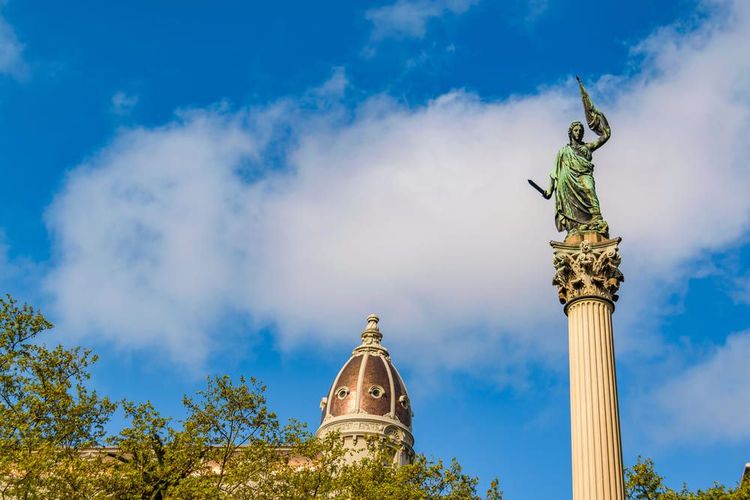
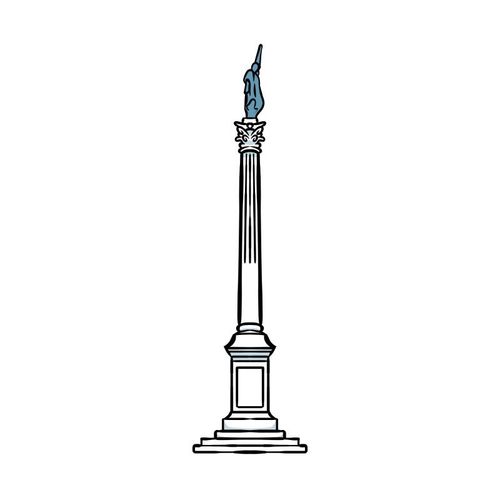
Between a circular theatre and the Column of Peace, which marks the country's kilometre zero, this square dates from 1829, created four years post-independence, when the old town's fortifications were torn down to let the city expand. It took its current name in 1840, after a battle won against troops from Buenos Aires, and still draws elderly tango dancers here in the late afternoon.
Free entry
17 - Avenida 18 de Julio
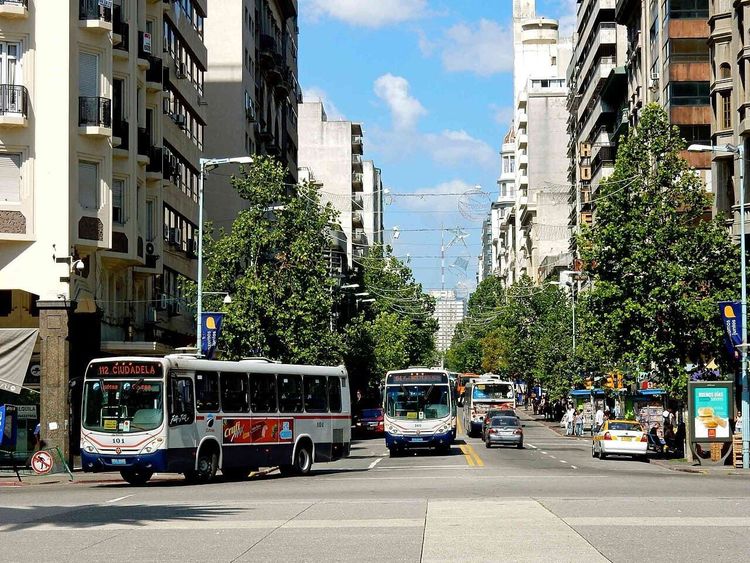
This wide avenue, stretching 3 kilometres from Plaza Independencia to the Obelisk of the Constituents, takes its name from the country's first national constitution, sworn in 1830 and in force until 1918. That text set up a Catholic republic whose citizenship was reserved for landowners and the literate, leaving workers and the illiterate out from the start, a useful reminder of what the idea of a Republic originally meant here.
Free entry
18 - Palacio Salvo
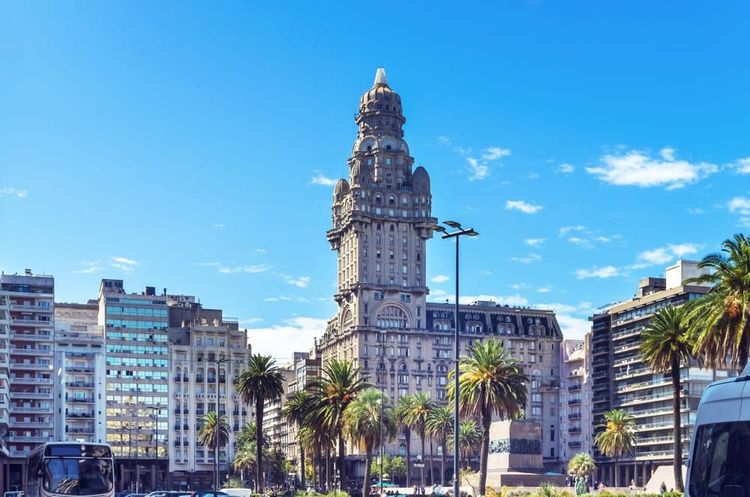
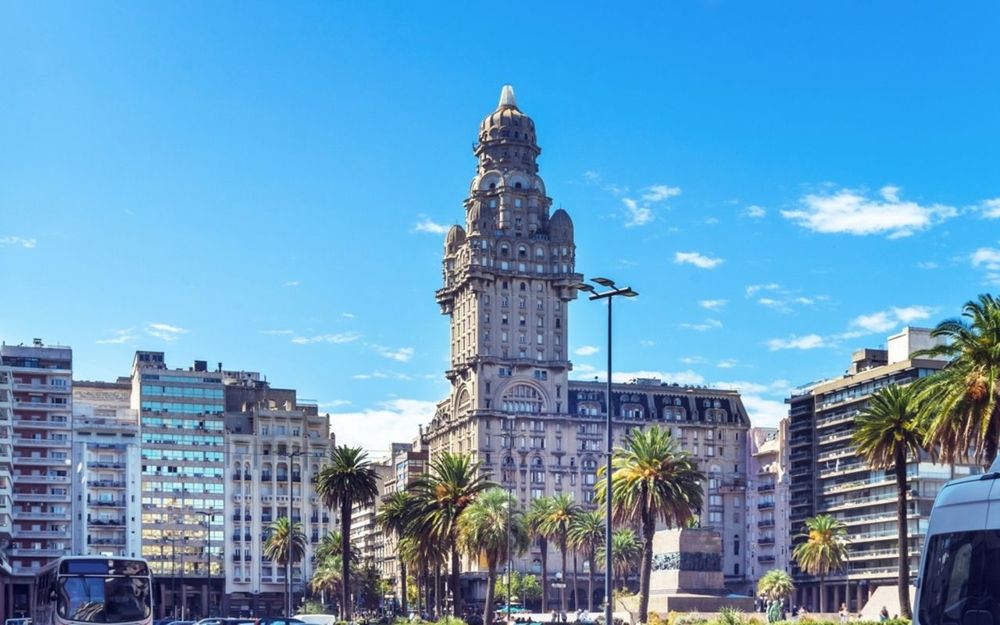
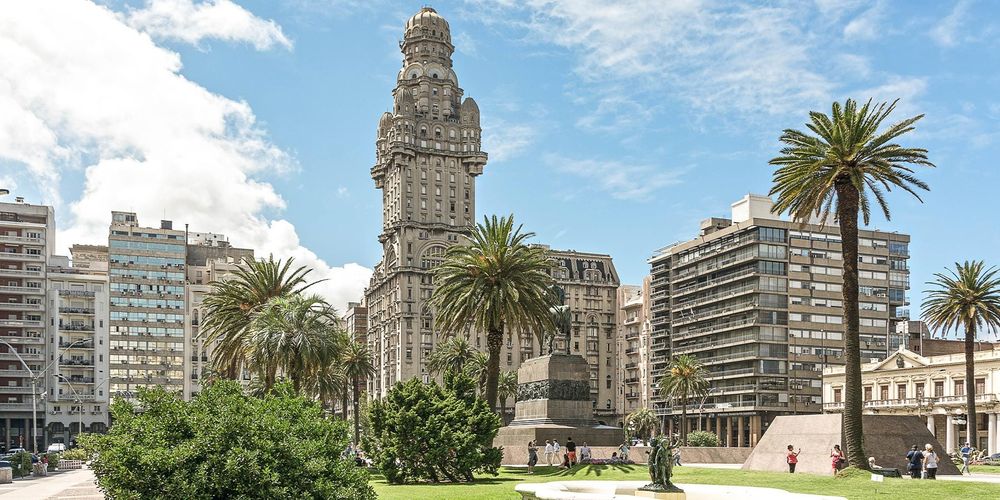
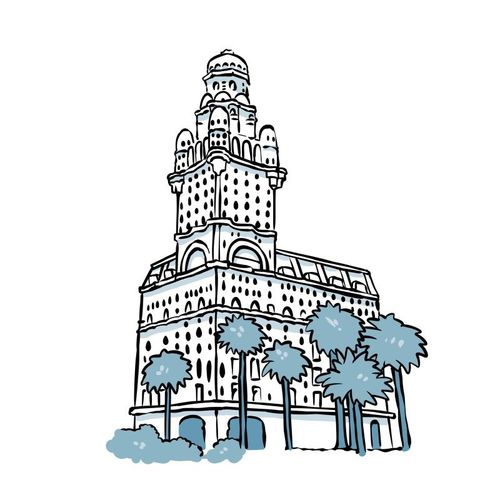
You can't miss this Art Deco skyscraper, a bold mix of Gothic, Renaissance and Neoclassical styles, which brings the walk full circle. The building has a twin in Buenos Aires, the Palacio Barolo, designed by the same Italian architect, Mario Palanti, and built thanks to three entrepreneur brothers who gave it their name. Each of the two towers was originally fitted with a lighthouse, meant to signal across the Río de la Plata between the two capitals.
Free to see from outside
What to do in Montevideo in 2 or 3 days?
One morning is enough to cover the heart of the old town with this tour: 7.4 km and 18 sights in about 3 hours, from Plaza Independencia to Palacio Salvo. With 2 or 3 days to spare, Montevideo opens up further, between the Rambla and neighborhood life.
The next day, keep walking along the Rambla, which runs for about 22 km along the bay, out toward the more contemporary neighborhoods of Pocitos and Punta Carretas. To enjoy that quieter setting, our guide to solo travel in Montevideo lays out a one-day itinerary that nicely extends this first loop.
On the third day, head to the Barrio Sur on a Sunday instead, for the candombe drumming rehearsal that turns the streets into a moving parade. Our roundup of free things to do in Montevideo lists other ideas that cost nothing, from the flea market to a wetland reserve out at the city's edge.
Which neighbourhoods does the tour cross?
In one loop, the tour links the districts that tell Montevideo's story, from the Spanish colonial old town to the modern avenue named after independence.
It starts at Plaza Independencia, the threshold of the Ciudad Vieja, passes the Solis Theatre and dives into the old colonial core: Plaza de la Constitución, the city's birthplace, then Plaza Zabala with its French-style gardens, before reaching the imposing Banco de la República and the Mercado del Puerto by the water (stops 1 to 6).
Sarandí pedestrian street leads back toward the Rambla, the great promenade along the Río de la Plata, where the Anglican church stands quietly, a reminder of the British community once settled on the riverbank (stops 7 to 10).
The Barrio Sur, birthplace of tango and the candombe drumming that drives carnival, comes before the climb up Avenida 18 de Julio, the capital's modern spine, where the city hall viewpoint, the Carlos Gardel statue, Plaza de Cagancha and finally Palacio Salvo close the loop (stops 11 to 18).
What to see in Montevideo in 2 hours?
If time is short, stick to the heart of the Ciudad Vieja: stops 1 to 5 all sit within less than a kilometer of each other.
Start at Plaza Independencia, overlooked by General Artigas's mausoleum and the old Spanish citadel gate, then admire the neoclassical façade of the Solis Theatre, the oldest theatre in South America. A few steps on, Plaza de la Constitución and its colonial cathedral come before the French-style gardens of Plaza Zabala, on the way to the colonnaded façade of the Banco de la República, which closes this walk through the old town.
How much does it cost to visit Montevideo?
Of the 18 stops, 11 can be visited freely, from Plaza Independencia to the Mercado del Puerto, while 3 others (the Solis Theatre, the Banco de la República, Palacio Salvo) are only seen from the street, with no ticket needed.
The main expense is then transport: a ride on the STM bus network costs around $1, and a one-way ferry to Buenos Aires runs about $70 for an early booking, rising above $150 on the busiest weekend sailings. Our guide to visiting Montevideo without a car covers these trips and other ways to get around the capital.
Information checked in October 2026 and subject to change.
Where to stop for a bite along the tour?
The Mercado del Puerto, stop 6, is the tour's must-do food stop: under its century-old iron-and-glass hall, the parrillas grill meat and offal into asado, the Uruguayan take on barbecue.
Here, people order beef ribs, chorizo or the famous chivito, with a glass of local tannat or a medio y medio, half dry white wine and half sparkling wine. Our guide to solo travel in Montevideo prices out a full day built around chivito and tannat.
What should you know before visiting Montevideo?
The weather is worth planning around: Uruguay's seasons run opposite to the Northern Hemisphere, and winter, from June to September, turns cool and rainy there.
Between December and March, summer makes visiting far more pleasant, and February, Carnival month, sees Montevideo's cultural life pick up. On the money side, Uruguay uses the Uruguayan peso, but ATMs also dispense US dollars, handy if you plan to cross into Argentina.
In the tourist areas of the Ciudad Vieja and the port, extra care is worth taking in the evening and at night: go out with the bare minimum and leave cash and passport in the hotel safe.
What to see around Montevideo?
Montevideo makes a good base for day trips, between its old river city and the coast nearby.
About 2 hours' drive away, Colonia del Sacramento is worth the detour: founded by Portuguese settlers, it passed into Uruguayan hands at independence in 1828, and its historic center is on the UNESCO World Heritage list. Our roundup of the best things to do in Montevideo points out the Granja Arenas along the way, a museum where you can taste local jams and cheeses. Others instead head out for the day to Punta del Este.
Le plein d'inspirations
Explorez le monde en totale liberté, à pied au cœur des villes ou au fil des routes. Nos guides audios transforment chaque destination en une découverte culturelle immersive et unique.










FAQ for visiting Montevideo
When is the best time to visit Montevideo?
The best time to visit Montevideo runs from December to March, during the southern summer. Temperatures are pleasant and the sun is out, perfect for enjoying the beaches and the relaxed atmosphere of the city. February is particularly recommended thanks to Carnival, which enlivens the whole capital with its colourful parades and lively music. Absolutely avoid winter from June to September, when the cold and rain spoil the charm of this coastal city. January can be very busy with the national holidays, but the festive atmosphere more than makes up for it. The Uruguayan spring in October and November also offers lovely days to explore the city in good conditions.
How many days do you need to visit Montevideo?
Three to four days is generally enough to discover the essentials of Montevideo and soak up its peaceful atmosphere. In two days, you can explore the historic Ciudad Vieja and stroll along the Rambla beside the ocean. An extra day will let you explore the local markets such as the Mercado del Puerto and visit the charming residential neighbourhoods. With four days, you will have time to truly live at the Uruguayan pace, enjoy the urban beaches and sample the local nightlife. The Ryo audioguide helps you make the most of your time with itineraries designed around the length of your stay, guiding you through the must-see sights without missing a thing.
How do you get around Montevideo?
Montevideo has an efficient and inexpensive bus network that serves the whole city. There are many lines and the buses run regularly, even if the timetables can sometimes be approximate. For more flexibility, taxis are affordable and easily available, with ride-hailing apps such as Uber well established. Bike rental is growing in popularity thanks to the cycle paths along the Rambla and in certain neighbourhoods. The historic centre is best explored on foot to fully enjoy the architecture and the atmosphere. The distances between the main points of interest remain reasonable, and walking lets you discover hidden corners and stop spontaneously at local cafés.
What currency is used in Uruguay?
The official currency of Uruguay is the Uruguayan peso. Bank cards are widely accepted in the main restaurants, hotels and shops of Montevideo, but always keep cash for small shops, markets and public transport. Cash machines are plentiful in the city centre and generally accept international cards. The US dollar is often accepted in tourist areas, but the exchange rate will be less favourable than at a currency exchange. You will easily find casas de cambio in the centre to change your money. Remember to check international banking fees before you leave and inform your bank of your trip to avoid having your card blocked.
What local specialities should you eat in Montevideo?
Uruguayan asado is a must; this barbecue tradition brings families and friends together around tasty grilled beef of exceptional quality. Do not miss the chivito, an iconic sandwich filled with steak, egg, ham, cheese and vegetables, a true national institution. Uruguayan empanadas stand out for their thin pastry and varied fillings. At the Mercado del Puerto, you will discover the authentic atmosphere of the traditional parrillas. Italian influences are strong, with excellent pizzas and pasta. For something sweet, try the alfajores, biscuits filled with dulce de leche, and wash it all down with a mate, the national drink that Uruguayans sip at all hours. The cuisine of Montevideo perfectly reflects the warm simplicity of the country.
Where should you stay in Montevideo and in which neighbourhood?
Pocitos is the ideal neighbourhood to stay in, offering proximity to the beach, varied restaurants and a pleasant residential atmosphere. Ciudad Vieja suits lovers of history and colonial architecture, with its boutique hotels in restored buildings, though it can be quieter in the evening. Punta Carretas appeals with its chic side and modern amenities, perfect for a comfortable stay near the shopping and parks. Centro remains practical for getting around easily, with good value for money. Carrasco, further away but elegant, will please travellers seeking peace and quiet. Accommodation options range from friendly youth hostels to charming hotels, as well as rental apartments that let you live like a local.
How do you get to Montevideo from Buenos Aires?
The ferry remains the most popular and scenic option for connecting Buenos Aires to Montevideo. Several companies offer direct crossings in about two and a half hours, or with a stop at Colonia del Sacramento. Departures are daily and the trip offers lovely views over the Río de la Plata. The plane is the fastest alternative, with flights of about an hour, but do factor in check-in time and the journeys to the airports. The bus combined with the ferry via Colonia is an economical option; in that case allow five to six hours of total travel. Customs formalities remain simple between the two countries, and a valid passport is generally enough. Book your tickets in advance, especially in high season.
What are the absolute must-sees in Montevideo?
A visit almost always begins in the Ciudad Vieja, the old town laid out on a grid between the port and Independence Square: there you will find the Solís theatre, the Citadel gateway, the Mercado del Puerto with its grills, museums housed in former mansions, and the Palacio Salvo, the capital's most recognisable silhouette.
Walking up 18 de Julio avenue, you will pass Art Deco façades, historic cafés and the Palacio Legislativo before reaching Parque Rodó and its shaded paths. On the far side of the bay, the Cerro and its fortress give the best overall view of the city and the Río de la Plata. The Ryo audio guide offers a dedicated Montevideo route that links these places and tells their story.
What can you do along the Rambla and on Montevideo's beaches?
The Rambla follows the Río de la Plata for kilometres and acts as the city's real living room: people walk, run and cycle there, and above all settle in at the end of the day, thermos and mate in hand, to watch the sun drop over the water. It links the central districts to the eastern ones without a break, which makes it the most enjoyable route for exploring.
Urban beaches punctuate the way, from Ramírez to Pocitos, Buceo, Malvín and Carrasco, with their pale sand and apartment blocks in the background. Swimming depends a great deal on the season and the wind, as the river water stays cool and is often tinged with silt; outside the warm months, these beaches are mainly for strolling and outdoor sports.
Is Montevideo a safe city for visitors?
Montevideo has a reputation as one of the calmest capitals on the continent and can be visited without particular difficulty, provided you take the usual big-city precautions. The Ciudad Vieja, very lively during the day, empties in the evening once the offices close: it is then better to stay on busy streets, around the restaurants and theatres, rather than cutting through deserted lanes.
Keep your phone and camera discreet in tourist areas and near the port, use booked taxis or apps to get home late, and avoid wandering alone on the beaches after dark. The residential neighbourhoods to the east, such as Pocitos and Carrasco, along with the Rambla during walking hours, remain busy and reassuring.
Which activities can you enjoy in Montevideo, from the carnival to the football museum?
From mid-January to late February, Montevideo's carnival fills the streets with murga and candombe for around forty days. All year round, tango, milonga and candombe dinner shows take place Monday to Saturday from 8pm. Rent a bike to ride the 22 kilometres of waterfront, visit the football museum in the country that hosted and won the first World Cup in 1930, then head out to taste Uruguayan wines or explore Colonia del Sacramento, about two hours away by road.
Find all our ideas in our top 6 activities to do in Montevideo.
Can you really explore Montevideo and its nearby beaches without renting a car?
Yes, it is close to the local default. From Carrasco Airport, about 20 kilometres out, the bus costs a few dollars, Uber roughly $20 to $35 and the official taxi $45 to $60. From Buenos Aires, Buquebus crosses in 2 hours 15 to 2 hours 45, while Colonia Express goes via Colonia del Sacramento. In town, the STM card unlocks nearly every bus for about a dollar a ride, and the Rambla stretches some 22 kilometres. Punta del Este and Piriápolis are reachable car-free too, but Cabo Polonio is not.
All the practical details are in our guide to Montevideo without a car.
Is Montevideo a good destination for solo travel?
Yes, Montevideo is one of the easiest cities in South America to visit on your own: calm, compact enough to cover much of it on foot, and in one of the continent's safest countries. Pickpocketing does happen, particularly around the Tres Cruces bus terminal and the Mercado del Puerto on weekends.
For where to stay, Pocitos, Punta Carretas and Ciudad Vieja offer very different atmospheres. Budget travelers can get by on $40 to $60 a day, and day trips to Colonia del Sacramento or Punta del Este are easy to add.
Neighborhoods, a one-day itinerary, costs and where to eat: read our practical guide to solo travel in Montevideo.
Vos commentaires, idées et suggestions
Aucun avis pour le moment