© Shutterstock
 Votre guide Ryo
Solo Travel in Montevideo: A Practical 2026 Guide
Montevideo doesn't try to impress you the way Buenos Aires or Rio do, and that restraint is exactly why solo travel in Montevideo works so well. The riverfront promenade runs for about 22 kilometers without a single aggressive street vendor, counter seats at the century-old port market practically invite you to eat alone, and strangers will correct your bus stop before you even ask. If you're weighing Uruguay's capital against louder South American cities, the short version is that this one is calmer, compact enough to cover much of on foot, and easy to walk home from after dinner in the right neighborhoods.
This guide covers where solo travelers actually base themselves (Pocitos, Punta Carretas or the cobbled streets of Ciudad Vieja), which landmarks and overlooked corners are worth tackling alone, a realistic one-day itinerary with proper pacing built in, what a full day of chivito and tannat actually costs, and how to turn a short trip into day excursions to Colonia del Sacramento and Punta del Este. Along the way, Ryo's audio-guided tour of Montevideo narrates the old town's history as you walk it, handy on mornings when you'd rather listen than squint at a phone map.
Is Montevideo a Good (and Safe) Destination for Solo Travel?
The confident answer is yes: Montevideo is one of the easiest cities in South America to visit entirely on your own. Uruguay consistently ranks among the safest and least corrupt countries on the continent, its population of roughly 3.5 million is smaller than many single cities elsewhere in the region, and Montevideo itself feels closer to a mid-sized European capital than a sprawling metropolis. Uruguay was the first country in the world to fully legalize and regulate cannabis, back in 2013, and it has had marriage equality and legal abortion on the books for over a decade, both signs of a quietly progressive, rule-following culture that makes it predictable for a traveler flying solo.
A few quick facts help you read the country. Nearly half of all Uruguayans live in and around Montevideo, so the capital is where almost everything happens: government, ports, universities, nightlife. Spanish is the only official language, and English is less widespread than you might expect, so a translation app and a handful of phrases go a long way. You'll also notice the thermos-and-gourd combination tucked under almost every arm: mate is the national drink, shared among friends, and being offered a sip is a small sign of acceptance. None of that means you can switch off common sense, which is where the specifics below come in.
How Safe Is Montevideo for Solo Travelers
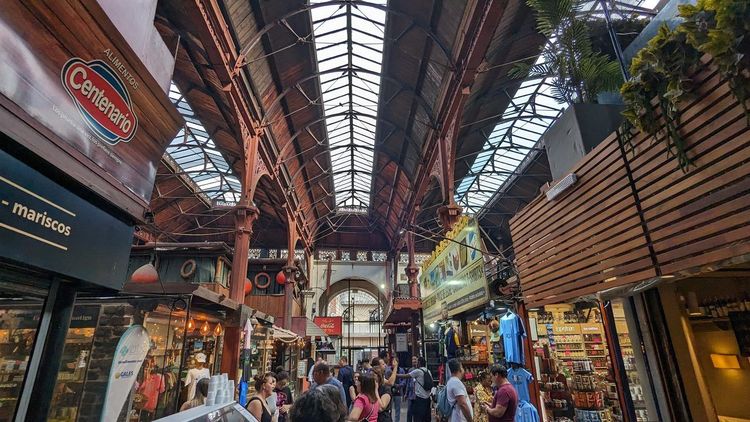
Violent crime aimed at tourists is rare, but opportunistic theft is not. Pickpocketing shows up at the Tres Cruces bus terminal and in the weekend crowds around Mercado del Puerto. Crowded city buses carry the same risk, exactly the kind of place where a backpack gets forgotten for ten seconds. Keep valuables zipped and front-facing and you'll blend in with everyone else doing the same thing.
Solo female travelers generally report feeling more at ease here than in most of the region; catcalling is less constant than in Buenos Aires or Rio, though it still happens. Walking alone after dark is fine in Pocitos and Punta Carretas; the busier parts of Ciudad Vieja work too, until the shops close and the old town empties out fast. After that, switch to a radio taxi or rideshare rather than walking back to your hostel.
Is Montevideo Expensive for Solo Travel
Montevideo is not the bargain that Buenos Aires or Lima can be. Uruguay's peso holds its value, restaurant and taxi prices sit closer to Western Europe than to the rest of Latin America, and solo travelers pay a premium wherever double rooms are the default pricing. Budget travelers who stick to hostel dorms and market-counter food, walking rather than taking taxis, can realistically get by on $40 to $60 a day; the full daily breakdown, including what a dorm bed and a chivito actually cost, is further down in the budget section.
Where to Stay in Montevideo as a Solo Traveler
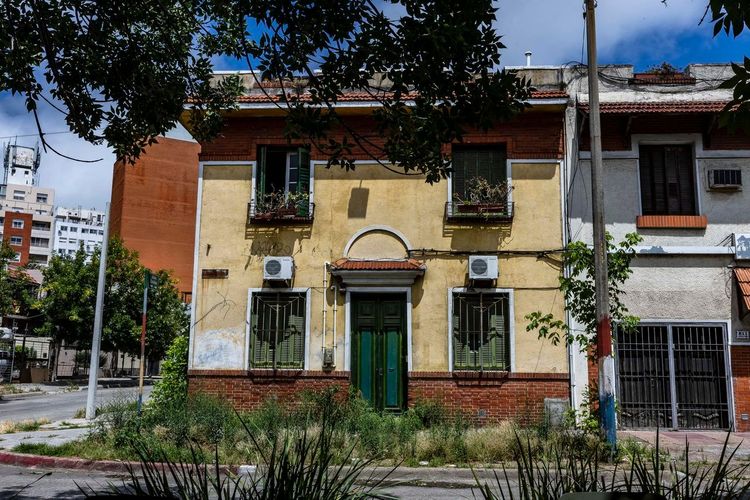
Where you sleep shapes a solo trip here more than in most cities, because Montevideo's neighborhoods have genuinely different personalities rather than just different price tags. Three options cover almost every need: a residential beach neighborhood, a walkable historic old town, or a hostel built specifically around meeting people.
Pocitos & Punta Carretas: Best Base for Solo Travelers
Pocitos) is Montevideo's most popular residential neighborhood for a reason: a curved sand beach along La Rambla, a dense grid of cafés and parrillas, and enough apartment rentals that solo travelers can find a private room for not much more than a hostel dorm elsewhere. It's quiet at night, well-lit along the beachfront, and a 20 to 30-minute bus ride from Ciudad Vieja (11000 Montevideo), which matters if sightseeing all day and sleeping somewhere calmer is your priority.
Punta Carretas, just west of Pocitos on the same stretch of coast, is the more residential, less touristy option: leafy streets, a lighthouse on the point, and a shopping mall built inside a former prison. It suits solo travelers who've already done Ciudad Vieja on a previous trip, or who want a calmer home base and don't mind the extra ten minutes downtown.
Ciudad Vieja (Old Town): Historic and Walkable
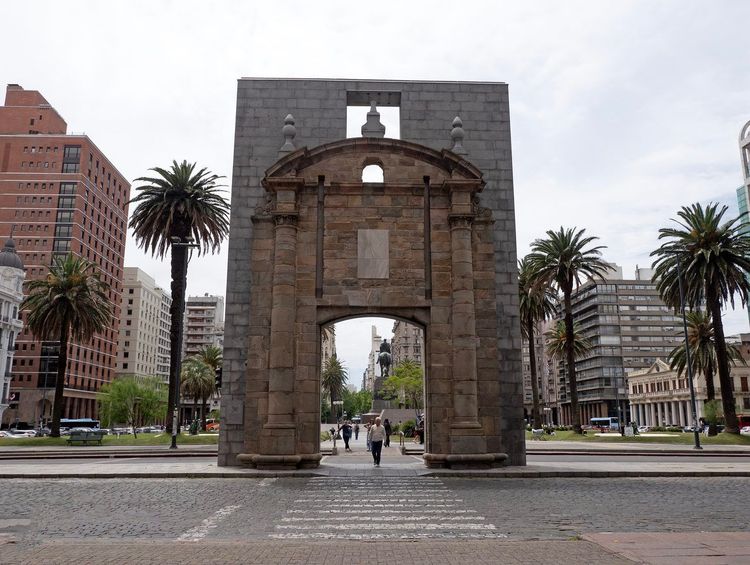
Ciudad Vieja is Montevideo's compact colonial core, a grid of narrow streets between the port and Plaza Independencia, and the obvious base if you'd rather walk to Teatro Solís and Mercado del Puerto than take a bus there. It's also home to the richest concentration of design hotels and renovated mansions turned guesthouses. By day it's full of office workers, cruise passengers and students; by night it quiets down considerably, something to factor in if you like stepping out for a late walk.
Basing yourself here has another practical upside: the old town is where Ryo's audio-guided walk through Montevideo spends most of its time, so on your first morning you can press play from your hostel doorstep and get oriented before you've even had breakfast.
Top Hostels for Meeting People: MedioMundo & Viajero Montevideo
If making friends matters more than having the beach outside your window, two hostels keep coming up for solo travelers in Ciudad Vieja. MedioMundo Hostel) occupies a converted colonial house with a terrace that turns into the evening social hub, dorm beds and a kitchen solo travelers actually use.
Viajero Montevideo Hostel), part of a hostel chain with branches elsewhere in South America, runs a steadier program of asado nights and pub crawls, suited to travelers arriving without a plan for making friends and figuring it out as they go.
If hostel dorms aren't your style but chain-hotel anonymity isn't either, Alma Histórica Boutique Hotel) sits in a restored Ciudad Vieja mansion with a communal breakfast table that still gets solo guests talking, while FAUNA Montevideo (Bartolomé Mitre 1337, 11000 Montevideo, rated 4.9/5 on Google (126 avis)) leans into a design-forward, slightly more private version of the same idea. Both cost more than a dorm bed, but less than you'd expect for the design on offer.
Top Things to Do Alone in Montevideo
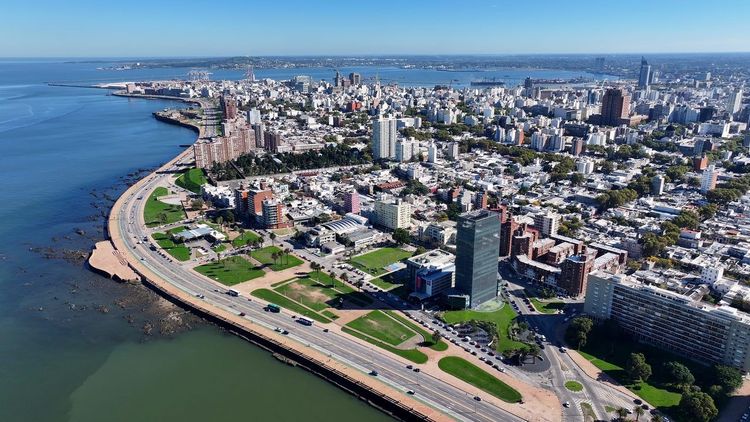
None of Montevideo's best experiences require a travel companion. Several are actually better solo, since you set your own pace along the water or through a crowded market without negotiating anyone else's schedule.
La Rambla: Walking and Cycling the Waterfront
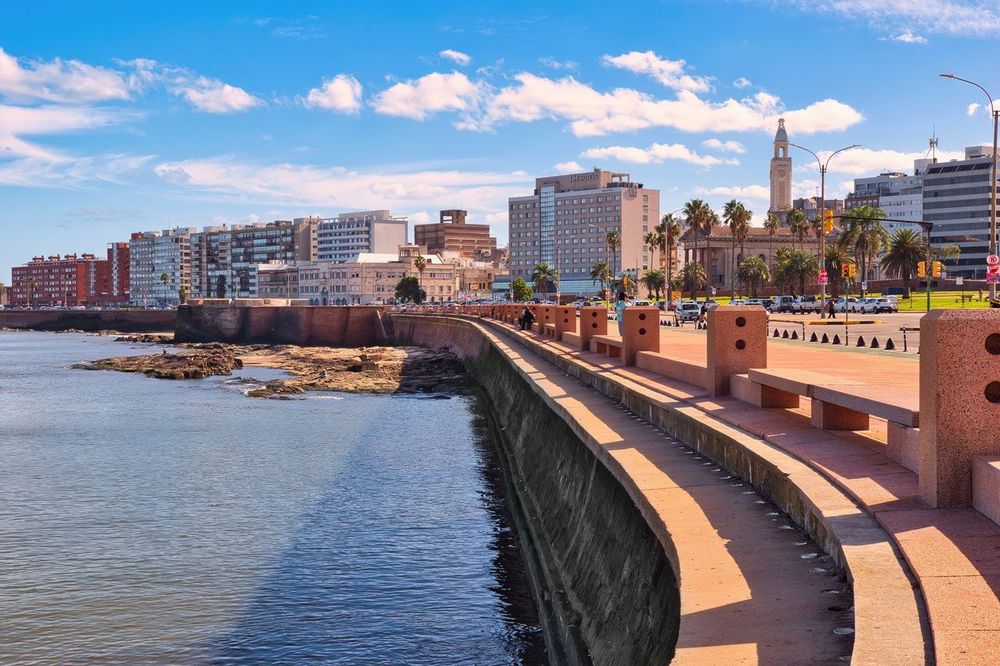
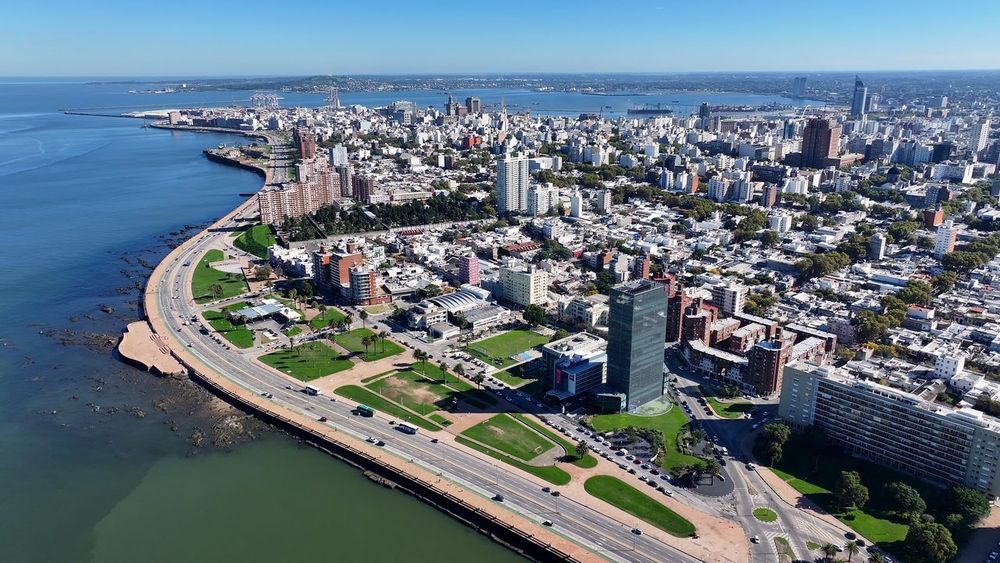
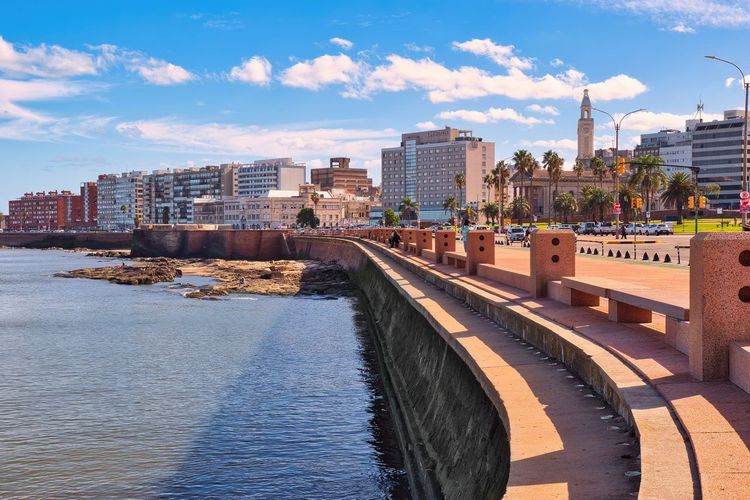
La Rambla (Rambla República de Chile, 11300 Montevideo) is the promenade tracing Montevideo's coastline for roughly 22 kilometers, from the port past Pocitos' beach and out toward Carrasco. Locals use it for running, walking dogs, drinking mate out of a thermos tucked under one arm, or fishing off the rocks, which makes it one of the easiest ways to feel part of the city rather than a spectator of it within an hour of landing.
Renting a bike turns a long walk into a short ride, useful if you want to cover Pocitos to Ciudad Vieja and back in one afternoon rather than committing a whole day to it. Weekday mornings are quietest; weekend afternoons bring out half the city, its own kind of people-watching if you don't mind sharing the path. Sunset is the moment to be here: locals gather on the rocks and the wall facing west, and nobody blinks at someone sitting alone.
Ciudad Vieja Landmarks: Calle Sarandí, Teatro Solís & Mercado del Puerto
Calle Sarandí (11000 Montevideo) is the pedestrianized spine of the old town, running from Plaza Independencia down toward the port, lined with cafés and the kind of secondhand bookstalls that reward slow walking, especially on weekends when street performers take over the corners too.
Just off Plaza Independencia stands Teatro Solís), Uruguay's most important theater, opened in 1856. Even a daytime guided tour of the auditorium is worth it if you don't have an evening free for a performance, and tickets for many shows are cheap by European standards, a good excuse for a solo night out.
At the far end of the old town sits Mercado del Puerto), a cast-iron 19th-century market hall now packed with parrilla counters where eating solo is the norm rather than the exception. You grab a stool at the grill, order by pointing, and strike up conversation with whoever's next to you if you feel like it. Go for lunch rather than dinner; it's livelier and many grills close in the evening.
This stretch happens to be exactly what Ryo's audio-guided tour of Montevideo narrates stop by stop, in walking order, so you never double back alone: if you'd rather have Teatro Solís and the market's iron frame explained as you pass them instead of reading plaques, this is the moment to put your headphones in.
Hidden Finds: Mirador Panorámico, Tristán Narvaja Flea Market & Local Bookshops
For the best panoramic views of Montevideo without paying for a rooftop bar, head to the Mirador Panorámico at the top of the Intendencia (city hall) on Avenida 18 de Julio. The viewing deck is free and looks out over the rooftops in every direction, port to beach. If you want the city's most famous silhouette up close, the neighboring Palacio Salvo, once the tallest building in South America, runs guided tours that climb into its tower.
On Sundays, the Tristán Narvaja flea market (Avenida 18 de Julio, 11200 Montevideo, rated 4.4/5 on Google (18 557 avis)) takes over several blocks near the university with everything from vinyl records to antique mate sets, a genuinely enjoyable way to spend a solo morning since browsing alone is half the fun and nobody's rushing you past a stall you wanted to linger at.
The surrounding Cordón streets also hide several secondhand bookshops worth ducking into even without Spanish, since some keep shelves of English titles left behind by past travelers. Montevideo is a reading city: bookshop cafés where you can sit for an hour with a coffee are common, and they make a natural refuge on a rainy solo afternoon. For tango, look for milongas announced on posters in Ciudad Vieja and Cordón; the evening section of the itinerary below picks it up.
Best One-Day Solo Itinerary in Montevideo
If you only have one full day, here's a pacing that respects how tiring solo sightseeing actually is: three blocks of the day, each anchored to one part of the city, with built-in slack rather than a packed checklist.
Morning: Ciudad Vieja & the Port Market
Start in Ciudad Vieja around 9am, before the cruise crowds arrive, and walk Calle Sarandí end to end between Plaza Independencia and the port. Pop into Teatro Solís if a tour is running, ride up to the free Mirador Panorámico for the overview, then aim for Mercado del Puerto by 12:30, early enough to grab a grill stool before the lunch rush peaks. This block covers roughly three hours of walking and eating, plenty for one morning solo. Resist the urge to add a museum on top of it just because it's nearby.
Afternoon: La Rambla & Pocitos
After lunch, walk or cycle La Rambla east toward Pocitos, a long but flat walk or an easy ride on a rented bike. Pocitos beach is the natural stopping point, somewhere to sit with a coffee or a thermos of mate and let the morning's walking settle before deciding on dinner. This is deliberately the slowest part of the day; solo trips burn out fastest when every block is scheduled, and the afternoon is where that gets corrected.
Evening: Tango, Dinner & Nightlife
Head back toward Ciudad Vieja or Barrio Sur for dinner, asado if you haven't already had your fill of grilled meat, and look for one of the smaller milongas that let solo visitors watch or take a beginner lesson without a partner booked in advance. Tango here is less performative than the tourist shows in Buenos Aires, closer to locals dancing for themselves. Keep in mind that Montevideo eats late: restaurants fill up around 9pm or 10pm, and bars rarely get busy before midnight.
If you've been using Ryo's audio guide for the morning walk, its stops through the old town fit neatly into this three-block structure, and because you go at your own pace, you can pause it for lunch and pick up where you left off, reassuring on a first solo day when you're still calibrating how much walking is too much.
Food & Drink: What to Eat Alone in Montevideo
Eating alone in Montevideo is rarely awkward. The city's food culture runs heavily toward counters, markets and shared grill stalls rather than formal sit-down service, which works in a solo traveler's favor.
Must-Try Local Flavors: Chivito & Asado
The chivito is Uruguay's answer to the overstuffed sandwich: steak, ham, bacon, cheese, egg, lettuce and olives stacked on a bun, usually served with a side of fries big enough for two. Order the plato version, without the bread, a common solo-diner move that skips the bun without losing any of the flavor.
Asado, Uruguay's slow-grilled barbecue, is less a single dish than a whole afternoon ritual, but you don't need a group to enjoy it: parrilla counters at Mercado del Puerto sell asado by the portion, grilled to order while you watch, no reservation required. Save room for dulce de leche, which turns up in pastries, pancakes and alfajores, and try a medio y medio, a half-sparkling, half-white wine aperitif closely associated with the port market.
Solo-Friendly Markets, Cafés & Bars
Beyond the main market, smaller neighborhood food halls in Pocitos and Punta Carretas run quieter versions of the same counter-seating format, useful on days when Mercado del Puerto feels too crowded. Cafés along 18 de Julio and in Ciudad Vieja are used to solo customers lingering over a cortado with a book; nobody will rush you out.
For a solo drink after dinner, wine bars pouring tannat, Uruguay's signature red, tend to have bar seating built for exactly this. Bartenders here are generally chattier than the stereotype of reserved Uruguayans suggests, once you're the one sitting alone at the bar rather than at a table for two.
Day Trips from Montevideo: Colonia del Sacramento & Punta del Este
Montevideo makes an efficient base for two of Uruguay's best day trips, in opposite directions along the coast, and both are entirely doable solo without joining an organized tour, provided you plan the return transport before you leave.
Colonia del Sacramento: A Historic Day Trip
Colonia del Sacramento, founded by the Portuguese in 1680 and listed by UNESCO since 1995, sits a little under three hours west of Montevideo by bus. Its cobbled Barrio Histórico (Colonia del Sacramento, Uruguay) is small enough to wander completely in half a day, lighthouse climb included, and it's the kind of place where getting mildly lost down a side street is the actual point rather than a problem to solve.
Colonia is one of three World Heritage sites in Uruguay, alongside the Fray Bentos industrial landscape on the Uruguay River and Eladio Dieste's brick Church of Atlántida, about an hour east of Montevideo. Solo travelers often do Colonia as a straightforward there-and-back trip, but it also works as a stopover toward Buenos Aires, since ferries across the Río de la Plata depart from its port, useful if your itinerary continues into Argentina afterward.
Punta del Este: Beaches and Nightlife
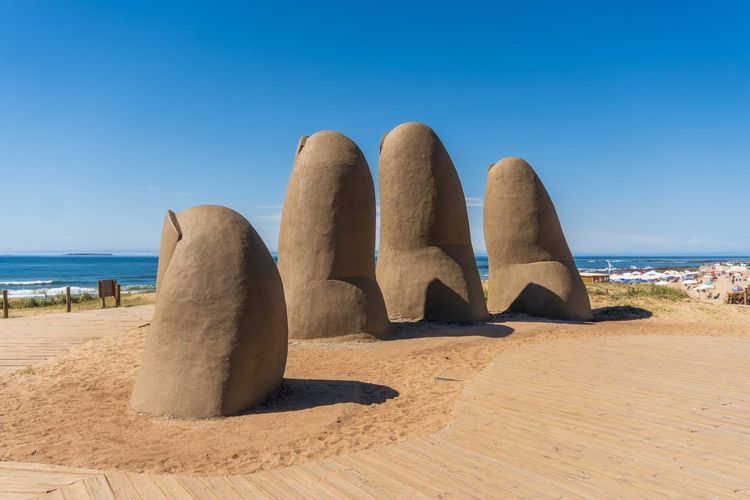
Punta del Este, roughly two hours east, is Uruguay's glossiest beach resort. The Playa Mansa (20100 Punta del Este, Uruguay, rated 4.7/5 on Google (1 676 avis)) side is calmer for swimming; the Playa Brava side is home to the famous fingers sculpture half-buried in the sand. Outside peak summer months (December to February), it's noticeably quieter and cheaper, which suits a solo day trip better than the packed high season when every restaurant needs a reservation.
A day trip only really covers the beaches and the peninsula around the port; save an overnight stay for the nearby arty neighborhood of La Barra if nightlife is the actual draw, since Punta del Este's bar scene gets going well after the last bus back to Montevideo has left.
Getting There: Buses and Ferries
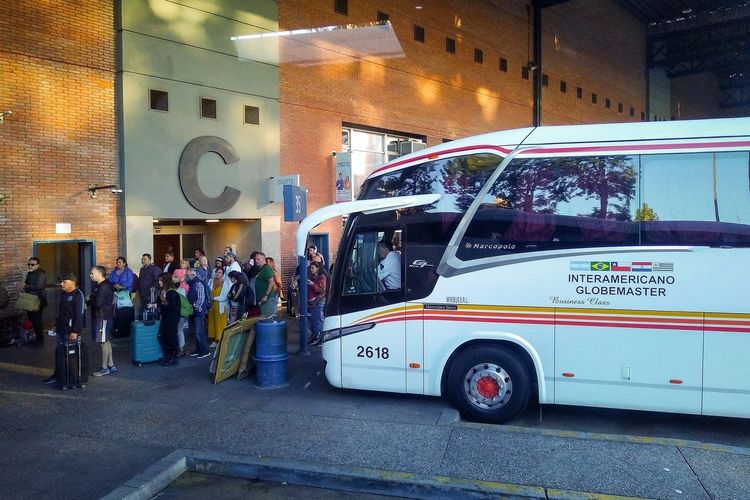
Both trips start from Montevideo's Tres Cruces bus terminal, where companies such as COT run frequent direct buses to Colonia and Punta del Este. Tickets can be bought at the terminal counters or online; advance booking isn't strictly necessary outside holiday weekends, though buying the day before saves a queue. If Buenos Aires is also on your route, ferries from Montevideo's port cross directly to Buenos Aires, while the bus-and-boat combination via Colonia is usually cheaper and lets you see the old town on the way.
Getting Around Montevideo Solo: Transport & Navigation
Getting from A to B alone is one of the easier parts of a Montevideo trip once you know the basics below.
Arriving in Montevideo
Most travelers reach Uruguay either by air or by ferry from Buenos Aires. Carrasco International Airport lies east of the city, roughly 30 to 40 minutes from Ciudad Vieja by road, with taxis, airport buses and rideshare apps all available for the trip in. Booking a fixed-price taxi at the counter in arrivals removes any haggling if you'd rather not deal with currency conversion in your first ten minutes solo in a new country. Arriving by ferry from Buenos Aires drops you at the port, right on the edge of the old town, which makes Ciudad Vieja an especially convenient first night.
Buses, Taxis & Walking
Montevideo's city buses cover the whole metro area cheaply but can be confusing without Spanish or a transit app; download one before you arrive rather than figuring it out at a bus stop. Taxis and rideshare apps are the easier default for a solo traveler short on time or arriving somewhere after dark, and still cheaper than in Western Europe even with the premium over buses.
If buses feel like one hurdle too many, Ryo's related guide to getting around Montevideo without a car breaks down which neighborhoods are walkable from each other, useful background reading before you even land.
Renting a Bike
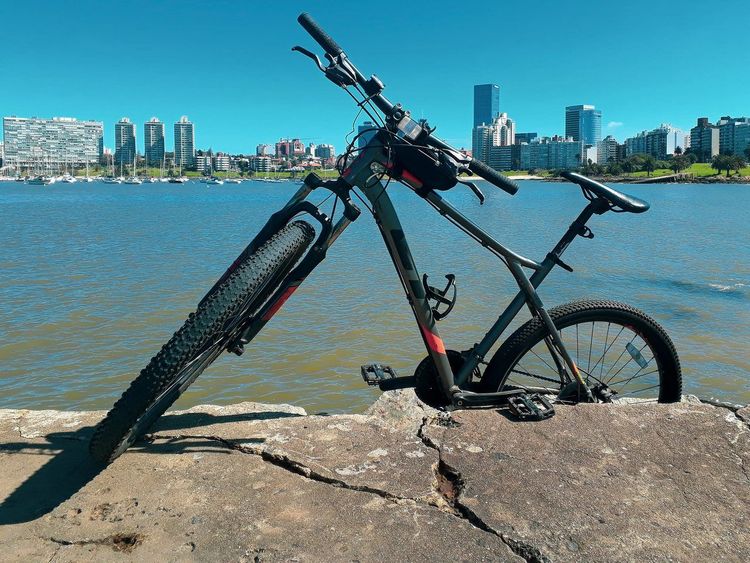
Montevideo's flat coastline makes cycling genuinely practical rather than just scenic. Shops in Pocitos and Ciudad Vieja rent bikes by the hour or the day, and much of La Rambla has a dedicated bike lane, so you're rarely sharing space with traffic. A rented bike is the single easiest upgrade for a solo traveler trying to cover more ground than walking allows, without the cost or hassle of a car.
Budget, Money & Saving Tips for Solo Travelers
Money is where solo trips to Uruguay surprise people most, so it pays to know the numbers before you land.
Budget Snapshot: Daily Costs
Expect to pay somewhere between $40 and $60 a day as a frugal solo traveler sticking to hostel dorms, counter food and walking, rising to $90-130 if you want a private room, sit-down meals and the occasional taxi. A dorm bed in Ciudad Vieja runs roughly $15-20 a night, a chivito with a drink around $10-14, and a short taxi ride across downtown about $4-6. These numbers confirm the earlier verdict: Montevideo isn't cheap by regional standards, but it's far from unaffordable either.
Local Currency & Payments
The Uruguayan peso floats freely, and card payment is widespread, including at many markets and smaller cafés, so there's little need to carry large amounts of cash. Withdraw from bank-affiliated ATMs rather than standalone ones to limit fees, and keep a small cash float for buses and the occasional vendor who hasn't switched to card readers yet.
Save on Taxes: Tax-Free Shopping
Shops displaying a tax-free sticker let foreign visitors reclaim VAT on purchases above a set minimum, mostly useful for leather goods and wine, Uruguay's two most exportable specialties. Ask for the tax-free form at checkout and process the refund at the airport before departure rather than leaving it for the last minute. Uruguay has also, in recent years, offered tourists paying with a foreign card a VAT reduction at restaurants and on accommodation; check whether the scheme is active during your stay, as it can make a real difference on a solo budget.
Meeting Other Travelers: Solo Groups, Tours & Social Spots
Traveling alone doesn't have to mean being alone for the whole trip, and Montevideo offers more ways to connect than its quiet reputation suggests.
Joining Solo Travel Groups & Guided Tours
If independent planning isn't your preference, several operators run multi-day Uruguay itineraries built specifically around solo travelers, pairing you with a small group rather than charging the full single-supplement rate that standard packages tack onto travelers without a roommate. These tend to bundle Montevideo with Colonia del Sacramento and Punta del Este into one organized loop, useful if you'd rather hand off the logistics covered earlier in this guide to someone else.
The trade-off is less flexibility and a pace set by the group, worth weighing against the independent day-trip logistics outlined above if what you actually want is more unstructured time in each place. Free walking tours of Ciudad Vieja are a lighter middle ground: two hours with a group, a few new faces to grab lunch with afterward, and no multi-day commitment.
Social Hostels & Meetup Spots
Beyond the hostels already mentioned, online communities built around solo and female travel regularly post Montevideo meetups. Walking groups and language exchanges pop up often too, frequently based out of the same Ciudad Vieja hostel terraces that already double as informal social hubs most evenings. English-speaking locals show up to these more often than you'd expect in a city where English isn't the default second language.
Essential Tips, Best Time to Visit & What to Skip
Best Time of Year to Visit
Uruguay's seasons run opposite the northern hemisphere's: December through February is summer and the busiest, priciest stretch, especially around Punta del Este, while March through May and September through November bring mild, walkable weather and thinner crowds, arguably the better window for a solo trip focused on the city rather than beach time. Winter (June to August) is cool, damp and windy along the Rambla, but rarely cold enough to disrupt sightseeing.
Cultural Experiences and Insider Tips
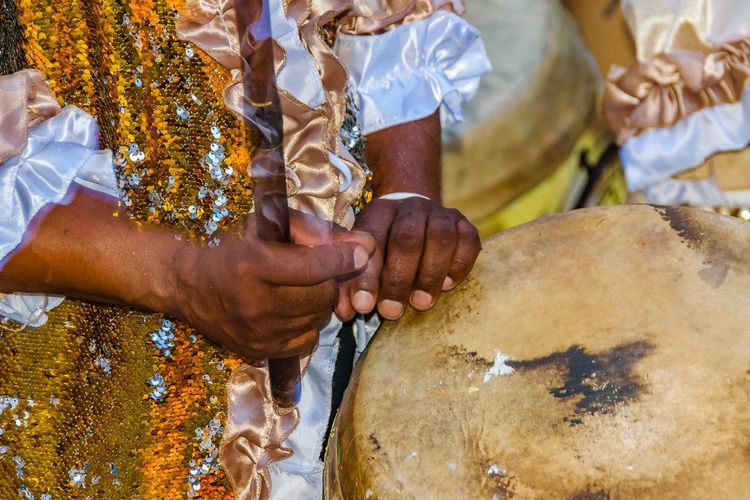
If your dates allow, aim for Carnival. Montevideo's version is often described as the longest in the world, stretching over roughly 40 days from late January into March, with murga troupes performing satirical songs on neighborhood stages and at the open-air Teatro de Verano. Its highlight is the Desfile de Llamadas, when candombe drum groups parade through Barrio Sur and Palermo. Candombe, the Afro-Uruguayan drumming tradition listed by UNESCO as intangible heritage, also fills those same streets on many Sunday afternoons year-round, free to watch from the sidewalk.
A few local habits are worth knowing in advance. Sundays are quiet, with many shops closed, so plan the Tristán Narvaja market and a long Rambla walk for that day. Tipping around 10% is customary in restaurants. And if someone passes you a mate, drink it all and hand it back; saying "gracias" signals you've had enough.
What to Skip
Skip the organized city bus tours that loop past landmarks without stopping; Montevideo is compact enough to walk the same ground at your own pace for free. Skip overpacking the itinerary with both Colonia and Punta del Este in the same 48 hours unless you genuinely don't mind two early mornings in a row. Each deserves its own relaxed day rather than a rushed half-day squeezed between bus rides.
Before you head out, Ryo's audio-guided tour of Montevideo is worth loading onto your phone the night before. It turns most of the practical advice above into a hands-free walk, pointing out what's worth stopping for in Ciudad Vieja without any planning beyond pressing play once you step outside.

FAQ
Is Montevideo a good destination for solo travel?
Yes. It's compact, walkable, and calmer than most South American capitals, with a low-key safety record and enough going on (markets, waterfront, theater, nightlife) to fill several days without a car or a tour group.
Is Montevideo safe for solo female travelers?
Generally yes, with normal city precautions. Catcalling is less constant than in neighboring countries, and locals tend to be helpful rather than pushy. Stick to radio taxis or rideshare after dark in Ciudad Vieja once the shops close, and keep bags zipped in crowded markets and bus terminals.
Is Montevideo expensive for solo travelers?
It's pricier than most of Latin America but cheaper than Western Europe. A frugal solo traveler can get by on $40-60 a day using hostel dorms and counter food; a more comfortable budget runs $90-130 a day with private rooms and sit-down meals.
What is the best time of year to visit Montevideo solo?
March to May and September to November offer mild weather and thinner crowds, ideal for walking-heavy solo sightseeing. December to February is summer, busiest and priciest, especially for day trips to Punta del Este, while late January and February also bring Carnival.
What's the typical single supplement cost for Uruguay tours?
Standard group packages often add 20-50% to the per-person rate for travelers without a roommate. Tours marketed specifically at solo travelers usually waive this by pairing you with another solo guest instead.
How can solo travelers meet other people in Montevideo?
Social hostels like MedioMundo and Viajero Montevideo run regular evening activities, free walking tours gather small groups in Ciudad Vieja, and online solo and female travel communities post local meetups, walking groups and language exchanges.
Can you get around Montevideo without a car?
Easily. Buses cover the metro area, taxis and rideshare apps are affordable, and the flat coastline makes a rented bike a practical option for covering longer distances along La Rambla.
Final Thoughts on Solo Travel in Montevideo
Montevideo rewards exactly the kind of unhurried, curious travel that solo trips are built for. Nobody's waiting on you to finish wandering Ciudad Vieja or lingering an extra hour at a Mercado del Puerto grill counter, and the city's calm makes it an ideal first South American capital to tackle alone.
Start with the one-day itinerary above, add the day trips to Colonia del Sacramento and Punta del Este once you've got your bearings, and let Ryo's audio-guided tour of Montevideo handle the storytelling on the mornings you'd rather walk than plan.