© Shutterstock
 Votre guide Ryo
Things to Do in Hoi An: 22 Must-Have Experiences in 2026
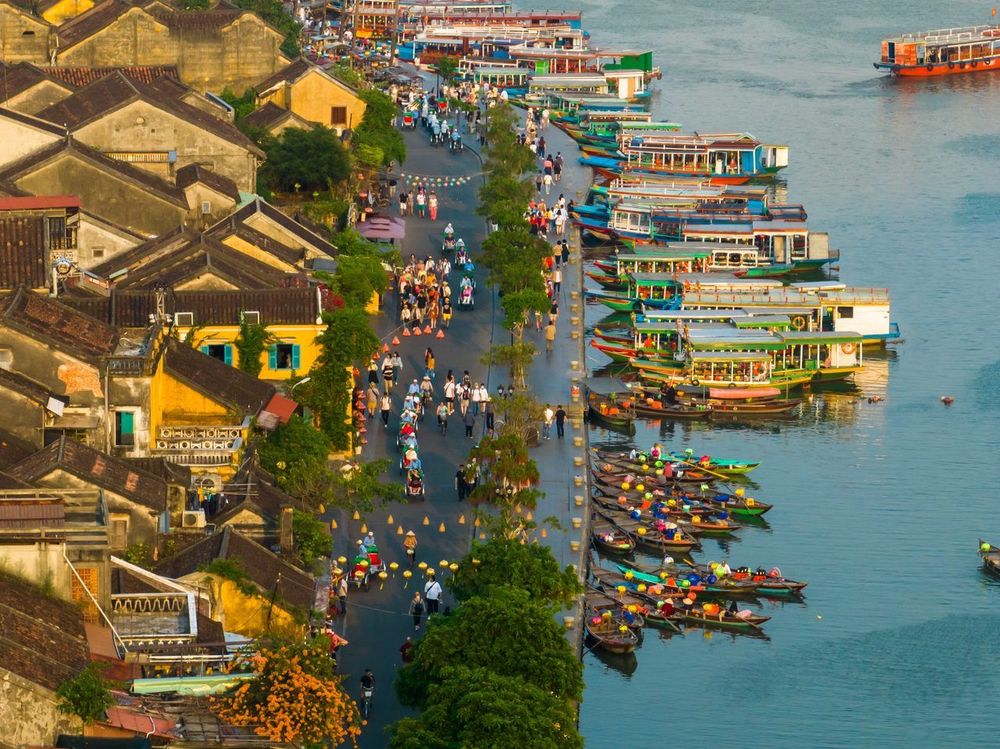
As dusk falls, the ochre-yellow facades of the ancient town fade one by one, giving way to silk lanterns — red, pink, and gold — reflected in the calm waters of the Thu Bon River. It is against this backdrop that the central question of any trip to central Vietnam arises: what to do in Hoi An to make the most of this former trading city, listed as a UNESCO World Heritage Site since 1999? Nestled in Quang Nam province, about thirty kilometers south of Da Nang, the town has preserved an urban fabric unique in Southeast Asia, inherited from four centuries of international trade between Japanese, Chinese, and Vietnamese merchants.
Between centuries-old wooden houses, a covered bridge built by the Japanese community in 1593, a night market where the scent of grilled skewers mingles with the steam rising from pots of cao lau, and preserved islands fifteen kilometers offshore, the itinerary extends far beyond a simple heritage stroll. You can also cycle through the rice paddies of Tra Que, have a custom outfit tailored in 24 hours, snorkel in the turquoise waters of Cu Lao Cham, or travel back in time to the Hindu towers of My Son, remnants of the Champa kingdom. If you are traveling with our Ryo app to plan other stops in Asia, make a habit of downloading your audio-guided routes before you leave — Wi-Fi can be unreliable once you move away from the historic center.
1. Strolling through the Hoi An Ancient Town
The Hoi An Ancient Town (Ancient Town, Quang Nam, Vietnam) is the beating heart of any visit. This grid of cobbled lanes, closed to motorized traffic during peak hours, contains more than 1,100 listed historic buildings, ranging from simple merchant warehouses to elaborately decorated communal houses. UNESCO World Heritage listing in 1999 preserved the architecture in its 19th-century form — a blend of Vietnamese, Chinese, Japanese, and, later, French colonial styles.
In recent years, access to certain monuments in the historic center has required a combined ticket, generally sold as booklets of coupons granting entry to several sites among the historic houses, Chinese assembly halls, and municipal museums. Checks take place mainly near the paid attractions rather than at the entrance to the quarter itself, but it is best to ask at one of the official ticket offices upon arrival to find out the current options.
The best time to walk the streets is early in the morning, before 8 a.m., when vendors set up their fruit stalls and the low-angled light brings the facades to life. Many travelers make do with a generic audio guide; for comparison, this is exactly the kind of quarter our Ryo team loves to map in detail for its urban audio-guided routes, street by street rather than monument by monument. Allow half a day for a first visit, or a full day if you want to enter several buildings and intentionally get lost in the secondary lanes, which are far less crowded than the main Tran Phu thoroughfare.
2. Crossing the Japanese Covered Bridge
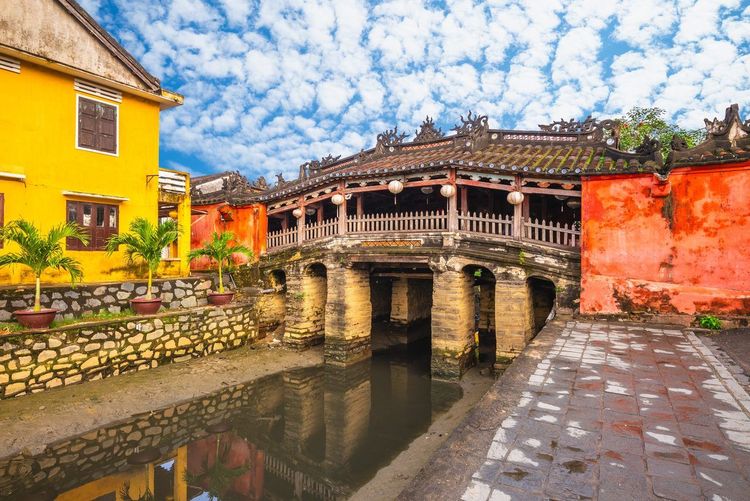
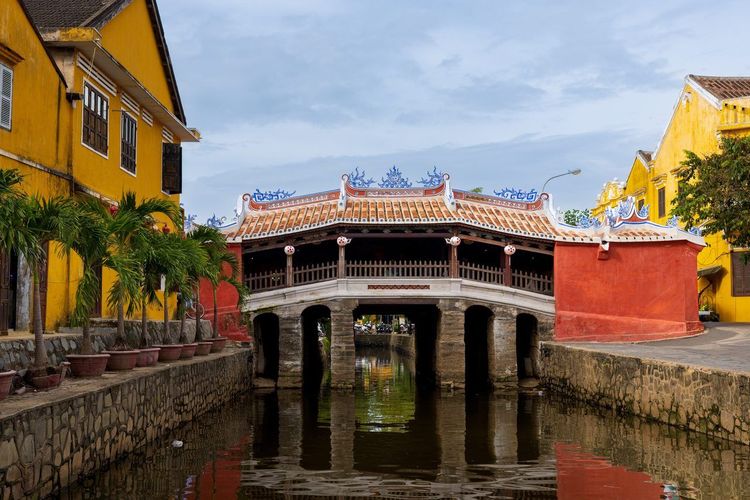
The Japanese Covered Bridge, or Chùa Cầu (Japanese Covered Bridge, Cẩm Phô, Hoi An, Quang Nam, rated 4.3/5 on Google based on 28,624 reviews) (Cẩm Phô, Hoi An, Quang Nam), was built in 1593 by the Japanese merchant community to connect their quarter to that of the Chinese traders on the other side of a small canal. Its lacquered wooden structure, topped with a glazed-tile roof, houses a small temple at its center dedicated to Bac De, a Taoist protective deity.
Two pairs of statues guard each end of the bridge: dogs to the west, monkeys to the east, a reference to the zodiac years during which construction is said to have begun and ended. The monument, restored several times over four centuries, underwent a major renovation completed in 2024 that revived its colors so strikingly that regular visitors were surprised. It appears on the 20,000-dong Vietnamese banknote, a testament to its status as a national symbol. Take time to observe it from the neighboring pedestrian bridge rather than crossing it at a hurried pace: the view over the canal, framed by the old houses, is one of the most photographed in the city.
3. Experiencing the Buzz of the Night Market
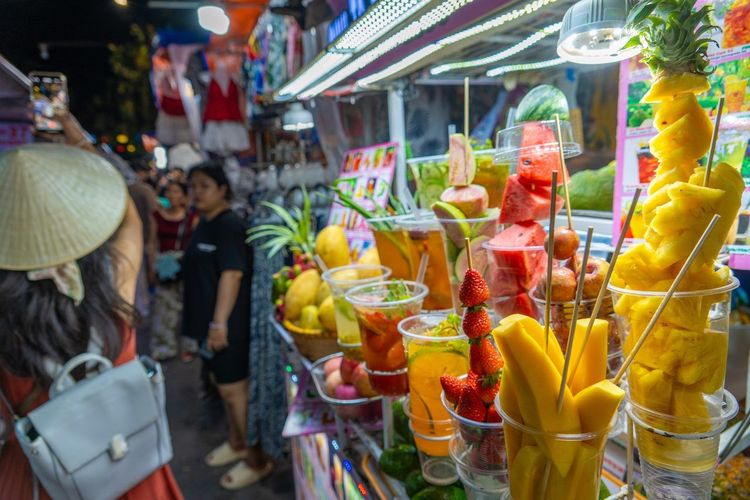
Every evening after nightfall, Nguyen Hoang Street transforms into a corridor of light lined with hundreds of fabric lanterns, sold or simply displayed by vendors. The Hoi An Night Market (Nguyen Hoang Street, Hoi An, Quang Nam, rated 4.4/5 on Google based on 50,068 reviews) runs along the bank of the Thu Bon and brings together, within just a few hundred meters, the best of local crafts: foldable lanterns for your suitcase, silks, sandals, and mother-of-pearl jewelry.
The crowds are thickest between 7 p.m. and 10 p.m., peaking on Fridays and Saturdays. On the riverbank, wooden boats offer a short ride during which you can set a small paper lantern afloat — a tradition said to bring luck to whoever releases it onto the water. Budget around 50,000 dong for a floating lantern and always negotiate on textile souvenirs, where the bargaining margin often exceeds 30%. The street-food stalls set back from the main strip, near the covered market, serve food that is noticeably more authentic than those geared toward tour groups.
4. Visiting the Century-Old Merchant Houses
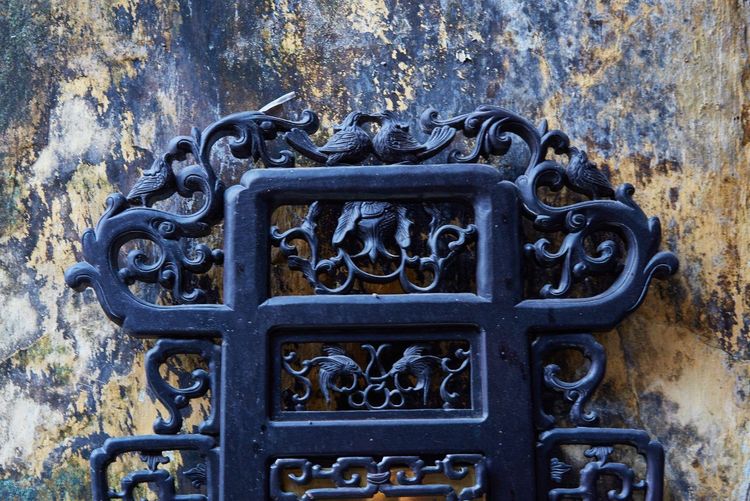
Among the hundred or so historic houses recorded in the old quarter, two stand out for their regular public opening hours and the age of their structures. The Tan Ky Ancient House (101 Nguyen Thai Hoc, Hoi An, Quang Nam, rated 4.2/5 on Google based on 1,478 reviews) has belonged to the same family for seven generations and blends Japanese wooden columns, Chinese porcelain mosaics, and Vietnamese carved beams.
A few streets away, the Phung Hung Ancient House (4 Nguyen Thi Minh Khai, Hoi An, Quang Nam) has withstood more than two centuries of flooding thanks to a raised timber frame and reinforcing hatches installed beneath the roof to hoist furniture during seasonal floods. Descendants of the owning family still live on the premises and often conduct ground-floor tours themselves, giving the encounter a far more personal tone than a conventional museum visit. Look for the watermarks still visible on some walls, indicating the levels reached during the historic floods of 1964 and 2017.
5. Discovering the Chinese Assembly Halls
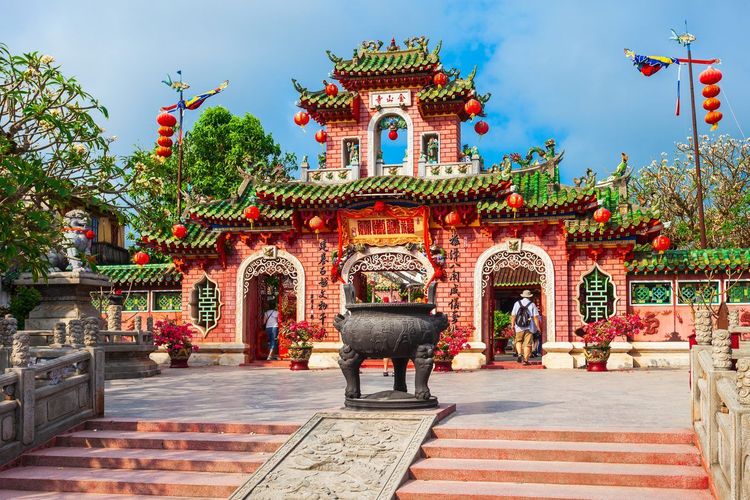
Merchant communities from southern China began building assembly halls as early as the 17th century, serving both as places of worship and as headquarters for their trading guilds. The Phuc Kien Assembly Hall (46 Tran Phu, Hoi An, Quang Nam, rated 4.4/5 on Google based on 2,119 reviews), the largest and most visited, is dedicated to Thien Hau, the protective goddess of sailors and fishermen.
Its monumental gateway, added in the early 20th century, contrasts with the more restrained interior, where model junks and coiled incense spirals hang from the ceiling, intended to burn for several weeks. The Trieu Chau Assembly Hall, less frequented, is worth a detour for its woodcarvings devoted to Cantonese maritime legends, widely regarded as the finest in the city. Allow around 20 minutes per hall if you are only visiting the exteriors, double that if you take the time to read the information panels, which are generally translated into English.
To avoid sensory overload, do not try to visit them all in a row: two well-chosen halls are enough to grasp the role these communities played in the city's commercial rise. The Quang Trieu (Cantonese) hall charms with its flower-filled inner courtyard and ceramic dragons, while the small Hai Nam Assembly Hall — dedicated to 108 merchants unjustly executed in the 19th century — offers a more intimate and rarely crowded counterpoint. Remove your shoes before entering the worship halls and cover your shoulders, as these remain active sanctuaries where families come to burn incense.
6. Shopping at the Central Market
The Hoi An Central Market (Tran Phu Street, Hoi An, Quang Nam, rated 4.9/5 on Google based on 339 reviews) opens before dawn, well before the tourist shops in the center unlock their doors. Tropical fruit, fresh fish, spices, and fabric stalls share a soundscape that is far removed from the nocturnal postcard image.
It is the perfect place to sip a freshly made iced coffee with condensed milk for under 20,000 dong, or to watch locals haggling over fish by the kilo. Early-rising photographers will find particularly soft light around 6:30 a.m., well before tour groups arrive.
If you are staying nearby, make a habit of stopping by every morning: fruit-stall prices are on average two to three times lower than at the tourist shops on Tran Phu Street, and the vendors will start to recognize you. The back of the market, less photogenic, hides a row of small eateries where locals come for breakfast: a bowl of mi quang — yellow noodles in a saffron-tinged broth — eaten standing at the counter is one of the most honest ways to start a day in Hoi An. Bring small-denomination notes, as most vendors cannot make change for a 500,000-dong bill.
7. Taking a Vietnamese Cooking Class
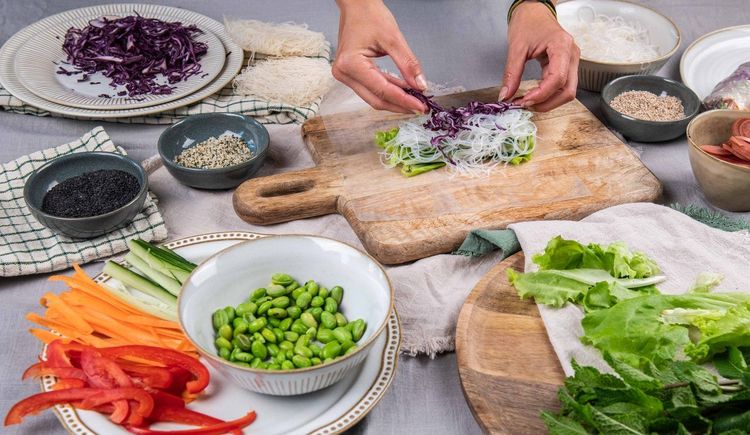
Hoi An has a large number of culinary workshops, often organized as half-day sessions that begin with a market visit so you can choose your own ingredients. Most packages include preparing three to five signature dishes: fresh spring rolls, bánh xèo (crispy rice crepes), and sometimes the famous cao lau — a specialty that, according to local tradition, can only be truly authentic when made with water drawn from a specific well in the city.
Some classes take place on farms on the outskirts of town, surrounded by rice paddies, adding a rural dimension to the experience. Expect to pay between $25 and $45 per person depending on the quality of the venue and the length of the session. Book the day before in low season, and a week ahead in high season (March to August), as the best spots fill up quickly.
A good workshop goes beyond copying recipes: the best chefs explain the logic of Vietnamese cuisine — the balance between the acidity of lime, the sweetness of palm sugar, the saltiness of fish sauce, and the bitterness of certain herbs. Many programs begin with a boat crossing to a farm in Cam Thanh, continue with harvesting from the kitchen garden, and end with a shared meal of what you have cooked. If you are traveling with children, check that the workshop accepts them: several venues offer a shortened version focused on rolling spring rolls, which keeps young ones engaged without overwhelming them.
8. Sailing on the Thu Bon River at Sunset
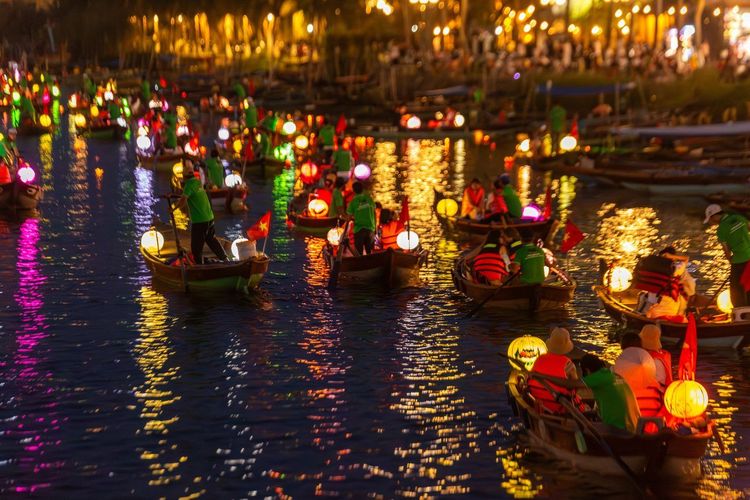
The Thu Bon River, which flows through the town before reaching the South China Sea, offers a different perspective on the ochre facades of the ancient town, particularly photogenic an hour before sunset. Traditional wooden boats, propelled by oar or small motor, depart from the quays near An Hoi Bridge for rides of 30 to 60 minutes.
Tradition calls for releasing a small paper lantern lit by a candle onto the water — a gesture said to bring luck or honor a specific wish. Some boatmen also offer trips upriver to the Tra Que village or downstream toward the estuary to observe square suspended nets inherited from Chinese fishing techniques. Negotiate the fare before boarding: budget generally between 150,000 and 300,000 dong for the whole boat rather than a per-person rate. On full-moon evenings, when the electric lighting of the historic center is switched off, the ride takes on a particularly immersive quality, with the only light coming from the lanterns themselves.
9. Cycling to the Tra Que Vegetable Village

About three kilometers from the center, the Tra Que Vegetable Village (Cam Ha, Hoi An, Quang Nam, rated 4.5/5 on Google based on 850 reviews) has for generations cultivated around thirty varieties of aromatic herbs and vegetables on bamboo-lined plots fertilized with seaweed harvested from the nearby lagoon.
Many families offer guided tours where you can slip on local sandals, water the rows the old-fashioned way using bamboo buckets suspended from a shoulder pole, and then have lunch on site with vegetables harvested that morning. The bike ride from the town center takes about 15 minutes on a flat road, pleasant even in the late afternoon when the heat eases. Along the way you will pass resting water buffaloes and a few weaving workshops often overlooked by organized tours. The bánh xèo made here with the garden's own herbs ranks among the best in the region: if you get the chance, stay for lunch rather than leaving as soon as the visit is over.
10. Stopping at the Thanh Ha Pottery Village
The Thanh Ha Pottery Village (Thanh Ha, Hoi An, Quang Nam, rated 4.3/5 on Google based on 10,250 reviews), established on the banks of the Thu Bon, has maintained a ceramics tradition more than 500 years old, originally brought by artisans from Thanh Hoa province.
Several family workshops open to the public allow visitors to try their hand at the potter's wheel, usually for a token fee that includes the finished object. A small neighboring theme park, the Thanh Ha Terracotta Park, features scale models of famous monuments made in terracotta — from the Colosseum to the Eiffel Tower — a curiosity that children particularly enjoy. The visit pairs well with a boat trip from the town center rather than a bike ride there and back. Take time to talk with the older potters: many still work on wheels operated by a foot-powered assistant, a technique that has become rare and that few villages in Vietnam still practice today.
11. Relaxing on An Bang Beach
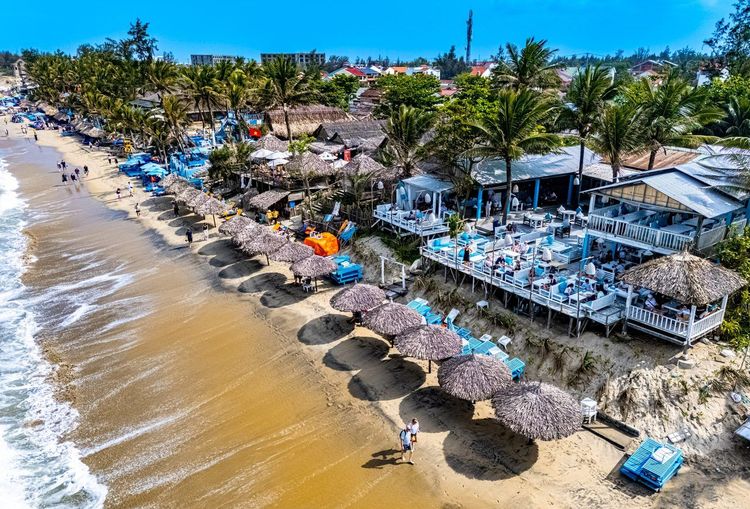
About 4 kilometers from the historic center, An Bang Beach (An Bang, Hoi An, Quang Nam, rated 4.3/5 on Google based on 19,938 reviews) has largely taken over from its older neighbor as the go-to beach destination, with wider and better-maintained sand.
A row of restaurants and beach clubs lines nearly a kilometer of shore, offering sun loungers and umbrellas for free in exchange for a minimum spend, usually around 100,000 dong. The water stays calm for most of the year, with safe swimming from February to September. Sunsets, particularly vivid between April and July, draw a mixed crowd of locally based expats and passing travelers. Arrive before 4 p.m. to find a spot easily by the sea without a reservation, especially during peak tourist season.
Outside the summer months, watch out for rip currents that form in choppy seas: the red flags planted by beach clubs are not decorative, and there is not always a lifeguard on duty. For a quieter morning, walk north along the beach for a few hundred meters: sun loungers become scarcer, as do vendors, and you will find an almost deserted strip of sand facing the blue outline of Cu Lao Cham on the horizon.
12. Comparing with Cua Dai Beach
The Cua Dai Beach (Cua Dai, Hoi An, Quang Nam, rated 4.2/5 on Google based on 341 reviews), long regarded as Hoi An's historic beach, has suffered severe coastal erosion since the early 2010s, significantly reducing the width of sand in its southern section.
Concrete breakwaters have been installed in recent years to limit the damage, and part of the shoreline has recovered, particularly toward the north near An Bang. It remains a convenient departure point for boat excursions to Cu Lao Cham, with an embarkation point close by. If your main goal is swimming, An Bang is the better choice; if you want to understand the fragility of the Vietnamese coastline in the face of rising sea levels, Cua Dai offers a real-world case study, complete with rows of sandbags and seawalls still under construction.
13. Venturing to the My Son Sanctuary
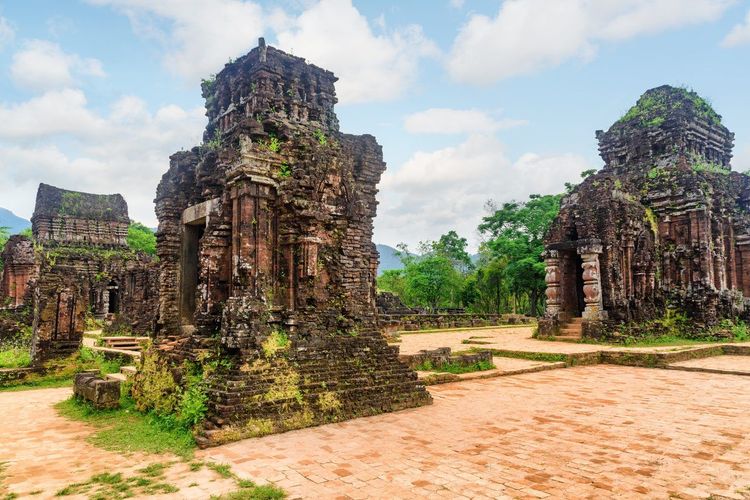
About forty kilometers southwest of Hoi An, the My Son Sanctuary (Duy Phu, Duy Xuyen, Quang Nam, rated 4.5/5 on Google based on 12,682 reviews) contains the remains of around sixty Hindu tower-sanctuaries built by the Champa kingdom between the 4th and 14th centuries, inscribed as a UNESCO World Heritage Site in 1999.
Nestled in a narrow valley surrounded by forested hills, the site long served as a royal necropolis and religious center dedicated to the god Shiva. A significant portion of the structures was destroyed by American bombing in 1969, but several groups of towers remain remarkably well preserved, with their fired bricks assembled without apparent mortar using a technique whose exact secret continues to elude archaeologists. A small theater presents, at fixed times, traditional apsara dances inspired by Khmer and Cham iconography.
Visitors have two options: an organized minibus transfer, usually combined with a French- or English-speaking guide, or renting a scooter to take your time along a country road lined with rice paddies. Ideally, leave before 6:30 a.m. to avoid both the crushing midday heat and the tour-operator groups that arrive en masse around 9 a.m. As with the ancient town, well-crafted audio content completely changes how you read the ruins: this is exactly the type of site where the educational approach of our Ryo app, with its contextualized routes, makes full sense for understanding the layout of a religious complex spread across several hectares.
14. Snorkeling around Cu Lao Cham Island
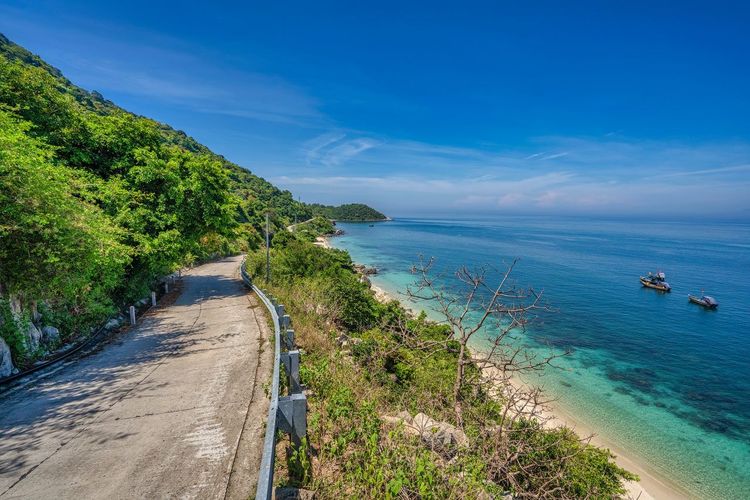
The Cu Lao Cham archipelago (Tan Hiep, Hoi An, Quang Nam, rated 4.3/5 on Google based on 92 reviews), designated a UNESCO biosphere reserve in 2009, lies about 15 kilometers off the mouth of the Thu Bon, reachable in 20 to 30 minutes by speedboat from Cua Dai.
The main island, Hon Lao, has most of the tourist infrastructure: several fine-sand beaches, a small fishing village, and trails leading to a hilltop pagoda with open views across the archipelago. The surrounding seabed features coral reefs that, though damaged in places, allow decent snorkeling sessions between March and August, when visibility generally exceeds 5 meters. Fishing and harvesting swiftlet nests — a prized ingredient in traditional Chinese medicine — remain core economic activities for the island's residents. Plan a full day for this excursion, as the sea often becomes rough in the afternoon outside the dry season. Note that the island has enforced a strict ban on single-use plastic bags for several years: pack a reusable water bottle and a cloth bag rather than buying plastic bottles on site.
15. Exploring the Countryside by Bike
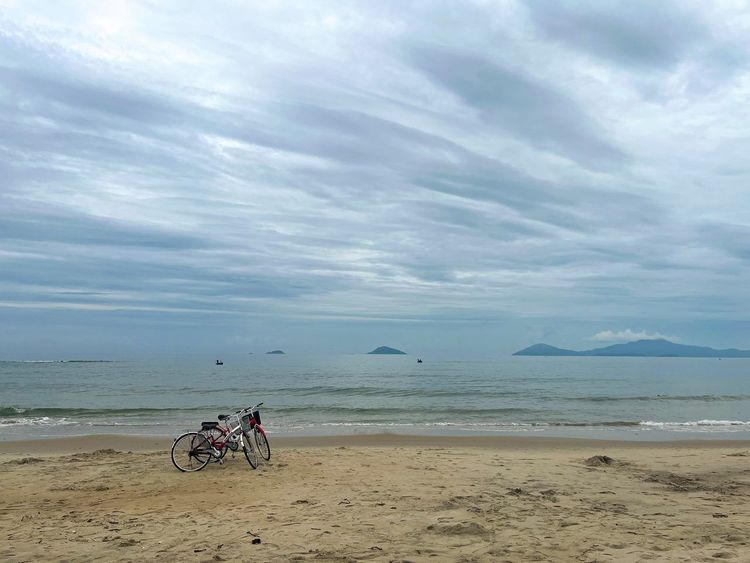
Beyond the organized sites, the countryside around Hoi An lends itself particularly well to free exploration by bike, with a network of flat minor roads linking fishing hamlets and irrigation canals. Many accommodations in the town center lend or rent bicycles by the day, often free of charge for guests.
A classic route links Tra Que, the rice paddies of Cam Thanh, and the coconut forest of Bay Mau, where boatmen introduce visitors to traditional basket-boat fishing — a circular woven-bamboo craft unlike anything else. Set off early in the morning or late in the afternoon, as the midday heat makes the effort unpleasant between April and August. A local conical hat and a water bottle are all you need, as most routes stay within an hour's pedaling of the center.
If you want to venture off the beaten track, push on to Cam Kim Island, connected to the center by a recent bridge: its boat-building and mat-weaving workshops have barely changed in decades, and the few tourists who venture there are welcomed with genuine curiosity. Keep to the right, watch out for scooters emerging from dirt tracks, and do not hesitate to stop and let a flock of ducks pass by — taking it slow is part of the pleasure here.
16. Having a Garment Custom-Made

Hoi An has several hundred tailoring workshops capable of producing a suit, a dress, or a coat in 24 to 48 hours — a reputation dating back to when the town served as a trading post for regional silk. Prices vary enormously depending on the quality of the fabric, from around thirty dollars for a simple shirt to several hundred for a suit in imported wool.
Favor workshops recommended by word of mouth over those that aggressively tout for business in the street, and always schedule at least one intermediate fitting before leaving the city. Allow plenty of time in your stay: a minimum of two days if you want to leave with a truly well-fitted piece, rather than a single day that leaves little room for alterations.
A few habits will help you avoid disappointment. Ask to see and feel the bolt of fabric before confirming your order, as the difference between real silk and a synthetic blend is immediately apparent in the weight. Get the total price — lining and buttons included — confirmed before paying a deposit, and keep a photo of your reference garment on your phone: the best tailors can copy a cut with remarkable precision, provided they have a clear image to work from. Finally, if you are ordering several pieces, space the fittings across two separate appointments, giving the workshop time to make corrections without rushing.
17. Attending the Full Moon Lantern Festival

On the 14th day of each lunar month, the ancient town switches off its electric lighting and adorns itself exclusively with traditional lanterns — a practice introduced in the late 1990s to restore the city's historic atmosphere. The pedestrian streets come alive with traditional music performances, giant Chinese chess matches, and calligraphy demonstrations.
Crowds build significantly on these evenings, especially around the Japanese Covered Bridge and along the riverbanks, so it is worth arriving in the late afternoon to enjoy the calm before the crowds gather. Check the exact date before planning your stay, as the lunar calendar does not align with the Gregorian calendar from one year to the next.
If your dates do not fall on a full moon, do not be discouraged: the ancient town is lit with lanterns every evening of the year, and the atmosphere remains magical even outside the monthly festival. Major Vietnamese celebrations — starting with Têt (the Lunar New Year, in January or February) and the Mid-Autumn Festival — transform the city into a festive setting with dragon parades and lantern releases. Check the local calendar before booking: these periods are spectacular, but accommodation fills months in advance and some businesses close for several days over Têt.
18. Enjoying the Nightlife and Bars
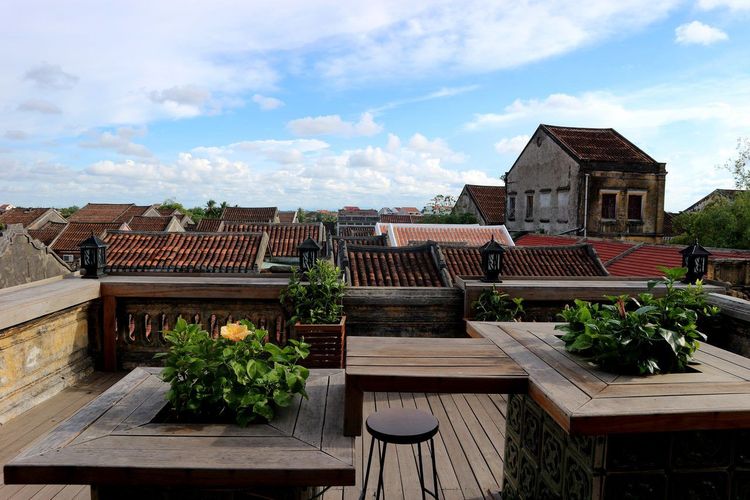
Beyond the night market, several venues offer a later atmosphere, notably along the south bank of the Thu Bon, where a handful of cocktail bars and rooftops provide an open view over the lanterns of the historic center. The overall vibe is considerably more low-key than in Ho Chi Minh City or Hanoi, as the town favors its heritage charm over late-night noise.
Some establishments organize themed nights in low season to attract the expat crowd, often with drink prices that are gentler than during peak tourist season. The An Hoi district, on the small island connected to the center by a pedestrian bridge, has the highest concentration of lively bars, while An Bang Beach extends the evening in a barefoot atmosphere, with a few venues open late facing the sea. Bear in mind that most bars in the historic center close around midnight in line with municipal regulations: if you are looking to go on later, it is best to head straight for venues on the south bank or at the beach.
19. Tasting the Local Culinary Specialties
Hoi An claims a culinary identity of its own, distinct from the rest of Vietnam, built around dishes found nowhere else in the country. Cao lau, the city's signature dish, combines thick amber-colored noodles, grilled pork, fresh herbs, and thin pieces of crispy pork crackling, all dressed with a light broth. Local legend holds that the dish's authenticity depends on water drawn from a specific well in the quarter — the Ba Le well — which would explain why cao lau cannot be replicated exactly anywhere else.
The banh mi Phuong (2B Phan Chu Trinh, Hoi An, Quang Nam, rated 4.3/5 on Google based on 16,344 reviews), made famous by several international chefs who have cited it among the world's best sandwiches, offers a crispy baguette filled with pâté, marinated pork, and fresh herbs for under 30,000 dong.
Other must-tries include white roses (bánh bao vạc) — small flower-shaped steamed shrimp dumplings — com ga (Hainanese-style chicken rice), and crispy bánh xèo served with herbs from the Tra Que village. For a broad taste of these specialties in a single evening, the stalls grouped around the central market remain a reliable choice, less expensive than restaurants catering to international visitors.
20. Planning Your Trip: Duration, Season, and Budget
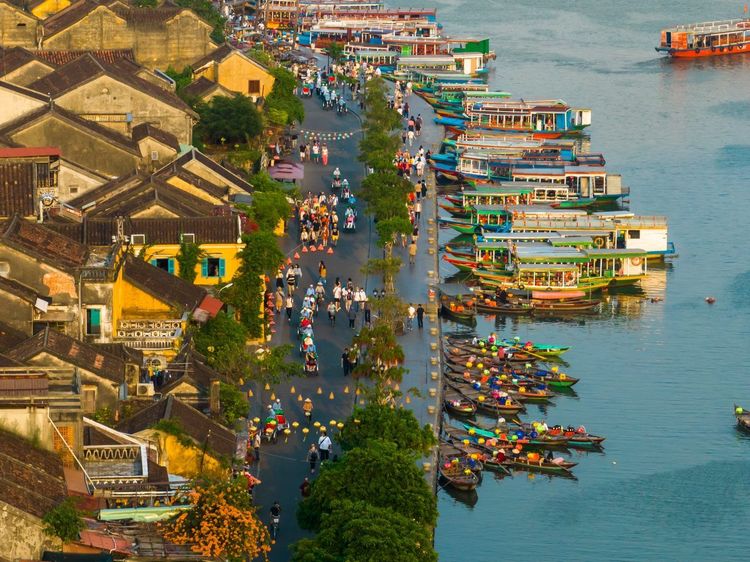
The question of how many days are needed comes up consistently when planning a trip to Hoi An. Two full days are enough to cover the ancient town, the night market, and a beach excursion; three to four days leave room for My Son, Cu Lao Cham, and a cooking class without feeling rushed. Travelers with a full week can add longer excursions toward Da Nang or Hue, respectively 45 minutes and 3 hours away by road.
In terms of climate, the period from February to July is the most reliable, with clear skies and average temperatures between 25 and 32 degrees Celsius. The rainy season, from October to December, brings a real risk of flooding in the lower streets of the historic center — a phenomenon that, far from being only a constraint, sometimes transforms the ancient town into a rather spectacular lake-like setting for visitors who are properly equipped. Pack waterproof sandals and avoid planning a trip centered solely on the beaches during this period, as swimming becomes unpredictable.
On the budget front, allow around $25 to $40 per day for an independent traveler staying in a guesthouse, more if you add cooking classes, boat excursions, and custom tailoring. As is often the case when traveling, planning your itinerary in advance makes a real difference: whether with paper maps or a tool like our Ryo app to structure your stops city by city, arriving with a clear list of priorities saves precious time that would otherwise be lost improvising on the spot.
21. Getting to Hoi An and Getting Around

Hoi An has no airport: the entry point is Da Nang, about forty minutes north by road. From the airport, a taxi or a pre-booked private car is the simplest option, with fares generally between 350,000 and 500,000 dong depending on the time of day and negotiation. Shared shuttles, slightly cheaper, often involve a detour past several hotels before dropping you off.
Once there, everything in the historic center is done on foot or by bicycle, as it is entirely pedestrianized during peak hours. For excursions to My Son, the beaches, or the villages, renting a scooter (around 120,000 to 150,000 dong per day) gives the most freedom, provided you are comfortable riding in local traffic and hold a valid international driving permit. Ride-hailing apps work well in Da Nang but cover Hoi An more sporadically: always keep the number of a reliable driver on hand. If you are continuing to Hue, the route over the Hai Van Pass — one of Vietnam's most scenic — is worth doing in daylight rather than through the tunnel.
22. Choosing Your Neighborhood to Stay
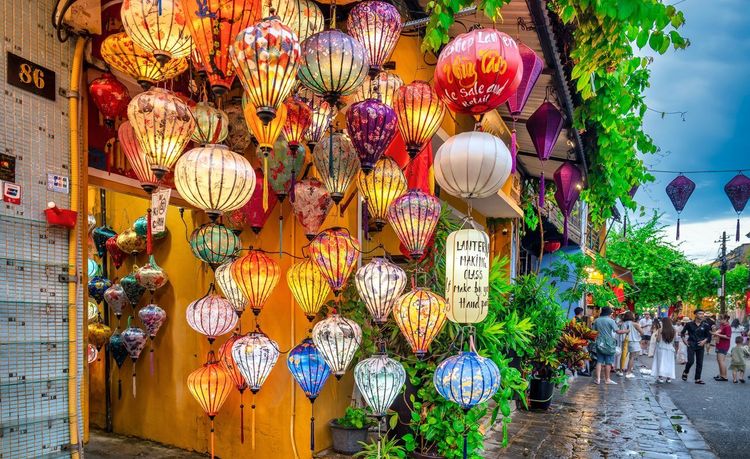
Where to base yourself depends mainly on the pace you are looking for. The historic center and its immediate surroundings put everything within walking distance, at the cost of near-constant activity and higher prices: ideal for a short first stay, but tiring over a longer period. The south bank of the Thu Bon, around An Hoi and Cam Nam, offers an appreciated middle ground — just a few minutes' walk from the lanterns but in a calmer evening atmosphere.
If the beach is your priority, the An Bang area has charming guesthouses, villas, and small hotels right on the sand, about ten minutes by bike from the center — an excellent choice for those wanting to alternate heritage sightseeing and swimming without rushing. Finally, accommodations scattered through the Cam Thanh countryside, surrounded by rice paddies, suit motorized travelers in search of complete tranquility. Whatever your choice, book early for stays between February and April: high season drives up prices and empties the best addresses weeks in advance.




FAQ
How Many Days Do You Need to Visit Hoi An?
Two full days are enough to cover the ancient town, the night market, and a beach excursion. Allow three to four days to include My Son, Cu Lao Cham, and a cooking class at a relaxed pace, especially if you add custom tailoring, which requires at least one intermediate fitting.
What to Do in Hoi An in 1 Day?
Prioritize the ancient town early in the morning, the Japanese Covered Bridge, one or two historic houses, and the night market in the evening. A sunset boat ride rounds off this packed day nicely, leaving longer excursions for a future trip.
What to Do in Hoi An in 3 Days?
Spread the ancient town and night market across the first day, take a trip to My Son or Cu Lao Cham on the second, then visit An Bang beach and the Tra Que village on the third. This plan avoids unnecessary back-and-forth between the center and outlying sites.
Where Is the Hoi An Ancient Town on the Map?
The ancient town sits on the north bank of the Thu Bon River, in Quang Nam province, about 30 kilometers south of Da Nang and 40 kilometers northeast of the My Son sanctuary. The pedestrian quarter is bounded by Tran Phu, Bach Dang, and Nguyen Thai Hoc streets.
Are There French-Language Guided Tours in Hoi An?
Yes, several local agencies and independent guides offer tours in French, particularly for the ancient town and the My Son excursion. Book a few days in advance during high season, as French-language options are more limited than English-language ones.
What to Do in Hoi An When It Rains?
Historic houses, Chinese assembly halls, and municipal museums provide sheltered sightseeing. An indoor cooking class or a custom tailoring session at a tailor's shop are also good options for filling a rainy day without missing out on local experiences.
What to Do in Hoi An at Night?
The night market on Nguyen Hoang Street, a boat ride with floating lanterns, and — once a month at the full moon — the Lantern Festival are the highlights of Hoi An's nightlife. A few riverside bars keep the evening going for those looking for a later atmosphere.
In Summary: Planning Your Visit to Hoi An
Hoi An stands out for its ability to concentrate, within a compact area, an intact architectural heritage, beaches accessible in just a few minutes, and excursions to two additional UNESCO-listed sites. Whether you dedicate two days or a full week to it, the city rewards most those who take the time to step off the main tourist strip and explore the surrounding villages and rice-growing countryside.
The best advice for a first stay can be summed up in one sentence: do not try to tick everything off. Choose three or four strong experiences from those described above, keep time free to wander without a specific goal, and let the city set its own pace through its lanterns and showers. If this destination has inspired you to explore other heritage cities in the same way, keep the Ryo reflex in mind: preparing each stop with concrete reference points, neighborhood by neighborhood, using pre-downloaded audio-guided routes, remains the best way to avoid reducing your trip to a checklist of monuments.