





Walk
Tuscany’s hidden surprise
Pistoia, Italy
Walk
Tuscany’s hidden surprise
Pistoia, Italy
3 km
Distance
1h20
Durée
23
Audios
Loop
Parcours
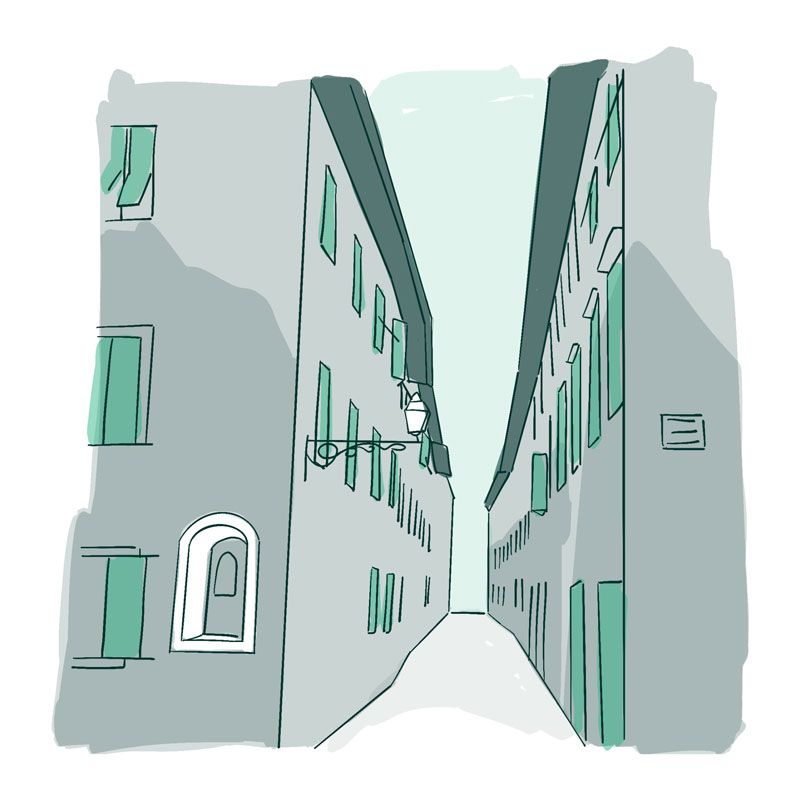
Take a closer look at the corner of the wall in front of you, and you’ll notice a detail that’s very common throughout the city: the stemmi, or coats of arms. There are around 420 of them in Pistoia, carved in stone, painted on walls, built into palace façades, or even visible out here in the streets, just like this one. They tell the story of noble families, but also of political power.
Each magistrate who came to govern the city would leave their coat of arms as a kind of signature, while the Medici symbols remind us of Florence’s control over Pistoia. These emblems were a way of showing identity, status, and allegiance. Right next to it, there’s another detail, more discreet but just as interesting: a small votive aedicule, or wall shrine.
These little niches, set into the façades, often hold an image of the Virgin and Child or a saint. Originally, they had both a religious and protective role. They were places where local residents could stop and pray, bringing a sense of the sacred into everyday life.
Even today, some are still cared for and decorated with flowers, a sign that this tradition is still very much alive in Italy.
Aucun avis pour le moment
