© Shutterstock
 Votre guide Ryo
Buenos Aires in 3 Days: A Neighborhood-by-Neighborhood 2026 Itinerary
Three days is the number nearly every guidebook throws at the Argentine capital, and for once the guidebooks are right. Planning Buenos Aires in 3 days gives you enough time to walk from the pink walls of the Casa Rosada to a milonga dance floor in San Telmo without ever feeling like you are sprinting through a checklist. This itinerary follows the same downtown-to-Palermo route that Ryo's audio-guided tour of Buenos Aires narrates block by block, so you can preview the walk before you land or simply follow along once you arrive.
Expect a used-book palace with a café where the theater stage used to be, a cemetery with mausoleums that dwarf some Parisian family chapels, and a steakhouse that starts forming a sidewalk line a good forty minutes before the doors open. Add a Sunday antiques market that spills along ten blocks of Defensa street, a tango couple dancing on Plaza Dorrego as the stalls wind down, and a 9 de Julio Avenue so wide it takes two or three green lights to cross. You will also find the practical side covered: where to sleep, how to pay now that the old blue dollar gap has faded, what a trip really costs in 2026, and how to stretch the plan to five or seven days.
The 3-Day Itinerary at a Glance
Here is the shape of the three days before the details. Day 1 covers the historic center and the riverside docks. Day 2 moves into the cobblestone antique quarter and the colorful port neighborhood before an evening of tango. Day 3 slows down through a cemetery worth a full morning and the parks and boutiques of Palermo.
Mornings are for landmarks, most of which cluster within a twenty-minute walk of each other downtown. Afternoons shift neighborhoods entirely, usually by taxi or subway, since the distances between San Telmo, La Boca, Recoleta and Palermo are too long to cover comfortably at street level. Evenings are built around one long dinner rather than a second round of sightseeing, which is how porteños actually structure their own days. Dinner at 9pm is early here.
One tip before you go: download the Ryo audio guide before day one rather than mid-trip. The historic center leg in particular rewards having context in your ear as you cross Plaza de Mayo, rather than reading about it later back at the hotel.
Day 1: Plaza de Mayo, Teatro Colón and Puerto Madero
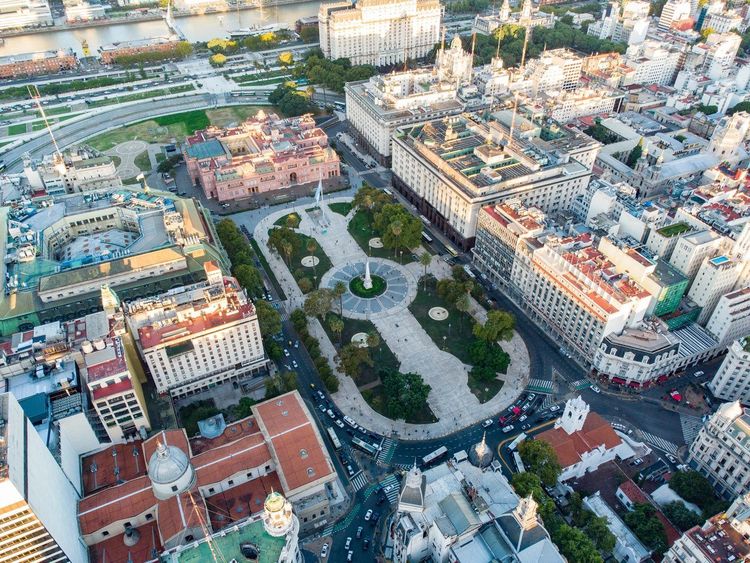
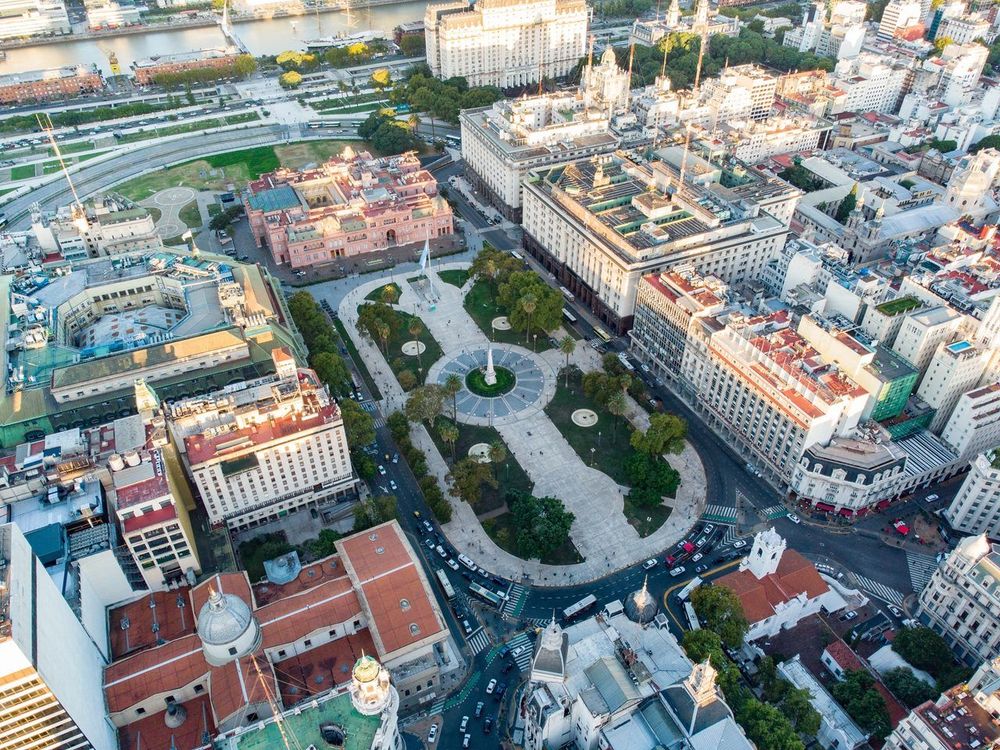
Start where Argentine history actually happened rather than where a map app tells you to start. Plaza de Mayo) has been the country's political stage since the May Revolution of 1810, and on any given weekday you will find at least one demonstration, a handful of retirees feeding pigeons, and tour groups clustering around the same three landmarks you are about to visit.
Closing the eastern side of the plaza is the Casa Rosada), Argentina's presidential palace and the balcony Eva Perón famously addressed crowds from. Free 45-minute guided tours run Friday to Sunday, with an English-language slot on Saturdays; book online well ahead (slots go roughly two weeks out) and register with your passport number. Even without a tour, the pink facade photographs well in the morning light before the square fills up.
Cross to the northwest corner for the Metropolitan Cathedral), easy to mistake for a Greek temple from the outside thanks to its twelve-column facade, and easy to forget is a cathedral at all until you step inside onto Venetian-style mosaic floors. The side chapel holds the mausoleum of General José de San Martín, guarded around the clock by grenadiers in dress uniform. Catch the changing of the guard if the timing works.
By late morning, walk up Avenida de Mayo toward Avenida 9 de Julio, one of the widest avenues in the world at roughly 140 meters across. Crossing it takes multiple green lights and a bit of patience. Rising from its median is the Obelisco), the city's most photographed monument and the unofficial meeting point for everything from New Year's Eve crowds to football championship celebrations.
From here, a five-minute walk brings you to Teatro Colón), widely ranked among the best opera houses acoustically anywhere in the world. If a performance is not on your schedule, the guided tour is worth the detour on its own, covering the gilded main hall and the foyers, and on some routes the workshops where sets and costumes are still built by hand.
Next, grab a quick taxi (or allow twenty-five minutes on foot) up to Avenida Santa Fe and El Ateneo Grand Splendid), a 1919 theater turned bookstore where the old stage is now a café and the original ceiling fresco is still intact overhead. Even non-Spanish readers linger here for twenty minutes just looking up.
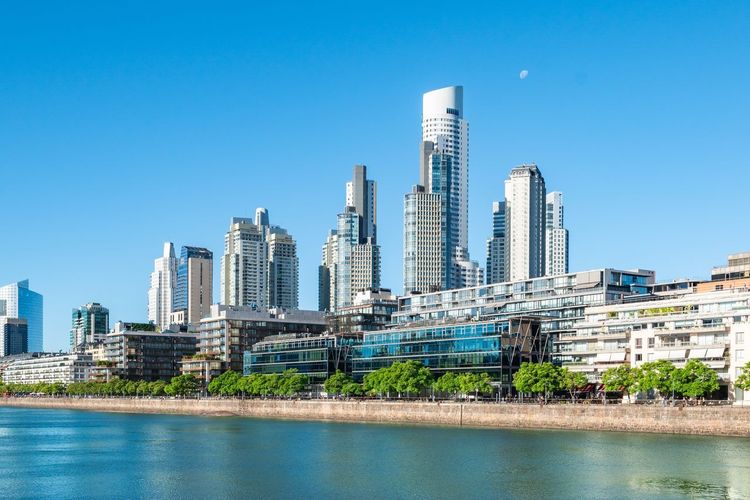
As the afternoon light softens, take a taxi down toward Puerto Madero), the youngest and most polished of the city's official neighborhoods, built inside a converted 19th-century dock system. Restored red-brick warehouses now hold restaurants and offices, and the waterfront walkways, plus the Costanera Sur reserve just beyond, are where many porteños go for an evening run.
Cross the Puente de la Mujer (Puerto Madero, C1107 Buenos Aires, rated 4.7/5 on Google (88 431 avis)), a white cable-stayed footbridge designed by Santiago Calatrava that swings open to let boats through the dock, then pick a riverside table for dinner. It is a fitting way to end a day built almost entirely around downtown landmarks: watching the water, before tomorrow trades marble buildings for cobblestones.
Prefer to have the history in your ear instead of piecing it together stop by stop? The Soul of Argentina audio walk covers this exact stretch from Plaza de Mayo to the docks, with local stories dropped in at each stop rather than a single history lecture at the start.
Day 2: San Telmo, La Boca and a Night of Tango
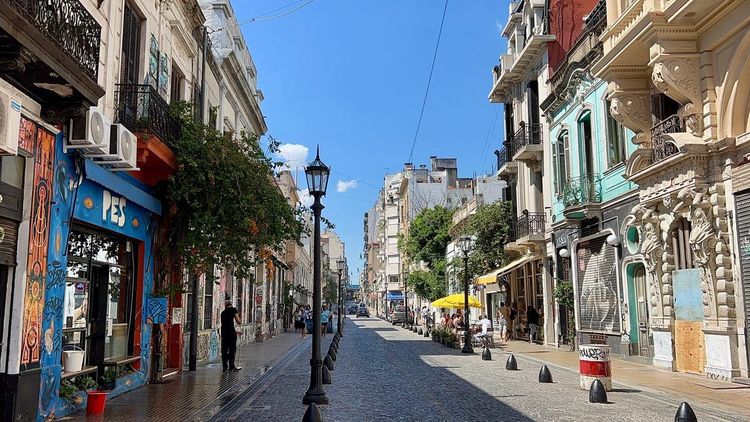
Spend your second morning in San Telmo, the city's oldest neighborhood and the one that has aged into gentrification the least gracefully, in the best possible way. Walk south from Plaza de Mayo along Defensa and the pavement soon turns to cobblestones, with colonial-era buildings and peeling paint sitting next to design boutiques without much fuss.
The neighborhood's anchor is the San Telmo Market), a cast-iron covered market built in 1897 that now mixes butcher stalls run by the same families for generations with antique dealers selling everything from soda siphons to typewriters. On Sundays, the Feria de San Telmo, an antiques and crafts fair, runs the length of Defensa for roughly ten blocks.
Budget at least two hours here if you land on a Sunday; the crowds are part of the experience, not an obstacle to it. Street performers, including at least one tango couple most weekends, draw a circle of onlookers around Plaza Dorrego by early afternoon.
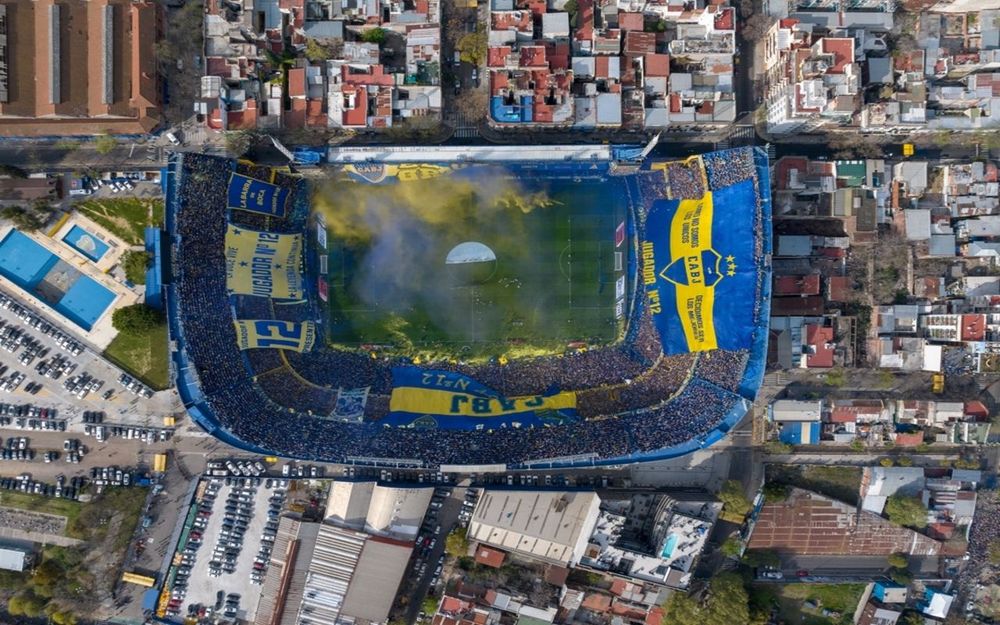
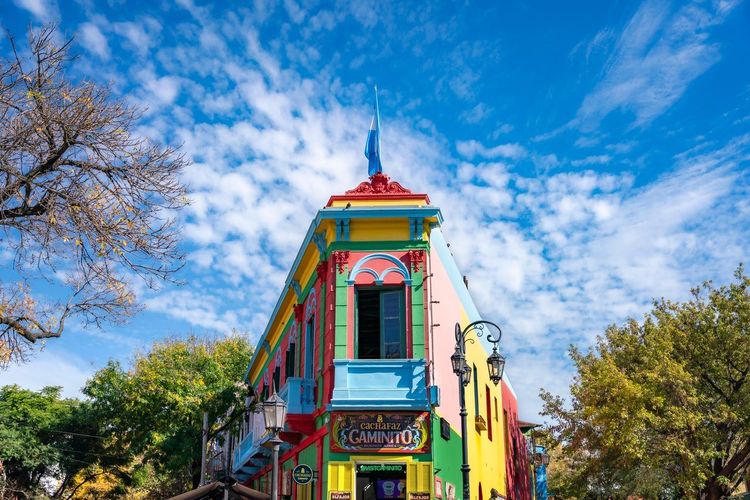
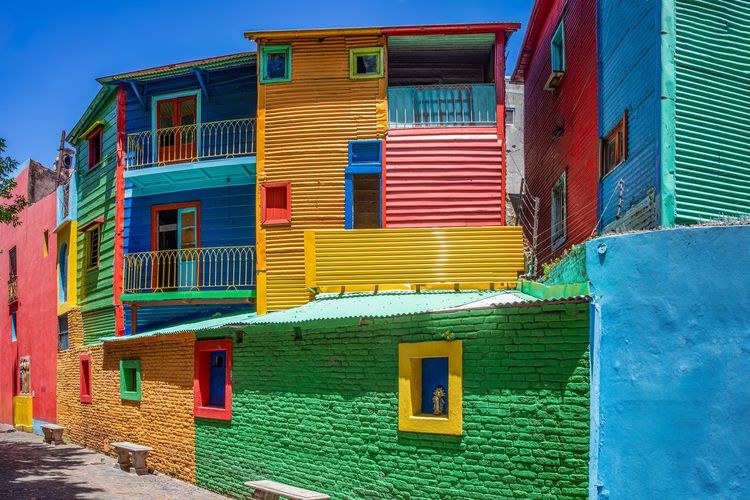
After lunch, take a taxi to Caminito (Caminito, C1169 Buenos Aires, rated 4.5/5 on Google (6 282 avis)), the open-air street museum in La Boca famous for corrugated metal houses painted in blues, yellows and reds. It is unabashedly touristy: tango dancers pose for photos, vendors line every wall, and the street itself is barely 150 meters long. It is also genuinely worth the twenty minutes it takes to walk it, both for the color and for the history behind it, since La Boca was built by Genoese immigrant dockworkers who, as the story goes, painted their houses with whatever paint the shipyards had left over.
Stay on the few streets immediately around Caminito and the Boca Juniors stadium rather than wandering further into La Boca, a working-class neighborhood with real security concerns outside the tourist corridor. Most taxi drivers already know this, which is a reasonable signal to follow yourself.
Dinner before the show is easy to fold in. San Telmo's restaurant scene runs from parrillas serving a full asado to newer, more experimental kitchens tucked into converted warehouses along Chile and Defensa streets. Reserve ahead on weekends.
In the evening, book an authentic tango show, ideally one with a live orquesta típica rather than a recorded track. Better still, look for a milonga where locals actually dance. Several venues in San Telmo and Almagro pair a professional show with a social dance floor open to guests afterward, which is worth asking about when you book. Watching is good, but tango here is still a social dance practiced nightly, not a museum piece performed twice a week.
A dedicated leg of the Ryo audio guide threads San Telmo into La Boca, layering in tango history and the immigrant story of the port neighborhoods, which fills in a lot of the why behind what otherwise looks like a colorful backdrop.
Day 3: Recoleta Cemetery and Palermo's Parks
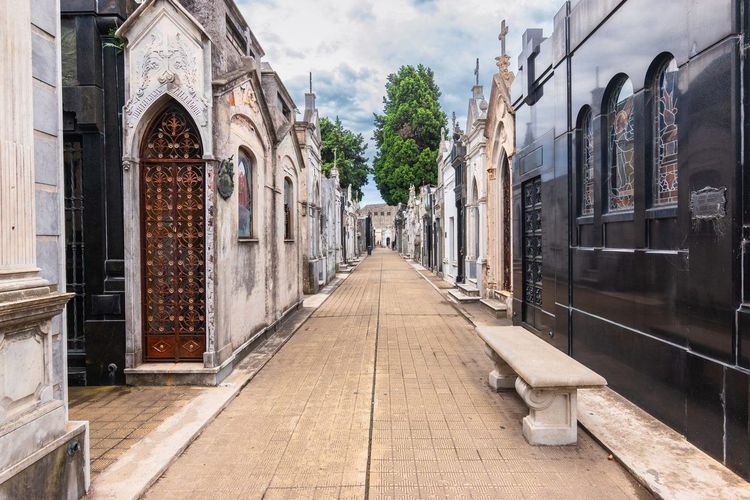
Save your last morning for Recoleta Cemetery), and give it more time than you think a cemetery deserves. Row after row of marble mausoleums, some the size of small chapels, were built by Argentina's wealthiest families across two centuries, and wandering the narrow lanes between them feels closer to touring an outdoor sculpture museum than visiting a graveyard. Foreign visitors now pay an entry fee (about 24,000 pesos in 2026, roughly US$16), payable by card at the gate or online; the cemetery opens daily from 8am to 6pm.
Eva Perón is buried here, in the relatively modest Duarte family tomb rather than a grand monument of her own, and it is usually the most visited grave on the grounds; look for the small crowd and the fresh flowers rather than trying to navigate the map on your own. English-language walking tours run on most weekdays, and they are worth taking once for the family scandals and architectural rivalries you would otherwise miss entirely.
By early afternoon, head into the Bosques de Palermo), one of the city's largest green spaces, spread across the Rosedal rose garden, the Japanese Garden, and small lakes used for paddle boats on weekends. It is where porteños spend their Sunday afternoons, running, practicing yoga in loose circles, or lying in the grass with a thermos of mate. You will feel the city slow down after two days of landmark-hopping.
From the park, it is a short taxi ride or a twenty-five-minute walk into Palermo Soho, the design and fashion district, centered loosely on Plaza Serrano). Independent boutiques, concept stores and small leather workshops fill the low-rise houses on every side street, and it rewards wandering without a fixed plan more than any other stop on this itinerary.
For your final dinner, few things sum up Argentine food culture better than a parrilla. Don Julio (Guatemala 4699, C1425 Buenos Aires, rated 4.4/5 on Google (19 791 avis)), on a corner a few blocks from Plaza Serrano, has topped Latin America's best-restaurant rankings and books out weeks ahead for prime evening slots. Walk-ins can sometimes snag a spot outside with a complimentary glass of sparkling wine while they wait, but reserving is the safer bet if this is your one big splurge of the trip.
The neighborhood stroll audio route covers Recoleta Cemetery and Palermo's parks in roughly two hours of listening, ending close enough to the Palermo Soho restaurant strip that you can walk straight from the last stop to dinner.
Beyond the Highlights: Extra Experiences Worth Squeezing In
Three fixed days rarely use every free hour, especially if you land early on day one or fly out late on day three. A handful of add-ons fit into the gaps without forcing you to rebuild the whole plan.
A beginner tango class, distinct from watching a show, is worth an hour if you have any interest in the dance beyond spectating. Several studios in San Telmo and Palermo run drop-in lessons before their evening milongas, and most porteños will tell you that taking one class, even badly, changes how you watch the professionals that same night.
If contemporary art interests you more than colonial history, MALBA (Av. Pres. Figueroa Alcorta 3415, C1425 Buenos Aires, rated 4.6/5 on Google (40 837 avis)) (Museo de Arte Latinoamericano de Buenos Aires) holds one of the best collections of 20th-century Latin American art anywhere, including works by Frida Kahlo and Diego Rivera, and sits an easy walk from the Palermo hotels most short-trip visitors book.
Steak lovers who cannot stop at one parrilla can add a second at lunch rather than dinner. La Cabrera in Palermo and Parrilla Peña near the Congress district are common second picks, and neither costs you an extra evening.
Guided tours are worth booking for one specific interest rather than a general city overview: a street art tour through Palermo and Villa Crespo, an evening tasting Malbec alongside a cheese board, or a half-day cooking class centered on empanadas and asado technique all fill a spare afternoon better than a generic bus loop.
If a fourth morning opens up, a boat trip to Tigre, the delta town about an hour north by train, is the closest thing to a day trip that still fits a tight schedule (more on that below).
For a longer list sorted by neighborhood and time of day, Ryo's guide to things to do in Buenos Aires is worth a scan the night before. The full Ryo audio guide also runs across dozens of stops citywide, handy for filling one of these spare afternoons without planning from scratch.
Where to Stay on a Short Trip
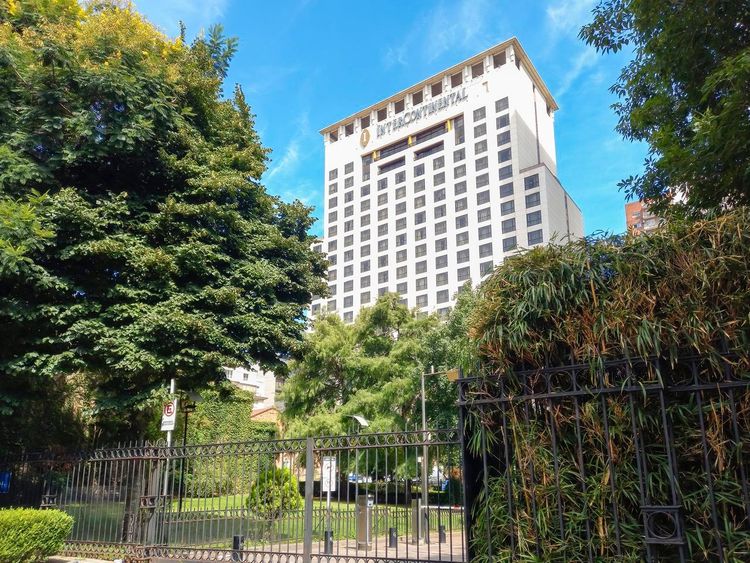
For a three-day trip, where you sleep matters more than usual, since every hour spent commuting between neighborhoods is an hour not spent seeing the city. Three areas cover most short-stay visitors well, and each trades off differently.
Palermo, split informally into Palermo Soho and the quieter Palermo Hollywood, is the best base for most travelers on this itinerary. It has the highest concentration of boutique hotels and well-reviewed rentals, the best restaurant density in the city, and puts Day 3's cemetery and park visit within easy reach, while Day 1 and Day 2's downtown and San Telmo stops are a fifteen to twenty-five-minute taxi away.
Recoleta is the more traditional, formal choice: tree-lined avenues, grand early-20th-century apartment buildings, and a noticeably quieter feel after dark. It sits closer to the cemetery and to some of the city's best museums, but its nightlife is thinner, and evenings can feel sleepy if that is not what you are after.
So, is Palermo or Recoleta better to stay in? For most three-day visitors, Palermo wins on convenience and energy, since it puts you inside the best dinner options after dark. Recoleta wins if you want quiet, elegant streets and do not mind a slightly longer ride each evening, or if you are traveling with family and prefer a calmer neighborhood to return to at night.
San Telmo and the Microcentro (downtown) are the third option, and the one competing guides tend to underrate. Staying in San Telmo puts you inside Day 2's morning walk and cuts Day 1's commute significantly, at the cost of a rougher streetscape after dark and fewer high-end hotels. The Microcentro, right around Avenida 9 de Julio, is convenient for Day 1's landmarks but empties out fast once offices close, which makes it the least appealing base for evenings.
How to Get Around Buenos Aires
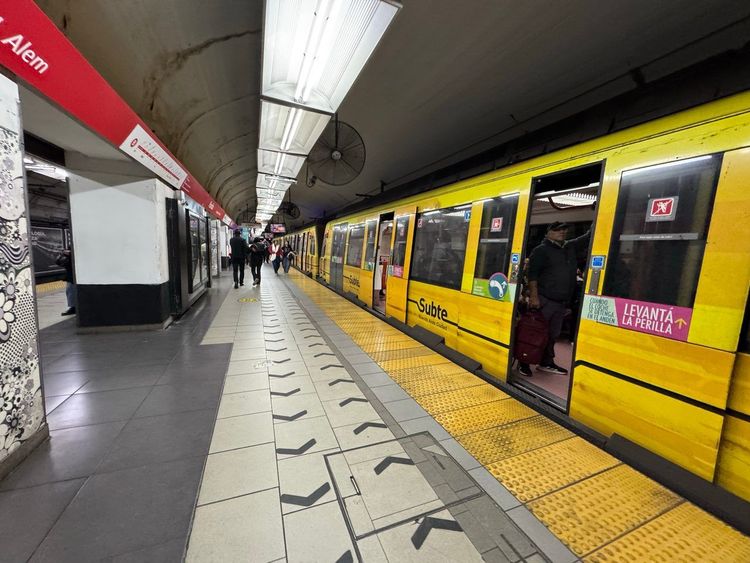
The city splits cleanly into a walkable core and a set of neighborhoods too far apart to connect on foot, so getting around means combining two or three ways of moving rather than picking just one.
The Subte (subway) is the fastest way to cross downtown and reaches Palermo and parts of Recoleta directly, with six lines covering most of what this itinerary touches. Trains run from roughly 5:30am to 11pm on weekdays, with shorter hours on Sundays, and a ride costs a small fraction of the equivalent taxi fare.
The simplest option for visitors in 2026 is to tap a contactless bank card or phone at the Subte turnstile, which now works across the network and on many city buses. If you prefer the local way, the SUBE card is a rechargeable transit card sold for a small fee at Subte stations, lottery kiosks and post offices; top it up in cash and you are done thinking about transit for the trip.
Taxis are plentiful, metered, and inexpensive by North American or European standards. Uber and Cabify both operate widely, and they tend to be the more comfortable option after dark since the fare and route are fixed in the app before you get in.
Walking distances vary a lot by day. Day 1's downtown landmarks cluster within roughly a twenty-minute walk of each other, with El Ateneo and Puerto Madero best reached by a short ride. Days 2 and 3, by contrast, move between neighborhoods too far apart to walk comfortably: San Telmo to La Boca, and Recoleta to Palermo, both run twenty-five to forty minutes on foot along routes that are not particularly scenic.
When to Visit: Weather Across the 3 Days
The city sits in the Southern Hemisphere, so its seasons run opposite to North America and Europe, which trips up a fair number of first-time visitors who assume summer means July.
December through February is the local summer: hot, humid, and often in the low-to-mid 30s Celsius (high 80s to low 90s Fahrenheit), which makes the outdoor stretches of Day 1 and the afternoon in Caminito noticeably more tiring. Many locals leave for the coast in January, which thins out restaurant crowds but also means shorter hours at some smaller shops.
June through August is winter: mild by most standards, rarely dropping below freezing, but damp enough that a proper layer and a light waterproof jacket earn their space in your bag.
The sweet spot is March to May (autumn) or September to November (spring). Temperatures sit in the high teens to mid-20s Celsius (60s to high 70s Fahrenheit), the Palermo parks look their best with fall color or the Rosedal in bloom, and the walking stays comfortable on all three days.
Whatever month you land in, pack for one unpredictable rainy afternoon.
Budget: What a 3-Day Trip Actually Costs
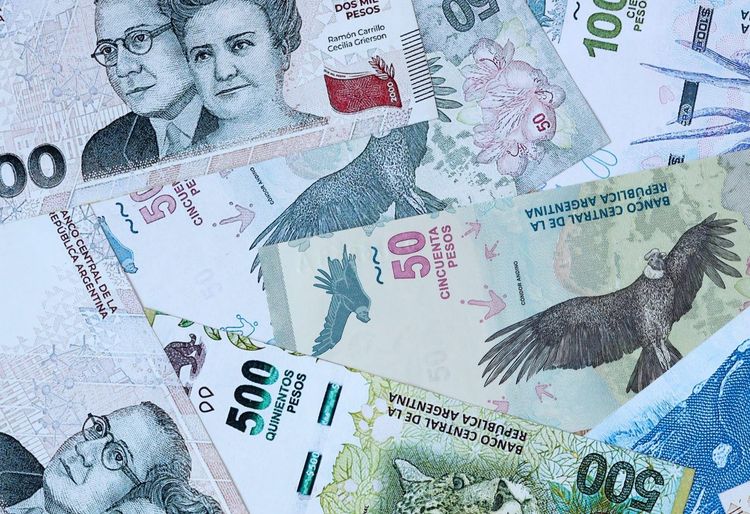
The Argentine capital long had a reputation as a bargain, but prices in dollar terms rose sharply after the 2024-2025 currency reforms. It is still fair value compared with Western Europe, just no longer dirt cheap.
On a tight budget, a hostel dorm bed runs roughly $12 to $30 a night, a solid parrilla meal $15 to $30 a head, and Subte fares stay close to negligible. A careful traveler can cover a bed, food and transit for around $40 to $60 a day.
A mid-range trip, more realistic for most people following this itinerary, lands closer to $100 to $180 a day: a well-reviewed boutique hotel or rental in Palermo or Recoleta, one sit-down dinner (including a splurge like Don Julio on Day 3), taxis for the longer hops, and entries such as the Recoleta Cemetery fee or a Teatro Colón tour.
Comfortable trips with a nicer hotel, private tours and several parrilla dinners climb past $250 a day without much effort.
One practical note: Argentina's economy moves fast, and peso prices can shift noticeably within a few months. Check a recent source shortly before you travel rather than relying on any article's exact figures, this one included.
Buenos Aires: What to Know Before You Go
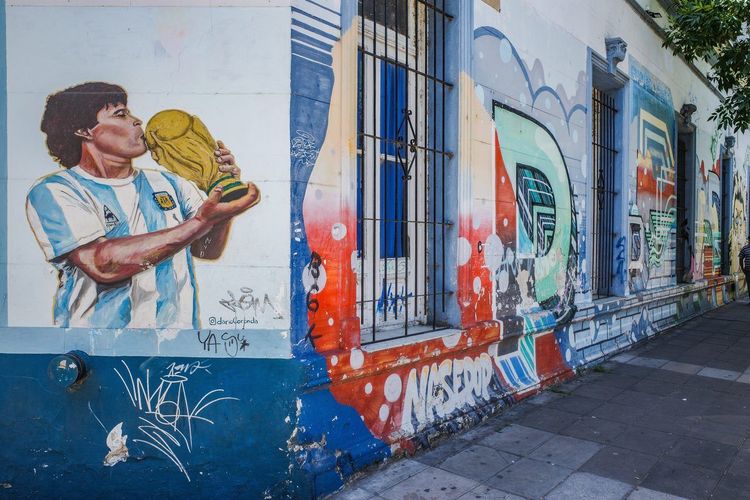
A short list of practical points sorts out most of the confusion first-time visitors run into, and several are easy to miss until they cause a problem at the airport or the checkout counter.
Entry requirements vary by nationality: visitors from the US, EU, UK, Canada and Australia can enter visa-free for tourism for up to 90 days, but rules change, so confirm your country's requirement against an official government source before booking flights.
Travel medical insurance is now mandatory. Since July 2025 (Decree 366/2025), foreign visitors must hold health coverage including hospitalization and medical evacuation, and airlines or immigration officers can ask to see proof. Keep a digital and a printed copy of your policy handy.
Currency and exchange is where older guides now mislead you most. Argentina lifted most of its currency controls in April 2025, and the gap between the official rate and the informal blue dollar has shrunk to a few percent. Foreign Visa and Mastercard payments now settle close to the market rate, so paying by card is perfectly sensible. Carry some pesos for kiosks, tips and small cafés, withdraw or change them at banks or official casas de cambio, and skip the informal street changers (the so-called cuevas and arbolitos) entirely. If you bring US dollars, make sure the bills are clean and undamaged, since torn or marked notes are often refused.
Tipping runs lighter than in the US: 10% at restaurants is standard and appreciated, rounding up for taxis is common, and tour guides typically receive a modest tip at the end of a group outing.
Packing basics for this itinerary lean toward comfortable walking shoes for San Telmo's cobblestones and Caminito's uneven paving, a layer for cooler evenings even in summer, a light rain jacket, and one slightly dressier outfit for a tango show or a reservation at a restaurant like Don Julio. A plug adapter (Argentina uses Type C and Type I sockets) rounds out the list of things visitors most often forget.
Safety Tips for Getting the Most Out of Your 3 Days
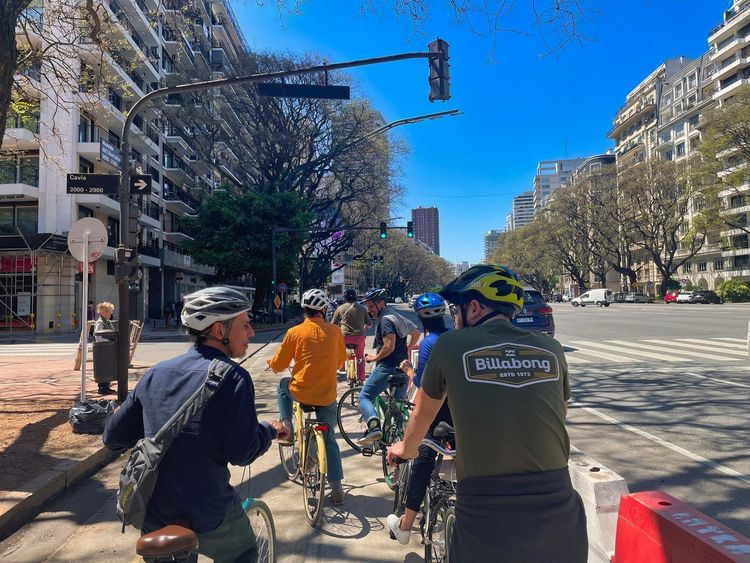
By Latin American capital standards, the city is relatively safe for tourists who take the same basic precautions they would anywhere large, with a few neighborhood-specific points worth knowing.
La Boca deserves the most specific caution: the streets immediately around Caminito are heavily touristed and generally fine during daylight hours, but the surrounding blocks are not recommended for visitors to wander into, especially after dark. Visit during the day and take a taxi directly to and from rather than walking in from a distant bus stop.
Microcentro and downtown, busy and safe during the day, empty out noticeably once offices close, which is worth factoring into where you eat on Day 1: Puerto Madero, with steady evening foot traffic, is the more pleasant choice after dark.
Is it safe to walk around at night more generally? In well-trafficked areas of Palermo, Recoleta and Puerto Madero, yes, with normal city awareness. On quiet residential side streets anywhere, a taxi is the better call after roughly 10 or 11pm, particularly for solo travelers.
Common scams are more about distraction than violence: the mustard trick, where someone spills a substance on you and a helper offers to clean it up while a bag gets lifted, damaged bills handed back as change, and unlicensed drivers quoting inflated fares at the airport. Use official taxi ranks or ride-hailing apps, and keep your phone in a front pocket in crowded spots like the Sunday fair.
Have More Time? Extending to 4, 5 or 7 Days and Day Trips
Three days covers the city's core well, but if your trip allows for more, a handful of additions and day trips extend naturally from this itinerary.
With four days, add a full day trip to Tigre, the delta town about an hour north of Retiro station by train, where boats wind between islands dotted with wooden riverside houses; a delta boat tour plus lunch near the Puerto de Frutos market fills the day comfortably.
A five-day Buenos Aires itinerary usually adds Colonia del Sacramento, a Portuguese-founded colonial town and UNESCO World Heritage site across the Río de la Plata in Uruguay, reachable by fast ferry in roughly an hour to an hour and a quarter. Its cobblestone old town, small enough to cover on foot in half a day, makes an easy long day trip or overnight, and a neat way to add a second country to a short Argentina trip.
With a full week, the extra time is best spent slowing down rather than stacking more day trips: a second day in Palermo split between parks, design shops and restaurants, a wine-focused afternoon, and spare evenings to revisit a favorite parrilla.
If you only have 2 days in Buenos Aires, the plan compresses cleanly: keep Day 1 as written, since the historic center and Puerto Madero are the least skippable stretch, then pick either San Telmo and La Boca or Recoleta and Palermo for the second day rather than trying to fit both.
FAQ
Is 3 days enough in Buenos Aires?
Yes, for most first-time visitors. Three days covers the historic center, San Telmo and La Boca, and Recoleta and Palermo, the neighborhoods most guides and locals point to as essential. You will not see everything (MALBA, Tigre and a second parrilla are common first cuts), but you will leave with a genuine sense of the city rather than a rushed highlight reel.
How many days should you spend in Buenos Aires?
Three days is the practical minimum for a satisfying first visit; five to seven days lets you add Tigre or Colonia del Sacramento and slow down in Palermo. Travelers in transit to Patagonia or Iguazú Falls sometimes trim it to two days using the condensed version described above.
Is Buenos Aires walkable?
The historic center covered on Day 1 is highly walkable, with most landmarks within twenty minutes of each other on foot. The city as a whole is not: San Telmo, La Boca, Recoleta and Palermo are each walkable within their own boundaries but too far apart to connect comfortably on foot, which is why this itinerary leans on the Subte and taxis.
Is it safe to walk in Buenos Aires at night?
In well-trafficked areas of Palermo, Recoleta and Puerto Madero, yes, with the awareness you would use in any large city. Avoid La Boca beyond the Caminito strip after dark, stick to main streets in the Microcentro once offices close, and take a taxi rather than walking through quiet residential blocks late at night.
Is Buenos Aires expensive to visit?
Less cheap than it used to be. Since the 2024-2025 reforms, a careful budget runs about $40 to $60 a day and a comfortable mid-range trip around $100 to $180, which is still good value compared with most Western European capitals.
What should I pack for Buenos Aires?
Comfortable walking shoes for cobblestones, a layer for cooler evenings, a light rain jacket, a plug adapter for Type C or Type I sockets, proof of travel medical insurance, and one slightly dressier outfit for a tango show or a reservation at a restaurant like Don Julio.
Is Palermo or Recoleta better to stay in?
Palermo generally wins for a three-day trip: it has the most restaurants and rentals and keeps your evenings close to dinner. Recoleta suits travelers who prefer quieter, more formal streets and do not mind a slightly longer ride into Palermo or San Telmo after dark.
Conclusion
Three days is a tight frame for a city this layered, but it is enough to walk away with a real feel for the place rather than a photo album of landmarks. What tends to stay with people afterward is the shift in pace between the marble government buildings of Day 1, the cobblestones and tango of Day 2, and the quiet cemetery lanes and park benches of Day 3: three different registers of the same city, covered without ever feeling rushed.
If you want the whole route without juggling a map between stops, Ryo's audio-guided tour of Buenos Aires follows this same historic-center-to-Palermo arc. Start it at Plaza de Mayo on the first morning and let the app handle the sequencing while you handle the looking around.