© Shutterstock
 Votre guide Ryo
Visiting Antwerp with Family in 2026: Itinerary, Museums and Great Places
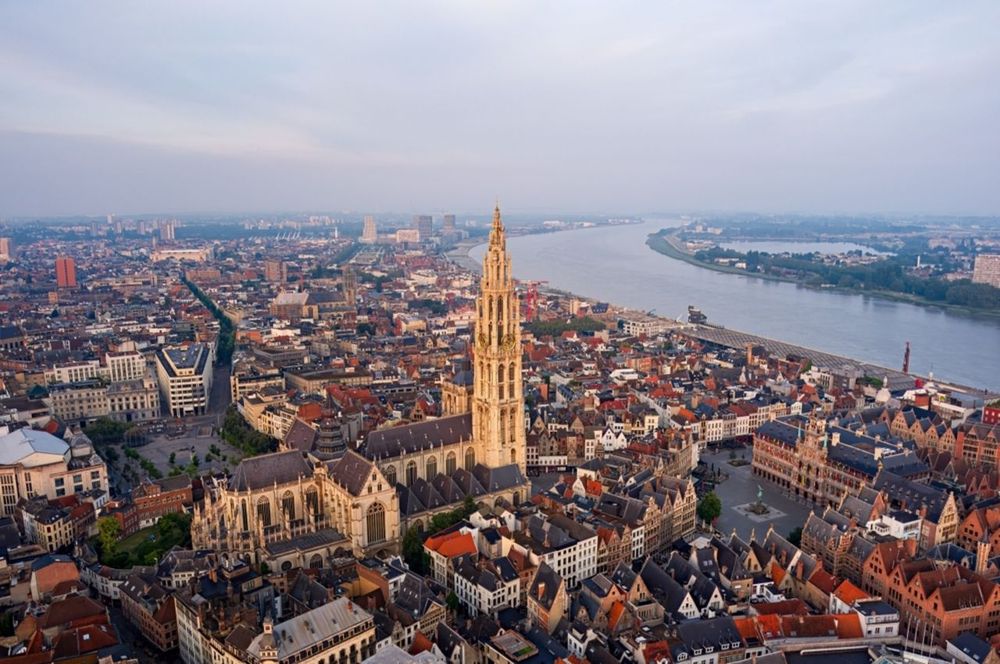
In Antwerp, kids climb a museum roof for free to watch container ships maneuver on the Scheldt, while parents spot the cathedral from the same terrace. Visiting Antwerp with family means this kind of constant double program: dense Flemish heritage in a historic center that can be explored on foot, and activities designed for younger visitors less than ten minutes' walk from one another. The Ryo audio-guided tour of Antwerp helps you visualize this sequence even before you step onto the train.
The city fits in the palm of your hand: the central station, often cited among the most beautiful in Europe, opens onto a zoo founded in 1843 and open year-round. The Beguinage, an island of silence a few minutes from the Grand Place, contrasts with the cranes of the MAS, a port museum where you can go up without paying to a 360° panorama. In between, a statue dedicated to a dog from a novel often attracts the little ones more than the neighboring cathedral. Here you will find a walking itinerary, the museums that truly speak to kids and teens, places to eat and sleep, ideas for day trips and all the practical info, stroller included. With a well-calibrated budget and a thoughtful order of visits, neither the museums nor the cobblestones should spoil your stay.
Why Antwerp Appeals So Much to Kids (and Parents)
Antwerp has a simple advantage: the city is small. The historic center, the port and the station can be covered on foot in a single day, which changes everything when your children have limited walking stamina. No endless metro transfers, no huge lines in front of the main museums: the density of things to see per square meter is rare in Europe for a city of this size.
The contrast also works in your favor. A few streets from one another, a Gothic cathedral built between 1352 and 1521, one of the oldest zoos in the world and a port museum with a free panoramic view coexist, so you never have to choose between heritage and fun activities. Antwerp's museums have also largely adapted their offering to younger visitors: short audioguides, workshops, activity booklets.
To visualize the order of visits before you leave, the Ryo audio-guided tour brings together the center's must-sees in a single continuous walk: a way to build your own day without starting from scratch once you are there.
Must-Sees in the Historic Center with Kids
Antwerp's historic heart boils down to a handful of stops, all within a radius of eight hundred meters, which greatly simplifies logistics with children.
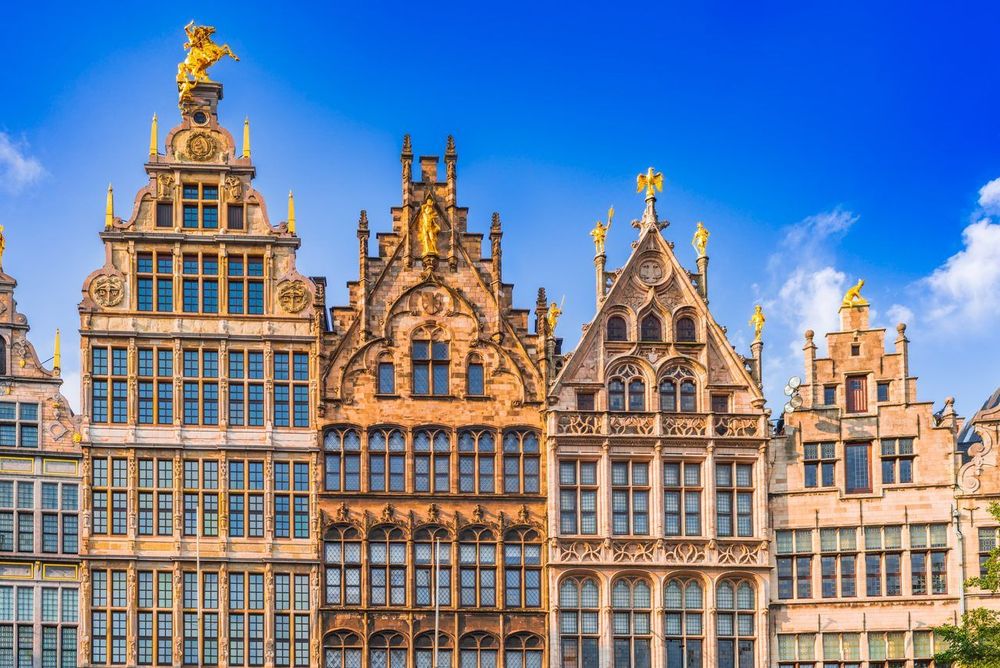
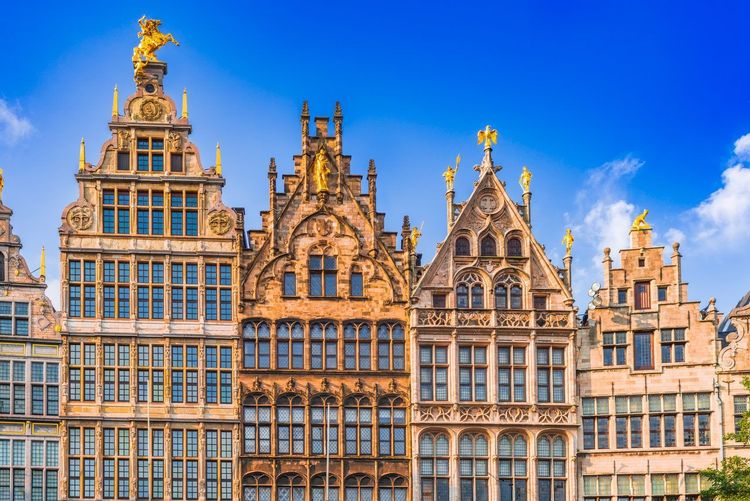
The Grote Markt (Antwerp's Grand Place) opens the ball: gilded gabled facades of former guildhalls, the Brabo fountain in the middle (the legend of the giant Antigoon, whose severed hand was supposedly thrown into the Scheldt, generally delights the youngest) and the Renaissance city hall as a backdrop. Just behind, the Cathedral of Our Lady of Antwerp raises its 123-meter tower, visible from a good part of the city. Inside, several paintings by Rubens, including a Descent from the Cross. Allow 20 to 30 minutes for a quick visit with children, rather than a full hour.
Five minutes' walk away, the Rubens House (Rubenshuis (Wapper 9-11, 2000 Antwerpen, rated 4.4/5 on Google from 7,075 reviews)) takes you into the studio and home of the city's most famous painter. Furnished rooms, a baroque portico and an inner garden where children can catch their breath between two rooms. The exhibitions are not designed specifically for them, but the visit is short (45 minutes on average). The site is undergoing a long restoration project and getting a new reception area: check which spaces are open before you come. Rubens lived and worked in Antwerp for almost his entire adult life, and you will come across his paintings in several churches in the center.
A complete change of atmosphere at the Antwerp Beguinage (Begijnhof): cobbled lanes, brick houses, enclosed gardens, near-total silence a stone's throw from the bustle of the center. It is the ideal spot for a ten-minute break, especially if the morning has been busy. Entry is free; speak softly, as residents still live here.
Right next to the cathedral, on the Handschoenmarkt, the statue of Nello and Patrasche often attracts more attention from children than the surrounding monuments. It depicts the heroes of the novel A Dog of Flanders, whose plot unfolds around Antwerp and ends in front of Rubens's paintings. The rather sad story remains a good starting point to explain why the city reveres its painter so much. A little detail that amuses: the statue shows the boy and his dog asleep under a blanket of cobblestones.
Finally, as you wander through the small streets, you will regularly come across street madonnas: statues of the Virgin installed on the corners of houses, many dating from the 17th and 18th centuries, some lit by a lantern. There are around 170 of them in the city. Getting children to look for a few of them, map in hand, turns a simple walk into an observation game.
For a smooth morning, go with the following order: Grote Markt and cathedral first (fewer crowds before 11 a.m.), Rubens House next, then the Beguinage for a quiet break before heading back toward the port. This combination takes two and a half hours with children aged six and over, a bit more with little ones who ask for photo stops in front of every gilded facade. If you want to extend the loop, the Plantin-Moretus Museum and the Vrijdagmarkt, detailed further on, are barely ten minutes from the cathedral.
The Port District: Eilandje, the MAS and the Story of the Red Star Line
The Eilandje, the former docklands district, has been entirely redeveloped over the past twenty years: warehouses turned into lofts, new museums, promenades along the docks. It is also one of the few places in Antwerp where your children can run around without encountering cars for long stretches.
The building that dominates the district is the MAS (Museum aan de Stroom), a tower of about sixty meters in red sandstone and undulating glass. Its escalators, which climb floor by floor behind the glass facade, are an attraction in themselves. The panorama on the top floor, free and open to all, offers a 360° view of the port, the Scheldt and the rooftops of the historic center: probably the best group photo of the trip, with no entry ticket. The collections, which are paid, tell the story of Antwerp's trade and navigation, with a few interactive displays suited to ages 7 and up. Ask at the reception whether an activity booklet or a kid-friendly tour is available during your visit: the offering changes depending on the exhibitions.
Nearby, the Port House), a former fire station topped by a glass extension designed by Zaha Hadid, is best appreciated from the outside. Its silhouette, which evokes a diamond or a ship's bow set on top of a classical building, is one of those curiosities that children spot from afar.
The third highlight of the district, the Red Star Line Museum (Montevideostraat 3, 2000 Antwerpen, rated 4.5/5 on Google from 3,853 reviews) occupies the former warehouses from which, between 1873 and 1934, would-be emigrants departed for America. More than two million people passed through these buildings before crossing the Atlantic. The museum recreates the medical checks and disinfection, and follows the individual fates of emigrants: a concrete way to tell history without endless text. Don't miss the observation tower, from which you can take in the quays. Allow 1 to 1.5 hours with children aged 8 and over; the subject speaks less to toddlers.
The former Eilandje warehouses also host markets or occasional nautical events on certain weekends. Stopping by the tourist office when you arrive can sometimes lead you to an additional free activity. If your children are fascinated by boats, a guided cruise on the Scheldt leaves from the nearby quay in season: less than an hour to see the industrial port from the water, container ships included.
If the center seems too dense for a single afternoon, the Ryo audio-guided tour of Antwerp devotes several stops to this district, with anecdotes about the port's history and the Red Star Line told as you walk. Handy for keeping children occupied during the climb to the panorama without having to improvise explanations.
Activities and Museums for Kids and Teens
Antwerp offers plenty of fun formats for those who quickly tire of classic visits. Here is something to suit every age, with a fallback option in case of rain.
For ages 6 to 11, the Coddy treasure hunt turns the city center into an investigation ground: the app guides children from riddle to riddle between the monuments, at their own pace. In the same spirit, the Surprise City Box offers a themed game kit to solve together, useful if you prefer a paper format to a screen.
As for museums, the FOMU (Photo Museum), on the Waalsekaai, appeals more to teens: contemporary photography exhibitions spread over several floors of a former warehouse. The displays change regularly, making it a good option for a second visit.
The Plantin-Moretus Museum, housed in the printing house and home of Christophe Plantin and his descendants, a UNESCO World Heritage site, tells the story of one of the greatest publishers in 16th-century Europe. The oldest surviving printing presses in the world and the library impress mostly from age 10 and up.
The Mayer van den Bergh Museum is worth a detour for one reason alone, which is often enough: it houses Dulle Griet (Mad Meg) by Bruegel the Elder, a hallucinatory painting populated by demonic figures that always leaves a mark on children, for better or worse. Allow 30 minutes, as the museum is small, and check that it is open before going, as it has had closures for renovation work. Less well known, the Maagdenhuis (Maidens' House), a former orphanage for girls, displays furniture and works of art in an intimate setting: a niche visit, best saved for a second trip.
For a broader approach without a big expense, a free tour with Civitatis (tip-based) covers the historic center in about 2 hours, with a French-speaking guide who generally adapts the commentary when children are present. More unusual, the Antwerp Glassblower offers glassblowing demonstrations: the heat of the furnace and the material changing state before their eyes captivate even the most jaded.
If you like to extend your visit with a hands-on activity, several chocolatiers in the center run short workshops where children leave with their own creation, a sweet alternative to museums for a rainy late afternoon. Book in high season, as some slots are full by midday. The KMSKA (Royal Museum of Fine Arts), reopened in 2022 after eleven years of renovation, rounds out the offering with a collection ranging from the Flemish Primitives to Ensor and Magritte.
In case of rain, favor the FOMU, the indoor floors of the MAS or the Plantin-Moretus: all three can be visited entirely under cover and offer enough content for half a day. For more ideas, also see our selection of the best activities to do in Antwerp.
Walking Itinerary from the Central Station to Old Antwerp
For a day without a car or public transport, a walking itinerary links the central station to Old Antwerp over about 6 km, passing through the main points of interest in the center. Allow a full day with children, breaks included, or half a day if you walk fast.
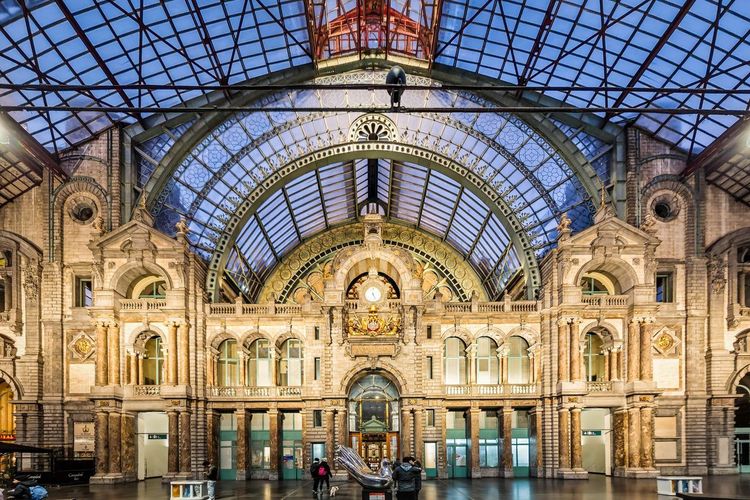
Everything starts at Antwerpen-Centraal, Antwerp's central station, inaugurated in 1905 and nicknamed the "railway cathedral." Its dome rises 75 meters above a hall of marble and gilding that impresses children even before the first museum. A few minutes are enough to admire the hall, but the stacked platforms on several levels are also worth a look.
As you exit, the Koningin Astridplein acts as a crossroads: this is where you choose the first stop, between the zoo (right next door, ideal for channeling the morning's energy) and the direct descent to the historic center. With young children still full of energy after the train, starting with the zoo often avoids negotiations later in the day.
You then head down toward the center via the Meir, Antwerp's main shopping street, where the facades of the Paleis op de Meir contrast with the international brands. It is a good place for a drink or restroom break before tackling the historic heart, ten minutes' walk away.
The route reaches the Grote Markt and the cathedral, detailed above, before heading back down to the Scheldt. On the riverbank stands Het Steen (Steenplein 1, 2000 Antwerpen, rated 4.4/5 on Google from 10,031 reviews), a medieval fortress and the oldest building in Antwerp, whose oldest parts date back to the 13th century. Inside are the visitor center and the The Antwerp Story experience, which summarizes the city's history in an accessible way, with interactive elements that appeal to children aged 8 and up. In front of the entrance, the statue of the giant Lange Wapper, a figure of local folklore, still makes quite an impression.
The Scheldt quays running alongside Het Steen then offer a wide, open promenade, from which the boats mentioned above also depart. The elevation gain is zero along the entire route, a real advantage over other Belgian cities: no hills add to the fatigue of young walkers.
Around the midpoint, near the cathedral or Het Steen, plan your lunch break: terraces are plentiful, but prices climb quickly in the immediate vicinity of the monuments. Moving two streets away is generally enough to find something more affordable.
With children under 6, it is better to split this route into two half-days: station and zoo in the morning, historic center in the afternoon (or the reverse), even if it means coming back the next day for the Scheldt and Het Steen. The cobblestones in the center, uneven in places, also slow down strollers (see the practical info). The route usually ends with a park break, in the Stadspark if you are heading back to the station, or by continuing north to link up with the Eilandje and the MAS.
This same route, from the central station to Old Antwerp, is the one followed by the Ryo audio-guided tour of Antwerp: the commentary triggers at the right places, without you having to check the map every five minutes. You keep your hands free for the stroller and your eyes on the children.
A Nature Break: Parks, Zoo and Fresh Air
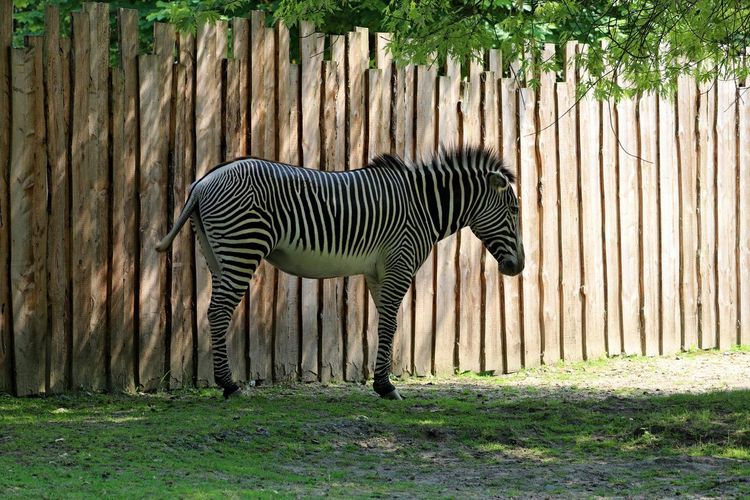
After a morning of cobblestones and museums, a green break often works wonders for the morale of the troops.
The Antwerp Zoo, founded in 1843, is among the oldest zoos still in operation in the world. Its asset when you are short on time: it is literally at the exit of the central station, so you can fit it in at the beginning or end of your stay without a detour. Giraffes, okapis, hippos, an aquarium and listed historic buildings (including an Egyptian-style temple) easily fill half a day. The site remains compact compared with recent wildlife parks: the elephants, for example, have been moved to Planckendael, the same company's wildlife park near Mechelen.
For a simpler and free break, the Stadspark, about ten minutes' walk from the station, offers lawns, a pond and a playground: a good spot for a picnic or a snack between two visits. Further south, the Zuid district also has a few modest gardens and large pedestrian squares where children can burn off energy.
Beyond the center, the Antwerp region has several green spaces accessible by tram or bus, such as the Boekenbergpark in Deurne, little visited by tourists and enjoyed by locals on weekends, or the vast Rivierenhof and its castle. These options remain secondary if you only have two or three days, but they suit a longer stay well.
Chinatown and Offbeat Neighborhoods to Explore
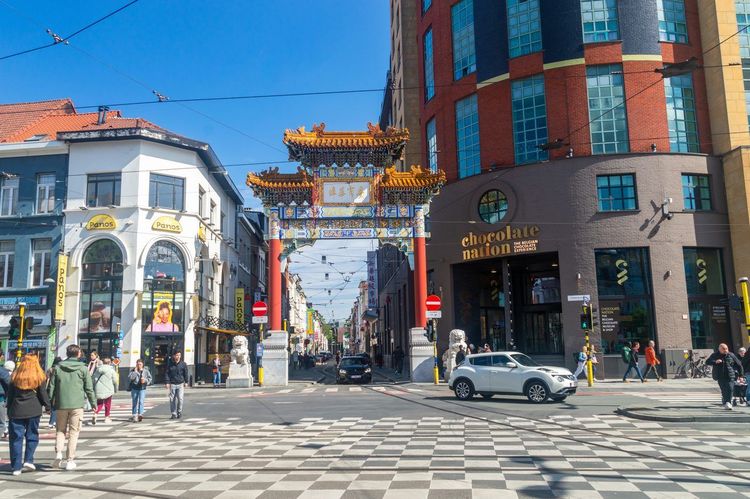
Few guides devote a section to Antwerp's Chinatown, yet it is just two minutes from the central station. Centered around the Van Wesenbekestraat and marked by its Chinese gate, the neighborhood is modest in size but dense with Asian restaurants and grocery stores. It is a good lunch stop for stepping out of the fries-and-waffles routine, and a simple way to show children a less Flemish side of the city.
If your stay falls on a Friday morning, head over to the Vrijdagmarkt (Vrijdagmarkt, 2000 Antwerpen, rated 4.4/5 on Google from 600 reviews), where an auction of assorted items (furniture, tableware, curiosities) has been held for centuries in front of the Plantin-Moretus Museum. The atmosphere is worth a quarter-hour stop even with no intention of buying: kids love guessing the final price. On Sunday mornings, the Vogeltjesmarkt ("bird market") enlivens the Theaterplein with its stalls of fresh produce and all sorts of items.
These detours break up the very heritage-focused rhythm of the rest of the day, with no extra transport since everything is within the same walking radius as the historic center.
Where to Eat with Kids in Antwerp
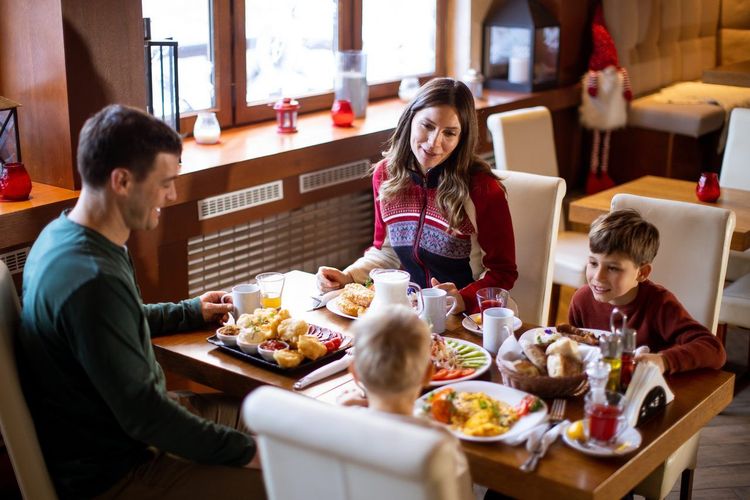
Antwerp has no shortage of places suited to younger visitors, as long as you time meals to the rhythm of the day rather than choosing at random.
For a quick bite, the chip shops (frituren) remain the safest bet: fast, cheap, and accepted by even the pickiest palates. Fritkot Max, on the Groenplaats, claims the title of the city's oldest chip shop; Frites Atelier, dreamed up by chef Sergio Herman, offers a more refined version with homemade sauces. For a snack, Désiré de Lille, an institution on the Schrijnwerkersstraat, has been serving waffles and doughnuts (laquemants) for decades, with a large room where a big group easily finds a place.
At lunchtime, Chinatown and its noodle soups offer a quick and inexpensive alternative, while the Eilandje lines up waterside terraces where children watch the boats while you finish your coffee. The brasseries on the Grote Markt and the Groenplaats have the advantage of the view, but their prices reflect it; two streets further, kids' menus come back to reasonable prices.
In the evening, favor the neighborhood brasseries in the Zuid or the Eilandje, quieter than the tourist center, and often flexible about hours and simplified orders. World cuisines (Persian, Ethiopian, Lebanese) are well represented around the Volkstraat, a good way to step outside the Franco-Flemish register if your stay stretches on.
For children with special diets (allergies, vegetarian options), most restaurants offer at least one alternative, as Antwerp's dining scene has largely adapted to an international clientele. Remember water bottles: a few public fountains let you fill them for free, a precious detail in summer. In high season (July-August, Christmas market), book evening tables, as the best-known places fill up quickly from 7 p.m.
Where to Stay as a Family in Antwerp
Most guides to Antwerp recommend places designed for couples or business trips. With children, the criteria change: quadruple or connecting rooms, a quiet neighborhood in the evening, proximity to the station rather than to bars.
The central station and zoo area suits you well if you are arriving by train: chain hotels with multi-bed rooms, parking for those coming by car, and the historic center accessible on foot. The Eilandje, newer and quieter in the evening, appeals if you prefer a less touristy setting, at the cost of a slightly longer walk to the Grote Markt. The Zuid, around the KMSKA, offers a good compromise with its large squares and apartments for rent.
For your selection, favor properties that explicitly advertise rooms for four people or aparthotels with a kitchenette, rather than the boutique hotels of the historic center, which are often limited to cramped double rooms.
If you want to treat yourself for an evening or two, the Botanic Sanctuary Antwerp, a 5-star hotel set in a former hospital and monastic complex beside the botanical garden, with a spa: a getaway designed more for parents (with grandparents or a babysitter in support) than as the main accommodation with toddlers.
Whatever your choice, check for an elevator: many old buildings in the center do not have one, which complicates life with a stroller and several suitcases.
Day Trips from Antwerp: Ghent, Mechelen, Brussels
If your stay exceeds three days, Antwerp lends itself well to day trips, as Belgium is compact enough to link several cities without exhausting the children.
Ghent, about 50 minutes by train, combines canals, a medieval castle (the Gravensteen, with its keep and battlements walk) and a historic center almost as dense as Antwerp's. With children, the castle remains the most effective attraction: narrow passages, dungeons and views from the battlements hit the mark, even with those less passionate about history.
Mechelen, about twenty minutes by train, suits a quieter half-day: St. Rumbold's Tower can be climbed (more than 500 steps, best for good walkers), and the compact center is easy to explore. Bonus for the little ones: the Planckendael wildlife park, with its elephants, is on the city's doorstep.
Brussels, 40-45 minutes by train, opens up a different register: Grand-Place, the Atomium (its silver spheres and fast elevator always impress) and numerous science museums, including the Museum of Natural Sciences and its dinosaur gallery. It is best to devote a full day to it.
Further afield, Waterloo (about 1h15 with a change in Brussels) will interest children already curious about the Napoleonic epic: the Lion's Mound can be climbed in 226 steps and the memorial offers immersive reconstructions. Mons, at 1h30 to 1h45, remains an option for an extended stay: its UNESCO-listed belfry and compact center are worth the detour if you loop through Hainaut.
If you prefer to avoid connections, the car remains a simple alternative, as most of these destinations are less than an hour's drive via the E19 or E17. By train, no reservation is needed departing from Antwerp-Central: connections to Brussels, Ghent and Mechelen are frequent, which leaves flexibility depending on the day's fatigue. Allow about twenty euros round trip per adult for Ghent, around ten for Mechelen; children under 12 travel free on the SNCB network when accompanying an adult (up to four children). Also check return times, as some regional lines become less frequent in the evening.
One last, more local option: the Waterbus, a river shuttle on the Scheldt that links Antwerp to several neighboring towns for a few euros. Less spectacular than a full excursion, it offers an outing on the water at a low price. To decide with limited time: Mechelen is the safest choice with little ones (short trip, Planckendael nearby), Ghent suits you if you are ready to walk more, and Brussels is the obvious pick if the Atomium or the science museums are among your priorities.
Practical Info: Access, Transport, Budget and Stroller
Before booking, a few pointers help avoid unpleasant surprises on the ground.
From Paris, Antwerp is reached in about 2 hours by direct train (Eurostar, formerly Thalys), or with a change at Brussels-Midi. Booking early remains far more advantageous, as last-minute fares can double or even triple.
From Brussels, the connection is much simpler: 35 to 45 minutes by train from Brussels-Midi or Brussels-Central, with very frequent departures during the day. A day trip from the capital is therefore entirely feasible if you are staying there.
On site, you will need very little motorized transport: the historic center, the station and the Eilandje can all be covered on foot. For longer trips, the De Lijn tram network usefully complements walking, with single tickets or day passes. The newer low-floor trams make boarding with a stroller easier; just avoid rush hours (before 9 a.m. and around 5 p.m.), when the trams fill up quickly.
The Antwerp City Card combines entry to most major museums (MAS, cathedral, Rubenshuis, Plantin-Moretus, Red Star Line) and public transport, for 24, 48 or 72 hours. It becomes worthwhile as soon as you plan three or more paid museums within 48 hours; for a stay more focused on walks, the math is often less favorable, since the zoo is not included (a discount is generally offered).
As for the budget, allow on average, for four people and per day, €150 to €220 for accommodation, €60 to €90 for meals alternating between chip shops and more sit-down restaurants, and €30 to €50 for museum entrance fees without the City Card. Walks, the Beguinage, the quays and the MAS panorama remain free, which noticeably lightens the bill.
For the stroller, the historic center is passable but uneven: the main thoroughfares (Meir, around the Grote Markt) roll along without a problem, while some old lanes, notably around the Beguinage, still have irregular cobblestones. A baby carrier as a complement spares you a lot of tension. The major museums (MAS, Plantin-Moretus, FOMU) have elevators.
Good to know: most municipal museums close on Mondays, so check this when building your itinerary. The climate remains damp for a good part of the year: a waterproof layer in the bag, even in summer, will keep you from watching the day turn at the first cloud drifting in from the estuary. The covered museums mentioned above offer a simple fallback in case of prolonged rain. Finally, tourist signage is mostly in Dutch and English: an offline mapping app helps you navigate calmly between neighborhoods.

FAQ
How many days should you plan to visit Antwerp with family?
Two full days are enough to cover the historic center, the port district and one kid-friendly activity without rushing. With three days, you can add a day trip to Ghent or Mechelen and take things at a more relaxed pace. With less than two days, focus on the walking route through the center and a single major museum (MAS or Red Star Line).
Is Antwerp easy to visit with a stroller?
Generally yes on the main thoroughfares (Meir, around the Grote Markt, the Scheldt quays), which are flat and well paved. Some old lanes, particularly around the Beguinage, still have uneven cobblestones. A baby carrier as a backup remains the most comfortable solution.
How do you get to Antwerp from Paris or Brussels?
From Paris, allow about 2 hours by direct train, a little more with a change in Brussels; booking early greatly reduces the ticket price. From Brussels, the trip takes 35 to 45 minutes, with very frequent trains during the day.
What budget should you plan for a family stay in Antwerp?
For four people, allow between €240 and €360 per day, combining accommodation, meals and a few museum entrance fees, while walks and the MAS panorama remain free. The amount varies significantly depending on the accommodation and the season.
Is the Antwerp City Card worth it with kids?
It becomes worthwhile from three paid museums within 48 hours, since it also includes public transport. For a stay focused on walks, the zoo and parks, the math is less favorable.
Which activities do kids and teens enjoy most in Antwerp?
The free MAS panorama, the Coddy treasure hunt and the zoo right outside the train station work almost every time with younger children. Teens tend to respond well to the FOMU, the Red Star Line Museum and a day trip to Brussels for the Atomium.
Which Antwerp neighborhoods should you favor with kids?
The historic center (Grote Markt, cathedral, Beguinage) for condensed heritage, the Eilandje for the port and the MAS, and the area around the central station for the zoo. These three areas cover the essentials without long trips between them.
Antwerp delivers a promise that is fairly rare for a European city: a dense historic center, a converted port district with a free panorama, and enough activities for children to last two to four days without a dull moment. The city remains human-sized, which limits fatigue and simplifies day-to-day organization.
To connect all these points without endless searching on the spot, the Ryo audio-guided tour of Antwerp follows the itinerary described here, from the historic center to the port district, with commentary that triggers at the right place. It lets you enjoy your stay without having your nose in a paper guide between snacks. And if you are looking for more ideas to round out your program, our guide to what to do in Antwerp covers the rest.