© Shutterstock
 Votre guide Ryo
Visiting Ghent Alone: The Complete Guide for a Solo City Trip in 2026
Standing on the Sint-Michielsbrug as raking light sweeps the rooftops, you quickly understand why visiting Ghent solo is anything but a punishment: the city seems designed to be explored alone, at the pace of a curious stride, with no one to wait for and no one to follow. The Ghentians themselves treat their city like a vast open-air campus, amid the roughly 75,000 students who fill the bars in the centre and the canals that make every neighbourhood reachable in ten minutes on foot. For a first introduction without getting lost in the maze of medieval lanes, the Ryo audio-guided tour of Ghent traces a connecting thread between the major monuments of the old city, earphones in and map tucked away in your pocket.
This guide takes you inside a 12th-century fortress whose battlements you can still walk, before a 1432 altarpiece whose missing panel has never been found since 1934, through a tanners' quarter of leaning façades, and all the way to a contemporary library where nobody will bat an eye if you spend the afternoon alone with a book. You will also find a one-day or weekend itinerary, addresses for eating at the counter without a reservation, the best neighbourhoods to sleep in, safety tips for going out at night and a realistic budget for a solo stay in a city that has made wandering a second nature.
Why Ghent Is an Ideal Destination for Solo Travel
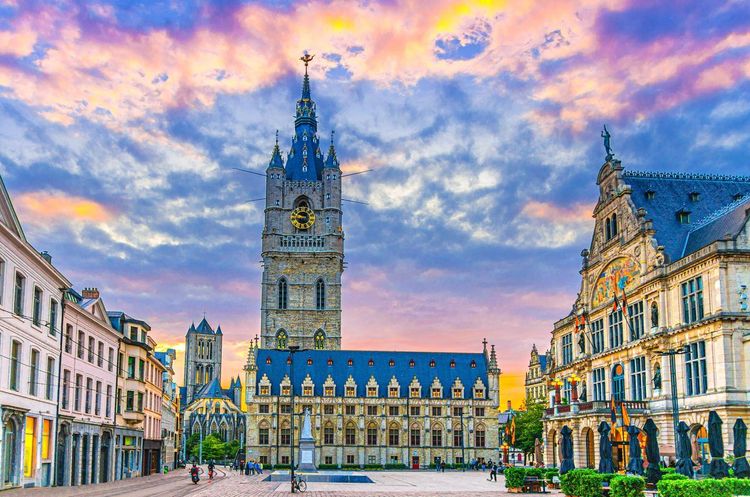
Ghent fits on a pocket map. The historic centre can be crossed from end to end in about twenty minutes, which means you can walk from the belfry to the Patershol in twelve minutes without unfolding a map or relying on a bus whose timetable you don't know. That is a strong argument when travelling solo: less logistics, more streets, and a margin for error you don't always allow yourself in a capital city.
The city is also home to a huge student population, centred on Ghent University and its university colleges. This presence concretely changes the atmosphere: bars serve beers at all hours without anyone raising an eyebrow at a solo customer, English is spoken fluently even in small grocery shops, and terraces stay lively long after the tour coaches have left for Bruges.
Another advantage: Ghent remains a human-scale city of around 265,000 inhabitants that has escaped the mass tourism of its neighbour Bruges. The day-trippers clear out in the late afternoon, and you are left with a real Flemish city — residents cycling home, neighbourhood markets and local cafés. For a solo traveller, this blend of heritage and everyday life avoids the theme-park feeling that can make a solitary visit feel a little melancholic.
You won't need to book a table for one. Counters, brown cafés and frituren (chip stalls) are designed for dropping in alone, a glass or a cone in hand.
The Gravensteen and the Lanes of the Patershol
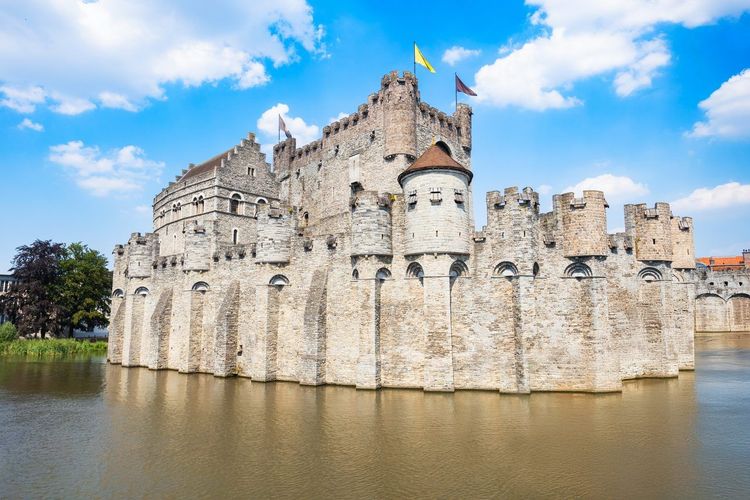
No solo visit to Ghent is complete without this corner of the city where the Middle Ages never quite left the stones. The castle and the neighbourhood that borders it can be explored in a single loop of about two hours, and you alone decide when to go inside or linger a little longer outside.
The Gravensteen, a Medieval Fortress from the 12th Century
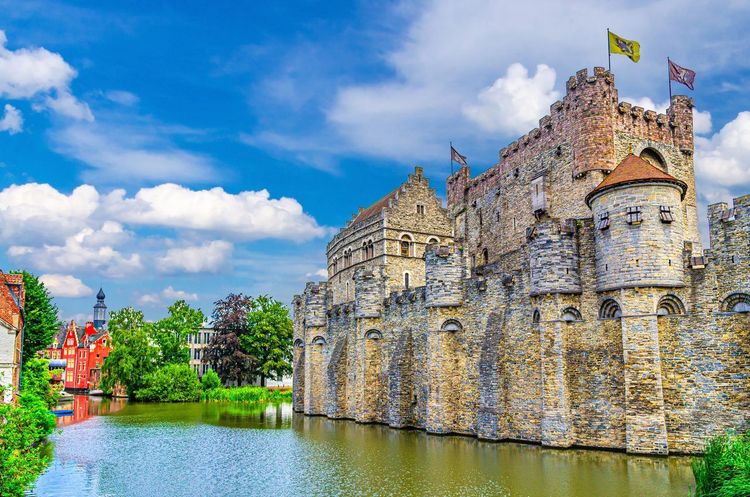
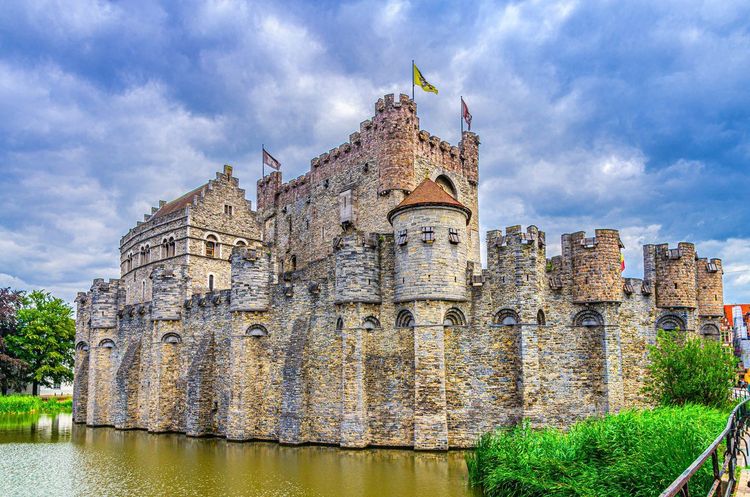
The Gravensteen has dominated the Lieve since 1180, with its grey stone turrets and its entrance bridge that still gives the illusion of a possible siege. Built by Count Philip of Alsace on his return from the Crusades, it served in turn as a comital residence, a courthouse, a prison and then a cotton mill in the 19th century, before a restoration carried out in the late 19th and early 20th centuries restored its familiar appearance.
A solo visit here makes perfect sense: the guide provided at the entrance, included in a ticket of around twelve euros, lets you climb at your own pace to the battlements, where the view sweeps across the rooftops of the Patershol (Rodekopstraat, 9000 Gent, rated 4.4/5 on Google from 411 reviews) and the towers of the centre. Allow 1h to 1h30, including the slightly chilling torture chamber and the keep, where you can feel the thickness of the walls.
Arrive at opening time if you can: school groups tend to show up mid-morning, which leaves a good hour of peace on the ramparts.
The Patershol, a Medieval Quarter with Flemish Façades
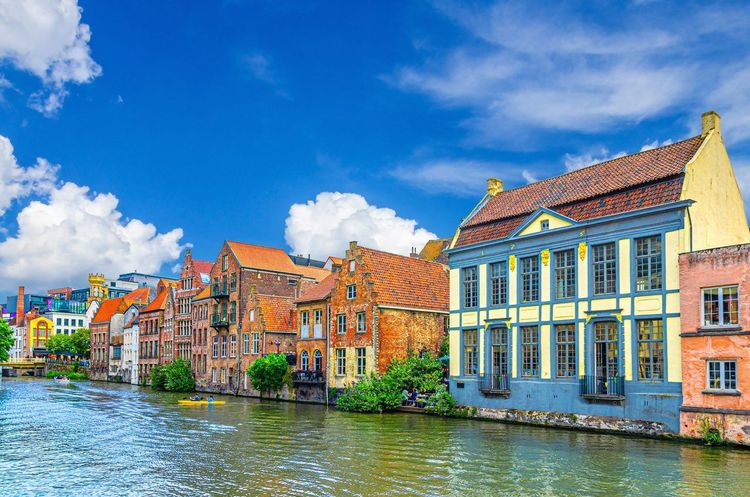
Leaving the castle, you step almost directly into the Patershol, a tangle of cobbled streets so narrow that a car can barely squeeze through. The neighbourhood long housed tanners and leather workers before becoming, in the 19th century, one of the poorest working-class areas in the city. Its renaissance dates from the 1980s, when the gabled houses were restored one by one.
It is one of the rare corners of Ghent where you can walk for twenty minutes without passing a chain-store sign. The tall, close-packed houses today shelter tiny restaurants and workshops discovered almost by chance, one half-open door at a time. In the evenings the terraces fill mainly with couples, but the small wine bars are perfectly happy to have you settle at the counter with a book.
The Ryo audio guide dedicated to old Ghent takes you precisely from the castle through these lanes, with an anecdote about the tanners who were relegated here because their trade made the whole neighbourhood reek. That way your eyes stay on the façades rather than on a screen.
The Ghent Belfry and Sint-Baafskathedraal
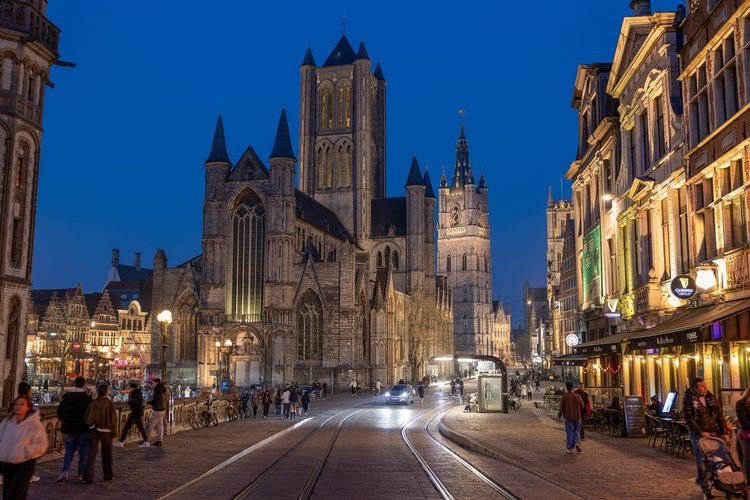
The historic heart of Ghent plays out over just a few dozen metres, where two monuments and a guildhall have been answering each other for centuries.
The Gothic Belfry and Its 54-Bell Carillon
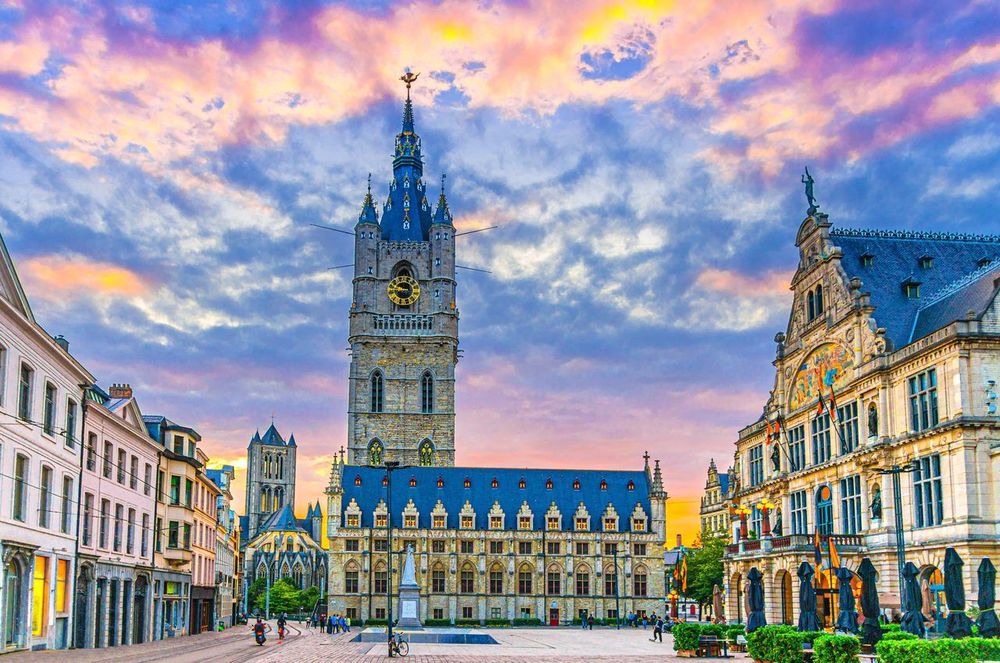
Standing 91 metres tall, the Ghent Belfry was completed in 1380 to house the city's written privileges and its communal treasury, symbols of the autonomy that the cloth merchants had wrested from the Counts of Flanders. A lift carries visitors to the upper floors, where the gilded dragon crowning the spire keeps watch over the lower city. The original dragon, older still, is displayed inside the tower — don't miss it on the way up.
The carillon has 54 bells. If you hear tunes ringing out as you walk through the centre, that's where they come from. Allow about 45 minutes for the visit, a ticket of around ten euros, and go up early in the morning during high season to enjoy the view without queuing. At the foot of the tower, the 15th-century Cloth Hall is a reminder of where the city's fortune came from.
Sint-Baafskathedraal and the Ghent Altarpiece by the Van Eyck Brothers
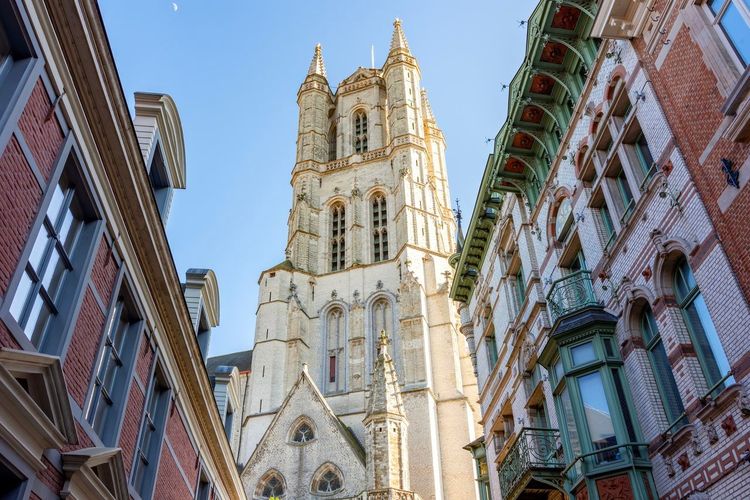
Just a few steps away, Sint-Baafskathedraal (Sint-Baafsplein, 9000 Gent, rated 4.7/5 on Google from 14,778 reviews) houses one of the most coveted works in Europe: the Ghent Altarpiece, completed in 1432 by the Van Eyck brothers. The polyptych has been stolen, dismantled or moved on multiple occasions, and one of its panels — the Just Judges — stolen in 1934, has never been recovered. A copy occupies its place, and the case still fuels theories about the prime suspect, stockbroker Arsène Goedertier, who died before revealing his secret.
To see the Ghent Altarpiece, buy a dedicated ticket: €16 for a visit of about an hour with augmented-reality glasses, or €12.50 for a shorter version focused on the altarpiece alone. The recent restoration has revealed colours that reproductions never hinted at. Leave time for the Romanesque crypt as well, which is often quieter than the nave.
Solo, the place lends itself well to quiet contemplation: no one hurries you past a panel, and the benches in the nave remain available even at the height of the season. The Ryo audio-guided tour stops in front of both monuments, with commentary on the never-solved theft that gives the visit a whole new dimension.
The Korenmarkt, Sint-Niklaaskerk and the Vrijdagmarkt
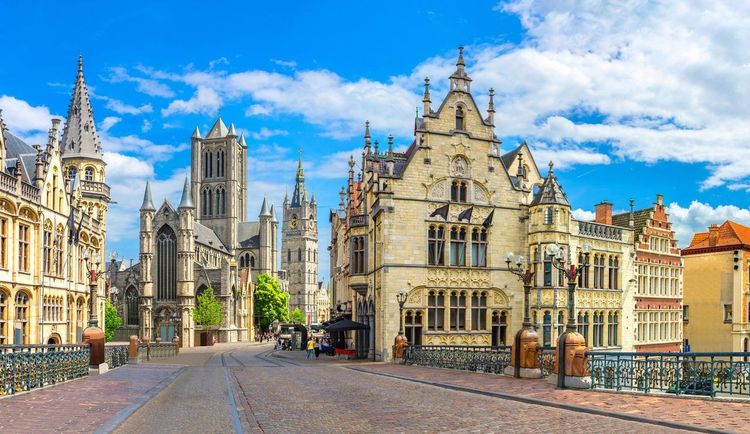
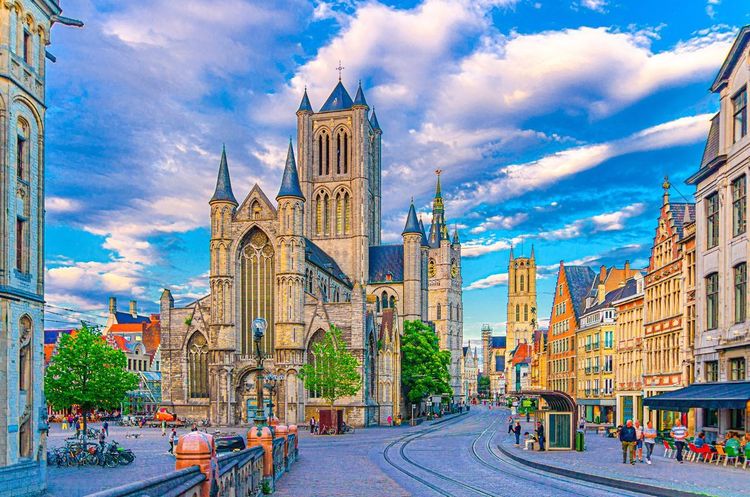
Between the cathedral and the Lys, the Korenmarkt, the old grain market, serves as a natural meeting point: this is where the tram from the station stops and where most itineraries cross. Sint-Niklaaskerk, built in blue Tournai stone in the Scheldt Gothic style, raises its lantern tower here. Entry is free, and the interior, often deserted, offers ten minutes of silence between two paid attractions.
A little further north, the Vrijdagmarkt (Friday Market) was for centuries the square for revolts and proclamations. The statue of Jacob van Artevelde, the city's 14th-century leader, points his finger towards England, the indispensable trading partner of Ghent's cloth merchants. Right beside it, the cannon Dulle Griet, a 15th-century bombard painted red and more than five metres long, draws every camera. Around the square you will find beer cafés with generous terraces, perfect for a solo afternoon break in the sun.
The Graslei and Korenlei Quays: Between a Stroll and a Boat Cruise on the Lys
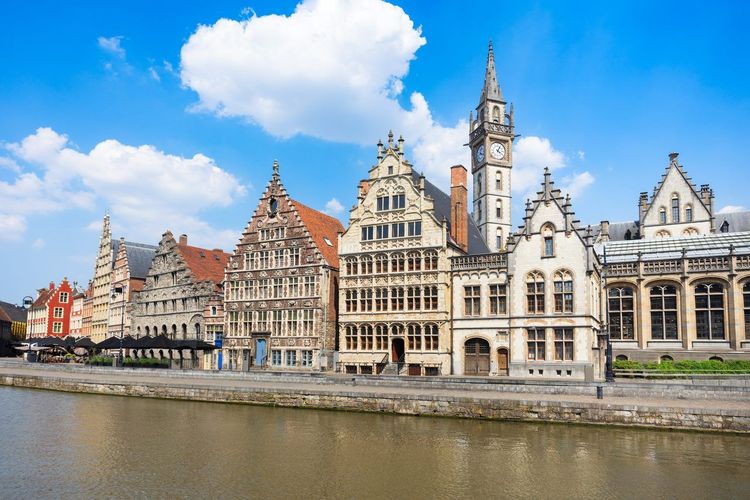
The Guild Façades of the Graslei and Korenlei
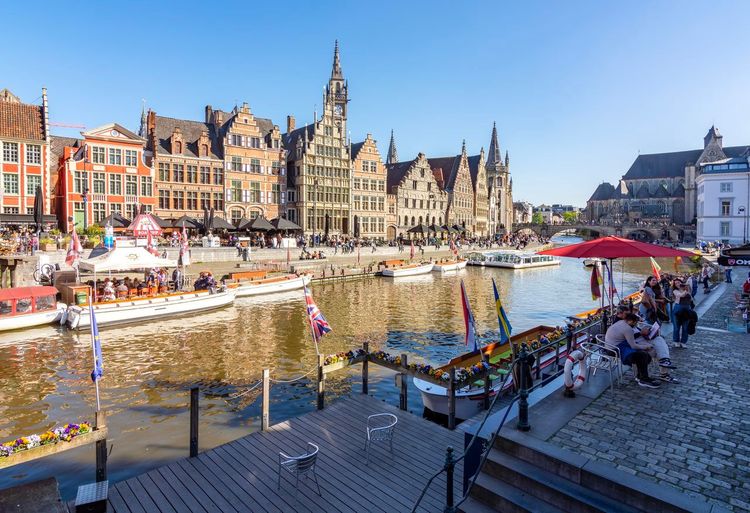
The Graslei and Korenlei quays face each other on either side of the Lys and make up Ghent's most photographed image: a row of gabled façades built between the Middle Ages and the 18th century, several of which belonged to guilds (boatmen, grain measurers, masons). The House of the Free Boatmen, a jewel of Brabantine Gothic dating from 1531, stands beside the baroque House of the Grain Measurers and the Spijker, a Romanesque warehouse among the oldest buildings on the quay.
Walking alone along these quays in the early morning remains one of the finest moments of a solo stay in Ghent: the terraces are not yet set up, the raking light sculpts the façades, and you can sit on the stone steps at the water's edge. In the evening those same steps become the meeting point for students, beer in hand, and it is very easy to strike up a conversation.
The Sint-Michielsbrug and a Boat Cruise on the Lys
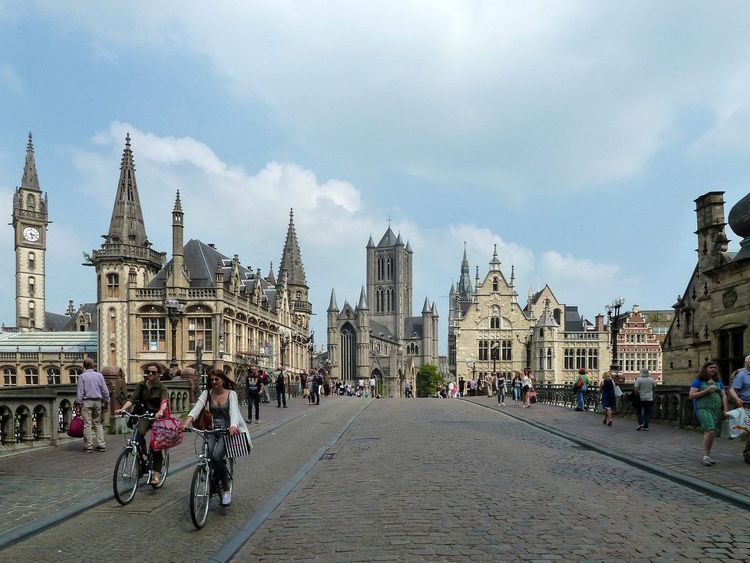
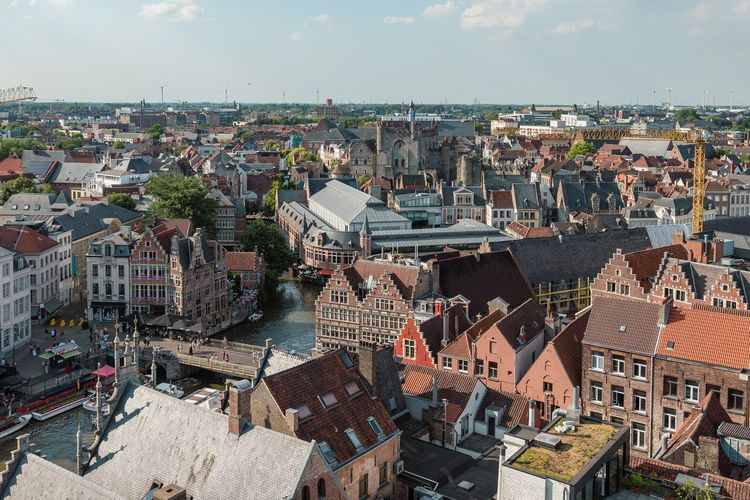
At the end of the quays, the Sint-Michielsbrug (Sint-Michielshelling, 9000 Gent, rated 4.8/5 on Google from 4,814 reviews) offers the most complete viewpoint over Ghent: from a single spot you can see Sint-Niklaaskerk, the belfry and Sint-Baafskathedraal aligned — the famous 'three towers' skyline.
For a change of perspective, a boat trip on the Lys (about 40 to 50 minutes, around ten euros) departs from the Graslei and Korenlei landing stages and shows the same façades from the water. It is an easy activity to do solo: the boats take individual passengers without any fuss, and the boatman's commentary serves as a travel companion. A break on the bank of the Lys, takeaway coffee in hand, is all you need afterwards to let the walk sink in.
The route of the Ryo audio-guided tour of Ghent runs along the Graslei and Korenlei, pointing out each guild façade in turn, before crossing the Sint-Michielsbrug — ten minutes that are all you need to understand what these stones are saying.
Beguinages, Street Art and De Krook Library: Ghent off the Beaten Track
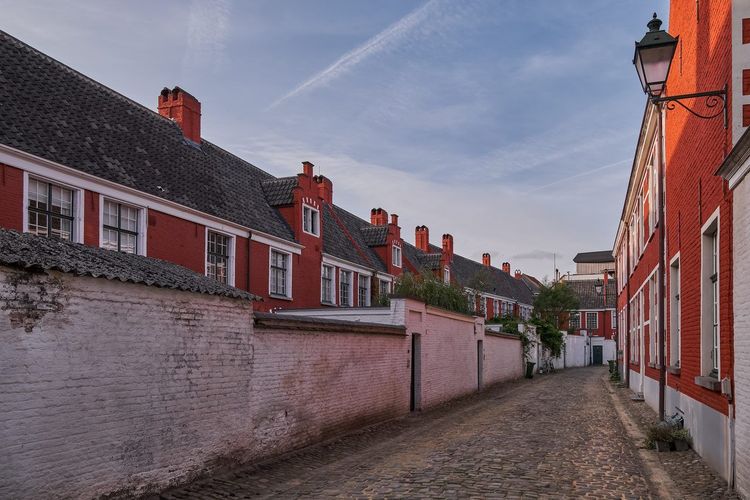
Ghent's Beguinages, Flemish Pockets of Calm
Ghent has preserved three beguinages, the enclosed communities where lay women known as beguines lived together without taking permanent vows. Two of them appear on the UNESCO World Heritage List, inscribed in 1998 alongside the other Flemish beguinages. The Small Beguinage (Onze-Lieve-Vrouw ter Hooyen), founded in the 13th century, is the closest to the centre: its brick houses with coloured shutters surround a tree-lined lawn, about fifteen minutes on foot from Gand-Saint-Pierre station.
Further out, the Large Beguinage of Sint-Amandsberg was built in 1874 to house the beguines expelled from the former Sint-Elisabeth beguinage, of which only a few houses remain in the city centre. It is a small town within the city, with its neo-Gothic church and lanes that are deserted on weekdays.
Solo, this is the kind of place where you slow down without noticing. Entry is free, there is no shop and no queue, and the benches invite you to sit for a while. Simply respect the quiet: people still live in these houses. Allow 30 to 40 minutes per beguinage.
Street Art and Contemporary Architecture around De Krook
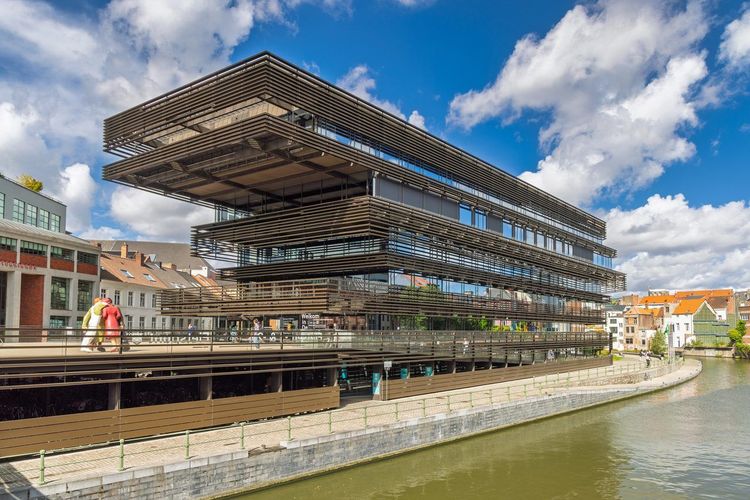
At the opposite end of the medieval register, the De Krook library (Miriam Makebaplein 1, 9000 Gent, rated 4.5/5 on Google from 778 reviews) embodies contemporary Ghent: a building designed by architects Coussée & Goris and RCR Arquitectes, opened in 2017 on the banks of the Scheldt, housing books, co-working spaces and digital labs open to the public.
For a solo traveller, it is an ideal refuge: free wifi, large windows overlooking the water and tables where no one will ask you to order anything. Sort your photos, plan the rest of your stay or shelter from a shower.
For street art, head to the Werregarenstraat right in the centre: this lane, nicknamed Graffiti Straatje, is officially open to graffiti artists and is permanently covered in fresh murals. Other large-scale works are scattered around the city, particularly around the former industrial districts, and the tourist office offers a dedicated map. Spending an hour hunting them down alone, with no goal other than observation, is a simple way to feel the creative pulse of Ghent.
Museums and CitadelPark: Cultural Ghent
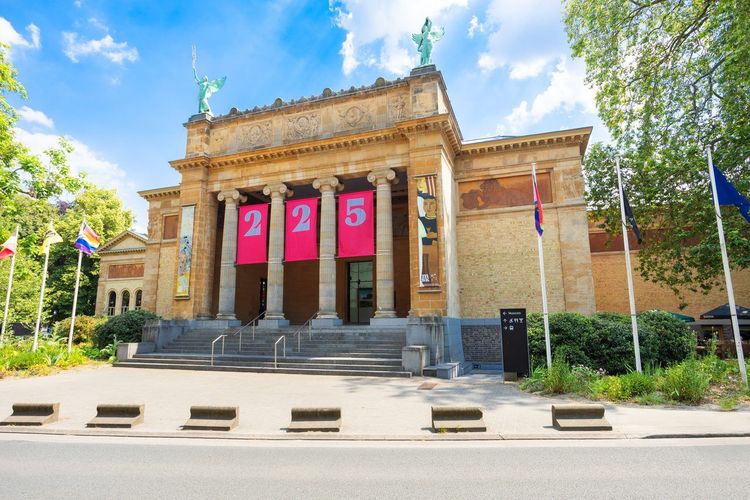
The MSK and the SMAK: Fine Arts and Contemporary Art
A rainy day won't ruin your stay: Ghent has enough museums to fill an entire day. The MSK (Museum voor Schone Kunsten) brings together works ranging from Hieronymus Bosch to the Belgian Expressionists, in a 1902 neoclassical building whose galleries can be explored without jostling, even at weekends.
Right opposite, the SMAK (Municipal Museum of Contemporary Art) focuses on contemporary art and installations, with pieces by Marcel Broodthaers and Panamarenko. The two museums face each other at the entrance to CitadelPark (Citadellaan, 9000 Gent, rated 4.2/5 on Google from 6,431 reviews), making it possible to move from one to the other in two minutes.
If the city's history interests you more than art, the STAM, the city museum housed in the former Bijloke abbey, traces eight centuries of Ghent through maps, scale models and everyday objects.
The Industry Museum and the Lawns of CitadelPark
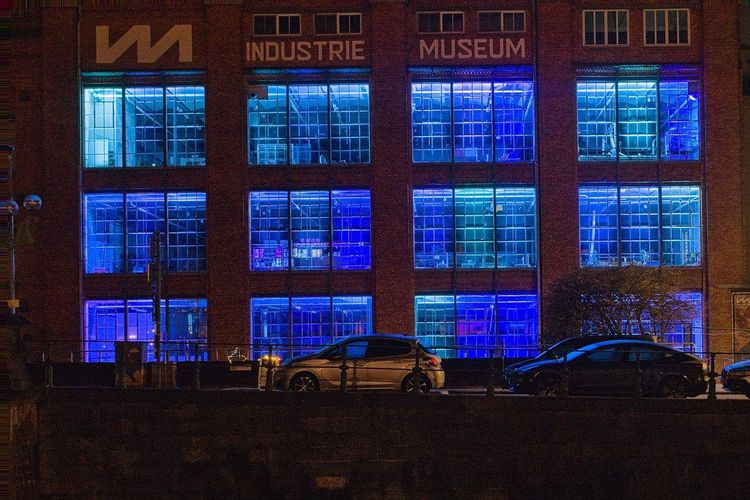
Less well known to visitors in a hurry, the Industry Museum (MIAT) tells the story of Ghent's textile past — a city once nicknamed the 'Manchester of the Continent' for its cotton mills. Working looms and workshop reconstructions reveal a city very different from the medieval postcard, and the top floor offers a fine view over the rooftops.
Between museums, CitadelPark awaits with its shaded paths, its artificial grotto and its lawns where you can stretch out with a book or a picnic bought on the way. The perfect spot to catch your breath for an hour, away from the narrow streets of the centre.
Eating Well Solo: Specialities and Foodie Addresses in Ghent
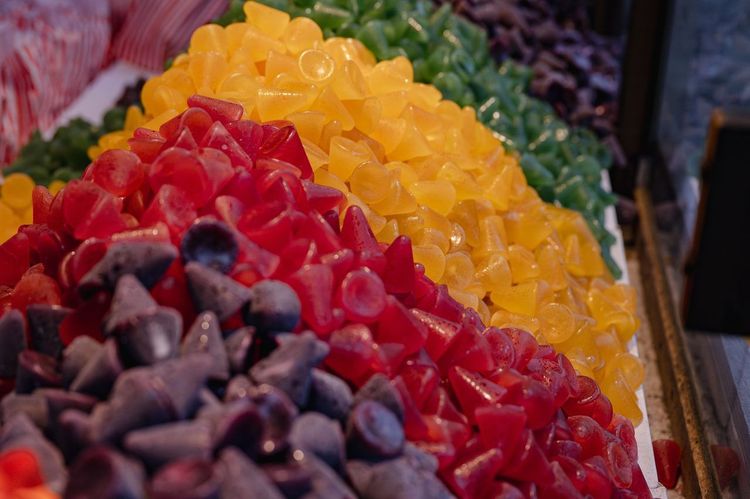
Cuberdons, Waffles and Chocolates to Go
Ghent has its own sweet treats, and most are eaten standing up. Cuberdons — those purple raspberry cones with a liquid centre — are sold from carts on the Groentenmarkt, where two rival vendors have been competing for customers for years. Liège waffles, more caramelised than their Brussels cousin, can be found on almost every street corner.
On the same square, the mustard shop Tierenteyn-Verlent (Groentenmarkt 3, 9000 Gent, rated 4.7/5 on Google from 363 reviews), open since 1790, still fills its stoneware pots by ladle: a sharp mustard to bring home as a souvenir that fits perfectly in a carry-on bag.
For chocolates, the artisan shops in the centre, between the cathedral and the Korenmarkt, sell individual pieces — practical when you're travelling solo and want to sample several pralines without buying a whole box. Nearby, the Groot Vleeshuis (Great Butchers' Hall), a covered market from the 15th century where hams hang from the rafters, serves as a deli for Flemish produce.
As for Ghent's own beers, the Gruut — brewed in the city centre without hops according to a medieval-inspired recipe — or the Stropken can be ordered in any café, often with a cheese plate to share (or not) with yourself.
Restaurants, Beer Bars and Welcoming Vegan Spots for the Solo Traveller
Eating alone in Ghent is no problem at all: counters, open kitchens and high tables, plentiful around the Vlasmarkt and the Patershol, let you sit down without a reservation. Ghent has also built a reputation as a vegetarian capital: the city launched a weekly Veggie Thursday (Donderdag Veggiedag) as early as 2009, and vegan addresses have multiplied in the student quarter, with menus that change with the market.
If you're looking for somewhere to eat in Ghent without spending the whole evening, frituren serve twice-cooked chips with a range of sauces, best enjoyed on a bench overlooking a canal: simple, cheap and perfectly suited to a solo dinner. Our Ryo article on Ghent's culinary specialities details nine specialities to try during your stay, including waterzooi, the city's emblematic creamy stew.
Ghent at Night: Going Out Solo with Peace of Mind
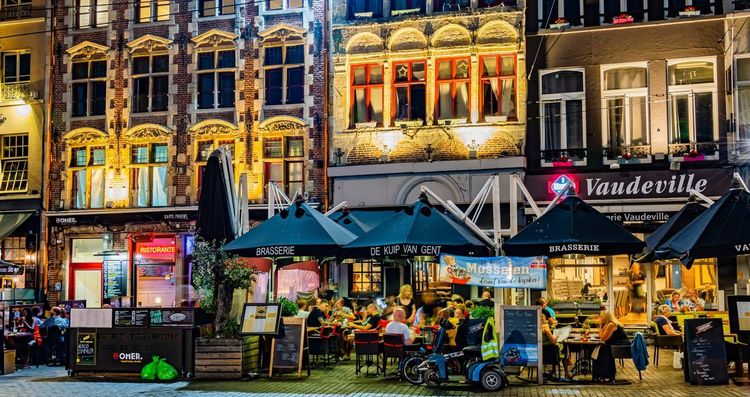
Ghent at night remains reassuring for solo travellers, thanks to a student population that keeps the Overpoortstraat and the area around the Vlasmarkt lively well past midnight. The well-lit, busy streets of the historic centre can be walked without worry. Unfamiliar back-street areas are best left unexplored at two in the morning, as anywhere.
The cultural centre Viernulvier (Sint-Pietersnieuwstraat 23, 9000 Gent, rated 4.4/5 on Google from 5,040 reviews) (the former Vooruit), a former workers' house turned concert venue and café, draws a mixed crowd where sitting alone at the bar surprises nobody.
For a quieter evening, the brown cafés and wine bars of the Patershol or the Korenlei stay open late and are happy to let you linger with a notebook. And it is at night that the monuments reveal themselves: the city's lighting scheme was designed for a nocturnal stroll, from the castle to the quays.
Meeting People When Travelling Solo
Travelling solo doesn't mean staying alone. Youth hostels in the centre regularly organise evenings and outings, and free walking tours (tip-based guided visits) bring together travellers from all over the world every day. The Graslei steps on summer evenings, and the long communal tables in beer cafés, are also places where conversation starts easily. On the safety front, keep your usual habits: bag closed in the Gentse Feesten crowds, watch out for bicycles that arrive fast and silently, and save the emergency number 112 in your phone.
Where to Sleep in Ghent When Travelling Solo
For a solo stay, the historic centre (around the Korenmarkt and the Patershol) remains the most practical area: everything is within walking distance and the atmosphere stays safe late at night. Ghent's youth hostels, often set in former townhouses, offer dormitories or private rooms from around thirty euros a night, with a shared kitchen that makes meeting people easy.
For a treat, the hotel 1898 The Post (Graslei/Korenmarkt 16, 9000 Gent, rated 4.7/5 on Google from 1,396 reviews), housed in the former neo-Gothic post office on the Korenmarkt, combines spectacular architecture with hushed rooms, at more reasonable rates outside high season.
Before booking, check three details that matter when travelling solo: a secure locker in dormitories, a reception open late if you arrive on an evening train, and the actual distance to the Korenmarkt — some addresses advertised as 'central' are in fact near the station, a good twenty minutes' walk or a few tram stops away.
If you prefer quiet, the neighbourhood around Sint-Pietersplein, more studenty and close to the station, has several B&Bs run by locals who are happy to share their favourite addresses. Book on weekdays if possible: prices rise at weekends and soar during the Gentse Feesten.
Getting to Ghent and Getting Around
By Train from Paris, Brussels or Lille
From Paris, the most straightforward option is to travel to Brussels-Midi by Eurostar (formerly Thalys) or TGV in about 1h25 from Paris-Nord, then take an IC train to Gand-Saint-Pierre, an additional half hour. From Lille, a direct train connects Lille-Flandres to Ghent via Kortrijk in just over an hour, without going through Brussels.
From Brussels, trains to Ghent run several times an hour during the day, making a day trip feasible without advance booking. Look out for SNCB weekend tickets, which are cheaper for a return journey from Friday evening to Sunday.
Getting Around on Foot, by Bike or by Tram (Avoid the Car)
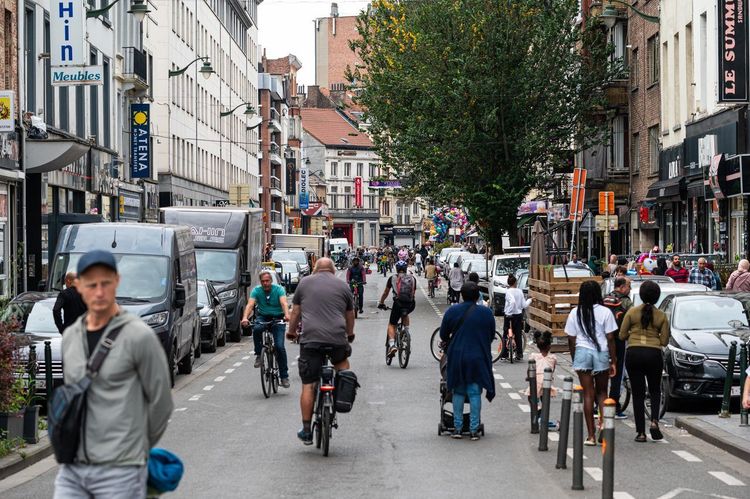
Leave the car behind: since 2017, Ghent's circulation plan divides the city into sectors that cannot be crossed by car, and the historic core is largely pedestrianised. If you arrive by car, park-and-ride facilities on the outskirts are connected to the centre by tram or bus in about fifteen minutes.
On foot, almost every sight is reachable in under 20 minutes. Tram 1 connects Gand-Saint-Pierre station to the Korenmarkt — handy on arrival with luggage. To cover more ground, rental bikes are widely available and take you along the canals on well-marked cycling paths: Ghent is one of the most cycle-friendly cities in Belgium.
Budget, City Card and Practical Info for a Solo Stay
The CityCard Gent, available in 48h or 72h versions (around €40 to €50 depending on duration — check the latest price on the tourist office website), gives access to the main museums and monuments, including the Gravensteen and the belfry, as well as De Lijn public transport, a boat trip and one day's bicycle rental. It pays for itself from three or four paid attractions — the rhythm of a solo stay that takes in the castle, the belfry and a museum each day.
Budget-wise, Ghent remains affordable by Belgian standards: allow around €60 to €90 per day solo in a hostel or simple room, with two meals and the main admission fees. That is noticeably less than Bruges for comparable comfort, especially on the accommodation side.
A few practical tips useful for solo travellers: the De Lijn app lets you buy transport tickets on your phone, tap water is drinkable, and bank cards are accepted almost everywhere, even for small amounts. The tourist office, housed in the former fish market (Oude Vismijn) opposite the castle, sells the CityCard and provides free maps.
When to Go: Gentse Feesten in Summer, Christmas Market in Winter
The Gentse Feesten (Ghent Festival), ten days of celebrations in July around 21 July, transform the city into an open-air stage: free concerts, street theatre and pop-up bars take over every square. The atmosphere is festive and surprisingly easy to enjoy solo, as the crowds naturally encourage spontaneous encounters. The downside: accommodation is snapped up and prices are at their peak.
In winter, Ghent's Christmas market sets up its chalets around Sint-Baafskathedraal, on the Korenmarkt and on Emile Braunplein, where an ice rink appears at the foot of the belfry from early December to early January.
In between, spring and early autumn offer the best compromise: fewer crowds than in summer, still-mild weather and softer accommodation rates. The Ghent Festival van Vlaanderen, in September, adds a rich programme of classical music.
Suggested Itinerary: Visiting Ghent Solo in 1 or 2 Days
For a single day, the most efficient itinerary links the Gravensteen and the Patershol in the morning, the belfry and Sint-Baafskathedraal just after lunch, then a walk along the Graslei and a boat trip on the Lys in the late afternoon. This order follows the geographic logic of the centre and avoids backtracking.
Over a weekend, dedicate the first day to the historic centre (castle, belfry, cathedral, quays) and the second to quieter neighbourhoods: beguinage, De Krook, CitadelPark and museums, with an evening in the Patershol to round off the stay. For the first half-day, the Ryo audio-guided tour of Ghent acts as a connecting thread between the monuments — spread across two mornings if you'd rather stroll.
If you appreciate a bit of occasional company, a free walking tour at the start of your stay gives you the city's historical foundations before you head off to explore alone. Our Ryo article on things to do in Ghent completes this itinerary with five ideas for an extra day.

FAQ
How many days do you need to visit Ghent solo?
One full day is enough to see the essentials of the historic centre (castle, belfry, cathedral, quays). Two days allow you to add museums, a beguinage and quieter neighbourhoods without rushing — a comfortable pace for a solo traveller.
Is Ghent a safe city for solo travel?
Yes, Ghent is a safe city, with a historic centre that is largely pedestrianised, well lit and busy late into the evening thanks to its student population. The usual precautions are enough: avoid deserted back streets in the middle of the night and keep an eye on your belongings in festival crowds.
How do you get from Paris or Brussels to Ghent?
From Paris, take a Eurostar or TGV to Brussels-Midi (about 1h25), then an IC train to Gand-Saint-Pierre (about 30 minutes). From Brussels, several trains depart every hour with no advance booking required. From Lille, a direct train via Kortrijk takes just over an hour.
Should you buy the Ghent City Card?
It pays for itself from three or four paid attractions. For a two-day solo stay with several monuments on the agenda, the 48h CityCard generally represents real savings, including transport and a boat trip.
What budget should you plan for a solo trip to Ghent?
Budget around €60 to €90 per day, including simple accommodation, two meals and the main admission fees. Frituren, youth hostels and free sites such as the beguinages or De Krook help keep costs down.
Where should you sleep in Ghent when travelling solo?
The historic centre around the Korenmarkt and the Patershol remains the most practical and safest choice. Youth hostels in the centre and the student neighbourhood around Sint-Pietersplein offer good options for meeting other travellers.
What should you see in Ghent in just one day?
The Gravensteen and the Patershol in the morning, the belfry and Sint-Baafskathedraal in the early afternoon, then the Graslei and Korenlei quays with a boat trip at the end of the day: the unmissable trio for a packed solo visit.
After this walk through cobbled lanes, quays and museums, one thing becomes clear: Ghent lends itself to solo visits better than most of its Flemish neighbours, precisely because it never requires company to be enjoyed. To link all these stops in a single audio thread, without juggling multiple tabs, launch the Ryo audio guide to Ghent and explore at your own pace, from the Gravensteen to the Graslei quays.