© Shutterstock
 Votre guide Ryo
14 Free Things to Do in Namur in 2026
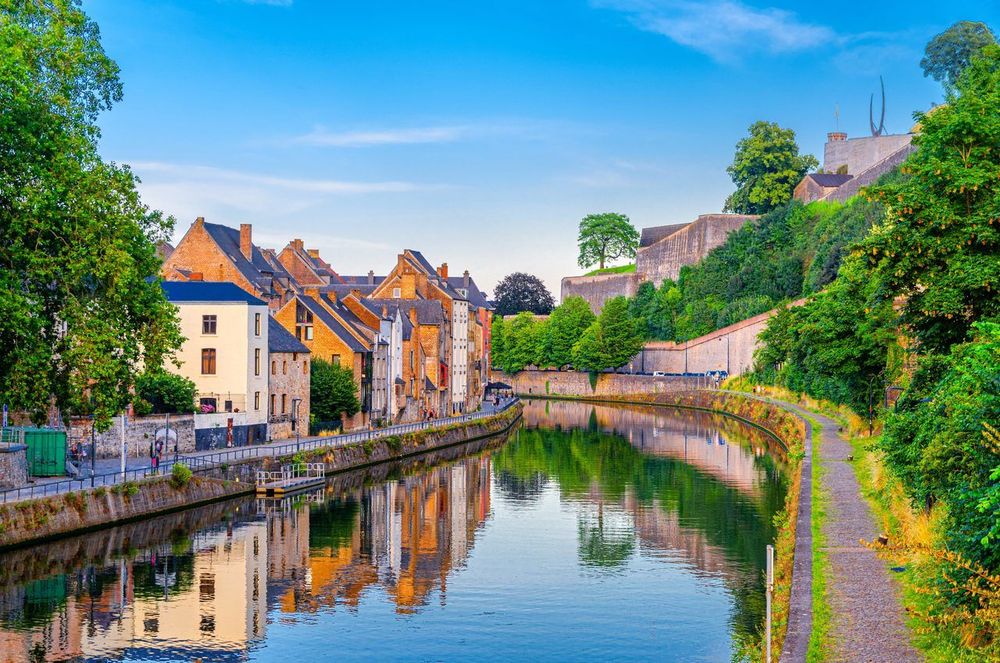
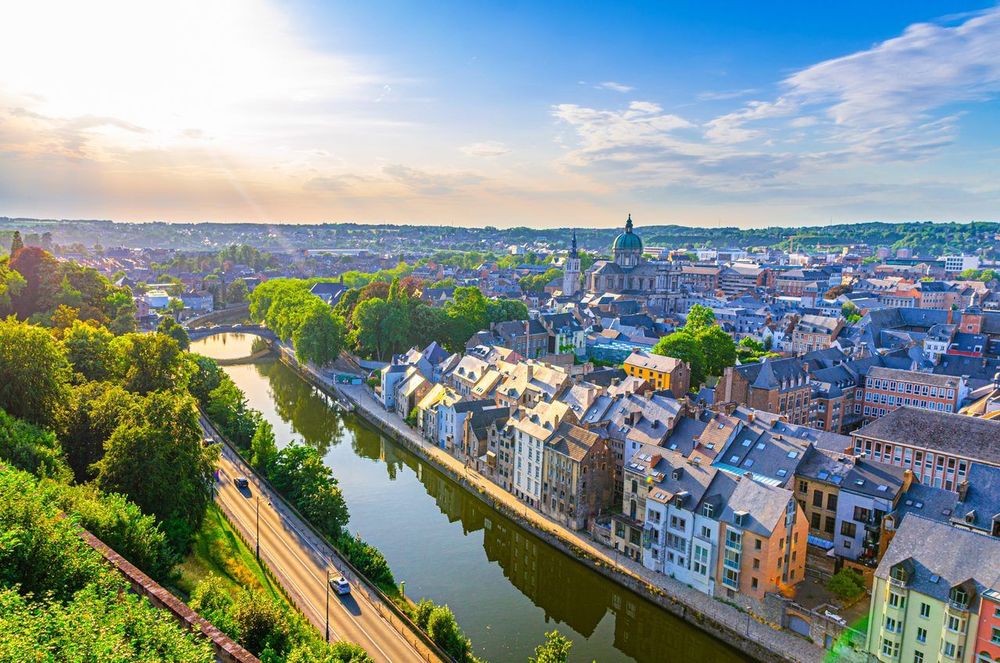
From the citadel ramparts to the banks of the Meuse, free things to do in Namur are enough to fill a long weekend without opening your wallet. The capital of Wallonia was built at the confluence of the Sambre and the Meuse, at the foot of a rocky spur that has seen many sieges, including the one led by Louis XIV and Vauban in 1692. Today, you can walk up to its terraces without paying a cent, then wander back down between the belfry listed as a UNESCO World Heritage site, Saint-Aubain Cathedral and the cobbled lanes of old Namur. On the cultural side, several museums open their doors without a ticket on the first Sunday of the month, including the one devoted to the engraver Félicien Rops. The Points-Noeuds cycling network, the city-centre parks, the Fêtes de Wallonie and the FIFF round out the programme, with a few escapes to Dinant, Floreffe or the rocks of Marche-les-Dames. And to put a story behind every façade, the Ryo audio-guided tour of Namur tells the story of the city in 19 audio stops over 3.7 km.
1. The Namur Citadel: Fortress and Panoramas with Free Access
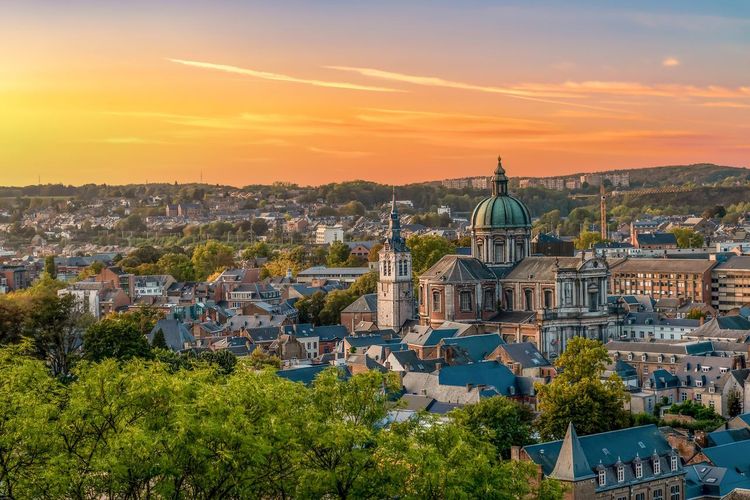
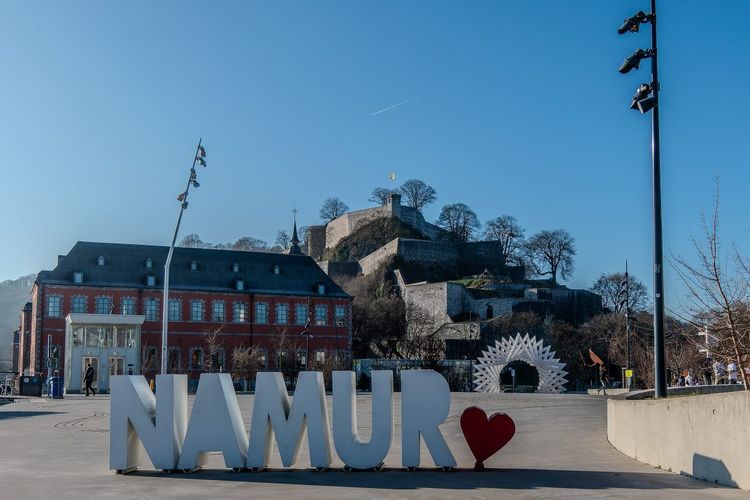
The Namur Citadel (Route Merveilleuse 64, 5000 Namur, rated 4.5/5 on Google from 17,544 reviews) overlooks the confluence from a spur occupied since Antiquity. The Counts of Namur built their castle here in the Middle Ages, before Spanish, French and then Dutch engineers transformed it, century after century, into one of the largest fortresses in Europe. Good news for your budget: the outer ramparts, esplanades and wooded park can be explored freely all year round. Only the cable car linking the city centre to the summit in 8 minutes, the little tourist train, the Terra Nova visitor centre and the guided tour of the 450 metres of underground tunnels are paid.
The Ramparts and Panoramic Terraces over the Sambre and the Meuse
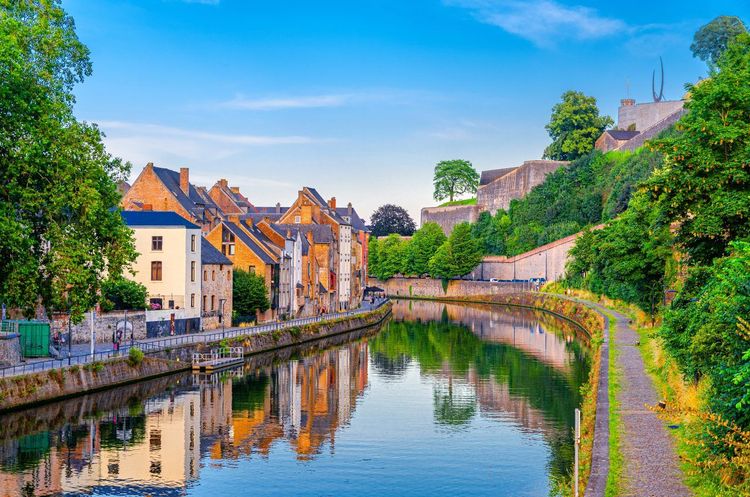
Several kilometres of paved paths wind between the bastions, dry moats and former casemates, with viewpoints that change at every turn. From the upper terraces, the view takes in the Sambre-Meuse confluence on one side and the slate roofs of the old town on the other. At dawn, the mist that sometimes lingers over the two rivers gives the landscape an almost unreal look.
You can make the climb on foot from the centre in about twenty minutes along shaded paths, or take the Route Merveilleuse by car if the climb puts you off. Bring good shoes: the ground is uneven in places, especially after rain. The information panels scattered along the way tell the story of the successive sieges, including the 1692 one led by Vauban and the retaking of the town by William III of Orange in 1695.
On the Terra Nova esplanade, a surprise awaits those who have never been up: a giant golden turtle ridden by a figure in armour. This is "Searching for Utopia", a monumental sculpture by the Antwerp artist Jan Fabre installed in 2015. You can admire it without a ticket, and it makes for one of the city's most unusual photos, especially at the end of the day when the gilded bronze catches the low light.
A few tips for choosing your moment. On weekdays and outside school holidays, you will often have the terraces almost to yourself before 10 a.m. The sunset is best watched from the west-facing viewpoints above the Sambre, when the rooftops of the lower town turn copper. And if you drive up, know that the Route Merveilleuse, which winds along the wooded flank of the spur, also offers a few viewpoints where you can stop for a few minutes.
The Citadel Park and Its Walking Trails
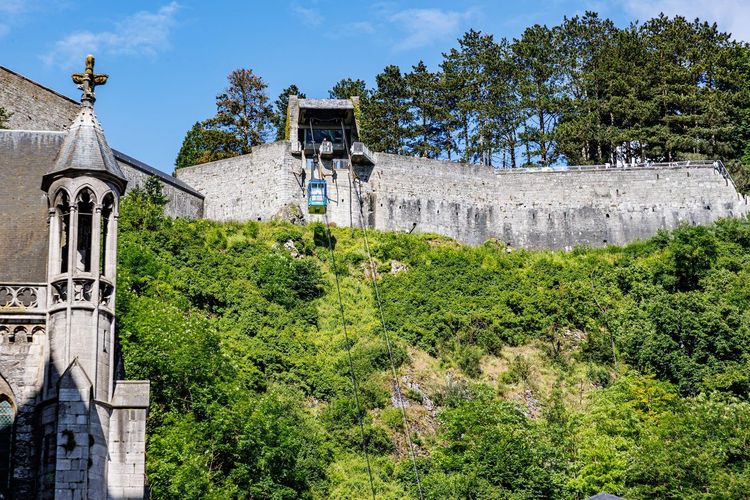
Beyond the fortifications, the Citadel is home to a wooded park with picnic areas and marked trails, suitable for a family stroll as well as a morning jog. On summer weekends, locals happily head up here to find the shade of the big trees and a bit of coolness above the city.
To turn the climb into a guided visit, the Ryo audio guide climbs all the way to the citadel and decodes each viewpoint and each fortified remnant you pass on the way, with anecdotes about the sieges the city endured. Without this context, the walk remains pretty but loses a good part of its historical interest.
2. The Sambre-Meuse Confluence and the Grognon
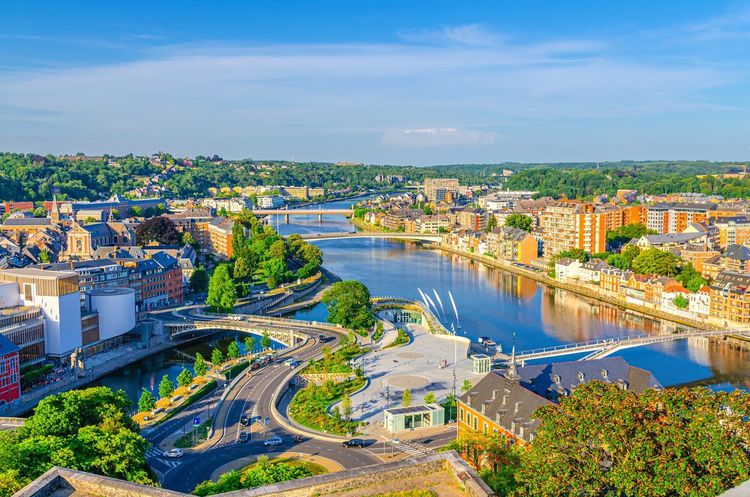
At the foot of the citadel, the Grognon occupies the point where the Sambre flows into the Meuse, right opposite the Parliament of Wallonia housed in the former Saint-Gilles hospice. Long covered by an open-air car park, the site has been completely redeveloped: parking has moved underground and a vast tiered esplanade now descends towards the water.
You can settle in at any hour on the steps facing the confluence to watch barges and pleasure boats go by. On summer evenings, the neighbouring terraces come alive, but nothing obliges you to buy anything to enjoy a bench facing the water.
The Grognon (Place du Grognon, 5000 Namur, rated 4.1/5 on Google from 729 reviews) is also a natural starting point for walks along the banks. From the esplanade, the L'Enjambée pedestrian and cycle footbridge heads towards Jambes, on the other bank of the Meuse, while the Sambre quays lead up towards the old town.
The place changes character depending on the time. In the morning, it is mostly joggers and RAVeL cyclists passing through; at noon, employees from nearby offices come to have lunch on the steps; in the evening, families and groups of friends gather here facing the setting sun. If you had to keep only one spot to understand Namur's geography, this would be it: the citadel at your back, the two rivers at your feet, and the city rising on either side.
3. Museums and Le Delta: Culture on a Small Budget
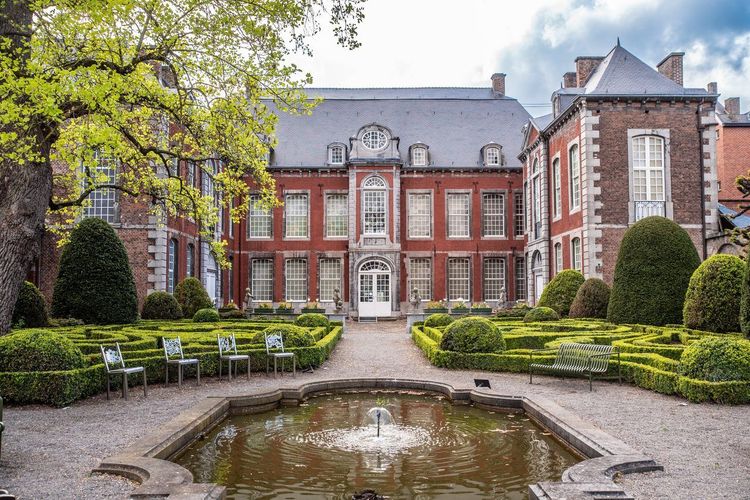
Namur concentrates several museums within a very tight perimeter, and one tip changes everything: the free first Sunday of the month, in which several institutions of the city take part. The tourist office publishes the list of participating museums, which can vary from one year to the next; check it before planning your visit.
Félicien Rops Museum, TreM.a and Les Bateliers
The Félicien Rops Museum occupies a townhouse in old Namur, at 12 rue Fumal. Over some 700 m², it brings together paintings, drawings, lithographs and letters by this native of Namur (1833-1898), a scandalous engraver and a figure of European Symbolism, and a friend of Baudelaire. The rooms can be toured in a little under an hour and the temporary exhibitions change throughout the year. The museum is open Tuesday to Sunday from 10 a.m. to 6 p.m., but closes on the third weekend of September, during the Fêtes de Wallonie.
A few streets away, the TreM.a, the Museum of Ancient Arts of the Namur region, is housed at 24 rue de Fer in an elegant mansion. Its centrepiece is the Oignies Treasure, a set of goldsmith's work chiselled in the 13th century by Brother Hugo of Oignies, often cited among the wonders of Belgian heritage.
On rue Joseph Saintraint, Les Bateliers, the city museum, brings together archaeology and decorative arts in former mansions. Until 1 November 2026, an exhibition there is devoted to the Mesolithic, the period of the last hunter-gatherers of the Meuse valley: a good pretext to target a first Sunday in October.
To get the most out of these museums, group them into a single morning: the Rops museum, the TreM.a and Les Bateliers are all within ten minutes' walk of one another. Arrive as soon as they open on busy days, because first Sundays also attract locals, and keep the Rops museum for last: its engravings call for a rested eye to catch the biting humour and the details.
Le Delta, a Cultural Venue by the Water
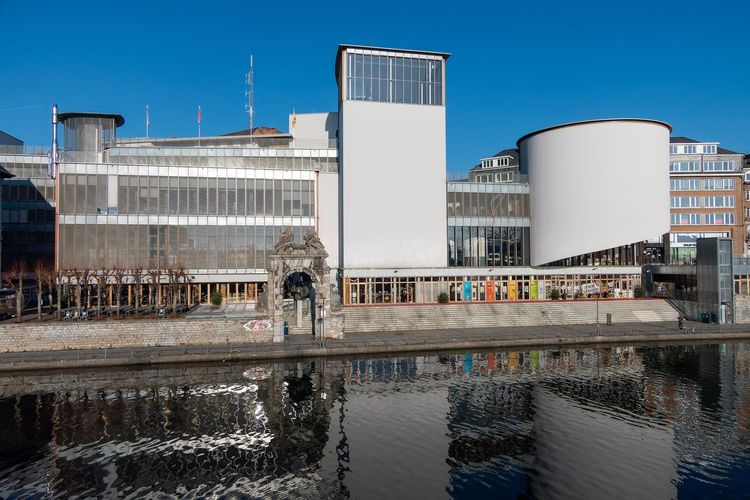
Le Delta (Avenue Fernand Golenvaux 18, 5000 Namur, rated 4.5/5 on Google from 1,480 reviews) is the provincial cultural centre, located on avenue Golenvaux, on the banks of the Meuse. It combines performance halls, exhibition spaces and a panoramic terrace. Exhibitions there are often accessible without a ticket, while the performances in the programme are priced separately.
Even if you do not attend any performance, the building's terrace, open to the river, deserves a stop at the end of the day: it is one of the best viewpoints over the citadel from the lower town.
Also take a look at the entrance hall and the building's common areas: the Delta regularly hosts installations, meetings and events open to all, announced in its agenda. For a passing visitor, it is a good way to take the pulse of Namur's cultural scene without booking a seat or planning your evening weeks in advance.
4. Heritage Walks in the Historic Centre
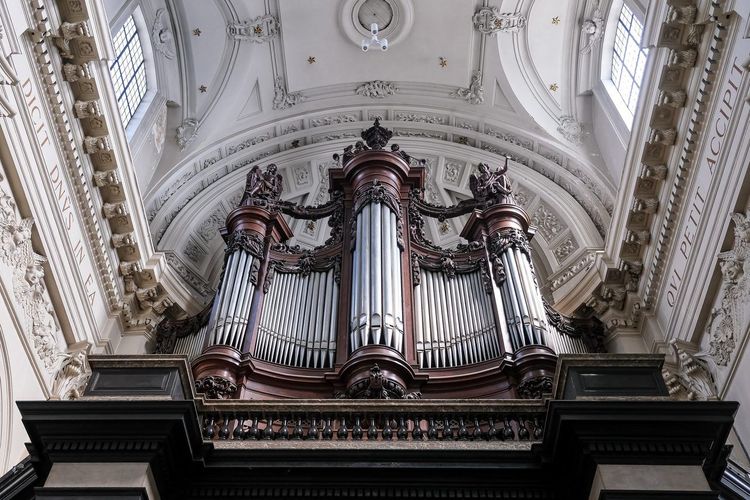
Namur's heritage is easy to discover independently by linking a few monuments open to the public. Start with Saint-Aubain Cathedral (Place Saint-Aubain, 5000 Namur, rated 4.3/5 on Google from 417 reviews), rebuilt in the 18th century by the Italian architect Gaetano Pizzoni: its dome and classical façade dominate place Saint-Aubain, and the nave can be visited freely outside services.
Next, head to Saint-Loup Church, on rue du Collège, a Baroque gem built by the Jesuits in the 17th century. Its carved stone ceiling and dark marbles are impressive, and the place hides a literary anecdote: it was while visiting the church in 1866, in the company of Félicien Rops, that Charles Baudelaire suffered the seizure that foreshadowed the end of his life. A little further down, the Halle al'Chair, a former meat market built in the late 16th century, is among the oldest civic buildings in the city, on the banks of the Sambre.
Namur also surprises with its urban art. In recent years, large murals have appeared on the gable ends and blank walls of the centre, signed by Belgian and international artists. Spotting them during a walk turns a simple stroll into a treasure hunt, and takes you through streets that hurried visitors never see.
The tourist office also offers themed guided tours, which are paid, and distributes a street art trail that lets you discover the murals scattered around the centre, to follow freely at your own pace. Another option, available at any hour: the Ryo audio-guided tour "The Proud Capital of Wallonia" unfolds 19 audio stops over 1h30 and 3.7 km of walking through these same lanes, headphones on.
5. The Points-Noeuds Cycling Network
The province of Namur has rolled out a vast cycling signposting system called Points-Noeuds: each intersection of small roads and greenways carries a number, and all you need to do is link the numbers together to build your own itinerary, without following an imposed route.
The principle works without a subscription or a mandatory app: a paper map, available at the tourist office, or a mapping app is enough to spot the numbers to follow. The network links the centre of Namur to the surrounding villages and joins the RAVeL, the Walloon network of slow-travel routes built on former towpaths. Along the Meuse, the latter takes you on a flat, car-free ribbon as far as Wépion, then towards Dinant for the most enduring.
For a first outing, favour the segments close to the centre, which are busier and therefore more reassuring, before venturing onto longer loops towards the Condroz. If you do not have a bike, the Li bia vélo self-service stations and the city's rental shops let you get equipped; the rental is then the only expense of the day. Good to know: the signage is identical across a large part of Wallonia, which makes the Points-Noeuds a tool you can reuse well beyond Namur.
A concrete example to get started: leave from the Grognon, follow the Meuse south along the RAVeL to Wépion, then return the same way. Allow about twenty kilometres round trip, with no elevation gain at all, and the option of stopping halfway on the banks. More experienced cyclists will then leave the valley to climb towards the plateaus, where the numbered points link farms, chapels and villages of the Namur region.
6. Chevetogne Provincial Estate: Nature on a Budget
Let's be honest: the Chevetogne Provincial Estate (Rue du Lac 3, 5590 Ciney, rated 4.4/5 on Google from 1,827 reviews), about forty minutes away by road, is not free. It deserves its place here nonetheless, as the ratio between price and space is advantageous: 600 hectares of parks, forests, lakes and gardens around a château, for one of the largest leisure estates in Wallonia.
The 2026 packages revolve around several types of access: the Nature package, from 9 a.m. to 4 p.m., costs €14 per vehicle, or €3.50 per person for a car of four; the Leisure (€12 per person) and Fun or Event (€17 per person) packages add playgrounds, water activities and entertainment. If your aim is simply to walk, the per-vehicle package remains by far the most economical.
Also remember to check the opening calendar before leaving: some areas and activities only run in high season, and on days of great weather the car parks fill up quickly. Coming with several people in the same car remains the best way to split the cost, and a homemade picnic will spare you on-site catering.
The estate lends itself to a half-day outing: a picnic by the water, birdwatching on the ponds, then a stroll through the gardens before hitting the road again. Spring weekends, when the flowerbeds burst into bloom, are among the best times to go without rushing.
7. The Old Town: Lanes, Squares and Markets
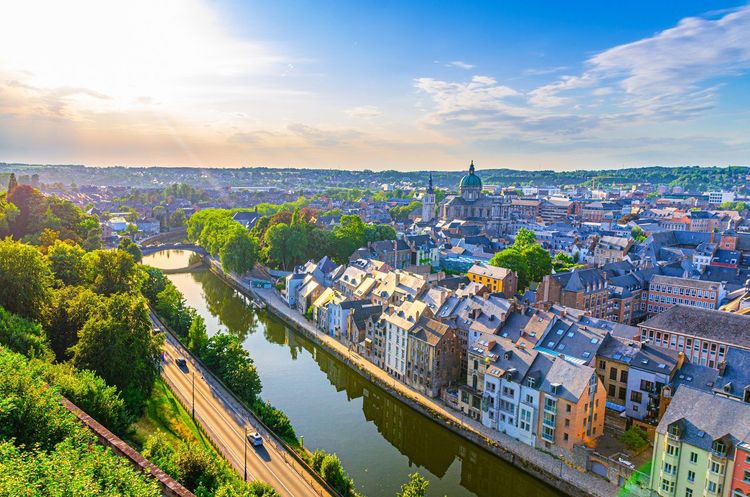
Among the free things to do in Namur, strolling through the old town remains the simplest. None of these streets is really "visited": they are crossed, climbed, rediscovered by chance on a detour, between brick and blue stone façades, discreet passages and lively squares.
Wandering between Place d'Armes, the Belfry and Rue de Fer
The Place d'Armes (Place d'Armes, 5000 Namur) is the beating heart of the lower town, surrounded by shops and cafés. A stone's throw away, the belfry, a former 14th-century city-wall tower converted into a watchtower, has been on the UNESCO World Heritage list since 1999, together with the belfries of Belgium and France. You can easily spot it by its squat silhouette topped with a bulb-shaped dome.
The Rue de Fer (Rue de Fer, 5000 Namur), one of the main shopping arteries, runs towards the station alongside several mansions, including the one housing the TreM.a. Parallel to the Sambre, the rue des Brasseurs offers a calmer face, with its old houses, galleries and flea-market shops. Strolling there at the end of the day, as the terraces of place du Marché aux Légumes slowly fill up, gives you a fairly accurate idea of Namur's rhythm.
Look up as you walk, too. Many façades combine the red brick and blue stone typical of the Meuse valley, with old signs and carriage gateways that sometimes offer a glimpse of an inner courtyard. The lanes around place du Marché aux Légumes and rue des Brasseurs concentrate these details, which are more discreet than the great monuments but just as telling.
The Saturday Market and Neighbourhood Life
On Saturday morning, the market sets up in the streets of the centre with local producers, cheesemongers and fruit and vegetable stalls. You do not have to buy anything to enjoy its colours and the Namur accent, even if a punnet of Wépion strawberries in season is hard to refuse.
To grasp what these façades tell, the Ryo audio-guided tour crosses the historic heart and delivers at each stop the anecdote attached to a square or a sign, from the belfry to the lanes of the Brasseurs district.
8. Parks and Gardens in the City Centre
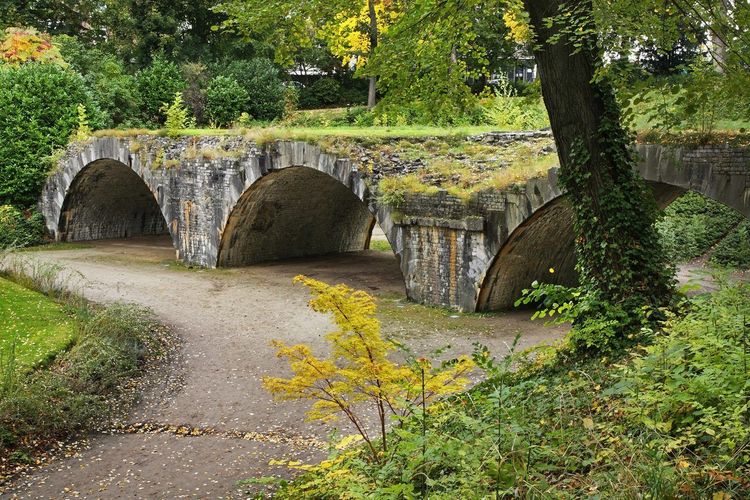
Craving greenery without leaving the city? The Parc Louise-Marie, laid out in the 19th century on former rampart moats, is organised around a pond lined with century-old trees, lawns and benches. It is the ideal break between the station and the shopping centre, away from the bustle.
The Parc de la Plante (Avenue de la Plante, 5000 Namur, rated 4.3/5 on Google from 3 reviews), a little further south, runs along the Meuse in the neighbourhood of the same name. More wooded, it welcomes walkers, joggers and families, with an open view over the river and the cliffs on the opposite bank. Both parks are free to enter and make good alternatives when the citadel is too crowded.
Their appeal also lies in the pace they impose. After a morning of climbing up and down the spur, an hour on a bench in Parc Louise-Marie, watching the ducks on the pond, gets your legs back in shape for the afternoon. Bring a book or a thermos: the people of Namur do exactly the same as soon as the sun comes out, and you will blend right in.
9. Banks of the Meuse: Picnics and Relaxation
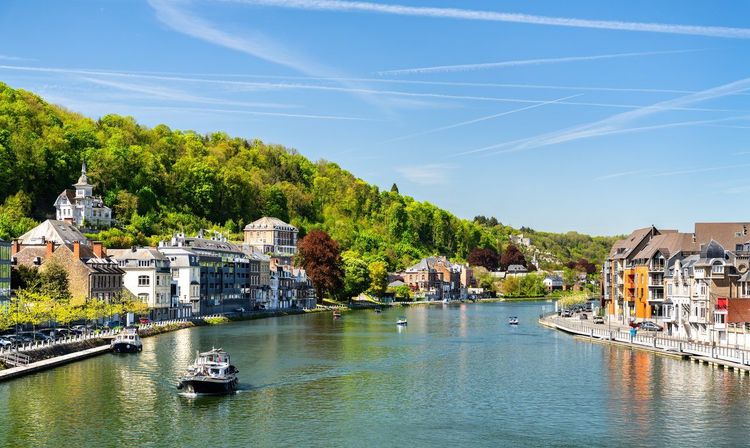
The landscaped banks of the Meuse, between the Grognon and the Jambes bridge, form a continuous promenade where benches, lawns and small squares invite you to stop. Bring something to picnic on: you will have a view of the boats going up the river and of the citadel looming above.
By crossing L'Enjambée or the Jambes bridge, you reach the right bank, which is more residential, where the promenade continues along the quays. In the evening, the low light on the water attracts amateur photographers and walkers, and a simple low wall by the river makes a perfectly good terrace.
A few tips to make the most of it. The banks on the Namur side get the afternoon sun, ideal for a late picnic; the Jambes bank, on the other hand, offers the best overall view of the citadel and the confluence. Remember to bring a bag for your rubbish, as bins are sometimes far away, and keep an eye on the weather: the wind often blows up the valley at the end of the day.
10. Family Outings in Namur
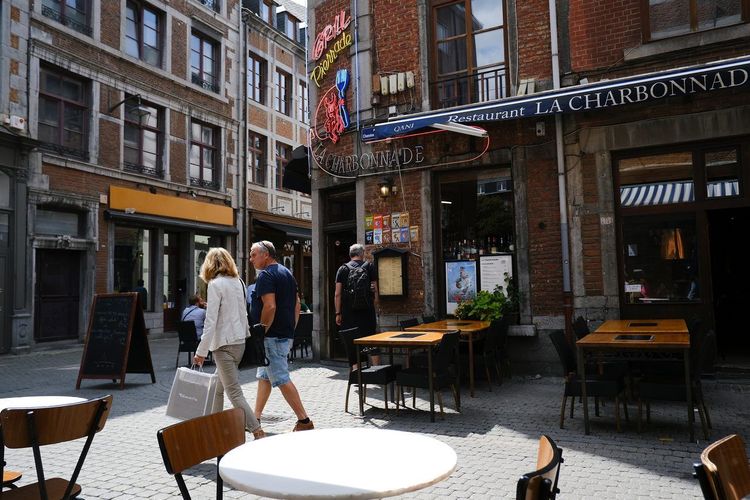
Namur is well suited to an outing with children: short distances, safe green spaces and heritage sites that speak to the youngest. Good news, the free things to do in Namur are often suitable for families, and several options let you fill a whole day without blowing the budget.
Playgrounds and Green Spaces for Children
The Citadel park adds a real open-air playground to its heritage interest, with enough room to run around without disturbing other walkers. Jan Fabre's golden turtle generally fascinates children, who see in it a creature straight out of a fairy tale. Several neighbourhoods also have small playgrounds, often fenced.
The banks of the Meuse, the Parc de la Plante and Parc Louise-Marie complete the offer for families who prefer a lawn to structured play, especially with children still too small for climbing frames. At the Grognon, the wide steps facing the water offer an open space where parents can keep an eye on everyone.
Children also love the Grognon for its steps where you can jump from one to the next, and the banks of the Meuse for counting the boats passing through the lock. A notebook and a few pencils are enough to turn the citadel into an exploration ground: drawing a bastion, spotting the two rivers from the terraces or looking for the golden turtle easily fill a morning.
Tips for a Family Outing without Spending Money
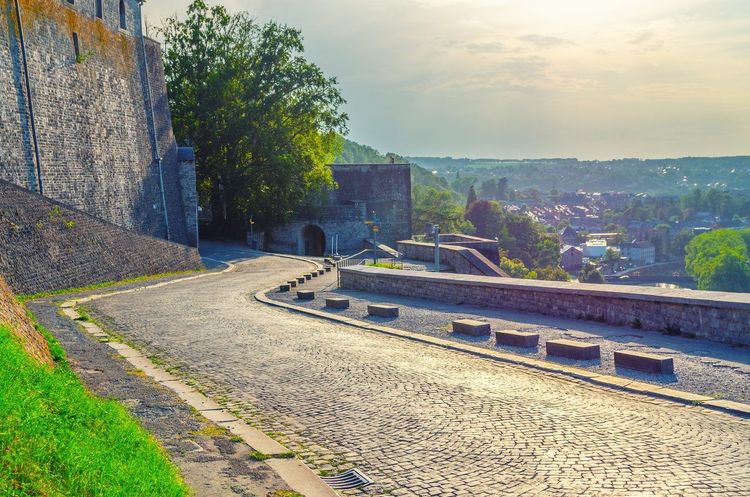
Favour mornings for visiting the citadel: the climb is cooler, the terraces less crowded, and children benefit more from the explanations without the afternoon heat. Bring your own picnic rather than counting on the site's catering.
The museums sometimes run workshops for the youngest, especially on the first Sunday of the month: finding out in advance lets you plan a cultural visit without extra costs. Finally, the RAVeL along the Meuse, flat and car-free, is suited to a first family bike ride before considering longer loops on the Points-Noeuds.
11. Festivals and Major Open-Air Events
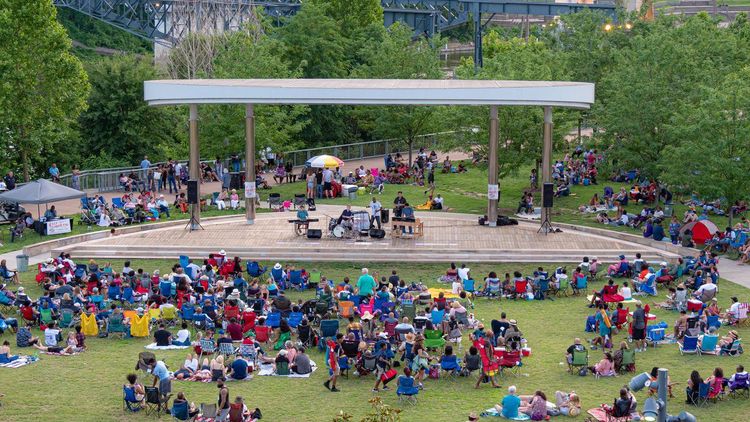
Namur paces its calendar around several annual events, some of which are experienced in public space, even when the main programme remains paid.
The International Festival of Francophone Film (FIFF)
Every year, in late September or early October, the International Festival of Francophone Film turns the city into a hub of French-language cinema, between the Théâtre de Namur (Place du Théâtre 2, 5000 Namur, rated 4.4/5 on Google from 1,946 reviews), the cinemas and several temporary venues. While the competition screenings remain paid, some special screenings, meetings and events in the streets of the centre are freely accessible depending on the edition.
Even without a ticket, you will feel the buzz of that week: posters everywhere, queues outside the cinemas, film crews spotted on terraces and lively discussions late into the evening.
Founded in 1986, the FIFF has established itself as one of the main French-language film events in Europe. Its awards are called the Bayard d'Or, in homage to the region's legendary horse, the very one said to have split the rock at Dinant. During the festival, keep an eye on the programme of public meetings: directors and actors regularly take part in Q&A sessions with the audience.
Open-Air Concerts and Entertainment
Throughout the year, concerts and events take over the Grognon, the quays and the squares of the centre, especially during the summer months. The calendar changes from one season to the next, but the recurrence is well established. Check the tourist office's agenda before your stay: you will often come across a musical evening in the city centre without having looked for it.
12. Markets and Seasonal Festivals
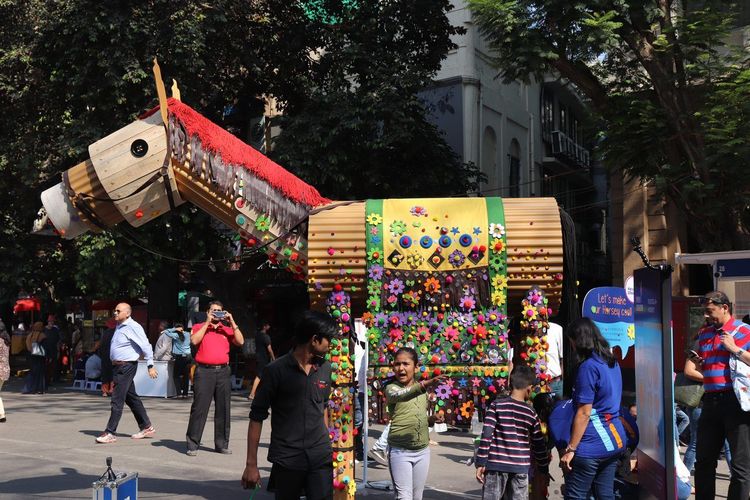
Each season brings its own event to Namur. In spring, the Namur en Mai festival, devoted to street arts, brings fire-eaters, acrobats, brass bands and street shows around the Ascension weekend, a large part of which can be watched without a ticket on a square.
On the third weekend of September, the Fêtes de Wallonie take over the centre for several days: concerts, parades, popular reunions and above all the fight of the Namur stilt walkers, a centuries-old tradition in which two teams perched on stilts try to make each other fall.
The two sides, the Mélans and the Avresses, perpetuate a rivalry born between neighbourhoods of the city, and the joust draws a dense crowd around the arena every year. Arrive early if you want to see anything: the best spots are taken well before the fight begins. The atmosphere in the public space is open to all, even if drinks and food are at your own expense.
In winter, the Christmas market sets up its chalets on the squares of the centre, with lights and entertainment freely accessible; only the treats sold on site have to be paid for. This alternation lets you plan a visit whatever the season, with a different atmosphere each time.
A tip for these major events: book your accommodation well in advance, especially for the Fêtes de Wallonie weekend, when available rooms become scarce. Trains are often reinforced, and the car quickly becomes a headache in a centre closed to traffic; it is better to arrive on foot from the station.
13. Excursions around Namur
Beyond the centre, the province is full of getaways reachable in under an hour by road or train. The Rocher Bayard (Dinant, 5500 Dinant, rated 4.5/5 on Google from 1,683 reviews), at the entrance to Dinant, is a rocky needle more than 35 metres high that can be admired from the road. Legend has it that it was split by the hoof of the horse Bayard, mount of the four Aymon brothers.
The Floreffe Abbey, founded in 1121 by Saint Norbert for the Premonstratensian canons, overlooks the Sambre valley about ten kilometres away. Its surroundings and the viewpoint over the valley can be discovered freely, while guided tours of the interior are paid. Near Wépion, Belgium's strawberry capital, the banks of the Meuse offer pleasant walks far from the bustle of the centre.
For hikers, the rocks of Marche-les-Dames, downstream from Namur, are a classic: forest trails, limestone cliffs frequented by climbers and a monument to the memory of King Albert I, who died here while climbing in February 1934.
If you push on to Dinant, the town deserves a stop in its own right: the Collegiate Church of Notre-Dame and its bulbous bell tower at the foot of the cliff, the Meuse quays and the birthplace of Adolphe Sax, inventor of the saxophone, whose statue seated on a bench awaits walkers for a photo. All of this can be discovered on foot, without a ticket, before taking the train or the RAVeL back to Namur. The Meuse RAVeL, already mentioned, also links Namur to Dinant for a big day by bike.
These excursions combine easily with the train: the stations of the valley serve Dinant, Floreffe and Marche-les-Dames from Namur in a few dozen minutes at most. You can thus leave in the morning, walk all day and return in the evening without a car, with the train ticket as your only expense.
Before heading to these surroundings, set aside 1h30 for the Ryo audio-guided tour of the historic centre: its 19 audio stops give you the keys to the Meuse valley's history that you will then encounter again in Dinant as well as in Floreffe.
14. Practical Info: Budget, Transport and Best Season
Budget and Transport
Namur is easily reached by train from Brussels, in about an hour, as well as from Liège or Charleroi. The station is a few minutes' walk from the old town and the Grognon. On site, most of the free things to do in Namur are concentrated within a small radius, accessible on foot or in a few bus stops on the TEC network.
The budget for a day can therefore remain almost nil: the citadel, old town, churches, parks, banks of the Meuse and museums on the first Sunday of the month are enough to fill entire hours. Only travel (train, bus, possible bike rental) and meals remain to be planned for.
A Day in Namur: The Itinerary
In the morning, walk up to the citadel along the paths, tour the terraces and say hello to Jan Fabre's turtle. Head back down to the Grognon for a picnic facing the confluence, then cross L'Enjambée for a glimpse of Jambes. In the afternoon, climb back to the old town: belfry, place d'Armes, Saint-Aubain Cathedral, Saint-Loup Church and rue des Brasseurs. Finish on the Delta terrace or in Parc Louise-Marie before your train.
Where to Get Information on Site
The Namur tourist office, on rue du Pont, provides maps, Points-Noeuds plans, street art trails and the events agenda. It is also where you will find out which museums are taking part in the next first Sunday of the month and which events are taking place during your stay. A quick stop at the start of your visit will save you from missing a concert at the Grognon or a temporary exhibition.
Which Season to Choose
Spring and early autumn offer the best compromise between manageable crowds and pleasant temperatures for walking or cycling. May brings Namur en Mai, September the Fêtes de Wallonie and then the FIFF. Summer remains the favourite for open-air concerts, while winter suits a more cultural visit, between museums and the Christmas market.
FAQ
What can you do for free in Namur?
The main free activities in Namur are the climb up to the citadel and its park, the Grognon, the old town with the belfry and Saint-Aubain Cathedral, the banks of the Meuse, the city-centre parks and the Points-Noeuds cycling network. Several museums also open without a ticket on the first Sunday of the month.
What can I do in Namur without any money?
A whole day is possible without spending anything: walk up to the citadel, stroll through the old town, picnic on the banks of the Meuse, then wander through a city-centre park. Only transport and an optional restaurant meal cost money.
What are the unusual things to do in Namur?
Looking for Jan Fabre's giant golden turtle on the citadel esplanade, following the street art trail in the centre or watching the stilt fighters during the Fêtes de Wallonie are all out of the ordinary. Planning your cycling route along the numbered Points-Noeuds also offers a less expected experience.
What can I do in Namur in one day?
Start with the citadel in the morning, head back down to the Grognon for lunch, then spend the afternoon in the old town, at a museum or on a walk along the Meuse. This format covers the must-sees without a race against the clock.
Is the Namur citadel free?
Mostly yes: the ramparts, panoramic terraces and park are open to all year round. The cable car, the little tourist train, the Terra Nova visitor centre and the guided tour of the underground tunnels, however, are paid.
What is the best time to visit Namur?
Spring and early autumn offer pleasant conditions without excessive crowds. September brings the Fêtes de Wallonie and the FIFF, summer offers open-air concerts, and winter suits a cultural visit around the museums and the Christmas market.
Conclusion
Between ramparts, a redeveloped confluence, Baroque churches and parks by the water, the free things to do in Namur prove that a regional capital can be explored in depth without taking out a bank card. The key lies mostly in organisation: plan your visit according to the season, aim for a first Sunday of the month for the museums and alternate walking in town with getaways into the Meuse valley.
To miss nothing of the history hiding behind every façade and every bastion, the Ryo audio-guided tour of Namur slips into your pocket: downloaded once, it can then be listened to offline and at your own pace, from the citadel to the banks of the Meuse.