
Créé par Romane, le 17 nov. 2026
Votre guide Ryo
Namur, Belgium
The Proud Capital of Wallonia
Parcours audioguidé pour visiter Namur en 1 jour
This tour of Namur’s historic center invites you to discover an elegant and peaceful city, overlooked by one of Europe’s largest citadels. Throughout the route, wander through the cobblestone streets of Old Namur, admire the brick and blue-stone facades, and enjoy the gentle pace of life at the confluence of the Meuse and Sambre rivers. A simple and immersive way to explore the heritage of the Walloon capital at your own pace.
Quand partir à Namur ?
Jan.
3°
13
Feb.
4°
11
March
7°
12
April
10°
10
May
14°
11
June
17°
11
July
19°
10
Aug.
19°
10
Sept.
15°
10
Oct.
11°
11
Nov.
6°
13
Dec.
4°
14
Throughout the year, the average temperature generally sits around 10°C, due to a warm temperate climate. This results in cold, sometimes very cold winters, and comfortable, partly cloudy summers. The coldest months are January and February, with lows around 1°C. Conversely, the warmest temperatures occur in July and August, with highs around 23°C. The wettest months tend to be December, January, and the period from May to August. It’s not always easy to juggle all that! To make the most of your visit, the best time to plan your trip is from May to September, despite the possibility of occasional showers.
Départ conseillé
No need to worry about where to begin! Our tours are designed as a loop, so you can jump in wherever you are. The navigation system and audioguide will automatically adjust to your location. However, if you happen to be nearby, we do have a preferred starting point: next to the Walloon Parliament
Parking à proximité
Interparkig Namur - Parking Confluence : Rue du Grognon 2
In Namur, limited on-street parking leads to relatively high prices. For this reason, if your time in the Belgian city is limited and you don’t mind using public transport for part of your trip, the Park and Ride (P+R) facilities are at your full disposal. The two main ones to know are P+R St Nicolas and P+R Bouge, both located about 15–20 minutes from the city center.
À savoir
Although Namur doesn’t offer a city pass like larger cities do, it does sell the Citadel Pass. With this pass, you can get a discounted rate for a package that includes the tourist train, a tour of the Citadel’s underground tunnels, and entry to the Terra Nova Visitor Center.
You’ll quickly notice that Namur has a severe shortage of public restrooms. To avoid any uncomfortable situations during your visit, we recommend planning your stops around places where you can eat or grab a drink.
Découvrez 20 lieux d'intérêt pour visiter Namur





What to see in Namur on your 1h30 tour?
This 3.7 km loop takes about 1 h 30 and links 19 sights, from the confluence and the citadel to the old town, through the Halle al'Chair, Place de l'Ange, Saint-Aubain Cathedral and the belfry on Place d'Armes, before returning to the confluence via the Pont de France. With the Ryo app in your ears, every facade, mural or tradition tells the story of Namur, at your own pace.
Information checked in November 2026 and subject to change.
1 - Walloon Parliament
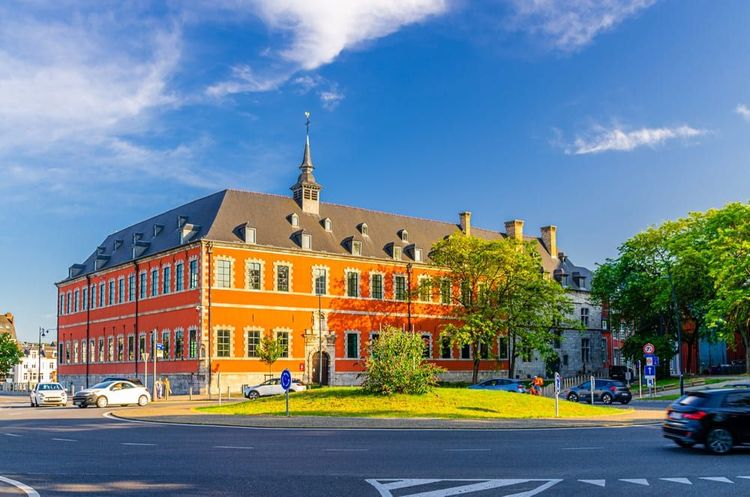
The walk begins outside this imposing building, once a hospice for the sick and the needy before becoming, in 1985, the seat of the Walloon regional assembly. Seventy-five elected members sit here to vote on decisions concerning Wallonia and to oversee their application. Listed as Walloon heritage since 1936, the facade overlooks the confluence at the foot of the citadel, the first landmark of this Namur walk.
Free to see from outside
2 - Searching for Utopia Statue by J. Fabre
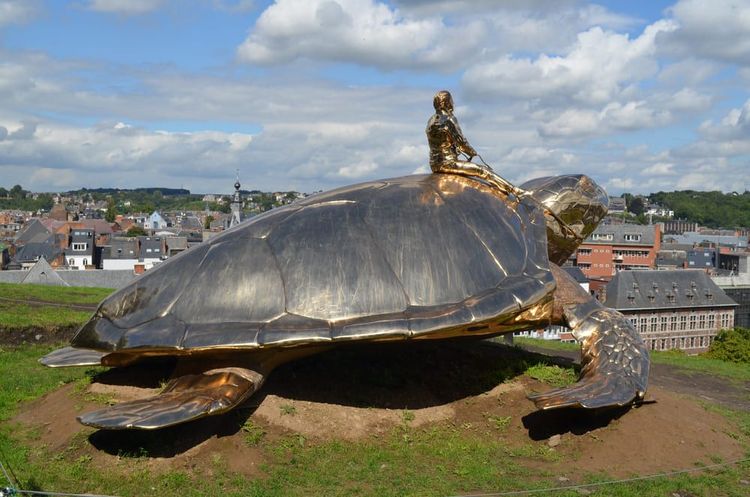
On the rocky spur of the citadel sits a bronze turtle carrying a man, his arm stretched toward the horizon: a work by Antwerp artist Jan Fabre, installed in 2015 for a dialogue with Namur-born painter Félicien Rops. Locals affectionately nicknamed it the turtle, and happily stop for a photo, facing the very panorama it seems to be contemplating.
Free entry
3 - Citadel of Namur
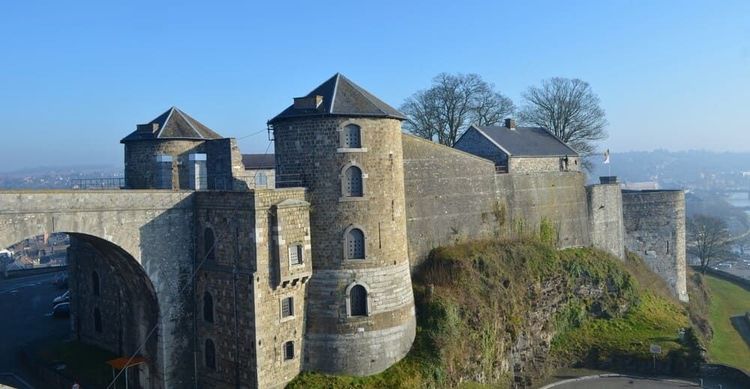
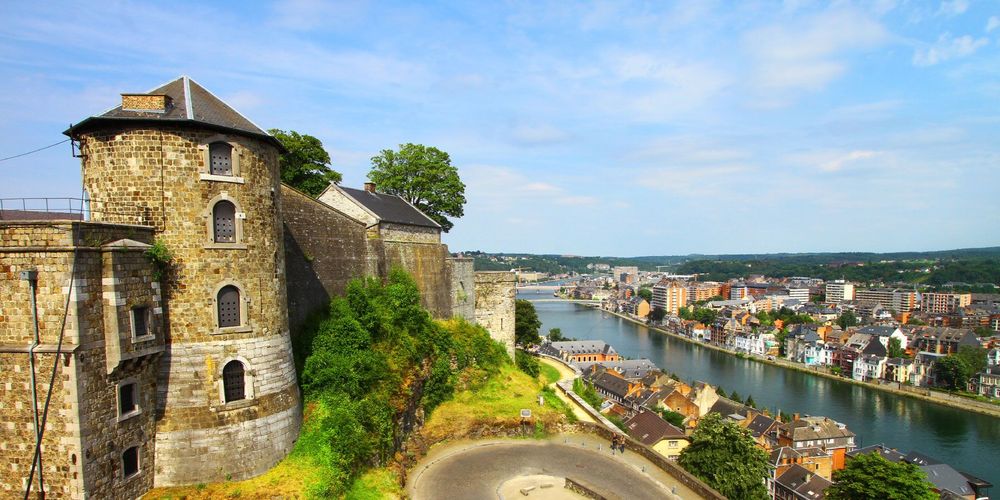
This fortress has watched over Namur since the 10th century, when the town was still a small settlement growing rich on its river trade, at the strategic meeting point of two rivers. The French engineer Vauban turned it into a military masterpiece; counts and later powers kept expanding it to 80 hectares, until Leopold II had it demilitarised after 1830. Visitors can now explore 500 metres of underground tunnels, which earned the town Napoleon's nickname of Europe's termite mound.
Free to see from outside
4 - Viewpoint from the Citadel
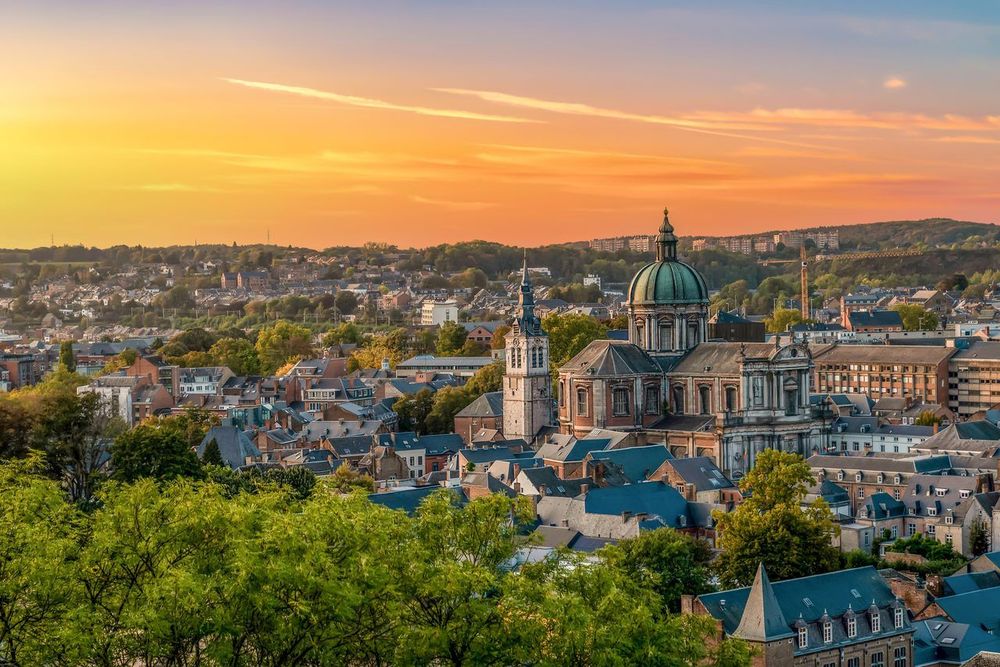
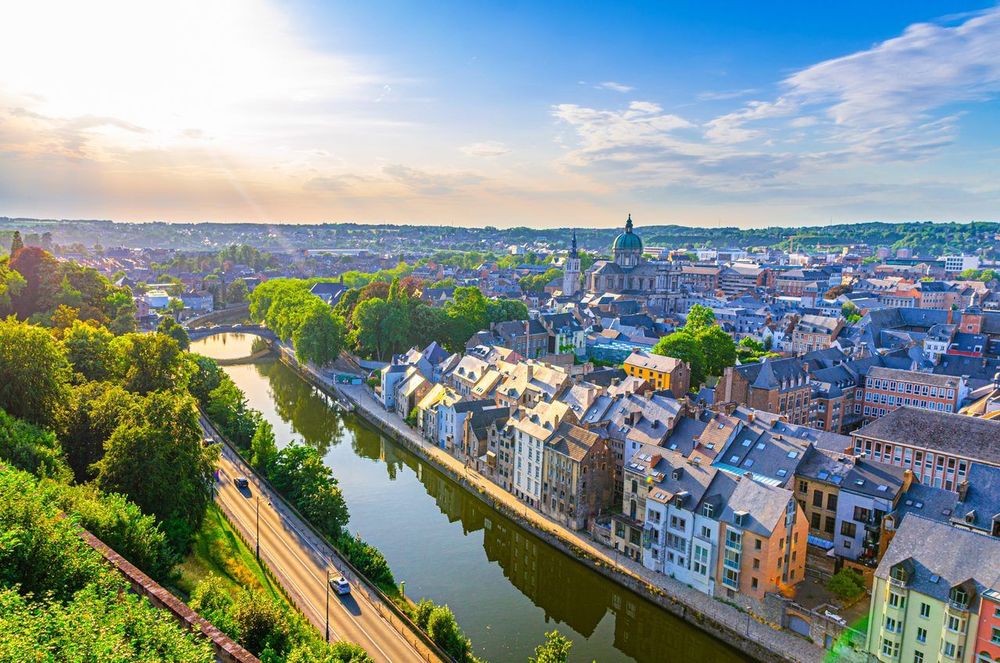
At 190 metres above the town, the view takes in the rooftops of the old quarter and the blue-green dome of Saint-Aubain Cathedral. To the right, you can make out the Asty Moulin quarries, which once supplied the limestone used to build the citadel itself. The perfect spot for a quick photo before heading back down.
Free entry · Best in the evening
5 - Halle al'Chair
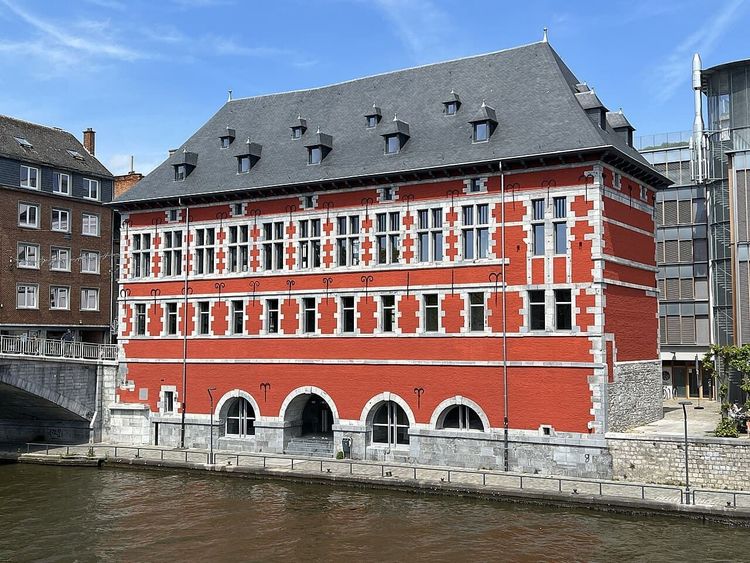
Built in the 16th century, when the town belonged to the crown of Philip II of Spain, this stone hall gathered the local butchers for reasons of hygiene, away from streets littered with meat waste. Of its three floors, only the ground level held the stalls; the upper floor housed administration, while the lower arches dealt with leftovers. Having served as a school, an arsenal and a museum, it has housed Namur's tourist office since 2023.
Free to see from outside
6 - Gastronomy in Namur

Easy to spot thanks to its golden angel perched on a column, this square buzzes at any hour, between terraces and welcoming tables. It's the place to mention local specialities: petits-gris snails cooked in a fresh herb sauce, flamiche dinantaise cheese tart, sausage seasoned with mild spices, and for something sweet, biétrumé caramel with hazelnuts or honey-carved couques de Dinant.
Free entry
7 - Saint-Loup Church
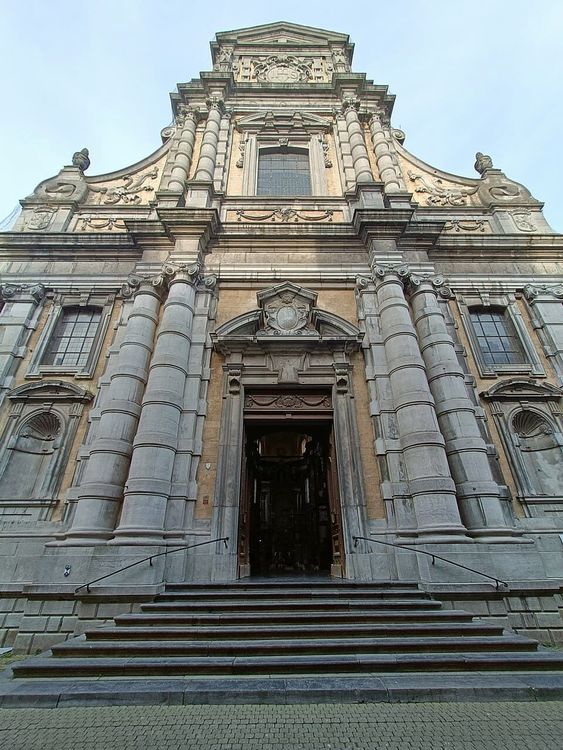
This sanctuary was built in the early 17th century for the town's Jesuit fathers, and still flaunts its baroque splendour: a facade of pilasters and scrolls, a vault carved from soft tuffeau stone with floral patterns. Admired by Baudelaire in the 19th century, it took twenty-four years of restoration to recover its original glow. Free to enter, it also hosts concerts that still echo within its walls.
Free entry
8 - Provincial Palace
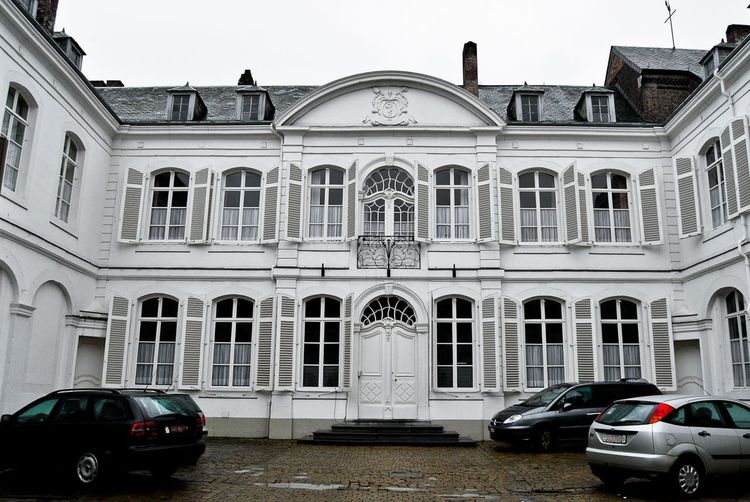
The town's leading building until the 18th century, this palace was erected in 1732 to house the local bishop, which explains the cathedral standing right beside it. Heavy debts eventually forced the diocese to give it up, and in 1830 the building took on a new role as the province's administrative seat, a function it still holds today.
Free to see from outside
9 - Saint-Aubain Cathedral
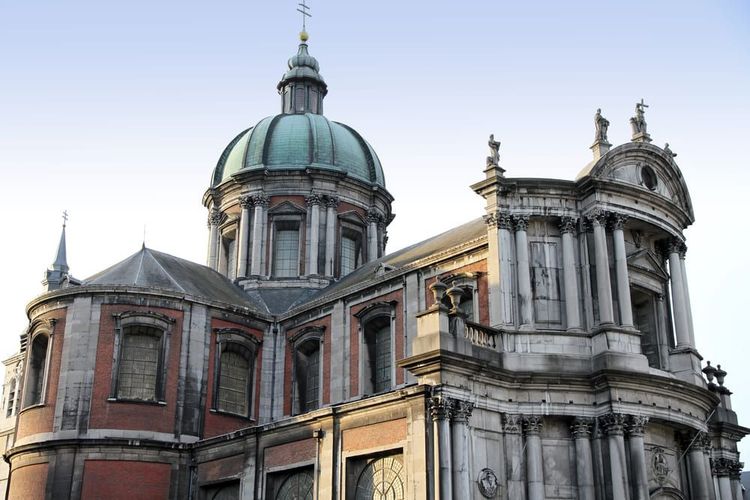
This vast classical sanctuary, touched with baroque flourishes, stretches 78 metres long and took sixteen years to build from 1751. Its nave, bathed in light beneath a wide dome, holds paintings by Belgian masters such as Van Dyck and Jordaens. More unusual still, it preserves fragments of the true cross, brought from Constantinople in the 13th century.
Free entry
10 - The Stilt Jousting of Namur
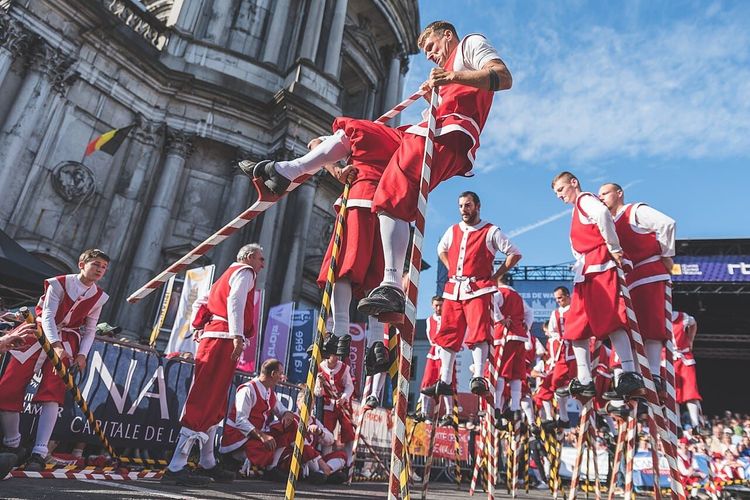
Over 600 years old, this folk tradition pits two sides against each other during the Fêtes de Wallonie: the Mélans from the town centre, on black and yellow stilts, against the Avresses from the surrounding villages, on red and white ones. Perched on their stilts, jousters use elbows and shoulders to topple their rivals, until one whole team remains standing. UNESCO listed it as intangible heritage in 2021.
Free entry
11 - Namur Museum of Ancient Arts
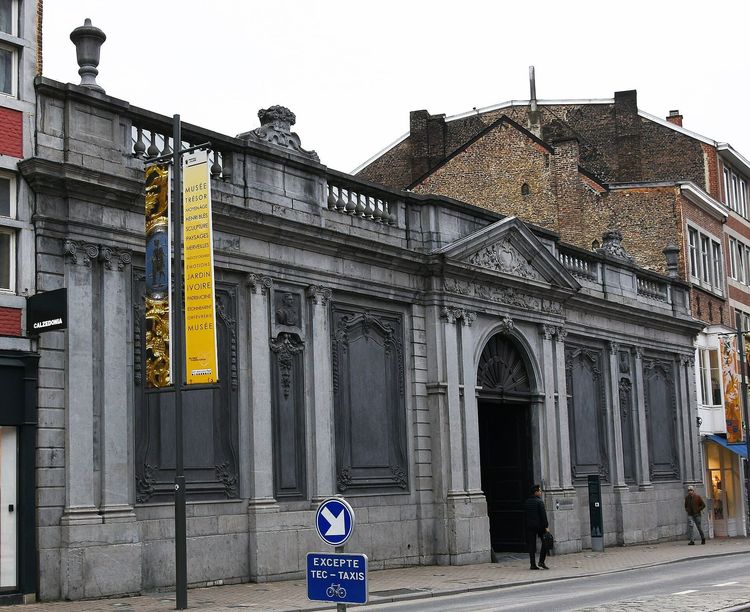
Housed in a listed 18th-century mansion, this museum brings together the region's artistic treasures, spanning the medieval period and the Renaissance. Its oldest pieces, marked by Mosan Romanesque art, date back to the 12th century; visitors also admire paintings by Henri Bles and, above all, the Oignies Treasure, medieval goldwork signed by Brother Hugo. Opposite stands Saint-Joseph Church, recognisable by its red Namur-stone facade.
Paid entry (about €10)
12 - The Walloons’ Mural
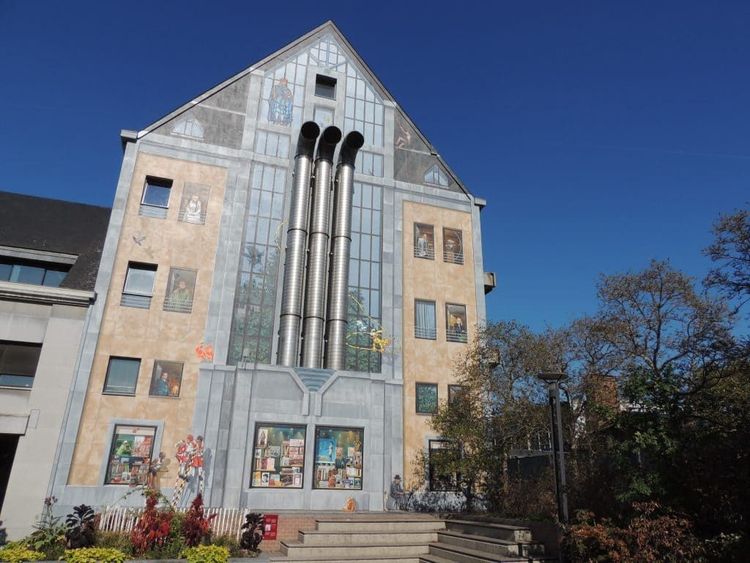
On this blank 330-square-metre wall, French artists from the Cité de la création painted a trompe-l'œil tribute to Wallonia in 2004: nearly 250 figures and symbols appear side by side. Among them stand athlete Nafissatou Thiam, the bold rooster from the regional flag, the mischievous Marsupilami, a macrale witch from local folklore, and Nobel Peace Prize winner Dominique Pire, peering from the windows of this Namur building.
Free entry
13 - Royal Theatre
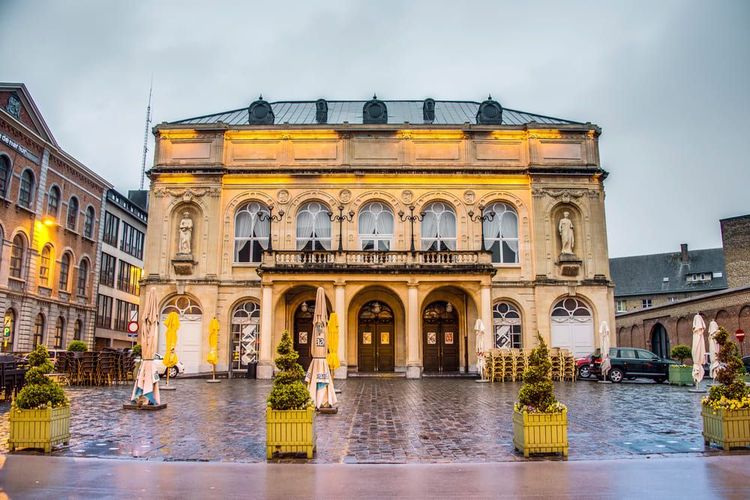
Built in 1863, this Italian-style theatre stands out from Namur's brick with its pale stone facade. Two statues, Comedy and Music, watch over the second floor above a programme of around sixty shows a year. In late August, Namur-born actor Benoît Poelvoorde hosts the Intime Festival here, a literary gathering he created himself.
Free to see from outside
14 - Namur Belfry
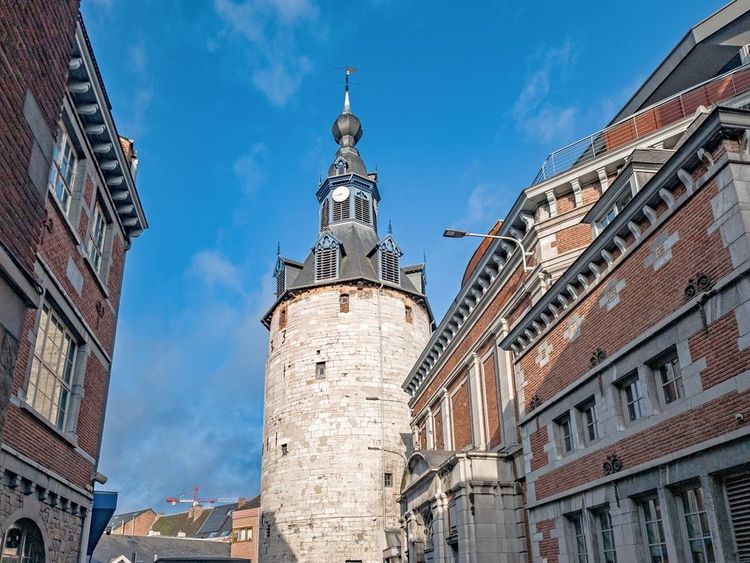
This 14th-century stone tower once guarded a gate in Namur's town wall, standing twice as tall as it does today. Chosen in 1746 to replace the collegiate church's vanished belfry, it then gained its octagonal lantern housing the civic bell. Impact marks still visible on its facade recall the American bombing of 1944. Together with 56 other belfries, it has been a UNESCO World Heritage site since 1999.
Free to see from outside
15 - Djoseph and Francwès
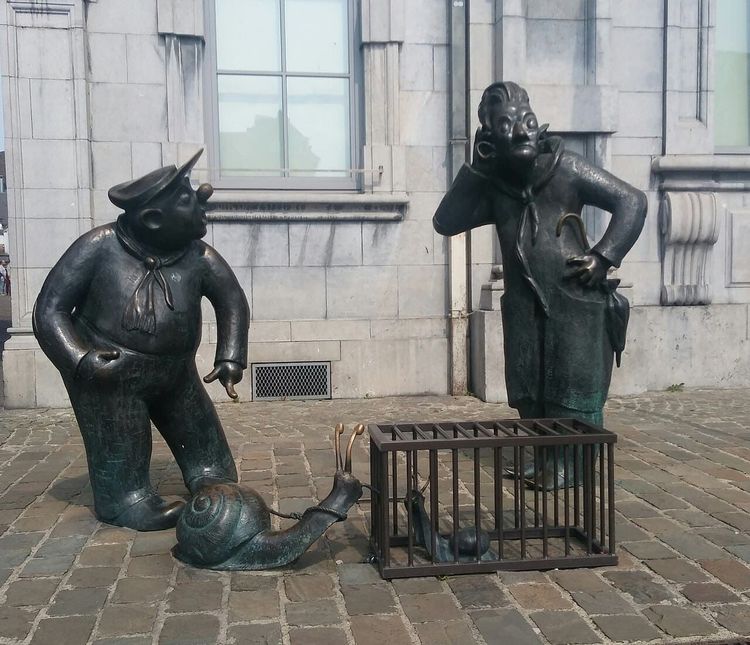
Born from the imagination of local writer Jean Legrand, these two inseparable characters made generations laugh in the pages of the newspaper Vers l'Avenir, for more than half a century. Their bronze statues, set up on Place d'Armes in 2000, show them with their faithful snails, a symbol of a cherished slowness that turned the gastropod into Namur's unofficial mascot.
Free entry
16 - Namur Convention Center
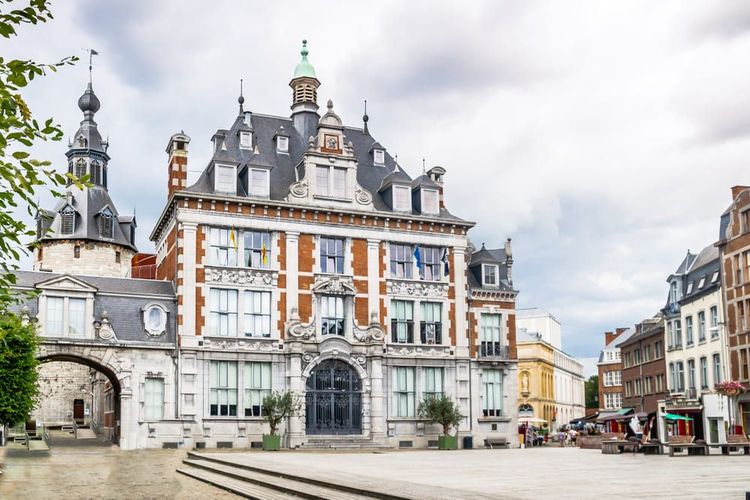
On the site of the former Commodity Exchange, the convention centre opened its doors in the early 2000s, inside an elegant 1932 building rebuilt thanks to German war reparations. The surrounding Place d'Armes, laid out over old fortifications, was itself redrawn after the 1914 fire that destroyed the former town hall, hence its harmonious early-last-century facades.
Free to see from outside
17 - Marie Spilar Tower
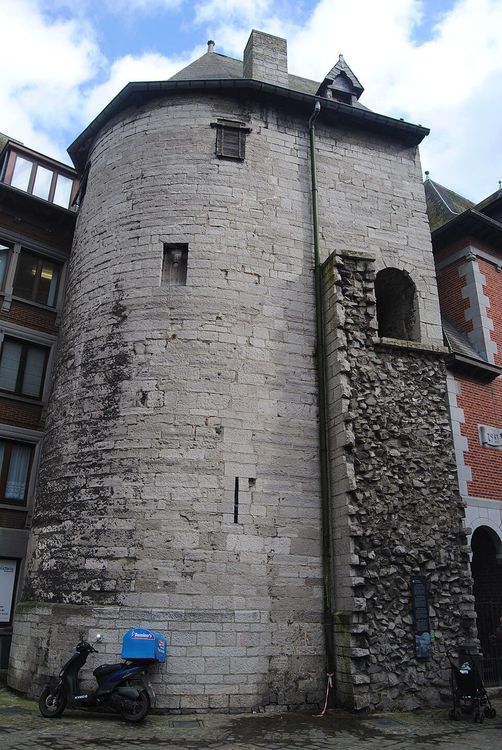
A remnant of Namur's late-14th-century town wall, this 15-metre limestone tower bears on its facade the mark of a long-vanished rampart that once linked the sentries' patrol path. A small arched door, still in place, once gave access to it. Restored in 1949 and listed as Walloon heritage in 1955, it was named after a woman who once lived nearby.
Free entry
18 - View of the Citadel
Just before crossing the Pont de France, a gap between the facades reveals a different angle on the route already walked: the salmon-coloured facade of the Walloon Parliament, the massive lines of the citadel, and, for a sharp eye, the golden silhouette of Jan Fabre's turtle on its lawn. The Sambre flows quietly beneath the bridge.
Free entry · Best in the evening
19 - Viewpoint at the Confluence
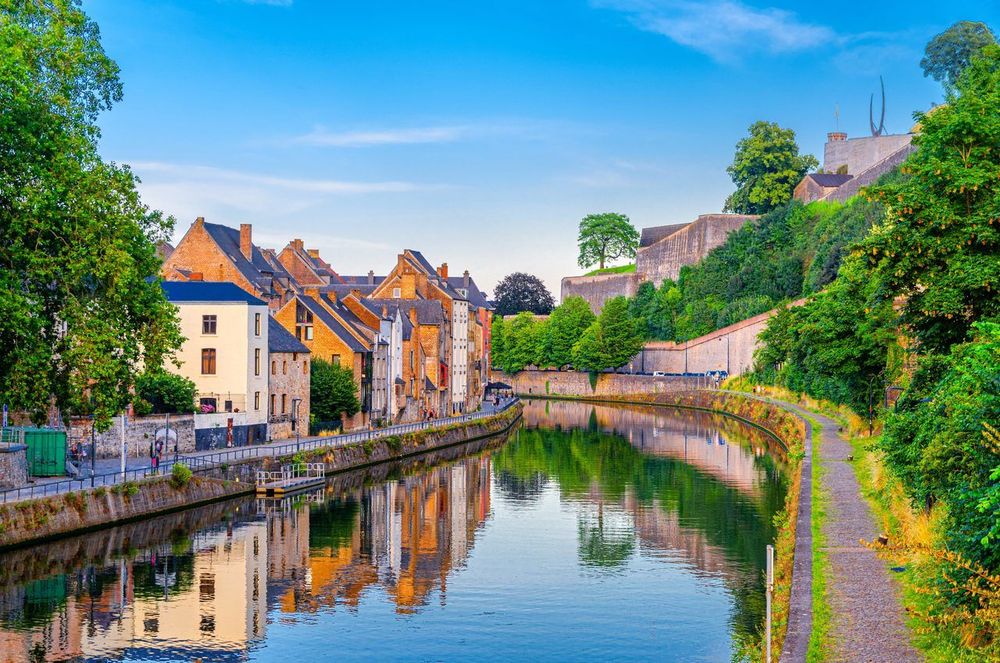
At the very tip of the confluence, the waters of the Meuse meet those of the Sambre, overlooked by the handsome old townhouses lined up along the riverbanks. Looking up, the fortified silhouette of the citadel closes this final Namur panorama, framing the view with its ramparts above the water, a gentle and scenic finishing point for the loop.
Free entry · Best in the evening
What to do in Namur in 2 or 3 days?
The route loops round in 1 h 30 over 3.7 km, from the citadel to the confluence, so a day in town leaves time to go inside the places the walk only passes by.
The next day, treat yourself to the rest of the citadel: the sound-and-light underground galleries, the little tourist train and the Terra Nova visitor centre, audio guide included. Then head back down to the Grognon, the stepped esplanade where the route ended, and cross the Meuse on the Enjambée footbridge to Jambes. The cable car, the tunnels and the footbridge also feature in our guide to visiting Namur solo.
The third day suits the museums of old Namur. The Félicien Rops museum, on rue Fumal, gathers paintings and engravings by this Namur-born friend of Baudelaire, while Les Bateliers, on rue Joseph Saintraint, mixes archaeology and decorative arts. Late in the day, the terrace of Le Delta, on avenue Golenvaux, looks up at the citadel from the banks of the Meuse. Several museums open free of charge on the first Sunday of the month, as our pick of free things to do in Namur points out.
Which neighbourhoods does the tour cross?
The loop links the citadel and the confluence to the old merchant town, then returns to the water by the Pont de France.
It starts in front of the Walloon Parliament, a former hospice turned regional seat, climbs past the Searching for Utopia statue and on to the citadel itself, perched on its rocky spur, with a stop at the viewpoint overlooking the roofs of old Namur (stops 1 to 4).
It then drops into the old merchant town, past the Halle al'Chair, where meat was sold from the 16th century, and Place de l'Ange with its local specialties. Next come Saint-Loup church, a baroque gem, the provincial palace, a former bishop's residence, Saint-Aubain cathedral and the stilt jousting tradition, which is more than 600 years old (stops 5 to 10).
The last stretch heads to rue de Fer and Place d'Armes, where the museum of ancient art, the Walloons mural, the royal theatre, the belfry, Djoseph and Francwès, the convention centre and Marie Spilar tower follow one another. It ends with the view of the citadel by the Pont de France, then at the tip of the confluence (stops 11 to 19).
How much does it cost to visit Namur?
Of the 19 stops on the route, 11 are free to enter and 7 more can be admired from the street, from the Walloon Parliament to the royal theatre.
Only one charges admission: the museum of ancient art of the Namur region, with a €10 entry fee.
On the citadel, the ramparts and esplanades are free to walk; only the attractions charge. The Citadel Pass bundles them in two versions: €22 for about 3 h, with either the sound-and-light tunnels or the medieval tour, plus the little train and Terra Nova, audio guide included; €36 for about 4 h 30, with both tours. The cable car up to the top is a separate transport option, at €5.50 one way or €8 return.
Information checked in November 2026 and subject to change.
Where to stop for a bite along the tour?
Just after the Halle al'Chair, Place de l'Ange and its many terraces are the place to taste Namur's cooking.
For a starter, try the avisance, a pastry filled with meat and served hot, then the petits-gris de Namur, local snails in a fresh herb sauce, or a flamiche dinantaise, a savoury tart of cheese and eggs. For something sweet, the biétrumé, a soft caramel with cream and roasted hazelnuts, has been sold by Namur confectioners since 1954, as our guide to visiting Namur solo recalls. Couques de Dinant, hand-carved honey biscuits, and spiced boudin de Namur round off the tasting.
What should you know before visiting Namur?
Two practical details are worth sorting out before you set off.
Public toilets are sorely lacking downtown, so plan your breaks around the cafés and restaurants where you stop along the way.
If you come by car, street parking is scarce and expensive. The Confluence car park, on rue du Grognon, is close to the suggested starting point next to the Walloon Parliament; otherwise, the P+R Saint-Nicolas and P+R Bouge park-and-ride sites are 15 to 20 minutes from the centre.
What to see around Namur?
Namur also makes a good starting point for other audio-guided routes in Belgium.
At 54 km as the crow flies, Liège, the fiery city, shows its strong character on the banks of the Meuse, with varied heritage and cultural energy. Brussels, 56 km away, blends historic elegance with contemporary creativity around the UNESCO-listed Grand Place. A little further, Antwerp, 90 km away, shows off its Renaissance palaces and the sparkle of its diamond district, while Ghent, 104 km away, tells the story of the Flemish cloth merchants along its canals, in a fairytale setting.
Le plein d'inspirations
Explorez le monde en totale liberté, à pied au cœur des villes ou au fil des routes. Nos guides audios transforment chaque destination en une découverte culturelle immersive et unique.
FAQ for visiting Namur
When is the best time to visit Namur?
The ideal time to visit Namur runs from May to September, when temperatures are at their most pleasant, with highs around 23°C in July and August. The city's temperate climate offers comfortable summers, perfect for strolling through the cobbled lanes of the historic centre. Do watch out, though, for possible showers during this period. Winters can be very cold, with lows around 1°C in January and February. If you prefer to avoid the rain, favour the months of March, April, September and October, which are generally drier. Spring and autumn remain appealing alternatives, with fewer tourists and mild temperatures for comfortably exploring the Walloon capital.
How long do you need to visit Namur?
A full day lets you discover Namur's main attractions, including a visit to the famous Citadel and a walk through the historic centre. If you wish to explore in greater depth, take the time to linger at the confluence of the Meuse and the Sambre, and enjoy the town's peaceful atmosphere, allow two days. A weekend is ideal for combining cultural visits, gourmet breaks and perhaps a river cruise. Rushed visitors can see the essentials in half a day, but you would miss the quiet charm that has made the Walloon capital's reputation. The Ryo audioguide accompanies you to optimise your route according to the time you have available.
How do you get around Namur (public transport, cable car, on foot)?
Namur's town centre is perfectly suited to exploring on foot, with its cobbled lanes and reasonable distances between the main points of interest. The TEC bus network efficiently serves the whole conurbation if you wish to venture beyond the centre. To reach the Citadel, you can choose between climbing on foot via the historic stairways, the cable car offering a spectacular panoramic view, or the little tourist train during the warmer season. Self-service bikes are a practical alternative for medium distances. The railway station, right in the centre, also makes it easy to travel to other Belgian cities. Parking in the town centre can be limited, so favour the park-and-ride sites on the outskirts.
What are the must-sees in Namur?
The majestic Citadel of Namur dominates the town and is the flagship attraction, with its impressive fortifications and its commanding view over the confluence of the Meuse and the Sambre. The historic centre deserves an attentive stroll to admire the typical brick and blue-stone facades, notably around Saint-Aubain Cathedral and the UNESCO-listed belfry. The Annevoie Gardens, nearby, offer a romantic haven of peace. The Grognon district, recently redeveloped, bears witness to the town's thousand-year history. Don't miss the Félicien Rops Museum and the Treasure of Oignies for art lovers. The Ryo audioguide leads you through these must-sees with enriching commentary that reveals the secrets of the Walloon capital.
Is Namur suitable for families with children?
Namur proves particularly welcoming for families. The Citadel offers medieval entertainment and playful tours specially designed to captivate the youngest visitors. The cable car that leads up to it is already an adventure in itself. The pedestrian town centre allows you to stroll calmly with pushchairs. The landscaped banks of the Meuse and the Sambre offer spaces to relax and play. Several museums provide routes suited to children, and during the summer, water activities are organised. The many parks and gardens allow for welcome breaks. The town regularly hosts family events, notably during the school holidays. Namur's restaurants are generally well equipped to welcome families, with high chairs and children's menus.
Where should you eat and which specialities should you try in Namur?
Namur's cuisine reflects Walloon generosity, with the traditional brasseries of the historic centre serving typically Belgian dishes. The snails of Warnant, a local speciality, are worth tasting, as are the region's cheeses. Namur's craft beers pair perfectly with a waterzooi or Flemish carbonnades. The Old Namur district is home to many pleasant addresses, from authentic estaminets to more refined restaurants. The banks of the Meuse host lovely terraces in fine weather. Don't leave without having savoured the famous Wépion strawberries in season, and finish with a Dinant waffle or couques de Dinant, hard honey biscuits typical of the region. The local markets also offer excellent Walloon regional produce.
How do you get to Namur from Brussels?
Namur is easily accessible from Brussels thanks to excellent rail connections. Direct trains from Brussels-Central or Brussels-Midi bring you to Namur station in under an hour, with frequent departures throughout the day. By car, allow about an hour via the E411 motorway, but plan extra time at rush hour. Long-distance bus services also offer this link, generally cheaper but longer. As Namur station is located right in the town centre, you are immediately at the heart of the action upon arrival. For international travellers, Brussels-National airport offers rail connections to Namur with one change, generally via Brussels-Central.
Do you need to book in advance to visit the Citadel?
Booking in advance for the Citadel of Namur is generally not compulsory for individual visitors, but it is recommended during summer weekends and school holidays, when crowds can be significant. Guided tours and certain special activities often require a reservation, especially for groups. The cable car operates on hours that vary by season, with no reservation needed. The underground passages and fortifications are freely accessible for much of the year, but some areas may be closed depending on weather conditions or particular events. To make the most of your visit and avoid disappointment, check the Citadel's official website before your visit to confirm the hours and any scheduled activities.
Which unusual places should you discover in Namur?
Namur hides several curiosities you would not suspect at first glance. Look up in the centre: tiny concrete figures by Isaac Cordal perch on cornices and window ledges, forming a street art trail you can follow from one street to the next. Up on the heights, a perfume workshop has settled into the casemates of the citadel, while the fortress's underground galleries are explored in the company of a guide.
Down by the water, the Namourettes, small summer river shuttles, offer an unexpected crossing between the two banks, and the Félicien Rops museum sheds light on the provocative work of the city's own artist. The Ryo audio guide offers a dedicated Namur route linking these discoveries to the more classic monuments of the centre.
What is there to see at the citadel of Namur?
Perched above the meeting of the Sambre and the Meuse, the citadel forms one of the largest fortified complexes in Europe and is visited like a whole open-air district. You reach it by cable car, along the Route Merveilleuse or on foot, and at the top you find bastions, curtain walls and viewpoints taking in the city, the bridges and the Jambes district.
The site includes an interpretation centre retracing the successive sieges of the stronghold, an impressive network of underground galleries carved into the rock, and wide green spaces where locals come to stroll. Bring comfortable shoes and allow half a day, as the distances between the different parts of the fortress are longer than they look from below.
Is Namur a good destination for solo travellers?
Yes: the historic centre can be explored on foot in half a day, café terraces happily welcome lone travellers, and two days on site strike a good balance. Ride up to the citadel on the cable car, back in service since 2021, in about seven minutes, or walk up the Route Merveilleuse. At the top, the guided tour of the underground passages lasts about 45 minutes and Jan Fabre's golden turtle awaits on the esplanade. Then wander through Old Namur and its street art trail before crossing the Meuse on the Enjambée footbridge, opened in 2020.
Plan your trip with our guide to visiting Namur solo.
What can you do for free in Namur?
Quite a lot! The ramparts, esplanades and wooded park of the Citadel can be explored freely all year (only the cable car, tourist train, Terra Nova visitor centre and underground tours charge a fee). The same goes for the Grognon, where the Sambre meets the Meuse, and for Saint-Aubain Cathedral outside services. Several museums, including the Félicien Rops museum, open without a ticket on the first Sunday of the month. The Points-Noeuds cycling network and the city's street art murals round out a long weekend without opening your wallet.
Discover our 14 free things to do in Namur, from the citadel ramparts to the banks of the Meuse.
How do I plan a weekend in Namur, day by day?
Two days are enough in Namur, as the city is easy to explore on foot. On day one, take the cable car up to the citadel (about seven minutes, 8 euros return for an adult), then walk down to the Old Town, Saint-Aubin Cathedral and the Meuse quays.
Day two is for the Félicien Rops and Groesbeeck de Croix museums, the street-art walk to the Jambes bridge, then a Meuse cruise or a bike ride along the Ravel. Caves and castles lie less than an hour away by road.
Find the full itinerary, good addresses and budget in our guide to a perfect weekend in Namur.
Vos commentaires, idées et suggestions
Aucun avis pour le moment