© Shutterstock
 Votre guide Ryo
Weekend in Namur in 2026: Citadel, Meuse and Great Spots for a Perfect Two Days
Few regional capitals are as easy to explore on foot as Namur. At the confluence of the Meuse and the Sambre, and fortified since Roman times, it packs into a walkable radius a citadel perched one hundred meters above the river, a historic center of cobbled streets and museums that are packed on Saturday afternoons. To organize a weekend in Namur without wasting time looking for your way, the Ryo audio-guided tour of Namur links these points in a logical order. Two days are enough as long as you pace them properly: the first for the citadel and Old Namur, the second for the museums, the street art and a stroll by the water. Along the way you will find a cable car that climbs in seven minutes, a baroque cathedral that stands out in the Walloon landscape, dozens of statuettes and street-art murals scattered through the alleys and, less than an hour away by road, caves and castles for those who want to venture into the surroundings. This guide details the day-by-day itinerary, where to sleep and eat, excursions to Dinant or Rochefort, and a realistic budget so you don't have to improvise on site.
Namur, an Ideal Destination for a Weekend in Wallonia
Namur doesn't have the fame of Bruges or Ghent, and that is partly what makes it such a pleasant weekend destination: you can visit without elbowing through crowds. The city sits on a tight triangle between two rivers, which changes everything if you only have two days. From the historic center, a fifteen-minute walk is enough to reach the citadel, the quays or the train station. No endless transfers, no metro to decipher.
Capital of Wallonia since 1986, Namur nonetheless keeps the scale of a mid-sized city, with around 110,000 inhabitants including Jambes and the suburbs. This human scale comes with a geographical site that has made its reputation since Antiquity: a rocky promontory overlooking the confluence of the Meuse and the Sambre, continuously occupied by a fortification for more than two thousand years. People come for the citadel, of course, but also for the lively student-town atmosphere in the evening, the terraces on the Meuse and the immediate proximity of the Ardennes and the Famenne, less than an hour away by road.
Day 1: The Citadel and the Historic Heart of Namur
The first day focuses on the left bank, between the heights and the old town. Allow a morning for the citadel and an afternoon to wander between the cathedral and the quays.
The Namur Citadel and Its Cable Car
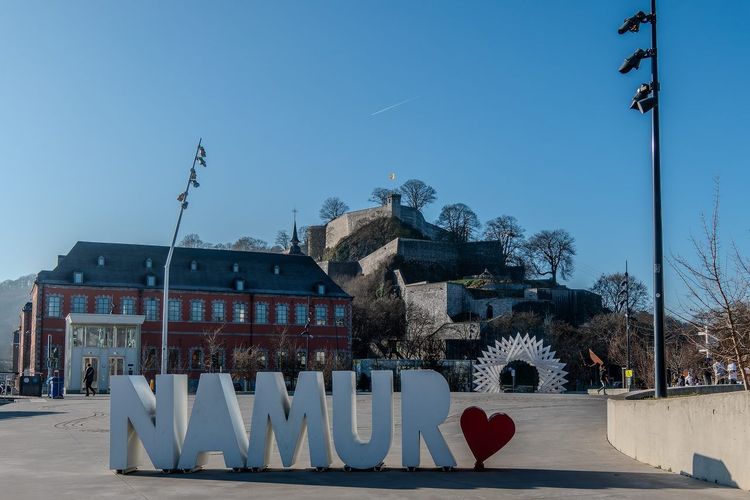
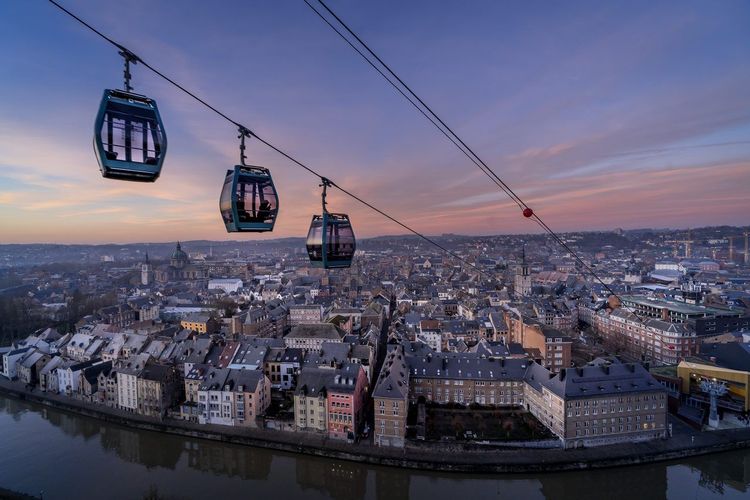
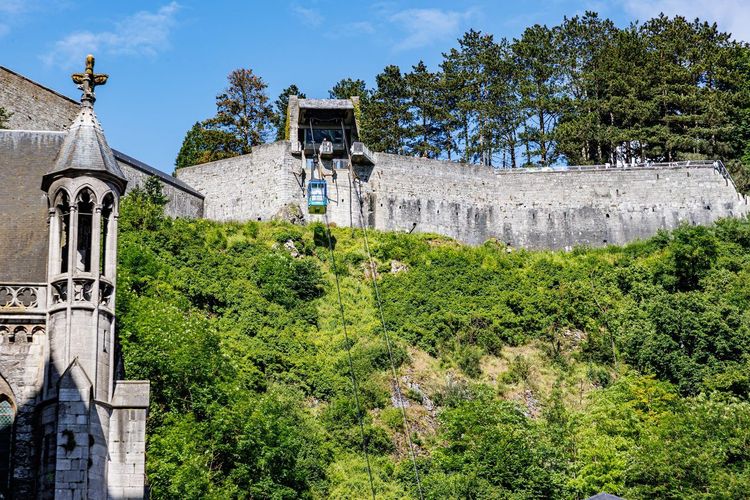
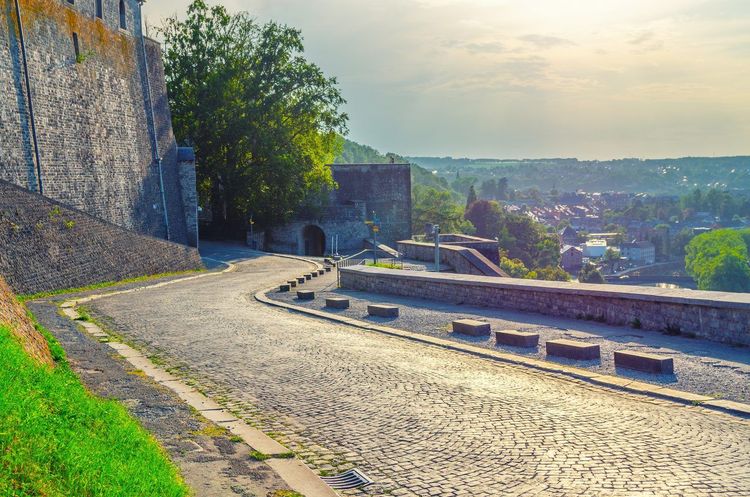
The Namur Citadel overlooks the city from the top of its rocky spur, at the tip of the confluence between the Meuse and the Sambre. Occupied since Celtic times, and fortified by the Counts of Namur and then by Vauban in the 17th century, it is now the largest fortified complex in Belgium, with nearly 80 hectares of bastions, terraces and underground passages. You can climb up on foot via the route Merveilleuse, by car along the same route, or effortlessly by the Citadel cable car, which departs from place Maurice Servais, right in the center, and drops its passengers on the esplanade in about seven minutes.
The Terra Nova visitor center, set in the former fort, traces the military history of the site and gives access to a portion of the underground passages, which can only be visited in a guided group for safety reasons. If you only have a morning, take the cable car up and walk back down through the gardens and successive terraces: this is where you will find the best views over the bend of the Meuse and the slate roofs of the historic center.
The site also lends itself to a longer break. At the top, the Parc attractif Reine Fabiola brings together a playground, a treetop adventure course, mini-golf and trampolines for 3-to-12-year-olds, and families easily spend a whole half-day there between the terraces and the open views over the Namur countryside. In summer, historical reenactments and craft markets regularly liven up the esplanades. Allow 8 euros for a round trip on the cable car for an adult (around 6 euros at the reduced rate, free up to age 3); the site is open all year, with shorter hours in winter.
The place changed hands at least a dozen times between the 15th and 19th centuries: Spaniards, French, Austrians and Dutch each took over the stronghold in turn, each adding their own layer of fortifications. The siege of 1692, led by Vauban under the eyes of Louis XIV himself, remains the most talked-about episode on site: more than 100,000 men mobilized for a month to bring down a stronghold defended by the Dutch engineer Coehoorn. Three years later, William III of Orange retook the city from the French, and Coehoorn set about erasing the work of his rival.
Old Namur, Saint-Aubain Cathedral and the Meuse Quays
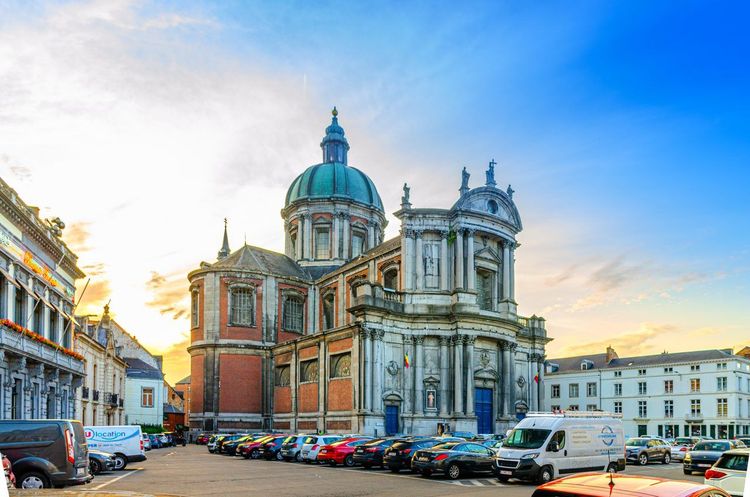
Walking back down toward the center, the contrast is immediate: cobbled lanes, listed façades and terraces on the water replace the bastions.
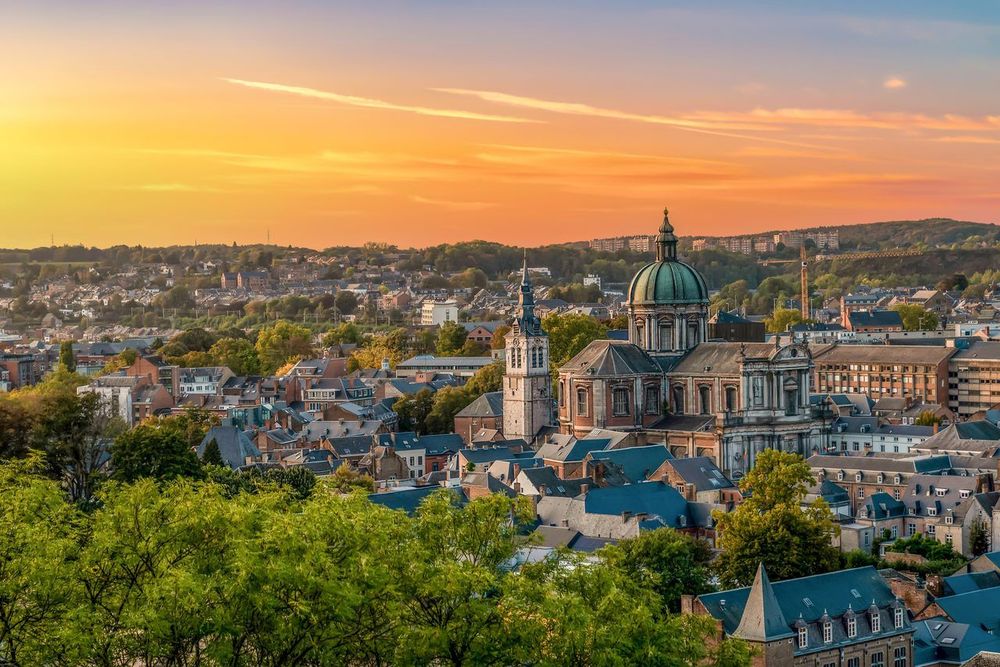
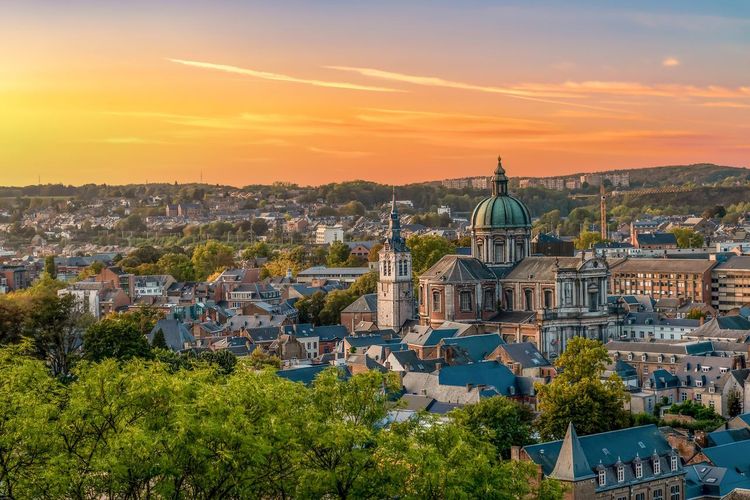
The Saint-Aubain Cathedral surprises anyone expecting Brabantine Gothic: its dome and classical façade, completed in the 18th century to plans by the Italian architect Gaetano Matteo Pisoni, give it the look of a Roman church strayed into Wallonia. The interior, wide open and bright, contrasts with the sobriety of the Old Namur façades surrounding it.
The Old Namur is best discovered on foot, with no set route: rue de Fer, rue des Tanneries, place du Marché aux Légumes and place Saint-Aubain hold most of the listed façades, independent shops and café terraces. You will also come across the former Episcopal Palace and several converted convents, a sign of a city that long lived around its religious and judicial institutions.
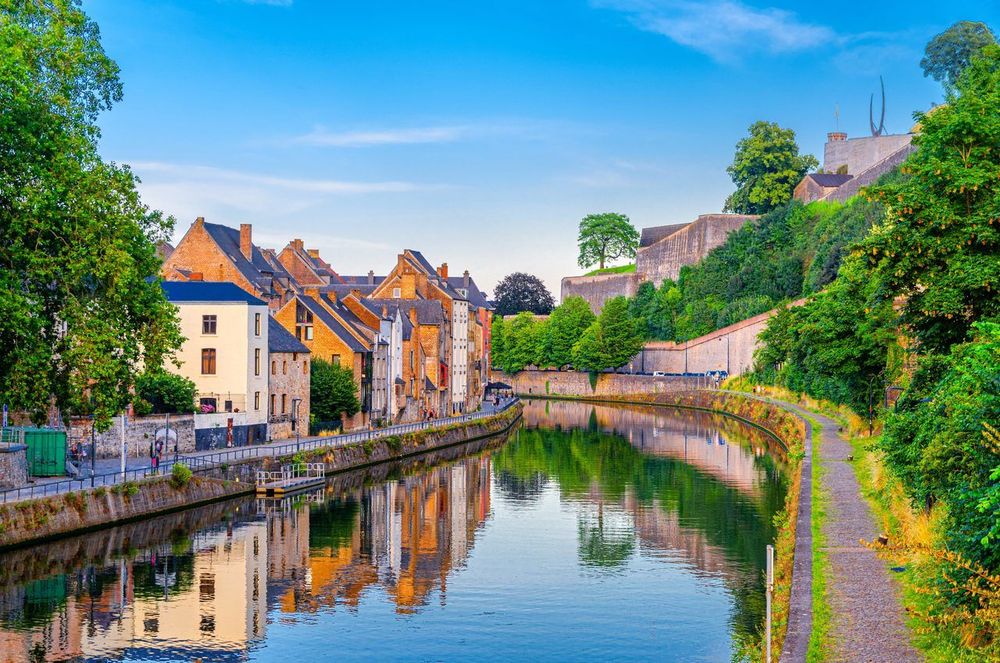
Continuing toward the water, the Namur quays run along the Meuse to the confluence with the Sambre. This is where the city truly unwinds in the evening, among joggers, anglers and terraces that stay full on sunny days. The quays also offer the best overall view of the citadel, whose silhouette is reflected in the water at sunset.
On Saturday mornings, the big weekly market takes over the streets of the center, with local market gardeners and small food stalls. At the foot of the citadel, the Grognon esplanade serves as the departure point for boat rides on the Meuse, detailed on the second day. If you are looking for a reading break or a quiet coffee, the lanes behind the cathedral, between rue Godefroid and rue du Président, are far less crowded than the shopping axis of rue de Fer. To cross between the two banks without taking the car, head for the Jambes bridge, a few minutes' walk from the quays: we come back to it in detail tomorrow, since it also marks the start of the street-art walk.
To link the citadel and Old Namur without too many detours, the Ryo audio guide to the citadel and Old Namur climbs to the top via the cable car and then heads back down to the quays, with commentary on the city's history under the counts delivered stage by stage. Handy for moving at your own pace without pulling out your phone at every crossroads.
Day 2: Museums, Street Art and a Walk Along the Meuse
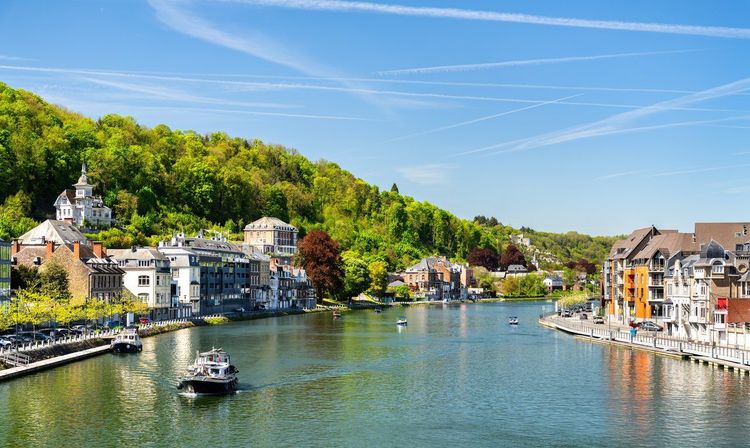
On the second day, head to the right bank and the banks of the Meuse, for a mix of museums, urban artworks and fresh air.
The Félicien Rops and Groesbeeck de Croix Museums
The Félicien Rops Museum occupies an 18th-century town house and traces the work of the Namur-born draftsman and engraver, a figure of fin-de-siècle Symbolism known for his often scandalous etchings. The permanent collection brings together several hundred pieces, complemented by temporary exhibitions that rotate regularly.
A few streets away, the Groesbeeck de Croix Museum houses its decorative arts collections in a former 18th-century mansion, period furniture and classical garden included. The whole gives a fairly precise idea of the lifestyle of the Namur bourgeoisie before the Revolution, far from the bustle of the shopping center.
Each of the two museums takes a little under an hour to visit, which lets you do them back to back early in the morning before the city fills up. Check the weekly closing days before fixing your time slot, as several Namur museums close on Mondays. Rops, incidentally, long had a bad reputation among the 19th-century Namur bourgeoisie, who judged some of his engravings too explicit to be displayed: the museum that now bears his name has largely rehabilitated the artist, to the point of becoming one of the reference collections on Belgian Symbolism.
The Street-Art Walk and the Jambes Bridge
Look up as you walk: the Spanish artist Isaac Cordal has scattered 48 statuettes across the façades of the center, little figures in suits frozen in everyday scenes that mock our mass behavior. As for murals, the famous mural of the Walloons, the monumental work by the Dutch artist Leon Keer on the façade of the State Archives and several walls signed by the Namur collective Drash complete the route.
The must-see stop remains the Jambes bridge, which links the two banks of the Meuse and offers an open view of the citadel below. Nearby, the Jambes port and its redeveloped quays offer a break by the water, facing the ramparts, before heading off again to hunt for artworks.
Allow an hour and a half for a full walking route between the center and Jambes, zigzagging from one mural to the next. Pick up the route map at the tourist office: without it, half of Cordal's statuettes go unnoticed. Several murals play with perspective or anamorphosis, designed to be photographed from a specific spot on the sidewalk. Others, more discreet, hide in dead ends you only notice when you look up. If you spot a mural you particularly like, head back down to the quays in the late afternoon: the low light shows off the bright colors of some wall pieces much better than midday sun.
Cruise and Bike Ride on the Meuse and the Sambre
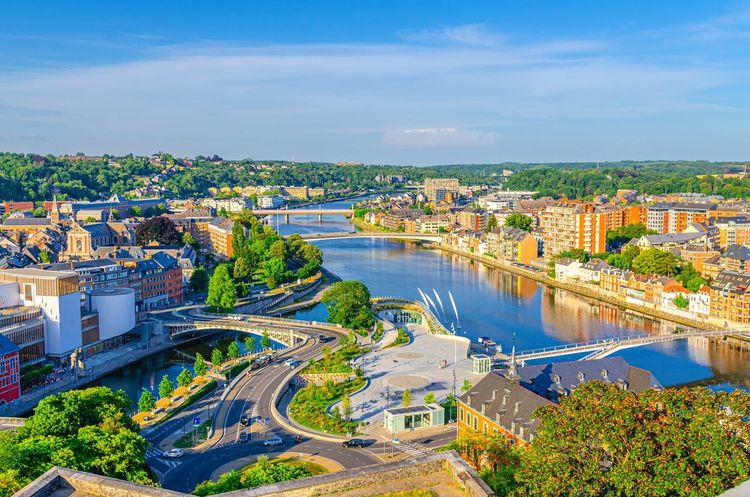
For a change of pace, a cruise on the Meuse and the Sambre leaves regularly from the central quays, with short circuits of about an hour to the confluence, or longer trips toward Dave and the upstream valley. It is a relaxing way to see the citadel from a different angle, from the water, without climbing back up on foot. The cruise runs almost all year, with a reduced service in midwinter when the level of the Meuse or the wind sometimes force the cancellation of certain departures. In high season, it is better to book your slot the day before rather than turning up directly at the jetty.
Cyclists will be happy along the Ravel, which follows the two rivers for dozens of kilometers and is suitable for families thanks to a flat surface and no notable elevation once out of Namur. The bike ride along the Meuse notably passes over the Enjambée footbridge (Quai Saucin, 5000 Namur, rated 4.5/5 on Google from 264 reviews), a pedestrian and cycle bridge that crosses the river near the Grognon district and usefully complements the existing network of bridges for two-wheeled travel.
Several rental companies offering regular or electric bikes operate in the city center and on the quays, handy if you haven't brought your own. Allow half a day for a leisurely round trip to Dave or Wépion, with a possible stop at one of the cafés lining the path.
This second day can also be followed with headphones on: the Ryo audio-guided tour The Proud Capital of Wallonia strings together 19 audio stops over 3.7 km, about 1h30 of walking, without you having to look for your way between the murals and the two museums.
Namur with Kids: Activities and Good Spots for Children
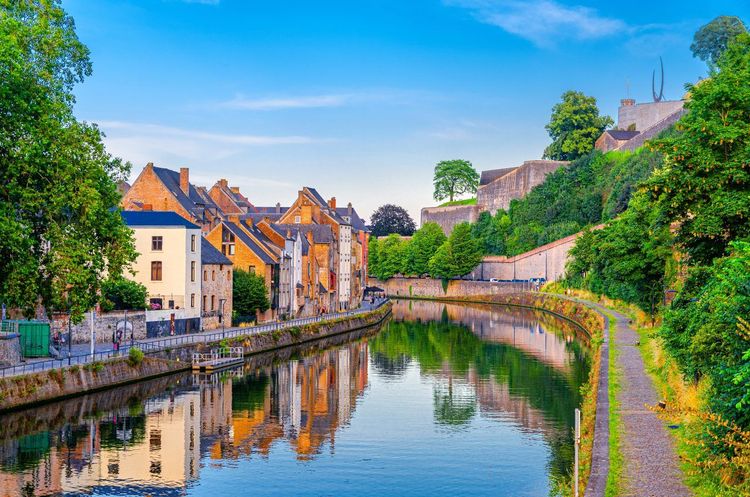
Namur lends itself well to a family weekend, as long as you balance cultural visits with outdoor breaks. The citadel remains the highlight for children: wide open spaces to run around between the terraces and, at the top, the Parc attractif Reine Fabiola with its playground of more than one and a half hectares, its treetop adventure course for 8-to-12-year-olds and its mini-golf are enough to fill half a day without them getting bored in front of museum display cases. The cruise on the Meuse also works very well with young children, who generally enjoy the movement of the boat more than visiting a church.
As for accommodation, several hotels with family rooms in Namur offer triple or quadruple configurations, especially around the station and on the Jambes side, where prices are generally more affordable than in the historic heart. Connecting rooms are rare: it is better to book a family suite or two adjoining rooms rather than count on a last-minute extra bed.
For meals, the kid-friendly restaurants in Namur are mostly found around place d'Armes and the quays, where several establishments offer a children's menu without batting an eye, including in places geared more toward an adult clientele in the evening. The quayside terraces, in summer, remain the safest bet: children can run around a bit while parents finish their plates.
In case of rain, head to the museums: the Félicien Rops Museum and the Groesbeeck de Croix Decorative Arts Museum can be visited back to back under cover, and the citadel site also offers fun indoor activities on certain weekends, useful so you don't have to cancel the whole outdoor half-day.
The Ryo audio-guided tour also works very well with family: the commentary is short and packed with anecdotes that hold children's attention between stops, without forcing them to stand still in front of an information panel.
Where to Stay in Namur for a Weekend
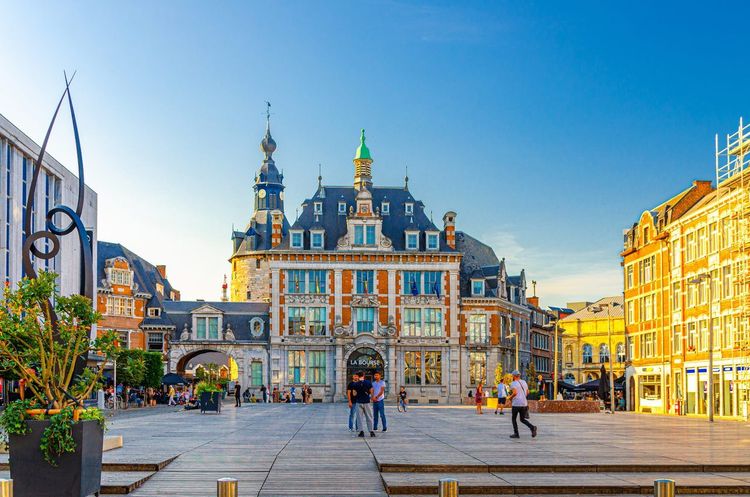
The choice of neighborhood depends mostly on what you want close at hand in the evening. Where to stay in Namur basically comes down to two options: the historic center, between the cathedral and place d'Armes, to walk to everything from your room; or the Jambes bank, just across the river, for generally lower prices and a few extra minutes' walk via the bridge or the footbridge.
The center holds most of the mid-range hotels in Namur, often set in renovated old buildings, some with views of the citadel from the upper floors. This is also where you will find the guesthouses, generally run by Namur owners who know the city inside out and are happy to help out with a table or a little-known activity.
Jambes, on the other side of the river, plays the practical card: more accessible parking, chain hotels with predictable prices, and about ten minutes on foot to reach Old Namur via the Jambes bridge. The option also makes sense if you arrive by car and prefer to avoid the tight traffic of the historic center on weekends.
For small budgets, a youth hostel and several homestays round out the offer, generally a few hundred meters from the center but connected by frequent daytime buses. Book early if your weekend coincides with an event in Namur, such as a trade show, festival or commercial fair: the city's hotel capacity is not extendable and rooms go quickly once the local calendar fills up.
As for budget, allow on average between 90 and 130 euros per night for a double room in a mid-range hotel in the historic center, and more like 70 to 100 euros on the Jambes side for a comparable establishment. Guesthouses sometimes fall below this range while offering a more personalized welcome, provided you accept simpler amenities than a standard hotel.
If your weekend starts late on Friday evening, choose a place near the station: most hotels in the center are within fifteen minutes' walk, which saves you from dragging a suitcase over the slippery cobblestones of Old Namur in the rain.
Where to Eat and Have a Drink in Namur: Our Favorite Spots
Before choosing a table, a word on the local specialties of Namur that appear on almost every menu in the center. The flamiche, a savory tart made with rich cheese, eggs and butter that comes from Dinant, comes in several versions at bakeries and traditional brasseries. The péket, a juniper-flavored spirit and star of the Fêtes de Wallonie, is drunk as a digestif or an aperitif depending on the house, sometimes served in fruity, milder versions. As for beer, ask for a Houppe, a 7.5° Namur blonde brewed since 2013, or a Blanche de Namur, often served with a platter of regional cheeses.
For a full meal, the lanes around place du Marché aux Légumes and rue de Fer have the highest density of restaurants, from traditional bistros to more creative tables. The Meuse quays (Avenue Félicien Rops, 5000 Namur, rated 4.2/5 on Google from 738 reviews) offer an alternative with a view, especially pleasant on summer evenings, even if prices rise slightly with the location. On the Jambes side, a few newer places focus on more contemporary cuisine at prices often lower than in the historic center.
Where to have a drink in Namur is no problem in the evening: place Saint-Aubain and its surroundings are full of beer bars and student cafés, lively all year thanks to the presence of several higher education institutions. The quayside terraces take over as soon as the weather turns nice, often until late in the evening on weekends.
Another specialty not to miss at breakfast or teatime: the couques de Dinant, a hard biscuit made from flour and honey originating from the neighboring town but widely sold in Namur, and best nibbled dipped in coffee since its texture is tough when dry. Bakeries in the center offer several variants, sometimes filled, for those with a sweet tooth who want to leave with an edible souvenir.
On Saturday mornings, the big downtown market is the best place to put together a basket of local produce if your accommodation has a kitchen, with regional cheeses and Ardennes charcuterie at the top of the list. If you are traveling in a group or with family, book your table for Saturday evening in the center: the best places are full by 7:30 pm for much of the year. The restaurants in Jambes, less popular, remain a safe bet for a last-minute reservation.
Around Namur: What to Discover in Half a Day
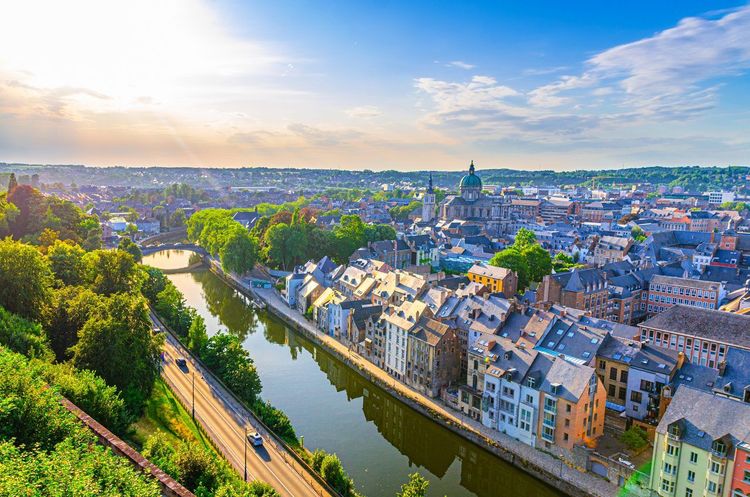
Namur is an ideal base for exploring the Famenne and the Namur stretch of the Meuse. Here are the most common half-day escapes, all reachable in less than an hour by road.
Dinant, the Essential Escape on the Meuse
About thirty kilometers to the south, Dinant is the most frequently cited excursion from Namur, and for good reason. The town stretches along a single bank of the Meuse, overlooked by its citadel and its Collegiate Church of Notre-Dame, whose bulb-shaped bell tower always surprises visitors expecting classic Gothic.
The citadel can be visited on foot via a staircase of several hundred steps, or by cable car for tired legs. The site traces the town's military history, marked by several sieges and by the fighting of 1914, some traces of which remain visible in the underground galleries. Dinant is also the birthplace of Adolphe Sax, the inventor of the saxophone, as several statues and a small exhibit in the town center recall. You will also find the famous couques de Dinant mentioned above, to be bought directly from one of the historic bakeries that have kept up the recipe for several generations.
Allow about 30 to 40 minutes by road from Namur, or an equivalent train journey on the line that runs along the Meuse, one of the most picturesque in Belgium with its limestone cliffs dropping straight into the river. Half a day is enough for the citadel and the town center, a full day if you add kayaking or a cruise on the Meuse.
Rochefort and Han-sur-Lesse, in the Heart of the Famenne
Further south, Rochefort and Han-sur-Lesse are usually visited together, the two villages being only a few kilometers apart. Rochefort has the ruins of a comital castle perched on a rocky promontory, as well as a renowned Trappist brewery whose beers appear on most menus in Namur.
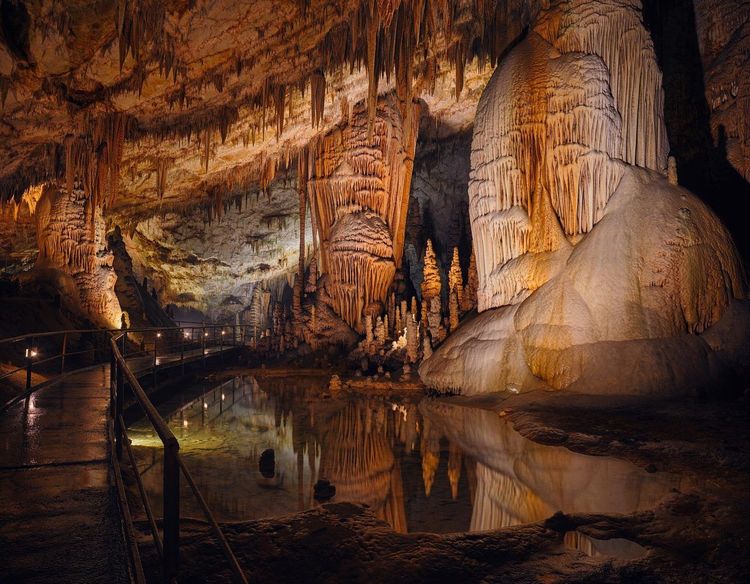
In Han-sur-Lesse, the main attraction remains the cave, one of the most visited in Belgium, a guided walk of about 2 km through the galleries carved by the Lesse. The century-old tram that used to take visitors there from the village stopped running in 2026: check access arrangements before leaving. The adjoining estate also houses a wildlife park devoted to European fauna, wolves and bison included, which complements the underground visit well for families with a full day.
Allow a good hour by road from Namur, and a full day rather than just half a day if you want to combine the cave and the wildlife park without rushing. Combined tickets remain the best value for a family, but it is better to book your slot in advance in high season. The Lesse itself can be descended by kayak between Houyet and Anseremme, a very popular activity from April to September that lets you follow part of the valley without a car.
Walcourt, Freÿr, Anseremme and Ciney: The Other Gems
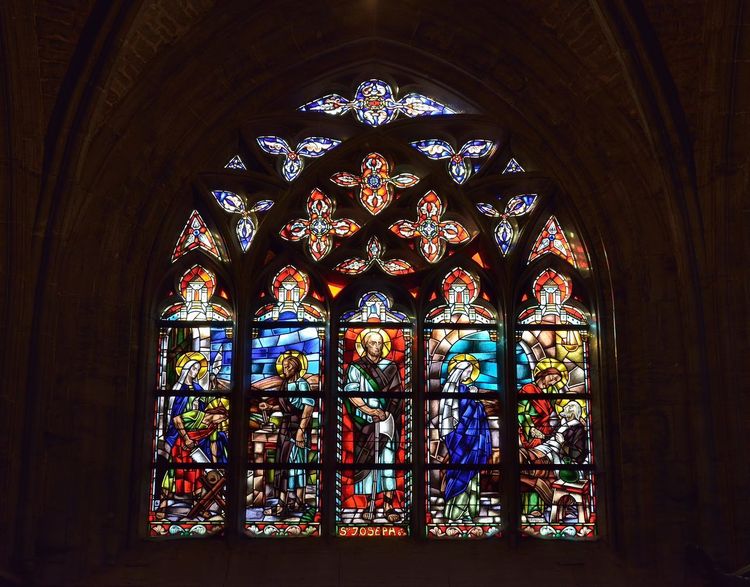
Several other villages deserve a detour if your weekend stretches beyond two days or if you head back by a different route. Walcourt, west of Namur, is home to a Romanesque-Gothic basilica listed as major heritage of Wallonia, famous for its silver-covered statue of the Virgin and its Gothic rood screen, which still draw pilgrims.
The Freÿr Castle, on the banks of the Meuse between Dinant and Hastière, preserves one of the finest French-style classical gardens in Belgium, with its century-old potted orange trees and its direct view over the river. The interior of the castle can be visited in summer, while the park stays open over a longer period.
Anseremme, at the confluence of the Meuse and the Lesse, serves mainly as a starting point for the kayaking mentioned above and for a walk at the foot of the steep rocks overlooking the village, popular with climbers. Ciney, further south on the plateau, stands out for its weekly livestock market, one of the largest in Belgium, and for a quiet town center for a lunch break between two excursions. Finally, to the north, Eghezée is more anecdotal for a passing visitor, more focused on agriculture and a few emerging wine estates than on heritage tourism, but may be worth a quick stop if your return route to France passes through.
Namur remains the natural starting point for all these excursions: the Ryo audio-guided tour of the city center is easily completed in a morning before hitting the road to Dinant or Rochefort in the afternoon, or at the end of the day on returning from an excursion started early.
How to Get to Namur from France
By train, Namur is easily reached from several major French cities. From Paris, allow about 1h25 on the Eurostar (formerly Thalys) to Brussels-Midi, then a connection on a Belgian train of a little under an hour, for a total of two and a half to three hours depending on the wait at the station. From Lille, the connection is more direct, around two hours with a single change depending on the schedule.
By car, the E411 motorway connects Brussels directly to Namur and then continues toward Luxembourg, making it a convenient transit point for those heading down to the Ardennes. From Paris, allow about three and a half hours by road via the A2/E19 motorway to Mons and then the E42, a little less from Lille or Valenciennes. The historic center is generally poorly suited to cars on weekends, given limited spaces and narrow streets: it is better to park in a lot on the outskirts or on the Jambes side and finish on foot.
Flying is of little interest for this trip: the nearest airport, Brussels-Charleroi, still requires a car or train journey to Namur, with no time saved compared to the train from Paris. Long-distance coaches also serve Namur from several French cities, an economical but longer option, best reserved for tight budgets rather than short weekends.
Namur station, renovated in recent years, is less than ten minutes on foot from Old Namur and about fifteen minutes from the citadel including the climb. Traveling by train rather than by car therefore makes real sense here: most of the weekend is spent on foot once you arrive, with no need to move your vehicle between visits.
When to Go to Namur and Which Events Not to Miss
Spring and early autumn are the most comfortable seasons for a weekend in Namur: moderate temperatures, citadel gardens in their finest colors, and tourist crowds still reasonable compared to high summer. Summer offers the advantage of terraces and cruises at their maximum frequency, at the price of denser crowds on Saturdays, especially on the quays and around the citadel.
Namur at -10° changes completely: the citadel becomes quieter, some sites reduce their hours, but the Christmas markets and the downtown lights more than compensate, for those who prefer weekends in dry cold to summer heat. The cable car keeps running all year, except in exceptional weather conditions.
As for events in Namur, the city paces its calendar around several recurring events: Namur en Mai, a street arts festival that takes over the streets around Ascension, the Fêtes de Wallonie in September with parades and péket, the KIKK Festival devoted to digital cultures in autumn, craft markets and regular flea markets on the Jambes side, temporary exhibitions in the museums that change several times a year, and occasional activities at the citadel in summer. It is best to check the Namur tourist office's events calendar before fixing your dates if a specific event motivates the trip.
If your schedule allows, aiming for a weekend outside simultaneous Belgian and French school holidays noticeably changes the atmosphere: lines at the Han cave (Rue Joseph Lezaack 25, 5580 Han-sur-Lesse, rated 4.4/5 on Google from 18,910 reviews) or at the citadel cable car are much shorter, and tables at the good restaurants in the center are easier to book at the last minute.
Budget and Practical Tips for a Weekend in Namur
How much does a weekend in Namur cost? Here is a realistic weekend budget for two people, excluding train tickets from France. Allow between 250 and 400 euros for two nights in a mid-range hotel, three meals over two days and the main paid activities (cable car, museums, cruise). A couple traveling on a tighter budget can go below 200 euros by staying on the Jambes side and limiting paid visits to the citadel and a single museum.
For a family of four, the bill logically rises, to between 500 and 700 euros for the weekend depending on the standard of accommodation chosen and the number of paid activities added (treetop course, cruise, possible excursion to Han-sur-Lesse, which charges for the cave and wildlife park separately or as a combined ticket).
To lighten the bill without sacrificing the program, focus on free activities: walk up to the citadel rather than taking the cable car on the way up, a self-guided street-art walk, and strolling along the quays and in Old Namur. Ryo has also listed in detail the free activities in Namur to build a full program without piling up entry tickets.
On the practical side, bank cards are accepted everywhere in the center, including at small markets, but bring a few euros in cash for parking or certain stalls at weekend flea markets. The TEC bus network usefully complements walking if you are staying a little out of the center or if rain disrupts the program.



FAQ
Is Namur worth visiting for a weekend?
Yes, and quite generously for a city of this size: the citadel, Old Namur, the museums and the street art easily fill two busy days, not counting day trips to Dinant or Rochefort if you have an extra day. It is also a destination where you walk a lot, which suits those who want to avoid car transfers between each visit.
What can you do in Namur over a weekend?
The essentials come down to the citadel and its cable car, Old Namur with Saint-Aubain Cathedral, the Félicien Rops and Groesbeeck de Croix museums, a street-art walk to the Jambes bridge, and an outing on the water by cruise or by bike along the Meuse. Two well-paced days are enough to fit it all in without rushing.
What are the must-see places to visit in Namur?
The citadel comes first, followed by Old Namur and its cathedral, then the Meuse quays for the view of the fortified city. The Félicien Rops museum and the street-art walk round out this core for anyone staying two full days.
What events take place in Namur in 2026?
Namur's calendar stays lively all year: the Fêtes de Wallonie in September, regular markets and flea markets on the Jambes side, temporary exhibitions in the museums, and a Christmas market at the end of the year. For precise dates, it is best to check the tourist office's events calendar before fixing your weekend.
How many days should you plan to visit Namur?
Two days comfortably cover the essentials of the city itself. A third day lets you add a full excursion to Dinant, Rochefort or Han-sur-Lesse without rushing, rather than squeezing it into the late afternoon of the second day.
What budget should you plan for a weekend in Namur?
Allow between 250 and 400 euros for two people over two nights, excluding travel from France, staying in a mid-range hotel and including the main paid activities. Families of four should expect around 500 to 700 euros depending on the number of activities added.
Our Take on a Weekend in Namur
Namur doesn't need three days to win you over. A well-built weekend of citadel, Old Namur, museums and street art is enough to understand why the city earned the status of Walloon capital without ever losing its human scale. If an extra day opens up, Dinant or the Famenne naturally complete the program without lengthening the return trip to France.
If you prefer to move without a map or a paper guide, the Ryo audio-guided tour of Namur takes you at your own pace from the citadel to the quays and then to the murals, without depending on a fixed guided-tour slot. And if you are traveling alone, our tips for visiting Namur solo usefully complement this guide.