© Shutterstock
 Votre guide Ryo
Visit Copenhagen in 3 Days: Complete Itinerary and Practical Tips (2026)
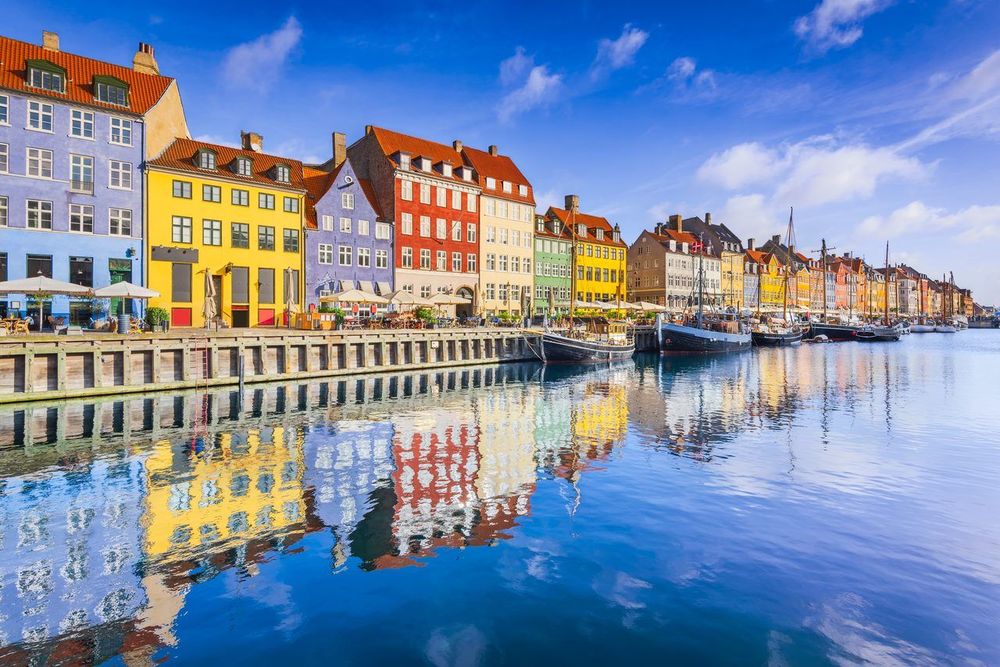
The wind that blows up Nyhavn at eight in the morning is nothing like the one that rushes in at aperitif time, when the colorful facades are reflected in the water and the canalside terraces fill up with cold Carlsbergs. To visit Copenhagen in 3 days without rushing from one spot to the next, it's better to organize your days by neighborhood rather than by a list of monuments: the monarchy and the canals on the first day, museums and Christiania on the second, Tivoli and the alternative neighborhoods on the third. This is exactly the structure followed by the Ryo audio-guided tour of Copenhagen, designed to be done on foot without worrying about a GPS.
In three days, you'll have plenty of time to watch the changing of the guard in front of a palace that is still inhabited, to climb a 17th-century tower without taking a single step, to cruise past the facades of Nyhavn by boat and to step into a neighborhood that has been self-governed since 1971 and which itself dug up the paving of its most famous street in 2024. You'll also come across an amusement park that is more than a century old, covered food halls with around sixty stalls, and a circular bridge that pivots to let sailboats through. Budget, transport, the best season, itineraries for families or friends and a day trip to Malmö: everything is detailed below, day by day and then theme by theme.
Day 1: the historic center, Nyhavn and the royal palaces
Morning: Christiansborg, Rosenborg and the royal squares
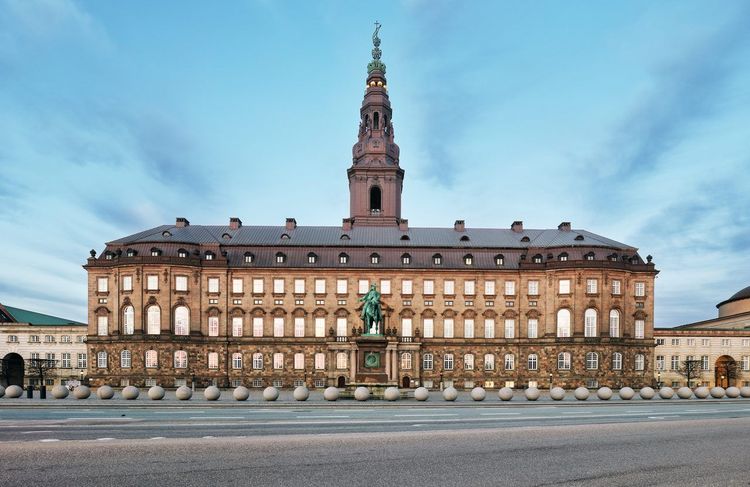
Start with Christiansborg, the only palace in Europe to house a parliament, a supreme court and royal reception rooms under the same roof. The state rooms, adorned with tapestries given to Queen Margrethe II for her 50th birthday, can be visited in under an hour, and you can go down to see the ruins of the original medieval castle, buried beneath the current foundations. Its tower, free to access, also offers the highest panorama over the historic center, often overlooked by visitors in a hurry.
Fifteen minutes away on foot, Rosenborg Castle keeps the Danish crown jewels in a basement room protected like a vault, crowns and ceremonial sword included. The surrounding park, the King's Garden (Kongens Have), is the oldest royal garden in the country and remains free even when the castle is closed.
Next, head to Amalienborg, the official residence of the royal family, made up of four identical palaces arranged around an octagonal square where the changing of the guard takes place every day at noon: guards in bearskin hats march from their barracks near Rosenborg to the palace. If the sovereign is present, the changing takes place to the sound of military music and a flag flies above the roof.
Just behind it, the verdigris dome of the Marmorkirken (the Marble Church) deserves a ten-minute detour: inspired by St. Peter's in Rome, it has the largest dome in Scandinavia, 31 meters in diameter, which contrasts with the sobriety of the neighboring royal facades.
Two streets further on, on Bredgade, the Danish Design Museum) traces the history of Scandinavian furniture, with chairs by Jacobsen and Wegner leading the way, in a former 18th-century hospital whose inner courtyard is worth the visit on its own. If you like design, this is the time to fit it in: you're right next door.
Allow plenty of time for your morning: between the queues for the jewels and the noon changing of the guard, it's easy to spend more than three hours in this royal area alone. Book your tickets for Christiansborg and Rosenborg online the day before to avoid the ticket-office queue.
Afternoon: Nyhavn and a boat ride on the canals
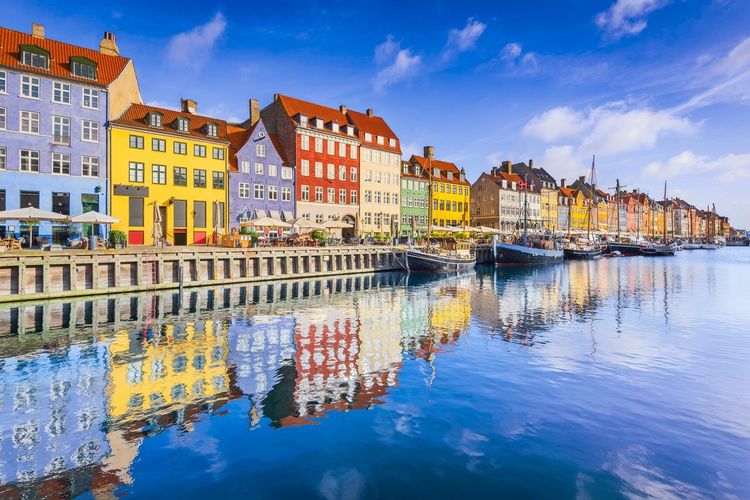
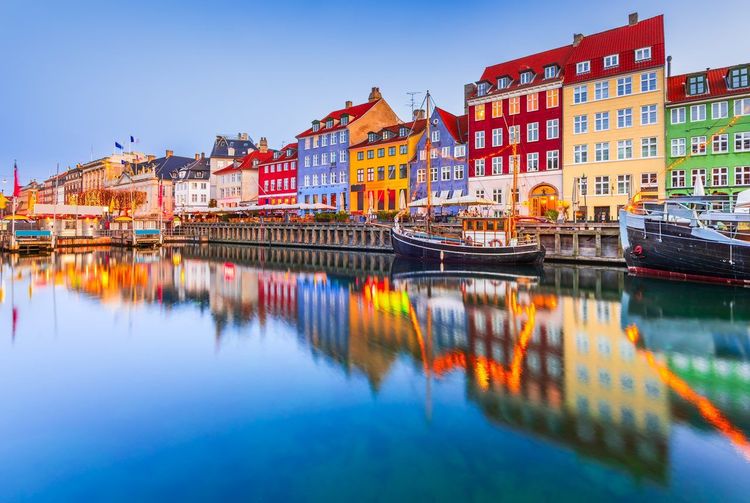
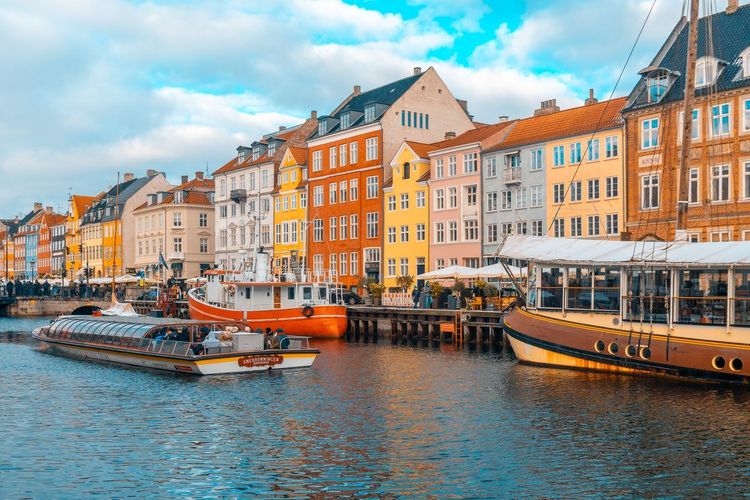
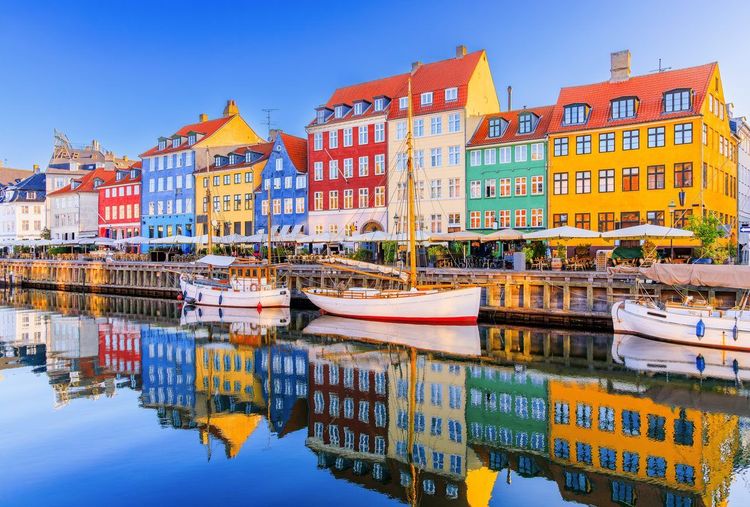
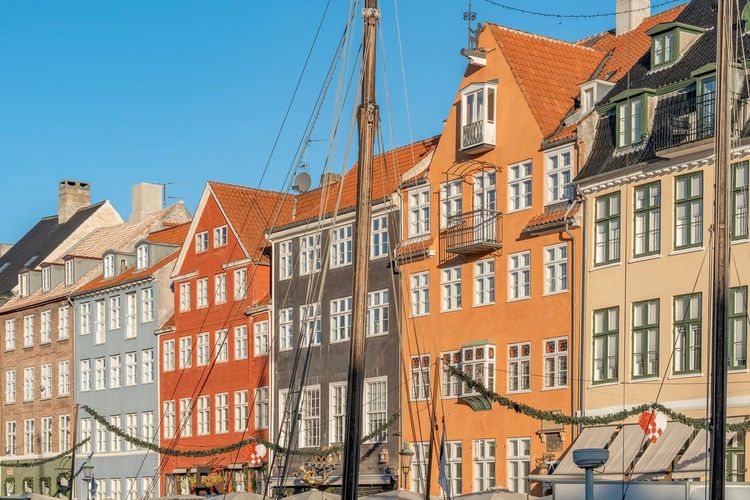
The afternoon inevitably starts at Nyhavn, the 17th-century canal lined with yellow, red and blue facades where Hans Christian Andersen lived at three different addresses. The quays, long a merchant port area, are now packed with terraces, but just walk to the end opposite the harbor to find an almost residential calm.
It's also the departure point for most canal boat rides: about an hour to cruise past Christiansborg, the opera house and the harbor, passing under a dozen bridges. Departures are frequent in season (every 15 to 30 minutes) and the view from the water of the royal facades is well worth the ticket price, around 15 to 20 euros.
Continuing on foot northward along the harbor, you reach Kastellet (Kastellet, 2100 København Ø, rated 4.6/5 on Google from 3,503 reviews): a 17th-century star-shaped fortress still used by the Danish army, whose grassy ramparts can be walked freely and for free. Close by, on the rocks of Langelinie, sits the statue of the Little Mermaid, a 1.25-meter bronze that, despite its modest size, has become the most photographed tourist symbol in the country. Our Ryo article on the Little Mermaid details the story behind the tale and the best times to see it without the crowds.
If you prefer a continuous narration to a series of information panels, the "The Scandinavian Pearl" loop of the Ryo audio-guided tour links Nyhavn, the royal squares and the theaters of the Danish monarchy, with a different anecdote at each stop rather than a simple list of dates.
For dinner, stay in the neighborhood: the restaurants on Nyhavn itself are decent but pricey, whereas two streets away, towards Store Kongensgade, prices become reasonable again without any loss in quality.
Day 2: museums, canals and the free town of Christiania
Morning: Ny Carlsberg Glyptotek, Rundetårn and Torvehallerne
The second day starts gently at the Ny Carlsberg Glyptotek, a museum founded by the brewer Carl Jacobsen, where ancient Egyptian and Roman sculptures sit alongside a glass-roofed winter garden planted with palm trees, in the heart of the Danish winter. The Impressionist rooms, with a surprising Gauguin collection for a Scandinavian museum, can be seen in about an hour. Good tip: admission is free on the last Wednesday of each month, at the cost of much bigger crowds.
On the way back toward the center, the Rundetårn is worth the detour for one specific reason: its spiral inner ramp, wide and without a single step, was designed in the 17th century so that horses and carriages could climb up to the observatory. The 209 meters of ramp rise gently to a terrace overlooking the green copper roofs of the historic center.
For lunch, head to Torvehallerne, two glass halls with about sixty stalls: smoked fish, smørrebrød, Danish cheeses and specialty coffees share the space, with prices noticeably lower than the terraces of Nyhavn.
If you still have energy, the SMK (Statens Museum for Kunst), the national fine arts museum, is a ten-minute walk from the halls, on the other side of Østre Anlæg park. Its permanent collection, from Flemish masters to Matisse by way of the Danish Golden Age, is free all year round; only temporary exhibitions are paid. One hour is enough to grasp the essentials.
Afternoon: Christiania and the Meatpacking District
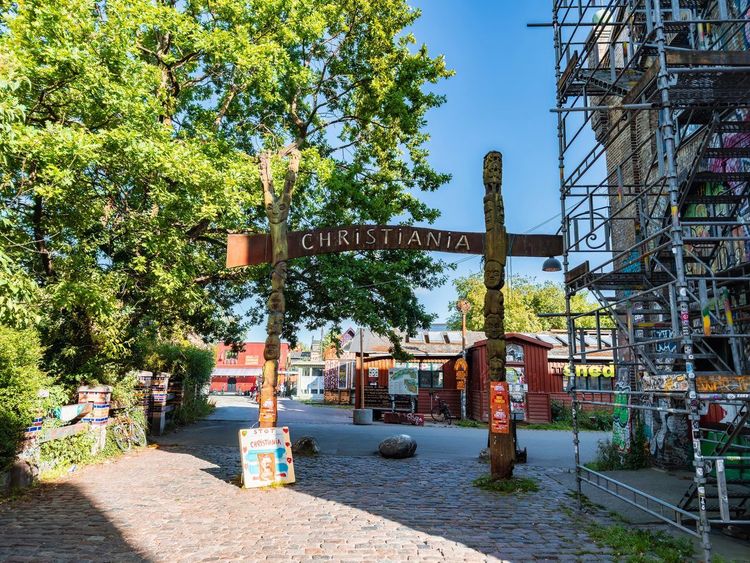
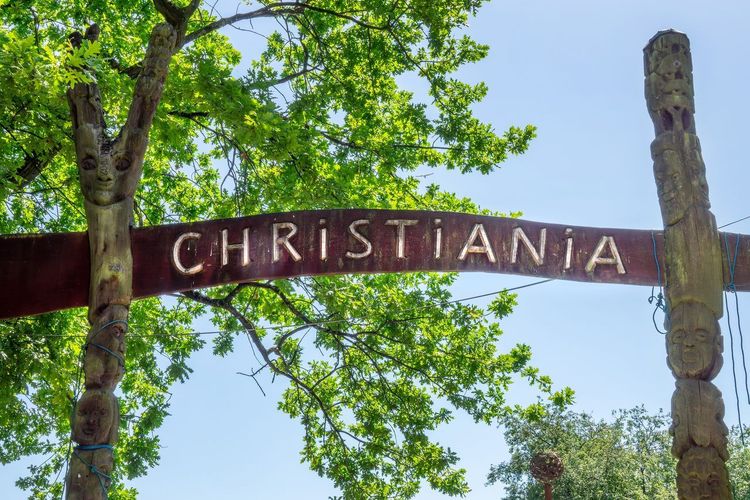
The afternoon completely shifts the mood with Christiania, a free self-governed neighborhood since 1971 on a former military barracks in Christianshavn. About 850 residents still live there under collective rules of their own. Pusher Street, long known for its cannabis market and its ban on photography, was unpaved by hand by the residents themselves in April 2024; the photo ban has since been lifted, and the former street even serves as an ice rink in winter. The rest of the neighborhood can be explored freely, among self-built houses, wooden cabins and murals. Just keep a discreet attitude: you are walking through a place where people live, not a film set.
Heading back out toward the canal, cross the Cirkelbroen, a pedestrian bridge made of five circular platforms whose central part pivots to let sailboats through, a work by the artist Olafur Eliasson. Just opposite, Nordatlantens Brygge occupies a former warehouse used for trade with Greenland, Iceland and the Faroe Islands, now converted into a Nordic cultural center with an unbeatable view of the harbor.
End the day at the Meatpacking District (Kødbyen (Flæsketorvet, 1711 København V, rated 4.3/5 on Google from 5K reviews)), the former slaughterhouse district of Vesterbro turned into trendy galleries and restaurants, a quarter of an hour away by metro or bike. The atmosphere changes completely at nightfall, when cocktail bars replace the meat stalls that still give the streets their names.
With its 29 audio stops, the Ryo audio-guided tour of Copenhagen accompanies you without a GPS through this shift between classic museums and alternative history, with the story of Christiania's founding told on the spot rather than read from a sign.
Day 3: Tivoli, trendy neighborhoods and final discoveries
Morning: Tivoli Gardens and the National Museum of Denmark
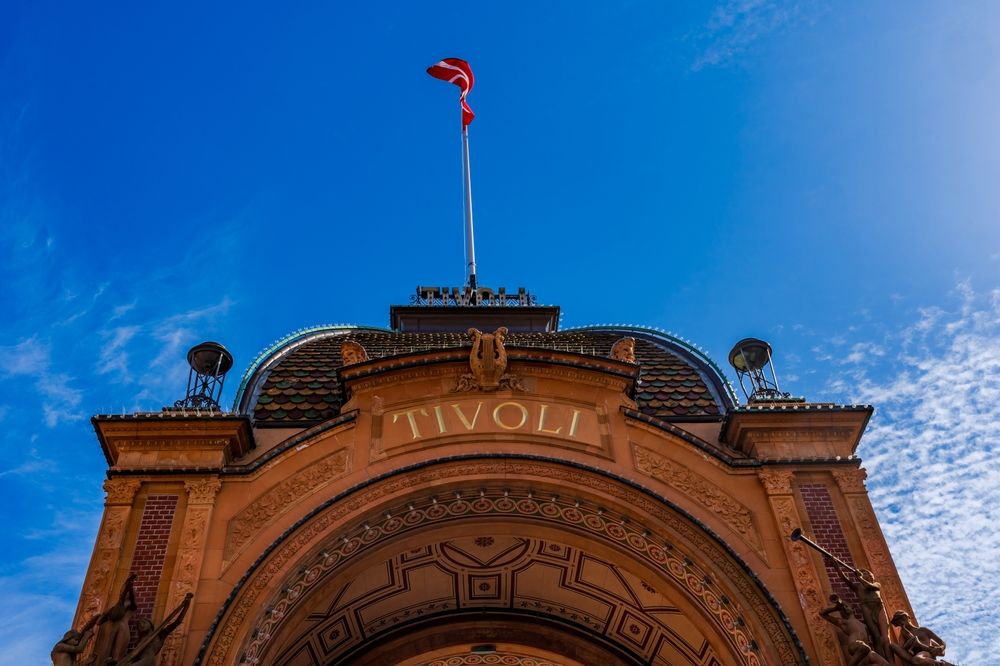
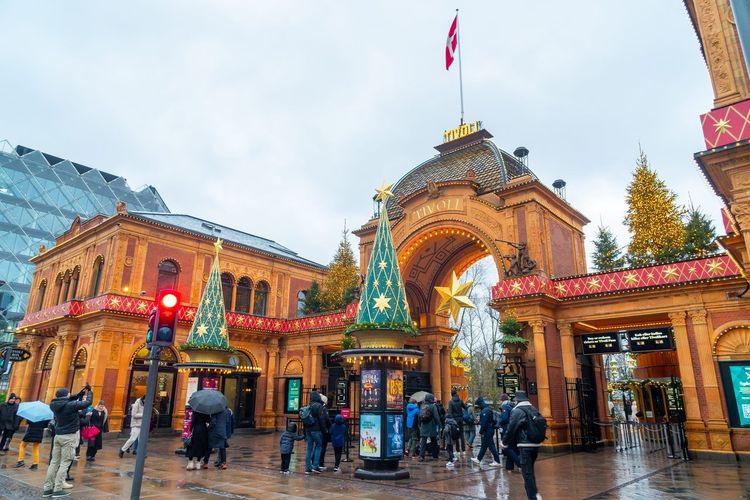
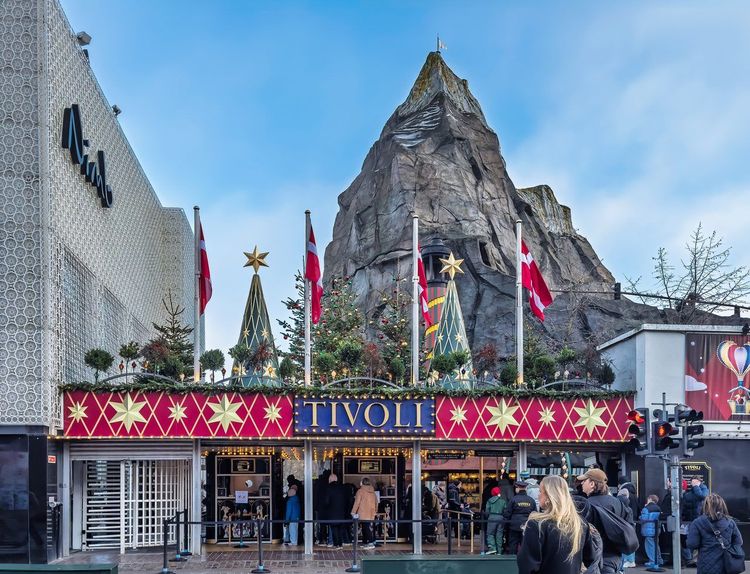
On the last day, head to Tivoli, an amusement park opened in 1843 and often cited as one of Walt Disney's inspirations for his own parks. The wooden roller coaster from 1914, still in service, sits alongside gardens illuminated at nightfall and a summer concert program. The park only opens by season (summer, Halloween, Christmas, plus a few winter periods): check the calendar before planning your morning there.
Our Ryo article on Tivoli Gardens details the best times to visit and the rides not to miss depending on your children's ages.
About ten minutes away on foot, the National Museum of Denmark) occupies the Prince's Palace, on the edge of the Frederiksholm canal. This is where you'll understand the country's history, from the Vikings to the 20th century: the 3,400-year-old Trundholm sun chariot, bronze horns (lurs) and runic treasures. Allow two hours and around 150 kroner (about 20 euros), free entry for those under 18 and included in the Copenhagen Card.
Afternoon: Nørrebro, Vesterbro and the Carlsberg Brewery

The afternoon explores two neighborhoods that have nothing monumental about them but concentrate Copenhagen's local energy. In Nørrebro, Assistens Cemetery, where Hans Christian Andersen rests, also serves as a park where locals picnic among century-old graves; a little further on, the urban space of Superkilen lines up furniture imported from around sixty countries, from neon signs from Qatar to benches from Brazil.
Vesterbro, long a working-class and disreputable neighborhood, has turned into a hub of specialty cafés and vintage shops around Istedgade, without entirely losing its working-class atmosphere.
The day ends at the Carlsberg Brewery, reopened in late 2023 under the name Home of Carlsberg after several years of renovation. You enter through the Elephant Gate, built in 1892 and carried by four granite elephants, freely accessible in the Carlsberg Byen district. The paid tour includes the draft horse stables, a bottle collection, the old cellars and a tasting, and traces the history of a family that financed a good part of the museums you visited the day before.
If there's still a little time before dinner and the sky is clear, go back through Christianshavn to climb the outside of the Vor Frelsers Kirke church tower (Sankt Annæ Gade 29, 1423 København K, rated 4.6/5 on Google from 10,328 reviews), a golden helical spire visible from afar. The climb is open from February to mid-December, but closes in strong wind or rain: it is nonetheless the most spectacular view over the harbor.
The last section of the Ryo audio-guided tour of Copenhagen links Tivoli to the Nørrebro and Vesterbro neighborhoods, handy for wrapping up these three days without reopening a map at every intersection.
How many days do you really need to visit Copenhagen?
The ideal length depends mostly on the pace you want, from a condensed city trip to a stay that includes a regional excursion.
2 days, the express city trip
For a weekend, focus on Nyhavn, Amalienborg and a single museum of your choice (Glyptotek or National Museum), leaving Tivoli aside if the park is closed. Visiting Copenhagen in 2 days is doable, but each morning becomes a race, with no margin for the weather.
3 days, the ideal format
This is the format that lets you see everything without rushing: the three days detailed above cover the royal, cultural and alternative essentials, with still an evening to spare for a quiet dinner or an improvised outing in the Meatpacking District.
4 to 5 days, to go further
Beyond three days, the excursion to Malmö becomes comfortable without sacrificing time in Copenhagen itself, and visiting Copenhagen in 4 or 5 days leaves room for Roskilde, Helsingør and its Kronborg Castle, or even a real road trip in Denmark if a rental car is planned. Even over a full week, Copenhagen in 7 days has no shortage of things to do between the nearby islands and the towns of Jutland.
To get your bearings, the Ryo audio-guided tour lasts about 3.5 hours over 8 kilometers: a format that is easily split into one-hour segments, to slip in between two museums.
When to go to Copenhagen? The best time by season
Winter and Christmas: the cozy atmosphere
From mid-November to early January, the Christmas markets at Nyhavn, Tivoli and Højbro Plads turn the center into a postcard setting, candles and mulled wine (gløgg) included. Days are short, with the sun setting before 4 p.m. in December, but it's also the time when hygge takes on its full meaning: packed cafés, warm interiors and shorter queues at museums. Visiting Copenhagen in 3 days in winter simply requires accepting more limited outdoor days and keeping indoor alternatives in reserve, Glyptotek and National Museum first among them.
April to August: long daylight and terraces
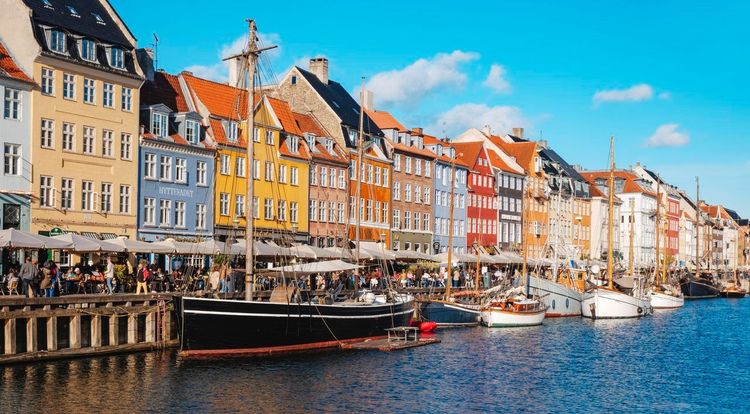
Spring and summer enjoy days that stretch until 10 p.m. in June, ideal for fitting in a canal ride after dinner or a swim at the Islands Brygge harbor baths. It's also high season: Tivoli is in full swing, the terraces of Nyhavn and the harbor are overflowing, and hotel prices rise noticeably compared to winter.
Autumn: colors and festivals
September and October offer a comfortable compromise: still mild temperatures, colorful parks around Assistens or the King's Garden, and tourist numbers that have dropped markedly compared to July-August. In mid-October, Halloween at Tivoli dresses the park with pumpkins and ephemeral decorations, before the pause that precedes the Christmas season.
How to get to Copenhagen and reach the city center

Copenhagen-Kastrup Airport (CPH) is served by direct flights from most European capitals, with journeys of 1.5 to 2 hours from Paris, Brussels or Geneva. It remains one of the best-connected airports to the city center in Northern Europe.
The regional train links the terminal directly to the central station (København H) in thirteen minutes, with a departure about every ten minutes. A one-way ticket costs around 5 euros, and contactless cards can be used through the public transport app (DOT Tickets) or at the station's ticket machines.
The M2 metro also serves the center from the airport in about fifteen minutes to Kongens Nytorv, handy if your hotel is closer to a station on this line than to the central station. A taxi costs around 35-45 euros for a 15-20 minute ride depending on traffic, an option best reserved for groups or late arrivals.
Getting around Copenhagen and the Copenhagen Card
Public transport and cycling
Copenhagen is mostly explored on foot or by bike: more than half of residents cycle to work, and day rental (around 15-20 euros) remains the fastest way to get from Nørrebro to Christianshavn without changing metro lines. For longer trips or in bad weather, the network of metro, buses and regional trains runs on a shared zone system, with tickets valid on all modes for a set time rather than for a single trip. The metro runs 24 hours a day, a real comfort when coming back from a dinner in Vesterbro.
Our Ryo article on must-do activities in Copenhagen also details how to link several neighborhoods in a single half-day by bike.
Is the Copenhagen Card worth it?
The Copenhagen Card Discover gives access to more than 80 museums and attractions (including Tivoli, Rosenborg, Christiansborg, the National Museum and a canal boat ride) as well as public transport across the whole region, airport included. The 2026 prices are 589 kroner for 24 hours (about 79 euros), 859 kroner for 48 hours (about 115 euros) and 1,039 kroner for 72 hours (about 139 euros) per adult. The break-even point is around three paid visits per day: if you do Christiansborg, Rosenborg and a boat ride on the same day, the card pays for itself easily. On the other hand, for a program centered on Christiania, the SMK and the alternative neighborhoods, where most things can be visited freely, it loses much of its appeal.
Where to stay in Copenhagen: the best neighborhoods
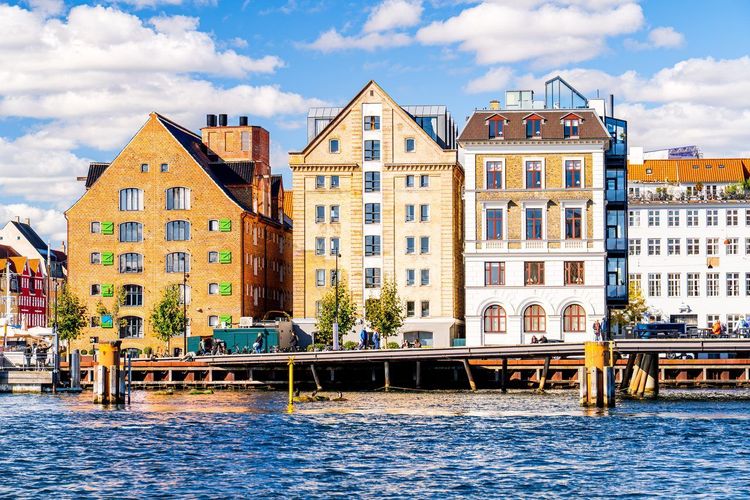
Indre By, the historic center around Strøget, puts everything within walking distance: Nyhavn, Christiansborg and Rundetårn are all reachable within ten minutes, at the price of hotels that are among the most expensive in the city.
Vesterbro offers a well-regarded compromise for those who want to stay close to the center without paying Indre By prices: the area around the central station and the Meatpacking District combines mid-range hotels, well-rated hostels and a nightlife that doesn't stop at 10 p.m.
Nørrebro, further out but connected to the center in a few metro stops, suits tight budgets and longer stays: cheaper rentals, neighborhood cafés and a residential atmosphere that is a change from the tourist flow of the center.
For families or stays that favor quiet, Christianshavn, on the other side of the canal, combines residential charm and immediate proximity to Christiania, with short bike rides to the center, without the tourist density of Nyhavn.
Where to eat in Copenhagen: brunch and Danish cuisine
Where to have brunch in Copenhagen
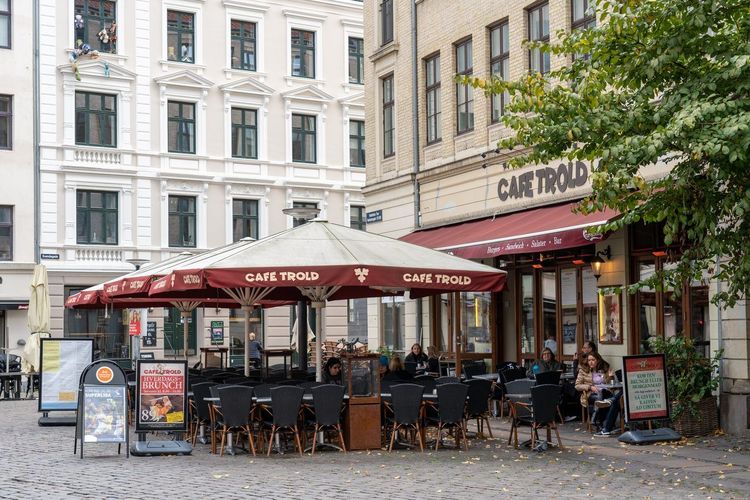
Danish brunch goes far beyond the classic eggs and bacon: expect platters of rye bread, pickled herring, cheeses and pastries to share, often served until 3 p.m. on weekends in the cafés of Vesterbro and Nørrebro. The most popular places are full by 11 a.m. on Saturdays, so it's best to book or aim for a weekday. For a quick snack, a kanelsnegl (cinnamon roll) from a neighborhood bakery does the job very well.
Where to eat Danish food: restaurants and local spots

Smørrebrød, an open-faced rye bread sandwich with toppings, remains the most affordable and most local lunch, around 8-12 euros each at the Torvehallerne halls rather than in a sit-down restaurant. For a more traditional dinner, the places in the Meatpacking District and Nørrebro offer contemporary Nordic cuisine at prices noticeably lower than in the center, where the density of tourists pushes up bills without always improving quality. Avoid restaurants that display their menu in seven languages right on the Nyhavn quay: prices there are calibrated for a one-time visit, not to make you want to come back.
Copenhagen with family or friends: adapting the program
Visiting Copenhagen with children
The city is one of the easiest in Europe to explore with children: short distances, wide sidewalks, bike lanes separated from traffic and cargo bikes for rent to carry the youngest. Tivoli is the obvious highlight, but the grassy ramparts of Kastellet, the canal boat ride and the changing of the guard at Amalienborg are just as popular. The National Museum has an exploration room for children, and entry is free for those under 18, as at the SMK. Just allow more margin in each day: keep to a single museum per day and alternate with free time outdoors, including the King's Garden playgrounds.
Copenhagen with friends
With friends, the program readily shifts toward the evening. The Meatpacking District and the bars of Vesterbro concentrate most of the nightlife, while Reffen, the street food market set up on the island of Refshaleøen in season, brings together dozens of stalls by the water. Renting bikes as a group often costs less than public transport to connect neighborhoods, and a visit to Home of Carlsberg, tasting included, makes a natural group stop. In summer, a swim at the free Islands Brygge harbor baths is the perfect end to a day of walking. The Ryo audio-guided tour also works very well in a group: everyone listens to the anecdotes on their own phone, without a guide dictating the pace.
Budget: how much does a 3-day stay in Copenhagen cost?
What budget to plan for 3 days
Copenhagen has a reputation as one of the most expensive capitals in Europe, and the numbers broadly confirm this image. Count on about 100-130 euros per day per person for a comfortable stay: 60-80 euros for half of a mid-range hotel room, 35-45 euros for meals (a smørrebrød at lunch, a more complete dinner in the evening) and 15-25 euros for transport and minor attractions. On a budget, with a hostel, picnics bought at the supermarket and getting around by bike, the daily budget can drop to around 60-70 euros. Over three days, plan for a range of 300 to 450 euros per person excluding airfare, adding the price of a Copenhagen Card if the program suits it.
What to do for free in Copenhagen
Several must-sees cost nothing: the Christiania neighborhood can be visited freely, the Kastellet ramparts and the King's Garden around Rosenborg remain open without a ticket, the Christiansborg tower offers its panorama for free and the changing of the guard in front of Amalienborg can be watched from the square. As for museums, the SMK permanent collection is free all year, the Glyptotek opens its doors for free on the last Wednesday of the month and the Thorvaldsens Museum every Wednesday. The National Museum, however, charges adults.
Day trips from Copenhagen: Malmö and beyond
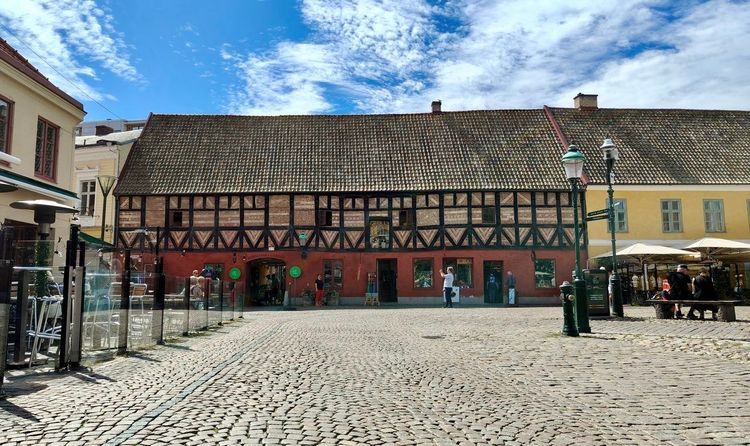
The Øresund Bridge connects Copenhagen to Malmö, in Sweden, in 35 to 40 minutes by direct train from the central station. Be sure to bring your ID card or passport: despite the Schengen Area, Sweden carries out identity checks, on the platform at Hyllie or directly on board the train. Malmö's historic center, around Lilla Torg and its half-timbered houses, can be explored on foot in two to three hours, with a round trip that still leaves time to return to Copenhagen for dinner.
Count on about thirty euros for the round trip by train, with tickets available from the Danish or Swedish transport app. The currency changes (Swedish krona, different from the Danish krone), so it's better to pay by card than to withdraw cash for half a day.
For a longer stay, Roskilde (Viking Ship Museum and UNESCO-listed cathedral, 25 minutes by train) and Helsingør (Kronborg Castle, the setting of Shakespeare's Hamlet, 45 minutes) can easily be combined as separate excursions. With a rental car, a real road trip in Denmark becomes possible by adding the Jutland peninsula or the island of Funen, Andersen's birthplace in Odense, for a format that goes well beyond the original three days but naturally extends the stay.



FAQ
Is Copenhagen an expensive city to visit?
Yes, noticeably more expensive than the European average, especially for accommodation and sit-down dining. However, eating at the food halls (Torvehallerne) or from supermarkets, getting around by bike rather than taxi, and choosing a well-calibrated Copenhagen Card can bring the daily cost down to a level comparable to other Western European capitals.
Which day are museums free in Copenhagen?
It varies from one museum to another: the SMK permanent collection is free every day, the Glyptotek is free on the last Wednesday of each month, and the Thorvaldsens Museum is free every Wednesday. The National Museum charges adults but is free for those under 18. Check each museum's official website before building your schedule around these days.
What currency is used in Copenhagen, and can you pay in euros?
Denmark uses the Danish krone (DKK), not the euro, despite being a member of the European Union. Bank cards are accepted almost everywhere, even for very small amounts, which makes withdrawing cash largely unnecessary for a three-day stay. A few tourist shops display prices in euros, but at an exchange rate that favors them.
What ID do you need to travel to Copenhagen?
For European Union citizens, a valid ID card or passport is enough, as Denmark is part of the Schengen Area. Keep it with you if you plan to visit Malmö: Sweden checks identities at the border. Citizens of other countries should check entry requirements with the Danish consulate before booking their flight.
How do you get from Copenhagen Airport to the city center?
The fastest option remains the regional train, which links the airport to the central station in thirteen minutes. The M2 metro is an equally simple alternative, taking about fifteen minutes, for anyone staying near a station on that line.
Can you visit Malmö from Copenhagen in one day?
Yes, and even in half a day: the direct train takes 35 to 40 minutes from the central station, and photo ID is mandatory. A full day leaves plenty of time to explore Malmö's historic center and return to Copenhagen for dinner the same evening.
Is Copenhagen in 3 days suitable for a family trip?
Absolutely: Tivoli, the grassy ramparts of Kastellet and the canal boat ride appeal to children as much as adults, and the distances between sites remain short. Just allow a little more margin in each day's schedule, and alternate dense museums (Glyptotek, National Museum) with freer outdoor time to avoid tiring the youngest travelers.
Three days in Copenhagen leave time to see the monarchy up close, to completely change atmosphere in Christiania and to end the stay in the city's most local neighborhoods, without ever feeling like you're chasing a list. The format works just as well in winter, cozy and hushed, as in midsummer, when the canals and terraces are in full swing until late in the evening.
To connect all these places without pulling out a map at every intersection, the Ryo audio-guided tour of Copenhagen remains the simplest solution: all you have to do is walk, the Ryo audio guide starts as you approach each point of interest, and the three-day program detailed above can be followed almost effortlessly.