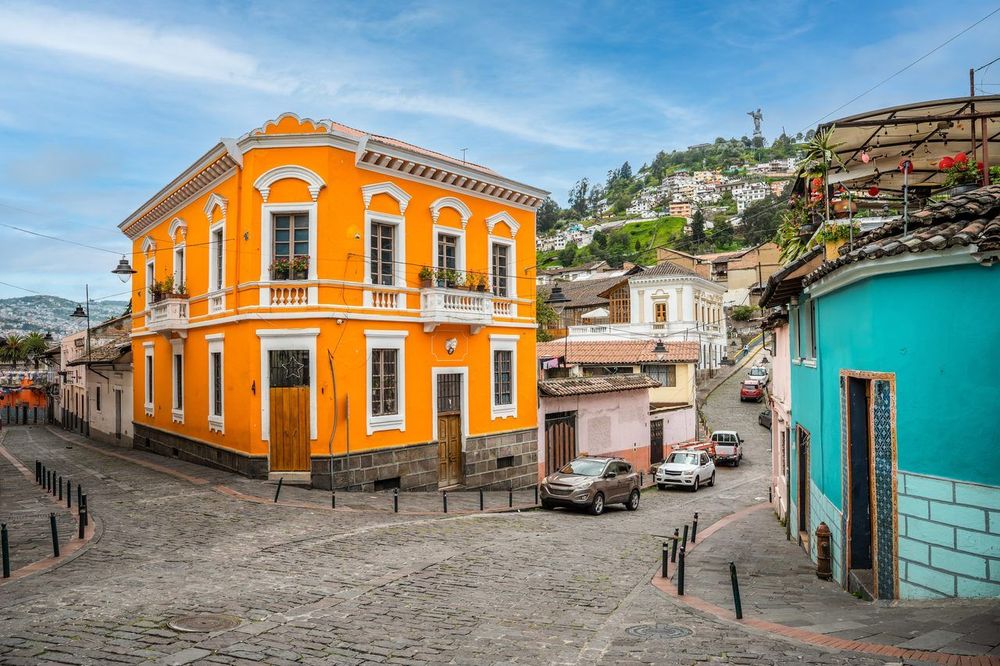
© Shutterstock
 Votre guide Ryo
A Weekend in Quito: The Complete 2026 Itinerary (Plus a Third Day)
At 2,850 meters above sea level, Quito plays a small trick on first-time visitors. The air feels thinner than expected, the midday sun can burn through a t-shirt in twenty minutes, and by 6 p.m. the same street turns cold enough for a jacket. A weekend in Quito works precisely because the city compresses so much into a walkable footprint: a colonial old town with gold-leafed churches, a cable car that climbs partway up an active volcano, and the literal equator line, all within roughly 45 minutes of each other by taxi.
In two days you can stand inside a 17th-century Jesuit church covered in gold leaf, eat a bowl of locro de papa for under three dollars at a market stall, ride a cable car past 4,000 meters, and plant one foot in each hemisphere at Mitad del Mundo, then still have an evening left over for canelazo and live guitar on Calle La Ronda. This guide keeps 48 hours in the city simple, the Old Town on day one, the TelefériQo and the equator on day two, and adds the food, lodging, transport and safety details a bare-bones itinerary tends to skip. If you want to trace the Old Town route before you land, Ryo's audio-guided tour of Quito walks you through the historic center with audio stories that play as you reach each spot, so you're not juggling a guidebook between stops.
Your Quito Weekend Itinerary at a Glance
Before getting into logistics, here's the shape of the weekend in one scan, useful for deciding whether to add a third day or head straight to Otavalo instead.
- Day 1, Historic Old Town. Morning at the Plaza de la Independencia and the Presidential Palace, midday lunch at Mercado Central, afternoon climbing the Basílica del Voto Nacional's towers and the viewpoint at El Panecillo, evening on Calle La Ronda for canelazo and chocolate con queso.
- Day 2, Andes and the Equator. Morning riding the TelefériQo cable car toward Cruz Loma on the slopes of Pichincha Volcano, afternoon at Mitad del Mundo and the Intiñan Equator Museum, evening in La Floresta or La Mariscal for dinner and a drink.
- Optional Day 3, Otavalo or more of Quito. Either a day trip north to Otavalo's textile market, with Cotacachi and Laguna Cuicocha tacked on, or a slower third day back in the capital catching the smaller museums and churches day one didn't fit.
Two days covers the essential sights of a weekend in Quito. Three days buys breathing room, which matters if the altitude slows you down on day one, as it does for a fair number of travelers flying in directly from sea level. None of this requires a rental car or a fixed-departure tour bus; everything below is reachable on foot or by a short taxi ride, which is part of why Quito works so well as a weekend rather than a sprawling week-long trip.
Day 1: Quito's Historic Old Town
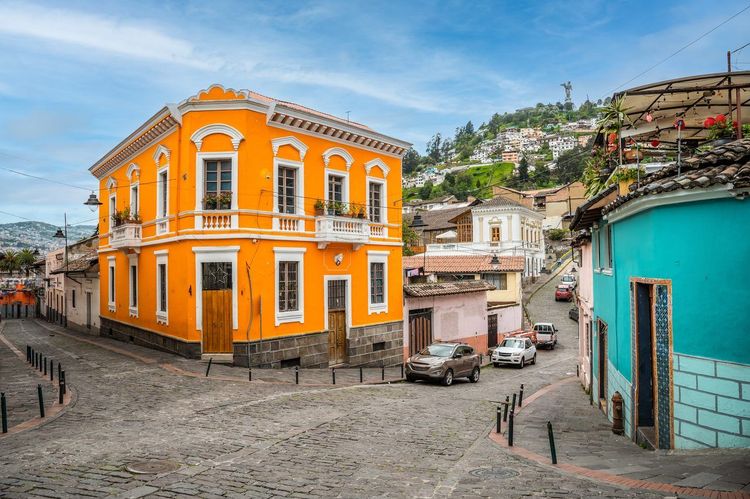
Plan on roughly seven or eight hours on your feet for day one, with a lunch break built in somewhere around the middle. The whole route sits inside Quito's historic center, one of the largest and best-preserved colonial old towns in the Americas and among the first sites UNESCO ever listed, back in 1978, alongside Kraków.
Morning: Plaza de la Independencia and the Presidential Palace
Start while the air is still cool and the plaza mostly empty of tour groups. The Plaza de la Independencia), also called Plaza Grande, sits at the historic and political center of the city, ringed by the Metropolitan Cathedral, the Archbishop's Palace and the seat of government. The plaza itself rarely stays quiet for long: by mid-morning, guided groups start arriving in clusters timed around the Monday ceremony, so getting there by 9 a.m. buys you a half hour of near-empty cobblestones and softer light for photos of the cathedral's twin bell towers across the square.
On the plaza's west side, the Presidential Palace)) runs free guided tours most weekday mornings, usually in groups of ten to fifteen people and lasting about 45 minutes. Bring your passport, since ID gets checked at the entrance and some slots fill up by late morning. Soldiers in dress uniform rotate through a changing-of-the-guard ceremony on Mondays at 11 a.m., modest in scale compared to similar ceremonies elsewhere, but worth timing your visit around if your schedule allows it.
A five-minute walk south leads to the Iglesia de la Compañía de Jesús), arguably the most photographed interior in the city. Construction started in 1605 and dragged on for 160 years, which is why the facade mixes Baroque, Moorish and indigenous motifs layered by generations of different builders. Inside, gold leaf covers the altar, columns and ceiling; estimates of the quantity vary wildly from one source to the next, but the effect is the same either way. Admission runs a few dollars, and photography inside is usually restricted, so plan to take it in rather than try to capture it; most visitors spend fifteen to twenty quiet minutes just looking up.
If you'd rather have context waiting at each stop instead of researching every plaque on your phone, Ryo's audio-guided tour of Quito covers the colonial core around this morning's stops, with a short audio story for each one, so the history arrives when you're actually standing in front of it.
Midday and Afternoon: Mercado Central, the Basílica del Voto Nacional and El Panecillo
By midday, head to Mercado Central for lunch among locals rather than tourists. The upstairs food stalls serve set lunches (almuerzos) for around three dollars, typically soup, a main with rice, and fresh juice. This is the place to try locro de papa, a thick potato and cheese soup usually topped with avocado and a slice of fresh cheese, often served alongside a small corn empanada. Picking a stall is mostly a matter of following the longest line of locals; turnover is fast enough that nothing sits around long.
From the market, it's roughly a 15-minute uphill walk, or a short taxi ride if the altitude is already slowing your legs, to the Basílica del Voto Nacional). Construction began in 1892 and, by local legend, will never officially finish; an old prophecy claims the world will end the day the basilica is completed, which locals tend to repeat half-jokingly and half-seriously. The real draw isn't the nave but the towers. For a small fee you can climb narrow stairs and ladders past gargoyles shaped like Galápagos iguanas and tortoises instead of the usual gothic grotesques, out onto a rooftop walkway with views across the Old Town's rooftops, and, for those with steady nerves, a short crossing over a wooden plank bridging the two front towers.
Save the last stretch of the afternoon for El Panecillo), the hill south of downtown topped by a 30-meter aluminum statue known as the Virgin of Quito, assembled in 1976 from roughly 7,000 individual pieces and visible from much of the city below. A taxi up is the safer option. Walking is technically possible, but the approach passes some less-trafficked streets, and robberies targeting tourists on foot have been reported there over the years, so it's not worth the savings for the fifteen or twenty minutes a taxi would cost. Once up top, the viewpoint lays out the entire historic center against the backdrop of Pichincha, which you'll be looking at from a very different angle tomorrow morning; ask the taxi to wait, since finding another one at the top isn't always straightforward.
Evening: Calle La Ronda's Street Life
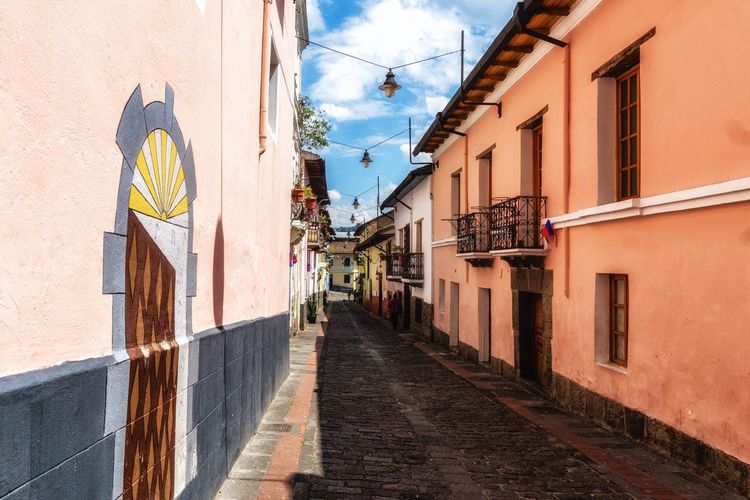
As the sun drops behind the Andes, Quito's evening crowd gathers on Calle La Ronda (Calle Morales, Quito 170401, Ecuador, rated 4.5/5 on Google (6.8K reviews)), a cobblestone pedestrian street lined with workshop-turned-bars, live music spilling out of open doorways, and vendors selling chocolate con queso, a cup of thick hot chocolate with a slab of fresh cheese dropped in to melt. It sounds like an odd combination on paper, and it converts most skeptics within a sip or two.
The street was once a fairly rough, semi-abandoned corner of downtown before a municipal restoration project in the mid-2000s turned it back into the artisan quarter it had been centuries earlier, when it was better known for printmakers and candle-makers than canelazo stalls. By day the same workshops sell leatherwork, ceramics and small prints; by night the same storefronts become the bars and snack counters that give the street its reputation.
Order a canelazo, the hot cinnamon-and-sugarcane-liquor drink that doubles as the unofficial beverage of Quito evenings, and find a bench near one of the small plazas where guitar duos tend to set up after dark. The pedestrian-only stretch stays reasonably safe and well lit on weekend nights, though it's worth keeping valuables close and sticking to the main run of the street rather than wandering into the quieter side alleys once the crowds thin out.
Day 2: TelefériQo, Pichincha Volcano and Mitad del Mundo
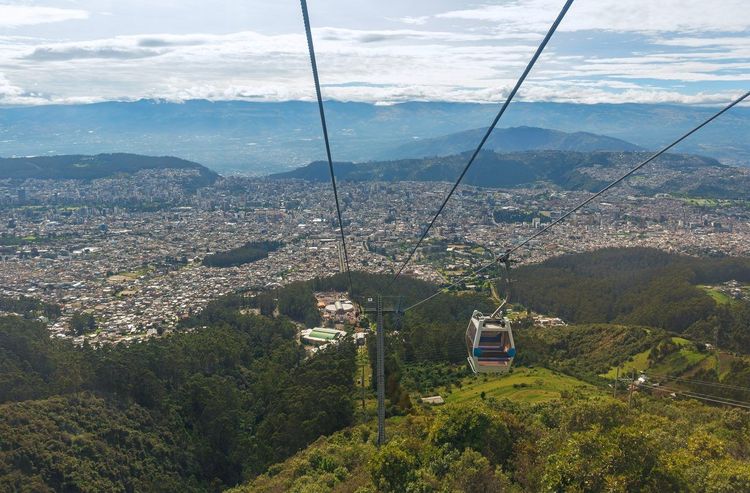
Day two trades colonial streets for altitude and latitude. Start early and grab breakfast on the way, since the TelefériQo) queue grows fast after mid-morning and clouds tend to roll in over Pichincha by early afternoon, which can cut visibility at the top to almost nothing by 2 p.m.
Morning: TelefériQo and Pichincha Volcano
The TelefériQo is Quito's cable car, lifting riders from a base station at roughly 3,117 meters to just under 4,000 meters near Cruz Loma in about eighteen minutes. Round-trip tickets cost $9 for foreign adults ($7 for under-18s). On Saturdays and Sundays the first cabins leave at 8 a.m., two hours earlier than Monday to Thursday, with the last weekend tickets sold at 5:30 p.m., which suits a weekend in Quito nicely. Temperatures at the top sit noticeably colder than downtown, often ten degrees Celsius lower, so bring a layer even if the morning started warm.
The ride itself climbs fast enough that some riders feel the altitude jump almost immediately, a light-headed sensation that usually passes within a few minutes of standing still at the top. Move slowly once you step off the cabin rather than rushing straight to the furthest viewpoint; the thin air at nearly 4,000 meters makes even a brisk walk feel like light jogging.
From Cruz Loma, hikers with time and a day or two of acclimatization already behind them can continue toward Rucu Pichincha, the closer and lower of the volcano's two summits at close to 4,700 meters, a four-to-six-hour round trip over loose volcanic scree. Most weekend visitors skip the summit attempt given how little time two days leaves for acclimatizing, and stick to the Cruz Loma viewpoint instead, where short horse rides are usually available for a few dollars and the panorama alone, Quito laid out below and Cotopaxi visible on a clear day, justifies the trip.
Pichincha is not one peak but two. Behind Rucu sits Guagua Pichincha, the taller and still-active summit whose 1999 eruption showered Quito in ash and closed the airport for days. You won't see its crater from Cruz Loma, but knowing it's there changes how you look at the ridge on the ride back down.
Afternoon: Mitad del Mundo and the Intiñan Equator Museum
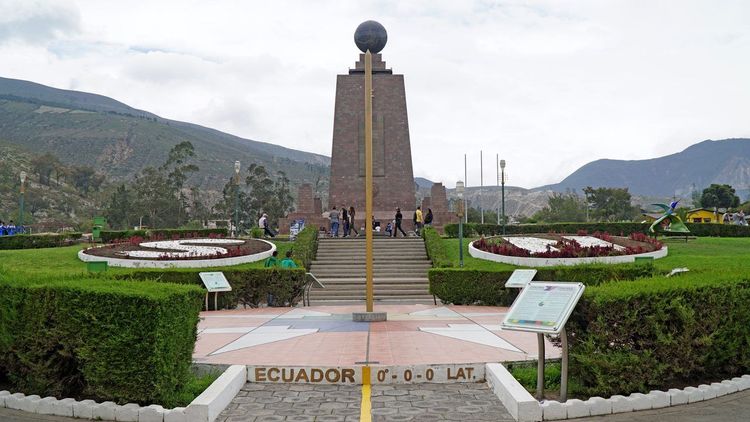
After lunch, taxi or bus roughly 45 minutes north to Mitad del Mundo), the monument complex marking the equator line with a 30-meter stone tower topped by a globe. GPS measurements later showed the true equator runs about 240 meters north of the monument, a detail staff there will cheerfully explain rather than hide, and the museums and crafts village around the tower, including an ethnographic museum covering Ecuador's indigenous groups and a small planetarium, still make for a pleasant couple of hours. General admission to the complex runs a few dollars, with the tower elevator and individual museums priced separately.
For the GPS-accurate line, walk or taxi a few minutes to the smaller, privately run Intiñan Equator Museum), where guides run through a set of hands-on demonstrations, balancing an egg on a nail head, water supposedly draining in opposite directions a few meters apart, and a noticeable wobble standing with eyes closed directly on the line. Scientists debate how much of this is real equatorial physics versus showmanship, but the one-hour guided visit is genuinely fun regardless, and it runs noticeably less crowded than the main monument next door.
Evening: La Floresta and Mariscal Nightlife
Back in the city, La Floresta (Quito, Ecuador) makes a relaxed option for dinner: a bohemian, tree-lined neighborhood of art galleries, street murals and specialty coffee shops that has quietly become Quito's creative quarter over the past decade, popular with the city's own design and film crowd as much as with visitors.
For something livelier, La Mariscal (Mariscal Sucre, Quito, Ecuador), sometimes nicknamed Gringolandia, centers on Plaza Foch and its ring of restaurants, bars and hostels; it's the area most short-stay visitors end up basing themselves, for better or worse. Weeknights stay fairly calm, while weekends bring crowds and louder music spilling onto the square itself, so pace your evening accordingly if you've got an early morning planned for day three. Either neighborhood works for a second dinner built around something other than Ecuadorian food, ceviche aside, since both have absorbed a fair amount of international cooking over the past several years.
Extend Your Weekend: Otavalo Market or a Third Day in Quito
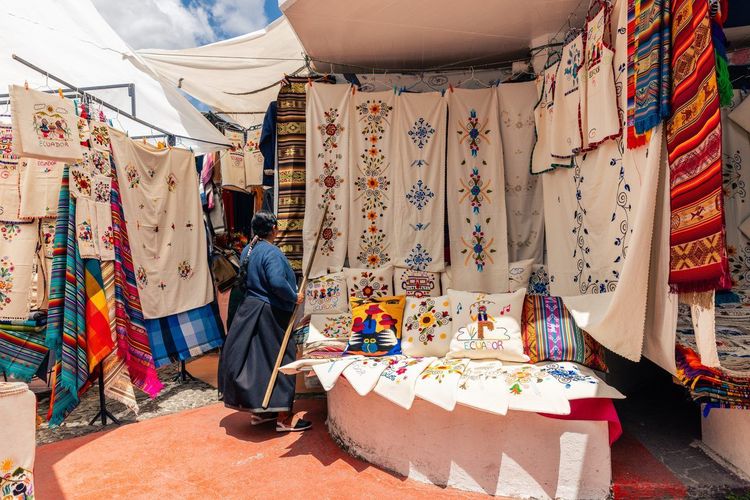
Plenty of Quito itineraries stretch to three days, but a weekend means two. Everything above fits comfortably into that window. A third day is an upgrade, not a requirement, and it splits into two very different options depending on what you're after, so pick based on energy levels rather than obligation.
Day Trip to Otavalo Market
Otavalo, roughly two hours north of Quito by car or shared van, hosts one of South America's best-known indigenous markets, centered on the Plaza de los Ponchos) and its rows of woven textiles, leather goods and silver jewelry. Saturdays bring the full market, sprawling well beyond the plaza into surrounding streets and absorbing most of the town center; Wednesdays run a smaller version if your schedule only allows a weekday. Bargaining is expected and generally friendly rather than tense, a modest back-and-forth rather than an aggressive haggle.
With a car or driver, it's easy to stack two nearby stops onto the same day. Cotacachi, a short drive from Otavalo, specializes in leather workshops and storefronts selling jackets, bags and boots at a fraction of what similar quality costs elsewhere. Laguna Cuicocha (Reserva Cotacachi-Cayapas, Cotacachi 100150, Ecuador, rated 4.7/5 on Google (1 284 avis)), a crater lake inside the Cotacachi-Cayapas reserve, offers a flat rim-trail hike with views over two small islands and, on clear days, Cotacachi volcano itself, plus short boat tours across the water for travelers who'd rather sit than hike the full loop.
Budget the full day for this trip, leaving Quito by 7 or 8 a.m. to make the most of market hours. Organized tours run from roughly 35 to 60 dollars per person including transport, while a private driver costs more but allows flexibility on timing, useful if you want to linger at Cuicocha past the standard tour schedule or skip Cotacachi if the market alone has already filled your bags.
A Third Day Exploring More of Quito
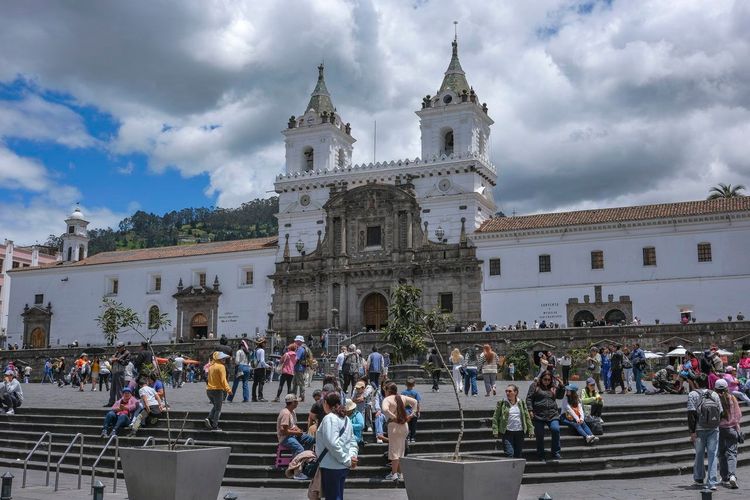
If Otavalo doesn't fit, or you'd rather slow down instead of adding another travel day, a third day back in the city works just as well. The Old Town alone holds more small museums, convents and churches than two days ever cover: the Casa del Alabado museum of pre-Columbian art, the Church and Convent of San Francisco with its sprawling cloisters, and the colonial art collection at the Museo de la Ciudad all reward a second, less rushed pass through downtown.
A slower third day also leaves room to revisit anything the altitude cut short on day one, whether that's the Rucu Pichincha hike from Cruz Loma or simply a longer lunch at Mercado Central without the itinerary pulling you toward the next stop. Travelers continuing on to the Galápagos or the Amazon basin often use this extra day as a decompression stop between flights rather than a packed sightseeing day, which is a perfectly reasonable way to spend it too.
What to Eat in Quito
Quito's food culture runs on markets and set-menu lunches more than destination restaurants, which keeps costs low and the flavors distinctly local.
Local Dishes to Try
Locro de papa anchors most Quito menus: a thick potato soup blended with cheese, typically finished with avocado slices and served with a side of corn empanada or toasted corn kernels. Chocolate con queso, hot chocolate with a slab of fresh cheese melting inside, is a Calle La Ronda specialty best tried in the evening when vendors have it freshly made. Beyond those two signature dishes, look for hornado (slow-roasted pork served with hominy and salad), empanadas de viento (cheese-filled, deep-fried and dusted with sugar), humitas (steamed corn cakes wrapped in husks, closer to a savory corn cake than a traditional tamale), and canelazo as the standard evening drink. Cuy, roasted guinea pig, shows up more often outside the city in the highlands than on central Quito menus, but it's worth knowing the name if you spot it on a market stall near Otavalo.
Where to Eat by Time of Day
Mornings call for a simple café and fresh juice; most Old Town corners have a small panadería selling bread and coffee for a dollar or two, and a croissant-and-coffee combo rarely runs past three dollars. For lunch, Mercado Central's upstairs stalls remain the best value, set menus around three dollars that include soup, a main and juice, with locals and workers far outnumbering tourists at the busiest counters. Evenings shift toward La Ronda for street food and drinks, or La Floresta and La Mariscal for sit-down restaurants spanning everything from ceviche to Italian and Middle Eastern options that have moved in alongside the bars over the past several years, plus a growing specialty coffee scene in La Floresta worth a stop even if you're not staying nearby.
The walk from Mercado Central to Calle La Ronda is short enough to do on foot even after a full lunch, and Ryo's audio guide covers the streets in between, useful if you'd rather listen than read a plaque mid-bite.
Where to Stay in Quito
Where to base yourself depends mostly on how much of the itinerary above you want within walking distance versus a short taxi away, and on how much nightlife you want right outside your door.
Staying in the Old Town puts you steps from day one's entire route, the Plaza de la Independencia, Mercado Central and Calle La Ronda, in restored colonial buildings converted into boutique hotels; a handful, like Casa Gangotena overlooking San Francisco Plaza, sit directly inside the historic core and charge accordingly. The tradeoff is fewer restaurant options after dark and a quieter, more residential feel once the day-trip crowds clear out, which some travelers prefer and others find isolating by 9 p.m.
La Floresta and La Mariscal, by contrast, sit closer to day two's evening plans and keep you within reach of more restaurants, nightlife and modern hotel chains, at the cost of a 15 to 20 minute taxi into the historic center each morning. Budget travelers tend to gravitate toward La Mariscal's cluster of hostels near Plaza Foch, where dorm beds run well under twenty dollars a night and private rooms stay affordable too.
A concrete mid-range example: the Hilton Colón Quito (Av. Amazonas N19-14 y Av. Patria, Quito 170136, Ecuador, rated 4.6/5 on Google (6 379 avis)), on Avenida Amazonas facing El Ejido park, at the southern edge of La Mariscal, works well for travelers who want reliable amenities and an easy taxi to both zones without committing fully to either neighborhood's character.
Whichever neighborhood you book, Ryo's audio-guided tour of Quito runs from your phone: an Old Town base lets you press play the moment you step outside, while La Floresta or La Mariscal guests simply add a short taxi ride to the historic center first.
Best Time to Visit and How Many Days You Need
Quito's equatorial location means the weather stays fairly consistent year-round rather than swinging between hot and cold seasons; the real variable is rain. Two loosely defined dry seasons, June through September and mid-December through January, bring the clearest mornings and the best odds of unobstructed views from El Panecillo and the TelefériQo. Daytime highs hover around 19 to 21°C regardless of month, with nights dropping into the single digits Celsius, so pack layers rather than planning around a single best temperature window.
Shoulder months, March through May and October through November, bring more frequent afternoon showers but rarely wash out an entire day; mornings tend to stay clear even in the rainier stretches, which matters since this itinerary front-loads outdoor sightseeing into the morning hours anyway.
As for how many days a weekend in Quito really needs: two is the minimum that still covers the Old Town and the TelefériQo and Mitad del Mundo day without rushing. Three days works better if you're arriving directly from sea level, since the extra day doubles as a buffer against first-day altitude fatigue, or if Otavalo is non-negotiable. Travelers combining Quito with the Galápagos or the Amazon basin often treat these two days as a bookend rather than the main trip, which is a reasonable way to use this itinerary too.
Getting Around Quito
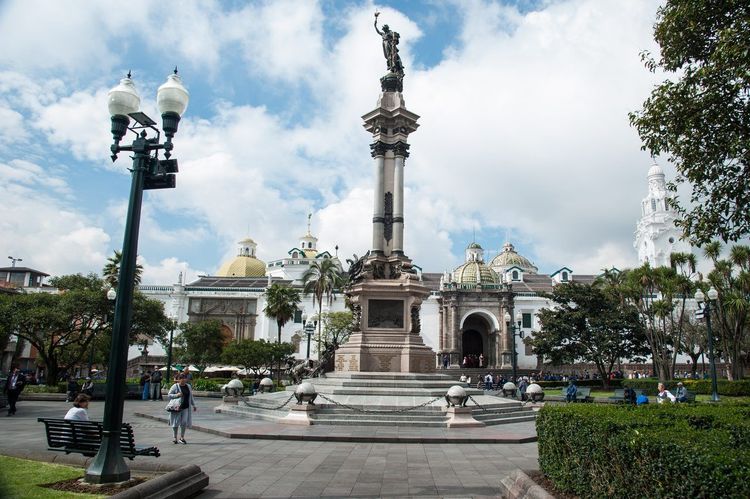
The Old Town is compact enough to cover entirely on foot once you're there, though the altitude makes even gentle slopes feel steeper than they look on a map. Distances between the main sites are short: Plaza de la Independencia to Mercado Central runs about 10 minutes walking, and on to the Basílica another 10 to 15.
For longer hops, El Panecillo, the TelefériQo base, Mitad del Mundo, La Floresta and La Mariscal, taxis and rideshare apps are the practical choice. Official taxis and app-based rides are inexpensive by North American or European standards, typically a few dollars for most in-city trips, and far more reliable after dark than walking between neighborhoods. Quito also runs a single-line metro, opened in 2023, plus the older Trolebús and Ecovía bus corridors, useful for budget travelers but not essential if you're only in town for a weekend.
Arriving by air, Mariscal Sucre International Airport sits 45 minutes to an hour from the city center, depending on traffic, by taxi or the airport express bus, which runs considerably cheaper but on a fixed schedule rather than on demand. Renting a car for the weekend itself is rarely worth it: parking in the Old Town is limited, traffic patterns take some getting used to, and the savings over taxis rarely justify the hassle unless you're also driving to Otavalo independently.
Prefer not to plan transport logistics stop by stop? A self-guided audio route handles the sequencing for you, so you're following a set path on foot rather than working out taxi routes between each site.
Safety Tips for a Weekend in Quito
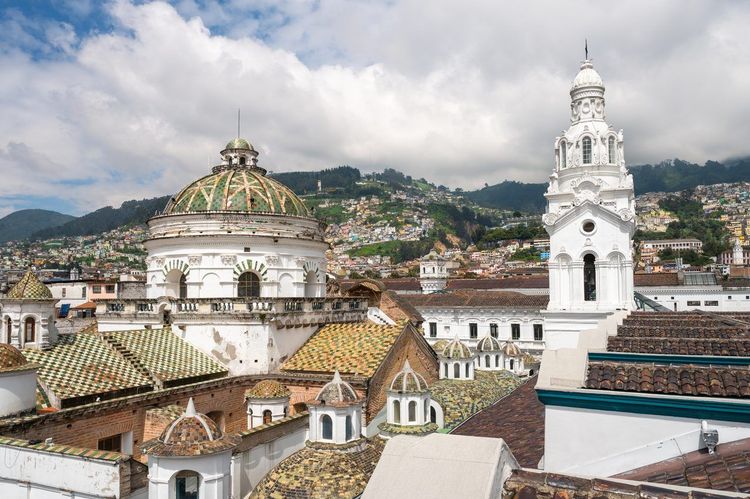
Quito's safety reputation varies sharply by neighborhood and time of day, which matters more than any single city-wide rating. The Old Town stays well patrolled during daylight hours but thins out and becomes less predictable after dark outside of La Ronda's lit, pedestrian stretch; take a taxi back to your hotel after an evening out rather than walking, even if the distance looks short on a map. Pickpocketing in crowded tourist spots, plazas, markets and the TelefériQo queue among them, is the most common issue reported by visitors, so keep bags zipped and phones out of back pockets.
Distraction scams, someone spilling a drink or pointing out a stain on your clothing while an accomplice goes for your bag, turn up occasionally around the busiest plazas; a polite but firm no and continuing to walk handles most of them without incident. It's also worth saving the local emergency number (911 works nationally in Ecuador) and keeping a photo of your passport and travel insurance details on your phone rather than carrying the originals everywhere.
Altitude sickness, which locals call soroche, is the other practical concern, separate from street safety but just as likely to affect your weekend. At 2,850 meters, some travelers feel mild symptoms, headache, shortness of breath, fatigue, especially on day one before the body adjusts. Hydrate heavily from the moment you land, go easy on alcohol the first night (which cuts directly against the canelazo plan on Calle La Ronda, so pace it), and treat the first few hours as a deliberately slow start rather than diving straight into a steep hike.
Practical Tips and Budget for Your Quito Weekend
Ecuador uses the US dollar, which simplifies budgeting for American travelers and removes a currency-exchange step for everyone else. A realistic daily budget for a comfortable, mid-range weekend runs somewhere between 60 and 90 dollars per person: roughly 30 to 40 for a hotel room split two ways, 15 to 20 for meals across the day, and the rest for taxis, entrance fees and the TelefériQo ticket. Backpackers staying in hostels and eating mostly at markets can cut that closer to 30 to 40 dollars a day.
Entrance fees stay modest across the board: a few dollars each for the Basílica towers, the Presidential Palace tour (free, but tip-worthy for the guide), Mitad del Mundo's complex, and the Intiñan museum. Carry small bills, since many market vendors and smaller attractions can't break a large note, and tipping 10 percent at sit-down restaurants is appreciated but not strictly obligatory the way it is further north.
Pack for both a desert afternoon and a mountain evening in the same day: sunscreen and a hat for the midday sun at altitude, where UV exposure runs higher than the temperature suggests, plus a warm layer for evenings and the TelefériQo summit. A local SIM card or eSIM is easy to set up at the airport for a few dollars and makes navigating taxis and translating menus considerably smoother than relying on hotel wifi alone.
You don't need a paid guided tour to cover this itinerary. A rough map, a list of opening hours, and a bit of patience with the altitude get most travelers through both days independently; a self-guided audio walk like Ryo's can fill the same role as a hired guide without the scheduling constraints of a group tour, letting you linger at El Panecillo or cut the Otavalo add-on short if the rest of the weekend runs long.



FAQ
How many days do you need for a weekend in Quito?
Two full days cover the Old Town and the TelefériQo and Mitad del Mundo route comfortably. Add a third day if you're flying in from sea level and want a buffer for altitude adjustment, or if a day trip to Otavalo is on your list.
Is Quito safe for tourists right now?
Quito is generally safe for visitors who stick to well-trafficked areas during the day and take taxis rather than walking between neighborhoods after dark. Petty theft in crowded tourist spots is the most common risk; violent crime against tourists in the areas covered by this itinerary is rare but not unheard of, so standard city precautions apply.
What is the best time of year to visit Quito?
June through September and mid-December through January bring the clearest skies and least rain, which matters most for views from El Panecillo and the TelefériQo. Temperatures stay fairly steady year-round, so timing is more about rain than heat or cold, and even the rainier shoulder months tend to keep mornings clear.
Do I need a guided tour to see Quito in a weekend, or can I do it independently?
No guided tour is strictly necessary. The sites in this itinerary are straightforward to reach by taxi or on foot, and a self-guided audio tour can provide the same context a hired guide would, on your own schedule and without waiting on a group.
Can you visit Mitad del Mundo and do a day trip to Otavalo in the same weekend?
It's tight but possible if you treat Mitad del Mundo as part of day two's afternoon (as this itinerary does) and reserve a full separate day for Otavalo, since both trips involve meaningful travel time and don't combine well into a single outing.
Is Quito's altitude a problem for a short weekend visit?
It can be for travelers arriving directly from sea level. Mild symptoms, headache, fatigue, shortness of breath, are common on day one. Hydrating well, limiting alcohol the first night and easing into physical activity rather than starting with a steep hike usually resolves it within a day.
Two days in Quito is enough to see why the city keeps showing up on South America itineraries that otherwise skip straight to the Galápagos or the Amazon. The combination of a walkable colonial core, a cable car into volcano territory and the equator line itself, all reachable without a rental car, is hard to match elsewhere on the continent. Whether you stick to the two-day version above or stretch it into a third day with Otavalo, Ryo's audio-guided tour of Quito gives you a structured way to walk the Old Town at your own pace, with the history filled in as you go rather than left for later research.