© Shutterstock
 Votre guide Ryo
Getting Around Liverpool Without a Car: A Practical 2026 Guide
At Lime Street station, the taxi rank is often emptier than the Wirral Line platform buried below it, and that tells you most of what you need to know about Liverpool without a car. The city's historic core grew around its waterfront and a tight grid of Georgian streets long before anyone drove through them, and the four Merseyrail stations under the centre still move more people than the roads above. Skip the hire car and you get Liverpool ONE and the waterfront on foot, four city-centre train stations that reach Birkenhead, Southport and the coast, a ferry crossing that has existed in one form or another since the Middle Ages, and day trips to Formby's red squirrels, the cast-iron figures standing in the tide at Crosby Beach and the model village at Port Sunlight, all a single train ride away. A Saveaway ticket can cover a whole off-peak day of trains, buses and the ferry for less than one taxi fare across town, and Bus 500 links the airport to the city centre without a rental desk in sight. Ryo's audio-guided walking tour of Liverpool threads through Liverpool ONE and the waterfront on foot, which is as good a place as any to start planning a car-free visit.
Walking around central Liverpool
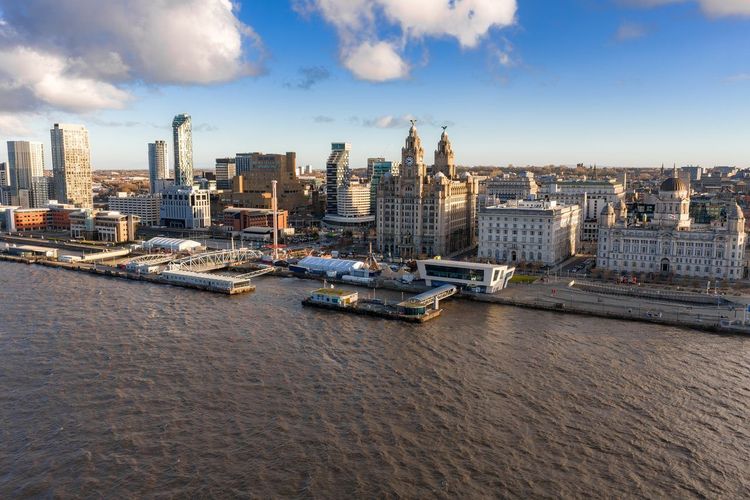
Liverpool's old core is smaller than most visitors expect. From the waterfront to Liverpool ONE) and up to the cathedrals on the ridge above Hope Street, almost everything sits inside a loop you can walk in under half an hour, no bus ticket required.
Liverpool ONE is usually your first stop: an open-air shopping and leisure quarter built into the slope between the city centre and the Strand, with a cinema, a department store and dozens of restaurants arranged around terraced gardens. It also sits a minute's walk from Liverpool Central station, which makes it a natural reset point between a morning on foot and an afternoon on the trains.
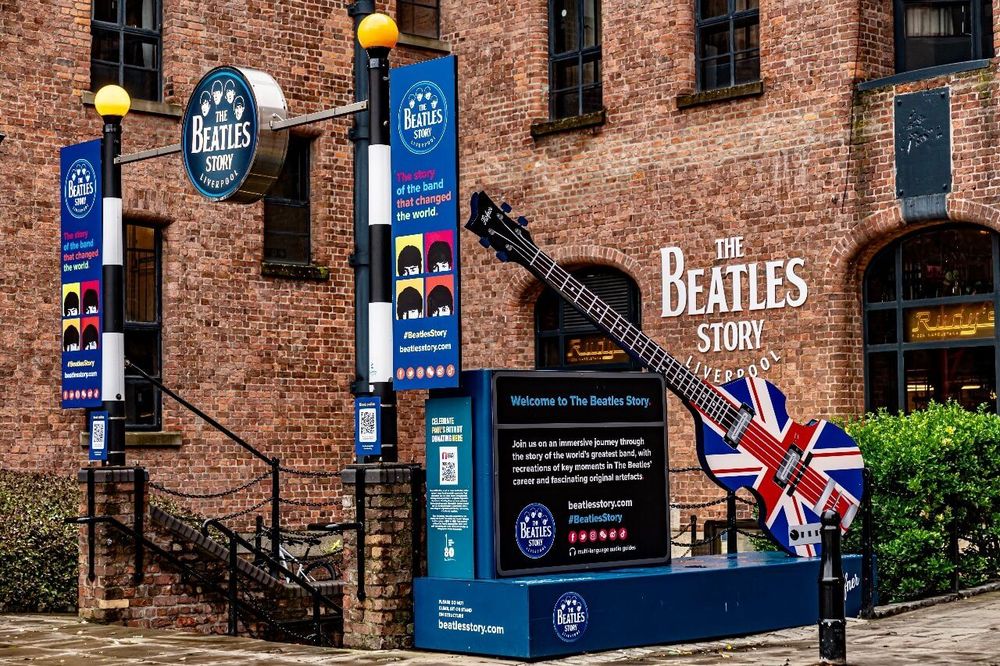
Below Liverpool ONE, the waterfront opens out at the Pier Head and the Royal Albert Dock), a row of Grade I-listed Victorian warehouses now holding museums, galleries and the Beatles Story. Walking between the two takes about ten minutes and gives you a better sense of the city's shipping history than any bus window could.
Up the hill, Hope Street links the city's two cathedrals: the Gothic Revival Liverpool Cathedral), the largest cathedral building in Britain, and the circular, modernist Liverpool Metropolitan Cathedral (Mount Pleasant, Liverpool L3 5TQ, rated 4.6/5 on Google (5 168 avis)) at the opposite end. It's a fifteen-minute uphill walk from the water, and the climb is the only real effort the centre asks of you.
Why does walking work so well here? Because the sights cluster on one compact slope between river and ridge, and the streets in between (Bold Street, Castle Street, the Ropewalks) are worth seeing in their own right. If you'd rather not work out the route yourself, Ryo's audio-guided tour of Liverpool's waterfront route follows roughly this same path through Liverpool ONE and along the water, with a short audio story triggered at each stop so you get the history without stopping to read a plaque.
Merseyrail trains: choosing the right city-centre station
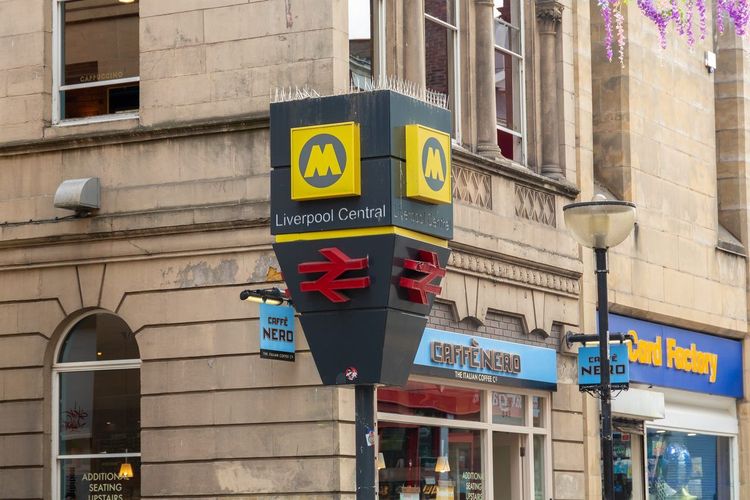
Four underground stations serve the city centre, and picking the right one saves you a long walk at the other end: Liverpool Lime Street, Moorfields, James Street and Liverpool Central (Ranelagh Street, Liverpool L1 1QE, rated 4.4/5 on Google (110 avis)).
Lime Street is the one most visitors arrive at first: its low-level platform on the Wirral Line loop sits beneath the mainline station that receives trains from London, Manchester and beyond. James Street, closest to the river, is also on the loop and is the natural choice for heading under the Mersey to Hamilton Square, Port Sunlight and the rest of the Wirral. Moorfields serves both lines and is handy for the business district. Liverpool Central, the busiest of the four, also carries both lines and sits right by Liverpool ONE, which makes it the most useful single station if you're only going to learn one.
The tunnels linking these stations date back to a 1970s project known locally as the Loop and the Link, which tied the Wirral and Northern lines together under the city centre. It's part of why the system still feels more like a small metro than a conventional British branch line.
For most journeys longer than a short walk, Merseyrail is simply the fastest option Liverpool has. Trains run every few minutes through the centre at busy times. The Northern Line heads north to Southport, Ormskirk and Kirkby and south to Hunts Cross; the Wirral Line runs to New Brighton, West Kirby, Chester and Ellesmere Port. Going from one line to the other means a quick change at Moorfields or Central.
Merseyrail's Tap & Go is the simplest way to pay: tap a contactless card or phone on the reader at the start and end of your journey, and the system works out the fare, with daily caps so you never pay more than the equivalent day ticket. No zones to study, no queue at the machine. It covers Merseyrail trains; buses have their own contactless system.
Step-free access varies station by station. Lifts serve the platforms at several central stations, including Moorfields and James Street, but not every platform across the four is step-free. If you're travelling with a wheelchair, a pushchair or heavy luggage, check the specific station's access on Merseyrail's website rather than assume all four behave the same way.
Both Liverpool Central and Moorfields sit a short walk from the stretch of city centre that Ryo's audio-guided tour of Liverpool covers, so arriving by train from the Wirral or the coast drops you almost directly onto the route rather than at the edge of it.
Buses across Liverpool and beyond
Where Merseyrail doesn't reach, the bus usually does. Arriva and Stagecoach have long run the bulk of routes across the city and out into Knowsley, St Helens and the Wirral, covering suburbs and cross-city journeys that would otherwise mean two train changes.
That network is changing shape. The Liverpool City Region Combined Authority is bringing buses under public control through franchising, a model similar to Manchester's Bee Network, with the first franchised services phased in from 2026 and routes, timetables and fares gradually coming under one brand. Expect route numbers to stay familiar for a while even as liveries change, and check the current timetable if you used the network on a previous visit.
You'll mostly use two hubs. Liverpool ONE bus station, on Canning Place by the waterfront, handles many routes heading south, including towards the airport corridor, while Queen Square, near Lime Street, serves routes heading north and east. Routes toward Everton's new ground and the northern docks also pick up along the dock road.
Buses are the practical answer for a few short hops that trains handle badly, including the run between the centre and Anfield on a non-match day, or out to the Baltic Triangle's bars and studios south of the centre. Fares stay low too: single bus fares across the city region are capped, which keeps short trips cheap.
So which transport suits which journey? As a rule of thumb: Merseyrail wins for anything along its lines, especially the coast and the Wirral; buses fill the gaps between stations and reach suburbs rail skips entirely; the ferry rewards scenery over speed; and the city centre itself is still best covered on foot.
The Mersey Ferry for river crossings and skyline views
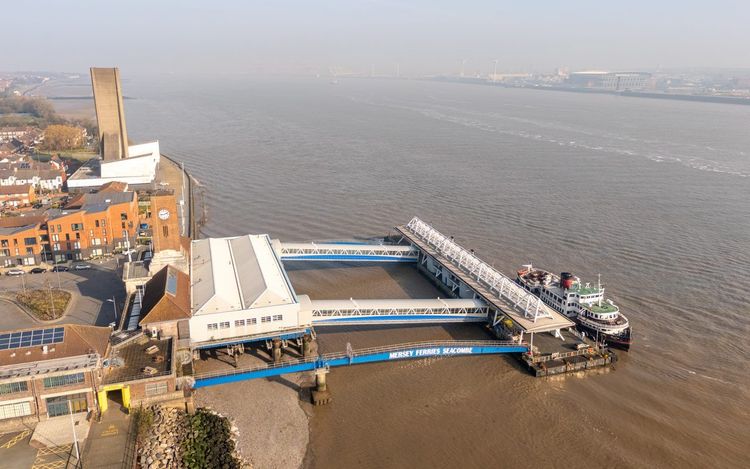
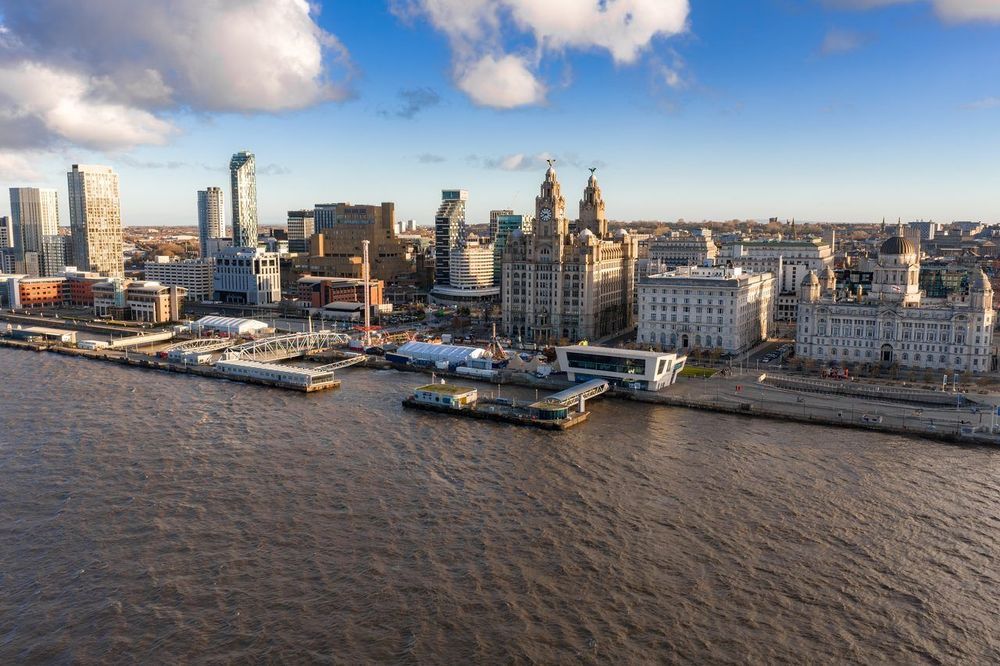
For the view alone, the Mersey Ferry is worth the fare. The crossing from Pier Head (Georges Parade, Liverpool L3 1BY, rated 4.8/5 on Google (41 avis)) to Seacombe takes around ten minutes and puts the whole waterfront, the Liver Building's clock towers included, right in front of you rather than off to one side the way a tunnel journey would.
It's genuine transport, used by commuters crossing to the Wirral at peak times, but it runs on a published timetable rather than turning up whenever you fancy one. Crossings thin out considerably outside the commuter peaks, so check the current Mersey Ferry times and fares before you build a day around it, particularly if the return leg matters.
Outside the commuter runs, the River Explorer cruise turns the crossing into a sightseeing loop of around fifty minutes, with commentary on the river's history. Tickets can be bought at the Pier Head terminal or online in advance; if you plan to use a Saveaway on the ferry, confirm at the terminal which sailings it covers.
Part of Ryo's audio-guided Liverpool tour's Pier Head stop runs right along this stretch, with an audio story covering the waterfront's history at more or less the spot where the ferry pulls in, so it's an easy add-on either side of a crossing.
Day trips without a car: Formby, Crosby Beach and the Wirral coast

Some of the best reasons to leave the city centre are a single Merseyrail ticket away, no car needed at either end.
Heading north out of Moorfields or Liverpool Central on the Southport (Merseyside PR8) line, the first stop worth getting off for is Crosby Beach (Mariners Road, Crosby, Liverpool L23 6SX), around fifteen to twenty minutes away at Blundellsands & Crosby (or Waterloo) station and a short walk from the sand. This is where Another Place, Antony Gormley's installation of one hundred cast-iron figures, stands scattered across the tideline, some half-submerged depending on when you arrive. Check the tide times before you go; at high water, many of the figures disappear.
Stay on the same line and you reach Formby (Liverpool L37 1LJ) and Freshfield, the two stations closest to the pinewoods where the National Trust looks after one of England's few remaining red squirrel populations. Freshfield is the nearer of the two, and the Sefton Coastal Footpath runs along the dunes here, linking beach and woodland trails. Allow around twenty minutes on foot from the station, more once you're in soft sand.
Formby is a good example of a wider pattern: the National Trust lists a number of its places in Lancashire, Cheshire and Greater Manchester as reachable without a car, and several, Formby included, are a short walk from a station. If you enjoy coast and countryside, it's worth browsing that list before you plan a second day.
Ride the line to its end and you land in Southport, a Victorian seaside resort with the second-longest pier in Britain, a wide promenade and Lord Street's glass-canopied shopping arcades. It's around forty-five minutes from the city centre by train, which makes it a full day out rather than an afternoon add-on.
The Wirral side of the river rewards a different line. Take the Wirral Line from James Street or Liverpool Central under the Mersey and the first stop is Hamilton Square (Hamilton Square, Birkenhead CH41 5AL), which opens straight onto Birkenhead's grand nineteenth-century square, famous for having more Grade I-listed buildings in one place than anywhere in England outside Trafalgar Square. A few stops further along the Chester line, Port Sunlight) station drops you in the model village built by Lever Brothers for their soap factory workers, now a conservation area of cottages and gardens around the Lady Lever Art Gallery (Port Sunlight Village Road, Wirral CH62 5EQ, rated 4.7/5 on Google (2 634 avis)) and its Pre-Raphaelite collection.
West Kirby and New Brighton, at the ends of the other two Wirral Line branches, make easy alternatives if you'd rather have sea air: West Kirby's beach looks out toward Hilbre Island, reachable on foot only at low tide with a careful eye on the tide tables, while New Brighton's seafront promenade and lighthouse are a short walk from its own station.
If you're sequencing a trip, do the city centre first. Finishing Ryo's audio-guided tour of Liverpool before heading out to Formby or the Wirral gives you context on the city's shipping and migration history that makes the day trips land better.
Football match days: getting to Anfield and Goodison without a car
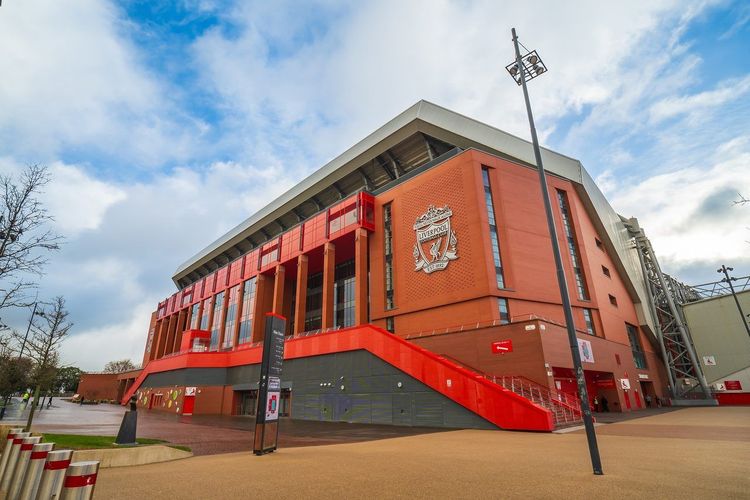
On match days, driving to either club's ground is close to pointless anyway: nearby streets are restricted to residents and parking is scarce.
Anfield, home to Liverpool FC, sits about two miles north-east of the centre. The match-day Soccerbus runs from Sandhills station on the Northern Line directly to the stadium, and regular bus routes from the city centre pass within a short walk. Budget closer to forty minutes door to door than the fifteen a taxi might promise, since road closures start well before kick-off.
Everton left Goodison Park in 2025, after more than a century on the same ground, for the new 52,888-seat Everton Stadium (Regent Road, Liverpool L5 9SH, rated 4.5/5 on Google (2 327 avis)) at Bramley-Moore Dock on the waterfront. Goodison hasn't gone quiet: it is now home to Everton Women. The new stadium is an easier trip in some ways: around half an hour's walk north from the Pier Head along the dock road, less from Sandhills station, with extra match-day services from the city centre.
Either way, plan your route home before kick-off. Thousands of fans converge on a handful of streets within the same half hour, and that's a poor moment to be figuring out which bus stop you need.
Cycling and e-scooters around the city
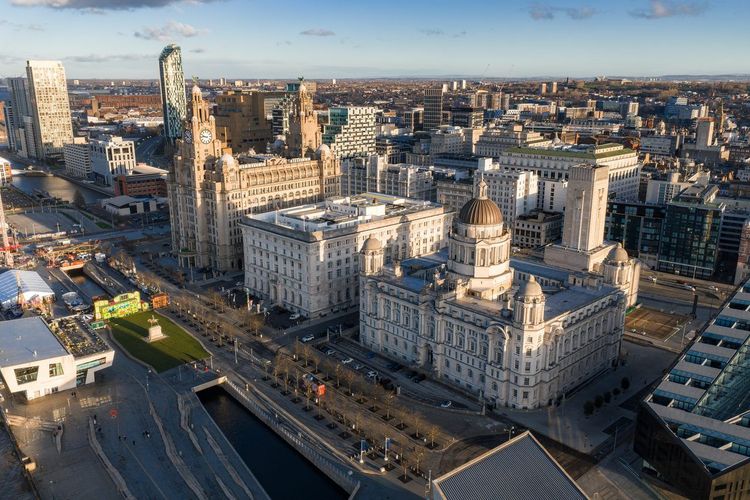
Liverpool isn't flat once you leave the waterfront, but cycling still works for plenty of journeys, especially along the riverside promenade, which avoids the steepest hills entirely.
Combining a bike with public transport is the smart move for reaching Formby's trails or the Wirral coast without pedalling the whole way. Merseyrail carries bikes on its trains subject to space, and folding bikes are the easiest option at busy times. Arrive early at the busier central stations.
For shorter hops, Liverpool has run a rental e-scooter scheme in the city centre since 2020, operated through an app with parking in marked bays and speed limits in busy areas. Availability and coverage change from year to year, so check the app before counting on one. The Bus Yard (Baltic Triangle, Liverpool L1 0AH, rated 4.4/5 on Google (8 avis)), a converted depot turned street-food market in the Baltic Triangle, is a popular stop if you're exploring that stretch on two wheels.
Whichever you choose, lock your bike properly: like most UK city centres, Liverpool has its share of opportunistic theft around the busiest stations.
Taxis, Uber and other ride-hailing options
Getting a taxi in Liverpool is easy enough that you rarely need to pre-book unless you're heading somewhere quiet late at night. Licensed black cabs wait at ranks outside Lime Street, around Liverpool ONE and near the Albert Dock, and can also be hailed on the street in the centre.
Ride-hailing apps cover the city just as thoroughly. Uber and Bolt both operate across Liverpool, usually with waits of a few minutes in the centre and a little longer from the suburbs. Fares often undercut a black cab for the same journey, though surge pricing kicks in around match days and weekend nights.
Private hire firms booked by phone remain common too, particularly for early airport runs or journeys out to Knowsley and Halewood.
And if you do need a car for a day trip further afield? Driving in Liverpool itself is manageable outside rush hour, but parking in the centre is paid almost everywhere. Unlike some UK cities, Liverpool chose not to introduce a charging clean air zone. Car rental desks operate in the centre and at the airport, and the council has been adding on-street electric vehicle charging points along residential streets in the inner suburbs.
Transport passes and tickets: Saveaway and Tap & Go
For a single journey or two, Merseyrail's Tap & Go does the thinking for you: tap on, tap off, and the system charges the right fare, capping automatically once you've travelled enough in a day. Remember it covers trains only; on buses, you pay contactless separately or buy a bus ticket.
A Saveaway makes more sense once your day involves several modes or a longer trip out of the centre. It's an off-peak day ticket (after the morning rush on weekdays, all day at weekends and on bank holidays) covering trains, buses and Mersey Ferry commuter crossings within your chosen area, from a single zone up to the whole of Merseyside. For a day combining the ferry, a bus and a train out to Formby, a Saveaway usually beats paying for each leg.
Saveaways are sold at Merseyrail stations, Merseytravel travel centres and through the Merseytravel app, which also shows live departures across buses, trains and ferries if you want everything on one screen.
Whichever you choose, check the journey home before you leave, not after your feet start hurting. Ferry crossings and some outer branches thin out after the evening peak and earlier on Sundays, so the frequent service that took you to Southport or the Wirral at lunchtime may not match what's left at nine at night.
Getting to and from Liverpool John Lennon Airport without a car
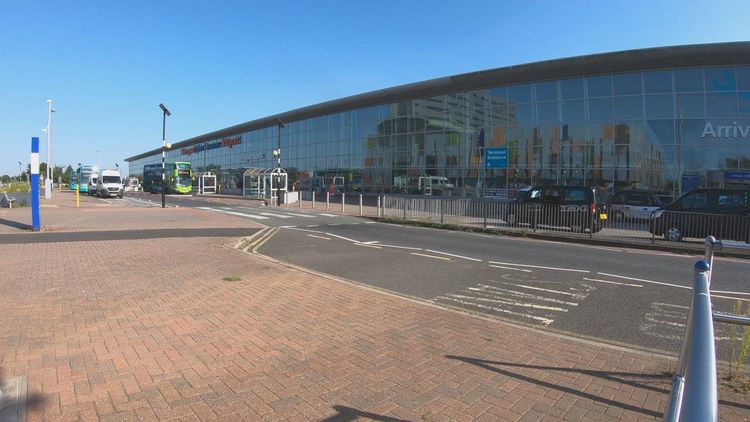
Liverpool John Lennon Airport (Speke, Liverpool L24 1YD, rated 4.1/5 on Google (8 340 avis)) sits in Speke, about 7.5 miles south-east of the city centre, close enough that skipping a rental car barely costs you any time.
The Arriva 500 express bus is the direct link: it runs from right outside the terminal into the city centre about every thirty minutes through most of the day. The full run takes around thirty-five to forty-five minutes depending on traffic, which is comparable to a taxi once you factor in getting through the terminal.
There's no rail line into the airport itself. Liverpool South Parkway, the nearest station on both Merseyrail and mainline routes, sits about three miles away, linked by local buses such as the 86 route family. That combination makes sense if you're heading south or east by train, but for the city centre the 500 or a taxi straight from the rank is usually simpler.
Taxis and ride-hailing apps both operate from a designated pickup area outside arrivals, typically around twenty to twenty-five minutes to the city centre outside peak traffic. That's your better option late at night, when bus frequency drops, or with luggage that makes a transfer impractical. For an early flight, check the first departure of the day rather than assuming the bus runs as early as the terminal opens.
Car hire desks inside the terminal stay busy with holidaymakers heading to North Wales and the Lake District, but for a city break they're rarely necessary: between the 500 and a taxi queue that seldom runs long outside summer, most visitors reach their Liverpool hotel well within the hour.



FAQ
Is Liverpool walkable?
Yes, for the historic centre at least. Liverpool ONE, the waterfront, the Albert Dock and both cathedrals all sit within roughly a twenty-minute walk of each other, and the ground is mostly gentle except for the climb up to Hope Street. Suburbs, the airport and day trips like Formby or the Wirral need a train, bus or ferry instead.
What are the best ways to get around Liverpool?
Walking for the centre, Merseyrail for anything along its lines, especially the coast and the Wirral, buses for routes rail doesn't cover, and the Mersey Ferry when the view matters as much as the destination. Most visitors use some combination of all four within a single trip.
Is Liverpool easy to drive around?
Not particularly, if the centre is where you're spending most of your time. Parking is paid almost everywhere, one-way systems and pedestrianised streets complicate short trips, and roads around both football grounds close on match days. Driving makes more sense for reaching places outside the Merseyrail network than for getting around the city itself.
Is there a free bus in Liverpool?
No scheduled free public bus runs across the whole city today. Single bus fares across the Liverpool City Region are capped, though, which keeps short hops cheap, and a Saveaway covers unlimited off-peak bus travel within its zone.
How much does a Saveaway ticket cost?
The price depends on how many areas you choose, from a single zone up to all of Merseyside, with child and concessionary versions cheaper. It's valid off-peak only. Check Merseytravel's current fares before travelling, since prices are reviewed periodically.
Is Liverpool accessible for wheelchair users without a car?
Mostly, but unevenly. Buses are low-floor across the network, and several Merseyrail stations, including James Street and Moorfields, have lifts to platform level. Not every platform in the centre is step-free, so check a specific station's access before relying on it as part of a route.
Conclusion
Liverpool without a car turns out to be less of a compromise than you might expect and, for the historic centre at least, genuinely the easier option. Merseyrail's four underground city-centre stations, a bus network moving into public hands, a ferry crossing with centuries of history, and day trips to Formby, Crosby Beach and the Wirral a single train ride away add up to a city built for people on foot and on rails, not for parking.
If you're planning where to start, Ryo's audio-guided tour of Liverpool is a reasonable first move: it covers the walkable core around Liverpool ONE and the waterfront with an audio story at each stop, leaving the trains, buses and ferry for everything the centre doesn't quite reach.