© Shutterstock
 Votre guide Ryo
Visiting Bergerac for the First Time: The Complete 2026 Guide
Visiting Bergerac for the first time is best approached knowing that the town itself can be explored on foot in a morning, leaving you free to venture out to vineyards and châteaux each worth a half-day in their own right. Bergerac resembles no other town in the Périgord. It has neither the summer crowds of Sarlat on a Saturday, nor the dramatic cliffs of the Vézère valley, but an almost intact historic centre where you walk on ancient cobblestones without a single tour coach in sight. The Ryo audio guide of Bergerac, 17 audio stops for around one hour of walking over 2.7 km, traces precisely this first itinerary through the old town, façade by façade.
Along the way you will encounter two statues of a Gascon hero who never actually lived in the town, a museum dedicated to tobacco housed in a 17th-century mansion, a former convent converted into a wine house, and flat-bottomed wooden gabarres still sailing the Dordogne as they did in the days when they carried barrels downstream to Bordeaux. Beyond the centre, the Monbazillac vineyard, the bastide towns of Monpazier and Eymet, and the riverbanks complete a visit that can fit into a single day or stretch over a long weekend. This guide also gives you the practical essentials: how many days to allow, where to stay, how to get here and how to get around without a car.
Old Bergerac and Its Half-Timbered Lanes
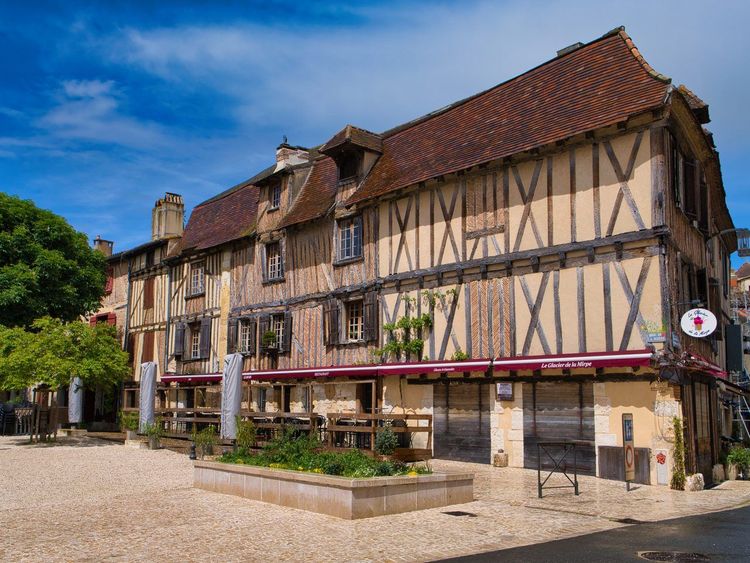
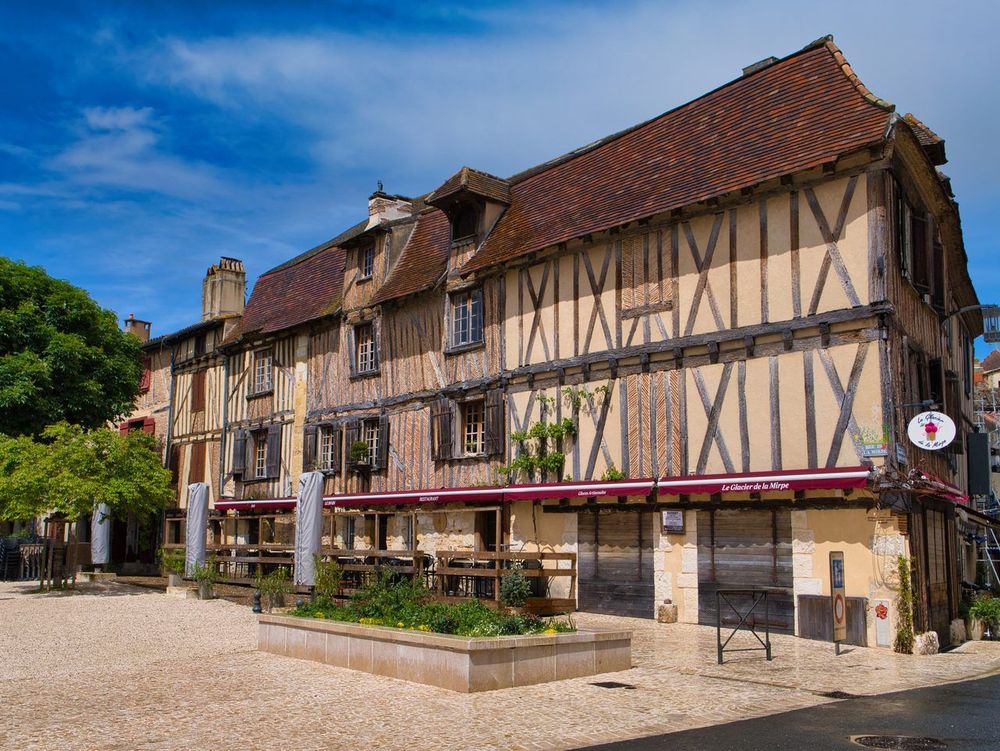
Old Bergerac fits into a very small area: a handful of streets around Place Pélissière (Place Pélissière, 24100 Bergerac) are enough to understand why the town long thrived on river trade rather than agriculture.
Unlike Sarlat, which was comprehensively restored from the 1960s onwards, Bergerac's historic centre retains a rawer, more lived-in feel: the half-timbering is not all freshly repainted, the cobblestones are uneven, and on a Tuesday morning in May you are more likely to meet locals than visitors.
Many of the houses surrounding the square date from the 15th and 16th centuries, when Bergerac was shipping wine and barrel staves down to Bordeaux on flat-bottomed gabarres. Heading up towards rue Saint-James (Rue Saint-James, 24100 Bergerac), the timber-framed façades close in, jettied upper floors project over the street, and several low doorways still hint at the old merchants' workshops behind them.
Continue on to the place de la Myrpe, smaller and quieter, lined with half-timbered houses and plane trees: this is where the bargemen once settled, just steps from the port. The rue des Conférences, whose name is said to recall the negotiations between Catholics and Protestants in the 16th century, connects this area to the quayside in just a few minutes.
Come towards late morning: the light filtering through the narrow lanes brings out the texture of the half-timbering, and the café terraces are just beginning to fill. The Ryo audio guide starts precisely in this area, with a stop at each façade explaining why a particular merchant's house displayed one kind of decoration rather than another — a detail you would never guess simply by looking up on your own.
The Statue of Cyrano de Bergerac
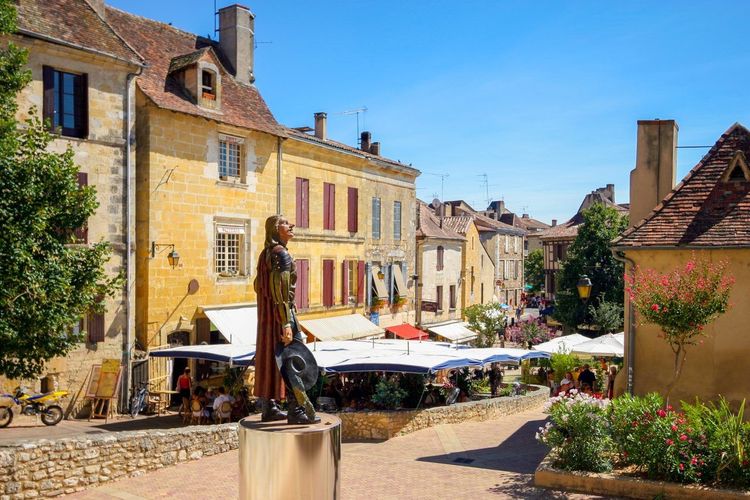
Bergerac has not one but two statues of Cyrano de Bergerac (Place de la Myrpe, 24100 Bergerac, rated 4.5/5 on Google with 760 reviews), and both perpetuate a misconception that few visitors spot straight away: the real Cyrano, the writer and duellist Savinien de Cyrano, probably never set foot in this town in the Dordogne.
Born in Paris in 1619, he took his name from a small family estate in the Chevreuse valley, with no proven connection to the Périgord town. It was Edmond Rostand, in 1897, who fixed the image of the long-nosed, big-hearted swordsman in his celebrated play, and it is that literary fame the town has chosen to celebrate.
The first statue, in stone, stands on the place de la Myrpe. The second, a colourful version created by sculptor Mauro Corda in 2005, occupies the Place Pélissière: plumed hat, cape and conquering nose, it has become the most shared photo spot in Bergerac, often set against a backdrop of half-timbered houses. Try comparing the two silhouettes — children love spotting the differences.
The character is everywhere in town: on signs, restaurant names, and the quay that bears his name. Rather than finding this tiresome, the people of Bergerac have turned it into a permanent wink at the world, and the tourist office itself plays cheerfully on this literary adoption. If you love the play, reread the famous nose speech before your visit — it takes on a particular flavour standing in front of the statue.
Quai Cyrano and the Maison des Vins
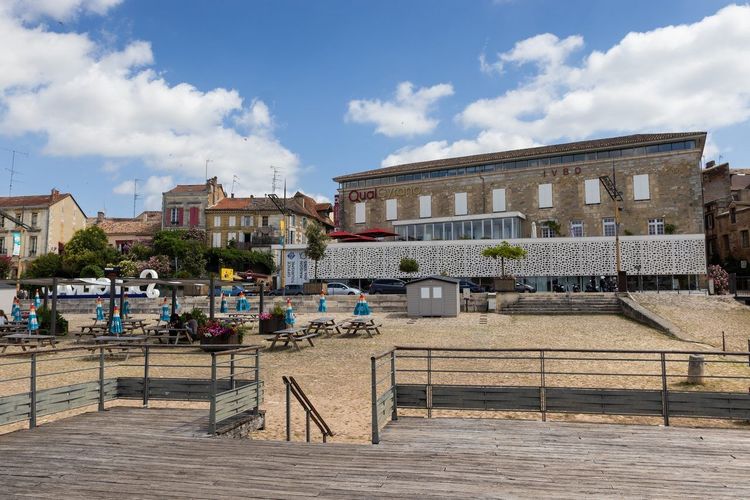
The Quai Cyrano (Quai Cyrano, 24100 Bergerac, rated 4.4/5 on Google with 1,149 reviews) runs along the Dordogne for several hundred metres and, together with the old town, forms the second anchor point of any first visit to Bergerac.
This is where the gabarres once docked to load wine bound for the port of Bordeaux, and where they now depart for tourist trips along the river. The quayside has been redesigned with terraces and an open view across to the greener, less built-up far bank.
The Maison des Vins de Bergerac occupies the former convent of the Récollets, just set back from the quay, and lets you discover the wines of Bergerac and Duras: dry and red bergerac, sweet monbazillac, pécharmant, montravel and saussignac. It is also the most comprehensive information point for the wine routes of the Bergeracois, which is handy if you plan to head out to a domaine afterwards. Ask for the map of cellars open to visitors — it saves you turning up at a locked gate.
A bench on the quay, a chilled glass of monbazillac and the lap of water against the stone: this is often the moment people remember most from a day in Bergerac, more vividly than some of the more spectacular monuments. The Ryo audio guide follows Quai Cyrano and includes a stop in front of the Maison des Vins, where the history of the Bergerac vineyard is told straight to your ear.
The Cloître des Récollets
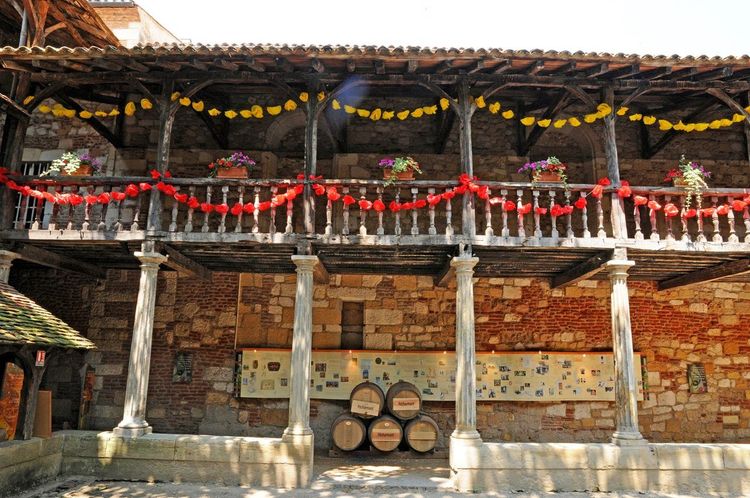
The cloître des Récollets (1 Rue des Récollets, 24100 Bergerac, rated 4.3/5 on Google with 302 reviews) is the heart of the former convent founded by the Récollets, a reformed branch of the Franciscans who settled in Bergerac in the early 17th century, in the aftermath of the Wars of Religion.
The choice of location was far from coincidental: Bergerac had been one of the major Protestant strongholds in the South-West, and the establishment of Catholic friars in the very heart of the town was part of the religious reconquest sought by the royal authorities. The cloister combines stone and brick arcades on the ground floor with a wooden gallery on the upper level, a sober architecture that contrasts with the exuberance of the neighbouring half-timbered buildings.
Today occupied by the wine trade association, the space can be explored alongside a tasting. Take five minutes to walk round the galleries before heading back down to the quay: the light there is particularly soft in the late afternoon.
The Tobacco Museum
The Tobacco Museum (Maison Peyrarède, Place du Feu, 24100 Bergerac, rated 4.3/5 on Google with 212 reviews), housed in the Maison Peyrarède, an early 17th-century mansion with a corner turret, is one of the few museums in Europe entirely devoted to this plant.
The choice of Bergerac is no coincidence: the Dordogne valley was for generations one of France's main tobacco-growing regions, and the town long hosted the national technical institute dedicated to the plant. The collections trace three thousand years of history: ritual uses among indigenous American peoples, the arrival in Europe in the 16th century, carved pipes from around the world, silver and porcelain snuff boxes, leaf-drying tools and period advertising posters.
Allow around one hour for the visit, a little more if you read every label. The late-Renaissance façade and the turret of the Maison Peyrarède are worth a look in themselves, even for visitors with little interest in the subject. Opening hours vary by season and the museum has gone through periods of closure for renovation works: check opening times with the tourist office before heading over, especially if you are counting on it as a rainy-day fallback.
On your way out, look up at the tobacco drying barns you will spot later along the roads of the Bergeracois: those large open-slatted wooden sheds, often repurposed today, are the last visible reminders of the industry that sustained thousands of valley families until the end of the 20th century.
A Gabarre Boat Ride on the Dordogne
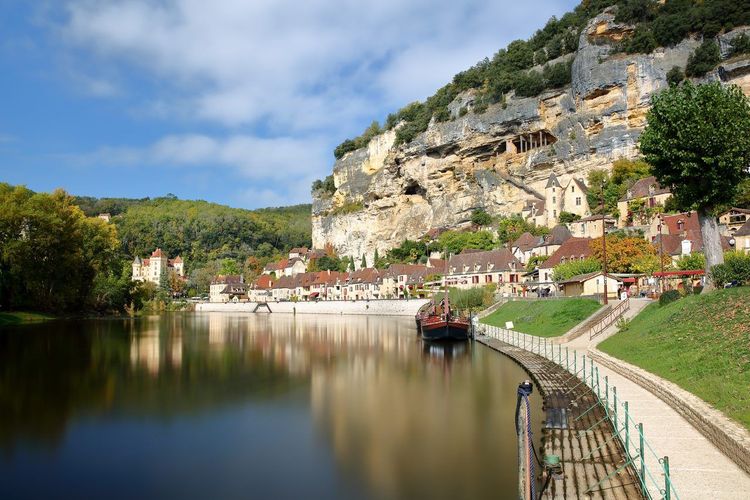
The gabarres of Bergerac are replicas of the flat-bottomed boats that once carried wine, timber and barrels downstream to Bordeaux, before the railway made river transport obsolete.
The trip lasts around one hour, with an on-board commentary covering the history of the river, memorable floods and the town's former bargemen. You will learn that the gabariers had to read constantly the shallows of an unpredictable river, and that the downstream run to Libourne went with the current while the return journey often required teams of horses on the towpaths.
The view from the water completely changes your perception of Bergerac: the quayside façades, the terracotta rooftops and the bell tower of Notre-Dame reveal themselves from an angle no photograph taken from the bank can capture. It is also a chance to spot grey herons and sometimes cormorants, which favour the sandbanks in the middle of the river.
Departures run from spring through to early autumn, and July and August slots fill up quickly: book the day before if you are visiting in high season. Opt for a late-morning or late-afternoon departure, when the heat on the open deck is more bearable. The landmarks pointed out during the trip are often the same ones you will come across on foot along the quay at your own pace, with the 17 stops of the Ryo audio guide in hand.
The Churches of Notre-Dame and Saint-Jacques
The église Notre-Dame, built between 1856 and 1865 to designs by Paul Abadie, the future architect of the Sacré-Cœur in Montmartre, dominates the town centre with its nearly 80-metre bell tower.
Its neo-Gothic style feels almost oversized for a town of this scale, and that is precisely what makes it visible from the Dordogne or the hillsides of Monbazillac. Inside, take a moment to look at the paintings hanging in the side chapels, often overlooked by visitors in a hurry.
The église Saint-Jacques, more discreet, recalls the pilgrims making their way to Compostela who crossed the Dordogne at Bergerac. Altered many times after the destruction wrought by the Wars of Religion, it can be visited in just a few minutes.
Both buildings are free to enter and make a useful addition to a morning spent exploring the lanes.
The Parc Jean-Jaurès and the Miniature Port
The parc Jean-Jaurès, just a short walk from the town hall, offers a welcome breathing space after the density of the historic centre.
The shaded benches beneath tall trees and the playground make it a popular spot with local Bergerac families themselves — always a good sign of a place's authenticity.
At the miniature port, small boats let children take the helm on a purpose-built basin — a simple activity but remarkably effective for filling a half-hour family break. Check opening days, as the attraction is mainly seasonal.
Combine this stop with an urban treasure hunt organised by the tourist office: younger children follow clues through the half-timbered lanes while parents stroll more freely from one square to the next. It is a good way to keep a six or seven-year-old engaged on a visit that might otherwise feel too heritage-focused for their taste.
If you need more space, head north of town to the parc de Pombonne (Route de Pombonne, 24100 Bergerac, rated 4.4/5 on Google with 1,124 reviews), a large green area laid out around a lake, with walking paths, a fitness trail and picnic spots. Local residents come here to run in the morning and meet up at weekends; it is the ideal place to let children burn off energy between two visits.
The Dordonha Centre and the Costi Museum
The Dordonha centre (Rue des Fontaines, 24100 Bergerac, rated 4.7/5 on Google with 103 reviews), the town's heritage and cultural centre, occupies medieval vaulted rooms that are worth a quick detour in themselves.
The venue hosts exhibitions on the history of Bergerac and Occitan culture (Dordonha is the Occitan name for the Dordogne), as well as the Costi Museum, dedicated to the sculptor of the same name, whose works sit in surprisingly good dialogue with the stone vaulting.
Admission is free, making it one of the least expensive visits in town for a genuinely worthwhile heritage experience. Allow around thirty minutes, more if a temporary exhibition is running. Few guides mention it, even though it naturally complements a visit to the cloître des Récollets just a few streets away. It is also a fine refuge during the hottest hours of a summer day, the cool of the vaulting doing the rest.
The Château de Monbazillac and Its Vineyard
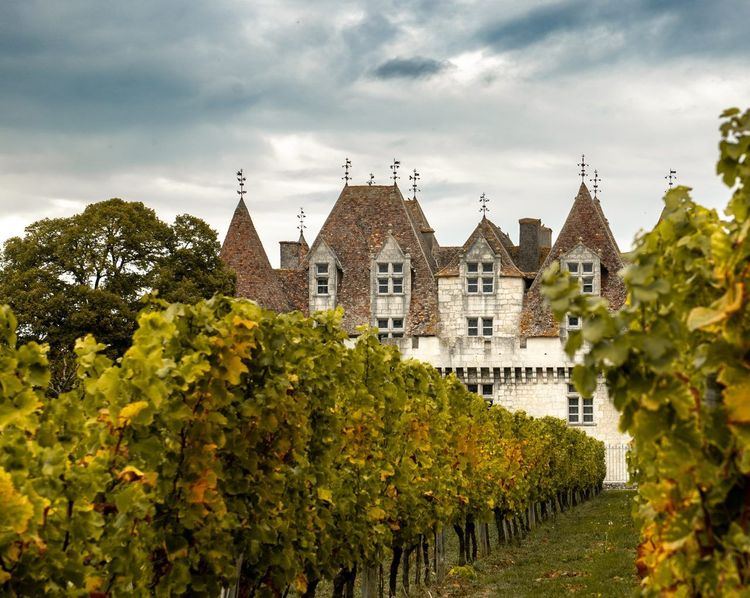
The château de Monbazillac (24240 Monbazillac, rated 4.2/5 on Google with 1,904 reviews), about ten minutes by car south of Bergerac, is arguably the most photographed landmark in the Périgord pourpre.
Built around 1550, it blends the moat, wall-walk and round towers of a defensive castle with the large mullioned windows of the Renaissance, an architectural compromise reflecting an era when people were already beginning to build for something other than war. Since 1960 it has belonged to the Monbazillac wine cooperative, which explains the central role of wine in the visit.
The interior features furnished rooms, vaulted cellars and spaces devoted to the Protestant history of the region, Bergerac having been home to a significant Huguenot community in the 16th century. But it is above all the view from the terrace that stays with you: the gently sloping vineyard, the town of Bergerac in the distance and the Dordogne valley sketched out along the horizon.
The château gives its name to the monbazillac appellation, a sweet wine produced thanks to the autumn mists that encourage noble rot on the grapes, a process comparable to that used for Bordeaux sauternes. Across the river, to the north-east of town, the hillsides of Pécharmant produce, by contrast, a full-bodied red — one of the most under-the-radar appellations in the Bergeracois. Several estates on both sides offer free or paid tastings depending on the cuvée, often combined with a quick tour of the chai.
If you only have a half-day for the vineyard, prioritise Monbazillac rather than visiting several smaller estates: the architecture, the wine and the panorama are all found in one single stop. Listen to the Ryo audio guide sections on the vineyard and the wine trade in the morning while you are in town, then drive out in the afternoon — you will look at those hillsides in a completely different light.
The Château de Bridoire and Other Châteaux of the Bergeracois
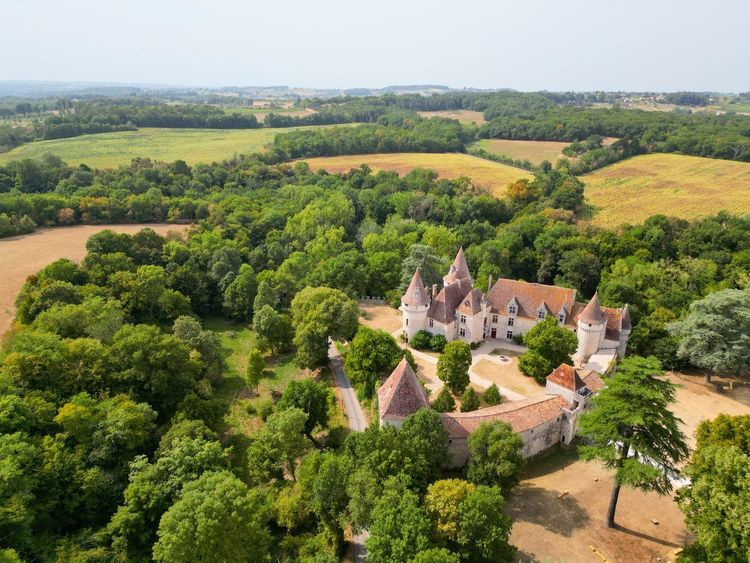
The château de Bridoire, about twenty minutes south of Bergerac, was bought in 2011 by a family of enthusiasts who saved it from ruin and transformed it into a family-oriented leisure site.
Inside you will find around a hundred ancient and medieval wooden games, many of them life-size, set up in the rooms, the courtyard and the grounds, rather than a conventional visit with ropes and display cases. It is one of the rare châteaux in the Périgord where children enjoy themselves as much as adults learn. Allow at least two hours — the youngest visitors will not want to leave.
The château de Biron, more imposing, spans several centuries of layered construction, from the medieval keep to the classical wings.
It is one of the largest buildings in the Périgord, with a two-storey Renaissance chapel and rooms that allow you to follow, floor by floor, the evolution of French architectural taste over more than six centuries.
For wine lovers, the château de Tiregand (24100 Creysse, rated 4.7/5 on Google with 787 reviews) remains a benchmark for the pécharmant appellation, while château Hugon and the domaine du Grand Jaure offer more intimate tastings, often directly with the winemaker.
Which château to choose if time is short? Bridoire with children, Monbazillac for a short and spectacular first visit, Biron for its sheer historical scale. Few visitors manage all three in a single day without feeling rushed.
Bastide Towns and Villages around Bergerac
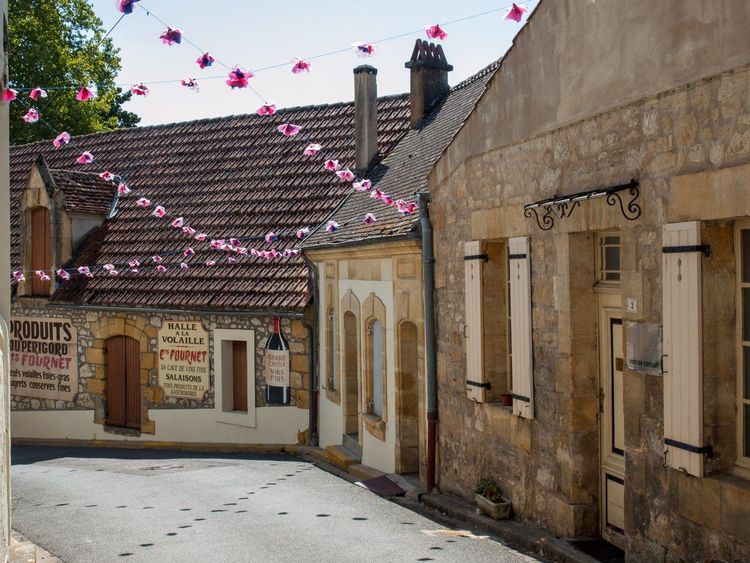
The Bergeracois is ringed by a constellation of bastides, those planned new towns founded in the 13th and 14th centuries on a grid layout, along the shifting frontier between the kingdom of France and English-held territory.
Issigeac (Place de la Capelle, 24560 Issigeac), about twenty minutes' drive away, is not a bastide but a medieval village whose lanes wind around the former palace of the bishops of Sarlat. Visit on a Sunday morning for its market, when the curving streets fill with stalls of local producers.
Eymet (Place Gambetta, 24500 Eymet), further south, founded in 1270 by Alphonse de Poitiers, brother of Saint Louis, has kept its arcaded central square and is home to a long-established British community that gives it a surprisingly cosmopolitan feel for such a small town.
Monpazier, a little further to the south-east, founded in 1284 in the name of King Edward I of England, is often considered the best-preserved bastide in France and is listed among the Plus Beaux Villages de France: its timber market hall and stone cornières still follow the original plan.
Beaumont-du-Périgord (24440 Beaumont-du-Périgord) and Molières, two more modest English bastides, let you step off the most visited routes while keeping the same characteristic grid layout, with a striking fortified church at Beaumont.
Finally, Lanquais, Cadouin and Saint-Avit-Sénieur form a triangle of more off-the-beaten-track curiosities: a château still furnished at Lanquais, nicknamed the "unfinished Louvre" of the Périgord, a Cistercian abbey with a Flamboyant Gothic cloister at Cadouin, and an imposing fortified church at Saint-Avit-Sénieur. Cadouin and Saint-Avit-Sénieur are also inscribed on the UNESCO World Heritage List as part of the pilgrimage routes to Santiago de Compostela.
To group these villages without spending the whole day driving, pair Issigeac and Eymet, which are closer to Bergerac, or combine Monpazier with Beaumont-du-Périgord and Cadouin for a more complete loop to the east.
Cycling and Nature along the Dordogne
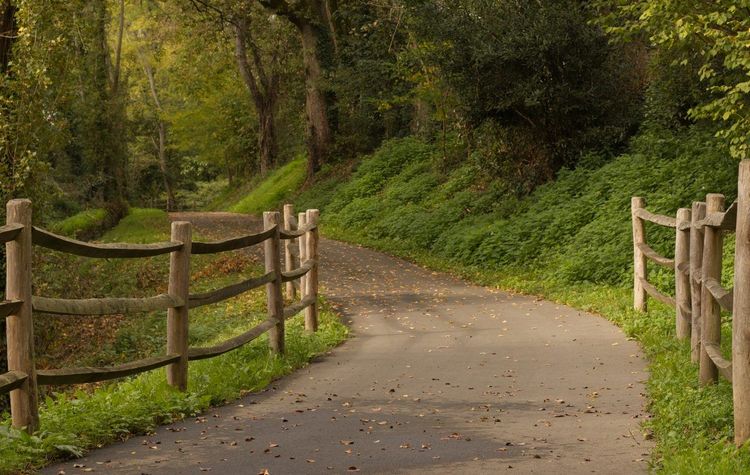
The V91 cycle route, which follows the Dordogne valley, passes through Bergerac and lets you ride largely away from traffic, on flat ground, towards Lalinde or Sainte-Foy-la-Grande.
You will share it with Sunday cyclists and families on electric bikes, in a setting that hugs the river in places. Several bike hire shops in town allow you to set off for a half-day without having brought your own equipment.
The canal de Lalinde, dug in the 19th century to bypass rapids that bargemen dreaded, can be followed on foot or by bike between stone lock-keeper's houses and old towpaths.
Between Lalinde and Bergerac, the barrage de Tuilières (24150 Saint-Capraise-de-Lalinde) impresses with its scale, featuring a fish lift that allows shad and salmon to continue upstream despite the obstacle.
Limeuil (24510 Limeuil, rated 4.6/5 on Google with 500 reviews), a hilltop village at the confluence of the Dordogne and the Vézère, listed among the Plus Beaux Villages de France, is worth the detour for the panorama from the gardens at the top of the village and for the canoe hire bases right below.
Paddling a few kilometres from Limeuil, or simply renting a paddleboard for an hour on the water, remains one of the most relaxing ways to discover the valley without taking to the road. The Ryo audio guide of the old town takes around one hour to complete: you can listen in the morning and follow it with a bike ride or canoe trip the same afternoon.
Food, Gastronomy and Markets in Bergerac
Périgord gastronomy revolves around a handful of products that appear on every menu: foie gras, walnuts, duck in all its forms — confit or magret — truffle in winter and Périgord strawberries in spring.
The covered market of Bergerac (Place Louis de la Bardonnie, 24100 Bergerac, rated 4.2/5 on Google with 258 reviews), a 19th-century market hall, welcomes traders from Tuesday to Saturday, with particular intensity on Wednesday and especially Saturday morning, when the stalls of the traditional market spill out onto the neighbouring squares and into the old town itself.
In summer, gourmet evening markets regularly set up in Bergerac and the surrounding villages: everyone buys their dishes from the producers and sits down at long shared tables, often with a band playing. Check the tourist office events calendar, as dates change each season.
For lunch, the terraces around Place Pélissière or the covered market offer most of the local repertoire, often at more reasonable prices than in the more tourist-heavy nearby towns. Try the cabécou, a small Périgord goat's cheese, and pair the foie gras with a glass of monbazillac rather than a red: that is the pairing most restaurateurs will suggest. If your stay allows it, time your visit to the centre for a Saturday morning to enjoy the full market atmosphere, which is itself part of the town's living heritage.
How Long to Allow and How to Plan Your Itinerary
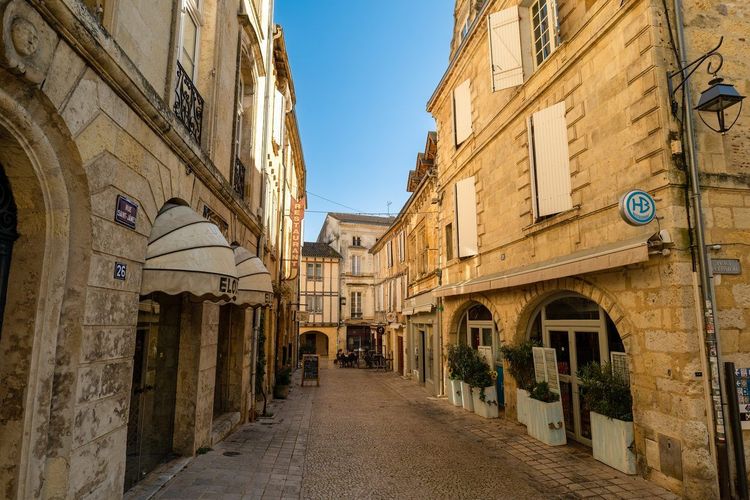
One day is enough to cover the essentials of the historic centre: the old town, the Cyrano statues, Quai Cyrano, the cloître des Récollets and the Tobacco Museum can all be visited comfortably between morning and early afternoon.
Here is a sample itinerary for a first visit. In the morning, walk through the old town following the audio guide, from Place Pélissière to the place de la Myrpe. Around midday, have lunch on a terrace near the covered market. In the afternoon, board a gabarre, then finish with a glass at the Maison des Vins before dinner overlooking the Dordogne.
With two to three days, add the château de Monbazillac and a bastide such as Issigeac or Monpazier, keeping a half-day in reserve for a cycle ride on the V91 or an afternoon at the château de Bridoire if you are travelling with children. A possible programme: day 1 in town, day 2 between Monbazillac in the morning and Issigeac or Eymet in the afternoon, day 3 towards Monpazier, Beaumont-du-Périgord and Cadouin.
For a longer stay, say a week, you can range further afield: the château de Biron, the Lanquais-Cadouin-Saint-Avit-Sénieur triangle and a day in nature between the canal de Lalinde and the confluence at Limeuil all find their natural place. Sarlat and the Vézère valley are also around an hour's drive away, making a full-day excursion feasible. For most visitors, a stay of three to four days remains the most comfortable format for combining town, vineyard and one or two villages without excessive driving.
As for the season, late spring and September offer the best compromise: gabarres in service, vines green or in harvest, and manageable crowds. In July and August the town stays calmer than Sarlat, but the châteaux are best visited right at opening time.
Where to Stay and How to Get to Bergerac
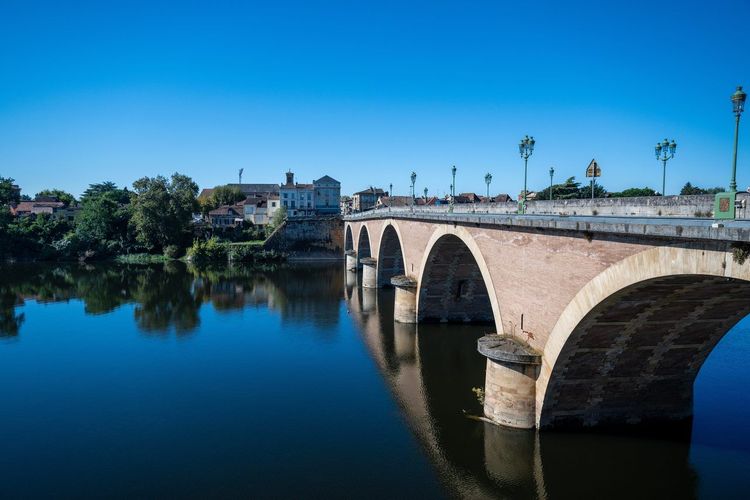
For a first visit, staying in Bergerac's historic centre makes everything easier: hotels and bed and breakfasts around the old town allow you to reach most of the programme's sites on foot and to enjoy the terraces in the evening without getting back in the car.
The surrounding area offers another option, more rural, with bed and breakfasts and gîtes set among the Monbazillac or Pécharmant vines, often cheaper than the town centre and ideal if you plan to focus mainly on exploring châteaux and villages by car. Bastide towns such as Monpazier or Eymet also have a handful of charming addresses, handy for a night on the southern route. In summer, book several weeks ahead: supply is limited for a town of this size.
Bergerac has its own airport, Bergerac-Dordogne-Périgord, served in particular from the United Kingdom, as well as a railway station on the Libourne–Le Buisson line connecting Bordeaux to Sarlat: allow around 1 hour 15 minutes from Bordeaux by regional train. By road, the town is just over an hour and a half from Bordeaux and around 1 hour 15 minutes from Périgueux.
Can you visit Bergerac and its surroundings without a car? In the town itself, very much so: the historic centre is entirely walkable and the local bus network serves the main districts. For the châteaux and bastide towns, however, a hire car or an organised excursion remains almost essential, as public transport connections to Monbazillac, Issigeac or Monpazier are too infrequent to build a reliable programme around. The bicycle, via the V91 route, offers an alternative for Lalinde or the nearest vineyard.
FAQ
What are the must-see attractions in Bergerac?
Old Bergerac and its half-timbered houses, the Cyrano statues, Quai Cyrano with the Maison des Vins, the Tobacco Museum and a gabarre boat ride form the core of any first visit. The château de Monbazillac ideally rounds out the programme if you have an extra half-day.
How many days do you need to visit Bergerac and its surroundings?
One day covers the historic centre. Allow two to three days to add Monbazillac and a bastide town, and up to a week to also explore secondary châteaux, villages of the Bergeracois and nature activities along the Dordogne.
Can you visit Bergerac and its surroundings without a car?
The town centre is entirely walkable and the train station connects Bergerac to Bordeaux. However, the surrounding châteaux and bastide towns remain hard to reach without a car, bike or organised excursion, as public transport is infrequent to these rural destinations.
What can you do in Bergerac in one day?
Start with old Bergerac and the Cyrano statues in the morning, continue to Quai Cyrano and the cloître des Récollets, then spend the afternoon on a gabarre boat ride and at the Tobacco Museum before aperitifs on the waterfront.
What can you do around Bergerac with children?
The château de Bridoire and its wooden games, the miniature port in the parc Jean-Jaurès, the parc de Pombonne and a treasure hunt through the lanes of the historic centre are particularly well suited to families with young children.
Where should you stay to visit Bergerac and its surroundings?
The historic centre is ideal for exploring the town on foot. Bed and breakfasts in the Monbazillac or Pécharmant vineyards offer a more rural setting, convenient for driving out to châteaux and bastide towns.
What can you do around Bergerac when it rains?
The Tobacco Museum, the Dordonha centre and the Costi Museum, as well as an indoor visit to the château de Monbazillac or the château de Biron, can easily fill an entire day out of the rain.
Bergerac is actually well suited to a first visit with little preparation: the historic centre fits into a morning, the vineyard and the châteaux each take a half-day, and the bastide towns of the Bergeracois offer enough to fill several extra days without ever repeating the same atmosphere. To make sure you miss nothing essential from the moment you arrive, launch the Ryo audio guide of the old town on your phone: 17 audio stops, one hour of walking, 2.7 km to enjoy at your own pace before heading further out towards the Dordogne.