© Shutterstock
 Votre guide Ryo
Weekend in Biarritz in 2026: Complete Itinerary Between Rocher de la Vierge, Beaches, and the Basque Country
The wind rising from the Côte des Basques smells of tide and monoi oil, and that is the first thing that strikes you when you step off the train in Biarritz on a Friday evening. Travel agencies sell the Biarritz weekend as a salt-tinged forty-eight-hour escape, and the city lends itself to it perfectly: it fits within a handful of square kilometres, wedged between the Atlantic Ocean and the hills of the Basque Country. In forty-eight hours, you have time to climb up to the Rocher de la Vierge at sunset, stroll along the Grande Plage to the lighthouse, watch the surfers on the Côte des Basques, and end the evening with a drink at the Port des Pêcheurs. This guide covers, neighbourhood by neighbourhood, what a weekend in Biarritz genuinely allows you to see and do, with addresses, useful opening hours, and a few landmarks to keep you from getting lost between two clifftops. For those who prefer a ready-made itinerary, the Ryo audio tour of Biarritz follows the key highlights of this itinerary as a guided walk, neighbourhood by neighbourhood.
Why Choose Biarritz for a Weekend
Biarritz has a rare advantage for a weekend trip: the city is walkable. The TGV connects it to Paris in just over four hours, and the Biarritz-Pays Basque airport, ten minutes from the centre, receives direct flights from around a dozen French cities. You don't need to rent a car to string the sights together: the main sites, from the Rocher de la Vierge to the Halles, are within a twenty-minute walking radius. The Ryo app, available offline, lets you follow this itinerary without relying on a mobile signal, which can be unreliable between the cliffs.
It is also a city of two faces. In the morning, the atmosphere evokes a Belle Époque seaside resort, with its neo-Basque villas and its casino overlooking the ocean. In the afternoon, the Côte des Basques fills with surfers and the mood becomes more laid-back, almost Californian. This dual identity, combining nineteenth-century elegance with surf culture, is why Biarritz remains a reliable choice for a romantic weekend as much as a getaway with friends.
Rocher de la Vierge, Symbol of Biarritz
The Rocher de la Vierge is probably the most reproduced image of Biarritz, and for good reason: this rock formation rising from the sea off the Port des Pêcheurs bears a statue of the Virgin Mary placed there in 1865, at the time when Napoleon III and Empress Eugénie had made the city their summer residence. It is reached via a metal footbridge installed at the end of the nineteenth century, often attributed to the workshops of Gustave Eiffel, suspended some ten metres above the waves that crash against the rock.
The crossing takes less than two minutes, yet it is worth the trip in itself: in rough seas, spray flies over the railing and drenches visitors standing closest to the edge. From the platform, the view sweeps across the entire bay of Biarritz, from the lighthouse to the first ridges of the Pyrenees on a clear day, with the Grande Plage unfolding to the right.
The best time to go is late afternoon, about an hour before sunset: the low-angle light colours the cliffs and the walkway gradually empties of the visitors who came during the day. Still, expect to be patient in July and August, when access to the footbridge becomes a slow trickle during peak times. Entry is free and open year-round, but the footbridge closes occasionally during heavy swells, spring tides, or maintenance work: a sign at the entrance indicates closures for the day, so there is no need to walk all the way to the end of the esplanade to find out. A practical tip if you are travelling with children: the guardrail is low in places, so it is best to hold younger ones by the hand along this stretch.
The Plateau de l'Atalaye and the Port des Pêcheurs
The Plateau de l'Atalaye overlooks the Rocher de la Vierge and serves as a natural balcony over the ocean. You reach it in a few minutes from the Port des Pêcheurs, along a marked path that follows the cliff edge. The name comes from the former watchtower used until the nineteenth century to spot whale pods, an activity that sustained Biarritz for a long time before whaling declined and the city reinvented itself as a seaside resort.
Heading back down to the sheltered cove, you arrive at the Port des Pêcheurs, a tiny harbour lined with colourful houses — the crampottes, former fishermen's storage sheds, many of which have been converted into restaurants or holiday homes. The boats still moored there, the nets drying in the sun, and the fish restaurant terraces give the place the feel of a village somehow lost at the foot of the Belle Époque buildings above.
The harbour is well suited for a lunch stop: several spots serve seafood platters or tapas del mar at reasonable prices, with views over the boats. You can also simply sit on the flat rocks below and watch the fishermen at work, a scene that has barely changed in a century. The Atalaye–Port des Pêcheurs combination takes thirty to forty-five minutes to explore, including the short walk to the nearby Rocher de la Vierge.
The Grande Plage and the Biarritz Lighthouse
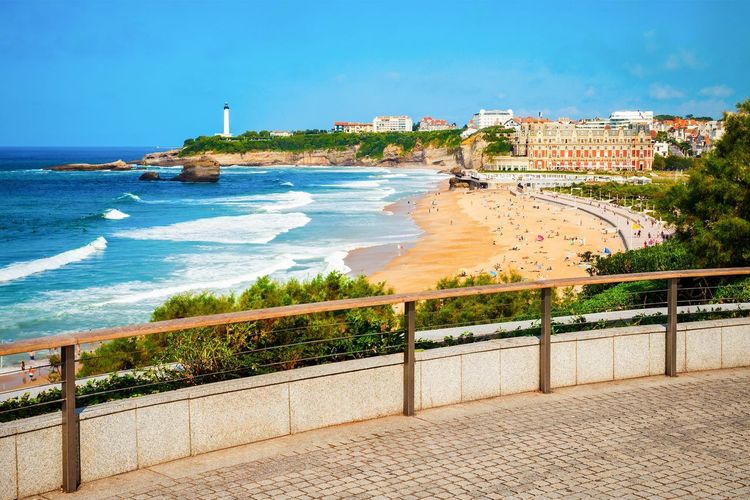
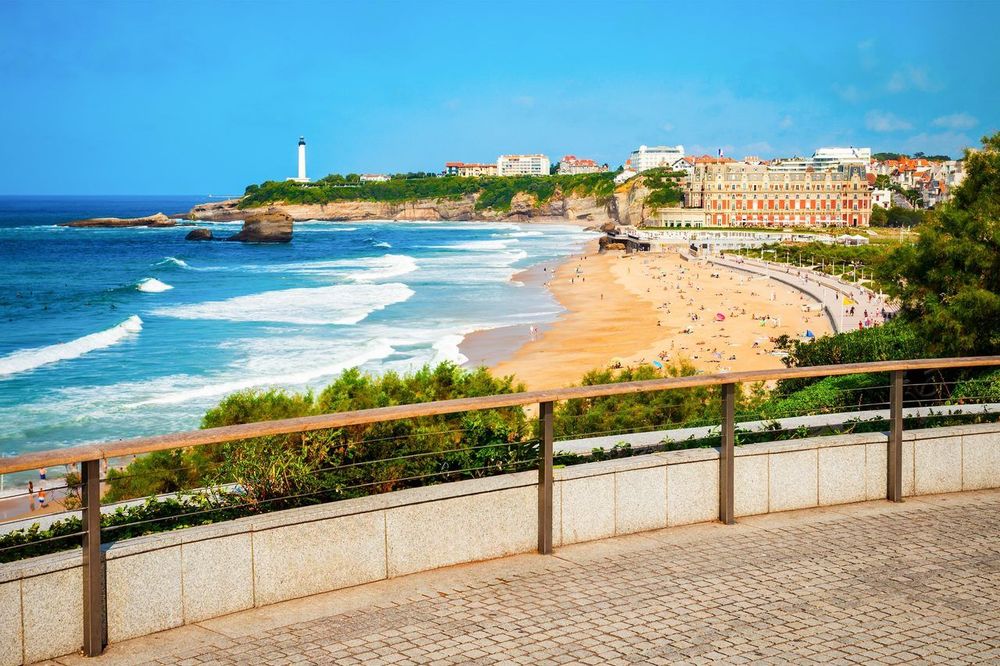
The Grande Plage stretches for several hundred metres between the casino and the Hôtel du Palais, the former imperial villa of Napoleon III and Eugénie that has become one of the most photographed hotels on the Atlantic coast. Long nicknamed the Plage des Fous in reference to a former nearby asylum, it is today the most popular beach in Biarritz, with wide sand that is fully exposed at low tide.
In season, striped bathing cabins line the sand, a nod to the Belle Époque setting that the city carefully maintains. Swimming is supervised in summer, and the waves, more moderate than those on the Côte des Basques, are well suited to families and occasional swimmers. One useful habit: check the flag at the lifeguard post before getting in the water, as baïne currents can form quickly here on an outgoing tide.
At the northern end of the beach, on the Pointe Saint-Martin, stands the Biarritz Lighthouse (Rue Jean Baptiste Lassagne, 64200 Biarritz, rated 4.6/5 on Google based on 7,142 reviews), a 44-metre tower whose summit reaches 73 metres above sea level, first lit in 1834. The 248 steps to the top are daunting, but the reward is worth the effort: a 360-degree panorama over the ocean, the city, and, on a clear day, the Pyrenean chain stretching to the bay of Saint-Jean-de-Luz. The climb costs a few euros and generally takes under twenty minutes, going up and coming back down. It is best to go early in the morning or at the end of the day: the stairwell heats up quickly in high summer, and opening hours become considerably shorter out of season.
The audio sub-tour « La reine des plages et la plage des rois », part of the audio-guided tour of Biarritz, follows precisely this route between the Grande Plage and the lighthouse, with Belle Époque anecdotes that bring the walk to life.
Villa Belza and the Bellevue Viewpoint
Perched on a rocky outcrop above the Côte des Basques beach, Villa Belza is arguably the most photographed building in Biarritz after the lighthouse. This neo-medieval manor, built at the very end of the nineteenth century by architect Alphonse Bertrand for Marie-Belza Dubreuil, whose first name it bears, changed hands several times throughout the twentieth century, eventually becoming a well-known cabaret between the wars — the « Château basque » — where Biarritz's entire jazz-age set gathered.
The villa is not open to visitors, but it can be admired very well from the coastal path that runs along the cliff, especially in the late afternoon when the sun grazes the ocean behind the building's silhouette. It is one of the unmissable stops for anyone wanting to understand the slightly gothic and romantic atmosphere that Biarritz was already cultivating at the beginning of the last century.
A few hundred metres away, the Bellevue viewpoint offers a different angle on the same landscape: the Côte des Basques curving southwards, surfers in the water, and the first Pyrenean foothills in the background. It is a short stop — five to ten minutes are enough — but it complements the Villa Belza visit well by providing a wider view rather than a tight frame on the building. Many visitors combine the two at the end of the day, just before heading back down to the centre for dinner.
The Biarritz Aquarium – Musée de la Mer
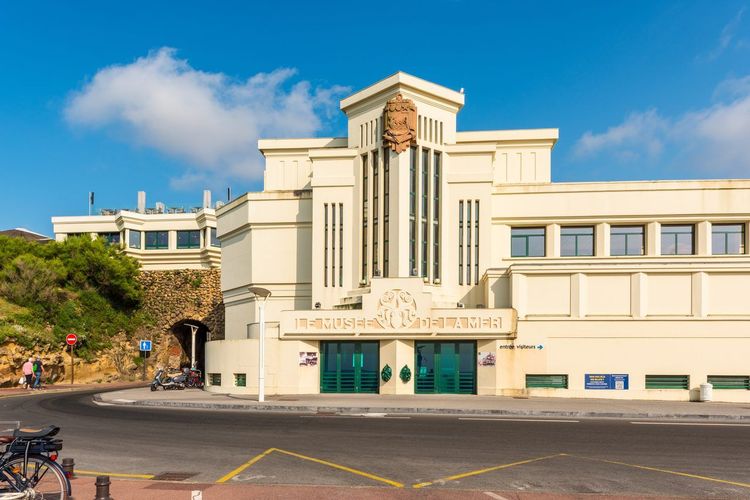
Housed since 1933 in an Art Deco building sitting right above the Rocher de la Vierge, the Musée de la Mer de Biarritz (Esplanade du Rocher de la Vierge, 64200 Biarritz, rated 4.3/5 on Google based on 16,914 reviews), better known as the Biarritz Aquarium, presents the marine life of the Bay of Biscay across several floors. The seal pool, visible from inside as well as from a free outdoor viewing platform, remains the most popular attraction, especially at feeding times when the animals become particularly lively.
Inside, a large Caribbean tank populated with sharks, rays, and tropical fish forms the centrepiece of the visit, while other rooms trace the history of the whale hunting that made the city's fortune before tourism took over. Allow one and a half to two hours for a complete visit, slightly longer with children who will want to linger in front of each tank.
It is an excellent option in bad weather, and one of the few sites in Biarritz open year-round, outside of its annual technical closure. Prices vary by season, with a full adult ticket around twenty euros and reductions for children and families. Booking your slot online in advance avoids queuing at the ticket desk, especially on rainy days when the aquarium absorbs a large share of the city's visitors.
Exploring the City Centre: Halles, Casino, and Shopping Streets
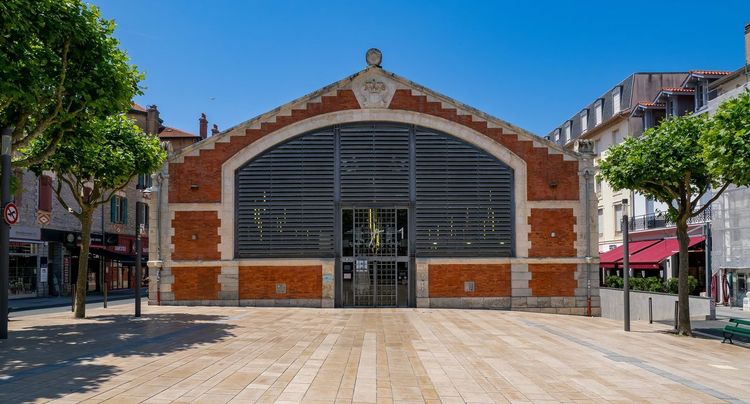
Biarritz's city centre reveals itself naturally as you head down from the seafront, through pedestrian streets and Belle Époque buildings. Rue Mazagran and Rue Gambetta concentrate most of the shops, from local surfwear brands to Basque linen makers, with the occasional alleyway that opens unexpectedly onto a glimpse of the sea.
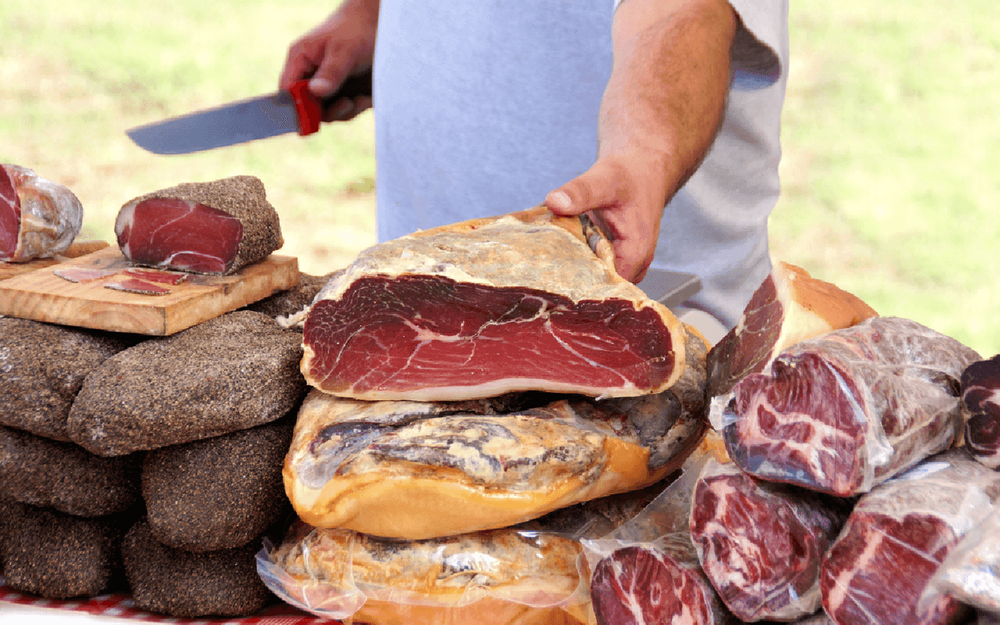
At the heart of this neighbourhood, the Halles de Biarritz have been bringing local producers together under two covered pavilions since the end of the nineteenth century. You will find Bayonne ham, Basque-Béarnais sheep's cheese, Espelette pepper in powder or string form, and fish stalls that change with the morning catch. The market opens every morning, with noticeably heavier footfall at weekends, and is a good place to put together a picnic to take to the beach. The neighbourhood around the Halles comes alive again in the evening, when pintxos bars bring their tables out onto the surrounding squares.
Facing the ocean, the Casino Barrière de Biarritz (1 Avenue Édouard VII, 64200 Biarritz, rated 4.1/5 on Google based on 3,829 reviews) occupies an Art Deco building from the 1920s, built on the site of the former Casino Bellevue. You can go in without gambling, if only to admire the façade and the terrace that opens directly onto the Grande Plage, or to dine in one of the restaurants installed inside. In the evening, the play of lights on the façade makes it a visual landmark from across the entire bay. Remember to bring ID: it is still required at the entrance to the gaming rooms.
The Cité de l'Océan and Other Museums to Discover
A little away from the centre, near the Milady beach, the Cité de l'Océan (1 Avenue de la Plage, 64200 Biarritz, rated 4/5 on Google based on 5,588 reviews) offers a more scientific and interactive approach to the marine world than the Aquarium. The building, designed by Steven Holl and Solange Fabião, resembles a wave frozen in concrete and houses exhibitions on the formation of the oceans, the deep sea, and climate change, with plenty of touchscreens and immersive installations that appeal to children and teenagers alike.
It complements the Aquarium rather than duplicating it: one shows the animals, the other explains the phenomena. A combined Aquarium + Cité de l'Océan ticket is available and works out cheaper than two separate entries if you plan to visit both during the weekend. Allow one to two hours for the visit, and try to go in the early afternoon if you want to avoid school groups during term-time excursion periods.
Biarritz also has a historical museum, housed in a former Anglican church in the city centre, which traces the history of the seaside resort through photographs, scale models, and period objects. Temporary exhibitions change regularly, sometimes themed around artists from the South-West, such as the « Lumières du Sud » show. Entry prices are modest, making it an easy stop to slot in between two longer visits. One last museum worth knowing if you have a gap in your schedule: the Villa Le Goéland and the Musée du Chocolat round out the list of short indoor visits.
Beaches and Surfing: Côte des Basques and Port-Vieux
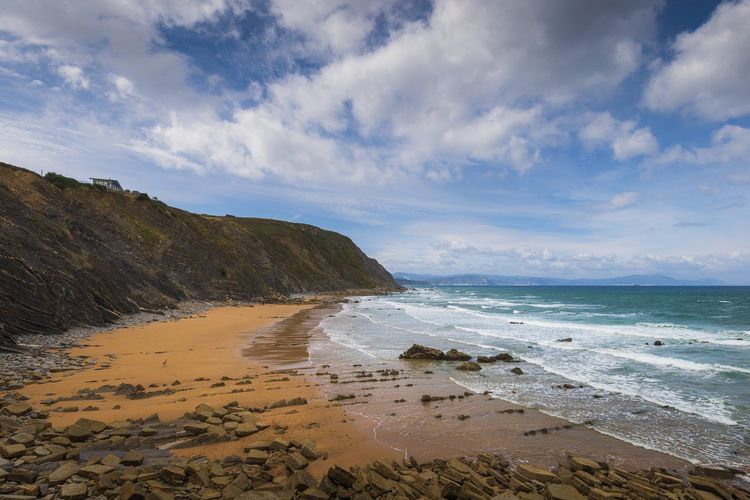
Biarritz is considered the birthplace of European surfing ever since American screenwriter Peter Viertel left his board there in 1957 during the filming of « The Sun Also Rises », and that legacy is still felt today on the Côte des Basques beach. This is where the majority of surf schools and beginner spots are concentrated, with longer and more consistent waves than elsewhere along the coast. Pay attention to the tide: at high tide, the beach almost entirely disappears under water at the foot of the cliff, so lessons are scheduled around the tidal range. In the late afternoon, the cliff overlooking the beach fills with spectators who come to watch the sunset silhouetting the surfers.
Further into the centre, Port-Vieux beach occupies a sheltered cove between two rocky headlands, making it the calmest beach in Biarritz. The water is generally gentler and less choppy than on the Grande Plage or the Côte des Basques, a sensible choice for swimming with young children or simply swimming without fighting the waves. It is also the stronghold of the Ours Blancs, the swimming club that plunges into the water here all year round, including on Christmas Day.
For beginners, several schools offer group lessons lasting one and a half to two hours, equipment included, at prices around forty euros per session. Bidart Surf Academy (Avenue de la Grande Plage, 64210 Bidart, rated 4.6/5 on Google based on 95 reviews), located just south of Biarritz in the neighbouring town of Bidart, is one of the well-regarded addresses for beginners and intermediate surfers, with state-certified instructors and small group sizes. Booking the day before is advisable in July and August, when morning slots fill up fast.
To find the best spots for your level and the day's conditions, our Ryo article on the best surf spots in Biarritz details the conditions specific to each beach, from the most beginner-friendly to the most advanced. Back in town, the audio-guided tour of Biarritz covers this same shoreline at a gentler pace.
Where to Stay in Biarritz: Hotels and Thalasso Spas
Biarritz covers a wide range of accommodation, from small family-run hotels a few streets from the beach to luxury establishments that have made the city's reputation. For a weekend, it is best to choose a hotel between the Grande Plage and the city centre: from there, almost everything can be done on foot, without needing a car.
Among the exceptional addresses, the Hôtel du Palais remains the historic benchmark, with its Second Empire salons and unobstructed view over the Grande Plage, while the Sofitel Biarritz le Miramar opts for a more contemporary architecture and direct beach access. These establishments display high prices in peak season, but often offer attractive deals on weekdays or outside the summer months.
It is also in this category that the spa and thalasso offer stands out, a local speciality inherited from the nineteenth century, when the imperial court's physicians were already extolling the benefits of sea air. Thalasso Thalmar (80 Rue de Madrid, 64200 Biarritz, rated 3.7/5 on Google based on 878 reviews), on Rue de Madrid, a short distance from the seafront, offers short treatments lasting half a day or a full day — ideal for fitting in a moment of relaxation between visits. Massages, jet baths, and a heated seawater pool make it a popular choice for a romantic weekend, particularly out of season when prices drop noticeably.
For tighter budgets, the neighbourhoods around the Halles and the train station concentrate two- and three-star hotels at reasonable prices, often less than fifteen minutes' walk from the Grande Plage.
Where to Eat and Have a Drink During the Weekend
For a drink with a view, head to Etxola Bibi, a beach shack set directly on the sand of the Côte des Basques, where the ocean-facing tables go fast at sunset. The atmosphere is relaxed — flip-flops and swimwear welcome — with a menu of tapas and sharing boards that pairs well with a long apéritif.
On Sunday mornings, many Biarrots head to Milwaukee for a generous brunch, with poached eggs, pancakes, and freshly pressed juices. The set menu draws a crowd from ten o'clock, so arriving early or booking ahead is advisable if the venue allows it.
For a more classic break, the Salon de thé Miremont, a house founded in 1872 and located on Place Georges Clemenceau, serves its pastries in a setting inspired by Empress Eugénie's salons, with a sea view from the tables at the back. It is the ideal spot for an afternoon tea, slotted in between two museum visits.
For ice cream, Glacier Lopez (Les Halles, 64200 Biarritz, rated 3.7/5 on Google based on 39 reviews), at the Halles, offers artisan flavours that change with the season — there is often a queue in summer, but service is quick. These four addresses — drinks, brunch, afternoon tea, and ice cream — cover the main food cravings of a Biarritz weekend without ever straying more than ten minutes' walk from the centre. For a fuller tour of the local specialities, from Bayonne ham to gâteau basque, our Ryo article on the culinary specialities of Biarritz details the must-visit addresses.
Nightlife and Evening Activities in Biarritz
After dark, Biarritz shifts rhythm again: the seafront terraces stay lively late into the summer evenings, while the Halles neighbourhood concentrates the tapas and pintxos bars where you snack standing up, glass in hand. For a more intimate evening, Le Nouveau Royalty (Place Georges Clemenceau, 64200 Biarritz, rated 3.9/5 on Google based on 1,850 reviews), on Place Clemenceau, regularly programmes piano-bar evenings — a good way to extend a dinner without moving on to a nightclub. In summer, a night market for local designers sets up stalls in the city centre, with handmade jewellery, worked leather goods, and street food to take away.
What to Do in Biarritz When It Rains
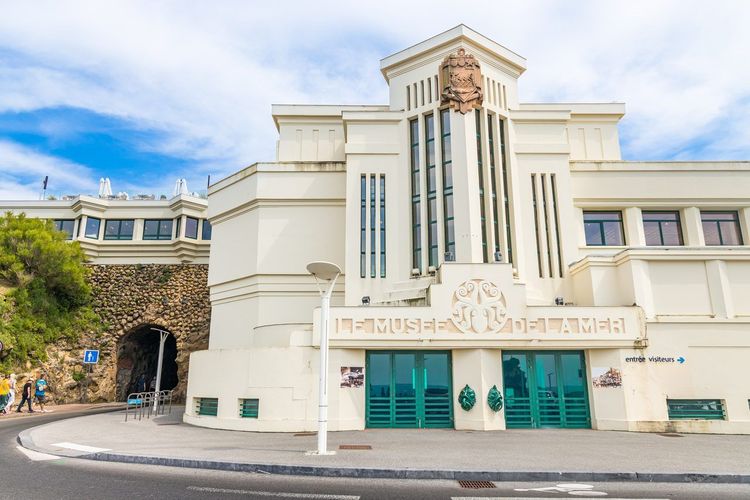
Biarritz's oceanic climate brings its share of showers even in midsummer, so it is worth having a backup plan. The Biarritz Aquarium and the Cité de l'Océan, both described above, remain the reliable choices: heated interiors, a one-to-two-hour visit, and guaranteed appeal for all ages.
The Casino Barrière de Biarritz offers another indoor option, with gaming rooms, restaurants, and occasional evening shows. For shopping enthusiasts, the Halles are accessible even in the rain thanks to their covered pavilions, and the pedestrian streets of the centre have enough shops to fill an entire afternoon without getting wet. The historical museum and the Musée du Chocolat, both quick to visit, make for a smart way to fill a grey morning.
Finally, if bad weather sets in for several hours, a spa or thalasso session is one of the best ways to turn a rainy day into a relaxing interlude: Thalasso Thalmar and several seafront hotels welcome outside visitors by the day, with no overnight stay required. This is often when prices are most attractive, as demand naturally drops on grey days.
What to Do Around Biarritz and in the Basque Country
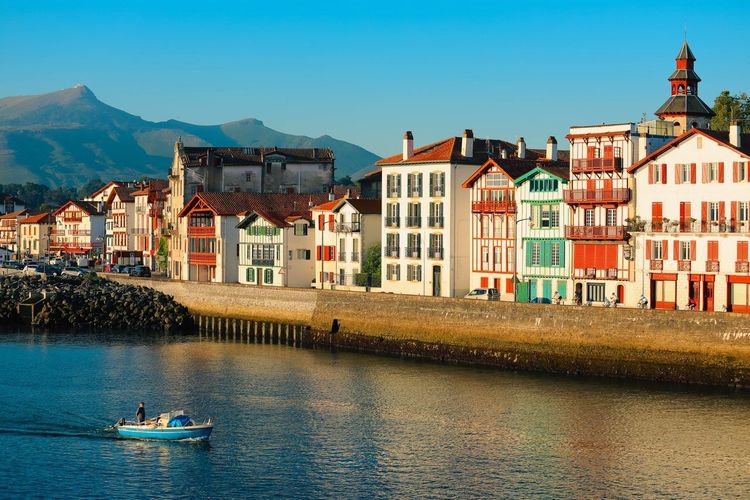
A weekend in Biarritz rarely leaves time to venture far from the city, but a few hours are enough for a day trip that offers a change of scenery. Saint-Jean-de-Luz, about twenty minutes by car or train, has an active fishing harbour, a cobbled old town, and a bay enclosed by sea walls, which means much more sheltered beaches than those in Biarritz.
To the south, Bidart and Guéthary retain the feel of quieter seaside resorts, with surf spots well known among enthusiasts and a few fish restaurants less busy than those in the centre of Biarritz. Bayonne, a quarter of an hour by train, plays a different card: the banks of the Nive, the Gothic cathedral, and the chocolate workshops that have made its reputation since the seventeenth century. For hiking lovers, the coastal path linking Bidart to Saint-Jean-de-Luz via Guéthary can be walked in sections of two to three hours, with ocean views at every turn.
These excursions fit well into a third day if your schedule allows, or into a simple half-day as a complement to the main programme. Our Ryo article on the most beautiful beaches of the Basque Country and our Ryo article on hikes around Biarritz detail specific itineraries for extending the exploration beyond the city.
Planning Your Trip: Weather, Budget, and How to Get There
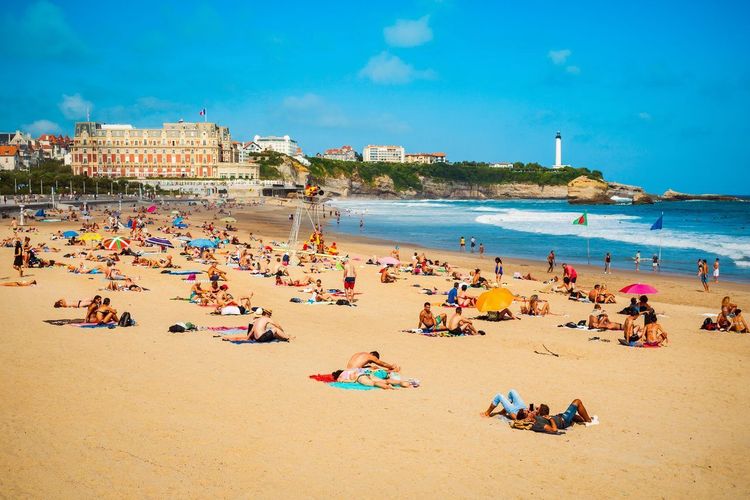
For a weekend in Biarritz, the ideal period runs from May to September, when temperatures most often range between 20 and 26 degrees and the sea becomes pleasant for swimming. Spring and early autumn often offer the best compromise, with generally mild weather and far lighter crowds than in July and August. Bear in mind that the climate remains oceanic: a shower can roll through at any point even in August, and a windbreaker takes up less space in your bag than an umbrella that is useless against the gusts off the Côte des Basques.
On the budget side, allow roughly 150 to 250 euros per person for two days on a simple plan, including accommodation and meals, and more if you opt for a luxury hotel or an all-inclusive spa package. Platforms like Airbnb often offer good value out of season, particularly for groups sharing an apartment rather than booking several hotel rooms. For a budget-friendly weekend, targeting the low season and booking paid activities — such as the aquarium or the thalasso — in advance can significantly reduce the bill. Also watch out for parking: the centre is largely paid and fills up early in summer, so accommodation with a parking space quickly makes a difference.
To get there, the TGV connects Paris to Biarritz in just over four hours, with a station about thirty minutes' walk or ten minutes by bus from the seafront. Biarritz-Pays Basque airport serves around ten French cities with direct flights and is a few kilometres from the centre, while the car remains a practical option for combining the city with a trip into the inland Basque Country. Once there, the Chronoplus bus network and the free central shuttles are more than sufficient for a weekend.
FAQ
How many days should I plan for a weekend in Biarritz?
Two full days are enough to see the essentials: Rocher de la Vierge, Grande Plage, the lighthouse, and the city centre. With three days, you can add a day trip to Saint-Jean-de-Luz or a full surf session on the Côte des Basques.
What budget should I plan for a weekend in Biarritz?
Budget between 150 and 250 euros per person for a simple weekend, including accommodation and meals. This budget rises quickly with a luxury hotel, a thalasso treatment, or repeated surf outings.
What is the best time of year for a weekend in Biarritz?
May, June, and September offer the best balance between mild weather and moderate crowds. July and August guarantee more stable weather but with higher prices and very busy sites.
How do I get to Biarritz from Paris or Bordeaux?
From Paris, the TGV takes just over four hours to Biarritz station. From Bordeaux, allow around two hours by train or by car via the A63 motorway.
Where should I stay in Biarritz for a successful trip?
The area between the Grande Plage and the city centre is the most convenient for getting around on foot. For tighter budgets, hotels near the Halles and the train station offer a good price-to-location trade-off.
Is Biarritz a good destination for a romantic weekend or a family trip?
Yes in both cases, as long as you adapt the programme. Couples will gravitate towards sunset viewpoints and the thalasso, while families will enjoy the Aquarium, the Cité de l'Océan, and sheltered beaches like Port-Vieux.
A weekend in Biarritz fits into a remarkably compact geographic footprint, yet it leaves a far greater impression than its size might suggest: the Belle Époque grandeur of the casino and the Hôtel du Palais, the surf culture of the Côte des Basques, and that particular light that falls on the Rocher de la Vierge at the end of the day. Two days are enough to grasp the essentials, three to add a trip towards Saint-Jean-de-Luz or the inland Basque Country.
To plan your visit or simply let yourself be guided once you arrive, the Ryo audio tour of Biarritz covers the key spots mentioned in this guide, from the Rocher de la Vierge to the Halles, with stories that bring each stop to life. All that's left is to book your train ticket and keep an eye on the weather.
À lire également