© Shutterstock
 Votre guide Ryo
Visiting Blois with Family in 2026: the Complete Guide for Kids and Adults
In Blois, a 16th-century stone staircase spirals around a turret like a giant toy — and it's often the first place where kids stop in their tracks, fascinated. Visiting Blois with family rarely starts with the castle: it starts with that spiral of white stone, free and open at all hours. The city was built along the Loire on uneven terrain, and this unlikely topography of staircases, alleyways and terraces turns every short walk into a small adventure for children under ten. The Ryo audio-guided tour of Blois lets you follow this terrain step by step, with stops designed to hold younger visitors' attention between monuments.
The programme is full of tangible things: a royal castle where four architectural styles face each other across a single courtyard, a century-old magician who still levitates objects twice a day in season, a leaning house that no one has ever managed to straighten since the 15th century, and terraced gardens where kids can run without being told to keep quiet every five minutes. Add nearby châteaux reachable in under twenty minutes by car, a few museums that opt for the unusual over the serious, and a budget that stays manageable if you know where to look — that is what this guide covers, neighbourhood by neighbourhood.
The Royal Castle of Blois: Four Centuries on One Courtyard
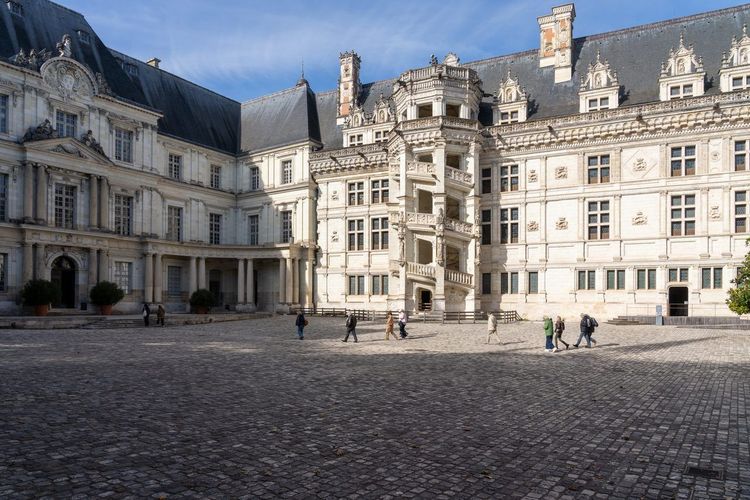
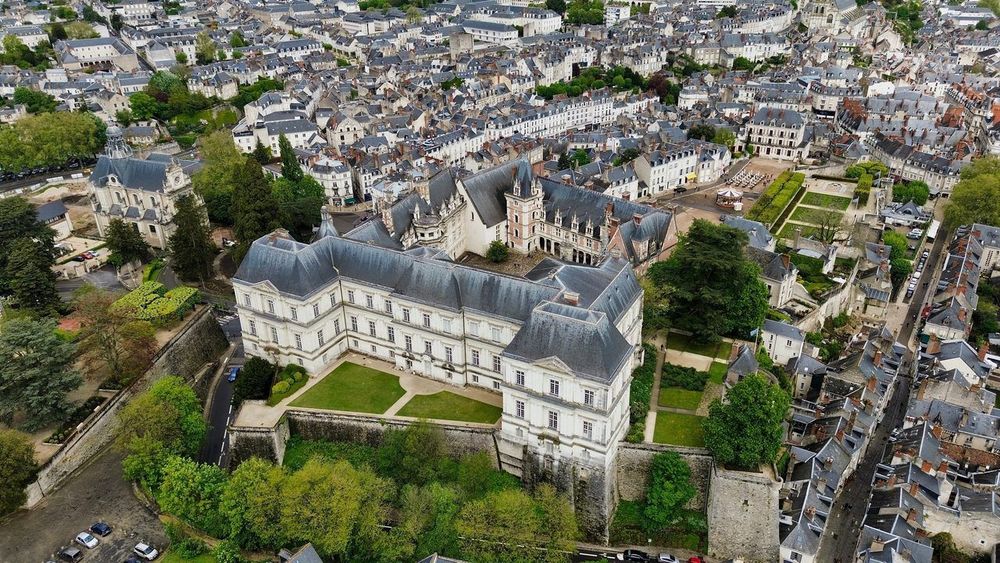
The Royal Castle of Blois (6 Place du Château, 41000 Blois, rated 4.5/5 on Google based on 23,070 reviews) is unlike any other monument in the Loire Valley, and that is precisely what makes it so easy for a seven-year-old to read. Four façades, four centuries and four approaches to architecture face each other across a single inner courtyard: the Gothic wing of Louis XII, the Loges façade inspired by Italy, the François I staircase spiralling upward in the open air, and the Classical wing of Gaston d'Orléans. No lengthy explanation of the Renaissance is needed — the differences are obvious at a single glance around the courtyard.
The castle's history lends itself well to storytelling: in 1588, the Duke of Guise was assassinated in the king's chamber, on the orders of Henri III, after ignoring several warnings. Guides recount the episode in the very rooms where it took place, and the staging — mannequins, lighting, seasonal sound reconstruction — works particularly well for children who enjoy stories with a real culprit and a real motive.
The castle's past does not end with this political crime. Anne of Brittany lived here, several kings were born within its walls, and the city itself owes its nickname of royal city to this concentration of sovereigns between the 15th and 17th centuries. For younger visitors, this chronological thread matters less than the physical sensation of the place: the worn steps of the François I staircase, the turrets where arrow slits can still be made out, the cobbled courtyard where footsteps echo. Wear comfortable shoes — the courtyard and gardens are not flat.
Allow about two hours with young visitors, a little more if the summer sound-and-light show is on the programme. A free activity booklet is handed out at reception for children aged 6–12, with puzzles to solve in each wing — the kind of detail that turns a castle visit into a treasure hunt without you having to improvise anything. Admission is reasonable compared to other Loire châteaux, online ticketing avoids queues in high season, and a combined ticket with the Maison de la Magie often saves a few euros if you plan to visit both on the same day.
If you want to prepare the visit in advance with your kids, Blois's audio-guided tour features several audio tracks dedicated to the castle and its iconic staircase, with anecdotes calibrated to hold attention without overwhelming younger listeners with dates.
The Maison de la Magie Robert-Houdin
Opposite the castle, a black façade comes to life several times a day: dragon heads emerge from the windows as if breathing smoke, before an audience of young spectators who don't always have time to reach for their phones. The Maison de la Magie Robert-Houdin (1 Place du Château, 41000 Blois, rated 4.2/5 on Google based on 3,010 reviews) pays tribute to the watchmaker-magician born in Blois whose name Houdini borrowed a few decades later, and the museum plays on this dual legacy: illusion and mechanics.
Inside, 19th-century automaton collections share space with optical illusion rooms and two magic shows per day in season, where a professional magician levitates, vanishes and reappears objects just a few metres from the audience. The proximity changes everything: unlike a televised show, children see — or think they see — the trick unfolding right in front of them.
Allow 1h30 on site, longer if you stay for both performances. Children under 6 get the most out of the automata and the façade dragons; from ages 7–8, the "how does it work" aspect of the show becomes the real draw. One simple tip: arrive 15 minutes before the listed time — not all seats are numbered and the best spots go quickly in July and August.
Through the Lanes of Vieux Blois: the Escalier Denis-Papin, the Maison des Acrobates and the Pont Jacques-Gabriel
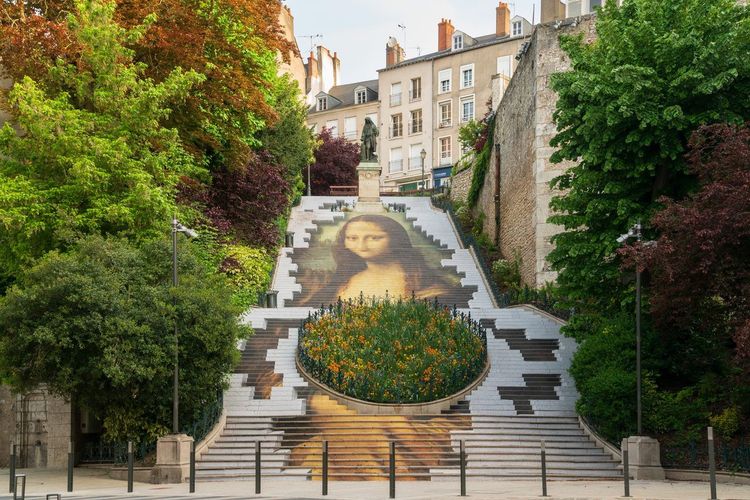
Between the castle and the Loire, Vieux Blois descends via a staircase that is worth the detour in its own right. The escalier Denis-Papin connects the upper town to the lower town across several dozen steps lined with half-timbered houses, and the public lift installed alongside — free during opening hours — saves the most tired legs at the end of the day.
At the bottom of the staircase, the Maison des Acrobates unfailingly catches children's eyes: its half-timbered façade, carved with figures in mid-somersault, has been visibly leaning towards the street since the 15th century without ever collapsing. Tell them the sculptures depict jugglers and acrobats from medieval fairs, and the house becomes a spot-the-difference game at child height.
Continue towards the Loire to reach the pont Jacques-Gabriel, built in the 18th century and stretching 283 metres, with its central obelisk that long served as a landmark for river boatmen. The walk across on foot offers the best panoramic view of the castle and the city's slate rooftops, especially in the late afternoon when the light skims the Loire. It is also a good place to spot the last gabarres — the flat-bottomed boats that once carried wine and salt along the river.
This staircase–house–bridge triangle can be covered on foot in under an hour, with no need for a car or a complicated map: the three points are almost visible from one another.
The Cathédrale Saint-Louis and the Jardin de l'Évêché
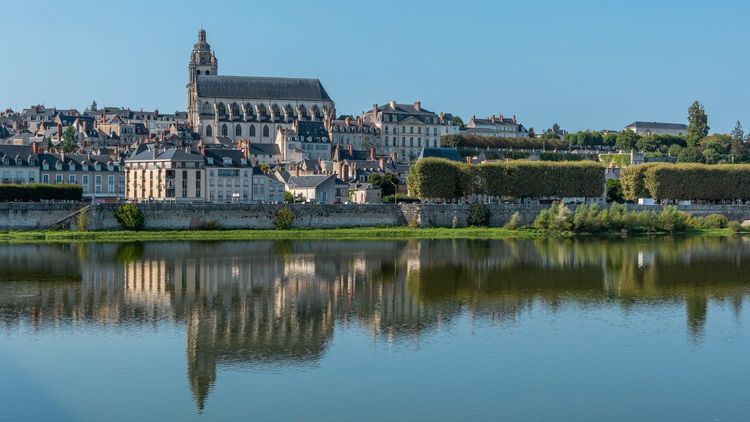
The Cathédrale Saint-Louis de Blois was rebuilt after the partial collapse of its bell tower in 1678, an episode that local guides enjoy recounting: a storm, a poorly maintained timber frame, and a nave that had to be entirely rebuilt within a few years. The interior, plainer than classic Gothic cathedrals, can be visited in 15–20 minutes, making it a short and easy stop to slot between two longer visits.
Just behind it, the jardin de l'Évêché (Place Saint-Louis, 41000 Blois, rated 4.6/5 on Google based on 220 reviews) overlooks the Loire from a balcony terrace, with formal French parterres and a panorama that lets you effortlessly pick out the city's main monuments in a single glance. Kids especially love running between the basins and spotting, far below, the boats making their way upstream.
Entry is free and the garden closes at sunset, making it a welcome break late in the morning if the day's programme has been packed.
The Parc de Lice and the Jardin Augustin-Thierry: the Kids' Green Lung
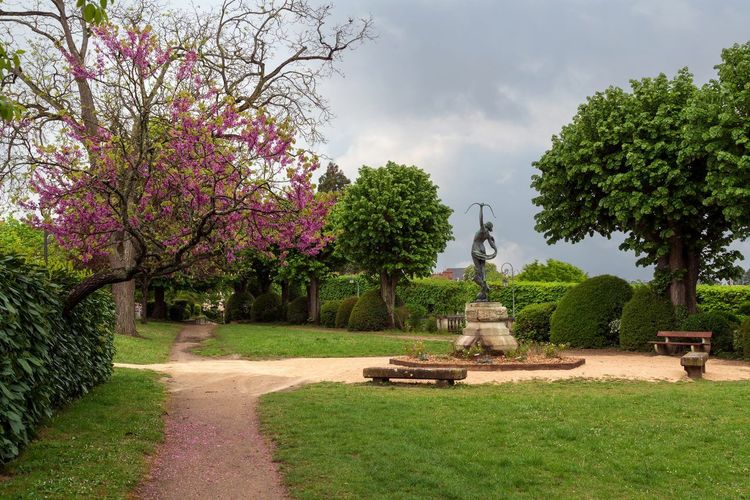
After a morning of monuments, kids often demand somewhere to run without being told to keep quiet. The parc de Lice, laid out on the former medieval jousting ground at the foot of the castle, answers exactly that need: open lawns, benches in the shade of lime trees, and a direct view of the Loges façade.
Nearby, the jardin Augustin-Thierry (Avenue Jean Laigret, 41000 Blois, rated 4.6/5 on Google based on 24 reviews) adds a play area and a few picnic tables, making it a practical stopping point for a packed lunch between two paid visits.
Both gardens are free, open year-round, and rarely crowded even in high season, unlike the immediate surroundings of the castle. If you are travelling with very young children, this is also the easiest spot to take an impromptu pushchair break: the paths are flat and shaded, a real contrast with the slopes of Vieux Blois.
Fondation du Doute and the Natural History Museum: the Museums That Surprise
Blois has two museums that often appeal to children more than classic art-history collections. The Fondation du doute occupies a former convent converted into a space dedicated to the Fluxus movement and the art of questioning: participatory installations, repurposed objects, and a standing invitation to touch rather than merely look. The museum's name sets the tone: here, you question as much as you admire.
The Muséum d'histoire naturelle de Blois (Avenue du Docteur Jean Laigret, 41000 Blois, rated 4.3/5 on Google based on 295 reviews), housed in a former Jacobin convent, offers zoology and mineralogy collections presented in a lively enough way to hold a 5-year-old's attention for a full hour: life-size skeletons, taxidermied animals, and regularly updated temporary exhibitions.
Each museum takes about an hour to visit, which makes it possible to combine them in the same day if time allows, or to keep one in reserve for a rainy day. Unlike the castle, neither requires advance booking outside the busiest school holiday periods.
Escape Games, Mystery Trails and Treasure Hunts around the City
For those who prefer an activity over a passive visit, Blois offers several outdoor mystery formats: treasure-hunt trails through the lanes of Vieux Blois, guided-visit apps designed as scavenger hunts, and indoor escape games themed around local history. These formats work particularly well with children aged 8 to 13, an age when the classic visit starts to lose its appeal but a good mystery still brings everyone together.
Allow 1h30 to 2 hours depending on the format chosen, and check the recommended age ranges before booking: some historical escape games include reading or arithmetic mechanics that require a minimum level of independence. It is also a good backup option if the weather turns rainy in the middle of the afternoon. For a calmer alternative, the Castle life in the Loire Valley audio-guided tour covers much of the same ground at a gentler pace.
Day Trips from Blois: Chambord, Cheverny and Chaumont
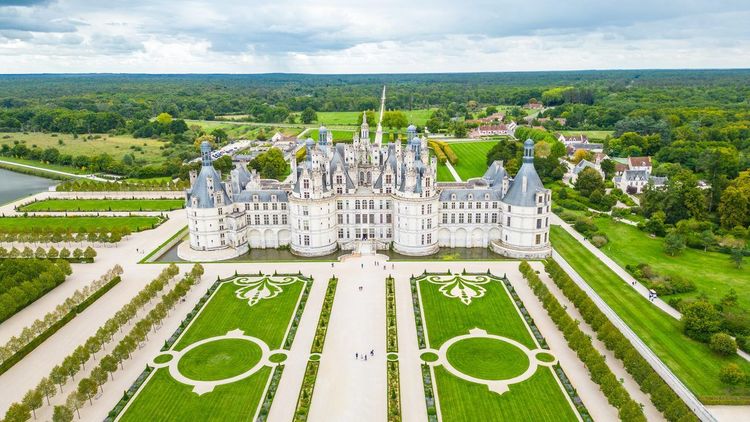
Blois sits at the centre of a triangle of châteaux that, on their own, often justify choosing the city as a base for a stay. The château de Chambord, less than 20 minutes by car, impresses first by its sheer scale: 440 rooms, 282 chimneys, and a double-helix staircase attributed to Leonardo da Vinci, where two people can go up and down simultaneously without ever crossing paths. Kids love testing the principle, each on their own flight of steps.
The château de Cheverny, also about twenty minutes away, plays a different card: that of a still-inhabited castle, furnished as it was in the 19th century, with a pack of hunting hounds fed publicly on weekdays — generally in the late afternoon depending on the season. It is a ritual that kids often ask to see again once they have discovered it by chance.
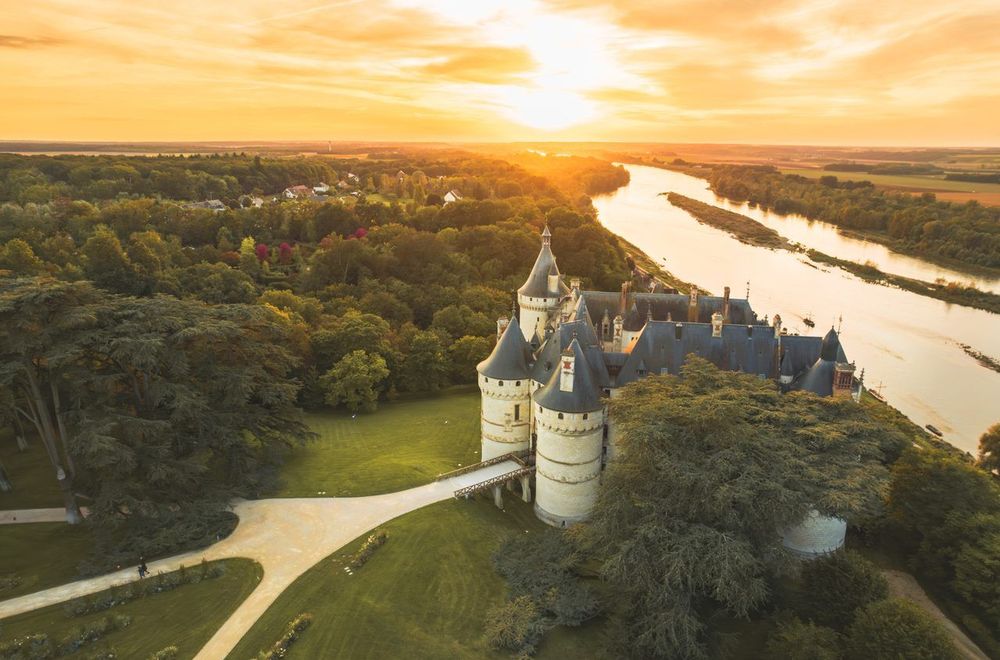
The château de Chaumont-sur-Loire (41150 Chaumont-sur-Loire, rated 4.4/5 on Google based on 9,481 reviews), a little further along the opposite bank, bets on its gardens and its international garden festival, open from April to November: themed plots, ephemeral installations, and sumptuous stables converted into an exhibition space. It is the château best suited to a long picnic stop, with enough room for kids to burn off energy between pavilions.
None of these three châteaux is easily reachable by public transport at weekends: a car remains the simplest solution for combining two stops in the same day. Some combined castle-plus-garden tickets exist at Chaumont, and Chambord offers a package that includes bicycle rental to explore the 5,440-hectare forested estate, far too large to cover on foot with young walkers.
With three châteaux this close together, the real difficulty is not choosing which one to visit but resisting the temptation to fit them all into a single day. It is better to pick just one or two per day and leave time for the gardens and breaks, rather than rushing from one visit to the next. The road trip Châteaux de la Loire offers an audio-guided itinerary designed to link these stops without wasting time on the road, with commentary suited to shared listening in the car.
If you are looking to go off the beaten track, the most beautiful villages to discover around Blois complement a château-centred stay nicely, with shorter and less crowded stops. For a deeper look at Cheverny in particular, our dedicated article on the château de Cheverny details the hound-feeding times and the best slots for avoiding the crowds.
Where to Eat in Blois with Kids
The Vieux Blois neighbourhood, around the escalier Denis-Papin and the Maison des Acrobates, concentrates most of the child-friendly addresses: crêperies, pizzerias and bistros offering children's menus without an intimidating gastronomic label. Many terraces open onto pedestrian lanes, which makes keeping an eye on younger children during the meal much easier.
For a quicker lunch between two visits, the area around the Place du Château and the covered market hall offers takeaway options: sandwiches, composed salads and local pastries, ideal for an impromptu picnic in the parc de Lice or the jardin de l'Évêché. Open-air markets, held on certain mornings in the town centre, also let you put together a simple meal with local produce — goat's cheese from Perche and seasonal fruit leading the way.
If you are travelling with very young children, try to book outside peak meal times — between 12:15 and 13:15 and between 19:30 and 20:30: most restaurants in the historic centre are small and fill up quickly in season, without always being able to set up a high chair at the last minute.
Where to Stay in Blois with Kids
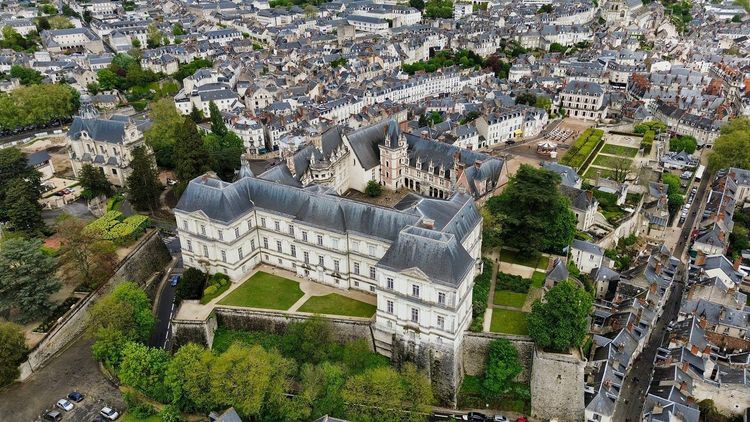
The choice mainly comes down to two neighbourhoods. The historic centre, around the castle and Vieux Blois, has the advantage of letting you do everything on foot, without depending on a car for evening visits or a late ice cream after the sound-and-light show. Accommodation there tends to be smaller, which suits a couple with one or two young children well, but less so a larger group looking for several beds in a single room.
Hotels and apartment-style residences on the outskirts, near the station or along the Loire, more readily offer rooms for four or connecting rooms, with private parking included — a real asset if you plan daily excursions to Chambord or Cheverny. Campsites and bed-and-breakfasts in the valley, 10–15 minutes by car from the centre, remain an interesting option in summer for those who want a garden or a pool without giving up proximity to the city.
Whatever neighbourhood you choose, the Ryo audio guide for Blois makes it easy to gauge walking distances between your accommodation and the main sights, once you are on the ground with the app in your pocket.
Practical Info: Parking, Transport and Budget
Blois is very easy to explore on foot from the centre, but a car remains useful for excursions to the nearby châteaux. Several paid car parks surround the castle, with reasonable daily rates, and free parking is available along the Loire a few minutes' walk from the historic centre — a useful option if parking costs factor into your budget.
Blois-Chambord station, served from Paris in just over 1h30 by direct train, makes the city reachable without a car for the urban part of your stay: the castle, the Maison de la Magie, Vieux Blois and the museums are all easily covered on foot or by local bus. For the surrounding châteaux, however, a hire car or an organised excursion remains necessary, as public transport links are limited at weekends.
In terms of season, spring and early autumn remain the most comfortable periods for walking between sites with kids, without the heat or crowds of July and August. In terms of budget, allow around €15 to €20 per adult for the royal castle, a similar amount for the Maison de la Magie, and look for combined tickets that can save a few euros. Children under 6 are generally admitted free at most sites, and the parks (Lice, Augustin-Thierry, jardin de l'Évêché) remain free year-round, making it easy to plan days that mix paid attractions with free breaks.

FAQ
How many days should you plan for a stay in Blois with kids?
Two days are enough to cover the historic centre (castle, Maison de la Magie, Vieux Blois, museums) at a pace suited to younger visitors. Add a third day if you want to include Chambord and Cheverny without rushing, or a fourth to add Chaumont-sur-Loire and its gardens.
Is the Royal Castle of Blois suitable for young visitors?
Yes: the inner courtyard is open and secure, a free activity booklet is offered to children aged 6–12, and the visit is short — around two hours — compared to larger Loire châteaux such as Chambord.
What free activities are there in Blois with kids?
The parc de Lice, the jardin Augustin-Thierry, the jardin de l'Évêché and walking across the pont Jacques-Gabriel are all free. The escalier Denis-Papin and the Maison des Acrobates can also be discovered at no cost while strolling through Vieux Blois.
Where should you park in Blois when travelling with kids?
The paid car parks around the castle are the most convenient for keeping walking distances short with young children. Free parking is also available along the Loire, a few minutes' walk from the historic centre.
What budget should you plan for a weekend in Blois with kids?
Budget around €15 to €20 per adult for the castle and a similar amount for the Maison de la Magie; children under 6 are generally admitted free. Adding meals and accommodation, a two-day weekend for four people typically comes to between €250 and €400 excluding transport.
Do you need to book the Maison de la Magie show in advance?
Online booking is not compulsory but is recommended in July and August, when both daily performances sell out by early afternoon. Arriving 15 minutes before the listed time is the best option if you haven't booked.
A stay in Blois ultimately relies less on any single monument than on a well-balanced mix of heritage and open space: a castle that reads like a detective story, a magician who still manages to lift the eyes of screen-weary kids, and enough free gardens to catch your breath between paid attractions. Add the proximity of Chambord and Cheverny, and Blois becomes an ideal base for a two-to-four-day stay without ever needing the car for the urban part of the programme.
Before you leave, take a moment to explore Blois's audio-guided tour: it covers the key sites mentioned here, with commentary designed to be enjoyed by a group without imposing a rigid visiting pace. A way to turn a list of monuments into a real stroll, earphones in and kids leading the way.