© Shutterstock
 Votre guide Ryo
15 Most Beautiful Villages to Discover Around Blois in 2026
The Loire flows silently just steps from the royal château, but it is in the hinterland that the Val de Loire reveals its best-kept secrets. The most beautiful villages around Blois form a constellation of white tufa stone, flower-lined lanes and ruined keeps that often surpass the major attractions in terms of authenticity. Among them is Lavardin, officially listed among the Most Beautiful Villages of France, and Chédigny, whose roughly 1,000 heritage roses in bloom transform every façade into a living painting from June to July. Before venturing out to these villages, set your bearings in town with the Ryo audio-guided tour of Blois, which covers 22 points of interest over 4 kilometres in 1h45.
From the former royal port of Chambord to the cave dwellings of Montrichard, by way of a zoo that is home to one of the most significant populations of southern white rhinoceros in France, the fifteen stops in this article provide enough material for several weekends starting from Blois.
1. Ménars, the Château of Madame de Pompadour
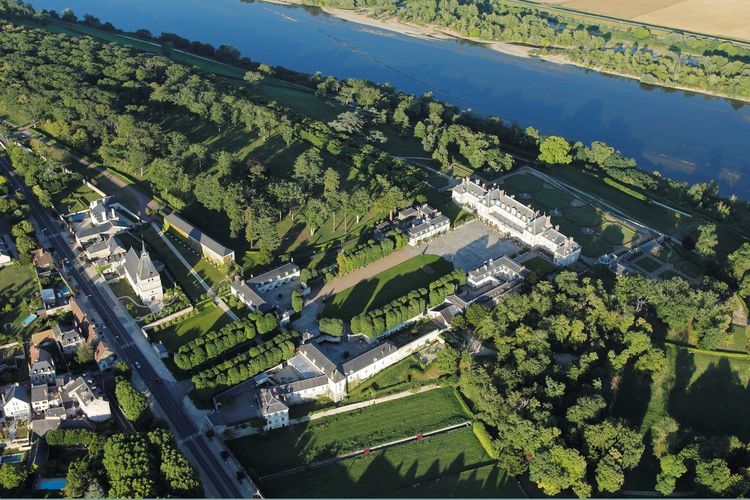
The Château de Ménars (Rue du Château, 41500 Ménars, rated 4.2/5 on Google based on 350 reviews) makes an immediate impression just outside Blois, ten kilometres to the north-east, perched on a hillside overlooking the Loire. Madame de Pompadour acquired it in 1760 and entrusted the landscaping of the gardens to Gabriel, then to Soufflot, the architect of the Panthéon in Paris. She died four years after the purchase, leaving behind an unfinished estate that passed into the hands of the Comte de Provence, the future Louis XVIII.
The estate remains privately owned and the interior is not open to visitors, but the formal French gardens, with their perspectives over the river, can be admired from the road and from the towpath below. The village of Ménars itself is worth ten minutes of leisurely wandering: its low tufa stone houses and views of the Loire at sunset make an ideal introduction to a stay in the region.
2. Saint-Dyé-sur-Loire, the Former Royal Port of Chambord
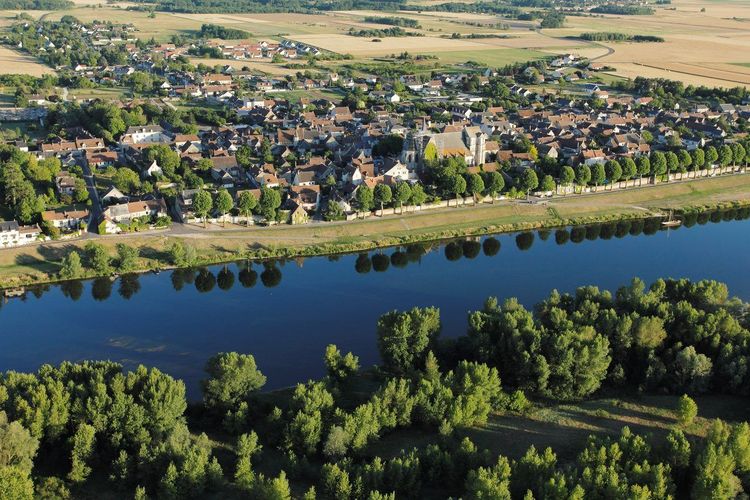
The Sologne begins to make itself felt along the banks of the Loire at Saint-Dyé-sur-Loire (Quai de Loire, 41500 Saint-Dyé-sur-Loire, rated 4.5/5 on Google based on 180 reviews), sixteen kilometres from Blois. This village of fewer than 900 inhabitants served, throughout the construction of Chambord (1519–1547), as the principal supply port for the most ambitious château of François I: blocks of tufa stone travelled down the Loire from the quarries of Touraine, then were carted up to the Sologne plateau where the château was rising.
This port history can still be read in the fabric of the village. The Maison de l'Île and the restored 18th-century quays line the river; a stele recalls the bustling activity that animated these banks when several hundred workers were busy erecting the sculpted salamanders of François. Italian merchants, Touraine quarrymen and Sologne woodcutters rubbed shoulders here in a construction town that had nothing to envy from the region's largest cities.
Today, the quay at Saint-Dyé is one of the most pleasant staging points on the La Loire à Vélo cycle route (EuroVelo 6): the cycle path runs through the village right along the river, ideal for a two-hour outing from Blois. The church of Saint-Dyé hides an unexpected detail: its Romanesque crypt, predating the royal château, houses the relics of the Irish saint Deicola, a disciple of Columban, who settled here in the 7th century and gave his name to the village.
Tip: come in the late afternoon. The raking light on the Loire from the quays produces golden reflections on the white sand of the gravel banks unlike anything else in the Val de Loire.
3. Cour-Cheverny, the Village of a Grape Variety Found Nowhere Else
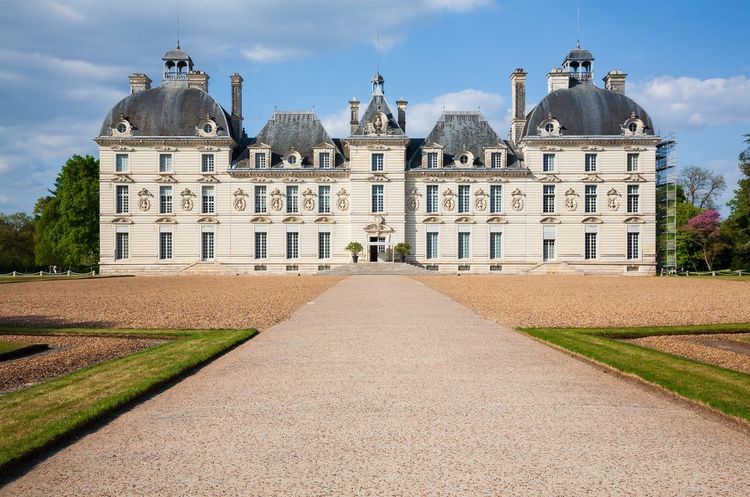
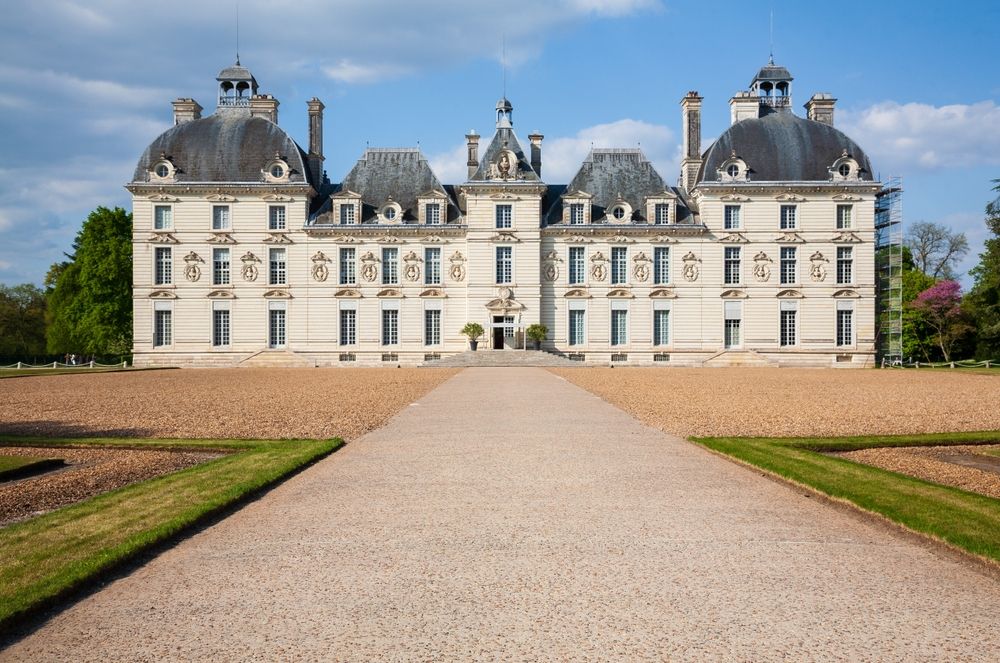
Cour-Cheverny lies fourteen kilometres south of Blois, right beside the Château de Cheverny (Cheverny, 41700 Cheverny, rated 4.5/5 on Google based on 22,683 reviews). The village lent its name to an exclusive wine appellation: Cour-Cheverny AOC is produced from the Romorantin grape, a white variety planted here since the time of François I that grows nowhere else in France. Its notes of quince, acacia and aged honey are reason enough to stop in the village.
If you are planning to visit the château itself, our Ryo guide to the Château de Cheverny will give you all the practical details on opening times, tickets and the secrets of the famous kennels.
4. Fougères-sur-Bièvre, the Medieval Château Nobody Knows About
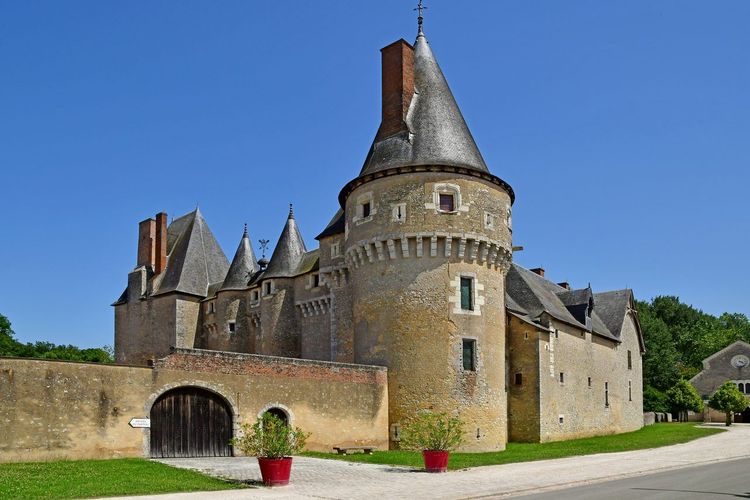
Fougères-sur-Bièvre is the best-kept secret in Loir-et-Cher. Eighteen kilometres from Blois, this town of 800 inhabitants is home to a medieval château listed as a historic monument that surprises visitors with its state of preservation and its complete sense of escape: no crowds, no gift shop, no queues.
The Château de Fougères-sur-Bièvre (41120 Fougères-sur-Bièvre, rated 4.4/5 on Google based on 1,652 reviews) was built from 1470 by Pierre de Refuge, treasurer to King Louis XI. Unlike the pleasure châteaux that would spring up across the region a few decades later, it follows a purely defensive logic: moats, flanking corner towers, machicolations, covered wall-walks. It looks more like a northern French fortress than the ornamental Loire châteaux that surround it, and that is precisely what makes it so fascinating.
The interior, managed by the Centre des monuments nationaux, features a remarkable half-timbered inner courtyard where the medieval carpenter signed his work with as much care as the stonemasons. The entrance fee is modest. Guided tours reveal architectural details invisible from the outside, including the passive defensive systems built into the thickness of the walls.
Practical note: Fougères-sur-Bièvre is open from April to September, with partial closures outside peak season. Check opening times on the Centre des monuments nationaux website before you go.
5. Chaumont-sur-Loire, When Contemporary Art Takes Over the Gardens
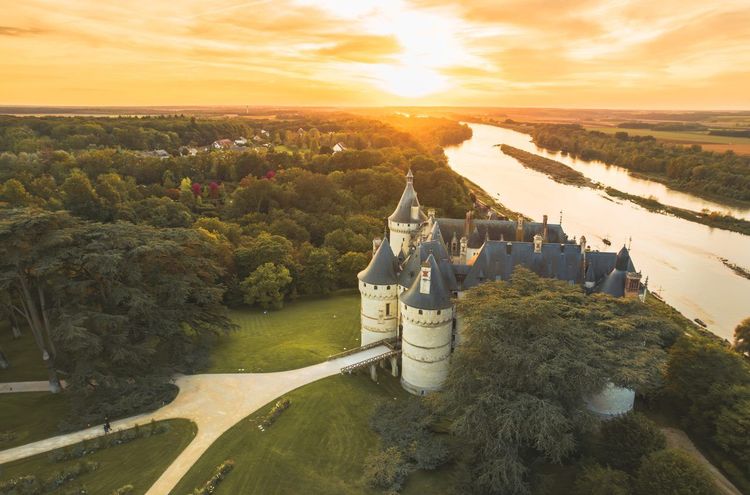
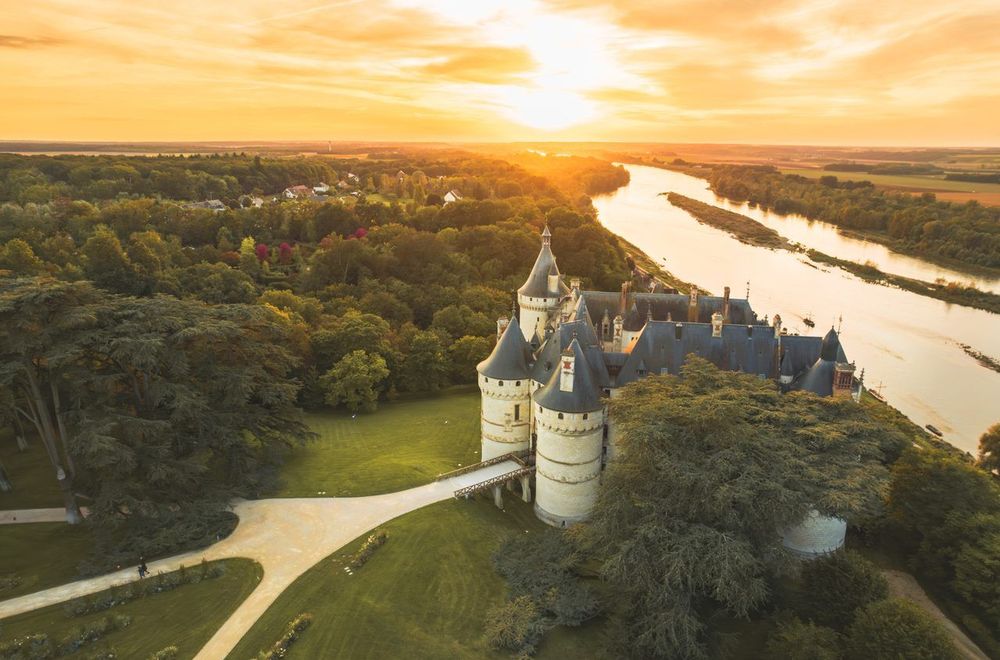
Twenty kilometres east of Blois, Chaumont-sur-Loire offers a rare combination: a 15th-century château overlooking the Loire and, since 1992, an International Garden Festival that has transformed the 32-hectare estate into an open-air art laboratory.
The château itself is worth an hour's visit. Catherine de Medici stayed here after the death of Henri II in 1559, before compelling Diane de Poitiers to exchange it for Chenonceau, an unequal swap that the royal favourite accepted under pressure. Visitors can still see the Queen Mother's apartments, a collection of terracotta medallions of considerable historical value and the 19th-century stables, now a permanent exhibition space. The 39 round towers that crown the ramparts give it a silhouette recognisable from afar, visible from the suspension bridge over the Loire.
But Chaumont is mainly experienced at ground level. The Garden Festival, held from mid-April to mid-November, invites landscape designers and artists from around the world each year to create ephemeral gardens on a new theme. In 2026, around 25 creations will be accessible across the estate. Some play with water, others with light, and others still question the relationship between subsistence farming and contemporary aesthetics. Each year, several gardens are selected to become permanent fixtures integrated into the arboretum.
The century-old park, with its Atlas cedars, sequoias and perspectives over the Loire, is worth a stroll independently of the festival. The working château farm rounds off the visit for anyone interested in sustainable agricultural practices integrated into a heritage setting.
To plan your stay in the region, the road trip Châteaux de la Loire offers an audio-guided itinerary linking the main stops of the Val de Loire, from Sully-sur-Loire to Chalonnes.
6. Bracieux, the Gastronomic Gateway to the Chambord Forest
At 17 kilometres from Blois, Bracieux is not a picture-postcard village: no keep, no château visible from the road. But its 19th-century covered market hall, roofed with flat tiles, is one of the most pleasant in the Sologne. The Bracieux market is held on Thursday mornings and brings together local producers, Sologne game, goat's cheeses and wild mushrooms depending on the season.
The village's gastronomic reputation also owes much to the restaurant Bernard Robin, which earned a Michelin star from this town of 1,400 inhabitants, placing Bracieux on the map for lovers of Loire country cuisine. The commitment to local produce remains in the village's DNA, and several restaurants still offer game menus in autumn.
Bracieux is also a starting point
7. Pontlevoy, the Benedictine Abbey and Its Unexpected Museum
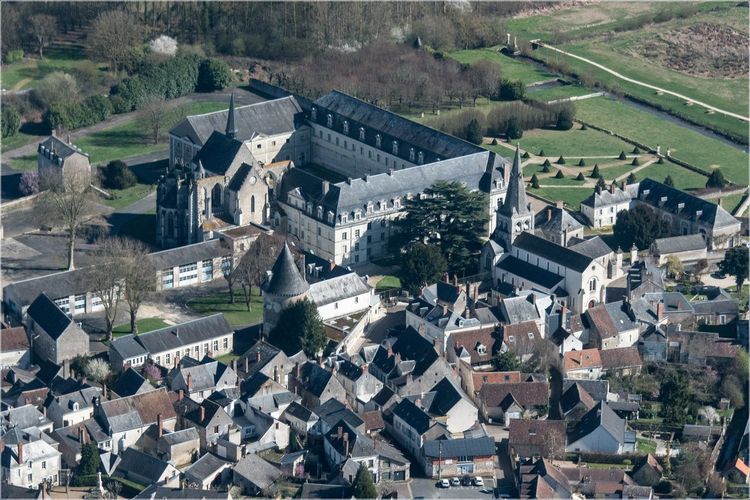
Pontlevoy (25 kilometres from Blois) owes its renown to a Benedictine abbey founded in 1034 by Gelduin de Saumur in thanksgiving for a military victory. Converted into a school after the Revolution, the abbey today houses a secondary school and, entirely unexpectedly, a road transport museum that one would never have anticipated in a Romanesque building. The Gothic choir stalls, the inner cloister and the chapter house are worth stopping for anyone interested in medieval religious architecture.
8. Amboise, the Royal City Where Leonardo da Vinci Spent His Final Years
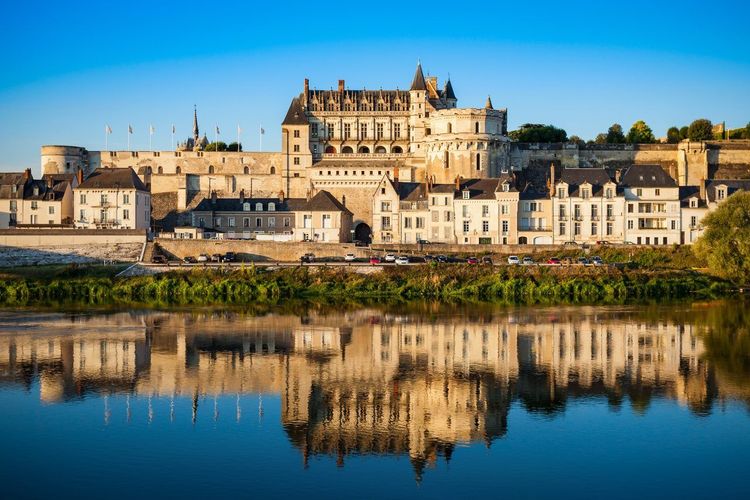
Amboise lies thirty-five kilometres from Blois on the right bank of the Loire. Its 13,000 inhabitants make it a town rather than a village, but its human scale, its château perched on a rocky spur and its 15th-century lanes earn it a place in any honest selection of the finest Loire towns.
The Royal Château d'Amboise (Place Michel Debré, 37400 Amboise, rated 4.5/5 on Google based on 30,304 reviews) was the favourite residence of Charles VIII, who died there in 1498 after striking his head on a doorway lintel on his way to a game of tennis. François I grew up here and it was he who invited Leonardo da Vinci to France in 1516: the Italian genius settled at the Manoir du Clos Lucé, five minutes on foot from the château, where he spent the last three years of his life. He is buried in the Chapelle Saint-Hubert, nestled within the château ramparts, a Flamboyant Gothic chapel of exceptional architectural refinement.
The Clos Lucé is as worthwhile as the château itself. Its gardens feature full-scale models of Leonardo's inventions, built from the original notebooks: a flying machine, a rotating bridge, a human-powered tank, an excavator. The route unfolds outdoors along the park's pathways, and children can easily spend two hours exploring everything. Leonardo's house has been recreated with period furniture and working instruments.
Amboise also has a troglodyte quarter carved into the rock of Chanteloup and the Pagode de Chanteloup, a remnant of an 18th-century château of which only this seven-storey Chinese tower survives. 149 steps lead to a panoramic view over the forest of Amboise and the Loire.
Tip: park in the lower town and walk up to the château through the cobbled lanes for a more authentic approach than via the upper car park. Crossing the old quarter reveals 15th-century half-timbered houses that many visitors never see.
9. Montrichard, Medieval Town on the Banks of the Cher
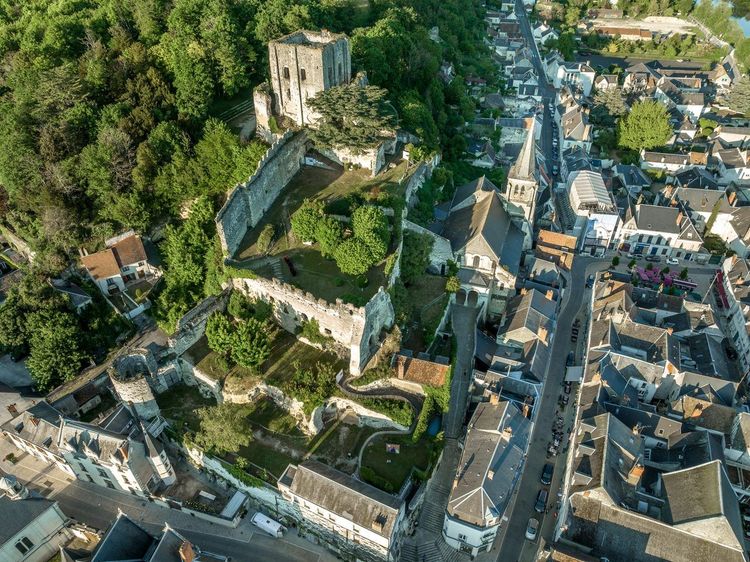
Montrichard-Val-de-Cher (32 kilometres from Blois) presents a striking medieval silhouette: the square keep of the 12th century, built by Foulques Nerra, Count of Anjou, dominates the Cher from a spur of white chalk. Below, the lower town retains its half-timbered houses, its medieval bridge over the Cher and its cave dwellings cut into the cliff face on several levels.
These caves are home to two activities typical of Touraine. The Caves Monmousseau produce sparkling wine in galleries hollowed out 15 metres beneath the cliff and offer guided tours with tastings. A few hundred metres away, former mushroom farms bear witness to another underground vocation of the rock. The cliff also conceals former cave dwellings inhabited until the mid-20th century, identifiable by their chimneys piercing through the rockface.
The view from the château ruins (free access) over the bend in the Cher is worth the trip alone, especially at the end of the day when the tufa stone turns golden. The Wednesday morning market animates the lower town with local producers of Touraine wines. Before hitting the road again, our Blois audio walking tour covers twenty-three stops between the château and the Loire.
10. Talcy, the Château of Ronsard and Cassandre
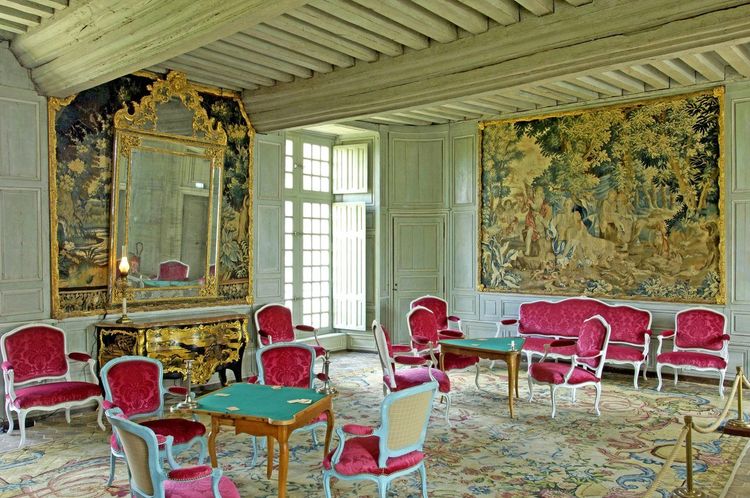
Some 30 kilometres north-west of Blois, Talcy is one of the least-known and most intact Renaissance châteaux in the Val de Loire. Built in 1520 by Bernardo Salviati, a Florentine merchant established at the court of François I, it was acquired by the State in 1933 in an exceptional state of preservation: period furniture, a 16th-century wine press, a dovecote with 1,500 nesting boxes still standing in the inner courtyard.
The château owes its literary fame to Cassandre Salviati, the owner's daughter, whom the poet Pierre de Ronsard met at a ball in Blois in 1545 and with whom he instantly fell in love. She inspired his early sonnets, those of the Amours (1552), which established his poetic reputation. She married someone else. Ronsard turned it into literature that has lasted five centuries.
The château's kitchen garden, with its alley of espalier pear trees and its 18th-century well, gives a precise idea of what Renaissance country gardens looked like. It is one of the quietest spots in Loir-et-Cher, ten kilometres from any road noise, in a bocage landscape that has changed little since the time of Ronsard.
11. Vendôme, the City of Many Arms of the Loir
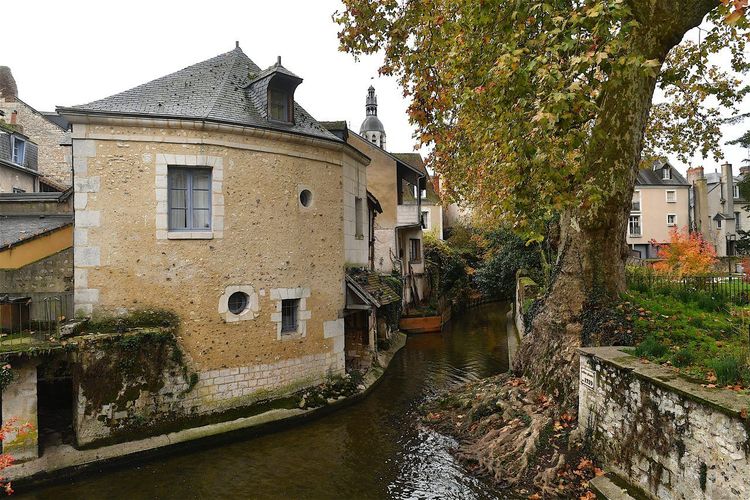
Vendôme (40 kilometres north of Blois) is more of a town than a village. But its unique configuration — the Loir splits into several channels that flow through the town, creating islands, mills, washhouses and views over old walls — gives it a character that few French towns of this size possess.
The Abbaye de la Trinité, founded in the 11th century, houses some of the oldest surviving Romanesque stained glass in France. Its Flamboyant Gothic façade, carved between 1485 and 1507, is considered one of the masterpieces of the style in Europe. The free-standing bell tower, known as the "Flamboyante", rises 80 metres high without being attached to the church itself — an extremely rare feature in French Gothic architecture.
Allow two hours to explore the historic centre between the arms of the Loir, including the Promenade des Grands-Prés and the climb up to the château overlooking the town.
12. Saint-Aignan-sur-Cher, Medieval Charm with a Zoo of 35,000 Animals Within Reach

Saint-Aignan-sur-Cher (52 kilometres from Blois) combines two radically different profiles: a medieval town set on a bend in the Cher, with a Romanesque collegiate church and a château dominating the cliff, and the immediate proximity of the ZooParc de Beauval just two kilometres away.
The Collégiale Saint-Aignan (Place du Marché, 41110 Saint-Aignan-sur-Cher, rated 4.6/5 on Google based on 119 reviews), built in the 11th and 12th centuries, hides well-preserved Romanesque frescoes in its crypt. The crypt, accessible via a side staircase, extends beneath the entire footprint of the building and is one of the largest Romanesque crypts in the Centre-Val de Loire region. Its columns, interlaced capitals and groin vaults date largely from the period 1080–1120. The château adjoining it (private property, interior not open to visitors) can be admired from the terraced gardens open to the public, which offer an unobstructed view over the Cher valley.
Beauval is two kilometres away. The zoo is home to 35,000 animals from 600 species, including giant pandas Huan Huan and Yuan Zi, lowland gorillas, manatees in a vast indoor pool, and southern white rhinoceroses, three residents that arrived from South Africa in 2000. The zoo is open 365 days a year.
Practical tip: book your Beauval tickets online several weeks in advance in July and August. The ticket office queue can reach 45 minutes on busy days. Arriving at opening time allows you to see the pandas active before their midday nap.
13. Lavardin, a Jewel Listed Among the Most Beautiful Villages of France
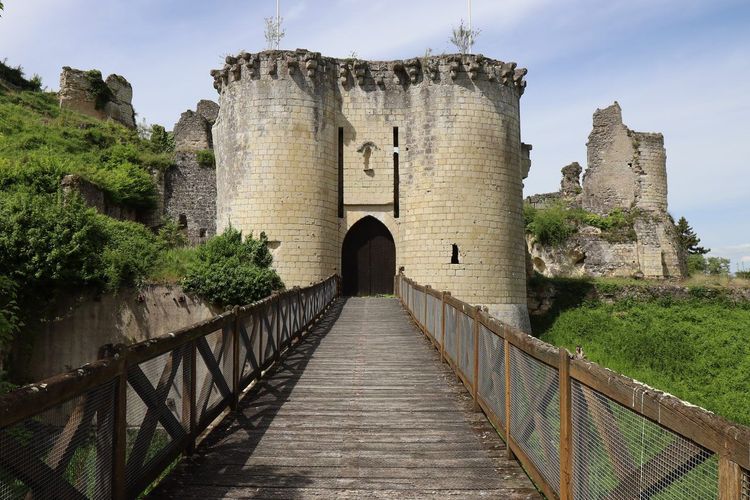
Lavardin takes some effort to reach: it is a 50-minute drive from Blois heading north-east to find this village of 200 inhabitants perched on the cliffs above the Loir. The effort is amply rewarded. Lavardin is officially listed among the Most Beautiful Villages of France and, for once, that label does not disappoint.
The ruins of the medieval Château de Lavardin have crowned the village since the 11th century. The rectangular keep and its collapsed towers evoke a Romantic English landscape more than a signposted tourist monument. Henri IV ordered its partial destruction in 1589, when the stronghold was held by the Catholic League against his royal forces. The ramparts, the dismantled halls and the still-walkable stone staircases can be visited freely, without a ticket, without a guide, without fixed opening hours. It is one of the rare places in France where you can legally climb around the ruins of a medieval castle, in any season.
From the top of the ramparts, the view over the bend in the Loir and the terraced gardens descending to the river gives the full measure of the defensive site: no one could approach Lavardin without being seen from several kilometres away.
The village's other treasure is concealed inside the church of Saint-Genest, a Romanesque building dating from the 11th century. Its interior walls preserve frescoes from the 12th to the 16th century that cover virtually every surface: the Baptism of Christ, the Harrowing of Hell, the Raising of Lazarus, scenes from the Apocalypse. The naïve style and chromatic intensity of these paintings — ochres, siennas, faded blues — make the ensemble one of the most complete medieval iconographic programmes on the Loire. Victor Hugo passed through Lavardin during his journey through the Val de Loire and brought back several sketches that appear in his drawing notebooks.
The village itself can be walked in twenty minutes: a few cave dwellings carved into the tufa of the cliff, a shaded square with a fountain, vegetable gardens sloping gently down to the Loir. A table d'hôte and a charming small hotel make up most of the accommodation offer. There is no supermarket, and that is entirely to your advantage.
The best time: come on a weekday, preferably in the morning, before day visitors arrive from Tours or Vendôme. The village is then utterly silent, marked only by the Loir below and the swifts circling the keep.
14. Chédigny, the Garden Village of a Thousand Roses
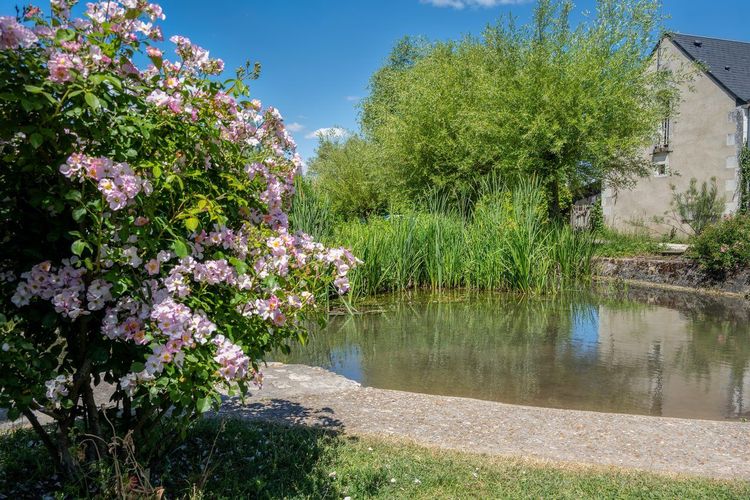
Chédigny (62 kilometres from Blois, in Indre-et-Loire) is the only village in France to officially hold the "Remarkable Garden" label, awarded by the Ministry of Culture in 2013 and usually reserved for parks and gardens. This singular distinction stems from a community tradition dating back to the 1990s: each resident commits to flowering their façade and enclosure according to a shared aesthetic charter, collectively revisited every five years. The result is a plant-based staging that goes far beyond what any ordinary floral village might offer.
In June and July, the roughly 1,000 heritage roses adorning walls, gates and windowsills transform the village into an explosion of white, pink and crimson. The chosen varieties are non-hybrid heritage roses — Rosa gallica, Damask Rose, Chapeau de Napoléon — that produce a single, intense flowering over a few weeks, accompanied by a fragrance that fills every lane. Chédigny hosts an annual Rose Festival in June: a rare plant market, floral painting exhibitions, pruning workshops and tours of private gardens normally closed to the public.
But Chédigny is not merely a seasonal village. Its 17th-century wash house, restored by the residents, its granite Touraine town hall with green shutters, and its communal orchards in blossom in spring make this town of 400 inhabitants one of the finest examples of heritage enhancement driven by the residents themselves, without massive tourist subsidies.
Outside the flowering season, Chédigny remains pleasant: the roses keep their arching stems and bright red hips in autumn, and the kitchen gardens alongside every house reflect a relationship with nature that stands in contrast to the uniformity of surrounding towns. The site can be explored on foot without a map: there is just one main street and a few alleyways.
Good to know: Chédigny has neither a restaurant nor a permanent café. Bring a picnic — the village's public gardens explicitly allow it. The visit takes between 45 minutes (a quick stroll) and two hours (gardens, wash house, exhibition depending on the season). Check the Rose Festival programme on the village website for exact dates in June 2026.
15. Montrésor, the Polish Château of Touraine
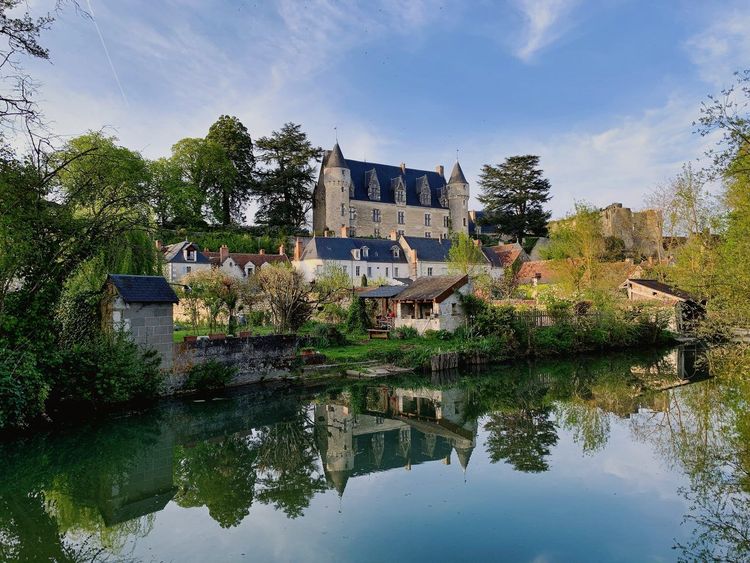
Montrésor closes this selection at one hour's drive from Blois, in Indre-et-Loire. This village of 350 inhabitants, listed among the Most Beautiful Villages of France, is home to one of the most singular châteaux in the region: a 15th–16th-century edifice acquired in the 19th century by the Polish Branicki family, who transformed it into a residence and assembled there a collection of Polish paintings, manuscripts and Napoleonic memorabilia of unusual richness for a residence of this size.
The château is open to visitors, and the Branicki collection is still in place in rooms furnished as they were in the 19th century. It is one of the rare examples in France of an intact château interior, not transformed into a decontextualised museum: portraits of Polish generals, armour and Orthodox icons sit alongside Empire furniture in rooms that seem to have been abandoned only yesterday.
The village surrounding the château forms a coherent medieval ensemble: the Collégiale Saint-Jean-Baptiste from the 16th century adjoins the ramparts, the Indrois flows below and the tufa stone houses descend in terraces to the river. The view from the bridge over the Indrois, with the château and the collegiate church in the background, is one of the most photographed compositions in Touraine. The Sunday morning market brings together producers from across the canton.
To return to Blois after this excursion through the villages of southern Loir-et-Cher and Touraine, the Ryo audio guide of Blois will allow you to complete your stay with an in-depth exploration of the royal city and its château.
FAQ
Which is the most beautiful village to visit around Blois?
Lavardin is often considered the jewel of the region: officially listed among the Most Beautiful Villages of France, it combines freely accessible medieval castle ruins with Romanesque frescoes in the church of Saint-Genest that rank among the best-preserved in the Centre-Val de Loire. Chédigny and Montrésor, also listed or labelled, are remarkable alternatives depending on whether you prefer flower-filled gardens or medieval history.
Which villages near Blois are listed as "Most Beautiful Villages of France"?
Within an hour of Blois, Lavardin (Loir-et-Cher) and Montrésor (Indre-et-Loire) appear on the official list of the Most Beautiful Villages of France association. Several other communes carry related labels: Chédigny is the only village in France awarded the "Remarkable Garden" label, and Vendôme is part of the Petites Cités de Caractère of the Centre-Val de Loire region.
Can you visit the villages around Blois without a car?
Some villages are accessible by bicycle from Blois via the La Loire à Vélo cycle path (EuroVelo 6): Saint-Dyé-sur-Loire is about 16 km away and Chaumont-sur-Loire is 20 km. By train, Amboise is served from Blois station in 20–25 minutes on the Tours–Orléans line. For more distant villages — Lavardin, Chédigny, Montrésor — a car remains essential as coach connections are poorly suited to tourists.
How much time should you allow to visit the villages around Blois?
A weekend allows you to cover two or three nearby villages such as Saint-Dyé, Chaumont and Fougères-sur-Bièvre. For the southern villages (Saint-Aignan, Chédigny, Montrésor), plan a second weekend. Lavardin and Vendôme to the north make a lovely combined half-day. In a week, you can reasonably explore all fifteen stops in this article using Blois as your base.
What is the best time to visit the villages around Blois?
June is the ideal month: Chédigny's roses are in full bloom, the Festival des Jardins at Chaumont-sur-Loire is in full swing, the days are long and tourists are less concentrated than in July and August. Spring (April–May) lets you avoid the crowds while enjoying orchards in blossom. Medieval villages such as Lavardin and Montrichard are pleasant to visit outside peak season, with autumn light that is particularly flattering on the white tufa stone.
Can you combine a visit to the villages with Chambord and Cheverny?
Yes, and it is the most natural combination when departing from Blois. Chambord is 18 km to the north-east, Cheverny 14 km to the south. Bracieux and Saint-Dyé-sur-Loire are on the road to Chambord. Cour-Cheverny borders the Château de Cheverny directly. In two well-organised days, you can visit both great châteaux and four or five villages without ever driving more than thirty minutes between stops.
Conclusion
The Val de Loire ranks among the most heritage-rich regions in France, and the towns that surround it are the most convincing proof of this. For every well-known château, there is a discreet village where the tufa stone gleams differently, where medieval frescoes wait behind an unlocked church door and where heritage roses climb the walls by collective agreement.
To complete the exploration, discover our audio-guided tour of Blois, 23 commented stops covering the great moments of the royal city, from the François I wing to the medieval lanes of the Saint-Nicolas quarter. A perfect base before setting off towards the surrounding villages.