Créé par Romane, le 17 nov. 2026
Votre guide Ryo
Blois, France
Castle life in the Loire Valley
Parcours audioguidé pour visiter Blois en 1 jour
This visit to Blois offers an immersion into the heart of the Renaissance, where the history of France is etched into every tufa stone. Let yourself be charmed by the majestic silhouette of its Royal Château—a true textbook of architecture overlooking the city—before enjoying a contemplative stopover on the terraces of the Bishop's Palace. Between its monumental staircases that defy the hills and the gentleness of its Loire quayside, the city of Blois reveals a noble and serene character. A stroll on foot, between hanging gardens and medieval streets, to capture the full majesty of a city that watches over the royal river.
Quand partir à Blois ?
Jan.
5°
11
Feb.
6°
9
March
9°
9
April
11°
10
May
15°
10
June
19°
8
July
21°
8
Aug.
21°
7
Sept.
17°
8
Oct.
13°
10
Nov.
8°
11
Dec.
5°
12
Blois enjoys a temperate oceanic climate, marked by the iconic mildness of the Loire Valley, with pleasant summers averaging 25°C and cool winters ranging between 2°C and 8°C. The most favorable period to visit the royal city runs from May to September, offering ideal conditions to explore its chateau or stroll along the banks of the Loire under often bright skies. The month of June is particularly recommended for enjoying the gardens in full bloom, while autumn, especially October, offers a unique charm with the vibrant colors of the surrounding forests and the hosting of the famous "Les Rendez-vous de l'histoire" festival.
Départ conseillé
No need to worry about where to begin! Our tours are designed as a loop, so you can jump in wherever you are. The navigation system and audio-guide will automatically adjust to your location. However, if you happen to be nearby, we do have a preferred starting point: On Place de la Résistance, in front of the Jacques Gabriel Bridge
Parking à proximité
StatioNeo - Parking Valin de la Vaissière : 15 Quai de la Saussaye
À savoir
During the tour, we'll be passing through the gardens of the Bishop's Palace. To avoid any unpleasant last-minute surprises, remember to check opening and closing times. If the site is already closed when you arrive, you'll need to take the following route to get to our next point of interest: Rue du Palais -> Rue Porte Clos-Haut -> Rue Mail Clouseau.
Découvrez 23 lieux d'intérêt pour visiter Blois









What to see in Blois on your 1h45 tour?
This 4 km loop takes about 1 hour 45 minutes and links 22 sights. From Gabriel Bridge, it crosses the medieval Puits-Châtel district to Saint-Louis Cathedral and the Bishop's Gardens, then the Corn Exchange and Beauvoir Tower. It climbs on to the royal castle, the House of Magic and Saint-Lubin street, before dropping back past Saint-Nicolas church and the Hôtel-Dieu to Louis XII Square and the Denis Papin staircase. With the Ryo app in your ears, every façade tells the city's royal history.
Information checked in November 2026 and subject to change.
1 - Gabriel Bridge
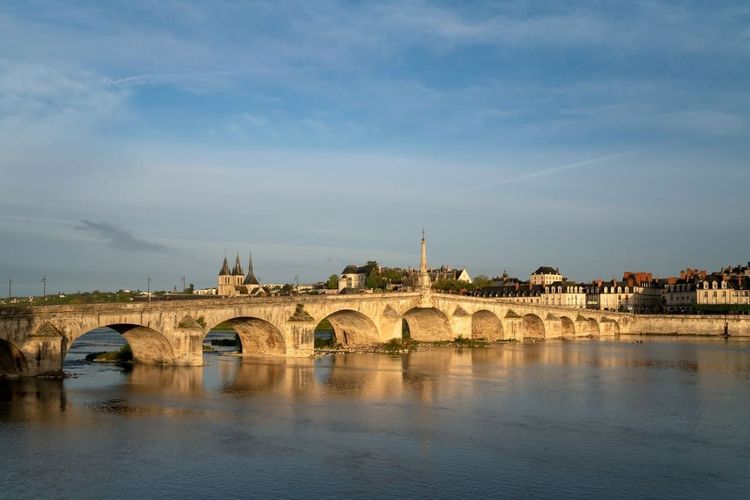
The walk begins on Gabriel Bridge, rebuilt after a flood swept away the medieval crossing in 1716. Entrusted to King Louis XV's own architect and the brand-new corps of royal engineers, the project employed close to a thousand workers before opening in 1724. Nearly 300 metres long and topped with a 15-metre obelisk, it has been damaged repeatedly by wars, and only three of its arches remain original today.
Free entry
2 - Puits-Châtel District
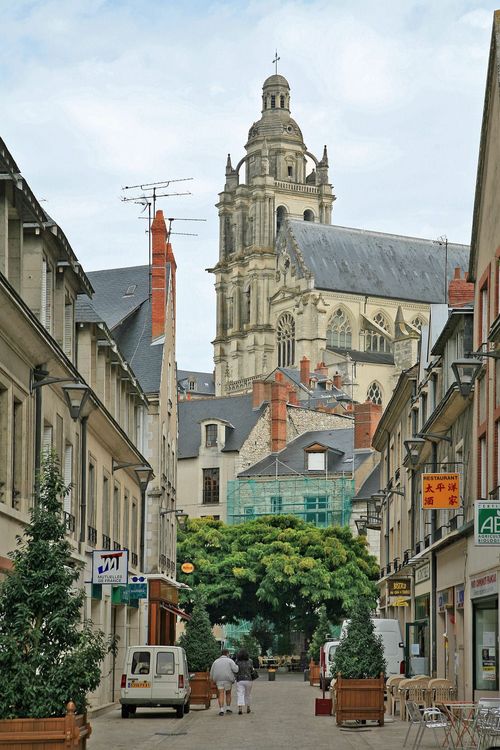
The route continues through the Puits-Châtel district, the eastern part of the old town, preserved thanks to 19th-century planning choices. In the 16th century, when the royal court lived in Blois, this area housed wealthy merchants and courtiers who built fine private mansions. Two of them, listed as historic monuments since 1963, still bear the marks of that lavish era.
Free entry
3 - Villebresme Mansion
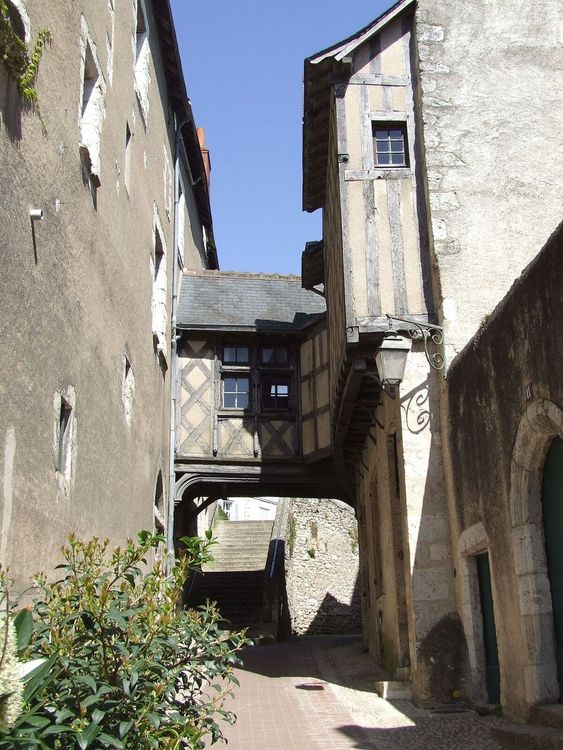
Down a side street stands the Villebresme mansion, a half-timbered house from the late 15th century built for a member of the family that then ruled a nearby castle. Its charm lies in two separate wings, linked at first-floor level by a wooden footbridge spanning the street. Listed since 1928, it also carries, without real proof, the nickname of a much later Blois-born inventor.
Free to see from outside
4 - Acrobats’ House
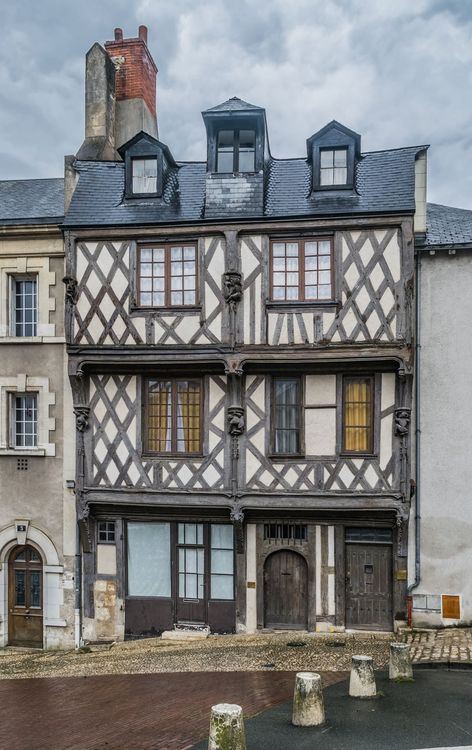
On the neighbouring square stands the Acrobats' House, built around 1470 under King Louis XI. Its half-timbered façade, among the oldest in the city, takes its name from the small carved figures brought to life in the wood: jugglers, knights and playful characters. Admired by Victor Hugo on a visit in 1825, it faces the cathedral in a charming contrast between civic fancy and religious gravity.
Free to see from outside
5 - Saint-Louis Cathedral
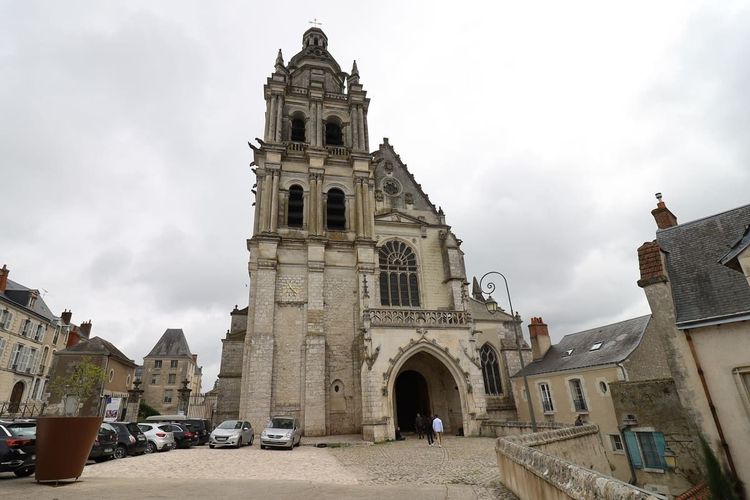
Saint-Louis Cathedral stands on the site of an earlier church destroyed by a storm in 1678. Rebuilt on the order of Louis XIV and consecrated in 1730, it blends a tall Gothic nave with a more classical façade, while its Renaissance bell tower, begun in 1544, still rises above the city. Inside, late-20th-century stained glass bathes the building in a strikingly modern light.
Free entry
6 - Town Hall
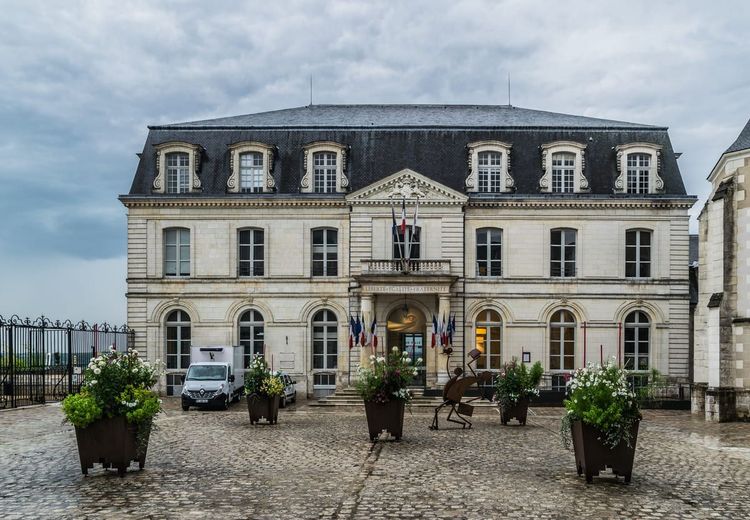
Just behind the cathedral, today's town hall began life in 1700 as the residence of the city's newly appointed bishop. Turned into a museum and later a hospital under different regimes, it only became the seat of local government in 1940, after bombing destroyed the previous one. Surrounded by terraced gardens inherited from its religious past, the building sums up several lives of the city in one.
Free to see from outside
7 - View of the city and the Loire River
From the nearby garden, the view drops down onto the Loire and the dense cluster of slate rooftops across the old town. The quays below once welcomed flat-bottomed barges loaded with salt, wine or the pale stone used to build the valley's castles. That busy trade is long gone, but the panorama still recalls how much the river shaped the fortunes of the city.
Free entry
8 - Bishop's Gardens
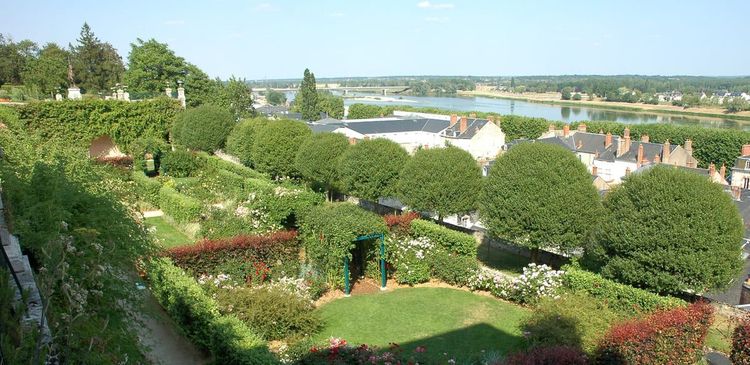
The terraced gardens overlooking the river were laid out in the 18th century to embellish the residence of Blois's newly created bishopric. Today they hold a rose garden planted at the end of the 20th century, a small garden devoted to medicinal plants, and an equestrian statue recalling Joan of Arc's stop here before she set off to relieve Orléans. A genuinely green pause in the heart of the old town.
Free entry
9 - Corn Exchange
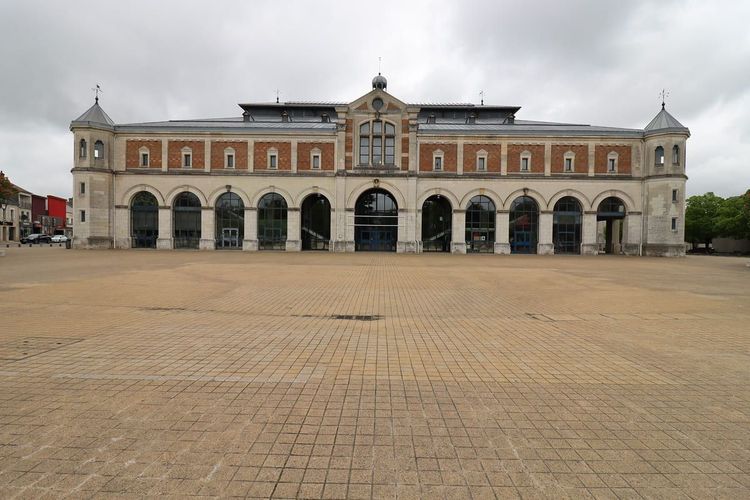
The Corn Exchange replaced a 15th-century building that once combined a covered market with the law courts. Rebuilt in the mid-19th century by a local architect, it narrowly escaped demolition in the 1970s thanks to a future culture minister who was then the city's mayor. Now a concert hall and conference centre, it keeps Blois's cultural scene alive to this day.
Free entry
10 - Beauvoir Tower
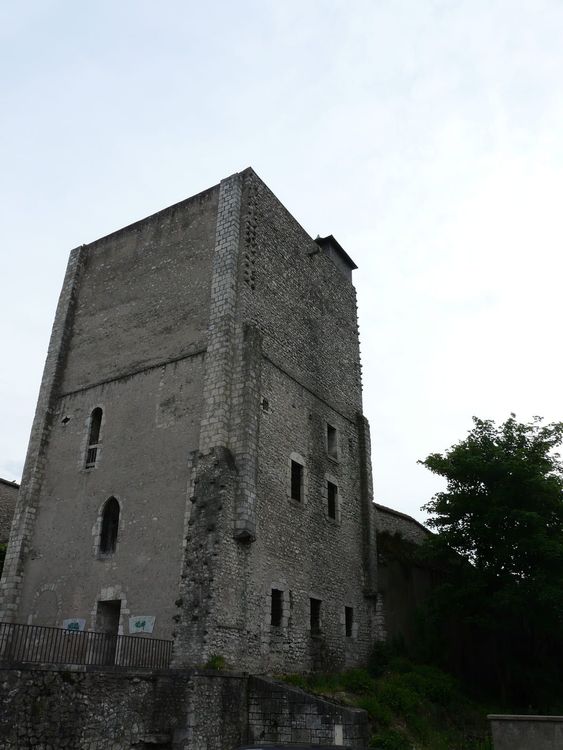
Beauvoir Tower, one of the oldest monuments in the city, was raised between the 11th and 12th centuries by lords who answered to the Counts of Blois. Folded into the city walls around 1256, it served as a prison until 1945 and narrowly avoided demolition after wartime bombing. Bought back for a token sum, it now hosts events and guest rooms atop its 24-metre height.
Free to see from outside
11 - Alluye Mansion
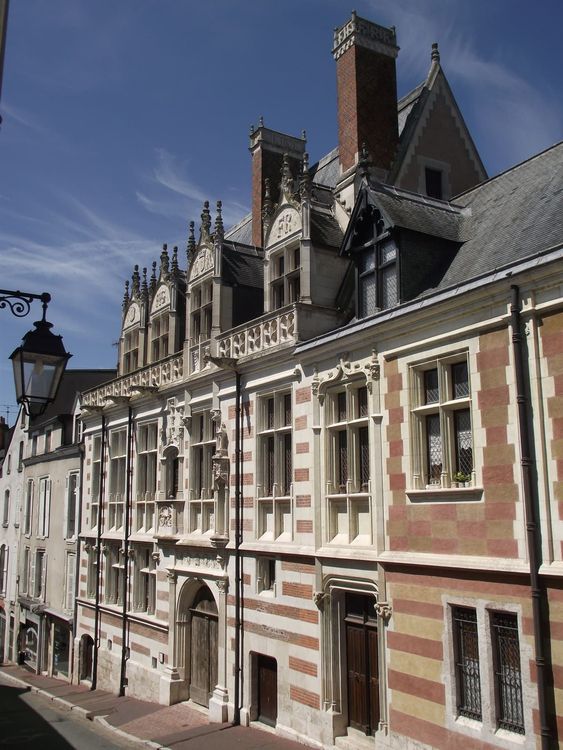
The Alluye mansion was built in the early 16th century for Florimond Robertet, treasurer to the king, whose coat of arms still decorates the gateway. This grand Renaissance residence, roughly 30 metres on each side, is best known for its inner courtyard lined with an elegant gallery inspired by Italian palaces. Listed since 1929, the financier's former home was eventually converted into flats in the 2000s.
Free to see from outside
12 - Gastronomy
The next street invites a tasty pause. Blois is the birthplace of a famous name in French chocolate, whose factory, founded in the mid-19th century, carried the city's reputation across the country. Local cooking also pairs saffron-flavoured poultry with almond or nougatine sweets, Sologne game and goat cheese, all washed down with wine from the surrounding hillsides.
Free entry
13 - Church of Saint-Vincent-de-Paul
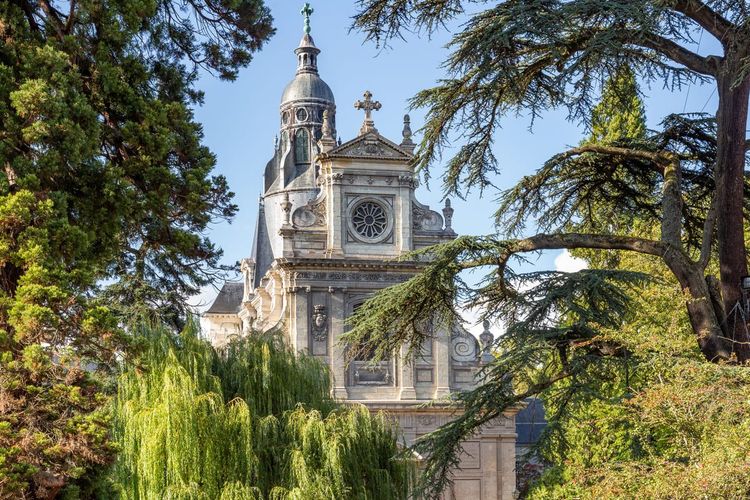
Less famous than the castle nearby, Saint-Vincent-de-Paul church still deserves a look. Begun in 1634 as a Jesuit college chapel, it was only completed thanks to the generosity of the king's exiled brother, then living in Blois. Devastated during the Revolution and restored in the mid-19th century, it keeps a typically Jesuit façade and two memorials honouring its generous patron.
Free entry
14 - Royal Castle of Blois
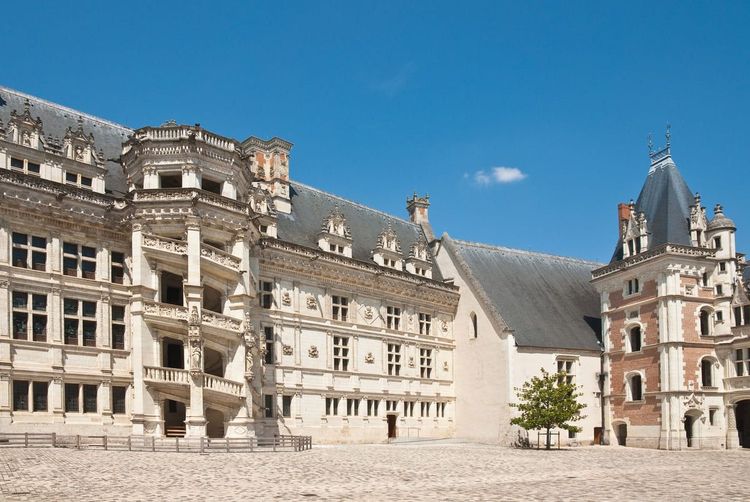
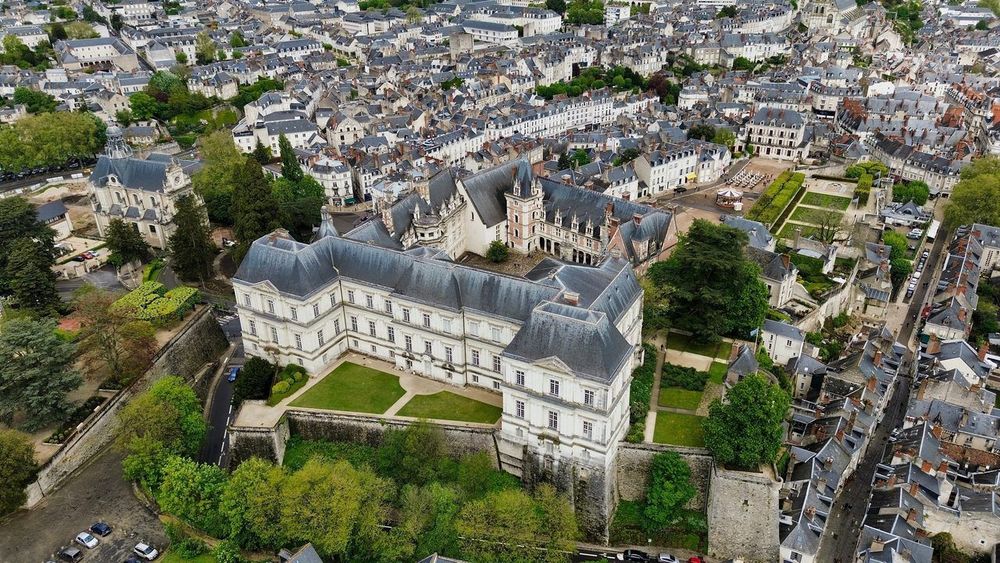
The royal castle, the highlight of the visit, gathers four centuries of architecture around a single courtyard: medieval remains from the Counts of Blois, the flamboyant Gothic wing of Louis XII, the Renaissance wing of Francis I with its famous spiral staircase, and the unfinished classical wing of Gaston d'Orléans. Seven kings and ten queens lived here, and a second-floor room witnessed the killing of the Duke of Guise in 1588.
Paid entry (about €16) · Allow 1 h 30
15 - The House of Magic
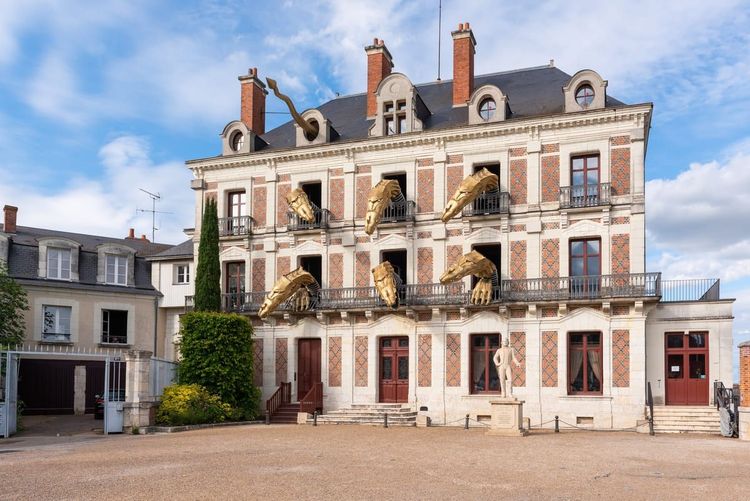
Facing the castle stands the House of Magic, entirely devoted to the illusionist born in Blois who later inspired a famous American magician to borrow his name as a tribute. Opened at the end of the 20th century, the museum fills several floors with automatons and live shows. But the real star is the façade itself: every half hour, six golden dragon heads burst out above the passers-by.
Paid entry
16 - Saint-Lubin Street
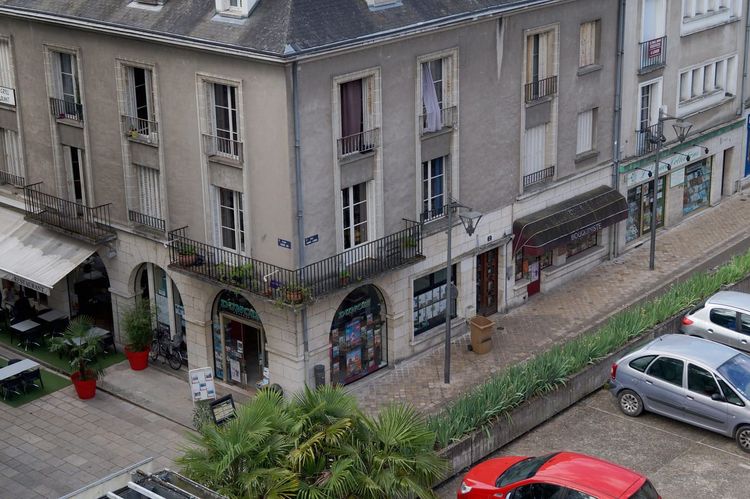
Saint-Lubin street takes its name from a 6th-century bishop of Chartres and a church, long gone, destroyed by fire in the 12th century. It still lines up gorgeous half-timbered houses from the 15th and 16th centuries, decorated with diamond patterns that once showed off wealthy merchants' success. Craft workshops used to open onto the street at ground level, a tradition this now-creative quarter keeps alive.
Free entry
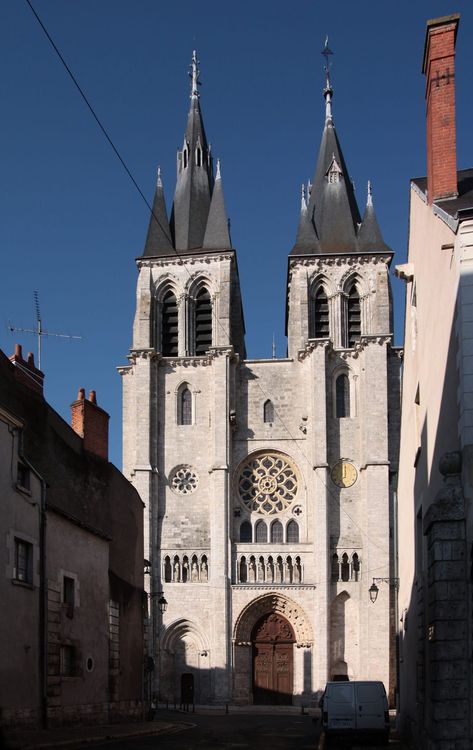
17 - Saint-Nicolas Church
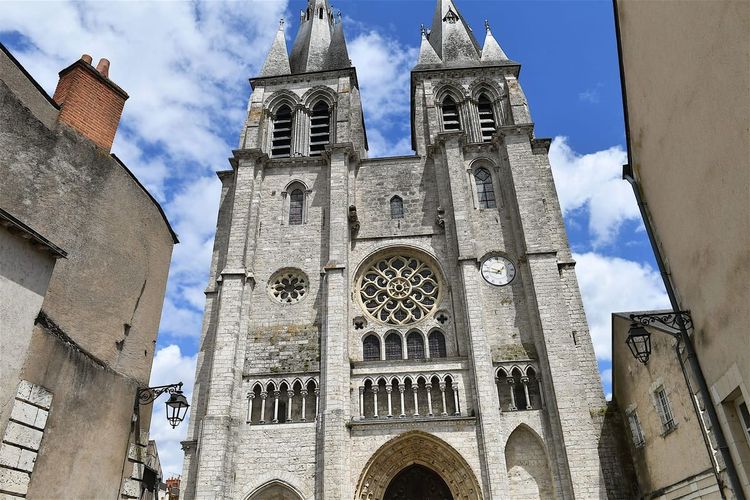
Standing by the river is the city's oldest religious building, erected over several decades spanning the 12th century and the early 13th. Once the abbey church of a Benedictine community founded in the 9th century, it only took its present name after the Revolution, in memory of another church that had just been pulled down. Its architecture traces the shift from Romanesque to Gothic, under three towers, two of them 19th-century spires over 70 metres tall.
Free entry
18 - Hôtel-Dieu of Blois
The imposing Hôtel-Dieu overlooking the quays began as Benedictine monastic property before becoming, in the 19th century, a large hospital. The building took its current pavilion layout in 1865 and housed patients and medical staff until the 1980s. Administrative offices have occupied it since, pending an announced conversion that will soon give these 12,500 square metres a fresh purpose.
Free to see from outside
19 - View of the Loire River and the J. Gabriel Bridge
This second viewpoint over the Loire offers a different angle on Gabriel Bridge and the old town. Often called the last major wild river left in Europe, the Loire and its banks hold UNESCO World Heritage status. On the far shore stands the bell tower of a rare 19th-century walled cemetery, listed but still little visited, which a new project aims to open further to the public.
Free entry
20 - Maison de la BD - House of Comics
The House of Comics occupies a 19th-century former post office entirely converted to graphic storytelling, with temporary exhibitions, a specialised library and creative workshops. Every November since 1984, the city becomes the capital of comic art thanks to a free festival that gathers dozens of authors and draws close to twenty thousand visitors eager for signings and encounters.
21 - Louis XII Square and Fountain
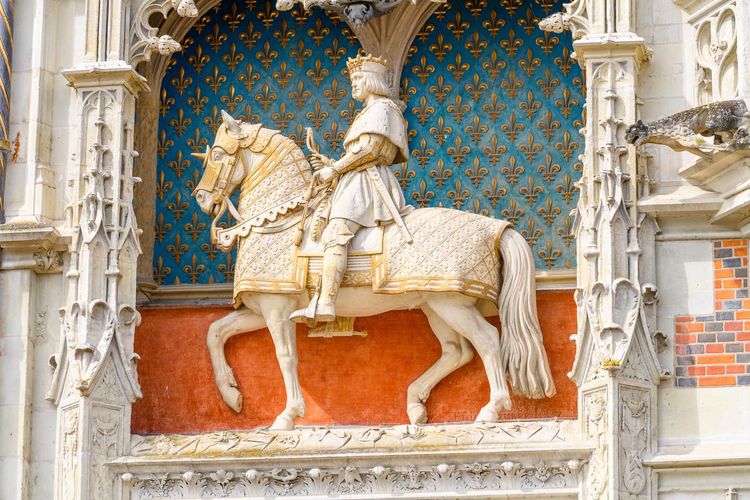
Louis XII Square, laid out in the early 19th century, links the castle above to the old neighbourhoods of the lower town. Its fountain, already mentioned in the 13th century, was rebuilt in Renaissance style in the early 16th century by a noted master fountain-builder, its carved vines recalling the old importance of wine here. Café terraces, shops and a Saturday market still carry on that local way of life.
Free entry
22 - Denis Papin Staircase
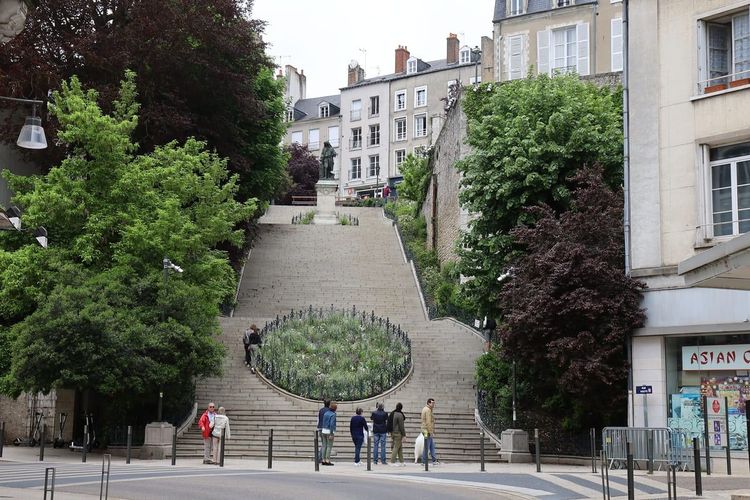
The walk ends at the Denis-Papin staircase, a monumental flight opened in 1865 to ease movement between the upper and lower town. It is named after a physicist born nearby, a pioneer of early steam engines. Since the early 2010s, its steps have regularly been turned into giant trompe-l'œil artworks visible from below, a changing showcase tied to the city's biggest events.
Free entry
Which neighbourhoods does the tour cross?
The route forms a 4 km loop: from Gabriel Bridge, it climbs to the heights of the cathedral and the castle, then comes back down to the banks of the Loire.
From the bridge, it enters the Puits-Châtel District, once home to the bourgeoisie and courtiers, passes the Villebresme Mansion and the Acrobats' House, then reaches Saint-Louis Cathedral. It then passes the Town Hall and reaches the Bishop's Gardens, where the view plunges down to the Loire (stops 1 to 8).
The route then reaches the Corn Exchange and Beauvoir Tower, built in the 11th and 12th centuries, before the Alluye Mansion and Rue Porte-Côté, where a stop covers the local specialities of Blois. It thus reaches the royal heart of the walk, between the Church of Saint-Vincent-de-Paul, the castle and the House of Magic (stops 9 to 15).
The last stretch follows Saint-Lubin Street and its half-timbered houses to Saint-Nicolas Church and the Hôtel-Dieu, under renovation, on the banks of the Loire. After the House of Comics and Louis XII Square, the loop ends at the foot of the Denis Papin Staircase, which links the lower and upper town, not far from the starting bridge (stops 16 to 22).
How much does it cost to visit Blois?
Of the route's 22 stops, twelve are free to explore and seven are seen from the street, including the Corn Exchange, whose shows and fairs are ticketed separately. Visiting conditions at the House of Comics vary with its programme. That leaves two paid stops: the Royal Castle and the House of Magic Robert-Houdin, which reopens in December.
A castle ticket costs €16; allow about 1.5 hours for the visit. A combined ticket at €24 also includes the House of Magic, once it has reopened.
Information checked in November 2026 and subject to change.
Where to stop for a bite along the tour?
Along Rue Porte-Côté, one stop on the route (stop 12) is entirely devoted to the specialities of Blois, where chocolate holds pride of place.
It was in Blois that Auguste Poulain founded his chocolate factory in 1848, and the city has drawn a recent dessert from it, the Verger blésois, pairing his chocolate with apples from Mont-près-Chambord and caramelised walnuts. Sweet tooths also reach for the Pavés de Blois, a mix of nougatine, praline and chocolate, or the Malices du Loup, which combine orange-scented almond paste, honey, hazelnut and aniseed.
On the savoury side, the Poularde 1550 au safran recalls the decree by which the king regulated the saffron trade from Blois in 1550; Solognote duck and Sologne asparagus round out a generous cuisine, best enjoyed with a Loire wine. To sit down, Louis XII Square (stop 21) lines up its café terraces below the castle.
What to do in Blois with children?
The Royal Castle works well for a family outing: its courtyard brings together four architectural styles recognisable at a glance, and a free activity booklet, handed out at the entrance for 6 to 12-year-olds, turns the visit into a treasure hunt through every wing.
On the route, the facade of the Acrobats' House (stop 4), peopled with carved jugglers and street performers, turns into an observation game at child height. Just behind the cathedral, the Bishop's Gardens (stop 8) let little ones run between the ponds while watching for boats on the Loire.
More ideas, organised district by district, are gathered in our guide to visiting Blois with family.
What should you know before visiting Blois?
Three stops call for a little planning.
The Bishop's Gardens follow set opening hours and may already be closed by the time you pass: if so, continue along Rue du Palais, then Rue Porte Clos-Haut and Rue Mail Clouseau to pick the route back up.
The House of Magic Robert-Houdin, closed for now, is due to reopen in December: check the date before planning a visit. The Hôtel-Dieu, sold to a developer, is under renovation until 2027: for now, its silhouette can only be seen from the street, on the banks of the Loire.
What to see around Blois?
Blois makes a good base for exploring the Loire Valley, between hidden villages in the countryside and neighbouring towns that unfold on foot in turn.
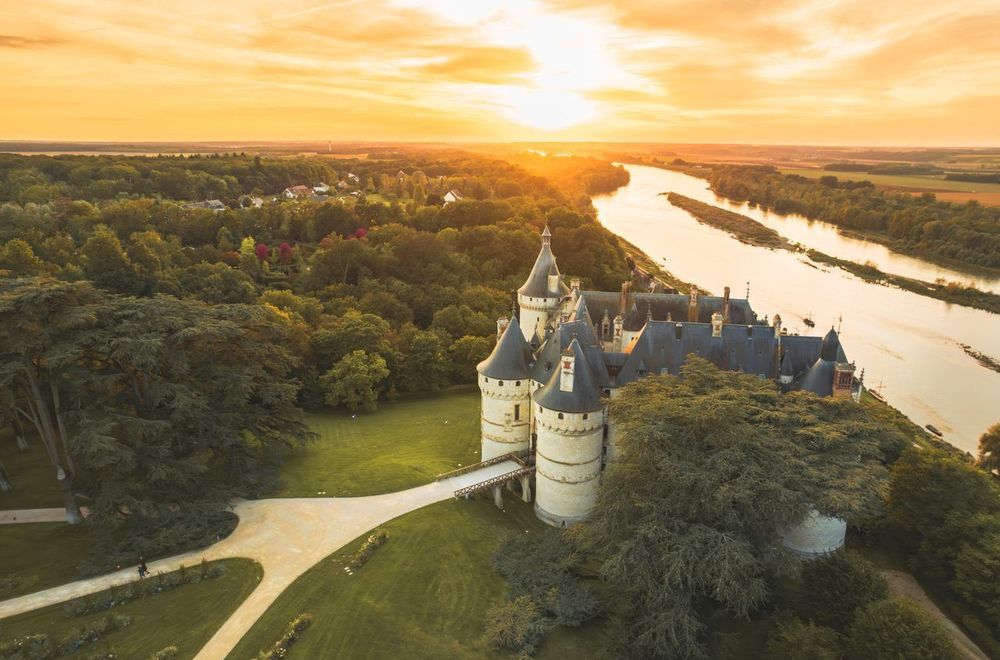
10 km away, the Château de Ménars, bought by Madame de Pompadour, is private, but its French-style gardens can be admired from the road or the towpath. 20 km away, Chaumont-sur-Loire pairs a 15th-century castle with an international garden festival, open from mid-April to mid-November. Other stops, from the former royal port of Saint-Dyé-sur-Loire to the wine village of Cour-Cheverny, feature in our guide to the most beautiful villages around Blois.
Other nearby towns also have their own audio-guided route: 53 km away, Tours sets its Gothic cathedral against the half-timbered facades of Place Plumereau, while 55 km away, Orléans follows in the footsteps of Joan of Arc. A little further on, Le Mans and its Gallo-Roman ramparts, 97 km away, or Bourges and its Jacques Coeur Palace, 98 km away, round out the trip, all the way to Saumur and its equestrian Cadre Noir, 112 km away.
To link several châteaux in a single trip, the Loire Valley Châteaux road trip covers the great stops of the Loire Valley between Sully-sur-Loire and Chalonnes.
What's on in Blois right now?
At this time of year, Blois lines up plenty of events: two exhibitions at the castle and several highlights around town.
The Royal Castle is hosting two temporary exhibitions, running until 21 March 2027 for a tribute to sculptor Calder and until 16 May 2027 for a collection of Asian art objects gathered by Western collectors.
From 20 to 22 November, the bd BOUM festival fills the town with signings, exhibitions and children's workshops, free of charge. On 6 December, a charity Christmas market offers gifts and coffee at l'Escale et habitat, from 10 am, free entry. The next day at 6 pm, a Christmas gospel concert fills Saint-Nicolas Church, with tickets from €10.
Information checked in November 2026 and subject to change.
Blois fait partie d'un Road trip

Le plein d'inspirations
Explorez le monde en totale liberté, à pied au cœur des villes ou au fil des routes. Nos guides audios transforment chaque destination en une découverte culturelle immersive et unique.









FAQ for visiting Blois
When is the best time to visit Blois?
The ideal time to explore Blois runs from May to September, when the mild Loire Valley climate reveals all its charms. Summer temperatures pleasantly hover around 25°C, perfect for wandering the medieval streets and enjoying the terraces. June is especially appealing with its gardens in full bloom, while October offers a unique spectacle with its autumn colours and the cultural buzz of the Rendez-vous de l'histoire. Winter stays mild, ranging between 2°C and 8°C, allowing a more intimate visit of the royal château, far from the tourist crowds.
How much time do you need to visit Blois?
A full day will let you appreciate the essentials of Blois, taking the time to visit its royal château and stroll through the historic centre. If you want to delve deeper with the museums and fully enjoy the atmosphere of the Loire quays, plan for two days. Lovers of architecture and history could easily devote a whole weekend to it, exploring every corner of the town and its surroundings. For a quick but rewarding visit, half a day is enough to admire the château and walk the main streets of the town centre.
How do you get to Blois and where can you park?
Blois enjoys excellent rail links, with direct trains from Paris in about an hour and a half. The station is just a few minutes' walk from the historic centre. By car, the A10 motorway brings you easily from Paris or Tours. For parking, favour the town-centre car parks such as the one at the château or the Halle aux Grains, generally paid but well located. Free car parks exist on the outskirts, notably near the Loire quays. As the streets of the historic centre are often narrow and pedestrianised, it's best to leave your vehicle parked and explore on foot.
What must you see and do in Blois in one day?
Your day in Blois absolutely must begin with a visit to the royal château, a genuine architectural gem where four eras sit side by side in harmony. Then head down to the gardens of the Évêché for a contemplative pause with a view over the Loire. The historic quarter has some lovely surprises in store, with its monumental staircases, notably the Denis-Papin staircase, and its half-timbered houses. Don't miss Saint-Louis Cathedral and get lost in the medieval alleys around the Place du Château. The Ryo audioguide is the ideal companion for this discovery, with a narrated tour that reveals all the secrets of the royal city.
Where to stay in Blois and in which neighbourhoods?
The historic centre remains the most sought-after area to stay in Blois, placing you at the heart of the action and right next to the main monuments. The area around the Place du Château offers charm and convenience, with numerous establishments in renovated period residences. The cathedral district offers a quieter atmosphere while remaining central. For a more modest budget, the surroundings of the station or residential neighbourhoods such as Vienne offer interesting alternatives. The banks of the Loire will appeal to those seeking peace and quiet with a river view, a few minutes' walk from the centre.
Which châteaux should you visit around Blois?
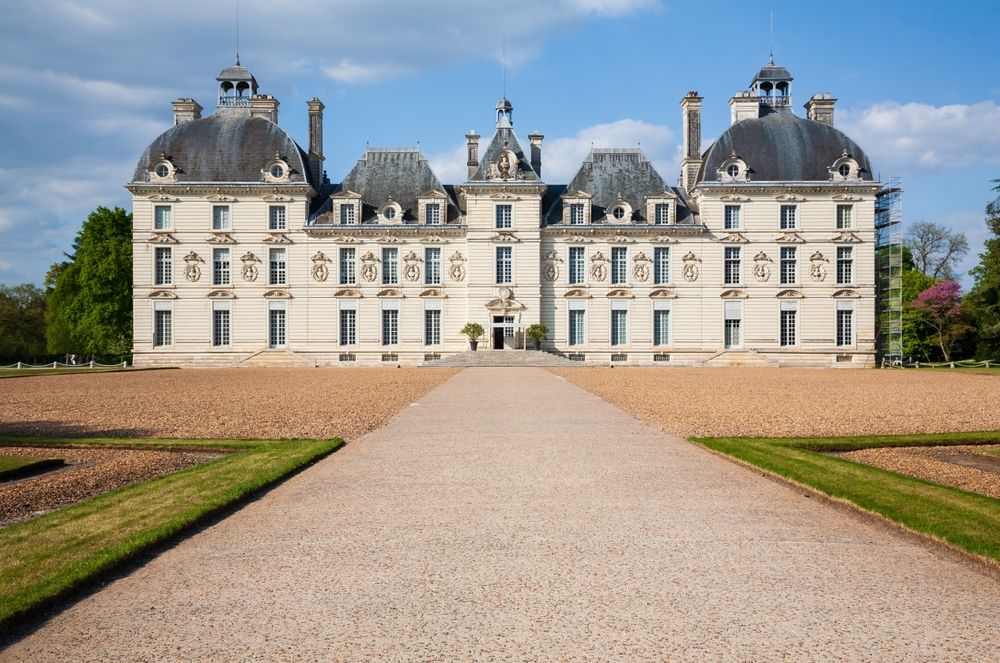
Blois is an ideal starting point for exploring the châteaux of the Loire. Chambord, the grandest with its unique Renaissance architecture, is only twenty minutes away by car. Cheverny charms with its classical elegance and magnificent grounds, while Chaumont-sur-Loire impresses with its setting overlooking the river and its international garden festival. More intimate, the Château de Beauregard is worth the detour for its gallery of historical portraits. These gems are easily visited in a day from Blois, letting you put together your own itinerary according to your wishes and the time you have.
Where to eat in Blois and what are the best restaurants?
The gastronomy of Blois reflects the richness of the Loire terroir, with local specialities based on Loire fish and game. The historic centre is full of gourmet addresses, from traditional bistros to more refined tables. The alleys around the Place du Château are home to charming establishments serving market cuisine. For an authentic experience, look for restaurants serving regional dishes such as tarte Tatin or rillettes de Tours. The Loire quays also offer lovely terraces for lunch with a view. Don't hesitate to accompany your meal with a local wine; the Cheverny or Cour-Cheverny appellations are well worth discovering.
What can you do in Blois with children?
Blois proves particularly welcoming for families, with many activities suited to younger visitors. The royal château offers fun visits and educational workshops that will capture their attention while introducing them to history. The Maison de la Magie Robert-Houdin, unique in Europe, amazes young and old with its shows and the mechanical dragons emerging from the façade. The gardens of the Évêché offer an ideal spot to relax for a snack break. A stroll along the Loire quays lets you watch the birds and boats, while the town's many staircases turn the visit into a real urban adventure for young explorers.
Why is the Royal Château of Blois worth visiting?
The royal château gathers around a single courtyard four wings built in different periods, from the Gothic of Louis XII to the classical façade of Gaston d'Orléans, by way of the Renaissance wing of François I and its famous open spiral staircase. It is a fairly rare summary of French architecture that lets you follow the evolution of styles in a single visit. The place also carries a dense political history: several kings and queens stayed here, and the assassination of the Duke of Guise took place in the apartments you walk through today. The Ryo audio guide offers a route dedicated to Blois that carries the visit on into the old town below.
What can you do by the Loire in Blois?
The quays offer the finest view of the town: from the south bank, the outline of the château, the cathedral and the slate roofs stand out above the Jacques-Gabriel bridge, especially at the end of the day. The river can also be discovered from the water, aboard the traditional flat-bottomed boats that run guided outings in the warmer months, or by canoe for the more energetic. The banks lend themselves to walking and cycling too: Blois is a stage on the cycle route that follows the Loire, with shaded paths leading to nearby villages and to the sandbanks where birds nest.
Which beautiful villages can you discover around Blois?
Ten kilometres away, Ménars keeps the château bought by Madame de Pompadour in 1760, whose gardens can be admired from the towpath. Saint-Dyé-sur-Loire was the supply port for building Chambord and lies on the Loire à Vélo route. Cour-Cheverny makes its AOC wine from Romorantin, a grape found nowhere else in France. Fougères-sur-Bièvre hides a defensive castle begun in 1470, open from April to September, and Chaumont-sur-Loire has hosted an international garden festival since 1992. Lavardin, listed among the Most Beautiful Villages of France, and the roses of Chédigny round off the selection.
Discover all fifteen stops in our selection of the most beautiful villages around Blois.
How should you plan a family day in Blois, from the Royal Château to the House of Magic?
At the Royal Château, four façades from four eras face a single courtyard, and the 1588 murder of the Duke of Guise grips children; allow two hours, with a free activity booklet for ages 6 to 12. Right opposite, the Robert-Houdin House of Magic has dragons emerging from its façade and two magic shows a day in season: arrive 15 minutes early. Then walk down the Denis-Papin steps to the House of the Acrobats and cross the 283-metre Jacques-Gabriel bridge for the best view of the town.
Plan your day with our guide to visiting Blois with family.
Vos commentaires, idées et suggestions
Aucun avis pour le moment