
© Shutterstock
 Votre guide Ryo
Carnac: The 15 Must-See Attractions to Visit in 2026
What should you prioritize in Carnac when you have two or three days? The question keeps coming up, as this small Morbihan town overflows with remarkable sites. There is something vertiginous about standing before the Carnac alignments on a misty morning. Not the vertigo of heights, but the vertigo of time. These 3,000 menhirs planted in the moorland more than 6,500 years ago defy any definitive explanation, and it is precisely this mystery that makes Carnac unforgettable. But the town is not defined solely by its stones: five kilometers of fine sandy beaches, a nationally recognized prehistory museum, honest and generous Breton gastronomy, and excursions to Quiberon or the Golfe du Morbihan round out any stay. Here are the 15 sites and experiences not to be missed when visiting Carnac and its surroundings in 2026, from the Neolithic alignments to the coves of the peninsula. Whether you want to visit Carnac for free, explore the town center through photos, or combine Carnac and Quiberon in a single day, this guide covers every scenario.
The Carnac Alignments: 3,000 Menhirs to Decode
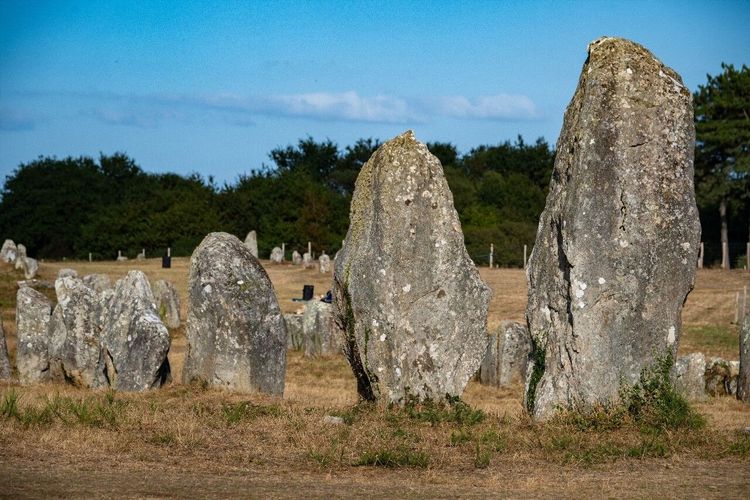
No other megalithic site in the world brings together so many standing stones in such a small area. The Carnac alignments stretch for nearly 4 kilometers across three main groupings — Ménec, Kermario, and Kerlescan — with some menhirs exceeding 4 meters in height. The largest field, Ménec, alone lines up 1,099 stones arranged in 11 parallel rows. The entire complex was erected between 4500 and 3300 BCE, making it one of the oldest large-scale human constructions on the European continent.
Why were these stones erected? The question remains open. Hypotheses range from astronomical calendar to funerary ritual site, territorial marker, and collective memorial. What archaeologists know for certain is that their placement reflects a remarkable level of social organization and logistical mastery for the era: some granite blocks came from quarries located several kilometers away, and transporting them without wheels or horses remains a remarkable technical feat.
Since 1991, access to the heart of the alignments has been regulated: the fields are fenced off to allow vegetation to regenerate. Everything starts at the Maison des Mégalithes, the visitor center located opposite the Ménec field, where you book your visit (online or on-site, not by phone). Guided tours are organized by the Centre des monuments nationaux, with morning and afternoon slots depending on the season: expect €13 full price and €6 reduced rate (ages 7–17, architecture students, job seekers), with free admission for children under 7. Good news for tight budgets: from October to March, the alignments are freely accessible without a guide. For the rest of the year, outside of guided tours, a marked peripheral footpath allows you to walk alongside the fields at a sufficient distance to appreciate the scale of the site, and two elevated observation platforms offer a striking overall view. Allow 1.5 to 2 hours to cover all three fields from the Ménec entrance.
A visiting tip: arrive at opening time, between 9am and 9:30am, before tourist coaches unload their crowds. The low-angle morning light on the pink-grey granite is also the most beautiful for photography. If you plan to visit several megalithic sites, the Pass des Mégalithes offers a preferential rate from the second monument onward (Carnac alignments, Locmariaquer site, Gavrinis cairn, Petit-Mont cairn, and the Prehistory Museum).
The Saint-Michel Tumulus: at the Summit of 6,000 Years of History
If the alignments are the horizontal spectacle of Carnac, the Saint-Michel tumulus (Chemin du Tumulus, 56340 Carnac, rated 4.3/5 on Google from 2,764 reviews) provides the vertical dimension. This artificial mound, 125 meters long, 60 meters wide and about ten meters high, is one of the largest tumuli in Western Europe. Built during the 5th millennium BCE, several centuries before the first stones of Stonehenge, it contains a burial chamber inside where 19th-century excavations uncovered prestigious objects: polished axes, beads, flint tools, and semi-precious stone ornaments.
Note: the inner chamber has been closed to the public for several years for safety reasons. But the site is still worth visiting for the panorama it offers from its summit, which remains freely accessible: to the north, the alignments stretch across the moorland like a frozen army; to the south, the bay of Quiberon shimmers in the light. At the top stands the small Saint-Michel chapel (Place de l'Église, 56340 Carnac, rated 4.5/5 on Google from 1,173 reviews), whose original construction dates to 1663, with the current building dating from 1927. It gave its name to the tumulus and still hosts occasional services today.
Access to the tumulus and its summit is free from the esplanade in front of it. Wear good shoes: the path to the top is paved and slightly steep. In the evening, the tumulus is illuminated, creating an unexpectedly dramatic effect seen from the road. The tumulus also features on our audio walking tour of Carnac, alongside the Saint-Michel chapel that crowns it.
The Prehistory Museum: Understand Before You See
Many visitors make the mistake of visiting the alignments first and the museum afterward. Do the opposite. The Carnac Prehistory Museum (10 Place de la Chapelle, 56340 Carnac, rated 4.2/5 on Google from 1,403 reviews) is ideally located in the heart of the village, a short walk from the town center, and its collections give the rest of your stay a depth you would not otherwise have.
Founded in 1881 by Scottish physician James Miln and his Breton assistant Zacharie Le Rouzic, the museum holds one of the richest prehistoric collections in France: 500,000 objects, approximately 6,500 of which are on permanent display. The chronology spans from the Palaeolithic to the end of the Iron Age, but the rooms dedicated to the Neolithic period form the heart of the exhibition. Visitors discover flint-knapping techniques, early ceramics, polished jadite ornaments — an Alpine jade that circulated over thousands of kilometers — and a reconstruction of a passage dolmen.
Admission prices in 2026: full price €7, reduced rate €3 (ages 6–17, students), €5 with the Pass des Mégalithes. The museum is closed on Mondays outside July–August, when it opens daily from 9:30am to 6pm. A full visit takes between 1.5 and 2 hours. The museum's approach is sober and factual: it avoids the pseudo-mystical catastrophism that sometimes surrounds discussions of the megaliths.
If you are traveling with children, the museum offers workshops and interactive tours: flint knapping, Neolithic ceramic modeling. A concrete way to ground the abstraction of these distant millennia.
The Kercado Tumulus: Carnac's Oldest Monument
Less famous than the Saint-Michel tumulus, the Kercado tumulus (Château de Kercado, 56340 Carnac, rated 4.3/5 on Google from 996 reviews) is nonetheless one of the oldest in the region: dating to around 4700 BCE, it even predates the alignments. This passage dolmen, covered by a mound of earth and stones topped by a menhir, is accessible year-round on the private grounds of the Château de Kercado for a nominal entry fee of around €1.
The burial chamber is intact. You can enter it, torch in hand, to see the slabs engraved with cup marks and crozier shapes — recurring symbols in Armorican megalithic art. The atmosphere is radically different from the open-air alignments: silent, enclosed, with a palpable sense of entering a space designed for the dead.
The Kercado tumulus is located approximately 1.5 km east of the Kermario alignments, accessible on foot via a wooded path.
The Grande Plage: White Sand Facing the Menhirs
Carnac-Plage is an entity in its own right, distinct from the village of Carnac located two kilometers inland. Its main artery, the boulevard de la Plage, runs along an elegant seafront inherited from the 19th century: seaside villas, cut-stone hotels, maritime pines leaning in the westerly wind. The Grande Plage stretching at the foot of this boulevard is nearly 2 kilometers long and is one of the finest sandy beaches in Morbihan.
The water is remarkably clear, sheltered from the open-sea swell by the Quiberon peninsula that closes the bay to the southwest. Water temperature in July–August ranges between 18 and 21°C — not tropical, but perfectly swimmable. The beach is supervised during peak season (July–August) and equipped with rescue stations. A coastal path runs along the seafront eastward to Beaumer beach, offering a walk of around 3 km with views out to sea.
The thalassotherapy center Thalasso Carnac (Avenue de l'Atlantique, 56340 Carnac, rated 4/5 on Google from 1,294 reviews) is located directly on the Grande Plage. It is one of the benchmark establishments on the coast. Seawater treatments (baths, jet massages, seaweed wraps) are offered by the day or as full courses. A worthwhile option if you are staying several days and the weather turns unpredictable — which in Brittany is always a possibility to factor in.
The Carnac-Plage market is held on Wednesday and Sunday mornings during high season, with local producers (oysters, galettes, goat's cheese) set up along the seafront.
Beaumer Beach and the Wild Coastline
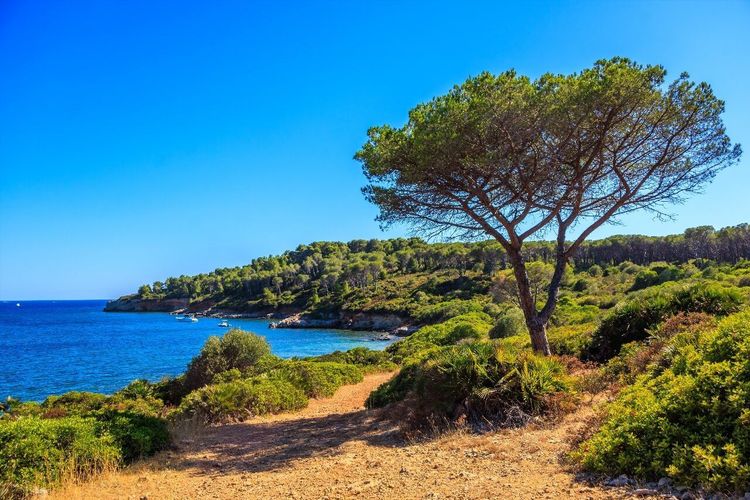
East of the Grande Plage, the character of the coastline changes. Beaumer beach (Route de la Côte, 56340 Carnac, rated 4.8/5 on Google from 76 reviews) marks the beginning of a wilder stretch of shore, where rocks emerge and dune vegetation reasserts itself. Less crowded than the Grande Plage, Beaumer draws beginner surfers and families looking for a little more peace and quiet.
The customs officers' path (GR34) crosses this section of the coastline toward La Trinité-sur-Mer. The stretch between Carnac and La Trinité offers an alternation of coves, rocky headlands, and views of the Golfe du Morbihan islands. Allow 1.5 to 2 hours to walk from Beaumer to La Trinité-sur-Mer, then return by shuttle or bicycle. The coastline is particularly beautiful at low tide, when rocks covered in brown seaweed create deep green landscapes.
Between Carnac-Plage and Beaumer, Ty-Bihan beach is popular with kitesurfers when the westerly wind picks up, which often happens in the late afternoon regardless of the season.
The Saint-Cornély Chapel and Carnac Town Center
The village of Carnac deserves half a day of leisurely exploration, and it is also where the best photographs of Carnac's town center are taken. Its center revolves around the place de l'Église and the Saint-Cornély church, built between the 16th and 17th centuries and listed as a historic monument. Saint Cornély is the patron saint of horned animals, a local particularity that explains the two ox heads carved into the porch, and the livestock fair that was traditionally held in front of the church until the early 20th century.
The interior is understated and moving: painted wooden vaulted ceilings, maritime ex-votos hung on the walls, gilded altarpieces slightly worn by time. The building is open for visits free of charge during the day. In July–August, classical or traditional Breton music concerts are organized there on certain evenings.
Around the square, several artists' galleries and local designer boutiques offer ceramics, oil paintings of the menhirs, and jewelry in granite or slate. The weekly Wednesday morning market (year-round) brings the village center to life with market gardeners, fishermen, and Morbihan cheesemakers. The Ryo audio guide for Carnac covers this section of the historic center with commentary on the architecture and history of the village that standard tourist signage does not address.
The Saint-Colomban Chapel: Between Dunes and Sea
This chapel is one of the most singular in Brittany. Nestled in the dunes between Carnac-Plage and the Beaumer headland, the Saint-Colomban Chapel (Rue de la Chapelle Saint-Colomban, 56340 Carnac, rated 4.3/5 on Google from 3 reviews) seems to have been left there by a past that no one fully remembers. It is dedicated to Saint Columban, an Irish monk who spread his influence across Europe at the turn of the 6th and 7th centuries, a major figure of Celtic pilgrimage.
The building is small — a single nave, a squat bell tower — but its setting is exceptional: surrounded by pines and gorse, about fifty meters from the shoreline, with an unobstructed view over the bay of Quiberon. Inside are a few polychrome statues, and a pardon (traditional Breton religious procession) is still celebrated here each year, traditionally in mid-July.
The chapel and its surroundings are freely accessible from the coastal path. It makes a natural stopping point on a walk between Carnac-Plage and Beaumer, about 800 meters on foot from the Carnac casino.
The Mané Retual Dolmen and the Table des Marchands
Carnac and its immediate surroundings conceal dolmens that are less well known but just as impressive as the alignments. Two deserve special mention for different reasons.
The Mané Retual dolmen, located in Locmariaquer (10 km to the east), is a passage dolmen whose inner chamber is decorated with remarkably well-preserved Neolithic engravings: axes, croziers, the so-called "shield" motif — a rectangular shape with notches whose meaning remains debated. Access is free and in the open air.
The Table des Marchands (Site de Locmariaquer, 56740 Locmariaquer, rated 4.2/5 on Google from 2,289 reviews), also in Locmariaquer, is technically an excursion (see next section), but its capstone deserves mention here: it is a fragment of the Grand Menhir Brisé, the largest monolith ever erected in Europe — 20.60 meters long and approximately 280 tonnes — which can be seen lying in four pieces on the site. The capstone of the Table des Marchands corresponds exactly to a missing portion of the Grand Menhir, proof that Neolithic builders reused and redistributed their materials across kilometers.
Within Carnac's own territory, the Crucuno dolmen and the Géant du Manio (deep in the woods, east of the village) complete a megalithic itinerary that can fill an entire day without ever feeling repetitive.
Day Trip to Locmariaquer: the Neighboring Megaliths
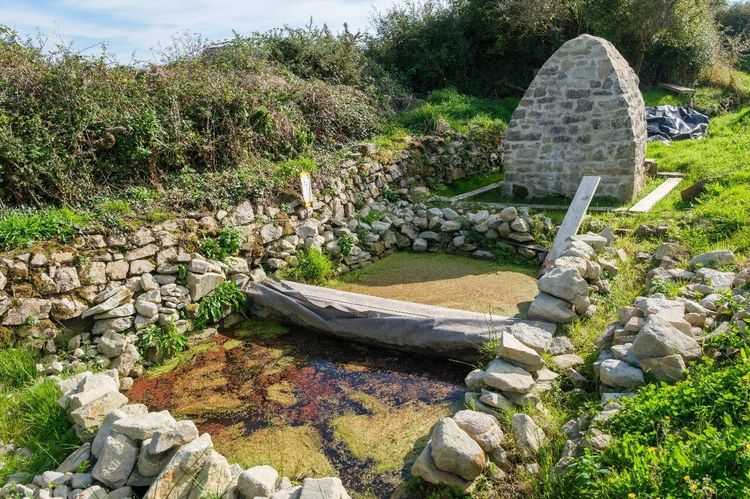
Locmariaquer is 10 kilometers east of Carnac, at the tip of a peninsula that closes the mouth of the Golfe du Morbihan. The village is known for its flat oysters — "Locmariaquer oysters" have a gastronomic reputation that extends far beyond the region — but above all for its megalithic site, managed by the Centre des monuments nationaux.
This site brings together within a single enclosure the Grand Menhir Brisé (the four fragments of this 20-meter giant, toppled around 4000 BCE), the Table des Marchands dolmen, and the Er Grah tumulus. The visit (individual entry around €9.50 full price, reduced rates and Pass des Mégalithes available) is particularly illuminating regarding the connections between these monuments and the Carnac alignments: same era, same materials, shared capstones between sites — together they trace a sacred territory on the scale of the entire bay.
After the visit, Locmariaquer's harbor deserves a stop. Oyster farmers sell directly at the dock or from their waterfront sheds. Expect to pay €12 to €15 for a dozen flat oysters enjoyed on the spot with a glass of muscadet. The setting — calm water, fishing boats, low-angled late-afternoon light — is one of the most beautiful in Morbihan.
A car park is available at the entrance to the village. In high season, try to arrive before 10am or after 5pm to avoid traffic jams on the D781, the only road onto the peninsula.
Day Trip to Quiberon: the Wild Coast and the Peninsula
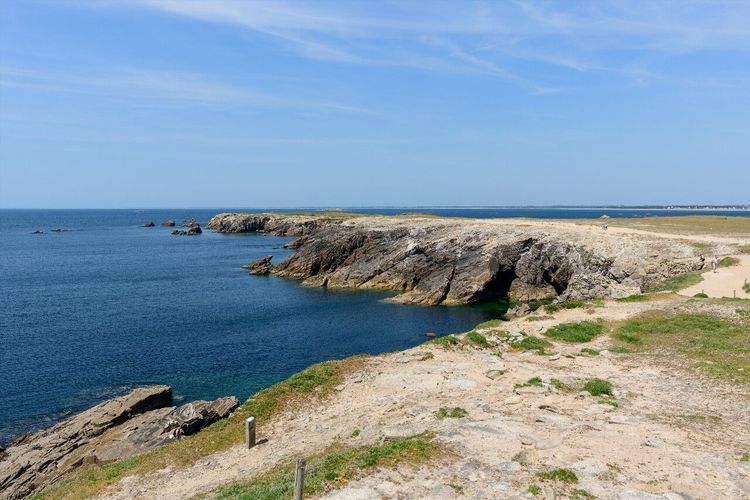
Combining Carnac and Quiberon in one trip is one of the great classics of a stay in the area. Quiberon is 20 kilometers southwest of Carnac, connected to the mainland by a sand isthmus only a few hundred meters wide. The peninsula is absolutely worth a full day, and naturally divides into two contrasting faces.
The east side is sheltered and calm, with fine sandy beaches such as Port-Maria and Saint-Julien. The water is flat. Quiberon's fishing harbor is one of Brittany's leading ports for langoustines and sardines; in the morning, the fish auction offers a chance to watch the boats come in (arrivals generally between 7am and 9am).
The west side is the polar opposite: the Côte Sauvage is a spectacle of schist cliffs battered by Atlantic waves. The path running alongside it for several kilometers is one of the most spectacular coastal walks in Brittany. Warning: swimming is prohibited due to strong currents. You come not to swim but to see the sea in its raw state, with a violence and beauty that fully justify the detour.
In the village of Quiberon, the cannery La Belle-Iloise offers workshop tours and a shop where you can buy sardines, mackerel, and tuna in hand-painted tins — one of the most representative gastronomic souvenirs of the Breton coast. The Ryo app also offers an audio-guided tour for exploring the Breton coastal towns, a useful complement for contextualizing your visit within the region's historical geography.
For accommodation, Quiberon is an alternative to Carnac in high season: more lively in the evenings, with more restaurants and bars open late.
The Golfe du Morbihan from Carnac
Technically, Carnac does not border the Golfe du Morbihan — the town sits on the bay of Quiberon. But the gulf is within easy reach, and several options allow you to explore it from Carnac.
The most popular is a boat cruise departing from La Trinité-sur-Mer (10 km to the east) or Vannes (35 km to the north). These excursions last between 2 and 3.5 hours and pass alongside the gulf's islands: Île-aux-Moines, the largest (inhabited year-round), and Île d'Arz. In July–August, several companies offer regular services; booking is recommended. Expect to pay €20 to €30 per adult.
The Île-aux-Moines itself deserves a half-day stop: car-free, reached in 5 minutes by ferry from Port-Blanc (near Baden), it offers camellia-lined paths in full bloom (March–April), sheltered beaches, and a dolmen at the northern tip of the island. The light there is different from the wild coast — soft, almost Mediterranean on calm days.
If you prefer to stay on land, the road running along the gulf's edge between Vannes and Arradon offers panoramic views over these sheltered waters that seem calm even in strong winds. The gulf is also an ornithological sanctuary: the mudflats attract thousands of wading birds in autumn and winter, and watching white spoonbills or avocets can fill an entire morning.
Breton Gastronomy in Carnac: What You Must Eat
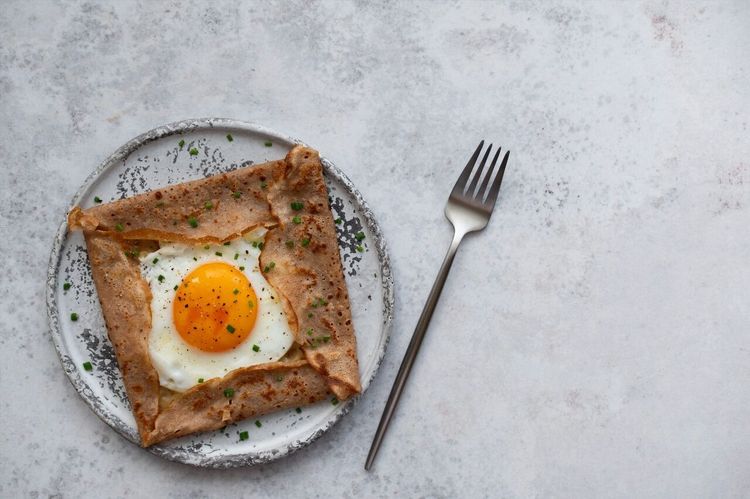
Carnac's gastronomy revolves around two registers: shellfish and crustaceans and galettes and crêpes. But the local culinary scene is more nuanced than this simplification suggests.
From the sea, Pacific oysters from the Étel basin (25 km to the northwest) and flat oysters from Locmariaquer are the undisputed stars. You will find them in every seafront restaurant, but also directly from oyster farmers selling along the road between Carnac and Crac'h. Langoustines from the Quiberon fish auction, served simply grilled or poached in a seaweed broth, are a pleasure you will not find at this level of freshness elsewhere. Breton lobster — blue, not Canadian — is the centerpiece of fine dining establishments: expect to pay €35 to €55 for a half lobster as a main course.
For crêpes and galettes, Carnac has several serious crêperies in the village. The key distinction to know: the galette is savory, made with buckwheat flour, and eaten as a main course; the crêpe is sweet, made with wheat flour, and comes as dessert. A good galette should be thin, crisp at the edges, and generously filled — ham and cheese is the classic, but andouille sausage from Guémené (smoked across layers of stacked intestines) is the Breton version you should try at least once.
Salted butter is ubiquitous and justified: Guérande sea salt, harvested in the salt marshes 40 km to the southeast, is one of the finest in France. It flavors caramels, kouign-amann (a flaky, caramelized Breton cake), and premium butters you will find in the town center's fine food shops.
On the drinks side, muscadet (Loire-Atlantique) pairs naturally with seafood. For a Breton alternative, dry cider and Breton whiskies (several artisan distilleries operate in the region) are worth exploring.
Where to Stay in Carnac
Carnac offers a wide range of accommodation, from campsites to charming hotels. The main decision is geographic: Carnac village (historic village, quieter in the evenings, close to the alignments) or Carnac-Plage (seafront, summer activity, direct beach access).
On the hotel side, the Celtique & Spa (4 stars, Druides district) is a benchmark seafront establishment, with an indoor pool and access to the thalassotherapy center. Expect to pay €120 to €250 per night in high season. For better value, several hotels in the village and at the beach offer adequately equipped rooms between €70 and €120.
Campsites are a strong tradition in Carnac: the municipality has around ten campsites, several of which are 4-star with covered pools. Camping Les Druides, close to the beach, is particularly well located. Pitches range from €25 to €45 per night in high season depending on comfort level.
Gîtes and seasonal rentals are plentiful in both areas: booking 3 to 6 months in advance for July–August is essential. The Carnac Tourist Office platform centralizes gîtes labeled "Gîtes de France" with certified comfort ratings — a good starting point for booking.
For budget travelers or those on touring holidays, Carnac has shared accommodation options and campsites open outside the main season on certain municipally managed sites.
Getting to and Around Carnac
Carnac is not served by train: the nearest station is Auray, 12 km to the north. Seasonal shuttles connect Auray to Carnac in July–August (approximately 20 minutes). From Paris, the Atlantique TGV serves Vannes or Auray from Montparnasse in 2h45 to 3h15 depending on the stop. By car from Paris, allow 4.5 to 5 hours depending on traffic on the A11 then the N165.
The nearest airport is Lorient Bretagne Sud (45 km), with flights from Paris and a few seasonal routes. Nantes Atlantique airport (120 km) offers more international connections.
On the ground, a car remains useful for linking the various megalithic sites spread across the municipal territory and for excursions to Quiberon or Locmariaquer. That said, Carnac is one of the best-equipped Breton municipalities for cycle routes: the Vélodyssée network (EuroVelo 1) passes through the municipality, and electric bike rental shops are available on the seafront. To get from the village to Carnac-Plage (2 km), the alignments (3 km), or La Trinité-sur-Mer (10 km), cycling is often faster than driving in high season.

FAQ
How much time do you need to visit Carnac?
A minimum of two days is needed to see the essentials: a morning at the alignments, a visit to the Prehistory Museum, an afternoon at the beach or in the town center, and the Saint-Michel tumulus. To include a trip to Locmariaquer, a day in Quiberon, and a cruise in the Golfe du Morbihan, allow three to four days. If you only have one day in Carnac, focus on the Ménec and Kermario alignments in the morning, the Prehistory Museum before lunch, and the Grande Plage in the afternoon.
What is the admission price to visit the Carnac alignments?
The guided tour of the alignments is organized by the Centre des monuments nationaux, departing from the Maison des Mégalithes: €13 full price, €6 reduced rate (ages 7–17, students, job seekers), free for children under 7. Importantly, from October to March, free self-guided access to the alignments is available. The rest of the year, the peripheral footpath and observation platforms remain freely accessible. The Prehistory Museum charges €7 (full price) separately, and the Pass des Mégalithes offers a reduced rate from the second site visited.
What is the best season to visit Carnac?
Spring (May–June) and autumn (September–October) are the best periods: the light is beautiful, the weather mild, the sites uncrowded, and most accommodations are open. July–August is peak tourist season with maximum crowds. Regardless of weather (wind and rain are possible at any time of year), Carnac is worth visiting year-round: the alignments are free for self-guided visits from October to March, the museum is open except on Mondays, and several restaurants remain active even in January.
What can you do in Carnac when it rains?
Rain is the perfect excuse to spend a good two hours at the Prehistory Museum, one of the most rewarding visits in southern Brittany in any weather. The thalassotherapy centers in Carnac-Plage are another serious option: day packages with heated seawater baths, hammam, and treatments. The town center's crêperies are also a perfectly legitimate refuge — allow at least an hour for a savory galette followed by a salted caramel butter crêpe.
Can you visit Carnac for free?
Yes, and more so than you might think. To visit Carnac for free, take advantage of: free self-guided access to the alignments from October to March, walks around the fields from the observation platforms and peripheral footpath the rest of the year, the Saint-Michel tumulus (access to the summit and chapel), the Saint-Cornély church, the Saint-Colomban Chapel, the beaches and coastal path, and open-air dolmens. Only the guided tour of the alignments in season (€13), the Prehistory Museum (€7), and the Kercado tumulus (around €1) require admission.
How do you visit Carnac and Quiberon in a single day?
It's doable but intense. Start early: Ménec alignments at 9am (1.5 hours), then drive to Quiberon (25 min). Spend the morning on the Côte Sauvage or at the port fish market, depending on your preference. Have lunch at a restaurant in Quiberon harbor. Afternoon: swim at Saint-Julien beach or visit La Belle-Iloise, then head back to Carnac for sunset over the Grande Plage. Plan this itinerary on a weekday in July–August: the roads on the Quiberon peninsula are congested on weekends. If you can spare an hour for the village itself, our audio-guided loop covers it in 16 stops, from the Saint-Cornély church to the Prehistory Museum.
Carnac Beyond the Clichés: a Destination for All Seasons
Carnac is often reduced to its menhirs, sometimes to its beach promenade. The reality is richer: a Neolithic heritage of unrivaled density in Europe, a varied coastline ranging from family beaches to wild cliffs, a gastronomy that goes well beyond the buttered crêpe, and excursions to Locmariaquer, Quiberon, and the Golfe du Morbihan that multiply the angles of approach to a coherent territory.
To plan your stay, the Ryo app offers audio content on the archaeological and cultural sites of the Brittany region, accessible offline once downloaded. The Ryo audio guide is designed to complement what the signage does not say: current scientific hypotheses on the megaliths, stories of archaeological discovery, connections between sites. Whether you have two days or a week, Carnac delivers on its promises with every visit.