© Shutterstock
 Votre guide Ryo
What to Do in Cholet in 2026: 15 Experiences between the Vendée Bocage and the Anjou Vineyards
Cholet is unlike any other sub-prefecture in Maine-et-Loire. This former capital of textiles and footwear, nicknamed the city of the handkerchief, hides the largest Japanese garden in Europe just a few kilometres from its centre. Its basketball arena sees thousands of spectators wave white handkerchiefs every week in homage to that industrial past — an image found nowhere else in the French championship. What to do in Cholet is therefore not limited to a stroll through the city centre: the question opens up an entire territory, spanning the Vendée bocage, the Layon vineyards and major leisure parks.
Before you leave, consider downloading the Ryo app: the Ryo audio guide covers several cities in the region and can usefully complement a stay in the Choletais. In fifteen stages, this article details a 29-hectare oriental park climbing a hillside, an artificial lake where you can sail in the heart of the bocage, a carnival more than a century and a half old, and a possible excursion to the Puy du Fou in less than forty minutes by road — enough to fill an entire weekend, a rainy Sunday or a simple evening with friends, without ever really leaving the Cholet area.
1. The Parc Oriental de Maulévrier
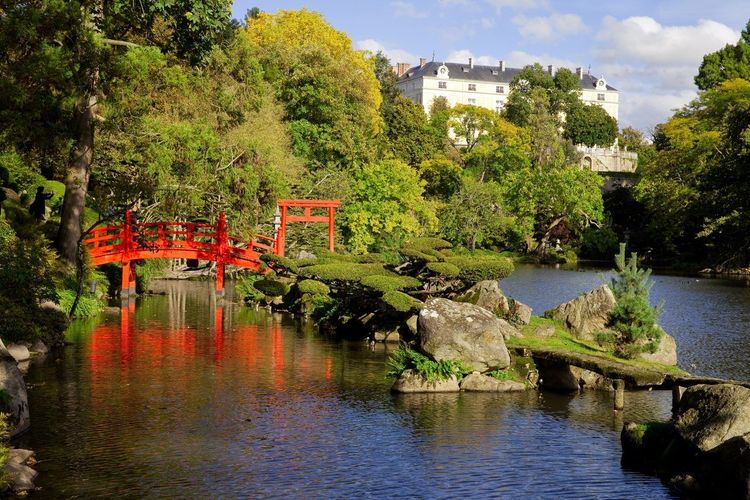
About ten minutes south of Cholet, the Parc Oriental de Maulévrier (Le Bourg, 49360 Maulévrier, rated 4.7/5 on Google based on 11,104 reviews) spreads across nearly 29 hectares on a hillside above the Moine valley. It is the largest Japanese garden in Europe, a status recognised well beyond the borders of the Choletais.
The site was shaped in the very early twentieth century by architect Alexandre Marcel, a passionate enthusiast of the Far East, who designed a complete landscape here: cascading ponds, a red pagoda, a torii, a lacquered wooden bridge, and a collection of century-old bonsai and azaleas. The visit is done on foot along hillside paths that alternately overlook the water and the canopy, with different viewpoints depending on where you are along the route. Some sections look out over entire basins, while others wind at water level between mossy stones.
In spring, the azaleas and rhododendrons transform the slopes into a palette of pink and mauve, a spectacle that draws many photographers every year from the first fine days. In autumn, the Japanese maples take over with blazing colours, a period particularly prized for the raking late-afternoon light. Winter, more discreet, reveals the mineral structure of the garden: rocks, bridges and pagoda stand out against a bare backdrop, far from the summer crowds.
Allow an hour and a half to two hours to complete the full route at a leisurely pace, and favour a visit on a weekday or early in the morning at weekends: organised groups generally arrive after 11am. The entrance ticket often includes access to a temporary exhibition dedicated to Japanese art, installed in the former outbuildings of the estate. For families, a fun trail lets children spot the symbolic elements of the garden in the form of a treasure hunt, a simple way to keep younger visitors engaged for the duration of the visit.
2. The Musée d'Art et d'Histoire de Cholet
Located in the city centre, the Musée d'Art et d'Histoire de Cholet (49300 Cholet, rated 4.4/5 on Google based on 280 reviews) traces two major strands of local identity: the Wars of the Vendée, which saw the city become the theatre of decisive clashes in 1793, and the industrial epic of the textile trade that shaped the Cholet economy for nearly two centuries.
The permanent collection notably features examples of the famous mouchoir de Cholet, the small square of linen with a red border that made the city's reputation throughout France in the nineteenth century. Antique looms, painted cloths and photographs of workshops place this production in its social context, at a time when weaving employed a large part of the Cholet population — men and women alike, often from adolescence.
Another section of the museum focuses on regional painting collections and a few older canvases acquired by the city over the decades. The contrast between these two aspects — one intimate and industrial, the other artistic — gives the museum a fairly singular identity among medium-sized city museums. Temporary exhibitions change several times a year, centred on regional painters or themes related to the bocage heritage.
It is an ideal visit on a rainy day, as it takes place entirely indoors and rarely requires more than an hour and a half. Admission is affordable, and on certain dates throughout the year, such as Heritage Days, entry is free.
3. The Étang de Ribou and Lac du Verdon
Less than ten minutes from the centre, the duo formed by the Étang de Ribou and the Étang du Verdon constitutes the main green and nautical lung of Cholet. Separated by a dam, these two artificial stretches of water serve both as a drinking water reserve and as a leisure base for the entire agglomeration.
In summer, the purpose-built beach at Ribou attracts families for supervised swimming, while the sailing club offers hourly rentals of canoes, paddleboards and catamarans, with supervised introductory sessions for beginners. Those seeking a more peaceful experience can simply hire a pedalo for a tranquil ride between the wooded shores, watching the houses that line part of the lake.
A trail of several kilometres makes a complete circuit of both lakes and is equally suited to walking and cycling, with several shaded picnic areas along the way. Some sections pass through wooded areas where the cool air is noticeable even in the height of summer, a welcome compromise when the heat becomes too strong to stay exposed to the sun on the beach.
Out of season, the site remains pleasant for a peaceful walk: herons, coots and sometimes swans frequent the banks, and the early morning light on the water often surprises visitors who did not expect to find such a landscape on the doorstep of a medium-sized city. A fitness trail and a playground round out the offer for families with young children, as do a few benches positioned at spots with the best views of the dam.
4. The Handkerchief Heritage and Textile Workshops
Cholet still bears the nickname of the city of the handkerchief today, inherited from a textile industry that once employed thousands of residents, from weaving and dyeing to garment-making. This past still irrigates the urban fabric: former factories converted to new uses, preserved brick chimneys, and street names evoking the trades of the thread.
Several waymarked walking routes through the city centre allow visitors to spot these nineteenth- and early twentieth-century industrial buildings, often converted into housing, community spaces or small shops. A map available from the tourist office details this itinerary, which can be followed freely in about an hour, with no booking or set schedule required.
This textile memory also explains a more unexpected tradition: during basketball matches, Cholet supporters wave white handkerchiefs to cheer on their team, a direct nod to the city's industrial history. It is often said that this custom established itself naturally in the stands, long before it became a symbol claimed by the club and local shopkeepers.
5. A Cholet Basket Match
Attending a Cholet Basket game ranks among the most vibrant experiences in the city. The club, a regular contender at the top of the French championship, plays its home games in a sports arena that sells out for the biggest fixtures, driven by an atmosphere of fervour rare for a city of this size.
Entering the arena is a genuine ritual: chants taken up in unison, drums, and of course those famous white handkerchiefs waved at every highlight of the match. For passing visitors, it is a unique opportunity to feel the attachment that Cholet residents have for their club, often far more intense than one imagines before attending for the first time.
Tickets can be reserved online a few weeks before the most eagerly anticipated matches, particularly those against the championship's historic clubs. Arrive a little before tip-off: the area around the arena already buzzes with a festive atmosphere, with a refreshment stand and club-branded stalls that are worth the trip in themselves for anyone who enjoys popular sporting events.
6. The Carnaval de Cholet
Every spring, the Carnaval de Cholet transforms the streets of the city centre into a parade of flower-covered and costumed floats that draws an audience from across the département and sometimes far beyond. This tradition, dating back to the nineteenth century, makes it one of the oldest carnivals in western France and one of the most popular in the region.
The highlight remains the night-time corso, where illuminated floats parade accompanied by musical groups and thousands of confetti thrown over spectators lined up along the route. During the day, a more family-friendly parade allows costumed children to take part directly in the festivities, often accompanied by their school or neighbourhood. Local associations spend several months preparing their floats in advance, a level of commitment that shows in the quality and care given to the décors, colours and themes chosen each year.
The shopping streets are also decorated with ephemeral displays throughout the entire carnival period, which prolongs the festive atmosphere well beyond the parade days themselves. Attending the carnival is free: the corsos can be watched from the pavements at no charge, making it one of the most accessible outings of the year in Cholet. Do book your accommodation in advance if you are coming from far away, as city-centre hotels tend to fill up on the evenings of the night-time corsos.
7. The Halles de Cholet and the Market
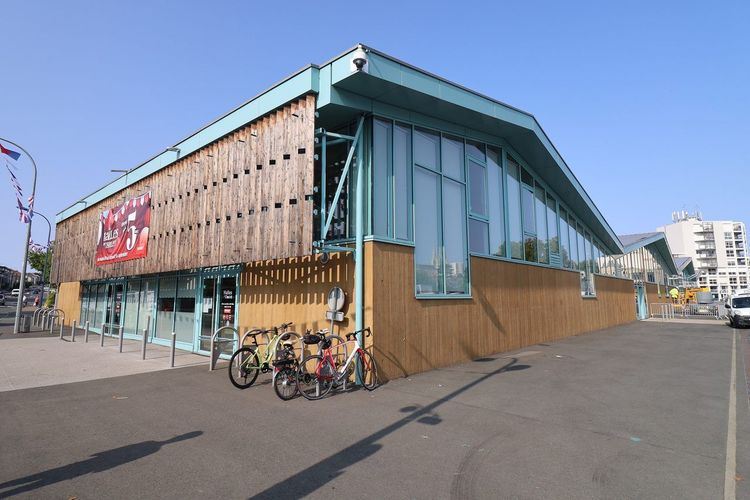
The Halles de Cholet (Place Travot, 49300 Cholet, rated 4.3/5 on Google based on 1,298 reviews), located right in the city centre, host a market several times a week where local producers and food traders gather beneath a metal framework typical of the late nineteenth century.
The Sunday morning market remains the most lively, with farm cheeses, bocage poultry and seasonal produce that changes with the months. A wander around the adjoining square, followed by a coffee on a terrace, makes for a pleasant introduction to Cholet on a Sunday, before moving on to another activity later in the day, whatever the weather.
8. The Route des Vins du Haut-Layon
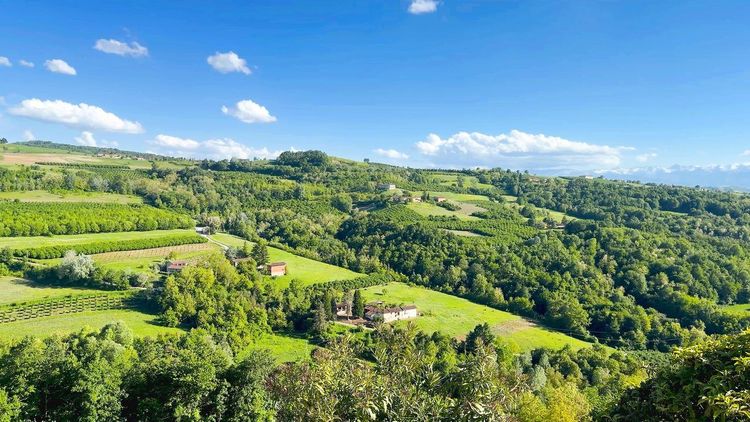
To the south-east of Cholet stretches a vineyard less well-known than that of the central Loire but just as distinctive: the Route des Vins du Haut-Layon, which winds through villages such as Vihiers, Somloire and Yzernay amid slopes planted with chenin blanc.
This route, easily covered in a half-day from Cholet, links several wine estates where growers offer tastings and direct sales, often with a detailed explanation of the winemaking methods specific to the Coteaux du Layon. Lovers of sweet wines will find cuvées marked by the over-ripening of the grapes, while fans of dry whites will appreciate the more classic cuvées from the area, generally less expensive than in the Loire's better-known appellations.
Between cellars, the villages passed through are worth a detour in their own right: Romanesque churches, restored wash-houses and small producers' markets animate this rural territory at a pace far slower than that of Cholet's city centre. It is also one of the best answers for anyone looking for a village to visit around Cholet for a day trip, away from the urban bustle and the main roads.
9. The Puy du Fou, Less than Forty Minutes Away
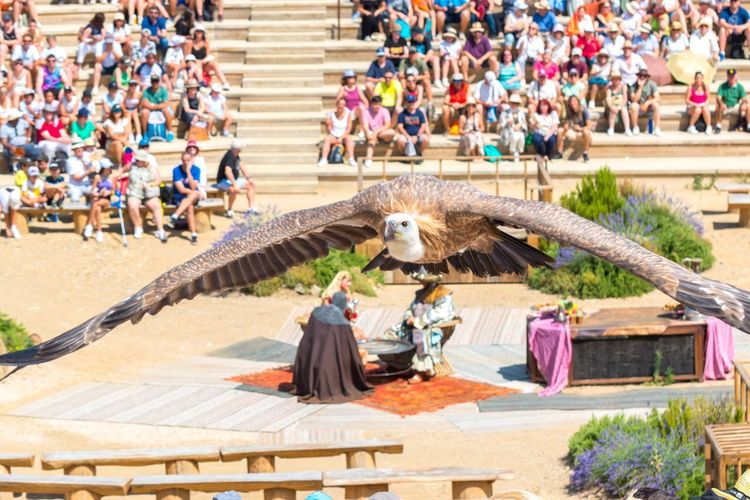
It is impossible to discuss the surroundings of Cholet without mentioning the Puy du Fou (Route de Chambretaud, 85590 Les Epesses, rated 4.8/5 on Google based on 102,186 reviews), one of the most visited parks in France, located in Les Epesses, approximately 35 to 40 minutes away by road.
The park builds its shows around grand historical frescoes performed in costume, with productions involving several hundred extras and full-scale special effects. The Cinéscénie, its iconic night-time show performed on certain summer evenings only, gathers thousands of spectators in open-air stands to recount the history of the Vendée through the decades, in a production that mobilises several thousand volunteers.
A full day is barely enough to take in all the daytime shows, spread across a vast wooded estate where queues are best managed early in the morning. Many visitors who choose Cholet as their accommodation base take advantage of the proximity to combine a night in the city with a full day at the park, avoiding the higher prices charged in the immediate vicinity of the site.
Book your tickets online several weeks in advance during high season, as certain dates sell out as early as spring. Remember also to book your accommodation in Cholet as soon as your dates are confirmed, as demand rises sharply in the weeks leading up to the school holidays. If your trip also includes a stop in Angers, the city's audio-guided tour rounds off the outing nicely, on foot through the historic centre.
10. Hiking and Cycling in the Choletais Bocage
The territory around Cholet belongs to the bocage, that landscape of hedgerows, meadows and sunken lanes that characterises the entire south of Maine-et-Loire and the north of the Vendée. Several waymarked routes starting from the city allow visitors to explore it on foot or by bike.
The Voie Verte du Choletais, laid out along a former railway line, offers a flat, safe route ideal for a family cycling outing, linking Cholet to several neighbouring communes on a surface suited to pushchairs and electric bikes alike. For walkers, hiking loops of 5 to 15 kilometres wind through hamlets, streams and small woodlands, with waymarking maintained by local associations throughout the year.
These routes remain freely accessible all year round, a good complement for anyone looking for things to do in Cholet for free outside the paid attractions. Some circuits even offer shorter variants, designed for families with young children or for a simple after-lunch stroll.
11. Family Activities around Cholet
With children in tow, Cholet and its surroundings are full of options suited to all age groups. A treetop adventure park on the edge of a forest offers several courses according to children's height, from the smallest all-net course to the large suspended course for teenagers and adults.
There is also a mini-golf course, an air-conditioned bowling alley for rainy days, and several educational farms in neighbouring communes where younger children can feed goats and ponies under the supervision of activity leaders. On winter weekends, a temporary ice rink is usually set up on one of the city-centre squares, extending family outings even in cold weather, with skate hire available on site.
These activities can easily be combined in a single day, alternating between outdoor and indoor options according to the weather, without requiring long journeys between venues.
12. Shopping and Factory Outlets

As heir to its textile and footwear past, Cholet retains a concentration of factory outlet shops quite rare for a city of this size. Several local shoe brands, born here last century, still sell their collections at reduced prices.
These shops are grouped mainly in out-of-town retail areas, easy to combine with a lunch break and a fill-up before getting back on the road. For bargain hunters, half a day is more than enough to cover the main addresses, particularly outside the sales period when crowds are more manageable.
13. Cinemas and Bars for Cholet Evenings
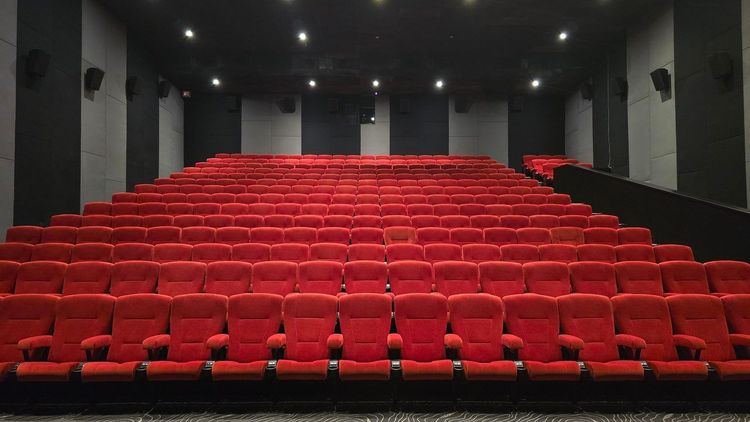
Once night falls, Cholet's city centre concentrates most of the options for filling an evening. The city-centre multiplex offers a general programme with several late screenings at weekends, a practical option for what to do in Cholet in the evening without travelling far.
Nearby, a handful of lively bars and pubs animate the pedestrian streets until late, particularly on Thursday and Friday evenings when students and young professionals gather on terraces or inside depending on the season. Some establishments organise themed nights or acoustic concerts at the end of the week — worth checking on their pages before heading out, as programmes often change from one week to the next.
14. Picnics and Urban Parks
For a green break without leaving the city, the Jardin du Mail offers shaded lawns, a bandstand and a children's play area right in the heart of Cholet. It is one of the favourite spots for families and workers on their lunch break on fine days.
Several other green spaces complement the offer, notably along the Moine, the river that runs through the city, where benches and purpose-built tables allow you to picnic by the water. Some of these spaces also host small open-air events in summer — free concerts or pop-up markets — which are worth checking out before settling in for the day.
These parks are freely accessible at any hour, a straightforward answer for anyone looking for things to do in Cholet for free on a sunny afternoon, with no booking required and not a single euro to spend.
15. Indoor Sports and Leisure
When the weather turns bad, Cholet has a covered sports offer broad enough to fill an entire day. The municipal swimming pool offers sports lanes and a fun area with water slides, while an escape room in the city centre offers several scenarios for groups of friends or family outings.
A bowling alley, a climbing wall and several gyms open to the public on a pay-per-session basis round out the offer. These venues are particularly well suited to the rainy days mentioned above, as an alternative to the museums and cinemas already cited, and provide a backup plan in every season.
For planning a wider stay in the region, the Ryo app can also serve as a useful additional reference: the Ryo audio guide offers routes in several cities in the Grand Ouest, handy if you extend your journey beyond the Choletais.



FAQ
What can you do in Cholet for free?
The Jardin du Mail, the banks of the Moine, the walk around the Étang de Ribou and the parades of the Carnaval de Cholet can all be enjoyed without spending a single euro. The hiking trails and the Voie Verte du bocage choletais are also freely accessible year-round, whatever the season.
What can you do in Cholet when it rains?
The Musée d'Art et d'Histoire de Cholet, the multiplex cinema, the bowling alley, the municipal swimming pool and the escape room in the city centre are the best options for a rainy day, all fully accessible indoors and independent of the weather.
What can you do in Cholet on a Sunday?
The market at the Halles de Cholet opens on Sunday mornings, followed by a stroll through the Jardin du Mail or a visit to the Étang de Ribou. In season, the Parc Oriental de Maulévrier is also open that day, making it easy to combine several activities.
Which villages should you visit around Cholet?
Maulévrier for its Japanese garden, and the villages along the Route des Vins du Haut-Layon such as Vihiers, Somloire or Yzernay for their wine-growing and rural heritage, are among the best options less than half an hour's drive from the city centre.
What can you do in Cholet in the evening?
The city-centre multiplex and the bars along the pedestrian streets are where most of the nightlife is concentrated. On match nights, the atmosphere around the Meilleraie sports arena also extends the evening for basketball fans and their white handkerchiefs.
How much time should you plan for a visit to the Parc Oriental de Maulévrier?
Allow an hour and a half to two hours to walk all the trails at a leisurely pace, and longer in spring or autumn when the blossoms and the colours of the Japanese maples invite you to linger.
Is Cholet a good base for visiting the Puy du Fou?
Yes: the park is about 35 to 40 minutes away by road, which allows you to combine accommodation in Cholet, often less expensive than in the immediate vicinity of the site, with a full day at the Puy du Fou without losing time on the road.
In Summary
Between its Japanese garden, leisure lake, textile heritage and excursions into wine country or to the Puy du Fou, Cholet turns out to be far richer than a simple stopover on the road to the Vendée. The city lends itself equally well to a few hours out or a full weekend, in any season, and particularly rewards curious visitors who take the time to venture beyond the city centre.
To plan your visit, the Ryo app is a good reflex to keep at hand: the Ryo audio guide will let you extend your exploration of the Choletais and its surroundings once you have finished discovering Cholet itself.