© Shutterstock
 Votre guide Ryo
Visit Angers in 2 Days: Complete Itinerary Between Castle and Gardens (2026)
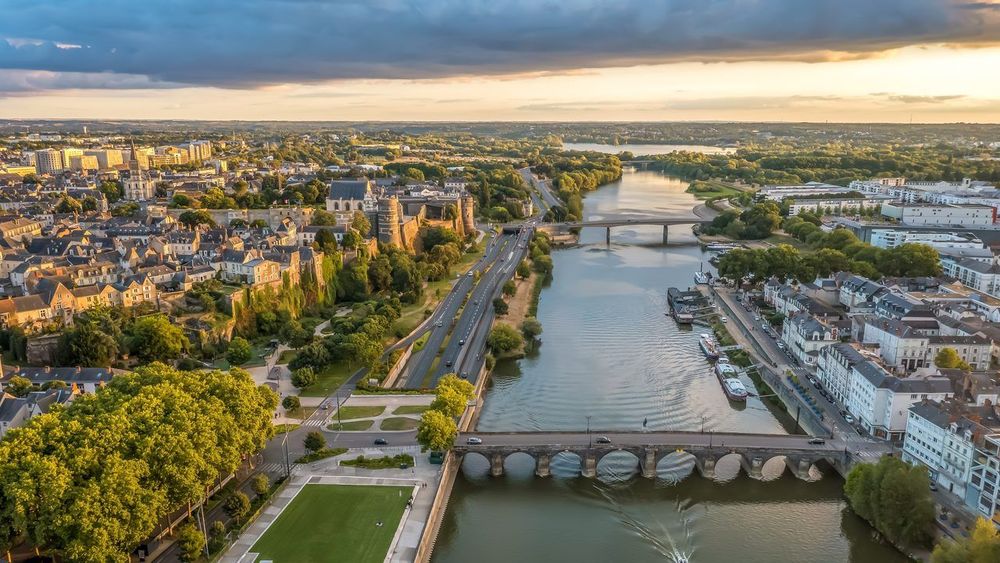
Visiting Angers in 2 days means moving seamlessly from a seventeen-tower fortress striped with black schist and white tuffeau to tropical greenhouses and a botanical garden planted in 1791. This Loire city is like no other: the castle drops straight down to the Maine, and ten minutes' walk away begins the green domain that has earned the city the title of France's greenest city, awarded multiple times since 2014. In 48 hours, you go from the Tapestry of the Apocalypse — the largest medieval tapestry preserved in the world — to a picnic by the river.
This guide lays out a day-by-day itinerary: the first day for medieval heritage and museums in the historic center, the second for parks, lesser-known neighborhoods, and, if time allows, an excursion to the Anjou vineyards or nearby châteaux. You'll know how many days to plan based on your pace, where to stay without breaking the bank, how to get around without a car thanks to the tram and the Angers City Pass, and which addresses to favor as a couple or with a family. To prepare your visit, the Ryo audio guide for Angers lets you scout the must-sees before you even arrive.
How Long Do You Need to Visit Angers?
Two days is the ideal format: enough to combine the castle, the cathedral, two or three museums, and a leisurely stroll through the gardens without rushing from one point to the next. With just one day, you'll need to make tough choices. Focus on the castle, the Maison d'Adam, and a quick lunch in the historic center, setting aside the secondary museums and parks for another time.
Conversely, if you have three days, the third day naturally opens up toward the surrounding area: Loire châteaux, villages listed among the most beautiful in France, or wine tasting in the Anjou vineyards. This is the option detailed at the end of this guide, designed to turn a weekend in Angers into a complete getaway without having to improvise once you're there.
For the rest of this guide, the two-day format is the focus — the most popular and best suited to a classic weekend — with suggestions for extending or shortening it depending on your schedule. As a reference, most short stays run to 48 hours, in line with the Angers City Pass, available in 24-, 48-, and 72-hour versions. One detail worth noting for your planning: most municipal museums are closed on Mondays, and some monuments reduce their hours between November and March. A winter weekend is very doable, but check opening days before building your hour-by-hour program.
Day 1: Château d'Angers and the Historic Heart
Start early: the castle generally opens at 9:30 a.m. in high season, and the morning light on the ramparts, raking across the tuffeau, is worth the trip before tour groups arrive.
Château d'Angers and the Tapestry of the Apocalypse
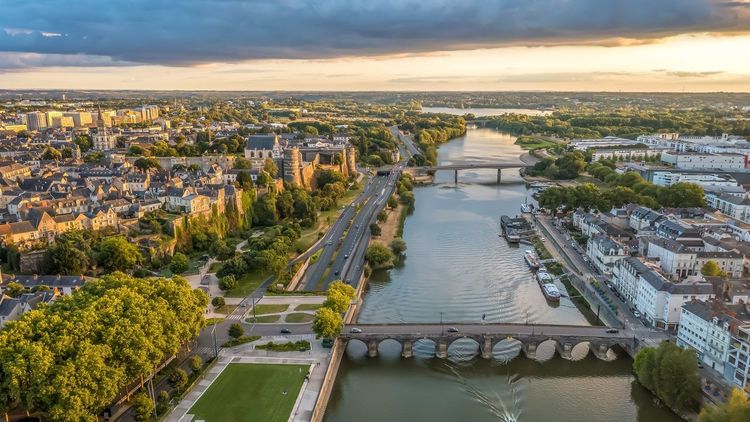
The Château d'Angers dominates the Maine from a rocky spur, with its seventeen towers alternating bands of black schist and white tuffeau — a visual signature found nowhere else in the Loire Valley. Built in the 13th century under the reign of Saint Louis, it shed its defensive purpose over the centuries to become the residence of the Dukes of Anjou, then a prison, before its restoration in the 20th century. The moats, now transformed into gardens and enclosures where deer sometimes graze, can be admired from outside even before you reach the ticket desk.
On the practical side, the monument is managed by the Centre des monuments nationaux: expect around €13 for a full-price ticket, with free admission for under-18s and for 18–25-year-olds who are citizens of the European Union. The ticket is also included in the Angers City Pass, which often changes the calculation if you're planning several paid visits. Booking a time slot online saves about fifteen minutes in line on spring weekends.
Inside, the Tapestry of the Apocalypse occupies a gallery specially designed to protect it from light. Woven in the late 14th century on the orders of Louis I of Anjou, it unfolds nearly one hundred meters of the complete text of the Apocalypse according to Saint John, in a play of colors that has survived six centuries without losing its original brilliance. Allow at least forty-five minutes to go through it in detail: each scene deserves a moment's attention, and the explanatory panels let you follow the narrative without a guide.
If you have a little time, walk up to the rampart walkway. The view takes in both the cathedral, the slate rooftops of old Angers, and, in the distance, the first slopes of the vineyards. Allow two hours in total for a complete visit of the castle and the tapestry, a little less if you focus on the tapestry alone.
Maison d'Adam, Cathédrale Saint-Maurice, and the Lanes of Old Angers
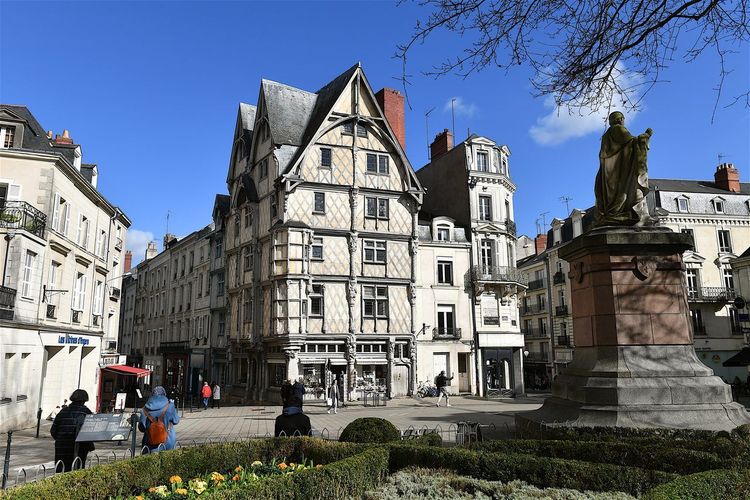
Leaving the castle, head up toward the place Sainte-Croix: this is where the Maison d'Adam stands — a late-15th-century half-timbered house, the most photographed in the city, with its posts carved with figures and plant motifs. It now houses the Maison des Artisans, worth a quick glance at the display windows before moving on.
Two minutes' walk away, the Cathédrale Saint-Maurice d'Angers (Place Freppel, 49100 Angers, rated 4.5/5 on Google with 3,884 reviews) presents its Gothic façade flanked by two towers, completed in the 16th century by a Renaissance-inspired central tower. The interior surprises with its single nave and no side aisles — an architectural choice specific to the Angevin Gothic style, also known as the Plantagenet vault. The 12th- and 13th-century stained glass windows, among the oldest in France still in place, are well worth looking up at for more than thirty seconds. Admission is free, making it the most beautiful complimentary stop of the morning.
Stepping back outside, let yourself drift through the lanes of old Angers: rue Saint-Aignan, rue Toussaint, rue Saint-Laud. Half-timbered façades alternate with tuffeau town houses, and café terraces are never far when you need a breather. Don't miss the staircase of the montée Saint-Maurice, which links the river to the cathedral forecourt and offers the best vantage point over the slate rooftops. It is within this compact perimeter — walkable in half an hour — that most of the visible medieval heritage is concentrated. The Ryo audio guide for Angers follows a similar route through this very neighborhood, sharing stories you don't always have time to look up on your own.
Day 1: Must-See Museums and a Gourmet Break
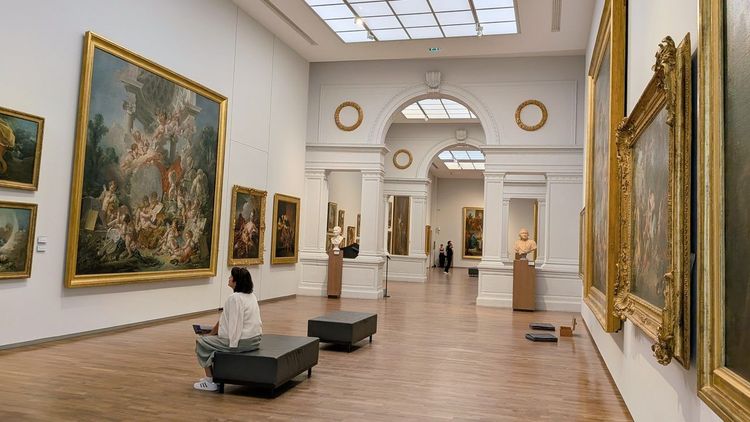
After the religious and military heritage, the afternoon of the first day turns toward art, before giving way to Angevin gastronomy as the day winds down.
Galerie David d'Angers and the Musée des Beaux-Arts
The Galerie David d'Angers occupies the former abbey church of Toussaint, whose nave — roofless for centuries — was covered by a glass roof in 1984. Displayed beneath this natural light are the original plaster casts by sculptor Pierre-Jean David d'Angers, a native of the city, who signed numerous monuments and portrait busts of 19th-century personalities. The visit takes twenty to thirty minutes — a perfect format for a cultural pause without committing an entire afternoon.
Ten minutes' walk away, the Musée des Beaux-Arts d'Angers (14 Rue du Musée, 49100 Angers, rated 4.6/5 on Google with 1,100 reviews) is housed in the Logis Barrault, a late-15th-century mansion built for a former mayor of the city. The collections span several centuries of painting, from the Middle Ages to contemporary art, with a history of the city trail going back to Antiquity. If you have to choose between the two museums for lack of time, favor the Galerie David d'Angers for its originality, and save the Musée des Beaux-Arts for a second visit or a rainy day.
Good to know: Angers' municipal museums charge moderate entry fees, often around €4 to €6 per site, and regularly offer free slots, including the first Sunday of the month for permanent collections. Check with the tourist office on place Kennedy, right opposite the castle — it's also where the Angers City Pass is sold.
Anjou Cuisine: a Gourmet Break and a Gastronomic Dinner
Around 5 p.m., treat yourself to a gourmet break at one of the patisseries in the center: the quernon d'ardoise — a square of nougatine coated in blue chocolate that mimics the local schist — is the sweet specialty you absolutely must try, ideally paired with a glass of crémant de Loire. It's a brief ritual, fifteen to twenty minutes, but it sets the tone for the regional gastronomy before dinner.
For the evening, Anjou is more than just wine. Crémant de Loire sits alongside specialties such as rillauds — slow-cooked pork belly pieces — and fion angevin, a traditional egg custard tart. Several addresses in the historic center and the La Doutre neighborhood serve gastronomic cuisine that showcases these products without overwhelming them. Book a table if possible in the late afternoon: the best spots fill up by 7:30 p.m. on weekends. To broaden your options, the top 10 culinary specialties of Angers lists the must-tastes during your stay, from restaurants to markets.
If you prefer a simpler option, the covered market halls and wine bars of the La Doutre neighborhood let you put together a light dinner of charcuterie and a glass of anjou blanc, no reservation needed. The Saturday morning market on place Bichon complements this program nicely if you're looking for products to take home: fouées, rillauds, Layon goat cheeses.
Day 2: Gardens, Parks, and France's Greenest City
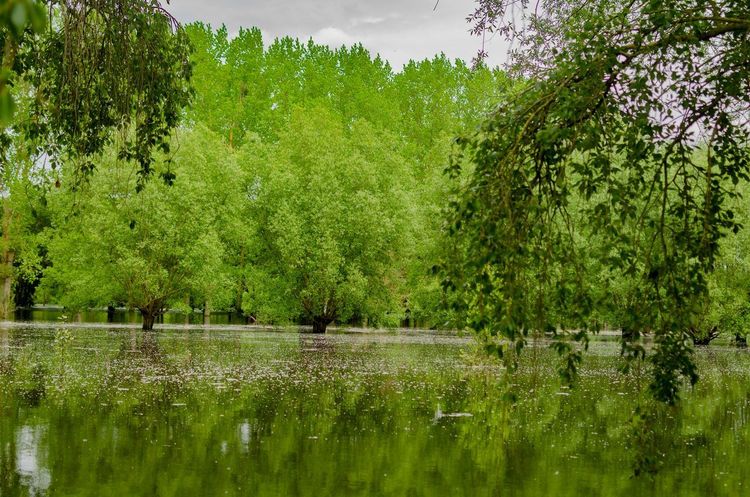
The second day changes pace: Angers has been named France's greenest city several times by the Observatoire des villes vertes, and that reputation becomes clear the moment you leave the historic center for its gardens.
Jardin des Plantes and Jardin du Mail
The Jardin des Plantes d'Angers opened in the late 18th century in an English landscape style, with century-old trees and a rose garden that blooms gloriously in spring. It is also one of the rare urban gardens home to a colony of grey herons, visible from the pathways without binoculars if you're lucky. Allow an hour to walk through it at a leisurely pace, longer if you bring a book to enjoy a shaded bench. Its logistical advantage: it sits right behind the train station and the convention center, making it a perfect last breath of fresh air before catching a train.
About fifteen minutes' walk away, shift atmosphere at the Jardin du Mail — an esplanade lined with century-old plane trees in the heart of the city, in front of the town hall. Fountains, seasonal flower beds, and a bandstand make it the Angevins' go-to spot for a shaded pause between visits. It is also one of the venues taken over each year by the city's major open-air events.
Parc Balzac and a Stroll Along the Maine
Then head down to the Maine. Parc Balzac (Boulevard Foch, 49100 Angers, rated 4.5/5 on Google with 3,146 reviews) runs along the river for several hundred meters, with open lawns that invite picnicking and benches facing the water. It's a good spot to watch the traditional flat-bottomed boats — the toues angevines — which sometimes navigate the Maine in the late afternoon.
Extend the walk along the quays to the pont de Verdun: the view of the castle from the river side is completely different from the one seen from the ramparts and is worth a few extra photos. This stretch of the promenade, entirely flat, is equally suited to families with strollers and morning joggers. If you still have energy, push on to the Lac de Maine leisure park, about twenty minutes from the center by tram and on foot: a hundred hectares of meadows, woodland, and stretches of water, with supervised swimming in summer, paddle board rentals, and walking trails. It's the most tangible illustration of what 'green city' means here: a natural space of this size just minutes from a 12th-century cathedral. Angers cultivates this balance between stone and greenery everywhere, not just in its official parks — the Virginia creeper-covered façades and window boxes along pedestrian streets are continuous proof of it.
Day 2: Collégiale Saint-Martin and Hidden Heritage
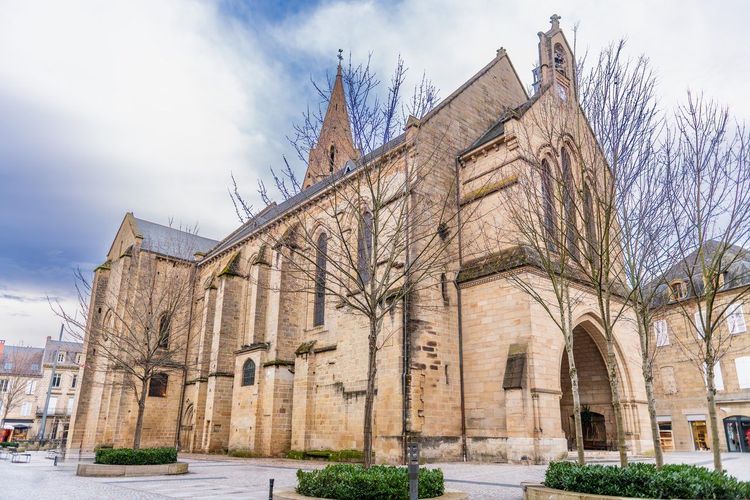
Late morning on the second day, step slightly off the beaten path to discover heritage that often escapes hurried visitors.
Collégiale Saint-Martin and the Musée Jean-Lurçat (Chant du Monde)
The Collégiale Saint-Martin d'Angers ranks among the oldest religious buildings still standing in France, with Carolingian masonry dating back to the 9th century. Long decommissioned and then restored over decades, it now hosts a visitor trail with atmospheric lighting and polychrome Gothic sculptures, tracing fifteen centuries of architectural evolution within a single building. The visit takes about thirty minutes, guided by digital support materials.
A few streets away, the former Hôpital Saint-Jean — founded in the 12th century by Henry II Plantagenet — houses the Musée Jean-Lurçat et de la tapisserie contemporaine. Its centerpiece, the Chant du Monde, directly echoes the Tapestry of the Apocalypse seen the previous day at the castle: ten panels woven in the mid-20th century by Jean Lurçat, setting the anxieties of the century against a celebration of life. Seeing both tapestries a day apart gives a rare perspective on Angevin textile art, from the Middle Ages to the contemporary era. The Gothic patient ward alone justifies the admission price: its Plantagenet vaults on slender columns rank among the finest in Europe for a medieval civic building.
Musée Pincé and the Natural History Museum
If time allows, two more off-the-radar museums round out this morning. The Musée Pincé, housed in a Renaissance mansion on the rue Lenepveu, presents collections of Asian art and antiquities assembled by Angevin collectors in the 19th century — a refreshingly exotic contrast after so much local heritage.
The Muséum des sciences naturelles d'Angers (43 Rue Jules Guitton, 49100 Angers, rated 4.3/5 on Google with 699 reviews) appeals above all to those curious about mineralogy, paleontology, and regional fauna, with collections built up since the 18th century. Neither requires more than thirty minutes, making them easy to combine if you have an hour to spare before lunch. Other discreet addresses extend the list for those wishing to explore beyond the obvious: the tour Saint-Aubin and its Romanesque frescoes, the artisan workshops of La Doutre, or the former Jacobins' convent and its chapel tucked within the Catholic university.
What to Do in Angers with Children
Angers lends itself particularly well to a family stay, provided you balance heritage with more playful activities. Terra Botanica, the plant-themed park opened in 2010 to the north of the city, remains the flagship attraction for children: tropical greenhouses, water features, immersive rides, and hundreds of thousands of plants spread across the site. Allow a full half-day to enjoy it at a relaxed pace, or even a full day in high season. The park is served by the tram, which removes the parking question entirely.
In the city, the castle generally delights children thanks to its towers to climb, its rampart walkway, and the animals grazing in the moats. The Jardin des Plantes, with its heron colony and wide open spaces, works equally well as a picnic spot and an impromptu nature-watching area. For a more active afternoon, Lac de Maine offers a supervised beach, play areas, and bike rentals, while the banks of the Maine provide enough space for a ball game without bothering anyone. The natural history museum, with its skeletons and minerals, can easily salvage a rainy afternoon.
On the dining front, several addresses in the center offer children's menus and terraces large enough to accommodate a little liveliness, particularly around the place du Ralliement and the La Doutre neighborhood. To refine your activity choices based on your children's ages, the article on visiting and exploring Terra Botanica details the rides and trails best suited to younger visitors.
Day Trips and Loire Châteaux Around Angers
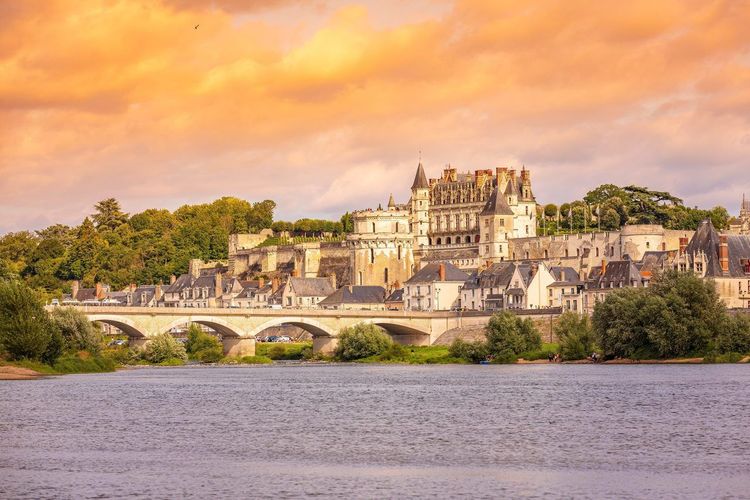
If you extend your stay to a third day, or simply want a half-day escape outside Angers, the region is full of options reachable in less than an hour's drive.
Loire Châteaux and the Most Beautiful Villages Around Angers
The château de Brissac, about twenty minutes south of Angers, is nicknamed the giant of the Loire Valley: its seven stories make it the tallest castle in France, blending a medieval façade with refined interiors that have been lived in by the same family for centuries. To the west, the château de Serrant at Saint-Georges-sur-Loire impresses with its Renaissance architecture and period-furnished apartments — less visited than Chambord or Chenonceau but equally photogenic.
Further east, Saumur and its white castle perched above the Loire can be reached in forty-five minutes by car or in just under half an hour by train from the gare d'Angers-Saint-Laud. A few kilometers away, the royal abbey of Fontevraud houses the effigies of Eleanor of Aquitaine, Henry II, and Richard the Lionheart: it is one of the largest monastic complexes in Europe and a full day trip in its own right if you take the time to have lunch on site.
On the village front, Montsoreau, listed among the most beautiful villages in France, overlooks the Loire with its castle that inspired Alexandre Dumas for La Dame de Monsoreau. About twenty minutes from Angers, Béhuard (49170 Béhuard, rated 4.5/5 on Google with 400 reviews) occupies a small island on the Loire, accessible via a road sometimes submerged during floods, with its chapel commissioned by Louis XI nestled between fishermen's houses. To organize this stop without losing time, the road trip Les Châteaux de la Loire maps out a complete route between these different sites, and the article on the most beautiful villages around Angers details the options based on how far you're willing to travel.
Vineyards and Wine Tastings in the Anjou Wine Country
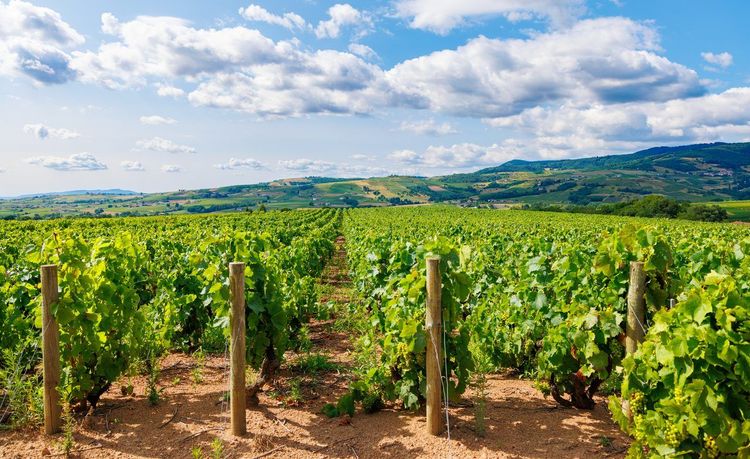
Angers sits at the heart of the Val de Loire wine region — France's third largest by area — with appellations as varied as Coteaux du Layon, renowned for its sweet wines, and Savennières, known for its dry whites with excellent aging potential. A half-day is enough to visit two or three estates within twenty minutes of the city, with tastings that are generally free or charged a token few euros, often deducted with a purchase.
If you'd rather not leave the city, the Maison des Vins de l'Anjou, a short walk from the castle, offers an introduction to the local appellations without needing to drive. It's a good option for a couple or a small group who wants to explore the diversity of Anjou wines without organizing a full estate tour. Allow an hour for a standard guided tasting, longer if you plan to visit several estates by car or bike: the Loire à Vélo cycling route and its variants let you reach Savennières or Béhuard in a relaxed morning's pedaling along near-flat paths. Back in the city center, the Ryo audio-guided tour offers a good way to round off the day on foot.
Where to Stay in Angers for a Weekend
The historic center, around the place du Ralliement and the lanes near the cathedral, concentrates most of the charming accommodations: character hotels in historic buildings, within walking distance of all the first-day sites. It's the most practical choice if you're not renting a car, even if it costs a little more than in outlying neighborhoods. Budget €90 to €150 per night for a well-located three-star in high season.
The La Doutre neighborhood, on the other side of the Maine, offers a quieter and often less expensive alternative, with its half-timbered houses and small independent guesthouses. It remains a fifteen-minute walk from the castle — an attractive compromise between budget and accessibility. Around the gare d'Angers-Saint-Laud, the offer is more functional but unbeatable if you're arriving by train: hotel chains between €65 and €95 per night, with the city center ten minutes' walk away along boulevard Foch. For a family stay or a longer trip, rental apartments in the Ney-Chalouère neighborhood offer more space for a controlled budget.
Whatever neighborhood you choose, book at least two to three weeks in advance for a spring or summer weekend, and well ahead of that during the city's major events, which saturate central accommodation. The Ryo audio guide for Angers can also help you choose your accommodation based on the places you plan to prioritize, by checking real walking distances on the map.
Getting Around Angers and the Angers City Pass
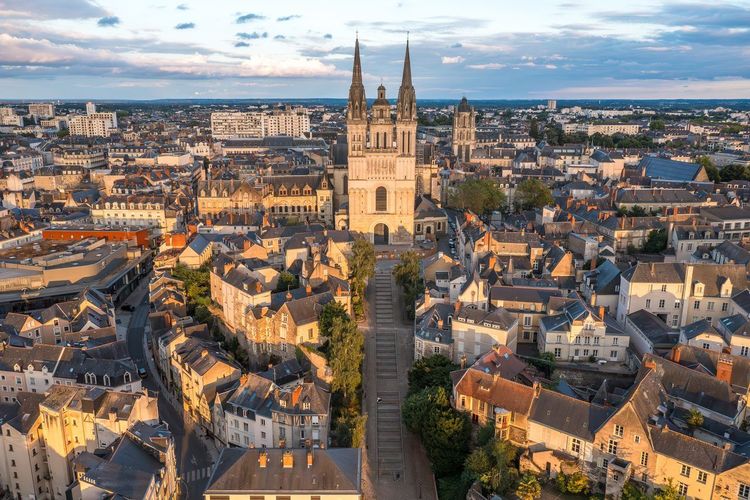
Angers is very walkable: the bulk of the first day's heritage fits within a fifteen-minute walk of the castle. An efficient walking route starts from the place Kennedy and the tourist office, follows the moats, heads up to the Maison d'Adam and the cathedral, crosses the place du Ralliement, then comes back down the rue Toussaint toward the Galerie David d'Angers — less than three kilometers in total, with almost all the must-sees along the way. Wear comfortable shoes: the old center's cobblestones are uneven.
For longer journeys, particularly to Terra Botanica, Lac de Maine, or outlying neighborhoods, the Irigo network combines tram and bus, with a single ticket valid for one hour including transfers and day passes that are significantly cheaper from the third journey onward. The gare d'Angers-Saint-Laud, connected to Paris-Montparnasse in around 1 hour 30 minutes by TGV, is ten minutes' walk from the center: a car-free weekend is not only possible but recommended, as parking in the city center is paid and limited. Bike-share schemes and day rentals round out the options for exploring along the Maine.
If you want to optimize your cultural budget, the Angers City Pass bundles access to around twenty sites, including the castle and municipal museums, with public transport included and discounts at select partners. It comes in 24-, 48-, and 72-hour versions, with the 48-hour version best aligned to a classic weekend. Do the math before buying: from three paid sites it becomes worthwhile; for just two visits, individual tickets often work out cheaper. It can be purchased at the tourist office opposite the castle, or online before your arrival.
To visualize all the sites and plan your journeys in advance, the map of Angers' main attractions — available at the tourist office or via the Ryo app — helps you build a coherent itinerary rather than zigzagging across the city.
Angers for Couples: a Romantic Getaway
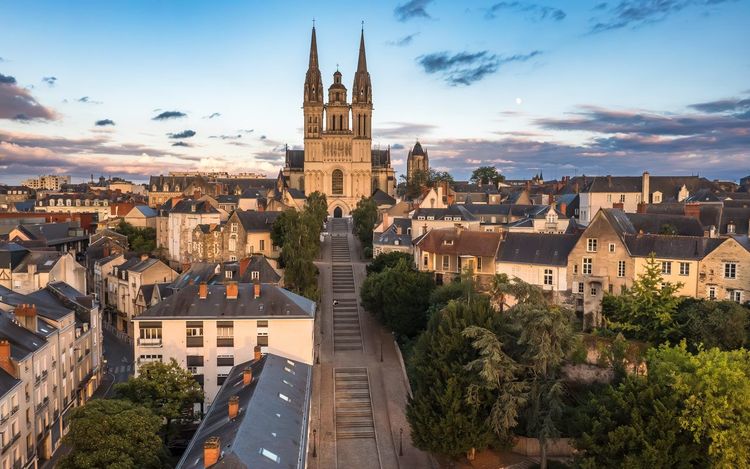
Angers naturally lends itself to a romantic weekend, between intimate heritage and vineyards just a stone's throw away. A late-afternoon boat ride on the Maine in a traditional toue angevine offers a suspended moment away from the bustle of the center, with the castle silhouetted against the sky as a backdrop.
For dinner, choose a gastronomic table in the historic center that highlights Anjou produce, paired with a glass of crémant de Loire or a Savennières white. The following morning, a quiet stroll through the Jardin des Plantes before the groups arrive rounds out this kind of program nicely, as does a tasting for two at one of the Anjou wine estates mentioned above.
What sets a romantic weekend in Angers apart from a standard city break is the immediate proximity between urban heritage and wine country: in less than twenty minutes by road, you can move from medieval lanes to a family estate where you taste on the terrace, with no complicated logistics to plan. For a night out of the ordinary, a handful of châteaux and manor houses in the vineyards between Brissac and the Layon open their guest rooms at rates comparable to a good city-center hotel.
Good to Know Before You Go: Weather, Crowds, and Budget
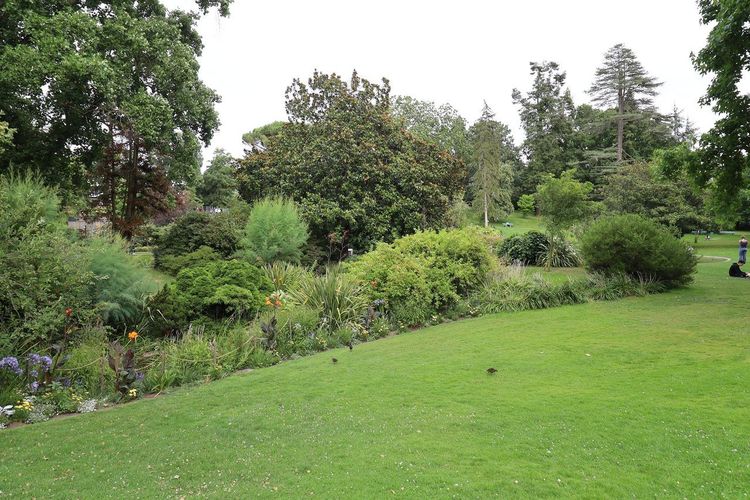
Angers enjoys a temperate oceanic climate, with mild summers that rarely turn scorching and gentle winters that often stay above freezing. Spring, between April and June, remains the most pleasant period for enjoying the gardens in bloom — the rose garden at the Jardin des Plantes peaks in May and June. Summer is also very enjoyable, provided you're comfortable with higher visitor numbers at the main sites. In autumn, the harvest in the Layon gives an extra reason to visit.
Crowds in Angers remain broadly manageable compared to cities like Tours or Blois: the castle and the cathedral can be visited without booking for most of the year. Peak times are concentrated around the May bank holiday weekends, summer weekends, and the city's major cultural events — notably the Accroche-Cœurs street festival, traditionally held at the start of September, which draws tens of thousands of visitors over just a few days. If you want to avoid tour groups, aim to arrive at the castle right at opening time, before 10:30 a.m.
On the budget front, allow between €80 and €150 per day per person for a comfortable weekend: mid-range accommodation, two or three paid visits, and restaurant meals included. In economy mode, with a room near the station and free sites (cathedral, gardens, old Angers' lanes), €50 to €60 per day is more than enough. The budget naturally rises if you add a rental car for the Loire châteaux or an extended tasting in the vineyards.

FAQ
How Many Days Do You Need to Visit Angers?
Two days are enough to cover the castle, the cathedral, two or three museums, and a stroll through the gardens. One day allows you to see the highlights of the historic center, while three days open the door to excursions toward the Loire châteaux and the Anjou vineyards.
How Do You Get Around Angers Without a Car?
The historic center can be explored entirely on foot, with all the must-sees within less than three kilometers. For longer trips, such as Terra Botanica or Lac de Maine, the Irigo network (tram and bus) offers frequent service with economical day tickets included in the Angers City Pass.
Where Should You Stay in Angers for a Weekend?
The historic center, around the place du Ralliement, offers the best compromise for doing everything on foot, between €90 and €150 per night. La Doutre offers often cheaper options a fifteen-minute walk from the castle, while the station district suits those arriving by train and families.
What Budget Should You Plan for a 48-Hour Weekend in Angers?
Budget between €80 and €150 per day per person for mid-range accommodation, two to three paid visits, and restaurant meals. Focusing on free sites and a picnic, €50 to €60 per day is sufficient, excluding excursions outside the city.
What Is the Best Time to Visit Angers?
Spring, between April and June, offers the best balance of pleasant weather and gardens in bloom. Summer remains very enjoyable despite higher crowds, and autumn coincides with the grape harvest in the Anjou vineyards.
Is the Angers City Pass Worth It?
It becomes worthwhile from three paid visits during your stay, including the castle, especially since it includes public transport. For a lighter program, individual tickets sometimes work out cheaper — calculate based on your itinerary.
What Can You Do in Angers with Children?
Terra Botanica remains the must-see family attraction, reachable by tram from the center. In the city, the castle and its moats, the Jardin des Plantes with its heron colony, the natural history museum, and the Lac de Maine leisure center all make great additions to a child-friendly program.
Angers in 48 Hours: Key Takeaways
Two well-organized days are enough to grasp what makes Angers unique: a black-and-white fortress and its one-of-a-kind medieval tapestry on the first day, then gardens, contemporary tapestries, and off-the-radar museums on the second. All within a compact enough area to go car-free, with a vineyard and a handful of châteaux less than thirty minutes away if the urge to extend your trip takes hold.
The city rewards those who accept slowing down: a second lesser-known museum rather than a hastily ticked list, an hour by the Maine, an impromptu tasting in Savennières. To refine your route before you leave or follow it on the ground, the Ryo audio guide for Angers remains a practical resource for leaving nothing to chance.
À lire également