© Shutterstock
 Votre guide Ryo
Visiting Angers in 3 Days: Complete Itinerary 2026
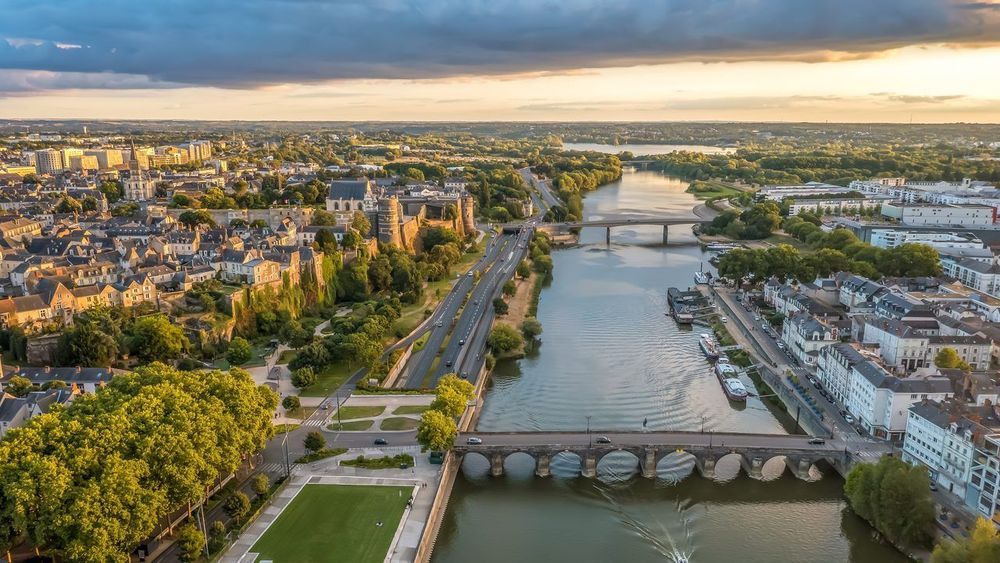
How do you visit Angers in 3 days without settling for the classic overview of the castle and cathedral? The city holds a rare paradox in the Val de Loire: mineral at first glance, with its seventeen towers of dark schist and white limestone at the Château d'Angers, it also hides more than 750 hectares of green spaces and a silent tram that glides between the half-timbered facades of the Doutre neighborhood. In a darkened gallery of the château, a tapestry nearly 100 meters long depicts the Apocalypse in scenes woven at the end of the 14th century — a masterpiece that most hurried visitors walk through in ten minutes without really looking at it.
This guide lays out a practical day-by-day itinerary for exploring the city and its surroundings. The first day stays within the ramparts, between the tapestry and the lanes of the Doutre. The second shifts toward the museums, a Carolingian collegiate church, and a toue angevine cruise on the river that built the city's entire commercial fortune. The third day, often absent from guides that focus too heavily on the city center, heads out to the Château du Plessis-Bourré, the île de Béhuard set in the middle of the Loire, and the vineyards that produce one of France's best-known rosés. You'll also find further down a walking loop, a detailed budget breakdown, and the best addresses to eat without going wrong. To keep track between stops without relying on a paper map, the Ryo audio guide for Angers covers a good portion of these sites directly from your phone.
Angers in 1, 2, or 3 Days: How Much Time Should You Plan?
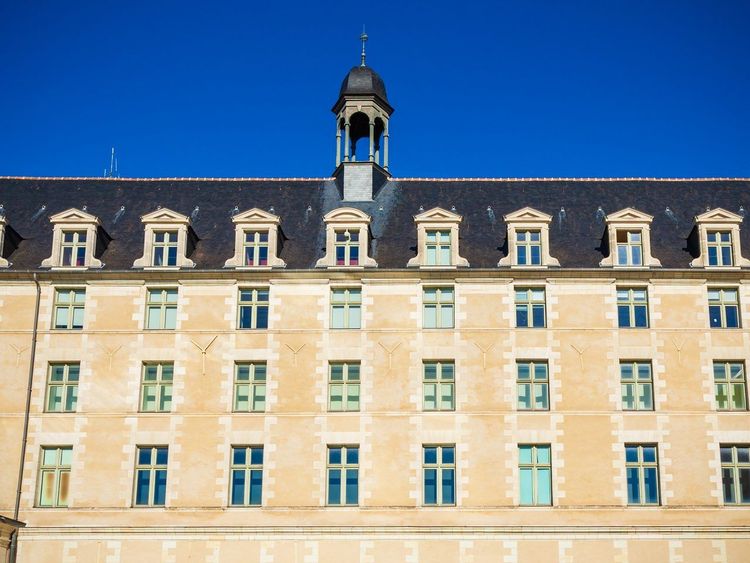
The ideal length of stay depends mostly on what you expect from your trip. Angers can be covered quickly in broad strokes, but it rewards a little more time if you want to venture beyond the city center.
Angers in 1 Day: The Essentials of the Historic Center
With just one day, you need to make choices. The château, the cathedral, and a stroll through the Doutre are enough to grasp the essentials, provided you start early: the Tapestry of the Apocalypse alone requires at least 45 minutes of attentive viewing. Plan a quick lunch near the place du Ralliement rather than a long sit-down meal, and save the late afternoon for the Doutre, which is quieter after 4 p.m.
Angers in 2 Days: Adding the Lac de Maine and Terra Botanica
Two days allow you to step beyond the strict city center. Keep the first day's program and add either the Musée des Beaux-Arts and the Collégiale Saint-Martin, or a nature escape to the Lac de Maine. Families with children often prefer Terra Botanica on the second day: the park requires at least half a full day to be properly enjoyed without rushing.
Angers in 3 Days: Expanding to Vineyards and Surrounding Villages
This is the most complete option, and the one that truly sets Angers apart from a mere stopover on the Loire route. The third day opens with the Anjou vineyards, the Château du Plessis-Bourré, and the île de Béhuard, or even a push as far as Saumur for early risers. This format is also the preferred choice for visitors arriving by train without a car, who rent a vehicle only for that final day.
Day 1: The Historic Heart of Angers
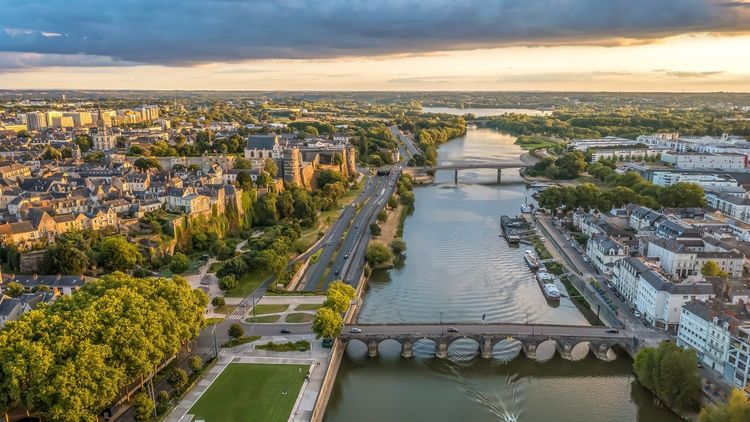
The first day is entirely focused within the medieval perimeter, between the château, the cathedral, and the Doutre neighborhood on the other side of the Maine. Everything is walkable, with no need for a single tram ride.
The Château d'Angers and the Tapestry of the Apocalypse
The Château d'Angers commands attention with its seventeen towers the moment you arrive at the square. Built in the 13th century under the regency of Blanche de Castille and the reign of Saint Louis, on a rocky spur overlooking the Maine, it alternates bands of dark schist and pale limestone — a contrast that gives it a striped appearance unlike any other château in the Loire. The moat, once defensive, is now planted as gardens and home to a few fallow deer.
The interior holds the centrepiece of any stay: the Tapestry of the Apocalypse, commissioned by Louis I of Anjou at the end of the 14th century and woven in a Parisian workshop. Its scenes — around one hundred meters of which survive today — illustrate the text of Saint John with a wealth of detail that consistently surprises visitors who came for the château and leave haunted by the tapestry. The gallery is deliberately kept in dim light to protect the ancient threads, and deserves at least forty minutes of your time.
A practical tip before moving on: the ramparts can be walked from the courtyard, with a view over the Maine that is worth the detour in itself, and the chapel's hanging garden offers a less-photographed vantage point over the slate rooftops. If you can only choose one place to discover Angers, this is it — and the Angers audio-guided tour dedicates several stops to the château and its history.
Cathédrale Saint-Maurice and the Historic City Center (Place du Ralliement)
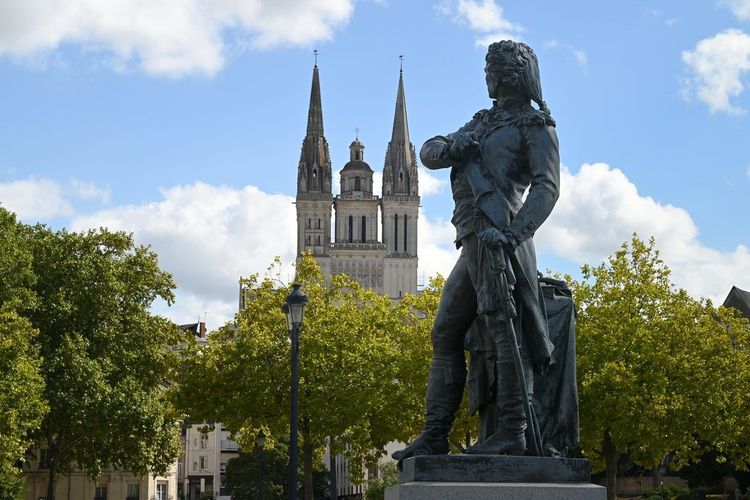
Leaving the château, head up toward the Cathédrale Saint-Maurice, whose spires have dominated the city since the Middle Ages. The building exemplifies the Angevin Gothic style — rounder and more domed than classic Île-de-France Gothic — with an impressively wide nave for its era and stained glass windows dating from the 12th to the 16th century still in place. Take the time to climb the monumental staircase linking the Maine to the cathedral forecourt: it is the best angle for understanding how the episcopal city was built in tiers above the river.
Five minutes on foot away, the place du Ralliement marks the nerve center of the city, with its Grand Théâtre adorned with statues and its café terraces that fill up at the first sign of good weather. It makes a good reference point for a lunch break before heading into the shopping district, where pedestrian streets are lined with boutiques and half-timbered houses. The rue Saint-Aubin and rue Beaurepaire, less busy, preserve some of the finest old facades in the center.
The Doutre Neighborhood and the Galerie David d'Angers
Cross the Maine via the pont de Verdun to reach the Doutre neighborhood, literally meaning "the other side" of the river. Its half-timbered houses, cobbled squares, and the former Hôpital Saint-Jean tell the story of a more working-class Angers, long distinct from the episcopal city. A walk through this neighborhood remains one of the most appreciated experiences for visitors, especially in the late afternoon when the light catches the facades at a low angle. Don't miss the place de la Laiterie with its leaning timber frames, nor the patient ward of the former hospital, whose 12th-century vaults now house a contemporary textile work that, from a thousand meters away, answers the château's tapestry.
On the way back, the Galerie David d'Angers (33 bis Rue Toussaint, 49100 Angers, rated 4.7/5 on Google from 1,013 reviews) is worth a thirty-minute detour. Housed in the former Toussaint church, whose nave has been covered by a glass roof, it displays the plaster casts, statues, and medallions of Angevin sculptor Pierre-Jean David d'Angers, a contemporary of Balzac and Victor Hugo. The natural light falling on the large white plaster works creates a striking effect around 5 p.m., when the sun passes above the glass roof.
Day 2: Museums, a Collegiate Church, and Nature Along the Maine
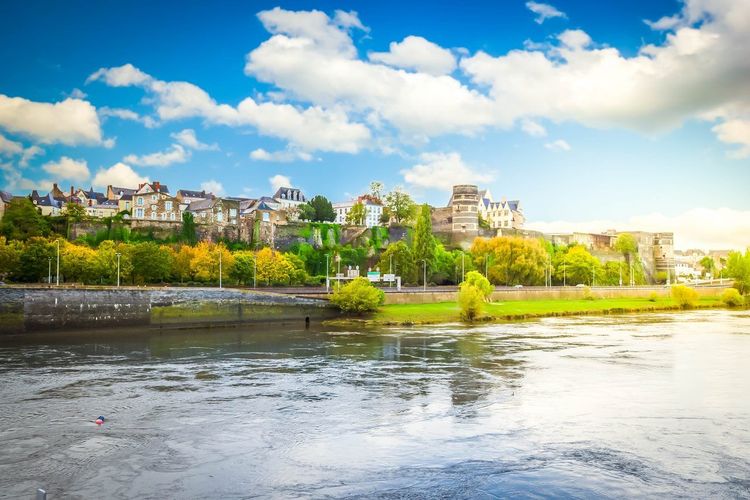
The second day alternates art collections with fresh air, with the Maine as the connecting thread. The pace is deliberately slower than the first day.
Musée des Beaux-Arts and Collégiale Saint-Martin
The Musée des Beaux-Arts d'Angers occupies the Logis Barrault, a 15th-century mansion restored with a successful contemporary extension. The collections span eight centuries, from medieval painting to 20th-century works, with a clear presentation that avoids any feeling of a catalog. A second trail dedicated to the history of Angers allows visitors to place the monuments seen the previous day into a readable chronology. Allow an hour and a half for a relaxed visit, more if you linger in the rooms dedicated to 19th-century painting.
Ten minutes' walk away, the Collégiale Saint-Martin ranks among the oldest religious buildings in France, with sections dating back to the Carolingian era. Long disused and then restored over several decades, it reveals an architecture layered over more than a thousand years, made legible through a sober scenography that exposes the strata of masonry. It is a discreet site, often overlooked by mainstream itineraries, that particularly appeals to history enthusiasts and offers, in the height of summer, one of the coolest visits in the city center.
Lac de Maine and a Walk Along the Riverbanks
The afternoon turns toward nature with the Lac de Maine, a body of water set up for supervised swimming in summer and water sports, about twenty minutes from the center by tram and on foot. The leisure park surrounding it covers over 100 hectares, blending meadows, reed beds, and walking trails; the banks welcome joggers, families, and a variety of water birds that changes with the season. Paddleboard rental, light sailing, playgrounds — this is the place to unwind between two days of heritage.
For those who prefer to stay in town, a simple walk along the Maine, between the redesigned quays and the jardin du Mail, offers a shorter but equally pleasant alternative at the end of the day. The contrast between the château's towers and the verdant riverbanks rather neatly sums up the city's identity, often nicknamed "la ville verte" for this very reason. If you still have energy, push on to the jardin des plantes, slightly off the beaten track behind the bus station, where centuries-old trees and a bandstand provide a very local sense of calm.
Toue Angevine River Cruise and the Former Convent de la Baumette
To close the day differently, board a toue angevine — these traditional flat-bottomed boats once used for fishing and transporting goods on the Maine. The guided cruise typically lasts an hour and offers the only vantage point that truly conveys the scale of the château: seen from the water, the rocky spur appears twice as high as it does from the square. Departures run in season, by reservation, from the cale de la Savatte at the foot of the château. It is one of the most unusual ways to visit Angers, far removed from the well-trodden walking tours.
Below on the riverbank, the former Convent de la Baumette (Boulevard de la Baumette, 49000 Angers, rated 4.5/5 on Google from 223 reviews), founded in the 15th century by the Franciscans on a slate promontory, overlooks the valley. François Rabelais is said to have stayed there in his youth — a detail the people of Angers are always happy to mention. The site, now converted and closed to the public except on occasional special occasions, is best admired from the towpath for its panorama over the Maine and the hillsides that already hint at the following day's vineyards.
Day 3: Vineyards, Châteaux, and Villages Around Angers
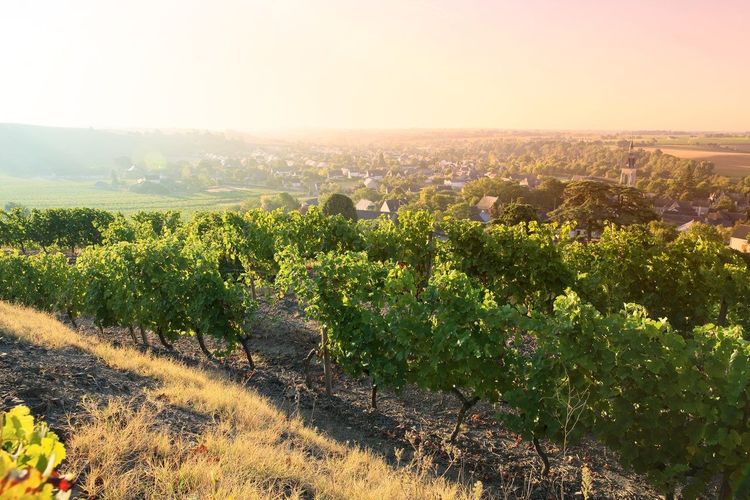
This third day requires a car, or failing that an organized excursion, but it is the real differentiator between a multi-day stay and a simple express weekend. It is also the opportunity to step outside the strictly urban frame and discover the Angevin hinterland.
Anjou Vineyards and Wine Tastings
Anjou has been producing wine for centuries, and the area around Angers is home to several appellations that deserve a full morning. The rosé d'Anjou, soft and fruity, remains the best known for export, but enthusiasts tend to prefer the Savennières, a dry white renowned for its aging potential, or the late-harvest sweet wines of the Coteaux du Layon. About a dozen family estates located less than thirty minutes from the city center offer cellar tours followed by a tasting, generally by reservation.
The terroir explains a great deal: the schist soils of the Anjou noir, around Savennières, yield taut and mineral whites, while the lighter tuffeau of the Anjou blanc, toward Saumur, produces more supple Cabernet Franc reds. Tasting two wines from these two soil types on the same morning is the best geology lesson the Val de Loire has to offer.
Plan to start early in the morning if you are continuing on to the Château du Plessis-Bourré: cellars often close between noon and 2 p.m., and it would be a shame to miss a tasting by ten minutes. And if you are driving, most estates readily accept that one member of the group tastes while the others simply enjoy the visit.
Château du Plessis-Bourré and the Île de Béhuard
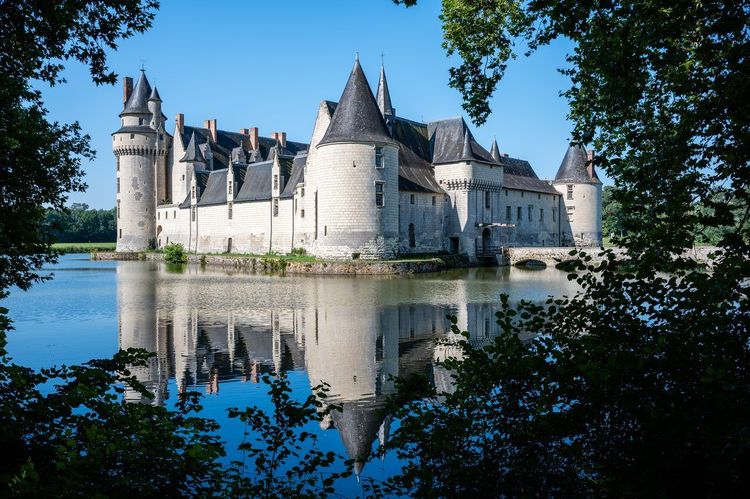
About twenty minutes north of Angers, the Château du Plessis-Bourré rises in the middle of wide water-filled moats, almost a fortified island. Built at the end of the 15th century by Jean Bourré, treasurer to Louis XI, it has retained its drawbridge and its Guards' Hall, whose ceiling painted with allegorical and satirical scenes is one of the few surviving medieval civil paintings of this type still visible in France. Its silhouette has served as a backdrop for several films, including Jacques Demy's "Donkey Skin".
Heading back down toward the Loire, set course for the île de Béhuard, a tiny village built directly on a rock in the middle of the river. The Chapelle Notre-Dame de Béhuard, partly supported by the rock itself, long drew pilgrims — Louis XI among them. The entire village can be explored in under an hour, but the atmosphere, between narrow lanes and branches of the Loire, makes it worth lingering. Look out for the flood markers carved into the walls: they serve as a reminder that the island sometimes disappears beneath the water.
Terra Botanica and the Mystère des Faluns for Families
For families, the day can pivot toward two sites designed with children in mind. Terra Botanica, a theme park dedicated to the plant world, spreads along the route d'Épinard, north of Angers, ten minutes from the center by tram. Tropical greenhouses, gentle thrill attractions, a 4D show, and themed gardens follow one another along a route that requires a full day to enjoy comfortably — more than just a half-day if you are travelling with young children.
A little further on, toward Doué-en-Anjou, the Mystère des Faluns (Le Falunière, 49610 Doué-en-Anjou, rated 4.7/5 on Google from 3,111 reviews) offers a different experience: a tour of former underground falun quarries, the fossil shell sand used as a building material for centuries. The route combines sound-and-light staging with geological remains millions of years old — a rather unusual way to spend a rainy family afternoon. Bring an extra layer: the temperature in the galleries stays cool even in August.
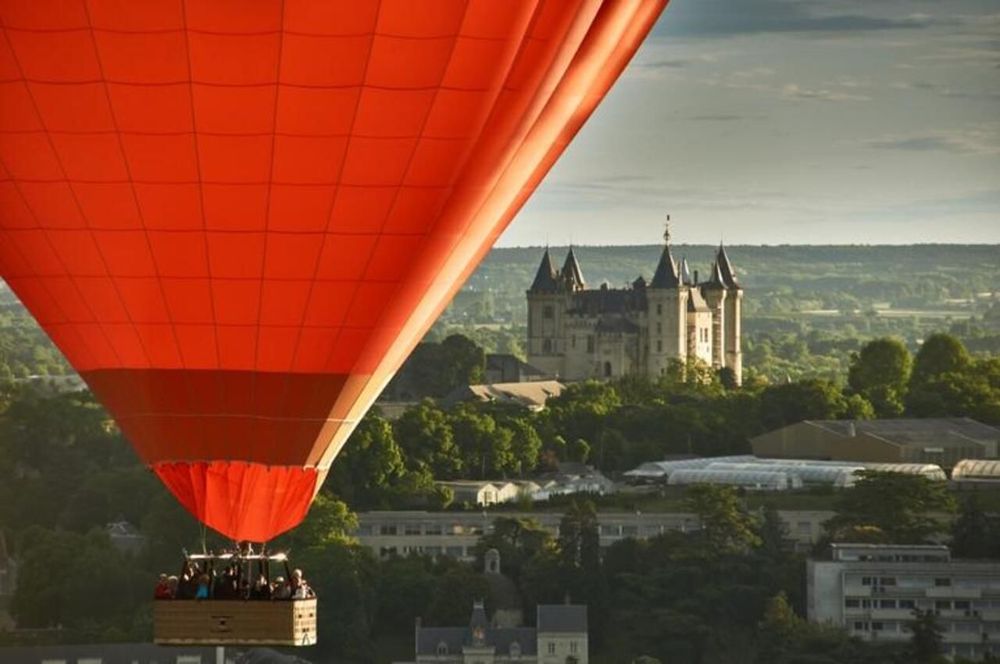
For travellers with a little more time, the route naturally continues toward Saumur, about 45 minutes from Angers, where the château overlooks the town and the Loire from a limestone spur, surrounded by troglodyte caves and sparkling wine houses. Between the two towns, several villages such as Montsoreau, Fontevraud, and Béhuard dot the road and round out an excursion dedicated to the châteaux de la Loire nicely. The road trip Les Châteaux de la Loire covers precisely this sequence of towns and villages for those who want to extend their exploration beyond Angers, and the most beautiful villages around the city are well worth a dedicated article if time allows.
Visiting Angers on Foot: the Must-See Walking Loop
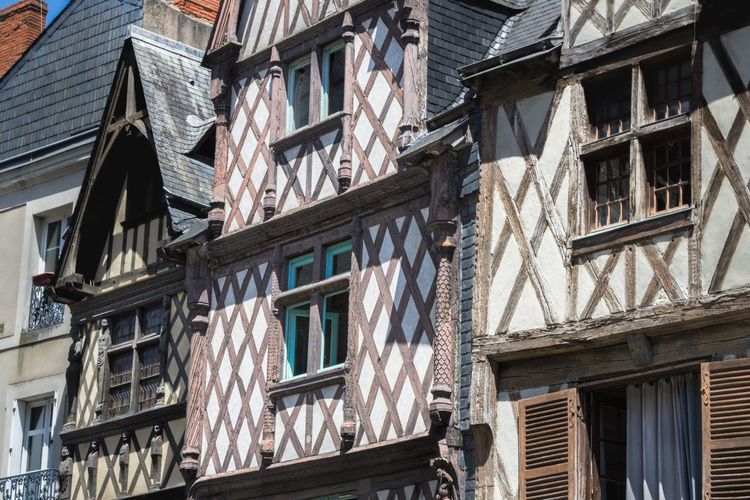
If you had to choose just one way to get around, it would be on foot. The historic center fits within a rectangle of roughly two kilometers by one, and most of the sites mentioned above connect without ever exceeding ten minutes between stops.
An efficient loop starts at the Angers-Saint-Laud train station, heads up toward the jardin du Mail, turns at the place du Ralliement, then descends the montée Saint-Maurice to the cathedral. From there, the promenade du Bout du Monde runs along the château's ramparts with a sweeping view over the Maine, before crossing the pont de Verdun into the Doutre. The return follows the quays, the Galerie David d'Angers, and the rue Toussaint. Allow three hours without the visits, five to six hours if you include the château and a lunch break — this is precisely the format used by the Ryo audio guide, which follows a 5.6 km route across 22 commented stops.
Two on-the-ground details that can make or break the day. First, Angers has short but real elevation changes: the stretch between the Maine and the cathedral forecourt climbs steeply, and comfortable shoes are a much better choice than thin-soled ones on the Doutre's cobblestones. Second, the pedestrian streets in the center are lively on Saturdays but very quiet on Sunday mornings — the ideal time to photograph the facades without crowds. In the event of intense heat, reverse the direction of the loop: the quays and jardin du Mail are shaded in the morning, the Doutre in the shade during the late afternoon.
Hidden Angers: What the Guidebooks Miss
Three days leave room for a few less well-trodden detours, and these are often what you remember most from a trip.
The city is the historic capital of Cointreau: the family distillery, located in Saint-Barthélemy-d'Anjou on the eastern outskirts, is open for visits and offers a tour that blends industrial history, copper stills, and tastings. It makes a perfect outing for a rainy afternoon, accessible by tram and then bus from the center.
Another curiosity: the Maison Bleue, an Art Deco building on the rue Chaperonnière covered in blue mosaics, goes completely unnoticed if you don't look up. A few streets away, the ardoise museum-gallery and the former slate quarries of Trélazé, to the east of the city, tell the story of Angers' other founding material: the blue-tinged schist that still covers the rooftops across the entire Val de Loire, quarried here for over seven centuries.
Finally, those who love viewpoints will want to climb the tour Saint-Aubin, the remnant of a Benedictine abbey converted into a belfry, or simply cross the pont de la Basse-Chaîne at sunset: the raking light on the slate rooftops gives the city a violet hue that few visitors ever notice.
Where to Stay in Angers
The choice of neighborhood depends mainly on the pace you are looking for: as close as possible to the monuments to make the most of your time, or on the Doutre side for a more local atmosphere.
Staying Near the Château and the Historic Center
Staying close to the château and the place du Ralliement means you can do everything on foot from day one, without depending on the tram. It is the most practical choice for a three-day stay, especially if the third-day excursion requires picking up a rental car early in the morning: several agencies are located near the train station, itself about ten minutes on foot from the historic center. Hotels in this area predictably charge higher rates during high season, between May and September, and during major events on the local calendar such as the Premiers Plans festival in January or trade fairs at the exhibition center.
Staying in the Doutre Neighborhood or Along the Maine
The Doutre offers a quieter alternative, with addresses often housed in former half-timbered buildings. The atmosphere there is less touristy in the evenings, and proximity to the Maine means you can enjoy a morning walk before crossing back toward the château. Allow fifteen minutes on foot to reach the château, no more. To plan your three days according to your chosen neighborhood, the Ryo audio guide for Angers is useful for visualizing the actual distances between your accommodation and the main sites. One final, less obvious option: accommodation near the Lac de Maine, more affordable and well suited if you are travelling by car, with direct tram access to the center.
Getting Around and Practical Information for Your Stay
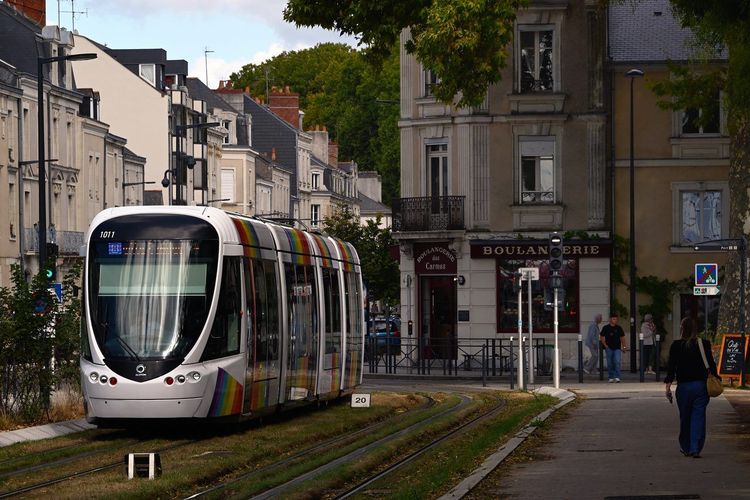
Angers is a medium-sized city, which makes organizing a multi-day stay considerably straightforward.
How to Get to Angers (Train, Car)
By train, Angers-Saint-Laud is about 1 hour 30 minutes from Paris-Montparnasse by TGV, around forty minutes from Nantes, and approximately one hour from Tours. The station is right in the center, which eliminates any costly transfer on arrival. By car, the city is served by the A11 motorway from Paris and Le Mans, and by the A87 from La Roche-sur-Yon. For the third day dedicated to vineyards and surrounding châteaux, a car remains essential: public transport does not serve, or barely serves, these rural villages.
Getting Around the City: Walking, Cycling, Tram
The historic center can be explored entirely on foot, from the château to the Doutre via the cathedral. The Irigo tram network, now extended to several lines, complements walking well for reaching the Lac de Maine, Terra Botanica, or the train station. The city also has a bike-share scheme and a reasonably developed network of cycle paths for venturing a little further without a car. A single tram or bus ticket costs under two euros, and day passes quickly become worthwhile if you are staying outside the center.
Weather, Crowds, and the Best Time to Visit
The Angevin climate, oceanic and relatively mild, is pleasant from May to September, with peak visitor numbers in July and August around the château and Terra Botanica. Spring — particularly April and May — offers soft light and vineyards coming back to life for the excursion day. Crowds concentrate mainly at midday at the château: arriving at opening time or in the final hour makes a radical difference when standing before the tapestry. In case of rain, it is better to swap things around and prioritize museum and château days over outdoor walks: the Musée des Beaux-Arts, the Galerie David d'Angers, the greenhouses at Terra Botanica, and the Cointreau distillery all provide a comfortable indoor option. To visualize the distances between the main attractions before you go, a simple map of the sites mentioned in this article is all you need to plan your itinerary.
What Budget to Plan for 3 Days in Angers
Angers remains a reasonable destination compared to the major Loire towns, provided you anticipate two main costs: site admissions and the car rental on the third day.
For admissions, the Château d'Angers, managed by the Centre des monuments nationaux, charges a full-price ticket of around fifteen euros, with free entry for under-18s and for 18-to-25-year-olds who are citizens of the European Union. The Musée des Beaux-Arts and the Galerie David d'Angers charge much lower rates, in the region of a few euros, and the city regularly offers free slots at its municipal museums: check with the tourist office before paying an admission price. Terra Botanica is the heaviest item for a family: €25 per adult ticket on the door, versus €21 to €22 when booking online at least a week in advance.
The Angers City Pass, sold by the tourist office, works on a number-of-sites basis: 3 visits in a 24-hour formula, 4 in 48 hours, 6 in 72 hours, to choose from around twenty venues including the château, the Musée des Beaux-Arts, the Plessis-Bourré, Terra Botanica, and the Cointreau distillery. Prices vary by season (low season from 1 October to 31 March), and the pass also includes a 24-hour bus-tram ticket for €2 instead of €4.60, guided tours, and a wine tasting. Over three days with three or four paid admissions, the math is quickly done. For the day-3 car rental, budget a day in the small-car category, fuel included, to be picked up near the train station first thing in the morning.
On the food side, a set-menu lunch in the center falls within the usual range for mid-sized French cities, and fouées or a rillettes platter with a glass of Anjou wine allow you to dine for considerably less than a conventional restaurant. Adding up mid-range accommodation, two or three paid admissions, transport, and meals, a three-day trip for two remains well below the budget of an equivalent weekend in the more touristy parts of the Val de Loire such as Amboise or Chenonceau.
Angevin Specialties and the Best Food Addresses

Part of the pleasure of a stay in Angers also plays out at the table, between sweet specialties and wine-making traditions.
Specialties to Try: Quernons d'Ardoise, Anjou Wine, Fouées
The quernon d'ardoise — a praline nougat coated in blue chocolate in the shape of a slate tile — has established itself as the city's emblematic sweet specialty: it can be found at chocolatiers throughout the center, and its color always surprises those seeing it for the first time. Fouées, small puffed breads baked in a wood-fired oven and filled with rillettes, mogettes, or salted butter, are traditionally enjoyed in the troglodyte ovens of the region, particularly around Doué-en-Anjou and Saumur. Angers also remains the home of Cointreau, and of course the Anjou wines tasted the previous day on the excursion. Add to these the summer plum pastry and the valley's tapées pears to complete the picture.
Best Restaurants and Bars
The Doutre area is home to several bistros serving local wines and slow-cooked dishes in a convivial atmosphere, while the terraces around the place du Ralliement are better suited to a quick break between visits. The rues Saint-Laud and Bressigny, very lively in the evenings, line up wine bars and small tables where you can try a Savennières by the glass. For families with children, several crêperies in the city center offer children's menus and a relaxed welcome — a practical option after a full day at the château or Terra Botanica. And for picnic shopping before the third-day excursion, the covered market and the marché de la place Imbach supply goat's cheese, rillettes, and valley fruits all in one stop.




FAQ
How Much Time Do You Need to Visit Angers?
One day is enough for the essentials of the historic center. Two days allow you to add the Lac de Maine or the museums. Three days are recommended to include the vineyards, the Château du Plessis-Bourré, and the île de Béhuard, which make all the difference compared to a quick stopover.
What to See in Angers in 1 Day if Time Is Limited?
Focus on the Château d'Angers and the Tapestry of the Apocalypse in the morning, then the Cathédrale Saint-Maurice and the place du Ralliement, before ending with a stroll through the Doutre neighborhood in the late afternoon.
How to Get Around Angers Without a Car?
The city center can be explored entirely on foot, and the tram network effectively complements walking to reach the Lac de Maine, Terra Botanica, or the train station. Only the third day, dedicated to vineyards and nearby châteaux, requires a rental car or an organized excursion.
Where to Stay in Angers to Easily Explore the City Center?
The area around the château and the place du Ralliement remains the most convenient for doing everything on foot. The Doutre neighborhood, just across the Maine, offers a quieter atmosphere while staying within fifteen minutes' walk of the main monuments.
What Budget Should You Plan for 3 Days in Angers?
The budget varies mainly depending on accommodation and car rental for the third day. Allow around fifteen euros for the château, a few euros for the municipal museums, and €25 per adult at Terra Botanica (€21 to €22 online); the Angers City Pass, covering 3 sites in 24 hours and 6 sites in 72 hours, becomes worthwhile from three paid admissions.
What to Do in Angers with Children?
Terra Botanica and the Mystère des Faluns are designed with families in mind, as is the Lac de Maine for an outdoor afternoon. The toue angevine river cruise is also a big hit with curious children discovering the Maine from the water, and the château's moat, home to fallow deer, never fails to impress.
What Is the Best Time to Visit Angers?
Spring, between April and June, combines pleasant weather, vineyards in full growth, and still-manageable crowds. Summer remains very busy around the château and Terra Botanica, while autumn offers superb light over the vineyards during the harvest season.
Three Days in Angers: Key Takeaways
Angers ultimately reveals itself as far richer than a simple stopover on the châteaux de la Loire route. Three days are enough to move from the château's dark schist to the Anjou vines, taking in a medieval tapestry, a village perched on a rock in the middle of the river, and a park devoted to plants from around the world. The right balance can be summed up in one sentence: two days on foot in the city, one day by car in the hinterland.
If you have to prioritize, keep the château and the tapestry for the first morning, the Maine and its museums for the second day, and save the third for the vineyards and the Plessis-Bourré. To organize these three days without losing time, the Ryo audio guide for Angers is a great starting point: it covers most of the sites mentioned in this article directly from your phone, neighborhood by neighborhood.
À lire également