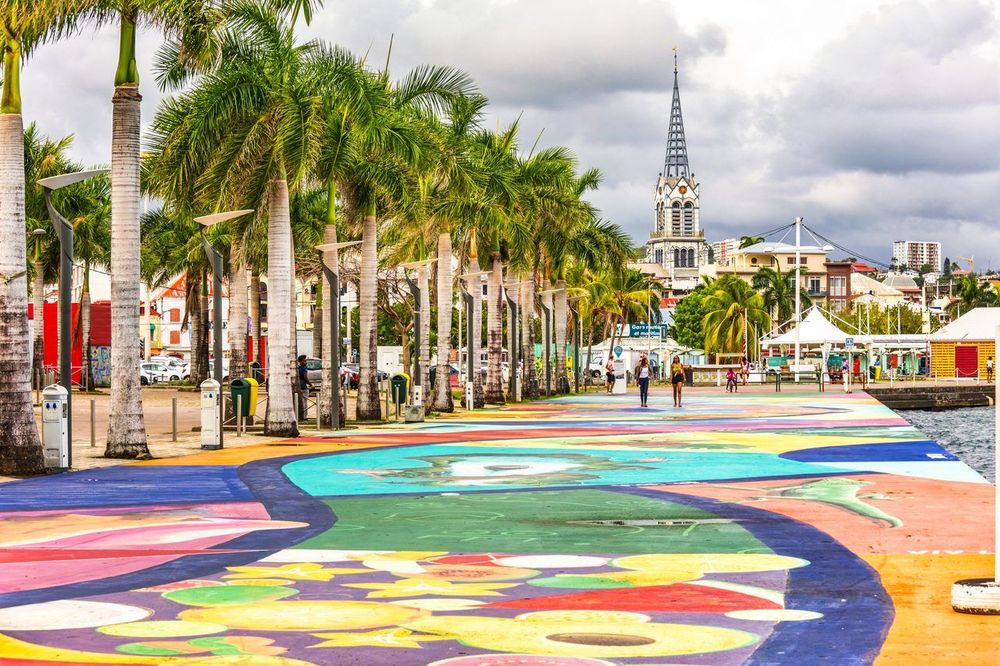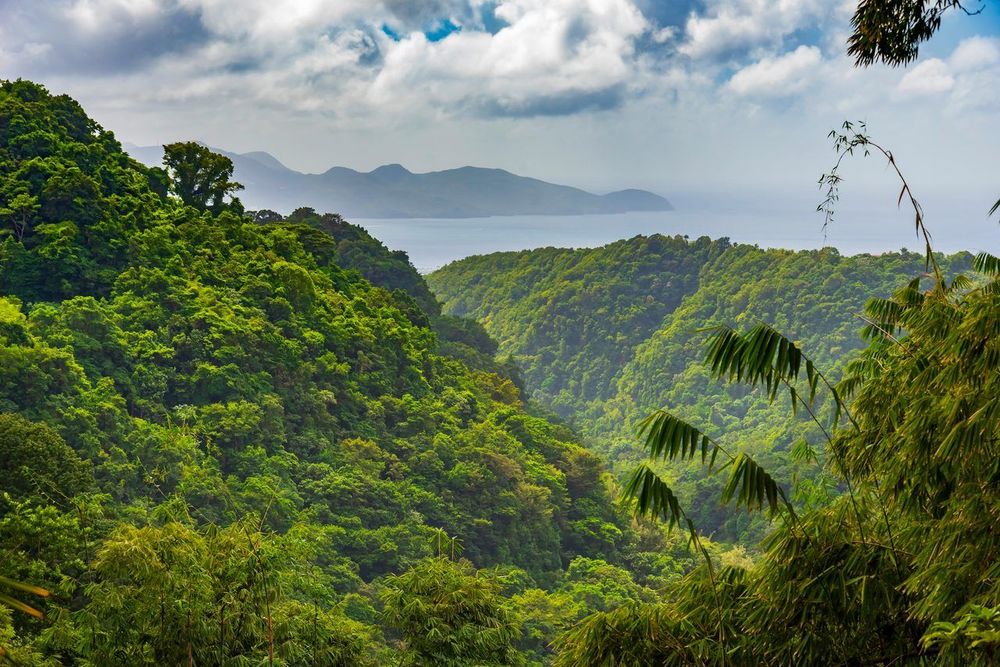
© Shutterstock
 Votre guide Ryo
Weekend in Fort-de-France 2026: Complete Itinerary Between Grand Marché, Balata, and the Southern Martinique
A weekend in Fort-de-France is more than a stopover before the beaches of southern Martinique. The capital hides a city center rebuilt after the great fire of 1890, a covered Grand Marché where market women sell punches and spices from early morning, and a polychrome metal library that was first assembled in Paris for the 1889 World's Fair. The Ryo audio guide tour of Fort-de-France connects all these places on foot, headphones on, so you never have to wonder where to look next.
This guide builds a two-day itinerary: Saturday morning at Fort Saint-Louis and la Savane, an afternoon detour through the tree ferns of the Jardin de Balata, perched above the city, then a Sunday devoted to the south, between the Rocher du Diamant and the calm waters of the Anses d'Arlet. If you take three or four days off, an extension toward Montagne Pelée and the agricultural rum distillery route rounds out the program. And then there are the practical questions you inevitably ask before booking: direct flight, time difference, budget, and best season to go.
Day 1: Fort-de-France, Between Grand Marché and the Historic Center
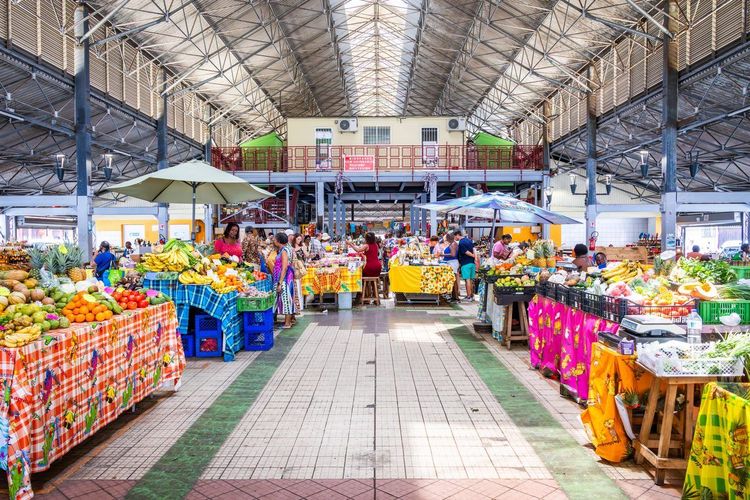
The Martinique capital can be explored in a loop, from the military fort to the covered market and then the library, never straying more than ten minutes from the waterfront.
Morning: Fort Saint-Louis, la Savane, and the Waterfront
Fort Saint-Louis has occupied the headland closing the bay since the 17th century, when the first defensive works were built on this rocky outcrop. The French Navy is still stationed there today, which limits visits to guided time slots that must be booked through the tourist office: allow about 1h30, ramparts included, with a view that sweeps across the entire harbor.
Just outside, la Savane stretches right in front: nearly five hectares of lawns, royal palms, and shaded paths where Foyalais residents jog before the heat sets in. The statue of Empress Joséphine, beheaded in 1991 due to her connection to the reinstatement of slavery under Napoleon, was toppled from its pedestal in July 2020. You will also come across domino games in the shade and, on weekends, a few craft stalls.
Try to arrive before 9am: the low-angle light over the bay is far more photogenic than at midday, and the heat is still bearable for continuing on foot to the market.
Midday: Creole Break at the Grand Marché Couvert
The Grand Marché couvert of Fort-de-France has occupied a typical Belle Époque metal hall since 1901, with its open ironwork frame designed to allow air to circulate. The stalls sell spices, flavored punches, vanilla, and candied fruits; a few counters serve accras de morue and chicken colombo on the go.
The market can be visited in 30 to 45 minutes, more if you negotiate a homemade punch. The Ryo audio guide tour stops here: you listen to the history of the place while walking between the stalls, without following a group guide.
Afternoon: Bibliothèque Schœlcher and the Centre District
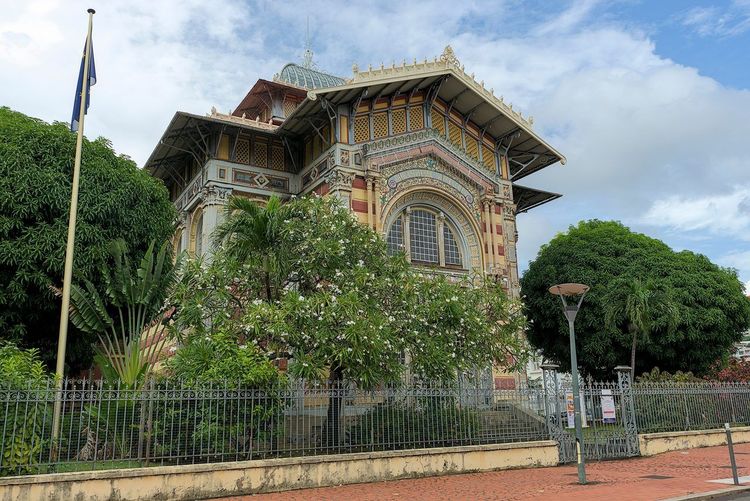
The Bibliothèque Schœlcher (23 Rue Victor Schœlcher, 97200 Fort-de-France, rated 4.4/5 on Google with 301 reviews) is undoubtedly the most photographed monument in Fort-de-France. Designed by architect Henri Picq and presented in Paris at the 1889 World's Fair, the building was dismantled piece by piece and then reassembled here in the early 1890s to house the thousands of volumes bequeathed by Victor Schœlcher, the politician who championed the 1848 abolition of slavery decree. Its dome and colorful mosaics stand in sharp contrast to the rest of the more subdued neighborhood.
Around it, the Centre district blends clothing shops, grocery stores, and Creole facades with wrought-iron balconies. Take time to look up: many of these buildings date from the post-fire reconstruction and still have their original shutters. End the day on the Pointe Simon waterfront, where the evening breeze finally makes walking pleasant.
A Getaway to Balata: Garden, Church, and Waterfalls
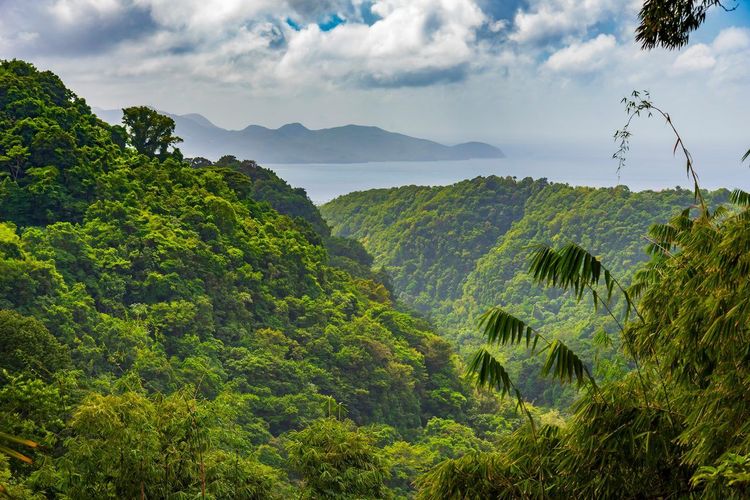
About fifteen minutes by car from the center, the Balata road climbs into the tropical vegetation and shifts the scenery entirely.
The Jardin de Balata and Its Suspended Walkways
The Jardin de Balata was born in the early 1980s from the passion of landscape designer Jean-Philippe Thoze, around his grandmother's Creole house. It now brings together around 3,000 tropical species, from giant philodendrons to heliconias, along a path that takes about 1h30. The highlight of the visit remains the suspended walkways in the canopy, from which you can see the bay of Fort-de-France on a clear day.
Wear sturdy shoes: the path is not technically demanding, but the humidity makes some steps slippery after rain, which is frequent in the late afternoon. For this half-day, the Ryo audio guide tour dedicated to the island of flowers accompanies you step by step through the garden and its botanical wonders, with the story of its creation.
The Sacré-Cœur Church and the Balata Mosque
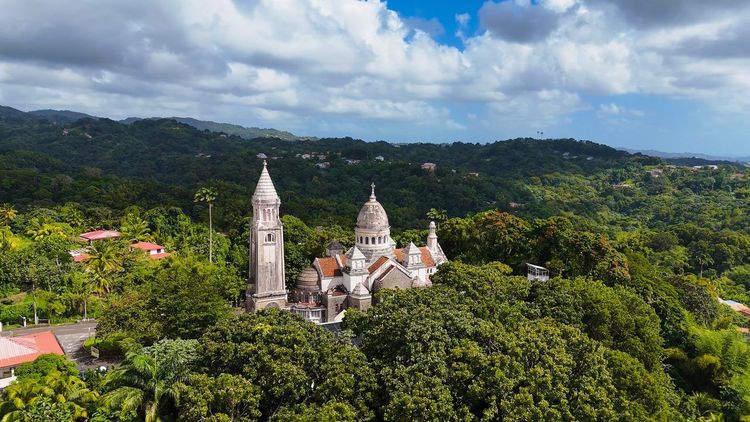
On the way back down, the Sacré-Cœur church of Balata surprises with its resemblance to the Montmartre basilica: built in the 1920s in memory of Martiniquais who died during the First World War, it replicates its silhouette on a smaller scale. Further along the same road, the Balata Mosque, home to the Islamic Cultural Center of Martinique, is the island's first mosque, opened after more than thirty years of planning and construction.
Cascades de Didier: Swimming and Cool Relief
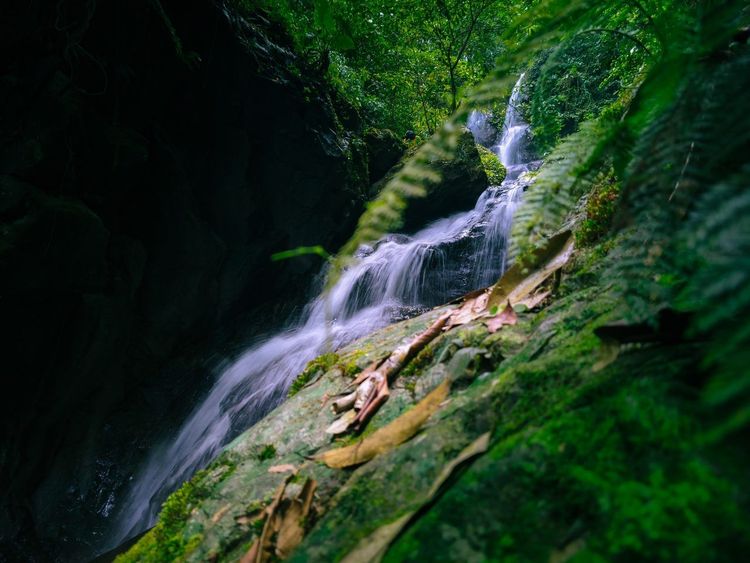
The Cascades de Didier (Route des Cascades de Didier, 97200 Fort-de-France, rated 4.4/5 on Google with 44 reviews), in the heights of the neighborhood of the same name, form a succession of natural pools in a wooded valley. The water stays cool year-round, a welcome break after the heat of the garden. The site is not developed: there is no official signage or supervision, and access via the old canal can be closed after heavy rain. Check locally before setting out, and reserve this outing for walkers comfortable in the water.
Day 2: Southern Martinique, from Rocher du Diamant to Anses d'Arlet
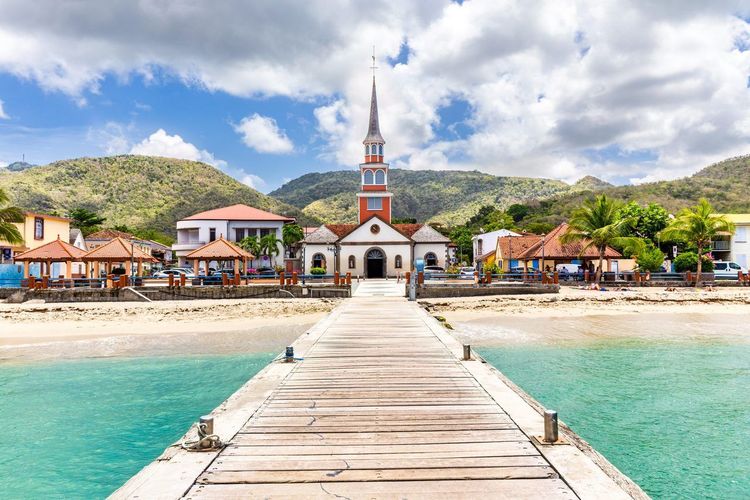
Sunday is organized by rental car, as the southern coastal road is poorly served by public transport on weekends.
Rocher du Diamant and Its Beaches
The Rocher du Diamant is a 175-meter volcanic pinnacle rising alone from the sea, about two kilometers from the coast. The British occupied and armed it in 1804, going so far as to register it as a ship, the "HMS Diamond Rock," before the French fleet recaptured it in 1805. From the Diamant beach, nearly three kilometers of volcanic gray sand, the view of the rock is a classic at sunset.
Swimming is possible here, but the waves and currents can be strong: check the day's flag before venturing beyond the supervised areas.
Anses d'Arlet and the Southern Point
Further along the Caribbean coast, known as the leeward coast, the Anses d'Arlet (97217 Les Anses-d'Arlet, rated 4.6/5 on Google with 2.9K reviews) group together several coves with calm turquoise waters. Grande Anse, Anse d'Arlet bourg with its church facing the pier, and the more secluded Anse Noire with its dark sand are all ideal for snorkeling: green turtles and parrotfish frequent the shallows just a few meters from shore.
Continuing toward the southern point, the landscape becomes drier, giving way to savanna vegetation unlike the rest of the island. This stretch of coast, less frequented by tour groups, is well suited to a quiet end of the day before heading back to Fort-de-France.
Between two coves, launch the Ryo audio guide on your phone: the stories of the British siege of the rock or the fishing traditions of the villages you pass through take on a whole new dimension when you are standing right in front of the landscape.
Extending the Weekend: Montagne Pelée and the Wild Coast
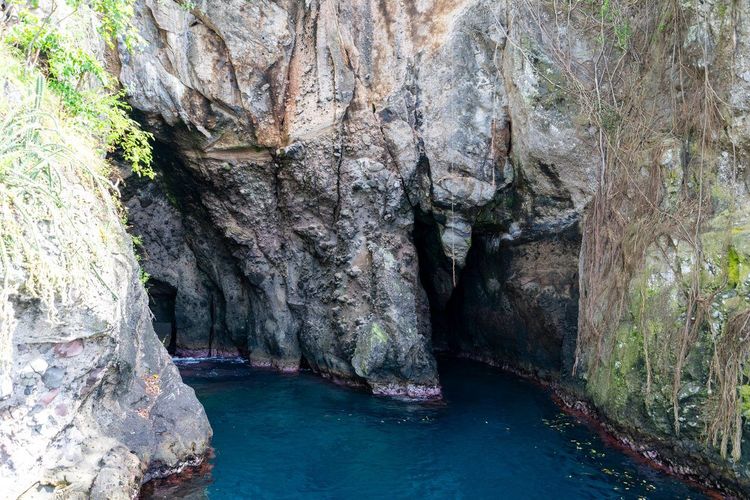
With one or two extra days, head to the north of the island, wilder and far less visited than the south.
Hikes on the Slopes of Montagne Pelée and the Windward Coast
Montagne Pelée dominates the north of Martinique at nearly 1,400 meters above sea level. Its eruption in May 1902 wiped Saint-Pierre off the map in minutes, one of the worst volcanic disasters of the 20th century. Since 2023, the volcanoes and forests of Montagne Pelée and the northern pitons have been inscribed on the UNESCO World Heritage List. Several marked trails allow the ascent, from the most accessible starting from the Aileron car park (allow 4 to 5 hours round trip to the summit) to more demanding routes, best saved for clear days.
The Côte-au-Vent, the eastern slope exposed to the trade winds, alternates between cliffs battered by Atlantic swells and fishing villages such as Le Marigot or Sainte-Marie. If you have a full day, follow it by car, stopping in the villages along the way.
Bat Cave and the Savane des Pétrifications
The bat cave, mentioned in several island guides, is best visited at dusk, when the bats leave the cavity to hunt. Access conditions vary by season and trail condition: check with the tourist office before going and bring a headlamp.
At the other end of the island, in the southeast, the savane des pétrifications of Sainte-Anne surprises with its arid, almost lunar landscape, where erosion has sculpted the volcanic rock. The site can be visited in an hour of easy walking, with no shade: a cap and water are essential.
Îles du Robert and the Caravelle Nature Reserve
On the Atlantic coast, the îles du Robert (Baie du Robert, 97231 Le Robert) and, a little further south, the îlets du François form a string of small islets accessible by boat, popular for kayaking and the "fonds blancs," those sandbanks where you can wade waist-deep in the middle of the bay.
Further north, the réserve naturelle de la Caravelle (Presqu'île de la Caravelle, 97220 La Trinité, rated 4.6/5 on Google with 5,670 reviews), on the peninsula of the same name, combines mangrove, dry forest, and the ruins of Château Dubuc, a former sugar plantation. The main Caravelle trail loops in about three hours, with several viewpoints over the ocean.
For these longer weekends, keep the Ryo audio guide tour of Fort-de-France close at hand: its stops can also be listened to on the road, between two hikes.
On the Rum Route: Distilleries and Tastings
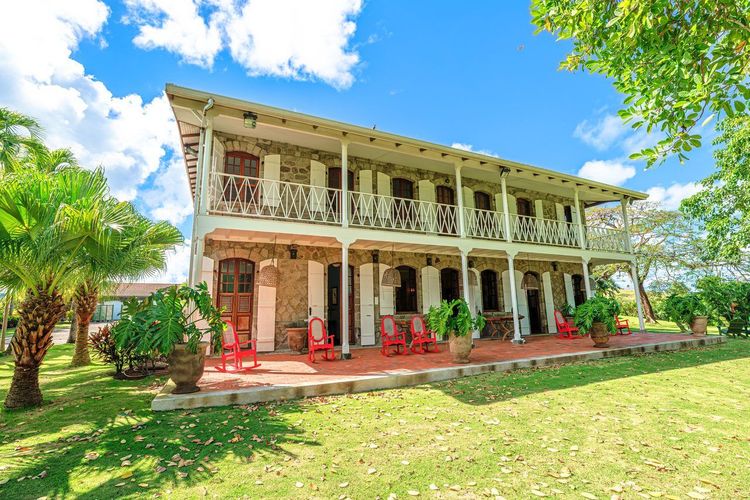
Martinique is the only region in the world to hold an AOC designation for its agricultural rum, distilled from fresh cane juice rather than molasses. A half-day is enough to visit two or three distilleries and compare their styles.
About an hour's drive from Fort-de-France, at the foot of Montagne Pelée, the Depaz distillery occupies an estate destroyed by the 1902 eruption and then rebuilt. The self-guided tour takes you through the cane fields and production buildings before ending with a tasting.
Closer to the capital, the La Favorite distillery remains one of the last to operate with a steam engine, a curiosity for anyone interested in industrial heritage. On the eastern side, habitation Clément (Le François, 97240 Martinique, rated 4.6/5 on Google with 2,741 reviews), in Le François, is worth a visit for its contemporary sculpture park as much as for its aged rums.
Depending on your preferences, this detour can be combined with the southern route or the northern extension. Designate a non-drinking driver: agricultural white rum often reaches 50 degrees.
Where to Stay in Fort-de-France: Hotels, Guesthouses, and Rentals
The choice comes down to staying in the city to make the most of the historic center and the market, or getting closer to the southern beaches from the first evening.
In the city center, mid-range hotels offer a good compromise for a short weekend: immediate proximity to la Savane and the waterfront, with rates rising sharply during carnival and the February school holidays. On the other side of the bay, Pointe du Bout and Trois-Îlets concentrate many hotels connected to Fort-de-France by a ferry service of about twenty minutes, handy for avoiding morning traffic.
Guesthouses are the most authentic option, often run by Martiniquais families who readily share their favorite spots over breakfast. You will find them in the city as well as in the hills of Balata or Schœlcher, with views over the bay.
For a stay of several days, vacation rentals such as apartments or villas often work out cheaper than a hotel room, especially for two people or a family, with the added bonus of cooking with produce bought at the Grand Marché.
For Martinique travel tips, ideally book three to four months in advance for a stay between December and April: it is peak season and the best rates go quickly, especially for flights.
Where to Eat: Restaurants and Creole Specialties

You cannot leave without having tasted accras de morue, chicken or goat colombo, and Creole black pudding, spicier than its mainland French counterpart.
The Grand Marché remains the best option for a quick and affordable lunch, at gentler prices than those on the waterfront. For a more relaxed dinner, the city center concentrates most of the Creole and Caribbean restaurants, with addresses specializing in seafood, chatrou (octopus) and lambi (conch) leading the way.
Two tips to avoid tourist traps: steer clear of laminated menus illustrated with photos, and try the local ti-punch, made with agricultural white rum, lime, and cane sugar, very different from the sweet punch served in mainland France. Budget between 15 and 25 euros for a Creole dish at a neighborhood address, more along the waterfront.
When to Go and How Many Days to Plan
The best period for a weekend in Fort-de-France falls between December and April, during the dry season: dry and sunny climate, temperatures around 27 to 29°C, and more bearable humidity.
The rainy season, from June to November, brings heavier heat, frequent tropical showers, and a cyclone risk concentrated between August and October. It is not necessarily a period to avoid: prices drop and sites are less crowded, but keep a close eye on the weather before booking.
Two days are enough for the essentials, historic center and Balata included, with a taste of the south. Three to four days allow you to enjoy southern Martinique at a leisurely pace, and a week gives you time to reach Montagne Pelée and the Atlantic coast.
How to Get There: Flights, Entry Requirements, and Time Difference
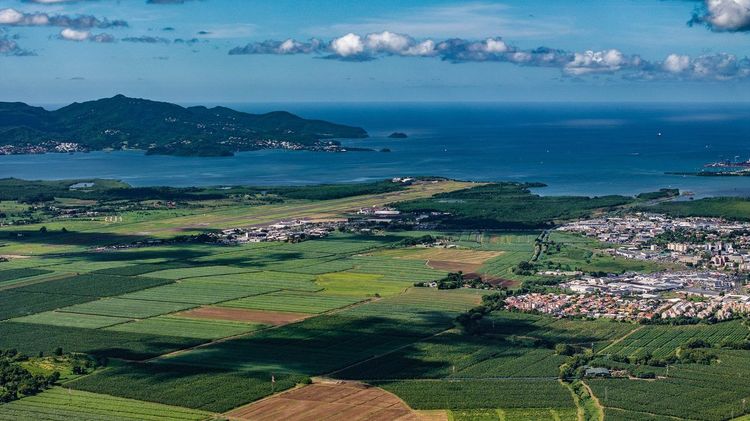
From Paris, the direct flight duration to Fort-de-France is around 8h30 on the outbound journey, slightly less on the return thanks to tailwinds. Air France (from Roissy-Charles-de-Gaulle), Air Caraïbes, and Corsair (from Orly) operate the route, with fares that vary widely by season: a departure in February often costs twice as much as one in September.
In terms of entry requirements, Martinique is a French overseas territory: for French citizens, a valid national identity card is sufficient. Travelers subject to visa requirements must however check the specific rules for the French West Indies, which are not part of the Schengen Area.
The time difference is 5 hours behind mainland France in winter, and 6 hours in summer: Martinique stays at UTC-4 year-round. A daytime flight from Paris generally lands in the early afternoon local time, leaving enough time to reach your hotel and enjoy a first evening on the waterfront.
On the ground, renting a car remains the most practical solution for reaching the south or the north: buses serve Fort-de-France well but become inconvenient on weekends for excursions.
Events and Highlights Not to Miss During Your Stay

The Martinique calendar strongly shapes visitor numbers. Carnival, held between February and March depending on the year, transforms Fort-de-France for several days: costumed parades, skin-painted groups, red devils on Mardi Gras and then crowds dressed in black and white on Ash Wednesday, the day Vaval, the carnival king, is burned.
In July, the Festival Culturel de Fort-de-France animates the city with concerts, theater, and dance. In late July and early August, the Tour des Yoles Rondes circumnavigates Martinique in a week of regattas aboard traditional keel-less vessels, followed by large crowds from the beaches.
These events are spread differently across the island: carnival and the festival are experienced mainly in the city, while the Tour des Yoles tends to animate the coastal villages of the south and east. Before fixing your dates, take a look at the tourist office's cultural calendar to adjust your itinerary, or conversely avoid the crowds if you are looking for peace and quiet.



FAQ
How much time do you need to visit Fort-de-France?
One full day is enough for the historic center (Fort Saint-Louis, Savane, Grand Marché, Bibliothèque Schœlcher). Plan a two-day weekend to add Balata, and three to four days to explore southern Martinique at a leisurely pace.
What is the best time for a weekend in Fort-de-France?
The period from December to April, known as the dry season (carême), offers the driest and most stable climate. It is also peak tourist season: book your flight and accommodation several months in advance.
How do you get around Fort-de-France without a car?
The city center is entirely walkable. For Balata or the south, shared taxis and bus lines are available, and a ferry connects the city to Trois-Îlets, but renting a car remains far more flexible on weekends.
Can the Jardin de Balata be visited in half a day?
Yes, the garden visit takes about 1h30, and a half-day allows you to add the Sacré-Cœur church, located along the same road.
Do you need a passport to travel to Martinique from France?
No, Martinique is a French territory: a valid national identity card is sufficient for French citizens.
What budget should you plan for a weekend in Fort-de-France?
Budget between 150 and 250 euros per day per person, including accommodation, meals, and car rental, excluding the flight, which is often the most expensive part of the trip.
What is the time difference between Martinique and mainland France?
Five hours behind in winter, six hours in summer, as Martinique stays at UTC-4 year-round with no daylight saving time.
A weekend in Fort-de-France is built around two very distinct rhythms: the heritage density of the historic center and Balata in the first 24 hours, then the wide open beaches and coves of the south from the next day onward. Whether you stay two days or extend your trip to Montagne Pelée and the rum distillery route, leave some flexibility in your schedule: tropical showers and spontaneous swimming urges are all part of the journey. For the city center, the Ryo audio guide tour of Fort-de-France remains the simplest way to connect Fort Saint-Louis, the Grand Marché, and the Bibliothèque Schœlcher with no preparation, one anecdote at a time, at your own pace.