© Shutterstock
 Votre guide Ryo
Visit Lyon in 2 Days: The Complete Itinerary for a 2026 Weekend
The funicular up to Fourvière takes two minutes to connect Vieux Lyon to the hilltop, but that's enough to understand why the city long ignored its own tourism potential. France's third-largest urban area, Lyon was built without ever trying to charm visitors, between Roman legions, rebellious canuts and bouchons that still close on Sunday evenings. To visit Lyon in 2 days without getting lost in the labyrinth of traboules, it's better to arrive with a clear plan rather than trust the luck of the alleyways, however photogenic they may be. The Ryo audio guide for Lyon traces exactly that thread, from the Roman theatres of Fourvière to the murals of Croix-Rousse.
In forty-eight hours, you can descend into a Gallo-Roman archaeological site still used for summer concerts, climb a 16th-century spiral staircase hidden behind an anonymous carriage door, ride a rack-and-pinion metro that harks back to the days of the old funiculars, and leave with the exact recipe for the quenelle that made the city's culinary reputation. This guide breaks down both days hour by hour, with travel times and options depending on whether you're travelling as a couple, a family or with friends.
Day 1 (Morning): the Fourvière Hill and Vieux Lyon
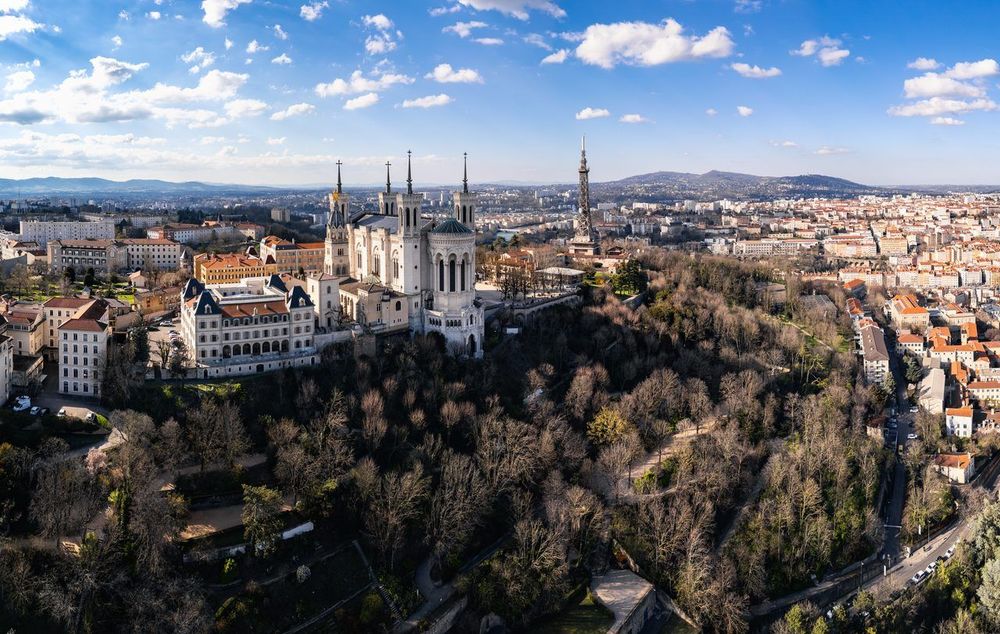
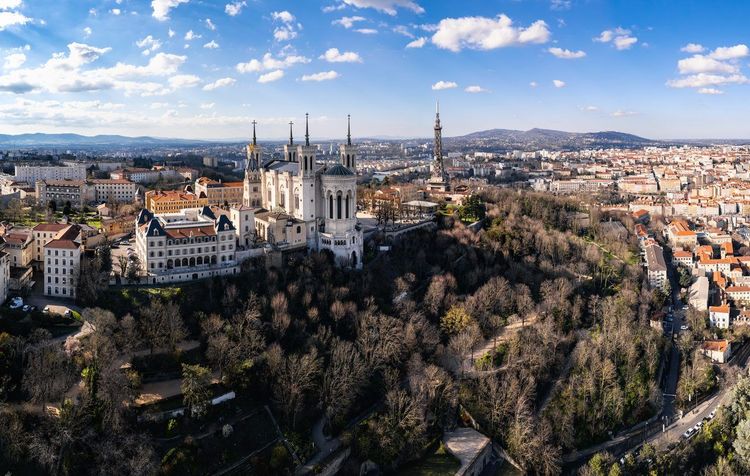
The programme begins with the site that encapsulates Lyon's entire history: a hill where the Romans founded Lugdunum in the 1st century BC, where Catholics built a basilica after the Franco-Prussian War of 1870, and from which, on a clear day, you can make out the silhouette of Mont Blanc some 200 kilometres away. Allow a full morning for the hill and the Saint-Jean neighbourhood just below.
Basilique Notre-Dame de Fourvière and the Roman Remains of Lugdunum
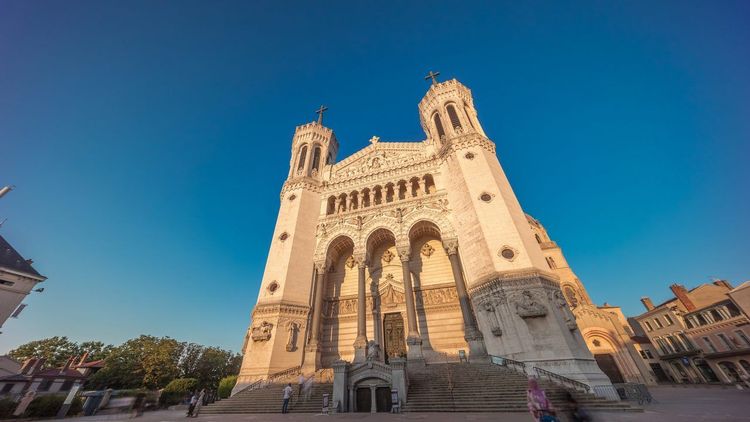
The Basilique Notre-Dame de Fourvière has dominated the city since 1884, the year the main structure of this neo-Byzantine project was completed — launched twelve years earlier by the archdiocese in gratitude for Lyon's preservation during the war of 1870 — though its official consecration would not take place until 1896. The interior surprises with the density of its gilded mosaics, which contrast with the sobriety of the crypt installed directly beneath it, a complete second sanctuary that many hurried visitors skip entirely. Entry is free, and the outdoor terrace, accessible year-round, already offers a first panoramic view over the Presqu'île's tiled rooftops.
Just behind the basilica, the ancient site of Lugdunum preserves two Roman structures built in the 1st century: the Grand Théâtre, designed to hold around 10,000 spectators and still used every summer for the Nuits de Fourvière festival, and the neighbouring Odéon, reserved for more intimate musical performances. Access to the tiers is free during the day, allowing a quick visit without waiting for the adjacent Gallo-Roman museum to open. Wear shoes with a good grip: stone polished by twenty centuries of footfall becomes slippery after rain.
If time allows, the Lugdunum museum deserves an extra half-hour: its collections of Gallo-Roman mosaics and bronzes, displayed in a semi-underground building designed by Bernard Zehrfuss, rank among the richest in France for this period. Admission is affordable — under ten euros at full price — and the museum closes on Mondays like most Lyon institutions: scheduling a visit on Saturday or Sunday morning avoids any unpleasant surprises. The piece not to miss is the Claudian Table, a bronze plaque engraved with the speech by Emperor Claudius, who was born in Lyon, petitioning for the entry of the Gauls into the Roman Senate.
Funicular and Panoramic View over Lyon
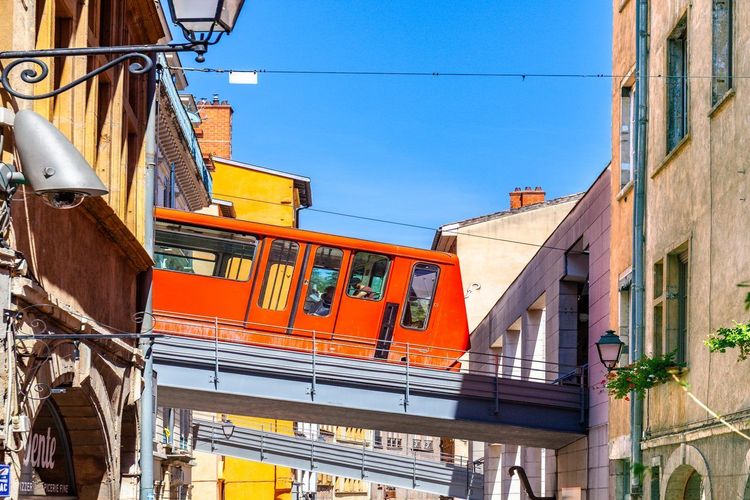
Walking back down from Fourvière takes about twenty minutes via switchback staircases, but most visitors prefer the Fourvière funicular, known locally as the ficelle. Opened in 1900 to connect the neighbourhood, it links the Fourvière station to Vieux Lyon in two minutes, with a direct connection to metro line D. Two funiculars actually depart from the same lower station: one to Fourvière, the other to Saint-Just, and both are accessible with a standard TCL ticket at no extra charge.
Before heading down, take a moment at the orientation table near the esplanade: it identifies the Alpine peaks visible depending on the season, the Presqu'île below, and the two rivers — the Rhône and the Saône — that frame the city before meeting further south. It's one of the few viewpoints in Lyon that's both effortless and free, and a good moment to take the photos you've been missing so far in the morning. The light is noticeably better in the late afternoon, worth bearing in mind if you decide to come back up in the evening rather than the morning.
Traboules and Cathédrale Saint-Jean in Vieux Lyon
At the bottom of the funicular begins the Saint-Jean neighbourhood, the heart of Vieux Lyon, a UNESCO World Heritage Site since 1998 for its virtually intact Renaissance ensemble. This is where most of the Vieux Lyon traboules are hidden — passageways that cut through buildings from one street to another. In the 19th century, canuts, the silk weavers, used them to transport their bolts of fabric sheltered from the rain. Around forty traboules in the neighbourhood remain open to the public, generally between 8am and 8pm, but they lead into private courtyards: enter quietly, without ringing or lingering near the doors.
The most photographed is the one at 9 rue du Bœuf, which opens onto the Tour Rose and its 16th-century spiral staircase. A signposted trail, set up with the tourist office, allows you to follow several traboules in succession without getting lost among rue du Bœuf, rue Saint-Jean and montée du Gourguillon. Look out for the discreet plaques affixed near doorways: they indicate the permitted passages and save you from pushing open a door that leads only to a row of letterboxes.
The morning visit ends naturally at the Cathédrale Saint-Jean-Baptiste (Place Saint-Jean, 69005 Lyon, rated 4.6/5 on Google with 15,349 reviews), a short walk from the funicular station. Its flamboyant Gothic façade contrasts with a more ancient Romanesque choir, and its astronomical clock — the oldest parts of which date back to the 14th century — continues to display the position of the sun and moon as well as the calendar of religious feasts.
Allow time for a lunch break in the Saint-Jean neighbourhood before tackling the afternoon: there are plenty of terraces, even if the best bouchons lyonnais are mostly found on the other side of the Saône, as detailed later in this guide.
Day 1 (Afternoon): Place Bellecour and the Presqu'île
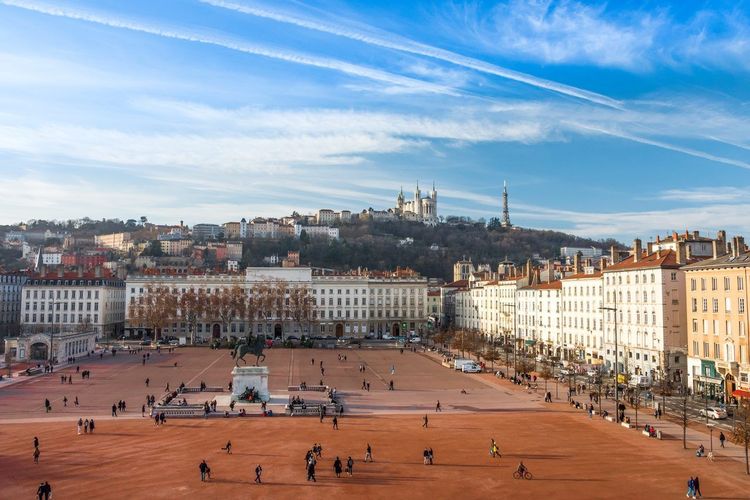
Cross the Saône via the passerelle du Palais de Justice or the pont Bonaparte to reach the Presqu'île, the long strip of land wedged between the Rhône and the Saône that concentrates Lyon's commercial and administrative life. The afternoon breaks naturally into two zones: Bellecour to the south, Terreaux to the north, connected by rue de la République, pedestrianised for over a kilometre.
Place Bellecour, Théâtre des Célestins and the Hôtel-Dieu
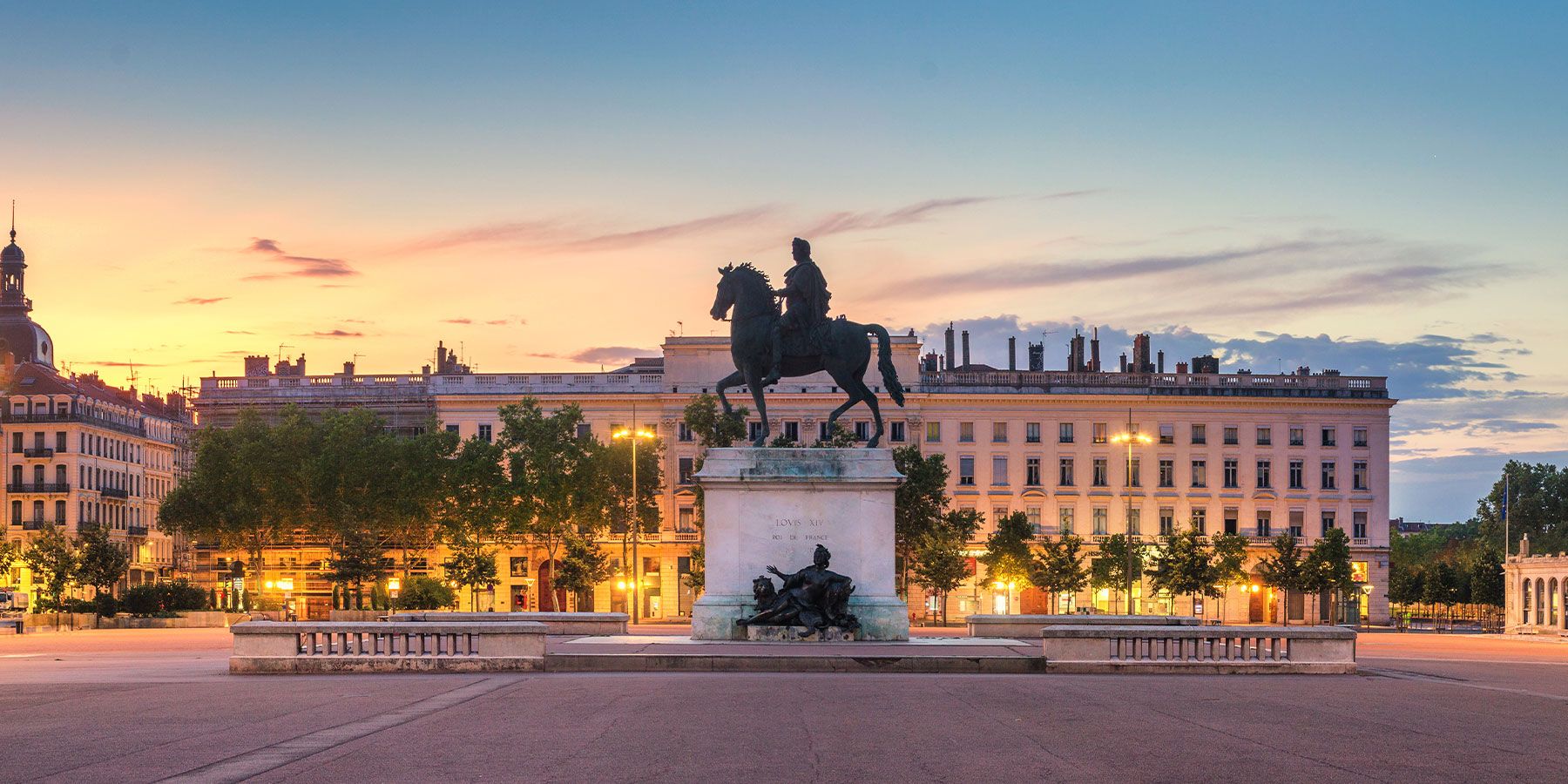
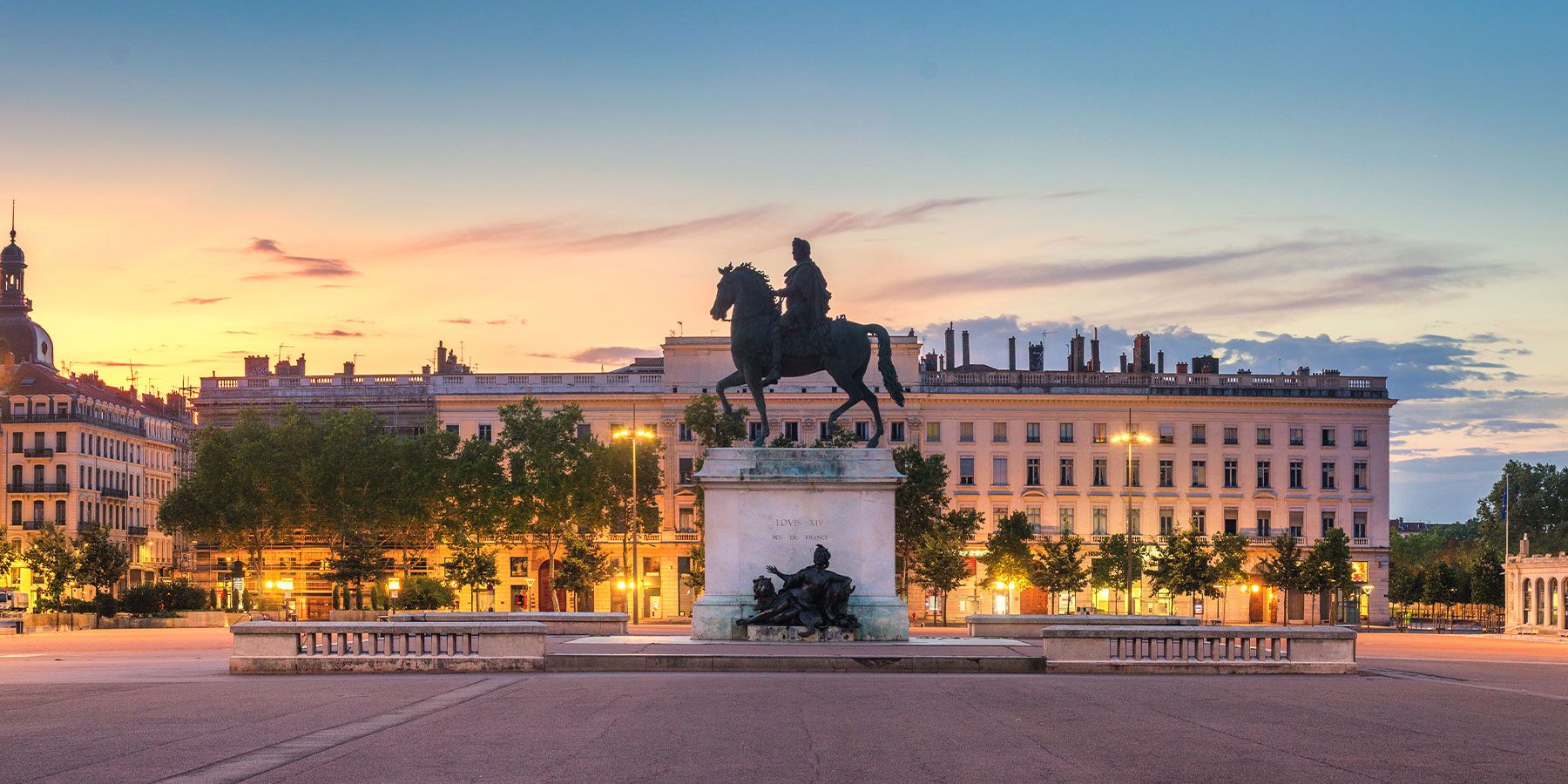
Place Bellecour ranks among the largest pedestrian squares in Europe, covering some 62,000 m² lined with 18th-century buildings. At its centre, the equestrian statue of Louis XIV presides over a panorama that, on clear days, stretches all the way to the Alps. It is also the classic starting point for guided city tours, and an easy landmark to orient yourself for the rest of the stay. The tourist office runs its main welcome desk here, useful for picking up a traboule map or checking the day's opening hours.
Five minutes' walk away, the Théâtre des Célestins has occupied a particularly well-preserved Italian-style setting since 1877, with its red-and-gold auditorium seating just over a thousand. Without a show ticket, the façade and the small square in front are still worth a quick detour.
Heading north along the Rhône, the former Hôtel-Dieu — a hospital built from the 12th century onwards and extended through the 18th century by Soufflot — reopened in 2018 after several years of renovation as a mixed-use complex of shops, restaurants, a hotel and freely accessible inner courtyards. Its long riverside façade, one of the most photographed in the city, is worth a stop even without going inside, and the passage through the grand courtyard offers a sheltered shortcut back towards Bellecour.
Just behind Bellecour, the small place des Jacobins and its 19th-century fountain offer a more intimate pause, surrounded by 19th-century façades and a few good spots for lunch or an afternoon snack.
Place des Terreaux, Hôtel de Ville and the Opéra
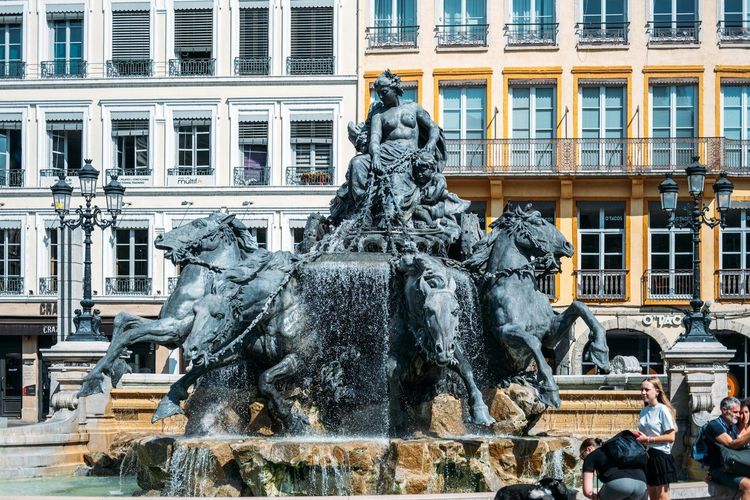
Walking up rue de la République for about twenty minutes brings you to the place des Terreaux, animated by the Bartholdi fountain, designed by the future creator of the Statue of Liberty and installed here at the end of the 19th century. Its four rearing horses symbolise the rivers of France rushing towards the ocean, and the square itself long served as a place of execution before becoming the urban salon it is today.
On one side of the square stands the Hôtel de Ville, one of the most imposing 17th-century civic buildings in France, remodelled by Jules Hardouin-Mansart after a fire. Opposite, the Opéra de Lyon (Place de la Comédie, 69001 Lyon, rated 4.5/5 on Google with 3,970 reviews) has displayed since 1993 a semicylindrical glass vault designed by Jean Nouvel, set atop the 19th-century building of which only the façades and the peristyle were preserved. The contrast between the two neatly sums up Lyon's approach to urban planning, where ancient heritage coexists unself-consciously with bold contemporary interventions. On the third side, the Musée des Beaux-Arts occupies a former abbey and its cloister: even without going in, the planted courtyard remains one of the few quiet corners of the city centre.
If time allows in the late afternoon, a Saône river cruise departing from the quays — offered by several local companies mainly from April to October — provides a different perspective on the city's two hills: Fourvière on one side, Croix-Rousse on the other. Allow around an hour for a commentary tour, a good option to rest your legs before dinner, with the audio-guided tour also winding past Place des Jacobins and Rue de la République earlier in the day.
Day 2 (Morning): the Croix-Rousse Slopes and Street Art
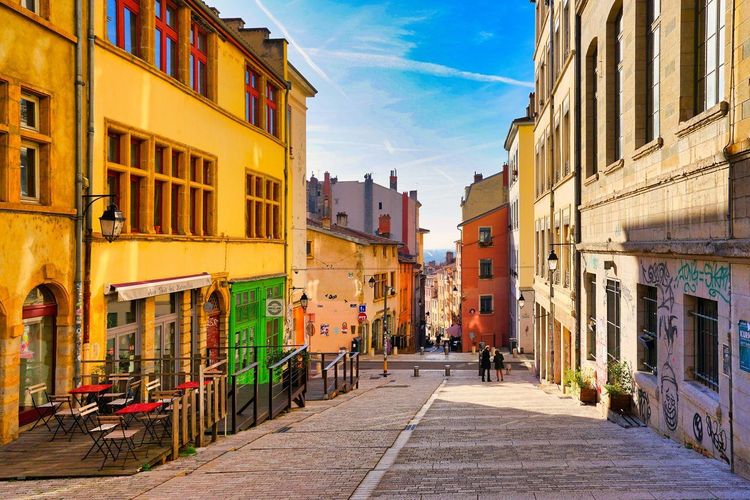
Second morning, second hill. Croix-Rousse, long nicknamed the hill that works in contrast to Fourvière the hill that prays, was home to several tens of thousands of canuts in the 19th century — silk weavers whose workshops required ceilings more than four metres high to accommodate the Jacquard looms. The neighbourhood has retained that working-class identity, today recycled into a sought-after urban village for artists and young families.
Traboules and Maison des Canuts in Croix-Rousse
The ascent is ideally made via the montée de la Grande-Côte, a former silk merchants' thoroughfare transformed into a stepped promenade, punctuated by terraced landings and communal gardens from which the view gradually opens up over the Presqu'île. Allow about fifteen minutes of actual climbing, plus time for the inevitable photo stops.
As in Vieux Lyon, the Croix-Rousse traboules were used to transport bolts of silk, sheltered from the weather, between the workshops on the plateau and the merchants established below on the Saône quays. The most emblematic, the Cour des Voraces, takes its name from a society of canut journeymen active in the mid-19th century, notably during the events of 1848; its monumental six-storey open staircase remains one of the most photographed in the city.
To understand how a weaving workshop functioned, the maison des Canuts offers demonstrations on a period Jacquard loom, with concrete explanations of the mechanics that earned Lyon its reputation in silk for nearly two centuries. The guided visit lasts about an hour, can be booked online on busy weekends, and suits both curious visitors and industrial heritage enthusiasts alike.
To reach the plateau from the Presqu'île without climbing on foot, the rack-and-pinion metro on line C follows the route of the old funicular inaugurated in 1891, converted into a metro in the 1970s: it is today the only rack-and-pinion metro line in service in France. The ride takes under five minutes and avoids a climb that often discourages hurried visitors. On the plateau, the daily market on boulevard de la Croix-Rousse, one of the longest in the city, gives a fairly accurate sense of neighbourhood life well beyond the tourist circuit.
Murals and Street Art in the Neighbourhood
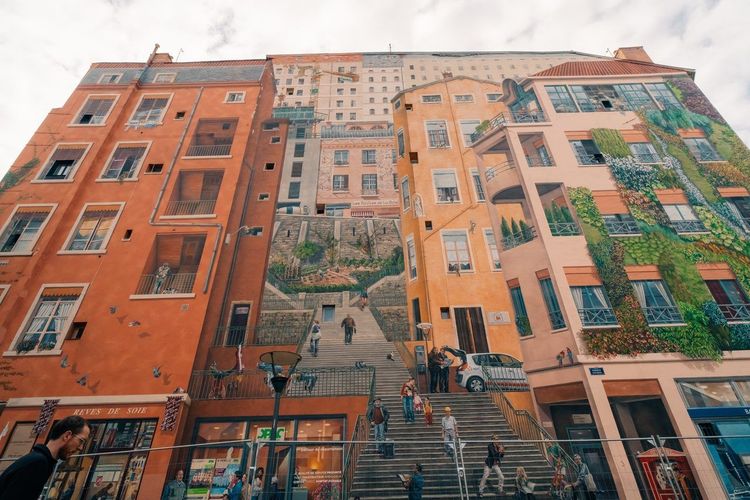
Croix-Rousse also concentrates some of Lyon's best-known wall murals — a city that has been claiming the title of France's painted-wall capital since the 1980s. The Mur des Canuts, with its roughly 1,200 m² of trompe-l'œil depicting neighbourhood life through the centuries, has been repainted and extended several times: the same characters reappear, aged from one version to the next — a detail that locals enjoy pointing out to visitors.
Heading back down towards the Saône, the Fresque des Lyonnais on quai Saint-Vincent lines up across several storeys some thirty figures born or based in Lyon, from the Lumière brothers to abbé Pierre, with Paul Bocuse among them, and a few trompe-l'œil shopfronts at street level. The two murals can be connected in about thirty minutes of downhill walking, making them a natural transition into lunch on the riverbanks.
The Ryo Lyon itinerary dedicated to À la rencontre des Canuts guides you step by step between these murals and the plateau traboules, with the kind of anecdotes that official signage rarely provides. Allow a full morning for the entire neighbourhood before heading back down for lunch.
Day 2 (Afternoon): Confluence and Parc de la Tête d'Or
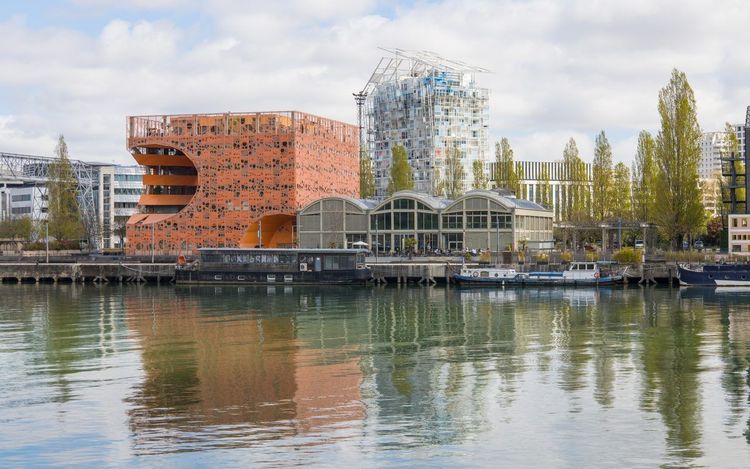
The afternoon shifts into a radically different Lyon, shaped over the last thirty years. Two options present themselves depending on your preferences: the contemporary Confluence neighbourhood, at the southern tip of the Presqu'île, or the vast green expanse of Tête d'Or to the north. The two are difficult to combine in the same afternoon without a car — allow around forty minutes of transit between the two — so it's better to choose based on the mood of the trip.
Musée des Confluences and the Confluence Neighbourhood
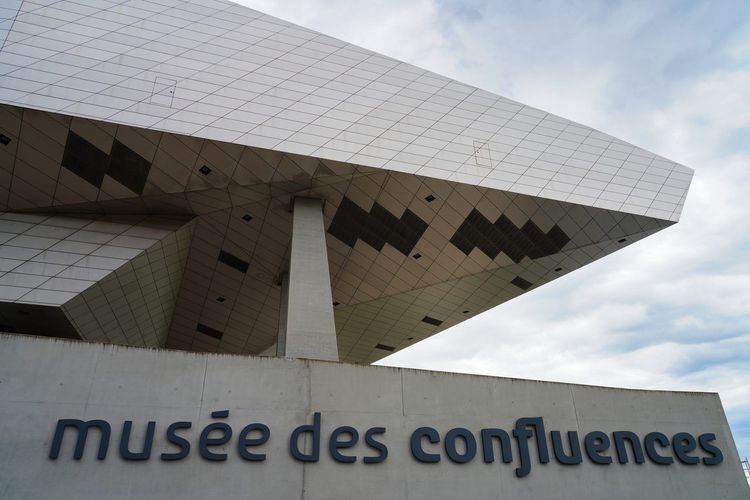
At the southern tip of the Presqu'île, where the Rhône and the Saône finally merge after flowing alongside the city for its entire length, the Confluence neighbourhood has transformed former industrial warehouses into a residential and commercial district designed by several international architects. The most visible building is the Musée des Confluences, opened at the end of 2014: a glass-and-steel crystal-shaped structure set on a concrete base, housing natural science and anthropology collections that stand far apart from Lyon's usual heritage image. Allow around ten euros for a full-price ticket — under-18s enter free — and two hours to explore without rushing.
Around the museum, the Confluence shopping centre, La Sucrière and its waterfront terraces offer a sharp contrast with the morning's traboules. Tram T1 serves the neighbourhood from the Presqu'île in about fifteen minutes, making it a practical stop for a late lunch or a final drink overlooking the Saône.
Parc de la Tête d'Or and the Saône Riverbanks
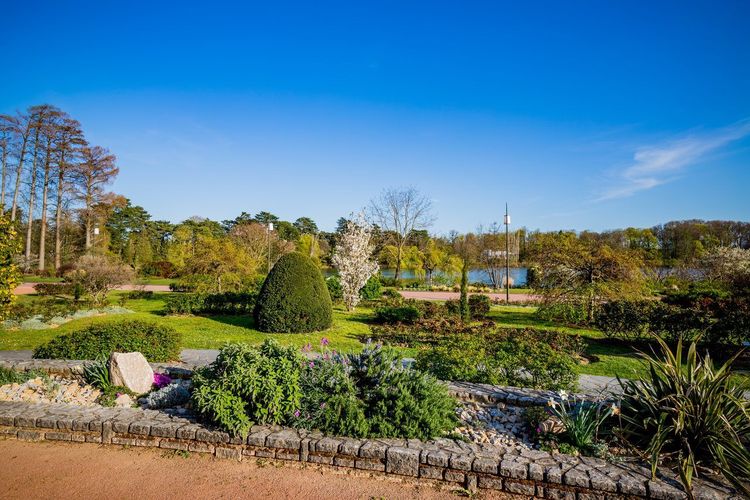
At the geographical opposite end, the parc de la Tête d'Or (Place Général Leclerc, 69006 Lyon, rated 4.7/5 on Google with 47K reviews) spreads across roughly 105 hectares alongside the Rhône in the 6th arrondissement, making it one of the largest urban parks in France. Its artificial lake, dug in the 19th century, lends itself to rowboat hire in fine weather, and the park entrance remains free all year round, from early morning until dusk depending on the season.
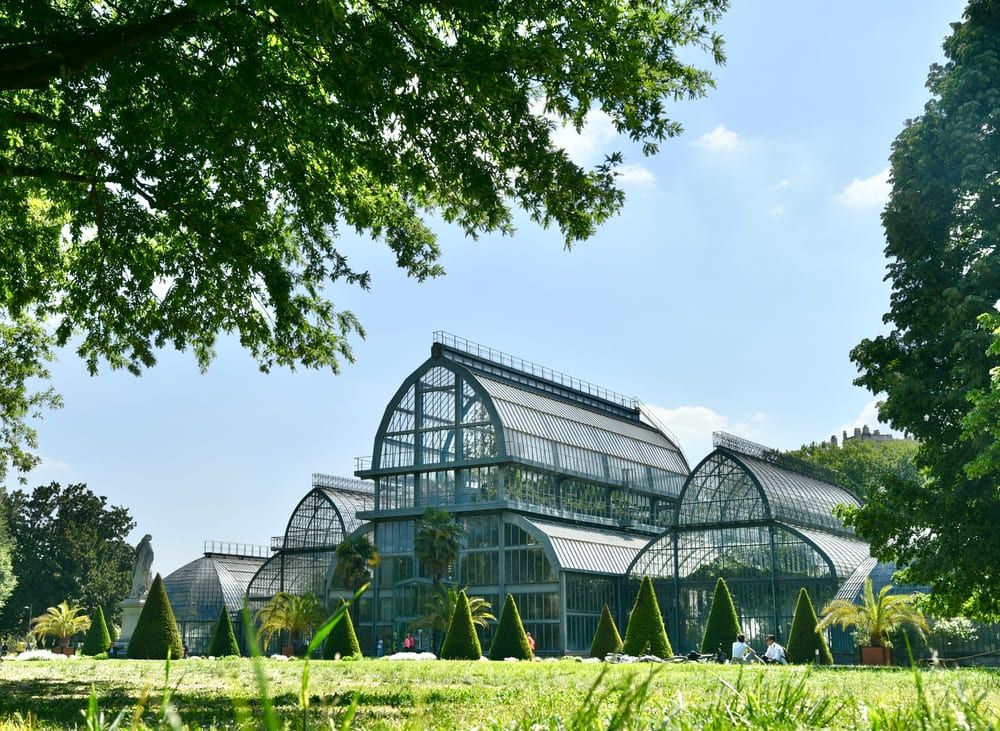
The park also houses one of France's rare free zoos, complete with an African savanna and a vivarium, as well as an international rose garden containing several tens of thousands of rosebushes, at its peak in June. The grand glasshouses of the botanical garden, which are listed monuments, are worth a visit even on a grey day. On the way to the park, the Saône quays, developed as a pedestrian and cycling promenade, host a producers' market at weekends and several barges where you can finish the day on a terrace.
To close this second day, a final option is to walk back towards the Presqu'île along the quays — a roughly 25-minute stroll offering an unobstructed view of the two hills visited the day before and that morning. After dark, the city's light plan, which illuminates more than 200 sites and façades every evening, completely transforms the walk: that's the best argument for not heading back to the hotel too early.
Lyon Specialties You Shouldn't Miss
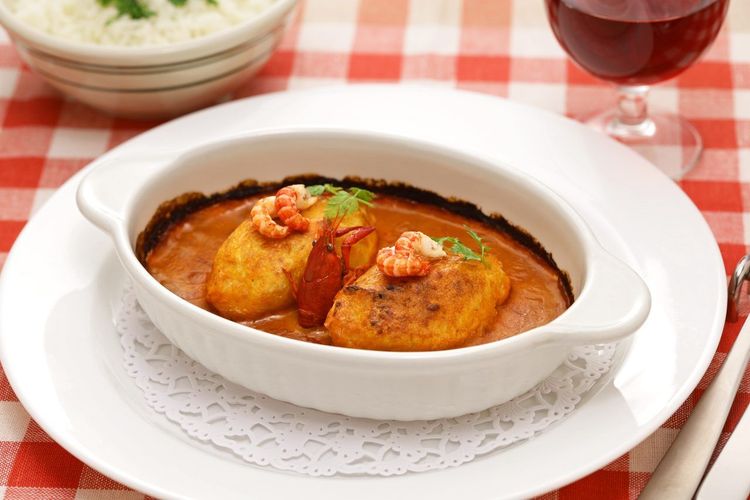
Lyon has long claimed the title of France's gastronomic capital, a reputation built in part on the work of Paul Bocuse and the tradition of the mères lyonnaises — the female cooks who professionalised bourgeois dining from the early 20th century onwards. It would be a shame to visit the city without dedicating at least one meal to this culinary heritage.
Iconic Dishes: Quenelle, Praline, Cervelle de Canut
The Lyon quenelle, made from pike or poultry bound with flour and butter, is traditionally served smothered in a Nantua crayfish sauce. Another local signature, the praline — an almond coated in pink-coloured sugar — appears both as a confectionery and as the filling for the tarte aux pralines, a staple in Lyon bakeries. More discreet, cervelle de canut, a whipped fresh cheese with herbs and shallots, contains neither brains nor a canut despite its name: it's a nod to the frugal meal of silk workers.
On a bouchon menu you'll also encounter saucisson brioché, tablier de sapeur — a breaded and fried slice of tripe — rosette and grattons, those slow-cooked pork morsels served as an apéritif. These dishes are traditionally paired with a wine from Beaujolais or the Côtes du Rhône, served in a pot lyonnais, the distinctive 46-centilitre bottle with a thick base, inherited from 19th-century bouchon customs. The early risers among you might try the mâchon, a charcuterie snack taken late in the morning, still served at a handful of addresses on Saturdays.
Where to Try Them: Bouchons Lyonnais and Halles de Lyon-Paul Bocuse
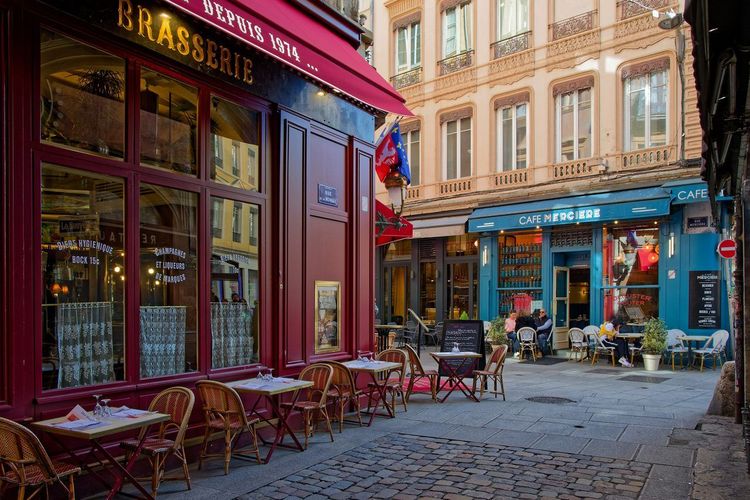
The best place to try these specialties remains a bouchon lyonnais — those small restaurants with checked tablecloths that perpetuate a tradition of generous home cooking. Around twenty of them carry an official label awarded by the association des Bouchons lyonnais, a useful marker for avoiding the purely tourist-facing addresses in Vieux Lyon. Budget 20 to 35 euros for a full lunch, slightly more in the evening, and book ahead: the real dining rooms are small and fill quickly on Fridays and Saturdays. Our Ryo article on bouchons lyonnais worth trying details a selection of addresses spread across Vieux Lyon, the Presqu'île and Croix-Rousse.
For a quicker, more varied format, the Halles de Lyon-Paul Bocuse (102 Cours Lafayette, 69003 Lyon, rated 4.5/5 on Google with 14,720 reviews), renamed in tribute to the chef in 2006, bring together around fifty traders under one covered market hall in the Part-Dieu neighbourhood: cheesemongers, charcutiers, fishmongers and a few counters where you can eat on the spot, oysters and a glass of white wine included. It's best to go in the morning or early afternoon, as the atmosphere drops noticeably towards the end of the day; also check Monday opening hours, as some stalls are closed. It's also the place
Where to Stay in Lyon by Neighbourhood
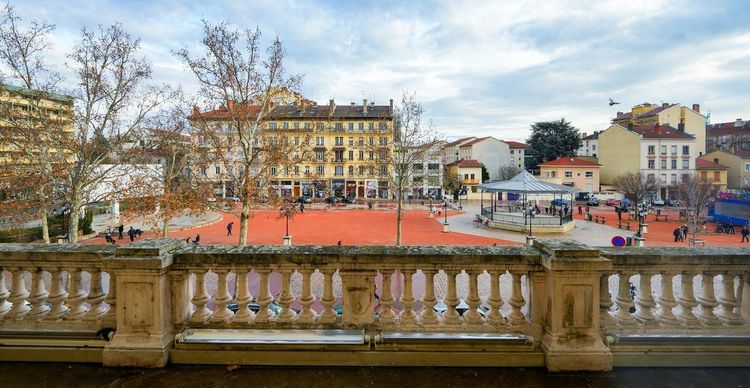
The choice of neighbourhood depends mostly on how you plan to get around during the two days. Budget between 70 and 120 euros per night for a decent double room in low season, and book several weeks in advance for early December, when the Fête des Lumières can send prices doubling.
Presqu'île and Bellecour, for a Central Location
The Presqu'île, around Bellecour and rue de la République, remains the most practical option for a two-day stay: everything is within walking distance, and both hills and the main train stations are reachable in under twenty minutes by metro. It also concentrates the widest range of accommodation, from budget-friendly to upscale hotels. The downside: the streets around Terreaux stay lively late on weekends — worth avoiding if you're a light sleeper.
Vieux Lyon and Croix-Rousse, for Character
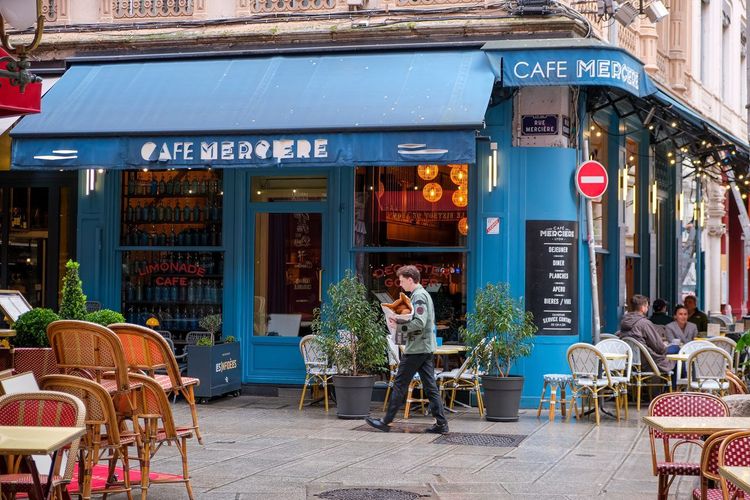
Staying in Vieux Lyon lets you enjoy the cobbled alleyways in the morning and evening, before and after the daytime crowds arrive, but rooms there tend to be smaller, tucked into Renaissance buildings with no lift. Croix-Rousse, further from the centre, appeals for its village atmosphere and generally lower prices, at the cost of an extra ten to fifteen minutes' commute into the centre each morning.
Two alternatives are worth considering if the centre is fully booked: the Part-Dieu neighbourhood, lacking in charm but unbeatable if you arrive late by train, and Confluence, quieter in the evenings, well connected by tram and often cheaper for the same quality.
How to Get to and Around Lyon
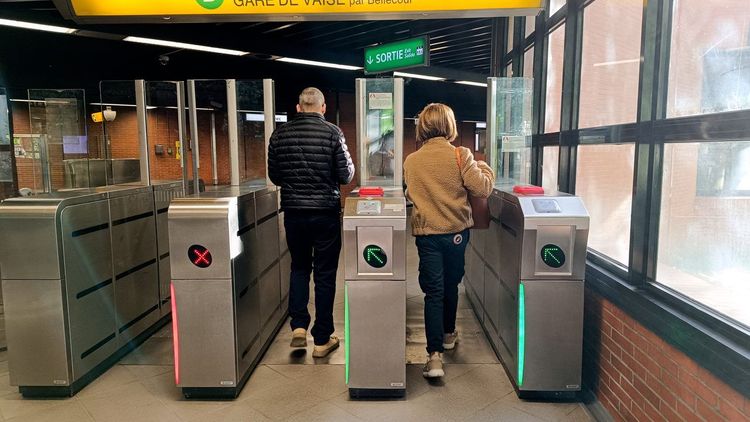
Lyon is one of the best-connected cities in France, which makes organising a two-day weekend considerably straightforward.
Getting There by Train, Plane or Car
By train, Lyon Part-Dieu station is less than two hours from Paris by TGV, and just over an hour from Marseille or Geneva. The city has two main stations: Part-Dieu, the busiest, and Perrache, at the southern end of the Presqu'île, closer to Vieux Lyon. Lyon-Saint-Exupéry airport serves a large part of Europe and some intercontinental routes; the Rhônexpress connects it to the city centre in about thirty minutes for just under twenty euros one way — a practical alternative to taxis, which typically cost two to three times more for the same journey. By car, the city sits at the junction of the A6, A7 and A43 motorways, but it's best to leave the vehicle in a car park: traffic in the city centre, the low-emission zone and paid parking make a car more trouble than it's worth once you arrive.
Getting Around by Metro, Funicular and on Foot
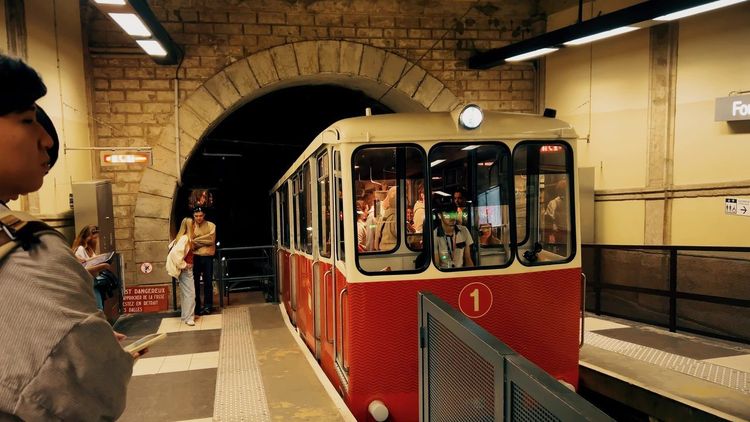
The TCL network combines four metro lines, two funiculars, several tram lines and a dense bus network — more than sufficient to cover this guide's itinerary without ever walking more than twenty minutes at a stretch. The unusual transport options in Lyon such as the rack-and-pinion metro on line C or the Fourvière funiculars are worth experiencing in their own right, beyond their purely functional role. A single ticket costs just over two euros, but for two full days a day pass or a book of tickets works out significantly cheaper. The Vélo'v bike-share scheme, with thousands of bikes spread across hundreds of stations, is a good complement on the flat stretches of the city, particularly along the Rhône riverbanks; on the two hills, however, stick to the funicular.
Lyon in 1, 2, 3 or 4 Days: How Long to Allow
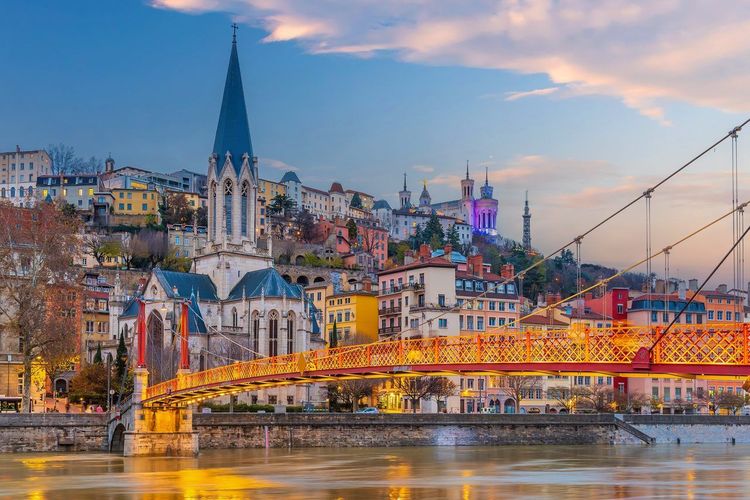
Two days are enough to cover the must-sees described in this guide, but the ideal duration depends on the pace you want.
With just one day, you have to accept sacrificing either Croix-Rousse or Confluence, and focus on Fourvière, Vieux Lyon and the Presqu'île in a packed programme. Conversely, visiting Lyon over 3 days allows you to add an excursion — such as the medieval city of Pérouges or the Beaujolais vineyards — without disrupting the pace of the first two days. With four days, it becomes possible to explore more deeply the secondary neighbourhoods of Guillotière, Monplaisir with its Musée Lumière, or the Brotteaux, which receive less coverage in standard guides.
For a car-free stay, this guide's itinerary is entirely doable on foot and by public transport, even spread over three days: distances between the main sights never exceed 25 minutes of walking, and both Pérouges and the Beaujolais are accessible by train or coach from the city centre. Our Ryo guide to Lyon in three days details exactly how to extend this itinerary by an extra day.
When to Go and What Budget to Plan For
The time of year affects both the comfort of the visit and its cost.
Best Time to Visit Lyon
Spring, between April and June, and early autumn in September offer the best compromise between mild weather and moderate crowds. Summer remains pleasant for Saône cruises and riverside terraces, but the heat can make the midday climb to Fourvière uncomfortable: in that case, reverse the programme and save the hill for late afternoon. In early December, the Fête des Lumières draws enormous crowds across four evenings, with light installations on the main squares and the façades of Vieux Lyon; the experience ### Lyon City Card and Money-Saving Tips
The Lyon City Card, the tourist office's culture and leisure pass, comes in 24-, 48- or 72-hour versions and gives access to a wide range of museums, guided tours, a river cruise and public transport for the chosen duration. It pays for itself from two or three paid visits in a day, which fits fairly well with a two-day weekend pace. For a tighter budget, bear in mind that the Basilique de Fourvière, the Roman theatres, the traboules, the central squares, the parc de la Tête d'Or and its zoo are all free year-round: it's entirely possible to structure these 48 hours without spending more than a few dozen euros outside of accommodation and meals. Adding local transport, two bouchon meals and one or two museum entries, budget roughly 80 to 120 euros per person for the weekend, excluding hotel and return travel.
Adapting the Itinerary: Couples, Families or Groups of Friends
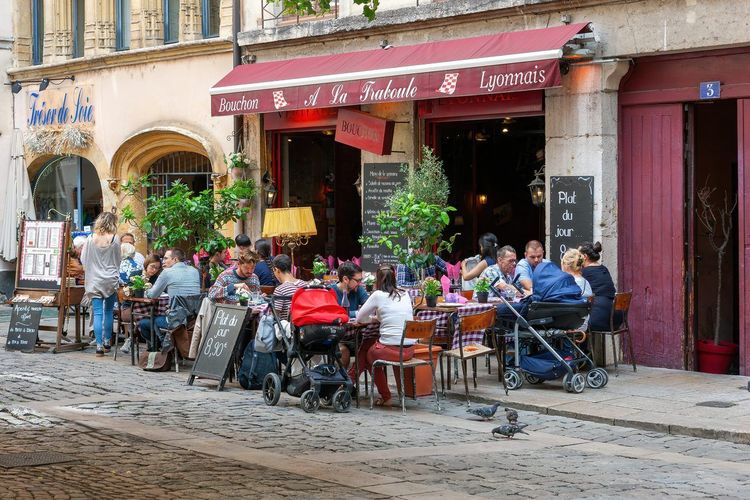
The base itinerary works for all profiles, but a few adjustments make a real difference to the experience.
For a romantic weekend in Lyon, save the late afternoon for the Saône cruise and book a table at a bouchon rather than a quick dinner: it's one of the rare moments in the trip where genuinely slowing the pace makes all the difference. A final drink at a Presqu'île rooftop bar or a return to Fourvière after sunset round off the evening well, as the illuminated city is well worth the detour. Our Ryo selection of unusual romantic weekends in Lyon suggests a few more intimate addresses to complement this programme.
With children, it's best to lighten the Vieux Lyon section — the traboules and cobblestones tire younger visitors quickly — and dedicate more time to the parc de la Tête d'Or, its free zoo and rowboat rides. The maison des Canuts, with its hands-on loom demonstrations, tends to hold children's attention far better than a conventional museum, as does the Miniature & Cinema Museum in Vieux Lyon, devoted to miniature sets and special effects. Also plan more frequent breaks than the standard programme suggests, particularly between the morning funicular ride and the afternoon crossing of the Presqu'île.
With friends, the itinerary lends itself well to splitting into smaller groups in the afternoon, each choosing between Confluence and Tête d'Or, before reconvening in the evening. The barges moored along quai Victor Augagneur on the Rhône side concentrate most of the city-centre nightlife, ten minutes' walk from Bellecour: plenty of reason to extend the evening without having to jump back on the metro.
FAQ
How many days do you need to visit Lyon?
Two days cover the must-sees: Fourvière, Vieux Lyon, the Presqu'île, Croix-Rousse and Confluence. An extra day allows you to add a trip to the surrounding area, such as Pérouges or the Beaujolais region, without disrupting the pace of the first two days.
How do you get around Lyon without a car?
The TCL network, with its four metro lines, two funiculars and trams, covers the entire itinerary described in this guide. No major sight requires more than 25 minutes of walking from the nearest station, including between the two hills that structure the city.
What is the best neighbourhood to stay in Lyon?
The Presqu'île, around Bellecour, remains the most practical choice for a short stay: it puts all the sights within walking distance or a short metro ride. Vieux Lyon suits those after a heritage atmosphere, Croix-Rousse is better for tighter budgets and a village feel, and Part-Dieu is ideal for late train arrivals.
When is the best time to visit Lyon for good weather?
Spring and early autumn offer the best balance between pleasant weather and moderate crowds. Summer is still enjoyable in the evenings on the riverbanks and for river cruises, but the midday climb to Fourvière can be quite hot.
What local specialties should you try in Lyon?
The quenelle with Nantua sauce, the praline, cervelle de canut, tablier de sapeur and the charcuterie from the Halles de Lyon-Paul Bocuse sum up the essentials. A meal at a certified bouchon remains the best way to discover them all at once, paired with a pot of Beaujolais.
Is Lyon a good destination for a romantic weekend?
Absolutely: a late-afternoon cruise on the Saône, the traboules of Vieux Lyon and the intimate bouchons naturally make for a perfect romantic weekend, with no special planning required.
Can you explore Lyon as a family with children?
Absolutely, as long as you scale back the traboule section and spend more time at the parc de la Tête d'Or, its free zoo and rowboat rides, as well as the maison des Canuts and the Miniature & Cinema Museum for their hands-on, educational appeal.
Two days are therefore enough in Lyon to go from the Roman theatres of Fourvière to the contemporary murals of Croix-Rousse, without ever feeling rushed. The city lends itself well to this short format because its major sights remain close to one another, connected by a dense transport network and the two hills that naturally structure the itinerary into half-days, blending Roman heritage, working-class tradition and gastronomy.
To go further once you're there, the Ryo Lyon audio guide completes this itinerary with geolocated audio commentary that fills the silences between two traboules, with the anecdotes that no official signage ever tells.